
|
Description
of Egypt: Notes and Views on Egypt and Nubia Made During the Years
1825-1828
by Edward William Lane, Jason Thompson Order Today An
Account of the Manners and Customs of the Modern Egyptians |



Begun in the mid-1970's , the early sections of "Sirat Al-Ghawazi" were first published under the title "The Mystery of the Ghawazi" in Habibi Magazine in 1977. The author, orientalist Edwina Nearing (writing under the nom de guerre "Qamar el-Mulouk"), intended the series to be an investigative report on what Lady Duff Gordon in 1865 called "the real dancing girls of Egypt." Now, in the decades since Nearing's Ghawazi series first appeared, it has itself become a part of history, its people, places and events almost as exotic and remote as those described in the 19th century works the author drew upon for background information. "The Mystery of the Ghawazi" was reprinted in 1984 by popular demand and updated in a 1993 article, "Ghawazi on the Edge of Extinction." Since then, most of Nearing's Ghawazi material has been out of print. Gilded Serpent is happy to be able to respond to the continued demand for these articles by making them available to our readers worldwide. Part 9 - 1977
Even in Lane's time, before the weave of Middle Eastern folkways had been broken by the full impact of Westernization, the meticulous scholar had found the Ghawazi something of a mystery: "The Ghawazee being distinguished, in general, by a cast of countenance differing, though slightly, from the rest of the Egyptians, we can hardly doubt that they are, as themselves assert, a distinct race. Their origin, however, is involved in much uncertainty. They call themselves 'Baramikeh' . . . and boast that they are descended from the famous family of that name who were the objects of the favor, and afterwards the capricious tyranny, of Haroon Er-Rasheed . . . many of their customs are similar to those of the people whom we call 'gipsies,' and who are supposed, by some, to be of Egyptian origin. It is remarkable that some of the gypsies in Egypt pretend to be descended from a branch of the same family to whom the Ghawazee refer their origin; but their claim is still less to be regarded than that of the latter, because they do not unanimously agree on this point . . . There are some other dancing-girls and courtesans who call themselves Ghawazee, but who do not really belong to that tribe."(1) The noted Egyptologist Georg Ebers, however, writing in 1878-79, seemed to accept the identification of the Ghawazi as Gypsies without question. While he evidently drew somewhat on the works of others, such as Lane and Lane's predecessor Jakob Burckhardt, he himself had spent much time in Egypt and his descriptions of the Ghawazi are of interest: "Keneh is particularly famous for its dancing and singing gipsy girls, known as Ghawazee, some of whom we have already seen at the fair at Tanta [a city in northern, or "Lower" Egypt - ed.]. They are collected out of the most wonderful caves, and tents, and open-air encampments. Many of the families whose daughters they are live in the vicinity of the cattle markets; their fathers frequently deal in horses, camels, and asses . . . "In January, and again at the spring and autumn equinoxes, thousands of people assemble at Tanta and at the time of the great Molid, or birthday festival of the saint, the pilgrims often number half a million . . . Here every form of amusement known to the Oriental is offered to the pilgrim . . . every coffee-house in the city is brilliantly illuminated, and we can hear from afar, the shrill Arab music, the clatter of castanets, and the shouts of 'Ya salam (bravo) of the audience within. All the painted and overdressed votaries of Venus, all the singers and dancers of the Nile valley have met together there. At Tanta we met and recognized a Ghaziyeh, or dancer, whom we had admired before this in the house of the German consular agent at Luxor, in remote Upper Egypt. The famous Almehs or singers of Cairo, however, keep away from the annual gathering at Tanta; but among those who come to it we see women of rare and peculiar beauty. They constitute a distinct race, distinguished from the Egyptians proper by many peculiarities, and particularly by the shape of the face, and they have among themselves lady-presidents, one of whom we heard called - perhaps in jest only - 'Makhbooba-Bey' (literally, 'my Lord Mistress') . . . Wherever we turn our eyes during the festival at Tanta we see these women, and with them male dancers, dressed as women . . . "Crossing the market and bazaar of Esneh, [in southern, or "Upper" Egypt - ed.] we reach the quarter of the town where the Ghawazee most do congregate, for since Saeed Pasha (1854-63; in 1834, public female dancing had been banned) banished the whole class of singers and dancers from Cairo to Esneh it has remained one of their favorite headquarters, though the curious traveler may see these girls exercising their art, and hear the concommittant minstrelsy on the various native Oriental instruments, at Keneh, Luksor, and even among the ruins at Karnak . . . indeed, opportunities of seeing them offer in almost every village of Upper Egypt. Certainly the rhythmic movements and measured tremblings, writhings, bendings, and gestures, of these dancers, with the declamations of the singers, are ill adapted to a taste accustomed to other performances, even when we see the most famous of these artistes, and these are certainly not to be met with at Esneh, nor in any other of the Nile towns - nowhere, in fact, but in Cairo itself.
"The gipsy girls, or Ghawazee, of Esneh, who sing and dance gaily dressed and ornamented with jewels of thin gold, are satisfied with a more moderate remuneration. They do not hide behind a curtain, and rarely succeed in gaining even the approbation of their European hearers, much less in charming them; but their performance is often by no means lacking in feeling and expression. In many of their dances they display an extraordinary suppleness of body and limb, and their gestures, which are not devoid of grace and sentiment, reveal a fervour of passion, which often rises to the verge of frenzy, and then certainly far outsteps the limits of the beautiful."(2) A century later, in 1976, I joined the throngs which still descend upon Tanta for the great mulid of Al-Sayyid al-Badawi, but the last echo of castanets seemed to have faded long ago from its undistinguished streets, and if any "votaries of Venus" were present, they were well disguised in shapeless black galabiyyas. I fared little better in Sunbat, a nearby village closely associated with the Ghawazi in Egyptian tradition; the sullen individuals pointed out to me there as Ghawazi, or related to them, were uncommunicative and anxious to avoid drawing attention to themselves or the village in which, it appeared, they existed on bare sufferance. It was in the more genial atmosphere of Luxor in Upper Egypt that I was at last able to meet practicing Ghawazi, members of the large and prosperous Mazin family, and question them, visit them at home, and observe the arts for which they were famous. Who were the Ghawazi? Ghawazi were professional entertainers, one of the Mazins told me, and the Mazins themselves belonged to the tribe of Al-Nawara (var. "Nawar"). They did not call themselves Ghawazi, one of the Mazin dancers explained, nor did they care for the name, which was an Egyptian peasant term for "dancers" and somewhat derogatory. I asked them if they were ghajjar, the word given for "Gypsies" in most Arabic dictionaries. According to my principal informant, Yusuf, patriarch of the Mazin family, they were not ghajjar, but they were of non-Egyptian origin, spoke an obscure language among themselves, and had past connections with Persia.
The name Nawara teased my memory. Shortly before visiting Luxor, I had spoken with a well-traveled badawi, Lafi, of the Palestinian-Sinaitic tribe of Al-Akharsa, who told me of a tribe from the Aleppo area called Nawar. These Nawar had formerly been famed for the crafting of silver jewelry. Though originally, Lafi thought, from the environs of Aleppo, that cosmopolitan Syrian city near the southern Turkish border, the Nawar were presently scattered all over and could even be found in Lower Egypt. Having with me by good fortunate a volume on the material culture of the Jordanian badu, Shelagh Weir's The Bedouin, I had tried to corroborate Lafi's statements and gleaned the following: "Bedouin camped near a town visit the silversmith's shop to buy the jewelry, while those camped in the desert buy from itinerant craftsmen and traders who travel round the bedouin camps with their wares. Formerly gypsies (nuwar) made a living in this way."(3) Was there any connection with these Nawar, or "nuwar," I asked Yusuf Mazin? Yusuf had heard of individual Nawaris in places as far apart as Jordan and Kuwait, but claimed not to know whether there were Nawara in Lower Egypt; but if there were, at least they were not practicing Ghawazi, he believed. His daughter, the ghaziyya Khairiyya, was more emphatic: any so-called Ghawazi in Lower Egypt were not real Ghawazi - real Ghawazi were found only in Upper Egypt. Still another Nawari, however, whose two ghaziyya daughters I saw perform at Luxor's Casino Rababa, told me that there were groups of Nawara all over Egypt and that they had some contact with one another.
In Near Eastern studies, nothing ever seems to be simple or clear-cut. So it was not particularly surprising that I left Egypt at the end of 1976 still wondering about the Ghawazi, and with yet another question: Who were the Nawara? Did all of Egypt's Ghawazi belong to the Nawara, and the other two less accessible groups Yusuf Mazin had mentioned, the Halab and the Bahlawan? Why were they called Ghawazi, an Arabic word suspiciously close to the Arabic for "raiders" and a name they themselves disliked, when the standard Arabic term for dancers was raqisat? Why were they so often referred to as Gypsies? Where were they from, if not Egypt?
A heavy-set man with the faintest air of the roué about him, Nazem Jabri proved to be a repository of odd facts and popular wisdom about the more obscure and disreputable categories of Syrian folklore. He had not made a proper study of the Nawar, but they seemed to fall into these categories. His information, he told me, was based on long talks with villagers in coffee-houses, articles in learned journals, and an unpublished history of the Aleppo area by one Khair-ul-Din Al-'Asadi in the archives of the Department of Antiquities. The term "Nawar," Nazem Jabri began, was generally used in the Syro-Palestinian area to designate Gypsies; the term ghajjar was not popularly used, being considered literary Arabic. The Nawar had formerly been known in Eastern Europe and were now found in Turkey, Syria and Iraq, but most especially in northern Syria. In his opinion, they were originally Turkumani, with some Kurdish, Persian and Mongol admixture. They had their own language, in which was nothing of Arabic. Some belonged to the Yazidi sect. The Nawar were actually but one branch of the Gypsy people. Also to be found around Aleppo was another large Gypsy group, or tribe, the Qurbat, which he believed to have come from the Carpathian Mountains of Rumania and the U.S.S.R., an origin suggested by their name. The Qurbat spoke a language "similar to" that of the Nawara. Both the Qurbat and the Nawar were largely nomadic, wandering from village to village. Some Qurbatis, once makers of drums and jewelry, had settled in Aleppo in Bab al-Nurad Street, where they now made coffee-grinding things and straw trays. Nawaris were known to frequent a quarter of Aleppo called Safah, especially during harvest time when they helped with the crops; but their chief renown was as entertainers and silversmiths.
This account of the Nawar of Syria agreed in many respects with what was reported of the Ghawazi of Egypt, and Nazem Jabri believed them to be one and the same people. What was missing here was the term "Ghawazi" itself. In his area, Jabri said, this term referred to very old, very thin gold coins, almost spangles, which were pierced and worn in the hair or sewn to the headdresses of traditional female attire. Artificial coins used for the same purpose were also sometimes called ghawazi. Possibly, as noted, the term in this context at least derived from the formal Arabic ghazi, "raider," the raiders, or "knights of the faith of Islam" in question being the Turks who broke upon the Near East in the eleventh century and carved out principalities for themselves along the marches of the Byzantine Empire, from which they raided into the Christian heartlands. Early ghazi lords of the House of Osman, whose hegemony was to become the Osmanli ("Ottoman") Empire, styled themselves "Sultan, Son of the Sultan of the Ghazis; Ghazi, Son of the Ghazi," and their Syrian neighbors may have called the early Osmanli coinage "ghawazi coins" after them. Nazem Jabri speculated that the Ghawazi dancers of Egypt could have been so named on account of their oft-noted predilection for wearing great numbers of these coins, or on account of the practice alluded to by Edward Lane, "It is a common custom for a man to wet, with his tongue, small gold coins, and stick them upon the forehead, cheeks, chin, and lips, of a Ghazeeyah . . ." Nazem Jabri did not take
this theory very seriously, but he was convinced that the Nawar had
entered Egypt as camp-followers of the Turks.
Perhaps they had come with the Osmanli army which conquered Egypt
in 1517 after seizing the long-disputed border lands of northern Syria
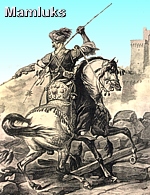
and defeating the Mamluk rulers
of Egypt near Aleppo, or with one of the earlier groups of Turks who were
brought into Egypt from time to time by the sultans as mamluks,
elite slave-soldiers, who eventually became such a force in Egyptian politics
that their leaders often assumed the Egyptian sultanate themselves. The
Mamluks controlled Syria until their last dynasty was overthrown by the
Osmanlis, and the power of the great Mamluk-descended families was never
completely broken in Egypt until the deposition of King Farouq in
1952. Perhaps the word ghawazi had been used deprecatingly by
the Egyptians to describe the Nawari camp-followers of the Turks who "raided" their
farms for chickens and, as Aleppine folklore had it, an occasional girl-child. Certain
it was that the orientalist Edward Lane states that a man of the Ghawazi
is termed a "ghazi." But whatever the origin of the word, Nazem
Jabri was convinced of an ancient and enduring connection between the
Ghawazi and the Mamluks, a connection implied in cliché and half-remembered
popular tales wherein the distinction between Mamluk and Osmanli Turk
was largely forgotten. Unfortunately I was unable to locate any of the Syrian Nawar in the short time I was in Aleppo, to learn whether they acknowledged a connection with the Egyptian Nawara and to check their language against the vocabulary provided me by the Mazins which, had they matched, would have proved the relationship conclusively. I had no better luck finding any recordings of Nawari songs, but was successful in locating a recording of Qurbati music. To my inexpert ear it sounded strongly influenced by traditional popular (popular as in "of the people," not "pop") north Indian and Persian music. But the trail was not cold; if the Nawar were indeed Gypsies, I might find something written about them under that heading. The eleventh century epic Shah Nameh of the Persian poet-historian Firdawsi contained one of the earlier references to a people who may have been Gypsies, the Luris: a certain shah, he reports, had 10,000 Luri musicians brought from "India," ("India" then not corresponding to the borders of the present-day nation, which are still disputed) "and gave them oxen and asses and wheat that they might become farmers, but the Luris consumed these gifts instead, so the shah commanded them to 'Go forth and play music to make the people happy.' And now the Luris, according to his word, wander all over the world, having wolves and dogs for neighbors and fellow travelers, stealing night and roaming during the day." According to a National Geographic Society publication on the Gypsies, "Variations of the same story appear in other documents, before and after Firdawsi, with the wanderers variously identified as Luri, Luli, and Zott. Scholars say Zott is the way Arabs pronounced the Indian tribal name 'Jat,' and the name they gave anybody from the Indus Valley."(6) 10-27-11 Update: Have
a comment? Send us a letter! Ready
for more? 2-11-04 Sirat
Al-Ghawazi, Part 1 by Edwina Nearing 12-13-05 The
Zar by Yasmin 12-10-05 Articulating
the Collective Dream: The Giza Awards, and why the legacy-making process
is important to you. |
 The
Gilded Serpent presents...
The
Gilded Serpent presents... "Egypt
has long been celebrated for its public dancing-girls; the most famous
of whom are of a distinct tribe, called 'Ghawazi,'" the orientalist
Edward Lane had written in a popular book of the 1830's, and an undeniable
aura of glamour has attached to the name "Ghawazi"
ever since. Drawn by the legend, I began my search for the Ghawazi in
the early 1970's and found that, though still present in Egypt, they were
a subject of much fantasy but relatively little study.
"Egypt
has long been celebrated for its public dancing-girls; the most famous
of whom are of a distinct tribe, called 'Ghawazi,'" the orientalist
Edward Lane had written in a popular book of the 1830's, and an undeniable
aura of glamour has attached to the name "Ghawazi"
ever since. Drawn by the legend, I began my search for the Ghawazi in
the early 1970's and found that, though still present in Egypt, they were
a subject of much fantasy but relatively little study. 

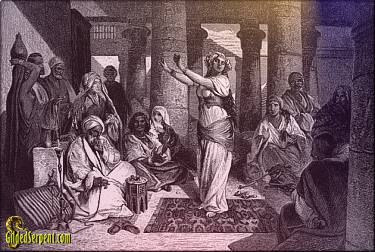 "In
that capital the performers who entertain parties of ladies and gentlemen
with singing and dancing are not merely Ghawazee, but members of an
ancient guild, to which the story-tellers also belong.
Among them certain laws of the art of singing have grown up, which
are hardly intelligible to a European, and which every singing girl learns
to obey, whether she sings in Keneh, Luksor, or Esneh . . . The singing
and dancing gipsy-girls of the provinces, with their smart clothes and
not too severe morals, who, nevertheless, affect a special purity of accent
in their Arabic when they sing and recite, are quite excluded from the
better classes of society; while the singers who form the highest class
of musicians in the capital, if they are really distinguished performers,
are held in high esteem, and often make a rapid fortune. Here, as in
Europe, among these favoured mortals the women hold their own against
the men in number and estimation The women . . . are known as Awalim,
or, in the singular, Almeh - i.e., a learned or instructed woman.
"In
that capital the performers who entertain parties of ladies and gentlemen
with singing and dancing are not merely Ghawazee, but members of an
ancient guild, to which the story-tellers also belong.
Among them certain laws of the art of singing have grown up, which
are hardly intelligible to a European, and which every singing girl learns
to obey, whether she sings in Keneh, Luksor, or Esneh . . . The singing
and dancing gipsy-girls of the provinces, with their smart clothes and
not too severe morals, who, nevertheless, affect a special purity of accent
in their Arabic when they sing and recite, are quite excluded from the
better classes of society; while the singers who form the highest class
of musicians in the capital, if they are really distinguished performers,
are held in high esteem, and often make a rapid fortune. Here, as in
Europe, among these favoured mortals the women hold their own against
the men in number and estimation The women . . . are known as Awalim,
or, in the singular, Almeh - i.e., a learned or instructed woman.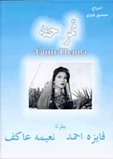 I
later discovered that the name "Nawara" was not unfamiliar to many Egyptians,
though seldom associated specifically with Ghawazi.
Rather, it had the connotation of 'thief.' The names ghajjar and
Nawar were often used synonymously, as in the common insult,
"Ya ghajjar, ya Nawar!" This expression occurs in Tamr Henna,
for example, a late 1950's Egyptian film about the efforts of a ghaziyya to
escape her "sordid" background and be accepted as an equal in the upper-class
society of her lover, whom she meets while performing as a dancer at a mulid.
She is referred to several times in the course of the film as a ghaziyya,
and her tentdwelling family are called both ghajjar and Nawar. While
the Egyptians with whom I spoke did not think of "the" Ghawazi as either ghajjar -
Gypsies - or Nawar, they reflected that the Nawar were indeed often singers
and dancers, though best known as petty thieves, as when the ghaziyya in Tamr
Henna steals a chicken.
Nor, despite the proximity of the terms in common usage, did my
informants necessarily consider the Nawar to be ghajjar, whom
they tended to view as rag-tag groups of vagabonds who sometimes settled
in a poor or out-lying area of town or city, so that one sometimes encounters
alleys dubbed "Harat al-Ghajjar." Some did not even take ghajjar to
refer to Gypsies at all. But no one ever bothered to inquire into the
background of the families of vagabonds who used until recently to drift
from village to village and sing and dance before the doors of appreciative
villagers in exchange for bread or corn, as Egyptian journalist Mahmoud
'Abdel Hadi had mentioned in a 1970's magazine article (4).
I
later discovered that the name "Nawara" was not unfamiliar to many Egyptians,
though seldom associated specifically with Ghawazi.
Rather, it had the connotation of 'thief.' The names ghajjar and
Nawar were often used synonymously, as in the common insult,
"Ya ghajjar, ya Nawar!" This expression occurs in Tamr Henna,
for example, a late 1950's Egyptian film about the efforts of a ghaziyya to
escape her "sordid" background and be accepted as an equal in the upper-class
society of her lover, whom she meets while performing as a dancer at a mulid.
She is referred to several times in the course of the film as a ghaziyya,
and her tentdwelling family are called both ghajjar and Nawar. While
the Egyptians with whom I spoke did not think of "the" Ghawazi as either ghajjar -
Gypsies - or Nawar, they reflected that the Nawar were indeed often singers
and dancers, though best known as petty thieves, as when the ghaziyya in Tamr
Henna steals a chicken.
Nor, despite the proximity of the terms in common usage, did my
informants necessarily consider the Nawar to be ghajjar, whom
they tended to view as rag-tag groups of vagabonds who sometimes settled
in a poor or out-lying area of town or city, so that one sometimes encounters
alleys dubbed "Harat al-Ghajjar." Some did not even take ghajjar to
refer to Gypsies at all. But no one ever bothered to inquire into the
background of the families of vagabonds who used until recently to drift
from village to village and sing and dance before the doors of appreciative
villagers in exchange for bread or corn, as Egyptian journalist Mahmoud
'Abdel Hadi had mentioned in a 1970's magazine article (4). 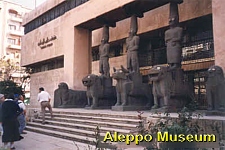 The
opportunity came to pursue the matter further a few months later, in
1977, in the northern Syrian city of Aleppo associated with Nawar tinkers
by my badawi acquaintance Lafi. The young clerk at the Aleppo
State Information Office recognized the name Nawar immediately: they
were found, he said, all over Syria.
They had camels, sheep and donkeys, and wandered from place to
place. The women of the Nawar danced at parties and weddings for the
men of the villages through which they passed. If I wanted to know more,
I should speak with a certain Nazem Jabri, who had an
office across the street at the Aleppo Museum of Antiquities.
The
opportunity came to pursue the matter further a few months later, in
1977, in the northern Syrian city of Aleppo associated with Nawar tinkers
by my badawi acquaintance Lafi. The young clerk at the Aleppo
State Information Office recognized the name Nawar immediately: they
were found, he said, all over Syria.
They had camels, sheep and donkeys, and wandered from place to
place. The women of the Nawar danced at parties and weddings for the
men of the villages through which they passed. If I wanted to know more,
I should speak with a certain Nazem Jabri, who had an
office across the street at the Aleppo Museum of Antiquities.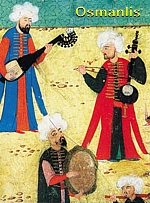 The
women of the Nawar were reputed to be bold, strong-willed and forceful. Besides
their immemorial occupations of singing and dancing to drum, rababa
and qasabi (cane flute), they had formerly produced and sold
embroidery. Some engaged in prostitution, and in this capacity were
euphemistically referred to as hajjiyyat by those who utilized
their services.* Some taught their children
to go into the villages to beg and steal.
The men of the Nawar played the instruments mentioned above, their
music displaying marked badawi, Kurdish and Iraqi elements, and
sang to the accompaniment of the rababa. They also made jewelry of copper
and silver, but changing tastes and the recently doubling of the cost
of silver had virtually put an end to this industry.
As the most fame and highest income attached to the activities
of the women, it was said that the men, feeling their masculinity threatened,
beat them in private.
The
women of the Nawar were reputed to be bold, strong-willed and forceful. Besides
their immemorial occupations of singing and dancing to drum, rababa
and qasabi (cane flute), they had formerly produced and sold
embroidery. Some engaged in prostitution, and in this capacity were
euphemistically referred to as hajjiyyat by those who utilized
their services.* Some taught their children
to go into the villages to beg and steal.
The men of the Nawar played the instruments mentioned above, their
music displaying marked badawi, Kurdish and Iraqi elements, and
sang to the accompaniment of the rababa. They also made jewelry of copper
and silver, but changing tastes and the recently doubling of the cost
of silver had virtually put an end to this industry.
As the most fame and highest income attached to the activities
of the women, it was said that the men, feeling their masculinity threatened,
beat them in private.
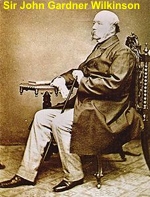
 Such
a connection seems hinted at by a contemporary of Lane's, the Egyptologist
Such
a connection seems hinted at by a contemporary of Lane's, the Egyptologist 


