Gilded Serpent presents...

The Mystery of Tulle bi Telli

Assuit Shawls, a Research Paper from 1979

Yasmela in full assuit!

by Yasmela-Shelly Muzzy
posted February 12, 2012

Most of this was written in about 1978-79 when I was at Fairhaven College/Western Washington University getting my BA in History and Research.  I have amended the end of it, but it was a paper written as the culmination of a quarter’s research into metal thread embroidery.  At that time, videos were not available of the Stars of Egypt, so seeing the amazing costumes that are available on YouTube to everyone now was not possible.  I did weeks of library research, inter-library loan, etc. as well as personal interviews with dancers and collectors including Aisha Ali, Cathryn Balk (Farideh) and a collector from the UK.

Metal thread embroidery is an ancient form of ornamentation and can be found throughout the Middle East, the Balkans, India, China, Japan and parts of Europe.  There are biblical references to its use with the linen cloth of Egypt.  Inexpensive machine embroidery, usually containing metal-wrapped threads, is a common export from India today.  At one time, however, Egyptian net embroidery was a unique product that involved the export of shawls around the world.

The invention of the bobbinet machine in Tulle, France in the early 19th century gave impetus to the popularity of hexagonal mesh fabric and it became known as tulle.  During the French Protectorate, the bobbinet machine was introduced into the Asyut region of Upper Egypt by the French in hopes of establishing a source of employment and income to the depressed farming area sometime in the latter part of the 19th century.  The Asyut region was a logical location since that area was already a well established textile center. 

After manufacture, the hexagonal net fabric was given to local artisans.  It was then embroidered with 1/8 inch flat strips of metal, gilt silver or copper wire and later, chrome plated copper or brass.

The wire was crossed over the threads, cut and folded into a small package to keep the ends from poking out.  When finished, the piece was laid out and the metal work was hammered flat and sometimes rolled to give it a uniform texture. 

The motifs used were either geometric or figurative and sometimes combinations of both.  One source told me the geometric pieces were older, although the use of figures by Coptic artisans dates back to the introduction of Christianity into Egypt.  It was common for bird and animal motifs to be used for ornamentation during the Ottoman occupation (1517-1914 except for a brief French occupation during the Napoleonic wars).  Some older pieces were very elaborately decorated or even solidly filled in with little or no exposed net and little discernible pattern.  Finished shawls were sold by weight, if they were silver, to European tourists who then used them as shawls or piano scarves.  In the early 20th century many pieces were used to make gowns or robes, the first true lame. 

Assuit’s first appearance in quantity in the U.S. was at the 1893 Chicago Exposition where they were sold as souvenirs of the scandalous Midway Plaisance.  Shawls experienced another upsurge with the opening of King Tut’s Tomb in 1922 when all things Egyptian became popular.
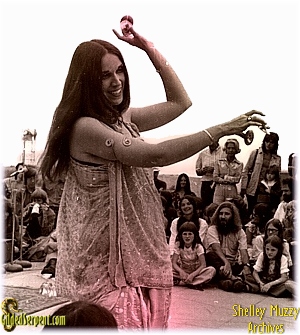
Early shot of YasmelaAlthough these shawls have been around well over 100 years, it is very difficult to obtain information about their origin.  Having dealt with assuit since I first discovered it as a student of Jamila Salimpour in San Francisco in 1972, I have been fascinated with the plethora of romantic myths and stories that accompanied each piece.  Through the years I’ve had many many pieces pass through my hands.  There are seldom two pieces alike with the exception of the smaller sparsely worked geometrics.  The larger pieces are quite elaborate and as a form of folk embroidery, I have been told that patterns were passed down through families. 

Figured shawls that I have actually seen and handled have consisted of a huge variety of patterns: Tree of life, tent or mosque, camels, geese, people, camels with god’s eyes on their backs, god’s eyes, snowflakes.

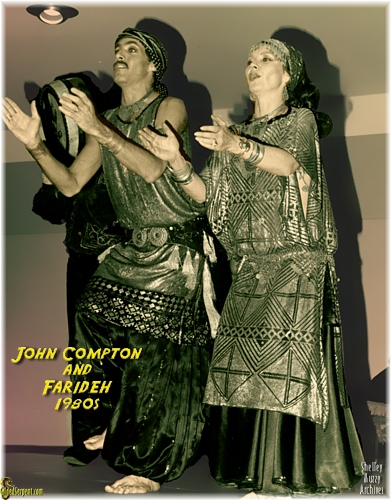
 Geometrics consist of large and small diamonds filled with cross stitch, lines or grids and chevrons.  Most of the shawls are white, ecru or black.  I believe the colored shawls were dyed after they were made or sold.  I have seen them in the classic rectangle shape, as bed canopies, and in small squares.  There is evidence that triangle and small rectangle shawls were made in Syria of a much finer softer net and worked in real silver.  I have seen several of these and they are cited in The Arts and Crafts of Syria by Johannes Kalter.  These pieces have delicate finished edgings.  There were a number of dresses made from assuit that were originally designed as long traditional dresses, not shawls made into dresses.  They are patterned with appropriate protective embroidery designs around the neck openings, sleeve edges, side openings and usually triangular filled areas across the pelvic area.  Upon close examination of the rectangular shawls, you will often be able to discern a discrepancy in pattern along the side that is considered the “signature” of the embroiderer.John Compton and Farideh in the 1980s
Today we can see assuit worn in the vintage Egyptian films of famous dancers.  The dresses usually denote the dancer as doing a baladi (country) style dance, which would be a toss to the origin of the shawls in Upper Egypt, the country.  The 1950’s production of Samson and Delilah starring Hedy Lamar shows the splendor of its use as exotic costuming for Ms. Lamar.  She appears in two magnificent outfits, one of white and one of black assuit shawls made into dresses.  The more modern film adaptation of Agatha Christie’s Death on the Nile features Mia Farrow wearing a late ‘20’s, early ‘30’s style gown of ecru assuit.  During the late 60’s and early 70’s the pioneer of Middle Eastern dance on the West Coast, Jamila Salimpour, gave great impetus to a revived interest in this fascinating cloth.  When she took Middle Eastern dance out of the clubs and onto the stage of the Northern Renaissance Pleasure Faire, they became her signature look.  Her troupe of dancers, Bal Anat, became famous for draping themselves in this exotic fabric and achieved a romantic, tribal elegance, entertaining families with a fantasy variety show.  

Many old pieces of assuit have found their way into private collections and even scraps can sell for high prices to become incorporated into the modern tribal look popular with some present day performers.  There is new assuit being manufactured, but the cloth and workmanship are light years away from the drape and weight of the older shawls.  The older pieces were labor intensive and expensive.  It is unlikely that we will see this quality of workmanship revived.  The romance that surrounds these shawls harkens back to a different era, when handicrafts were valued for their own sake, and intricate decoration of everyday objects was part of everyone’s life.
If you do own one of the older shawls, or should you be looking for one, a note on their storage: The metal used for design can cause the cotton or linen thread base net to rot.  Metal just does this naturally, but if the cloth has been exposed to light and dust, it speeds up the process of deterioration.  Perspiration is deadly to both cloth and metal.  Do not fold the pieces to store.  Simply lift them up and sort of puddle them in a nice acid free paper or chemical free bag, out of the light.  At my advancing age, and having coveted the shawls as both a dancer and textile collector, I hesitate to tell you not to use them or wear them.  Egads, if they are in good condition, wear them, flaunt them, enjoy them.  Try not to hang them on the wall in the sun, but do show them off.  They’ve been here a long time and you won’t be.
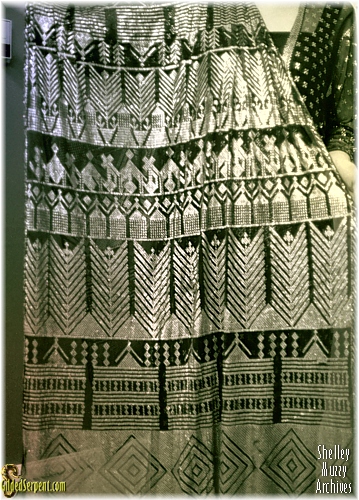
 

Closeup

Yasmela's daughter Lisa models Faridah's Assuit
My daughter Lise models a dress that belonged to Farideh as do all the shawls modeled. 
The photo with two figures on it is of a long jacket.  I have never seen another shawl with that kind of patterning. 
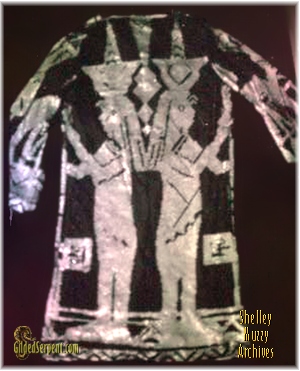
rare assuit figure coat


use the comment box

Have a comment? Use or comment section at the bottom of this page or Send us a letter!
Check the "Letters to the Editor" for other possible viewpoints!

Ready for more?

  • The Jamila Experience
    All of these feelings fled as soon as Jamila walked through the door. A big impressive woman clad entirely in black…
  • The Bou-Saada Bus
    Every single one of us could play an instrument, sing, dance, run a sound board, set a stage with backdrop, lights, monitors and microphones, plug them in, and put them away. We made our own costumes and our own drums and used duct tape in a thousand creative ways. While we never made a living from it, it was our way of life. Our experiences will bond us forever.
  • Romancing the Road (The Bousada Troupe Tours)
    We carved our own niche, created our own style, scandalized, delighted, educated and entertained everyone around us, including ourselves. We were “Bou-Saada”.
  • Dance Contests
    People being who they are, and dance and art and America being what they are, there will always be the competitive urge, the attitude that success is defined by the amount of your income, the number of your trophies.
  • Assiut / Assuit, Fascinating FAQs
    However, mosquito netting was invented by the Egyptians and dates back thousands of years.
  • Lace and My Muses Part 1: Egyptian Mummy Lace or “Assiute Cloth”
    I fastened around my hips a white Assuite cloth encrusted with gold knots throughout, forming pictographs of falcons, pyramids, crosses, and diamond shaped designs.
  • Antique Textiles: Renewed Life for Dance
    In fact, we often danced for many little luncheon gigs in offices and other places as a surprise birthday gift—to the music of our own solo sagat. Now, that is a skill that I have never seen anyone repeat since the early seventies!
  • Antique Textiles: Part 2 Costuming Before the Reign of Egyptian Costumers
    I view today’s dance values as interlopers—meant to mitigate Belly dance’s checkered past by exchanging its innate free emotional expression for speed and difficulty of execution and an over-the-top outpouring of energy that is neither sensual or exotic.
  • Antique Textiles Part 3: Creating Your Unique Statement
    It is possible that you may never have performed professionally while wearing a lampshade on your head… but I have!
  • Lace and My Muses, Part 4 of 5:Tarnished StarDust
    Not until very recent times, could I admit, even to myself, that I had lost a large part of my creative thrust along with many of my treasured friendships because I had perceived wrongly that I needed to become more like the Egyptian and Lebanese dancers of the day.
  • Antique Texttiles: Part 5, Lace and My Muses: Treasures
    I was looking at a piece of artwork featuring a classical dancer of the past, turning it this way and that to get a better view, and suddenly, I realized that I had lost contact with my treasured mentors and had also abandoned my sense of artistic direction that they had helped to foster within me.
 

Gilded Serpent presents...

Amani Oriental Festival Photos

October 25-29, 2011, Beirut, Lebanon

Amani

Most photos by Gabriel Monserrat Lopez
Introduction by Lucia
additional help and some photos from Aradia
posted February 11, 2012

Intro, Opening Gala photos, Saturday Finals, Workshops, Tours & Shopping

On October 25 – 29, 2011, Amani of Lebanon hosted the Amani Oriental Festival 2011 in Beirut, Lebanon. The show and workshops were held at the Al Madina Theatre in downtown Beirut. The organizers included, Amani, Ali Reda and the Amani Team. The event attracted performers from around the world, and instructors from North America, Central America, the Middle East and Europe. There was media from the LBC and the opening and closing night sceremonies were televised and internationally broadcasted.

As a professional performer, I was impressed with the high caliber of dance instructors. The majority of instructors were Lebanese and offered a diverse repertoire of Lebanese Oriental and folkloric technique with emphasis in dramatic moves, staging and communication through movement with modern dance components.

Classes were offered in makeup, staging, use of props. There were also special ethnic classes in Morrocan tray, Brazilian Samba Fusion, Flamenco Fusion, Indian Doholla, Dabke, and more.

This was my first time being in Lebanon and it was a thrilling experience. I have traveled several times to the Middle East and attended weeklong+ seminars/Festivals in Turkey, Egypt and throughout the USA. The classes were smaller in size than the Ahlan Wa Sahlan, or Little Egypts Intensive seminars, so we received more individualized attention. Instructors were close by, so we could see their every move, their emotional flare and sense the spirit of dance.

The students were more polite – no charging, pushing to get to the front of the stage. It was as if everyone was there to learn as a professional, to enjoy and share the passion of dance and to treat one as a professional. Our questions were answered on the spot, and we were permitted to review material several times. It was delightful.

The competition was held on Wednesday, October 26 with a preliminary round. Applicants were previously required to submit 2 pieces of music by email to the Amani Team, subject to the posted rules. At the preliminary round, judges (instructors, including Amani) watched each performer dance to the 2 pieces of music. Competitors were picked in random order, and we were permitted to watch each other.

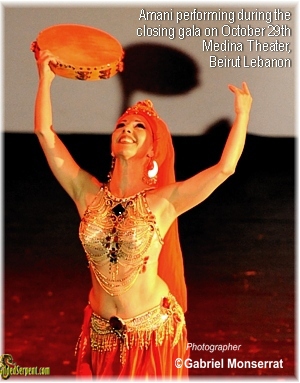
On Saturday afternoon, finalists for the competition were announced. That evening, the 11 finalists performed and additional judges were summoned to watch and score each dancer. The audience also participated with wild cheers and clapping. After the 2nd round, 6 performers were selected to compete in the final round to a ‘surprise’ piece of music, selected by the Amani Team. Amani performed and captivated the audience with her exquisite technique and passionate, fluid moves. The entire closing ceremony was televised, with celebrity vocalists and musicians. In the final round, all 6 competitors danced on stage to one of Amani-Bassem Yazbek’s famous drum solos. This was a very exciting event and I was thrilled to participate and win 2nd place. The awards ceremony was held at the end of the evening and each competitor received a certificate for their efforts. This was a fun, gracious ending to a fabulous seminar.

Opening Gala

Wednesday October 25, 2011
Al Madina Theatre, Beirut Lebanon

Amani TV interview

Amani is interviewed by a local TV station there covering opening night.
She is wearing a tradition Lebanese princess outfit.

Amani

Amani dances and emcee’d the show in the princess outfit

Amani and Mayora

Amani and Maya Gaorry backstage

Amani Jabril

Amani Jabril of Georgia, USA, teacher performs in Opening Gala

Aradia

Aradia of Las Vegas, NV

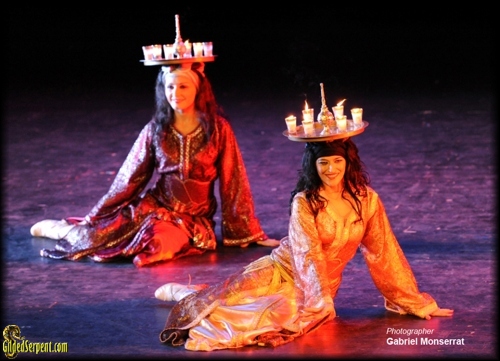
Duet Balancing Trays

Perla and her group perform Moroccoan Shihat

Dalylah

Dalyla of Spain


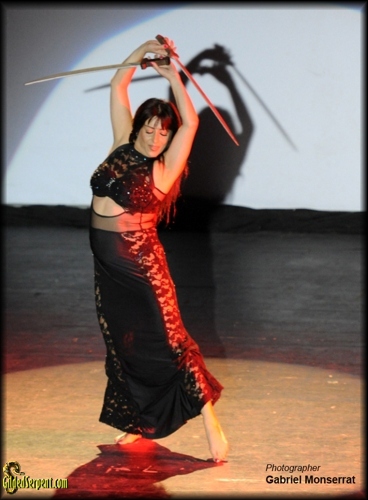
Double sowrd by

Double sword dance by Margo Kalfayan of Lebanon.


Folkloric

The folkloric dance troupe, SAWA.


George and dancerLucia

Georgia Schmid and Lucia Herlinda dance to Walid Assaf
They are both members of Morwenna and Walid‘s dance group which is based in Los Angeles, CA


Helena of Spain

Helena Rull of Spain performs Double Veil.
[editor’s note -notice awesome snake costume!]

Helwa and

Munir Nellmeldin (From Argentina, taught Dabkeh) and Helwa (From Brazil, taught Oriental Samba Fussion)
Helwa’s husband, Gabriel, is the photographer for most of these photos. They live in Spain.

Helwa

Helwa doing Samba Oriental

Maya

Maya Gaorry of Italy.

Munir

Munir Nellmled in Dabkeh dance

Georgette

Nayin dances as a Georgette Bebara choreography. She is part of
Gerogette Gebara’s ballet and modern dance company.


Singer

Singer Marwan Al Chami thrilled audience with his folkloric songs

Morwena and Walid

Morwenna and Walid Assaf.

Dancers joins the singer onstage

Dancers join the singer onstage for the finale before intermission.

Walid

Below- Walid Assaf exciting Lebanese rhythms
Mizmar player Ali Al Madbouh and Tabl player.

Georgette saying thank you

Gerogette Gebara saying thank you after receiving lifetime acheivement award.
Georgette is a famous teacher in Lebanon.

Sumana, 1st place

Sumaya won 1st place.
This photo of her in the black costume is from dancing in prelimniaries on Wednesday.

Giada
Giada of Italy Made it into the first round of finals

Jeanine Khoury of Lebanon

Jeanine Khoury of Lebanon, competed in prelims Wednesday night

Mi-ki of Japan

Mi-Ki of Japan dancing in the prelims on Wednesday.


Saturday Finals Night

Amani with winners

Amani with a few of the winners on the Finals Night
1- Diaini Vacaro of Brazil living in Lebanon, 2- Sumaya of Bella Russia wins 1st place-"Sultana",
3- Amani, 4-Maria de Fatima of Portugal, 5- Lucia Herlinda, 6- Skurchinska Svetlana of Ukraine.

Certificates
linked to enlargement

At the end of the Closing Gala, all the teachers, pupils, and contestants received a certificate of participation.

CLaudia Jovel of the USA
Claudia Jovel of the USA. She is student of Aradia from Las Vegas.

In this photo she is competing in the finals.

1st winner
1st winner- Sumaya of Bella Russia– with trophy

Lucia 2nd place
Lucia Herlinda 2nd place. Here she is competing during the Finals on Saturday

3rd place winner

3rd place winner- Skurchinska Svetlana of the Ukraine.
Competing during the Closing Gala.

Diana of Brazil

Diaini Vacaro of Brazil won the "Audience Award of Presence"


Silvia Schori of Switzerland-award elegance

Sivia Schori of Switzerland received the "Audience Award for Elegance"

Fadi sings for an audience member

Fadi Harb sings to Georgette who is sitting in the audience on Saturday. This accurred Midway through the 2nd half.


Workshops


Bedouine Dance Workshop taught by Lebanese Teacher, Francois Rahmeh
1-?, 2- Diliani from Spain with flower in hair, 3-?, 4 Helwa, 5-?, 6- Perla in red scarf, 7-?, 8-?

workshop

Amani’s workshop

Helwa and mi-ki
Fun during a workshop
Helwa and with Mi-ki


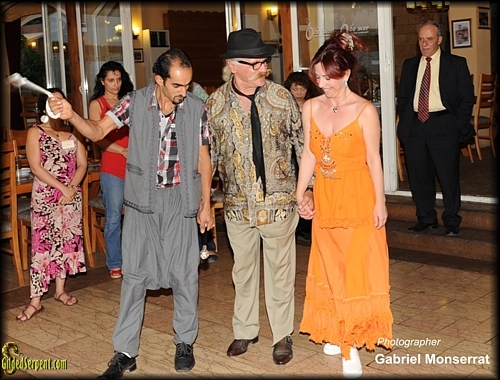
Amani and Tony Hanna dancing

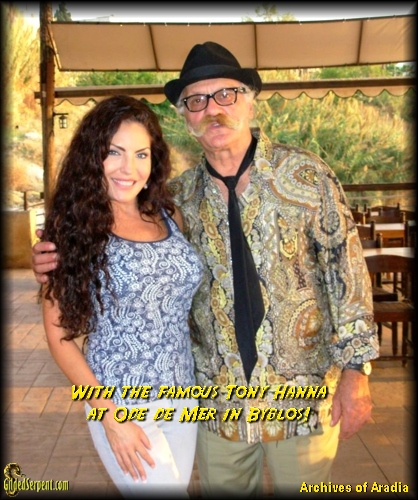
Tony Hanna (in black hat) dancing with group. Tony owns this beautiful restaurnat in Byblos on the ocean.
He is a well known performing and recording artist .


Restaurant
linked to enlargement

The tour lunch was at Tony Hanna‘s "O de Mer" restaurant. His restaurant is on the beach in the old city of Jbeil.

1- Claudia, 2-Lucia, 3-Silvia Schori, 4- Aradia. 5-Selene of Las Vegas, 6-?, 7-?, 8-Amani, 9-(behind Amani) 10- Munir, 11-Perla Elias, 12-Christina del Vecchio, 13- Helwa, 14-Alma de Flores, 15- Jessica Alaimo of Argentina in blue and white, 16- Dalylah al Qmar (in bangs) who translated the whole class, 17-Mi-ki, 18?

Dancing during the tour at the restaurant
Participant dance the debke during the Munir’s workshop held at the restaurant


TOUR and SHOPPING

Thursday’s Excursion: Bus tour to Byblos, Jouneih, Castle
Evening Dabke class with Mounir Nellmeddine
Dinner at Tony Hanna’s restaurant, Byblos

Shopping on Tour
Shopping on tour. Aradia models a Lebanese wedding outfit- it also came with the pointed hat!

COffee the Lebanese way
Coffee the Lebanese way. We went to a castle and then we walked into this room. The man in the fez is holding percusion instrument that he plays by striking it with a stick.

Names L-R: 1-student of Amani Jabril, Linda, 2-Aradia posing (only!) with argeela, 3- musican.4-unknown camo guy, 5-lady in black is in Perla’s dance group, 6-Lucia, 7-Mario Harb II of Green Lights with camera– see on facebook.

Palace
Beiteddine Palace
1-Teresa, 2-Amani Jabril, 3- American girl?, 4- Georgia, 5- in red shirt ,Perla, 6- Aradia, 7- sun glasses?, 8-sunglasses on head?, 9- brunette- Perla’s girl?, 10- Helwa, 11 ?, 12- Japanese girl in hat, 13, sun glasses?, 14-?, 15-Japanese girl, 16-Japanese girl, 17-Dalyla, 18-Linda

Harem
linked to enlargement

The harem at the Beiteddine Palace


Just a couple more photos from Aradia to show more mileau!

Shopping with Selena

Hamra Street in Beirut

Tony Hanna

Beach in Byblos

Next year’s festival will be held…….. next festival June 19-23, 2012
for more information see….http://www.amanionline.com/


use the comment box

Have a comment? Use or comment section at the bottom of this page or Send us a letter!
Check the "Letters to the Editor" for other possible viewpoints!

Ready for more?


Gilded Serpent presents...

Technique, Rhythm and Passion, Sharing the Intangible

All by Hossam Ramzy:
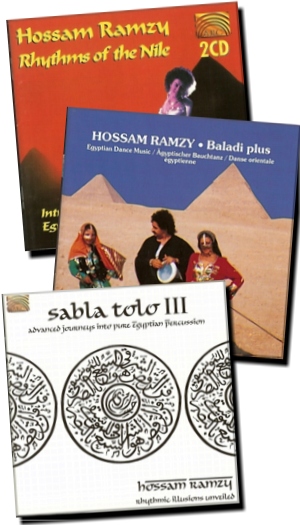
Rhythms of the Nile: Intro to Egyptian Dance Rhythms
Baladi Plus: Egyptian Dance Music
Sabla Tolo III

Ramzy CDs

CD Reviews by Sharifa  Asmar
posted February 10, 2012

Hossam Ramzy needs no introduction in the Oriental dance world, nor can he deny his passion for rhythm nor his reputation as one of the world’s finest tabla players.  His Oriental music CDs include classical, modern, and original compositions.   A dancer’s drummer, a creative force and dedicated teacher, the Egyptian-born master drummer pioneered the development of rhythm CDs for instruction and practice.  It is safe to say that would be unusual if an experienced dancer or a drummer didn’t own at least one Hossam Ramzy CD.

Rhythms of the NileRhythms of the Nile: Introduction to Egyptian Dance Rhythms- 2 CD set

Rhythms of the Nile: Introduction to Egyptian Dance Rhythms is an educational instructional CD for both dancer and drummer.  Ramzy developed this CD following a request from the Raks Sharki School in London, for a CD of most-common Raks Sharki rhythms.  I can only speculate that like me, the requesting instructor found the availability of extended rhythm tracks few and far between.  This CD set covers 11 rhythms:  Masmoudi, Maqsoum, Saaidi, Fallahi, Zaar, Malfuf, Karachi,  ElZaffa, Three-Four Time, Samaii, and his own original contribution, Abu el Khamsa or “Father of Five.” 

Rhythms of the Nile is one of the most important CDs in my library.  While I have lots of instructional rhythm CDs, this is one of my top three – all the others are just collecting dust.

The importance of Oriental music to the Oriental dancer’s craft – be the music made visible- makes the development of the dancer’s ear paramount.  Exposure to the rhythmic foundations of Oriental music affects overall musicality and interpretation.  Inexperienced dancers are actively searching for rhythm with each step.  Rhythms of the Nile is their first pair of shoes. 

CD 1 is noted as  “a workshop in Egyptian Dance” and introduces 11 Raks Sharki rhythms along with the various drums and percussion instruments (including the tabla, darbuka, duf, riqq, mazhar and more) that make the rhythms of the Nile.  Designed for the dancer, rather than the drummer, Hossam begins each with a description of rhythm, its musical signature, and some words about the “way we feel it.”  His instruction is peppered with whats and whys rather than just how-tos. 

Among my favorites is his description of the Zaar rhythm as “very spooky” and how offerings of game, sheep or young camel are common with this ritual for driving out evil spirits.  Not your usual musical commentary – eh?

  ElZeffa is described as “our way of sending newly wedded couples on their honeymoon.”   These little cultural descriptions connect the listener to the rhythms in an organic way- bringing the intangible emotional nuances to the surface.  Hossam’s voice is charming, clear, crisp, and easily understood with only a hint of an accent.

Less experienced dancers should start with CD 2 as the tracks are very clear rhythm without variation, unlike CD1 where the rhythms are decorated with variations and may be more difficult to pick out.  After a bit with CD 2, CD 1 will make more sense.

CD 2 is “a workshop of Egyptian percussion” and is very basic rhythm instruction intended for baby drummers, however, the dancer will benefit greatly from it.  CD 2 is where we find more detailed descriptions of the different drums and specific instructions for dums and taks on each.  Also there are extended rhythm tracks for practice.  Hossam’s confident easy-going style continues: politely, but firmly, admonishing his listeners to not proceed without understanding the terms used,  “… as this is a major cause to the halting of any studying process,”  referring to the glossary included in the liner notes.

Both CDs are recorded in an easy-to-follow format with pleasant and informative commentary.  The information provided with the tracks is even clearer with the liner notes, a word-for-word transcript of the CDs, allowing the listener to read along with Hossam’s words.  The liner notes are really a 25-26 pg. booklet of the CD commentary in 4 languages, an illustrated musical notation of the included rhythms, and the glossary.  This CD set is not meant to be the beginning and end all of instruction – it is an introduction.  Hossam, in his teaching wisdom, provides the appropriate level of information without too much to confuse the listener.

Rhythms of the Nile is a primer, reference, a teaching tool, a refresher course – in short , everything Ramzy intended it to be.

Newer dancers, armed with a recognition of basic rhythms and their various drum incarnations, may expand their musical abilities quicker.  Experienced dancers will find a new understanding of an old favorite and an excellent companion for finger cymbal workouts.  Instructors of dance and drumming alike will find this a useful CD for organizing their own thoughts and movements for lessons and practice sessions.   It is a first stop on a journey to a working relationship with Egyptian (and Arabic) music.  

Rating: 3 1/2 zils
Zil Rating- 3


Baladi Plus

Baladi Plus

A second stop on our music journey, Baladi Plus is meant to be the follow-up to Rhythms of the Nile. 

This time the familiar rhythms come fully orchestrated for surround-sound music for dance, dance practice and dance instruction.  And dance you will! It’s impossible to sit and listen to this CD- it’s just too juicy. 

The eight tracks are all between 6-9 minutes with the exception of the first – Night Foal – a rebaba and mizmar taxim.   I can smell Egypt when I hear that piece.  The two instruments are easily identified making it ideal to introduce the rebaba and mizmar instruments to my classes.  The 2nd, 3rd and 4th tracks are primarily rhythm pieces- Saidi, Masmoudi-Maqsoum, and Zaar, respectively.  Wonderfully rich and strong, these three pieces are a backbone of practice and performance.  Arabian Knights, a solid Saidi rhythm speaks of good times and is featured on the Prince of Persia soundtrack.  Mashalla,  the masmoudi, is motivation-in-motion while the deeply rhythmic zaar, Alla Hai, is… well, spooky.   Baladi, Egypt’s urbanized folk music and Mohammed Ali Street, where accordions and rhythm drive the night, are captured in Baladi we Hetta (track 5).  Again, communicating the intangible, Hossam describes track 6, Wahda We Bas, as “food for the soul.”  It’s hard to argue with the master.  Those torchy oud taxims flow like lava around the crisp Wahda Kebira and subtle Samaii… and so do you.   Lively track 7, Malfuf Ala Westi, “wrapped around my hip”, is backed up by the ubiquitous accordion – which I love, just for the record.  The final track, Roah Albi is an exhilarating drum solo with rhythm changes and finger cymbal interplay that showcase the mastery of Ramzy’s drumming.

Baladi Plus is the perfect storm- incredibly useful in any setting – entrances, exits, taxims, folkloric, Baladi, drum solo  – it’s all here in one CD.  Thanks to editing software, dancers can perform sections from this musical tapestry or use entire tracks for larger shows and teaching.  It is the only CD I use or need for my performance class drills.  But the best thing about Baladi Plus is the music – I can smell Egypt, all of it. 

 Rating: 4 zils
Zil Rating- 4


Sabla Tolo 3SABLA TOLO III- Advanced Journeys into pure Egyptian Percussion
Rhythmic  Illusions Unveil

The third installment of Ramzy’s Sabla Tolo series, Sabla Tolo 3 continues his new collection of stand-alone drum solos, or rather drum songs.  Hossam created this series for dancers, to share new rhythm compositions and to showcase percussion as a song – developing each drum song as a musical song does – with verses and repeating motifs.  The concept and these drum songs are something different and inspiring.  The rhythm changes and transitions are fresh, exciting, and challenging. 

In the extensive Sabla Tolo liner booklets, Hossam relates the origins of the drum solo in Raks Sharki and how it relates to the Sabla Tolo series.  It seems that Hossam is a drum solo freak – really?  Who knew?  He’s studied every drum solo, watched them make-or-break dance routines and pondered the possibilities of greater Egyptian percussion.  Could it be emotional, inspirational, even musical?  Attempting to answer these questions, Ramzy’s  Sabla Tolo series is packed with original full percussion arrangements of drum songs for Oriental dance using Egyptian and other Middle Eastern rhythms, an imaginative innovation in almost 50 years of drum solo tradition. 

In Sabla Tolo 3, Hossam introduces the concept of rhythmic illusions – and of course, he unveils it for us with the first track, Saraab Iqaay (Rhythmic Illusion).  In the introduction to this piece he explains his concept of rhythmic illusion-the morphing of rhythmic motifs from one to another.  It’s going to take a bit for this dancer to absorb that both intellectually and musically. 

To this ear, the dynamic transitions between the rhythms with different time signatures sound bumpy- like a glitch in the music. 

The remaining 12 tracks are not “bumpy”, average 4 minutes each, and also display multiple traditional rhythms transformed by Hossam’s magic fingers.  The exception is track 9, Wuh Ya Booy is only 2 ½ minutes and all Saidi. 

Each track is described fully in the accompanying liner booklet:  Hossam’s introduction, the song’s background and its meaning to him.  He provides a detailed breakdown in an easy-to-follow chart with transitions for each track:  the musical score, the rhythms, time signatures, number of bars and musical notation. 

All are very danceable, traverse a variety of moods and surely compliment a variety of dancers’ styles.

All these liner booklets, especially the Sabla Tolo 3, are amazing little resources, but it gets better.   The identical set of notes for this CD is available for download from his website.  It comes in larger print for reading ease.  Listen to the selection and follow along with the booklet.  It is a choreographic dream and it is meant to be, saving drummer and dancer alike frustration and time.  As always, Ramzy’s introductions provide clues as to the context of the music and how “we feel it.” 

This is my first look at the Sabla Tolo series and I’m looking forward to the first two CDs now.  I like Sabla Tolo 3, despite feeling some drum songs are smoother than others.  I particularly enjoy track 2, Serr Maktoub and track 5, Khamsa Wa Khamsa  – I easily hear their  “song” qualities. 

Sabla Tolo 3 is a modern, exciting addition to Oriental dance.  It has broad appeal beyond Oriental dance and a definite for any drum solo collector and for those who find little inspiration in traditional pieces.  Dancers should heed the subtitle, Advanced Journeys into pure Egyptian Percussion, and decide appropriately as to the level suitability for performance or practice.

Rating:  3 zils
3 zil rating

Rhythms of the Nile and Baladi Plus are a must in any Oriental dance library.  They are meant to be and function well as sequential and complimentary, although they easily stand alone on their merits as preparation for our third CD, Sabla Tolo III. 

Sabla Tolo III: Advanced Journeys into pure Egyptian Percussion represents an innovation in Oriental dance music, a departure from the traditional percussion style of other two CDs and is not for the faint-hearted.  Together the three present a progression of Oriental dance rhythms- from basic to complex.

Resources and Purchase information

www.hossamramzy.com

use the comment box

Have a comment? Use or comment section at the bottom of this page or Send us a letter!
Check the "Letters to the Editor" for other possible viewpoints!

Ready for more?


Gilded Serpent presents...

Group Division Photos and Video


Belly Dancer of the Universe Competition 2011
Saturday, February 19, 2011

Photos by Carl Sermon
Video by Lynette
posted February 8, 2012

The Belly Dancer of the Universe Competion is produced by Tonya and Atlantis in mid February each year in the Long Beach Convention Center.
Most photos are linked to enlargements.

Alexandria Dance Company of Arizona

Angelika Dance Ensemble of Los Angeles


Arabina

Arabina – Group Champion


Beach Bellies


Bella Oasis – 2nd Runner Up


Jewels of Miehana


Mirage in Motion – People’s Choice Award


Orua Gouzales and Lila Licious


Rakasaat


Raks A’Diva – 3rd Runner Up


Sassafras


Talisman Dance Company – Congeniality Award


Troupe Elisheva


Wings of Isis


Ya Amar Bellydance Troupe- 1st Runner Up


Video collage of some, not all, of these troupes. Yes, the sounds is a little off. We are working on it!

Support Carl's work!

This year’s contest is this month!

http://www.bellydanceroftheuniverse.com/bduc2012.htm

use the comment box

Have a comment? Use or comment section at the bottom of this page or Send us a letter!
Check the "Letters to the Editor" for other possible viewpoints!

Ready for more?

  • Nelly, Beloved Star of Egypt, An Interview with Nelly Fouad
    I asked Nelly if there was any comparison to the Awalim of Mohamed Ali street and she said no, they were different; the Alexandrian Awalim had a real school for teaching the arts — they were strict and corrected your mistakes.

  • I’ve seen this often here, that men and boys will readily play with the little ones in an involved and endearing way.
  • Bully for You! The Science of Dance
    I have observed a cycle in which, periodically, emerging dancers who have obtained slightly more prominence in the craft begin to make recycled attempts to regulate it through instructional devices in order to control it to their own personal ends.

  • “Sabri worked everywhere, especially the Nile Hilton. He did a lot of weddings, so we worked at all the hotels. We subbed for Nagwa Fouad at the Meridien hotel on her night off. We went all over Cairo and Alex too, so it was a good way to get around and know the area.
  • Gigbag Check #33 with Sa’diyya of Texas!
    Gilded Serpent catches Sa’diyya backstage at the Belly Dancer of the Universe Competition in February 2011. She shows us her tools of the trade, including:safety pins (of course), mirror, curling iron, carpet tape, and all of her jewelry organized in a binder full of zip lock bags. She also tell us about using a fedora in a modern folk dance from Iran or Persia. Her mother helps her with her costumes.
  • Sahra’s Drum Solo Class with Amir Sofi at the Bellydancer of the Universe Competition in 2011,
    Sahra is also given the lifetime achievement award. Lovina gives testimonial to how much she enjoyed the class
  • Facing the Truth, Working as a Dancer in Egypt
    Sometimes the dirty facts of dancing in Cairo can be more interesting than the pristine Oriental fantasy… at least, it is when you tell the story later! PHOTOS!
  • A Dancer’s Destiny, Part 2: A New Dancer Emerges
    Lou Shelby had told me to begin that Friday night. (The Fez only had entertainment on the weekends at that time.) An Egyptian dancer, Maya, and a Las Vegas dancer, Cozette, were working there; so I was the third dancer on the program. I came in early for a rehearsal; Lou’s idea was to have a real Hollywood-like production: I was to emerge in a flood of colored lights amidst smoke from a smoke machine and open his show.
  • A Month In Cairo, Report #5: Weddings, Visiting Raqia Hassan, Some Thoughts about Egypt’s Future
    It was stimulating to talk about a wide range of topics, Egyptian politics and societal issues included, such as the continuing trend for Muslim women and girls to wear scarves – many, if not most, to make a fashion statement, others because of family, husband, or peer pressure, and some to make a political statement.
  • The Golden Era of the Arabic Nightclubs in London Part 1: Making the Move from San Francisco to London
    The ten o’clock dinner show featured music, three dancers, and one singer. The real show started at midnight. In the audience were mostly Arabs, dressed in the most expensive designer clothes with diamond watches and jewelry flashing in the stage light. There was a scent of expensive perfume mixed with cigarette smoke. The tables were covered with flower arrangements and lavish silver platters of fruit.
 

Gilded Serpent presents...

Nelly, Beloved Star of Egypt

An Interview with Nelly Fouad

Nelly Fouad

by Caroline Evanoff
posted February 4, 2012

As a dancer who loves Egyptian style Raqs Sharqi  you probably have come across many famous "Schwaya Baladi" clips, including the adorable dancer Nelly Fouad with the megawatt smile:  her skill, her creativity, her sheer joy of performing, and not to forget those cute  little caps!  When I first met Nelly 13 years ago it was as if those clips had come to life! She hadn’t changed a bit.   And even now when I see dancers meet her for the first time I know they are thinking the same thing and can’t help being starstruck.

Nelly Fouad, born in Alexandria (under another name), joined an "Awalim" troupe whilst still in high school at the tender age of 13. The group, led by "Alma" Sinaya, taught the young Nelly all the basics of how to dance. Nelly was a quick learner and was soon sent off to perform in weddings at night. In order to keep her two lives separate, schoolgirl by day, performer at night, she  took on her famous name of "Nelly" after her Armenian grandmother.

I asked Nelly if there was any comparison to the Awalim of Mohamed Ali street and she said no, they were different; the Alexandrian Awalim had a real school for teaching the arts — they were strict and corrected your mistakes.

The pivotal point in her career came as she filled in for Souheir Zaki one night in a musical stage production. Nelly caught the eye of director Mohamed Selim who had promotional photos taken of the young Nelly. This led her to Cairo,where she had once dreamed of studying  design and decor at college.

Incredibly, it was Nelly’s mother, in fact, who had encouraged Nelly to follow a dance career instead!

This is highly unusual in the Middle East, but it turned out that Nelly’s mother was a neighbour of Souheir Zaki and admired her greatly. (Souheir Zaki is one of the few Egyptian dancers in history who is referred to as a lady or  "mokhtarrama," meaning  respectable .) "What about your father?" I asked Nelly as she smirked and said "My mother was very strong."  End of argument.

Whilst in Cairo, Nelly met the famous singer, composer, oud player and actor, Farid al-Atrash. One of the most influential artists of 20th century Arab culture he was a valuable contact to have. Farid owned a nightclub in Beirut (his mother was Lebanese) and invited Nelly to perform there which she did everyday for a year. He also helped put Nelly in the spotlight through promotional articles in Lebanon. She returned to Cairo on the wings of success and quickly started her career becoming one of the famous dancers in Egypt. Her career on stage and film spanned from the late 1970s, reaching her peak in the 1980s. She worked in all the top nightclubs: Semiramis, Cairo Hilton, Concorde el Salam, Marriott, etc. She also worked in Haram Street nightclubs such as Andalous and Arizona, which Nani Sabry (also present at this interview) was quick to point out that "Haram street was not like now, the nightclubs were all five-star back then."

During this time, Nelly continued to improve her skills, studying with teachers and choreographers  such as Salwa Thaleb, Hassan Affifi, Dowlet and her husband, Mohamed Khalil. However, it was with Mme Raqia Hassan that she studied the longest and they remain best of friends to this day.   (During the interview they "argue" over the best way to make "maracona bil forn"and other Egyptian  recipes with the ease and fun that only comes from a long term friendship.) Such friendship also led Nelly to finally teach.  Raqia had been pushing Nelly for years to teach but Nelly held back (as her fans waited patiently as well) . Nelly was a little shy at first but now is proud to be a teacher at Ahlan wa Sahlan festival for the last two years, in addition to teaching privately. She also appears in Raqia Hassan’s DVDs Volumnes 10 and 11,   showing that she hasn’t lost a thing in her "time out."  I had been waiting  for years to find out how she executed some of her signature moves, and when I remind her she immediately jumps  up to demonstrate with all the vigour and ease of someone who just loves the dance!

Her signature stomach move — which she describes as a "stomach shimmy" as she breaks it down again for me: subtle use of the pelvis pulling in –and her famous "shuffle" (choo choo) shimmy on demi pointe.

Nelly’s impromptu performance reminds Raqia of when she first met Nelly and says that "all the dancers from Alexandria have good hips and movements, they dance well.  Nelly just  needed some guidance and refining of the moves".  Raqia also exclaims that it was the first time she had seen the movement which she calls "maya" and Nelly jumps up again to demonstrate her version of the outward figure 8 move.  

Raqia says that that move must have come from Alexandria as dancers in Cairo were not doing that move at that time.

I asked Nelly what she thought about dancers today to which she replied "I love Dina," and regards to foreign dancers, "Beautiful and technically fantastic…..but they lack the feeling of Egyptian dancers."

So I ask if she has any advice for the foreign dancer and both Raqia and Nelly concede "Yes, they have to come here, to Egypt, to live and learn Arabic; that is the only way to capture the feeling.”

Nelly is one of the most down to earth, generous,  beautiful-spirited dancers and  teachers out there. Over the course of her career she also travelled to perform in London, Tokyo, Iraq, Dubai, Syria and the USA. Surprisingly, she has only taught workshops once abroad in Paris with Mme Raqia.

Personal facts about Nelly:

  • Her favourite dancers are Souheir Zaki and Naima Akef
  • Her costumes were designed by Mme Abla and Mme Rowya
  • She loves dogs and currently  has 3
  • She has one daughter who studied in the U.S.
  • Nelly danced in three Egyptian films: Aghala min Hayeti, AlBaad Yezaheb ela el Mazzoon Marrateen and Akhuwait al Banat.

Resources:
Nelly is one of the star teachers at Ahlan Wa Sahlan Festival as well as the Winter Intensive Course for Teacher Training both in Cairo.
See www.raqiahassan.net for details.


use the comment box

Have a comment? Use or comment section at the bottom of this page or Send us a letter!
Check the "Letters to the Editor" for other possible viewpoints!

Ready for more?

  • Permits, IDs, Licensing, Foreign Dancers in Cairo,
    It dawned on me that some dodgy nightclub manager, whom I didn’t know personally, had complete control over my passport and my freedom to leave! So, I had no alternative other than to end my contract in order to get my passport back which also meant halting the lengthy paper process.

  • I’ve seen this often here, that men and boys will readily play with the little ones in an involved and endearing way.
  • Bully for You! The Science of Dance
    I have observed a cycle in which, periodically, emerging dancers who have obtained slightly more prominence in the craft begin to make recycled attempts to regulate it through instructional devices in order to control it to their own personal ends.

  • “Sabri worked everywhere, especially the Nile Hilton. He did a lot of weddings, so we worked at all the hotels. We subbed for Nagwa Fouad at the Meridien hotel on her night off. We went all over Cairo and Alex too, so it was a good way to get around and know the area.
  • Gigbag Check #33 with Sa’diyya of Texas!
    Gilded Serpent catches Sa’diyya backstage at the Belly Dancer of the Universe Competition in February 2011. She shows us her tools of the trade, including:safety pins (of course), mirror, curling iron, carpet tape, and all of her jewelry organized in a binder full of zip lock bags. She also tell us about using a fedora in a modern folk dance from Iran or Persia. Her mother helps her with her costumes.
  • Sahra’s Drum Solo Class with Amir Sofi at the Bellydancer of the Universe Competition in 2011,
    Sahra is also given the lifetime achievement award. Lovina gives testimonial to how much she enjoyed the class
  • Facing the Truth, Working as a Dancer in Egypt
    Sometimes the dirty facts of dancing in Cairo can be more interesting than the pristine Oriental fantasy… at least, it is when you tell the story later! PHOTOS!
  • A Dancer’s Destiny, Part 2: A New Dancer Emerges
    Lou Shelby had told me to begin that Friday night. (The Fez only had entertainment on the weekends at that time.) An Egyptian dancer, Maya, and a Las Vegas dancer, Cozette, were working there; so I was the third dancer on the program. I came in early for a rehearsal; Lou’s idea was to have a real Hollywood-like production: I was to emerge in a flood of colored lights amidst smoke from a smoke machine and open his show.
 

Gilded Serpent presents...

Conditioning and Floor work; Two Strong Strengtheners!

Cassandra’s Conditioning Class
Ruby’s Flawless Floorwork

Cassandra and Ruby DVDs

DVD review by Samira Shuruk
posted February 3, 2012

Let me start by saying a little about my experience and expectations.  I’ve been teaching fitness and movement over 20 years.  Currently, I perform belly dance, I teach both belly dance, and Pilates full time.  It was with a bit of concern that I agreed to review these DVDs, as I have an extensive background in these topics.  While it would seem that that makes me the ideal candidate for this task, I am also very particular about these subjects.  I know that sometimes a high level of critique is not well received in the belly dance world of reviews.  

CassandraCassandra’s Conditioning Class:

This is a two disc DVD that includes two complete workouts.  DVD 1 incorporates more explanations and fewer repetitions, which is the appropriate place to start.  Because the basics are covered in the first disc, the second allows more time for repetitions and also covers advanced exercises. Each DVD includes approximately a one hour workout, which is chaptered if you don’t have a complete hour for exercise or if you prefer to focus on individual body parts.

“It is very important we present well-trained dance bodies on stage” Cassandra explains in the intro.

This DVD class not only helps a dancer learn the exercises to support the well-trained dance body, but also to enhance a longer dance career.  Cassandra provides clear and concise descriptions for body awareness, information that is also invaluable in dance refinement and performance.

This 2 DVD set includes on each disc:

  1. warm up
  2. standing series (balance and feet),
  3. spine and back exercises
  4. core and abdominal strength moves
  5. hips, thighs and gluteal exercises
  6. upper body strength
  7. stretching
  8. a performance by Cassandra.

The production was filmed in a simple studio and includes different views of the exercises which can be quite helpful.  Cassandra’s teaching method offers both excellent explanations for body awareness and wonderful technique. The body awareness stems largely from her descriptions of how a move should feel physically, something often absent in some teaching videos or classrooms.  If you, as a student feel this is lacking in your classroom environment, then I highly recommend this video to help you gain that crucial awareness.  If as a teacher you feel you could offer more in depth explanations to your students, this video provides excellent examples.  She employs careful choice of words and verbs that engage your mind in noticing the body.  

The moves to improve balance were excellent and she gives clear explanations for both effective technique, as well as safety, throughout.  I truly have only one critique.  I wish she had covered foot mistakes such as sickling (a dangerous bending of the ankle inward, creating a sickle shape).  The exercises were great – but some people benefit from seeing their mistake in addition to how to fix it.  This is so very minor and I only mention it so that I don’t seem biased.  

Both of Cassandra’s performances were in an intimate small stage/studio environment with a live audience and were thoroughly enjoyable.  With lovely musicality and technique, Cassandra commands the stage in a beautiful and relaxed manner.

I give Cassandra’s DVD set 4 zills!

Rating: 4 zils
Zil Rating- 4

RubyFlawless Floorwork:

Ruby is another wonderful instructor whom I have never met, but now hope to after watching her DVD.  I chose to review these DVDs together because of their shared component of conditioning exercises, but this DVD, of course, also covers Vintage Oriental style floorwork.

The DVD begins with a Pilates based conditioning section.  Ruby incorporates very important precautionary notes and presents many of the exercises in their “modified” (AKA easier) version, something I find to be quite appropriate in a DVD of this nature.  

I will note that there are two things Ruby does differently from my own Pilates experience.  She incorporates kegals (pelvic floor exercises) into her Pilates breathing.  I’ve come across that in some West Coast training, and have not seen it directly in Joseph Pilates writings.  Kegals are, however, fantastic exercises and an important part of a person’s health.  Incorporating it into these exercises makes good sense.

Based on my studies in physical therapy, I incorporate oblique stabilization through the mid back while doing many of the lying-down reaches in Pilates and Ruby doesn’t address this possibility in the exercises. I may be totally biased in wishing she did, but I feel they are incredibly important in developing muscles and awareness for excellent posture.

Ruby’s manner of addressing postural awareness in another section is superb. She covered the most common mistakes and then also addressed how to fix them.  This is excellent teaching and a vitally important part of the dance, whether it is floorwork or standing. I literally cheered that she did this.  

In her floorwork technique section, Ruby explains healthy knees, different foot positions and also provides easier options for many of the moves.  She demonstrates and explains less physically demanding “cheats” for getting up, for example, and she demonstrates everything with graceful technique and control.  

The actual combinations chapter breaks down into four smaller chapters comprised of two combinations, each with an explanation chapter and a drill chapter.  These full costume demos, as well as her costuming tutorial chapter are great at both showing and explaining what must be done with costuming and hair during floorwork.  

The DVD chapters include an intro, Pilates terminology, strengthening routine, technique, descents, ascents, combinations and extras.  The DVD total is approximately an hour, most of it in a dance studio with mirrors. Don’t discount the importance of the extras as these include a ten minute backstage warm up, a costuming tutorial and her engaging performance.  The warm up offers great ideas of how to safely and effectively prepare the body for a dance show when in a small space.  Ruby’s performance extra is gorgeous – she is a dancer who has a liquid grace in addition to strength.

If you want more floorwork, a floorwork practice companion or if floorwork is simply not available in your area, I highly recommend Ruby’s DVD.

Also 4 zills.  

Rating: 4 zils
Zil Rating- 4

Cassandra’s Conditioning Class and Ruby’s Flawless Floorwork DVDs provide excellent instruction, detailed body awareness and good exercises.  

Product Purchase information:

Cassandra’s Conditioning Class
Double DVD

Buy from Cassandra
$45 with music CD

From Turquoise Intl
$39

use the comment box

Have a comment? Use or comment section at the bottom of this page or Send us a letter!
Check the "Letters to the Editor" for other possible viewpoints!

Ready for more?


Gilded Serpent presents...

Last Round of Visits, Family Dinner Party, Wrap-up

A Month in Cairo- Report #6

Cairo Cats!
Part of “my” feral cat family in the apartment building

by Leyla Lanty
posted February 2, 2011

More About the Feral Animals:

Many Egyptians have cats and dogs for pets and love them dearly, but life for the street cats and dogs is hard. People give handouts to the feral cats, but feral dogs seem to be considered more of a nuisance than cats. Regardless, I saw bowls of water, usually near shops and entry ways of large apartment buildings where both cats and dogs quenched their thirst.  My "adopted" hall kitties are part of the group of feral cats that live in the halls of the 11 story building where I rented the apartment.  Those that came to my door on a fairly regular basis are 2 adult females and 2 two-month old kittens.  Once in a while a black cat, probably a year old, showed up.  The kittens want to follow me back inside the apartment.  Even the young ones know where the food comes from!

A Note on Public Accommodations (blush):

tissuesEveryone always carries a packet or two of facial tissues for various purposes.  The Egyptian version of facial tissues is very thick, more like a paper napkin than our sneeze catchers.  Most restaurants put boxes of them on the tables for customers to use as napkins.

Sometimes on the way to some activities, I feel a need to “pee” and that can be a real problem.  Retail stores do not usually have toilets for either customers or staff.  Where people "go" I don’t know for sure, but I have sometimes found myself using an ancient form of what I call a “squat toilet” where you place one foot on a raised foot rest on each side of a ceramic or concrete square with a hole between the foot rests and squat.  Sorry, no photos!  Needless to say, when I’m out and have to go, I look for an American or European style restaurant and use their toilet.  No one seems to mind.  Shopping malls usually have very nice public restrooms too.  McDonald’s, KFC and Pizza Hut restaurants always have super clean bathrooms and some of them even have toilet paper!  I always carry some facial tissues just in case.  In the photo, the last tissue in a pack of “Flora” floral-scented tissues.

Visits with Musician Houda el Artist:

During my stay in Cairo, I visited Houda el Artist, composer and accordion and keyboard master, at the music studio owned by him and his brother, world-famous drummer Sa3id el Artist.  Houda composed two of the songs on my CD “Golden Days Enchanting Nights” and played a major role in its production in Egypt.   We discussed various topics in music, friendship, etc. and drank tea and yansoon (anise tea).   We had a nice long talk about dancing with the music and about the “dance like an Egyptian or any other Arab” course I’m planning.  According to him, I’m on the right track.  I got the same reaction from Raqia when I discussed it with her, so I’m going to go ahead with my plans and offer it mid-winter.  We talked again about the social and political situation in Egypt and he said he thought things will get better in 2 or 3 years but it will be a bumpy ride.

In the photo, Houda el Artist on accordion at right, Sa3id El Artist on tabla (darbukka) in center and brother Ali el Artist on accordion at the left at Ahlan Wa Sahlan Festival Cairo 2009.


Photo of musicians
Photo credit – by Denise Marino

Party with Madame Shadia and Family:

A few days before leaving, I met with Ahmed and his family at their flat (in the same building as mine) and we walked about 5 blocks to the home of Ahmed’s daughter-in-law-to-be.  I walked with the ladies, a 2-year-old girl, Habiba, and a 3-year-old boy.   I’m glad the kids were with us, forcing us to walk slowly, because the unpaved street was difficult to walk on, with lots of potholes, rocks and ruts.  We got to the building and the elevator came when called but the car was about 1.5 feet above where it should have been!  In apartment buildings, the bowabs (doormen) know how to fix them but I wasn’t about to get into it in that condition!  The elevator was just big enough for 2 adults, 3 if they’re slim, and the misalignment combined with the claustrophobic size did not appeal to me, so up the 3 flights I climbed. 

While waiting for dinner to arrive (delivery from a nearby seafood place), we ate grapes and freshly cut melon and there were many animated conversations among the dozen or so people who were present.  It was great fun to watch Karim and the other young men playing with the children, teasing, gently pinching then hugging them then “bench-pressing the toddlers,” lifting them like weights and swinging them around and the children squealed in delight. 

I’ve seen this often here, that men and boys will readily play with the little ones in an involved and endearing way.

After dinner of delicious shrimp, grilled fish with special spices, salad, brown rice, followed by tea, yansoon (anise tea), karkady (hibiscus tea), Mdm. Shadia and her niece May pulled me into the back bedroom for some real partying with the ladies.  We took turns dancing solo and dancing with each other.  Following Shadia’s intricate sha3abi-sharqi moves was difficult at times but was a real opportunity to learn that style of dance.  We danced to a new recording of the song “Akdeb 3aleik”.  All four of us women took turns to show how we dance to this song.  Each one had different ways of interpreting it and each version fit the music beautifully!

Next evening, I met with Mdm. Shadia at her and her husband’s household items shop in the Sa3ida Zeinab district so we could have some private time to sit, drink tea and chat.  We did just that for almost 2 hours while customers occasionally stopped and shopped.  It was less than a month before Ramadan would start and like many other shops in the area, her shop offered for sale Ramadan lights that people use to decorate their homes for the 3eid, the celebration held at the end of the month of fasting.

Madam Shadia with Leyla
Photo of Leyla with Shadia with black bar

In the photo, Ramadan lights for sale outside Mdm. Shadia and her husband’s shop.  I did not get permission to display her photo so I have partially covered her face to avoid embarrassing her.

Lamps for Ramadan

 Store selling Ramadan lights across the busy street from Mdm. Shadia’s shop

Blingy Caftan

Last Evening in Cairo:

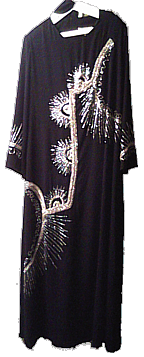
I spent my last evening in downtown Cairo shopping for a “bling-y” abaya, the long loose robe that many of the women wear sometimes on the street and often for special occasions.  I found one with an unusual asymmetric design of sparkling rhinestones on black fabric – plenty of “bling” and elegance, gorgeous!  On the way home we stopped on a side street close to the home neighborhood for delicious kofta (ground meat kebabs).  What a yummy way to wrap up my stay in Cairo!

Photo “Richly rhinestoned abaya bought in downtown Cairo”

Back in California:

I have mixed feelings about being back – glad to be home but would love to have stayed in Cairo longer.  Maybe someday…


Have a comment? Use or comment section at the bottom of this page or Send us a letter!
Check the "Letters to the Editor" for other possible viewpoints!

Ready for more?


Gilded Serpent presents...

Bully for You!

The Science of Dance

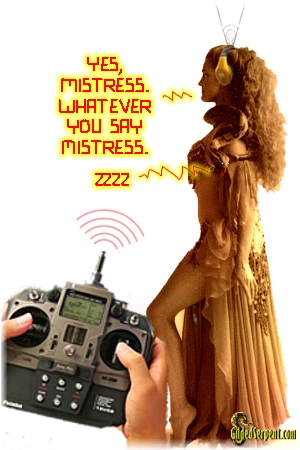
Remote control robot dancer

by Najia Marlyz
posted January 30, 2012

Scientifically speaking, there is no science to the development and unfolding of an art form. If this one single philosophy could be your shield against the small line of despoiling bullies who emerge with incredible regularity from the depths of some apparent human need, Belly dance or Middle Eastern Dance or Raqs Sharqi would be free to continue being what it once was and should have remained: the different dance form, the rogue dance form, “the back door to show business”, our entertainment, inspiration, source of joy, and tool for personal growth.

Instead, after four and a half decades of participating in the dance art called Belly dance and a variety of other evidently self-embarrassed names, I have observed a cycle in which, periodically, emerging dancers who have obtained slightly more prominence in the craft begin to make recycled attempts to regulate it through instructional devices in order to control it to their own personal ends.

You have probably already met a few of them. Through attempts to control other dancers and students, they become dance bullies and playground braggarts. Their ends, their goals, are always well meant. The objectives always differ just a little bit here and there: elevation of the art of Belly dance, public acceptance, technique superiority, equalization and acceptance of Belly dance by proponents of other dance forms. It makes a convincing a laundry list of desirable values that seem to offer them a greater sense of personal stature. Who are these dancers? Why are they here? Do they elevate the art of this dance form?

Aggression & Misdirected Intent

In the past, along with other seasoned dancers, I have noticed a tendency to excuse some aggressive dancers (who have gained reputations by their tireless clawing for position as “top dogs”) for their youthful energy and their mis-perception of Belly dance, seen through the rosy filters of cultural imperialism of the Western mind into Middle Eastern reality. The first evidence I noticed of imperialistic tendencies inside Belly dance appeared in some of the pages of early Belly dance-oriented periodicals such as Habibi Magazine and Bellydancer Magazine. I recall one such article long ago that I think appeared in an early issue of one of those two titles in which a self-described “army brat” wrote about her soldier-husband’s upcoming deployment to Morocco, and that because she would be living there with him for several years, her intention was to “teach the Moroccans how the dance really should be done” (apparently through her superior grasp of dance technique she had learned in America). We dancers, who were involved in teaching dance at the time, snickered and guffawed over her attitude and promptly forgot about her along with her great plan to teach Middle Eastern Dance to the Middle Easterners. In fact, I do not know what became of her career because we never heard from her again.

Well, then… If we dancers thought we had gotten off that easily, we were wrong! Over the past five decades, there has been a long succession of dancers who have dreamed up various dubious schemes. Some are quite clever, some devious, and some are both clever and devious–to get their own piece of the Belly dance pie. Hopefully, it would be a bigger and juicer piece than anybody else’s. It seemed, and still it seems, an odd choice of grappling wars to me; why not wrestle for a piece of Wall Street or something of tangible value instead of an ethnic dance that exists, for the most part, on the periphery of public interest? The resulting fracas is like a couple of children beating each other over a colorful plastic toy in an ever-widening sea of plastic toys.

The most obvious losing enterprise in this sweepstakes of wresting the remote control for our dance away from others is the process of trade-marking, and copyrighting. Though absolutely legal and valid, the minuscule amount of protection that these legal devices provide is unrealistic (and mostly futile) when weighed alongside the financial and litigation havoc that the dancer/choreographer who attempts to gain control over other dancers creates with this all-too-blatant ploy. At my end of the game, I can tell you that grandma was right: life is too short to be spent in court raising Cain (just kidding) and your own blood pressure. Contrary to your hopes, your patented and protected scheme will not be of any more useful protection or sustenance in your old age than Social Security, and you will take a place in the Belly Dance History Hall of Shame as one of its minor bullies.

Something From Nothing?

To succeed in show business, (an unrelenting and unforgiving bestial dragon even after feeding) you (as a performer or instructor) had better remain at least one or two innovative steps ahead of the pack instead of placing your hopes in tightening your grasp on whatever it is that you think you have created by yourself and your own inventiveness in the here and now. Truly, nobody creates art (or anything else) out of nothingness; each time something is created, it comes from the seeds of ideas and trends that landed in your memory from words and images of the past. The minor invention of one dancer passes onward to another and may become mixed, fused, and transformed into something that has a larger impact on a greater number of people. Then, Voila! Here comes a dominatrix who excels, not in dance, particularly, but in organization and marketing skills. She creates and innovates, not dance, but instead perhaps, technique, or merchandise (or a new way of merchandising) for which the true innovators have no money, time, nor mind to spare because they are busy thinking about movements and composition, music and staging, gigs and costumes.

Beware  of Controlling Schemes

“So what does all this have to do with me?” you might be right to ask. As a new dancer or new instructor of dance, I think that you already know the answer: you (and nobody else) must insure that your own dance spirit remains free in the face of those who seek to make you feel inferior to them through the public belittling of (for instance) your performance fees, your personal comportment during a professional gig, your choice of movements during the dance, your costume choices, or your technique for making meaningful dance movements. Though you must ask for the guidance of other dancers and teachers in order to learn in the first place, you must be the one to determine the validity of each piece of information offered as it relates to you, your body, your circumstances and your goals. Also, you must analyze what it is, exactly, that an instructor is offering you in exchange for the money you are paying for group lessons, workshops, festivals, seminars, private lessons, choreographed dances, CDs, DVDs, costumes, etc. What does the instructor gain from the transaction beyond the currency? (Dance instruction does not generate “big bucks” even for the most famous of Belly dance teachers; so, you can pretty well suppose that instructors are not just teaching for the money alone!) If your answer is in part that she or he gains control over where, how, when, and if you dance, and whether or not you are qualified to dance at all, that instructor is attempting to at least contain your ultimate achievements through dance as well as invalidating the decision of the person who seeks to hire a dancer. Something may be amiss here, but you have the power to stop being bullied by not accepting it as a given, much like boot-camp or a series of hurdles in your roadway to stardom.

Gs Award of Self Promotion, Click to see full sizeA Lengthy Career Through Your Own Resources

Your viability in show business depends heavily on your audition, your last performance, your personal charisma, your belief in yourself, your own hard work in practice and rehearsal, your own ambition for yourself, and flat-out serendipity rather than a piece of signed paperwork to hang on your wall as if you were an academic, not in a trophy or title, not in permission to teach, nor to dance in your teacher’s trademarked or copyright format.

If you are an instructor in search of longevity of your career by training and influencing others in the art of dance, let it emerge as the inspiration you offer to them rather than a fancy paper certificate that says they have achieved elevated dance stature among all dancers by meeting your rules—no matter how right, true, correct, and proper you believe they are, in all things related to Belly dance. Remember too, as you look back into dance history, those dancers, who feel they need to make boastful claims of being the “first” having done this or that, arrived at that insignificant juncture by the prompting and inspiration of all those who have tread stages before them, whether they studied with them or not, no matter how clever and new-age they may seem to be right now. Perhaps they have thought of a new way to put the Lego bricks of dance together, but that does not make their dance the essence of your dance or the ultimate height your dance may attain. Their empires were built upon the well-picked bones of ideas and shimmering happenstances of those who danced before them, and certainly, well before you were toddling about your mother’s living room, dancing with the "Teletubbies" or the Australian "Wiggles" on television.

Crimes, Fibs, & Misdemeanors

It reveals insecurity for a dancer to claim that she or he was “born with Belly dance in my blood” just because some great-grandparent came from a Middle Eastern country or that somehow, the osmosis of your being close to someone who is famous makes you famous. It is egregiously arrogant to issue certificates (other than recognition for special participation or personal appreciation) that are akin to scholarly achievement unless you teach dance for a scholarly institution such as a university or the Julliard School! How many ways do you wish to set yourself up to be hoodwinked and pay for the privilege? Or perpetrate the same upon the careers of others? What does your piece of paper with the fancy border mean to audiences? Why does your certificate need to be renewed every few years or yearly? Could it be that the certificate issuer needs your cash periodically? What does the certificate give you beyond the obvious self-assured confidence? Do you need some proof of performance scholarship that your actual performance may not warrant? How pathetic is that?

Undercutting & Intimidation

In regards to the issue of dancers undercutting one another in grappling for the few gigs available locally (in your area): If a dancer from out of your area dances for one thousand dollars per gig, and you dance for two thousand, but you can’t get enough or the best of all the possible gigs because that other dancer is willing to travel and seems to be deliberately “undercutting” your price, does that mean you are a better dancer than she, and that she is being unfair to you, your aspirations, and your just desserts? Does it mean that it is customary and desirable to bully her into submission to your expectations wherever possible whether your assessment of the value of a dancer to the person hiring her is reasonable or not?

I am convinced that the outcome of most of these outlandish price schedules cooked up by dancers are mostly irrelevant to the needs of potential employers, who simply hire a singer or magician or clown instead. Anyway, the competition to secure gigs for oneself by dictating how others should comport themselves all evens out in the wash; you will receive what your dance is worth, no matter how vocal you are on the Internet, and the result is irrelevant to what another dancer is able to earn by her dancing. One cannot control the playing field in the performing arts by becoming yet another bully on the dance playground, although many have tried and will, no doubt, keep trying. Trash-talk and attempts to intimidate other dancers by local or imaginary specifications does not elevate the dance overall, no matter how noble one’s aspirations. If anything, the dance bullies on the Internet and the “international” workshop circuit may, for a time, appear to have the upper-hand, but they only win when dance students choose to let them win by default.

Deflating the Puff-pigeon Syndrome

Many times, when I read glowing, ecstatic reports about some dance event that I have attended that was mediocre at best, all claims of excellence that originate from that source (and from that time forward) diminish for me. A prudent dancer must temper her own claims about herself with humility because, someday, she along with all the bullies and all the exquisite dancers (about whom nobody ever heard) will all be the white bones upon which new dancers will perform and make their career marks. We can only wish them a safe journey by enjoying the creations we make for ourselves, here and now, on our individual dance journeys.

In Conclusion

If you aspire to be an artist through your dance, treat your dance as a free-spirited art that is built upon the foundations of many past artists, but if you want to be an academic, go teach your scientific rules of technique through physiology in a university! Dancers will not be appreciated and remembered in time for attempting to make this pony into a race horse by legislation and other personal controls. You and I can only hope and dream that ripples in time will extend outward from our inspired and inspirational dancing rather than any regulations imposed upon us all by the dreams of others

use the comment box

Have a comment? Use or comment section at the bottom of this page or Send us a letter!
Check the "Letters to the Editor" for other possible viewpoints!

Ready for more?


Gilded Serpent presents...

“No Path is Straight!” says Anne Lippe


One of the First Westerners to Dance in Egypt

Ren Faire 1972

Renaissance Faire 1972

by Stasha Vlasuk
posted January 27, 2012

What intrigues us about Middle Eastern dance that we embrace it so whole-heartedly? Self expression, adventure, romance, travel – it is a life and a lifestyle rather at odds with contemporary Western society. However, Western society is also curious about Middle Eastern dance.
People who first meet me often ask, "You’re a belly dancer – what is that like? How long have you been performing? Where do you perform? Have you been to the Middle East?"

We’re interesting as performance artists because of our bold daring to live life fully, worldwide. Our medium provokes self reflection. Our focused attention and technical commitment grounds us in the present moment. We are connected to life’s essence, universal and boundless, and we invitingly share that with our audience. That’s attractive!

Anne Lippe is an attractivist like that: living life fully, invitingly, world wide. Having first seen her gracing the cover of the original Habibi newspaper, I had the opportunity to meet her while performing in Boston. A great lifetime friendship has ensued spanning the globe from Berkeley, California to Cairo, Egypt – and all points in between. This article reveals just a portion of her amazing belly dance adventure life. Curious people want to know.

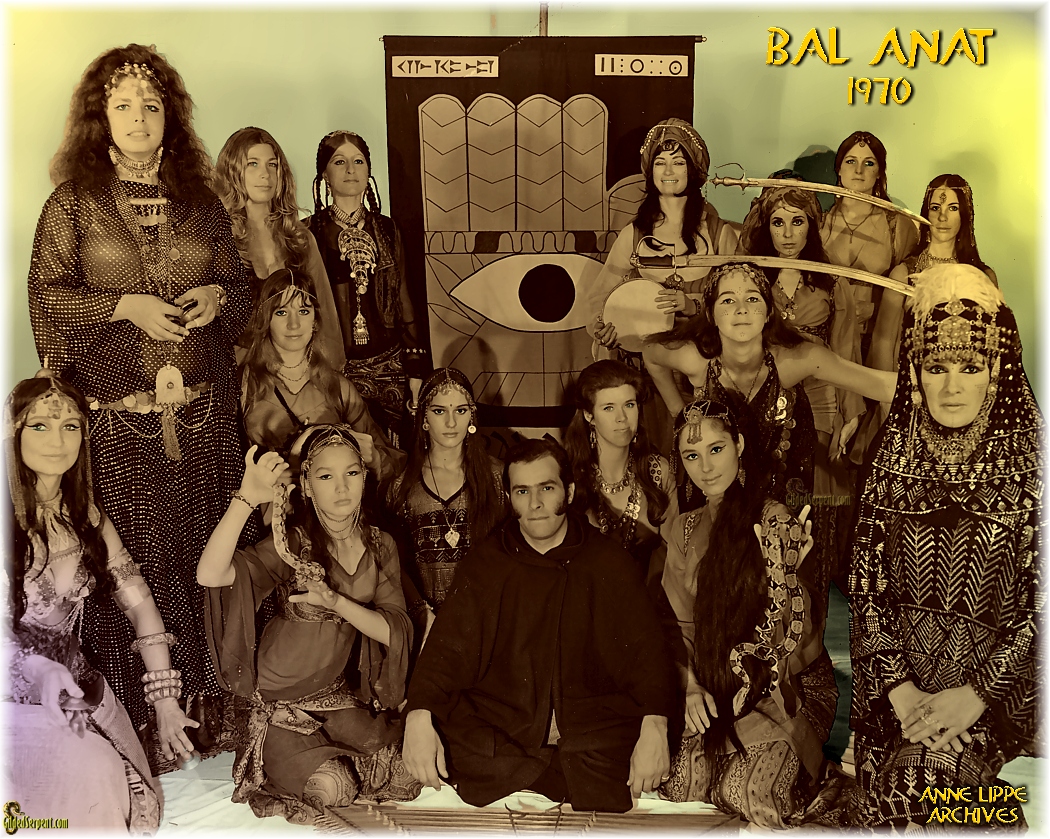
Anne Lippe, a trend-setting costumer, was not only one of the original Western dancers to perform in Egypt, she was also one of the first teachers of Belly dance instructing there as well. Anne started studying Middle Eastern Dance with Jamila Salimpour in San Francisco in1969 and joined dance troupe Bal Anat. She performed during her first season with the company in 1970 in a dramatic black wig, but eventually, sxz he reverted to her own long blond locks in 1971. Anne’s sword dance was one of the featured performances at the Renaissance Faire at Black Point in Marin County, California.


Bal Anat 1970

Jamila Salimpour and Bal Anat circa 1970:
Top row: 1-? (NOT Aziza!), 2-?, 3-kneeling? , 4– Masha Archer in braids, 5- Anne Lippe with drum & turban, 6- Rhea with sword leaning forward, 7- Jo Hamilton with sword, 8-?, 9-?
Front row kneeling: 1- Galya, 2- Lisa with the snake, 3- Reyna, 4- Darius or Darioush, the kanoon player., 5-?, 6- Hilary with a snake, 7- Jamila Salimpour

Anne next established a successful performance and teaching career in her home state of Florida. She recognized an opportunity upon meeting with Mahmoud Reda when he came to New York to teach, and studied with him.

“It was in the spring of 1978, I think. I was living in Tampa (Florida), and I asked him, ‘How would it be possible to take more classes with you?’

Mahmoud answered, ‘Oh! come to Cairo in the Summer; we’re always there!’”

So, Anne went to Egypt in August, staying at the hotel he had recommended–The Atlas Hotel–approximately down town near Khan el Khalili. However, when she arrived and went to the Balloon Theatre, Mr. Reda wasn’t there! People at the Balloon said, “Oh, no! They are in Alex (Alexandria); they always go to Alex for the summer!” It was Anne’s introduction to crossed communications–Egyptian style.

Undaunted, Anne got a ride to Alexandria and found him; however, he told her to get back in touch once the troupe returned to the Balloon Theatre in Cairo. Unwilling to wait, Anne stayed in Alexandria, watched their folkloric shows multiple times, then rode back to Cairo with them on the bus. “They kind of adopted me; it was really nice!” she exclaimed.

Reda Folkloric Troupe

“Once back in Cairo, I just hung out and got oriented. I found a horrible apartment in Mohandaseen–really horrible! It was just filthy, so I stayed in the bedroom only. I cleaned the bedroom well and didn’t venture into any other parts of the apartment! My ticket was running out, and not a whole lot was happening. I would go over to the Balloon Theatre to take classes, and find that they had been canceled. My ostensible purpose in Cairo was to take these classes, and I managed to attend several of them. Meanwhile, there was so much else to learn that the dancing kind of sank to the bottom of my priorities list; there was a whole culture into which I had been thrust.

“I knew one word of Arabic: shukran. Oh, and one other word: fonduk meaning hotel, which nobody uses any more; it’s an old word that means caravansary. These words were on my recording ‘Learn Arabic’.

“Some people began to teach me how to speak Arabic, and the things they taught me were very direct. They told me that I must learn the phrase that means I want– .” Anne continued, “In a way, that is telling about a society. There is a lot of formality and things you need to know, but this was practical and cut to the chase.”

Her ticket ran out and Anne returned to her home base in Tampa Florida, the first of many back-and-forth visits from USA to Cairo in these “pre-licensing” days of the late ‘70s and early ‘80s.

When in Cairo, Anne stayed on a tourist visa: “Every month I had to go down to the Mogamma (government administrative building) and get my visa stamped. In those days, anyone who was willing to get a job could get one; they were always looking for someone new, novel, of fair complexion, and not too peasant-like.”

Always, performance opportunities came through other people who would say, “Let me take you there…” (probably because they could get some kickback from that.) Anne received her pay in cash after each performance.

“The first place I worked was one of the Nile boats that was docked on the Corniche, and you didn’t need a license for that. Then that boat went on a cruise upriver, and I stayed in Cairo. I went to work at the Atlas Hotel with a choreographer, Hasan al Sobki, who worked along the lines of Mahmoud Reda–with the folkloric numbers that were ballet-based, including lifts–more like show dancing. There, I met 15-year-old Sahar Heshem, a talented dancer and a lifetime friend during my Cairo years. Her mom was a singer named Leila Faaz who occasionally sang at the Balloon Theatre. Sahar eventually became a popular singer in the gulf states."

When I asked Anne to comment on the unspoken accusation of prostitution in the dance world, she smilingly answered, “Well, I think it’s like anywhere else in the world: if you want to hook, you can hook,” then added, more seriously, “Yet, it is not the case. This was a very respectable show. I think it’s like a Geisha: a woman may look for a protector, someone who could take care of her, especially when her career is over.”

“The main thing for me was finding somewhere to live; I changed apartments every month.”

Beginning in 1981, Anne performed with the popular singer Samir Sabri for several years. She said, “That took care of the licensing; he either finessed it or ignored it. I never saw one, and I never had one. You see in the picture, I didn’t have to wear a fila (stomach cover) because I was working with Samir Sabri: it’s all in who you know.”

Anne with Samir

Cairo Magazine“Samir Sabri is an interesting character; his father was an officer under King Farouk, part of the upper class of Cairo. He went to Victoria College, was a big TV personality, and had a talk show. I heard an interesting story about him: He interviewed Fifi Abdou, who was from the same village as Egypt’s President Sadat, and made a joke about Fifi being from the same village where a ‘certain leader was from’–and just like that–he was banned from television for connecting a president, a reis, with a dancer! After that, he had to look for something else to do, and he started this show.”

“Sabri worked everywhere, especially the Nile Hilton. He did a lot of weddings, so we worked at all the hotels. We subbed for Nagwa Fuad at the Meridien hotel on her night off. We went all over Cairo and Alex too, so it was a good way to get around and know the area. We had a full orchestra. He sang, then I performed an oriental solo; then Sabri sang again; then another number where he would sing while I danced. We didn’t work every night, but we worked three or four nights a week. I made enough to pay for my little flat that I finally found, and I led a fairly stable life. I made 30 Egyptian pounds a night, and that went a long way in that time.”

Anne was featured in the Cairo magazine “Achabaka” (29 January 1981, issue 1269) during this time, and I noted the trend-setting bra, sans fringe, featured in the black-and-white photos by Ahmed el Maghraby, Cairo. She told me this costume was made when she was with a circus in South America before she went to Egypt. (Ah! alluding to a completely different story about this iconic dancer, she briefly mentions: “The circus was called Acuarama because it was an aquatic circus, featuring dolphins, divers, seals, etc; in addition to the usual other acts: clowns, dogs, aerialists, acrobats and dancers.”). This costume without fringe featured a beautifully beaded “break away” stripper’s bra that Anne discovered in a thrift store; she made the belt from similar beaded pieces that she found. That fringe-less bra set a trend; although I had not seen performance bras without fringe before that time, it became a big trend afterwards–up to the present.


Anne in "Achabaka",  photo by Ahmed el Maghraby, Cairo


“I used only a few costumes. We performed at a different venue or audience every night; so there was no need for more. They had to be portable to be hauled around every night. It was a uniform, I don’t mind wearing a uniform.”

After a break back at home, Anne returned to Cairo to stay in October of 1981. “That’s when Sadat was assassinated; so I know that was in October of ‘81. It took me awhile to get things organized and get away again, and I wanted to go back: I felt like there was a lot to learn, and there were things to do. By that time, I was a little bored with life in this country–if you want to know the truth.”

In 1982, after a USO Tour of Germany, Anne married Omar Fathi who sang with the Reda Troupe–someone she’d met back in 1978 when she had first come to Cairo.

Omar Fathi video
Madam Abla costume

She retired from dance performance for 6 months before irreconcilable differences ended the marriage in divorce. Asked to comment on this time, she replied in a typical Orientalist manner, “No path is straight!”.

Anne returned to performing with Samir Sabri. Now the lineup of performers included two male and two female dancers, plus Anne’s Oriental performance. There was drama over Anne’s costuming. She tells the story:

"He coveted it. He had atrocious old costumes, and I had a Madame Abla-designed costume–this time with net fila cover drape. We had a fight, and I quit. Now that he had more dancers, he didn’t give as much respect. We came to a parting of the ways.”

Anne wasn’t out of work for long due to her professional attitude: “I was reliable, while so many dancers were flaky.”

In 1983, Anne began performing with another folkloric troupe headed by Hamada, a man who’d been with Mahmoud Reda and was continuing this dance heritage. She liked the other folkloric girls in the company, and in addition to performing an Oriental number, also performed several folkloric pieces with them including the Siwa Oasis “Haggalla” dance, famous for its three-quarter shimmies.

Examples of the Haggalla and three-quarter shimmies

Reda Troupe at Balloon Theatre

Farid al Atrache

About this time the Egyptian magazine “Cairo Today” became interested in Anne, because she was teaching Belly dance in a Ballet studio in Zamalek. Her students included several dozen women from the American University in Cairo plus several society ladies who, because of the stigma, never had learned to dance.

“Cairo Today” was intrigued because nobody else was teaching Belly dance in Cairo at that time. I asked Anne, “Weren’t other teachers available?”

“No, hard as it might be to believe, there were no teachers in Cairo that I ever heard about or found, except Ibrahim Akeef, the brother of dancer Naima Akeef."

Naima Akeef

Principally, he was a choreographer who agreed to teach me privately. I had a couple of lessons but he was very unreliable.”

I asked Anne to mention other dancers she came to know at this time:

“I remember an American named Asmahan, Michele Rizik whose father was of Lebanese extraction, and a wonderful, strong Korean dancer married to a Lebanese drummer. I originally met her when I was performing in Hawaii, at a Moroccan restaurant owned by Persians. She drew dramatic eyes way up into her temple area to accentuate her eyes. However, I was not collegial with any of them–unless I was dancing with them. I worked almost every night so I didn’t see other dancers, and I usually didn’t go out other nights. I did go out some nights. One night, I went with my visiting sister to see Suhair Zaki at a nightclub where Saudis went on El Haram Road. We ate; we waited; she never came. They said she’d come tomorrow. We said if she doesn’t come, we don’t pay. The next night we went, she didn’t come, and we didn’t pay.”
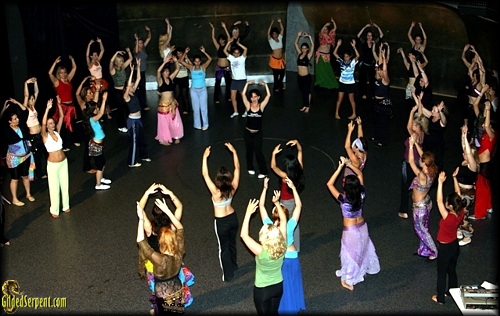
Suhair Zaki

Anne’s last Cairo engagement was with another show that began at the new Marriott Hotel in Zamalek, then moved into a new nightclub located out toward the pyramids, in the estate of a famous character actor that had been made into a club. “I just got in a taxi and told him where to go…”

After a lot of rehearsal and a few months into this gig, her father’s emergency heart surgery (a triple bypass) made Cairo seem very distant from her family, and Anne returned home to be by his side. “His voice sounded so weak on the telephone it scared me to death! Dad came out of it, yet passed away 10 years later. I had a round trip ticket, but still, I didn’t return: I thought I had plumbed it as much as I could. I had the cream of the experience; it’s all about the people.

Inevitably things go awry in Egypt, or you decide you’ve had enough."

Anne continued her dance career based in Boston, also performing on the Greek cruise line Stella Solaris. She and her husband currently split their time between a horse farm in northern Florida and a cattle ranch in northwestern Montana, with occasional sorties to Boston and Berkeley.

Anne in BostonGreek Cruiseline


use the comment box

Have a comment? Use or comment section at the bottom of this page or Send us a letter!
Check the "Letters to the Editor" for other possible viewpoints!

Ready for more?

  • Radio Bastet, Where the Hafla Never Stops! An Interview with Its Creator, Marisa Young
    Here’s one thing that is very frustrating: finding out that you have two or three copies of the exact same record, released on different labels, with different artists names, different track names and arrangements, and different covers!
  • Becoming the Object of Your Own Fantasy, "Perfumes of Araby" in the 1970s, Part 1
    The Belly dance scene in 1970s Los Angeles: It is difficult to spotlight succinctly even one portion of a vibrant, vast and quickly growing community of Middle Eastern dancers, their enthusiasts, and the ethnic communities, musicians, festivals and supper clubs that supported the dance arts. The abundance of inspiration in that era was almost beyond understanding; yet once upon a time before the Internet, music, imagery and information was less readily available.
  • Becoming the Object of Your Own Fantasy, "Perfumes of Araby" in the 1970s, Part 2
    We are packed tightly shoulder to shoulder, impulsing to the dramatic beat with great solidarity: traditional hand gestures, chest drops, all very serious and trance like. This mood was broken however by a guy at the back of the 200 plus audience, who stood on his chair, raised his beer glass and shouted "The one in the yellooooow…." then actually fell completely backwards like a tree that had just been cut! I hope he was OK!
  • Becoming the Object of Your Own Fantasy, Diane Webber and the Perfumes of Araby in the 1970s, Part 3:
    In an almost archetypal will to power, Diane encouraged us to utilize our costuming – and our dance – as a way to search out and expand our own unique spirit, fantasy and physique, something I try to continue with my students today: become the object of your own fantasy.
  • We Will Rak You! My Dance Experience with Queen
    I’ll admit I wasn’t too familiar with the music of the British rock group Queen. The year was 1977, the month of December, in Los Angeles. I was invited to perform at a dinner party where Queen, in Los Angeles for several concerts, was the guest of honor. The job came to me through Dianne Webber.
  • Gigbag Check #33 with Sa’diyya of Texas!
    Gilded Serpent catches Sa’diyya backstage at the Belly Dancer of the Universe Competition in February 2011. She shows us her tools of the trade, including:safety pins (of course), mirror, curling iron, carpet tape, and all of her jewelry organized in a binder full of zip lock bags. She also tell us about using a fedora in a modern folk dance from Iran or Persia. Her mother helps her with her costumes.
  • Sahra’s Drum Solo Class with Amir Sofi at the Bellydancer of the Universe Competition in 2011,
    Sahra is also given the lifetime achievement award. Lovina gives testimonial to how much she enjoyed the class
  • Facing the Truth, Working as a Dancer in Egypt
    Sometimes the dirty facts of dancing in Cairo can be more interesting than the pristine Oriental fantasy… at least, it is when you tell the story later! PHOTOS!
  • A Dancer’s Destiny, Part 2: A New Dancer Emerges
    Lou Shelby had told me to begin that Friday night. (The Fez only had entertainment on the weekends at that time.) An Egyptian dancer, Maya, and a Las Vegas dancer, Cozette, were working there; so I was the third dancer on the program. I came in early for a rehearsal; Lou’s idea was to have a real Hollywood-like production: I was to emerge in a flood of colored lights amidst smoke from a smoke machine and open his show.
  • A Month In Cairo, Report #5: Weddings, Visiting Raqia Hassan, Some Thoughts about Egypt’s Future
    It was stimulating to talk about a wide range of topics, Egyptian politics and societal issues included, such as the continuing trend for Muslim women and girls to wear scarves – many, if not most, to make a fashion statement, others because of family, husband, or peer pressure, and some to make a political statement.
  • The Golden Era of the Arabic Nightclubs in London Part 1: Making the Move from San Francisco to London
    The ten o’clock dinner show featured music, three dancers, and one singer. The real show started at midnight. In the audience were mostly Arabs, dressed in the most expensive designer clothes with diamond watches and jewelry flashing in the stage light. There was a scent of expensive perfume mixed with cigarette smoke. The tables were covered with flower arrangements and lavish silver platters of fruit.
 

Gilded Serpent presents...

Two Musical Sundaes with Dancers on Top

“Babelesque Live in Tokyo 2009”, Bellydance Superstars Series
“Dancers for Dancers, Volume 5”, produced by Cheeky Girls

2 DVDs

DVD Reviews by Monet Rath
posted January 19, 2012

Two DVD’s. Two live shows. Two very different productions! It is hard to stand them side by side. On one hand, Bellydance Superstars "Babelesque Live in Tokyo 2009”. On the other, “By Dancers for Dancers”, Volume 5, live in Berkeley, California. Miles Copeland versus Michelle Joyce? Me thinks I had better get to the reviews and let you be the judge!

BDSS TokyoBellydance Superstars "Babelesque" Live in Tokyo 2009:

Bellydance Superstars always put on a good live show. I have seen several, and this one is no different. I imagine if you were in Toyko for the show, you felt the same energy and enjoyed the performances. In fact, at one point, there is a camera pan-out to the audience, and they are rocking to the performance. The DVD features a 92-minute, large stage production of Bellydancing at the famous U-Port Hall in Tokyo. There are 17 performances by talented dancers, some of whom are well-known, including Cabaret, Tribal, Folkloric, Fusion, Polynesian and two drum solos. If you are new to Bellydance, then watching this DVD would expose you to several styles and techniques. However, keep in mind that the show is highly choreographed for the most part and is slightly atypical of most local Bellydance shows.

We aspire to produce quality of this sort when we put on a show; it should be professional and classy!

The DVD opens with a title page and music blaring. You can play the whole show or scene select as well as check out other BDSS video options. Personally, I own a few of the BDSS DVDs, and I have to say that this show is not my favorite. The quality is not great (in terms of screen appearance). I tried to adjust the screen on my new laptop, and therefore, I think it is the fault of the DVD. It has almost a “bootleg” quality to it. Also, I found a few spots where the stage is not lit well enough for the DVD videography.

Miles opens the show with his booming voice playing over a video screen of pyramids and dancer images. I found his voice almost Star Trek-ish, as he spun the tale of ancient Babylon and the dance form you are about to see: blah, blah, blah… It was a bit much for me! If you have ever been to a BDSS show or own one of the other show DVDs, then you would see similarities in the performances. Perhaps that is why I wasn’t overly wowed.

Petite Jamilla and the Tribal dancers steal the show for me, and I am a fan of Jillina and Sonia. However, I am now feeling that some of the of the Superstar performers are beginning to lack the pizazz to which I have become accustomed or have seen in previous Superstar productions. Some of the other high points for me were: “Arabesque”, featuring Bellydance en pointe (which is quite difficult) and the "Do You Have any Faith?" piece with the whirling Dervish-style Bellydancers.

Overall, I will admit that I think there are better BDSS performance DVDs available.

Rating:  2.5 zils 
2.5 zil rating


“Dancers for Dancers Volume 5”, produced by Cheeky Girls:

Let me first admit that I like the philosophy of Cheeky Girls Productions for this recording. All 12 of the dancers performing in the show were nominated by fellow artists! This is explained on the DVD cover–as is the fact that they include each dancer’s feedback during the editing of their piece and request their approval on the edit. I think that is pretty awesome!

The theater appears to be a small black box type theater with a backdrop, which I could not tell if it was a screen with an image or a pseudo-rock facade. It is a nice touch that the lighting changes to compliment the dancers’ costumes.

The stage is well lighted, and there are many close-ups of the dancers and their costumes. The camera is steady, and its shots are clean.

The 120-minute DVD starts on insertion, but you have the option to play all or scene select. It is produced and edited by Michelle Joyce. The dancers are all Cabaret or Egyptian style, and I would say honestly that 80% were exceedingly enjoyable–a rarity. Stage prop usage is minimal overall in the performances. Many use a veil, but Oreet was the only performer who used wings or a large prop. Some of the more well-known dancers featured are Bahia, Tanya, Lotus Niraja, Oreet, and Princess Farhana; however, there are many other quality performers included.

On a completely unrelated note: I loved the color and crystal accents on Ahava‘s costume. Absolutely beautiful!

My criticisms are fairly basic, but I hope they do not seem petty:

  1. There appears to be beads scattered all over the stage. I know; I know! Nevertheless, I have to say that the appearance of the hazard on the stage kept distracting me. I found myself checking to see who was wearing shoes for fear they might have cut their feet!
  2. In the beginning of the show, and then at the beginning of each dancer’s performance–and only when the camera was zoomed out–you see the audience moving around. Overall, this is minimal distraction, but when comparing productions, I note that it is definitely not seen in BDSS camera footage.
  3. Finally, during Tanya’s performance, there was one very brief moment where I could see the backstage because the curtain was not completely closed.

Overall, this DVD shows an enjoyable performance, and it is worth the purchase if you want to see quality Cabaret/Egyptian-style dancing.

Rating:  3 zils
3 zil rating

Conclusion:

Both DVDs include music credits at different spots, which is a feature that I, as a dancer, appreciate. To take it a step further, on the Cheeky DVD, the dancer information and music credits appear on the inside of the DVD cover, which I think is a great touch. Both BDSS and Cheeky have sales periodically; so if money is tight, I would suggest waiting for a sale on both DVDs.


use the comment box

Have a comment? Use or comment section at the bottom of this page or Send us a letter!
Check the "Letters to the Editor" for other possible viewpoints!

Ready for more?