This photo exhibit captures moments and scenery of Delilah’s most recent Visionary Belly Dance Retreat, which took place in Hawaii, Janurary, 2009. Each retreat, about 10 days in length, features a guest instructor and theme. This year, participant’s explored "The Belly Dance Entertainer" working on a variety of styles with Princess Farhana, Delilah, and Laura Rose. All workshops centered around the idea of creating something for one’s audience. Costumes, make-up, stage presence and even a playful day exploring Burlesque character were all saluted at this retreat. Bellydancer and photographer Vibeke Johnson captured the following pictoral story.
Portraits
Each year, the different themes draw different characters for a wide variety of reasons.
Some Bellydance fanatics just can’t get enough!
Women who’ve never belly danced before answer some strange call or spark.
Seasoned professionals looking for new inspiration.
Vibeke uses the back and white format to capture these women. She immortalizes the different faces and stories with a cast of old world glamour (perfect for the theme).
Brandy Briggs and her instructor, Ahva, cast off their warm coverups of South Dakota.
Princess Farhana’s stage makeover was Verna’s first time indulging in this kind of extreme femininity.
Artemis finds divine inspiration on Lord Shiva on the way to the dining lanai.
Vibeke’s sepia treatment seems to transport Laura Rose and Princess Farhana back in time.
Valeria, Bellydancer and fitness instructor from Montana, uses this fantastic bindi set for an exotic transformation!
Landscape
The big island of Hawaii is sacred ground to walk upon. Seven minutes as the crow flies from the location of the retreat, molten rock flows into the ocean. Endless blue waves lap against the cliffs just across the street. Everywhere is evidence of the destruction that lava can cause. Relentless, colorful and bountiful life springs from the sparkling black rock giving the dance a depth and inspiration we cannot always find back home in the city.
Moments In Time
Vibeke has an eye for capturing the essence of a moment. Her soft and friendly energy lets her camera gently slip into our fields of being, without becoming obtrusive. The friendships made, the concentration exerted, the passion witnessed, and the souls bared, were all evident in her film.
With a little maribou and a lot of humor, dancers play dress up the one day featuring Burlesque.
Delilah experiencing tarab (feeling of ecstasy) on our last night showcase.
Meriyah, Verna, and Valena, from opposite ends of the country, found fast friends in one another.
Delilah, "all amped up", during our drum solo class with Erik Brown and Stephen Elaimy playing the oud.
Delilah mesmerizes the crowd with a story.
Stephen Elaimy showing Miya how to jam (Arabic style) playing the violin.
Onya of Maui in action!
Princess Farhana applying darker shadow to Elvia of Japan.
5-14-09 Know Your Venue, Style & the Savvy Performance Artistby Laura Rose
Personally, I believe that to pull off something dangerously edgy and thoughtfully shocking (while still providing entertainment) you might need to offer them something as well. Something like, oh, say…skill!
2-18-00 Pele’s Giftby Laurel Victoria Gray
As Nona began to demonstrate the first dance, I noticed many gestures in common with Central Asian dance. I felt as if another piece of our giant dance puzzle had fallen into place when Nona gestured
to her heart and said, "the real hula comes from here."
11-30-05Paradise Found at Habibi Hawaii 2005 A Report by Tammy Yee Azure skies and sun-kissed palms provided the perfect backdrop for Habibi Hawaii, Honolulu’s Premier Bellydance Festival and Celebration.
2-23-03Hawaii Workshopby Latifa
Floor Work is a moving Yoga, and as in Yoga, one must let his/her body grow into more flexibility which develops with practice.
5-26-09Bellydancing Fashionablyby Martha Duran
Always remember that you’re representing a country’s culture! Sometimes, less is more; sometimes, more is less.”
5-11-09Ask Yasmina #6 : Abhinaya, Personal Journey, What’s Missing? by Yasmina Ramzy
Tapping into the source will change the quality of your movement, your interpretation of the music and your emotional connection to the movement and the music.
Is there such a thing as “good taste” in Bellydance costuming? I haven’t met any dancer until now who doesn’t get distracted over a vendor’s space filled with bedlas of all colors, veils, jewelry & hip sashes, in other words, anything that sparkles makes a bellydancer drool. Many of us dancers do impulse shopping without being selective: ¨Whatever shines, is mine¨.
While surfing the internet or getting to know many vendors in the USA during several workshops, dance festivals and competitions, we Bellydancers are fortunate to meet locals who travel to Egypt and hand pick their merchandise, upload their selections of new styles on their web site catalogs and even do special troupe purchases and wholesale shopping for their costumers; but do all this guarantee good taste?
Most vendors reflect quality through their pricing; some of them carry Middle Eastern designer-apparel, a few carry self or hand made high or low quality items. Many will sell you a bang for your buck and focus on the fact that Egyptians have manufactured the merchandise, and that makes the prices higher.
So whom can you trust? Who’s your style ally? Who can become your shopping buddy? What’s the fashion etiquette in Bellydance? Are there such things as “do’s and don’ts” in Middle Eastern dancewear?
Well, many don’ts can be found in a very interesting and hilarious log that I found months ago while surfing the net. It’s called ¨Home of the Goddess of Ugly Belly Dance Costumes ¨ What were they Thinking?
A Goddess, as she calls herself, who prowls the web for "fugly¨, as she designates certain Bellydance memorable costumes. The Goddess says that, apparently, a dancer happens to find a costume that would make me wonder: “Why?”
The Goddess manages her blog with the only purpose of educating subscribers and an occasional visitor. Personally, I find it to be very amusing; the costuming ideas we get are sometimes incredible but there is no one there to correct us.
It’s surprising what some sellers convince us to buy in their auction sites.
I find hilarious when a dancer attempts theme Bellydancing, for instance, a stars and stripes costume symbolizing our USA or costumes meant specifically for a Christmas Bellydance, and my personal favorite: Made From Leftovers! Why? Why? Why do dancers inflict this on themselves?
What makes a Tribal Bellydancer think that a Tribal Fusion Bellydancer should wear scraps as adornment while they are dancing rituals or merely Tribal dancing?
Sometimes it is a little insulting to realize what some dancers use as elements of their copy-paste image. Most of us have seen a show of a Rachel Brice wannabe that didn’t really understand it when she tried to copy Rachel’s style. When someone replaces an item with something similar in order to copy another person, the adornments on the costume loose their meaning.
Costume sketch of Gargan, a multibreasted dancing figure from Jabba the Hut’s palace in the movie, "Return of the Jedi."
Many Tribal Bellydancers don’t understand where the idea of using tassels on a hip belt originated or why dancers use studded bracelets so they hang a silky or acrylic curtain tassels on their hips, knit a few braids here and there with leftover sparkly ribbon or yarn from a winter scarf, or adorn themselves with acrylic bangles on their wrists in mismatch colors. What makes them Tribal-fashionable? A corset? A skull here? A tattoo there? Not the scraps they used: Bellydancers don’t wear leftovers! A Bellydancer’s costume symbolizes some part of the Middle Eastern culture.
“The costume represents how we really feel about ourselves, and the odd thing is that the costume also represents freedom. It doesn’t matter freedom from what; all that matters is that women can feel good about themselves for a few amazing moments.” –Leyla Najma
In the early days, women usually wore the native caftan/kaftans while dancing. Caftans mostly concealed the contours of the body, with only a scarf or belt tied around the hips to highlight the movements (not the whole closet and jewelry box). Dancers from tribes like the Ouled Nail wore cuffs and bracelets with studs and spikes as self defense accessories to protect themselves from the hands of not-so-gentlemen, not ugly looking jewelry made from scrap leftover from an ‘80s necklace!
My uncle is married to a wonderful Middle Eastern woman. She always says that as my ¨khaltic¨ (an aunt on the father’s side) she will look after me in whatever I do, wherever I am. She has been very enthusiastic about my Bellydancing and always looks out for any ethnic mistake in my wardrobe or in my dancing and then, she reminds me:
“Always remember that you’re representing a country’s culture! Sometimes, less is more; sometimes, more is less.”
Consequently, every time I get near a store or vendor, I keep in mind that I have a fashion guru in my family. (…Not that I haven’t bought an ugly costume myself!)
Not every Bellydancer has her own khaltic, born and raised in Arab countries, but we all have our superheroes in Bellydance, who personally helps you on what you want or need in Bellydance wear and nicely offers you the ethnically correct costume options available for the dance you want to represent. We also have an outstanding selection of costume apparel in designer bedlas handmade in Egypt and chosen personally in Egypt by
trustworthy dancer-sellers who reach out to all dancers by bringing to the USA high quality costuming at affordable prices.
But beware! —Not all sellers are worthy of your trust, as you can see in the wide selection of “fugly” costumes have been available to us on multiple sites.
Sometimes you can even bump into sellers overseas who guarantee you will get Bellydance Superstars’ costumes but you end up with a “Made in China” as evidenced by a low quality faux hip scarf, a stiff veil or a “see-thru” butterfly top adorned with acrylic beads all over. You may even encounter one unconscionable Egyptian vendor who never sends you your merchandise, like the case I read in this blog: http://bellydancersbeware.blogspot.com/. (It is here where a woman, Israa el Metwalli, and a man, Mokbel Mohi el Dine, took the money then vanished.)
The “Do´s and Don’ts” in Bellydance are all over the Internet; terrible costumes, horrible sellers, and disasters are bound to happen, but thank Heaven we have our beautifully costumed stars of Bellydance to set an example!
12-19-08Training Aids or Trainer’s Ads? 3 Books Reviewedby Martha
The E.D.A. Handbook for Middle Eastern Dance by David of Scandinavia, Tribal Vision by Paulette Rees-Denis, Belly Dance for the Versatile Dancer V. 1: Foundations by Zanbaka
12-15-08Unveiled: 3 Instructional DVDs on Veil DancingReviews by Martha E. Duran
Fabulous 4-Yard Veils by Shoshanna, Seven Veils Romantic Bellydance by Sarah Skinner, Bellydance With Veil by Sarah Skinner
5-14-09 Know Your Venue, Style & the Savvy Performance Artistby Laura Rose
Personally, I believe that to pull off something dangerously edgy and thoughtfully shocking (while still providing entertainment) you might need to offer them something as well. Something like, oh, say…skill!
5-11-09Ask Yasmina #6 : Abhinaya, Personal Journey, What’s Missing? by Yasmina Ramzy
Tapping into the source will change the quality of your movement, your interpretation of the music and your emotional connection to the movement and the music.
Literal origin of the word Shaabi (Sha’bi) in Egyptian Arabic: Of the common people.
In the early 1970s, I took a workshop with the Egyptian dancer Faten Salama from the Egyptian National Folklore Troupe. She taught a series of choreographies and one stuck in my head. It was choreography to a song called “Salametha Om Hassan” sung by Ahmed Adaweya. Immediately after the workshop I ran (not walked) to Samiramis, my local Arab music source, and bought Ahmed Adaweya’s cassette that featured this song. This was the beginning of my love affair with Adaweya’s music and singing.
At the workshop, Faten gave us a loose translation of “Salametha." Later, I got a better (and more complete) translation from Nicole Ibrahim my Egyptian Arabic and singing teacher. Based on these translations and Faten’s choreography, I re-choreographed and changed the dance to suit my needs (a very Egyptian technique). This became a dance vignette for my dance group, The Aswan Dancers. The choreography evolved, took on many shapes and even made it into the San Francisco Ethnic Dance Festival as a Zar dance.
Shaabi in recent Arab news- Al Ahram Entertainment section. New film on Shaabi and Adaweya- "Tuning up to Shaabi"
“Salametha Om Hassan” is about Salametha, mother of Hassan who was stricken by the Evil Eye and became sick. She wanted to keep to her old ways and hold a Zar to heal herself but her son wanted her to be treated by more modern ways. Adaweya was the first singer I knew to use lyrics as a metaphor for a political or social reason. (At the time, I was unaware of the translations of Sayed Darwish (see below for an example of Darwish lyrics) and others who made veiled inferences about other social and political problems dating back to the early early 1900s.) Before Adaweya’s time, popular Egyptian songs were mostly about love (or so I thought).
Adaweya’s songs could be about both love or about social issues.
“Salametha” was a social commentary on the state of the Egyptian nation. Ahmed Adaweya admits that “Salametha Om Hassan” referred to Egypt’s 1967 disastrous defeat by the Israelis and the general depressed mood of the nation. He wished Om Hassan (Egypt) a speedy recovery and hoped that the affliction from the Evil Eye that had struck Hassan (a.k.a. Gamal Abdel Nasser, the Egyptian soldier) would be cured.
Could Adaweya, a plumber by trade, know that this song with political undertones would help his popularity cross over from the common people’s Shaabi music to the popular establishment and the more socially elite? Did he really care? Whether he cared at the time or not—what I realize now is that this cassette, my first cassette in the genre that I called “City Beledy”, is what anthropologists today label “Shaabi”.
Adaweya’s music became a main staple in my music collection. Physically, I wore out the Salametha cassette by excessive use in class and performances. I bought every Adaweya cassette as soon as they became available. I was studying tabla and riq and his cassettes were especially noteworthy for having a great percussion section. His voice had a sound unlike other singers.
There was a very raw unrefined quality to it.
Most Shaabi singers seem to have this quality. Also, his music had an untraditional sound. In Salametha he even used a trumpet! Adaweya used a blend of traditional instruments and modern instruments and sounds. He used traditional instruments such as the nai, violin, kanun, riq, large cymbals and tabla. Additionally, he introduced the keyboard, saxophone, trumpet and the accordion.
This blend of the old and the new instruments is typical of the Shaabi sound.
Today everyone knows Ahmad Adaweya for his songs, lifestyle, scandals and notoriety. He’s not known for his good looks or his suave style. He’s actually rather short and heavy-set with coarse blow-dried hair and very gaudy suits. He was born in a hara (ghetto, barrio) in the mid 1940s in a working class area on the outskirts of Maadi (a district in Cairo), but he spent time on (and eventually moved to) Mohamed Ali Street (a famous district known for where performers lived and networked). Adaweya worked as a waiter in a café where he started presenting his popular mawaweel (pl. of mawwal) or folk songs. By the end of the 1960s, he was a singer at high-class wedding celebrations. In the early 1970s, he was singing along the Pyramids Road and selling audio-cassettes of his music.
Where once he was known as a master plumber, he had now become a master of Saltana.
What exactly is Saltana? Nothing is exact in Egypt. The word evokes derogatory connotations of a drugged state. This is how people perceived Adaweya, whether he was awake or asleep. To get Saltana takes time—in performance, sometimes hours. If Tarab is ecstatic joy, then Saltana is the ecstasy of creation. Time passes, and you don’t feel it.
The performer becomes musically self-absorbed and experiences concentrated and intense musical sensations. The musician or singer will get high from music. (He may also be already high on a substance such as hashish.) Many sheikhs, singers, musicians and composers were known to get high in order to achieve Saltana.
Sheikh Sayed Darwish was one fine example of achieving Saltana. Sheikh Sayed Darwish -1892-1923- a working class citizen, a bricklayer, was known for his progressive, western and modern leanings. He was one of the pioneers of Arabic music and is revered today as the father of classic and popular Egyptian music. Shortly following his death, attributed to a heart attack or an overdose of drugs, it was rumored that a member of the Oriental Music Institute said, “That’s the end of debauchery in this country!”
In an interview from Al Ahram, the Egyptian newspaper, Adaweya says:
“I am a saltangi. Saltana is my thing—I can sing, and alternate between different maqamat (pl. of maqam—a set of musical notes with traditions defining relationships between them, certain melodic patterns and certain moods.) This is Saltana. It’s all in the maqam. Adaweya experiences this in his mawaweel. In the mawwal the lyrics can make Saltana. The creative state of Saltana can bring on Tarab—or the feeling of ecstasy.
In the interview, Adaweya says further, “I have achieved [Saltana] after a tough and tempestuous life. I have basically seen the depth of the pits when I started from the very bottom of the ladder.” Ahmed Adaweya has literally scraped the rocks with his bare hands as a plumber. “It is my singing experience in mulids (festivals for saints and holy men) and tents that founded my entire career. My own talent combined with such a life has qualified me for the equivalent of a Ph.D. in music. I never studied music, except through feeling, listening and a tough life. Many musicians have reached top academic degrees in music, but they do not have Saltana; they turn to someone like me and seek my experience in Saltana. The mawwal is my game. I sing all maqamat in the mawwal. This is history. I am a whole history. I am king of Saltana.” (Author’s note-Words in italics are my emphasis or definition.)
An Egyptian once said of Adaweya: “Ahmed, your voice is full of suffering. It is the voice of an orphan. When you sing the mawwal, I feel so blue as to be on the verge of tears. I feel like your voice.”
More on the Mawwal:
The mawwal is usually sung poetry –qasida—or a narrative that can precede a song. A typical Shaabi mawwal can include the following words: “love, wine, whiskey, suffering, falling in love, allusions to different fruits, being without love, torture, meddling nosey people, drugs, anguish, complaints, oh sleepless nights, wounds, patience, oh my eye, love, poverty, shame, bad luck, tears and blood, tired of all this…” It is lyrical and one might consider it the vocal version of a taqsim—musical improvisation of one instrument that can move from one maqam to another. Ahmed Adaweya would sing the mawwal in colloquial Egyptian accompanied by a fellahi rhythm and a nai response. This use of percussion and nai during a lamenting poetic narrative of love, including sexual innuendos, and complaints of social or political conditions is what makes Adaweya’s mawaweel distinctly Shaabi.
Egyptian writer Naguib Mahfouz said of the singer: “What is so wrong with Adaweya? He is a genuine son of the people, a true offspring of the Egyptian hara."
Adaweya is the sole true influence of an entire generation of Shaabi singers such as Hassan el Asmar, Hakim, Magdi Talaat, Abdel Basset Hamouda, Hamdi Batchan, Saad el Soghayer and Shabaan Abdel Rahim.
By the late 1980s, there were three categories of Egyptian singers:
Those who tried to maintain their national identity with tarab-oriented traditional music.
Westernized singers who resorted to western musical melodies.
Those who supported Adaweya’s’ Shaabi musical trend.
Shaabi is always considered the music of the working class people such as Adaweya.
It is often sung using slang words or imagery. It can be about love, politics, or daily news and is usually good for dancing. It can be a bit of a disaster for the foreign dancer with no knowledge of the language. If you’re going to dance to an Egyptian band—do your homework.
You should always know what the song means.
The Egyptian media–radio and television–do not officially recognize Shaabi music as an art form. They feel it is an insult and a shame to their culture, and therefore, it has a subaltern status. Rather like how the Egyptian people do not recognize raqs sharqi (or as we often say “the Belly dance”) as a respectable art form. However, Egypt’s common people are many and numerous, urban and rural, and the Shaabi music was able to not only survive but to achieve also great success through what is known now as the cassette culture.
It’s been 40 years since Adaweya began his singing career. He has acquired true legitimacy. He has acquired fame outside his neighborhood, outside of his country, and throughout the world. He was able to finally have his songs aired along side Egypt’s favorite singers such as Om Kalsoum and Abdel Halim.
The Role of the Simple Cassette
Despite not being given official airtime, this music became the popular underground with the invention of the easy-to-produce and cheap-to-copy audiocassette. This music may not have been played on the radio but certainly, it was played by kids with boom boxes, in all the taxis (of course) and down the street at all the local music kiosks. If Cairo’s population is 17 million, it seems to me that there are probably at least twice that many machines that are playing cassettes.
This popular music phenomenon (starting from the bottom up) has also occurred at other times and other places such as Jamaica, The United Kingdom, our own (U.S.) Hip Hop and of course, India. The one thing these diverse cultures had in common was that the makers of the music had control of the means of communication, thus they brought about a true musical revolution.
In Egypt the common working man, who may have been born into poverty, was finally able to make money by working in the Gulf countries. These men were able to buy cassette recorders, return to Egypt, and make and reproduce their own cassette tapes by Shaabi singers—who were rejected by the music establishment as being cheap and vulgar. Remember the actual definition of the word “vulgar” includes, “the language of the common people.”
Adaweya didn’t need to be publicly aired because the people supported him and that’s where the money was for him. At that time, this would be equivalent to selling your self-made cassettes from the trunk of your car or the back of a donkey cart.
About 10 years after first hearing Ahmed Adaweya, I went to Egypt for the first time in 1983 to study and watch dance. I found I couldn’t take the physical sensation of the dance home with me but, I could take the music home–or at least as much as I could afford. In the music kiosks, I purchased cassettes of music that never would have made it to the U.S. It was an in-person introduction to the thriving “cottage industry” cassette culture that I had discovered. Consequently, I brought this (primarily urban) Shaabi music that I called “City Beledy”back home to San Francisco.
My “treasured find” profoundly influenced my approach to Egyptian music and dance. I started working on a suite of dances to Halawa min Masr Gadeeda (Sweety from new Egypt or Heliopolis) from one of my newly acquired cassettes. The very best thing that continues about this cassette music is that it is truly original music.
When I consider it, Shaabi has been with us for approximately 50 years–first as a rural and mulid-based music and then due to the audiocassette machine, it became an expanded international phenomenon. At this point in time, it seems fitting that anthropologists, musicologists and ethnologists are now giving this “new” music a category and label for the first time in it’s history! Shaabi has been granted a value with classification and notification. Shaabi music has been assured a future in whatever way it shifts and changes. Additionally, this same cassette-based record and re-record culture continues to grow and thrive in Egypt.
In this episode we find Amina in 1983 dancing “Shaabi” style to a song by Ahmed Adaweya called “Sultan Sultan,” performed by George Dubai, Susu, Mohammed Amin, and Daria, at the Ramalla Club in San Francisco.
A clip of Adaweya singing and performing with a bellydancer in an Egyptian film.
A taxi ride from the Marriot Hotel on the Zamalek island in Cairo, Egypt, to the drop off point on our way to the Khan El-Khalili Bazaar. This is in 1991. You will see a crowded city, the streets, store fronts, crumpling buildings, minarets, clotheslines, laundry, balconies, kitchy billboards, horse and buggy, moms and kids, head scarves and galabiya.
A Few Songs by Ahmed Adaweya
Salametha Om Hassan
Translated lyrics—not literal—by Nicole Ibrahim.
Salametha Om Hassan God bless her, Hassan’s mother
Meil ein wei meil Hassad From the eye and from envy
Wei salamtak ya Hassan And God bless you oh Hassan
Meil reimsheilee hassad From the lash that envied you
Galha tooreilee mash The passing bull came to her
Weil toor ma nayeimhash And the bull didn’t put her to sleep
Weil ein ma saybahash And the eye is not leaving her alone
Mahsouda om Hassan Someone envied Hassan’s mother
Malbouja leh malboug Why is she so preoccupied
Meil feikr galha doj From so much thinking she got sick
Hara eit shaba wei fasouja She burned incense and a pickle fish
Ma ra eitch om Hassan She didn’t recover, Hassan’s mother
Amaloulha zar latish ha They made a zar too powerful for her, It
seemed too strong for her
Wei kaeino eiyar da washa Too bad, no one rescued her,She has got her excuse, Hassan’s mother
Gara eh yamo Hassan What’s happening Hassan’s mother
Laimeeha weijgalee Behave and get your act together
La toor wala zar beiyenfa-a Not a bull nor a zar is working out
Matfouee wei teia alee Wake up and be wise
Zahma Dunya Zahma
(find youtube clip of A singing this)
(Crowded World) (composed by Hani Shenouda 1979)
He spoke of an overcrowded world, a world that has become a mulid with no master. (Mulids are religious festivals not necessarily Islam promoted or endorsed. They are very crowded and chaotic and have everything from Zikrs, to belly dancers and shooting galleries and ferris wheels.) It seems Adaweya’s overpopulated city (add at least 1 million people a year) could self-destruct.
Zahma ya dunia zahma, zahma w’tahoo al-habayib, zahma wala ‘adsh rahm,mulid we sahbuh ghayib
–Cowded, the world is crowded. Crowded and the lovers are lost. Crowded and mercy never comes. A mulid without a leader.
Sib wana a-sib
(I’ll let go if you do)
(lyrics El Shennawi, composer Sayed Mekkawi)
This song refers to the Palestinian and Israel problems.
"You let go of Al-Aqsa Mosque, and I’ll let go of the stones."
Haba Fou’ wi Hata Taht
(Title roughly translates to mean-Stuff Above and beneath)
The lyrics talk about the discrepancies between the Egyptian social classes.
The Ginnawi Jugs
A typical song by Sheikh Sayed Darwish (1892-1923)
Translation and interpretation by Duraid Musleh of Zawaya/Aswat
Beautiful are the Ginawi jugs; there are none like them. Come and buy a couple. Do not go on wasting your money on what is not made by your fellow countrymen. What is wrong with the world, Zalabawi? It has gone mad! See the banks trying to take away our money while we are penniless. If you care about your fellow countrymen, encourage his craftsmanship, and he shall progress. Put your hand in his hand, for he is your countryman. He will not disappoint you. Nothing should separate you.
Comings Soon!
After this Introduction, in Part 1, Amina will tell about beginning her lessons in the Arabic language and how this affected her experience of Egyptian culture and dance.
7-24-07The Zar, Trance Music for Women,CD Review by Amina Goodyear
produced by Yasmin of Serpentine.org. “Once a spirit is called, it must be appeased. Then it will always be there.” And it will have to be periodically dealt with.
12-13-05 The Zar by Yasmin We do know that today thousands of women in Africa and the Middle East use this music to cure all kinds of illnesses. They literally dance until they drop.
5-14-09 Know Your Venue, Style & the Savvy Performance Artistby Laura Rose
Personally, I believe that to pull off something dangerously edgy and thoughtfully shocking (while still providing entertainment) you might need to offer them something as well. Something like, oh, say…skill!
This article is not for those dancers who have picked one style of belly dance and live, sleep, breathe and dance only in that genre. Dedication and commitment are noble and commendable, but those are not exactly the qualities I am going to address here in my first article. This article is for “carnies” (like me). We are the dancers who want to dance everything, know everything, try on everything, and play all the characters under the rainbow. This article is for the working artist, performing in Bellydance.
As performers and entertainers, it is important for us to understand that we are being perceived. We are being watched. We are on stage, for cryin’ out loud! We must know what our body looks like, and how it dances. We need to know exactly how it reacts when we do this or that without looking at it. We must be able to see ourselves from the view of the audience. I believe the savvy performer considers the cerebral perception of what we present as well.
There is a lot of fear around how Bellydance, Dance Orientale, or Raks Sharki is presented. I identify as a performance artist. I can raks sharki it up all night long, but that’s not where my only interest lies. I am a good belly dancer. I can dance confidently to 6/8, 9/8, 10/8. I can isolate, undulate, shimmy anywhere and everywhere. I’m physically articulate. I listen to my music.
I can learn a choreographed pop-Bellydance, and I hold my own while improvising to the live music of Arabic musicians. However, I can also do a handstand. I can also dance to the sound of birdsong or shoes in the dryer. I believe that I offer more to this world as an entertainer if I learn to utilize and cultivate all of my talents.
That does not mean I have to use every part of my talent or interests in every show.
As a performance artist, it’s important that we think about what we are presenting to whom and why we chose to present it.
My experience with Burlesque forced these questions upon me, and I think they are just as important for Fusion dancers. Are you trying to educate? Are you trying to shock? Are you trying to escort the souls of your audience members from this pedestrian world into a feminine realm of mystery (or something like that)? Are you expressing your most raw self or donning an exotic character? However you answer (and for me, it changes all the time) be comfortable in your stance. Be proud and prepared in what you are bringing to your audience. If you find yourself feeling guilty or ashamed before stepping on stage, then you might not be exploring the dance format that is right for you.
While examining motivations behind a piece you’ve created, or are preparing for a gig, you must examine your potential audience as well. This is where I caution, "Know your venue!"
The author in various costumes in various venues. Photo credits for the above five photos in order: lead photo in orange by POC Photos, green alien by Nancy Johnson, antlers by Meg Lentek, pink by Tifany Overzat , Gypsy by James Reinhardt
Not all formats of dance, fused, burlesque, or otherwise are appropriate for all audiences in all venues. The most skilled, authentically costumed dancer with a beautifully choreographed Middle Eastern dance can flop at a rock show. The most original, in the moment, but technically perfect Punk Rock Tribal Ballet Modern Creole Jazz Flute Fusion Bellydance could completely not read at a Middle Eastern music and dance festival. There are miles of subtleties in between, and that’s why we must also look at our motivations.
For example: I’ve been hired to belly dance in a variety show. Here are some questions I ask myself when selecting or creating a piece for it
Am I the only Bellydancer?
To whom will this show be marketed?
What’s the biggest name on the lineup and who are the followers of that performer?
Have they seen Bellydancing before, and if so, what kind?
Who comes to this venue?
Am I performing for mainstream America or a subculture?
Can I identify that subculture?
What are my preconceptions about how this group views women, femininity, sensuality
or sexuality?
Do I want to delight them with what they expect to see, or do I want to shake them up a bit?
What aestetically compliments the other acts or groups within the show?
Education I encourage every fusion Bellydancer and performance artist to utilize your Master of Ceremonies. Despite how much forethought you put into the message of your dance (or lack thereof), the audience might not "hear" you. Politely ask the MC to give a brief explanation of what you are doing. You don’t have to disclaim anything or discredit your own dance, but clearly explain to the MC (maybe even with some note cards) what style of Bellydancing you are performing and ask the MC to announce it as such. If you have a knowledgeable MC and a patient audience, it may even be appropriate to ask them to mention something about the history of the style you are presenting.
Shock
As artists, sometimes we want to shake things up. A scene gets stagnant or you want to try the "any-publicity-is-good-publicity" approach. I think it’s still important to consider your audience when this is your goal. How will the audience receive this shock? Will it make them think and discuss what you have done or just hate it? Is it actually going to challenge any preconceptions or just cause them to roll their eyes?
Personally, I believe that to pull off something dangerously edgy and thoughtfully shocking (while still providing entertainment) you might need to offer them something as well. Something like, oh, say…skill!
Do what you are doing exceedingly well, and then, even those who hate it will say, "Well, at least she can dance." Your technical proficiency could be your foot in the door to the judgmental brains you are trying to reach. Also, beware of becoming pigeonholed! Your one shocking performance can speak much more loudly than the hundreds of more "traditional" and beautiful shows you’ve performed. I’m not saying, “Don’t do it.” Just be ready for it. As a multi-faceted performer trying to make a living, I get frustrated when I’m chalked up as only as a "Gothic Bellydancer" or "Delilah’s
Daughter" or "Burlesque Artist". I’m proud of my entire body of work and who I am, but the labels are always there. Just be aware when you are planning what you present to whom.
Lastly, you must consider your audience and venue when it comes to costuming for Fusion dancing or wearing overtly sexy outfits.
Fusion Dancers
Are there lights? Frequently, Fusion dancers are working as dancers in bars or clubs set up for small rock shows or dance parties rather than theatrical performances. Your sweet-but-edgy black costume will not show up in these venues! If everyone else in the show and venue is wearing black, the stage is black and the lights are…only something to be desired, you will not stand out, despite how incredibly you may dance.
Sexy Outfits
This is often a terribly charged conversation topic! However, think about for whom it is that you are performing. If your flesh is showing, will it detract from your dance? In some crowds it probably will—and to your benefit I guess, especially if your dancing’s not great. (Let’s assume that that’s not the point for anyone reading this publication.) Your costume should add to your overall piece, as well as complement and accentuate your movement style. If you are doing an artistic piece for an art crowd that is expecting something…”artsy”, then it is completely appropriate to use your body in ways more artistic than mainstream Bellydance might allow. If you are show casing "traditional" belly dance for the general public, for heaven’s sake, keep your top on.
Dance hard, dance smart and dance often!
Have a comment? Use or comment section at the bottom of this page orSend us a letter!
Check the "Letters to the Editor" for other possible viewpoints!
Don’t forget to check out the author’s bio linked to their byline under the title!
Ready for more?
5-4-07 Part 1- Booking a Partyby Yasmin
When a dancer looks good, she, or another, will get called back to perform again. When she looks bad, customers might be turned off to our lovely art form forever. Therefore, a bad dancer not only ruins things for herself, but for all of us
5-6-07How to Charge What You Are Worth by Michelle Joyce
The first step to becoming an effective negotiator is to emotionally detach yourself from the outcome. If you can’t walk away from the deal, you have already lost.
3-17-08From Cabaret to DJ Bellydance in New York: An Overview, 1988 – 2007 by Nina Costanza (Amar)
But the primary forums for dancers, the major New York nightclubs, have closed their doors. Cabaret is gone; it is the era of the DJ. And the new dancer has to have another job.
I receive questions everyday by email from students both in and out of town or country, and if I do not have the answers, I usually find the appropriate expert who can answer the question. It is my hope to share these answers with as many readers as possible through this monthly column as I find many have the same questions. My 28 years performing in the Middle East, teaching around the globe, and directing a Middle Eastern Dance company, orchestra, school and conference has fostered a deep love and respect for this awe inspiring art form that I love to share. I hope to be inclusive of different styles of Bellydance and offer different points of view on controversial issues. If you have a question, please ask.
Question #1:I have taken countless classes and workshops. I am told my technique is “awesome”. I have infinite choreography combos from which to draw. I have studied Folklore. I know which steps belong where and I can balance a Shamadan. I can imitate Randa Kamel, Samia Gamal,Fifi Abdou and Dina but someone recently told me that I have much to learn and am not a Bellydancer yet. What’s wrong?
Answer:You might need to tap into the source. Listen to original live versions with the original vocals of artists such as Abdel Halim Hafiz, Farid Al Attrache, Mohamed Abdel Wahab, Sabah Fakri and most especially Oum Kalthoum. Listen to this music 24 hours a day for at least two years (try not to listen to anything else). In the beginning, you may find it irritating. After a while, it will become the air you breath, the water and wine you drink and indeed your sole form of sustenance without which you will wither and die. When this happens, your technique and choreography combinations will transform into pure magical dance art. This music is the source of all Arabic music. The music that created this dance we call Bellydance. Whether it was Samia or Nagwa, Fifi or Dina, it was the music that made them move the way they did. Tapping into the source will change the quality of your movement, your interpretation of the music and your emotional connection to the movement and the music.
Question #2: I read on your website that you have studied Abhinaya for Classical Indian dance. How would you say the concept of Abhinaya applies to Middle Eastern Dance? How would you define the concept of Abhinaya within Middle Eastern Dance? Would you consider it to be different or similar to Classical Indian dance?
Answer: Your questions read like the kind I have to answer in a grant application! No worries, I love an inquiring mind. First, for those who are not familiar with Abhinaya, the wikipedia definition is:
Abhinaya is a concept in Indian dance and drama derived from Bharata’s Natya Shastra. Although now, the word has come to mean ‘the art of expression’, etymologically it derives from Sanskrit abhi-‘towards’ + ni- take, so literally it means a ‘taking towards’ (the audience), or ‘transmission’. Aside from its clear impact on dramatic tradition, it is used as an integral part of all the Indian classical dance styles, which all feature some kind of mimetic aspect to certain compositions, for example in depictions of daily life or devotional pieces.
What I learned from my teacher Gunuseelan was Abhinaya for the eyes. Believe it or not, we would meet every week and sit at a desk across from each other and begin dance class never getting up from our chairs. I have a whole notebook full of instruction on the meaning of a multitude of eye movements. He would send me home with much to practise. He said even the expression with eye movements can be a lifelong practise.
There is a full page or two in one of Naguib Mahfouz‘s stories (Naquib Mahfouz was a beloved Egyptian author who won the Nobel Prize for literature) where he describes a veiled woman conducting an entire conversation with only her eyes and wins complete power over the one watching this.
I have often wondered: if Bellydance was once a temple dance in the same way many traditional Indian dances are, then perhaps at one time, there was a system of meaning and language in the movements like Abhinaya. Because the persecution of Bellydance over the centuries has been so diligent, it seems that if there ever was a system, it must have been lost. Of course, I hope someone lifts a rock and discovers the “lost scriptures”, but in the meantime, I thought I might find some insight by studying Abhinaya.
Although very sparse compared to Indian dance, I believe there is some obvious communication and storytelling we make when Bellydancing, sometimes even limited to our eyes saying, “hey, check out this hip accent, and now, this one”. As a general rule, I do not believe you can use the Indian tradition of Abhinaya with Bellydance. I see them as very different languages or ways of expression but we can learn how to search for our own Abhinaya through it or at least, how to be more aware of its existence.
Question #3: I have a question for the next column. How has your own relation to Bellydance changed throughout the years?
Answer: I think I have evolved from night club performer to teacher to choreographer and artistic director for a large dance and musical performing company. Over the years, I have passed in and out of these 3 incarnations. Somedays, I am all three. Maybe I can not see my own nose, but I feel that my relation to Bellydance has never changed. I still think it is the greatest dance – ever. I have always tried to be a huge advocate of Bellydance being recognized and respected as one of the high arts. Every step I have taken on my Bellydance path and every choice and decision made and has been towards this end. For the most part, I have felt as if I were swimming upstream. However sometimes, I see results, either precipitated by my own efforts or the efforts of others of like mind and it keeps me going.
It may seem that I started this work with the opening of a school or with the company and orchestra but even back in the early 80s when I danced solo in the Middle East, I inherited the common work standards of performing in 5 star hotel night clubs. I learned such rules as never accepting tips, never dancing on a tables, never socializing with the audience, always charging high professional prices, using live musicians as opposed to prerecorded music etc.
Now the real question is probably “why ?” …….Because I believe that when Bellydance is respected and held in high esteem, then more people will be open and receptive to its true blessing, meaning and healing powers.
3-4-09Ask Yasmina #4 Feminine Spectacle, Workshop Requirements, My Styles of Dance, by Yasmina Ramzy
Dancers, who are willing to pay to be on stage, are perhaps not always ready to be there.
2-4-09Ask Yasmina #3Dance Fusion, International Travel to Study, Dancing the Taqsim, by Yasmina Ramzy
Personally, I am all for any kind of creative expression (blood, snakes, flowers, even fake chicken heads and urine) as long as it comes from a place of inspiration and with the intention to move members of an audience to think about the world around themselves and their own relationship to the substance or reference of choice with a new and wider point of view (maybe an even more loving point of view).
I am going to review 3 videos that are mainly for beginners or practice. They are from 3 vastly different dancers who each have unique styles.
1-2-3 Belly Dance with Bahaia
This is a well-produced DVD by Cheeky Girls Productions. (You’vegot to love the name!) The concept is: Breaking down the steps, Drilling, and Choreographing them.
Bahaia covers moves like the basic Hip Drop, Figure 8, Maya, 3-step turns and a small amount of veil movement that included Flourishes and the Toreador. After each explanation and demonstration, she includes a drilling section in which she drills, using the movements with music for about 1-2 minutes. Then, Bahaia blends all the moves together in choreography set to “Midnight Fantasy” by Harry Sayoran on his classic Cairo CD. When Bahaia does the chapter on steps, she’s facing the audience. However, in the choreography section, she demonstrates facing a mirror so you, the viewer, are behind her just as if you’re in class. Her choreography is broken down into sections just like the 1st section; then, she performs the complete choreography in costume.
Bonuses include a live performance of Lissa Fakir by Bahaia that is dynamite, to say the least! I’ve met Bahaia a few times, and she’s a sweet person and one “heckuva” Egyptian dancer—not bad for a small town Texas girl!
Bonus material includes a scrolling history of all Bahaia’s accomplishments, appearances and work as a producer/promoter. This is all helpful, but the scrolling goes a little too fast and the words are a bit too small, causing me to pause the disc to be able to read it. Next, there is an instructional section on how to make a veil. This is a nice idea, but would have been better as a live demonstration, rather people just reading instructions.
Aziza’s Ultimate Practice Companion This practice companion came out a few years ago and is now re-distributed by Hollywood Music Center (Peko)with slightly different packaging, so if you already possess that DVD there is no reason to buy this one. This is not a “how to” instructional but rather a technique and practice DVD, showing how and what to drill and practice in the correct way. By using this DVD, your dancing will improve. Aziza focuses on the most used areas of your body when you dance: arms, ribcage, hips and shimmy. The drilling is to teach your body to get used to the moves so that they become natural and build stamina (especially during the shimmy drill). She teaches facing the viewer in front of a live class which gives you the feeling that you’re actually in a workshop in your living room. As an instructor, she advises to always check your stance to be sure you’re using proper posture.
Next, we are treated to 2 of Aziza’s performances, including a drum solo in which you can see all of that practice drilling and layering comes in handy. (I swear that girl is on rollerblades; when you see it, you’ll know what I’m talking about!) Aziza is fun and entertaining to watch and is more than a capable dancer, but this doesn’t need to be said, judging by her popularity over the past few years. Whether you are an American Cabaret, Egyptian, or Tribal dancer, this DVD will be fundamentally useful for your dance.
A Course in Belly Dance by Galit Mersand (I wasn’t familiar with Galit Mersand until now, so I checked her website to become more familiar with her and found she has extensive knowledge and is very popular in the UK.)
Galit’s DVD is an instructional, like Bahaia’s, and is for absolute beginners or those who’ve taken, maybe, 1 or 2 classes. There is a lot of material on this 2-disc set from Hips, Hip Circles, Arms, Camels, Undulations, Combinations, etc. The only thing different for us Yanks is different terminology. (For example: a Twist is called a Swerve). Galit is a competent instructor and there’s nothing wrong with how she teaches or the amount of material she presents.
This DVD was released in 2007 and the only thing that might prevent some success of this DVD is its production quality. It’s filmed with one camera in the same angle and there has apparently been no sound editing. This gives the appearance of a low budget production, and unfortunately, people tend to be picky when it comes to production quality. Due to the competition and availability of so many instructional Bellydance DVDs on the market, this could be detrimental for her, especially stateside where she may not be as well known. Watching this particular DVD is like choosing to watch something on VHS when you could watch HD TV or Blu Ray instead.
Though there is no introduction, the DVD is divided into chapters, and there is a “drill” section after each learned step, but there is no actual full or bonus performance by Galit, even though she’s a good dancer! See youtube clip:http://www.youtube.com/watch?v=O9C-0Xsw5tQ&feature=channel.
On the plus side, this production does include a bonus CD with original Middle Eastern music by Tim Garside/Garsaaidi, which is the music used on the DVD. (I plan on using Garside’s CD for a zil playing class I will be teaching very soon.) However, this DVD would not bad by itself alone, and all of the instruction is useful and thorough. Still, in comparison to others, it may get lost in the sand. Maybe it could be re-mastered and re-released one of these days.
Instruction Skill:
Bahaia, Aziza, & Galit—all are qualified and give clear detailed instruction.
Quality of Production:
Bahaia—high quality from Cheeky Girls.
Aziza—medium to high quality production, re-distributed by Peko; Aziza produced it originally in 2005.
Galit—poor quality of sound and color. (Startling—since it was filmed in 2007!)
Level of Instruction:
Bahaia—suitable for beginners.
Aziza—suitable all levels, covers only technique and drilling, knowledge of dance should already be present.
Galit—suitable for beginners.
Ratings:
Bahaia—3 zils
Aziza—3 ½ zils
Galit—2 ½ zils
Studio and Purchasing info:
1-2-3 Belly Dance with Bahaia: Michelle Joyce and Cheeky Girls Productions
Aziza’s Ultimate Practice Companion: Mher and Hollywood Music A Course in Belly Dance by Galit Mersand: Artist’s website
3-7-09Thrillin’ Zillin"; DVD Review of "Belly Dance with Zills " review by Tracey Farmer
This is helpful for dancers who have a problem playing zills while dancing, or who are OK with just a drum playing the rhythm but get confused when playing to a song. Elsa uses some familiar songs in this DVD which will give you the feeling of "Oh, I’ve danced to this before; maybe next time I’ll add my zills".
12-18-08Fabulous Fan Veilzz w/ Mahsati Janan DVD Review by Tracey Farmer
Like I said before, this video is for those who are familiar with belly dance already. The fan veil is a new concept and performance skill, as well as a new prop in Middle Eastern dance.
2-26-09The Girlz Got Skilz: DVD review of Asharah’s Modern Tribal Bellydanceby Tracey Farmer
Those who are interested in tribal fusion, I would definitely recommend this DVD to get a feel for the specific moves that are popular among tribal artists. If you’re already a tribal enthusiast, then this is a must have in your DVD library.
It was during the technical rehearsal for Quariat El Fingan at the Dance Ontario Weekend that I looked out from my place in the orchestra at the dancers on the stage and realised just how privileged I am to be able to experience two very different parts of the same world. I came to Canada in September 2008 and after auditioning a few weeks later, was accepted into Arabesque Dance Company to my great excitement and anticipation. After several months of learning choreographies, getting to know the girls in the troupe and stressing about my un-cooperative elbows, I finally started to feel a little more settled into Arabesque life and rehearsals.
Then the day came when Professor Bassam Bishara requested that I join the orchestra with my violin for the upcoming Arabesque production of ‘Egypt’ in March 2009. Obviously I was excited and flattered that he would invite me as my background is not in Arabic music, but as a Classical Concert violinist.
However, I reasoned that after having taken a lesson with Prof. Bishara during Pro-course in 2008, I would not find it too hard to cross over into a new style with enough time and practice. How wrong I was!
Firstly, the tuning of the strings on an Arabic violin (‘kemanja’) is different and so I have had to re-learn how to use my fingers. Secondly, the scales are also different (‘maqams’) and each scale has a specific emotion attached to it, which influences the exact tuning of the ‘quarter-tones’ (which are the notes that to a Western ear can often sound ‘out of tune’, but are in fact very precise notes). Thirdly, I have to play as an accompaniment to Prof. Bishara’s breathtaking singing (an incredible tribute to Abdel Halim Hafez), which, although it follows a melody, is not always with a beat and requires me not only to listen intently, but to react very quickly to catch each syllable (and quarter-tone!).
I was also faced with a more pressing dilemma – I had been forced to leave my instrument in the United Kingodom due to luggage weight issues when I came over here and nobody, that I knew, had a violin which I could borrow. So I finally managed to persuade Long and McQuade to rent me a cheap student model to practice with (but based purely on their acquaintance with Arabesque, since I have no credit or history in Canada of course) and after a couple of weeks with the sheet music, we finally managed to organise all of the musicians to meet in the same place at the same time for our first run-through.
I think it is safe to say that I was apprehensive at the very least. Arabesque Orchestra are internationally renowned and respected and apart from their reputation;
I also had to deal with the difficulties of being the only woman in a group of predominantly Arab men, most of whom have known each other for several years and in some cases, decades.
On the surface, all of them were very welcoming, saying hello and being almost over-polite, but underneath I could sense a slight uneasiness that I was coming into their realm.
Part of the difficulty, I believe, is that the orchestra members are used to me fitting into one particular role – that of Bellydancer. It is well known that the Arabesque men are attractive and talented (as are the dancers!) so there is no shortage of playful flirting when we all get together. Most of the contact we have with the musicians is at ‘Layali Arabesque’, the weekly nightclub show run by Arabesque, where the orchestra will play a show and one of the ADCO dancer artists will perform 2 sets before the audience gets up to dance to the live music. On these nights, we all relax and enjoy socialising with our fellow dancers, maybe dress up a little and make the most of being able to dance to the live Arabic music we love. The musicians are used to us being the pretty girls on the sidelines supporting their show- but what about when one of us then crosses over into their world?
Our society as a whole has a tendency towards pigeon-holing people and we are often uncomfortable when individuals break out of that trend and display flexibility. But of course, that is what being an artist is all about- pushing boundaries and crossing over into unknown territories.
Yet even within many artistic communities, there is an expectation that we should fit into certain roles.
I was fortunate enough to be brought up by 2 very talented and open-minded artists, who encouraged me to explore my talents fully. Consequently, although I was an accomplished violinist, I never felt the need to make it my career, choosing instead to study linguistics and finally an art degree, before settling into Bellydance as my main focus. But of course, all of these other arts and experiences have fed me as an individual and continue to expand my horizons even within the one art form.
My dancing is fuelled by my understanding of the music and now, my playing is influenced by the emotions I experience when I dance. It is a cyclical experience which has been boosted by this incredible opportunity to work with some of the most talented Arabic musicians on the scene.
The chance to play with such an accomplished group is not to be taken lightly- I am well aware that it is because of my involvement with Arabesque as a dancer, that I was even considered as a member of the orchestra. As a classical violinist, the cross-over between tuning and styling is such a huge leap that only my knowledge of Arabic music from a dancer’s perspective has allowed me to even begin to understand how to approach playing with ADCO, but I am also aware that I have a long way to go before I will be fluent as a ‘Kemanja’ player. I am fortunate to have the complete support of Prof. Bishara and the other musicians who are constantly giving me helpful pieces of information and feedback to help me improve. I am also learning more about what it is like to work with a group of Arab men…which has certainly prompted me to learn Arabic so that I can understand what they are all talking about in rehearsals!
The ladies in the dance company are also excited about the arrangement. Often, one of the drummers will accompany a dancer on the ‘Tabil’ during a Sa’aidi Assaya dance and the juxtaposition of the extremely masculine drum with the feminine ‘coquettishness’ of the dancer makes for a powerful and memorable show. Of course, there is also the traditional Drum Solo and many other moments where there is a match of female and male energies from the performers.
However, many of the ladies I dance with love the idea of having a female musician creating the inspiration for their dancing as it would allow us to present a whole new side to the art which is not often seen.
There are a very few female professional drummers for instance, but even fewer female professional melodic musicians and particularly ones who have an understanding of the dance from a dancer’s perspective. Once my fluency within Arabic music develops, I should be able to explore these fully. There has even been talk of me learning to dance and play at the same time (I’m not sure I have that sort of co-ordination, but it’s an interesting concept!).
Overall, I am fascinated to see where this new development in my career will lead. I was so overcome by being on stage with ADCO this weekend and by the art that we were all combining to produce, that although I was sad not to be dancing, I realised that there will be times when my playing instead, will teach me more about myself as a dancer and performer and will give me the chance to learn about the culture and art as a whole.
Shema tunes up with the orchestra. L-R
1 on keyboard, Shema on violin, 3 on violin, 4 on ney, 5 on bongos, 6 on oud, 7 on riq, Sulieman on dumbek
4-18-09Dance of the Nile part 3: Meleyaby Gamila El Masri
The erk sous seller spies a pretty young thing in a melaya (and pink bloomers). He coaxes her to have a cup; they flirt. He chases her, she runs away.
Almost mysteriously, some overwhelming urge has begun to draw you into starting a scary new career of dancing for audiences in public—the pure adventure of it seems irresistibly daring! The challenge necessitates your putting your ego on the line. Secretly, you hope that it is not a covert death wish or part of a "Lemmings-to-the-Sea" syndrome! Those who love you can only cling to the hope that the “something” that has attracted you to this point is a spirit within yourself that needs to reach out to others. In so doing, this outreach may enrich your own life with artistic expression as well as touching and influencing the lives of individuals who may be part of your future audiences.
During my lengthy career teaching and coaching new public performers, I have come to better understand a few of those private wishes and hopes that motivate new dancers to want to perform before audiences as they struggle to find their individual style in dance. Two of the strongest and most common motivators are: development of the dancer’s self-image (generally, solving problems left over from childhood) and the overcoming of personal feelings of shyness (in relating to others on a personal level in daily life).
However poignant, validating, and universal those reasons may seem to you at your end of the microscope, a performer cannot rightfully expect a gaggle of people to pay to sit respectfully, row upon row of hard folding chairs, simply to soak in your personal longing and need to display:
Your trim and fit figure,
Your carefully applied waterproof make-up,
The new steps that you learned in a recent weeklong workshop,
Your new and expensive Turkish/Egyptian-made costume,
Your long, (barely credible) store-bought hair,
Or your French manicure and pedicure!
Why? Because performance of dance is not actually about you! It is certainly not about your new costume!
Audiences come to see the dance and hear the music, feel emotions, and be transported away from reality—not to see you! Only your relatives have come to see you—if only to witness you making a fool of yourself—or to demonstrate their family support unconditionally.
What can you rightfully expect of an audience of persons who are not, themselves, involved in performing (or related to you)?
My answer to that question is: nothing! Once tickets are purchased and those who purchased them have driven through daunting traffic to be in your august presence, you do not have the right to expect anything gratis. They have paid to sit, far too long, on those uncomfortable chairs (maybe not always in terms of money—but something even more precious to them—their time and effort). They bring you their expectations for a shared experience with music with the vague hope that something you do in this performance will, in some delightful way, enrich and elevate their lives, if only for a moment or two. Therefore it is you who owes them! Their respect, too, you must earn through your personal warmth, humor, and entertainment skills in addition to your skill in dance technique and your understanding of your music.
What is the “mysterious showbiz something” that you owe to an audience?
For an apéritif, you owe them your dedicated fear of performer’s “flop-sweat”. By that, I mean you owe it to them to be prepared in all the various ways that you can possibly anticipate. Flop-sweat comes to those who are talented, yet unprepared, as well as to those who simply lack talent; so, beware!
For your dance entrée, you need to enter that place in your being which is special to you and present it to your audience without reservation. It is a little part of your ability to share with other human beings, who may need a break from reality, what you understand of the natural universe and abstract art. This is a chance for you to touch the emotions of another person (or maybe many) with your spiritual message or understanding.
If you are not certain that you have any worthwhile spiritual message, you are not yet deserving of an audience.
Yes, you owe it to your audience to actually say something that carries meaning through your movements and your projected energy while performing. Performance energy means something quite different from the energy one expends during a physical workout at your local gym! Sometimes, the strongest content may emanate from slow and deliberate, well-timed subtle movements rather than speed and strength of fast, rapid-fire choreography.
Ask yourself: Do I have something worthwhile to share? If not, get off the stage!
Dance worth seeing is an intimate moment of communication between human beings on the wings of music.
I urge you not to waste your audience’s time with recitation of someone else’s creation—create your own dance. Say something unique. Share with your audience your understanding of the music, but considering more deeply; share your understanding of the human condition by using your sense of the dramatic. Make people laugh. Make them cry. Show them some passion. Cause them to remember you! Begin by sending chills up your own spine and learn to send that energy toward your audience. You will quickly learn not only how, but how much, and for how long you must accomplish this feat before moving on—to Performer’sPhase Two!
What is "Performer’s Phase Two"? Phase Two for a performer is learning to listen to an audience’s response to the message you have sent and collecting their answers back in–like herding your horses to the barn at night to be groomed and fed. However, that may be harder to accomplish than it sounds!
A listening performer is a phenomenon like the wave returning to the shore with seashells and other wet gifts after having had all your sand castles swept away.
Collect all the little sounds you can hear. You can only hear them if you are actively listening! Observe the body language of audience members if you are able to see them beyond the bright stage lights, and feel the energy of the room. You must stay focused on the moment and will have no attention to waste on thoughts of counting phrases, your petty annoyances with your costume, or your ”significant other". Your antennae must be completely open and operational. Performing seems magical at times: For those few moments only—you have the unquestioned authority to stamp everybody’s passport with your imprinted visa to an alternate reality—your quantum universe of dance.
Perhaps the only thing we dancers have to fear is finding our own message—yours might not be as clear and pretty as you might wish. However, if you believe in your message—whatever it turns out to be, both that you have one and that it is important to you, then you are ready to dance professionally (either paid or gratis) in front of an audience. Costumed or not—here you come!
3-3-09 Recieving Filthy Lucre: Justifying Payment for Your Art by Najia
Belly dance can be a respectable art and teaching it should be a respected employment. Often it isn’t, and that is why you have to set your career goals—and don’t forget to consider the money!
1-16-09Thorn of the Rose:Making Friends with Criticism by Najia Marlyz 11-28-08 Thorns make the rose ever more precious; though one’s ego rarely treasures moments of having felt the sharp thorn of stinging criticism. If the dancer is open to criticism—valid or invalid—it can open the door to the process of re-evaluation that otherwise might never happen.
11-7-08Gift of the Muse: Finding and Using “Dance Energy” by Najia Marlyz
The concept of “Dance Energy” carries with it a power that appears to compel the dancer to move without conscious thought or excessive effort.
9-9-08Bert & Me: Vignettes From Our Partnership by Najia Marlyz
Though Bert might like to think of himself as a simple man, in fact, he is a very complex and private person whose lifetime is filled with famous and colorful characters and experiences.
“Sensuality is a way of perceiving and enjoying things,” explains Blanca in her instructional DVD Sensual Belly Dance. Because Blanca is posed like Botticelli’s Venus on the cover, you might think this is another one of those sexualized, “Bellydance for your man” kind of deals; it is not. Blanca explains, that sensuality is enjoying something because it gives you pleasure, like eating chocolate or enjoying a beautiful view. She maintains that the goal of her DVD is to make your dance enjoyable by emphasizing technique, fluidity and personalizing your dance.
Many of you may have seen Blanca before on the Golden Apple, Bellydance Stars of New York, and Revelations Gothic Bellydance. She is a student of Jehan Kamal (producer of GoddessDance and creator of The Temple of Jehan) whom I had the pleasure of meeting and from whom I took technique classes at the 1st Ahlan Cairo Nights by Little Egypt in Dallas. Jehan definitely left her mark on Blanca as I’ve been able to see the same goddess-like and temple elements in her dance as I first witnessed in Jehan. Blanca is the type of dancer that takes her time and has a very natural flow to her dance. Some might find her style slow and not exciting enough, especially if you’re used to fast Egyptian pop songs and lots of fast, staccato movements.
Blanca is a dancer who makes the dance look easy because she moves with such ease.
Blanca teaches technique and advocates adding fluidity to your movements. All of the steps used are broken down clearly and are easy to follow, but Blanca makes sure you pay attention to your arms and the positioning of your hands to add grace. You must engage your entire body when Bellydancing with sensuality; Blanca encourages you to take your time dancing and actually find joy in the movements and poses.
The poses even have names like: the “Temple Pose”, “Falling Leaf”, “Pick a Flower”, etc. Anybody familiar with The Temple of Jehan or any of her protégés knows the vocabulary and repertoire lean towards the divine, Mother Earth, and spirituality. Some might find this cheesy, but if I learn something or it makes sense to me, you can call it what you want. Then Blanca teaches a step-by-step choreography called “Venus”.
Blanca treats us to 2 performances in which her use of beautiful, full skirts emphasizes fluidity, goddess-like, and sensual feeling of her dancing. I’ve always been a fan of full chiffon skirts; you can never go wrong with them, and Blanca dances in some beautiful costumes! (I especially like the dark blue one in the 3rd sequence.)
More will come from Blanca because she is an accomplished star on the New York scene and a rising star on the international scene. As her dance tells a story, there are tons of people ready to watch and listen
“Sensual Passion” (the DVD) is not about sensuality! Again, like Blanca’s “Sensual Belly Dance”, this DVD is not another “charm your man and get him to fall in love with you” instructional DVD. “Sensual Passion” refers to the name of the song by Mosavo that Tamalyn uses for her choreography and performance. This DVD is one of technique and choreography, very similar to Blanca’s. You learn techniques to make your dance flow and blend transitions when you use choreography.
Tamalyn Dallal is a well-known dancer who has trained popular dancers such as Amar Gamal and Bozenka and scores of other up-and-coming dancers. She has traveled the world and has lived 40 days in 5 Muslim countries in order to better understand this dance. (See her book: “40 days and 1001 Nights”.) I had the pleasure of taking a class with her at the first “Ahlan Cairo Nights” by Little Egypt in Dallas (the same place where I met Jehan Kamal), though I’ve seen her perform live at IAMED’s third show of “Awards of Bellydance”.
The technique you might learn here mostly concerns hands, arms, and slow moves. Tamalyn teaches facing a mirror while her back is toward you to give you the feeling of being in class with her. She teaches a choreographed dance that is divided into 4 sections, and it can be used individually for your dance or as choreography used in tact. The 4 parts are: slow moves, a short drum solo, “Ayoub”, and “Tuta”, (a popular finale). For “Tuta”, Tamalyn gives us some new and complex combinations. Hats off to her for being different! She stresses that you can use her choreography or use some of the moves within her choreography. Next, Tamalyn, in costume, puts it all together, using the same music; then she presents a bonus performance, using similiar moves but appearing to be entirely different.
Tamalyn is one of those dancers that seems makes it look so easy! Her dancing is not rushed, and is reminiscent of Elsa Leandros in a previous review. I get the feeling that both dances were done in one take. She’s very comfortable with herself, which I’m sure comes from her vast knowledge and experience from teaching for over 30 years and being a world traveler.
Fundamental Comparison of the Two DVDs:
Sensuality
Blanca—means the pure joy of Bellydance.
Tamalyn—sensual is only part of the title.
Dance skills
Blanca—a skilled dancer, goddess-like.
Tamalyn—You can’t mess with 30 years experience! She moves easily with the music.
Both are dancers that never appear to perspire. Both make it all look so effortless.
Quality of production
Blanca—high quality from World Dance NY
Tamalyn—high quality from Hollywood Music Center (Peko)
Both of these DVDs are for high beginner to intermediate dancers; the emphasis is on technique. Both instructors are easy to follow and understand.
Rating: Both 3 zils
Studio and Purchasing info:
Sensual Belly Dance with Blanca: Neon and StratoStream – World Dance New York
Sensual Passion with Tamalyn Dallal: Mher and Hollywood Music
12-18-08FabulousFan Veilzz w/ Mahsati Janan DVD Review by Tracey Farmer
Like I said before, this video is for those who are familiar with belly dance already. The fan veil is a new concept and performance skill, as well as a new prop in Middle Eastern dance.
2-26-09The Girlz Got Skilz: DVD review of Asharah’s Modern Tribal Bellydance by Tracey Farmer
Those who are interested in tribal fusion, I would definitely recommend this DVD to get a feel for the specific moves that are popular among tribal artists. If you’re already a tribal enthusiast, then this is a must have in your DVD library.
3-27-09 ASWAT: Arabic Music Concert by Rebecca Firestone, held Saturday, January 25, 2009 Skyline College, San Francisco, California They’d hired a different director this time, all the way from Cairo, Dr. Sari Dowidar. Dr. Dowidar got professional results even out of amateur performers – probably by pushing them hard. That kind of pressure isn’t always fun, but it really pays off. Maqams (maqamaat) are hard enough for the uneducated ear to distinguish without muddying the waters further with inaccurate pitch and tone.
The Fred Elias Ensemble– photo from back of LP titled, "Artistic Moods for Dance" Photographer- John M Bellino. Band Members: Fred on violin and viola, Richard Bayrouty on oud, George Kokoras on accordian and organ, Nick Kokoras on guitar and bass, Arthur Chingris on percusion.
What I’m proud of also, is that whatever I say, I don’t talk behind your back. I am not a phony. I will give you an example. Recently, I had quite a foul up with a bouzouki player, and he probably had a problem, but you know, if you have a headache, go out in the car like I do. You’ve got people in the audience who are paying you. If you’re dying, don’t come to work. But if you come to work, do your job. It does not matter what else is going on in your life.
You still have to play. You’re getting paid for your services. And when you are on that stage, you can’t say; “I don’t want to do that song again.” There are people out there that want to hear “Never on Sunday” whether you have played it 25 or 30 times that week.
We had a drummer take Mike’s place. I won’t mention any names. He said, “I don’t wanna do that.” I said; “Look, all you have to do is get off the stage, go in the kitchen and get a coffee and we’ll do it without you.”
If I talk to anybody, I won’t do it behind your back. Like the bouzouki player. I was pulling my hair out of my head. I said; “When we finish the night, I want to talk to you. And I went up nicely, politely, as a gentleman. I said; “Why were you so penetrating and so loud? I can’t even hear myself and now I have a headache.” He said; “Well, my friend was here tonight.” I said; “What does your friend have to do with making me sick?” He couldn’t answer. I said; “Believe me, the next time you’re loud like that, I’m just walking off the stage.”
I play all string instruments. Not exactly 100 percent, but I study all of them. Viola, cello and bass. I did these all professionally. Guitar, I had a problem. Playing the guitar and then getting on to the violin was a problem for me. Another violinist, Billy Alaveris, God rest his soul, played violin and played guitar. I just couldn’t get onto the guitar. I had a problem with the chord structure. I stuck with the strings. I tried the clarinet one time. I struggled to get just one note. The gentleman who is a great artist, his name is Philip Marino, he told me; “Look, I know you. I know who you are. Sell that clarinet and don’t come back. {We all laugh} But I am going to pick it up again. We have to keep learning.
Advice for New Musicians
Not to give themselves a grand philosophy and also no degree of conceit. And to love the gentlemen that you are working with on the stage without anyone misunderstanding. You have to love the guy on the left. You have to love the guy on the right. You have to love everybody. Also, I always tell anybody who is playing too fast that they have to slow down. You see, they want to feature themselves immediately and show off. I say to them; “Look, Rimsky Korsakoff composed the; ‘Flight of the Bumblebee’ and he died. You can forget him.”
Above all the most important thing is don’t put your hand to the fire, they’re gonna hear you anyway. Don’t try to beat you (He points to Mike) and don’t try to beat me (He points to himself).
We have all had this problem. For example, we have musicians that are very loud. If I am making a change and they are so loud, then they can’t hear me. They say; “Why didn’t you tell me?” And I say; “I did but you were so loud, you could not hear me so it did not register.”
If I was to make a change in the music, they wouldn’t understand it, they don’t have the right mentality towards being in a group.
Yes, in one word, they should go to the dictionary and look up “dynamic expressions.” That is the key to everything. If they memorize that, it’s like going to kindergarten again. They should tell themselves; “I’m gonna remember dynamic expressions.” Soft here, loud there, pivot points, crescendos, compassionato, allegro, adagio – Italian words for beautiful things. Right Michael?
(Michael Gregian comments, "That’s the most articulate I’ve ever heard you!" Everyone laughs)
I’m not projecting prejudice whatsoever (gestures towards Mike). He is to me, in my personal opinion, the greatest drummer internationally.
I don’t care for the ones over there, they’re great but they don’t do what he does. If I want to go into Tiko Tiko and then into Caravan,
he’s there. He knows the exact rhythmic pulsation and his dynamic expression is unbelievable. If I am going slower, he has got the place down to a whisper. You are going see him tonight. That’s going to confirm what I’m saying about the gentleman. He also plays clarinet and flute.
I play here every Thursday, Friday and Saturday, which is great. Just what I wanted. I do other events too with the band – concerts and other performances. I recently taught a workshop in Vermont on maqams and Mike taught there too and we played a concert at that venue. I work with Chris Papoutsy too and he has a 30 piece orchestra. I do arrangements for him and I play with his orchestra. I have enough time to study on Monday, Tuesday and Wednesday. We have to always keep studying. I also teach guitar. This schedule gives me time to do everything.
Working as a Team
Photo generously submitted by Jennifer- "Here is a photo taken at the Athenian Corner in Lowell, MA, December 2007. The other band members are Michael Gregian (dumbek) and Costas (oud).
I’m in the front."
Well, I love working with these guys here and they are great musicians but that is not always the case out there. Let me put it this way if I may.
I would prefer not to work with a great, great musician if he is only going to concentrate on himself. I’d rather work with a pacified musician that is a good musician.
That musician is going to work well together with the band. But if you have got a great musician and he is a big, big artist, he may be looking at the band with a downfall, like it is beneath him to play with the band. Then you are in trouble. I’ve worked with “great” artists before and fortunately I had enough knowledge to know how to cope with them. But I would rather work with good musicians than great ones. We have to work together, we have to be compatible. You should not give yourselves the grand philosophy. You have to blend in. Remember, in the old days, we had only one wire and one microphone and one amp. We had to work together.
That is the beautiful thing. They are great but they do not act in that negative and selfish and demanding way that the other great musicians I described often did. I love these guys.
You know, every time I work with someone I give them some sort of lesson, like a grandfather. Sometimes it works and sometimes it doesn’t. But ninety percent of the time, it works. I talk to them a little. “We’re working together tonight. I have had the pleasure of seeing you again. Do me a favor. If you don’t know the chords just let me know, because I will help you. Don’t play a wrong chord against my melodic vein or melodic line. That is going to sound dissonant.” It works, they play softly, they ask questions, they learn and it works. And when they finish, I say; “Put this down, A7, D minor” and they do. A good musician will say “Thanks!” He gets a pen out right away and he writes it down.
3-20-09Tania Luiz A Romany Fusion Artist in Osaka by Artemis Mourat At this time I think I was longing for a well-documented dance, old and structured. I was a little sad because I saw how people who were not properly trained but who just had a costume would teach Oriental dance. Plus the deep connections of Indian dance to the Divine were very interesting to me. At the end of it all, I realized that my body, my soul and my blood are meant to do Oriental.
4-18-08Dancing with the Legends – honoring the musicians who shaped our dance world… Eddie Kochak, the Sheik, the Manby Artemis Mourat, & Christy Guenther Eddie found that the melodies from Aleppo still spoke to him as an adult. He continues, “I thought I could take some of these melodies, put my feelings to them, and create what we now call the Amer-Aba sound. We created simple routines for the teacher to teach and the student to learn.
4-18-09Dance of the Nile part 3: Meleyaby Gamila El Masri The erk sous seller spies a pretty young thing in a melaya (and pink bloomers). He coaxes her to have a cup; they flirt. He chases her, she runs away.
4-15-09 Magnouna in Cairo, aka My Cairo Adventures in April 2008 by Catherine Barros The tally of dance shows for this trip was 3 Nile dinner cruises (Lorna Gow, Basima and Leila), the Tannoura show, Dina (at the Semiramis) and the Opening Gala at the Nile Group Festival (Dalia, Liza Laziza, Leila, Hayem, and Asmahan).
4-13-09 Recognizing Accomplishment: Atlantis!by Helena Vlahos
I get so excited over the events they are producing, that I have no thoughts about them as dancers. All I think about is the person who is performing or teaching and the merchandise that the venders are selling. I only think of the sponsors as being effective with the business side of Bellydancing.

 This photo exhibit captures moments and scenery of Delilah’s most recent Visionary Belly Dance Retreat, which took place in Hawaii, Janurary, 2009. Each retreat, about 10 days in length, features a guest instructor and theme. This year, participant’s explored "The Belly Dance Entertainer" working on a variety of styles with Princess Farhana, Delilah, and Laura Rose. All workshops centered around the idea of creating something for one’s audience. Costumes, make-up, stage presence and even a playful day exploring Burlesque character were all saluted at this retreat. Bellydancer and photographer Vibeke Johnson captured the following pictoral story.
 Landscape


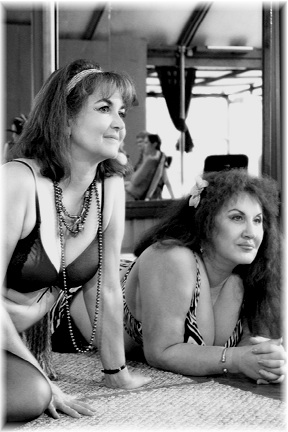


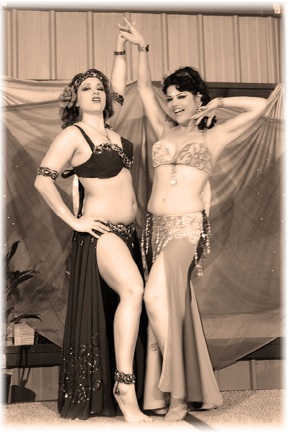

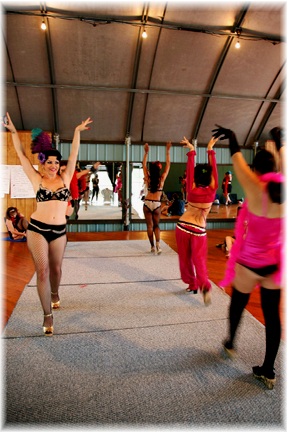


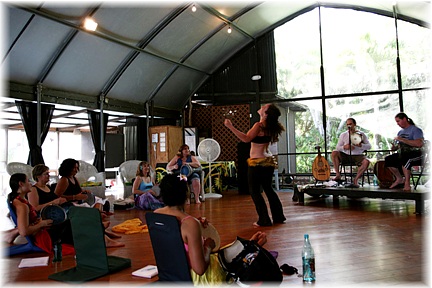
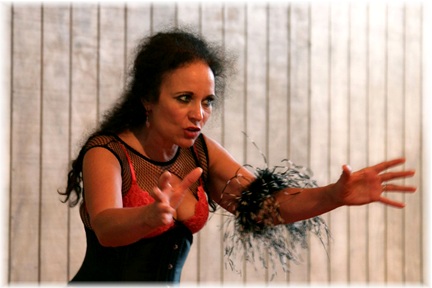

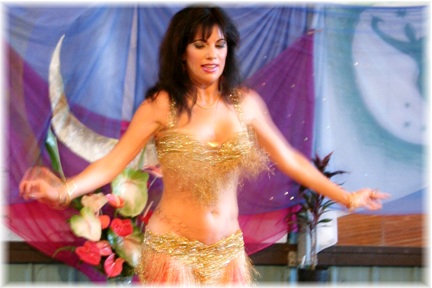


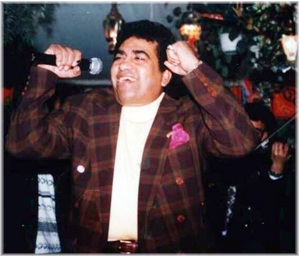 Most Shaabi singers seem to have this quality. Also, his music had an untraditional sound. In Salametha he even used a trumpet! Adaweya used a blend of traditional instruments and modern instruments and sounds. He used traditional instruments such as the
  Sheikh Sayed Darwish was one fine example of achieving Saltana. Sheikh Sayed Darwish -1892-1923- a working class citizen, a bricklayer, was known for his progressive, western and modern leanings. He was one of the pioneers of Arabic music and is revered today as the father of classic and popular Egyptian music. Shortly following his death, attributed to a heart attack or an overdose of drugs, it was rumored that a member of the Oriental Music Institute said, “That’s the end of debauchery in this country!”
 More on the Mawwal:
 The Role of the Simple Cassette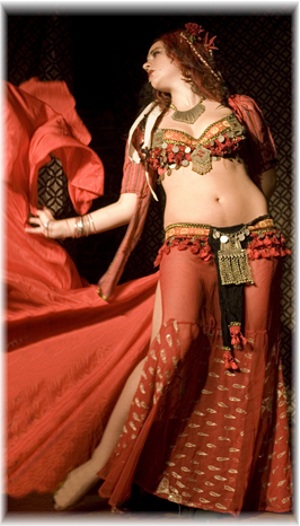
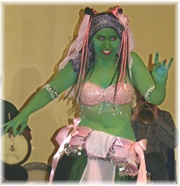
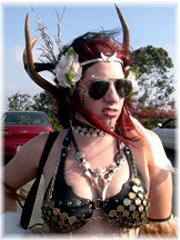
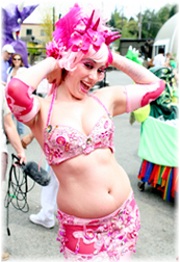
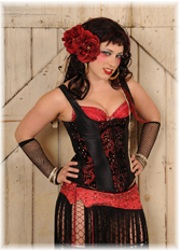
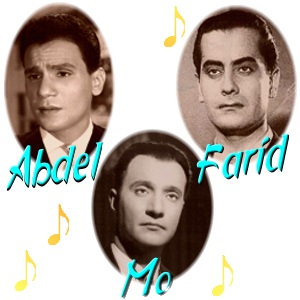

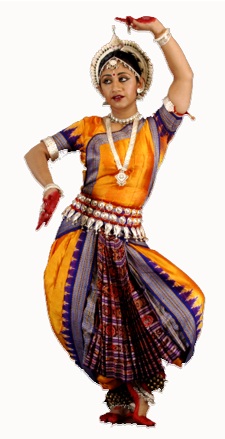 Question #2: I read on your website that you have studied Abhinaya for Classical Indian dance. How would you say the concept of Abhinaya applies to Middle Eastern Dance? How would you define the concept of Abhinaya within Middle Eastern Dance? Would you consider it to be different or similar to Classical Indian dance?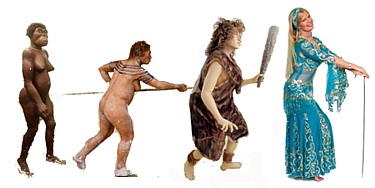

 1-2-3 Belly Dance with Bahaia
 Aziza’s Ultimate Practice Companion
 A Course in Belly Dance by Galit Mersand


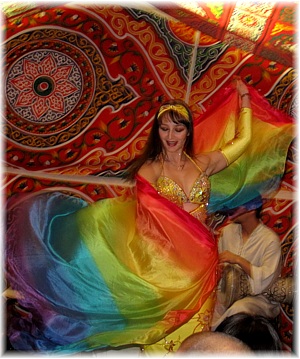
 I was also faced with a more pressing dilemma – I had been forced to leave my instrument in the United Kingodom due to luggage weight issues when I came over here and nobody, that I knew, had a violin which I could borrow. So I finally managed to persuade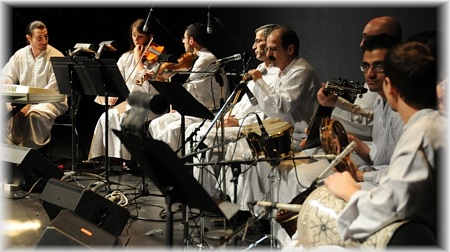

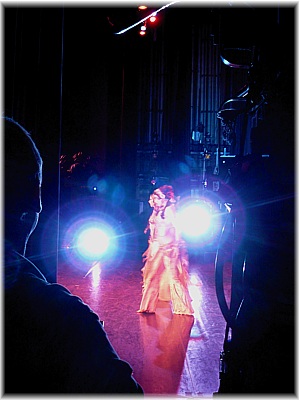

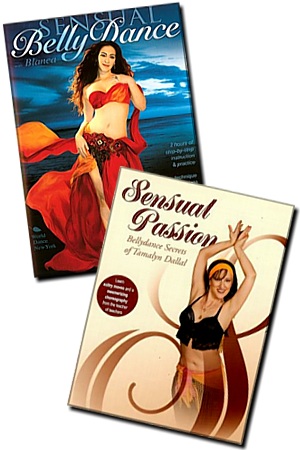
 “Sensuality is a way of perceiving and enjoying things,” explains Blanca in her instructional DVD Sensual Belly Dance. Because Blanca is posed like Botticelli’s Venus on the cover, you might think this is another one of those sexualized, “Bellydance for your man” kind of deals; it is not. Blanca explains, that sensuality is enjoying something because it gives you pleasure, like eating chocolate or enjoying a beautiful view. She maintains that the goal of her DVD is to make your dance enjoyable by emphasizing technique, fluidity and personalizing your dance.
  “Sensual Passion” (the DVD) is not about sensuality! Again, like Blanca’s “Sensual Belly Dance”, this DVD is not another “charm your man and get him to fall in love with you” instructional DVD. “Sensual Passion” refers to the name of the song by

