Gilded Serpent presents...

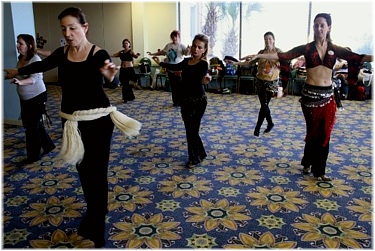
Photos from the 2008 Tour of the
Bellydance Superstars


Marin Civic Center, San Rafael, March 1, 2008

photos by Carl Sermon
posted April 28, 2009

Troupe
Click for larger photo
Troupe
Jayna
Jayna

Adore
Natalie, Sonia, Adore
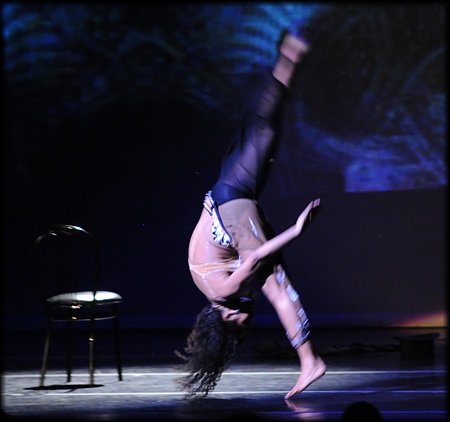
Adore flips
Adore
Hannah Nor does fan
Hannah Nor
tahitian
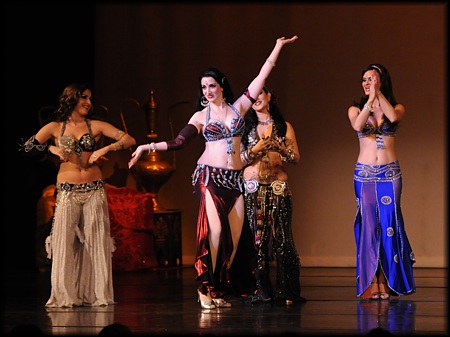
Sonia, Sabah, Natalie, Lauren, Hannah Nor, Jayna
Kami's drum solo
Kami, Issam, Jillina, Sonia
PJs veil
PJ
Queen Jillina
Jillina

Sabah does an arabesque
Sabah
Sharon soft
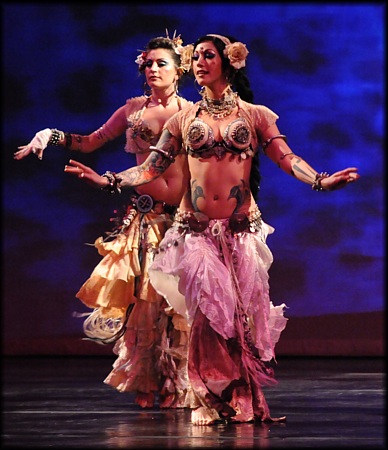
Tribal in white
Click for larger photo

Kami, Colleen, Zoe, Sharon
Hannah Nor's solo
Colleen, Hannah, ?, Jayna
Sonia and Issam
Sonia, Issam
Jillina & Issam
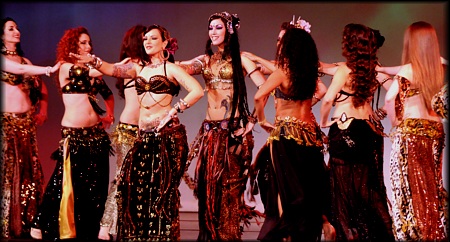
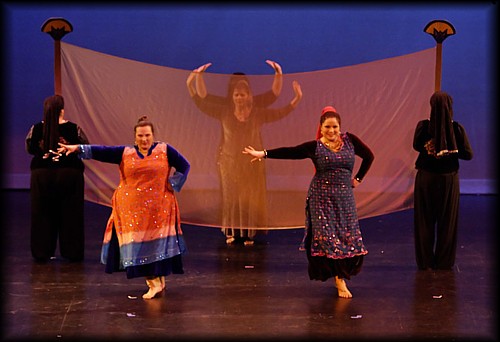
Troupe
Zoe
Troupe led by Jillina
Goodbye Jillina!


Have a comment? Send us a letter! Or
add your comments below.
Check the "Letters to the Editor" for
other possible viewpoints!

Ready for more?

Why not leave a comment below? Here is a graphic that may help explain the strange buttons and questions below


Gilded Serpent presents...

Oasis Dance Camp South

Cassandra performing

A New Twist on an Established Retreat –

by Ramona
photos by LisaMarie & Lamis
posted April 24, 2009

Oasis Dance Camps have been annual events in locations across the U.S. for 25 years. Oasis South was held at Jekyll Island, a Georgia state park, in January 2009. Unlike the other Oasis Camps, this retreat was held in a beachfront hotel overlooking the Atlantic Ocean. New class offerings and events made this camp even more fun!

Cassandra is the core dance instructor at every Oasis Camp, teaching Oriental belly dance. Habiba was this year’s guest instructor, back by popular demand to teach Tunisian folk dancing and costuming.

A change from previous camps was that Nicole LeCorgne, Oasis camp drummer, was unable to attend Camp South this year due to other commitments. Nicole has a Master’s Degree in Ethnomusicology and is a member of several New York-based ensembles. She has been the leader of evening drum and percussion classes at Oasis Camps for years. We missed her and hope to see her at future retreats.

Teacher’s Intensive class
This year there was an option to take a pre-day class. Campers arrived early to attend Cassandra’s “teacher’s intensive,” which focused on helping dance instructors communicate more effectively with their students. The class was part sit-down discussion and part active participation.

During the sit-down discussion, Cassandra gave us information about structuring and organizing lesson plans, techniques for effectively teaching and getting key points across to students, developing coaching skills, and modifying steps for students with physical limitations.

Specifically, there were useful tips for teaching, such as how to mirror zils when facing the students in class, so that students play the strokes while the teacher is watching them (instead of having her back to them). Cassandra placed emphasis on checking students for correct form and healthy alignment, giving us information about what to look for, such as positioning of feet and ankles.

She discussed the importance of verbalizing the cultural background of dances, so that students understand the origin of the steps. She covered the all-important topic of negotiating fees, with some interesting personal stories about different approaches to negotiating. After class, she gave us examples of syllabi from her weekly classes in Minneapolis.

The second half of the teacher’s intensive was an exercise where students took turns teaching part of a class. Each of us was assigned a specific task (such as teaching a warm-up or a dance step), which we taught the class participants. Cassandra took notes during this exercise, giving us individual feedback about the portion of the class we taught.

Habiba teaching
Cassandra teaching

Class variety
Camp South began on Wednesday evening with introductions and meeting other camp participants. Many participants come to camp year after year, so there were many familiar faces from previous camps. Many of the experienced dancers who attended are well-known performers in the Southeast. There were also a few beginners, so there was a mix of skill levels and perspectives. Everyone introduced themselves and we learned something interesting about each participant.

Classes began on Wednesday morning. This year there was a new beginner’s choreography class taught by Zuleika, which was offered as an alternative to Cassandra’s Spanish-Oriental choreography class. In addition, Zuleika taught the optional early-morning conditioning/stretching classes. The morning stretch is a traditional part of Oasis Camps, and is a great way to start the day. I found that the morning stretch class helped me with floorwork techniques.

Habiba preforming in Tunisian costumingOriental technique and Tunisian technique classes and warm-ups were held in the morning and choreography classes in the afternoon. Cassandra’s Spanish-Oriental fusion choreography was fun to learn. The majority of the campers were experienced belly dancers, and the variety of flamenco steps and styling added refreshing variety our repertoire. Cassandra’s choreography is always well-organized with helpful printed notes.

Every student received a personalized notebook and music CD, which included class notes and news articles about dance and culture.

Habiba’s Tunisian dance classes were also refreshing learning experiences and also included helpful printed notes and her informative published articles. Since many of the participants had no prior training in Tunisian dance, these classes added new techniques to our repertoire.

On the last day of camp, the choreographies were videotaped during class. Oasis Camp DVDs include the class practicing the choreography, plus the show performances and extras. The DVDs are offered at an extra charge.


Highlights
Sit-down classes after lunch focused on a variety of topics. We watched classic videos of famous Oriental and Tunisian dancers, with commentary by Cassandra and Habiba explaining the cultural background of the dances and interesting facts about the performer’s careers.

On another afternoon, Habiba brought a Tunisian dance costume and showed us the parts of the costume, discussed the fabrics, the handmade lace detailing, and origins of the costume. She dressed a student in the costume so that we saw how the pieces fit together—even the proper undergarments for a Tunisian costume!

Cassandra taught a finger cymbal class one evening, emphasizing basic skills and rhythmic patterns. She played the drum for us as accompaniment.

A private, gentle critique with Cassandra is an optional feature of Oasis. For a nominal fee, you are able to schedule a private meeting with Cassandra, and you watch one of your DVD performances with her. She gives helpful suggestions and insight into achieving your goals and improving your dance performances. I’ve taken advantage of this offering and highly recommend it for serious dancers, since I’ve found her suggestions so helpful.

Shows are always a highlight of any retreat, and so the camper’s performances were something we all looked forward to. There were many different performances, including Oriental, tribal, folkloric, comedy and a role-playing pirate dance. Another show the following evening featured dances by Oasis staff and instructors. There was an informal after-party with henna painting and party games.

After the final Sunday morning class session, we had a brunch with closing ceremonies and awards. Campers submitted votes for their peers in a variety of serious and not-so-serious categories, and a number of awards and small prizes were presented.

Activities
Shopping is a favorite activity at Oasis, and Originales by Faye was there with a wide range of costumes and accessories to fit every size and budget. In addition, a camper’s flea market was held one evening, with bargain prices on gently used one-of-a-kind costumes and accessories.

After classes, there was time to relax and explore the area. Jekyll is a quiet little island with a historic district and beaches. There is a sea turtle exhibit and nature center. The hotel has a pool and hot tub. The hot tub was much appreciated after walking on the beach in the brisk January weather. This was my fourth time attending Camp South and I make time to visit a few tourist attractions each time I go. I have been on a horseback riding tour of the island, visited the historic district, sea turtle center, and sampled the local seafood restaurants during various visits.

Some dancers bring their spouses. Spouses may enjoy the miles of beaches, golfing, fishing, horseback riding and sightseeing tours on Jekyll Island during the day. There is a bike trail that goes around the entire island.

Many dancers register for camp in pairs and groups and notify the organizer of who they’ll be sharing a room with. If you are traveling alone and need a roommate, the event organizer will find a roommate for you. There is an upcharge for a private room.

Oasis South Camp includes meals prepared by the hotel’s restaurant. The restaurant’s ownership changed since the last camp I attended, and I was pleasantly surprised that camp had real Southern cooking. The restaurant also has a bar. The local area restaurants feature fresh seafood.

If you go to Oasis Camp Visit www.OasisDanceCamp.com for registration details.

campers & staff
click for larger photo

Group photo of campers & staff in front of ocean
Please help match these participants NAMES to the FACES!
Nissa Sadeira, Belda, Na’imah, Faye, Akasha Bint al Waha, Selene, Joani Bint al-Waha, Lamis, Saroya, LisaMarie, Kahina, Alikahana, Pari, Adena bint Sherezzah bint al-Waha, Ramona, Tasma, Sherezzah Bint al-Waha, Souzan, Nasheeta, Yasmeen.

1, 2, 3, 4, 5, 6, 7, 8, 9, 10, 11, 12, 13, 14 , 15, 16, 17, 18, 19

staff
click for larger photo
Group photo of camp staff. From Left:
Sa’ida (event sponsor), Cassandra, Habiba, Zulaika, Na’imah


Have a comment? Send us a letter! Or add your comments below.
Check the "Letters to the Editor" for other possible viewpoints!

Ready for more?

  • Report of the Eastern U.S. Middle Eastern and Balkan Music and Dance Camp
    The camaraderie of a camp – bunking with strangers who soon become friends, "breaking bread" together, learning new dance steps, songs, and drum rhythms – has all the ingredients for a treasured experience, and this camp lived up to that potential.
  • A Metmorphosis Before My Eyes -Oasis Dance Camp in
    "I know I never could have danced and studied eight hours a day for 4 days straight without the energy and passion for the dance which surrounded me each day."
  • Dynamic Belly Dance, The Joyful Journey of Dancemaking and Performing by Ramona
    This book would be excellent when coupled with a good dance instructor or Ramona herself. She is thorough with her information and was successful creating a book that people can enjoy, if their wallets were big enough.
  • Dance of the Nile part 3: Meleya
    The erk sous seller spies a pretty young thing in a melaya (and pink bloomers). He coaxes her to have a cup; they flirt. He chases her, she runs away.
  • Magnouna in Cairo, aka My Cairo Adventures in April 2008
    The tally of dance shows for this trip was 3 Nile dinner cruises (Lorna Gow, Basima and Leila), the Tannoura show, Dina (at the Semiramis) and the Opening Gala at the Nile Group Festival (Dalia, Liza Laziza, Leila, Hayem, and Asmahan).  
  • Recognizing Accomplishment: Atlantis!
    I get so excited over the events they are producing, that I have no thoughts about them as dancers. All I think about is the person who is performing or teaching and the merchandise that the venders are selling. I only think of the sponsors as being effective with the business side of Bellydancing.
  • A Quest for Beauty, Part 1: Beauty is Discovered
    My wife of 17 years asked, “You’re going to do…. what?”when I told her of my desire to take Bellydance lessons
  • Where is the Goddess in a Vertical Drop and a Shimmy? How Can the Practice of Bellydance Lead the Dancer to a State of Grace or Enlightenment?
    The most important practice of almost all mystical paths is meditation. It is universal and does not need a frame of reference from any particular theology.
  • Mina’s 1001 Arabian Nights,r
    1001 Arabian Nights started with asking several of the community troupe directors and teachers I’ve known over the year if they would like to create a show with me. They all seemed very excited about the prospect of doing something “different” in the dance community.
 

Gilded Serpent presents...

Dances Along the Nile,

Erk Sous Seller from the Author's Collection
Erk Sous Post Card from the Author’s Collection
Sous Sellers
Author is Meleya costume
Author in Meleya costume
Lynette's picof Sousman in 1991
Photo taken in 1991 of a Sous Man on a Cairo street.
Yasmina Ramzy does Meleya

"On one of my trips to Egypt in 1986, I went to see the performance of a dancer whom I totally respected. When she came out for the second act strutting in high heels, a short dress, face veil and a black wrap, I was confused. Then she behaved in what I perceived as a very unlady-like manner. Now I was upset, This was not the Bellydance I subscribed to and I was starting to question my admiration for this dancer. My Egyptian companion at the show explained the Alexandrian character of this style but I was still not digging it. I remember thinking very clearly and adamantly that I would never be caught performing this style of dance in a million years. Alas, only 10 years later, Milaya became my favourite folklore to perform. It seemed that as I aged and layers of prudishness fell away, I discovered Milaya to be great fun and a wonderful expression of the relentless feminine spirit bursting through oppression and the restraints of a heavy dark veil. I call Milaya "The Dance of Hypocrisy" because it is the perfect example of whenever one tries to hide, oppress or cover something up, that something will eventually find a way to escape and often gets exaggerated in the process of fighting for freedom. So today, Milaya is my expression of freedom. Who would have guessed?" Yasmina Ramzy – Toronto
Sahra Saeeda

Quote/caption coming for here
Sahra Saeeda– Los Angeles
http://www.sahrasaeeda.com/
Article- Dance Zones of Egypt
Sous Cartoon

Part Three: Melaya

by Gamila El Masri
posted April 17, 2009
Reprinted with permission, from Bennu, Issue Vol.6 #3, with further editing, additional information in sidebars, videos, and photos added.

bennu Gilded Serpent is proud to announce that we will be reprinting a multi-section article, "Dances Along the Nile," from the publication Bennu, courtesy of New York’s Gamila El Masri. Formerly a print publication, Bennu was a labor of love that is now available in pdf format on CD. This publication is a valuable resource for Oriental dancers and we are pleased to be able to offer our readers this sample and to add this content to our archives. Our thanks to Gamila Al Masri for the republishing rights. For more imformation about ordering Bennu on CD, please contact Gamila through the linked byline above.

The melaya is the black modesty garment worn by all Egyptian women, but most associated with dances from Alexandria. Authentic melayas are wide enough to reach from the top of the head to the floor and long enough to wrap centered on the head, the left side is pulled under the left arm across the chest and tucked under right armpit. The left hand holds the edge of the melaya framing the face while the right works the free edge of the right side. This portion of the melaya is also furled and unfurled around the arm in the process of the dance. There are various wraps and unwraps accomplished while still wearing the melaya; also removing the melaya from around the body and slipping it through the arms like a shawl, then furling and unfurling the melaya around the arms; holding it by the very edge while it glides behind you; and many other specific manipulations.

Authentic melayas are usually just a bit too short for use in choreography. There are costume melayas available from Egypt that are edged with crochet or paillette trim with a strip of the same running through the middle. I have yet to find one the right size to work for me, but you may have better luck. If not, you can make your own. However, there are two very important things to keep in mind: the melaya is traditionally a heavy garment, and it must be wide enough to reach from the shoulder to almost the floor at least. So you need a 54”to 60”wide piece of fabric that has enough weight to it to handle like an authentic melaya. The most common fabric width is 45”(that is how wide a veil usually is), 54” will give you shoulder-to-floor and 60”will give you head-to-floor. I find an average length of 3 1/2 yards works well. Hopefully you know that the 3-yard veil is a myth-or should be. A veil should measure 3 1/4 yards (3 yards 9 inches) to give you a little drape at the fingertips when you hold it out at arms length, 4“ more each hand than a 3 yard veil. The melaya at 3 1/2 yards gives a drape of 9”on either side after hemming. I personally prefer this length for veils also.

It is not the length that is cumbersome, but the manipulation of the width and weight. Above all, the melaya is in no way handled like you would a veil, even if held in a similar position.

Book Cover
Reveal and Conceal: Dress in Contemporary Egypt by
is a great source book for those wishing to understand the cultural significance of Egyptian women’s dress. There is a section with photos that addresses the Meleya liff and describes various styles and wraps and materials used.
Excerpt from book-
"It is in this way of carrying and adjusting the melaya that it can become a provocative form-revealing item of apparel. Commonly when walking, a woman gathers up the bottom half, pulls it tightly around her and lets the ends hang over one arm; in back view, the shape and movement of her buttocks are clearly visible under the cloak. The "entrapping" quality of the melaya is expressed in the proverb, "She spread out her melaya for him," which means she scolded him. The melaya liff,
associated originally with the city, has spread rapidly through the Delta and among the more worldly of the Upper Egyptians. Egyptian Christians tend to associate the melaya liff with Muslim use but that distinction is not strictly observed in contemporary Egypt"

Authentic melayas are made of a heavy cotton crepe and costume melayas are made from a non-breathable jersey that I find very hot. I like satin charmeuse. It has enough weight for authentic movement yet is light enough to manipulate easily, and the satin charmeuse is also very fluid. Costume melayas should be edged with bead and paillette trim around all four sides; you can also glue or sew paillettes scattered throughout the body of the melaya.

The “melaya”dress is a fun, flirty, form fitting short number with a flounced hem worn hitched up to one hip exposing the leg during movement.

The dresses worn in Alexandria, that we are now calling “melaya dresses, are tank topped or have peasant ruffles. Some have circle sleeves, some little puff cap sleeves. The costume version is usually deep v-necked with narrow shoulders, skin tight with sequined motifs all over. The theatrical folkloric version is made from satin with a full circle skirt (no hitching) that is also gathered at the dropped waist. Some are made in gathered tiers so that the bottom is really wide when you turn and spin.

Mine looked like my eighth grade graduation dress (this was designed and made for me through the Egyptian American Folkloric Group) — I never saw it until they gave it to me): peach satin upper with copper and peach metallic alternating tiered skirt, complete with circle sleeves and biscuit size fabric rosettes all along the bateau neckline … just made you want to curtsy.

The best part was that the fabric gathers were all flattened into pleats so there was no puffiness to the skirt, and the skirt was very wide at the bottom. The way it was constructed it would flare out halfway up my thighs while turning which looked fabulous … very Cyd Charisse. The bad part was while turning with the melaya down, it caught my skirt on the way back up … waaaay up. It’s a good thing I was wearing full brief dancewear. But they were beige, and to this day some folks insist they saw my naked derriere. And, of course, it was forever immortalized on video. However, it did lead me to research just what a lil ole melaya gal would be wearing under her flounces.Guess what … I now have the prettiest pair of pink silk bloomers complete with garter high ruffled edges. Quite fetching actually. The producers were hoping my skirt would go up all the time then because the audience loved the bloomers. This dress was worn for an Erk Sous number with a 60” wide melaya. For the beginning of the number I was as wrapped as you can possibly get without being classified a mummy. It was a theater tableau and the head to floor melaya fit the character of a modest young woman.

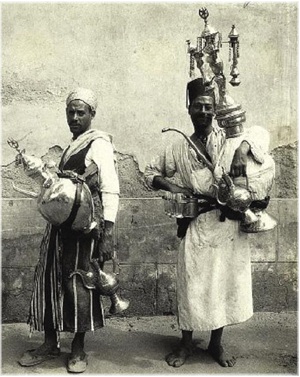
Erk Sous is a licorice-flavored infusion that is sold on the streets by strolling vendors. The erk sous seller carries the drink in a large vessel strapped to his shoulder, while a carrier attached at his hip contains his cups, which he knocks together to attract attention.

Dance Scenario: The erk sous seller spies a pretty young thing in a melaya (and pink bloomers). He coaxes her to have a cup; they flirt. He chases her, she runs away. He chases her some more; she runs the other way. All during the “chasing” there are portions where they are facing and one or the other is actually traveling backward, a little bit of an Egyptian ‘quick step’; the melaya is being manipulated throughout. He catches her and they dance together around the erk sous vessel. There’s usually a nice little taqsim solo for the pretty young thing with the sous seller on his knee extolling her virtue and beauty. They dance together some more. Depending on how your story goes, they either run off together, or she rebuffs him and leaves him alone holding his erk sous.

Another scenario is her father or husband comes to get her and whacks the guy with his umbrella (comedy) or the husband is unsuspectingly given a cup of poison and the girl runs off with the sous seller (drama).

One of the songs I would sometimes have in my cabaret shows was “Edalla Alla Kefik;” a rollicking tune about a little lady who’s just a bit brazen. While looking for music for a melaya number I asked a musician friend if “Edalla…”would be appropriate and he thought it was a fabulous idea. No one had used it for a melaya before.

I found a version by Hossam Ramzy, which I choreographed to. The original choreography was for a female duet and then a group number. Later I had the music redone especially for me when I began performing it as a solo. The attitude for this dance is totally different than the erk sous. Bold and Saucy with the never fulfilled promise of Naughty… but Nice. Multi-colored plastic bangle bracelets and ear bobs – slightly trashy and popping gum. Love her! (I got the gum-popping bit from Nadia Hamdi). The melaya for this dress is actually made from 45”fabric and speckled
with multi colored sequins all over. There is a great deal of manipulation in this number and less wrapping, so I cheated. Shhhhh… don’t tell.

Last but not least is my favorite melaya dress; waltz length red sequined chiffon with the softest red netting gathered circle sleeves, which reach the elbow. The dress is not hitched up on one side but is cut to achieve the same effect. The flounce is made of the same soft netting as the sleeves and red sequins are dotted all over the sleeves and flounce, the neckline a sedate sweetheart. I’ve used this dress so often I’ve had to replace sequins where it was worn bare. It became my official Melaya Leff costume.

The Melaya Leff is the most fun of the melaya dances simply because you get to do a drum solo at the end. “Leff” refers to the tying of the melaya around the hips and bursting into hip work.

I simply added my absolute favorite drum solo to “Edalla Ala Kefik.” The beginning is an entrance with the melaya traditionally wrapped for modesty while strolling about. The melaya need not cover the head for this dance, but still the left side is pulled under the left arm across the chest and tucked under right armpit, while the right arm and hand are used to manipulate the melaya. There is a particular ‘walk’ with the left hand on the hip while the right waves the melaya back and forth left to right in front of the body. After a promenade, the melaya might be taken out from under the arm and held open with both arms wide to frame a bit of hip work in place, then the melaya is rewrapped.

It is very much the cover-and-uncover similar to veil work, but the tenor is completely different. There is always the sense this is an outer garment being played with rather than the sensuality and seductiveness of the veil.

There is another variation of the wrap where it is held taut against the body under the bust across the rib cage and diagonally down to the hip grasped by the right hand, the melaya covers the right arm like a shawl and is pulled tight around the upper arm. The left arm is free and is commonly held swaying overhead, sometimes bringing the hand to the temple, or doing some hand and arm work in front of the body. Unwrapping the melaya from around the body again and holding it behind, it can be draped over the arms (in the crook of the elbow) and nonchalantly carried like the wrap to a cocktail dress. Catching the edges between your fingers (be sure it is the same edge in both hands by gently tugging … if you feel it tighten you have the same edge) the melaya makes lovely little mini-wings. With a purposeful flip the melaya unfurls and glides behind you (if you don’t have the same edge the melaya will twist into a ‘bow tie’ effect). It can then be furled and unfurled around the arms alternating with holding the melaya aloft behind you or letting it drag along the floor. The dance is ended with the final rewrapping back to the traditional modesty wrap. For melaya leff you simply gather the melaya and tie it around your hips and proceed with a drum solo. To end the number add a music tag, rewrap, do a very short finale and exit the stage.

Traditional costuming accoutrement to the melaya includes the burka (face veil), an open work crocheted version with paillettes. Wearing a burka can bring an entire new dimension to the dance. The eyes, and direct eye contact with the audience, not only become a more active part of the performance, but an extremely vital tool imparting the message the covered face cannot. Brightly colored pom pom headscarves are de rigueur, surpassed only by headscarves with artificial flowers (the pom poms represent flowers). The tails are tied behind the head under the hair and then brought back up to the top of the head and tied again. The bigger the pom poms the better, especially sprinkled with sequins/glitter. And one must wear an ankle bracelet (the ones with beads and coins rather than the all coin ones) on the leg where the dress is hitched up. I know of no rule about not wearing two ankle bracelets, but wearing only one seems the popular choice. Traditional shoes for the melaya look like Candies™ (stiletto mules with a thick wooden sole) with a smaller heel. Not caring to fall off my mules, I wear open toe ballroom shoes with an ankle strap

There are dances for every aspect of Egyptian life: in every story a little dance, in every dance a little story.

I once choreographed a number for the Kismet Dance Ensemble (NY), for performance with the Egyptian American Folkloric Group, to a song about an orange telling his cousin the tangerine not to worry about being different because they both smell good. The choreography did include the sniffing of oranges as well as a magnificently executed tossing of oranges from dancer to dancer across the stage.

Every song with lyrics (and even those without) speaks about something close to the Egyptian heart. Honor that; we owe that much for what the privilege of adopting this dance affords us. Appreciate the culture from which it comes and be grateful to a people whose hearts are great and joyful. Egyptian dance: truly the gift that keeps on giving.


Morocco’s Concert at Haft Theatre with Nadia Hamdi NYC 1997


The Aswan Dancers do the Meleya Leff – #1
Judy/Shara, Kahty Guthrie, and Susan, of the Aswan Dancers perform the Meleya Leff at Tropigala, San Francisco in 2004 to the song “Edalla Alla Kefik”


The Aswan Dancers do the Meleya Leff #2
Maya, Jacque, Marcia, Kathy Guthrie, JudyShara, of the Aswan Dancers perform the Meleya Leff atODC Theatre, San Francisco, in 1998 to the song, “Taala Aancina,” and “Edalla Alla Kefik”


The Aswan Dancers do the Meleya Leff #3
Judy/Shara, Maya, Kathy Guthrie perform the Meleya Leff at Tropigala, San Francisco?, to the song “Edalla Alla Kefik”.


NADIA HAMDI
video coming soon here
!

Nadia Hamdi does the Meleya Leff
Nadia Hamdi, 1997, performing at San Francisco State University Theatre. Exerpt from the video “Nadia in America.” Full video available through aswandancers.org.


Have a comment? Send us a letter! Or add your comments below.
Check the "Letters to the Editor" for other possible viewpoints!

Ready for more?

  • Dances along the Nile, Part 1: Raks Al Asaya
    There is strength in the cane twirl but not aggression, extreme rapid twirling should be held as an additional sensational feat, less is more. Have your body of twirling be moderate so that you can vary from slow to climatic; always reflecting the music, it’s mood and tempo. Get down without getting crazy.
  • Dances along the Nile, Part 2: Raks Al Balas
    Ah, the poor balas (water jug). This is one of the most underestimated and ignored of the dances along the Nile.
  • Magnouna in Cairo, aka My Cairo Adventures in April 2008
    Photos of Basimah doing Meleya!
  • The Dance Zones of Egypt: Sahra Kent’s Journey Through Egypt Basic 1 Workshop
    Although not strictly speaking a “dance” workshop, for each zone we got up to learn some characteristic steps and posture, and gestures associated with each dance zone/style, a good way to blend the theoretical with the experiential.
  • Backstage with the Reda Troupe
    Seeing the company in performance six times was truly a wonderful experience, because each time I saw some new detail or subtlety in the movements, the costuming, the structure of the dances, and in individual performer’s presences on stage.
  • Lifting the Veil
    I excused myself first and then asked her “why on earth would someone obviously not of Middle Eastern heritage actually choose to wear the veil?” She smiled knowingly and gave me an answer that still keeps me thinking today.
  • The Summer School of Khaleegy Dance, Dance Style from the Saudi Arabian Penninsula,
    The “moral police” and hotel security watched every move I made. All my phone calls were monitored. I was not allowed to talk to or get into an elevator with an Arab man.
  • Changes:Egyptian Dance – Has it crossed the line?
    Both festivals, held in Giza were isolated and insulated from the people and the Cairo that I know and love.
  • Sunday Morning Panel Discussion at Carnival of Stars, November 11, 2007
    Panel members discussed Fusion in Belly Dance. Members included: Jihan Jamal, Shareen El Safy, Dahlena, Debbie Lammam, Amina Goodyear, and Edwina Nearing
 

Gilded Serpent presents...

Two Dance CDS for Performance and Listening

Masters and Soul of Cairo CDs

"The Soul of Cairo" & "The Masters of Bellydance Music"

review by Amina Goodyear
posted April 17, 2009

Quite awhile ago Gildedserpent gave me two CDs to review:

“The Soul of Cairo”by Hollywood Music Center, executive producer Movses Panossian coordinated by Mher Panossian and
“The Masters of Bellydance Music” by Caravan Records, executive producer Movses Panossian, produced by Mher Panossian

 Although under different labels, both of these CDs belong to a Panossian family operation also known as Hollywood Music Center. I know them as one of my main sources of dance music and videos and always seek them out at bellydance festivals. Although they have quite an impressive and easy to use online website and catalog, I am an old-fashioned touchy feely kind of person and like to see and handle the items in person. Lucky me, although I don’t live in their area, I get to go to festivals where they are prominent vendors. This may sound like a promotional ad, but actually it is not. This family is dedicated to producing (and also finding) the latest and most popular bellydance music as well as reissuing classic albums in a remastered format with updated liner notes. When I go to various dance festivals, I like to see what HMC has to offer as it often reflects the dance trends. (Yes, they are well-informed vendors.) Although I often don’t like or agree with these trends, at least I know what they are. While these trends seem to change from year to year, one thing that does not change is the fact that the music sold by this family seems to have pretty good – as in very high standard – sound quality. Being an “old-fashioned” and traditional Middle Eastern music lover I don’t always agree with the bulk of the music that is sold by Hollywood Music Center, but I will say that Mher Panossian (who is very visible at the dance festivals I attend), once informed of my personal tastes, has always only shown me music I like. The following two CDs are reviews of the type of music that I like. These CDs would be under the category of “Traditional”.

“The Soul of Cairo”

Soul of Cairo CDComposed and Conducted by Ahmad Gibaly
Performed by Ahmad Gibaly and Orchestra
Produced by Hollywood Music Center

  1. The Soul of Cairo (Bellydance routine) 9:04
    This is a very beautiful and soulful bellydance routine – even though each melodic and rhythmic section stops completely (so you can actually make the piece shorter if you wish by cutting and pasting), each section flows naturally into the next section. The routine is very clear and well mixed. You can hear each distinctive instrument and rhythm played.  However, to me, the Soul of the Cairo Bellydance is the heavy percussion section and this piece is treated like a classic song, not like a typical Cairo percussion heavy magensi*. But it is a very predictable, pleasant and easy to dance to piece.
    • Intro: 24 sec
    • Masmudi floaty entrance – veil
    • Into beledy –stop
    • Repeat Masmudi – into beledy –stop
    • Beledy -gut -section 4x & maqsoum saeria
    • repeat Beledy -gut – section 2x & maqsoum saeria
    • Ayoub – haunting – repeat – shorter
    • Mood change = rhumba 2 repeats
    • Stop
    • No rhythm 2x
    • Repeat Rhumba – 2x , 3rdx with violin taqsim
    • speeds up and stop.
    • Waltz rep. 2x, 3rdx with violin? accordion solo over rhythm
    • Finale- like beginning 2x with tag extra.
  2. Sahret Omrena (Modern) 4:06
    Is this a modern dance piece with an underlying Bedouin debke feel? Or is it a Lebanese style “Saidi” cane dance?
  3. Hazzet al Noura (Modern Accordion Balady) 5:04
    Very interesting!  I love the constant of the drum rhythm with the accordion playing throughout.This is not your typical accordion balady. When the rhythm changes and the accordion does too it is such a natural change you don’t even notice. The last part with the accordion playing is very reminiscent of a playful dance I saw on a video with the Egyptian dancer Hayatim. Although the piece is very driving, the way the accordion plays, there is plenty of room for the dancer to also stop and play.
  4. Taka Doom (Drum Solo) 3:26
    This drum solo is actually a continuation of the accordion balady, but is on a different track so it can be used as a stand alone drum solo or be tacked onto another song.  There are 3 distinct flavors and sections in this drum solo making this a complete dance. The end is not very exciting. It just stops. Although it has kind of a predictable ending, I wish it could have built more for a more dynamic ending.
  5. Mizmar Baladna (Saidi Cane Dance) 3:28
    This mizmar/rebaba piece conjures up images of being in the Luxor region and first watching two men “Ya booy” with their big sticks circling and taunting each other and suddenly in “shimmy march” a couple of Ghawazee dancers holding little sticks with both their hands playfully marching to and fro and ending by dancing with each other, skirts flying and shoes stomping while the men are now spinning and whirling with their gallabeyas becoming brown circular floating cones.
  6. Laabet al Ayam (Modern Rhumba) 5:06
    This piece dances. A girls runs onstage looking for…her Habibi, of course,  She encounters the days and the nights (violin and nai) and then finally finds the elusive Habibi (accordion) who tells her stories of love and how he’s wandered the world and the days looking for…her. Finally she (kanun) understands and dances the adventure and happiness of love finally understood (resolved?) and not lost. There is such a beautiful conversation between the Habibi and the girl. In the end it all works out.
  7. Yabool Ayoun il Sood (Accordion Balady) 5:12
    Oh, those black eyes, it’s so nice to finally hear some vocals. If you read this Accordion Balady as a Balady Taqsim, read again. It is a balady and an accordion piece, but not what I call an accordion balady also known as balady taqsim. There are however nice vocals and nice question & answers and conversations with the voice, nai and kanoon.
  8. Ah Ya Tabla (Drum Solo) 3:05
    This drum solo although on a separate track is meant to accompany the Accordion Balady. There are nice stereophonic effects with the drum and back-up percussion. The sounds of each are very fine and distinct and lend to the clarity of the stereophonic effects.
  9. Ansak (Om Kalsoum Classic) 8:18
    What better way to pay homage to such an icon of the Egyptian culture, pride and country than to continue to give her musical tributes in bellydance CDs. This song, by far, is the reason to have this CD. Although deceiving in it’s clean simplicity, it is nevertheless a very difficult piece in composition and rhythmic structure. The violin as the voice is very moving and, if interpreted properly, will aid the dancer in creating an emotional bridge between her and the audience. We can only hope that the Mother of them all understands our desire to dance to and translate her beautiful songs.
  10. Tigi ya Matigish (Arabic Pop) 4:30
    This song may be fun and danceable, but I never would have had such a song follow the serene classic beauty of Ansak. What a shock! It was very difficult to even want to listen to this repetitious piece of pop after Ansak. More attention should have been paid to the placement of the songs in the CD. Just as it is a curator’s job to dress an art gallery,  it is a producer’s job to tastefully arrange the song order.
  11. 11- Ah Ya Zein (Remix) 4:35
    Again, how could this piece of remix gotten into this (up to track #9) absolutely beautiful CD. And, until I heard this remix, Ah Ya Zein (along with Zuruni) was one of my absolute favorite little short songs (of all time). But not like this. How could such a beautiful classic song turn into a “Mohamad el Bakar – Klezmer “ditty.  Yes, I know, Arabs and Egyptians are famous for turning their backs on their wonderful heritage and trying to fusionize their songs, but Ah Ya Zein? Please!  How I wish I never heard this version.
  12. 12- Arous wa Arees (Zeffa Wedding Song) 4:49
    What a fun Shaabi song. Could this be a song for a street wedding? Certainly the mizmar brings the the Beledy to the City.  But it sounds a little sanitized like it was composed for a movie. Too organized and smooth. Not enough noise or raw enough to make it believable, but I like it.

Favorites:
Tracks 5, 9 and 12

Nice:
Tracks 1, 3,  4,  6,  8,

Please, no – why?:
Tracks 10 & 11- These tracks should be in a different CD.

Zil Rating for The Soul of Cairo:
Soul- 3.5 zils

3.5 zil rating


“The Masters of Bellydance Music”

Master of BD CDA great compilation of favorite bellydance songs produced by Mher Panossian. This CD is a sampler to music available on other CDs produced by HMC.

  1. Dr. Samy Farag: Rakasni ya Habibi (Classical Egyptian) 5:38 From “Rakasni ya Habibi”(Dr. Samy Farag)
    This is a popular and favorite Oriental Dance opening for many dancers who either use it as a stand alone 5+min. piece or as the first song of a complete dance routine. It has diverse mood and rhythms changes and can be a fun and exciting dance. It is easy to dance to as each rhythm change is intuitive and predictable. The composition follows the standard formula where the first repeat is usually (but not always) longer than second repeat.

    • instrumental intro to 0:20
    • malfoof to
    • music intro 1x
    • drum break
    • balady hellos 2x
    • accordion & violin q&a
    • nai & violin q&a  2x
    • drum break
    • khaligi – nai – violin
    • drum intro into
    • dellae girls sing “dance for me oh my darling”
    • men respond – music responds
    • repeat – girls, men, music
    • chifte mood change – into accordion layered over chifte
    • pickup drum beat into malfoof finale 2x
    • into dynamic faster “turning” ending.
  2. Setrak Sarkissian: Layali (Egyptian Balady) 4:25 From “Arabian Nights” (Setrak Sarkissian and Toni Frangieh)
    If this CD were to be used as a complete dance routine, this next track with the solo nai taqsim would be the perfect next selection. The emphasis on only one instrument playing makes the audience sit up and pay attention to this strong mood change. After such an exciting ending to track #1,  track #2 puts you into a completely different mood.  While the focus is on the nai, gradually other instruments are introduced totally in keeping with the quiet spiritual mood of the dance. Then about halfway through there is another mood change as a solo accordion taqsim again forces one to sit up and listen and change to yet another mood. This time it is earthy and more raw as it gradually becomes the accordion balady taqsim that is so familiar to the ear.
  3. Salatin el Tarab Orchestra: Aziza (Classical Egyptian) 4:36 From “Rakset Algazala (M.A. Wehab)
    My ear usually wants to hear a driving drum solo after an taqsim balady, but  in this CD that is not the case. Instead, I am treated to “Aziza,” and it kind of works as a 3rd song if this CD were to be used as a whole rather than just individual cuts. It is a nice arrangement – very classical sounding, but if one is used to hearing the original version, it can be rather difficult to adjust to the differences in the repeats. Aziza is usually a song that is played “exactly” like the original. This is not. The second repeat is not there and then the balady section (without the vocals) is played twice.  Once memorized in this way, it could be kind of fun. It’s just different. But then, it does end in the same “William Tell” way to make the song complete and Abdul Wehabish.
  4. Aboud Abdel Al: Afrah Al Said (Folkloric Egyptian) 5:50 From “Belly Dance for Arabian Nights”(Conducted by Aboud Abdel Al)
    Wow! This is probably one of the first important Saidi songs ever – at least it was one of the first Saidi songs that was put out and used – on vinyl – and not even by an Egyptian. This song is a classic. Like many Lebanese musicians of that time, (and even today), they felt that Egypt and Egyptian music is where it’s at. (Even today many Arab singers still use the Egyptian dialect.) Also there was the feeling that (in the past) in order to make good quality sounding music, one had to go to recording studios in Lebanon, Greece, France and Germany. This particular song was recorded on probably one of the most popular and classic records (vinyl 33 1/3 rpm) of all time. Many other songs on this album have set the standard including another Egyptian classic – Sahara (City).
  5. Cairo Orchestra: Henna ya el Henna (Classical Egyptian) 5:10 From “Belly Dance Classics” (Folklore/Conducted by Dr. Sami Nossair)
    • Oud taqsim 0:57 min. no rhythm
    • Violin taqsim with chifte rhythm
    • 2:00 masmudi intro to Henna ya el Henna

    This is a very beautiful song but…Although there is a very strong beginning with the oud and violin taqsims the actual song part becomes too repetitive and goes nowhere. Maybe that is why Mohamed Abdul Wehab borrowed it, changed it and gave it structure.

  6. Mohamed Ali Ensemble: Enta Omri (Classical Egyptian) 4:53 From “Music of the Diva Om Kalsoum” (M.A. Wehab)
    Mohamed Abdul Wehab was probably one of the most prolific musicians, singers and composers in Egypt and yet there was a sense of competition with the Diva – Om Kalsoum. So, what better motto than “If you can’t fight ‘em, then join ‘em.” They did make a great team. And this song truly is the “voice of Egypt,” and this version with the kanun as the voice is extremely powerful in an exquisitely quiet and understated way.
  7. Hamouda Ali: Nagwa (Classical Egyptian) 5:15 From “Princess of Cairo”(Hamouda Ali)
    Where I come from – San Francisco– this song, “Raks Nagwa,” is still in constant demand and is still a challenge for the musicians to synch up in the 6/8 section. It may appear to be an easy square song – much like it’s accompanying song “Princess” but it’s rhythm structure and uneven repetitions belie that. It is a beautiful song that makes for a beautiful dance.
  8. Samir Srour: Soher Zaki Fi Balady (Egyptian Balady) 4:36 From “Cairo Plus” (Samir Srour)
    Once upon a time the mizmar and the tabla joined forces to create the  Egyptian Balady and then this style moved to the city and the accordion became the instrument of choice. Sometime later the Saxophone also vied for a spot in the Egyptian taqsim balady. Cairo in the 80’s probably supported hundreds (maybe thousands?) of kiosks that made and sold what I call “drum tapes.” These are cassettes that have improvisations with the tabla and usually one and sometimes two instruments. These were generally the accordion and/or the saxophone. Many of the cassettes had Sohair (my spelling) on the cover as she was considered the epitome of dancing this balady style music – The Egyptian Taqsim Balady. And Samir Srour (r.i.p.) was considered to be the master of the the saxophone. Put two masters togethers and what do you get? 4 minutes and 36 seconds of the finest Balady with Samir Srour and Soher Zaki .
  9. Upper Egypt Ensemble: Saidi Party (Modern Saidi) 3:22 From “Ya Halawa”(Upper Egypt Ensemble)
    And now we have the origins of the sound of the Balady taqsim straight from the Said. This is a pleasant sounding Saidi piece, but it sounds too organized and composed for my Saidi sensibilities. Although I think it would be a little boring to use for a solo performance piece,  I think it would be excellent and maybe even exciting for a group choreography.
  10. Bassil Moubayyed: Sahra  (Classical Egyptian) 4:44 From “Bellydance Vol. 2”(Violin by Bassil Moubayyed)
    Just like the version of Aziza in this CD, once a standard has been set – it is very very difficult to accept anything but the original. As I said before, the “official” version of this song Sahara City aka as Sahara and in this case, Sahra was released in the vinyl put out by violinist Aboud Abdel Al. This is the version that all the musicians I know, know and use. Although this version by Bassil Moubayyed is very good, I can’t help but be put off by the very few and subtle differences. It is good, but it isn’t Aboud Abdel Al’s version. However, I am sure that dancer’s who haven’t had the pleasure of knowing “my” version will love, accept and use this version with great gusto.
  11. Sami Nossair Orchestra: Tamr Henna (Classical Egyptian) 5:56 From “Cairo Delight”(Conducted by Sami Nossair)
    This song,  once a very earthy and balady dance piece performed by Naima Akef, has now become a mainstay for many dancers to use as an entrance piece for their Oriental dance performances. This particular version is quite beautiful, and with the kanun taqsim it becomes an entire Oriental dance performance in one song.
  12. Fatme Serhan: Ala Warag il Foull (Egyptian Balady) 4:41 From “The Queen of Balady” (Vocal by Fatme Serhan)
    Fatme Serhan – just hearing her voice makes the body want to move and dance. I’ve always felt that you are only as good as your support (musicians and singers) and with Fatme as your support, you’ve gotta be great. Her album “The Queen of Balady” is a wonderful album and this piece “Ala Warag il Foull” with her “Mawal” and “Taht il Shibak” from the same album are just that wonderful combination for the great and powerful show that you are capable of doing with your Fatme support system.
  13. Al Ahram Orchestra: Layalli al Sharq (Modern Egyptian) 8:00 From “Layalli al Sharq”(Ahmad Gebaly)
    Yes, this song truly does evoke images of an Oriental Night. Warm winds and light sand, camels in the desert racing to the next oasis, a campfire with tea and coffee brewing, and dancing girls. Then in come the men accompanied by the Iraqi chobi rhythm, not doing a line dance but with promises of love and laughter.  There’s an accordion flirtation with an invitation to…as the winds howl in the distance. But there’s resistance to enter the tent of love without sufficient knowledge of what’s in store. As you waltz, tease and keep your distance you find your resistance lowering as once more persuasions and promises are made until finally you know this is Layalli al Sharq.
  14. Eddie “The Sheik” Kochak: Raks el Sheik (Arabian Cabaret) 5:06 From “Strictly Belly Dance Vol. 5”(Eddie “The Sheik” Kochak)
    At one time every Middle Eastern dance teacher worth her salt had her extensive collection of Eddie “the Sheik” records. He (and George Abdo) probably had more influence on the Arabic dance world entering the mainstream with their Amerabic versions of Arabic music. Transition music to make it palatable to the foreign (American) ear. Now we finally can and hopefully do understand something of this odd sounding music.  This piece “Raks el Sheik” is a beautiful song and in many ways sounds like some of the beautiful music from Zanzibar – an island,  a people dedicated to preserving and presenting the old and a time-machine. This is what Eddie did. He gave us Arabic and Amerabic music with memories of the glorious past.

To sum it up –this CD is a great sampler CD.

If you want to hear some of the best and can’t afford to buy all 14 of the above albums, you’re in luck. These are all great pieces. Of course, you’ll like some of the songs more than others, but really, they’re all great. And if you really like one of the songs, then you most probably will like the rest of the album from which it came.

Veils off and quadruple drum rolls and zaghareets to Mher Panossian for his taste in putting together this album.

Zil Rating:
Masters 1- 4 zils
4 zil rating


*Magensi-Use here to mean the entrance song to a typical Oriental dance routine such as Mashaal or Princess of Cairo.

Have a comment? Send us a letter! Or add your comments below.
Check the "Letters to the Editor" for other possible viewpoints!

Ready for more?


Gilded Serpent presents...

Magnouna in Cairo


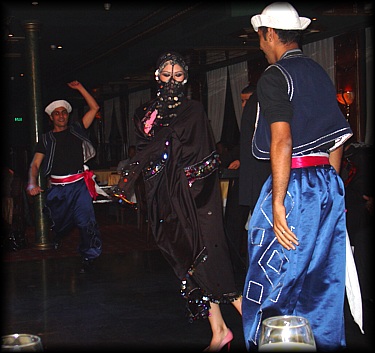
Author in Cairo
Author’s photo with the Tannoura dancer

aka, My Cairo Adventures in April 2008

Experienced and Written by Catherine Barros

April 15, 2009

It makes total sense to me that upon the cusp of another trip to Cairo, I am working on the write-up of my last trip, which was nearly 10 months ago.  Although each trip is a different adventure with different goals in mind and different outcomes (no matter how much I plan), I wanted my 6th adventure in Cairo to stand out. 

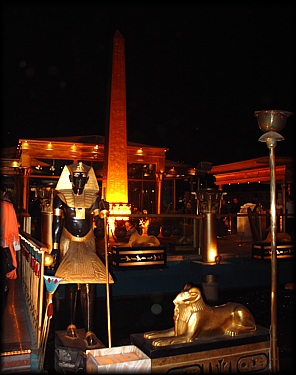
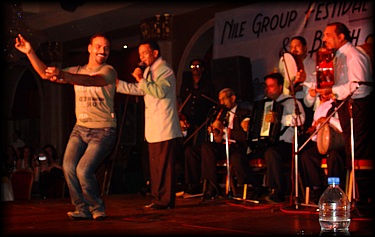
April 2008 was one of the most dance-filled trips yet (photos from the Dinashow at the Semiramis have already been posted on Gilded Serpent). The tally of dance shows for this trip was 3 Nile dinner cruises (Lorna Gow, Basima and Leila), the Tannoura show, Dina (at the Semiramis) and the Opening Gala at the Nile Group Festival (Dalia, Liza Laziza, Leila, Hayem, and Asmahan).  

To say that my days in Cairo were so chock-full of activities that it was like an "assault on Cairo" would only be a slight exaggeration- at least for the first part of the trip, when I joined up with Kay Taylor‘s group from the United Kingdom.  Kay escorts small groups of dancers around Cairo, who are usually coming for the first time. I decided to join with one of these groups in 2008, because I thought it would be an interesting change to be with a small group as opposed to venturing around Cairo on my own and, in particular, when attending dance shows (more fun when sharing).

 Kay’s been using the Grand Hotel in downtown Cairo for the past few years.  It makes for an inexpensive (3 Star) and centrally-located base of operations in a noisy bustling area, which isn’t too far from many places of interest.  This particular 5-day adventure had everyone arriving in Cairo and making their way to the hotel on April 3nd, after which Kay took charge of directing the action-packed days and nights 


This is the night time view from
my balcony at Grand Hotel,

night in cairo market

The are photos taken when walking around downtown the first morning.

across nile to C tower
A bridge across the Nile. See the Cairo tower on the other side?

approach to Semiramis

Approach to Semiramis

Egyptian Museum

The Egyptian Museum is the pink building in the background


boatDay 1- April 4th
The first day, April 4th,  Kay took everyone for a walk around the area to point out various sites, where to get money changed, ATMs, buying water, where to eat and basics of getting around.  After a nice leisurely lunch at Felfela, which wasn’t far from the hotel Kay talked to us about the schedule. There was a loose structure which allowed us to adapt our plans a bit, and how many dance shows to attend was left up to the group.   

Our first stop at a costumer’s atelier was to Hanan Mahmoud. The experience provided two firsts for me as I hadn’t been to Hanan’s before, and we went there by Metro!   At one Egyptian pound, this is one of the better bargains to be had in Cairo. 

We rode in the women’s car, which was an interesting experience.  With a big contrast between most of our group and the other occupants in the car we were the ones with our hair uncovered,  with a lot of lighter hair,  we came in for our fair share of staring. 

The stop at Hanan’s atelier was rather fun for all members of the group, as there was much to look at and try on.  Many of them decided on costumes from Hanan including me. I ended up with several galabeyyas which are really versatile and quite comfortable for dancing. 

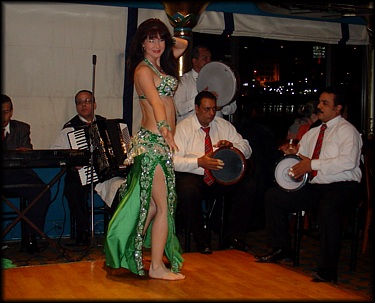
The first night, we all opted to go on one of the Nile dinner cruises.  On the Nile Pharoah we saw Lorna Gow and the usual dinner show, which included a Tannoura dancer.  We managed to get some good tables in front of the dance area, which was great for taking photos and video.  It was such a great spot, that I had to keep asking people (other tourists) to keep down so we could see the show and take our own photos/video.  Everyone had a lot of fun and so most of us got up to dance for awhile when the band played for our pleasure.   The Tannoura dancer coming around to the tables had everyone taking photos with him,  I even bought one of me this time.  We  were back at the hotel at a reasonable hour to get some rest for the next full day of activities.  Well, at least I was getting some rest as I was on a separate floor from many in the group- the next day, I heard about how much later some of them stayed up talking in a communal area outside their rooms.

boat

Entrance to the dock for boarding the Nile Pharoah

boat

Front of boat

lorna

Lorna Gow with Saidi dncers

lorna

Drum solo

lorna

Costume change for Lorna. Could we get a few names of the musicians?


Kay

Kay Taylor with Tannoura dancer

Day 2- April 5th
Bright and early on Saturday the 5th>, our mini-bus arrived with our guide for the day, Nibal.  This guide is one that Kay has been using for a while, and we were in capable hands for our tour of the pyramids.  I’ve been to the pyramids on my own and with a guide, and having an experienced guide really can help to make it a more enjoyable experience as they can arrange all the entries, give you historical/background information about the site and point out many interesting things you might miss on your own. 

She was also excellent at rescuing wayward group members from the over-eager touts at the site.   

After a leisurely lunch at a branch of Felfela restaurant in the Giza area, we dropped by Aida Nour‘s costume atelier.   Getting the mini-bus down the very narrow dirt road that ran between the buildings in that area of Giza was an adventure in itself.   Even though I’d been there a couple of times before, I still had a bit of a problem spotting the building myself until we were nearly on top of it.  As several of the women looked through Aida’s costumes and made their selections, I chatted with Aida for a while about the expansion of her business into the flat below (where the costumes are now being constructed). 

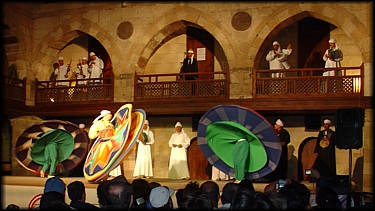
After all the costume transactions were wrapped up, we headed to downtown Cairo.   Nibal took the rest of the group to the Egyptian Museum, while I went to the hotel on my own as I’ve been to the Museum before. That night, our evening plans included going to see the Tannoura (Whirling Dervish) show at the Al-Ghouri Caravansary.  This is located in the area of Khan el Khalili and Al Azhar Mosque, and is one of the best bargains in Cairo, a great free show with lots of music and dance. Naturally It is very popular so getting there early is important.  After the show, we headed to Al Azhar park to have dinner at the main restaurant, a relaxing end to the day. 

Free show at
the Al-Ghouri Caravansary

tanoura

tanoura

tanoura
click to enlarge


Day 3- April 6th
Our third day started with a bit of a change in plans, as there were street demonstrations planned due to food shortages, so  Kay shifted our activities out of the downtown area to avoid possible traffic congestion and crowds. Our first stop was at Raqia Hassan‘s costume atelier for a quick look around, then we went to a dance space for our classes with Mohamed Khazafy followed after lunch by a class with Yasmina. That night we headed out to Dina’s late-night show at the Semiramis.   This is the second time that I have seen Dina, and it was well worth the very late start to the evening. During  dinner there were singers doing the usual Western and Arabic standards, which we all enjoyed him, but were really happy when Dina came on with her show.  She did the usual costume changes which caused everyone to exclaim "how does she manage to keep them from falling down?" etc.  I love to watch Dina dance as I feel that she puts everything she has into the dance.  The show moves along quickly with the changes between costumes and 3 different singers setting different moods. 

Dina

Dina
click photo for enlargement


Day 4- April 7th
Monday the 7th we had a late and leisurely start at around noon, with a felucca ride on the Nile, followed by the Khan el Khalili for shopping and lunch at the Naguib Mahfouz Cafe.  The shopping included a visit to Mahmoud Al-Ghaffar‘s – the many-storied Al-Wikalah that everyone must visit at least once. The day was rounded out by another Nile dinner cruise on the Nile Maxim boat.  That evening, the dancer was Basimah from Lebanon.   She did the typical tourist show with Oriental, Melaya and Saidi (plus a Tannoura dancer)  but with her own twist. 

She danced in shoes with high spiked heels and very pointy toes, and in one number she was dancing in high-heeled boots and did a "Turkish" drop to the floor.  She did a few things that many of us have been told not to do.

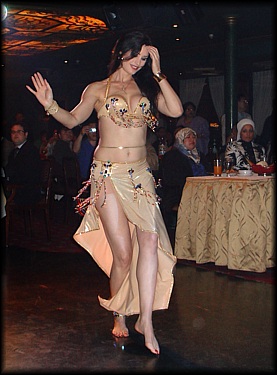
Basimah in Purple

Basimah

basimah wingsbasimah floorwork
basimah floorwork
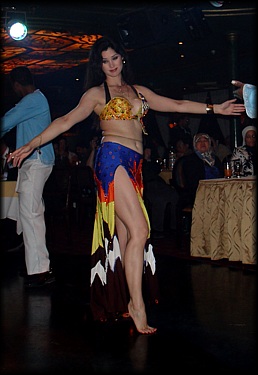
Basimah Meleya
dance style- "Meleya Lef”
Article coming soon on this style of dance!
Basimah Meleya


Day 5- April 8th
On our last day with the group in Cairo, it was back to Hanan and Aida Nour to pick up costumes and back to Khan el Khalili for more shopping. Our last evening in Cairo was a Party Night at Yasmina’s with Safaa Farid‘s Band and Nubian dancers.   There was a lot of home cooked food and opportunities to talk, dance, listen to the singers, enjoy the great music and generally relax in Yasmina’s very nice flat in Giza. I loved that I could go out onto her balcony or terrace and see the Pyramids all lit up.  The following day was departure day for most of the group.  Since I was staying over one more day in the hotel before moving on, myself and several other women did another dinner cruise on the Nile Pharoah so that we could see Leila‘s show.  That night, we had an extra treat as Leila’s Nubian dancers had been at the party the night before so we got pulled up to dance with them.   

leila

Leila

leila w guys
Leilaleila


Day 6 and onward
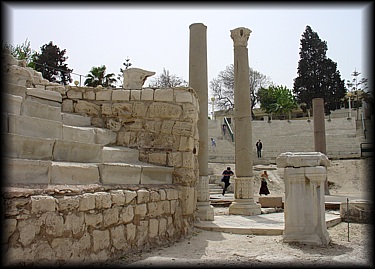
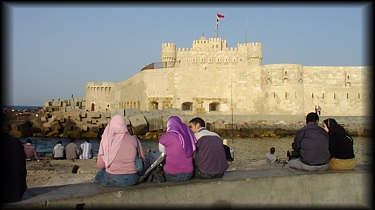
After this I was back to solo status for a short while.  In the morning, a friend of mine picked me up and we spent a few hours at Al Azhar Park walking around, taking photos, just chatting while we waited for dinner at his flat to be ready.  His wife made an enormous pot of stuffed grape leaves, which I thoroughly enjoyed eating.  I had some down time before going to the Nile Group Festival for 3 days then heading back to the States in time for a workshop with Fifi Abdou and Dr. Mo Geddawi. I went up to Alexandria where I had a chance to see some of the historical sites:  the Catacombs, Roman Ruins, Alexandrian Library, Montaza Palace/Park and Fort Qait-Bey. 

Alexandria LibraryInside
the Alexandria Library

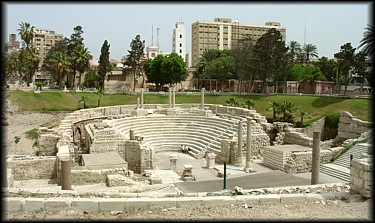
ruins

ruins

Roman Ruins

Momtaza Palace

Momtaza Palace

Quait Bey

Quait Bey


I was a bit more rested when I checked in to the Pyramisa on Monday April 14th at the start of the Nile Group Festival.  That night was the Opening Gala, which  included a buffet dinner and lots of music and dancing.  It was a very late night, and Asmahan didn’t even go on until after 1am.   Before her were Dalia, Liza Laziza, Leila and Hayem. Every dancer was different and had great shows. At the festival I attended classes with Mahmoud Reda, Lubna Emam, Aida Nour and Ashraf Hosny. On April 17 I boarded my flight to the States and in Frankfurt, I met up with Dr. Mo on his way to Dallas for the weekend workshops.  We sat not too far from each other in Coach so we had an opportunity to chat a bit during the flight.  


tito

Tito

liza liza
dalia?
linked to larger.
who are the musicians?

Dalia

lizaliza
liza

Liza Laziza?

Asmahan by Catherine Barros
linked to larger photo

Asmahan

back of Asmahan's costume
back of costume


Just reading over the highlights of this trip again leaves me exhausted and wondering when I’ll have such an action-packed trip again.   My 2009 trip is going to be a bit more relaxed, with a bit of sightseeing (Sakkara/Memphis), visiting with family and friends, a few dance classes. But nothing like 2008, which turned out to be a trip to remember for many years. I can highly recommend Kay Taylor as a group organizer and guide around Cairo. and I also recommend the Nile Group Festival, as it is still small enough to enjoy the classes and the Opening Gala show, and it has some of my favorite teachers like Aida Nour and Lubna Emam along with Mahmoud Reda and Farida Fahmy

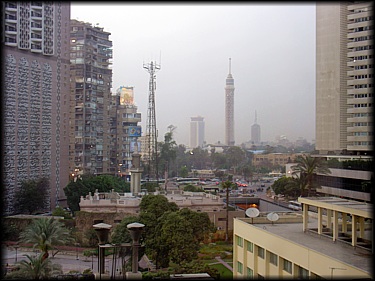
view from my window!

Here’s a view from my window!    See Cairo Tower in the background?

Pyramisa and Sheraton

 
The Pyramisa as seen from the Cairo Tower 


Have a comment? Send us a letter! Or add your comments below.
Check the "Letters to the Editor" for other possible viewpoints!

Ready for more?

  • "Aheb Masr, Music and Songs for Oriental Dance" CD Review
    produced by Nader Zakaria, at Merryland Studio Heliopolis, Artistic direction by Yasmina. Depending on your mood and tastes, there should be something for just about everyone on this CD.

  • Dina: April 2008 by Catherine Barros
    It was a late night as usual as we didn’t even go out until midnight to have dinner and watch Dina at around 3am . . . but who was watching the time . . . It is CAIRO!
  • Journey of Desire: A Foreign Dancer in Cairo, 2006, Review
    I believe that any dancer who has the desire to go to Cairo to work will benefit from the experiences of Yasmina and the other working dancers whom she asked to contribute. One will come away having a better understanding of the Arabic culture and how the dance is viewed within that culture.
  • A Conversation with Dr. Mohamed Geddawi
    Dr. Mo is attentive to the workshop participants, giving a breakdown on each combination, and provides individual attention when someone has a difficulty. His no-nonsense style of teaching is informative, making you think about why you dance, how to dance, how to be a better dancer, and making you laugh.
  • Recognizing Accomplishment: Atlantis!
    I get so excited over the events they are producing, that I have no thoughts about them as dancers. All I think about is the person who is performing or teaching and the merchandise that the venders are selling. I only think of the sponsors as being effective with the business side of Bellydancing.
  • A Quest for Beauty, Part 1: Beauty is Discovered
    My wife of 17 years asked, “You’re going to do…. what?”when I told her of my desire to take Bellydance lessons.
  • Where is the Goddess in a Vertical Drop and a Shimmy? How Can the Practice of Bellydance Lead the Dancer to a State of Grace or Enlightenment?
    The most important practice of almost all mystical paths is meditation. It is universal and does not need a frame of reference from any particular theology.
  • Mina’s 1001 Arabian Nights,
    1001 Arabian Nights started with asking several of the community troupe directors and teachers I’ve known over the year if they would like to create a show with me. They all seemed very excited about the prospect of doing something “different” in the dance community.
  • The Bellydance Museum: An Accident of Fate?
    Soon, I found out my collection of Arabic instruments, ancient jewelry, and our shared bank account were all gone along with my ex-wife. The only thingI could find was a small part of my picture collection, which I now had to sell in order to stay alive.
  • Producing "Tales of Desire"; a Tribal Fusion Bellydance Experience
    We felt that the buzz in the community was that people were getting tired of seeing the same performers on every performance DVD that came out, so we really tried to
    mix it up and offer a more varied line up.
  • Teaching American Bellydance: Ich Bin Ein Berliner!
    Amazing! The members of the workshop wanted more and more—and even Horacio began trying out my veil moves.
  • Tania Luiz A Romany Fusion Artist in Osaka
    At this time I think I was longing for a well-documented dance, old and structured. I was a little sad because I saw how people who were not properly trained but who just had a costume would teach Oriental dance. Plus the deep connections of Indian dance to the Divine were very interesting to me. At the end of it all, I realized that my body, my soul and my blood are meant to do Oriental
 

Gilded Serpent presents...

A Quest for Beauty

zorbaveil
Zorba dances Greek
Shamadan
wings

Part I:Beauty is Discovered

by Zorba
posted April 9, 2009

I was teaching a small, beginner’s level Greek Folkdancing class when I was approached by one of my students, Santa Cruz’s own Imzadi, who wanted me to review and critique her very first Bellydance solo choreography. I didn’t know the first thing about Bellydance, and told her so. "It doesn’t matter; you’re a dancer," came her reply.

So, there I was, watching Imzadi pour her heart and soul into a graceful kind of dance that I’d never really paid attention to before. I noted the beauty of her movement and her costume (even though it was just a practice or class outfit), and most especially, the beauty of the connection between the dancer and her music. I was enthralled, and found myself wanting to try this dance myself, and claim some of this beauty for my own.

Two problems immediately presented themselves:

  1. The first was my inherent clumsiness that I knew I could overcome with hard work; after all, here I was, the number one klutz in the universe actually teaching a dance class!
  2. The second, I wasn’t so sure about, which is the fact that I’m a male—and the following is my story.

Having been raised as a free thinker has always been to my advantage. Still, I wanted to know if such things as male Bellydancers existed. Imzadi told me about a dancer named John Compton and that his troupe that was called something that sounded like "Habee Rue". It took quite a bit of on-line searching to find it was actually "Hahbi’Ru", and with that, the world of male Bellydancing opened itself to me.

I found two things quickly:

  1. There weren’t very many male dancers—but there’s weren’t zero male Bellydancers, either.
  2. Although the majority of females welcome male dancers into the "Bellydance Sisterhood", there were a lot of limits put on males in dance—mostly by the males themselves!

wifeEarly on, I decided that there would be "no limits". If I were to enter this exotic world, I wanted to experience everything it had to offer!

My wife of 17 years asked,  "You’re going to do…. what?"when I told her of my desire to take Bellydance lessons.

I started looking around for an instructor in the Monterey area, wanting someone who would know what to do with a male student. After a somewhat lengthy search, I found my first teacher, Janette Brenner. "Come on down," her email read, "I’ve worked with both male students and male teachers!"

Unfortunately, I had to leave her after about 6 weeks due to scheduling conflicts.  Janette referred me to another teacher in town, the fabulous Jamaica Sinclair who had never taught a male student before. She asked me a lot of carefully worded questions, trying to figure out if I was sincere or not! The poor gal was obviously nervous, and perhaps, flustered; however, she warmed to me—once I brought my wife to see her perform! I remember telling my wife "I want to dance like that!" Fortunately by this time, I had gotten over the need for someone who knew what to do with me as a dance student. By that time, I had figured out that all I needed was someone to teach me just like any other student—a philosophy that I hold dear ‘til this day.

Time went on. I blundered around in the back of the class, but gradually picked up the movements. My tight chest began to loosen up. With a huge amount of effort, I "broke loose" my hips and was able to do Maias (Vertical Downward Hip Figure-8s). A Maia remains one of my favorite movements, because they’re what I consider beautiful and quintessential "Bellydancery", and I had to work hard to be able to do them! Another challenge was a movement called Snake Arms. (My left arm would do some kind of weird flailing motion if I didn’t keep a close eye on it!)

After a year of classes, Jamaica talked me into performing a sound-byte routine (1:08) with the rest of the beginners at our local Bellydance venue, the historic and famous Kalisa’s La-Ida Cafe on Cannery Row. Although I had been a performer since childhood, first, in various bands and orchestras, then with the Greek Village Dancers of the Monterey Peninsula, I was terrified. However, I did it and got through it, experiencing the ecstasy so often seen among “baby” (inexperienced) Bellydancers!

One evening, we did veil work in class. I immediately decided that this was as much fun as you could possibly have with your clothes on! I purchased my first veil that I named "Greenie" (a bright green silk veil) and started practicing with it.

In time, I performed my solo debut Belly Dance using “Greenie” for part of it. Now I’m quite well known as a "veil addict"! (You never can have too many of them!) Then somewhere, somehow, I saw someone perform something called "A Double Veil Routine". After talking a workshop from the awesome Alyne Hazard, I proceeded to practice for nine frustrating, sometimes nauseating, months.

One evening, I told my wife to "Leave those $&^@*# veils right where they are!"

I’d had a particularly frustrating time with my practice and had banished my "misbehaving" veils of tissue lame’ out to the garage! My first performance with double veils saw me prang one of the hoop earrings I was wearing into the audience! Really smooth! Uh-huh… King Klutz was at it again! In time, though, double veil became one of my specialties, and eventually, I migrated to silk veils, as I love the floating qualities of silken materials.

Other props followed: Shemadan, Isis wings, cane, and even a skirt. Being that I’m a classically trained musician, playing Sagat (Zils) was a no-brainer for me—until I tried to actually dance while playing them! That took six weeks (of an hour daily practice) to begin to be able to conquer that feat; King Klutz of the Universe was fully present! Fortunately, Jamaica had a simple, Zils-optional-choreography for class that was perfect for learning how to play finger cymbals while dancing. It consisted of simple choreography accompanied by a simple Zil part, both of which were anything but simple when put together!

Eight years later, I’m studying with no less than 3 teachers: mighty Siwa of Santa Cruz, sublime Firefly of Monterey, and ever-energetic Janelle of Santa Cruz whose class beats me to a pulp. (However, I love and need dance drills!).

…and what about my wife?  She started Bellydance classes a year and a half after I began, despite telling me she’d never be interested in something as "provocative" as Bellydancing!

Stay tuned for Part II: Damn the Torpedoes and Full Speed Ahead!


Have a comment? Send us a letter! Or add your comments below.
Check the "Letters to the Editor" for other possible viewpoints!

Ready for more?

  • Whose Dance is This, Anyway? Where Do Men Fit into the Belly Dance World?
    As soon as he was born, dancers of all stripes immediately started in with quot;Oh, a new little drummer for the troupe!". Excuse me? Why is there an instant assumption from birth that all little boys will be drummers and all little girls will be dancers just like mommy.Added Feature! See our Gallery of Men in Middle Eastern Dance
  • Tito Seif: The Moment of Eternal Shimmy
    Tito is now an international phenomenon. And how wonderful that a man from Egypt has taken to the West’s belly dance stages establishing himself as one of the greatest belly dancers and showmen today. Such development flies in the face of those American belly dance instructors, students, and performers who have long considered this art defunct in Egypt and dependent upon their kind support and cultivation.
  • From Toronto, Ontario, Canada The International Bellydance Conference of Canada
    including Masouma Rose, Shira, Lynette Harris and many others. Reports are presented in video format inbedded all on the same page. Wednesday Evening show- "Remix 2007", Daytime activities on Thursday, Friday and Saturday. Main Stage Shows from Thursday and Friday Night. See Friday AM report for the "MAN Panel"
  • "Just feel the music when you’re on stage!”Interview with Ozgen, Male Turkish Belly Dancer,
    Well, I think my heart still beats for big shows and productions, as much as I know how stressful and difficult that show-life can be. I seem to not be able to live without it.
  • Where is the Goddess in a Vertical Drop and a Shimmy? How Can the Practice of Bellydance Lead the Dancer to a State of Grace or Enlightenment?
    The most important practice of almost all mystical paths is meditation. It is universal and does not need a frame of reference from any particular theology.
  • Mina’s 1001 Arabian Nights
    1001 Arabian Nights started with asking several of the community troupe directors and teachers I’ve known over the year if they would like to create a show with me. They all seemed very excited about the prospect of doing something “different” in the dance community.
  • The Bellydance Museum: An Accident of Fate?
    Soon, I found out my collection of Arabic instruments, ancient jewelry, and our shared bank account were all gone along with my ex-wife. The only thing I could find was a small part of my picture collection, which I now had to sell in order to stay alive.
 

Gilded Serpent presents...

Middle Eastern Dance Theater:

TheaterDVDs

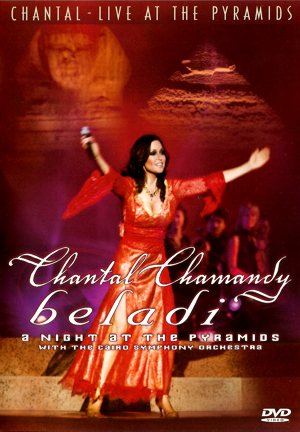
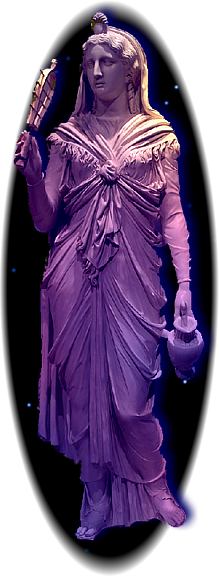
Erotic Chantal and Mythogical Ishtar Reviews

by Joette
posted April 7, 2009

IshtarNot every dancing community is successful or productive. Sometimes the challenges of life in the global theatre requires consciously and unconsciously borrowing instruments and other aesthetics of world art to communicate stories and embody narrative. I have often asked myself how one can create a Middle Eastern production worthy of the contempory theatre stage that encompasses the spirit, emotions, and beauty of Middle Eastern culture without creating a hodge-podge of random song and dance. So often in creating such a production much of the culture is removed for Western audiences in order to provide pure entertainment to fit this audience’s short attention span. Two theatrical presentations that fit this type of production are Descent of Ishtar and Chantal-Live at the Pyramids. Innovation is a key word in describing both of these productions. Let’s start with Yasmina Ramzy and Arabesque Dance Company in Descent of Ishtar.

Yasmina Ramzy with help from her company, Arabesque Dance Company, transformed the modern stage to embrace a mythogical figure, Ishtar, in Descent of Ishtar. What does a mythical figure Ishtar have to do with belly dance? Absolutely nothing. Ramzey creatively uses the zaar, tammoura, modern floor work and belly dance movement to tell a story of —not the traditional fable— but one of enlightenment.

For those of you who don’t know but the traditional well-known myth of Ishtar concerns her descent to the underworld and sacrifice of her husband Tammuz. Here is some additional history for you: In this story, Ishtar decided to visit the Underworld, which was ruled by her sister Ereshkigal, perhaps to seize power there. Before departing, she instructed her follower Ninshubur to seek the help of the gods if she did not return. To reach the underworld, Ishtar had to pass through seven gates and remove a symbol of her power—such as an article of clothing or a piece of jewelry—at each one. At the last gate, the goddess, naked and deprived of all her powers, met her sister Ereshkigal, who announced that Ishtar must die. She died immediately, and her corpse was hung on a stake. Meanwhile, the god Enki learned from Ninshubur that Ishtar was missing and sent two messengers who restored her to life. However, in order to leave the underworld, Ishtar had to substitute another body for her own. The goddess offered her young husband, Tammuz, to take her place. Supposedly, this tale of death and rebirth was associated with fertility and linked to the seasons and agricultural cycles.

Ramzy’s version is more about emotions, memory, ego, will, human spirituality, and one red veil. Her character visits the seven worlds and is greeted by dancers of many forms. The whole production is deep, dramatic, and emphasizing the underworld feel with modern dance kinetics. Mermaids, Sufi twirls, African dancers, maidens, and one colorful Ramzy make up the cast of highly skilled performers.

Ramzy is an exciting choreographer who understands the importance of theatrics both on and off stage.This is evident in many aspects of this production including lighting, set designing, marketing, and post-production.

On the other hand, one aspect I found somewhat lacking was the choice of a few costumes. If the costumes are modern, why shouldn’t the movement match? Is it necessary to place the performer’s body in clothing that does not accurately give the body the design movement it deserves? Red sports bras and spandex shorts on undulating bodies was distracting to the flow of movement and positioned the body as an objectified gendered body part. Perhaps a (one piece) unitard would have allowed one’s eye to flow with the graceful body. In this instance, Ramzy saves a dramatic emotionally filled scene when she enters wearing a flowing costume of vivid color perfectly matched to Ishtar’s anguish and death. All of a sudden the viewer forgets body parts and is taken by Ramzy’s passion of whirling dance. I agree that Descent of Ishtar is instrumental in elevating Middle Eastern dance by blending with modern dance to create an ethereal and hypnotic effect. This sixty-minute production is worthy of purchase and holding on to it as a collectors piece is recommended. Descent of Ishtar originally premiered April 1998 in Toronto and continues to be hailed as an example of profound and consummate professionalism. So stop and get your popcorn, relax and let the Arabesque Dance Company transfer you into the symbolic power of the seducing story of the Descent of Ishtar.

Rating is 3 1/2 zills.
3 1/2 zill rating

chantelEvery day, communities embrace harmonises tones through dance and song. Chantal’s – Live at the Pyramids encompasses love and peace as a central theme to her large capacity crowd performed at the Great Pyramids of Giza in September 2007. International singer, songwriter, and performer Chantal Chamandy with the latest release of her album, Beledi, set the stage in a historic live event as it is the first live concert to ever be filmed at the pyramids for international TV broadcast. The cast included international dancers, the Cairo Symphony Orchestra, the Not Alone Society, a host of un-none belly dancers, producers, directors, and other artist to produce this one of a kind song and dance of blending old with new. The concert features eighteen songs that include dancers, elaborate backdrops and highly orchestrated music. With the Sphinx and the pyramids in swirling smoke and laser lights in the background, it was a picturesque backdrop that seemed unrealistic on video.

Chantal had the glamour of a Parisian fashion show, the hype of the Super Bowl half-time show, and the presentation of the Grammy Awards all in one. I’m not sure if I even noticed her voice until the dance, lights, music, and camera-to-camera bouncing, toned down, and focused on her message of peace and love.

Chantal is an extremely talented artist that sings lyrical poetry in English, French, Spanish, Arabic and Italian languages. Beautiful exquisite songs with music highlight this enchanting video. Thematic, provocative, impure, erotic fantasy, solitary and even a hint of Karma Sutra encompass this production. King Tut would defiantly (as comedian Steve Martin says) “get a little funky” after watching Chantal dance and sing around her half nude modern dancers. In the song "Crazy", Chantal creates an atmosphere of Michael Jackson’s “Thriller” and Britney Spears “hot girl” mentality. Dancers were dressed in red/black rags ripped up like ghouls and were somewhat distracting in their movement in respect to the beautiful Chantal. I thought for one movement that Britney Spears might actually just jump out of the modern dancer’s circle of erotic movement that included thrusting pelvic hips. In the same number the male dancers wrap Chantal in a black shiny material to be unwrapped toward the end of the song by a striking handsome young man dressed in white. The stranger in white moves seductively around Chantal then dances like a crazed lover as he relieves her of the bondage.

This is where I had to stop and get a drink of water. Thrusting pelvises on the pyramids was wild and not at all the way had I remembered the pyramids!

Another example of this many-themed fantasy production is Chantal’s staging of her popular song ";Helwa ya Baladi.” The scene starts with a percussion section of drummers entering to a cross between Stomp and the retired local militia of long ago. The drummers were dressed in a black military type uniform with fez hats of red. Was this a play off of the Americanized use of the marching band? Maybe. But wait it gets better! Yes, the gospel choir enters on the last song of the night. Oh!…and one more thing, bring back the belly dancers to stand and perform hip drops in the background. It was a perfect blend of Hollywood, Hip Hop, and Westernized entertainment. So what happened to the blend of cultures in front of the great pyramids that represent the great Egyptian people? Well, it’s just in the music, not the production. If you want to see a modern American show with great international music than this video is for you. If you’re looking for belly dancing, don’t bother; you’re wasting your time. Overall, the production was a beautiful undertaking and its rating is 3 zills.

3 zil rating

Have a comment? Send us a letter! Or add your comments below.
Check the "Letters to the Editor" for other possible viewpoints!

Ready for more?

  • Academia? Like it or Trash it!2 Books Reviewed: Dancing Communities & Dancing Fear and Desire
    One thing that I have found within our community is the general lack of scholarship and a feminine voice within the research.
  • Unveiled Musical Gems, 3 CD Reviews
    Raqs El Qamar by Chris Marashlian, Rhythms of Turkey by Tayyar Akdeniz, Angelika Unveiled, by Angelika Nemeth and Raul Ferrando
  • ASWAT: Arabic Music Concert by Rebecca Firestone, held Saturday, January 25, 2009 Skyline College, San Francisco, California
    They’d hired a different director this time, all the way from Cairo, Dr. Sari Dowidar. Dr. Dowidar got professional results even out of amateur performers – probably by pushing them hard. That kind of pressure isn’t always fun, but it really pays off. Maqams (maqamaat) are hard enough for the uneducated ear to distinguish without muddying the waters further with inaccurate pitch and tone. 
  • So, If You Cut up a Rose, is it still a Flower? Fusing Bellydance With Other Dance Forms
    A reader’s position at this point will depend on whether you think that bellydance and Middle Eastern dance are one and the same, and whether you feel any particular sense of ownership over either one of those terms.
  • Thrillin’ Zillin"; DVD Review of "Belly Dance with Zills "
    This is helpful for dancers who have a problem playing zills while dancing, or who are OK with just a drum playing the rhythm but get confused when playing to a song.  Elsa uses some familiar songs in this DVD which will give you the feeling of  “Oh, I’ve danced to this before; maybe next time I’ll add my zills”.
 

Gilded Serpent presents...

Where is the Goddess in a Vertical Drop and a Shimmie?

isis

Or How Can the Practice of Bellydance Lead the Dancer to a State of Grace or Enlightenment?

by Yasmina Ramzy
posted April 1, 2009

This month’s column is based on a talk given by Yasmina Ramzy on April 26, 2007 at the International Bellydance Conference of Canada. Yasmina has been busy this month with producing her recent theatrical presentation called, "Egypt" . She will be back with her usual format next month.

Many of us have a sense that this art called Bellydance has a power that reaches beyond rhinestones and bare midriffs. Many of us have experienced inner growth after learning a Hip Twist or Undulation. Yes, of course we gain a more loving and intimate relationship with our bodies and with our sensuality. And yes, after overcoming social taboos and identifying with a strong female archetype, we gain greater self-esteem. Just learning how to exact parts of the body in very subtle but precise movements often gives us a sense of power. But even after all this or sometimes because of all this, most of us feel that in those movements and the emotions they create, there is an inherent, awe inspiring mystery that is so powerful, it may be the mystery that unlocks the secrets of the Universe or the mystery of who we are and why we exist.

Who and where is "The Goddess"?

People relate to this title "The Goddess" in many ways. She is referred to by many names: Isis, Ishtar, Mary, Tara, Cerridwen, Persephone, Sarasvati, Aradia, Diana, Aphrodite, Kali, etc. The list is infinite and depending upon the culture or religion, she has varying attributes. For this talk, I am going to focus on two of her more all encompassing titles: Mother of the Universe and Queen of Infinite Space. Since Isis is probably the longest living form of the Goddess who has been worshipped by many cultures and for thousands of years, I will start with Her as an example. Also because what we today call Bellydance is primarily derived from its Egyptian form, it seems appropriate. Apparently, the word Isis is derived from Her ancient Egyptian name Aset. The ancient Greeks had difficulty
pronouncing Her name so it eventually transformed into the name Isis. The word Aset literally means "a throne" and that is why one of Her forms is often seen wearing a crown which is in the shape of a throne.

Why a throne? And what is a throne? It is a seat or a support that royalty are placed on. It serves as the foundation that holds up the one that sits upon it. "Foundation" is the important word that I want you to remember. As Mother of the Universe, we can see Her as the ultimate womb from which all creation comes forth. As Queen of Infinite Space, she is that vast emptiness that holds the infinite stars, galaxies and all of creation. We have many famous symbols of the Goddess like the cup or chalice, like the moon that reflects light rather than give off its own light, water that takes the shape of whatever it is put in, and of course, the throne that holds the king or queen. All of which are fairly passive symbols, yet evocative images and ideas.

The most important practice of almost all mystical paths is meditation. It is universal and does not need a frame of reference from any particular theology.

Although one might say there are many forms of meditation, they all really lead to the same state of being. This state is a state in which the mind is completely passive or when one no longer holds on to the sense that one is a separate entity with thoughts, opinions and emotions. When one is in deep meditation, it is said that the practitioner experiences a state similar to Enlightenment or experiences the mind of the Goddess, almost like looking through Her eyes.

I have been taught that the Being who sees through these eyes of mine and the one who sees through the eyes of you and you and you, and indeed, the eyes of each and every person in this room is the same Being. When that Being looks through these eyes, it thinks it is Yasmina and when it looks through your eyes, it thinks it is …..(so and so)….. but really it is the same Being or same awareness that is looking. When we meditate, we try to let go, let the mind sit and abide in this awareness, and to be the One who is looking. Take a quick moment to be aware of the one who is looking through your eyes and ask yourself who is seeing these objects, then ask yourself who is the one hearing my words and finally who is the one reacting to these sights and sounds. Then take a moment to realize that the awareness that is experiencing all this phenomena is the same awareness behind all the eyes and ears and thoughts of every living being. That awareness is Isis. The thoughts, opinions and emotions never stop – there is no beginning or end to creation. No one can stop thoughts or universes from arising, but one can become the vessel or empty space from which all things arise.

And that brings me to Bellydance technique.

As teachers, we know that the major challenge for the Bellydance student is to let go and relax all muscles not necessary in the execution of a particular movement. One of the most important characteristics of Bellydance technique is that the foundation of the dancer’s movement be grounded and his or her feet, weight and centre of gravity have a close relationship with the floor. Finally, the uniqueness of Bellydance movement which sets it apart from all other forms of movement is the sense that the art is internal and always centered. I often say all movement either comes from the stomach or is absorbed into the stomach. Sounds a lot like meditation doesn’t it? Letting go and abide in the foundation of the mind.

Many students can imitate the shapes, architecture and lines of Bellydance movement but the dance artist who fascinates us with a sense of physical magic is the dancer who has mastered these rules and, in fact, relishes in the intricacies and subtleties of making the movement look like it comes from nowhere.

Somehow, when we experience this very natural flow of movement that comes from giving up major effort and we allow the qanoon to tickle us, the violin to melt us and the taks of the drum to twitch a muscle, we then experience great freedom and joy. When that joy is a continuous flow through us, our audience is blessed with this joy as well.

Whether it is a strong and powerful dancer, a sensual dancer, a sweet and feminine dancer, or a dynamic dancer that we witness or express, the one characteristic that everyone agrees on is that Bellydance expresses joy. Even most folklores associated with Bellydance are a different culture’s way of expressing joy.

There is an image of Nut in the Valley of the Kings in Upper Egypt. Her hands and feet are on either side of the room, her legs and arms go up and down each wall, and her belly covers the ceiling which is painted a deep blue colour, filled with stars. It is said that her belly is the Vault of Heaven and these are her words:

"Come forth o children, under the stars and take your fill of love. I am above and in you. My ecstacy is in yours. My joy is to see your joy."

So I say that the ultimate prayer or worship of the Goddess is in the practice of Bellydance. Through the art of Bellydance, each one of you has the chance to experience oneness with the Queen of Infinite Space and the Mother of the Universe and… great joy.

Nut


Have a comment? Send us a letter! Or add your comments below.
Check the "Letters to the Editor" for other possible viewpoints!

Ready for more?

  • Ask Yasmina #3
    Personally, I am all for any kind of creative expression (blood, snakes, flowers, even fake chicken heads and urine) as long as it comes from a place of inspiration and with the intention to move members of an audience to think about the world around themselves and their own relationship to the substance or reference of choice with a new and wider point of view (maybe an even more loving point of view).
  • Ask Yasmina #2, Handling Media, Choreography, Name Our Dance
    In creating a work of art that will enlighten or move an audience emotionally, the artist’s intention is to communicate a message or an emotion.
  • Ask Yasmina: Evolution, Oum Kalthoum, & Cover ups
    A first column in a once-a-month series: GS is proud to present this passionate and knowledgeable expert in the field of Middle Eastern Dance; she is an artist, pioneer, and creator of the International Bellydance Conference of Canada.
  • Dance of Power
    The sensual is from the realm of the magical, the psyche, rather than the physical.
  • Bellydancing, Mythology and Astrology: Exploring the creative character of dance expression
  • Is dance a ritual, a means of celebration, a form of entertainment, or something more? Could it be a mode of human expression that harnesses the secrets of the universe?
  • God Belly Danced, Part IV: The Rise of the Pagan Anti-Belly Dance League
    Dancing girls, wherever they came from, at this time apparently were luxury import items and thus were subject to a 25 percent duty tax, equal to that of precious gems.
  • The New Age Adage for Performing Dancers
    If you have nothing to say through your dance, do not dance.
  • Mina’s 1001 Arabian Nights
    1001 Arabian Nights started with asking several of the community troupe directors and teachers I’ve known over the year if they would like to create a show with me. They all seemed very excited about the prospect of doing something “different” in the dance community.
  • The Bellydance Museum: An Accident of Fate?
    Soon, I found out my collection of Arabic instruments, ancient jewelry, and our shared bank account were all gone along with my ex-wife. The only thing I could find was a small part of my picture collection, which I now had to sell in order to stay alive.
  • Producing "Tales of Desire"; a Tribal Fusion Bellydance Experience
    We felt that the buzz in the community was that people were getting tired of seeing the same performers on every performance DVD that came out, so we really tried to mix it up and offer a more varied line up.
 

Gilded Serpent presents...

Mina’s 1001 Arabian Nights

shoshanna
Aladdin and the Lamp: Shoshanna and Ya Habibi Dance Company, Arcata, CA

Photos by Michael Baxter, Text by Mina, Producer

Sonoma State Univertsity Person Theater,
Rohnert Park, California
December 6, 2008

1001 Arabian Nights started with asking several of the community troupe directors and teachers I’ve known over the year if they would like to create a show with me. They all seemed very excited about the prospect of doing something "different" in the dance community. Borrowing Amy of Unmata‘s idea of a theme and story show, I took the stories of 1001 Arabian Night and picked several to fit the mood of each of the amazing talents that performed that weekend.

Having this wonderfully talented group of dancers together for this show was truly amazing and I’m very lucky to have them willing to play this with us. Another special thanks goes out to those people behind the scenes who kept things running for me. My stage mom Chantel Miller who kept me sane though the whole process. Dylan Parker who made our beautiful programs last minute when things went horridly wrong. Michael Baxter who did the photography for the event really helped out. Kevin Canning really helped out in filling in the gaps of things that needed to be done on the night of the show. Jason Hamon for being my sounding board for when things were getting nuts. Also, Chelsie Berdux and Erik Uriarte who helped take tickets and keep the front room running smoothly.

I look forward to making this a yearly event with different themes and great choreography. So be on the look out for another December event hosted by Mina and Dalloua Dance Company. 

Scheherazade and the King’s Harem: The story of how Scheherazade was chosen by the King to be his bride.
Portrayed by Mina andDalloua Dance Company of Santa Rosa CA, with special guests David Vetter from San Fransisco CA (The King), and Raine Mauss from Mountain View CA (Scheherazade).
They were joined on stage by Shoshanna and Ya Habibi Dance Company who helped Dalloua in forming the rest of the Harem.

group cane
Cinn D. Badd the Sailor: The adventures of Cinn D. Badd and the high seas.
Portrayed by Siwa of  Dancers of the Crescent Moon from Santa Cruz CA. 

siwa pirate
The African Tribe: One of the many stories of Cinn D. Badd the Sailor was her encounter
with the African Tribe and being welcomed
into the tribe as one of their own.
Portrayed by African Queen from San Lorenzo CA. 
nubian divas
The Tale of the First Eunuch: A tale of lost and forbidden love.
Portrayed by Folk Infusion of Sacramento CA.

group1

shadow

The Crafty D’Jinn: The story of a D’Jinn who enjoys a little mischief.
Portrayed by Dunia from Hayward CA.

dunia dunia2
shoshanna group
Aladdin and the Lamp:
Shows how the sneaky Aladdin gains the lamp and the love of his life.
Portrayed by Shoshanna and Ya Habibi Dance Company, Arcata CA.
tent veil
Aladdin and the Lamp: Ya Habibi Dance Company, Arcata, CA
tammi
Dalila the Crafty:
The tale of the trickster Dalila and how she was able to fool those around her.
Portrayed by Yasmine and Zyphire of Sirens of Sanity from Benicia CA. 

proposal
The Tale of the Jealous Sisters: The story of three sisters who wanted to marry rich men,
and why it is not always a good thing to tell lies.
Portrayed by Tre Sorelle from Chico CA

aneena
The Dervishes: Sufi practitioners show devotion though the whirling motion of their bodies.
Portrayed by Aneena of Novato CA and Mychelle from Sacramento CA

farmer

The D’jinn and the Farmer: The story of how you should always be mindful of your surroundings.
Portrayed by TerriAnne and Jowehof Santa Rosa, CA. 
40 theives

Ali Baba and the 40 thieves: Shows how Ali Baba and his wife were able to trick the evil 40 thieves.
Portrayed by Deeta and Modern Gypsy of Redding CA.

scheherezade
Scheherazade and the King: David Vetter, San Fransisco CA and Raine Mauss, Mountain View, CA


Have a comment? Send us a letter! Or
add your comments below.
Check the "Letters to the Editor" for
other possible viewpoints!

Ready for more?

  • The North Valley Belly Dance Competition-2007,
    Held on November 10, 2007, in Oroville, California, event produced by Carolee and David Tamori. It was an exciting contest, covering five categories: Novices, Intermediates, Troupe dancers, Solos and Live Solos. Live music was provided by Doug Adam’s amazing Light Rain.
  • Belly Dancer of the Year Pageant 2007 Sunday Photos, ,
    May 27, 2007 Danville, California,
    Event produced by Leea. The competition for the Finalists.
  • The Bellydance Museum: An Accident of Fate?
    Soon, I found out my collection of Arabic instruments, ancient jewelry, and our shared bank account were all gone along with my ex-wife. The only thing I could find was a small part of my picture collection, which I now had to sell in order to stay alive.
  • 3-28-09 Producing "Tales of Desire"; a Tribal Fusion Bellydance Experience by Sherri
    We felt that the buzz in the community was that people were getting tired of seeing the same performers on every performance DVD that came out, so we really tried to
    mix it up and offer a more varied line up.
  • Teaching American Bellydance: Ich Bin Ein Berliner!
    Amazing! The members of the workshop wanted more and more—and even Horacio began trying out my veil moves.
  • Tania Luiz A Romany Fusion Artist in Osaka
    At this time I think I was longing for a well-documented dance, old and structured. I was a little sad because I saw how people who were not properly trained but who just had a costume would teach Oriental dance. Plus the deep connections of Indian dance to the Divine were very interesting to me. At the end of it all, I realized that my body, my soul and my blood are meant to do Oriental.
  • Indonesia’s Introduction to Belly Dance: The Mainstream Media’s Influence
    Extensive mainstream media attention has been a mixed bag of blessings and, well, “somewhat less than blessings,” as most Indonesians would diplomatically say.
  • Sahba Motallebi demonstrates the Tar and Setar,
    Also included is footage of Sahba on stage performing with Bahram Osqueezadeh on the Persian Santur and Rowan Storm on the frame drum. 

  • Tribute to Bert: Photos from the GS files
    Bert’s memorial page, please add your comments, thank you.
 

Gilded Serpent presents...

The Bellydance Museum

An Accident of Fate?

David Robert's "Dancing Girls of Cairo"
David Robert’s "Dancing Girls of Cairo"

by Stief
posted March 30, 2009

Here is an account by a world traveler, Stief, who became impassioned with collecting images concerning Bellydance, both old and new. Every picture tells a story and every story likes to be told. These stories came sometimes out of his library of antique books. These books were tales of traveling artists who explored the Middle East centuries ago and described Oriental dance.This steadily growing collection became a travelling multimedia exposition. But then to his distress his complete library of books disappeared due to unfortunate events. This was before the internet. After the black night of the soul, the spirit came back and, inspired by a friend, the online Bellydance Museum was born. People sometimes ask the question where the Bellydance Museum is located. Thanks to the internet, it is located in the entire world, offering free entrance for everybody to enjoy. Many documents still need to be translated and scanned and uploaded. But there is plenty to see: movie posters, engravings, lithographs, trade cards, postcards, music, etc.  The Bellydance Museum is supported by encouragement and the occasional purchase. You will find Stief to be a knowledgeable and fascinating character.

It all started when I was a young boy; I often stayed at my grandmother’s place. Grandmother had one room, almost empty except for one colorful picture behind glass. The subject of the picture was a harem scene featuring some scarcely-clad girls dancing for the Pasha. Years went by, and my grandmother died, and I married. At the end of 1979, not long after our marriage, my wife gave birth to twins that both died after only a few weeks. Hoping to forget our grief, we decided to cross the African continent starting from Egypt.

On arrival in Cairo, the image I remembered from the past came alive. At that time, it was the custom that a wedding party of every self-respecting Egyptian family hired an Oriental dancer. If the family could afford it, stars like Soheir Zaki or Nagua Fouad were invited to ignite the party. Due to an accident of good fortune, I witnessed a private wedding party from my window in the place where I stayed. It was my first encounter with the world of Oriental dance

Because we were budget-conscious travelers, we often stayed in youth hostels in which even married couples were required to stay in separate dormitories. According my wife, the girls’ dormitories were a lot of fun. Some girls starting to beat a rhythm on a chair and others joined in and danced. That was her first experience with Bellydancing.

Crossing Egypt from North to South to the border of Sudan deepened our experience with Arabic music and dance. In Atbara, a desert town in Sudan, we watched a pigeon-dance performance. It was some kind of courting dance only done by unmarried women. (Well, that was what the people told us.) The dancer did a mesmerizing movement and the performance had nothing in common (to our eyes) with the Oriental dances we had seen in Egypt.  Nevertheless, the dance impressed me and remained vivid in my memory. Later, I stumbled upon pictures resembling this dance in ancient traveler stories on the dance of the Ouled Nail. We spent New Year’s Eve 1980 in Wau, a city (if you could call it a city) in Southern Sudan, watching the dervishes doing a Dzikr . I had already participated in a Dzikr ritual dance in Omdurman/Khartoum, which inspired me later as a base for a song that I released on a recording in 1982.Aziza Gizeh
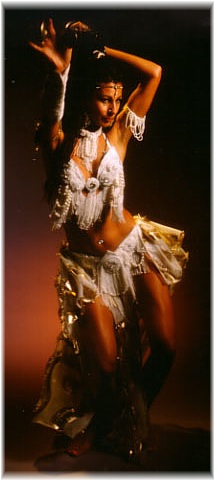
A dzikr is a religious Sufi ritual to bring the participants closer to God. It involves a repetition of movements and recitations. Those differ from congregation to congregation. A dzikr is lead by a sheikh. Sometimes they involve the use of music instruments, mainly framedrums. I attended several dzikr and none were the same. I also participated the dzikr in Omdurman so I can speak out of experience. It has nothing to do with exorcism, that is another ritual called zar or zaar. Which has indeed also the use of framedrums and religious recitations but has besides that nothing in common
David Roberts (Stockbridge, 24 Oktober 1796 – Londen, 25 November 1864) was a Scottish artist who traveled to Egypt in 1838

His hand colored lithographs are highly sought after by collectors. I had the chance to buy the "Dancing Girls".

Upon our return, my wife began giving courses that she called "Primitive Dance". In one of the places where she was teaching, there happened to be a workshop taught by Wendy Buonaventura, who, years later, wrote some beautiful books on the history of Oriental dance. Since there were no classes of Oriental dance in Belgium, the director of the Cultural Dance Center asked my wife to start a course in Oriental dancing. Her dance classes became a huge success; so, we decided to organize one in Antwerp, which was the town where we lived, and the biggest town of Belgium. (Antwerp has a population three times larger than the region that is Brussels’ capital “city”.)

I took upon myself the task of providing the context to make the art of Bellydance known to the general public there in Antwerp, I quickly became interested in the history of this particular dance. Being a musician and having played together with Moroccan and Turkish friends, I soon realized that their music was entirely different from Egyptian music. Most people could not perceive the differences between Turkish, Moroccan, Lebanese and Egyptian music. Around 1985, we met American-Lebanese Rose and Tania Moghrabi, a mother and daughter; at that time, they stayed in Brussels often, and taught the Lebanese style of dance that was called the Debke. Although of Lebanese origin, Tania learned Oriental dance from Ibrahim "Bobby" Farah, an American/Lebanese master of Middle Eastern dance instruction.

Fascinated by the spread of Oriental dance throughout the world, I started to search for its roots, from a musician’s point of view. Spending days in the museum of Egyptology in Brussels (one of the most important libraries on Egyptology in the world) doing research and taking notes, my insight of Oriental dance broadened. After participating in a percussion class with Hossam Ramzy, I traveled to London to meet one of his musicians, the ney-player, Mohamed El-Toukhy. While strolling through the city, I discovered an antique shop selling a lithograph of David Robert’s work and an engraving by Alma-Tadema, and thus, my collecting began.

Soon, I crossed Europe and Egypt, endlessly collecting all that I could find concerning Oriental dance and its origins. We invited dancer and master instructor, the late Serena Wilson of New York, to conduct a guest workshop and found out that her husband, Rip Wilson, shared our same passion. Our collection grew to one of the most important collections in the world on historical images on the subject of Bellydance and attracted the attention of various cultural centers. We conducted a multimedia tour, an exposition on Oriental dance, and produced a dance performance. From 1993 until 1995, "From Harem to Hollywood" (the title of the exposition), this tour ended as soon as our marriage ceased to exist. Although our professional lives together became a successful formula, involving international shows, television, and a fully booked schedule, our private life went in the wrong direction. My wife and I started a platonic relationship and that was the beginning of the end for us.

In 1995, I left Europe for Africa and started to realize my lifelong dream: owning a restaurant near the beach. Upon arrival in the Sahel, I felt as if I were coming home.  It felt like returning to the cradle, and reclaiming my origins. I married a girl of the Serèr (or Serrer) tribe and my spirit as a researcher came back.

I delved deeply into the history of the Serèr, who claimed to be descendants of a people that lived in Pharaonic Egypt. The information came from indigenous books and research papers that I stumbled upon in Dakar. The theories set forth in the books were founded upon the comparative study of the Serrer language and words found in the ancient Egyptian language.
My RestaurantLater, when I studied the tomb paintings, it became apparent that there could have been a link: the sheer resemblance of the body and facial type, and the hip girdle or leather string around the waist of their otherwise naked bodies. I had not found this type back in neighboring Sudan among the Dinka and the Nuer tribes. They were a completely different body and facial type compared to the Pharaonic wall-painting figures that seemed to be disappearing in Egypt. The second musician-girl from the left on the cover of the Abdel Hazim CD "Hatshepsut and Other Dances" revealed a lot in this respect especially. The instrument that the girl plays is still in use in Western-Africa under the name Xalam, or in Mali, Ngoni.

After a few trips to Africa, I wanted to abandon my idea of settling in Senegal, but just at that moment, I fell in love with the village of Kafountine. We bought a piece of land and started to build a restaurant "The Swimming Pool" which we later renamed into "Yandé’s Place". The restaurant soon became a success, but malaria nearly killed me; so for health and other reasons after 3 years, I decided to return to Europe.

My last trip from Senegal back to Belgium was marked by a huge sandstorm.  Coming from the South of Senegal, I had to cross the Gambia, and by consequence, the Gambia River. No boats would leave that day because there was only yellow smog of sand as far you could see. However, my flight was the next morning, so I had no other choice than to take the overloaded pirogue. This boat almost sank because the "captain" wanted to earn as much money as he could, since no other ship would take the risk. So, we headed for the other side. After half an hour or so, the waves became higher and higher. The sea was nearby the estuary. Nobody talked and everyone looked as if the last hour had arrived. Normally, we should have reached the other side by now! I could see people praying. Because around us was only water and the yellow dust of the desert storm, I asked a young fellow if the crew knew which direction to take. "No!" he said, "They don’t know at all!” 

I told the guy they were navigating in the wrong direction. "Are you sure about that? How do you know?" He must have noticed that I was confident that my intuition was right, and he shouted something in Wolof (the local language) to the crew. They hesitated for a while but then turned towards the direction in which I pointed. After about 20 minutes, the silhouettes of a few huge trees appeared through the pale dust. The dead silence that marked the crossing now transformed into happy shouts of relief! The nice Senegalese chap bought me a meal, something to drink, and gave me some money to continue the journey—as I was completely broke when I left.

Stief's Ouled Nail photo

Arriving back in Europe didn’t have much glamour after that. I had left all my non-Bellydance related belongings in Africa. Now, my money had been consumed completely by my first and second wife. There I stood at my mother’s door, empty handed, with nothing else left than my clothes that I was wearing.

Soon, I found out my collection of Arabic instruments, ancient jewelry, and our shared bank account were all gone along with my ex-wife. The only thing I could find was a small part of my picture collection, which I now had to sell in order to stay alive. I went to New York to visit a friend and to visit Serena Wilson who was interested in buying part of my collection.

After my return from Senegal in 1998, I took up various jobs and picked up a course as a web developer because I could no longer earn a living as a manager of a Bellydancer. One of my tasks was to make a personal website. In 1999, I decided to open up my collection to the world and made a little website around my historic collection on Bellydance; The "Bellydance Museum" was born!

I soon forgot about my website because I was offered a job as developer, but a piece of mail from a web visitor awakened me: "Please remove that stupid animation; your website is pretty interesting and the animation is only wasting time!” That was good advice, indeed! I started to add more material to the museum until the present. Now, I have lots of previously unpublished pictures and interviews but not much time! In fact, I now realize that my Bellydance Museum has celebrated its 10th anniversary!

Resources
The Bellydance Museum- http://www.belly-dance.org/

Author’s other
site- http://www.tribal-bellydance.be/

Examples of David Robert’s work www.davidrobertslithographs.com

Have a comment? Send us a letter! Or
add your comments below.

Check the "Letters to the Editor" for
other possible viewpoints!

Ready for more?

  • Hadia Speaks: a Telephone Interview
    Hadia’s experience is that, although many dancers in Middle Eastern countries are wonderful artists, they generally lack the skills to teach in an effective, methodical, safe way.
  • Belly Dance, Through the Eye of the Camera
    Males dominate photography and film industries in both the west and the east. As well as ideas concerning the status of the dancer and gender, films involving belly dancers can give us information on the class dynamic and stratification that exists.
  • Producing "Tales of Desire"; a Tribal Fusion Bellydance Experience
    We felt that the buzz in the community was that people were getting tired of seeing the same performers on every performance DVD that came out, so we really tried to mix it up and offer a more varied line up.
  • Teaching American Bellydance: Ich Bin Ein Berliner!
    Amazing! The members of the workshop wanted more and more—and even Horacio began trying out my veil moves.
  • Tania Luiz A Romany Fusion Artist in Osaka
    At this time I think I was longing for a well-documented dance, old and structured. I was a little sad because I saw how people who were not properly trained but who just had a costume would teach Oriental dance. Plus the deep connections of Indian dance to the Divine were very interesting to me. At the end of it all, I realized that my body, my soul and my blood are meant to do Oriental.
  • Indonesia’s Introduction to Belly Dance: The Mainstream Media’s Influence
    Extensive mainstream media attention has been a mixed bag of blessings and, well, “somewhat less than blessings,” as most Indonesians would diplomatically say.