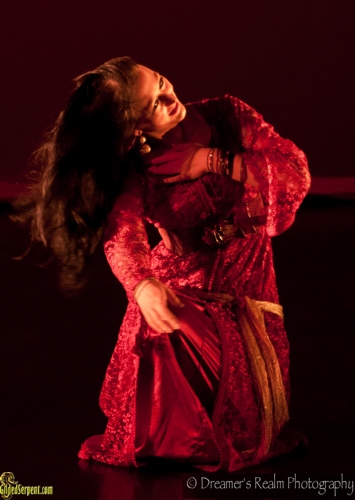
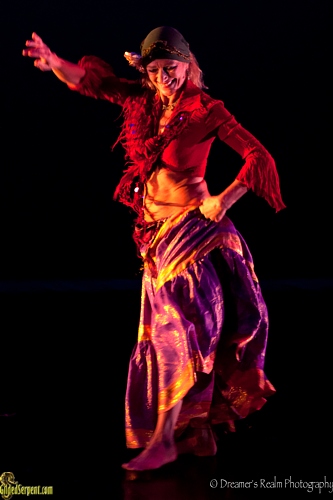
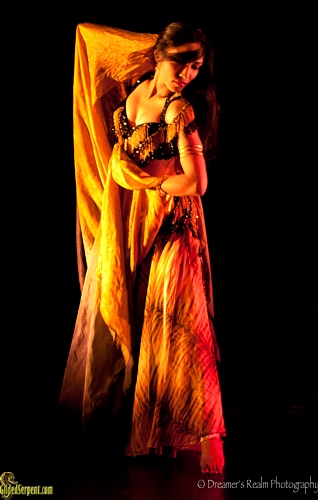
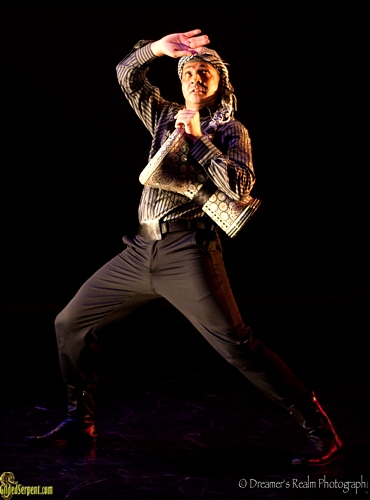
Gilded Serpent presents...

Friday Evening Photos

Rakkasah East Festival East- October 2010

Photos by Carl Sermon
Commentary by MaShuqa
posted October 13, 2011

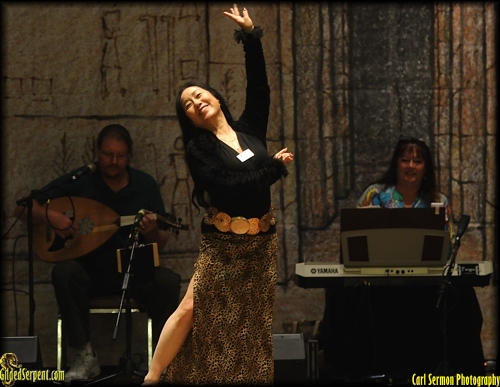
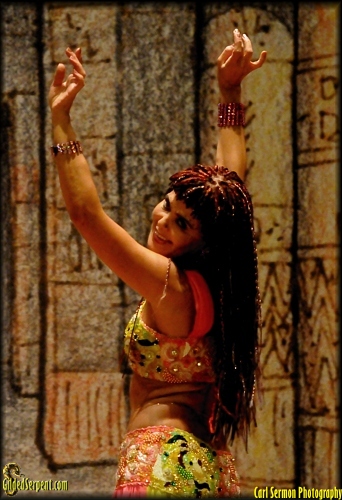
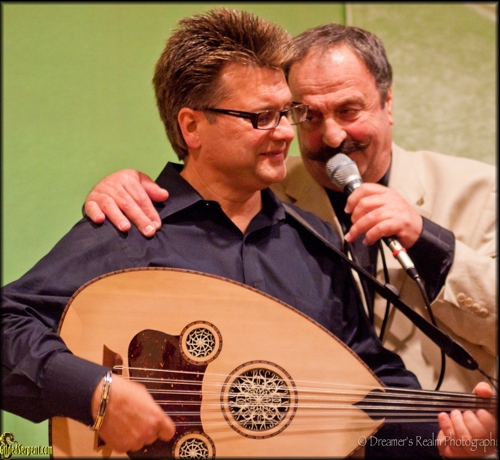
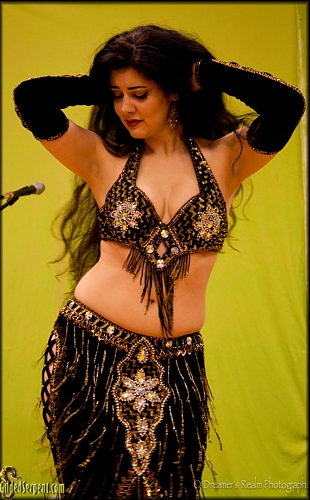
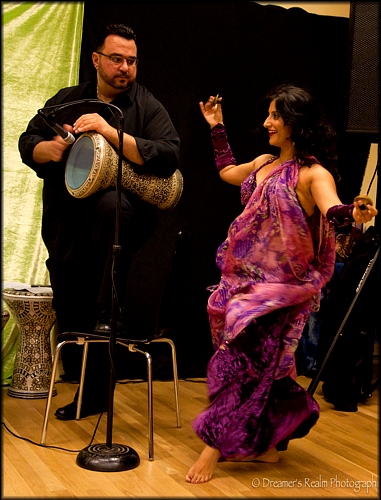
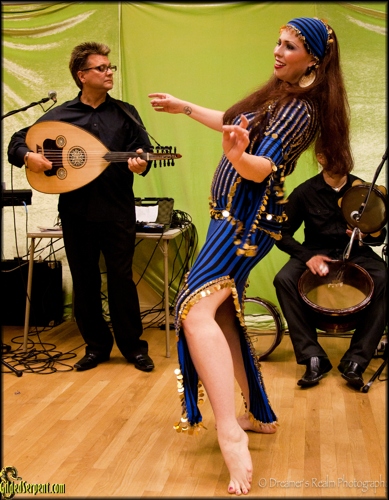
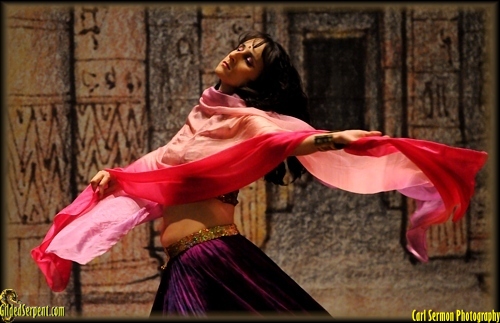
Rakkasah East Festival 2010, the 11th year of this annual festival in Somerset, New Jersey celebrates a blossoming friendship community of East and West coast dancers and musicians.  The festival is the East coast version of the 30 year old Rakkasah West Festival tradition in California.  This art form of dance is in constantly flux and now includes many different influences in costuming and performance.

It was fascinating to observe the new trends in performance, costumes, and dance styling at this year’s festival: Rainbow colors, Fan veils, Feather fans, Silk veils, Isis Wings, and contemporary costuming designs.  A predominant costuming style for dance troupes was similar costume designs with each dancer wearing different colors to personalize their costuming providing a rainbow effect when troupes performed. Flowers and feathers adorned costumes and headpieces.  Silk veils dyed to match costumes, or in brilliant contrasting colors were popular and created height and flow in performance. Some troupes performed excellent choreography wearing dancewear usually worn in class – the basic wrap top, dance pants and hip wrap.


Friday Night

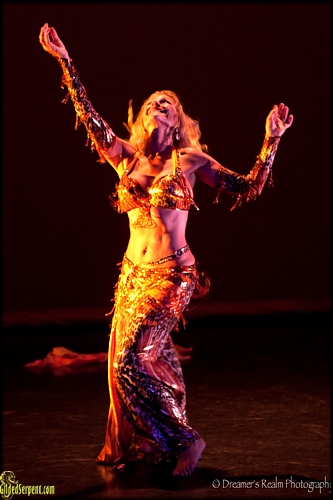
Desert

Desert Embers of New Jersey


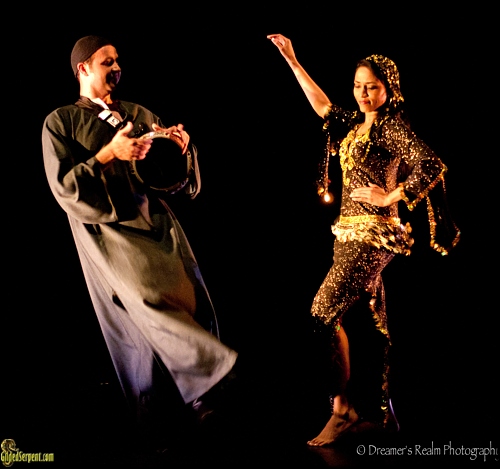
Dharma

Dharma of Misouri


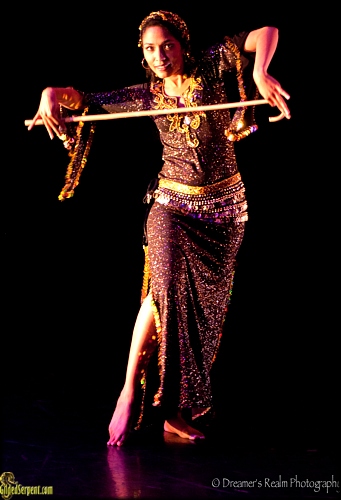
Fahtiem

Fahtiem of California


MaShuqa does Open Floor

MaShuqa dances with Pangia during Open Floor


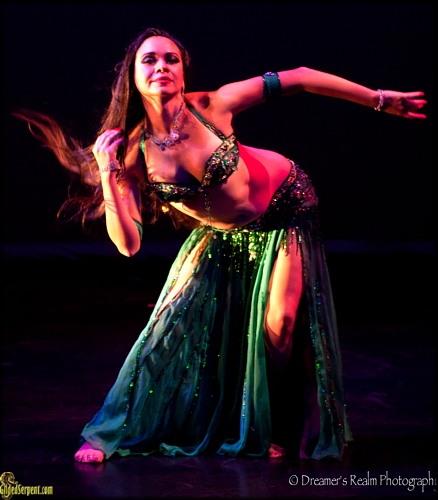
Leila Haddad

Leila Haddad of Paris


Mystic Wiles

Mystic Wiles of New Jersey


Nadia Layla

Nadia Layla


Najma

Najma of New York


NightShade

Nightshade of New Jersey


Phoenis

Phoenis of New Jersey


Raks Sheva

Raks Sheva of New York


Raks Sheva

Raks Sheva of New York


Raks Sheva

Raks Sheva of New York


Troupe

Troupe Shahibat of Misouri


use the comment box

Have a comment? Use or comment section at the bottom of this page or Send us a letter!
Check the "Letters to the Editor" for other possible viewpoints!

Ready for more?


Gilded Serpent presents...

Bellydancers “Gotta Have a Gimmick"

The Excessive Use of Props

Placeholder

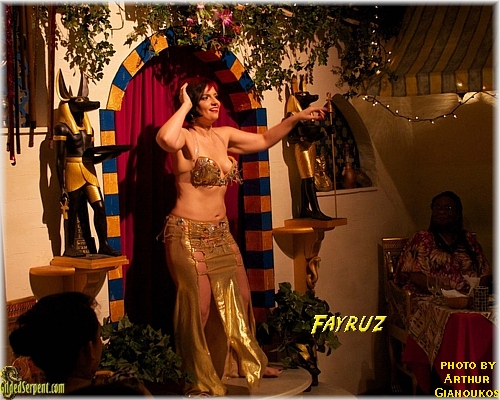
by Fayruz
Photos by Arthur Gianoukos
Posted October, 2011

The other day, I was reflecting back on my farewell party at San Francisco’s Al Masri Restaurant in early July 2011, remembering so many good things about the night: the large crowd that came to see it, (It was packed and there was standing room only.) the number of performers, (I think there were about 10 dancers.) and the quality of their performances. The quality of their dancing was incredible! One thing that I noted that was particularly interesting about each dancer’s set was that there wasn’t an excessive use of “stage props”, and by that term I mean a "gimmick". 
All of the performers knew their music and gave us performances that presented his or her own interpretation of the song. We got to know every performer a little bit that night, and it was lovely! 

I’ve gone to other shows, and while I often see dancers present an interesting interpretation of a song, I also notice more often that the performances seem less concerned about the dancing and more concentrated on their gimmick and demonstrating the skills to get the gimmick right.

I get the impression from watching such performances that a prop wasn’t incorporated in the show because it helped the dancer express an emotion in the song, but the property was intended to be the focus of the performance.

At times I’ve seen so many props used, I start to wonder if I came to watch the dancing or watch the skill and proficiency of the dancer with all of these stage properties. Of course, I’m wowed at the skill with the object, but honestly, I remember nothing about the dancing. In retrospect, that’s disappointing. 

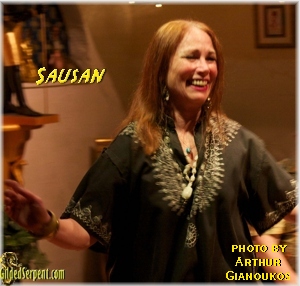
SausanAfter an evening of reflection I had these observations about the dancing on this night:

  1. Each performer’s costume complemented the song choices and personality.
  2. If veils or finger cymbals were used, they helped to add pizazz to the entrance and complemented the interpretation of the song.
  3. We enjoyed a singer and dancer duet that was about the music and how they interacted.
  4. The men danced with the cane (assaya) because, well, that’s what Egyptian men do; I don’t think any of the ladies had included music for the cane.
  5. All of the performers made sure they had an energetic entrance.
  6. All of the performers put themselves–rather than a prop–as the center of the performance.

I think that the last point is key, and why people go to see a show. Sometimes, as a performer, we think people come to see a show to be wowed and impressed, and to give the audience an "experience." However, let’s face it: Belly dancing on its own is an "experience."

Furthermore, at least to the Egyptians, the skill of the dancer is demonstrated by what she does in her improvisational moments.

Egyptians recognize a choreographed number a mile away, and do not hesitate to let you know that they recognized that it was choreographed. As for performing a competent and captivating improvisational set, it’s not about using props; it’s more about creative movement in the moment and inventing something new.

author Fayruz

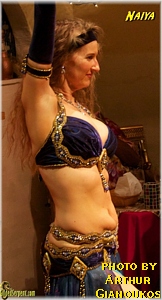
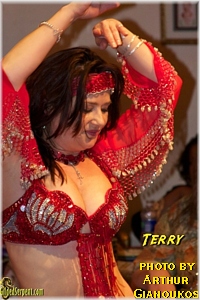
NaiyaTerry Del GiornoWhen we dancers are in the mindset that we need to create some crazy "experience" for the audience, we try to come up with whatever will be unique to entice the audience to come back for more. Certainly, audiences want that, but that doesn’t mean that the audience wants always to see outrageous props or gimmicks. Audiences want to see how creative the performer can be to keep them entertained through body movements, the stage environment, and how the dancer interacts with the audience. However there are times where a prop does make sense to help draw the audience into the mood of the show and keep them focused, such as a larger stage environment where stage presence needs to be at 120%.

About the party–everyone in the restaurant stayed until the end of the show to watch the dancing and get to know the various personalities on the stage. To them, the dancing and the various interpretations of the music were the real entertainment. 

The next time I start thinking that my show might be too boring, I’ll remember this show and how much fun everyone had.

I will remember that I don’t "gotta have a gimmick"! I just need to know my music, be creative with movements, try something new and daring (going for the improvisational aspect) and let my audience get to know me.

That’s what they really want anyway.

*(Author’s note – the "gotta have a gimmick" comes from the song lyrics in the movie Gypsy”.)

Keenan and Numair


use the comment box

Have a comment? Use or comment section at the bottom of this page or Send us a letter!
Check the "Letters to the Editor" for other possible viewpoints!

Ready for more?

  • The Magic of "The Grapleaf", 1976-1997
    Back in the early ’80s when I was performing at the Bagdad Cabaret on Broadway, a customer strolled into the Northbeach nightclub and told me about a little known restaurant
  • Dancing in North Beach
    On the occasions when the door was still locked, I was often invited to drink coffee next door, where young girls made their money stripping.
  • Sausan’s Saga at The Grapeleaf Restaurant
    Phoenix-like, arising from the ashes of a dreadful divorce and forced closure, petite and spunky owner-operator Sausan has persevered and returns stronger than ever with her new partner from Egypt.
  • Our Changing Dance World, a Response to Leila’s "Dance for Dancers"
    Of course, we learn musicality and so forth, but where dance classes in some places are an hour long, teaching long choreography is not sustainable to an instructor.
  • Glimpses Into the Past:On DVD at Last!
    Some current dancers may find that the sentiment of the 70’s feels alien and therefore unable to relate to it. However, I believe many dancers will be thrilled to see faces attached to the names of some of our dance legends like Bert Balladine in Gameel Gamal.
  • Dreaming in Massachusetts, Photos from MassRaqs 2011
    The celebration of those traditions, along with the fervor of Boston’s intellectual culture, the talent of our local community of dancers and musicians, and a desire to connect that beautiful history to the global present and future of our dance drives the work we do in our event.
  • MaShuqa interviews Ali Hamidzadeh of Turquoise International,
    Ali tells us about how he came to produce his first cymbals. He is interviewed by MaShuqa. He also talks about Dahlena, Bobby Farah, his education, inferior copies of his zils, how to know that you have genuine Turquoise cymbals. Testimonials from Jillina, Princess Farhana, and Marta Schill.
  • Assiut / Assuit, Fascinating FAQs
    However, mosquito netting was invented by the Egyptians and dates back thousands of years.
  • Aubre Hill, New Fussion Energy in Taiwan
    As time has passed, the local community has found itself on a changing path. The heavily choreographed (written notation) dance trend remains the staple of the main stream while increasingly, local dancers (and instructors as well) have begun to realize that there is something else in addition to set notations of dance movements to learn.
  • Competition Strategies, A Judge’s Suggestions
    Choosing a costume that fits and flatters your choreography is equally important. If you want to highlight your amazing hip work, be sure to choose a costume with lots of fringe and tassels on the hips so the judges cannot fail to see that hip work.
 

Gilded Serpent presents...

And Here’s a Work from…the Lovely Jenna

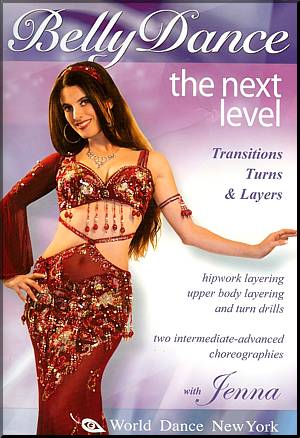
DVD: "Bellydance, The Next Level"

Placeholder

by Tracey Farmer
posted October 11, 2011

I’m going to do my best and be impartial to this review.  It’s going to be hard because I have the pleasure of knowing Jenna and I have worked with her and taken her classes since she moved to Los Angeles.  She’s an absolutely wonderful person who from the moment she moved from New York, was in much demand for workshops, shows and the most popular professional troupes in Los Angeles. This is her fourth DVD, the 1st being the Golden Apple: Bellydance New York featuring herself, Blanca, and Neon, Drum solo with Raquy and Basics and Beyond.  She brings us this DVD with combos, layering and technique to take your dance to the next level.

When I’ve gone to Jenna’s classes, I noticed she had a knack for making the students comfortable with themselves while learning new steps. This persona still comes across on DVD. 

Jenna’s instruction technique is very thorough and she has a way of easily guiding the dancer through the fundamentals.  She knows how to break down a step or combo without making it sound or seem too complicated, like turns, the bane of my existence. They are necessary in Oriental dance, but if you don’t have any formal dance training they can be quite scary.  Jenna is able to explain and demonstrate a basic turn and will make it seem not only harmless, but easy, and turn it into a barrel turn. 

The 1st third of the DVD is warm up and technique.  Jenna teaches facing a mirror and the camera is behind her giving you the impression that you are right behind her in class. The next two-thirds of the instructional part is a series of combinations that add one whole dance.  Each combination is one you can use as an idea or inspiration to put a dance together.

Jenna leaves no stone unturned when it comes to layering for lower and upper body.  There are also variations on shimmies for the shoulders and hips and easy transitions as well as traveling steps and embellishments.  Jenna guides you from the warm up all the way to a cool down.  There is a lot of material on this DVD and I recommend you only watch a few chapters per day to let the entire new material sink in.

At the end we get 2 performances by Jenna, one with the whole dance you just learned and bonus performance using steps you just undoubtedly learned.

If you have Jenna’s Basics and Beyond, it makes sense to add this to you library.  I think this DVD is good for the intermediate dancer and for any dancer who is looking to get her performance feet wet.

Rating: 3 1/2 zils
Zil Rating- 3


use the comment box

Have a comment? Use or comment section at the bottom of this page or Send us a letter!
Check the "Letters to the Editor" for other possible viewpoints!

Ready for more?


Gilded Serpent presents...

Dreaming in Massachusetts

Photos from MassRaqs 2011

Meiver and Karim

Text by Meiver, Producer
Photos by Heather Emerson of Dreamer’s Realm
posted October 6, 2011
Event held September 9-11, 2011

In Boston, we have had the proud honor to be the first city in the US to host a Middle Eastern Night club with live music and dancers. Our Festival’s name, MassRaqs, represents our geographic location (We are located in Massachusetts,) along with our desire to celebrate the dance culture and history of New England, fused with the Arabic word meaning dance (raqs).

The work we do in our event is driven by a desire to connect that beautiful history to the global present and future of our dance, by the fervor of Boston’s intellectual culture, and by the talent of our local community of dancers and musicians.

You can also think of “MassRaqs” as “Massive Dance”: a weekend long dance intensive during which we share dance (through performance), learn to dance (attending workshops), and learn about dance (in panels and discussions). Our workshops are planned around developing a dancer’s skills and better informed teachers.

Last year was our first year, and we were fortunate to host workshops and performances by widely-renowned dancer, Bozenka, and we learned Bedouin folk dances with talented Shadia of Boston. We also discussed New England’s Belly dance history in a panel on the film “Aziza!”, which was lead by it’s producers, Amy Smith and DeAnna Putnam as well as in the career retrospective presentation delivered by Shadia.  This year we continued to celebrate local dance history through a recognition of the long standing work of Katia, of Boston who delivered her career retrospective presentation.

Live Middle Eastern music followed Katia’s talk. The music ensemble was comprised of Mitchel Kaltsunas (oud and vox), Tony Lahoud Chamoun (tabla), Youssef Aitelhadj (frame drum), and Sameer Almadani (keyboard). Joining these musicians on stage were a selected group of dancers who had been part of the talented and committed student group we were pleased to welcome this year. A new process this year was making the Friday night dance performance into a curated show featuring MassRaqs participants. The dancers presented styles of Belly dance as diverse as our community, and the show was an example of the dynamism and bright future of this dance/art form. The dancers selected this year were: Anabee, Ariella, Aslahan, Badriya, Helena Melone, Jaylee, Kaylin, Melissa, Nepenthe, Sara, Shakima Laila, and Zameena Asmar.

Additionally, our line-up of teachers, performers, and panelists this year included Hadia (Canada), Karim Nagi (Egypt/Boston), Katia (Boston), Tempest (Rhode Island), EmmaLucy Cole a.ka. Shema (UK), Paula (Dominican Republic), Roshana Nofret (Miami), Melina (Boston/Greece), Belly Beat (Boston), and Donna Mejia (Northampton).

In 2011 we were especially proud to welcome dance students, artists and scholars from all over the world to contribute their talent and insights to our festival. The theme of this year’s MassRaqs was “Globalization Within Belly Dance.” The dissemination of this dance and its many emerging versions and styles throughout the world also raises questions about its cultural appropriation. For this reason, we concluded our weekend on Sunday with a panel discussion that sought to answer questions about the roles and responsibilities that we should take on as participants in this global dialogue.

Through our Sunday panel (“Globalization and Cultural Appropriation”) we asked, “What does the spread and transformation of Belly dance practice throughout the world mean, and what the is the impact and potential of all these global dance communities?” The panel line-up was outstanding because its speakers were also active dancers, and represented diverse approaches The panel lasted 2.5 hours, and  I plan to soon share what came up in the process of organizing it, and in the conversation itself!

It was very important to involve the local Arab community. We were able to successfully engage with The Center for Arabic Culture and The Boston University Lebanese Club as sponsors and community liaisons, bringing an important dimension of accountability and cross-community dialog. We organized jointly with a local community organization, bringing women from The MataHari Haitian Solidarity Network to our Saturday night performance. The MataHari Haitian Solidarity Network is a group comprised of women from MataHari: Eye of the Day (a Boston-based, anti-violence, non-profit group), The Gilbert Albert Community Center, and The Greater Boston Nazarene Compassion Center (GBNCC).  Most, if not all, of the women were displaced by the 2010 earthquake in Haiti, but they were coming together to support one another in healing with the purpose of advancing the economic, emotional, physical, and spiritual status of themselves and their families.  We offered them gala tickets as our treat, a space for cross-cultural work, and a opportunity for diversion and enjoyment. Seven members of this group attended the Saturday Gala, courtesy of our local dance community members. We thank all of them for their generosity.

This event was made possible by the dedication and hard work of the MassRaqs 2011 team: Aleksie, Badriya, Cecilia Al-Barh, Jewels, Eli and Rosa Noreen. Their enthusiasm and contributions made this festival possible and they deserve the credit for what we all enjoyed. Photos below are by Heather Emerson of Dreamer’s Realm Photography and represent only a glimpse into our weekend.

Gala Performances

Saturday Evening, September 10, 2011
Boston University Theater, Boston, MA

Hadia

Hadia’s Raqs Sharqi piece during the MassRaqs Gala.


Meiver Karim Duet


Karim Nagi & Meiver in improvised duet during the MassRaqs Gala.


Karim Saidi

Karim Nagi’s Saidi solo.


Meiver Saidi

Meiver’s Saidi solo.


Melina

Melina of Daughters of Rhea, performs her double sword balancing and Vintage Orientale dance


Roshana Persian

Roshana Nofret performs classical Persian dance


Paula

Belly Dancer of the Universe 2011 winner Paula performs an electrifying Raqs Sharqi and drum solo


Shema

Shema performs an energetic Moroccan Shaabi with urban feel,


Hadia Roma

Hadia in her fierce performance of Turkish Roma dance


Meiver Veil

Meiver performs a passionate veil dance


Roshana

Roshana Nofret performs Raqs Sharqi


Katia Students

Katia’s students perform Tunisian Dance.
From left to right: Rianna, Mahira, Ma’isah, Sabah and Angela.


Karim Tabla

Karim Nagi’s Turbo Tabla solo.


Opening Night Celebration

MassRaqs Opening Celebration – September 9th 2011,
World Rhythms Dance and Fitness, Boston, MA

Roshana Opening Night

Roshana Nofret performs a classical Raqs Sharqi set

to live music by Mitchel Kaltsunas (oud and vox), Tony Lahoud Chamoun (tabla), Youssef Aitelhadj (frame drum), and Sameer Almadani (keyboard),


George and Mitchel

Legendary singer George Chamoun spontaneously joins the band for a song. Here pictured with Mitchel,


Aslahan

Aslahan


Jaylee

Jaylee


Shakima Leila

Shakima Laila


Ariella

Ariella


Zameena and Tony

Zameena Asmar and Tony Chamoun.


Nepenthe

Nepenthe


Badriya

Badriya


Anabee

Anabee


Sara

Sara


Workshops

Please help us with the names for these individuals. Thank you!
Sept 9-11, 2011, World Rhythms Dance and Fitness, Boston, MA.

Meiver's Veil Class

Meiver with students after her workshop "Fluid and Larger than Life: Veil for Oriental Dance".


Katia Tunisian

Katia with students during her Tunisian Folk dance workshop


Katia's class

Katia’s Tunisian Folkdance Workshop


Hadia's class

Hadia with students during her dance workshops in Egyptian and Turkish Roma dance

WHICH PHOTO IS WHICH CLASS? Egyptian or Turkish class?

Hadia's class
Hadia with students during her dance workshops in Egyptian and Turkish Roma dance


Karim Workshop

Karim Nagi’s workshops Oum Khalthoum Intros for Belly Dance and Rhythms for dancers


Karim's OmK class


Karim Rhythm class

Karim’s Rhythms for dancers workshop
From left to right, students Cyndal and Paula.


Karim's Drum class

Karim Nagi’s “tabla touchers” after his
Rhythm for Dancers workshop.

Left to right, back to front:
1-Kanina Hague, 2-Lizzy Mulen, 3-peeking-FangYun, 4-pink shirt-Angela Clayton, 5-peeking- Eli, 6-Kaylin, 7-Anabee, 8-Rachael, 9-peeking?, 10?, 11-Yael Zohar, 12-Jemileh Nour, 13-Cyndal Ellis, 14-Nepenthe Ahlam, 15-peeking, 16-Sobeida Lagrange, 17?
Tamsin Maxwell, Megan Gackstetter, Jaylee, ??, tabla, ??, ??, Melissa Kelman with green bracelet, Meiver, Sara, Paula, Karim, Shakima Laila, ??


Event Website:
MassRaqs.com

Photographer’s GS Biopage

use the comment box

Have a comment? Use or comment section at the bottom of this page or Send us a letter!
Check the "Letters to the Editor" for other possible viewpoints!

Ready for more?

  • Belly Dance and Feminism: Different Issues, Different Perspectives
    Feminism embraces more than one point of view, and feminist perspectives lead to many different decisions and courses of action. Feminism is a tool for thinking - for understanding and putting a name to issues you may be wrestling with in your own dance life, and for seeing belly dance in the light of broader economic, social and political realities.
  • Dancing again in Afghanistan
    As I had suspected, Afghan women belly dance
  • God Belly Danced. Part 1: Biblical Accounts of Belly Dancing in the Ancient Near East
    While Yahweh is not female, the man may have given Chavah a name similar to Yahweh because the woman and Yahweh had something vital in common
  • The Hippie Connection: Robert Altman’s 1969 In Utero Belly Dance Portrait of ME
    There it was, the second of a series of black and white hippy portraits –people raving, a woman blissfully breastfeeding, couples hugging, dogs leaping -The Seminal Photo of my Life- only, I was cut out!
  • Finger Cymbals
    Above all this cross-cultural cacophony soared my mom’s perfectly paced zills, right left right, right left right, right left right left right left right. If you put me in a room blindfolded, I could distinguish her playing from any other dancer on earth.
  • "Dancing Darkly"
    This may come as a shock to many, but Gothic Belly Dance isn’t really a new phenomenon, and it’s not just centered in California. First of all, it’s simply a merger of two entities that go well together, like peanut butter and chocolate.
  • "The Art of Tempest"
    The first image, "Dance," is inspired by the Minoan priestesses and is a monotype/mixed media
  • One Hip in Each Camp, My Experience of Working in Both the Arabesque Dance Company and the Arabesque Orchestra
    My dancing is fuelled by my understanding of the music and now, my playing is influenced by the emotions I experience when I dance. It is a cyclical experience which has been boosted by this incredible opportunity to work with some of the most talented Arabic musicians on the scene.
  • Inverting the Gaze, Medusa Dualities in Female Bellydance Performance and How the Gaze Continues to be Relevant Today
    This is not so hard to understand when we consider that the representation of female sexuality has been so over-developed as to become almost a parody of itself.
  • Latest Craze- Egyptian Oriental Dance, The Fitness Benefits of Our Dance
    This is a fabulous idea, except for the very important and primary fact that the majority of efforts in this direction have attempted to fit this archetype of feminine activity into the current prevailing masculine model of linear strengthening and tightening, complete with fitness speak, crunches, squats and sweat!
  • Assiut / Assuit, Fascinating FAQs
    However, mosquito netting was invented by the Egyptians and dates back thousands of years.
  • Aubre Hill, New Fussion Energy in Taiwan
    As time has passed, the local community has found itself on a changing path. The heavily choreographed (written notation) dance trend remains the staple of the main stream while increasingly, local dancers (and instructors as well) have begun to realize that there is something else in addition to set notations of dance movements to learn.
  • Competition Strategies, A Judge’s Suggestions
    Choosing a costume that fits and flatters your choreography is equally important. If you want to highlight your amazing hip work, be sure to choose a costume with lots of fringe and tassels on the hips so the judges cannot fail to see that hip work.
 

Gilded Serpent presents...

Assiut/Assuit

Fascinating FAQs About

Setareh

by Dawn Devine, Davina
posted October 3, 2011

Assuit is one of the most luxurious, exciting, and mysterious textiles worn by modern dancers.  Shawls, robes and even bedlah sets are crafted from this distinctive and expensive Egyptian cloth.  To help you understand a little bit more about this garment I’ve constructed this handy little FAQ (frequently asked questions).  It addresses some of the most common questions I get asked about this marvelous cloth.  Enjoy!

Asyut and Cairo on mapQ – What is the RIGHT spelling for Assiut?
A – There is no one right way to spell Assiut.  However, Assiut cloth is named for the textile-producing city in Upper Egypt.

Egyptian Arabic has been transliterated into English and there are two accepted standardized spellings, which you can find on maps today as either Assiut or Asyut.

  Either one of these spellings is the most accurate.  There are other widely used spellings of this cloth used around the web today.  They include (but are not limited to) Assuit, Assuite, Asyute, and even Azute.  In Egypt, it’s called Tulle bi Telli (or Tulle bi Telly) and is a literally translation of the phrase "mesh with metal."  Sometimes this is name is shorted just to Telli (Telly).

Q – When was Assiut first made?
A – There is a colorful history concerning the origin of Assiut cloth and, like the fabric itself, it is flashy and full of holes. First, we do know that Assiut shawls were first mentioned in travel literature as early as the 1870’s.  Before the 1870’s, there are many references to Egyptian shawls and embroidery, but none made to metallic embroidery on net or mesh.  Instead, richly embroidered woven shawls with complex Arabic designs were collected by European travelers, especially during the Napoleonic era when dresses were long and slim, and not warm enough in chilly northern climates. Tulle Origins

Q – I want to find out more about Assiut history, why isn’t there more written about Assiut in the history books?
A – Assiut cloth was originally made from mosquito netting and sold to tourists.  The ground cloth was either mill ends from the mosquito netting industry or was recycled from left over chunks of the netting when bed coverings were manufactured.  Assiut began appearing in the literature of travel as one of the most desirable and distinctive items you could buy in Egypt.  Because it started off life as tourist art, it has been neglected in Egyptian history, anthropology and scholarship.

Q – I heard that Assiut dates back to ancient Egypt?
A – This is where the history becomes mythic. There are no surviving examples of Assiut that predate the mid 19th century.  I have never seen a full-sized piece of Assiut made on hand-made ground cloth.  Instead, it is the product of the industrial revolution, crafted from machine-made fabric. 

However, mosquito netting was invented by the Egyptians and dates back thousands of years.

  The Greek scholar Herodotus traveling through Egypt between 450 – 420 BCE noticed and recorded that Egyptian fishermen used their nets to combat the mosquitos.  There are ancient Egyptian mosquito net frames that survive from the Pharaonic days, but none of the actual fabric has stood the test of time.  Did they decorate these handmade mosquito nets?  We simply don’t know.  But it’s certainly fun to imagine Cleopatra reclining under a vast cloud of silver-spangled mosquito netting, the ancestor of modern Assiut.

Hanan's Assiut booth at Rakkasah in the 90sQ – How is Assiut made?
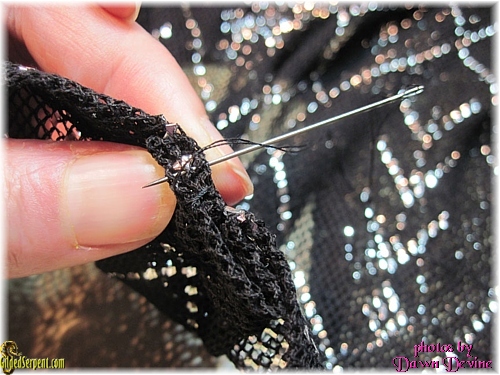
A – Assiut cloth is a two-part construction technique.  The ground-cloth of tulle is machine-made from linen, cotton or a blend of the two. Tulle is named after the lace-making capital of France, but this fabric was actually first known as bobbinet or English lace.  The bobbinet machine was invented in 1806 by an Englishman, John Heathcoat, with the goal of producing fine pillow-lace style mesh in large quantities.  The figurative metal patterns are an embroidery technique using a large-eyed needle and thin silver strips.  Each individual stitch is wrapped around and through the mesh at a diagonal, the wire is cut, and then hammered into place.

Q – There is a myth that Assiut is made by blind women?
A – Perhaps in the past there may have been a blind woman or two, this is simply not documented.  Today, Assiut embroidery is made by women in small home-based embroidery "factories."  I can imagine a time when Nile-side vendors created richly embellished stories to make their shawls more unique and desirable.

A British or American tourist may have found this story of blind embroiders a picturesque story and a great tale to tell their friends back home.

Q – Why is vintage Assiut so much finer?
A – There are several reasons why vintage Assiut is finer.  First, most of the vintage cloth is actually made from linen, a bast fiber that can be spun quite a bit finer than it’s shorter staple cousin cotton.  Older tulle-making machines also made a more loose and open net than modern equipment.  There is a general rule of thumb: the finer the thread and the larger the net, the older the cloth.

Q – Why does the metal vary in color?
A – There is no one source for either the cloth or the metal.  As with most manufactured products, the metal is an alloy and can vary in content.  If you see a piece of vintage Assiut that claims to be all silver, or with high silver content, be skeptical.  High-silver content Assiut tarnishes, and the silver goes dark, almost black over time, and is impossible to polish.

Gold-toned Assiut is made from metal thread with higher brass content.  But don’t worry about the metal content. Instead, look for high quantities of metal in the tone you prefer with tightly wrapped stitches in designs that you love.

Q – How do I make my own Assiut Costume?
A – For a quick and easy Assiut costume, check out this "dancer design" from Dahlal International.  There are lots of tips, techniques, tools and more for designing and making your own costume are available on my blog.  Check it out! www.davina.us

This is by no means an exhaustive compendium of information about Assiut.   Keep watch for another installment soon!

Assiut Robe Box Pleat, photo by Davina


use the comment box

Have a comment? Use or comment section at the bottom of this page or Send us a letter!
Check the "Letters to the Editor" for other possible viewpoints!

Ready for more?

  • Fashion Trend Report 2011 What’s New This Year at Rakkasah?
    What I noticed, first and foremost, was not the costuming, but rather, a change in the sellers themselves. The seller demographic has radically altered, creating a new vendor landscape. Without a doubt, this is a response to the on-going sluggish economy and the need for companies to reduce expenses. The reduction in costumes and products coming out of Egypt also affected the merchandise. Many small factories had a gap in production, and shipping has become even more problematic.
  • Nonprofits for Middle Eastern Belly Dancers, Is a 501c3 Right for You?
    By understanding the nature of non-profits, how they are organized and run, you can see their potential for developing successful arts organization, performance space, dance company or troupe.
  • By Dancers, For Dancers DVD reviewed
    As working professionals, these dancers present the style of performance you would see in an intimate restaurant or at a house party.
  • Kohl:Drawing the Line
    Along with henna, kohl has been part of the beauty regimens of women since the dawn of history, and an unbroken line connects the eyes of today with those of the ancients.
  • On The Costumer’s Bookshelf
    Beaded Embellishment Techniques & Designs for Embroidering on Cloth by Amy C. Clarke & Robin Atkins
  • Lace and My Muses Part 1: Egyptian Mummy Lace or “Assiute Cloth”
    I fastened around my hips a white Assuite cloth encrusted with gold knots throughout, forming pictographs of falcons, pyramids, crosses, and diamond shaped designs.
  • Antique Textiles: Renewed Life for Dance
    In fact, we often danced for many little luncheon gigs in offices and other places as a surprise birthday gift—to the music of our own solo sagat. Now, that is a skill that I have never seen anyone repeat since the early seventies!
  • Antique Textiles: Part 2 Costuming Before the Reign of Egyptian Costumers
    I view today’s dance values as interlopers—meant to mitigate Belly dance’s checkered past by exchanging its innate free emotional expression for speed and difficulty of execution and an over-the-top outpouring of energy that
    is neither sensual or exotic.
  • Antique Textiles Part 3: Creating Your Unique Statement
    It is possible that you may never have performed professionally while wearing a lampshade on your head… but I have!
  • Antique Texttiles: Part 5, Lace and My Muses: Treasures
    I was looking at a piece of artwork featuring a classical dancer of the past, turning it this way and that to get a better view, and suddenly, I realized that I had lost contact with my treasured mentors and had also abandoned my sense
    of artistic direction that they had helped to foster within me.
  • Aubre Hill, New Fussion Energy in Taiwan
    As time has passed, the local community has found itself on a changing path. The heavily choreographed (written notation) dance trend remains the staple of the main stream while increasingly, local dancers (and instructors as well) have begun to realize that there is something else in addition to set notations of dance movements to learn.
  • Competition Strategies, A Judge’s Suggestions
    Choosing a costume that fits and flatters your choreography is equally important. If you want to highlight your amazing hip work, be sure to choose a costume with lots of fringe and tassels on the hips so the judges cannot fail to see that hip work.
  • Ba Olek Eh (Tell You What)
    A new feature and an experiment! Amina’ has such an interesting life. Let her tell you about it.
  • Video Sample of Band Rehearsal for Tarabiya Concert at Amina’s House
    Jalal Takesh, Faisal Zedan, Husain Dixon Resan, Hana Ali, Sandy Hollister, Amina Goodyear
  • Ahava and her Workshops, A Fan’s Viewpoint
    “Usually, the up accent is on the downbeat,” said Ahava, “but if you are doing a hip drop in the modern style, the drop would be on the down.”
 

Gilded Serpent presents...

Ba Olek Eh (Tell You What) by Amina Goodyear

Amina at the Gamal Awards

Amina at the Gamal Awards

Amina’s GS Biopage

October 3, 2011

Random

Random comments about the Tarabiya show.

  • “This feels  like Cairo.
  • “If this were any other show and it was hot like this, I would have left. But I stayed till the end. I didn’t want to miss the music or  the dancing.
  • “The hair on my arms was standing on end when the singing started.”
  • A sign was displayed by Will, the sound and light technician, sometime during each dancer’s performance. I was on stage and couldn’t see what he was trying to tell us. After the show I asked him. He said “Oh my god!” (it turned out that the sign read OMG). Then he said, “And when all the girls came  out in the end, wasn’t that song Fakkarooni?” (Yes, it was.)
  • “I knew Husain could sing, but this was the best kept secret. His voice is so moving.”
  • When Jalal started playing (Kanun taqsim), it was like heard the Jimi Hendrix of Arabic music.”
  • “Why doesn’t Husain sing like that at Aswat?”
  • Younes and Jalal totally made the tarab.”
  • “This was wonderful, you need to do it again!”
  • “Everything was great, but where’s the air (conditioner)?”
  • “I’ll never forget this night for the rest of my life.”
  • “It took my breath away when I saw all the beautiful girls dancing together in the finale.”
  • “It was wonderful how every dancer understood the lyrics and was able to convey the meaning with her dance.”

The general consensus was – they all enjoyed the show and most totally got the “Tarabiya” of the night.  Unfortunately we found the hard way that the house had no air conditioning. No, we were not trying to replicate hot Cairo nights.

After the show many of the audience came up to thank me for Tarabiya. One woman said it was a real milestone of a show in the sense that the mood and continuity from the first dance and music to the last dance was clearly evident.  Sitting on stage under the hot lights in that sweltering heat, I had been worried that the sold out house using their programs as fans would just get up and leave. But they stayed and even came back after the intermission.  Being neither a purely music nor a purely dance show, the responsibility for evoking the sense of tarab was with the musicians, the dancers and Salena the emcee. It was pretty amazing to learn how many people already knew the words of the song and knew when the dancers were in total synch.

Aswat practice went well. Husain picked up a new musician, Shakeed from the airport.  He used to play with Kan Zaman in Los Angeles, but he is moving to the Bay Area. It’s great to have another new musician. Jalal seems to have joined Aswat also. We practiced for the show next Saturday with Faisal drumming. However, Susu will be our drummer on Saturday. She is still in Minneapolis so Faisal is filling in. Susu will get one rehearsal to get it together for this show.

She’s due back tomorrow or the next day. That means that Georges (Lammam) will be back too.  I guess I will get together with him soon to talk about Pena Pachamama and future performances at PPM. For sure we will do a show  on Sunday, Oct. 16. It will be with Khader playing keyboard and I will schedule myself in to dance also.  Since I am supposed to perform at Karim’s Raqs Egypt seminar I want to get back in performance mode. The Georges Lammam Ensemble will be performing for Raqs Egypt also. I wonder if I will play along or just dance.  I need to ask Georges.

Fee Youm we Leila – In a day and a night. Sue from Al Masri has a performance spot at the bandshell in Golden Gate Park on October 16. (Also the same day as Tito‘s workshop.) She asked me (and other teachers and friends) about performing with her and her dancers in the park. I have Aswat practice so I can’t go. But Hana and Kim will dance “Fee Youm we Leila“. They’ll do daytime at the bandshell and later in the evening dance again at Pachamama.

I heard from Debbie Smith. She just got back to Cairo after working in Aswan producing 2 weeks worth of music workshops and shows with seventeen musicians. Now she is working with the same musicians for some shows in Cairo.  She, too, is starting to realize that Raqs Egypt is right around the corner. We may have to talk on the phone to coordinate our workshop. There will have to be some major cutting of our material to make our workshop fit the required timeframe.

October 2, 2011
Mohamed Ali Street

Well, I guess I’m still kind of high from the Tarabiya show. It’s over and we all felt pretty good about it. Last week I was worried that we wouldn’t have a big enough audience to inspire the musicians and dancers but it turned out that we had a turn away crowd. I couldn’t quite believe it. They literally had to turn some people away. We sold out! and then some. I felt that the band was purely magical and the dancers matched them. Not going to go on about that as I’d rather leave that to other people’s opinions, but one last comment – I do believe I accomplished what I set out to do – and that was to do a night of Tarab. Thank you Younes, Jalal, Husain, Sandy, Faisal, Salena, Dannhae, Nicole, Ahava, Hana and Zahara.

One of the songs we did was Daret el Ayam. There is a great line in that song.
“Dda sabr ayiz sabr wahdu” – patience itself needs patience to tolerate. Like you need to take medicine to tolerate medicine.

At Aswat practice we will have to finalize the musicians for our show next Saturday at Skyline College. Big dilemma – Faisal aka Abu Safi will need to babysit. Loay is in Jordan and Susu is still with Cassandra in Minneapolis. Sandy and I have played drum for small shows but this will be a pretty big all Arab crowd and neither of us want to take the responsibility of leading the ensemble and choir because if we mess up ….. We are hoping that Susu will agree to do it even though she will just be barely back from her two week gig with Cassandra.

This morning I started watching another candidate for the winter Giza Film series. It’s a Turkish period movie called “Harem”. So far it’s pretty interesting. I may show it with a DVD/video copy of an old Giza talk by Leo Mahsoud. He was a very interesting character who died  about 10 years ago (of old age – he was in his nineties). He was born and raised in a Turkish harem – for real – and he was taught music and played the oud in the harem. When he gave his Giza talk we had the foresight to video tape it. It should make for an interesting evening. Of course this should all be research for my Mohamed Ali Street talk. Oh yeah, I meant to continue on about that and Mohamed Ali Street’s other name – el qalaa.

The fortress high up overlooking the city of Cairo known as the Citadel (el qalaa) was built in the 12th century . It went through three main periods of history. The 12-13th century  when Saladin fought against the Crusaders in the name of Islam – the 14th century Mamluks who were soldiers descended from slaves and were considered to be “true lords,” with social status above freeborn Muslims – and the 19th century Ottoman period with Mohamed Ali who was considered to be the founder of modern Egypt. When Mohamed Ali lived at the Citadel he built many palaces within its walls including Mohamed Ali’s mosque that is an exact replica of the Blue Mosque in Istanbul reflecting Turkish influence in Egypt’s architecture. In 1845 he planned a grand avenue to lead from the Citadel to Ezbekeya Park which is at the other end where the musicians and dancers lived and performed. This avenue was to divide modern Cairo with historic Cairo. This grand avenue, Sharia Mohamed Ali (Sharia = street) which was eventually built by Mohamed Ali’s son, Ismail is now known at Sharia el Qalaa (Citadel Street).

http://www.planetware.com/map/cairo-map-egy-cai_ce.htm
[ed- Clicking link will bring us the map in its own window, on the map owners site.]

(check on the right side of the map showing a street called shari el Qala – this is Mohamed Ali Street)

October 1, 2011
Mohamed Ali Street and Hasan Ali

Tonight is the Tarabiya show at the Mission Cultural Center for Latino Arts. I’m so relieved that it is finally happening. Nothing more to stress about except hoping everyone comes on time and the sound check works to our satisfaction. As far as the dancing and music goes – I guess it’s all on automatic for now and I hope that we pull off the dance and music and make the magical marriage between dancers and the music and songs just like I envisioned.  But it’s too late to worry now. AND, best yet – since I don’t have to dance, I can eat right up to the last minute. Just need to remember to show up after class today and get ready to hang a few pieces of fabric.

So there will be no more “saharni” nights for awhile. At least not until reality hits me that Karim Nagi‘s Raqs Egypt is only a month away. el ha’ooni – help! Debbie Smith and I are doing a joint workshop about Mohamed Ali Street as one of the topics. This will totally be a challenge since she’s there (she lives in Cairo) and I’m here and she will probably arrive from Cairo jetlagged and only a couple of days before the seminar. Thank god for email and our iphones.

When she was visiting last February we had given a workshop on the history of Mohamed Ali Street and the life and times of the artists living and working there, but that was a full day workshop with lots of visual aids. This will be a real challenge to condense our material into just one short hour. Quite honestly, that doesn’t sound very Egyptian. One short hour! In order to really get down to the real nitty gritty we would have to pass around oranges and sit and peel them and sit some more, then peel more oranges and maybe crack a few seeds between our teeth and drink a lot of cloyingly super sweet and bitter strong tea, then sit some more, smoke some and then maybe after a couple of hours of peeling oranges, cracking seeds and drinking tea or possibly room temperature bebsi, then we can get down to the subject of Mohamed Ali and its residents and stars.  Maybe we can practice talking really really fast and sound like chipmunks so we can give more information in the short time allotted us. I remember  when we did our workshop in February that it took all day and we had to cut out a lot of stuff. Well – this will be a total challenge. But, we can do it – I’m sure we can and  I’m starting to compile some handouts to make the class run more efficiently.

In our February workshop we focused on the history up to the Golden Age of Egypt. In Raqs Egypt I’m hoping to continue on and cover Mohamed Ali Street all the way to the present.  Uh oh – that will make it even more material to cover. Well, we’ll just have to talk even faster. But I feel I need to talk about the demise of the street and the changing times and how and why it happened. Most of the people I knew on that street have either left or died.

It saddened me greatly to learn that Hasan el Maghib aka Hasan Ali the drum maker died recently. He was a great guy – a kind heart and very sweet under a strong macho exterior. A real gadaa. (the good-hearted guy who takes care of the neighborhood – keeps things under control – but also has been around – maybe does a little drugs or drinks – but is someone you go to if you’re in trouble or have problems.) I will never forget his voice and boisterous laughter. Kind of strong and hoarse because he always had a cigarette between his fingers. Hasan you are missed. I think of you every day when I play the red duf you made especially for me.

I wish we could go back to the Cairo time of sitting and peeling oranges. In this modern world of fast food mentality with it’s accompanying technology, the internet, music videos,  dj superstars. mass produced cheaply made costumes and all the steps you can squeeze into a 5 minute belly dance routine type of sensibility, it’s no wonder that Mohamed Ali Street is a street of the past. In fact, taxi drivers don’t know Mohamed Ali Street – they know it by it’s other name El Qalaa.

September 30, 2011

Maqams and a movie

Jalal, Husain and I met again to practice for a few different shows. On Saturday they have the Arabic Cultural Center Festival downtown in Union Square and later on, my show, Tarabiya at the Mission Cultural Center for Latino Arts. Next week we have a couple of Aswat shows – Saturday, a show at Skyline College with USPCN Ana Hurrah play and on Sunday we are doing a zeffa at the Fairmont Hotel.

The zeffa will be for an Iraqi couple who requested Iraqi music and Abdel Halim love songs. First we practiced the Iraqi songs. That meant playing jourjina which is a 10/8 rhythm that sounds like 6/8. Yikes! Where’s Faisal when we need him? Well, he’s still at home with the baby, so I had to fake it. Husain beat the rhythm out on his oud and I got going. Not too bad, except when we had some stops – so Jalal helped out too. Did you know that Jalal’s first job as a musician at the Bagdad way back when, was as a drummer.  It was so “way back when” that we realized we were reminiscing about dancers and musicians we worked with before Husain was born.

Of course, the Abdel Halim songs were fun to practice. I especially like the all-time best love song ever – “Ahwak” (I love you). You don’t even have to know what it means, you just know it’s a love song.  “I love you and I wish if I ever forget you, I forget my soul with you. And if it becomes lost, it’s OK, if you’ve forgotten me. So I forget you, and I forget all your pain. And I start longing for it again, and I find my tears remember you. So I return to you.” (Sounds kind of like Hossam Ramzy’s generic Arabic song translation, doesn’t it!)

Finally Faisal comes a little too late to help out with Jourjina but in time to practice for the ACC fair and also for Tarabiya. He has Safi, the baby with him and the boys have now changed Faisal’s name to Abu Safi. (Father of Safi). I remember last year having burritos with Susu and Rebecca (Faisal’s wife) after a show at the Arabic Cultural Center with Susu, Faisal and Nasser Musa. Rebecca said that she and Faisal were going to go to Morocco to adopt a baby.  Now a year later, here’s Abu Safi – happy as he can possibly be – still drumming but also “babysitting”. And little 10 month old Safi seems to be happy and ready to start drumming also.

Jalal and I had a conversation about our desires to practice more or all the time.  I “know it all” but unfortunately my brain doesn’t travel to my finger tips. And there’s always more to learn and to practice and, of course there’s always more music to collect. I’m lucky – I pretty much decided I just want to know about Egyptian music and a little about other Arabic music but Jalal is busy downloading and working on Arabic, Egyptian, Turkish and Persian. He and Husain were working on various different maqams (maqamat) that they said only existed in the regions they came from  which is Iraq and Iran.  It was very interesting to hear the maqams that they played as they truly evoked certain emotions – all of them sad. Jalal kept saying, “This is so sad. This is so sad!” Husain just kept playing and making us feel sadder. They agreed that these maqams they were playing are not commonly used in Egypt or Arabic countries, only from the areas where they grew up.

We need to remember that they share the same borders and that food and culturally (and musically) the borders are only lines on a map. I remember seeing a film called “Secret Ballot”. Following is a little information on it. The movie clearly shows that borders are really only lines on a map. If you can find it, it’s an interesting movie to see.

“Secret Ballot” (Ra’ye makhfi – 2001)  is an Iranian film directed by Babak Payami and it covers a day in the life of a female voting agent collecting votes on a island in Iran. Below is a short description of the movie that I found on the internet (wikipedia).

“The story begins at a small, two-man army post on a remote island. It is voting day, and an election agent is due to arrive by boat. A young woman arrives, collects the official voting box, and demands that the soldier on duty escort her around the island. They climb into a military jeep and begin driving around, looking for voters. The nameless woman is totally dedicated to her duty, a true believer in the importance of voting, a tireless worker, rather voluble and certainly not submissive. This confuses and angers the dim-witted soldier, who feels that a man should be the voting agent. Chador and all, she’s clearly a liberated woman, a “city gal” as described by the soldier.

The couple-by-necessity do eventually (jeep trouble aside) scour the land to find eligible voters among the sparse locals. The trek starts in a desert and gradually moves to somewhat greener places. It is educational for both parties. They encounter a variety of people (mostly illiterate peasants) and situations, which simultaneously instructs the two roamers and the audience. By the end of the film, only a few people have voted, and the young woman is largely disillusioned about the entire process. Several people refused to vote for the “approved” candidates, and one voted for her. There is an undercurrent of an unspoken silent affection having developed between her and the soldier.

The setting looks like a semi-barren landscape that could be a mainland or an island. There, by the sea, on a desert beach, two soldiers stand guard against smugglers. Apparently, the locals are not particularly fluent in Persian the national language of Iran, with some speaking in gulf dialect Arabic. On several occasions, the election agent is frustrated by the language barrier. Also, it is implied that a number of foreign nationals (fishermen, peddlers) are present on the island—they are not eligible to vote, of course. The locals are very strict Islamists; some of the women even wear face masks in public. Women are completely submissive to the wishes of their men, and will not vote unless given permission.”

September 29, 2011-

Translating Songs

Last night we had a great tech rehearsal for the Tarabiya show. It’s kind of fun choosing lights and seeing how different lights work with the costumes. I haven’t really done much of that since most of my shows in the past were either in clubs or real low tech at community centers. The few I produced that did allow for special lighting always came with a lighting designer who did the work. The MCCLA (Mission Cultural Center for Latino Arts) is kind of in between and so we all got to work out our lights and cues and Will, the light guy programmed them in. This is so much better than the portable little aluminum things with red flood lights that I sometimes carry to gigs.  But best of all – they have a new sound system. Husain tried it out and seemed pretty pleased. More reverb – how about echo?

The boys – Husain, Jalal, Younes and Faisal will be at Union Square Saturday afternoon playing for the Arab Cultural Center Fair. They will come directly to the MCCLA to do sound check and get ready for Tarabiya. For sure they will be warmed up. I hope they come hungry because Dannhae worked her special charm with some of the Mission Street shops – La Taza, Mi Tierra, Truly Mediterranean, Old Jerusalem and Samiramis – and received food donations for the musicians and dancers.

This morning I’m getting together with Ayman for my weekly lesson. He’s in Aswat with me and he helps me with my Arabic. Of course I mean Egyptian Arabic. What’s great about this is that we go directly to the point. I bring him music and he translates a song. But it’s not just a song translation – I can get that off the internet if I want. We go over the words that I don’t know and he gives me the real meaning – not the dictionary meaning – and we discuss the root words, the verbs, idioms and other related words and either he or I will write the words out in Arabic and we’ll discuss some more. What’s really great is that many of these words aren’t in any dictionary as most of the songs he helps me with are shaabi songs.

Here are some words or phrases that came out of one of our sessions: hazabat ginseyah – I will adjust my sex drive, law had galak nafadlu – if someone comes to you for drugs, beat them up, bokra el ayela hatmut minigua we nas ti’olak ya anisa, tomorrow the kids will die of starvation and people will call you oh lady. In a movie starring Ismail Yassin (the most popular comedian in Egypt during the Golden Age), Ismail had a monkey called anisa (lady).

Ayman hates these shaabi songs but he does agree that the words and phrases from these songs are not readily available in the internet or the dictionary. I’m going to be teaching shaabi/sharqi for Karim Nagi‘s Raqs Egypt seminar and I’m working on Om Kalthoum songs that have been shaabi-ized. Maybe today we’ll work on one of those songs.  My all time favorite is from a movie, “Lemby”, starring Mohamed Saad and he is singing Om Kalthoum‘s “Hobi Eh“. OK you probably know that “hob” means love and the “i” means me and from yesterday you learned that “eh” means what. So – now you too, can translate. (habibi – my beloved comes from that same root word)

Here’s Lemby singing “hobi eh”

September 28, 2011-

Watching Arabic Movies

After coffee this morning I headed straight to the Arab Film Festival office to screen a movie.  I’ve been helping out at the Festival by watching movies and documentaries for blips, sticks and other viewing problems. It’s kind of fun – even when I get to – have to – watch the same movie four times on four different format machines.  Since 99% of the movies are in Arabic with English subtitles, it’s great comparing my “pigeon” Egyptian Arabic with the Arabic of other countries. Since I work with/play music with a lot of Palestinians, after Egyptian, that Arabic seems most comfortable, familiar and understandable. Of course, it’s easier to understand with the subtitles running simultaneously.

And that brings me to the phrase “ba olek eh“. This phrase comes up quite a bit in Egyptian movies. It can mean a number of things: tell you what – listen to me – pay attention – let me tell you – or even as a phrase to let the listener know you want to disagree and give another opinion. Also, when other Arabs like to sound Egyptian – this phrase inevitably comes up. There are just some phrases or words that just sound right. Like eh? Arabic for “what”. ‘Just natural.

Well, getting back to the Film Festival – The entry I’m reviewing is Egyptian and is called “Hawi” (2010) by a youngish former war correspondent turned director, Ibrahim el Batout. It is an independent film with no budget – meaning the actors and crew are paid with a promise. The location is Alexandria which is quite different from the filmmaker’s previous and first movie, “Ain Shams” (2009) which took place in a iffy neighborhood in crowded chaotic Cairo. These movies have social and cultural commentaries. What’s interesting about “Hawi” is that one of the characters is a belly dancer and in the movie she and other characters address the issues of shame, “haram” (forbidden) versus the love of the dance. In one scene, after being mugged, the dancer, Hanan complains at the police station only to be called a whore, a prostitute, a slut and more kindly, just a bitch.

What is most interesting is that I had just seen an Israeli produced “documovie” called “Rakasa” in which these very same issues were foremost in the plot. In this award winning  film, “Rakasa”,  the three real life protagonists, an Israeli, a German Israeli and a Palestinian all dancers in various stages of their careers, discuss and interact with relatives and friends regarding the same issues Hanan has in “Hawi”. The love of dance versus the stigma of being a raqasa. It is interesting to note that although the Palestinian woman, has the hardest time – the Israeli dancers also suffer  – maybe not from living a life of “slutdom” as much as just losing out in their personal life if they want to follow their dreams. The German Israeli dancer chose to just postpone parts of her life until the time was right. The other Israeli dancer, Orit, on the other hand, seems to be following her dreams at the expense of a fulfilled private life. For sure I will plan on showing “Rakasa” in a future Giza Film night. It is just perfect for lots of discussion.

Maybe I will also plan on showing “Love Crimes of Kabul”. I have so many other interesting ones but some don’t have subtitles.

But time is running out right now as I’m due at the MCCLA (Mission Cultural Center for Latino Arts) for a sound and light tech rehearsal for the Tarabiya performance this weekend.

September 27, 2011- Ya Msaharni Night

Last night was another ya msaharni night. You might wonder what that is, as it is actually a song written for Om Kalthoum – music, Said Makawi – poetry, Ahmad Rami and it means “You who keeps me awake all night”. Not quite insomnia. In fact, not really insomnia, but just staying awake all night thinking about “my lover”. But, as usual, in this case, “my lover” is really just all the things I want to do, need to do, plan to do. I get my greatest ideas in the middle of the night in my “saharni nights”.

Lately because it’s the last few days before my Tarabiya show, I have a lot of “saharni” nights thinking about Om, will the musicians remember all the changes and repeats, will the dancers really pull it off the way I envision, will the program get done without too many typos, do they really have a good sound system, should I have a back-up in my car, how good are the lights, will the three video cameras connected to the sound board be color and sound synched so when it goes on TV it looks professional, and, most important – will there be an audience to inspire the artists?

Om and Abdel Halim always planted their favorite people in the front row in order to get inspirations. I sure hope our guys get the same. I’d love to hear a few ah’s in the audience as they discover the truly sensitive and passionate voice of Husain. Most people know him as either the bass player with Georges Lammam or the violinist at Aswat, but he really does have an amazing and soulful voice. And Younes! What a find. Only in this country for a couple of years and already he’s all over the place playing for this or that. He’s matches Husain in his playing. And he’s so cute! Lilly thought he looked like a little professor. Boy, when these rich guys hire limo drivers do they really know what they’re getting?
I know that taxi drivers sometimes are working on novels. Well the limo drivers here seem to all be incredible musicians. I’m so happy that they will be showcased this weekend. They really deserve to be known by more people.

I’m so lucky to know these guys and all the other musicians in this area. Actually, I’m so lucky to live in San Francisco. When I think about it, there are so many good musicians and singers here.

I remember when we (The Aswans) were dancing at a church food festival and we heard this singer named Fadi Hanani. I got up the nerve to ask him for his card. He gave me a card stating that he was an engineer in a Silicon Valley company. He told me he only sang for his church and related churches. Well, we had a band – The Arabian Knights – and we were looking for a singer. And through a few phone calls we (Jacques al Asmar and I) got Fadi to come and be our singer. Those were the days. The band kind of eventually fizzled – another story – but Fadi is still going strong. Now he’s partners with Murad and they own a little club in down the peninsula called Sahara. But I won’t ever forget those great nights that I got to play with him at those clubs – El Valenciano, Galia and TropiGala and we even did Pasha for awhile.

Speaking of that – Jalal – the former owner of Pasha for over 20 years will be playing kanun for Tarabiya and maybe, cross my fingers, he’ll join us at Aswat. He actually came to our practice last Sunday. Now that he’s retired he has all the time in the world to do what he loves doing the most. Playing music. And it’s so much fun to be part of his group sometimes. I could go on and on about that, but here’s a little clip from one of the places where we work/play [refresh if you see just a blank spot below]. It’s called the Real Doner. Did you know that Doner means sandwich in Turkish? I guess we worked at the Real Sandwich. But boy were they good.

This is the first day of my blog and I wish I could go on and on but it’s almost time for me to teach class. So,
hashufek badain – see you later.

Common Links for Amina’s Blog
 
Gilded Serpent presents...

Aubre Hill

New Fusion Energy in Taiwan

Aubre Hill fusing by Liang An

by Lisa Chen
Images courtesy of Kelli Li, Liang An and Lisa Chen
posted September 28, 2011

Part I. Dream-Come-True: A Changing Path for Bellydance in Taiwan

As I was about to become Aubre Hill’s translator for her first workshops in Taiwan, I met her for the first time. She told me candidly, “I am a very verbal person!”  So, five minutes before the first session began, I realized that during the next three days, I could expect to undertake an extremely challenging (as well as mind-blowing) stream of translation.

Indeed, it is a challenging and inspiring experience for me to be a translator for many foreign dancers and instructors during their visits and workshops at Taiwan. I didn’t anticipate it, and after the three-day project, I realize that I had become truly wide-eyed and inspired by this talented artist.

When I first learned about Aubre Hill, it was through a referral by Kelli Li, a dance friend of mine. (Kelli Li is also a talented young dancer.) She found Aubre through YouTube and immediately fell for her fusion style. I still remember that Kelli asked me if there were any chance that local dancers or instructors would sponsor Aubre to teach at Taiwan. That was two years ago and, frankly speaking, there was no market for a young fusion Bellydancer in Taiwan at that time!

Back then, our local Bellydance community was infatuated with “big brand-name dancers” and were lacking awareness of what had made those big names so big: dance and teaching technique, knowledge, and attitude.

Moreover, Fusion Bellydance has been a compelling (and yet tricky) issue for local dancers because most of them didn’t recognize the fact that a proper fusion of Bellydance with other dance forms or elements requires more than doubling one’s efforts and understanding! A truly competent Fusion Bellydance would mislead the eyes of the audience members and lead them to believe that such effortless ease and seamless fluidity comes without being earned.

As time has passed, the local community has found itself on a changing path. The heavily choreographed dance trend remains the staple of the main stream while increasingly, local dancers (and instructors as well) have begun to realize that there is something else in addition to set notations of dance movements to learn.

Somehow, when Kelli told me this spring that she was going to invite Aubre to Taiwan, I had a mixed feelings toward the idea. While I was happy that Kelli had a “dream-come-true moment”, I was slightly worried about how the local community would respond to Aubre and her workshops.

Because Kelli has both passion and training in dance and marketing, she had always aspired to combine the two things she loves so much. She thought out an innovative way to promote Aubre in workshops and performance by posting information on Facebook and providing e-registration for workshop sign-ups.

Though Aubre was a relatively lesser-known artist, with such a highly innovative promotion her event turned out to be a sold-out, as well as very inspiring, workshop and appearance. (It came as a surprise to both Kelli and me.) Attendants came, not only from Taipei, but also central and southern Taiwan! Kelli said that she wanted to give dancers encouragement to sign up for technique training, so she planned the five workshops based on a combination concept: two technique classes with three in which Aubre would be teaching a set choreography.

Therefore, local dancers could take technique classes first–in order to have some comprehension of the nature of the technique so that, later, they could understand how to apply it to a finely choreographed dance plan.

Aubre discusses styling

Author translates and stands next to Aubre as she explains concepts

Part II. Aesthetics, Attitude and Aspiration

The studio space was already fully packed with dancers. It was Friday evening and some girls arrived late. Aubre had everyone gather around, and she began the class. As she commented, “This was quite a verbal class!” It was a class featuring a choreographed dance that she had named “Fosse Jazz Fusion”.

Aubre began to explain Bob Fosse and his Jazz style. She said that a good fusion in dance requires a profound understanding of both dance forms, including the aesthetics of each one. In this case, and “Hip-Pop” also, Fusion dancers need not merely understand its technique, but the background information and attitudes as well.

The term “aesthetic” would often arise in the next two days. Aubre has been known for her versatile and adventurous presentations of different Bellydance styles: Oriental, Folkloric, Tribal and Fusion, among many others. So when she talked about fusing different dance forms, she was authoritative and informational.

Aesthetic is an abstract dance concept, compared to thinking of dance as a visually tangible form. Somehow, Aubre adopted an inventive approach to demonstrate the importance and differences of aesthetics in dance form. When she taught dynamic hip-work on Saturday, she told students that in different regions, because of local aesthetic preferences, even one single movement could look distinctively different. For instance, a “Pelvic Lock” in Turkey, Egypt, or Morocco is addressed differently in each one. Turkish Roma has more forward pelvic locking movement. Egyptian dancers use a gentile pelvic lock lacking forward movements, while the Moroccan style emphasizes movements between pelvis and navel. Such regional preferences also show in costuming: Turkish dancers tend to wear low-cut belts while Moroccan dancers usually have a large, shinny, decorative piece beneath the navel.

The first lesson about fusion that Aubre taught us was to understand and include regional aesthetics as the governing reference concerning what kind of form each of us would like to present in our dance.

On Saturday, Aubre taught dynamic hip-work and then a very tense drum solo employing a set choreographic agenda relying on musical awareness. Most dancers in the class undertook something they had tried only rarely before: notating the dance on a piece of paper! Aubre drew a horizontal bird’s eye view of the hip movements and explained how dancers could use different muscles to better express the music.

Musicality is another important and impressive component of Aubre’s teaching. First, she explained her reasoning: it used to be simple for her dance since there were only one or two musicians or instruments available for her dance, but as time went by, we dancers perform with large orchestras and increasingly complex music arrangements. As Bellydancers who must be mindful that we want to make a visual interpretation of our music, we need to improve our skills of multi-tasking.

Aubre vocalized her choreographed drum solo during the whole section. She said if we want to perform a good drum solo, which usually aims to show off the dancer’s skills, technique, and knowledge, we’d better sing the song out! Then, every movement and each step would respond perfectly to the rhythms and phrases of this music.

On Sunday, continuing from the previous day’s dynamic hip-work, Aubre led us in experiencing the concept of “layering” (or multi-tasking). In the beginning of the class, she said that it would not be easy, and she wished that students would take what they learned in class and practice it at home. After that, we took on a really funky Hip-Pop fusion she had choreographed. It was high-speed, funky, and both physically and mentally challenging. Students loved it and had fun.

While I translated, I was able to observe the entire class and was amazed about the changing attitudes of our local Bellydance community: dancers were willing to take technique-based classes and felt free to ask questions. They accepted as fact that they needed to study technique more and and that they would need time to develop their dance within it.

Moving

Fun Time! Photo by Liang An

Part III. Fusion Infusion vs. Emotion Immersion

Additionally, during her first visit to Taiwan, Aubre gave a private group class called “Intensive Performance Skill Training”. I felt thrilled when Kelli first told me about this class! In addition to choreography and technique, there is more to learn in order to develop into a dancer of good quality. We are so glad to see more and more local dancers understanding this point, and we observe that they are willing to take classes like this.

The workshop on performance skills was much more verbal than her other workshops. Aubre spoke a lot while all attendants were encouraged to speak out also. Therefore, there were a lot of conversations going on during the whole session. Aubre taught some fundamental performance concepts, including classical theatrical theories and emotional preparation.

What inspires me most is that Aubre used few and simple words to explain the effort dancers put into the aesthetic they choose to present (in terms of style). She demonstrated how simply adjusting one’s energy (or projecting the aesthetic) one could transform from an Oriental dancer into a Tribal dancer.

I observed Aubre in awe and was deeply inspired as well. I realized that there is probably no limitation on a dancer in terms of constructing her personal style. You don’t need to be Randa Kamal to be an “Oriental danseuse” nor to move exactly like Rachel Brice to be a “Tribal Fusion”dancer. You need only to nourish yourself and immerse yourself in the pertinent knowledge of the culture so you won’t make inappropriate choices. Both visual presentation and physical technique are supportive for an artist to express emotion, deliver a message, or connect with an audience.

My impression is that Aubre is well-educated and well-trained in this field that she loves. She not only shared with us professional tips and concepts, but also showed us her passionate commitment to the art with grace and poise.

By the end of this class, everyone sat down and shared what they learned or felt about this class. It was a touching moment, and the collective energy was warm and friendly. That’s why we all have fallen in love with Bellydancing: it comprises as a sisterhood-like bond and we felt that we became part of each other’s life experiences.

Group photo
Names requested!

Class photo

A Finale Never Ends

As I told Aubre, the way Taiwanese people show their hospitality is to feed their guests. After we finished the whole series of workshops, we dined at a delicious vegetarian buffet nearby. I learned that Aubre Hill has been a dancer since childhood and has immersed herself in several different dance forms. When asked about the reasons she became a Bellydancer, she replied that she just simply became increasingly interested and involved with this beautiful dance form.

Overall, this was an exceptionally pleasing and inspiring experience for me (and for my local dance community as well). Kelli ran a post-event questionnaire online, and positive feedback came in! I think this is a good sign: Aubre infused such energy and foresight into the remote, foreign land! We all felt it and look forward to having her return for more fun and inspiration.

Aubre dancesAubre dances

Aubre Hill performs at Persian Heaven, a local Persian cuisine restaurant which supports much for the local bellydance community.
Photos by Liang An

Sponsor

(L to R) Ali Amini, General Manager of Persian Heaven, Aubre Hill and Kelli Li. Photo by Liang An

use the comment box

Have a comment? Use or comment section at the bottom of this page or Send us a letter!
Check the "Letters to the Editor" for other possible viewpoints!

Ready for more?


Gilded Serpent presents...

Competition Strategies

A Judge’s Suggestions

Judges

by Jillina and Lauren
posted September 26, 2011

There are many reasons why we, Belly dancers, enter into competitions. Competing is a great way to hold yourself accountable to your goals in dance.

Participating in competitions gives you a great platform for exhibition and networking; they provide a unique opportunity to receive constructive criticism from a cross-section of established dancers, and additionally, they may add a bit of excitement to your life.

I (Jillina) for one, am no stranger to Belly dance competitions! Although you will most often see me on the judging panel, I have also spent my share of time in front of the judges as a performer and competitor, trying to deliver my best, and while I did win a few titles, it’s safe to say I didn’t win them all!  However, it’s important to remember that (whether you win or lose) your career and passion goes on whether or not you win the coveted title “Belly Dancer of the Milky Way Galaxy”. Whether your goal is to go out and win the title, or simply to deliver your personal best, I have assembled a list of my own competition strategies in order to help you stand out in your next competition. These following things are what I believe to be most important and what I look for in a competitive dancer.

Costuming

The two most important things to remember about your costuming for competitions are:

  1. Your costume needs to be unique, and
  2. It must flatter and fit your choreography and your body type.

Surely, we have all noticed the amount of cookie cutter produced costumes that are now available for purchase at festivals and over the Internet. While these costumes are beautiful, keep in mind that your favorite costume might also be the favorite of three other dancers in your competition if yours is not custom designed. If you can’t afford a custom costume, you can do some simple alterations to make your “off the rack” costume more individual.

Here are some of my suggestions for changes:

  1. Add flowers, feathers, or other accents to a “plain” bra, belt, or skirt.
  2. Apply extra stones, sequins and/ or fringe to your bra and belt.
  3. Add a contrasting fabric panel to the skirt, and run the same color through the bra and belt.
  4. Make arm bands or sleeves that enhance your costume and your dance style.

In short, dream up appliques (or alterations) that make your costume stand out as unique when you compete.

Choosing a costume that fits and flatters your choreography is equally important. If you want to highlight your amazing hip work, be sure to choose a costume with lots of fringe and tassels on the hips so the judges cannot fail to see that hip work.

If your choreography features numerous beautiful turns and spins, a circle or trumpet skirt might look more appropriate than a straight skirt. If you have some amazing footwork that you would like to showcase, be sure your aren’t wearing a floor-length skirt that is completely closed to the floor or your hard work will be lost. Perhaps a straight skirt with a slit might be the choice for you. Finally, consider what color will serve as the backdrop on the stage. If your costume happens to be the same color, you might end up looking like a “floating head” from far away. To avoid the camouflage effect, find out from the sponsor what color(s) they are using for the competition stage.

Make-upKhalilah competes at BDUC2011 with a fever!

Proper stage make-up is more than being beautiful; it is being able to project your emotions to the audience. Before your competition, try to get the stage and lighting specs, and the location of the judging panel. Will they be near the stage, or in the 15th row? Will the stage be raised with professional lighting or in a hotel banquet hall without lighting? All of these factors need to be taken into consideration when creating your competition look.

Some general rules of stage make-up to keep in mind:

  1. The stronger the lights, the bolder your make-up must be. Strong stage lighting will “wash out” all your color so be sure you use a red-red (as opposed to a brown-red) lipstick, darken your eyebrows and use more contour in the hollows of your cheeks and under your jaw line.
  2. Fluorescent lights make most performers look green and yellow, so counteract this by using warm tones, bronzes, and blushes.
  3. False eye lashes should be a standard for any performance because they enhance and direct the eyes.
  4. If you need help for makeup techniques, be sure to check out YouTube for great makeup tutorials on every subject. As an alternative, check in with your local drag queen for tips, tricks, and inspiration on enhancing or camouflaging with make-up.

Be sure you practice your make-up application well in advance of the competition so that you know what you are doing before your nerves set in. Also, ask an honest friend to look at you, both up close and from a distance, to help guide both your concept and application.

Your Choice of Music

Apart from that, here are a few things to keep in mind about choice of music:

  1. Your music needs to be professionally edited. Transitions need to be smooth, not chopped or spliced off rhythm. If you can’t do this, ask a friend (or hire an editor) to do it for you.
  2. Your introduction should be no longer than 5 seconds. If it is any longer, you are losing valuable stage time.
  3. Your music choice needs to be unique. It seems that most competitors stick with instrumental versions of songs, but don’t be afraid of using vocals! Even a great performance can be forgotten easily if the judges hear the same music repeatedly.

Here is a template of my ideal competition set:

  1. Ninety seconds of Entrance Music: My choice should be instrumental and dynamic. I build my choreography for the entrance, featuring traveling steps and turns.
  2. Ninety seconds of Um Kulthum or a rich Taxim. Here is your time to show a different range of emotions both with your face and your movements.
  3. Sixty seconds of folk-like or popular music; this should be playful and fun.
  4. Sixty seconds of Drum Solo. This is the climax of your dance presentation – don’t fake it! This is the time to showcase your detailed rhythmical expertise and high energy.
  5. Ten seconds of Finale Music for your exit. Hopefully, you will be off the stage before the applause dies down. (Don’t spend time dancing after your drum solo. It should be your climax, the most powerful part of your set. Leave the judges with that.)

Choreography

Now that you have the look and the music, what are you going to do? Choreography should take time, and not left for the last minute. If you are new to creating and notating dance,  don’t be afraid to request private lessons with your favorite teacher. In all likelihood, they may be happy to help you create a choreography or scenario for your presentation.

Also, don’t be afraid to hire a good choreographer! Early in my career, I hired choreographers often to help me with my performances and felt it was a good investment. In other dance forms, it is a very common practice to hire choreographers and coaches.

Some things to keep in mind while constructing your competition choreography:

  1. Start offstage! This saves you from an awkward moment getting into position and holding a pose, pretending you are invisible, while the sound guy fumbles to find your CD. Remember that judging begins as soon as the judges see you, so be sure your entrance is grand and impressive.
  2. Pull out some show stopping moves. Your choreographic notation is probably musical and tasteful, but if it’s too safe and conservative, it can be forgotten easily. What is something impressive that you can do well? Deep back beds, drops, splits, spins? Throw a couple of those in, where they are musically appropriate. (Please, no high kicks during an Um Kulthum song!) Special moves can wake up both a sleepy audience and judging panel, helping you to be remembered while your scores are being tallied.
  3. Be sure to practice your choreography often before audiences of friends and family. Not only will this make you more confident on competition day, but their feedback can be invaluable.

Performance Day

Months of planning, practicing and preparation boil down to competition day.

Get the most out of your time and investments by keeping these things in mind before going on stage:

  1. Diet–be sure to eat only healthy foods on the day of the competition. You will want to have energy for a long day. Also, be sure to bring snacks with you to the venue. Food can sometimes be scarce and expensive at these big events, and you won’t want your blood sugar to dip too low suddenly.
  2. Water–stay hydrated so that your body is able to perform at its best. Warm up your body You always start your classes with a warm-up; be sure to treat your performance with as much discipline. You might consider including some yoga breathing exercises to help calm your nerves and relax the body.
  3. Warm up your face! You don’t want to be caught on stage with a plastered-on smile or unresponsive expression. Be sure to stretch out the muscles of the face so that you are ready to emote and express the music.
  4. Bring an extra copy of your music, and be sure both copies have only your competition song on them.
  5. Don’t let the judges intimidate you. They are there to work, and might seem to have scowls on their faces. Don’t take their expressions personally; different judges hold different opinions, and various contests give judges weighted parameters for judging, making selections difficult for them. If you need inspiration, find your friend at the back of the room. I am sure he or she will be happy for you!

This is my personal advice, based solely upon what I look for when judging a contest. I hope you find it useful. No matter in what venue you are expected perform, keep your love for the dance alive and strong. I wish you the best of luck and courage, taking on your next “Belly Dancer of the Milky Way Galaxy competition”!

Judges


use the comment box

Have a comment? Use or comment section at the bottom of this page or Send us a letter!
Check the "Letters to the Editor" for other possible viewpoints!

Ready for more?


Gilded Serpent presents...

Ahava and Her Workshops

A Fan’s Viewpoint

Ahava by Michael Baxter

by Julia Baum
posted September 25, 2011

Sacramento, California on Sunday, May 15, 2011

At some point, any Belly dancer aspiring to perfect her art usually invests in a few private lessons with a master instructor. Because private lessons can be expensive, a dancer needs to know that she’s getting every dollar’s worth! Unfortunately, many of the best dancers may not be the best teachers. However, I am happy to report that when I paid for an hour of private instruction earlier this year with the Ahava from the San Francisco Bay Area, mine was an invaluable experience. Her concise knowledge and humble, approachable personality created an inspiring learning environment that was fun, and she provided me with lots of constructive feedback. When I heard that she was teaching two workshops in Sacramento,  I could not pass up the opportunity to experience her expertise again. 

Presented by a prominent local dancer, Adriane, Ahava began her two-hour workshops with modern Egyptian choreographed dance in the essence of Dina, Randa Kamel, and Sorreya. Giving a thorough background lecture of famous Egyptian dancers from classic to modern  (Katja to recent and classically-inspired Aziza) she explained classic versus the modern Egyptian dance styles. Ahava said that the classical style puts the dancer’s accents on the upbeat, while modern Egyptian, (tying in elements of ballet, modern and jazz) emphasizes downbeat accents more.

“Usually, the up accent is on the downbeat,” said Ahava, “but if you are doing a hip drop in the modern style, the drop would be on the down.”

She said that, for the most part, the changes in Egyptian music are responsible for the changes in Egyptian Belly dancing. “The music changed; I don’t know when exactly,” said Ahava. “Now everything is on a keyboard or synthesizer; and the drummer is more prominent. So you hear the drums more, and you have to hit every accent.”

Class began with a warm-up Ahava called, “Follow the Bouncing Butt” . With its bouncing heel taps, gentle hip drops, and moderately-paced hip circles of increasingly greater range, it deviated from the usual yoga or Pilates-inspired workouts of many Belly dance instructors with whom I have studied.

After ten minutes or so, finally, we got down to the combinations. Set mostly to music sung by Nancy Ajram, the combinations were comprised largely of hip bumps, three-point turns, Arabesques, flirty kicks, and earthier moves like heel taps.

Ahava emphasized the importance of facial expressions and body gestures, (i.e. making a heart shape with one’s fingers on the chest for “habibi” references in songs). She encouraged students to use their hands and arms during movement (in whatever way they felt was right) and to develop their own unique style. Again, Ahava proved to be a kind and patient instructor, regularly asking students if anything needed more explanation. The vivid quality of the music when joined with animated modern expressions made the combinations fun and appropriately challenging. The workshop left me invigorated and, definitely, in the mood for food!

A decadent homemade Middle Eastern feast was for sale, including an unbelievable macaroni béchamel, perfectly honeyed baklava, and more Egyptian dessert classics such as basbousaand kunafa, were complements to the meal. However, the real lunch-time treat was my personal interview with Ahava. I asked her what she liked so much about the Egyptian style overall and how it inspired the workshop choreography. She answered that it was the style’s simplicity while still being expressive.

“Hip bumps carry through the combinations more because they are accents,” Ahava said. “I also like doing figure eights because they fit the music.”

After lunch, everyone settled in for the workshop titled “Graceful Arms and Hands” that began with a brief anatomy lesson of the upper body. Ahava explained how Egyptian simplicity related to the personal and emotive quality that arms and hands play in Belly dancing, and how that simplicity can be extremely powerful and dramatic. Then, everyone took turns sharing concerns about their arms and hands; many had insecurities about their arms being “too stubby” or “too long”, while others felt like their limbs were either stiff and awkward or simply got in the way while dancing. It was oddly comforting to divulge these perceived weaknesses, because it meant that Ahava would know what to watch in each student’s dance and be able to give personalized instruction as necessary.

The second workshop was constructed more around methodology and discussion instead of choreography and drilling.  Ahava explored framing highlight or accent moves with the hands, and learning about hand gestures to avoid any unintended cultural offense. She also shared helpful tips for fixing bad habits like “helicopter hands” and sloppy finger placement.

Ahava’s workshops harmonized flawlessly and left me eager to show off my new skills later that same day when dancing at my restaurant. Though I regret not seeing Ahava dance in Adriane’s showcase that evening (because of our conflicting performances) I will always be grateful for her knowledge and her help in deepening mine.

Ahava workshop, click for larger image
click for larger image
Names needed- back row, left to right:1-17
front row: 1, 2, 3, 4 –Ahava, 5,
photo probably taken by Adriane, the workshop sponsor

use the comment box

Have a comment? Use or comment section at the bottom of this page or Send us a letter!
Check the "Letters to the Editor" for other possible viewpoints!

Ready for more?


Gilded Serpent presents...

Three CDs: Movie Music!

Collage of 3 cds for review

"Doumtekastan" The Darbuki Kings
"Cairo Blue" Sands of Time
"Cinematic" Zikrayat

Reviews by Amina Goodyear
posted September 18, 2011

The best thing about writing a music review for GildedSerpent.com is receiving the products, listening and enjoying them, and then giving each one a practical application by using it in performance or class. I share it with with friends, colleagues, and dance students for the purpose of receiving and/or not hearing feedback in the form of opinions. Given today’s technology, I can quite honestly say that, with few exceptions, the technical aspects such as sound quality, and graphics are usually excellent, or at the very least, attractive and usable. These few exceptions could be blamed on "in the field" live performances with difficult circumstances beyond the producers’ control. Occasionally there is not enough written information for my liking.

In the case of the three CDs reviewed below, "Doumtekastan", "Cairo Blue" and "Cinematic", I would say that all three offer a range from quite good to great sound and mixing.

In the case of their inserts, however, all three leave a little something to be desired. It often occurs to me that I’d like to know more about the artists and also would like more information about the music and songs they are playing.

Thanks to the Internet and each group’s respective websites, I was able to extract more information about the artists and the recordings.

Someone once told me that people born before 1965 don’t like computers; in my case, that’s so true! Since I was born before 1965, I would have preferred to find this information on the inserts rather than having to do my own hunting and surfing.

Nevertheless, one thing that is common with these three CDs is that all of them were produced, performed, and played, with the utmost sincerity and passion for and love of the music to the best of their abilities.

Although each CD is quite different from the other two, and each may appeal to three different audiences, to me, they all have one thing in common: this is music that might be used to enhance a movie! What kind of movie? Well, I can imagine various tracks of Doumtekastan being background music for a National Geography-type documentary film, docudrama, travelogue or a world cooking show. It is the kind of music that can unobtrusively hint of a culture without being too specific, and therefore, can appeal to the general public. On the other hand, Cairo Blue, attempts to fuse two cultures but is specifically Egyptian. I envision a looped version of this music, fitting in nicely in either a Middle Eastern documentary, or perhaps, used in the sound track of an Arabic themed drama. Given the condition of world politics today, there are more and more opportunities for this type of movie in the theaters and on TV as short serial features. However, Cinematic is a little more formal in its composition. Typical of the style in which movies are made, and relating to movies or movie-making, "Cinematic" quite readily could lend itself to the movies and especially to historical movies and choreographies from the Golden Age of Egypt as the songs used in this CD are period-oriented.

cd

Domtekastan"Domtekastan" by The Darbuki Kings
In the world of Belly dance, my world of Belly dance, over the past 40-plus years, there have been many specialists, experts, and practitioners of the dance. In the beginning, it was just Belly dance! I use this term for want of a better, more universal word because Oriental dance could conjure up a dance from the Far East such as from China or Japan, or Raqs Shaabeyya or Beledy dance could encompass too many different categories or images, ranging from a solo dancer wearing bedlah to a dancer performing Raqs Assaya. Therefore, I will use the term Belly dance as the universal word to cover all the various categories from Turkish, Lebanese, Egyptian, Cabaret, Oriental, Goddess, American style, ATS, Goth, Industrial, Roma, Gypsy, Fusion to Steam Punk. (Please forgive me if I left out your style.)

In the final analysis, it is best if the dance practitioner or artist is a specialist in only one field of his or her dance, this dance called Belly dance. It is hard, in fact, extremely difficult, to master more than one style and really make it "your own". Personally, I feel that it is best to know one style completely before going on to try to conquer the world with another style. I have seen it done (and done well by some) but usually, it is best to just master one style of dance or suffer the accusation of being a dilettante. Not being a native Egyptian, I am still working on my qualities of Egyptianess which is taking me a lifetime to accomplish. I honestly admit that I am only a master of dilettante-like superficiality in other dance fields.

By this admission, I hope that you can realize that I am a bit of a traditionalist or purest concerning Belly dance, but still, I appreciate certain aspects of cross-over dancing when done expertly, with a strong native base and within the correct context.

Just as I feel this way about my Belly dance, in my parallel music world, I also feel the same, regarding the music I use for listening and which I use in my dance.

When a student asks me to teach to a song by Shakira or Beyonce, I’ll admit that I get a puzzled expression on my face as I say, "Sorry, I can’t relate." However, I will ask for a copy of the music and will play it in class and even move with it for all in class to follow. In the end, will say: "Okay! We danced to it, now can we get on with the real stuff!"

When I was given "Domtekastan" to review, I wasn’t sure I could review it, as this style of music is just not part of my parallel music world. However, upon reading the CD insert, I realized, that I would be able to review it.

As I mentioned earlier given the correct context…

"The Darbuki Kings’ influences are as endless as the flakes of snow on the mountains they have scaled. The Sadus of Swing, the Bards of Boom, the Pashas of Pulse, Los Paiasos de Musica, the Sufis of Syncopation, the Sultans of Smoke and the Dervishes of Doum.

Antone & Adnan Darbuki’s recent tours have been going well except for a few incidents at airport customs. Antone in particular seems to be major concern to the officials. Adnan has avoided these difficulties because he has been traveling disguised as a rock and roll drummer. Repeated attempts to disguise Antone have ended in failure, and no matter what we do he still seems to fit the profile of ‘suspicious’."

Although this CD may not be my cup of tea for my dance class, many of the tracks may be heartfelt and profoundly moving in another context (as in the sound track of a movie). For the dancers who perform the other styles of Belly dance that I choose not to dance, there may be many tracks that could be considered favorites.

Following the Silk Road from the Asian continent, the Middle East, through Europe and into the African Sub-Sahara, one can nestle into a pile of brocade cushions, smoke the shisha, drink a glass of chai, close your eyes and take a trip to "Doumtekastan".

Purchase information:
http://www.robinanders.com/adnanm.html

cd

 Cairo Blue"Cairo Blue" (Egyptian Jazz) produced by Sands of Time
Ahmed Ramaah, Trumpet, with Hosein Al-Issawi, Sax
Recorded by Sayed Henkish

In Egypt in the ’70s there was (and still is) a very large cottage industry in the making and sale of cassette tapes. Because many Egyptians went to the Gulf states to work, they often came back with enough disposable income to purchase a soon-to-be necessity: a boom box! In fact, the boom box quickly became one of the requirements in the list of appliances necessary to fulfill the Egyptian marriage contract.

Cassette players were popular because, besides the portability of boom boxes (There was no need for electricity; they could also take batteries.) there were audio tape players in all the thousands of taxis and micro-buses in the country. The ease in recording, duplication, bootlegging and re-recording made personal entrepreneurship, sales, and distribution an easily accessible reality for the enterprising artist.

Some of the most popular cassettes were in the genre called "drum tapes". Many of these cassettes sounded like they were by-products of what we might call "garage band" rehearsals. The drummer would play a rhythm (usually beledy) and one of two melodic instruments would accompany and improvise. Sometimes the melodic instrument would start with or play a known tune, but more often than not, the instrument would simply play a taqasim. Sometimes, this would end up sounding like what we call beledy taqsim, sawal/gawab (question/answer) or the new popular term of the Beledy Progression Form.

During this time, there was a pioneer in the Cairo music scene known as Ali Hassan Kuban. After hearing a Jazz band with a horn section, Kuban decided to add horns to his already popular Nubian band. Besides selling millions of cassettes of his music with this new brass sound, he probably influenced another fellow wedding singer, Ahmed Adaweya. Adaweya, who was starting to make a name for himself as a pioneer shaabi singer, introduced the horns in his wedding bands as well. One of his musicians was sax player Samir Srour.

Unlike the drum tapes of the ’70s, oftentimes involving one entire side of an audio cassette evolving and developing one musical phrase and idea into another until the cassette clicked onto side B with a continuation of the musical idea, this CD consists of 18 tracks from a short 1 1/2 minutes to not-quite-6-minute tracks.

They are just long enough for a dancer to use as a stand-alone dance piece or short enough to be inserted within a separate dance routine. Furthermore, the best part is: this CD is not warped as were so many of the cassettes of our days past. Each track features a single drum rhythm with either a sax or a trumpet playing along.

Tracks 3, 4, 5, 6 and 8 are the most interesting to me–with the haunting trumpet in track 5- Ariel Leyalha Afriqi being my favorite. Each track in the CD conjures up a different emotion or sensation. If a track were used as a loop, it could quite easily provide background music for a movie as this music goes nowhere and everywhere in the depths of your dreams, imaginations, and body.

Purchase information:
http://www.serpentine.org/SoT/SandsofTime.htm

cd

Cinematic"Cinematic" by Zikrayat

In the U.S. we had Busby Berkeley, (movie director and choreographer of Hollywood’s "Footlight Parade", "42nd Street", and "Gold Diggers of 1933") exploited, or at the very least, caused controversy with his female forms as seen through the "male gaze". Slightly before that time, in 1926, in Egypt we had Badia Masabny opening a club in the style of European cabarets, using dancers in a somewhat similar suggestive vein. Masabny was responsible for promoting a style of dance, costuming, and floor show that we know as "Raqs Sharqi". This floor show format, using singers, dancers and choreographies with intricate floor patterns was later to become the template for the Egyptian film industries’ musicals. In fact, it was more economical to actually film at her "Casino Badia" and "Casino Opera" using her talented singers and dancers. Many of these singers (Mohamed Abdel Wehab and Farid el Atrache) and dancers (Samia Gamal and Taheyya Carioca) continued on to become popular film stars.

Badia’s clubs were a preview and were on the forefront of Egypt’s Golden Age of Cinema (from the 1940s to the beginning of the 1960s) starring the very same players from her clubs. More than half a century later, this is still the same music and dance that sets today’s standard.

The CD title "Cinematic" by Zikrayat is a beautiful, nostalgic and honest representation of the music from those golden years in Cairo.

"Zikrayat’s ensemble is a hybrid of the traditional takht ensemble of early 20th century Arab urban areas combined with features of the larger orchestral ensembles of the mid-20th century, to suit the Egyptian dance styles of the 1950s onwards. Zikrayat includes two percussionists, one playing the riq (tambourine), the main percussion instrument in the classical music, and the other the tabla/derbakki (goblet drum), the main percussion instrument driving dance music. Zikrayat also includes contrabass in its ensemble as well as violin, nay (cane flute), and buzuq. Music director and violinist Sami Abu Shumays sings lead vocals along with vocalist Salah Rajab."

Inspired by the "golden age" of Egyptian musical cinema, Zikrayat has researched the films and music of that period in order to give us an accurate musical memory. I believe the producer succeeded as each song conjures up in my mind visions of the tuxedo-clad musicians playing for the singers and dancers of the silver-screen.

This CD is truly an impressive, hypnotic, and absorbing collection of music. The artists are excellent as well as emotional, and they have succeeded in creating that bit of magic that happened during Egypt’s Golden Age. This CD is a must buy!

Purchase information:
http://www.zikrayatmusic.com/

cd

Conclusion:

Each of the three CDs reviewed here were lovingly made and meant to be shared and enjoyed. Each may have a unique or specific audience or application. Should one use the recordings for listening, dancing or teaching? This I can’t answer for you. You, the reader, have your own agenda and preferences, and I have mine.
Being an "old-timer" and loving classic Egyptian music, I must choose "Cinematic"; this is my choice, but it may not be yours…


use the comment box

Have a comment? Use or comment section at the bottom of this page or Send us a letter!
Check the "Letters to the Editor" for other possible viewpoints!

Ready for more?