Gilded Serpent presents...

A Month in Cairo, Egypt

Report No. 1: Settling In, Post-revolution Egypt, Reconnecting to Life in Cairo
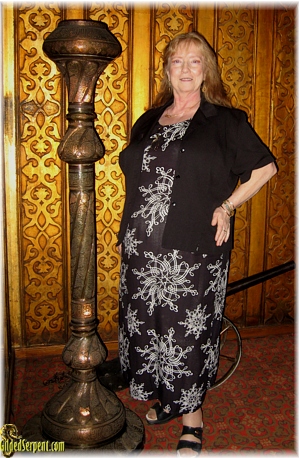
Leyla and the Lamp

by Leyla Lanty
From the Field June 14 – July 1 5, 2011
posted September 18, 2011

On June 14, 2011, I left home for a month long stay in Cairo, Egypt, my home away from home.  The purpose of this trip, one of many I’ve made there, was to attend Ahlan Wa Sahlan 2011 as well as visit with old friends, make new ones and most important of all this year, to see and experience some of the changes taking place after Egypt’s revolution in January.  What follows is a six-part recounting of what I saw, did and felt, based on a diary I kept while I was there.

Feels like home!  Over the last 20-plus years, I’ve been coming here often, and every time I arrive, it feels like home – almost as if I never left.  After being here 6 days, I’m somewhat over the jet lag.  My brain has almost adjusted to the new time zone, 9 hours later than California.  The time difference is usually 10 hours, but this year, Egypt did not change to daylight savings time. 

Like a lot of Egyptians, I stay up a good part of the night and don’t get up until noon, or sometimes even later, in order to avoid the heat.  Those who can, go to bed between 6 and 8 a.m. and get up in the late afternoon.

I’m going to have to mend my ways by Monday when Ahlan Wa Sahlan begins. Even if I only take afternoon classes, they start at 1 and 4 p.m.  I’m not too far from the Mena House Oberoi Hotel, where the festival takes place, but it takes about an hour to get there, chat with people, get into the classroom (after showing my ticket), change shoes, and get ready to learn.  No more sleeping in if I sign up for a 1 p.m. class, or (Heaven forbid!) something earlier.  Watch for more about Ahlan Wa Sahlan 2011 in a later report.

I have moved into the flat I rented in both 2009 and 2010.  It’s a clean, somewhat larger than I really need, well-furnished place with more than adequate air conditioning in all rooms.  Writing this, I’m in the living room with the balcony door open and the a/c off.  It’s 1:30 pm, bright and sunny and probably in the high 80s Fahrenheit.  Inside, it feels like the high 70s.  I have dish TV so I can watch the BBC news and another channel that carries world news.  There are lots of movie and music channels so I don’t lack for entertainment at home.  In the first photo is the reception/dining area.  The second photo shows the living room where I wrote this blog.
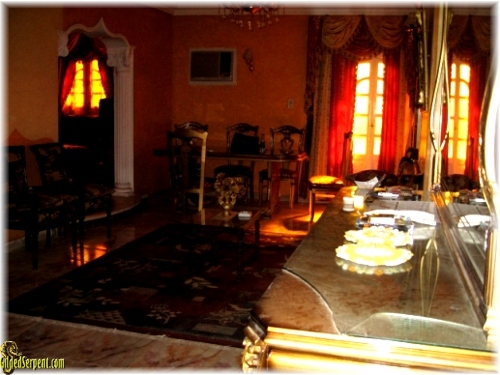
Dining Entry

Living Area

On my 2nd day here, I went with my friend, Ahmed, who always helps me when I’m here, and his family to the Dandy Mall on the outskirts of Cairo along the Desert Road that goes to Alexandria.  It’s a large indoor shopping mall where the anchor store is Carrefour, a large place that is very much like a super Wal-mart crossed with Costco.  We stocked up on supplies for the next month for all of us.  It was exhausting but necessary!  In the photo, Karim unloading the shopping carts at Carrefour.

Store

A few words about conditions here after the January 25 revolution:

In most ways, Cairo is the same old Cairo – noisy and crazy traffic, friendly and warm people.  However there’s something new in the air.  It’s the freedom to talk openly about government, social and economic conditions and just about anything anyone wants to talk about.  Everyone has told me about this, and I can feel it in the air.  People are having a really rough time economically, but when they talk about sociopolitical issues, their smiles are radiant (with their newly found freedom to say what they think).  There are many signs that Egypt is coming back and that it will be better than ever.

Public safety has been a concern for foreigners, most of whom canceled their trips to Egypt since the revolution in late January, early February.  Things have definitely changed since the early days.  The police force is back but has been reorganized.  Their commission is to maintain public safety, not to be the political police that they were, and they are no longer authorized to shake down citizens on suspicion of being dissidents, looking for bribes like they used to do.  Many new people are being trained as police.  They have a visible presence in every place that’s popular with tourists that I’ve visited so far.

Probably, you have been hearing about continuing demonstrations in Tahrir Square, the main square in downtown Cairo.  There are sometimes political protests as well as striking workers demanding better working conditions and pay. 

In the evenings when there are no strikes or protests, families and groups of friends come out and enjoy the grassy areas and the snacks and drinks offered by street vendors who gather there.  No one has ever seen the square being used in any of these ways over the last 30-some years.  Everyone has remarked about this and is happy about it.

The biggest concern I’ve heard is that the Egyptian people, most of whom have never experienced such freedom, have to sort out where freedom ends and responsibility to others begins.  It will take some time, but I’m sure they will do it.

One day while Ahmed’s son, Karim, was driving me somewhere, we traveled along Pyramid Street (Al Haram Street) where many night clubs are located.  He told me about watching a hotel and “all” the night clubs on Haram St. being looted and burned after the revolution.  He said it was the criminals that had somehow broken out of jail who did it.  He said that, to him, it was the worst day in Egypt’s history – Egyptians looting and burning, fueled by greed and extremism.  Two nightclubs are now back in operation, El Leil and El Andelus.  One or two others show the beginning signs of reconstruction.

My perception is that travel to and inside of Egypt is now safe.  All the tourist destinations are open, operating and anticipating the return of tourism to the country.  The tourists are beginning to trickle in, but Egypt needs more – the economy depends heavily on them!

While talking with a young Egyptian woman about the revolution and coming changes in Egypt, I said it would be a “bumpy ride.”  She didn’t know what “bumpy” meant so I explained it would be like riding in a hantour (horse carriage) and she laughed, gave me a high five and said, “Yes!”

Hall kitties

Reconnecting:

On my first night out, I enjoyed an evening at my favorite coffee house with live music, seeing and greeting all the familiar regulars and, of course, the band and the singers.  In the course of the evening, the owner invited me to do a “performance” to “Inta Omri”.  Wow, what an experience,– like something out of an old black and white Egyptian movie in which a dancer performs to an enthusiastic coffee house crowd.  The music of the band:  keyboard, oud (ancestor to the lute), riq (tambourine), dohola (bass drum) and tabla (goblet-shaped drum) along with the beautiful voice of the female singer were inspirational!

Next day, I had lunch with Raqia Hassan, director of the Ahlan Wa Sahlan Festival (at which I taught 2006-2009) and had a far-ranging talk with her.  She’s looking forward to the festival, beginning on the 27th, and so am I.  It will be smaller this year because of uncertainties following the revolution and the world wide economy, but I’m sure it will be great!

Another little tale is of “my” hall kitty; she’s a feral who had kittens outside my door last year, to whom I fed table scraps.  She seemed to remember me the first time she saw me.  She was the only one of the feral cats who make this building their home who didn’t bolt when I took a step or two toward them.  I got some cheap luncheon meat, sort of like bologna, to feed to her.  Last night when I got off the elevator, I went and looked down the stairwell and saw her.  I called to her and she came running up the stairs!  I went inside and got a slice of bologna, ripped it into little pieces and took it out to her.  She meowed to have it and gobbled it down.  I guess I have a little friend.  A few days after this, I saw that she has 2 kittens about 2 months old so I’m now feeding all of them, including two other adults, one of which has loudest voice I’ve ever heard on a cat.  In the photo, center cat is “my” kitty, left one of the kittens, right the loud kitty.

Coming up: Housekeeping, Costume Shopping and some changes observed over many years.

use the comment box

Have a comment? Use or comment section at the bottom of this page or Send us a letter!
Check the "Letters to the Editor" for other possible viewpoints!

Ready for more?


Gilded Serpent presents...

3 South African Dance Pioneers

Reaching Out to the "New Woman" of Their Country

Collage

by Charlotte, Jaie Piers and Shalimar
posted September 15, 2011

Editor’s Note: While on my recent tour in England, Spain, and Morocco, (June 3011) I had the pleasure of meeting and interviewing Charlotte while she was also in Morocco at Simona’s Mediterranean Delight Festival in Marrakech. Her generosity in helping Gilded Serpent give readers an overview of the development of Belly dance in South Africa has revealed a new part of the world to all of the Belly dance community. Each of these following three "Belly dance pioneers" offers her own unique outreach to modern day women of South Africa who are searching for a sense of who they are and who they might become through the vehicle of Belly dancing. Each instructor speaks of grounding her own dance students with an underlying philosophy for living and an ever increasing availability of dance education and performances in this evolving country.

Jaie of South Africa

South Africa’s Belly Dance: Authentic Essence? 
by Jaie Piers

South Africa is a multi-cultural melting pot and Belly dancing is fairly new on the scene here, so its roots do not go very deep even though we have seen some well-known Belly dancers who have come here to do workshops (just as have some South African ladies gone abroad to participate in various workshops). One dancer comes to mind immediately: Hadia! Also, Mahmoud Reda stands out for me now.  There have been many wonderful dancers, such as Tamalyn Dallal, Rania, Danisa (recently), Alia (Miss Switzerland Belly dance), and Yasmina of Cairo, plus many more.
 
South Africa is beginning to attract some global attention. Women are fusing Belly dance with other styles of dance, such as Indian dance, Bollywood, Hip Hop, Modern, and Jazz. Many students are jumping onto the bandwagon with Belly dance studios mushrooming up overnight! I, too, started my own studio just over ten years ago. Originally it was mostly "fusion" style, and then I experimented and delved into Tribal and Gothic. I have realized the absolute thrill of discovering that the richness of Middle Eastern music in its complexity gives one total freedom to interpret the soul and emotional body of the feminine. After realizing this, I parted ways with the confusion of mastering the art of Belly dance.

Much speculation has been paid to what is authentic in Belly dance. However, all too often a fusion of its more sexual and Western counterpart is blended together and is presented as authentic Belly dancing to uneducated audiences. By no means do I intend to criticize any style of dance. However, over a ten year period I have struggled to discover the essence of this dance, and I believe I now have it safely under my coin belt…

To dance in the authenticity of this dance takes more than a certificate to say that one can;  it’s more a combination of knowing the complexities of Middle Eastern music, and how to express oneself through the dance appropriately to its different nuances.

Plus, to be  fully appreciated as a Belly dancer, one needs an audience that is familiar with Middle Eastern cultural forms. From the stand point of the dancer, one needs to be fully accomplished inside and out, and not dance with a Western attitude, which is prevalent in this country at the present time.

One should dance with the fullness of knowing her role in life, honoring that knowledge in its purity, and following the ideal of Middle Eastern feminine essence rather than dancing from a competitive space.

This attitude is what is perceived in Middle Eastern countries as true Belly dance by women and men both.
 
As dancers, if we sell out our feminine souls, and trade business for friendships and relationships that are not based on respect, then sadly those women who do sell out will have to deal with what they have created. I stand in opposition to this current wave of behavior which is being passed off as acceptable here in South Africa.

The matriarchs of our society got here by a process which deserves respect! What legacy do we leave behind when we honor only the masculine way of doing things in a woman’s world?

Map of South AfricaI realize that my views are not popular, because generally women feel invalidated and this is, I believe, the underlying reason for displaying poor behavior that is contrary to the feminine spirit. Some dancers are creating a distorted image of Belly dance and its place in society. One’s values and ethics involving one’s self and others dictate the beauty of this dance which is performed from within and pours out from a deep space of truth. We women of South Africa are on this journey because, sooner or later, one realizes that whatever she does in life is a path to self knowledge and truth.

One thing I know for certain is that finding one’s path is difficult, and the search for it has nothing to do with popularity. Once you give up your ego-driven quest and dance only for the purpose of passing on what you have discovered, all these egotistical elements cease to be important. I dance for this reason and can’t expect everyone to understand me (or even agree with me).
 
My most important assertions are that every Belly dance teacher should be honest about what she/he teaches and why they are teaching it at all.  Respect for teachers by their teaching students must be maintained, and they must acknowledge the input of each one. I would hope that they teach only for the sake of manifesting the sense of the Divine that sustains us all! I hesitate, for various reasons, to be specific about all the situations I have overcome as a dancer in Cape Town, and I’m relatively sure that along the way I have been misinterpreted, misunderstood, and misrepresented from time to time.
 
For one, I search for my Goddess-essence within a home-based studio that I maintain as a haven for all women to dance in freedom of their own expression and who wish to learn the authentic art of Middle Eastern dancing. If we all try to reach the finish line first, we stumble over each other, rather than looking around and helping others along the way. When we work together, we can all have a party and finish together, not alone. Too often, I have reached out and shared my opportunities with my colleagues, only to be excluded from their activities in favor of women racing ahead of themselves. I used to wonder why, but now I think I understand.

Lately, there has been a move towards competition in Belly dance. I believe this is mainly due to following  trends that set high standards in technique while omitting any focus on the emotional and healing aspect of the dance. This perhaps forces women more into masculine traits, which I find detrimental to feminine psyche in that it robs us of our feminine power.  It takes real strength to be soft.  

I have always believed it is valid to honor my own way of dancing and teaching, and refuse to participate in the world as if it were only a man’s world because I have found my place as a feminine spirit. I feel secure that, in this way, I now know everything from deep within myself. Also, I believe that I have found my own unique expression and am not a carbon copy of someone else.

The quality of individuality is the authentic essence of Belly dance.

At least, I believe it is so.  


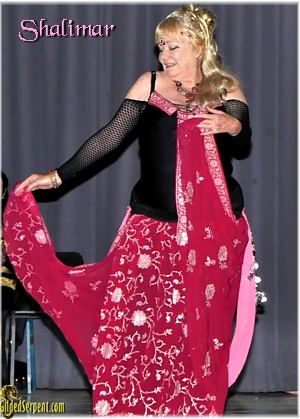
Shalimar of South AfricaShalimar of South Africa

In 1976, I was pregnant with my third child when I found a book called “Get Slim With Belly Dancing”. It had 4 moves: pelvic circles, hip thrusts, shimmies, and shoulder thrusts. At the time, I was teaching a class in my lounge called “Keep Fit to Music” for 5 ladies. I worked out the moves described in the book I had found and then went looking for some music. The only music I discovered was the vinyl recording called “Caravans”. When I played the music and tried out the moves, I felt that more moves seemed to come from my soul; the lovely music just pulled it out of my heart!

At this stage, my “Keep Fit“ pupils wanted to learn Belly dancing, as well. I had never seen Belly dancing because it was not performed in public in South Africa. The Turks and Lebanese were not allowed to live in South Africa at that time, and I had not seen any Belly dance on film. So apart from the picture of a dancer in costume and the moves given in the book, I had no idea what I was doing. I knew only that it felt great!

When my pupils started to nag, I went to Mr. Wally Green who was Head Choreographer for SABC Television at the time.  I danced for him, and asked him what he thought I was doing. He said it looked like Belly dancing to him. Then, I felt at ease teaching my pupils.

Word spread quickly, and soon we were dancing at birthday parties! The newspapers got hold of the excitement, and I was given a 3-page article in the “Sunday Times Magazine” that was sent to Swaziland. A Turkish family who saw it contacted me and asked if I would perform for them in Swaziland. I agreed, and they sent me a video of the top Turkish Belly dancer of that time, and for the first time, I saw Belly dancing that I had not taught. (However, I was surprised to find that my dancing was similar.) So off I went to Swaziland, and my dance was much appreciated by the Turks and Lebanese of that country.

I had been teaching for five years before I received the dance that I was doing was something that the people of its origin loved. About seven years later, my pupil (who was an air hostess and flew internationally) gave a video recording of one of my extravaganzas to Bellisa who taught in Perth, and through that, I was invited to attend a “World Congress of Belly Dance Teachers” to be held in Perth. I was very blessed as everything was prepaid, and I had the opportunity of attending a workshop given by Ibraham “Bobby” Farrah who was a renowned teacher from New York. That was the very first lesson I had ever taken!

I had founded the Belly Dancing Association of South Africa about a year prior to my Perth trip but never really ran it as an association–until one of my pupils said she would like to do some form of exam to see how she was improving. Then, I put together an examination syllabus and found that many people wanted exams. At this point, I realized that I was not good at administration, and with relief, let some board members take over the duty. Our Belly dancing association started to become the strong networking association that it is today, with an exam syllabus that is respected and adjudicated throughout South Africa as well as internationally.

I now teach what I call “Belly Fusion” taking on the style of dance created by whatever music I am using at the time–may it be pop, Shakira’s music, Turkish, Arabic, or Egyptian.  Just allowing the music to be my guide, I also teach a “Tribal Fusion Belly Dance” that is very popular and brought my eldest granddaughter high praise as a “Tribal Soloist” at the Miss Belly Dance South Africa 2010 contest. She and her partner received fabulous “First Duet” results. At the age of 66, I am as inspired by Belly dance as I have always been and teach my 14 classes a week that also include 3 classes of “Shumba” (a high-energy, low-impact dance aerobics) that also give me so much pleasure!

Charlotte of South AfricaA Dance Journey: Prominent Milestones
by Charlotte D. Blignaut

The first time I attended a class was in 1989, with Shalimar in Randburg, South Africa.  I was bowled over!  As a very shy woman, I had found at last  a form of exercise that made me feel comfortable and secure!  The style of Belly dance presented there seemed to be more Turkish in origin.  Shalimar taught loads of floor work and back bends, all requiring high energy!  I loved it!  After a very short  time, the instructor invited me to join her Advanced Professional Group.  I remember that wonderful evening as if it were yesterday! The class made a huge, life-changing contribution to my dance, and it changed my life as well!

When an Egyptian travel agency invited me to travel to Egypt in 1994 to experience the Egyptian style of art, I thought I was in heaven for two reasons:

  1. a trip to Egypt for free, 
  2. and the request to dance for their Middle Eastern clients (when they had events). 

I was so flattered and humbled at the thought that I was professional enough to receive these opportunities!  I brought back to the studio new educational information about the style of dance, especially folk-dance, and it was wonderful!

After a few years of dancing at The Tent in Rivonia, (my fantastic training ground for providing a cabaret show plus separate interactive participation), the word spread, and this opened many doors with other Mediterranean restaurants and Middle Eastern venues.  After I helped organize the opening of Sheikhs Palace there, they requested Carmen and me to be the regular dancers at the venue. We were busy!  (I can recommend never performing after 10 p.m. in the western world, however.) Sometimes, we danced five shows a day; the most I have ever done was eleven shows in five days!  The reason I mention this is that different venues have a different clientele, and we found that they each liked a different kind of music.  My dance style evolved out of this milieu and developed into my signature style–one that combined the stunning individuality, presence, and isolation movements that are typical of Egyptian dance, combined with the inspirational high energy of the Turkish dance style.  My high-energy dance became renown among my fellow dancers, and I began teaching private lessons in 1996 as a result.  Increased demand led to the 1997 opening of the studio number one of Jewels of the Nile.  We progressed from strength to strength.  I created a syllabus that evolves all of the time, and eventually, franchised the publicly-acknowledged business.

The more I researched the art form of Belly dancing over the years, the more I saw how much there was, and still is, to learn!   In the light of my growing dance independence, I made a commitment to myself to gather as much knowledge as possible about the various styles and cultures that influence the art.  I have travelled to Egypt five times, once each to Lebanon, Turkey, and Brazil, and twice to Morocco.  I have attended workshops in all of these countries, with fantastic, renowned teachers.  I have met many students, as well as professional dancers and teachers from all over the world!  I am in awe of the dance stars of the Middle East!  I love what they share of themselves when they perform; it is not tangible, but it is uniquely superb!  I adore that they are known by name; most of them use their own names, rather than stage names. Their own!  I love it when a woman stands up, stands out, and owns who she is as a unique individual through the dance.  This is why and what I teach women to do. 

Be the representative of your truth. Be an individual–own it, and dance it–no matter who you are, and no matter what your truth is–just be unique, authentic, and let your inner beauty shine though.

Also, I have  worked with groups of women who have been abused, using Belly dance as our medium.  It can be a powerful tool for empowering and healing when used with trained knowledge. This is where my interest peaked and prompted me to pursue furthering my education in the professional coaching field.  Truly, Belly dance is a healing art form, which is the reason why it is not only limited to a public dance form, it is also useful for private and personal women’s growth.

While it is true that I have experiences some times when I have wanted to stop teaching, it seems that clients and media in South Africa won’t let me.  Every year that I arrive at that point, I have been approached for articles in newspapers, magazines, e-zines , or television and radio interviews.  I have been fortunate enough to have danced at  international and local Belly dance events (some for corporate clients).  Once I even danced for an Arab prince in Seychelles on a floating raft. What fun it was! I was fortunate enough to attend the first teacher and performer certification seminar in Egypt. That was an honour for me!

I believe that by being a Belly dancer I have been blessed with a gift. I enjoy being able to train, teach, and share with willing students and professionals, what it takes to have staying-power and courage (to follow your dreams, make your path, leave your stamp on the world) and wake up feeling authentically glorious! As a Belly dancer, whether student or professional,  you have afforded yourself the best and most varied education in the art of dance, so that you know that what you express is your own heartfelt expression of your soul.  

One can never know what tomorrow will bring and never suspect what opportunities lie in adversity, until it is experienced. Belly dance helped me through so much adversity in my life! Eternally, I will be  grateful for the dance that is constantly renewing my inner drive and passion.

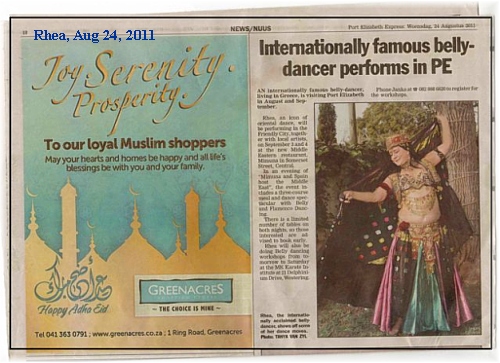
Rhea in South Africa
August 24, 2011 Newspaper clipping showing Rhea performing in South Africa

Resources and contacts
Organizations

use the comment box

Have a comment? Use or comment section at the bottom of this page or Send us a letter!
Check the "Letters to the Editor" for other possible viewpoints!

Ready for more?


Gilded Serpent presents...

Becoming the Object of Your Own Fantasy, Part 3

Diane Webber and the "Perfumes of Araby" in the 1970s

photo

by Stasha Vlasuk
posted September 15, 2011
Part 1: posted here
Part 2: posted here

From Part One: This article will focus on the iconic 1970s “Perfumes of Araby” belly dance troupe, lead by the almost mythical performer/actress/teacher Diane Webber, my teacher.  I was there!  Through a selection of our performances in that era we’ll explore dance and costuming as becoming the object of your own fantasy.  The article also touches on paradoxes of our art form: the performance setting creating a artificial boundary within which we feel free to have intimate exposure (and how costuming facilitates that), and the seeming female accommodation of male sexism actually a proclamation of autonomy and a pathway to power. 

By 1975 Diane designed a bold new costume element inspired in part by Jerome’s “Woman of Cairo at Her Door”: an “under the bust” vest with a sheer blouse.  Because our outdoor festivals were so hot, most of us opted to create sleeveless versions.  Some of us varied the “peek-a-boo” factor by doubling the fabric or building the blouse on a sheer fabric bra. 

In an almost archetypal will to power, Diane encouraged us to utilize our costuming – and our dance – as a way to search out and expand our own unique spirit, fantasy and physique, something I try to continue with my students today: become the object of your own fantasy.

How were we as a group bold enough to appear in public in these spicy outfits?  We achieved this confidence through combinations of sociological perspective that are most probably endemic in your performing troupe as well.  We brought all these factors to our shows.

We had dress rehearsals in full hair, make-up and costume accompanied by our orchestra.  The benefit is two-fold here.  We nail down our presentation, of course.  More importantly we create a world of understanding and functionality: each performer has a function, like parts of the body; all there for a reason, even the small roles.  We’re entertaining because each performer knows their role and performs it; in performance these patterns of group behavior broaden the audience’s understanding. 

photo
1976 Full dress rehearsal with musicians; that’s happy Lou Shelby (Roxanne‘s dad!) on violin behind us,

L to R: Jann Goldsby, Stasha Vlasuk, Donna Bella

This basis of understanding allows the performers to go a step further and present conflict and resolution: always fascinating to the observing audience.  For example, consider how some elements of a typical Perfumes of Araby performance toy with the notion of power and status from a feminist perspective, the essentials of gender, and subsequently sexuality: let’s look at a photo of the Calaveras Pumpkin Festival performance of 1977.  The censor is danced around the parameter of the stage to set the mood, the slave girls fan the smoke into the audience with giant peacock feather fans.  Note famed drummer Louie Sayeg on the right, concerned-faced Guy Chookoorian on the left.  That’s our "slave boy" seated in chains, lost in the music (sorry, I can’t remember this student’s name – James?).  Dianne thought it was hilarious to dress him in chains.  Jan, our "shimmy on glasses" dancer, would do her routine, then lead him by the chain and make him climb up on the glasses and dance.  A playful reversal of male chauvinism? or a proclamation of autonomy?  Whatever – the audience loved it!  

Pumpkinn fest with Yoli
1977 Pumpkin Festival censor dance,
L to R: Guy Chookoorian, Yolanda Leaird, Stasha, Louie Sayeg, James our "slave boy"

Whether we were on a proscenium stage or in the middle of a plaza, we created and defined our space with a large oriental carpet.  Each dancer brought her own large pillow of opulent fabric, perfect for lounging around the perimeter of the carpet, playing finger cymbals and ululating  for the performers.  In her book “Sisters of Salome”, about the Salome dancers of the early 1900s, author Toni Bentley refers to the freeing paradox due to this simple fact: division of the show from the audience: 

“The performance setting provides the artificial boundaries, the protection, needed to overcome the fear that accompanies vulnerability.  Paradoxically, the separation frees them for the intimate exposure they yearn for.  Because they retain control over the entire event, they can abandon control within it and thereby satisfy their own erotic desires.  For them, as for most performers, it is often far easier, and safer, to expose oneself, physically or emotionally, to a crowd than to one human being.  Numerous eyes and ears blend to form an impersonal safety net”

Or, as Balanchine (the great NY based ballet impresario) once remarked: “You can see Paradise – but you can’t get in”.

photo
Cal Tech 1978 Stasha and the censor dance
photo
L to R: Yolanda Leaird , Marilyn Manzi, Shira Jane Padgett, Anaheed Mary Ann Cappa
photo
Cal Tech 1978 L to R:  Denise Russo, Jann Goldsby, Stasha Vlasuk,  ( Diane Webber, behind), Margaret Turner.  
Notice we all had finger cymbal pouches to keep our zills handy.
photophoto
left photo: Cal Tech 1978  Jann Goldsby, Shimmy on Glasses, right photo: Cal Tech 1978  Yolanda Leaird, Jann Goldsby, Khadija Cynthia Beck
photophoto
Diane!   Cal Tech 1978
photophoto
Diane!   Cal Tech 1978

Diane Webber’s last solo with the Perfumes of Araby was at the 1978 Cal Tech performance where she wore a sexy assuit costume that is every modern day Tribal Girl’s dream.  It probably encouraged some dreaming among those brainy engineering students as well!  After this, during our performances she played dumbec in the back with the musicians, sitting with our slave girls and wearing a spectacular kaftan and elaborate head dress.  With great honor, the solo cabaret spot came to me, and I performed this solo through the end of the 1979 season including Cal Tech and the Pumpkin Festival (alas, its last year).

photo
1979 Cal Tech , Check out the audience: Love that 70s fashion!  
photophoto
1979 Cal Tech- Jann Goldsby on left and Shira Jane Padgett on right.
photophoto
1979 Cal Tech, Left photo: Jenny,   Right photo: Stasha cabaret solo
photophoto
left photo: Cal Tech  Stasha Cabaret drum solo (Note Diane behind slave girls in kaftan and elaborate head dress) , right photo: 1979 Cal Tech Stasha, Cabaret solo
photo
1979 Pumpkin Festival, waiting to go on, L to R: Marilyn Manzi, (Shira Jane, peeking!), Denise Russo, Stasha Vlasuk,  Mahahra Bobbie Shiavo.
photo
1979 Pumpkin Festival opening grand procession, Marilyn Manzi
photo
1979 Pumpkin Festival opening grand procession,

L to R: Marilyn Manzi, Denise Russo, Shira Jane Padgett, Anaheed Mary Ann Cappa.  
Notice that we all had kaftans to cover our costumes as we arrived
photo
1979 Pumpkin Festival opening grand procession, Marilyn, Anaheed, Violinist Maurice, ? 
photo
1979 Pumpkin Festival: we wore kaftans, lounged on opulent fabric pillows, played finger cymbals and ululated for the performers.
L to R: Jenny, Mahara, Jann
photo
1979 Pumpkin Festival L to R: Lois, Denise Russo, Shira Jane Padgett
Anaheed
1979 Pumpkin Festival Sword Dance: Anaheed Mary Ann Cappa
photo
1979 Pumpkin Festival Candle Dance L to R: drummer Samir, Diane, Shira Jane, Denise, Mahara
photo
1979 Pumpkin Festival snake dancer Nikki Engel, violinist Maurice and oudist Ali
photo
1979 Pumpkin Festival snake dancer Nikki Engel
photo
1979 Pumpkin Festival veil dance L to RL Lois, Shira Jane, ?, Jenny
photo
1979 Pumpkin Festival  Stasha cabaret solo


photoStasha in the Insights GuideBy the end of 1979, Diane Webber scaled back her group activities.  Our fabulous sword dancer Anaheed Mary Ann Cappa became the Managing Director of the Perfumes of Araby Dance Company: a vibrant, encouraging and sustaining force in the Los Angeles belly dance world of today – and tomorrow.  While Diane continued a teaching and writing schedule, before her untimely passing in 2008 she also maintained the law library of a Santa Monica law firm, returned to college to study animal husbandry then owned several prize winning show horses.

Also in 1979 I moved my base of operations to the San Francisco Bay Area and continued to dance, teach, research and enjoy our art world wide.  One surprise glimpse of the 1970s Perfumes of Araby happened while I was in London performing at the Turkish restaurant Gallipoli in 1988.  One day when I was browsing in a book store, “Insights Guide: California” caught my proud native Californian eye.  A travel book full of colorful photos enticed the visitor from foggy London to the Golden State.  As I flipped through the book imagine my surprise at finding a full page photo of myself!  Obviously unaware of the photo being taken, I’m seated playing finger cymbals in my Turkish court costume – I’m an official Tourist Attraction!

From the 1970 performances to today, in group presentations or as solo artists, Diane Webber’s dancers continuously offer her philosophy of connecting to a spiritual understanding: driven to be in the moment and not think about the future, living life to the fullest in that moment, in our own way; aspiring for a visceral spiritual connection with the sharing of our dance. We are the objects of our own fantasy.

 
 Interesting links
Costume inspirations
Orientalist books to read online:
Author’s Photo Credits:
Most of the pix come from my personal archive; I supply the links for the web sites of other photos in the "interesting links" section.    I encourage you to visit these sites as they contain further (and interesting) information plus exciting video montages for which there’s simply not enough space in this GS article!  
 

use the comment box

Have a comment? Use or comment section at the bottom of this page or Send us a letter!
Check the "Letters to the Editor" for other possible viewpoints!

Ready for more?


Gilded Serpent presents...

An Innovative and New Series in New York City

Photos from "Atelier Orientale"

Poster for event

Introduction by curator Anahid Sofian and photos by Lina Jang
posted September 14, 2011

I am very excited to present the new "Atelier Orientale" series at my studio.  I have a wonderful space that sits unused for a great deal of the time, and there are many fellow dancers and choreographers who are as frustrated as I am for not having decent performing spaces in which to work.  In addition, with the highly competitive dance scene in New York, very few opportunities are offered to Middle Eastern dancers by presenters. 

With the Atelier, I hope to help fill this void. Artists are encouraged to present new works, whether traditional, contemporary or experimental, and can present solos or bring up to three troupe members with them. And our audiences will be exposed to professional-level, high quality work.  

I kicked off the series by sending a letter of invitation to a number of my fellow dancers, who all responded with support and enthusiasm.  The "inaugural" Atelier on June 19th included those dancers whose schedule was available. I already have a number of artists lined up for the next Atelier, tentatively scheduled for November 6th, 2011.  In the future, the invitation will also be open to "new faces," who can submit proposals and samples of their work.   

We had a capacity and very enthusiastic audience at the June 19 event.   My deepest thanks to the dancers who presented exciting and varied works.  Some were finished, some were works in progress being tried for the first time, some were charting new waters.  We had dances that included Arab and Andalusian fusion music (Aszmara) Middle Eastern jazz (Azza Amon), contemporary Khaleeji (Nadia Maria Michaels), traditional Arabic ney taxsim (Jean Musacchio), original Modern Persian composition (Anahid Sofian), a dramatic Oriental Dance routine (Sira Melikian) and Manhattan Tribal’s unorthodox use of a Turkish 9/8 rhythm for the first time.  I also showed a music video I had participated in in 1983, "Trail of the Sphinx,"  which was a bit of a trail blazer at the time. I plan to include rare videos and film whenever possible, and will also include musicians when funds allow.

The Atelier is a project of The Field, a non-profit organization that serves the arts community in New York.  If anyone would like to make a donation, it can be done on their website.  Just find my name in their Sponsored Artists list and follow instructions.

Nadia

Nadia Maria Michaels in: Warini,
music by Guitara


Aszmara in: Las Cuevas,
music: Fain S. Duenas– traditional Arab-Andalusian

Manhattan Tribal

Manhattan Tribal
with Mimi Fontana (director), Heather Bondra, Debbie Lakis and Stephanie Rubino-Ginsburg
in: Nihavent, music by Guitara

They also performed the ATS Meets Turkish 9/8 Project ,
music: "Panceresi Yola Karso" by Turku

Jean

Jean Musacchio in: Spirit at the Well,
music: traditional Arabic ney taxsim, source unknown

Azza

Azza Amon in: Silk Tears,
music by Simon Shaheen

Anahid Sofian in: One Who Plants a Tree,
music by Jamshied Sharifi

Anahid Sofian in her cobra character

Anahid Sofian as her cobra character in the music video, "Trail of the Sphinx," produced and directed by Mike Mannetta in 1983, with music by the fusion group, Port Said.  This was produced at a time when music videos were first hitting the scene, and this was one of the first using a Middle Eastern theme.  Anahid showed it at the Atelier event.

Azza Amon and Dancers in: Aicha, with her troupe, Kaitlin Hines, Nabila and Tammy Wise,
music Cheb Khaled choreographed by Azza

Sira Melikian in: Tarab: A Journey into Musical Ecstasy and Trance,
music: “Battle of Kadesh” by Zachary Mechlem, Nay taxsim excerpt by Samir Seblini, “Ayoub” by Hossam Ramzy


Final Company Bows

" Meet the Artists" reception after the performance.
Souren Baronian dances with Sira and other guests

use the comment box

Have a comment? Use or comment section at the bottom of this page or Send us a letter!
Check the "Letters to the Editor" for other possible viewpoints!

Ready for more?

  • What is a Set List?
    Finding what makes everyone happy is a little like having a dinner party with a person on a diet, a vegan, and meat & potato type guy. It takes planning, discussion and knowledge to put together a good show.
  • Professional Presence, Stories and Advice from 30 Years Under the Hip Belt and Counting…
    The audiences’ first glimpse of you is as you arrive and how they see you affects their opinion of your show. First impressions count!
  • "Objects of Desire, Photos from Venus Uprisings April Performance
    The 7th fantasy bellydance concert produced by the New York City artistic salon Venus Uprising took place at the Merce Cunningham Studio on April 15th and 16th, 2011. Invited dancers were asked to create new works based upon the theme "Objects of Desire". The performers responded with an interesting array of interpretations, ranging from the literal to the highly abstract.
  • Fusing Jazz with Middle Eastern, Souren’s "Taksim, It’s About Time" and Vince’s "Beginnings"
    However, in all reality, now in this world when we fuse a Belly dance with everything as well as the kitchen sink (pots, spoons, mop handles, bowls, vases, trays) why not consider seriously performing to one or both of these Jazz fusion CDs played by some of the most respected Middle Eastern musicians in the field? If dancers perform already with fusion music, why not use music that is specifically fusion?
  • Dancer’s After-Life, Have You Prepared?
    It would have been a true tragedy to lose these items that are rich in dance history and were priceless to Marliza.
  • Gig Bag Check #31 with Alina, Mher’s Daughter
    Maria and Mher of Hollywood Music show us whats in Alina’s gig bag or diaper bag. Gig bag checks are a regular feature on GildedSerpent.com
  • Video Interview with Hakima of Morocco
    GS met Hakima at Simona’s Mediterranean Delight Festival held in Marrakech in June 2011. 
    Hakima is a native Moroccan dancer. She was teaching workshops an performing. She had a friend help us with translating. 
    Hakima now lives near Barcelona in Spain. She can also be found and contact on Facebook Check out her hair braiding during the drum solo!
  • Roma Tribal Forum, More of Helm’s Musical Adventures
    The growing interest for both styles of Tribal Dance inspired them to hold a Tribal Meeting in this ancient city.

  • These songs are still the ones played and requested today. Arabic classics are here to stay!

  • An intro and premise of a video of Karim’s lecture as presented to The Arab American National Museum "Diwan" Conference in Deerborn Michigan in March 2009.
  • Debunking the "Golden Era" of Bellydance, Part 2, Finding Your Gigs
    Nevertheless, you don’t have to wait for someone else to hire you; you can hire yourself!

  • If you want to call what you do Tribal or Tribal Fusion, or anything Tribal, you should study ATS (American Tribal Style Belly Dance) and know what true Tribal is before you fuse it with something else.
  • Debunking the "Golden Era" of Bellydance, Part 1
    Just like today, dancers had to create the place, the time, and the excuse to show or “sell” our newly-found artistry or resign ourselves to dance in parks and on street-corners or in syncopated troupe dances forever. So much for creativity and self-expression…
 

Gilded Serpent presents...

Dancer’s After-Life

Have You Prepared?

Marlliza

by Nefertiti
posted September 14, 2011

Dance divas, have you ever thought about what would happen by default to your expensive and wonderful costumes and props once you go to “the after-life?” Have you kept track of your hip scarves, props, and skirts? Do you have a “diva in waiting” who could step up and take care of your treasured items? If you have not, now is the time to setup a record keeping system for your costumes and designate someone to manage or delegate your collection.

Here is a good example of what can happen when you don’t make plans for your possessions when you join the after life:

One of the grand dames of Belly dancing, Marliza Pons, passed away here in Las Vegas on May 2, 2011. She had been in the dance business for over 40 years. As you might image, she had millions of items stored from her career as a dancer and teacher! I remember once visiting her at her storage unit, and I can tell she had at least 5 rooms of costumes, fringes, swords, hats, masks, skirts, pictures, and you name it. You could tell that some of the items had never been used! There were boxes and boxes of things; it was like a Christmas vault for a Belly dancer! Marliza did not leave a will, and her family had no idea of what she had, where any of it was or what to do with it.

When she passed away, her son had no clue concerning what to do with her belongings. He didn’t know what she had or what the items were worth monetarily or historically. His solution was just to throw everything out! Can you image how much of her precious history would have been lost? I don’t know if it was due to fate or fortune, but a dear friend of Marliza’s,  Rossah, stepped in and saved her legacy from the dumpsters…

Table 2When I spoke with Rossah, she said it was a enormous task to organizing everything since Marliza had not done it for herself and no one in her family knew anything about her collection. Rossah said she spent a great deal of time going through 40 years of Belly dancing items. She said that she came home after work for weeks and would stay up until 11 p.m. every night, sorting through all of it. She said there was enough there to warrant opening a small store! Rossah is had an estate sale on Marliza’s behalf, July 30, 2011.  The proceeds of the sale will go to pay for Marliza’s memorial. 

It would have been a true tragedy to lose these items that are rich in dance history and were priceless to Marliza. 

Do you really want your Uncle Earl to use your scimitar as a fishing pole or Aunt Martha using you hip scarves as table cloths?  As in my case, one of my snakes might become somebody’s belt! You really need to think and plan what you want to do with those costumes for which you worked hard. You don’t want someone to come along and think it is just junk and trash it.

The other issue is that it is not fair to have someone sort through your things with no idea what is what. Furthermore, they may not understand the intrinsic value of your things (in addition to their sentimental value to you) and with no guidance or assistance from you, some (if not all) could be lost.Under the table

I have an aunt who has been after me for years to document and organize my costumes, props, and animals.  However, now I have, and let me tell you it is a lot of work and an on-going process each time I buy something new like costumes, scarves, comic books, or a snake. I have a spread-sheet for my snakes, Belly dance costumes, clown costumes, puppets, comics, etc. (You get the idea.) I update my spread-sheets quite often because I seem to be a “shopaholic”.

Painting of Marliza Pons
Painting for sale of Marliza

My main concern is for my animals! I have some that will out-live me, and therefore, I really have had to plan for them. Keep in mind that there are bird sanctuaries and other groups that will help you plan for your pets. Also, I have made sure that my designated representative knows with whom (or not) to re-home them, I had a room mate who commented that he would make a belt out of one of my snakes if something happen to me, so he gets nothing! How many snakes do you know that come along with a trust fund? Well, my Seiti does! He is my pride and joy, so I have to take care of his future.

If you are like me, you have worked hard for your things. I would like to see mine to go to someone who will appreciate them as much as I do. Does anyone want a pair a female clown shoes? There are many programs you can download or purchase to setup a record of your precious treasures.

MarlizaThis brings me to another important point that I noticed have happened with Marliza Pons: there doesn’t seem to be any footage saved of her dancing. As of this date, nothing has been found. The family has no idea if there is any footage or where it would be. What an unfortunate thing to happen to someone who dedicated her life to this Belly dance art.
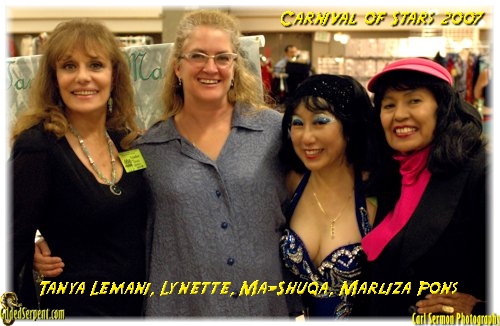
Definitely, I would recommend that you get a video of yourself dancing, if you not have already done so. It doesn’t matter if you are at a show or at home. My wonderful agent had me put up several videos of myself on YouTube, and we have a few practice sessions committed to video as well. He wanted to make certain that there is a record of my performance in existance somewhere. Also, we have made several copies and there are videos on my face book page, as well as my website. Definitely, you will want a record of your fabulous time as a dancer and such records can help with putting things into perspective for those you have left behind.

Tanya Lemani, Lynette Harris, MaShuqa, Marliza Pons

use the comment box

Have a comment? Use or comment section at the bottom of this page or Send us a letter!
Check the "Letters to the Editor" for other possible viewpoints!

Ready for more?


Gilded Serpent presents...

Roma Tribal Forum

More of Helm’s Musical Adventures

Lema Fort

by Ling Shien Bell
posted September 8, 2011

Ling and Mark fly to India!

Twelve years ago, Isabel De Lorenzo moved from Brazil to Rome, where she met Lara Rochetti. In the center of Rome, next to the ancient fortified wall called “Le Mura”, they opened  “San Lo”. This studio and dance school for all ethnic dance styles, presenting also theater and contemporary arts, was a new vision for a country rapidly changing with so many emigrants. Isabel created the first American Tribal Style (ATS) troupe in the area, Carovana Tribale, and invited Geneva Bybee to teach Tribal Fusion. The growing interest for both styles of Tribal Dance inspired them to hold a Tribal Meeting in this ancient city.

Isabel met Mark Bell and I  when we were playing at the Sleeping Lady in Fairfax, California, and invited us to teach at the Roma Tribal meeting she was planning to hold at  San Lo.

Ling Shien teaching Fellahi and Sa'idi
Ling Shien teaching Fellahi and Sa’idi
Mark and Takadum Orchestra
Mark and the Takadum Orchestra

An interesting highlight of this meeting was the Tribal Forum, held on the last day, where dancers gathered in a circle and shared their views on the major dance trends under the umbrella name “Tribal Belly Dance” and what that term meant.

Tribal Forum
Tribal Forum

As we went around the circle, Isabel asked me to recount my involvement with Helm and the traditional Middle Eastern music we’ve been playing for dancers since the ‘80s.

After meeting Mark Bell, I started playing in the Southern Renaissance Faire in Malibu, California, where we were joined by the great oudist, Henri Besançon, to accompany the Soux Ashe’s Montrebi Troupe. In 1987, when we moved north, we performed at the Northern Renaissance Faire in Blackpoint, for Sage Hoban: Gypsy Moor Dancers, which eventually evolved into John Compton’s Hahbi Ru, performing choreographed dances from Jamila Salimpour’s Bal Anat, and the Pita Guli Balkan Dance Troupe. Both these troupes had been performing at the Northern Faire in the ‘70s, with some dancers (Mish Mish and Kathy Bulk) leaving Bal Anat to join Pita Guli… Mark was the main drummer for the Bal Anat Troupe in those days.

The style performed by these troupes was still not labeled as “Tribal” at that time, but more as “Ethnic”, as opposed to “Cabaret”. It featured traditional folkloric acoustic music, and costumes with coins, camel belts and Assiut cloth (from Assiut, Egypt) rather than sequins and high-heeled shoes. It also differed from the Cabaret style in the fact that most of the dances were group dances.

Now there seems to be two main currents within the Tribal Dance trend: American Tribal Style, originated by Carolena Nereccio, and Tribal Fusion, encompassing a wide variety of genres.  Tribal Fusion usually includes some of the original ATS moves and either original moves or moves borrowed from other dance forms. One major difference between the two, though, seems to be that ATS, with its specific dance vocabulary and overall look in the costume, is based on group improvisation. Tribal Fusion performances are mostly choreographed, and offer a wide variety of costume styles.

At the Tribal Forum, dancers took turns around the circle, describing their own take on Tribal dance.

Francesca, who founded De Nova Luce, wanted to have more emotion in the dance, and called her style Emozionale. In her troupe’s performance the night before, the chorus portrayed a “Bas Relief” or partially embedded sculpture, and Francesca was emoting in the foreground.

Mandagora Troupe from Barcelona at the Saturday Show
Mandagora Troupe of Barcelona at the Saturday show.

Kimberly Mackoy remembered the beginnings of Tribal Fusion with Rachel Brice, who, after studying with Carolena, quickly shaped a new style that she called “Tribal Fusion”.

Kimberly,  who has an ethnology background, saw the word tribal from an anthropological point of view: a family or group of related people with a mode of life or lifestyle (dedication to the tribe as opposed to the individual). A tribe, in this sense, perpetuates traditions over generations.

Then I chimed in with the musician’s perspective. Mark and I have spent the last 30 years researching and teaching musical traditions that have evolved over generations of a tribal life style, whether nomadic or stationary, and as we play them, one can feel a sense of happiness, wisdom, and power that these musical melodies and rhythms convey. The differences and similarities of these forms gives us a sense of the time and space through which they originated and merged.

This research is a continuing fascinating adventure as we travel, learn, teach, and receive positive feed back from the natives, who are happy that someone is interested in their folklore. 

(Coming soon: Our article on our research trip in Rajastan)

The Roma Tribal show’s finale (see video below) featured all the artists dancing to Helm and the Takadum Orchestra. Isabel invited me to dance with her. How could I resist? The rhythm was happening!

 
Isabel and Ling Shien
Helm joined Takadum Orchestra at the festival's performance
Helm joined the Takadum Orchestra at the festival’s performance
Tea Party
The closing tea party was a chance to say farewell to our new friends until Tribal Roma 2011!
Names? Ling in front in light tshirt, almost directly behind is Ilhaam, more?


use the comment box

Have a comment? Use or comment section at the bottom of this page or Send us a letter!
Check the "Letters to the Editor" for other possible viewpoints!

Ready for more?

  • Ling Shien demonstrates the Accordion
    She came to the Gilded Serpent studio to tell us how she has modified a standard western made accordion to be able to play the quarter tones required in many of the Arabic modes.
  • Solstice Festival in Catalunia, Spain
    For the third year in a row, Maria Cresswell produced a dance and music festival honoring the Summer Soltice. This year’s three day event took place high up in the Catalunian Pyrenees, in a rustic hostel fed by fresh springs and bordered by a rushing river.
  • Making New Musical Inroads in Luxembourg 2005
    Helm takes Rhythm Diatribes Workshops to Europe. It was extremely educational for us to watch the learning process in three very diverse regions.
  • Adventure Amid the Tempest: The Biloxi Fest’s Near Brush with Hurricane Katrina,
    Consequently, we did not allow Hurricane Katrina stop us from driving 450 miles to immerse ourselves in and perform with Mark and Ling Shien Bell of Helm! MORE PHOTOS ADDED!
  • Making New Musical Inroads in Spain
    Helm takes Rhythm Diatribes Workshops to Europe, series continues…
  • Making New Musical Inroads in France and Ireland
    Helm takes Rhythm Diatribes Workshops to Europe, series continues…
  • Helm takes Rhythm Diatribes Workshops to Europe
    The musicians will be conducting a series of rhythm/music workshops in Ireland, Spain and Luxembourg this April.
  • North Beach and Mark Bell
    A lot of my getting the jobs was because I was there available when the opportunity arose.
  • Carnival of Stars, Page 1: A-C Photos
    The Carnival of Stars Festival is produced by Pepper Alexandria and Latifa at the Richmond Auditorium each year at the beginning of August. The stage at this facility is hard to beat. The wonderful lighting and the large stage make every dancer feel like a diva! Once again, Carl has done an amazing job catching the character of each dancer.

  • I think it was around this time when I had gotten to know my co-workers and escorts well enough to allow them to try explaining their way of life and thinking processes to me, that I realized I was in a “no win” situation.
  • Ask Yasmina #16, New Baby Dance, Taqsim Shimmies, and Cane Music
    However, there are many who had to resort to Cesarean after a long and arduous labor as well. It might be negligent to throw around such claims.
  • Egyptian Percussion Instruments by Dr George Dimitri Sawa
    From the medieval era to our own time, Arabic music has been predominantly rhythmic. For this reason, much effort has been spent to write a theory of Arabic rhythms.
  • Permits, IDs, Licensing, Foreign Dancers in Cairo,
    It dawned on me that some dodgy nightclub manager, whom I didn’t know personally, had complete control over my passport and my freedom to leave! So, I had no alternative other than to end my contract in order to get my passport back which also meant halting the lengthy paper process.
  • Dancing with Tigers, In China with Fleurs d’Egypte
    We had no idea what to expect of the actual location. However, with ticket and costumes in hand, we rode the wave. Arriving late at night, we were ushered to our rooms and straight to bed to sleep off our jet lag. We had no concept of the overwhelming size of the park and over-the-top eye-candy awaiting us the next morning!
  • Becoming the Object of Your Own Fantasy, "Perfumes of Araby" in the 1970s, Part 1
    The Belly dance scene in 1970s Los Angeles: It is difficult to spotlight succinctly even one portion of a vibrant, vast and quickly growing community of Middle Eastern dancers, their enthusiasts, and the ethnic communities, musicians, festivals and supper clubs that supported the dance arts. The abundance of inspiration in that era was almost beyond understanding; yet once upon a time before the Internet, music, imagery and information was less readily available.
  • Inaugural "Art of the Belly" Festival Rings in Spring in Style, Bellydance comes to Ocean City, Maryland
    Inside the hotel, waves of positive energy radiated all around. People were not just glad to be at this festival, they were honored. If you were from Maryland, this was your belly dance festival. Dancers were representing both themselves and the elements of various fusions. They wanted this to be done right.

  • Maria, Nadika, Naiya-Hayal, Onyx Moon, Oreet, Raks Al Khalil, Raks Terayz, Raks the Casbah, Reda Darwish, Ruby, Sabiba, Sassafras, Shimmy Amour, Tatseena’s Troupe, Terry, Titanya, Troupe Aneena, Yolanda, Zahara
  • Dancer Cancer, Part One: "Hopping on One Foot
    Still, I was confident that there would be no further problem and that I was letting my vanity get the best of me. By wanting to look good, I had caused all my own discomfort, I reassured myself. He said I would have the biopsy report in a few days and to call my referral doctor to hear what the UC San Francisco laboratory report said.
  • Dancing on the Roof of the World, Community Festival in Tajikistan .
    After all my many travels to Tajikistan, filled with the frantic bustle of dance lessons, rehearsals, teaching, doing trip logistics, hunting for traditional bits and bobs for costuming, and getting fitted for stage costumes, I finally decided to try being a more-or-less normal tourist in one of my favorite places on Earth, the Pamir mountains of Badakhshan, eastern Tajikistan.
  • Serpent Tour 2011 Journal- London, Madrid and Marrakech! NEW VIDEO UPDATE-7-8-11
    An experimental travel blog. Let see how it goes! The plan is to update this page frequently.
 

Gilded Serpent presents...

Are You a Hippie?

The Value of Internalizing Your Dance Music

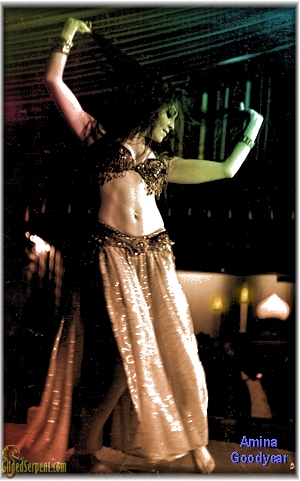
Amina sparkles on stage

by Amina Goodyear
posted September 2011

In 1965, there were no San Francisco stores devoted to selling Arabic music. In the grungy Tenderloin neighborhood downtown there was one very small and disheveled shop that sold 78 rpm vinyl recordings, vinyl 45s, and even the latest format known as LPs which played 33s! This record store was known to sell ethnic music, but the store was gated and locked due to the nature of the street: there were “winos” sleeping in doorways, drug addicts aimlessly wandering about, and heavily made-up prostitutes offering their services, attired in the skimpiest of skimpy, providing the local color and entertainment while the criminals, such as dealers, overdressed pimps and other riffraff kept you ultra-wary as you walked ever faster, wishing you had eyes in the back of your head! If you were fortunate enough to not be (or resemble) one of the above, the owner would let you into his shop. I was one of the blessed few allowed entrance and got to rummage through the dust and disorganization of the boxes and bins. 

Rooting through the shop, I eventually found two records that were very promising. One even had a photo of a Belly dancer on the cover. The music listed was: Chiftetelli, Taqsim and Karsilamas. All this was good! This would provide music for practicing dance.  Since there were no other ethnic records from Arabic countries in the store, these two records with the music of Turkey and Greece were a gold mine. These two records were superior to the music I had been using for practice because they were more correct and authentic culturally. I had been practicing with James Brown, Paul Revere and the Raiders, and whatever and whoever else happened to be on “American Bandstand”. At least it was foreign music nearer to the Arab countries.

By the end of 1965, I was able to land a job at the Bagdad Cabaret, in spite of the music I had been using for my practice sessions. The Bagdad musicians played Arabic music almost exclusively. Since my job consisted of three shows a night (45 minute sets), seven nights a week, immediately, I felt that I didn’t need to practice anymore…

Why, (I thought) I could just practice on stage! 

All the music and songs played were exotic and new to me, and they conjured up many, many stories and mysteries in my imagination, in my mind and in my soul. The music mixed with the colors of the lights  (everything from the passion of red to the coolness of the blue, to the eeriness of the "glow in the dark" emitted by the black light, with the steady twinkling of the golden flames given off by the candles set in their translucent red vases, added to the perfumes and incense that danced in the night creating a magic that remains with me today–almost 1/2 a century later!

If there was a heaven on earth, this was it! It was just a little garden, an oasis, away from the humdrum of ordinary life, and I was paid to dance there!

I wasn’t the only one who felt this way. I was certain that the musicians and my fellow dancers felt that way too. We all showed up every night, without fail, like the pony express–through rain and sleet and snow–and like marriage vows, through sickness and health, we were there. It couldn’t have been just for the money; it was a different time that had a very different work ethic.

In this garden, we also had our audience. They wanted to hear music from their homelands. They wanted to hear their language spoken and sung. They wanted to be in the garden also enjoying the magic without the pain and anguish or sadness of having left their homes for the "promised" land in America.

They would ask the musicians to sing certain nostalgic songs for them, and the musicians would comply. One exception was Fatma Akef who had a set dance routine with specified songs. For the most part, we dancers were on stage to provide additional visual magic as the musicians played the music and sang the songs that had been requested. Many of these songs are the ones still played and requested today. To know what the music sounded like in those days, you can search YouTube for Salateen al Tarab and you will get an idea of the songs and how they were delivered. There was a lot of "ya leily-ing" as well as "ya aini-ing" and almost a caterwauling of a general "mawaal", accompanying the lyrical agony:

  1. ya leil = oh night
  2. ya ain = pity me
  3. mawaal = non-rhythmic poetic vocal improvisation of a melancholy nature.

The first time I heard Salateen al Tarab (The Sultans of Tarab) it was on an audio cassette (even though they had a 7-volume album) and it was 1989. 1989 was the year I bought my red car that had a great sound system that could completely envelope me in sounds and memories. As I experienced deja vu listening to the Sultans, I physically felt the tarab, (the ecstasy) inside and outside my body while my heart rate climbed. I recalled the memories of the music and the dance at the Bagdad. I cannot truly imagine how a lonely, displaced Arab could have felt at the Bagdad requesting songs of his home and youth, but it must have been the same as I felt in my car that day with the Sultans–but a thousand-fold.

Perhaps, I’m getting ahead of myself… Meanwhile, back at the Bagdad:
The customers were requesting songs; They were favorite songs, old songs, new hit songs and recently-released songs. Some of those just-released songs were “Enta Omri”, “Fakkarooni”, “El Hob Kulu” and “Daret el Ayam” by Om Kalthoum and “Sawah”, and “Gan al Hawa” by Abdel Halim Hafez. Those were the days! It was a very exciting time to be hearing new music almost as soon as it was released in its homeland! Lucky were we, who knew people who actually brought the music here in their suitcases. (Many weren’t that lucky to hear the music that soon and would have to wait.)

We heard of a man, Samir Khoury, who had a Middle Eastern grocery store at 23rd and Valencia St. in San Francisco, who sold Arabic records. So, I decided to shop for groceries, and see what I could find. I went to his store, told the shopkeeper that I heard he sold music records, and asked if I could buy any. He proceeded to lock up his store and take me two doors down 23rd Street to a storefront storage room. It was full of boxes of supplies for his grocery store and a few records.

"What kind of music?" he asked.
I told him “I want something by Umm Kalthoum."
"Are you a hippie?" he asked.
I said, "No! Why?"
"Only hippies who have gone to Morocco know who Umm Kalthoum is."
"Well," I told him, "I’m a belly dancer at the Bagdad Cabaret, and I want to know more about the music they play for my dance."

I ended up buying some music, including a 45-rpm copy of “Sawah”. That was the beginning of my friendship with Samir who eventually closed his grocery store to open Samiramis, San Francisco’s first and only Arabic music store, and this was the beginning of my desire (unfulfilled) to own every record in his store.

At the Bagdad, the musicians would continually play new music as different customers would make their special requests. Each week I made a list of my new current favorite songs with words that I couldn’t pronounce and music that I couldn’t hum. I would then faithfully and persistently trek to Samir’s to hang out. I am sure he thought I was nuts, but he listened to my bumbling mispronunciations and my out-of-key humming and sometimes hours later he would find or decipher what I had been searching.

After the Bagdad and the musicians, he was my music teacher and my mentor. He never lost patience with my endless questions about words and music and introduced me to his favorite songs, singers and composers.

Having Samir as an ally was a fortunate asset. If I was looking for music with a certain theme or feel for creating a choreography (especially with a folkloric theme) he would endlessly and relentlessly search through stacks and stacks of records in order to find just the perfect musical interludes for my dance projects. If he didn’t have the music I needed or wanted to study, he would order it for me.  

Quite often customers at the Bagdad would ask the musicians to play a favorite Umm Kalthoum or Abdel Halim Hafez song. These songs were usually both sides of a record or at least 45 minutes long. The musicians would save this for the third part of our five part routine. The five part routine consisted of:

Various Spellings of
"OmK"’s name:

  • Umm Kulthum
  • Om Kalsoum,
  • Om Koultoum,
  • Om Kalthoum,
  • Oumme Kalsoum,
  • Umm Kolthoum
see wikipedia for more info
  1. entrance song,
  2. veil work
  3. dance part of show,
  4. floor work and
  5. the finale, including a drum solo and collecting tips that were shared equally with the band.

Therefore, if someone asked for a song like “Alf Leila wa Leila”, we did not dance to a seven-minute instrumental piece; we danced to the complete song. This would be the approximately 45 minute epic, which would be used in the third or middle part of our show, or if it were “Enta Omri”, we would get the instrumental opening in our second section (the veil set) and then the singing section would mark the beginning of our third part.

We dancers sometimes were allowed to choose the music for our sets, but it was always preempted when a customer requested something else. "The customer is always right!" or possibly we dancers were only there to provide a little "eye candy". 

The club had to compete with the dancers on "the street" who performed topless, bottomless–and then some–in the other clubs along Broadway.

Performing as a second-rate citizen such as this, was not always fun, but it did provide a great musical education in a perfect learning situation. The dancer would learn to dance to just about anything while being the consummate entertainer, simultaneously being introduced to many songs she otherwise might never have discovered otherwise.

As I previously mentioned, many of these songs are still the ones played and requested today. 

When the "Big Three Singers” died in the middle seventies (Umm Kalthoum, Farid el Attrache, and Abdel Halim Hafez), we were left with a great emptiness over the airwaves, and after the demise in the ‘80s and the ‘90s of Riyad al Sombati, Abdel Wehab and Baligh Hamdi, (composers for Umm Kalthoum as well as Abdel Halim and Warda among others) there was yet another tremendous musical void.  It is no small wonder that the songs I danced at the Bagdad decades ago are still the ones most requested and played today. We can’t seem to replace those musical giants. Do we even want to replace them?

Today, when I go to a dance competition or Belly dance festival, if I am not hearing pop, fusion, or that now-all-too-often non-Arabic music with English lyrics, chances are that I am hearing music written for Abdel Halim Hafez, Umm Kalthoum and Warda (who was married to Baligh Hamdi). Recently I was at a dance festival with non-stop dancing on stage from 10 a.m. to 10 p.m.  Aside from the aforementioned other types of music, I believe that music written by the three above composers for Om Kalthoum was played so often that I doubt if anyone could keep track.  Talking to my friend, Debbie Smith, who was stage manager for the Ahlan wa Sahlan Festival, I heard pretty much the same thing. Songs for Om Kalthoum, Warda and Abdel Halim Hafez were in highest demand.

It would be nice for the dancer to know all the different sections of the epic song in order to know to request possibly an alternate or additional section for her dance. Besides the lyrics  there are many other musical interludes within the long song that are incredibly beautiful, interesting and rhythmically or emotionally challenging. However, in the end, it is the poetry that is truly magnificent and poignant.

Umm Khaltum CDMany times it is the singing after the introductory instrumental that is so meaningful and expressive. This is usually not what is offered in many Belly dance CDs. Fortunately, there are some fine exceptions. My favorite exception is the CD produced by Mahmoud Fadl called "Umm Kalthum 7000", sung by Selma Abou Greisha. If I were to be stranded on a desert island, this surely would be a CD I would need to have for my survival!
Today if a dancer asks for “Alf Leila wa Leila”, the musician may ask her which part she wishes to dance. If the dancer doesn’t specify which part, she may get a part that she doesn’t know or may not even know that it is part of the same song. The big difference between now and then is that then the dancer would usually dance to (and get passionately involved with) the entire hour-long song. Now if a dancer dances to the same song, unless she specifies to the musician the section she wants, she may only get the first musical section. This means she dances to about 6 or 7 minutes of a 40 to 60 minute piece.

Today, it seems that all the best and favorite Belly dance songs are actually hit songs of the singers, composers and lyricists from days long past. In the Arab world, the songs of bygone days are kept alive because they are covered by all genres of singers from the traditional singers such as the Salateen al Tarab, to the popular singers from Nour Mhana to Nancy Ajram and even the singers of Shaabi and the DJs who create quite unique vocal loops.

These songs are still the ones played and requested today. Arabic classics are here to stay!

We need not be "a hippie who went to Morocco" to know and love this music. We may not have a Middle Eastern club owner, musician, or shopkeeper to help us understand and find the music we buy. However, through the Internet, we can learn about and find the origins of the music we use and learn the translated lyrics of the songs.  I believe this will make us better dancers.

Thanks to the Internet, and because of it, we dancers no longer have an excuse for ignorance. We owe it to ourselves to do a little research.

Stay tuned for more about dancing to Umm Kalthoum!

use the comment box

Have a comment? Use or comment section at the bottom of this page or Send us a letter!
Check the "Letters to the Editor" for other possible viewpoints!

Ready for more?

  • Walk Like an Egyptian
    Before I learned to "walk like an Egyptian", I wanted to drum like an African! Since my early teens, I had been collecting African drum LPs (as well as conga and bongo drums) and was either dancing like a possessed child or trying to make rhythms happen on drum skins.
  • Magana Baptiste, San Francisco Dance Pioneer by
    This was in the 1920s and 1930s and at that time there was no TV and barely radio. For entertainment, Magana’s family asked her to don her tap shoes and perform for the family and for company.
  • Amera’s Dina DVD Reviewed An evening of Arabic Dance and Music featuring World Renowned Belly Dance Artist DINA
    Nonetheless, we need to move beyond her expressions. Her dance is Dina. She is agile, melodic, rhythmic, and her movements are so intertwined with the lyrics and the music that she exists as the music–always reaching out to us and, thereby, bridging the gap.
  • Egyptian Classical Music: Entertainment or Education?
    The Art of the Early Egyptian Qanun Vol. 1 & 2, performed byThe Traditional Arabic Music Ensemble & Egyptian Taqasim: Produced and distributed by Nesma
  • Samiramis Imports and the Arabic Movie Nights
    Samiramis was an incredible store, not only did Sam have the largest selection of records, and cassette tapes of Arabic and Middle Eastern music, but he and his wife Mona embraced the dance community and their desire to find music, videos, and help with anything under the sun.

  • An intro and premise of a video of Karim’s lecture as presented to The Arab American National Museum "Diwan" Conference in Deerborn Michigan in March 2009.
  • Debunking the "Golden Era" of Bellydance, Part 2, Finding Your Gigs
    Nevertheless, you don’t have to wait for someone else to hire you; you can hire yourself!

  • If you want to call what you do Tribal or Tribal Fusion, or anything Tribal, you should study ATS (American Tribal Style Belly Dance) and know what true Tribal is before you fuse it with something else.
  • Debunking the "Golden Era" of Bellydance, Part 1
    Just like today, dancers had to create the place, the time, and the excuse to show or “sell” our newly-found artistry or resign ourselves to dance in parks and on street-corners or in syncopated troupe dances forever. So much for creativity and self-expression…
  • "Objects of Desire, Photos from Venus Uprisings April Performance
    The 7th fantasy bellydance concert produced by the New York City artistic salon Venus Uprising took place at the Merce Cunningham Studio on April 15th and 16th, 2011. Invited dancers were asked to create new works based upon the theme "Objects of Desire". The performers responded with an interesting array of interpretations, ranging from the literal to the highly abstract.
 

Gilded Serpent presents...

Lauren of Arabia

The Americanization of Arab Dance in America

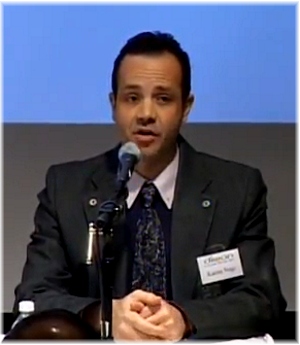
Karim lectures at the Arab American Museum

by Karim Nagi
posted September 6, 2011

Introduction and Premise to the Video Lecture "Lauren of Arabia"
As presented to The Arab American National Museum "Diwan" Conference in Dearborn Michigan in March 2009

The lecture that appears in this video addresses the overwhelming interest and active endeavoring of non-Arabs in the field and profession of Arab dance in America. Although rarely called Arab dance by these American practitioners, the material, style, and aesthetics mostly originate in the Arabic speaking countries of Egypt and Lebanon, with supplemental presentations from North Africa and the Gulf. The American practitioners of this dance outnumber the Arab practitioners by no less than 100 to 1.

The goal of this lecture is to assess the resulting status of Arab dance in America, based on its lack of native representation. 

Like in the field of media, often Arabs feel misrepresented. Arabs are constantly complaining, if not protesting the way they are depicted and rendered in both news and creative media. For news media, we find a massive preoccupation with the tragic, war and terror oriented focus, always highlighting Arab’s aggression and conflict. In creative media (like film and TV) Arabs are depicted as villains and depraved antagonists (Jack Shaheen, "Reel Bad Arabs" documentary). However it can be argued that it is the lack of presence of Arabs in the journalist, directorial and productive media professions that allows this imbalance. When we fail to represent ourselves, we are then resigned to accept representation by others. 

In the field of Arab Dance in America, for better or for worse, this Arab art is represented primarily by non-Arabs. Because of the absence of Arabs in the profession, the non-Arabs are left with the task. These non-Arabs find motivation in agendas and goals that suit them, and help propel their own concepts, and careers. Luckily for the Arabs, there is no outright malice or defamation in the world of dance, as there is often in the world of media. The non-Arab practitioners are more interested in the effects and benefits of the art form, and are not engaged in order to express discontent with Arab culture. However, because they are the most visible, their opinion and concepts receive more attention than the Arab view. 

You can find many effects from the American domination of this dance. There are undesirable effects, such as de-ethnicization, and the removal of cultural and traditional traits in favor of rampant fantasy. There are also positive effects, such as the attempts at codification, and the creation of communities and safe venues to perform. The goal of this lecture is neither to condemn nor praise. My goal is to weigh the effect of the Arab absence in this dance’s proliferation. 

I use the concept of "Lauren of Arabia" as an obvious homage and reference to T.E. Lawrence. His popularly remembered "Lawrence of Arabia" is a subjective account of a western man who actively studied, absorbed himself in, militarily battled on behalf of, and even advocated Arab culture.

To many he was indistinguishable from those he advocated. Yet he was clearly an ethnic outsider who’s primary nationality, education, and political agenda, was not synonymous with those he fought for.

Such is the case with the non-Arab who finds herself being the spokes-dancer for a culture. Like many spokespeople, their degree of knowledge and their authentic affiliation for the product or cause, varies ad-infinitum. So this lecture will attempt to evaluate the result on the Art form, based on the balance between the non-Arabs who actively represent, and the Arabs who are actively absent. 


use the comment box

Have a comment? Use or comment section at the bottom of this page or Send us a letter!
Check the "Letters to the Editor" for other possible viewpoints!

Ready for more?

  • Karim Naji, Interview with an Egyptian Dance Master
    I think that Egyptian and Arabic culture as a whole entity should never be extracted from this dance. I do not believe in de-ethnicizing it, and I do not believe the culture is optional! Nobody ever allowed Latino culture to become an optional part of Salsa or Samba. Additionally, Indian culture is inextricable from Bharatnatyam and Bhangra. I believe that Raqs Sharqi, a.k.a. "Belly dance" is available to anyone from any culture. I am not xenophobic, nor an exclusivist. I am thrilled to see people all over the world enjoy and promote this art form. However, I will argue for the importance of the Arab connection until the day I die.it.
  • 2008 Drum, Dance, & Music Festival Raqs Taiwan with Karim Nagi!
    She wishes to find the bridge between dancers and musicians, performers and audiences while still keeping its cultural roots alive. DDM is the platform for dancers and musicians working together and exchanging their professional experiences.
  • The Muwashahat with Mohamed Shahin and Karim Nagi
    The Muwashahat genre is inspired by tenth century court poetry of Arab-Andalusia, developed when Arab intellectual and artistic culture flourished in Spain. The rhythms are complex.
  • Turbo Tabla Arabic Music Re-imagined Review
    Traditional Arabic and Turkish with House, Hip Hop and Techno. "Mostly, the Techno style appeared in the tabla solos. I loved this CD because it has a mix of songs that are traditional, old Arabic, and Turkish."
  • Debunking the "Golden Era" of Bellydance, Part 2, Finding Your Gigs
    Nevertheless, you don’t have to wait for someone else to hire you; you can hire yourself!

  • If you want to call what you do Tribal or Tribal Fusion, or anything Tribal, you should study ATS (American Tribal Style Belly Dance) and know what true Tribal is before you fuse it with something else.
  • Debunking the "Golden Era" of Bellydance, Part 1
    Just like today, dancers had to create the place, the time, and the excuse to show or “sell” our newly-found artistry or resign ourselves to dance in parks and on street-corners or in syncopated troupe dances forever. So much for creativity and self-expression…
  • "Objects of Desire, Photos from Venus Uprisings April Performance
    The 7th fantasy bellydance concert produced by the New York City artistic salon Venus Uprising took place at the Merce Cunningham Studio on April 15th and 16th, 2011. Invited dancers were asked to create new works based upon the theme "Objects of Desire". The performers responded with an interesting array of interpretations, ranging from the literal to the highly abstract.
  • Video- Finding the Lammam Ensemble at the Cotati Accordion Festival
    A collage of clips of various music styles included in this world music festival in Northern California.
  • Arabian Nights at 12 Adler Place, North Beach Memories, Part 1:1961
    Leona had introduced me to her friend Josephine, whom she described as a lovely Sicilian American woman who had recently taken the stage name of Jamila.
  • Dallas Observer’s Recent Belly Dance Ruckus
    The silver lining in all this is witnessing the wrath of Belly dancers scorned.
  • “Ghannili Shwayya, Shwayya”, (Sing for me a little, a little), Musings: Music Choices at BDUC 2011
    Thirty-one contestants and thirty mergencies later, I had my answer.
 

Gilded Serpent presents...

Bottoms Up! Two Belly Dance Starters

2 beginner DVDs

Cory’s "Learn Belly Dancing" &
Said’s "Get Ready to Dance"

DVD Reviews by Zumarrad
posted September 5, 2011

Two videos are discussed in this review: Learn Belly Dancing – a Complete Start-up Guide by Cory Zamora of Fresno, California, and Get ready to Dance Bellydance Volume 2 by Germany-based Egyptian dancer Said el Amar. Cory’s DVD is aimed at giving dancers a basic grounding in Bellydance technique, while Said’s is a dance-based warmup to use ahead of performance or deeper study.


Cory“Learn Belly Dancing – a Complete Start-up Guide“ Cory Zamora

I was looking forward to trying this video as I have enjoyed watching YouTube footage of Cory’s unique vintage style of Bellydancing. I found it a solid introduction to what now has become an old-fashioned (back-in-fashion?) style, clearly and pleasantly presented.

Obviously, the video was shot in Cory’s small studio, including a number of her students dancing along with her. Cory wears an unadorned leotard while teaching, making it very easy to see her movements clearly. She is a small, compact person and her technique is strong. Although the vintage style she teaches uses much bigger movements than those of the modern style, it’s obvious that her movements are always well-controlled, making her an excellent model to watch as you learn.

Most unusually, Cory begins her class on the floor! I’ve never started a class this way and found it disconcerting at first, but I very much enjoyed this unique method of warming up and getting used to floor-work. I also appreciated Cory’s technical break-downs. Instead of talking about  specific muscle groups as many teachers do today (often incorrectly), Cory uses visual descriptions that are fun, making it easy to understand the moves, which reflect the old-school style differences for which Cory is known. The dancers also wore cymbals throughout and were taught to dance using a simple zill pattern from the very beginning of their travelling moves.

The DVD ends with footage of Cory in performance. I was a bit disappointed that it was not an example of the things she’d been teaching (floor, arms, and standing/travelling movements, all of which came together into a simple dance routine over the course of the lesson) but rather, she performed a drum solo. I confess that I’d preferred to have seen Cory’s floor or veil work. However,  it was nice to see her drum interpretation, and I enjoyed her dramatic use of stillness at the start, which is something you don’t see in our often overpacked drum solos of today.

Reviewers of Cory’s other DVDs have often complained that the quality of filming and lighting were not good. I didn’t find this to be a problem with Learn Belly Dancing. Although it’s not a slick production, you can see and hear everything you need to perfectly well. Cory has a clear, pleasant manner of speaking that is easy on the ear.

I am always loath to recommend any DVD to beginners;  I’d much rather see people taught directly by someone who can pick up on mistakes and risky practices in order to nip them in the bud, but certainly, this DVD  shows Cory’s teaching in a great light. I would also recommend this DVD to experienced Belly dancers who want to explore a traditional American Cabaret approach.

3 zil rating
Rating:  3 zils

Said“Get ready to Dance Bellydance Volume 2”  Said el Amar
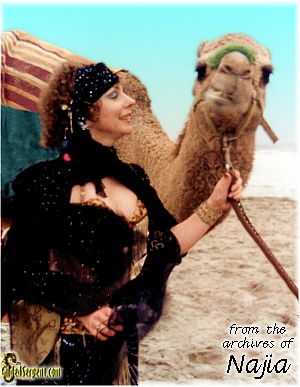
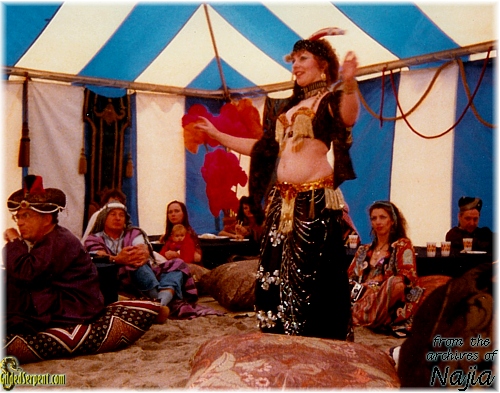
Modern Cairo or Reda style? This warm-up DVD will probably be just your thing …if you can stand the music. Said’s choreography is a bit wacky, but undoubtedly fun to do, and it seems to hit all the necessary spots. If you don’t have a background in folklore or Modern Cairo style you may struggle, as there are fast turns, wild and crazy hip-drops and quite a bit of footwork and ballet terminology involved.

The DVD comes with a music CD, which means you can do Said’s whole warm-up all by yourself, if you want. The music used on the DVD alternates bash-crash remixed Arabic music with Latin-ish stuff in English and a Lorena McKennitt track for cool-down. The music is pleasant enough;  I actively like the first track, which is Bahlam Beek.  However, they all segue into each other, making them useless individually unless you like English-language pop mixed in with your Arabic classics, which I do not.

You can choose to do the DVD with or without Said’s voice-over, in English or German. I’d recommend using the voice-over, which helps keep you focused. Said teaches in front of a mirror in a well-lit studio, wearing fitted workout gear. While the whole warm-up is only 18 minutes long, it’s 18 minutes of hard work, so be prepared to get sweaty. Parts of this warm-up are fast! It features lots of turns, lots of rapid hip drops, and some rather disconcerting plié-straighten work for the legs. However, if you are fit, dance regularly and have pretty good in-built flexibility, I think you’ll quite like this DVD as a warm-up for your regular dancing.

If you teach, you may also find some innovative ideas here. Said includes some strange combinations, involving the hands and arms, which are not something you’d use in your dancing, but strike me as designed  to get your brain working with your body. I also enjoyed the way this DVD shifts pace from slower to faster back to slower, from feet and arms to full body and back again. By the end, you’re on the floor doing ab-strength work and more cardio. Eek!

Said has some appealing body combinations too, but they’re performed so fast that I, at least, found it hard to copy and learn them without a break-down of the movements.

Said pays a lot of attention to the feet. The exercises and terminology he uses for these are straight from ballet class, so if you’ve never had ballet training , you will probably be a bit confused.  He also makes you do grands plies in the centre, which is just evil.

I would recommend against using this DVD if you are a beginning dancer or unfit. None of the movements are broken down for you. In particular, I’d be very careful about a bent-over twisting stretch that Said uses almost at the start. It’s quite a nice stretch, but pretty hard with straight legs, as Said does it, unless you have that flexibility built-in. I think it would be a good stretch to do after cardio, not before.

Nonetheless, if you’re fit and flexible and want an Egyptian dance-based workout that will keep you on your toes (sometimes literally), this is great stuff.

3 zil rating
Rating:  3 zils

These are two quite different DVDs, targeted at quite different dancer markets. But Cory’s, as a beginner DVD, also has application as a warmup for more experienced dancers and gives a strong flavour of her traditional style. Said’s is better suited to dancers with previous non-Middle Eastern dance experience who want a warmup that makes them sweat, and that also gives some foundation in folkloric style.

Purchasing Info

use the comment box

Have a comment? Use or comment section at the bottom of this page or Send us a letter!
Check the "Letters to the Editor" for other possible viewpoints!

Ready for more?


Gilded Serpent presents...

Finding Your Gigs

Debunking the "Golden Age" of Bellydance, Part 2

Najia with Camel in Big Sur

by Najia Marlyz
posted September 2, 2011
Part 1 here

Are you curious how anyone ever made a living by Bellydancing back in the so-called “Golden Age of Bellydance”?  The answer is that most dancers did not (at least, not a comfortable living).  Dancers of the late ‘60s and into the mid ‘70s had to have a day job to support their addiction to their “art-that-wasn’t-really-considered-an-art”, and the truth of the matter is that Bellydancers still must secure a supplementary job in order to support their love of the art–or choose to live in poverty. If they don’t have a”real” job, they must live a poor lifestyle and scratch out a living by hawking costumes, guiding tour groups, teaching at YMCAs, parks and recreation departments, and grange halls, produce and sell CDs and DVDs, or open their own dance studios in which to teach in addition to performing at their glorious gigs. (Unfortunately, I have known some dancers who went on the welfare rolls as a bogus poor.)

Teaching dance may seem venerable but most dance instructors who travel to teach workshops and seminars these days, often find that there is no convenient, affordable hotel available for miles! (Often the sponsor cannot, or will not, pay for a hotel room anyway.) Sometimes, big-name instructors find that they have to sleep on their sponsors’ lumpy sofas in endless burgs and villages where all the restaurants and shops are closed, and sidewalks are rolled-up by 10 p.m.

Probably, this would not fit your description of a desired professional career in dance anyway, had you realized your sponsor would accommodate you in a child’s bed in their basement recreation room where they usually do the family laundry and store the broken toys!

I am not telling you this just to discourage you or to complain like our parents, “When I was your age, we walked twenty miles through the snow to school every day!" Instead, I am hoping to give you a new perspective, some food for thought, and new direction for the creation of your own career in professional dance.  I hope you understand that since you have chosen to involve yourself more fully in Bellydance, you must consider making your own new and never-before-imagined opportunities – today, just as we aspiring professional dancers did back then, thirty or forty years ago! No matter how pig-headed, ignorant, and money-hungry you believe that producers of large dance and variety shows are now, or have been in the past, at least, these entrepreneurs have attempted to create for you a new, viable glamorous venue in which Bellydance is included as a valid, respectable art form rather than excluded as a foregone conclusion.

Nevertheless, you don’t have to wait for someone else to hire you; you can hire yourself!

In show biz, everything seems infused with excessively high personal competition. The best way to get well-paying dance jobs now (just like it was then) is for an agent to accept you into his or her clientele. That was (and still is) not always easy, either. You must dance exceptionally well, be considered beautiful in face and body, smell good, be popular and personable with people, understand what makes memorable entertainment, have recorded or live music ready and easy to drag along, and own at least two clean, durable costumes in good repair. 

In the past, costumes usually had to be homemade because the only easily accessible costumers were in Hollywood or Las Vegas and everything purchased there cost way above most dancers’ means. Now, however, you have easy access to incredible sparkling, designer costumers via the Internet!

(You never need to develop finger blisters from sewing, designing and fitting your own tough costumes, forcing needles threaded with waxed button-hole thread through several layers of stiffening, felt, and brocade, using a pair of pliers.)

Nevertheless, problems still abound: both agents and employers often regard children, pets, husbands, and boyfriends as additional trouble, or anchors, so give it some thought before you commit yourself to beginning a career in dance at all. Can you afford the inevitable strain on your marriage, children, and parents or your education?

I have seen so many dancers launch, but within months or a couple of years, it all goes up in smoke as wedding bells ring or cuddly babies ruin that hour-glass figure.  

Usually today, what you will need is not just a place to dance – but a place to earn a steady or significant paycheck.  We dancers will always have to do more than just compete for a few previously existing jobs. I was fortunate to have my mentor, the late Bert Balladine, guide me to a decent agent who was able to get me many professional gigs in places to which performers ordinarily would have little access.  One afternoon, when I was dancing on the beach at Big Sur, California, (for a large corporation that flew its guests in by helicopter) a larger agency offered to put me on their roster for additional gigs outside my general area. Through the two agencies, I was nearly able to disappear myself from needing to dance in local restaurants, Arabic clubs, and Greek “tavernas”.

If you feel unhappy or unfulfilled about doing sound-byte dancing in front of hoards of other dancers, and dance students, I would advise you to work toward connecting with an agent also. Don’t expect your teacher to be your agent or even to find you one; he or she is busy teaching and finding his or her own gigs.  Put together your portfolio (including a DVD of your dancing) along with a concise gig resume, and personal references. Contact the legitimate entertainment agents in your general local and ask for a brief audition. You will soon learn if you are skilled enough at the art of entertainment to impress a professional agent. The agency will find you more interesting gigs where you can dance and earn better money than in restaurant gigs and, usually, those gigs will lead to additional bookings. For me there were: veteran’s hospitals, naval officers clubs, golf clubs, tennis clubs, country clubs, corporate business promotions, anniversaries and celebrations of all types, children’s parties, fund raisers for churches and private clubs, variety shows in ethnic communities, art openings, parades and so many more.  Not every one was an abject winner, but all were adventuresome and unforgettable experiences!

There is no need for you to hang back and settle for dancing in narrow ethnic restaurants, in front of the swinging kitchen doors and to be hopped over by waiters carrying plates of food or working for bosses who resent having to pay you when they notice that their customers shower you with tips.

Additionally, although a title may impress your mother or your fiance, you do not really need to win a trophy or a fancy title in a competition, either. If you have a competitive spirit and believe in both your dance technique and your people skills, you need not spend excessive time and money on Bellydance competitions and festivals where you are allowed a whopping 3-5 minute set, dancing without pay (or paying to dance) to canned music, or worse, weak live music, primarily for an audience of other dancers and their mothers. That, you can do for fun on your time off!

I assure you that you will be treated in a more professional way if you have a competent agent or gig manager, and you won’t have to go ask for your paycheck when the gig is over.

However, you do have to have your gig-bag packed and be ready to roll. You must be amazingly flexible in schedule, dependable, reliable, and have formed solid contacts with musicians who are willing to play for you. Those same musicians, if they like your personality as well as your dance, will also be able find you some exceptional gigs along with them and they will insist on including you. Remember to graciously share your tips with them and to praise them when they are helpful to you.  Little gestures of appreciation mean just as much to them as they mean to you.

I shouldn’t need to remind you, but I will: Think outside the box–and don’t quit your day job!

Najia dancing in Big Sur with Sirocco

Part 1 here

use the comment box

Have a comment? Use or comment section at the bottom of this page or Send us a letter!
Check the "Letters to the Editor" for other possible viewpoints!

Ready for more?