Gilded Serpent presents...

Recreating the Live Sounds of Egypt

Yasmin’s "Dancing with Genies-Hafla al Afareet"
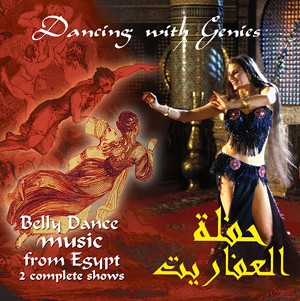
CD Review by Amina Goodyear
posted June 25, 2010

"Belly dance isn’t what is used to be…"

"Yet in spite of the globalization of Raqs al-Sharqi there are only four places in the world where the cabaret versions of the dance have evolved into unique variations: Egypt, Lebanon, Turkey and the United States. Egypt is the birthplace of the dance as we know it today, and the Lebanese version is a recent offshoot from it. Turkish cabaret is much older, with roots going back to the migration of the Rom in the 1100s and the Ottoman Empire. The American version is a melting pot of many nationalities, combined with Jazz and Ballet. It first emerged in Vaudeville and was later refined in cities with large Middle Eastern communities, such as Boston, New York, Chicago and Detroit. Then, in the 1960s, California dancers developed modern fusion styles."

"For students and professionals alike, it is important to understand how the dance has evolved. No art form exists in a vacuum. Movements, rhythms and gestures develop within cultural contexts. Old ways quickly disappear. Societies change and their dances with them. Today global communication is homogenizing our world at lightning speed. Even this ancient art form is being adapted to fit the present accelerated pace. Yet no one style is right or wrong. The old forms are as valid as the new.  As Artemis Mourat is famous for saying, ‘They are all branches of the same tree.’  "But the roots of that tree must be remembered and protected. Without them the topmost leaves will wither from lack of water and nutrients. Their sap feeds us all. Change is inevitable, but amnesia is not." 
Yasmin

…"Let us conclude with the expression ‘AmCab’. In the fast food culture of America today, many students look for shortcuts. [The expression ‘AmCab’, meaning American Cabaret, is a perfect example.] Some want to perform before they are ready. Rather than go deeper into the dance, they gloss over important details. Rather than learn the movements and idioms fully, they layer one on top of the other so that the dance becomes a blur. Some performers so complicate what they do that their interpretation hardly resembles the original art form, or any other dance found in the Middle East. We respect the Evolution of Dance theory: newer styles are as legitimate as the older ones. We only want to emphasize that this dance is more complex than what can be learned in 6 months. We urge people to respect its roots and go to the sources first. Then we use solid technique as a springboard for creativity and fusion."
Artemis Mourat and Yasmin 

What you just read above are excerpts from an extremely thoughtful booklet that accompanies the CD: "Dancing with Genies". "Dancing with Genies"  was produced by Yasmin of Washington D.C. and is a collaboration between her, her lifelong friends, and her musical colleagues, the Henkesh Family of Cairo, Egypt. In addition to the accompanying booklet (in itself is worth the price of the CD), "Dancing with Genies"has two complete dance routines plus a bonus drum solo. The pieces are performed by The Sayed Henkesh Ensemble, arranged and recorded by Sayed Henkesh at Symphony, Cairo, and mixed at Mercury Studios, USA by Donna Sayada.

The First Set..

…brings to mind a show that could have been set in the 1970s or 1980s. This could be music for dancers such as Sohair Zaki–but most probably, Yasmin. This set begins with:

  • Leyali Rouqash, a typical Oriental dance opening, complete with rhythm and mood changes. It has the requisite taqsim beginning followed by a drum and def, heavy entrance with breaks and plenty of opportunity for turns, sections to greet the audience and to enter like a star. The melodic walk-arounds introduce more breaks that lead to another melodic section with a phrase from Sitt el Hosn an old familiar – which was popular at that time. The piece builds with playful excitement and ends as it begins–with the drums playing out more opportunities to finish like a star. Thus the stage is set for the show to begin and enhance the energy.
  • Cry to the Moon – This Nay taqsim brings a calm to the audience and helps to bridge the entrance to the next transition.
  • Adulla 3 3ala Keefik, which is a favorite song of mine. (Idellaa aala Keefek is how I personally spell it. ) **note: the number 3 = the Arabic alphabet "ain" sound which has no equivalent in our language except in the baaa baaa of a sheep.) I first found this song on what I call "taqsim beladi drum cassettes with Sohair Zaki on the cover and it is such a cute and memorable song. The word dellaa has no real translation in English but it means something like a Betty Boop type character who is kind of spoiled, coquettish and gets her way through manipulation. In songs, she may have a high-pitched or whiney voice. So, you can see that this song can be a lot of fun to dance and is open to lots of "cute" and self-expressive response. Actually, I don’t  know anyone who doesn’t like this song; it’s a real crowd pleaser. Best of all, Yasmin has a great translation of it in her booklet.
  • Miasia’s Beladi is a very familiar and comfortable beladi taqsim that Yasmin calls beladi progression and that is exactly what it is. It progresses from a "foghorn" drone with sax intro to the typical accordion voice that builds in speed and nuances while conversing with the tabla. Some say that only an Egyptian is capable of playing and drumming a beladi taqsim so that is has the proper feeling. This piece says it all, and, of course, it is played by Egyptians.
  • The next piece, Saidi Medley is a Metqal Qanawi cocktail (minus the Saidi singer) with some reference to Mahmud Reda‘s signature men’s stick dance (Tahtib). It is an upbeat piece that invites you and the audience to hop, jump, dance or just hum along.
  • Pulse of the Sphinx is a drum solo by the one and only Khamis Henkesh. This is a great example of why he is such a popular drummer; his drumming is concise, elaborate, quick, slow; the tones are clear, light, soft, sharp, varied; the rhythm is simple and complex; the tempo builds and best of all the solo is grouped in fours and very easy to follow.
  • Finale Leyali Rouqash is exactly that. It is a continuation of the entrance piece and lets you end and exit as you entered. Like a star!

Additional comments on First Set:
Some pieces sound like they were additions to an original dance set such as the Cry to the Moon nay taqsim piece, which also seemed a tad too long.

The zagharut in Adulla3 3alla Keefik seemed too predictable and not loud enough or long enough. Was it done by a human or a keyboard?


The Second Set…

…is my favorite of the two sets. It evokes music and dance from even an earlier time–perhaps from the Golden Age of Egypt.

  • Al Radwa, the opening piece, is very classical and sentimental in feeling and could be used as stand-alone music in a dance festival (6 min. 40 sec.) There is a nice mood-setting prelude. When the dance begins, it is with drums and defs playing a typical malfouf entrance with the violins calling the dancer to enter. A melodic section with masmoudi rhythm continues the romantic mood until the next section returns with malfouf and double time maqsoum changes the tempo and mood to a more exciting and slightly folkloric feeling. A nay taqsim follows and returns the romantic mood as it introduces a segment in 3/4 waltz tempo which gradually escalates in intensity and speed as it shifts to a malfouf finale. More star time!
  • Pixie paradise is a typical yet beautiful taqsim on the qanoun and the qanoun taqsim segues into the next track.
  • Ya 3aziz 3eini the music of Sayyid Darwish.(1892-1923) As Yasmin mentions in her booklet,
    "This piece is an ideal example of why a dancers should know the lyrics of a song before performing to it. A happy melody does not always imply that joy is expressed in the words." Please read the translation she provides in the booklet.
    Sayyid Darwish, often called the father of Modern Egyptian music, managed to marry classical Arab forms and Egyptian folklore with Western harmony and musical instruments, creating thus the model for the music we know and love today. This is the music that would later be created for the likes of the incomparable Om Kalsoum and her composers such as Mohamed Abdel Wahab. (Picture electric guitar and cello next to qanoun, oud and riq.) Like many of Sayyid Darwish’s songs, this song may sound sweet and flirtatious, but it’s really about social unrest.
  • Raqsa Masriyya al Helween is a short song by Sayed Henkesh. It sounds sentimental, proud, and patriotic, following in the tradition of Sayyid Darwish’s song and is a smooth bridge to the Beladi that follows. In my opinion, less than a minute is a trifle short. I would like to have heard it at least twice as long.
  • Beladi Melody is a beladi taqsim or progression. It’s roots are probably in the Said because it starts with the "horse".  The accordion (which replaces the rababa as the instruments became urbanized) is calling the dancing Arabian horse to "do it’s thing", dancing and prancing. This taqsim continues on to Aminti Bellah and Ya Hassan (two pieces that are typically used in beladi taqsim) and it ends with an increasing sense of urgency as the drum and melody play question/answer until finally the music arrives at a fulfilled climax.
  • Saidi Cane follows the beladi taqsim and is suitable for a relaxed "walk-around" type cane dance with audience interaction.
  • 3 Minute Mona – This pleasant drum solo by Ramadan Henkesh shows yet another talented drummer in the Henkesh family. It has a very strong maqsoum base (with defs) and Ramadan treats us to lots of quick rolls and riffs on the tabla which like Pulse of the Sphinx by Khamis, are fun and easy to follow.
  • The Finale completes the second set with the same malfouf ending as in Al Radwa. Again–exit the star!
  • Pulse of the Sphinx, played by Khamis Henkesh, is a longer version of the drum solo from the first set and is constructed for the dancer who enjoys long drum solos. It is not mixed as well as its shorter version, but makes up for it with the additional drum riffs, enabling the dancer to do more. Also this (as well as the other two drum solos in the album) is an excellent piece for practice as it is dancer-friendly with solid predictable repetitions, building progressions, and finale.

Additional comments on the Second Set:
If the qanoun taqsim is used as part of the dance set, it seems a bit too long.

The Saidi Cane piece seems to go nowhere; however, "interaction with the audience" could also be translated as a good "tipping" song.

Regarding the 3 Minute Mona: used as a straight maqsoum solo, it does not build. Also, the tabla is mixed differently and doesn’t pop out with clarity. It doesn’t have the same effects and reverberation as Pulse of the Sphinx.

General comments:

cdUpon first hearing this CD, I liked, no, I loved, the way it sounded like a live show. Exciting! Nevertheless, I question why some tracks sounded like they were recorded in a sterile studio. As a CD with different tracks, this wouldn’t matter, but as a CD that is actually two dance sets with a bonus drum solo, it didn’t make sense to my ears or feet and body.

Regarding the sounds that recollect all those great bands in Egypt, (the big def sounds): These sounds mean the adrenalin is kicking in, and you’re salivating from excitement and anticipation! These are the major sounds that I (and countless other dancers) have tried to capture with recording devices in purses and under tables in clubs. These big def sounds are there in this CD, recalling many memorable ear-splitting smoky evenings on al-Haram Street.

Somehow, they get killed somewhat by the sterile studio mixes of some of the other pieces. I know that Yasmin was trying to recreate the shows that she lived. In my opinion it might have been better to implement the solo instruments between more of the pieces through short modulations as bridges for the moods and maqamqat. It would have balanced the piece better to use them as a stand-alone longer solo taqsim in only two instances.

While the pieces as separate entities are wonderful, some of the pieces linked together to form a complete dance unit feel uncomfortable. A short (exceedingly short) taqsim added here or there would make a smoother transition.

I wish she had listed the instruments and the musicians; however, I surmise that she probably would have, had she known.

use the comment box

Have a comment? Use or comment section at the bottom of this page orSend us a letter!
Check the "Letters to the Editor" for other possible viewpoints!

Ready for more?


Gilded Serpent presents...

Hallah Moustafa

Hallah and Nicole

My Costume and Dance Mentor in Cairo

by Nicole
posted June 21, 2010

I’ve been in Egypt over 10 months now and the person who whom I feel closest in the dance community here, which still remains fairly closed (to me anyway) is definitely Hallah Moustafa.  I noticed Milena‘s article on Gilded Serpent and I hope this one can be a complementary addition to her similar experiences with Hallah.

I met Hallah when I was visiting my parents in Seattle a couple years back when she was visiting from Cairo and teaching a workshop. I remember the workshop being difficult, loaded down with technique that some of the attending dancers scoffed about later because they couldn’t immediately learn her technique in the allotted 2 to 3-hour period.

They didn’t look deep enough to see that something unique was happening. This made these "professionals" frustrated and dismissive. I remember being frustrated too, but I liked the moves, and after the workshop, I remember pondering a Soheir Zaki style traveling step and some arabesques that Hallah had shown us. They were fun to fool around with for a few weeks, trying to duplicate them properly, but eventually, I moved on to other things.

At the time though, I found her interesting and funny, and thought the costumes she had brought to show, although gorgeous, were prohibitively expensive for a 17-year-old dancer and college student. I shyly struck up a conversation with her and her protege who had been demonstrating, Sabah and told them that hopefully, I would be in Cairo in a couple years. Hallah warmly invited me to get in touch with her when I came to Cairo and gave me her business card. I kept the card tucked safely in my wallet for the intervening years between then and last year when finally, I pulled it out for lack of anyone else to call while marinating in the summer heat in Cairo.

I wish I had called her sooner,  because what came out of my finally overcoming my shyness was a unique friendship, and a type of mentoring I had been wanting for quite some time.

We all want someone to take us under their wing as dancers, help us get jobs, instruct us on how to retain professional decorum, and inevitably to hold our hand when the community sinks it’s teeth into us or when we misstep.  In the past I have had excellent coaches and teachers, but Hallah seems to "get" me quite well. She is particularly generously, unselfishly committed to my success as a dancer.

Our initial meeting at her workshop in Giza was pretty casual. I got a tempting first peek at the actual mechanics of the costuming industry into which I’d made half-hearted forays back in the US. Already I had visited other costumers in Cairo, but they keep the actual workshop mechanics in back rooms or away from the public areas. Hallah’s workshop is situated in a bare-bones kind of apartment-block, down a back street in one of the poorer areas of Giza. It doesn’t look like the kind of place where thousand-dollar gems in Lycra and Swarovsky are born. Once I was inside though, I couldn’t stop looking at everything; especially the creations taking shape on mannequins around the main room.

Hallah and I chatted while she worked and she sized me up in the slightly skeptical way of a woman who has seen too many divas and too many stifling egos. She was perfectly pleasant. But Hallah is not a sugary-sweet person, much like myself, so I knew I didn’t need to exert the effort of putting up a front. I told her why I was in Cairo; what I was up to and what I tentatively hoped to accomplish in the next year. In response to her question of where she fit into my plans, I responded that I had no idea where she would fit into that picture. I did, however, tell her that I felt that I could learn something from her or at least get a suggestion of who else to contact.  Ultimately we both loosened up as the meeting progressed and I promised to come back soon to visit and see what we could do in terms of working together.

I think our friendship has been very smooth since then, but my internal dance evolution while I’ve been in Egypt has not.

Hallah and I spent more of last summer just talking (and ruminating about the dance community and the complexities of being a dancer) than doing a lot of dancing as this was part of a phase of my questioning concerning my career. Prior to meeting Hallah, I had been in a position where I could try to make a career out of dancing.

When I arrived in Egypt though, I completely choked at the attitude towards dancers here, while also getting lost in the Egyptian culture. I manged to drag myself to only a handful of classes and one festival in the first 3 months. It wasn’t how I imaged I would feel upon arrival at all, but when you live in Cairo, instead of being a visitor, everything changes.

When I initially called Hallah I was in a very uncertain place, but she shared her wealth of experience with me. This was helpful in bringing me out of my own head and voicing some of my hopes and fears. Something I needed at that point was to hear a realistic opinion backed up by experience and get some honest dialogue going. It is something I find beneficial still!

I still haven’t sorted all my feelings out about the possibilities ahead of me, but having Hallah to talk to about my dance life is invaluable, especially because of her desire to be real rather than to conceal things or gloss over them.

The specific dance technique I’m learning from her, as suggested by my description of people’s scoffing reactions to the Seattle workshop, is the most difficult muscle control I’ve ever attempted. It is at times even tear-inducingly frustrating, but worth the effort.

Once I started to understand the extent of what was going on beneath the surface, I began to realize why, back in Seattle, I couldn’t make my moves look exactly as they were meant to look or why I could never get really, really Egyptian-style things like Dina‘s adorably drunken stumble-down pat in spite of endless practice. It’s been eye-opening and horribly difficult (and also humbling) when I realize I am relearning everything that I thought I knew as a dancer who had been working professionally.

In the last year, I have had to stop and rebuild everything from the ground up with the new technique Hallah is showing me – from my posture to the way I style my feet. The whole process has been a lot of work and makes me feel like a beginner all over again.

So why do it? Because what she is teaching me makes sense; I can feel the difference in my body and that it’s better for my body in the long term. I can see the difference in what she is doing compared to everyone else, and I know that her style is authentic because you can look at Egyptian Belly dancers with the lens of her technique and begin to unlock exactly what they are doing and know why most people are not replicating their moves accurately.

The dancing I see around me here in Egypt suddenly has been making more and more sense thanks to studying with Hallah. I feel like it’s more attainable than before.  Plus, I always like a challenge to change things up and keep life interesting!

Nicole in Hallah's blue constumeHallah’s technique is such that even if I’m tired by the end of practice, no part of my body ever hurts or screams at me in the morning that I’m doing something damaging. This is an indication of the fact that this technique is better for the body in the long run. In my mind, the thing to compare it with is Alexander Technique, which I’ve studied a bit. Alexander Technique is all about bringing the body into motion through lengthening and energy direction; and returning the body to a neutral state without the various kinks, twists, and stresses we put on it by habit or by the way we carry ourselves.

I can see some of this in Hallah’s technique. The body is carried in a natural and more uncompressed manner. At the same time it is lengthened and is performance-appropriate.  It did feel strange at first, but I could see the logic in her explanations and demonstrations.  I’ve continued to work with the posture and technique she’s been showing me diligently.  I think my lower back in particular is actually thanking me.

Besides just teaching and mentoring me as a dancer, Hallah has been kind enough to have me visit her often at the costuming studio as well. 

As I mentioned before, I’ve made half-hearted, learning-mistakes-ridden forays into costuming in the US and have made my own costumes for years, so this was an excellent opportunity to learn and get tips from her. 

The costumes she makes are amazing, and as a costumer myself I can vouch that, though they are expensive, they are the best value for your money that you can get in Cairo.  The fact of the matter is that Hallah doesn’t care to cut corners and would be perfectly happy giving everyone the most blinged-out, top-quality product she could for a good price. However, many other belly dance costumers make this impossible by using cheaper and cheaper materials, shoddier beading, and lots of plastic. (There is a similar problem of undercutting among costumers as there is in the dance industry, but that’s a topic for another time.)

In any case, I’ve learned a lot from Hallah about making costumes last a long time and look gorgeous on the client.  It’s been very interesting to see my past costuming mistakes in light of her experience and fashion training. She is the only designer in Cairo who has studied fashion. I now realize, "Oh, that’s what I was doing wrong!" and now see how close I might have come to this earlier on my own.

On the (sort of) downside, I’ve become completely spoiled when it comes to costumes.  I am definitely a costume snob now. I realized this while pawing through piles of the same half-rate confections of cheap beading and even cheaper Lycra at a dance festival recently. 

It’s partly a function of living here and seeing what the dancers working here wear, (They are in a league of their own and definitely want to show it.) but it is also a result of working closely with Hallah and having special, one-of-a-kind costumes from her. I just don’t want anyone else’s costumes that much anymore. Even if I see something cute or fresh that I like while out and about at dance festivals, I just figure I’ll ask her to do something similar for me.

People say that the price of her costumes is a deterrent for them, but I feel like once you’ve experienced a quality product, you simply won’t buy three costumes that won’t last, be as unique, or look good as opposed to one that is a show-stopper with an amazing fit which you can wear time and time again.  She caters to stars and fashionistas in the dance world — those people who want to stand out the most above the crowd and look that extra notch of fabulous.  For me there’s no contest anymore–clearly I’ve been completely ruined, in what I think is a good way.

I’ve been Hallah’s student for quite a few months now, and we work together at a slow but still progressing pace.  Hallah runs at Egyptian speed, as does anyone who lives here for more than a month. You have to be patient for your beautiful costume or dance lessons to unfold. The end result is worth some waiting, but I often find myself becoming impatient–until I’m squealing and petting a new costume! 

At this point we’ve reached a good balance of dance lessons 3 times a week at her home when we both have enough energy and our schedules work out.  It’s been tough for me to work things in since school means I’m commuting out into the developing desert for lectures every day, completely across town from where she is doing her thing. I make it work. When I’m not dead tired, it makes the time I carve out to spend in Giza with her much more valuable to me. 

I wish desperately that I had more time to work with her regularly, because when we get into a groove it’s easy for us to develop a rhythm of teaching that keeps her energy level up; but when my schedule is so hit-and-miss we both have a hard time getting up the motivation for doing dance work when we just want to hang out and relax on her balcony overlooking the pyramids after long work and school days.  The best times are when we’re on a roll going over new things and I have plenty of new ideas to chew on when I go home at night, which is usually the case now. 

There’s nothing like going to sleep pondering over dance concepts from an excellent teacher to make you feel involved in something fresh and engaging!

use the comment box

Have a comment? Use or comment section at the bottom of this page or Send us a letter!
Check the "Letters to the Editor" for other possible viewpoints!

Ready for more?


  • The beauty of Cairo is often in the every day things, the small things that we wouldn’t consider so worthwhile, but in fact, make up the real substance of what it’s like to live here. I don’t go to museums or monuments or see famous Belly dancers every day, but I am here in Cairo every day and that is special in and of itself.
  • 4-28-10 Nights Out in Cairo, Part 2: Sunday Through Tues day by Nicole
    I realized that I’m more at home on a felucca sounded by Egyptians with Shabii music blasting than in a hip hop club, with girls in short skirts rubbing up against guys. In my life in San Francisco, my friends and I were living a combination of both, but we had to have Arabic music at the end of the day, because that was what moved us.
  • Here Comes the Aroosa! Cairo Weddings
    Frankly, the Egyptian girls can get away with being a bit raunchier, and I do try to be more modest with my movements so as not to look like a saucy little American number straight off the plane.
  • 10-14-09 Ramadan in Cairo by Nicole
    This idea of renewed religious commitment and the character of Ramadan to involve self-deprivation makes many of us westerners think that this is a somber time, but in fact there is another side to the month of Ramadan that is quite lively and exciting.
  • 8-9-06 A Meeting with Hallah Moustafa, Haute Couture Costume Designer in Cairo by Milena Miklos
    I’d heard there was an American costume-maker living in Cairo, but her clients prefer to keep her name a secret.
  • 6- 8-04 Nagwa Sultan: Cairo Soul
    Like a number of other Egyptian dancers who retired in the early ‘90s, Nagwa couldn’t turn her back on the dance world entirely, however tarnished the glitter had become.
  • 3-15-08 Love Stories…The Choreographies of Raqia Hassan, by Astryd Farah deMichele
    A new feeling emerged about how the music truly is the dance, it creates the dance… the feelings behind Egyptian music, the soul of the music, are that which we experience as artists and dance to; for performers, so that it can be visually displayed.
  • 6-11-09 Arabic Lessons, My Introduction to Shaabi, Part 1 by Amina Goodyear
    She taught us that besides learning the words and their meanings, Egyptians do not stand still when singing. They dance around a bit and use their hands, body and eyes to gesture according to the songs.
  • 5-17-09 Ahmed Adaweya My Introduction to Shaabi by Amina Goodyear
    Where once he was known as a master plumber, he had now become a master of Saltana.
  • 9-17-07 Changes: Egyptian Dance – Has it crossed the line? by Amina Goodyear
    Both festivals, held in Giza were isolated and insulated from the people and the Cairo that I know and love.
  • Teacher or Coach: What’s the Difference? Why All Performing Dancers Need a Dance Coach
    Most performers have a great deal of untapped potential; additionally, many consider it cheating to engage a professional coach and yet, that is exactly what they would look for if this were the Olympics and they were competing for the gold!
  • Improvisation: Method Behind the Madness
    One of the biggest mistakes we western Bellydancers have made is presuming that the dancing to which Arabs refer as the “Eastern Dance” is a theatrical dance that ought to be choreographed as if it were a ballet, or that its steps and movements are traditional like those of the Greek Hasapiko, an Arabic Depke, or a Hawaiian Hula.
  • 6-17-10 Leila Delivers Live Music Under the Stars, Camp Negum 2010 photo and video report by Yasmin Henkesh
    Camp Negum did indeed happen May 4-8, 2010. It was everything Leila promised and more – 5 days and nights of music and dance classes, almost all to live music.
  • 6-16-10 IBCC 2010: Thursday Main Stage Performance Photos and Video, Photos by Samira, Video by GS staff
    The Thursday Night Main Stage Performance of the International Bellydance Conference of Canada was held April 22, 2010 at the Hungarian Canadian Cultural Centre in Toronto, Ontario, Canada.
    Video report consists of a collage of clips caught of performances. IBCC is produced by Yasmina Ramzy and company.
 

Gilded Serpent presents...

Leila Delivers Live Music Under the Stars!

Camp Negum 2010

Camp Negum 2010, Dahab, Egypt

Text, Video and (some) Photos by Yasmin Henkesh
posted June 17, 2010

Camp Negum did indeed happen May 4-8, 2010. It was everything Leila promised and more – 5 days and nights of music and dance classes, almost all to live music. Those who wished to performed not once but twice with Leila’s band – which was, as advertized, in a Bedouin tent on a golden beach in a biblical part of Egypt.  It was a magical week and I enjoyed every minute of it, even though I spent most of it behind the camera. But someone had to record the serious fun that went on – until all hours of the morning. And I won’t even get into how many shooting stars or exotic fish I saw. Some things are too awesome for words.

The images with a * were taken by one of my students, Fionna, who has a gifted eye through a lens.

Don’t miss the video collage at bottom of page!


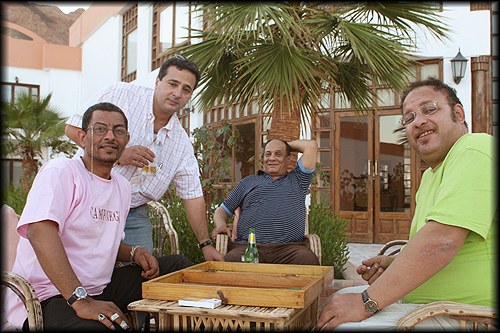
1. (photos at top of page) Leila, her husband Safa’a and our superstar teacher, Azza Sherif. The camp / hotel is in the background, bordered by the edge of the Sinai Mountains at sunset.
Sunrise on the bus
2*. Those coming from Cairo met before dawn near the Nile Hilton to board a chartered bus to Sinai. Sunrise on the bus.
Leila and Youssef
3. Leila and her son Youssef on the bus. He was the camp mascot.
Sinai Desert
4. Driving through the Sinai desert was stark but beautiful.
Hotel lobby
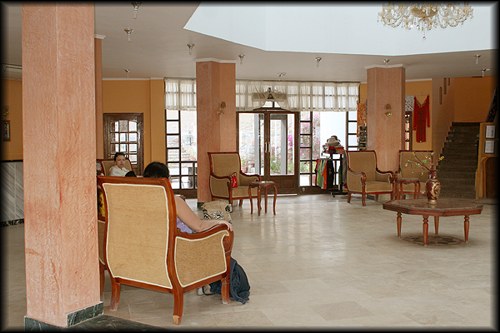
5. We stayed in a hotel called Miami Beach. It was right on the Red Sea coast. This is the lobby. Leila said "camp" but the only tent we were in was the performance tent set up on the beach. The hotel was clean, with spacious rooms and simple but good food – 3 meals per day.
Russian dancers
6. 2 of our lovely Russian speaking campers with the hotel complex in the background.
The pool
7. The pool with the terrace entrance to the hotel lobby in the background.
Tent and pool
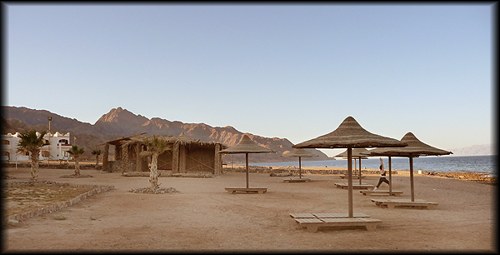
8. From the hotel terrace looking the other way toward the Camp Negum tent beyond the pool, the Red Sea and the hills of Saudi Arabia on the other side of the water.
Other side of the tent
9. The other side of the tent from the beach, with the Sinai Mountains in the background.
Tanoura lesson
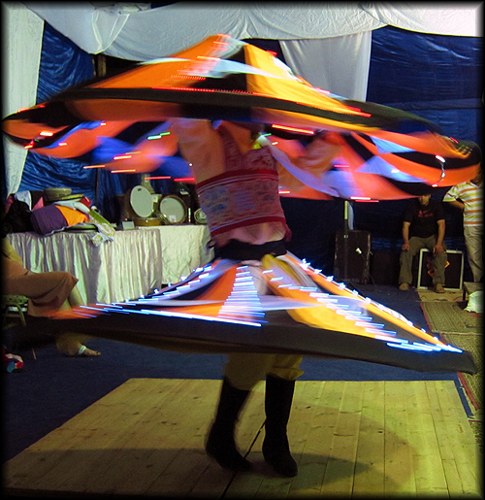
10*. The first class was how to spin with a tanoura. It’s harder than it looks…
Leila gets ready to teach
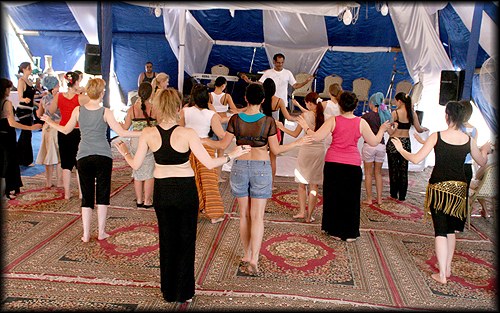
11. Leila getting ready to teach her first class – How to Dance with a Live Band. She covered what musicians expect from the dancer on stage (like how to get on and off, slow down or speed up) to make everyone’s performances go smoothly. At the end of camp, everyone was grateful for this class in particular.
Class in the tent
12. Class in the tent.
Folklore class
13. Rabea Abou Taleb teaching folklore, one of the few classes without the band. The class size was kept small – 40 people – to make sure everyone had space and individual attention.
Sahra teaches class
14. There were also lectures every day on different topics. Here is Sahra Saeeda giving an overview of the dances of Egypt.
Yoga by the pool
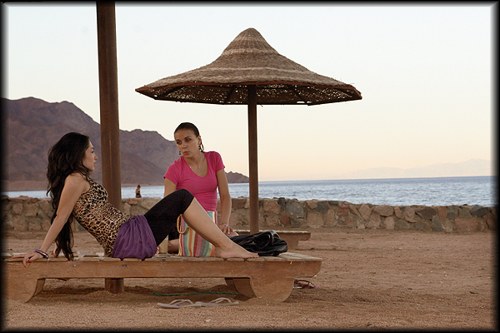
15. There was relaxation time for yoga on the beach …
Students on the beach
16. or getting to know the other campers.
Band plays backgammon
17. The band played backgammon on the terrace…
Band in the pool
18. or swam in the pool with Youssef the mascot.
Camels on the beach
19*. Camels wandered up and down the beach …
boys on a camel
20*. vaguely accompanied by their owners. "You want camel ride? … Very cheap!"
tanoura show
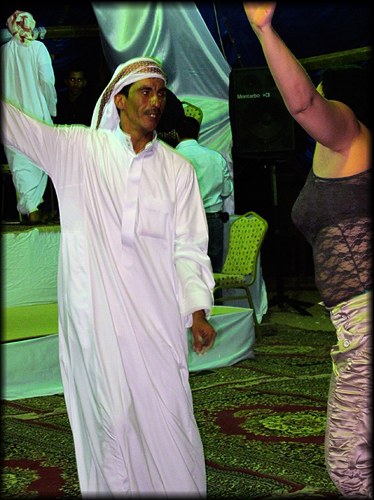
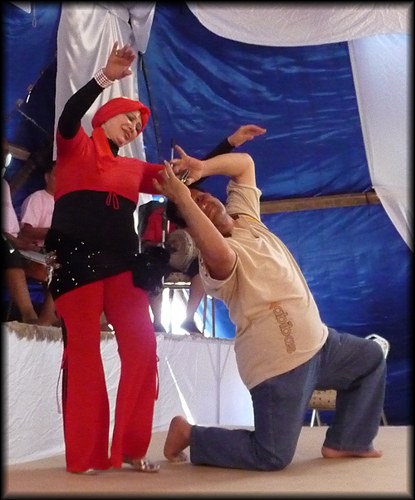
21*. Then there were the shows every night. They started with a teacher followed by 8 or 9 campers, one better than the other. Everyone was a pleasure to watch. The performers were relaxed and thoroughly enjoyed dancing for each other.
Bedouins
22*. Leila even brought in a small troupe of Bedouin musicians. Their music was very similar to khaleegi – no surprise, seeing how close Saudi Arabia is.
Azza!
23. And then there was the incomparable Azza Sharif.
She so mesmerized the class that people just sat down to watch her. Her style of dance is fast disappearing.
Everyone felt it was a rare gift to witness and learn from such an icon of 1980s raqs sharqi.
Azza with musician
23b. With the sagat player, Sayed Lacky, who was a hoot all by himself. Combined with Azza, sparks flew!
Azza in class
23c. Azza was also a crowd pleaser …
Azza the teaser
23d. … and teaser.
Azza
23e. And of course she loved playing with the mascot. (also picture- Sahra, Azza’s assistant, Leila, author Yasmin, drummer Yousrey Hefney in red, Sayed Lacky)
The teachers
24. The teachers- Sahra, Azza, Rabea Abou Taleb, Leila, Azza’s assistant, Yasmin- author
The group
25. The group with the band and singers. slightly larger image here


26 – 27. Then there were the extra-curricular activities – snorkeling in the Blue Hole, fish dinner in downtown Dahab and the mystical trek up Mount Sinai from Saint Catherine’s monastery to watch the sun rise from the Mountain of God. For those of us who decided to take the 3000 stairs down again, instead of riding camels,
our thighs will never be the same…
28*. particularly after performing the next night in the last show. (Yasmin the author)
party!
29*. There was a raucous good-bye party, where even the hotel staff let go.

30*. Everyone had such a good time that the party continued on the bus home. The sagat player trying out Serpentine Clappers.
In fact, everyone had such a good time that they convinced Leila to host not one but two camps per year –one in Dahab in May-June and another on a Nile cruise ship from Luxor to Aswan in late January. So mark your calendars. Leila’s next “camp” will be January 23-28 and feature not one, but two master teachers, Azza Sharif and Raqia Hassan, along with Safa’a’s incomparable band. The theme will be “Awalim and Ghawazee.” I can’t wait.

Christie and Azza
32- One more-Fionna and Azza!


use the comment box

Have a comment? Use or comment section at the bottom of this page or Send us a letter!
Check the "Letters to the Editor" for other possible viewpoints!

Ready for more?

  • 3-12-10 Creating Camp Negum by Leila of Cairo
    The idea came to us as we laid on the beach at Ras Sidr, a resort town near Suez on the west coast of the Sinai Peninsula. It was one of those rare times when my husband, Safaa Farid, and I could slip away from work for two days. We were watching the wind surfers and listening to Om Kalthoum on the clubhouse speakers when the question just popped out.
  • 5-17-10 A Bust to Be Proud of… by Yasmin Henkesh
    When she introduces me to her dance friends, it’s the first story out of her mouth – eighteen years after the fact. We still laugh about it.
  • 1-27-10 Shoo Shoo Amin, A Forgotten Treasure of the 80s by Yasmin
    Twenty years ago when I told people I had worked with Shoo Shoo Amin in Cairo, the response was “Wow!” Now, people go “Who?” Today no one seems to know who she is. For belly dance purists, this is a tragedy. Every so often, someone my age or older will wax lyrical about her on-line, but for the most part, she’s an enigma – even to young Egyptians.
  • 9-17-09 Sex, Belly Dance and the Afterlife by Yasmin Henkesh
    To these people, sex was not dirty, shameful, frightening or forbidden. It was a natural part of daily life and the essential prerequisite for birth – on earth or in the Afterlife.
  • 7-30-08 Ahlan Wa Sahlan 2008, Not So Welcoming this Year by Yasmin
    Prices have gone up everywhere, and Egypt is no exception. The reality hit me as soon as I walked into the Mena House. Bottled water was $4.00, where out in the street the same bottle was $.50. A bottle of beer was $10.00. Internet connection was $30.00 / hour. At those prices, life’s little pleasures didn’t seem important anymore.
  • 5-31-10 Creating and Listening to Musical Ecstacy, CD Review-Yasmin’s "Cry to the Moon, Taqsim lil Qamar" reviewed by Amina Goodyear
    Taqsim traditionally follows a certain melodic progression… Following the introduction, the improviser is free to move anywhere in the maqam and even modulate to other "maqams" as long as he returns to the original. Taqsim is considered by many to be a connection to the spritual world.
  • 10-14-08 Inside Peek at Making Music Videos: Hakim, Khalid Selim, Walid Toufic, Ali el Hagar, Elam, & Samira Said by Leila
    I was either crying or yelling at Hakim for most of the shoot and went home each day with a headache from it.
  • 7-15-08 Egyptian Wedding Stories by Leila of Cairo
    All the guests were staring at us. The father of the bride demanded to know who ordered the bellydancer and it seemed a fight was going to break out between representatives of the brides’ family and the hotel organizer.
  • 12-30-06 I Dance; You Follow by Leila
    As Westerners interested in an Eastern dance form, we might want to ask ourselves if we are missing certain critical aspects of Raqs Sharki because we are not open to Eastern teaching methods.
  • 11-17-06 Interview with Safaa Farid by Leila
    These days there are times I feel I’ve seen everything an Egyptian dancer can do in the first five minutes of her show. She doesn’t change. But foreigners study the dance very hard and they put much time into their show so that is it interesting for a whole hour.
  • 8-16-07 What Middle Eastern Audiences Expect from a Belly Dancer by Leila
    Audiences in the Middle East, especially Egyptians, see bellydancing as something to be participated in, critiqued, and loved (or hated) with gusto.
  • Changes: Egyptian Dance – Has it crossed the line?
    Both festivals, held in Giza were isolated and insulated from the people and the Cairo that I know and love.
 

Gilded Serpent presents...

IBCC 2010

Thursday Night Main Stage Photos and Video Collage

photos by Samira, Video by GS Staff.
posted June 4, 2010

The Thursday Night Main Stage Performance of the International Bellydance Conference of Canada was held April 22, 2010 at the Hungarian Canadian Cultural Centre in Toronto, Ontario, Canada.
Video report consists of a collage of clips caught of performances. IBCC is produced by Yasmina Ramzy and company.
Readers sending the names of individual troupe members to the editor is always appreciated.

Cairo a la Nar

Cairo a la Nar of Ontario, Canada
Dahab

Dahab of Nevada, USA
Iona & Haifa

Iona & Haifa of Ontario, Canada
&

Laura

Laura Selenzi of Ontario, Canada
Ethereal Tribal

Ethereal Tribal of Quebec, Canada
Maha

Maha of Ontario, Canada
Amar

Amar of Quebec, Canada
Michelle Marinho

Michelle Marinho of Brazil
Sultanettes

Sultanettes of Ontario, Canada
Denai's Dancers

Denai’s Dancers of Wisconsin, USA
Maki Natori

Maki Natori of British Columbia, Canada
Rosanna McGuire

Rosanna McGuire of Ontario, Canada
Flor

Flor Coelho of Portugal
Edmonton Bellydance Ensemble

Edmonton Bellydance Ensemble of Alberta, Canada,
, click photo for larger image


More IBCC photos and videos coming soon!


use the comment box

Have a comment? Use or comment section at the bottom of this page orSend us a letter!
Check the "Letters to the Editor" for other possible viewpoints!

Ready for more?


Gilded Serpent presents...

Got Baby? Two Prenatal DVDs

2 prego DVDs

Amira’s Bellydance & Yoga for Pregnancy,
Prenatal Bellydance with Naia

Reviewed by a very pregnant Sonja Oswalt
posted June 2010

I am now in my 36th week of pregnancy, and I found that early in my second trimester I was worried about how to adapt my daily bellydance practice safely for my growing belly.  Although I consider myself an advanced dancer, this is my first baby.  Hoping for some guidance, I tried out two bellydance DVDs specifically marketed to pregnant women: Amira’s Bellydance & Yoga for Pregnancy, and Prenatal Bellydance with Naia.  As you’ll see, both DVDs had something to offer, but each was unique in its focus and the audience for which it would be best suited.  I’ve thoroughly enjoyed my dance journey throughout my pregnancy. It is quite possible to maintain a healthy dance routine during your prenatal period with your doctor’s consent.  Good luck and enjoy!

Amira DVDAmira’s Bellydance & Yoga for Pregnancy

In this DVD, Amira, who is both a Registered Nurse and a bellydancer, provides bellydance and yoga routines for pregnant women. The DVD begins with a lovely menu screen featuring soft, relaxing music.  Amira provides an introduction describing her personal motivations for developing the DVD, and a brief history of Middle Eastern Dance with a focus on connections between the dance and movements used during the labor process. Amira asserts that bellydance was created by women for women, an assertion that depends upon what aspect or style of Middle Eastern Dance one practices.

Amira also uses the introduction to emphasize that the purpose of the video is not to teach the user how to bellydance, or how to become a professional bellydancer, but to provide movements that will feel natural and calming during pregnancy.

Amira also lists movements that new and advanced dancers should refrain from practicing during the third trimester of pregnancy. The introduction is set to the hauntingly familiar music of “Layali Al Sharq.”

A menu of exercises is provided, allowing the user to select Yoga Warmup and Stretch, Strengthening, Belly Dance, Exercise During Labor, and a Cool Down and Stretch, or to play all from the beginning. The studio setting is lovely and professional, but there are no mirrors so viewers must follow from the front view. The Yoga Warmup section includes a brief meditation and a series of seated stretches. These stretches will seem too easy to someone accustomed to a daily yoga or dance practice, particularly in the first two pregnancy trimesters.  During the third trimester, however, the stretches will seem relaxing.  I would have preferred some standing stretches, and a slightly faster pace, even during the third trimester. The stretches are quite appropriate for someone not accustomed to daily practice.

The strengthening exercises focus on developing leg strength to aid in birthing positions, particularly squatting. Amira teaches a safe way to practice squats during pregnancy, and leads the viewer in a series of squat exercises. Again, I found the pace to be a little slow for someone accustomed to daily exercise, particularly yoga, dance, or pilates—especially in the first and second trimesters of pregnancy, but appropriate for those just starting out or for someone in the third trimester of pregnancy for whom vigorous exercise may have become uncomfortable. Unfortunately, there are no arm-strengthening exercises, which would have been nice.

The Belly Dance section begins with short instruction on proper posture for bellydance.

This section is extremely slow for anyone beyond a very basic beginner level. I became frustrated with the slow pace, and was unable to pay attention or even follow along, although Amira does cover a wide variety of movements.

Amira covers hip slides, hip circles, vertical and horizontal figure 8s, rib cage slides, rib cage crescents, rib cage figure 8s, rib cage circles, and basic arm movements.

Amira includes a section called “Exercises during Labor” where she breaks down some bellydance movements that women may find helpful during the labor process.  Again, for experienced dancers these movements will be easy and, therefore, the pace will seem excruciatingly slow. For beginning dancers, however, the pace is nice, with a focus on how to apply the movements to various stages in labor.  Movements include reverse undulations, internal hip circles, pelvic drops, and full body undulations.  The section ends with a series of breathing techniques for coping with labor pain which many women may find useful or interesting.  The exercises end with a slow, gentle cool down.

Two performances are included on the video, during which Amira dances while pregnant.  Her dance style is lovely, though it’s obvious the music was overdubbed on top of the first performance, and the videography is annoying because it goes in and out of focus and constantly moves from distance to close-up viewing. As a result, the viewer often completely misses the movements being performed. 

The second performance was videotaped at MECDA, and while the videography is less artistic, I preferred it because I was able to see the movements. Amira is a very graceful pregnant dancer, which is lovely to watch, and her veil work was nice.

Overall, I found the video to be a very nice resource for beginning dancers who are pregnant or for women who have not ever danced before. For intermediate or advanced dancers, the video is too slow, particularly in the first and second trimesters, and those viewers will find most sections to be boring or frustrating because of the pace. Therefore, I would only recommend this as a resource to beginners, or to teachers who are looking for safe methods and movements for instructing pregnant students.

3 zil rating
Rating:  3 zils

  Best for beginning level dancers in any stage of pregnancy,
or advanced beginners in the second and third trimester;
requires no previous knowledge of bellydance movements.
Production Quality: High level, professional quality

Naia's DVDPrenatal Bellydance with Naia

In comparison to Amira’s prenatal bellydance video, the DVD Prenatal Bellydance with Naia opens to a menu with a lovely background of flowers, and selections for workout with narration and music, workout with music only, an option to select specific chapters, and a few necessary extras like disclaimers and credits.  Each set of exercises is tied to a nature-related theme like water and earth. 

Unlike Amira, Naia appears to assume some previous experience with bellydance, and she uses dance-specific terminology.

  She very briefly mentions appropriate posture.  Naia’s studio is plain but lovely, with silky-looking curtains in soothing aqua in the background, a lovely selection of tropical flowers in a vase, and a mirror that allows you to view her from the side.  Although she has the mirror available, Naia faces the camera with the mirror to her side, so the viewer is still forced to follow along based on a front or side view, not a back view.

In the “Water” section, Naia leads a brief warmup that moves at a faster pace than Amira’s exercises, and includes arm and wrist warmup, ankle warmup, chest and head rolls, back stretches, and general side stretches.  In the “Earth” chapter, warm-ups progress to the lower body and transition into bellydance movements like big hip circles, maya, figure 8s, and hip lifts.  While Naia breaks down some of the movements, she does so rapidly, and quickly uses the movements in small combinations and layered over footwork with fairly few repetitions. 

A beginner with many months of experience under her bedleh, or any dancer over the beginner level would have no problem keeping up.  A very new beginner would struggle with the movements, particularly in late pregnancy when movements become harder to execute even for a seasoned dancer.

In the “Air” chapter, Naia focuses on the upper body, and she begins with snake arms, and moves into chest lifts which she does not break down.  Again, for a dancer who has previously studied with a teacher, this section is not too difficult.  However, for early beginners the movements, while not advanced, are not broken down, move quickly, and Naia layers them over footwork after just a few repetitions. 

The “Fire” chapter suddenly picks up the pace with traveling step-combinations that tie all of the previous chapters together.  The rapid pace and traveling steps would likely overwhelm a beginning student, particularly a beginner who is in her second or third trimester.  However, for dancers who have previous experience in other dance forms, or for dancers who are at an “advanced beginner” level or beyond, the rapid pace is invigorating. Naia ends the video with a slow cooldown.

I appreciated the pace of Prenatal Bellydance with Naia, because I found Amira’s Bellydance & Yoga for Pregnancy DVD to be too little of a challenge.  This DVD, while still not challenging to an advanced dancer, does offer some cute combinations that provide a mild workout, and are soothing to a very pregnant body.  However, I appreciated the sections in Amira’s DVD that focused on using bellydance during labor to assist progression, her focus on breathing techniques, and her strength-building squats.  For students who are looking for a quick but easy workout with some light and simple bellydance movements, Prenatal Bellydance with Naia may provide a slightly more satisfying pace.  However, new beginners may be overwhelmed, and would do better to select Amira’s Bellydance & Yoga for Pregnancy.  Neither DVD offered a challenge for advanced dancers, while both DVDs are more suitable for a dancer in her second or third trimester, as they may be too easy for a dancer in her first trimester. 

2.5 zil rating
Rating:  2.5 zils 

Best for advanced beginners throughout pregnancy
or intermediate dancers in their second or third trimesters;
requires an understanding of basic bellydance movements and traveling steps.
Production Quality: High level, professional quality

Personally, I would love to see the production of a prenatal bellydance DVD for advanced dancers w ho wish to maintain muscle tone, continue to improve technique, and challenge themselves while safely accommodating their growing bellies.  However, perhaps because most bellydance movements are easily adapted for pregnancy and advanced dancers are usually able to intuitively adjust, there has been little need for an advanced prenatal bellydance DVD on the market.


Purchase Information


use the comment box

Have a comment? Use or comment section at the bottom of this page or Send us a letter!
Check the "Letters to the Editor" for other possible viewpoints!

Ready for more?

  • Wiggles of the West: One Dancer’s Foray into Competition
    In the world of belly dancing lately, dance competitions seem to be the big thing. Love them or hate them, they are popping up all over the country, leaving one to wonder what benefit they add to our art form. In an art form as varied as Middle Eastern Dance, incorporating cultures crossing multiple borders and continents, to what standards do these competitions
    adhere?
  • Yousry Sharif Makes a Stop in Tennessee
    Yousry sat on the front row during the performance, and is rumored to have remarked “that is me dancing up there!” when Virginia made her appearance.
  • Kaleila’s Belly Dance Baby DVD, Dancing While Pregnant
    In this touchingly personal video, Kaleila sets out to “inspire other pregnant women to feel beautiful."
  • Dancing the Big Belly, Bellydance Prenatal Fitness and Dance Instruction Program DVD
    The slow pace may seem agonizing for a fit, nonpregnant dancer and may seem slow during earlier stages of pregnancy, but as that weight starts adding up and the fatigue returns in the third trimester, I
    have a feeling the pace does not seem so slow.
  • Bellydance in Utero
    When pregnant, I practiced Belly dance moves each day in preparation for giving birth, mainly focusing on the circular, soothing and stretching movements but avoiding shimmies and moves that were contra-indicated by midwives and sports professionals.
  • 6-13-10 Miles Jay demonstrates the String Bass. Musical Instrument Tour
    Another video filmed at the Mendocino Music and Dance Camp in 2008. Miles show us bowing and plucking the bass as well as the maqam bayati and how the bass is tuned.
  • 6-11-10 Teacher or Coach: What’s the Difference? Why All Performing Dancers Need a Dance Coach by Najia Marlyz
    Most performers have a great deal of untapped potential; additionally, many consider it cheating to engage a professional coach and yet, that is exactly what they would look for if this were the Olympics and they were competing for the gold!
  • 6-10-10 Debke, A Brief History by Tasha Banat
    How does one combine Debke with Bellydance? What does that mean? In order to combine two beautiful dances, we have to first separate them and understand the different types of Arabic music
  • 6-8-10 Interview with Yamil Annun, An Argentinian Belly Dancer by Martha Duran
    Yamil Annum has created his own dance style and has evolved his specific style of Oriental dance by using the well established foundations of classical Ballet, Ukrainian dance, Ballroom dancing, Celtic dances, Jewish folk-dance, Bhangra, Armenian and Argentinian Tango. His elegance on the stage has revolutionized stages all over Argentina and Latin America.
  • 6-7-10 There’s More to Being a Professional? by Ashiya and Naajidah
    Many are the times we have heard belly dancers bemoaning the fact that there are so few venues, especially paying ones, for our art form. They long to be professional dancers, and are understandably frustrated at the lack of opportunities afforded us for acceptable venues for performances. But, does the lack of venues keep dancers from being professional, or does being unprofessional create the lack of venues?
 

Gilded Serpent presents...

Teacher or Coach: What’s the Difference?

Coach coaching

Why All Performing Dancers Need a Dance Coach

by Najia Marlyz
posted June 11, 2010

What was it that the police officer said in that movie?  I think he said, “Badge? I don’t need no stinkin’ badge!”  Well, perhaps not, and it is certain that because you have an outstanding dance teacher, you dance beautifully, and get plenty of gigs too, therefore, you might think you don’t need no stinkin’ dance coach either…

…However, as a dancer and dance coach, I ask you to imagine what you might accomplish if you only were aware some part of what it is that has not yet entered your realm of consciousness… 

Generally, people will not tell you the truth, you know. 

  • If they think your dance is lacking something, they feel sorry for you, and they will say something that they think sounds supportive and positive.
  • ·If it was a truly amazing performance, they will say something that they think sounds—supportive and positive!

In other words, audience members try hard to be supportive and positive when facing a performer in person. Hopefully, they will always cheer and never boo your efforts!  However, you cannot see yourself the way that another person, especially a professional dance coach, can see you. 

Video is not a substitute for a coach’s input.  Video not only adds ten pounds to your image but also usually subtracts the magic that is the essence of your dance.  Aren’t you just a little bit curious how another looks at your dance and sees…what?  Don’t you wonder sometimes if your dance is all that it could be?  If you have begun to believe in your dance technique as outstanding in quality, or that your skills are substantially on the road to superior (though it might seem embarrassing to admit that aloud to very many people), it is time to engage a professional dance coach who is not your dance teacher. One person cannot fill both roles for you!

It is never too soon to find a coach who can aid you in all phases of your public performances—from costuming (Does this costume make me look voluptuous—or just show off my huge derrière?) to technique and choosing just the right musical arrangements to fit the gig.

Most performers have a great deal of untapped potential; additionally, many consider it cheating to engage a professional coach and yet, that is exactly what they would look for if this were the Olympics and they were competing for the gold!

Najia observes classObtaining a performance coach to enhance whatever it is that you are best at performing is probably your next logical step in attaining your dance goals, and subsequently, renewing your inspiration. It is less publicly revealing of your little faux pas and technique deficiencies when you can work without witnesses hearing your questions or assessments of your skills and corrections of errors. Therefore, you will want to work in private with an experienced, discrete dance coach who has had a full dance career in performance skills. Additionally, you should realize that the better you are as a dancer, the more your coach and you can accomplish together! 

Since the time I began to dance as an adult in 1968 and now, 2010, I have developed some unique insights into coaching Western dancers in the both creative and ethnic dance and have become a recognized coach in the field of performance dancing because of the rapid improvement others see in my clients’ dancing. I urge dancers who perform in public, and some who are preparing to begin an entire career in dance, to seek the benefits of working with an appropriate performance coach as I did for about three years when I was just beginning to perform. My coach’s insights were invaluable to me! She was not my dance teacher and was not even a
professional dancer—but she had been a life-long stage and gig performer.  She billed herself as “Beatrice and Her Enchanted Violin”.

Because coaches are not primary instructors, they should never require their clients to “start over” with beginner’s dance lessons—even if it becomes evident that some of them have vast un-addressed lack of dance concepts missing from their dance knowledge. For example, a coach might recommend some classes in stage drama or costuming. Consequently, a dancer needs to enter into a sort of dance triage process.  When using term “dance triage” I mean the sort of selective treatment order one might receive in a crowded emergency room of a hospital. When coaching, I take on areas of egregious neglect and need and at the same time, build upon strengths of survival that have sustained my client’s dance thus far.  If some part your dance needs a tourniquet, you should understand exactly why!

Without exception, dancers who have coaches move forward from wherever they are in dance presently to a greater level of dance expression. Usually, it would not have been possible to envision this progress by the dancer alone.

Bert coachingHowever, in order to withstand the process, dancers must have a real love for moving in an extemporaneous style of composition and must have outgrown the Western need to rely on a formal choreography. Please note that the term “choreography” is defined as nothing more than a pre-planned written dance for skillful memorization. However, in my opinion, in recent years, it has come to imply an element of legitimacy in form and stature that is a false impression and a debilitating crutch. Therefore, do not expect a coach to be creating choreography for you or helping you with anyone else’s. Your coach will help your learn how to listen to music analytically and how to react to it as a unique dance artist.

The magic of Oriental dance springs from an intense desire to communicate emotional truths by moving one’s body from the inside out.

If you dance from your emotional center, I would urge you to continue your learning process by adding a coach to your dance life and career. Even though this may increase your dance involvement at least a couple of times per month, dancers should not drop classes with a current instructor, taking care that social contacts in dance are not broken.  These personal contacts remain important in one’s dance advancement because they will become a part of one’s future dance networking.

Coaching is an acutely intimate process in which your ability to grow in dance, so that your inner realm and your heart’s desire for your entire life is reflected through your dance. All will come under intense scrutiny.

In order to do it right, coaching takes time, and learning to know you well enough to access the information and insights that you need will take you and your coach both time and repetition. It will also require numerous performances of all types: birthdays, recitals, festivals, etc.  New paths should open for you, and one or two coaching sessions can only reveal to a coach where problems exist—only a diagnosis for you. Ongoing coaching procedures, however, can reach performers with new inspirational material and ideas. A coach can help you develop awareness of opportunities for creative tactics for stage-work and handling varied venues. Whether dance clients can enter onto those new paths securely enough depends on their intent, dedication, and follow-though—as well as the impact of an effective coach.

use the comment box

Have a comment? Use or comment section at the bottom of this page or Send us a letter!
Check the "Letters to the Editor" for other possible viewpoints!

Ready for more?

  • 3-13-08 Enduring Open Criticism: A Student’s Question about Feeling Humiliated by Najia Marlyz
    What is wrong with our form of dance today is a direct result of the current trend for treating dance students as if they were in therapy or grade school (or both).
  • 9-11-07 How to Avoid the Executioner: A Journey into Creative Listening by Najia Marlyz
    Standardization can ruin an art form as it would the fashion industry—or any other endeavor based upon creative thinking.
  • 9-15-06 The Taxim from a Dancer’s Perspective:Tarab or Tyranny? by Najia Marlyz
    Sometimes, these improvisations can be quite elaborate. The effect is somewhat like modern jazz and stays within the framework of the traditional maqam or maqamat.
  • 11-28-06 Back to Basics by Najia Marlyz
    Belly Dance is most meaningful when we define it as a communication of mutually held emotional response and truths between people
  • 12-24-03 Dancing Inside Out by Najia Marlyz
  • 6-10-10 Debke, A Brief History by Tasha Banat
    How does one combine Debke with Bellydance? What does that mean? In order to combine two beautiful dances, we have to first separate them and understand the different types of Arabic music
  • 6-8-10 Interview with Yamil Annun, An Argentinian Belly Dancer by Martha Duran
    Yamil Annum has created his own dance style and has evolved his specific style of Oriental dance by using the well established foundations of classical Ballet, Ukrainian dance, Ballroom dancing, Celtic dances, Jewish folk-dance, Bhangra, Armenian and Argentinian Tango. His elegance on the stage has revolutionized stages all over Argentina and Latin America.
  • 6-7-10 There’s More to Being a Professional? by Ashiya and Naajidah
    Many are the times we have heard belly dancers bemoaning the fact that there are so few venues, especially paying ones, for our art form. They long to be professional dancers, and are understandably frustrated at the lack of opportunities afforded us for acceptable venues for performances. But, does the lack of venues keep dancers from being professional, or does being unprofessional create the lack of venues?
  • 6-4-10 IBCC 2010- Wednesday Stage, Opening Night Gala Performance Photos by Samira
    The Opening Night Gala Performance was held April 21, 2010 at the Hungarian Canadian Cultural Centre. Video report reposted here as an introduction to the photos.
  • 6-1-10 Choosing Finger Cymbals by Lara Lotze
    Learning finger cymbals can be intimidating for many dancers. It is not just another prop, it is a musical instrument that should be used to enhance the dance and help accent the music. One the major barriers to learning finger cymbals is simply finding a good pair of cymbals that you like.
 

Gilded Serpent presents...

Debke

Debke

A Brief History

by Tasha Banat
posted June 7, 2010

General Information:

The word Debke* in Arabic means "stamping the feet" and it is the popular folk dance in the Asian Arab world. As a line dance, it is seen at weddings, graduations, birthdays, and any other party or Haflis

The most common types of Debke are Debka Shamaliya (country dance) and Debka Jabali (Mountain dance), but each village has its own little style.  The leader is called Raas ("head") and he or she twirls a handkerchief or string of beads called masbha (similar to a rosary), while the rest of the dancers keep the rhythm. In some Debke songs, the singer begins with a Mawwal (solo).  Examples of some popular Debke Songs are Ya Ein Muletin, Wein Al Ramallah, Fog el Naghal.

How does one combine Debke with Bellydance? What does that mean? In order to combine two beautiful dances, we have to first separate them and understand the different types of Arabic music.

Arab worldThe Arab extends influence of culture throughout 2 continents and beyond.  The 2 continents influenced the most are Africa and Asia.  That is why we separate ourselves into African Arabs and Asian Arabs.  I would surmise that if you have been exposed to the belly dance scene for more than 5 years, you know most of the dance styles that come from the continent of Africa, which includes Egypt.  Also with that inclusion, comes the folk dances of Egypt, Tunisia, Libya, Algeria, Morocco, and on into the southern regions of Spain to include the dances of the Andulusia. The Asian Arab world includes the region known as B’lad E’Shaam (Lebanon, Palestine, Jordan, Syria, Iraq, part of the Khaliji areas.  In addition to those countries, the influences are found in Iran, Turkey, and beyond there.
Of course, when I talk about these 2 continents, I am choosing to disregard politics and who controlled who, when, and where, in the past 2 centuries – this is an article about music and dance. Having said that, I suggest that you begin to understand where my dance comes from by dividing your music into the same 2 categories: Africa and Asia. Then separate your music into 2 more categories: Cabaret Belly Dance and everything else.

Belly Dance is only one type of dance in the Middle East so it cannot be called Middle Eastern Dance – that is completely wrong so please, do not use the term "Middle Eastern Dance" to replace Belly Dance.

It is as vague in the Arab world as anything called American Dance would be in our world. For example, which dance in the United States is American Dance?  There are so many examples,  like Country Western, Disco, Rock n Roll.  The Middle East is no different.  There is Middle Eastern Lebanese Belly Dance, Egyptian Belly Dance, Turkish Belly Dance, but each of these areas have many other dances as well. 

Belly dance is the dance of the entire Arab world which includes North Africa, Arab Asia (the Middle East), on into Turkey and beyond.

It is popular to believe that Belly Dance originated in Egypt, but Cabaret Belly dance Style actually originated with the French invaders who controlled North Africa, and Lebanon. 

They were a lot less restrictive and the French style Cabaret was so popular.  Countries occupied by France became republics.  Most Arabs know that Cabaret Belly Dance started with the Casinos and Cabarets set up by the French to entertain the French.  The Cabarets and Casinos were fashioned after the Casinos and Cabarets in France where the “Can Can” was the main attraction.  I believe this is true….Simply because the British have no dances of their own, or food (except maybe fish and chips). In Arabic, Belly Dance is called “Raks B’tn” (Stomach Dance).  In French it is called Danz Orientale or Daneues du Ventre.  Badia Masabni, of Lebanese Heritage is credited with coming up with the Cabaret Belly Dance Costume, as well as schools.  In addition, she opened the first Cabarets in Egypt fashioning them after the Cabarets in France and Beirut.

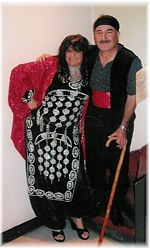
Author Tasha and friend MichelLebanese Style Belly Dance and Middle Eastern Debke: My Story

Many of the observations I make are based on my own personal success with merging these 2 styles of dance into a great career and is based on the my desire to present Arabic Culture in a positive fashion. The Lebanese Style of Belly Dance and the Debke describes my personal dance success.  I began my 40 year dance career in College when I heard Arabic musicians rehearsing in a nightclub one day.  I went inside and began to sing the songs they were playing.  The owner, a Syrian said he would pay me if I would do some Debke between my Belly Dancing.  To make some college money, I did it.  It was that simple but I became a little jealous that the belly dancers were making a lot more money, so Om Tarik, the owner’s wife, made me my first belly dance costume.  I knew how to belly dance from the haflis (Arab parties) that I attended, but it was the Debke steps that I threw into my dance that make me popular with my own people.

Port Said LPEveryone in the Arab nightclub audiences where I danced tended to be from B’lad E’shaam (Middle East) so it was a natural progression for me to mix up my Dabka with Belly Dance; especially in the late 60’s throughout the 70s and 80s.  Even most of the musicians were, usually an oud player from the Middle East or an Armenian from the Middle East.  And the songs were Debka, from Mohammed Al Bakkar (Port Said album) to Eddie the Sheik and many others. 

Egyptian Choreographies didn’t really hit the scene until the 80s and early 90s when Lebanon was invaded and turmoil which still exists occurred in the Asian Arab world.

At the time, I did not define Lebanese Style Belly Dance as such, but my cabaret belly dance style was definitely influenced by the dancers from that part of the Arab world because they were the ones I was familiar with and therefore emulated. 

The biggest difference was that the movement in Lebanese Cabaret Belly Dance was achieved with much straighter legs and body movement was much more emphasized.  The costuming was definitely more formal and included high heel shoes and nylons.

Since the Debke has definite styles when it comes to footwork, I use Debke steps as traveling steps, even to drum solos and songs that are not necessarily Debke.  The way I see it, every nightclub performer I know who has been in this business for awhile, say more than 25 years belly danced to Debke songs.  That was true all the way back to Mohhamed Al Bakkar and the old Port Said album, to Eddie the Sheik, to George Abdo and on to Raghab Alami.  

The belly dance music back then was much more orchestrated than that of Egypt as per the Nadia Jamal albums and the ones with Hanan on the covers.  Even the classics were played with a lot more musicians – violins, ouds, qanoons, derbekes, zills, guitars, etc. 

Here in America, the musicians consisted mainly of oud, and durbeke, tambourine and the musicians were either Armenians who fled to Arab countries and then to America or Arabs who fled Arab countries and came to America.  In other words, they were mainly Middle Eastern Debke songs or Armenian Folk Songs.  The costuming was less formal than in Lebanon, but certainly very different from Egypt and North Africa.  Then began the many wars which drove Arab Artists out of the Arab world and music and dance blended into something else.

*Also spelled "Dabke"
off site: Debke infused Oriental Dance by Margo O’Dell


use the comment box

Have a comment? Use or comment section at the bottom of this page orSend us a letter!
Check the "Letters to the Editor" for other possible viewpoints!

Ready for more?

  • Belly Dance:Time for Personal Assessment or How old are your Shoes?
    What do you personally want from the dance? In order to answer this honestly, you must make a personal assessment of your goals and include your achievements.
  • 1-25-07 One Banat: An Exploration of Some Belly Dance Costuming Origins by Tasha Banat
    Since the establishment of Israel, the definition of the term “Middle East” seems to have changed and now has come to refer to a conglomeration of a number of unrelated countries in the Asian and African parts of the hemisphere.
  • 8-18-05 Re-defining Belly Dance and Middle Eastern Dance by Tasha Banat
    The fact is that “Middle Eastern Dance” is not an acceptable definition for Belly Dance and let me explain why.
  • 12-5-06 The Ethics of Fusion by Naajidah
    If the culture that you’re borrowing your moves from objects to your fusion, does it matter? Are you being respectful or exploitative if you borrow steps from a culture that doesn’t want their music and dance used that way?
  • 12-13-05 The Zar by Yasmin
    We do know that today thousands of women in Africa and the Middle East use this music to cure all kinds of illnesses. They literally dance until they drop.
  • 5-13-02 Aisha Ali & The Birth of the Ghawazee by Sadira
    " This could not possibly be a dance to take seriously", people whispered
  • 5-24-04 Dancing Darkly: The Phenomenon of Gothic Belly Dance by Laura Tempest Schmidt
    This may come as a shock to many, but Gothic Belly Dance isn’t really a new phenomenon, and it’s not just centered in California. First of all, it’s simply a merger of two entities that
    go well together, like peanut butter and chocolate.
  • 10-6-06 What is Gypsy Bellydance? by Amy Luna Manderino
    …it is a sore point for representatives of the Roma community whose advocacy groups are very clear on their preference for the term Roma or Romani and consider the term "Gypsy" to be suspect when used outside their own community.
  • 2-6-08 The Secret of Saiidi Song and Dance-Straight from the Horse’s Mouth by Keti Sharif
    "Saiidi".Say this word anywhere in Egypt (including El Saiid) and colloquially it implies someone who is funny, backward – a loveable, gullible character with salt-of-the-earth village simplicity. To call someone “Saiidi” is a local term or endearment for a likeable buffoon!
  • 6-19-06 "It IS About the Food!"by Margo Abdo O’Dell
    The matriarchs were teaching me about a cultural art from my Lebanese heritage.
  • 4-26-06 Much, Much More by Margo Abdo O’Dell
    Please do not call me a belly dancer. Because for me, it is not just a flip of the hip, the wink of an eye. It is not just the sparkle of jewels, the want of applause.
  • 6-8-10 Interview with Yamil Annun, An Argentinian Belly Dancer by Martha Duran
    Yamil Annum has created his own dance style and has evolved his specific style of Oriental dance by using the well established foundations of classical Ballet, Ukrainian dance, Ballroom dancing, Celtic dances, Jewish folk-dance, Bhangra, Armenian and Argentinian Tango. His elegance on the stage has revolutionized stages all over Argentina and Latin America.
  • 6-7-10 There’s More to Being a Professional? by Ashiya and Naajidah
    Many are the times we have heard belly dancers bemoaning the fact that there are so few venues, especially paying ones, for our art form. They long to be professional dancers, and are understandably frustrated at the lack of opportunities afforded us for acceptable venues for performances. But, does the lack of venues keep dancers from being professional, or does being unprofessional create the lack of venues?
  • 6-4-10 IBCC 2010- Wednesday Stage, Opening Night Gala Performance Photos by Samira
    The Opening Night Gala Performance was held April 21, 2010 at the Hungarian Canadian Cultural Centre. Video report reposted here as an introduction to the photos.
 

Gilded Serpent presents...

Interview with Yamil Annum

An Argentinian Belly Dancer

Yamil Annum

by Martha Duran
posted June 8, 2010

Martha the authorYamil Annum is a professional male Belly dancer and master instructor from Argentina.  He was born on April 25, 1975, and is a master in Argentinian folk dance. In 1993, he received a medal of honor when he graduated from the Artistic Institute of Haedo where he obtained his masters degree in Spanish Regional Dance.  While he was a principal dancer for the Superior Artistic Institute of Buenos Aires, 1998, he was proclaimed the principal dancer for the Greek Ballet of Argentina. In 1995, he was head master teacher of Arabic dance in the Arabian Palace of Lomas De Zamora and at the Lebanon Syrian of San Fernando for the International Dance Congress of Argentina. In the same year, he was invited by Amir Thaleb to be the principal dancer of the Arabian Dance Company, 1998-1999.

Yamil Annum has created his own dance style and has evolved his specific style of Oriental dance by using the well established foundations of classical Ballet, Ukrainian dance, Ballroom dancing, Celtic dances, Jewish folk-dance, Bhangra, Armenian and Argentinian Tango. His elegance on the stage has revolutionized stages all over Argentina and Latin America. We had the opportunity to get him under our spotlight and get a glimpse of how some Argentinians can make stages glow when they Belly dance!

1. How did you start in the world of dance?

Yamil leaps with partnerI started on the dance path with classical ballet; I was very disciplined, structured, and was struggling to achieve perfection, in a competitive ambiance and with the peer pressure that characterizes this universal limb of dance. but I didn’t feel complete. After every show, there was an empty space inside of me!  I could only give the audience whatever my teacher taught me, and I was always left with relegated emotions. By luck, one day I found myself in front of an Oriental dance video, and I immediately fell in love with it.
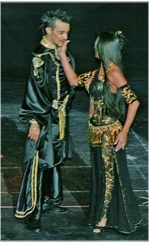
2.  How was your personal dance style (that is commonly known here as a style that has influenced a whole nation) born?

My style started evolving; at first, it was very different from what you can see now. I started being a very traditional and oriental folk dancer.  You can see that–from my costumes to my dance steps. But the evolution wasn’t planned; it began to shape itself–little by little. I always tried to be different from what I used as reference material, and I’m sure that I did it well.

Afterward, I went through a phase where my performances had lots of feminine movements and dance steps clearly  interpreted with a masculine image, after a while I evolved to the style that got me in balance and ambiguity where I reflect my personality mt sensuality and I’m able to camouflage my classical dance.

3. Every choreographer, every dancer knows how difficult it is to put together an Oriental dance production-choreography for a big stage. In your work, we see that you achieve harmony and choreographic perfection!  Can you describe the process it takes you to set a choreography?

Yamil with SaidaI always establish some rules of choreography, but  I never impose a choreography.  I always know where I want to go on stage, how I will travel on stage. However, choreography for my dance performances will never be the same each time. When we’re on a big stage, it’s important to use traveling combinations, where I use lots of my classical ballet background, using diagonals, varying heights, circular movements and of course, finding the center stage for emotional moments. Lights play a very important role in a performance; we must always have a good relationship with the lighting!" Yamil replies with a burst of laughter.
4.  Have you ever danced something other than the Egyptian style?

Yes, I have done Greek and Ukrainian Dance.  All my teenage years were all about Italian dance and Argentine Tango, but there is nothing I like more than my dance today!

5.  What are Yamil Annum upcoming projects?

I am starting a very busy year, thank God! I will be visiting Chile, Dominican Republic, Mexico, Peru, Venezuela, USA, Italy, Spain, Russia, Ukraine, and Belarus besides the national tour in my country.

6.  What  would be your next dance goal in a world where you have conquered your own country?

Without a doubt, I will get on a stage in Egypt, and why not tour the rest of the Arab countries?  

7.  Can you describe a dance class with Yamil? Yamil teaches

It’s quite dynamic, demanding, and has a sense of humor. What is important to me is that every student learns, incorporates knowledge, and also has to have lots of fun! In my classroom,  students forget their troubles for an hour. They deplete their energy, and they return to their homes with a great  sensation of achievement. That is my secret!  Also, they receive three certifications:  the first is PERFORMER (for professional dancers), ELEMENTARY TEACHER Certification (for teaching beginners) and MASTER TEACHER (which certifies completion of the dance program). Additionally, we have programs for girls and youth studies, also with certification.

9.  How do you choose a song to establish a group choreography?

This is a difficult task to explain in words, one must first analyze the group of performers and then to select appropriate music. The age, technical ability and socio-cultural environment of the group are key points of analysis. A simple method to decide whether the piece is right or not is by making them listen to the full track and by debating. According to the dialogues that happen, we will know whether it is appropriate or not.

Yamil stretch10.  How do you choose a song to set a performance for yourself?

I really must like the beginning and end of the song, both points are critical. I don’t like to edit the songs, if the music creates something  if it evolves in my feelings, it means that the melody is appropriate for my performance

11.  When you perform on stage, do you improvise or use established choreography?

Yes I mostly do improvisation; I do establish some guidelines, impose a routine, but the rest is totally improvisation in the moment.

12.  Do you have any plans that include a visit to the USA?

Yes! I will be in Miami on the month of September of this year, 2010. 

It was a great honor for me to be able to interview a dancer, choreographer and excellent performer whom I admire! If readers have the opportunity to enroll in a workshop with this great Argentinian dance master, I would highly recommend that you do so.


use the comment box

Have a comment? Use or comment section at the bottom of this page orSend us a letter!
Check the "Letters to the Editor" for other possible viewpoints!

Ready for more?

  • Hot Bellydance Event in Tijuana
    Leila Farid from Cairo Egypt is a sweetheart! She is what many Mexican dancers aspire to look and dance like. Wow! She is gorgeous and mesmerizing – as well as extremely nice, polite and down to earth! My star struck students were amazed to catch her snacking on Mexican Rancheritos (chips) and eating breakfast like a Mexican, with tortillas! She’s so fit that we couldn’t imagine she snacked on chips tortillas like the rest of us. Her master class was magnificent.
  • 5-26-09 Bellydancing Fashionably by Martha Duran
    Always remember that you’re representing a country’s culture!  Sometimes, less is more; sometimes, more is less.”
  • 3-10-09 Its All in the Flavor! Bellydance in Mexico by Martha Duran
    Those were tough times for us teachers. Students were very shy in the classroom but eager to learn; some of them even thought that Shakira had created Bellydance! They didn’t have much information about Oriental Dance, its origins, or different tyles. Some aspiring dancers even sat through several classes just to check out what Bellydance was or if we teachers danced it as well as Shakira.
  • The Ramzy Tour of 2003
    Photos from:Brazil, Brisbane, MaryBorough, Wellington, London, Singapore and Tibet? Readers- please help us with matching names to these faces!
  • Shimmying on the Shores of Paradise, The Dancers of the Dominican Republic
    White sands and turquoise waters come to mind when most picture the Dominican Republic, but the Caribbean paradise offers visitors far more than its natural beauty. It may come as a surprise that the small tropical country most known for its pristine beaches and Caribbean hospitality also has a vibrant and thriving belly dancing scene.
  • Belly Dance in Brazil
    …they are trying to organize a Code of Ethics
  • Learning Matrix: A Long Journey, The Belly Dance Scene in Taiwan
    Sometimes, one might have to admit that learning only choreographies might lead students and dancers away from learning the essential elements of traditional Belly dance.
  • Shahrazad and I
    Anyone who wants to tell about Brazil and belly dance must refer to her.
  • Tajikistan: The Land of Dance Part One
    Video features: #1-Introduction by author, #2- A Map Tour on an ancient and modern map.
    " Communication with the outside world is difficult and expensive, and nearly impossible during the winter."
  • There’s More to Being a Professional?
    Many are the times we have heard belly dancers bemoaning the fact that there are so few venues, especially paying ones, for our art form. They long to be professional dancers, and are understandably frustrated at the lack of opportunities afforded us for acceptable venues for performances. But, does the lack of venues keep dancers from being professional, or does being unprofessional create the lack of venues?
  • IBCC 2010- Wednesday Stage, Opening Night Gala Performance Photos
    The Opening Night Gala Performance was held April 21, 2010 at the Hungarian Canadian Cultural Centre. Video report reposted here as an introduction to the photos.
  • Choosing Finger Cymbals
    Learning finger cymbals can be intimidating for many dancers. It is not just another prop, it is a musical instrument that should be used to enhance the dance and help accent the music. One the major barriers to learning finger cymbals is simply finding a good pair of cymbals that you like.
  • Building A Dance Community
    A community does not operate in a vacuum and there is no room for cattiness or drama if the community is to be effective and truly benefit the area as a whole
 

Gilded Serpent presents...

There’s More To Being a Professional?

Professionals

by Ashiya and Naajidah
posted June 7, 2010

Many are the times we have heard belly dancers bemoaning the fact that there are so few venues, especially paying ones, for our art form. They long to be professional dancers, and are understandably frustrated at the lack of opportunities afforded us for acceptable venues for performances.

But, does the lack of venues keep dancers from being professional, or does being unprofessional create the lack of venues?

In our last article, we talked about cover-ups and lack of use among belly dancers.But there’s more to being a professional than just covering up and there’s more to being a professional than just having a steady paying gig.  Being professional also means adhering to a code of conduct that puts a dancer above reproach, to having respect for one’s self as well as the dance, to operate as an honest, reliable business person, and to respect other dancers and their gigs, just to mention a few.

For example: a few years back, a dancer from a local troupe was complaining about the way she had been treated at a nightclub.  She and her fellow troupe members had performed at a workshop and afterwards decided it would be great fun to go clubbing in their costumes.  So off they went to a local hotspot, and hit the dance floor for a fun night of dancing.  At one point during the evening a “gentleman” started hitting on this dancer and making some rather un-gentlemanly comments about her being a belly dancer.  Her retort?  “When I’m wearing this costume, I’m a professional and I expect to be treated like one”.  She was extremely upset at the way she had been treated.

But how exactly had she been treated?  She was out in public, in a belly dance costume that the general public has some rather incorrect assumptions about at times, shaking her booty in a bar.  What on earth was he to infer, seeing her dancing around wearing what he considered exotic garb?  What opinion of belly dancers in general do you think were formed that night by patrons of that nightclub?  Do you think, after seeing this behavior that they would be more or less likely to hire a belly dancer for their next event?  AND, if they were inclined to hire one for their event, what do you think they would expect her behavior to be?  It’s an unfortunate reality that whenever any of us step out into the public eye as a belly dancer we are causing the public to form opinions of what belly dancing is like, and what belly dancers are  …for better or worse!

All the trappings of your costuming are considered to be your “tools of the trade”.

Just like a doctor and his stethoscope, the lawyer with his briefcase, or the carpenter with their tool belt, your costume is a needed item for you to fulfill your job.  Would you want to go to the doctor who shows up in a bar in his surgical garb swinging his stethoscope around?  Or trust a lawyer to represent you if he was balancing his briefcase on his head while shaking his booty?  Or hire the carpenter in his overalls dancing in his tool belt?  Would seeing them at a bar like this make them more or less professional in your eyes?  You can’t be upset at not being treated professionally by others, if you don’t treat yourself that way.

Now granted, the above is kind of an extreme example, but when you are in your dance persona, are you conducting yourself in a manner that tells the world you respect yourself and the dance?  Do you exhibit a courteous, conscientious and generally businesslike manner while representing yourself as a belly dancer?  Do you support other dancers in your community, whether you personally like them or not?  Do you refrain from engaging in gossip and innuendoes about other dancers?  Do you honor your commitments no matter what?  If you have a gig at a venue (restaurant or nightclub) do you support the establishment, even when you are not there?  If you can’t answer yes to all these questions, then you are not being professional.

Put yourself in the place of the general public and look at yourself through their eyes.  What exactly do they see?

  • A well groomed, discretely covered dancer who is on time for their performance, arriving in a calm, business-like manner, ready to perform?  Or a dancer who shows up, hurrying because they are late, with no attempt made to cover up, with an air of disorganization? 
  • Do they see a dancer who comes early and stays late to see and support the other dancers?  Or someone who shows up for their allotted time and then leaves with no thought of others? 
  • Does the public overhear you speaking sincerely and nicely about other dancer’s performances, or do they hear mean, sniping remarks? 
  • Have they hired a dancer who honors her commitments even though she might not feel good, her family has other plans, she is simply having a bad day, or she wanted to do something else?  Or did they get someone who backs out with excuses and has other things take precedence, things that came up AFTER she committed to the performance?
  • If you have been hired by a restaurant or club, do you support that establishment?  Do you go in when you are not performing to support other entertainers?  Do you patronize the establishment on your nights off?  Or, and we’ve seen this happen before, is a free meal part of the deal for dancing there?  If so, do you still tip the wait staff?  Do you accept the meal graciously?  Or, do you bring friends in to see you dance, and then split the meal with them, demanding good service of the server and then expecting to walk out without even a tip or a thank you to the server?

These types of behaviors are examples that we have personally seen.  If you want  people to think well of belly dancing and dancers, if you want more dance opportunities, then we all need to adhere to a code of conduct that paints us in the light of professional, courteous people who are a joy to hire.  When dancers do not, then those who hire begin to regard all belly dancers as not worth the trouble. 

When you cause your employer nothing but headaches, they begin to regard the whole thing as a lost cause and decide to hire NO DANCERS!

Several years ago, (we hesitate to tell you exactly how many) there used to be belly dancers at the Omaha Greek Festival.  Dancers from Lincoln and Omaha were invited to participate and it was a wonderful venue for everyone concerned.  Without going into great detail, as the show was about to start, several dancers got into a verbal altercation.  Unfortunately, it was within microphone range and was consequently heard by everyone including the band, audience, and sponsors.  Long story short?  That was the end of the festival hiring belly dancers and to this day the festival still will not consider doing so.  The unprofessional behavior of a few led to the elimination for everyone of a wonderful opportunity to perform.

We all need to remember, that our own behavior impacts not only ourselves but every other dancer!

If one dancer acts in an unprofessional manner, then their actions affect all other dancers.  The public may not remember exactly which dancer they saw in a bar dancing in their costume, but they will absolutely relate the story to others.  And the next time someone sees a performance, there probably will be somebody in the audience wondering if the dancer on stage is the one they heard about.  Or they will have an event coming up and perhaps consider hiring a dancer… then they will remember the story related to them and decide that perhaps a belly dancer isn’t going to be the right type of entertainment after all.

Here’s another example: a few years ago, we had the opportunity to attend a nearby ethnic festival and see some of the other dancers from that area.  While watching a completely new and unknown (to us) belly dance group perform, a local American Tribal Style troupe showed up and joined us.  They were rather upset with the group that was performing because some of what this group was doing was not exactly tasteful, not only in their dance, but in their costuming and behavior.  Many in the community had never seen belly dance before, and after having seen this group, SWORE to never hire another group again.  The ATS troupe had missed out on several dance opportunities because of the behavior of another group, and no amount of effort on their part to ensure that they were tasteful professionals did them any good.

Sadly, the public paints all dancers with the same brush and bad news travels fast.  We owe it not just to ourselves, but to our fellow sisters in dance to behave in a professional manner.  Treat and respect everyone (dancers, band members, public, etc) the way you would like to be treated and respected.  This, fellow dancers, is the Golden Rule in action!

We’ve seen dancers show up at other dancer’s gigs (and that includes nightclubs and restaurants) in full costume with boom boxes.  We’ve seen dancers play their zills in the audience while another dancer is performing on stage.  We’ve seen dancers in costume walk across a performing area in FRONT of the audience while another troupe was performing.  And we’ve seen dancers handing out flyers for their own group while another group was on stage.  Now, ask yourselves this question.  Were ANY of these dancers being professional and supporting other dancers, or were they merely looking for attention and behaving amateurishly?

As for the business side of what we do?  Once you have committed to a performance, then you do it.  PERIOD.  There is nothing more unprofessional than backing out of a commitment, unless you are sick, dead or dying. And if you are sick, dead or dying, then you’d better have found a replacement!  It doesn’t matter if your heart isn’t in the performance on that particular day or your mother reads your horoscope and advises you it’s not a good day to perform… you do it. It doesn’t matter if your boyfriend or husband or significant other has come up with wonderful plans for the two of you… you do it. It doesn’t matter if the weather is too hot or cold or rainy or windy… you do it.  AND you do it well!  You don’t show up and give a half hearted performance or whine and complain, because if you do, in all likely hood not only won’t you be hired back, but you may just jinx the job for any future dancers. 

A commitment once given is honored.

Unfortunately there is no universal standard for professionalism, so we have to rely on our own common sense.  Bottom line?  Very simple.  If you want to be treated as a professional, then you have to not just act like a professional, but BE a professional in everything that you do.   It’s more than your outward appearance; it’s how you conduct yourself both on and off stage, it’s how you present the dance and it’s how you treat your sisters in dance.  Remember, in this day and age of the computer and the Internet, the whole world is watching!

Coming soon– Part II – Practical Guidelines for Dancers:  “The Do’s and Don’ts for being Professional”

use the comment box

Have a comment? Use or comment section at the bottom of this page or Send us a letter!
Check the "Letters to the Editor" for other possible viewpoints!

Ready for more?

  • The Devil’s Details, Show Ethics for Professionals by Yasmin
  • Part 1- Booking a Party
    When a dancer looks good, she, or another, will get called back to perform again. When she looks bad, customers might be turned off to our lovely art form forever. Therefore, a bad dancer not only ruins things for herself, but for all of us
  • Part 2- The Cross Cultural Factor
    Warning. There is a great deal of passive aggressive face-saving behavior in this profession. It is not always woman friendly either. Respect is not a given…
  • Part 3- Separating the Girls from the Women
    If a performer conducts herself as a professional she is much more likely to obtain repeat engagements and referrals. No one wants to be seen knowingly hiring an amateur. It is bad for business and a customer’s image.
  • Part 4 – What NOT To Do
    Show up drunk or stoned. No more needs to be said
  • Part 5 – Beauty
    For new dancers, mastering the art of glamour can be daunting. But take heart, while internal sensuality requires character work, external beauty is easier to fix
  • IBCC 2010- Wednesday Stage, Opening Night Gala Performance Photos
    The Opening Night Gala Performance was held April 21, 2010 at the Hungarian Canadian Cultural Centre. Video report reposted here as an introduction to the photos.
  • 6-1-10 Choosing Finger Cymbals by Lara Lotze
    Learning finger cymbals can be intimidating for many dancers. It is not just another prop, it is a musical instrument that should be used to enhance the dance and help accent the music. One the major barriers to learning finger cymbals is simply finding a good pair of cymbals that you like.
  • 5-30-10 Building A Dance Community by Mary
    A community does not operate in a vacuum and there is no room for cattiness or drama if the community is to be effective and truly benefit the area as a whole
  • 5-26-10 Dancing with Legends: Interview of Freddie Elias, Part 5: Today’s Music by Artemis Mourat
    If they are good musicians, they will abide by the rules and respect the dancer. We have to work for her, not against her. The young lady depends on you. She depends on the musicians.
  • 5-24-10 Loyalty, A Virtue Out of Fashion? by Beata and Horacio Cifuentes
    Some do not stop to think that it is a matter of basic manners to express your gratitude to an individual who has made an effort to provide well-being and knowledge. They just go and move on to their aerobics classes, horseback riding sessions, judo drills, or other, while the teacher is left behind wondering if any aspect of their lesson caused the pupil to go.
 

Gilded Serpent presents...

IBCC 2010-Wednesday Stage

Opening Night Gala Performance Photos

photos by Samira
posted June 4, 2010

The Opening Night Gala Performance of the International Bellydance Conference of Canada was held April 21, 2010 at the Hungarian Canadian Cultural Centre. Video report reposted here as an introduction to the photos.
Readers sending the names of individual troupe members to the editor is always appreciated.

Arabesque Allspice

Arabesque Allspice
Ishra

Ishra
Mirage

Mirage
&

Mayada

Mayada
Edmonton Bellydance Ensemble

Edmonton Bellydance Ensemble (?)
Mariyah

Mariyah
Shades of Araby

Shades of Araby
including Valizan …….
Serena Kerbes

Serena Kerbes
Righteous Rogues

Righteous Rogues

including Valizan …….
Habibia Hobeika

Habiba Hobeika Egyptian Dance Ensemble (click for larger image)
Danielle Davies

Danielle Davies
Roula Said

Roula Said
Les Tribelles

Les Tribelles
Amelia

Amelia
Ranya Renee Ensemble

Ranya Renee Ensemble

including Ranya …….


More IBCC photos and videos coming soon!


use the comment box

Have a comment? Use or comment section at the bottom of this page orSend us a letter!
Check the "Letters to the Editor" for other possible viewpoints!

Ready for more?

  • Choosing Finger Cymbals
    Learning finger cymbals can be intimidating for many dancers. It is not just another prop, it is a musical instrument that should be used to enhance the dance and help accent the music. One the major barriers to learning finger cymbals is simply finding a good pair of cymbals that you like.
  • 5-30-10 Building A Dance Community by Mary
    A community does not operate in a vacuum and there is no room for cattiness or drama if the community is to be effective and truly benefit the area as a whole
  • 5-26-10 Dancing with Legends: Interview of Freddie Elias, Part 5: Today’s Music by Artemis Mourat
    If they are good musicians, they will abide by the rules and respect the dancer. We have to work for her, not against her. The young lady depends on you. She depends on the musicians.
  • 5-24-10 Loyalty, A Virtue Out of Fashion? by Beata and Horacio Cifuentes
    Some do not stop to think that it is a matter of basic manners to express your gratitude to an individual who has made an effort to provide well-being and knowledge. They just go and move on to their aerobics classes, horseback riding sessions, judo drills, or other, while the teacher is left behind wondering if any aspect of their lesson caused the pupil to go.
  • 5-18-10 Sula, An Artisic Life by Monica
    Sula continued to study with Bert through the early 1970s, though by 1972 she called him “my ex-teacher and now equal partner”. Bert was extremely proud of Sula, as she was among the first students he trained who began teaching seriously.
  • 5-17-10 A Bust to Be Proud of… by Yasmin Henkesh
    When she introduces me to her dance friends, it’s the first story out of her mouth – eighteen years after the fact. We still laugh about it.
  • 5-10-10 IBCC 2010, Wednesday April 21, Opening Gala Report From The International Bellydance Conference of Canada by Gilded Serpent Staff
    Because Gilded Serpent didn’t quite make it to the hall until the show was over, we are very grateful that
    Brigid Kelly consented to give us her report from the Wednesday evening performancec. The dance photos overlayed on this video are by Samira Hafezi.
  • 5-6-10 Queen of Denial, A Tale about Life and Belly Dancing, Part 1: The Safety of the Stage by Rebaba or Rita Alderucci
    For many years, the most secure and safe place for me was on stage–dancing and acting. Performing gave me the security and love for which I yearned (both with and without drugs).
  • 5-5-10 Bellydance in Utero by Keti Sharif
    When pregnant, I practiced Belly dance moves each day in preparation for giving birth, mainly focusing on the circular, soothing and stretching movements but avoiding shimmies and moves that were contra-indicated by midwives and sports professionals.
  • 5-3-10 A Very British Kind of Bellydance by Charlotte Desorgher
    This incongruity is something that characterizes the English bellydance scene. Many of our festivals are held in historic sites, such as castles or ancient towns, and we are used to the surprising sound of Arabic music floating across an English lawn.
  • 5-2-10 IBCC 2010, Thursday Activities Report From The International Bellydance Conference of Canada by Gilded Serpent Staff
    We begin our video reports with the Thursday Activities: dance workshops by Amel Tafsout, Sema Yildiz, Delilah, and Aurora Ongaro lectures on The Anatomy of Bellydance, Dr Sawa on Rhythmic Notation for Bellydancers, Shira on Mass Media, Mass Stereotypes and a Panel on Feminism & BD led by Andrea Deagon,