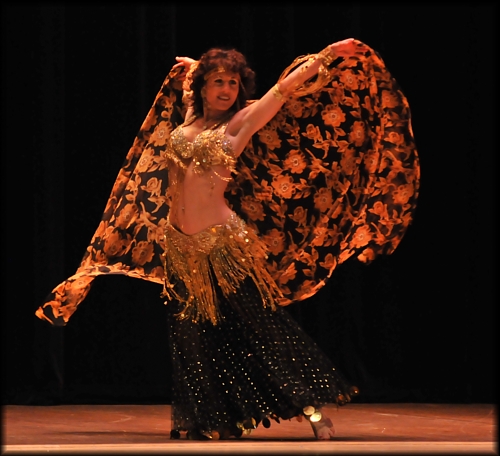
Gilded Serpent presents...

Fusing Jazz with Middle Eastern
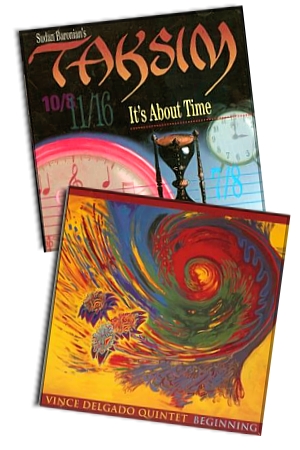
Jazz Fusion CDs by Vince and Souren

Souren’s "Taksim, It’s About Time"
Vince’s "Beginnings"

Two CDs Reviewed by Amina Goodyear
posted July 16, 2010

The CD "Taksim – It’s About Time" is composed and produced by Souren "Sudan" Baronian, a well-known Middle Eastern musician living in the New York area and the CD "Beginning – The Vince Delgado Quintet" is composed and produced by Vince Delgado, a well-known Middle Eastern musician living in the San Francisco Bay Area.

These two cities, New York and San Francisco, are important centers for music worldwide, including Middle Eastern and Jazz. Jazz spawned and grew in these two parallel worlds, and many of the important names you hear in Jazz got their start in one of these two cities. Later, these musicians went on to inspire and influence others. 

The two CDs being reviewed show some of these influences and also show how two musicians living on two separate coasts can, and will, in turn, inspire others with their new genre of music: Middle Eastern Jazz Fusion.

Without going into detail about the two CDs here (for that you can read the reviews that follow) I’d like to list some similarities between the two musician/composers:

  • Both musicians are well established in both the Jazz and Middle Eastern music circles in their communities.
  • Both musicians composed all of the pieces in their respective CDs.
  • Both CDs establish the Jazz theme with a strong first song and the subsequent songs flow easily from one piece to the next.
  • Both CDs sound like live recordings, but in fact were recorded in a studio.
  • Both use odd rhythms that are Middle Eastern rhythms.
  • "Taksim" is Middle Eastern with a Jazz flavor.
  • "Beginning" is Jazz with a Middle Eastern flavor.

Personally, I have always dreamed of dancing with a band that is heavy in percussion like the bands I’ve heard in Egypt, using tabla, dahola, riq, muzhar and duf but with the addition of bongos, congas, set drum and cowbells. My dream band would also have horns, particularly the saxophone and trumpet. I could place an ad for such musicians to form my band, or maybe I could just ask Souren "Sudan" Baronian and Vince Delgado to meet somewhere in the middle and join forces to form my dream band, using their musicians.  I would call it "East Coast meets West Coast and plays the Middle East".  For me, this would be a dream come true: a true collaboration of Middle Eastern, Latin, Bebop, Afro, and Jazz fusion with multiple drummers. At the very least, I would just love to hear the two bands join in a jam!

However, in all reality, now in this world when we fuse a Belly dance with everything as well as the kitchen sink (pots, spoons, mop handles, bowls, vases, trays) why not consider seriously performing to one or both of these Jazz fusion CDs played by some of the most respected Middle Eastern musicians in the field?  If dancers perform already with fusion music, why not use music that is specifically fusion?

Souren's TaksimTaksim-It’s About Time

A CD by Souren "Sudan" Baronian

You enter the time machine and it is the 1950s.You’re in a black and white movie in a Jazz club in New York, a dark, smoky club below street level, the smell of reefer emanating in the near distance. You have a cocktail glass in your hand and your eyes are closed. You’re grooving on the music and the musicians on stage; they are playing Jazz.

Jazz is that truly American art form that created an international phenomenon in the early 20th century: Jazz, with rhythms originating from deepest Africa, traveling and improvising from the southern part of the U.S.  Jazz speaks a language of experiences and emotions and invites the audience to interact either in their soul and being or vocally; Jazz, it’s that idiom that is probably the most significant form of musical expression in American culture today.

The musicians have just finished a set and the next set is starting. The music is jumping; they are playing Bebop.

Bebop is an exciting and complex evolution of Jazz. It was developed during the 1940s, in the beginning of World War II, and was characterized by musicians of dazzling skill playing their instruments with great agility in rapid tempo while improvising on the melody and harmonic structure of the pieces performed.

A typical bebop combo would consist of a saxophone, trumpet, bass, drums and piano. The word "bebop" usually refers to the vocables or nonsense syllables that we know as "scat" singing.

In Sudan Baronian’s CD Taksim – It’s About Time, the combo is a saxophone and clarinet, oud, bass, drum set, conga drum, doumbek drum and a riq. Taksim also introduces "scat" singing in several tracks.

After the drum, the saxophone is my favorite instrument for listening. As a teenager, I remember being thrilled at meeting R&B sax player Earl Bostic in a record store. I was a wannabe "beatnik" with bongo drums, and as a poetry writing teenager, wearing black and the requisite black beret, I would "club" in San Francisco’s Tenderloin at a Jazz club called The Blackhawk. On Sunday afternoons they allowed minors to sit in a penned area called the "peanut gallery" so that they could enjoy musicians such as Miles Davis, Dizzy Gillespie, Charlie Parker, Mongo Santamaria and Cal Tjader.

Although I don’t know him, I imagine a teenaged Souren "Sudan" Baronian in similar circumstances frequenting jazz clubs on 52nd Street in New York. Since he is Armenian, he also frequented the Middle Eastern clubs on Eighth Street playing with Arabic, Turkish and Armenian musicians. I was a mouse and too meek to actually meet any Jazz greats, but Sudan Baronian did. He not only met them, he studied with them; and their influence on his playing is definitely evident in Taksim. Just as sax bebop great, Charlie Parker, fused Jazz with other musical styles from classical to Latin; Souren has fused his music from traditional to bebop to Middle Eastern and Armenian.

Many Jazz musicians do not read music when they perform. This is also a common phenomenon among Middle Eastern musicians. In fact, Om Kalsoum insisted that her musicians commit her music to memory in order to better feel the music. In both genres, much of the music depends on these feelings and intuitions. Then, the musicians can create spontaneously exceedingly intricate forms, themes and variations. (Saltanah=The creative process of inducing musical ecstasy.) In this way, the improvisation or taqsim seems to come from nowhere.

In Jazz improvisation there is the spontaneous creation of new melodies over the continuously repeating cycle of chord changes. The soloist may depend on the original tune, or on the possibilities of the chords’ harmonies.

Taqsim is a solo instrumental improvisation within a piece of music. It is sometimes used as a bridge to connect one maqam (a system of melodic modes) or emotion to another within a piece of music. It is also a vehicle in which a soloist may show off his expertise and musicality and creativity through spontaneous improvisations. More than one instrument may play a taqsim within a piece. Sometimes the soloists may have an interchange and musical "conversations" with each other and at other times the taqsim may be bridged by recurring orders or themes within the main melody.

You just stepped out of the time machine and it’s 2010 and you’re in a dark, smoky club below street level; there is the sweet smell of apple tobacco wafting through the shisha-laden room, you have a glass of tea on the table and your eyes are closed. You’re grooving on the music and the musicians on the CD being played. They are playing Jazz. It’s Souren "Sudan" Baronian and his group called Taksim.  However, this Jazz has a new element: something old. Also, it is something timeless. It is something upbeat, yet pensive…

The CD Taksim has two major players who actually create the majority of the taqaseem. One is Sudan Baronian and the other is Haig Manoukian. These two musicians are Armenian and this gives the CD an unmistakable Armenian flavor. While Haig continues to deliver the traditional with the oud, Sudan provides a Bebop Jazz sound with his saxophone. The final outcome of the CD, especially with the addition of the other instruments, is definitely a Bebop Jazz fusion.

The opening song definitely recognizes the Jazz element in this CD. It is a strong introduction to what is to come. The mood is set. Each piece very naturally flows into the next. This is not your typical Belly dance CD. In fact, although many pieces can be used for Belly dance fusion performances, it is not a CD produced for Belly dance. In traditional Middle Eastern music (pre-Abdul Wahab), a taqsim is usually played by the oud, violin, qanoun or nay. In this case, although the oud does play a taqsim or two or three, most of the taqsim is played by the saxophone, with a few exchanges by other instruments such as the clarinet.

Tracks #1 "Floating Goat"  and #4 "Transition" take me to "Live at the Village Gate" in Greenwich Village with Tito Puente and Mongo Santamaria. I think of Afro Blue. I think driving and pulsing. I think of Middle Eastern rhythms and compare it to perhaps its 6/8 African neighbors. The sax and oud taqsim in "Floating Goat" definitely establishes this CD as Bebop and "Transition", indeed, transitions from the Armenian (almost Klezmer) with the clarinet to a Bebop, Latin Jazz feel. Because the rhythms in these two tracks include 4/4 and 6/8, the bells, the conga and the drum set, in addition to great solos, play a great canvas for the soloists to create a taqsim.

Tracks #3 "9 Lives" and #6 "Pleasant Peasants" invoke a Jazz fusion world. The 9/8 rhythm in "9 Lives" and the 11/8 rhythm in "Pleasant Peasants" invite one to try a little fusion dancing. The scat singing in tracks #3 and #6 and Baronian’s riq solo and subsequent doumbek exchange in "Pleasant Peasants" are quite fun and challenging.

Track #2 "Hitch-hiker" and #5 "Rooster" are my favorites at this time. "Hitch-hiker" talks to me of jasmine perfumed sultry nights and love and then "Rooster" takes me to the French Quarter in New Orleans. In these two pieces, there is a sweet slow Southern drawl, and the voice, and the saxophone and oud taqsim really speak to me.

You are now being taken on an emotional journey on the Silk Road. You are traveling from the West to the East. Perhaps you are even thinking of that documentary silent film (1925) called Grass: A Nation’s Battle for Life where a tribe of 50,000 and their countless sheep and animals endure extreme hardship as they trek barefoot over mountain ranges in the snow to find grazing pastures. These underlying struggles  #7 "Last Place on Earth" end with the feeling of hope #8 "8th Sky". There are nice taksim exchanges in "Last Place on Earth" which are performed in the 10/8 time signature. The rhythm 10/8, sometimes called Samai which means to listen, does exactly that. It told me to listen, and I heard and felt all the emotions of "8th Sky".

Fortunately, this dark smoky club below street level is all in my mind. It never closes and there is no cover charge; so, when the CD is over, I just press play, and I once more enjoy Taksim. "Play it again, Sudan!"


Vince's Beginnings

Beginning

A CD by The Vince Delgado Quintet

One of the most difficult reviews to write is a review of a CD by someone close to you. It is even more difficult when it is connected to one’s teacher or a relative. In this case, this CD involves both.

The two musicians of which I speak are my first Arabic drum teacher, Vince Delgado and my daughter, Susu Pampanin. While being objective I consider these two musicians to be master percussionists in their field and Vince – the very essence of creativity and musicianship. His life is music and his legacy is his students, his music and his compositions. All the songs on this CD are his compositions and reflect the very diverse nature of his being.

The CD, Beginning is not your typical Middle Eastern music CD. When I first played it, I thought I was listening to a Middle Eastern inspired Latin Jazz album. Through love, motivation, dedication and tenacity percussionists Vince and Susu and the other musicians Matt Eakle (flute), Joey Edelman (piano) and Tom Shader (bass) have succeeded in crossing cultural boundaries. None of them are, in fact, Middle Eastern or Latin born.

1.  My My Ym Ym – This is a great first song. It establishes the theme of the CD, which is a natural fusion of Latin Afro Jazz. It begins with the drum and then the bass enters to say this is Jazz. Next the flute says, no, maybe it’s Afro Jazz, or maybe possibly Latin Afro Jazz. But, is it Middle Eastern? I dunno. Maybe, yes, maybe, no, maybe yes, maybe no, I dunno.  But I do know that it is an upbeat familiar 4/4 and the musicians are very comfortable playing in this genre. They are having fun with conga – bongo exchanges and flute, piano and bass solos. All the solos flow easily from one to another.
And I kind of like it.

2.  Scheherezade – The silver flute begins this piece and it sounds like a ney, nay – it sounds like a kawala. Well, it sounds like some sort of Arabic cane flute. After a long introduction with a drone in the background (about 3 1/2 minutes), the drums enter in a 4/4/ beat followed by the piano. Everything is grooving. It has a bolero feel. When the melody starts, I expect to be transported to the Middle East. My mind wanders to decades ago and I’m in a club overlooking San Francisco Bay. I’m listening to pianist Vince Guaraldi and I’m watching the shimmering black water glisten periodically from the reflections of the moon. I’m not in the Middle East, but I’m thinking of it. The drums sway back and forth, vacillating between a Middle Eastern and a Latin Jazz feel. The flute does a great solo.  I would like to say it is a flute taqsim on top of the ard (or floor) of the drums and piano. All the musicians solo at some point.  This piece would make a good balletic, Middle Eastern tableau.
It is very danceable.

3.  Dangled Voice – This is a tune in 7/8 time. This odd time signature actually gets going rhythm wise. The flute and bass line are hypnotic and allow the drums to really dance.  It reminds me of Mongo Santamaria in an Afro Jazz sort of way. But it is intellectual. The 7 count is accented two different ways – one for the slow tempo and another when the tempo increases. All the instruments including the piano, bass and flute incorporate the accent and the melody. There is a good riq and drum solo. I can picture someone bellydancing to this.

4.  Genie Love – This danceable, tranceable piece is rather absorbed in essence. The rhythm is an 8/4 Masmoudi Kabir.  But it sounds like a slow slow Masmoudi Sagheer aka Beledi. It has more of a beledi feel as it does not have the typical Masmoudi accent. – This moody piece starts with the piano and continues on with the flute. Both are very slow and hypnotic. I visualize a veil dance, or perhaps a group choreography in slow motion to match and enhance the soulfulness of a solo performer.

5.  Live God Dance – The liner notes say this is loosely based on a North Indian scale.  But I hear Martin Denny (he played a combination of ethnic styles and included South Pacific, Oriental and Latin rhythms) and Les Baxter (a leading figure in the history of exotica). I’m in a Tiki bar with a fruit drink and a paper umbrella spearing a maraschino cherry, I hear "Quiet Village" sans the jungle noises. I’m a dancer in the 50’s performing to "Primitiva" or is it "Ritual of the Savage"?

6.  Once’ – This Guaguanco in 11/8 time is "huh, what is it?" A Latin beat but not really? Vince is cerebral and likes to play with numbers.  It’s a mind game – can you hear the difference between an 11/8 and a polyrhythmic rumba structure? Well – Vince can and that’s a Middle Eastern thing to do… play with subtle ways where we think it’s one thing and it turns out to be something else. I also love the games between the piano chords and the solos.

7.  Coral E in Sea  – This 10/8 classic sounding piece is very danceable.
It is very Middle Eastern in sentiment – very soulful and loving. It conjures up many visuals and feelings. I love music that makes you dream and this one surely does. The bass makes this haunting and longing; almost miserable (and we do know how Arabs love to be miserable in love). I hear the word eshouq, eshouq and imagine her hands on her cheeks as she is longing and waiting for her love. And then the word esqini as she is waiting to have her "fires" quenched. Yes, there is a love, a deep and tender love in this slow dance.

8. Seftali’s Delight – This 9/8 to 6/8 to 4/4 dance piece has mood changes along with the rhythm changes.  In this piece the piano, which is a percussion instrument, also explores the various ways of playing and counting.  Forever liking to play with words (as is evident in most of the names of the pieces in this CD) Vince calls this Hollywood Hijaz. I ask. Is it Turkish, Arabic, Indian? Is it Jazz? Is it Hollywood? Is it all of the above? It is a movie for the imagination. It is the story of the Silk Road with diaphanous chiffon pantalooned dancing girls dancing from one rhythm to another. They are smooth in their transitions and the instruments, including the percussion, vamp continuously allowing the dancers to use those hips. I personally love the bass, flute and piano in this piece.

My favorite pieces are Genie Love and Coral E in Sea – two meaningful sensitive dance pieces that beckon to my imagination.

Schherezade, and Dangled Voice  also stimulate the senses. Alone or paired together, they would make a wonderful "Arabian Nights" ballet.

Vince created an intellectual yet emotional and moving Jazz fusion CD. The breaks and vamps in various pieces are a "Vince" signature. This CD definitely has Afro Latin Jazz spices with a bit of Middle Eastern for that added flavor. It is highly recommended for the fusion rather than the traditional belly dancers.

The drums are inside the music and keep all the improvisations flowing. They make the music sound like alive and in turn empower all the musicians to maintain that "live music" sound.  None of the instruments including the drum overpower. But the drums for sure keep the time and set the ground from the bottom up. Vince uses only real skin drums, as they are extensions of himself. This is evident. The sound is clear and clean and natural.

Mabruk ya Vince, for your compositions.

These are two excellent CDs for your listening and fusion dancing pleasure.

Product purchase info:

use the comment box

Have a comment? Use or comment section at the bottom of this page or Send us a letter!
Check the "Letters to the Editor" for other possible viewpoints!

Ready for more?

  • 6-25-10 Recreating the Live Sounds of Egypt, Yasmin’s "Dancing with Genies-Hafla al Afareet" CD review by Amina Goodyear
    Upon first hearing this CD, I liked, no, I loved, the way it sounded like a live show. Exciting! Nevertheless, I question why some tracks sounded like they were recorded in a sterile studio.
  • 5-31-10 Creating and Listening to Musical Ecstacy, CD Review-Yasmin’s "Cry to the Moon, Taqsim lil Qamar" reviewed by Amina Goodyear
    Taqsim traditionally follows a certain melodic progression… Following the introduction, the improviser is free to move anywhere in the maqam and even modulate to other "maqams" as long as he returns to the original. Taqsim is considered by many to be a connection to the spritual world.
  • 5-18-10 The Art of Listening, Faisal’s CD, "Madar" reviewed by Amina Goodyear
    This CD is best for dancing in the mind, not in the class. (There are, however, several tracks that are dance pieces.)
  • 2-15-10 Drumming for Bellydancers and Bellydance Drumming Wannabes: 3 Drumming DVDs reviewed by Amina Goodyear
    However, the three "how to play the drum" DVDs I am reviewing really do introduce the beginning drummer to the drum and, if used as a three unit package, these three DVDs can take the drummer or dancer/drummer from absolute beginning level to the stage.
  • 7-12-09 Heartbeat of the Dance: Review of 4+ Drum Solo CDs Reviewed by Amina Goodyear
    Sabla Tolo 1 & 2 by Hossam Ramzy, Drum Attack by Tony Chamoun, Pulse of the Sphinx by Henkesh Brothers
  • 6-14-10 Got Baby? Two Prenatal DVDs: Amira’s Bellydance & Yoga for Pregnancy, Prenatal Bellydance with Naia, Reviewed by a very pregnant Sonja Oswalt
    For students who are looking for a quick but easy workout with some light and simple bellydance movements, Prenatal Bellydance with Naia may provide a slightly more satisfying pace. However, new beginners may be overwhelmed, and would do better to select Amira’s Bellydance & Yoga for Pregnancy. Neither DVD offered a challenge for advanced dancers, while both DVDs are more suitable for a dancer in her second or third trimester, as they may be too easy for a dancer in her first trimester.
  • 5-24-10 Lots and Lots of Combinations, Review of 2 Belly Dance Step Combination DVDs: IAMED’s Ultimate Combos #5 and Combination Nation #2 by Cheeky Girls reviewed by Tracey Farmer
    With the Belly dance market being saturated with all plethora of instructors, genres, production companies, etc., it’s inevitable that the same type of DVDs will be produced. As I’ve said before, its difficult to decide which titles to buy unless you are certain you enjoy the dancer/instructor.
  • 5-18-10 3 Music CD Reveiews: A Dancer’s Choice, by Tracy Benton
    Amera – Asal: Music for Arabic Dance, Soul Nahawnd – Music for Kitty, Leila presents Sukara: Egyptian Bellydance Music Vol. 2. It’s always intriguing to find music presented by or influenced by a particular dancer. What does it mean for the album in question: was the music composed for the dancer?
  • 5-13-10 "Where the Middle East Meets the Frozen North", Review of Eva Cernik’s Performance on Friday, October 2, 2009 by Melissa Wanamaker
    On stage an ageless, timeless beauty, her 30 years as a professional dancer have given her poise, wisdom and a huge range of emotional expression. Her great expressive eyes dominate an elfin face that will pull you into her pain or disgust one moment and crack you up with a sparkle, head slide and lip shimmy the next, all washed down with a wink and natural smile that says not to take that too seriously either.
  • 7-15-10 Sema Yildiz, A Star of Turkish Dance by Zumarrad/ Brigid Kelly
    She was fortunate, she says, to grow up in a Roma (Gypsy) community rich in dance and music – the Fatih district, which houses the Sulukule, famous for its entertainment and considered the oldest Roma settlement in the world.
  • 7-15-10 Queen of Denial, Chapter 2: Dancing in the “City of Lights” by Rebaba
    I’m breathing very hard, and can tell I’m very, very shiny and red, even under the stage lights, but I think he likes me. And he is completely dumbfounded that an “American” girl is auditioning for a job as a “Danseuse Oriental!” I know I’m way too fat, but thank God I’m a belly dancer, and apparently a novelty, because I couldn’t get away with this in any other dance form! Fortunately, I’m only 19 years old and my excess flesh is young, tan and firm!”
  • 7-12-10 Fusion: How much is too much? by Najia Marlyz
    In America, and evidently elsewhere, we dancers seem to have a voracious appetite for new steps and movements, so like hungry chipmunks, we have grabbed all we could stuff into our cheeks of Turkish and Arabic steps and gestures, resorting to incorporating and mixing of Saidi, Kaleedgi, Blue Guedra, Ghawazi, etc. We’ve chewed all of them up together and spit them out and found that they have not sufficiently nourished us.
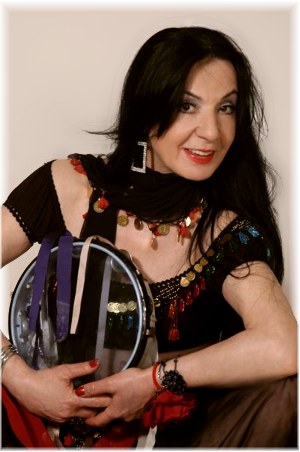
 

Gilded Serpent presents...

Sema Yildiz

Sema Yilidz

A Star of Turkish Dance

by Zumarrad/ Brigid Kelly
posted June 10, 2010

While watching Sema Yildiz walk straight-backed into a restaurant, makeup immaculate and her hip-length black hair draped over one shoulder, anyone would wonder “is that woman a celebrity?” In the world of Turkish dance, the answer is yes – but you don’t need to know her name to guess that she’s a star.

I spoke with Sema in Toronto during the International Bellydance Conference of Canada, in April 2010. She was compelling every time she danced, but my favourite moment was watching her at the IBCC afterparty, high heels and slim white trousers no obstacle to her spontaneous, effortless floorwork.

Interviewing Sema in her hotel room before the party proved difficult as her English is limited and, she explained, the person who was to be her translator during the IBCC had fallen ill. She had her laptop with her though, and periodically rushed to it to use its Turkish-English dictionary when communications broke down. She also had some handwritten notes translated beautifully by one of her students back home. She was hospitable, offering us Turkish bread, coffee and gifts while we talked and she readied herself for the restaurant.

Sema (it’s a stage name, but even her family use it now; Yildiz means star) was born in Istanbul, the only daughter in a family of five children. Her father, originally from the Balkans, was a farmer. She grew up in a house adjoining an open air cinema. From the beginning Sema was inspired and enthralled by dance. “I would glue pieces of glass to my fingers with tree sap so that I would be able to make the sound of zills. I loved to dance and people would ask me to dance for them at parties. I think I knew even as a child that I had a gift of dance.”

She was fortunate, she says, to grow up in a Roma (Gypsy) community rich in dance and music – the Fatih district, which houses the Sulukule, famous for its entertainment and considered the oldest Roma settlement in the world.

Her schoolmates were mostly Roma musicians’ children. As a result, her skill at Roma-styled dancing developed very early. She believes everyone can learn to dance but says Roma dance is particularly difficult because only Roma people can incorporate the real Gypsy feeling. Today she is involved in efforts to help Sulukule Roma who have been  displaced by an urban gentrification project, which severely threatens their way of life.

Sema thinks of herself as a Turkish Oriental dancer influenced by Gypsy dance. Other early influences were the Indian movies popular in Turkey during the 1960s. She won a dance competition in the late 1960s and began dancing professionally soon afterwards.

“I found myself exploring the world of belly dance in many places – performing in casinos, hotels, movies, television, restaurants and even the Topkapi Palace,” she says. “While pursuing a dance career is full of challenges, I always knew I was a dancer and wanted to dance. It was my soul. Dancing was an easy career choice for me.”

Eva Cernik, who interviewed  Sema for Habibi magazine in 1997, writes that Sema began her solo dance career at the Istanbul Keravanserai Dinner Club, her “home base” for 23 years, also performing at Bebek Maksim, Galata Kulesi (Tower), and Maksim of Taksim Square – all the most sophisticated and fashionable clubs of the 1970s and 1980s. She travelled widely, spending nine years in Europe, where she met and married a Belgian man. While Sema later returned to Istanbul, she still travels on her Belgian passport because, she says, it is not so easy to travel on a Turkish one.

She retired from the stage in 1992, shifting her attention to teaching, although she has taught groups of dancers from the United States and various European countries since the late 70s. Eva writes that San Francisco dancer Magana Baptiste, who was taking a group of dancers around Turkey in 1978, hired Sema to teach them after seeing her perform.

Sema teaches mostly by example. Her IBCC 9/8 workshop began with some breakdowns and then became a “dance along with Sema” session – practical dance training and an opportunity to watch her in action, all in one.

Enraptured-looking dancers emerging from a later workshop reported that her performance was superb.

Sema believes many of today’s dancers are highly skilled, but also feels dancers of her generation deserve particular respect for what they were able to create with such limited resources. “In my time there was no electricity, no YouTube, no TV – now they can see more.”

She’s concerned that some festivals in Turkey today feature few Turkish dancers.

She has become a popular workshop teacher in Japan, sponsored by dancers who studied with her in Istanbul. Her profile there grew after she featured in a documentary about pop star Takako, in which the singer took dancing (and cooking) lessons from Sema.

Her first visit was in 2006. “It was exciting – I was taken around proudly introduced as the teacher,” she says. “At the beginning the students thought I was snobby because I (walked past everyone in the lobby) to sit in the bar where I could smoke. Now they call me Sema-san. I like Japan very much.

“Now I am happy because 20 years ago I travelled to dance, now I travel to teach,” Sema says. “Through teaching I have been able to identify and nurture the talent of many young women. When my students learn and love the dance, I believe I have contributed to the world of Turkish dance.”

Resources:

use the comment box

Have a comment? Use or comment section at the bottom of this page or Send us a letter!
Check the "Letters to the Editor" for other possible viewpoints!

Ready for more?

  • Not Last Year’s Saiidi
    Recently, a belly dance community newsletter here in New Zealand ran an editorial in which the author remarked that the current generation of dancers still perform “traditional styles – Ghwazee, Khaleegy, Saiidi” but innovate with poi, fan veils and Isis wings in a sort of dance evolution that retains respect for the value of the old.
  • 7-31-00 More Than You Ever Wanted to Know About Living With Constrictors by Eva Cernik
    My heart beat stronger and stronger, until something in my human reasoning kicked-in. "I wonder if I’m causing all this?
  • 5-13-10 "Where the Middle East Meets the Frozen North", Review of Eva Cernik’s Performance on Friday, October 2, 2009 by Melissa Wanamaker
    On stage an ageless, timeless beauty, her 30 years as a professional dancer have given her poise, wisdom and a huge range of emotional expression. Her great expressive eyes dominate an elfin face that will pull you into her pain or disgust one moment and crack you up with a sparkle, head slide and lip shimmy the next, all washed down with a wink and natural smile that says not to take that too seriously either.
  • 7-17-09 Little Istanbul in Japan by Artemis Mourat
    For several years, belly dance has been rated as one of the top three favorite hobbies for women who are in their 20s and 30s in Tokyo.
  • I Dance; You Follow
    As Westerners interested in an Eastern dance form, we might want to ask ourselves if we are missing certain critical aspects of Raqs Sharki because we are not open to Eastern teaching methods.
  • Follow the Bouncing Butt; in Defense of a Teaching Method
    Some of the "Follow Me" teachers should be more aptly described as "inspirationally oriented".
  • 3-20-09 Tania Luiz A Romany Fusion Artist in Osaka by Artemis Mourat
    At this time I think I was longing for a well-documented dance, old and structured. I was a little sad because I saw how people who were not properly trained but who just had a costume would teach Oriental dance. Plus the deep connections of Indian dance to the Divine were very interesting to me. At the end of it all, I realized that my body, my soul and my blood are meant to do Oriental.
  • 10-6-08 "Just feel the music when you’re on stage!” Interview with Ozgen, Male Turkish Belly Dancer, by Nini Baseema
    Well, I think my heart still beats for big shows and productions, as much as I know how stressful and difficult that show-life can be. I seem to not be able to live without it.
  • 10-6-06 What is Gypsy Bellydance? by Amy Luna Manderino
    …it is a sore point for representatives of the Roma community whose advocacy groups are very clear on their preference for the term Roma or Romani and consider the term "Gypsy" to be suspect when used outside their own community.
  • 6-29-06 “Gypsy” Dance in America, by Caitlyn, photos of author by Rachel Ong
    Roma dance usually brings to mind tambourines and skirt-swirling, but these images are mainly a fantasy.
  • 11-29-01 Nomads of the Spirit by Sierra Suraci
    Know what are you contributing – either to their dilution as a people or the strengthening of their true image.
  • 7-15-10 Queen of Denial, Chapter 2: Dancing in the “City of Lights” by Rebaba
    I’m breathing very hard, and can tell I’m very, very shiny and red, even under the stage lights, but I think he likes me. And he is completely dumbfounded that an “American” girl is auditioning for a job as a “Danseuse Oriental!” I know I’m way too fat, but thank God I’m a belly dancer, and apparently a novelty, because I couldn’t get away with this in any other dance form! Fortunately, I’m only 19 years old and my excess flesh is young, tan and firm!”
  • 7-12-10 Fusion: How much is too much? by Najia Marlyz
    In America, and evidently elsewhere, we dancers seem to have a voracious appetite for new steps and movements, so like hungry chipmunks, we have grabbed all we could stuff into our cheeks of Turkish and Arabic steps and gestures, resorting to incorporating and mixing of Saidi, Kaleedgi, Blue Guedra, Ghawazi, etc. We’ve chewed all of them up together and spit them out and found that they have not sufficiently nourished us.
 

Gilded Serpent presents...

Queen of Denial, Chapter 2

Rita in Paris

Dancing in the “City of Lights”

by Rebaba
posted July 15, 2010
Chapter 1: The Safety of the Stage here

In 2005, with the support and love of my immediate family, and my extended “Hahbi’Ru” family, I entered into a drug & behavior rehabilitation program. While there, I started the long and difficult process of freeing myself from a life of addictions – of food, drugs and love (yes, you can be addicted to the wrong kind of love). Together these addictions had all but ruined my life, and in the 3 years before rehab, I came very close to ending it altogether! The stories that follow are about my love affair with Belly Dancing, and how this art form literally helped save my life. However, we all know love affairs begin by soaring very high and then sinking lower than we can imagine. For me, it was dancing and then not dancing… It is my sincere hope that my stories will entertain you as well as help you understand a little about the illness of addiction. The success statistics are staggeringly low, with a rate of less than 5% of those who seek treatment. I am one of the lucky ones. I have beaten the odds, to dance again and tell you my tale…

I’m breathing very hard, and can tell I’m very, very shiny and red, even under the stage lights, but I think he likes me. And he is completely dumbfounded that an “American” girl is auditioning for a job as a “Danseuse Oriental!” I know I’m way too fat, but thank God I’m a belly dancer, and apparently a novelty, because I couldn’t get away with this in any other dance form! Fortunately, I’m only 19 years old and my excess flesh is young, tan and firm!”

I spoke briefly, in the previous chapter, about my eating disorders; that were the precursors to my drug problems.They went in both directions – binging and purging, fat or thin, up and down! After months of studying French in Geneva, Switzerland, learning my family’s “mother language” the Calvinist way (meaning very intensive schooling), I had managed to eat myself over the 200 pound mark! I don’t know how it happened. One day my clothes fit me, and then overnight they didn’t… Actually, I know very well how it happened; I just chose not to think about it.

What I ate and how I ate it had nothing to do with normal hunger. I devoured whatever I could get my hands on. It didn’t matter what the food was or how it tasted, eating was about how much I could consume. I ate to fill a hole inside me, a seemingly bottomless pit.

Quantities were the thing I struggled with, not so much the food itself. There was an emptiness inside me that felt like hunger, but wasn’t hunger at all. I was attempting to find and fill my soul. Inside me was a hollowness, created by loneliness and compounded by my homesickness, my frustrations and my fears. Thinking back, I believe the culprit was fear, yes, my fear of everything – failure, success, love, no love. The fear was as endless as the pit I felt in my stomach! I would go into an “eating trance,” during which I would chew for hours at a time, gazing off into space. I didn’t taste the food, but I couldn’t stop chewing. Nothing could satisfy that empty feeling. Afterwards, I would be sick to my stomach, moaning and groaning and swearing to God, “Tomorrow I will starve myself and never, ever eat that much again!” During my time in Switzerland, “tomorrow” came all too often, always following the emptiness that led to my binging.

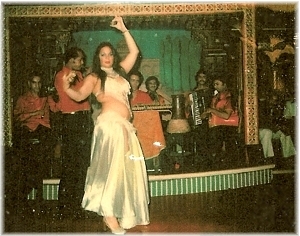
Top Photo: I included this picture cause even though I had started getting bigger and bigger, this picture hides my size and I look pretty to me! It was taken by my Aunt in Geneva when I was in school there in 1975 and ’76. This was the year before I started dancing in Paris, on a beautiful autumn day in Geneva (I had just started school in September, this pic was taken in November ’75).
The band pictured was the "house band" that performed every evening, seven nights a week with me. We also had several guest musicians that came and joined them for special occasions, and when certain singers performed they also brought in their own musicians. At this time I had never seen an orchestra this large nor had I ever heard the beautiful Egyptian style dance music that they taught me to perform to each evening!
Club Owner
With the owner, rumored to be an Algerian Mafia Boss! Though, he always treated me with kindness and respect. Actually, I was a favorite being the first "Foreign" dancer to work in this restaurant. Prior to my stint (approximately one year), they had no idea that Americans knew anything about Belly Dancing. The owner came to San Francisco with his son in 1978, and I gave them a tour of the city and had several dinners with them while they were here.
Rebaba and the band

Me, in an Assuite dress I found in an antique store in Ste. German des Pres. This has always been my favorite photo from that time as I looked slim to me!

Going home!

Taken before I left to come back home as I waited until I had lost some of the weight I had put on before
letting anyone take pictures of me! These pictures were taken by the "in-house" photographer (who sold
pictures to the audience). Center, me with the drummers and our Ney/Zorna player! I was the only dancer that requested a folkloric section of my show! This blue costume was the one found in the suitcase of my BFF’s friend who was traveling in Spain at the time.

During the 15 months I was in school, my heavy scholastic load left me little time for a social life. There was no dancing, no boyfriends, no nurturing (my Swiss family members were busy with their own lives), and no mommy! The environment tempted me into a constant dance with the “eating devil” inside me.

This devil later manifested as the “junky me” and then the “crack-head me.” Once I got help, I learned that all these different, uncontrollable sick behaviors were simply “me” attempting, more and more unsuccessfully, to nurture myself.

Drummer

My drummer Fahti, was a real character, and really danced very well while drumming!

Rebaba and drummers

Once again with my percussionists during the folkloric number of my show which was everyone’s favorite. Wearing the second costume I finally made with the help of one of the other dancers who taught me how to bead a costume. I made the entire thing by hand as I didn’t have use of a sewing machine (bra, belt, skirt, veil, everthing).

New Costume

I was even wearing highheels which at 5’8" was never necessary. I just thought the additional height made me look slimmer!!

Then belly dance came to my rescue! It came in the form of a short letter from my best friend. She was in Paris, France working as an au pair for a single mom with two young children. She thought there might be a restaurant in Paris where I could get a job dancing.

Almost overnight, I was in “Gay Paree” with the nerve to audition in my very “chubby” condition! But I knew, if given the opportunity to be “on stage,” I was beautiful enough, fresh faced enough, young enough and tan enough to pull it off! It was early 1976. I gave up the idea of becoming a UN translator as fast as it took to buy the train ticket. I was off to pursue my love of belly dancing once again.

My best friend’s employer, whom I had met on my last visit to Paris, offered me a place on my girlfriend’s bedroom floor, if I would pitch-in for food and household expenses. She was very generous and kind to me. I think she enjoyed having “semi” adults around; for company, to practice English with, and to take care of her young girls — of course.

So, there I was, a pretty, fat girl dancing her heart out to the most beautiful Arabic music I had ever heard, with the largest orchestra I had ever performed with.

(It was a band of eight.) I managed to win over the very skeptical “patron” of Al Djazair, an Algerian restaurant and nightclub on the famous left bank of Paris! The owner, a kindly gentleman in his 50s, allowed me to audition in a long blue dress with a scarf tied around my hips because I had no costume. (What was I thinking?) I’m sure it was out of pure curiosity. The notion of an American Belly dancer was beyond his comprehension!

It didn’t hurt that I definitely looked the part with my long brunette hair, brown skin and big eyes! My French was good enough to converse with customers — should they invite me. (We weren’t forced to sit with customers, although it was encouraged.) My "soon to be" new boss said, “Come back when you get a costume, and you’ll have a job!” It would be seven nights a week, two shows a night, for the sum of 100 French Francs a night –plus tips! (At the time 100 Fr Francs was equivalent to approximately $20. However, the real value was more than $20, since the cost of living was lower in 1976 Paris.)

After successfully landing a job, the only problem I had was a pretty big one, no costume!

I only had $8 in my pocket and didn’t see an easy answer to this mountain of a problem. But as fate would have it, my friend was storing suitcases for two friends of hers visiting for the summer. They were touring Spain and Italy for a couple of months and were supposed to return to Paris to pick-up their stuff. (I was soon to learn that one of these friends was a belly dance student in San Francisco.) I rushed home to tell my friend about my job offer (contingent on finding and/or making a costume). I was beside myself. What a ridiculous situation, a job but no costume!

My "BFF" suggested opening the suitcases to see if they contained anything that could be used as a costume. Even a sicky like me has a “guardian angel!” Inside one were two skirts, a veil and a beaded bra and belt! But there was a problem. I was 5’8” and over 200 pounds, and the costume was for someone 5’ tall and of normal weight. There was no way I was going to fit into her bra, belt, and skirts without some major sewing. But the costume wasn’t mine to cut up, so whatever I did had to be reversible. Fortunately, I know how to sew, and I am blessed with a vivid imagination for problem solving!

Even though I was the fattest I’d ever been until then, I have always gained weight very evenly, keeping a waistline and the majority of excess pounds below my waist. I have also been blessed with a long torso and an hour-glass figure, perfect for belly dancers at any weight. So, even though I was huge in my own eyes, I still had a figure and was relatively small breasted — which came in handy! As it turned out, the costume was made for a short but shapely woman with a well endowed chest. The large cup size gave me back room so I only had to lengthen the back of the bra and halter neck strap to accommodate my largess. (At my normal weight, I’m a 34A, so I was probably well over the “large size” 36A, and into the 40s and maybe even up to a B cup. I don’t really know because the measurements in France are different). Anyway, the bra wasn’t too hard to enlarge. The belt, on the other hand, was another story. I really thank God I have a knack for costuming. I was able to find some cheap, wide, strong elastic, which I attached with safety pins on the side, and made a big poof with the skirt to cover it up. The skirts were the most work. They were much too short, and I didn’t have any money to buy material to make a new one. That would have been the better choice. The lady of the house came to my aid with scraps of chiffon to lengthen the skirts from the top. I sewed them by hand so I could easily undo my work when I had to return them. Et Voila! My first beaded costume! I had pinned and basted my way into this new costume in less than two days!

I went back to Al Djazair where the owner was very surprised to see me so soon, and a little disgruntled that I came back with only one costume for two shows.

However, I was such a novelty that he let me start with the one – and a promise that I would buy a second as soon as I could afford it. Oh, and of course, "I was going to lose weight!” “You have such a pretty face, if only you would lose weight, you’d be perfect!” I can’t tell you the number of times and in how many languages I have heard that line–or a close version of it! It was either that phrase or the opposite: “Your body was perfect, now you are too thin!" That was later, when I switched my drug of choice from food binging to a "cocaine diet!"

I continued to work seven days a week, two shows a night until 1977, when my homesickness got the best of me and I returned home. I would like to mention that it was during the summer of 1976 that I first met Yasmin of Washington D.C. I remember it was hot and humid the night I was introduced to a young beautiful (slim!) American dancer who was going to work with us at Al Djazair while she was in Paris studying French for the summer … During her brief sejour, we didn’t have the time nor the opportunity to get to know each other very well. I remember her very long, honey colored hair, and her beautiful backbends, and that she had a face that looked like Grace Kelly. But, it wasn’t until I returned to Paris in 1979 that we found each other, once again, in the nightclubs dancing. This time we were far from the Left Bank, on the Champs Elysees and the "Big Time," and it was then that we became very close friends!


use the comment box

Have a comment? Use or comment section at the bottom of this page or Send us a letter!
Check the "Letters to the Editor" for other possible viewpoints!

Ready for more?

  • North Beach Memories- Casbah Cabaret, Part I Circa 1973
    We performed what I have dubbed “conveyer belt dancing”, that is three dancers doing three shows each, starting promptly at 8:30 p.m. without stopping until 2:00 a.m., whether we had an audience or not.
  • Queen of Denial, A Tale about Life and Belly Dancing, Part 1: The Safety of the Stage
    For many years, the most secure and safe place for me was on stage–dancing and acting. Performing gave me the security and love for which I yearned (both with and without drugs).
  • A Bust to Be Proud of…
    When she introduces me to her dance friends, it’s the first story out of her mouth – eighteen years after the fact. We still laugh about it.

  • Part 1- Booking a Party
    When a dancer looks good, she, or another, will get called back to perform again. When she looks bad, customers might be turned off to our lovely art form forever. Therefore, a bad dancer not only ruins things for herself, but for all of us
    Part 2- The Cross Cultural Factor
    Warning. There is a great deal of passive aggressive face-saving behavior in this profession. It is not always woman friendly either. Respect is not a given…
    Part 3- Separating the Girls from the Women
    If a performer conducts herself as a professional she is much more likely to obtain repeat engagements and referrals. No one wants to be seen knowingly hiring an amateur. It is bad for business and a customer’s image.
    Part 4 – What NOT To Do
    Show up drunk or stoned. No more needs to be said
    Part 5 – Beauty by Yasmin
    For new dancers, mastering the art of glamour can be daunting. But take heart, while internal sensuality requires character work, external beauty is easier to fix.
  • -12-10 Fusion: How much is too much? by Najia Marlyz
    In America, and evidently elsewhere, we dancers seem to have a voracious appetite for new steps and movements, so like hungry chipmunks, we have grabbed all we could stuff into our cheeks of Turkish and Arabic steps and gestures, resorting to incorporating and mixing of Saidi, Kaleedgi, Blue Guedra, Ghawazi, etc. We’ve chewed all of them up together and spit them out and found that they have not sufficiently nourished us.
  • 7-6-10 Mohamed El Hosseny: His Dancing Journey from Suez to Cairo, Helsinki, and Beyond Interview by Zsuzsi
    My advice which I tell all of my students is to study ballet at a beginner level for a few months. It will help your lines very much, so you have a nice bodyline without worrying about it and you can focus on learning the choreography and Oriental movements of the teacher in front of you.
  • 7-5-10-Carnival of Stars, Performers L – Z Photos by Carl Sermon
    Latifa, Leyla Lanty, Lulu, Mahsati, Maila, MaShuqa, Monica, Monifa, Naiya Halal, Nera Brent, Pepper, Raks Al Khalil, Raska a Diva, Raks Hakohaveen, Robyn Lovejoy, Safiyah, Sarah Horbeein, Shadha, Shaunte, Sister Sirens, Sukara, Surreyya, Tanja, Tatseena, Tera Lynda, Trish …
  • 7-2-10 Megacity Megafest, 1001 Brazilian Flavors at Mercado Persa 2009 and Beyond by Paola Blanton
    So, it was with these butterflies in my belly that I bounced home last December after almost two years teaching and performing on the road. Sao Paulo, population 20,000,000+, is the iconic “megalopolis” of the futurists when they predicted the “rise of the third world”. And Brazil is making huge strides – in government, economy, and broadening international appeal. My adopted country – I was going back to set up housekeeping after gypsying around the globe for an eternity, and I was more than ready for a dose of my sprawling, energetic, chaotic, mesmerizing home.
 

Gilded Serpent presents...

Fusion!

Cruz and Najia backstage

How Much Is Too Much?

by Najia Marlyz
posted July 12, 2010

One person, more than any other, captured my heart for dancing.  I was 17, and he was a handsome Flamenco dancer, performing on a stage at the University of California, Berkeley.  I knew when I began to have the opportunity to learn dance that the window for learning the Flamenco dance form had not opened for me; that moment had passed while I was involved in other amusements.  However, its older cousin, Belly dance, remained wide open!  It had the romance and passion of the Flamenco and the thrill of the dreams of Tahiti and Africa.  It also offered the freedom of expression that none of the other dance forms did.  As I studied dance through the years, I never dared dream of appearing on the same stage as my hero, Flamenco dancer, Cruz Luna, but it eventually happened!  My own dance instructor, Bert Balladine, had been friends with Mr. Luna for many years, and Bert honored me with an introduction.  Finally, I appeared in the same show with incredible Cruz Luna, and I was awestruck — which brings me to the real point of this story: when we dancers need variety in our own dance programs, we ought to include experts from other forms.  We would have been the poorer if the organizer of that show had asked a local Belly dance troupe to imitate Flamenco to provide variety to her show. 

So often, I have been given the ridiculous excuse that the Ballet Belly dance, or the Flamenco Belly dance or Tap Dance Belly dance, provides welcome variety to an otherwise monotonous program.  Welcome to whom?  Not to me!  I would prefer to see real Tahitian dances, and just as I do not mix okra into my mashed potatoes, I would prefer them pure, or at least, closely authentic.

I believe that sometimes we are going at this issue all wrong.  Nevertheless, I know it is sometimes necessary to mix forms in order to cause beginners to put their musical feet inside the entry door of Middle Eastern music. As any good instructor would advise you: You have to take them from something they understand before you can introduce beginners to something wildly different. With student dancers who are a bit beyond the beginners’ lessons, you can start anew with an old concept that you approach from a new perspective.

"The real voyage of discovery consists in not seeking new landscapes, but in having new eyes."
 –Marcel Proust

I’ve been feeling increasingly disappointed lately, as I attend one festival and show after another, and I am bombarded with the pervasive ballet-ization and Latin-ization of traditional Belly dancing movement and music.  The old Latin musical classics come to mind particularly, such as "Amayaguena" (on compact disk -Moon Over Cairo, volume 3), "Straights of Gibraltar" (Oasis), "Thalia" (Star dancer), and numerous others.  These pieces of music are interesting, captivating, appealing, and immensely useful for capturing the Western ear of people who are new to Middle Eastern music.  As most dancers will acknowledge, these selections might be construed to be historically correct for us to use in Belly dance since the Arabs occupied Spain for nearly 800 years.  They shared similarities in language, culture, and a common link in music and dance; however, much like the story of evolution, there is a "missing link", not human, not monkey, not Middle Eastern!

I think it a deep shame that those who have loved and studied the Middle Eastern dance have become so jaded to her charms that they feel compelled to make her into something she isn’t. 

aardzedileIt is an insult to those who study Flamenco, Jazz, and Ballet for many years that Belly dancers try to re-make these forms, usually badly, into the Raqs Beledi and Raqs Sharqi before they have explored and mastered the Middle Eastern dance form fully.  Hopping from one form to another is no disgrace if one concentrates on one thing at a time.  It is the aardvark/zebra/crocodile (the “aardzedile”) about which I am beginning to despair.  He doesn’t run right, swim right, or know to whom he is appealing—put him in a large show on a fancy stage and he will get a good “hand”; however, he misrepresents the artistic possibilities of the core dance form. Worst of all, is the person who is a real dancer and performer who makes a living from teaching and or dancing the Middle Eastern form, and who feels that he or she has "done it all"; so now he or she begins to try to top whatever has gone before by presenting a poor imitation of a dance that it takes a lifetime of dedication to learn — such as Spanish classical dance.  It becomes “The New Dance Invention”! However, if one wants to be top dog, one doesn’t pursue his goal by taking retrieving lessons, or more to the point, doing a comic impression of a Beagle!  We need to commit to dance as a lifelong ambition, or otherwise, remain a dabbler and a hobbyist and abandon the role of Middle Eastern dance instructor.  If you’re an extraordinary dance teacher, take whatever opportunities you can to embrace today’s Belly dance, in the way you wanted to be seen.  For me, this usually tends to be the theatrical stage, cabaret stage, or an outdoor festival, but for you it might be some other venue or niche. (However, I would like to see it stop being a Belly-gram or a Belly-strip!).

You can stay fresh in the form if you reassess your dance every year.  Try to discover the music you already own with new ears.  Go back to some of the music you couldn’t handle three years ago; you may be pleasantly surprised how you have grown in your understanding of music.

  Listen to old music; watch old videos then apply what you feel to new recordings.  Haunt your travel agent until you come up with an affordable scheme to go to the Middle East to experience it in person.  Don’t fool yourself.  Even our best dancers and teachers usually cannot perform well in Egypt or Turkey for the same reason our best American drummers and singers do not usually go to Egypt to drum or sing.  We share with Middle Eastern people a dance form that we do not come by naturally; we are not known for having been born with this music and dance in our American blood…

Once, I had a very sharp and disturbing conversation with a woman from an English-speaking country in  Bert Balladine’s living room.  We were seated with a grou p of internationally mixed dancers.  Big blond Bertha (not American Chipmonk dancerand not her real name, of course) announced, "I don’t watch the videos from Egypt anymore!  Those Egyptians can’t show me a thing.  Why, they don’t even work at their dancing, and they don’t even sweat!"  I had just returned from Cairo and had just interviewed Nagwa Fouad for an article that I was writing.  Nagua had been drenched in perspiration at the time I made the interview!  Therefore, I couldn’t let Bertha’s statement pass without challenge.  I felt the devilish horns on my forehead gleam, as I demanded, "What are you talking about?  Have you ever seen any Egyptians dance in person?" Everyone in the room froze into silence. "No," she answered, "I don’t need to."  I couldn’t let go; I told her she should not draw conclusions from brief encounters with videotapes. (Nowadays, it would be DVDs.)  "Until you see it and experience it in person, you are not competent to judge," I hissed, as I removed her bones from my teeth, "You may be gaining fame in your country, but you haven’t yet scratched the surface of Oriental dance!" I moved to the kitchen to find Bert and tell him that he might want to send me home.

In America, and evidently elsewhere, we dancers seem to have a voracious appetite for new steps and movements, so like hungry chipmunks, we have grabbed all we could stuff into our cheeks of Turkish and Arabic steps and gestures, resorting to incorporating and mixing of Saidi, Kaleedgi, Blue Guedra, Ghawazi, etc. We’ve chewed all of them up together and spit them out and found that they have not sufficiently nourished us.  Originally, we came to Middle Eastern dance for its fantasy, freedom, emotion, and exoticism, but somehow, these values became too simple for our taste, and we began reaching into far-flung historical connections, searching for our holy temple dance in unlikely places.

It is most probable that you will not find it necessary to do poor imitations of other forms as an adjunct to your dance if you look (with new eyes) at the movements that you already know, and explore your original attraction to them.  If you want to be a dance artist, be true to your form!  Explore it from different perspectives. Use it in different ways.  Costume it.  Modernize it.  Make it old-fashioned by going back to its basics.  Rediscover its original allure for you.  Make it anew and make it your spiritual expression, and then you will not find it a necessity to justify it or legitimize it by mixing it with other forms that have risen higher in the social acceptability pool; you will not think you are stuck riding a mule in the race when you could smoke the racetrack on a real Arabian horse!

Cruz Luna


use the comment box

Have a comment? Use or comment section at the bottom of this page or Send us a letter!
Check the "Letters to the Editor" for other possible viewpoints!

Ready for more?

  • Not Last Year’s Saiidi
    Recently, a belly dance community newsletter here in New Zealand ran an editorial in which the author remarked that the current generation of dancers still perform “traditional styles – Ghwazee, Khaleegy, Saiidi” but innovate with poi, fan veils and Isis wings in a sort of dance evolution that retains respect for the value of the old.
  • The Summer School of Khaleegy Dance, Dance Style from the Saudi Arabian Penninsula,
    The “moral police” and hotel security watched every move I made. All my phone calls were monitored. I was not allowed to talk to or get into an elevator with an Arab man.
  • 9-17-09 Sex, Belly Dance and the Afterlife by Yasmin Henkesh
    To these people, sex was not dirty, shameful, frightening or forbidden. It was a natural part of daily life and the essential prerequisite for birth – on earth or in the Afterlife.
  • 2-25-00 Bert Balladineat long last Bert begins his North Beach Memories!
  • Teacher or Coach: What’s the Difference? Why All Performing Dancers Need a Dance Coach
    Most performers have a great deal of untapped potential; additionally, many consider it cheating to engage a professional coach and yet, that is exactly what they would look for if this were the Olympics and they were competing for the gold!
  • Improvisation: Method Behind the Madness
    One of the biggest mistakes we western Bellydancers have made is presuming that the dancing to which Arabs refer as the “Eastern Dance” is a theatrical dance that ought to be choreographed as if it were a ballet, or that its steps and movements are traditional like those of the Greek Hasapiko, an Arabic Depke, or a Hawaiian Hula.
  • Entertainment or Art?
    It is possible to be an artiste in a non-art form in the sense that one may be skilled, professional and artistic at the business of entertainment.
  • Welcome to Bellydance
    ..Do not allow anyone to limit your possibilities.
  • Mohamed El Hosseny: His Dancing Journey from Suez to Cairo, Helsinki, and Beyond
    My advice which I tell all of my students is to study ballet at a beginner level for a few months. It will help your lines very much, so you have a nice bodyline without worrying about it and you can focus on learning the choreography and Oriental movements of the teacher in front of you.
  • Carnival of Stars, Performers L – Z Photos
    Latifa, Leyla Lanty, Lulu, Mahsati, Maila, MaShuqa, Monica, Monifa, Naiya Halal, Nera Brent, Pepper, Raks Al Khalil, Raska a Diva, Raks Hakohaveen, Robyn Lovejoy, Safiyah, Sarah Horbeein, Shadha, Shaunte, Sister Sirens, Sukara, Surreyya, Tanja, Tatseena, Tera Lynda, Trish …
  • Megacity Megafest, 1001 Brazilian Flavors at Mercado Persa 2009 and Beyond
    So, it was with these butterflies in my belly that I bounced home last December after almost two years teaching and performing on the road. Sao Paulo, population 20,000,000+, is the iconic “megalopolis” of the futurists when they predicted the “rise of the third world”. And Brazil is making huge strides – in government, economy, and broadening international appeal. My adopted country – I was going back to set up housekeeping after gypsying around the globe for an eternity, and I was more than ready for a dose of my sprawling, energetic, chaotic, mesmerizing home.
 

Gilded Serpent presents...

Mohamed El Hosseny

His Dancing Journey from Suez to Cairo, Helsinki, and Beyond

Mo Hosseny by Carl Sermon

Interview by Zsuzsi
of California on July 4th, 2010
Photos by Carl Sermon and others
posted July 6, 2010

Mohamed El Hosseny is a dancer, choreographer, and a native of Suez, Egypt.  He is the director of El Hosseny Dance Company in Helsinki, Finland, and was an accomplished soloist in the famous Reda Troupe of Egypt.  Mohamed recently arrived in New York for his second North American tour.  Despite his busy 12-city tour schedule, I was able to spend a few moments chatting with him by phone about his life and career in dance, in anticipation of his forthcoming visit to California, which will be followed by workshops elsewhere in the United States, Canada, and Venezuela.  His tour was organized by his North America manager and tour sponsor, Nourhan Sharif of Sharifwear.  He was in New York when we spoke, enjoying the July fourth holiday in the US for the first time. 

Zsuzsi: You began dancing at a very young age in Suez.  What is your earliest memory of dancing as a child?

MoH:  I started my artistic career as a musician when I was nine years old in the primary school in Suez.  After a while, when I was about eleven, I began to play the accordion for a young folk dance group.  I came to love dancing through this experience!!  I found dance to be a better expression than playing music because you utilize the entire body, instead of only your fingers to play the accordion!accordion

Zsuzsi:How did you wind up dancing in a troupe in Suez?  Who were your teachers?  

MoH:  By luck, when I was 13 years old they were selecting able bodies at my school.  They collected us in a room, and a man who was the trainer of the Suez folklore group called Mohsen Refaaey began to explain folklore in Suez.  Mr. Mohsen had been working in the famous El Samer Theater in Cairo before moving to Suez to make a new folkloric troupe.  I became so excited because he was demonstrating what looked to me like tap dance!  He had retired the previous group of dancers he was working with, and desired to start a new team of dancers.  Within one year I was growing very quickly as a dancer in his group, and I remember a funny situation from this time period.  The new group had not grown as quickly as Mr. Mohsen wished, so he had to take some of the dancers from each group to make a show in Marsa Matruh (A city close to 300 kilometers west of Alexandria).

At this performance many spectators commented, "There is a small boy dancing brilliantly with big men!"  These nice comments pushed me forward and I will never forget it.

 I am thankful for the opportunity that both Mr. Mohsen gave me, and the audience that appreciated us!  Mr. Mohsen is a very creative person and a great choreographer! We are still very good friends. He is like a father to me.  We always played backgammon together in the cafes.  I recently visited him in Egypt and we shared some time together. I am grateful for everything he taught me, from Suez folklore to interaction with students, I learned much from him!

Zsuzsi: Was your family supportive of your desire to pursue dance as a hobby, and eventually as a career?

MoH:  Yes, my family gave me a chance to do everything in life with freedom and responsibility.

Zsuzsi: How did you join the Reda Troupe?  Were you discovered, or did you have to audition?

MoH:  I went to Cairo University‘s School of Art to study Eastern Oriental languages in 1992.   It was there that I read in a newspaper an advertisement for Reda Troupe auditions.  Approximately a thousand people came to this audition. I gave my name, and waited 3 hours!  When I was about to leave, they finally called my name, so I stayed and danced with a group of men to see if we could do the steps.  I passed this test!  The Troupe had wanted to collect dancers to make a new show!

Zsuzsi: What was it like being a member of the Troupe in your first few years?  What was it like working with Mr. Reda?

Diana CalentiMoH:  By the time I became a member of the Reda Troupe, Mahmoud Reda had already retired at 60 years of age.  I was a big fan of his of course!  When I first met Mahmoud Reda, I wanted to be like him, just like everybody did.  I wanted to work with him personally, but that did not happen until later on. The ballerina Diana Calenti had come to the Reda Troupe as a trainer to teach ballet, and she selected me to be her partner, which was a big stepping stone in my dance career! Diana was from New York but lived in Canada. She had her own dance company there, a really great company and she inspired her students by showing us videos of other professional dance companies in the West.  

She was my trainer, choreographer, ballet teacher, always demanding advanced techniques from us which developed us further as a group.  She inspired everyone but for me personally she took my dance to another level.

 Diana was the star of a film called “Search for Diana”, a joint production by Canadian & Egyptian filmmakers.  The director was Milad Bisada, an Egyptian TV director.  Diana had also collaborated with the composer Omar Khairat from the Conservatory in Egypt.  They mixed classical and Oriental styles together very well which was very influential on my development as a dancer.  They produced shows together in Canada, like Sorceress and the Magical Perfumes, and the Horiyya (Mermaid) ballet.

At first, I found ballet to be so difficult but after about six months, it was completely different! After training and building strength, my body began to change and we performed jumps, turns, clean body lines and exciting combinations, thus I grew to love it!  Of course Oriental dance is full of ballet movements!

My advice which I tell all of my students is to study ballet at a beginner level for a few months. It will help your lines very much, so you have a nice bodyline without worrying about it and you can focus on learning the choreography and Oriental movements of the teacher in front of you.

I wished to be the number one dancer in the Reda Troupe, and I had to work so hard to achieve this, and finally it happened!  After 2 years of hard work and practice, I was performing 13 choreographies out of a 15 choreography show  (the other 2 numbers were for ladies only) with the Reda Troupe!  I performed a solo with Diana in this show, and I had the good fortune of becoming a soloist in the Troupe faster than others had before me.  I think she picked me as her partner because I was similar to her Russian partner.  She was very important to my style, bringing in techniques from dancers like Baryshnikov and Alvin Ailey.  It pushed me forward, and influenced all the dancers in the troupe.

Around 1997, Mr. Reda held another audition for his private company (much smaller than the one in 1992), so again I went to the audition and he selected me.  With that company I performed at presidential parties, many TV shows and numerous events.  Mr. Reda always placed me in solos at that time.  

When I worked with him, I focused on how he directed his company, and his attention to staging and graphic design.  But I didn’t want to copy his style or anyone else’s, I wanted to create my own.

 Like many people who learned from him, it is difficult not to copy him after working with him extensively, but I tried to create my own style  by playing music, and listening very deeply to it.  I watched the orchestra very closely when I was in the Reda Troupe, observing all the instruments, how they play, their roles in the music.  It helped me learn to interpret the music.  I have enjoyed great relations with Mr. Reda over the years, and just a few months ago, I was asked to perform his work at his 80th birthday celebrations in Rome and Helsinki, which was an honor for me!

I also worked with Nagwa Fouad for 3 years. There I learned a lot about belly dancing in a nightclub setting.

Cabaret is very different from working on the stage, you need special music, special movements, different costumes.

Zsuzsi:  You toured extensively with the Reda Troupe, even to places as remote as North Korea.  Which country or countries did you like best?

MoH: I enjoyed all the countries, each one has a different beauty to offer.

Zsuzsi:  What is your proudest achievement as a performer?

MoH: My biggest moment inside of Egypt was starring in Mr. Reda’s "Robibekika* Show".  My biggest moment outside of Egypt was my first production in Finland, called "Layali Simsimaya".  All of the choreographies were mine, and I am delighted with the results of this show!!  

Zsuzsi:  How did you happen to move to Finland and establish your dance school there?

MoH: After producing Layali Simsimaya, I began to teach there with Tuija Rinne‘s cooperation.  Tuije is a well known dancer and teacher from Finland.  I met her in Finland at the Yallah Festival, at that festival I also met Raqia Hassan and she asked me to Tuija Rinneteach a class of simsimiyya* at Ahlan wa Sahlan in 2003. At that class I used a live band to accompany me with traditional simsimiyya music for the first time in Egypt. Before that, people were trying to dance simsimiyya to Hakim songs or any random music. Tuije had come to my class because she had seen me perform with Reda in Finland the year before.  After seeing this class she asked me to come teach a workshop in Finland. Then after that, she asked me to make a show there.  I didn’t know what to expect, but it was very nice.  She was very supportive and helpful, and a very good organizer.  She understands the legal issues, and how to arrange artistic events.

I remember when I made Layali Simsimiyya.  At first I thought it was just going to be a show of only half an hour.  I began with the men in Egypt.  I made professional contracts for them and treated them the way I wished to be treated as a performer.  I could only imagine the parts for the ladies [Tuije’s students] because I was not in Finland with them yet.  

Tuije had to train the ladies using videos.  She would film what they were doing in Finland, then come to Egypt and show the men, and we would film ourselves and send it back for them.  It was very hard.  It was also hard to get the musicians to follow a precise musical score.

 They are used to playing what they want, not each note exactly as written.  I gathered the musicians for the band one by one from different places.  I got two extra just in case any of them had problems and couldn’t come to Finland.  We began to practice and recorded everything in the studio.  I was in Suez three nights a week and in Cairo the other four nights. At night I worked on my own on the music and choreography.  I think the best choreography is when you know the dancers who will be dancing in which dances.  I went to Finland two months before the show, then the men came from Egypt just ten days before the show, and it was Ramadan.  We had to practice all afternoon without eating.  It was very difficult. After the show, I knew for the first time that I am a choreographer.  Before that I wasn’t sure.  I encourage my students to try it, sketch out what they want to see.  After Layali Simsimiyya, Tuija asked me to stay in Finland and open a school with her.

Zsuzsi:  The Finnish people seem very supportive and enthusiastic about your work.  Is there anything especially challenging about working as an Egyptian dancer, choreographer and teacher in Finland?  

MoH: Actually Finland gave me a chance to create because it is a calm, peaceful country, and it allowed me the space I needed to concentrate on becoming a choreographer.  I developed myself there and created my own style of Oriental dance.  My students are both helpful and hard working!  I am grateful for the opportunities this country has awarded me!  

Zsuzsi: How is life in Finland different from life in Cairo, or Suez?  

MoH: The countries are totally different, each having its own character.  I believe it was good for me to be in Finland and create in this calm atmosphere.

Zsuzsi:  You are one of those rare dancers who is very talented in all three aspects of dance:  performance, choreography, and instruction.  Which of these three aspects do you enjoy the most?  Which do you find most challenging?

MoH: Definitely choreography is most challenging, because I have to dance, teach, perform, train and do everything at a fast rate all at once!  Teaching for me is fun & natural.  If you know your stuff, especially the basics which are very important, then teaching is not stressful.  Every time I make a show, everyone is happy with it but me.  I wonder ‘what’s next?’

Zsuzsi:  At your workshops in the US last year, I noticed that you seem unusually dedicated to your students, even after teaching them for just an hour or two.  What do you enjoy most about teaching, and what advice do you have for other dance teachers?

MoH:  My advice is to study hard and practice well.  For example, if you don’t speak English, you cannot teach English, so you really need to master your craft in order to be the best teacher you can be! Every dancer has to go to Egypt and study, travel, go to Suez, Alexandria, Cairo, all over.  Many teachers don’t know the traditions.  

This is a message for teachers, you must learn these things so they will never forget you.  If you want to be a really good teacher, you must make your students thirsty for your class!  So they cannot wait to come to class again. First art, then business.  Business will take care of itself.  

I remember last year the students in California were so great!  Their eyes were so full of emotion!  Something I believe in is if somebody pays me for something, like teaching a class, I have to make it perfect.  That’s why I kill myself in my classes.  One class can change a person’s life!  We are not sitting in a chair teaching Arabic in my classes.  If you are sick you can sit down, but not the teacher!  Even if everybody sits down, the teacher does not.  Teaching is a message and a responsibility.  I give much but I get a lot back from teaching as well.

Zsuzsi:  In just a few years in Finland you have created a number of major theatrical productions with very innovative choreographies.  Where do you get your inspiration for these new works?

MoH: I get my inspiration from my god.  

Also, the ideas always come so suddenly, all at once.  For example when I made the clapping dance (Kaff) in Layali Simsimiyya, it came from life in Suez.  

My father had a fishing boat. After you catch the fish, they slap around together in the bottom of the boat, making a noise like clapping.  So this dance imitates that sound.

  Also Kaff is done with henna the day before a marriage.  It is a competition between men and women.  It was really like that in our rehearsals.  The men would compete against the women, to see which team can dance better.  I encouraged them to compete with each other.   

After we finished Layali Simsimiyya, I wanted to make another Egyptian show, so I made Masriyyat, which means “from Egypt”.

Zsuzsi:  Masriyyat was the show with the Ulm Kalthoum choreography, with eight dancers dressed like her, dancing to Enta Omri?  What moved you to create that piece?

MoH: I think all my life I imagined that piece.  When I was young I watched her like all Egyptians.  

She is like the fourth pyramid of Egypt!! She did NOT dance when she sang.  She moved her arms, her hands, her scarf and used her heel to accent the music only.

Om KalthoumShe used to sing on the first Thursday of every month.  In the beginning she would sit in a chair while the orchestra played, then got up and sang, then sat back down.  After the third song she always sat down.  She did not wear her dark sunglasses on stage, but she was so known for wearing those glasses, so I had the dancers wear them, like the classic image of her.

no accordion!Everyone in Egypt told me “you are crazy, forget this idea”.  I needed the right song.  I wanted to use Enta Omri but not the version with accordion, that would not be right.  I found a version by Omar Khairat, the same composer who worked with Diana Calenti.  His was a very classic version but without accordion. I knew if I had only one dancer in this piece, it would be too realistic, like an imitation of her, and that would not be good.  

But if I use eight dancers all dressed like her, it’s obviously not realistic, it’s imagined, like a dream. Also it creates more movement on stage with eight of them, since her movements were so subtle.

Zsuzsi:  How did other people react to the Ulm Kalthoum number, was it controversial in Egypt?

MoH: After, everyone in Egypt was amazed.  People really loved it, no complaints.

Zsuzsi:  What kind of response have your productions generally received in Finland and in Egypt, or elsewhere?

MoH:  People in Finland loved my work.  So far I have only shown my productions in Finland. Many friends in Egypt told me I am an ambassador for them in Finland, and they are very proud to see Egypt represented in this way.  The Egyptian ambassador to Finland came to see our Masriyyat show.  He brought me flowers and congratulated me, and said  the show was amazing and he really enjoyed the Ulm Kalthoum number!

Zsuzsi:  What has been your major artistic focus in the last year or two?

MoH: My first priority the past few years was to achieve a higher level of Oriental Dance, with a complete range of emotions & sophisticated technique and at the same time respecting the folkloric roots of Egypt.

My second priority was creating a show in 2009  named “Egypt”.  I made this show because I am sad to hear some people comment belly dancing is just “shaking your ass” (sorry for the language) when the culture of Egypt is very rich and diverse!  My wish for the dance and through this show is to bring respect to Oriental dance just like the dancing of Alvin Ailey, or other western professional companies that I have previously viewed in my youth.  I want to show the public, if you want to dance Egyptian dance, it includes many styles and techniques, try to do it properly!  It is not just shaking your ass.

You have to really show respect to Egypt as the mother of the dance and I love my country very much and always want her to be the second sun!

Zsuzsi: Thank you very much for taking time for this interview today Mr. Hosseny, and best of luck on the rest of your 12-city 2010 tour!

simsimiyyaMohamed El Hosseny: You’re welcome. It was a pleasure speaking with you. I’m looking forward to return to California in a few weeks!
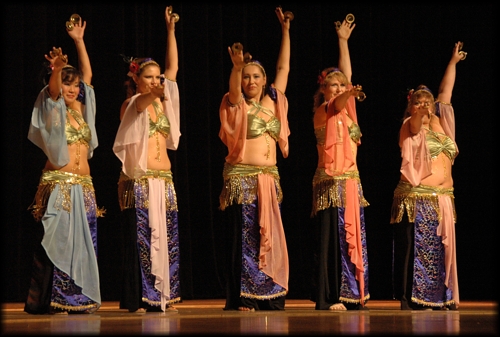
resources:
  • Mohamed El Hosseny’s website at: www.elhossenydance.com
  • more info on Mohamed El Hosseny’s 2010 Tour www.egyptianacademy.com
  • Author’s bio page on Gilded Serpent: Zsuzsi
  • term: simsimaya- M Hosseny is referring to the dances of Port Said and Ismiliyya, Suez Canal folklore dance. Moh wears a sailor suit to indicate the culture along the water front. Simisimiyya is also a plucked lyre and is an instrument that is carried on the boats for good luck.The same word is also used to mean the whole genre of Canal district folk music, that has the simsimiyya instrument as the main instrument. It belongs closely to the folk music of the Suez canal towns of Port Said, Ismailiyya and Suez.
  • term: robibekika- In Arabic it mean "odds and ends" and probably meant that this was a a variety show.
Mohamed in SF
Here is another one of Carl Sermon’s photos from the Saturday night show in San Francisco in 2009.  That’s Diana Calenti’s sister in the white dress in the background.  She must have read about the show in our listing in the San Francisco Chronicle website, otherwise I have no idea how she found us.  She spoke to Mohamed briefly after the show and was very excited to see him.  
Hosseny in Michigan
Michigan, August 2009
Mo in New York
New York, 2009

use the comment box

Have a comment? Use or comment section at the bottom of this page or Send us a letter!
Check the "Letters to the Editor" for other possible viewpoints!

Ready for more?

  • 6-11-09 Arabic Lessons, My Introduction to Shaabi, Part 1 by Amina Goodyear
    She taught us that besides learning the words and their meanings, Egyptians do not stand still when singing. They dance around a bit and use their hands, body and eyes to gesture according to the songs.
  • 5-17-09 Ahmed Adaweya My Introduction to Shaabi by Amina Goodyear
    Where once he was known as a master plumber, he had now become a master of Saltana.
  • 2-6-08 The Secret of Saiidi Song and Dance-Straight from the Horse’s Mouth by Keti Sharif
    "Saiidi".Say this word anywhere in Egypt (including El Saiid) and colloquially it implies someone who is funny, backward – a loveable, gullible character with salt-of-the-earth village simplicity. To call someone “Saiidi” is a local term or endearment for a likeable buffoon!
  • 1-3-04 Khairiyya Mazin Struggles to Preserve Authentic Ghawazi Dance Tradition
    But when Khairiyya Mazin retires, one of the most distinctive traditions of Ghawazi dance may come to an end.
  • 6-17-10 Leila Delivers Live Music Under the Stars, Camp Negum 2010 photo and video report by Yasmin Henkesh
    Camp Negum did indeed happen May 4-8, 2010. It was everything Leila promised and more – 5 days and nights of music and dance classes, almost all to live music.
  • 7-3-08 Belly Dancing in Estonia by Ines Karu
    As in the rest of the world, the Egyptian style of belly dance is the most popular one in Estonia. Most of the instructors and dancers are specialized in that style. The American Tribal Style Belly Dance is also becoming more known each day. The general impression of belly dance in Estonia is glamorous, feminine, luxurious, modern and elegant. It’s a time where Estonian dancers can truly say that they can be proud to be a Middle Eastern dance artist in Estonia.
  • 7-5-10-Carnival of Stars, Performers L – Z Photos by Carl Sermon
    Latifa, Leyla Lanty, Lulu, Mahsati, Maila, MaShuqa, Monica, Monifa, Naiya Halal, Nera Brent, Pepper, Raks Al Khalil, Raska a Diva, Raks Hakohaveen, Robyn Lovejoy, Safiyah, Sarah Horbeein, Shadha, Shaunte, Sister Sirens, Sukara, Surreyya, Tanja, Tatseena, Tera Lynda, Trish …
  • 7-2-10 Megacity Megafest, 1001 Brazilian Flavors at Mercado Persa 2009 and Beyond by Paola Blanton
    So, it was with these butterflies in my belly that I bounced home last December after almost two years teaching and performing on the road. Sao Paulo, population 20,000,000+, is the iconic “megalopolis” of the futurists when they predicted the “rise of the third world”. And Brazil is making huge strides – in government, economy, and broadening international appeal. My adopted country – I was going back to set up housekeeping after gypsying around the globe for an eternity, and I was more than ready for a dose of my sprawling, energetic, chaotic, mesmerizing home.
  • 7-1-10 Ask Yasmina #13, FInd a Good Teacher, First Workshop, Non-Arab Dancers by Yasmina Ramzy
    First and foremost, take a class or two from many teachers in your area so you can make a better informed decision. Please note that slick advertising and a good website indicate good organization and good marketing skills, not necessarily good Belly dance skills, knowledge, or even teaching skills.
  • 6-29-2010 Argentine-Arab Dance and Music Charm Taiwan, Gina Chen promotes Live Music for Local Dancers by Lisa Chen
    I have to say it is quite different from any other American or Egyptian style choreography I learned before; you almost always keep your feet into ballet position and body weight is relatively higher. The physical dynamic is much exaggerated. I guess this is the Argentine style bellydance and I could see why local dancers are fond of it, owing to the quality of fluidness and lightness, very outward gestures and wonderful live music.
  • 6-27-10 Carnival of Stars, Performers A – J Photos by Carl Sermon
    Adriana, Ahava, April, Alexandria’s Ghawazee, Aruba, Asia, Asura Noor, Becca, Birute, Cathy Guthrie, Cheryl, John Stanley, Crystal, Dahlena, Dancers of the Crescent Moon, Danse Maghreb, Daughters of the Pharoah, Dunia, Elizabther, Ena, Esperanza, Evil Eye, Ghanima, Hala, Heather, Jamara, Jawahare, Jewels
  • 6-21-10 Hallah Moustapha, My Costume and Dance Mentor in Cairo by Nicole
    I wish I had called her sooner, because what came out of my finally overcoming my shyness was a unique friendship, and a type of mentoring I had been wanting for quite some time.
 

Gilded Serpent presents...

Carnival of Stars 2009- Performers L – Z

October 10 & 11, 2009 at the Richmond Auditorium, SF Bay Area, CA

photos by Carl Sermon and MaShuqa
posted July 5, 2010

The Belly Dance and Comic Book Convention produced by Latifa and Alexandria

Lulu

Lulu
Mahsati

Mahsati
click photo for enlargement
Malia of Hawaii

Malia of Hawaii
Malia and the Dancers of Paradise

Malia and the Dancers of Paradise
click photo for enlargement
Malia De Felice Dance Company

Malia De Felice Dance Company
click photo for enlargement
Mod Rom Dance Collective

Sherareh of Rom Dance Collective
Monifa

Monifa
Naiya Halal

Naiya Halal
Nera Brent

Nera Brent and Friend
Raks Al Khalil

Raks Al Khalil
click photo for enlargement
Raks a Diva

Raks A Diva
Raks Hakohaveen

Raks Hakohaveen
Robyn Lovejoy

Robyn Lovejoy
Safiyah

Safiyah
Sarah Horbeein

Sarah Horbeein
Shadha

Shadha
Shaunte

Shaunte
Sister Sirens

Sister Sirens
click photo for enlargement
Sukara

Sukara
Sumaia

Sumaia
Tanja

Tanja Odzak
Tatseena Dance Company

Tatseena Dance Company
Tatseena's Company on Stage
Tatseena’s Dance Company on the lovely Richmond Auditorium stage

Tera Lynda

Tera Lynda
TerriAnne Loweh
TerriAnne Loweh
Trish St John
Trish St John / Hanan
Troupe Dhyanis
Troupe Dhyanis
Wasseema
Wasseema
Wild Card
Wild Card Belly Dance
Yolanda
Yolanda
Zelina
Zelina

Did you see Part 1: A – J?
Don’t miss this year’s Carnival of Stars held August 7 & 8, 2010!

use the comment box

Have a comment? Use or comment section at the bottom of this page or Send us a letter!
Check the "Letters to the Editor" for other possible viewpoints!

Ready for more?

  • Dance Passion and Burnout, Muses and Goddesses By Ma*Shuqa Mira Murjan
    Is It Time For A Dance Counselor and Coach, or Dance Retreat To Revitalize Yourself and Your Life?
  • 12-26-04 Scott Wilson’s CD "Efendi" review by Ma*Shuqa Mira Murjan
    Scott’s quest is to make Mid-East music more accessible to American audiences…
  • 4-28-09 Photos from the 2008 Tour of the Bellydance Superstars by Carl Sermon
    Marin Civic Center, San Rafael, March 1 2008
  • Carnival of Stars 2008 by Carl Sermon
    November 9, 2008, Event Sponsors- Pepper Alexandria and Latifa.
  • 2-4-09 Sunday Page 5:T-Z
  • 2-2-09 Sunday Page 4: R-T
  • 1-28-09 Sunday, Page 3: M-R
  • 1-28-09 Sunday, Page 2: D-K
  • 1-26-09 Sunday, Page 1: A-C
  • 11-26-08 Bellydancer of the Universe Competition 2008, photos by Carl Sermon
    held in Long Beach, California, on February 18 & 19, 2008, produced by Tonya and Atlantis
  • 9-8-08 Carl’s Raqs LA Photos, Best from the Stage on the Lower Level, Photos by Carl Sermon text by Carl Sermon, Ma*Shuqa and Marta Schill
    held May 17-18, 2008 Glendale Civic Auditorium, California, produced by Miles Copeland and organized by Marta Schill
  • 5-9-08 Carl Sermon’s Photos from the Hoover Hafla
    Event produced by The San Francisco Bay Area Chapter of MECDA on February 10, 2008, at Hoover Theatre in San Jose, CA
  • 7-2-10 Megacity Megafest, 1001 Brazilian Flavors at Mercado Persa 2009 and Beyond by Paola Blanton
    So, it was with these butterflies in my belly that I bounced home last December after almost two years teaching and performing on the road. Sao Paulo, population 20,000,000+, is the iconic “megalopolis” of the futurists when they predicted the “rise of the third world”. And Brazil is making huge strides – in government, economy, and broadening international appeal. My adopted country – I was going back to set up housekeeping after gypsying around the globe for an eternity, and I was more than ready for a dose of my sprawling, energetic, chaotic, mesmerizing home.
  • 7-1-10 Ask Yasmina #13, FInd a Good Teacher, First Workshop, Non-Arab Dancers by Yasmina Ramzy
    First and foremost, take a class or two from many teachers in your area so you can make a better informed decision. Please note that slick advertising and a good website indicate good organization and good marketing skills, not necessarily good Belly dance skills, knowledge, or even teaching skills.
  • 6-29-2010 Argentine-Arab Dance and Music Charm Taiwan, Gina Chen promotes Live Music for Local Dancers by Lisa Chen
    I have to say it is quite different from any other American or Egyptian style choreography I learned before; you almost always keep your feet into ballet position and body weight is relatively higher. The physical dynamic is much exaggerated. I guess this is the Argentine style bellydance and I could see why local dancers are fond of it, owing to the quality of fluidness and lightness, very outward gestures and wonderful live music.
  • 6-27-10 Carnival of Stars, Performers A – J Photos by Carl Sermon
    Adriana, Ahava, April, Alexandria’s Ghawazee, Aruba, Asia, Asura Noor, Becca, Birute, Cathy Guthrie, Cheryl, John Stanley, Crystal, Dahlena, Dancers of the Crescent Moon, Danse Maghreb, Daughters of the Pharoah, Dunia, Elizabther, Ena, Esperanza, Evil Eye, Ghanima, Hala, Heather, Jamara, Jawahare, Jewels
 

Gilded Serpent presents...

Megacity Megafest

click photo for enlargement

1001 Brazilian Flavors at Mercado Persa 2009 and Beyond

by Paola Blanton
posted July 2, 2010

When I first laid eyes on Sao Paulo, it was from the window seat at about 6:30 AM, in February of 1996.. The sun was stretching its tendrils over hills, valleys, and rivers, unfolding a blanket of light in order to reveal…..

A sea of skyscrapers as far as the eye could see – on either side of the plane… I dropped my plastic fork, chin, and soon…..all preconceived notions about Brazil.

Southern giant – gigantic in scope, space, depth, and heart, with a kaleidoscopic hearbeat, percussive and rhythmic. Its people, its land, its culture and history were to reach so profoundly into my being that I would, as years passed, become a permanent resident and eventually make my home in the Atlantic Rainforest of Sao Paulo state.

So, it was with these butterflies in my belly that I bounced home last December after almost two years teaching and performing on the road. Sao Paulo, population 20,000,000+, is the iconic “megalopolis” of the futurists when they predicted the “rise of the third world”. And Brazil is making huge strides – in government, economy, and broadening international appeal. My adopted country – I was going back to set up housekeeping after gypsying around the globe for an eternity, and I was more than ready for a dose of my sprawling, energetic, chaotic, mesmerizing home.

Shalimar MattarWe took a vacation on the beach for Christmas and New Year’s Eve, then I returned to the megalopolis to begin Samba School in preparation for Carnaval. (But THAT is most assuredly its OWN story….) Soon after Carnaval I dove headlong back into the Middle Eastern Dance world of Brazil.

My sponsors in Sao Paulo had both reminded me of Mercado Persa when we planned out my workshop weekends. It is by far the biggest festival in Brazil, or South America for that matter, being a lynchpin for the yearly activities and goals of so many dance schools around the region, kind of like a grand Carnaval of Oriental Dance. And even though my workshops went well in the orbit of Mercado Persa, I was still a little nervous when I emailed Shalimar Mattar, its celebrated organizer, about the possibility of an interview.

Only because I could imagine how stressful it could be to manage a festival of over 6,000 attendees. Having managed festivals (nowhere NEAR that size) before, I wondered if she’d have the time or energy for an interview a month before the megacity megafest. But I really had no cause for wonder, because the gracious Shalimar greeted me with typical Brazilian warmth in her beautiful studio complex, where we drank cafezinhos and chatted for several hours about the history and development of Oriental Dance in Brazil.

A History of Oriental Dance in Brazil

History, whether we want to admit it or not, is subjective, because it takes people to tell the story, and people have their points of view. But as Shalimar told her story, I began to realize that the development of Oriental Dance in Brazil followed a similar pattern to the development of many industries and institutions in Brazil – through the various waves of immigration to the Southern Giant.

So, just like the Portuguese were associated with the sugar boom, the Italians the coffee boom, the Germans the ranching boom, and the Japanese the citrus boom, the wave of Lebanese immigration brought Lebanese music and culture to Brazil in the 40’s and 50’s. The Syrians joined the Lebanese immigration to Brazil, and soon the first shimmy broke upon the Land of the Amazon, a growing rumble that would eventually produce a megaboom through the alignment of historical moment with the efforts of people like Shalimar.

She pins it back to a Lebanese dancer named Leika Pinho, who began dancing in Sao Paulo in 1954 with live Lebanese musicians. Although she was trained in ballet, like many Middle Eastern people, she bellydanced from cultural memory. And like many immigrants, probably performed as a way of nostalgic homage to her homeland. Leika’s time came and went, but the wave of immigration only picked up momentum.

SamiraThen in the 70’s, an Arab restaurant named “Virmata” open in Sao Paulo and began to feature Lebanese and Syrian musicians. The music inspired Brazilian dancers, who began to watch Samia Gamal, Naima Akef, and Taheya Carioca in the classic black and white films of Egypt. They would then perform their interpretations of what they had seen in the films at the restaurant, mixed with what they learned among Lebanese/Syrian musicians and people in the community, with a dash of Brazilian musicality. One of these dancers was Samira, Shalimar’s mother and the founder of the Mercado Persa festival.

Samira breezed in right in the middle of our conversation, overflowing with expansive energy – affectionate, light-hearted, flitting about from topic to topic. Fully decked out in uber-gypsy style on a Tuesday afternoon, she gave the impression of a bohemian heart, wizened in her years but still glowing with a light that comes through those lucky enough to have danced their way straight into their golden years. And she joined in telling the story.

Completely autodidactic at the time, Samira loved the Egyptian classical films, drawing deep inspiration from them to not only dance, but to learn more about Egypt’s history and culture. In time, she would start a troupe of about 8-10 dancers which she trained on a mixture of the films, the music, and her own growing love of Oriental dance. And thusly was planted one of the original seeds of MED – through Samira, one of Brazil’s original teachers.

Her first formal Middle Eastern Dance class ever was with Tamalyn Dallal, 15 years later, when Tamalyn came to Brazil. From the seed thus fertilized then took root a small community of MED dancers in Sao Paulo. Samira organized classes, shows, events, and finally, Mercado Persa – now in its 15th year. I attended a Mercado Persa circa 2001 with my teacher Semiramis, and was impressed by its size and variety – I would have estimated about 600 people at the time – performers, vendors, and public, a mere gesture to the sprawling institution it is today.

From this fertile, firm root system, a stem called Shalimar began to reach upwards, fortified by an increasing inflow of skills and knowledge from foreign teachers, especially Americans. Both Shalimar and Samira affectionately acknowledge the superb pedagogic and choreographic skills of U.S. MED teachers and the contributions they have made to the growth of the art form in Brazil. Shalimar was inspired to organize course curriculums for MED dance through her outside studies, and her school now boasts several levels of professional certification, along with a unique techniques course in sword dance.

Shalimar’s ongoing efforts to professionalize MED in Brazil and her partnerships with other great Sao Paula teachers such as Michelle Nahid, Lulu Sabongi, and Hayat el Helwa began to spread the force of the festival during the years I lived outside Brazil (2003-2008) and when I returned, I saw that Mercado Persa had not only grown, it has towered and flowered and released its tendrils deep into the whole of Brazilian culture, bringing in dancers from all corners of the country and continent. I could not help but remember the festival I had attended “back in the day”.

But even back in the day, I could see it coming. I started taking classes with Semiramis around ’98, who became my favorite teacher, mentor and lifelong friend. We lived and breathed the dance together, exchanging music, going to the Khan El Khalili teahouse to watch Soraya Zaied and LuLu Sabongi, going to Mercado Persa, performing for weddings and bar mitzvahs, and just generally enjoying the dance in Sao Paulo. It was already a big MED community; we just didn’t know that a bomb was about to explode.

O Clone

”O Clone” came on the air around 2001 and the impact rocked the Brazilian MED world. The soap opera told the story of a girl named “Jade” (pronounced “Zha-Jee” here..) who moves back to Morocco after the death of her mother to experience all the hyperbolic triteness of the soap opera storyline….but the deal with Jade was….that she bellydanced. When I brought this up to Shalimar, she laughed. “Oh, yes….! A FEVER spread through Brazil”, she affirmed. “Overnight, everyone caught bellydance fever.”

Overnight, classes sprung up everywhere – gyms, yoga studios, old and new studios everywhere began to hang signs about “Danca do Ventre” – A Danca Milenar….(the ancient dance) and the buzzwords started to buzz through the media like a swarm of cicadas…..”Essencia Feminina” “Poder Feminino”, “Encanto”, and the frenzy continued to heat up.

TarkanShalimar was swept away by the ramifications of such an explosion of interest in the Dance as caused by “O Clone”. Things that happen overnight sometimes bring lots of other “overnight” things with them. Like people wanting to be bellydancers overnight, and people jumping into the dance because it was the megafad, and because its sensuality could easily be tapped by an already highly sensual public. Dollar stores began to sell coin belts, the local hits stations began to play Tarkan, and even a scantily-clad kitsch tabloid celebrity named “A Feiticeira” (The Genie) began to gyrate on the network evening variety shows.

No one does “over-the-top” quite like Brazil, and the pot had definitely boiled over thanks to “O Clone”.

The smoke began to clear when the soap went off the air a year or so later. Shalimar says that attendance dropped as the fad leveled out, but this was a good thing because the dancers who remained stayed for the art. I asked her what she feels draws Brazilians to MED, and she holds no doubt that the innate musicality of Brazilian culture, rooted in the African spirit of Samba, makes the crossover easy and natural. Certainly, the strongest drum solos I’ve ever seen have been performed by Brazilian dancers.

They have percussion in their blood, in their cells and racial memory. There is no denying it, Brazilian girls move the Earth with their shimmies.

The Future of Middle Eastern Dance in Brazil

I asked her what characteristics she would most like to see Brazilian dancers develop. “Expression. Interpretation. Feeling. Brazilian dancers are still a bit too fond of technique and choreography”, she said, “I would like to see them reach farther into their expressive selves, I’d like to see them dance more to live music, use more gesture and feeling in their approach.” Well, I have to say that the technique is still great – she invited me to judge a few of the competition events at Mercado Persa last month and I could see the strong shimmies and ultra-sharp hipwork executed by sculpted, lithe beauties onstage.

But my personal opinion is that expression and interpretation are the New Frontier of MED not only in Brazil, but the world over. Everywhere I travel, I seem to have the same conversations with dancers. How do we improve the artistic element of our dance? How do we unlock the secrets of expression and draw out a nobler, more artistic rendering of Oriental? What is the difference between “Art” and “Entertainment”?

EsmeraldaI had the chance to converse with the Brazilian MED star Esmeralda about this at Mercado Persa. Recently returned from dancing eight years in Dhubai, this sprightly redhead was a co-judge at the Professional Semifinals, and we struck up a conversation which we continued over coffee after the event.
Esmeralda is part of a growing wave of Brazilian dancers with prolonged performance stints in the Middle East – like Soraya Zaied and Hayat el Helwa. She told of how dancing and living in the Middle East transformed her attitudes toward the dance.

“Dancing with a live orchestra is a must for any dancer wishing to experience this art form to its fullest,” she says, “There is a much larger energy to a performance with live music, but there is also much more responsibility on ALL the performers. The dancer and musicians must be fully attuned to each other in order to engage the audience.”

A great live show comes from an artful dialogue between the dancer and the musicians. Planning goes into it, but it must allow for spontaneity and for seizing the moment, whether it be a touch of comedy during the beledi section or a touch of melancholy during the taxim, and every shade of the spectrum a possibility.

Esmeralda would like to see Brazilian dancers become more energized by the rich texture that the music and dance of the Middle East provide, and she encourages Brazilian dancers to nudge more against their comfort zones and begin to experiment with expression. We agreed that there is a time and place for every manifestation of our dance form but that it’s also time for a more conscientious application of related art forms to the art of MED. Not only contemporary dance techniques, but the theater arts have a lot to offer Oriental dance via avenues that help dancers access and develop personally authentic expressive responses to the music. Expression can be trained; we just have to put in place the practical scaffolding for it via gesture, breathing, and the internal dialogue with the music, the inner story we tell through ourselves to our audiences.

So we’re both excited for what the future holds for Oriental Dance in Brazil. Dancers are already discovering the value of cross-pollination between the Dance and other Performing Arts. There is lots of room to introduce new topics and approaches to an audience which is such a great representative slice of the Brazilian public – curious, friendly, and eager to learn.

The Festival

We continued to watch the events of Mercado Persa unfold in the gigantic Sirio-Libanese Expo center. There were childrens’ events, seniors’ events, and even a perfprmance event for special-needs kids. There were several levels of performance venues – the smaller more intimate theater downstairs and the mezzanine showroom upstairs which sat thousands of spectators. Those who could not find a seat crammed every aisle and available space.

Workshops were scheduled every hour and a half. I took workshops in Nubian dance with Tarik and Khaleegee with Warda Maravilha (Warda the Marvelous). I had no time for more workshops as I was judging the competitions, performing and chatting with participants from all walks of life who had gathered in the megalopolis for the megafest.

Shalimar and Samira presided over the festival with calm grace and a generous sense of humor. Their team was marvelous – well-prepared to handle their tasks but generously flexible with all the thousands of little disasters that go along with any big event that brings in many people. Everything about Mercado Persa was huge – the setting, the attendance, the performances, the shopping…. and the big personalities, expansive spirits, and generous hearts that banded together to make it a rocking success. Mercado Persa’s motto is “Voce nunca viu nada igual” – “You’ve never seen anything like it”.

And they’re right. A MegaCity MegaFest – set in the Big Apple of South America, and I invite you all to come here and see it for yourself. From the minute you look out your window seat, to the long minutes you will spend in traffic, to the hours you will breathe the beach/jungle air, you will fall in love. You will fall in love with the immense rhythms that animate this marvelous country, and your dancing soul will plug into a fertile source, rich in history, mystery, and marvel. Brazil is a very fertile ground for the seeds of Oriental dance and the lushness of its current flowering is a testimony to the expansiveness of this country built on immigration, rhythm, and tropical heat. I guarantee you’ve NEVER seen anything like it!

Photos from Mercado Persa 2009 by Paola and others
Aprons

Mahmoud Reda‘s "Hagalla"  Choreography

Bell Bottoms

Jazz and /Oriental Fusion

Big Troupe

A lively, well-choreographed troupe work

Blue Troupe

Beautiful, classical lines and gestures.  This troupe captivated me as a Duncan Dancer because of all their gorgeous, picturesque, lifted lines.

Cat Suits

Jade el Jabel‘s modern fusion..strong, skilled dancers in a dynamic choreography

Dabke
The men made a big splash this year, rocking Debke with spirited style that raised a ruckus from the capacity crowd!

Dabke and Paola

Meow! 

Dudes and Gals Troupe

A lively and festive co-ed Debke.  These dancers brought the house down!

Expo

Shop till you drop!  This is only one angle of the market scene, which featured every imaginable prop, music, accessories, and costuming with Brazilian sensibility in the construction: well-wired, highly decorated bedlas with unusual flare alongside the Cairoesque staples.  The handpainted silk veils and unusual silk butterfly wings were a big hit this year.

Fan Troupe
Techno-Saiidi-Feather Fan-Polynesian Fusion.  Nuff said.

Fashion Show

Atelie Tony and Robby Fashion Show.  Unbelievably gorgeous designs by the Tony and Robby design team in a well-crafted, glitzy show. 
It was a highlight that paid homage to all the star dancers.

Green Troupe

Green troupe

The Al-Karak Dance Troupe from Manaus, Amazonia.
Their costuming reminded me of Conan the Barbarian movies.

Gypsy

13- "Gypsy" was a big theme, or maybe just the label coupled with big skirts.

Houka Guy

Nope, he’s Brazilian of Syrian descent! Did he have you fooled for a second?

Amazonas

(same photo as top of page) Belly Dance Jungle from Manaus, the capital of Amazonas


use the comment box

Have a comment? Use or comment section at the bottom of this page or Send us a letter!
Check the "Letters to the Editor" for other possible viewpoints!

Ready for more?

  • 3-27-03 Belly Dance in Brazil by Thania
    …they are trying to organize a Code of Ethics
  • Dance Alchemy
    Dance can be the corporeal miming, shaping, and manifestation of the soul’s intent.
  • The Broken Vessel
    We, too, must believe in our movements, believe in their purpose and message, and we must deploy them with the array of human faculties that begin to evolve when the Art of the Dance is taken up.
  • Visiting Cairo: You live a whole lifetime in one week!
    Laughter builds bridges, and in today’s world, bridges – between individuals and between cultures, are becoming more and more of an imperative.
  • Roots Raqs – An International Belly Dancer Goes Home to Macedonia
    The musical folklore of this region deserves full debut in the World Music scene, and those of us in the MED community worldwide are ripe for the breath of fresh air that Chochek and Gypsy Brass Music can bring us. It is an original, organic and time-honored fusion, brought about by history, geography, and most importantly, tolerance and mutual cultural celebration
  • The Ramzy Tour of 2003
    Photos from:Brazil, Brisbane, MaryBorough, Wellington, London, Singapore and Tibet? Readers- please help us with matching names to these faces!
  • Shahrazad and I
    Anyone who wants to tell about Brazil and belly dance must refer to her.
  • 7-1-10 Ask Yasmina #13, FInd a Good Teacher, First Workshop, Non-Arab Dancers by Yasmina Ramzy
    First and foremost, take a class or two from many teachers in your area so you can make a better informed decision. Please note that slick advertising and a good website indicate good organization and good marketing skills, not necessarily good Belly dance skills, knowledge, or even teaching skills.
  • 6-29-2010 Argentine-Arab Dance and Music Charm Taiwan, Gina Chen promotes Live Music for Local Dancers by Lisa Chen
    I have to say it is quite different from any other American or Egyptian style choreography I learned before; you almost always keep your feet into ballet position and body weight is relatively higher. The physical dynamic is much exaggerated. I guess this is the Argentine style bellydance and I could see why local dancers are fond of it, owing to the quality of fluidness and lightness, very outward gestures and wonderful live music.
  • 6-27-10 Carnival of Stars, Performers A – J Photos by Carl Sermon
    Adriana, Ahava, April, Alexandria’s Ghawazee, Aruba, Asia, Asura Noor, Becca, Birute, Cathy Guthrie, Cheryl, John Stanley, Crystal, Dahlena, Dancers of the Crescent Moon, Danse Maghreb, Daughters of the Pharoah, Dunia, Elizabther, Ena, Esperanza, Evil Eye, Ghanima, Hala, Heather, Jamara, Jawahare, Jewels
  • 6-21-10 Hallah Moustapha, My Costume and Dance Mentor in Cairo by Nicole
    I wish I had called her sooner, because what came out of my finally overcoming my shyness was a unique friendship, and a type of mentoring I had been wanting for quite some time.
  • 6-17-10 Leila Delivers Live Music Under the Stars, Camp Negum 2010 photo and video report by Yasmin Henkesh
    Camp Negum did indeed happen May 4-8, 2010. It was everything Leila promised and more – 5 days and nights of music and dance classes, almost all to live music.
 

Gilded Serpent presents...

Ask Yasmina #13

Finding a Good Teacher, First Workshop, Non-Arab Dancers

Shark Teacher

by Yasmina Ramzy
posted July 1, 2010

Question #1: My friends and I are Belly dance students taking classes at the same school for the last few years. After some research, we’ve come to realize that we have invested much money and wasted precious time learning nothing of value while being emotionally abused during these last few years. As well, in order to learn real Belly dance, we now have to work very hard to unlearn our bad movement habits. When looking for a Belly dance teacher, how does one differentiate good teachers from bad?

Answer: I am so sorry to learn this has happened to you. Unfortunately, your story is not unique. What is most discouraging about this situation is that often the students who come to this realization end up walking away from Belly dance altogether, out of sheer disappointment. Please don’t! There are amazing teachers out there who will eventually renew your love of the dance, as well as to help boost your self-esteem. I am going to give you a list of red and green lights that will offer possible scenarios to look out for.

Red light points are indications that you should be wary, while green light points are indications that possibly your new teacher is the right one.

First and foremost, take a class or two from many teachers in your area so you can make a better informed decision. Please note that slick advertising and a good website indicate good organization and good marketing skills, not necessarily good Belly dance skills, knowledge, or even teaching skills.

The best teachers who really have something of value to offer are sometimes those that you need to chase. A good teacher does not chase you for your business.

Red LightRed Lights

  • Strong sales pitch and pressure to sign up for a full session before trying a class or two
  • Pressure to buy CDs, DVDs, hip scarves or other accessories or props
  • Compliments and promises that are somewhat unrealistic if you are honest with yourself
  • After you are signed up for a session, you start to receive more criticism than compliments
  • Teacher makes a point in class to put down other known teachers’ skills and methods
  • There is no encouragement to participate in community Belly dance events
  • Teacher does not offer comprehensive technique breakdown, nor historical and cultural context
  • Much emphasis on props and gimmicks

Green LightGreen Lights

  • Minimal sales pitch
  • Option to pay per class or very short session or try a free class
  • Honest feedback and realistic expectations offered
  • Teacher has generally positive comments concerning other Belly dance teachers
  • Teacher can answer the who, what, when, where and why for everything that is taught or at least admits that he/she does not know and thus offers avenues of research for the student to find out on their own
  • Certain standards are met before encouraging students to perform in public outside of a student event.

General Note: If a teacher tries to discourage students from studying with other teachers or attending performances outside of their own, it means they are trying to hide their students from the fact that they themselves have little to offer. This practice is criminal. There is no excuse, or forgiveness, for someone who labels himself a teacher and then deprives students of learning.

Snake Question

Sahra teaches at IBCC 2007Question #2: I have been asked to teach my first workshop event in another city. What is the best way to structure the workshop, and how do you come up with an interesting or unique or fresh workshop topic?

Answer: A unique / fresh workshop topic may be good, but also the tried and true is valuable as well. It is always good to learn the basics over again from a different teacher who has a different take and expression, maybe with a twist that is particular to your style. Each gathering of students has different needs and different desires.

The host that invited you must have an idea of why they invited you or what you offer that is unique. There is a reason why the host asked you in the first place – this is what you need to teach.

Some hosts may ask you to teach skills which are not your forte because the local students of that area are interested in those skills (often based on last workshop taught by last instructor or the latest performance fad). Sometimes students don’t know what to ask for because they are not aware of what is really out there to learn or what some teachers have to offer. You may have observed a lack of certain skills or knowledge in the particular community of students you have been asked to teach, so you may decide to teach them this gap in their learning. They may have never known they need this but are very appreciative once you have opened a new door for them.

In the end, stick to what you know best and what you ENJOY most. Your enjoyment will be contagious.

Structure will depend upon subject and timing. I am sure the host would not have asked you to teach a workshop if he/she did not know you were an experienced teacher already. As a new workshop teacher, try not to undercut as per my column #12, just as you would not want another dance artist to do to you.

Snake Question

contortionistQuestion #3: Want to hear your views on the issue of "non-Arabs" versus "Arabs" in this dance – will the Arab dancer always be viewed as better because of heritage, and can non-Arabs be just as good or better?

Answer: That is a great question and the answer is very subjective. In truth, there is no answer because it is like comparing apples and oranges. Moreover, these are two different breeds of dance artists that need to be judged by different yardsticks and within their own context. Beauty is in the eye of the beholder, artists are inspired by other artists and athletes inspired by other athletes. This last point is also a general metaphor for the different approaches to Belly dance by the Arab and non-Arab Belly dancers. Farida Fahme offers a great instruction; “When you are dancing, you are telling a story. You need to decide what the artistic message is that you are conveying to your audience. Are you telling them that you are “beautiful” or that you are “clever”? (Arabs don’t have much interest in “clever.”)"

We could say that an Arab audience may be able to appreciate what the Arab dance artist has to offer more than a non-Arab audience and vice versa. However, many non-Arabs relate to the Beledi essence and love any Arab dancer more than the best non-Arab dance artist. Likewise, many Arabs can appreciate the training and effort that goes into achieving technical prowess, showbiz pizzazz and even a new innovative or Western vision of the dance form itself in which the non-Arab dance artist often excels.

Most non-Arabs who have traveled to Egypt and witnessed masters like Sohair Zaki, Fifi Abdou, Sahar Hamdy or Dina performing live, in the flesh and blood, would be hard-pressed to think of one non-Arab dancer they would prefer to watch.

My Arab musicians and Arab friends are constantly commenting on my students and the Arabesque Dance Company dancers as to which ones have the “Arab soul” or “correct taste*”. Interestingly, it is sometimes not the students with the actual Arab blood in their veins who have it. Likewise, I have lots of Irish blood in my veins but apparently no “Irish soul”.

The illusive “Arab soul” or “correct taste” is a particular nuance. Being able to recognize it is a skill learned by observing and studying the art in the same way those who are familiar with Jazz music can recognize a good Jazz musician. Not all great Jazz musicians were born in the birthplace of Jazz but all good Jazz musicians can recognize another good Jazz musician.

If a Westerner has never been to Egypt or had the opportunity to experience the “Arab soul” or “correct taste” elsewhere, then the fascination of physical feats may be the thing that rocks their boat.

A good traditional Belly dance artist must have both the technique and the “correct taste”. One without the other is an amateur or incomplete Belly dancer, Arab or non-Arab. For me, there is nothing greater than a salt-of-the-earth Arab dance artist with technical and creative genius. But equally fascinating, is a technically adept and creative dance artist of non-Arab descent who can express the “Arab soul” or “correct taste”.

”Correct Taste” is a term usually used to describe a quality found in Middle Eastern music. When it is applied to a dance artist, it usually refers to how the dancer expresses the music they are dancing to.

“Correct Taste” is the art of knowing how to embellish the basics with an infinite variety of ways but never straying from the original feeling or taste.

use the comment box

Have a comment? Use or comment section at the bottom of this page or Send us a letter!
Check the "Letters to the Editor" for other possible viewpoints!

Ready for more?


Gilded Serpent presents...

Argentine-Arab Dance and Music Charm Taiwan

Gina Chen promotes Live Music for Local Dancers.

Antonella-Click for enlargement

by Lisa Chen
Photos: courtesy of Gina Chen
posted June 29, 2010

One of a Kind, One of the Taiwanese Favorites

If you ask Taiwanese bellydancers about their favorite or desired style with one established dancer as an example, probably two of three would answer: Saida from Argentina.

SaidaWith her beautiful and highly expressive signature stage presence, Saida wins global audiences’ hearts, especially those from South Korea, Taiwan and Hong Kong. Saida and Mario Kirlis now plan regular Asia tours on an annual basis to meet the increasing demand.

There are several reasons for her fame in Taiwan. Saida has stunning beauty, wonderful dance movements based on profound training as a ballet dancer, and great understanding of music and rhythms, which are of a dreamy quality many local bellydancers wish to emulate.

When Saida travels abroad to perform and teach, she always requests to bring her own band, which makes her very unique among those foreign instructors and dancers we sponsor for the local community. In Taiwan, particularly, there are not yet well-established Middle Eastern or Arab bands available, and thus dancers usually have very limited access to and experience with live bands for their performances. Saida and the Mario Kirlis Orchestra provided many Taiwanese bellydancers with their first lessons in dancing to a Middle Eastern Arab live band.

Dancer’s Pride and Confidence Lead Her on a Journey to the Nation of Tango

Gina Chen, director of Magic Wonderland Arabe Dance & Bellydance Company from Kaohsiung, South Taiwan, has been the sponsor and major promoter of the Argentine style introduced by Saida and Mario Kirlis beginning in 2008. Academically trained as a professional dancer, Gina became involved with bellydance a few years ago. At that time, she was deeply attracted by the freedom and amazing imagination of fusion bellydance. Meanwhile, Gina was also seeking “an inspiration” for Oriental dance. “I was very naïve then,” Gina recalled during an interview. “With the pride as a professionally-trained dancer in mind, I thought there was no way I could not make it (in Oriental dance).”
She began to look for dancers whose performance styles she liked, and by accident she found Saida, based in Buenos Aires, Argentina. “Frankly speaking, the idea of going to Argentina was probably more intriguing and appealing to me than learning from Saida then,” Gina jokingly confessed. She went to Buenos Aires in 2007 and went to Saida’s Arab dance school. The first thing she learned in this trip was the devotion and respect for different cultures Argentine people showed. For example, in the annual recital of Saida’s dance school, the most popular performance piece is always Dabke, the Arabian line dance. Argentine people are also very crazy about music and every year local Arab musicians and bands produce many new albums on specific themes such as Baladi, Saidi, Bolero and so on.

Musicality is one of the primary qualities Argentine bellydancers look for, which explains why Saida requests to bring her own band to play live music for teaching and performing. The beautiful arrangement by Mario Kirlis also contributes greatly to the popular demand of the Argentine style bellydance. Local dancers like his rich melodic arrangement very much, and consider it a refreshing change from the styles they usually encounter.

Gina said that she was deeply touched and inspired by the elegant presentation incorporated by Saida and Mario Kirlis. “This may not be the common Arabian performance art we thought of as bellydance or Oriental dance in terms of style,” Gina said, “but I really like it.”

Gina on stage with the band
Gina on stage

Taiwanese audiences and dancers like it too. Gina returned to Taipei, Taiwan, teaching and sharing what she saw and learned in Argentina. She also sponsored Saida and the Mario Kirlis Band to teach and perform in Taiwan. Even though Gina and her dance company are based in Kaohsiung City, the southern capital of Taiwan, she arranged for Saida and the Mario Kirlis band to tour around Kaohsiung, Taichung and Taipei to meet the demands of the local dance community. This is also very unique in Taiwan: not many local sponsors do this since it generates more costs and requires more effort. Taiwan is not a big island and most of the resources are all heavily gathered in major cities like Taipei and Kaohsiung. For those who do not live in or around major cities, it is relatively difficult to access updated information and resources. Some domestic tours, like Gina’s sponsoring Saida and Mario Kirlis, are truly beneficial to local dancers and students.

Mario Kirlis Enchants Taiwan with Live Music All Night Long

This Argentine style also connects the Taiwan bellydance community with the South Korea bellydance community to form a sisterhood bond. Helena of South Korea, as sponsor and major promoter of Saida and Mario Kirlis, works with Gina Chen to co-sponsor their yearly Asia tour. Helena and Gina both attended all the Gala shows in Taipei, Taichung and Seoul.

Event PowterThis year, Mario Kirlis tours with his band and two other outstanding dancers, rather than collaborating with Saida. Antonella and Shanan have both trained with Saida and are now professional bellydancers. They work intensively with the Mario Kirlis band and travel with them. Each year for their Asian tour, Mario Kirlis will present new music pieces and the dancers will interpret those new music pieces with new choreographies.Mario's band

I planned to attend the Bolero workshop at Taichung since I never really experienced the Bolero style. Mario Kirlis provided a combination of specific music and rhythm types and choreography workshops including baladi, Oriental and Bolero workshop music is not limited by only one rhythm but is rather a type of music consisting of several Arabic and Middle Eastern rhythms. From my understanding, Bolero is a rhythm that is good for veil and taxim. I saw the beautiful Bolero done by the legendary Bobby Farrah’s student Jajouka at “The Journey.” I am very curious and excited to find out how Argentine people would interpret Bolero. In one class, Mario first explained the main Arab rhythmic theme for this choreography. He told students that in the world of Arab music there have been many foreign influences, such as those from Africa and Latin America. For an Argentine version of Bolero, he uses mostly the rhythm called Egyptian Rumba, a Latin-inspired Arab rhythm.

The demonstration dancer for this workshop was Antonella Rodiguez. She was trained by Saida and is now a professional dancer. Most of time during the workshop, Antonella demonstrated a section of choreography first and then broke it down individually with terms indicating dance movements or steps. There are a lot of ballet terms, steps and turns in this fluid-paced choreography. Section after section, students learn this choreography with a live band playing and feel the dialogue between dance and music. Each pose or step answers accurately to the phrases of music.

I have to say it is quite different from any other American or Egyptian style choreography I learned before; you almost always keep your feet into ballet position and body weight is relatively higher. The physical dynamic is much exaggerated. I guess this is the Argentine style bellydance and I could see why local dancers are fond of it, owing to the quality of fluidness and lightness, very outward gestures and wonderful live music.

I also went to the Gala Show at Taichung (as an audience member) and opened for the show at Taipei with my group, Taibo Flower Drum Ensemble – we even jammed together with Matias Mazrum, the promising drummer of his generation. The two Gala Shows were beyond what I had expected: the Mario Kirlis band played through the show and both groups and soloists danced to live music. Again, this is very unique for local audiences and dancers as well since we don’t have much experience with live Arab bands.

Taibo Flower Drum Ensemble play with Matias Mazrum

As Gina told me backstage: “Once you dance to a live band, you don’t want to go back to canned music. It is so addictive!”

She wishes to show local dancers and audiences the true beauty of dancing to a live band and indeed her goal was successfully achieved in the two Gala Shows.


Antonella 2
Antonella Rodriguez
Rina
Korean dancer Rina
Shanan and Matias Hazrum
Shanan and Antonella perform a fan dance
Gina Chen and Kester Guo perform a tango
Workshop at Taichung, May 1, 2010
Curtain Bow
Curtain Bow
Front Row from far left: Rina (Korea), Antonella Rodriguez, Alejandro Curtarelli, Matias Hazrum, Gina Chen,
Helena (Korea), Mario Kirlis, Shanan(Romina Aragon), Christine Du and Taibo Flower Drums Ensemble
Happy Together
Happy Together
Everyone has good time with delicious local food!

use the comment box

Have a comment? Use or comment section at the bottom of this page or Send us a letter!
Check the "Letters to the Editor" for other possible viewpoints!

Ready for more?

  • 2008 Drum, Dance, & Music Festival Raqs Taiwan with Karim Nagi!
    She wishes to find the bridge between dancers and musicians, performers and audiences while still keeping its cultural roots alive. DDM is the platform for dancers and musicians working together and exchanging their professional experiences.
  • Aussie ATS Charm in Taipei: Devi Mamak
    Since both of us are not based in San Francisco, we share many common factors in terms of learning ATS and developing our own visions for it back in our own home venues.
  • Learning Matrix: A Long Journey, The Belly Dance Scene in Taiwan,
    Sometimes, one might have to admit that learning only choreographies might lead students and dancers away from learning the essential elements of traditional Belly dance.
  • Live a DanceDivas’ Life! Interview with Jane Yee Shan Chung of Taiwan
    Then I saw the Suhaila technique workshop announced on her website and I just signed up without knowing exactly what her format is. I am the only person who did not learn Suhaila format before at that workshop. I was so naïve, I simply wanted to give it a try.
  • 6-27-10 Carnival of Stars, Performers A – J Photos by Carl Sermon
    Adriana, Ahava, April, Alexandria’s Ghawazee, Aruba, Asia, Asura Noor, Becca, Birute, Cathy Guthrie, Cheryl, John Stanley, Crystal, Dahlena, Dancers of the Crescent Moon, Danse Maghreb, Daughters of the Pharoah, Dunia, Elizabther, Ena, Esperanza, Evil Eye, Ghanima, Hala, Heather, Jamara, Jawahare, Jewels
  • 6-21-10 Hallah Moustapha, My Costume and Dance Mentor in Cairo by Nicole
    I wish I had called her sooner, because what came out of my finally overcoming my shyness was a unique friendship, and a type of mentoring I had been wanting for quite some time.
  • 6-17-10 Leila Delivers Live Music Under the Stars, Camp Negum 2010 photo and video report by Yasmin Henkesh
    Camp Negum did indeed happen May 4-8, 2010. It was everything Leila promised and more – 5 days and nights of music and dance classes, almost all to live music.
  • 6-16-10 IBCC 2010: Thursday Main Stage Performance Photos and Video, Photos by Samira, Video by GS staff
    The Thursday Night Main Stage Performance of the International Bellydance Conference of Canada was held April 22, 2010 at the Hungarian Canadian Cultural Centre in Toronto, Ontario, Canada.
    Video report consists of a collage of clips caught of performances. IBCC is produced by Yasmina Ramzy and company.
  • 6-13-10 Miles Jay demonstrates the String Bass. Musical Instrument Tour
    Another video filmed at the Mendocino Music and Dance Camp in 2008. Miles show us bowing and plucking the bass as well as the maqam bayati and how the bass is tuned.
 

Gilded Serpent presents...

Carnival of Stars 2009- Performers A – J

October 10 & 11, 2009 at the Richmond Auditorium, SF Bay Area, CA

photos by Carl Sermon
posted June 27, 2010

The Belly Dance and Comic Book Convention produced by Latifa and Alexandria

Adriana

Adriana
Alexandria's Ghawazi

Alexandria‘s Ghawazee

Alexandria's Ghawazi

Alexandria’s Ghawazee
click photo for enlargement
April

April
Aruba

Aruba
Asia

Asia
Asura Nour

Asura Noor
Becca of Honolulu

Becca of Honolulu
Cathy Guthrie

Cathy Guthrie
Cheryl

Cheryl
Costume Contest Stan

John Stanley, MC for Costume Contest
Dancers of the Crescent Moon

Dancers of the Crecent Moon
Dance Maghreb

Danse Maghreb: Janine Ryle, Jasmyn Gloria Mabalatan, Amy Whiteley Linda Grondahl
Dancers of the Pharoahs

Daughters of the Pharoah
Dunia

Dunia
Elizabeth

Elizabeth
Ena

Ena
Esperanza

EsperanzaHempel
Evil Eye Bellydancers

Evil Eye Bellydancers
click photo for enlargement
Ghanima

Ghanima
Jamara

Jamara
Jewels

Jewels.
click photo for enlargement

Part 2- Performers K-Z coming soon!
Don’t miss this year’s Carnival of Stars held August 7 & 8, 2010!

use the comment box

Have a comment? Use or comment section at the bottom of this page or Send us a letter!
Check the "Letters to the Editor" for other possible viewpoints!

Ready for more?