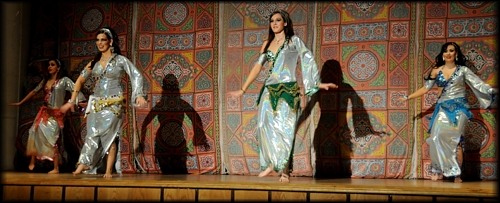
Gilded Serpent presents...

Personal Truths in Truth or Consequences

Josh Bond

New Mexico’s Floralia Festival 2010

by Surreyya
Photos by Surreyya Hada, Nyla Crystal and Bob Lindbloom
posted August , 2010

The Floralia Festival is held annually in Truth or Consequences, New Mexico by dancer Selena Kareena. Truth or Consequences, NM or “TorC” is a popular stop on the way to Elephant Butte Reservoir, a place of decadence on many a weekend during the summer, and a large body of water and also hot springs in an otherwise remote and land locked area who’s only tributary is the Rio Grande.

This trip to the southwest was a very emotionally charged and difficult trip to make for me.  I spent much of my adolescence and teen years in the southwest US, and experienced some of the most difficult twists and turns in my lifetime while I was there.  Many times a turn of events will bring us to another place to make a new beginning–a deep and sudden loss inspired my original journey to California, and two recent losses inspired my return back to the desert, opening wounds I nearly forgot existed.  It was fortunate to have Floralia to attend; it served as a focus on something I enjoy with all my heart–dance. 

Even more inspiring were my conversations with Selena Kareena prior to the event. Was it possible that a human being was genuinely this wonderfully welcoming and kind?

The southwest is rich with dramatic landscape, almost a moonscape really, interspersed with thorny cacti, rattlesnakes, tarantulas, scorpions, coyotes, and all sorts of creepy, crawly, dangerous things. Overlapping mesas, mountain vistas and colored stone put on a daring display of vibrance and contrast especially during sunrise and sunset, and often a rock concert of light and sound with desert thunderstorms. 

The population is rich in diversity, yet equally dramatic in its politics–with the exception of some pockets of eccentricity and art–similar to a dainty blossom resting atop a spiny cactus, undercurrents of poetic, dangerous and melancholy merged all in one setting.

My partner in crime, Nyla Crystal, met me at the airport in Albuquerque at the rental car stop.  We were greeted on a long desert highway by a windstorm so thick the sky was a deep haze of orange from the twisting sand.  A blend of rock and metal songs from my high school years were blaring on the stereo and Nyla politely listened to a dozen or more stories from my teen years while I stewed in deja vu.  California seemed imaginary, and I was back in my youth.  I absolutely insisted we have at least one sit down meal of Mexican food – the kind the locals have.  We stopped in Socorro for a mix of real Mexican favorites (not Cali-Mex food) accompanied by Tecate with lime and real sopapillas, which are Mexican doughnuts served hot and topped or stuffed with honey.  You Texans and New Mexicans know the difference and still struggle to find this decadence outside the motherland, and I know it!

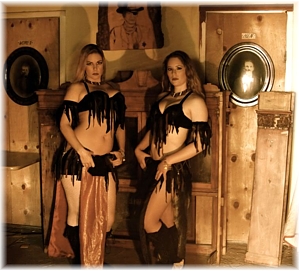
New MexicoAfter a refuel, we headed for our homestead, the Haunted Old Cuchillo Hotel and Bar.  Sounds of specters have been recorded here, and we even have our own bizarre stories to share.  The caretaker, Josh Bond was an incredible host, and gave ample time to show us the many historical features and characteristics of this old Butterfield Stagecoach stop.  From the worn-down doorway thresholds to hundred-year-old cans of unopened tortillas, this place was ripe with vibes of times past.  Naturally, two Belly dancers needed as many pictures as possible, and several came with unexplained orbs and lights and shadows. The main hotel had been converted into a lovely 3 bedroom home that can sleep up to 8 people–enough space for two creative types to relax and let imagination carry them away.

Let’s just say it was eerie enough that the two of us were only out of each other’s sight when indisposed.

Shortly after we checked in to our hotel, we headed to downtown Truth or Consequences to meet the dancers who were gathering for the first night of the festival.  The film “Belly” by Cecilia Rinn was screening, and it was a great opportunity to get to know our hostess and others who were participating.  We were greeted at the front door by a hug you would never forget by none other than Leyla Najma of Albuquerque.  Seldom have I ever felt so welcome! 

I strongly recommend a viewing of “Belly”, if nothing other than to gain new perspective on this community we are all in together. 

Having grown up in the southwest, I was uniquely curious about how this community thrives in an otherwise conservative setting.  I remember opinions back in the ‘80s and ‘90s of Belly dance being akin to “stripping”, and I wanted to know what these ladies did to thwart that perspective.

On our first work day, Nyla and I participated in each other’s workshops and had a wonderful day getting to know our students and stir up excitement about the festival.   We were invited to perform a duet in 9/8 to live music alongside heavy hitters like Helena Vlahos, Farasha, Leyla Najma and Tasha Banat in a lovely restaurant in T or C.  Unfortunately, on the way to the restaurant, two fellas were driving and talking side by side in pick-up trucks doing about 20 mph in a 45 zone.  When they stopped talking, the driver in the left lane sped up, and I followed suit to pass the old feller who was still going 25mph.  We were immediately greeted by the fine men of the T or C Police Department and were cited for “following too closely” after the officer decided I was weaving in and out of traffic – traffic being the other two cars on the road.  We made a great impression by being fashionably late since the cop took 45 minutes to run the plates on our rental car and decide I was not a felon.  Not to mention the fact that we were wearing 2 pounds of makeup, giant hoop earrings and cover-ups one block from an event the whole town knew about.

 “Never mind the four swords you see in the back seat sir.  They are just props.  …Really.”

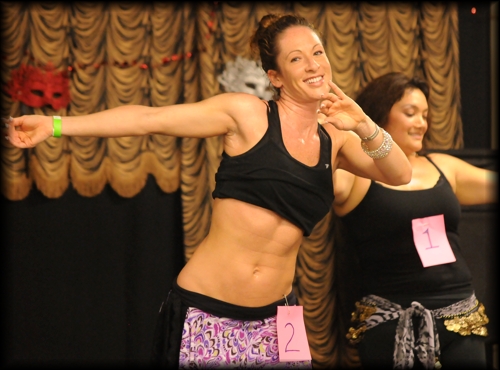
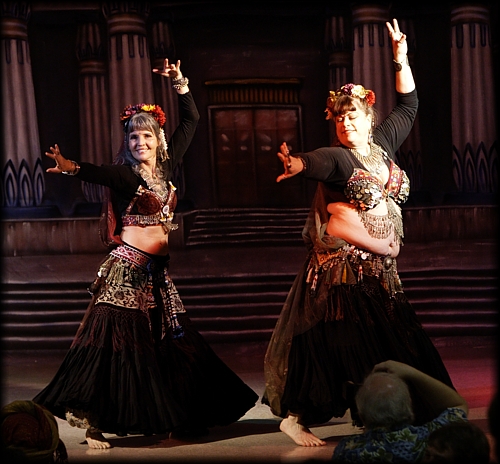
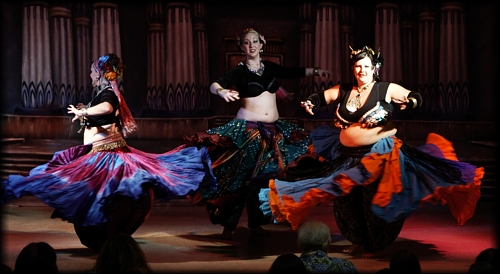
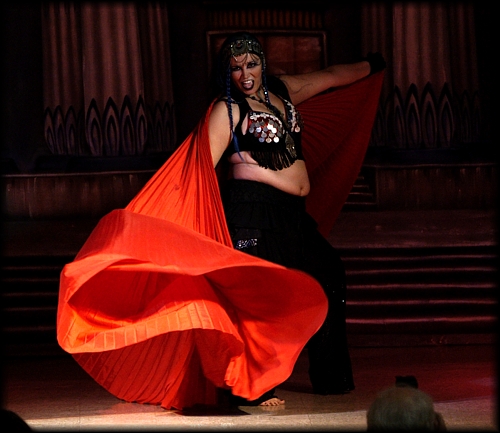
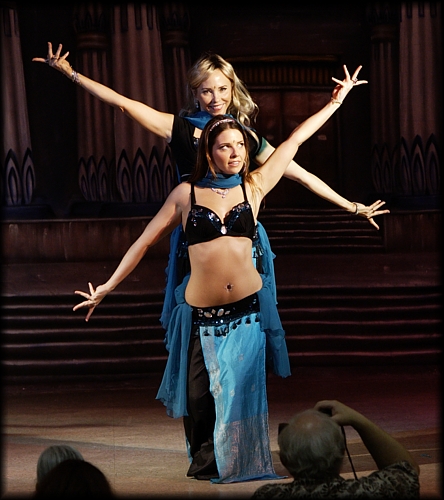
Spooky DuetThe Floralia Festival was an amazing production and ran quite smoothly–given all the dancers it supported.  There were so many entertaining acts it could truly be three shows in one.  Regardless of the typical challenges associated with these things, and we dancers have seen many a technical difficulty in our times, Selena was smooth as silk.  She made each dancer feel as if they were the most important person in the room.  The event ran well beyond overtime, because Selena wanted to make sure each dancer had her moment.  There were many creative and emotional dancers, and sparks of true brilliance, imagination, and innovation.  I was beyond impressed to learn one dancer even danced to another dancer’s CD seamlessly; we would have never known had we not seen her hysterical (Hello! Why?) shortly after her performance and being comforted by Selena.  It was surreal to be okay with her caring so much about her performance to be that upset afterward as well.

It’s awesomely awakening to remember how important certain events can be to people–once you can peek outside your own bubble.  There were acts of selflessness. Tasha Banat shared her spotlight to get the crowd up to dance instead of taking it for herself.  There was an unspoken understanding of the hard work it takes to put something like this together, and the camaraderie and kinship of sharing the love of a common thing.

Countless were the conversations we had with total strangers about how we all really needed this weekend away to connect with the feminism that was a stranger in our everyday lives. There was a sisterhood–something that has been all too often evasive here in the San Francisco Bay Area, and surprisingly so obvious at this event.  

Truly, there were women here from all walks of life, celebrating, sharing, relating, healing, and discussing it all in real time.  Some were recently divorced, some newly in love, some newly out of love, some too young to know what that all means, some to old to care, but somehow arrived all at a common place, sharing the human condition. 
 
After a deliciously late night, we headed to the new 24-hour Wal-Mart to replace the occasional necessary beer we had coveted from the fridge at our hotel.  There is still a “Blue Law” in the southwest. You can’t buy alcohol after early hours on certain nights.  Thwarted, we hastily returned to our lovely haunted oasis to find the lights on, and door unlocked.  After learning of a burglary a few miles down the road the day before, we did what any two with-it belly dancers would do; we got our 5 foot scimitars out of the trunk of our rental car and cased the joint.  Rather than waking the owner or calling the cops, we searched each room, scimitars in hand, and even made a second round sweeping under the beds with swords.  After a few trips to the car, we realized how easy it was to accidentally not close the front door all the way.

I close with my opening here: this trip to the southwest was a very emotionally charged and difficult trip to make.  Circumstances are unimportant. Those of you who have been around the block a bit can certainly insert your own stories.  This was a trip I could not have made had it not been for the wonderful community, camaraderie, and spirit shared by Selena Kareena and her magical gathering of women at Floralia.  Also, I had the blessing of a partnership in dance with Nyla who listened attentively to my history and horror with the southwest and helped me turn it into an adventure as opposed to a memorial.  I can’t think of anyone else I would have rather pulled a “Thelma and Louise” for this was surely it!  A gentle wind blows, a flower blooms atop a thorny cactus, a tarantula stumbles across the sand, and I am, somehow, strangely peaceful inside.

Top photo:Old Cuchillo Bar and Hotel Caretaker Josh Bond with Nyla Crystal and Surreyya Hada in haunted Old C Bar.
Photo above: this old bar hutch has been photographed behind Billy the Kid and other famous cowboys.
Note the eerie light on the right and the shadows behind. This was shot with a Canon 7D digital camera using no flash.
There was no light source or direct light used in this image.
Group
left to right: Surreyya Hada; Selena Kareena (TorC, NM); Saz’hrah,"ROMAntasy"in RED(El Paso TX); Senee,(in front) of Snake Charmer and the Belly Dancer;
El Paso TX; Zeidy, "The Killer Dancer", (Chihuahua, Mexico); Danitza, "Fatik Humra", (Juarez, Mexico); Nyla Crystal.
Background: left to right; Sonia, of "Snake Charmer and the Belly Dancer", Senee’s mom, and Leo Regalado, Saleena Kareena’s Husband.

Group 2

Left to right; Tasha Banat, ABQ. NM; Nyla Adani, Chihuahua, Mexico.; Latiffa Layali, Chihuhua, MX.; Selena Kareena, TorC, NM;
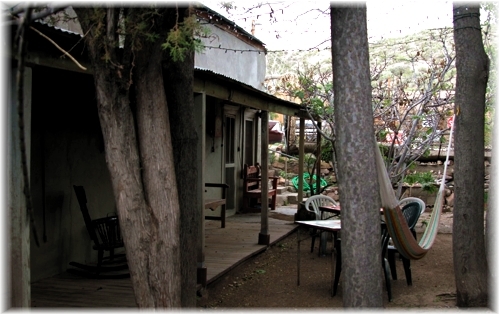
Old West Porch
Cuchillo Hotel Courtyard with hammock and rocking chair. Desert terrain in background
Old West Proch
View from Cuchillo patio. a collection of antiques left behind by previous owner. Apparently Josh has crates and crates full of antiques that will take him years to catalogue. This place is definitely a must stop on any southwest enthusiasts tour.
Better than any old west museum I have ever seen.
Old bottles
A collection of old bottles and cowboy spurs left behind.

Photos from the Floralia Festival coming soon!

 
use the comment box

Have a comment? Use or comment section at the bottom of this page or Send us a letter!
Check the "Letters to the Editor" for other possible viewpoints!

Ready for more?


Gilded Serpent presents...

A Weekend in the City of Riches

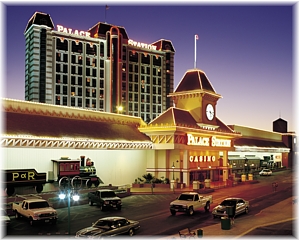
The Palace Station in Las Vegas

Las Vegas Bellydance Intensive 2009 Photos

Photos by Ben of Southwest Photography*
posted August 16, 2010

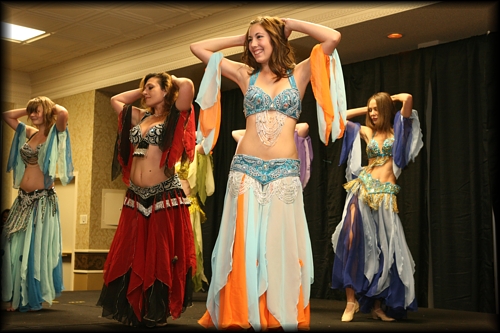
The 7th Annual Las Vegas Bellydance Intensive & Festival took place on September 10-13, 2009 at the Palace Station Hotel & Casino.  The event featured workshops & performances from Amaya, Jim Boz, Sharon Kihara, Suzanna Del Vecchio, Aubre, and Frederique. The event is produced by Samira Tu’Ala and her team.

Samira’s Mission Statement for this event:

The Las Vegas Bellydance Intensive & Festival celebrates the cultural, historical, and progressive evolution of belly dance by providing an arena to showcase professional artists, offering study opportunities to students, and using entertainment as an outreach medium to educate the general public about this art form.


Aisha of Greece

Aisha of Greece

Amaya of New Mexico

Amaya of New Mexico

Amira of Las Vegas

Amira of Las Vegas

Aibre of Los Angeles

Aubre of Los Angeles

Deb Rubin of San Francisco

Deb Rubin of San Francisco

Dilek of San Diego

Dilek of San Diego

Estela

Raks Estela of Las Vegas

Frederique

Frederique of San Francisco

Isis

Star dancers

Isis and the Star Dancers of Dallas

Jim Boz

Jim Boz of San Diego

Kassar Tribal

Kassar Tribal of Somerset, New Jersey

Leyla Amir

Leyla Amir of Las Vegas

Lotus Niraja

Lotus Niraja of Maryland

New World Rhythms

New World Rhythms of Las Vegas

Sabeya of Canada

Sabaya of Canada

Salome

Salome of Corvalis, OR

Sharon Kihara

Sharon Kihara of Germany

Suzanna Del Vecchio

Suzanna Del Vecchio of Denver

Wild Card Belly Dance

Wild Card Bellydance of Sonoma

Vendors and Casual Shots

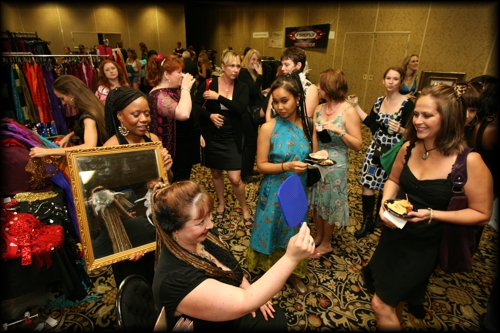
Cocktail Party Shopping

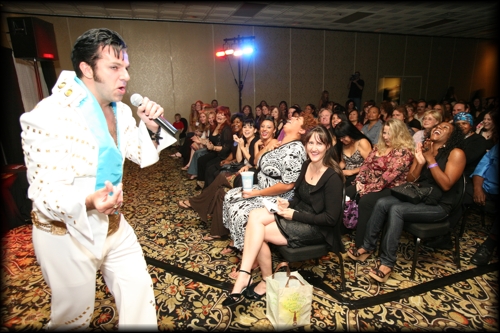
Elvis impersonator

Elvis Impersonator

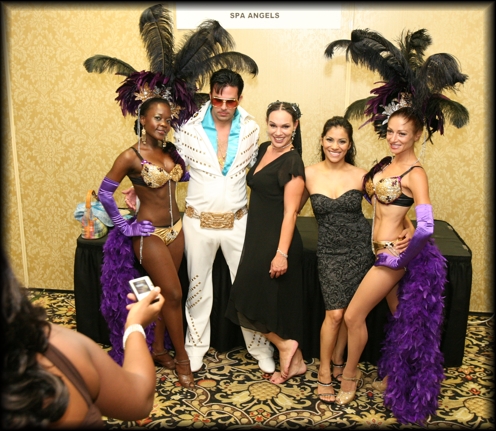
Elvis poses with the showgirls

Elvis and showgirls

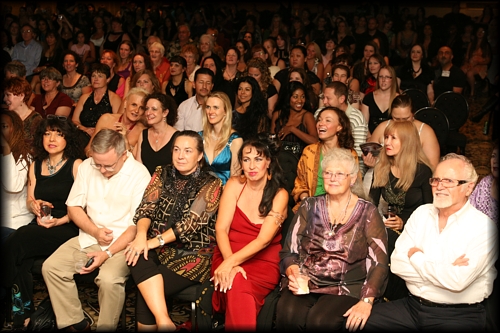
Random Audience

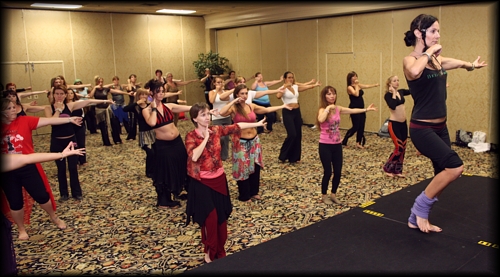
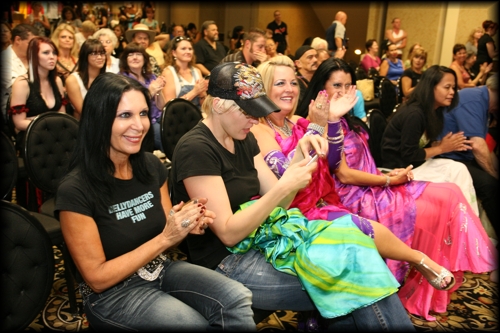
Audience with a few familiar faces including Harry and his wife right front, and next to them in red is Selena Kareena.

Random Class

Class with Habib of Sedona, AZ

Random Festival

Festival performance with ?

Random Festival Audience

Festival Audience

Random Shopping

Shopper

Vendor

Nera Brent of FireFly style

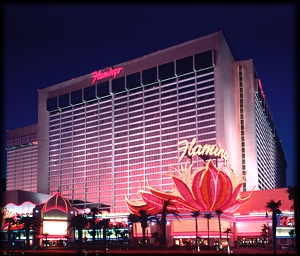
This year’s festival will be held September 9-12, 2010
at the historic Flamingo Hotel & Casino.
Added this year is a contest and a "drum track".
more info here

Flamingo

The photographer is Ben Zimmerman of Southwest Photography.  Ben is a local convention photographer who primarily shoots corporate events.  He found Samira via the Las Vegas Convention Authority website. 

use the comment box

Have a comment? Use or comment section at the bottom of this page or Send us a letter!
Check the "Letters to the Editor" for other possible viewpoints!

Ready for more?

  • 2-6-09 The Las Vegas Bellydance Intensive 2008: Vegas and Belly Dance Celebrities Report by Mareeshka, photos by Brad Dosland
    Just as its host city brings together Paris’ Eiffel Tower , the fountains of Bellagio, and the pyramid of Luxor , the Bellydance intensive brings together this local talent with international stars, combining traditional cabaret with the latest tribal styles, to create a big event that feels comfortably intimate
  • 4-28-04 Belly Dancing in Las Vegas (part 1 of 2) by Neferteri
    I am pleased to introduce a few of “The Divas of Las Vegas!”
  • 10-9-04 Belly Dancing in Las Vegas- Part 2 by Neferteri
    Who are those good looking and talented men behind the dancers?
  • 8-15-10 Inverting the Gaze, Medusa Dualities in Female Bellydance Performance and How the Gaze Continues to be Relevant Today by Shema
    This is not so hard to understand when we consider that the representation of female sexuality has been so over-developed as to become almost a parody of itself.
  • 8-12-10 Abdominal Freakish Delights: Aboard The Queen Mary! Photo Report from MECDA’s Cairo Caravan 2010, June 4-6, 2010 PAGE 1 AND PAGE 2 by Ma*Shuqa Mira Murjan and Carl Sermon
    Staying onboard the ship Queen Mary makes the event special and a unique and amazing experience As you walk the long curved and richly carpeted halls, you realize that you really are aboard a stately ship–named after a queen–a ship that once sailed the Atlantic Ocean.
  • 8-4-10 Tribal Fusion Faire 2009 Photos by Michael Baxter
    Alvilda, Anaar, Ayse, Belly Sema Dance Co, Blue Moon Haven, Daniella, Dark Raven, Epona, Evil Eye, Fat Chance and Sooz, Firefly, Gypsy Moon, Hiplash, Irina Xara, Jessica Martinez, Kalima Satori, Karma, Kashmir Isis, Kim and Andrea, Leyla Atwill, Madrid, Masha, Mikayla Taylor, Mirage…
  • 8-1-10 The French Connection by Tasha Banat
    Remember that the cabaret style of Belly Dance itself was considered a western cultural event and the night clubs of those days were only there to entertain invaders and their families, not the local people.
  • 7-30-10 Morocco’s Four-Day Folk Fest
    Schikhatt, Tunisian, Zar and Guedra
    , report by Mary

    Schikhatt (a Moroccan word meaning "wise woman") is a dance performed before weddings at bridal parties as a way to "educate" the bride in the movements she would be expected to mimic on the wedding night.
  • 7-23-2010 Friday Night Performances at IBCC 2010, photos by Samira, video collage by GS staff
    International Bellydance Conference of Canada April 23, 2010 at the Hungarian Canadian Cultural Centre in Toronto,Ontario, Canada. Performers include:
    Raks Sahara, Ashira, Maryfar, Laura Bellydance, Daluah, Tribe Maya Fire, Sa’Diyya, Monique Ryan, Sabaya, A La Nar, Sarah Skinner, Akimi, Earth Shakers, Roshana Nofret, Sofia & Chanty, Ebony Qualls, Danza Della Luna.
 

Gilded Serpent presents...

Inverting the Gaze

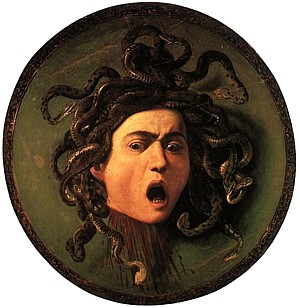
Medusa by Caravaggio

Medusa Dualities in Female Bellydance Performance
and How the Gaze Continues to be Relevant Today

by Shema
posted July 16, 2010
Part 1 of a 3 part series of excerpts from an original lecture by EmmaLucy Cole (Shema)
to be given at the International Bellydance Conference of Canada 2010

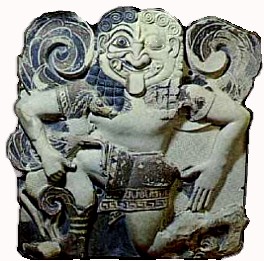
Medusa

“The Gorgon was made out of the terror, not the terror out of the Gorgon."

Medusa was a Gorgon and, unlike her 2 sisters, was both mortal and incredibly beautiful. She was so beautiful, in fact, that Poseidon became enraptured with her and was determined to have her. When she rejected him, she fled to the Temple of Athena, seeking protection from the Goddess. Instead, Athena became enraged at Medusa and allowed Poseidon to rape her on the temple floor. When finished, as punishment to Medusa for defiling the temple of Athena, Athena cursed her, turning her from the beautiful woman she was into the monster she became.

In most versions of the story, while Medusa was pregnant by Poseidon, she was beheaded by the hero Perseus who was sent to fetch her head by King Polydectes of Seriphus as a gift.

With help from Athena and Hermes who supplied him with winged sandals, Hades’ cap of invisibility, a sword, and a mirrored shield, he accomplished his quest. The hero slew Medusa by looking at her harmless reflection in the mirror instead of directly at her to prevent being turned into stone1.

PART ONE

Introduction and ‘The Medusa’ myth

The idea of a perfect myth or fantasy is central to my discussion; fantasy and beauty have always been inextricably linked, especially within the performance. Many artists have attempted to alter our perceptions of the female body and the expectations we place onto ourselves and onto others by shifting our presumptions about how strong successful women should be perceived. Sandra Bernhard2 in her performances speaks about how we are no longer able to “be” ladies – we have no time, no real interest and probably no ability.

This is not so hard to understand when we consider that the representation of female sexuality has been so over-developed as to become almost a parody of itself.

Within belly dance specifically, the image of the cabaret performer is now so well known that one cannot perform the art without making reference to this façade, as Wendy Bounaventura comments:

‘The cabaret version of this women’s dance isolates its erotic power and serves it up to suit the expectations and tastes of consumers. And in the process it becomes an unconscious form of female impersonation. The belly-dance uniform- a sequinned two-piece outfit- the bare, vibrating flesh and bold pelvic movements scream ‘woman’ and ‘sex’ as loudly as any drag act.’3

Helene Cixous
Helene Cixous
professor, French feminist writer, poet, philosopher
Alison Oddey
Alison Oddey
theatre arts professor
Jo Brand
Jo Brand
English stand-up comedienne
Imelda Staunton
Imelda Staunton
English actress
("Professor Umbridge"!)

Part of the problem of how we view the body must be related to our experience of seeing; our world is one of glances, although it is based on the knowledge of ‘the gaze’. By this I mean that we are all too aware of the power of the (male) gaze in art and society but as performers we rarely take the time to question and deconstruct that gaze. Consequently, a dancer in a restaurant may well be seen by the audience as a glorified lap-dancer, performing for the attention of the men in a provocative way.

However, if we do make the time to really look, we may see the true skill in the dance, the subtle nuances which suggest that the dancer is fully aware of the gaze upon her, but that she is in fact often inverting the gaze and channelling it back upon the audience.

reflection

When Perseus uses his shield to protect himself from the Medusa’s gaze, perhaps he is really protecting himself from seeing the violence and inequality in his own character – for who can easily deal with the reflection of their own weaknesses in someone else’s eyes? If Medusa is no longer able to show the ‘hero’ his faults, she is rendered powerless and he is able to ‘kill’ her, or reduce her to the level of victim, of whore. Avoidance of the gaze enables us to avoid seeing ourselves played out through another person’s eyes, and within performance, it is the most powerful weapon that women have, since our performing bodies are no longer totally our property. This inversion is the personification of all that is negative about the female gaze. The fear of the female gaze is the fear of being ‘turned to stone’, the return of the look which may just contain all the anger and emotion which should not be found in a fantastical performance and which threatens to undermine the manipulation of the female body.

‘For what is most compelling in the long history of the myth and its retellings is Medusa’s intrinsic doubleness: at once monster and beauty, disease and cure, threat and protection, poison and remedy, the woman with snaky locks who could turn the unwary onlooker to stone has come to stand for all that is obdurate and irresistible.’4

Having repeatedly come across the myth of Medusa as referenced by other writers and artists, I was struck by how close the myth lies to my own investigations and experiences as a performer and a woman. Through reading various texts, I have identified two very different versions. The first suggests that Medusa was a priestess in Athena’s temple, where she seduced Poseidon and was transformed into a hideous creature by the goddess as punishment. The second version is that Medusa did not seduce Poseidon, but was raped and that it was her anger and bitterness that reduced her to a ‘monster’ whose fury would freeze men who chose to gaze on her. In our society it is rarely acceptable for women to make sexual decisions without repercussions – the idea of the male god raping the beautiful female mortal supports the idea that feminine beauty and sexuality must be suppressed and controlled. The fact that the rape/seduction takes place in the temple of Athena [who is the virgin goddess of wisdom] provides yet another duality – whore vs. virgin / mortal vs. goddess.

Medusa is at once representative of woman as strong and yet terrible – a true example of the ‘good girl/bad girl’ polarity; ‘She is both the sign of the possibility of phallic womanhood and an emblem of the punishment that power wielded by women, always attracts’.5 Helene Cixous states that; ‘…either woman is passive or she does not exist, what is left of her is unthinkable, unthought.’.6 This suggests that there is a part of woman which cannot be named and should not be acknowledged. It stands to reason that in order for women to learn the correct message about how to behave (i.e. to be the ‘good’ girl), Medusa must be destroyed and degraded by a male symbol. This is a direct contrast to a variation of the myth in which she did not have the traditional multitude of snakes for hair, but only two snakes which were wrapped around her waist like a belt- the analogy between the snakes and phalluses is more obvious here – she has not 1, but 2 – this overrides masculinity and makes her more than man; hyper-masculine and also sexually virile.

Within a cultural context we are often brought up with certain ideas about historical events or myths which have shaped our understanding of the world around us. What happens then, when those myths are challenged and seen from a different perspective?

In the case of Medusa, we might see a damaged and abused woman whom history chose to cast as a whore since she certainly couldn’t ever be a wife. If we take the time to explore the many myths surrounding belly dance, we find that we can choose to present ourselves in a multitude of ways – as artist, as performer, as woman or even as whore. We have the facility and responsibility of choosing how we would like to be perceived. This freedom of choice can be freedom from the expectations and restrictions of society but it can also be an opportunity for dancers to misrepresent both themselves and the cultures from which our dance has developed.

Power in Performance

Women are not supposed to express their true emotions; still repressed by the need to act like the ‘good girls’, we are prevented from showing our own personal ‘Medusa’ side, by the fear of being socially unacceptable. When Alison Oddey asked Jo Brand whether performing was a way of expressing anger, her reply was; ‘Very much so. I think that it’s a very definite outlet for saying that there are lots of things that piss me off, and I know that piss other women off. Women are not taught to be articulate in that way.’.7 Imelda Staunton’s view is that female performers are still seen as ‘strumpets’ but that this can be a source of power for women on stage. Iit is now synonymous with strength and a powerful sexuality in women who set out to achieve their goals and succeed by using their femininity to their advantage. This is not such a far cry from the Medusa myth, except that on stage it is now acceptable for women to act out ‘an anger’, although, it can only be an act – not a true expression of the person beneath. Medusa

Contrasts in gender, class, and race have played a significant role in enabling most western countries to develop. In an age where man was conquering ‘savage’ lands and peoples and taming the world around him, society found the perfect excuse for the domination of women, by expanding on the mistaken belief that they were ruled by nature. Women found themselves in a position where their only choices were to bend to the ‘superior’ man’s will, or scrape together an existence outside the bounds of society; deemed ‘mad’, ‘lesbians’, ‘whores’ or even all three. A ‘body marked female’ has all the associations of the past two thousand years engendered upon it and this is a hard history to escape especially in terms of dance and performance, where the presentation of the female body has for so long been linked to sexual display.

Indeed, the female body is so rarely seen naked without a sexual element that we are fighting against these connotations even before we step up onto a stage.

When Alison Oddey interviewed a selection of well-known female actresses about being women in a performative context, she found that many of these seasoned professionals had felt exploited as a ‘gendered body’ at some point in their career. They also acknowledged that in our current era of increased freedom of expression and acceptance, the use of sexuality within a performance can now be both empowering, and a compelling way of communicating.

Nevertheless, as Imogen Stubbs points out to Oddey, ‘it [performing] can be a degrading of the self… You have to believe you are interesting (both emotionally and spiritually)….’ Self-confidence and belief in the self- beyond the physical is all important to surviving the process of being a performer, but how are we to convey our feelings about our spiritual and emotional balance to those who are witnessing our show? And if we want to avoid the gender associations which affect the reading of any performance, then is removing the gender a reasonable and effective response? Simply reversing the gender is not really an option, since, as Jill Dolan says, ‘A nude male in an objectified position remains an individual man, not necessarily a representative of the male gender class’.8

So the implications can never be the same as when a woman is nude, since we will read the woman as an icon characterising her genders’ position; and the man as an individual acting out a personal reaction.

Gender ‘identities’ do not allow for personal expression, desire or preferences; through trying to comprehend the bodies’ role in this dilemma, feminist actions put the body in a position where it must vanish in order to resolve the issue (albeit temporarily).

‘The body, recalcitrant and obstructive to incorporation within this paradigmatic enterprise, vanished. In the urgency of rescuing material bodies from oppressions engendered by social and cultural constructions, the body itself became a text.’9

There is a very real need to bring the body back into view in order to continue the search for our own identities, but, outside of the gender roles assigned us.

Coming soon!
Next installment: Part 2-The Female Gaze
Final installment: Part 3-Transformation of Beauty

Bibliography
  1.   www.wikipedia.com   1st April 2010
  2. “Sandra Bernhard-Confessions of a Pretty Lady”  Arena, BBC1/2, 20/05/95
  3. Buonaventura, Wendy (2003)   “I Put a Spell on You” Saqi books
  4. Garber, Marjorie and Vickers, Nancy J.(2003)   “The Medusa Reader” Routledge/Taylor
  5. Sellers, Susan (1994)  “The Helene Cixous Reader” Routledge
  6. “Helene Cixous- in conversation with Nicole Ward-Jouve”  ICA Video
  7. Oddey, Alison (1999)   “Performing Women: Stand-ups, Strumpets and Itinerants” MacMillan Press Ltd
  8. Hart, Linda and Phelan Peggy (1993)  “Acting Out-Feminist Performances” University of Michegan Press
  9. Merleau-Ponty, Maurice (1962)   “Phenomenology of Perception” Routledge

UK title “I put a spell…”
use the comment box

Have a comment? Use or comment section at the bottom of this page or Send us a letter!
Check the "Letters to the Editor" for other possible viewpoints!

Ready for more?

  • Belly Dance and Feminism: Different Issues, Different Perspectives
    Feminism embraces more than one point of view, and feminist perspectives lead to many different decisions and courses of action. Feminism is a tool for thinking – for understanding and putting a name to issues you may be wrestling with in your own dance life, and for seeing belly dance in the light of broader economic, social and political realities.
  • One Hip in Each Camp, My Experience of Working in Both the Arabesque Dance Company and the Arabesque Orchestra e
    My dancing is fuelled by my understanding of the music and now, my playing is influenced by the emotions I experience when I dance. It is a cyclical experience which has been boosted by this incredible opportunity to work with some of the most talented Arabic musicians on the scene.
  • 6-16-10 IBCC 2010: Thursday Main Stage Performance Photos and Video, Photos by Samira, Video by GS staff
    The Thursday Night Main Stage Performance of the International Bellydance Conference of Canada was held April 22, 2010 at the Hungarian Canadian Cultural Centre in Toronto, Ontario, Canada.
    Video report consists of a collage of clips caught of performances. IBCC is produced by Yasmina Ramzy and company.
  • 6-4-10 IBCC 2010- Wednesday Stage, Opening Night Gala Performance Photos by Samira
    The Opening Night Gala Performance was held April 21, 2010 at the Hungarian Canadian Cultural Centre. Video report reposted here as an introduction to the photos.
  • 7-15-10 Sema Yildiz, A Star of Turkish Dance by Zumarrad/ Brigid Kelly
    She was fortunate, she says, to grow up in a Roma (Gypsy) community rich in dance and music – the Fatih district, which houses the Sulukule, famous for its entertainment and considered the oldest Roma settlement in the world.
  • 7-15-10 Queen of Denial, Chapter 2: Dancing in the “City of Lights” by Rebaba
    I’m breathing very hard, and can tell I’m very, very shiny and red, even under the stage lights, but I think he likes me. And he is completely dumbfounded that an “American” girl is auditioning for a job as a “Danseuse Oriental!” I know I’m way too fat, but thank God I’m a belly dancer, and apparently a novelty, because I couldn’t get away with this in any other dance form! Fortunately, I’m only 19 years old and my excess flesh is young, tan and firm!”
  • 7-12-10 Fusion: How much is too much? by Najia Marlyz
    In America, and evidently elsewhere, we dancers seem to have a voracious appetite for new steps and movements, so like hungry chipmunks, we have grabbed all we could stuff into our cheeks of Turkish and Arabic steps and gestures, resorting to incorporating and mixing of Saidi, Kaleedgi, Blue Guedra, Ghawazi, etc. We’ve chewed all of them up together and spit them out and found that they have not sufficiently nourished us.
  • 7-6-10 Mohamed El Hosseny: His Dancing Journey from Suez to Cairo, Helsinki, and Beyond Interview by Zsuzsi
    My advice which I tell all of my students is to study ballet at a beginner level for a few months. It will help your lines very much, so you have a nice bodyline without worrying about it and you can focus on learning the choreography and Oriental movements of the teacher in front of you.
  • 7-5-10-Carnival of Stars, Performers L – Z Photos by Carl Sermon
    Latifa, Leyla Lanty, Lulu, Mahsati, Maila, MaShuqa, Monica, Monifa, Naiya Halal, Nera Brent, Pepper, Raks Al Khalil, Raska a Diva, Raks Hakohaveen, Robyn Lovejoy, Safiyah, Sarah Horbeein, Shadha, Shaunte, Sister Sirens, Sukara, Surreyya, Tanja, Tatseena, Tera Lynda, Trish …
 

Gilded Serpent presents...

Abdominal Freakish Delights: Aboard The Queen Mary!

Purple Emigrant

PAGE 1 of Photo Report from MECDA’s Cairo Caravan 2010, June 4-6, 2010

by Ma*Shuqa Mira Murjan and Carl Sermon
posted August 2010

For us, nothing can top the array of activities at the MECDA’s* annual Cairo Caravan event aboard the Queen Mary ship moored in Long Beach harbor, June 4-6, 2010! This was a fun filled weekend that offers everything a dancer could dream of and more: over 600 beautiful performers non-stop on 3 stages, 3 floors of fabulous vendors, amazing musicians on 2 indoor stages and also an outdoor stage with drum circle and dancing, delicious Egyptian food, free lectures, films, and seminars with workshops for dance, drum, yoga, choreography, and Tribal Fusion.

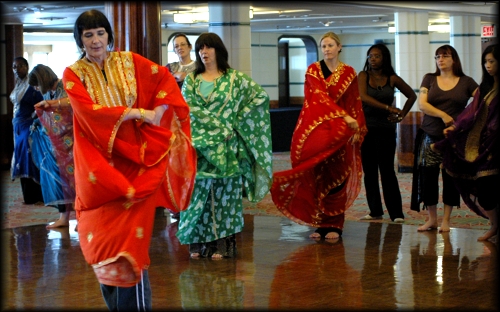
Staying onboard the ship Queen Mary makes the event special and a unique and amazing experience As you walk the long curved and richly carpeted halls, you realize that you really are aboard a stately ship–named after a queen–a ship that once sailed the Atlantic Ocean.

One of the MECDA members (the lady wearing purple) stepped back in time and told me she recalled playing aboard the Queen Mary as a child when her family emigrated from England to America on the ship’s maiden voyage. The gorgeous Art Deco salons on board were the site of the workshops, making the gathering of dancers in ornate ship salons part of the experience, in addition to being conveniently located nearby the festival. After the daytime festival closed, an audience of 500 was treated to the Saturday evening showcase, featuring the workshop instructors and a troupe performance in the Grand Ballroom of the Queen Mary–replete with gold and copper adorned mirrors and Art Deco columns and lighting–a showcase that was followed by a hafla with a live band!

[Ed note- Carl was stationed at the Thebes stage, one of three on the boat. MaShuqa roamed the boat getting miscellaneous pictures and a lot of exercise!]

*Middle Eastern Culture and Dance Association

Drum Dance

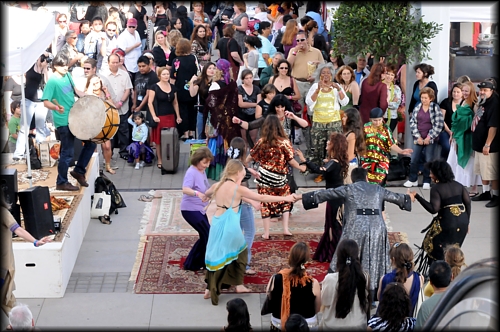
Spontaneous drumming and dance at the outdoor stage on the top deck as you enter the festival

by MaShuqa

Teachers and Vendors

photos by MaShuqa

Cassandra teaches Khaleegy

Cassandra Shore does Khaleegy

Valentina's hoop class

Valentina‘s beginning hoop class

Hallway

Queen Mary hallway

Liliana

Liliana of Belly Dance Magazine with photog Lee Corkett

Aruba
Aruba Sandals

Dhyanis vends

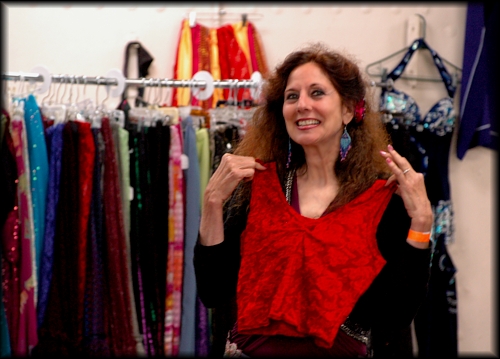
Dhyanis vends

Stellar Advantage

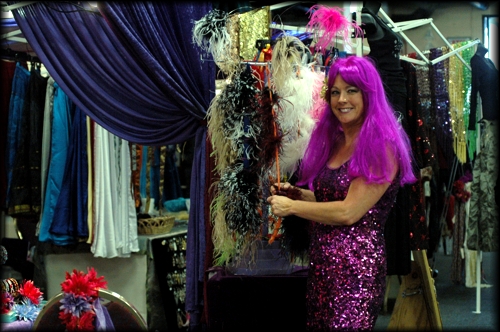
Vendor Stellar Advantage

vendor

another vendor

Hannan's Henna

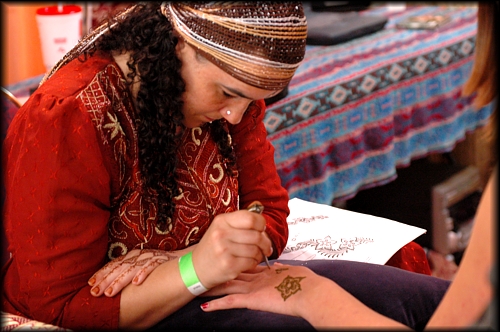
Hannan‘s Henna

Mher

Mher of Hollywood Music

Dr Robin

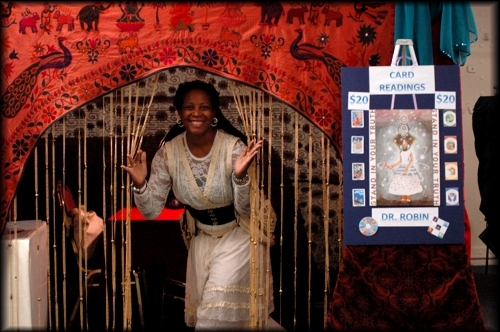
Robin Johnson

Leela

Leela and ?

Tonya and Atlantis

Tonya and Atlantis

Mayor

Little Mayor was a character that walked around the fest in character. Here he takes the Thebes stage for a quick pose.

photo by Carl

?

A casual portrait of an audience member at the Thebes stage

by Carl

Candy Apple Venor

"Candy Apple Vendor" does a spontaneous Bollywood dance at the end of the day on Sunday

by Carl

Gala Show on Saturday Night, showcasing the Teachers

photos by both Carl and MaShuqa

Amy Sigil and Unmata
Amy Sigil and Unmata (Kari on right)

Cassandra Shore

Cassandra Shore

Elizabeth Strong

Elizabeth Strong

Leela and Company

Leela and Company

Jeremiah Soto

Jeremiah Soto

Mira BetzMira Betz

MIra Betz

Harry recieves an award

Harry Saroyan is presented a MECDA Lifetime Achievement Award by Samira, one of the founders of MECDA

Sabrina

Sabrina

Valentina

Valentina


PAGE 2


use the comment box

Have a comment? Use or comment section at the bottom of this page or Send us a letter!
Check the "Letters to the Editor" for other possible viewpoints!

Ready for more?

  • Jillina Advances Dance Theatre, A Review of Jillina’s Bellydance Evolution
    Bellydance Evolution is a full-length theatrical event directed by dancer and choreographer Jillina, ushering belly dance into the world of dance theater. The production is a melding of narrative with a wide variety of traditional and cutting-edge Middle Eastern dance and music. I saw the dress rehearsal of Bellydance Evolution when it debuted in Glendale, California in August, 2009.
  • 12-3-09 Division Champs of the Belly Dancer of the Universe Competition 2009, photos by Carl Sermon
    This contest is one of the first in the Belly Dance community and includes many categories covering different age groups, various styles and specialties.
  • 8-28-09 Carl’s Photos from The 2009 Gala Showcase at the SF/BA MECDA Event photos by Carl Sermon
    Event Presented by SF/BA MECDA (the San Francisco Bay Area Chapter of the Middle Eastern Culture and Dance Association) Held on January 17 at the Cubberley Community Quditorium in Palo Alto, California
  • Dance Passion and Burnout, Muses and Goddesses By Ma*Shuqa Mira Murjan
    Is It Time For A Dance Counselor and Coach, or Dance Retreat
    To Revitalize Yourself and Your Life?
  • 12-26-04 Scott Wilson’s CD "Efendi" review by Ma*Shuqa Mira Murjan
    Scott’s quest is to make Mid-East music more accessible to American audiences…
  • 5-19-02 Rakkasah West Festival 2002 Sunday Photos by Susie
    Dalia Carella, Eva Cernik, Suhaila Dance Company, Ma’Shuqa, Parri and more….
  • 4-28-09 Photos from the 2008 Tour of the Bellydance Superstars by Carl Sermon
  • Marin Civic Center, San Rafael, March 1 2008
  • 9-8-08 Carl’s Raqs LA Photos, Best from the Stage on the Lower Level, Photos by Carl Sermon text by Carl Sermon, Ma*Shuqa and Marta Schill
    held May 17-18, 2008 Glendale Civic Auditorium, California, produced by Miles Copeland and organized by Marta Schill
  • 5-9-08 Carl Sermon’s Photos from the Hoover Hafla
    Event produced by The San Francisco Bay Area Chapter of MECDA on February 10, 2008, at Hoover Theatre in San Jose, CA
  • 8-4-10 Tribal Fusion Faire 2009 Photos by Michael Baxter
    Alvilda, Anaar, Ayse, Belly Sema Dance Co, Blue Moon Haven, Daniella, Dark Raven, Epona, Evil Eye, Fat Chance and Sooz, Firefly, Gypsy Moon, Hiplash, Irina Xara, Jessica Martinez, Kalima Satori, Karma, Kashmir Isis, Kim and Andrea, Leyla Atwill, Madrid, Masha, Mikayla Taylor, Mirage…
  • 8-1-10 The French Connection by Tasha Banat
    Remember that the cabaret style of Belly Dance itself was considered a western cultural event and the night clubs of those days were only there to entertain invaders and their families, not the local people.
  • 7-30-10 Morocco’s Four-Day Folk Fest
    Schikhatt, Tunisian, Zar and Guedra
    , report by Mary

    Schikhatt (a Moroccan word meaning "wise woman") is a dance performed before weddings at bridal parties as a way to "educate" the bride in the movements she would be expected to mimic on the wedding night.
  • 7-23-2010 Friday Night Performances at IBCC 2010, photos by Samira, video collage by GS staff
    International Bellydance Conference of Canada April 23, 2010 at the Hungarian Canadian Cultural Centre in Toronto,Ontario, Canada. Performers include:
    Raks Sahara, Ashira, Maryfar, Laura Bellydance, Daluah, Tribe Maya Fire, Sa’Diyya, Monique Ryan, Sabaya, A La Nar, Sarah Skinner, Akimi, Earth Shakers, Roshana Nofret, Sofia & Chanty, Ebony Qualls, Danza Della Luna.
  • 7-18-10 Belly Dance in Patriarchy, Escaping the Switzerland of the Soul by Andrea Deagon PhD
    However, I do believe that belly dance is able to attain such vitality and complexity in the modern world precisely because it’s embroiled in serious cultural and personal contestations. It is precisely clashes of aesthetic values, conflicting paradigms of sexuality and gender, and economic as well as political inequities that strike the dance’s most beautiful notes.
 

Gilded Serpent presents...

Abdominal Freakish Delights: Aboard The Queen Mary!

Atlantis demos the rules

PAGE 2 of Photo Report from MECDA’s Cairo Caravan 2010, June 4-6, 2010

by Ma*Shuqa Mira Murjan and Carl Sermon
posted August 2010
PAGE 1 here

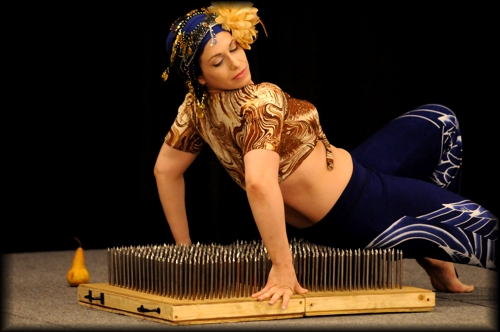
Carl Sermon photographed the World of Wonders on the Thebes Stage that featured 24 amazing and talented performances; among them were the: Bearded Lady, Hermaphrodite, Sword dancers, Bed of Nails dancer, Goldfish Girl, Mermaid, Siamese Twins, Fortune Tellers, Snake Charmers, Balancing Acts, Medusa, Butterfly Woman, (mesmerizing and lithe) Hoop dancers, and an incredible 2 hour Shimmy-thon fundraiser with Atlantis Chianis (as Mistress of Ceremonies) the producer of the Belly Dancer of the Universe Competition.

The Shimmython was emceed by Atlantis who cheered-on the dancers through her enthusiasm and encouraging an ongoing flow of donations. Yes! Imagine continuous shimmies for 2 hours without dropping arms below the shoulders – killer shimmies that resulted in a tie between two very experienced and athletic dancers with lots of stamina!

Trish Gundy & Rachel George were the winners of the Shimmython. They tied for the longest shimmy dance. Rachel also won the portion of the contest for who raised the most funds for the charity. $946 was raised and all funds went to the Alliance for a Healthier Generation.

The Alliance for a Healthier Generation works to address one of the nation’s leading public health threats—childhood obesity.

The Thebes stage featured fun-filled abdominal freakish delights and phenomenal performances, and we were also treated to some spontaneous Bollywood entertainment by “The Gourmet Candied Apple Vendor”.


Shimmython on
Sunday Afternoon

photos by Carl at the Thebes Stage

Start
The Contenders begin…

winner 1


Rachel George was sponsored by Belly Dancer of the Universe

winner 2

Trish Gundy
sponsored by Inland Empire Chapter of MECDA


World of Wonders

by Carl

Bearded Lady
The Bearded Lady is Marjhani

Bed of Nails

Sabrina

Bed of Nails by Sabrina

Black Widow

Black Widow by Satya

Butterfly Woman

Butterfly Woman by Antoinette

Fiji Mermaid

Fiji Mermaid by Karma

Fortune Tellers

Fortune Tellers by Azyetunamed

Frisky Felines

Frisky Feline Femmes by Tribes of Wadi Anaar

Goldfish Girl

Goldfish Girl by Oceana

Gigi and friend

Human Balancing Act by Gigi Corkett and friend

Le Lady Bird

Le lady Bird by Shelly Maidment

Living Doll

Living Doll by Jennifer Marie

Hermaphrodite

Human Hermaphrodite by Stephen Eggers

Madame Electra by Khani Zulu

Madame Electra by Khani Zulu

Magician and Assistant by

Magician and Assistant by Elizabeth and Jillian

Medusa by Sherri

Medusa by Sherri Cher Chez La Femme

Crystal

Mistress of the Sword by Crystal Silmi

Mole People

The Surprise Performance by Mole People

one Horned Horse lady

One Horned Horse Woman by Heather Shoopman

Hoop Girl

Hoop Woman by Jamie Bechtold

Tribal Trash

One Ring Circus by Trailer Tribal Trash


2 Headed Leopard

Two Headed Leopard by Luna Devas

Octopussy Pirate

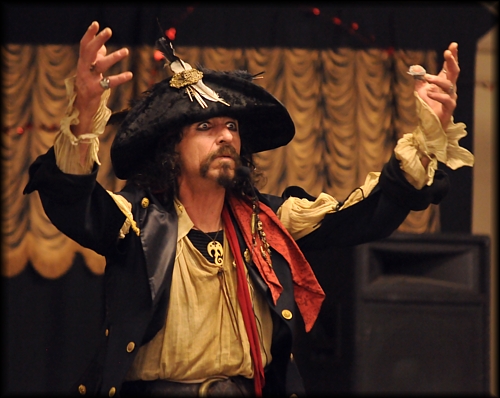
pirate singing for Octopussy

Octopussy

Octopussy by Saahira

Plate Twirller Epona

Plate Twirler by Epona

Pretty in Purple

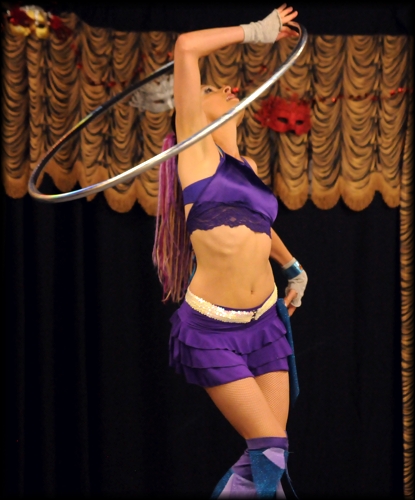
Pretty in Purple by Michelle Morrison?

Robbon Dancers

Ribbon Dancers by Jewels of Meihana

Siamese Twins

Siamese Twins by Lia and Trish

SnakeCharmers Mesmera

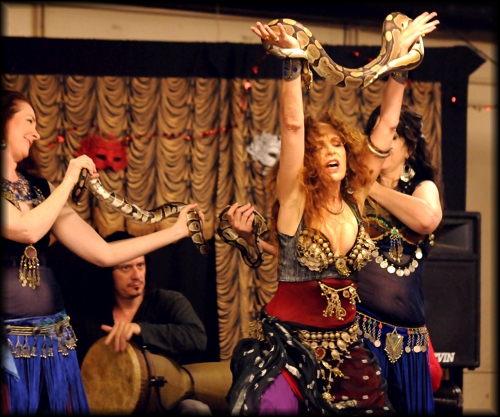
Snake Charmers Mesmera and Sacred Serpent


Back to PAGE 1 Here


use the comment box

Have a comment? Use or comment section at the bottom of this page or Send us a letter!
Check the "Letters to the Editor" for other possible viewpoints!

Ready for more?

  • Jillina Advances Dance Theatre, A Review of Jillina’s Bellydance Evolution
    Bellydance Evolution is a full-length theatrical event directed by dancer and choreographer Jillina, ushering belly dance into the world of dance theater. The production is a melding of narrative with a wide variety of traditional and cutting-edge Middle Eastern dance and music. I saw the dress rehearsal of Bellydance Evolution when it debuted in Glendale, California in August, 2009.
  • 12-3-09 Division Champs of the Belly Dancer of the Universe Competition 2009, photos by Carl Sermon
    This contest is one of the first in the Belly Dance community and includes many categories covering different age groups, various styles and specialties.
  • 8-28-09 Carl’s Photos from The 2009 Gala Showcase at the SF/BA MECDA Event photos by Carl Sermon
    Event Presented by SF/BA MECDA (the San Francisco Bay Area Chapter of the Middle Eastern Culture and Dance Association) Held on January 17 at the Cubberley Community Quditorium in Palo Alto, California
  • Dance Passion and Burnout, Muses and Goddesses By Ma*Shuqa Mira Murjan
    Is It Time For A Dance Counselor and Coach, or Dance Retreat
    To Revitalize Yourself and Your Life?
  • 12-26-04 Scott Wilson’s CD "Efendi" review by Ma*Shuqa Mira Murjan
    Scott’s quest is to make Mid-East music more accessible to American audiences…
  • 5-19-02 Rakkasah West Festival 2002 Sunday Photos by Susie
    Dalia Carella, Eva Cernik, Suhaila Dance Company, Ma’Shuqa, Parri and more….
  • 4-28-09 Photos
    from the 2008 Tour of the Bellydance Superstars
    by Carl Sermon
  • Marin Civic Center, San Rafael, March 1 2008
  • 9-8-08 Carl’s
    Raqs LA Photos, Best from the Stage on the Lower Level
    , Photos by Carl Sermon text by Carl Sermon, Ma*Shuqa and Marta Schill
    held May 17-18, 2008 Glendale Civic Auditorium, California, produced by Miles Copeland and organized by Marta Schill
  • 5-9-08 Carl Sermon’s Photos from the Hoover Hafla
    Event produced by The San Francisco Bay Area Chapter of MECDA on February 10, 2008, at Hoover Theatre in San Jose, CA
  • 8-4-10 Tribal Fusion Faire 2009 Photos by Michael Baxter
    Alvilda, Anaar, Ayse, Belly Sema Dance Co, Blue Moon Haven, Daniella, Dark Raven, Epona, Evil Eye, Fat Chance and Sooz, Firefly, Gypsy Moon, Hiplash, Irina Xara, Jessica Martinez, Kalima Satori, Karma, Kashmir Isis, Kim and Andrea, Leyla Atwill, Madrid, Masha, Mikayla Taylor, Mirage…
  • 8-1-10 The French Connection by Tasha Banat
    Remember that the cabaret style of Belly Dance itself was considered a western cultural event and the night clubs of those days were only there to entertain invaders and their families, not the local people.
  • 7-30-10 Morocco’s Four-Day Folk Fest Schikhatt, Tunisian, Zar and Guedra, report by Mary
    Schikhatt (a Moroccan word meaning "wise woman") is a dance performed before weddings at bridal parties as a way to "educate" the bride in the movements she would be expected to mimic on the wedding night.
  • 7-23-2010 Friday Night Performances at IBCC 2010, photos by Samira, video collage by GS staff
    International Bellydance Conference of Canada April 23, 2010 at the Hungarian Canadian Cultural Centre in Toronto,Ontario, Canada. Performers include: Raks Sahara, Ashira, Maryfar, Laura Bellydance, Daluah, Tribe Maya Fire, Sa’Diyya, Monique Ryan, Sabaya, A La Nar, Sarah Skinner, Akimi, Earth Shakers, Roshana Nofret, Sofia & Chanty, Ebony Qualls, Danza Della Luna.
  • 7-18-10 Belly Dance in Patriarchy, Escaping the Switzerland of the Soul by Andrea Deagon PhD
    However, I do believe that belly dance is able to attain such vitality and complexity in the modern world precisely because it’s embroiled in serious cultural and personal contestations. It is precisely clashes of aesthetic values, conflicting paradigms of sexuality and gender, and economic as well as political inequities that strike the dance’s most beautiful notes.
 

Gilded Serpent presents...

Tribal Fusion Faire 2009 Photos

San Luis Obispo, December 12-13, 2009

Photos by Michael Baxter
posted August 2010

Alvida
Alvilda
Anaar
Anaar
Ayse
Ayse
Belly Sema Dance Company

Belly Sema Dance Company

Belly Sema Dance Company
Blue Moon Haven
Blue Moon Haven
Daniella
Daniella
Dark Raven
Dark Raven
Epona
Epona
Evil Eye Belly Dance
Fat Chance and Sooz
Fat Chance Belly Dance and Sooz
Firefly
Firefly
Gypsy Moon
Gypsy Moon
Hiplash
Hiplash
Irina Xara
Irina Xara
Jessica Martinez
Jessica Martinez
Kalima Santori
Kalima Satori
Karma
Karma
Kashmir Isis
Kashmir Isis
Kim and Andrea
Kim and Andrea
Leyla Atwil
Leyla Atwill
Madrid
Madrid
Masha
Masha
Masha
Mikayla Taylor
Mikayla Taylor
Mirage
Mirage (including Zorba)
Nautch Project and Unmata

Unmata

Om Sisters
Om Sisters
Orchid Belly Dance
Orchid Belly Dance
She'enedra
She’enedra
Sol Y Luna
Sol Y Luna
Strawberry Butterfly and Oasis Dance Co
Strawberry Butterfly and Oasis Dance Crew
Tahitian Duo
Tahitian Duo – Troupe Per-i-Han
Tanja Ozdak
Tanja Odzak
Tribal Underground
Tribal Underground
TWNN
TWNN
Vulgaire and Unesidora
Vulgaire and Anesidora
Wild Card Belly Dance
World Rhtyhm Students and Saja
World Rhythm Students and Saja
Zoso
Zoso

Next Tribal Fusion Faire will be held December 17th-19th, 2010.
info

Don’t miss Carnival of Stars coming this weekend! August 7 & 8, 2010 at the Richmond Auditorium.
info


advertisement


Have a comment? Use or comment section at the bottom of this page or Send us a letter!
Check the "Letters to the Editor" for other possible viewpoints!

Ready for more?

  • Michael’s Photos of the Belly Dancer of the Year2009 Award Winners
    Some photos are linked to larger images. Additional troupe member names wanted!
  • Michael’s Spring 2009 Photo Spread
    Aazura, Adriana, Ahava, Alimah, Andrea, Claudia, Eve, Kashmir Isis, Katherina, Khalila, Maria, Meissoun, Michelle Joyce, Mychelle, Nadira, Nanna, Nicole, Sandra, Shoshanna, Summer, Surreyya, Crystal, Tabitha, Zaheea
  • Mina’s 1001 Arabian Nights
    1001 Arabian Nights started with asking several of the community troupe directors and teachers I’ve known over the year if they would like to create a show with me. They all seemed very excited about the prospect of doing something "different" in the dance community.
  • The North Valley Belly Dance Competition- 2007
    Held on November 10, 2007, in Oroville, California, event produced by Carolee and David Tamori. It was an exciting contest, covering five categories: Novices, Intermediates, troupe dancers, Solos and Live Solos. Live music was provided by Doug Adam’s amazing Light Rain
  • 8-1-10 The French Connection by Tasha Banat
    Remember that the cabaret style of Belly Dance itself was considered a western cultural event and the night clubs of those days were only there to entertain invaders and their families, not the local people.
  • 7-30-10 Morocco’s Four-Day Folk Fest Schikhatt, Tunisian, Zar and Guedra, report by Mary
    Schikhatt (a Moroccan word meaning "wise woman") is a dance performed before weddings at bridal parties as a way to "educate" the bride in the movements she would be expected to mimic on the wedding night.
  • 7-23-2010 Friday Night Performances at IBCC 2010, photos by Samira, video collage by GS staff
    International Bellydance Conference of Canada April 23, 2010 at the Hungarian Canadian Cultural Centre in Toronto,Ontario, Canada. Performers include: Raks Sahara, Ashira, Maryfar, Laura Bellydance, Daluah, Tribe Maya Fire, Sa’Diyya, Monique Ryan, Sabaya, A La Nar, Sarah Skinner, Akimi, Earth Shakers, Roshana Nofret, Sofia & Chanty, Ebony Qualls, Danza Della Luna.
  • 7-18-10 Belly Dance in Patriarchy, Escaping the Switzerland of the Soul by Andrea Deagon PhD
    However, I do believe that belly dance is able to attain such vitality and complexity in the modern world precisely because it’s embroiled in serious cultural and personal contestations. It is precisely clashes of aesthetic values, conflicting paradigms of sexuality and gender, and economic as well as political inequities that strike the dance’s most beautiful notes.
  • 7-15-10 Sema Yildiz, A Star of Turkish Dance by Zumarrad/ Brigid Kelly
    She was fortunate, she says, to grow up in a Roma (Gypsy) community rich in dance and music – the Fatih district, which houses the Sulukule, famous for its entertainment and considered the oldest Roma settlement in the world.
 

Gilded Serpent presents...

The French Connection

Gilgamesh

by Tasha Banat
posted August 1, 2010

A well known dancer with a strong background in Egyptian style Belly Dance made a claim that all Belly Dance began in Egypt. Maybe it did and maybe it did not because references to Belly Dance are found in manuscripts such as “Gilgamesh". This manuscript is a story regarding Gilgamesh’s love for the Goddess Ishtar, a dancer. This manuscript is proven to have originated from the area now known as " modern day Iraq” . The manuscript ‘Gilgamesh’, has been determined to be written during a time frame which would be older than the time period that the Old Testament of the Bible is said to be dated from.

However, that is not really the point of this article because this person was talking about “cabaret style Belly Dance”. I believe that we can agree that this type of Belly Dance originated in around the late 1800’s give or take a decade or two.

I would assume that we now know that this form of dance was never considered traditional in style, but a dance complete with costuming that was suited to please the latest batch of conquerors which consisted mainly of French and British. This was the result of the fall of the Ottoman Empire.

What really got to me was her reasoning and I quote. “Everyone knows Egypt is over 5000 years old so obviously belly dance began in Egypt, because Lebanon didn’t exist”.

Maybe it is because I feel more and more desperate to preserve what is left of the Asian Arab culture, but each and every part of the world has existed in one form or another since the beginning of time, regardless of what the region was called back then and we are no different.

Please do not think I am attacking the person. Actually, I do not blame the lady for her statement. I would blame myself, though, if I allow this kind of information to be accepted without any thought given to the possibility that it is not entirely accurate.

So to all of you Belly dance experts out there: Belly Dance describes a particular style of dance which most agree began in the Arab speaking world, including Egypt and Lebanon, as well as many other regions then defined as the Near East. This area stretched all the way from modern Morocco to Iraq (and sometimes Iran, even though the people there are Aryan).

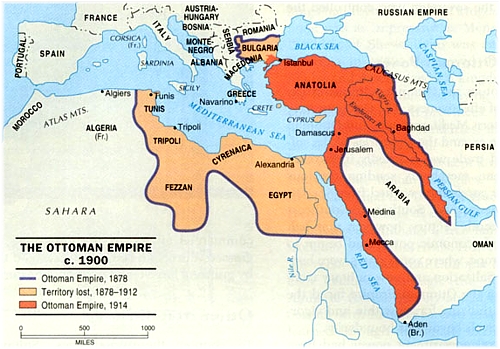
The Ottoman Empire controlled much of the Near East and much of Turkish culture . For example, dances such as the Black Sea folk dances influenced today’s Debke (Asian Arab folk dance). There was also a traditional style of belly dance that each region claimed as their own by music, dress, song, and movement.

Ottoman Empire map

Then events leading up to the First World War and the demise of the mighty Ottoman Empire came about. The results of that war created most of the political borders that exist in that part of the world today. The French foreign legion controlled North Africa since about 1850, including present day Lebanon and the British took control of Egypt and the Asian Arab world as well as mandating Palestine to create a State of Israel (Balfour declaration) in the early 1900s.

This is where the history of Cabaret Belly Dance began and everything about the dance then and now is predominately “The French Connection.”

Since visual art has no political borders, it is only natural that Europeans became enamored by the mysterious beauty that the Arab world had to offer. Belly Dance became one of the more popular forms of entertainment when the French invaded North Africa and Lebanon . The unique style of Belly Dance left those in Western and European countries in awe of the feminine sensuality of the dance.

The British, in my opinion, back then were kind of rigid, prim, and formal. In general, the British and their monarch style of Parliamentary Democracy lacked that French pizazz.

Can CanAll really cool decadent visual arts came from mainland Europe and the French were the leaders where cabarets featuring the “Can Can” and other dances flourished in every French controlled region. It stands to reason then that the cabarets as well as their scandalous costuming ideas probably existed in North Africa (except Egypt) including present day Lebanon well before the first nightclub ever opened in Cairo.

Remember that the cabaret style of Belly Dance itself was considered a western cultural event and the night clubs of those days were only there to entertain invaders and their families, not the local people.

I will acknowledge however, that in those days, the sun never set on Great Britain and that they were definitely great warriors: thus becoming a dominant force and influence on the countries they colonized. They did nationalize dance, theatre, and just about everything else in Egypt based upon their Westernized viewpoint; thus Egypt became and continues to remain " the Hollywood of the Arab film industry."

I also believe that the many wars in the Asian Arab world have also contributed to the downfall of the Belly Dance commercial industry, especially in Lebanon until the mid 1990s.

Finally, the Asian Arab world is making a comeback and if all goes well; our part of the Arab culture will not disappear after all and we will again be recognized for our grand contribution in of all the arts.

I have written this article for the purpose of questioning and assimilating information in order to arrive at a conclusion that is a bit more cohesive and understandable in it’s historical and political climate. I hope this helps to reeducate and reevaluate the normal everyday acceptance dancers have assumed about the roots of the dance known widely as Belly Dance. The background of our dance culture here in Western society may not understand or have the basic knowledge of these historical as well as cultural and regional affects that are the foundation to Belly Dance. They have understandingly arrived at knowledge based on miscellaneous events and have created and copied information regarding the roots, culture and historical variance of "Belly Dance" based on these long made assumptions. By writing this article I hope to open new dialogue and a broader understanding of the Arab/Asian dance foundations.

Party in Beirut in 1959

use the comment box

Have a comment? Use or comment section at the bottom of this page or Send us a letter!
Check the "Letters to the Editor" for other possible viewpoints!

Ready for more?

  • Debke, A Brief History
    How does one combine Debke with Bellydance? What does that mean? In order to combine two beautiful dances, we have to first separate them and understand the different types of Arabic music
  • Belly Dance:Time for Personal Assessment or How old are your Shoes?
    What do you personally want from the dance? In order to answer this honestly, you must make a personal assessment of your goals and include your achievements.
  • 1-25-07 One Banat: An Exploration of Some Belly Dance Costuming Origins by Tasha Banat
    Since the establishment of Israel, the definition of the term “Middle East” seems to have changed and now has come to refer to a conglomeration of a number of unrelated countries in the Asian and African parts of the hemisphere.
  • 8-18-05 Re-defining Belly Dance and Middle Eastern Dance by Tasha Banat
    The fact is that “Middle Eastern Dance” is not an acceptable definition for Belly Dance and let me explain why.
  • 7-30-10 Morocco’s Four-Day Folk Fest Schikhatt, Tunisian, Zar and Guedra, report by Mary
    Schikhatt (a Moroccan word meaning "wise woman") is a dance performed before weddings at bridal parties as a way to "educate" the bride in the movements she would be expected to mimic on the wedding night.
  • 7-23-2010 Friday Night Performances at IBCC 2010, photos by Samira, video collage by GS staff
    International Bellydance Conference of Canada April 23, 2010 at the Hungarian Canadian Cultural Centre in Toronto,Ontario, Canada. Performers include: Raks Sahara, Ashira, Maryfar, Laura Bellydance, Daluah, Tribe Maya Fire, Sa’Diyya, Monique Ryan, Sabaya, A La Nar, Sarah Skinner, Akimi, Earth Shakers, Roshana Nofret, Sofia & Chanty, Ebony Qualls, Danza Della Luna.
  • 7-18-10 Belly Dance in Patriarchy, Escaping the Switzerland of the Soul by Andrea Deagon PhD
    However, I do believe that belly dance is able to attain such vitality and complexity in the modern world precisely because it’s embroiled in serious cultural and personal contestations. It is precisely clashes of aesthetic values, conflicting paradigms of sexuality and gender, and economic as well as political inequities that strike the dance’s most beautiful notes.
  • 7-15-10 Sema Yildiz, A Star of Turkish Dance by Zumarrad/ Brigid Kelly
    She was fortunate, she says, to grow up in a Roma (Gypsy) community rich in dance and music – the Fatih district, which houses the Sulukule, famous for its entertainment and considered the oldest Roma settlement in the world.
  • 7-15-10 Queen of Denial, Chapter 2: Dancing in the “City of Lights” by Rebaba
    I’m breathing very hard, and can tell I’m very, very shiny and red, even under the stage lights, but I think he likes me. And he is completely dumbfounded that an “American” girl is auditioning for a job as a “Danseuse Oriental!” I know I’m way too fat, but thank God I’m a belly dancer, and apparently a novelty, because I couldn’t get away with this in any other dance form! Fortunately, I’m only 19 years old and my excess flesh is young, tan and firm!”
  • 7-12-10 Fusion: How much is too much? by Najia Marlyz
    In America, and evidently elsewhere, we dancers seem to have a voracious appetite for new steps and movements, so like hungry chipmunks, we have grabbed all we could stuff into our cheeks of Turkish and Arabic steps and gestures, resorting to incorporating and mixing of Saidi, Kaleedgi, Blue Guedra, Ghawazi, etc. We’ve chewed all of them up together and spit them out and found that they have not sufficiently nourished us.
 

Gilded Serpent presents...

Morocco’s Winter Four-Day Folk Fest

Morocco and author Mary

Schikhatt, Tunisian, Zar and Guedra

Report by Mary
posted July 30, 2010
Event held January 8-11, 2010 in New York City

“New York City in JANUARY – are you crazy!?” my husband asked me when I told him of my brilliant plan to expand my knowledge of folk dance by attending Morocco’s 2010 Winter Intensive, “it’s COLD!” Nevertheless, January 7th he was on the plane right next to me on our way north.

Morocco’s Winter Intensive is one of two semi-annual events she holds in her studio in New York City. The workshop covered both modern and traditional Moroccan Schikhatt, Tunisian dance and an overview of the Zar and Guedra rituals. The workshops were from 9:30 a.m. – 3:30 p.m. every day with most of the time devoted to learning choreography and the rest being more lecture based.  

Once everyone found their way to Morocco’s Manhattan studio on Friday morning, Karen – one of Morocco’s students and instructors – began the warm up. Usually I’m not a fan of workshops with long warm-ups, but I appreciated it in this situation because (a) it was cold outside and (b) the workshop was five hours long so an extended warm-up was hardly cutting into learning time. It was also designed in such a way that we reviewed technique we would need for the day’s choreographies and in the subsequent days, reviewed what we had learned in the days before.

Friday we learned a modern Schikatt choreography – which was a lot of fun, my student troupe learned this choreography (see picture) – and watched videos of Schikatt footage Morocco had taken in her travels and saturday we learned a more traditional Schikatt choreography.

Schikhatt (a Moroccan word meaning "wise woman") is a dance performed before weddings at bridal parties as a way to "educate" the bride in the movements she would be expected to mimic on the wedding night.

The dance involves the pelvic region more than Oriental or Raqs Sharqui styles and is typically in a loose caftan with something tied around the hips. Household items like handkerchiefs and long scarves may be used as well when dancing schikhatt socially at parties or with friends.

Sunday we learned a Tunisian piece and we spent Monday going over the Guedra and Zar rituals as well as just chatting with Rocky (Morocco’s nickname) about the material we’d covered, reviewing steps, and watching a few more videos.

Tunisian style dancing is often performed on the balls of the feet and involves many twisting movements of the hips and more earthy than the oriental styles and also performed in a caftan and not a two piece costume. 
 

The Zar is not a dance style at all, it is a ritual! It is technically prohibited by Islam and so Zar practitioners are becoming less common and harder to find although they still exist. The ritual is designed to cleanse the soul of bad spirits. The ritual is led by a singer and one or two percussionists who play a steady rhythm. There is no wild hair tossing in the zar as there is no specific "movement" that corresponds to the Zar as it is a ritual and not a performance dance, although many dancers do present stage versions of the ritual.

The Guedra ritual comes from the Blue People of the Tuareg Berbers from present-day Morocco. Both men and women can participate in the guedra ritual, but the main person (the Guedra) can only be female. A drum is played and everyone involved claps and chants along.

The purpose of the Guedra ritual, and what makes it unique, is that it is simply designed as a way to share love, light and good energy with all present.

Each participant was provided with a copy of the music, choreography notes and cultural articles about the dances, which I appreciated as I could spend the workshop time focusing on learning rather than madly scribbling notes I may or may not be able to decipher later. This is a practice that seems to be growing in popularity among workshop instructors and I hope it continues.

 While only a brief overview of the different topics covered, the Intensive covered what one would expect a workshop would do – provide education in a particular topic or set of topics, giving the attendees additional knowledge in said subjects they can either incorporate into their own dance or not. While these topics are not necessarily something I would expect to add into a restaurant set or what I would perform at a party, I went to the event with no prior knowledge of Schikhatt or Tunisian dance. Since this dance is more than just a set of movements and we need to, as performers, understand a bit of the culture from which our dance originates, I did finish the intensive feeling a bit more educated about the various styles and am more likely to seek further instruction when a dancer who teaches about these styles is in the area.


Magnolias performing the modern Schikhatt at a local festival (it was WINDY!)

use the comment box

Have a comment? Use or comment section at the bottom of this page or Send us a letter!
Check the "Letters to the Editor" for other possible viewpoints!

Ready for more?

  • 5-30-10 Building A Dance Community by Mary
    A community does not operate in a vacuum and there is no room for cattiness or drama if the community is to be effective and truly benefit the area as a whole
  • 7-23-2010 Friday Night Performances at IBCC 2010, photos by Samira, video collage by GS staff
    International Bellydance Conference of Canada April 23, 2010 at the Hungarian Canadian Cultural Centre in Toronto,Ontario, Canada. Performers include:
    Raks Sahara, Ashira, Maryfar, Laura Bellydance, Daluah, Tribe Maya Fire, Sa’Diyya, Monique Ryan, Sabaya, A La Nar, Sarah Skinner, Akimi, Earth Shakers, Roshana Nofret, Sofia & Chanty, Ebony Qualls, Danza Della Luna.
  • 7-18-10 Belly Dance in Patriarchy, Escaping the Switzerland of the Soul by Andrea Deagon PhD
    However, I do believe that belly dance is able to attain such vitality and complexity in the modern world precisely because it’s embroiled in serious cultural and personal contestations. It is precisely clashes of aesthetic values, conflicting paradigms of sexuality and gender, and economic as well as political inequities that strike the dance’s most beautiful notes.
  • 7-15-10 Sema Yildiz, A Star of Turkish Dance by Zumarrad/ Brigid Kelly
    She was fortunate, she says, to grow up in a Roma (Gypsy) community rich in dance and music – the Fatih district, which houses the Sulukule, famous for its entertainment and considered the oldest Roma settlement in the world.
  • 7-15-10 Queen of Denial, Chapter 2: Dancing in the “City of Lights” by Rebaba
    I’m breathing very hard, and can tell I’m very, very shiny and red, even under the stage lights, but I think he likes me. And he is completely dumbfounded that an “American” girl is auditioning for a job as a “Danseuse Oriental!” I know I’m way too fat, but thank God I’m a belly dancer, and apparently a novelty, because I couldn’t get away with this in any other dance form! Fortunately, I’m only 19 years old and my excess flesh is young, tan and firm!”
  • 7-12-10 Fusion: How much is too much? by Najia Marlyz
    In America, and evidently elsewhere, we dancers seem to have a voracious appetite for new steps and movements, so like hungry chipmunks, we have grabbed all we could stuff into our cheeks of Turkish and Arabic steps and gestures, resorting to incorporating and mixing of Saidi, Kaleedgi, Blue Guedra, Ghawazi, etc. We’ve chewed all of them up together and spit them out and found that they have not sufficiently nourished us.
  • 7-6-10 Mohamed El Hosseny: His Dancing Journey from Suez to Cairo, Helsinki, and Beyond Interview by Zsuzsi
    My advice which I tell all of my students is to study ballet at a beginner level for a few months. It will help your lines very much, so you have a nice bodyline without worrying about it and you can focus on learning the choreography and Oriental movements of the teacher in front of you.
 

Gilded Serpent presents...

Friday Night at IBCC 2010

Main Stage Photos and Video Collage

photos by Samira, Video by GS Staff.
posted July 23, 2010

The Friday Night Main Stage Performance of the International Bellydance Conference of Canada was held April 23, 2010 at the Hungarian Canadian Cultural Centre in Toronto, Ontario, Canada.

Video report consists of a collage of clips caught of performances. IBCC is produced by Yasmina Ramzy and company.
Readers sending the names of individual troupe members to the editor is always appreciated.

Raqs Sahara

Raks Sahara of Washington DC, USA
Ashira of Argentina

Ashira of Argentina and Canada
Maryfer

Maryfer of Mexico and Canada
&

Laura Bellydance

Laura Bellydance of British Columbia, Canada
Daluah

Daluah of Ontario, Canada
Tribal Maya Fire

Tribe Maya Fire of Ontario, Canada
Sa'Diyya

Sa’Diyya of Texas, USA
Monique

Monique Ryan of Nova Scotia, Canada
Sabaya

Sabaya of Texas, USA
A La Nar

A La Nar of British Columbia, Canada
Saraha Skinner

Sarah Skinner of New York, USA
Akimi

Akimi of France
Earth Shakers

Earth Shakers of Ontario, Canada
Roshana

Roshana Nofret of Florida, USA
Sofia and Chanty

Sofia and Chanty of Quebec, Canada
Ebony

Ebony Qualls of Washington, DC, USA
Danza Della LUna

Danza Della Luna

Danza Della Luna of Texas, USA

More IBCC photos and videos coming soon!

use the comment box

Have a comment? Use or comment section at the bottom of this page orSend us a letter!
Check the "Letters to the Editor" for other possible viewpoints!

Ready for more?

  • 6-16-10 IBCC 2010: Thursday Main Stage Performance Photos and Video, Photos by Samira, Video by GS staff
    The Thursday Night Main Stage Performance of the International Bellydance Conference of Canada was held April 22, 2010 at the Hungarian Canadian Cultural Centre in Toronto, Ontario, Canada.
    Video report consists of a collage of clips caught of performances. IBCC is produced by Yasmina Ramzy and company.
  • IBCC 2010- Wednesday Stage, Opening Night Gala Performance Photos
    The Opening Night Gala Performance was held April 21, 2010 at the Hungarian Canadian Cultural Centre. Video report reposted here as an introduction to the photos.
  • IBCC 2010, Wednesday April 21, Opening Gala Report From The International Bellydance Conference of Canada
    Because Gilded Serpent didn’t quite make it to the hall until the show was over, we are very grateful that Brigid Kelly consented to give us her report from the Wednesday evening performancec. The dance photos overlayed on this video are by Samira Hafezi.
  • IBCC 2010, Thursday Activities Report From The International Bellydance Conference of Canada
    We begin our video reports with the Thursday Activities: dance workshops by Amel Tafsout, Sema Yildiz, Delilah, and Aurora Ongaro lectures on The Anatomy of Bellydance, Dr Sawa on Rhythmic Notation for Bellydancers, Shira on Mass Media, Mass Stereotypes and a Panel on Feminism & BD led by Andrea Deagon,
  • Ask Yasmina #12: The Importance of Oum Kalthoum, Undercutting, and Kid Bellydancers
    When a client hiring a performer or a student looking for a teacher is at a point where they want quality, they know they have to pay a fair price.
  • Sticky Situations: Ask Yasmina #11- Inappropriate Audience Members, Competitive Teachers, Fickle Students
    Trying to please and appease those who already disrespect you leads to a miserable dead end. My advice is to say "NO" and give the inappropriately behaved person a good wack across the face.
  • Ask Yasmina #10: Bellydance Business, Finding Musicians, Certification
    This experience has made me very wary ever since of people with certificates.
  • 7-18-10 Belly Dance in Patriarchy, Escaping the Switzerland of the Soul by Andrea Deagon PhD
    However, I do believe that belly dance is able to attain such vitality and complexity in the modern world precisely because it’s embroiled in serious cultural and personal contestations. It is precisely clashes of aesthetic values, conflicting paradigms of sexuality and gender, and economic as well as political inequities that strike the dance’s most beautiful notes.
  • 7-15-10 Sema Yildiz, A Star of Turkish Dance by Zumarrad/ Brigid Kelly
    She was fortunate, she says, to grow up in a Roma (Gypsy) community rich in dance and music – the Fatih district, which houses the Sulukule, famous for its entertainment and considered the oldest Roma settlement in the world.
  • 7-15-10 Queen of Denial, Chapter 2: Dancing in the “City of Lights” by Rebaba
    I’m breathing very hard, and can tell I’m very, very shiny and red, even under the stage lights, but I think he likes me. And he is completely dumbfounded that an “American” girl is auditioning for a job as a “Danseuse Oriental!” I know I’m way too fat, but thank God I’m a belly dancer, and apparently a novelty, because I couldn’t get away with this in any other dance form! Fortunately, I’m only 19 years old and my excess flesh is young, tan and firm!”
  • 7-12-10 Fusion: How much is too much? by Najia Marlyz
    In America, and evidently elsewhere, we dancers seem to have a voracious appetite for new steps and movements, so like hungry chipmunks, we have grabbed all we could stuff into our cheeks of Turkish and Arabic steps and gestures, resorting to incorporating and mixing of Saidi, Kaleedgi, Blue Guedra, Ghawazi, etc. We’ve chewed all of them up together and spit them out and found that they have not sufficiently nourished us.
  • 7-5-10-Carnival of Stars, Performers L – Z Photos by Carl Sermon
    Latifa, Leyla Lanty, Lulu, Mahsati, Maila, MaShuqa, Monica, Monifa, Naiya Halal, Nera Brent, Pepper, Raks Al Khalil, Raska a Diva, Raks Hakohaveen, Robyn Lovejoy, Safiyah, Sarah Horbeein, Shadha, Shaunte, Sister Sirens, Sukara, Surreyya, Tanja, Tatseena, Tera Lynda, Trish …
 

Gilded Serpent presents...

Belly Dance in Patriarchy:

Ishtar

Escaping the Switzerland of the Soul

by Andrea Deagon PhD
posted July 18, 2010

3rd ManIn the 1949 film classic The Third Man, Orson Welles’  menacing and morally corrupt character cynically comments: “In Italy for thirty years under the Borgias they had warfare, terror, murder, and bloodshed, but they produced Michelangelo, Leonardo da Vinci, and the Renaissance. In Switzerland they had brotherly love – they had 500 years of democracy and peace, and what did that produce? The cuckoo clock.”

I think belly dancers need to take this to heart.  I’m not comparing the average belly dance to the Mona Lisa, or the belly dance world to Italy under the Borgias – at least our backstabbing isn’t fatal. 

However, I do believe that belly dance is able to attain such vitality and complexity in the modern world precisely because it’s embroiled in serious cultural and personal contestations.  It is precisely clashes of aesthetic values, conflicting paradigms of sexuality and gender, and economic as well as political inequities that strike the dance’s most beautiful notes.  The cross-cultural dynamism of belly dance throughout the modern world is spurred as much by conflict as by brotherly or even sisterly love.

What I want to discuss here, with the Western and Pacific Rim belly dancers who will be reading this, are the temptations and risks of unconsciously abandoning these vital pressures in order to situate ourselves in “Switzerland” and manufacture the belly dance equivalent of cuckoo clocks.  My critique begins with the nurturing ancient matriarchy where our popular histories so often locate the origins and essence of belly dance. I’ll question our definition of femininity and feminine aesthetics.  Additionally, I’ll problematize the archetypes that many Western belly dancers have found empowering: birth dance, fertility ritual, the Great Mother, the Sacred Prostitute, and the Gypsy.  These ideas have fostered meaningful experiences for Western belly dancers for over 40 years, and they still provide many Western women with their first frisson of real connection with the deeper potentials of their own experience of belly dance. 

But now, amidst changing social, political, and intercultural realities, we need to critique our former sources of strength so that we can take them honestly into the future.  And our future, like our past, is patriarchal.

Living in Patriarchy

A patriarchy is simply a society in which men and ideas associated with men are generally privileged over women and ideas associated with women.  It’s often hierarchical, with men exerting power over their own families, women, and lower-status men. All agricultural societies and industrial nations observable in the present and documented in the past are patriarchal to varying degrees. This makes patriarchy the most common form of social organization in the world.  It’s not evil, it’s just a part of life – but one that needs to be acknowledged and understood by those who want to mitigate its power.

Every Belly dancer anywhere today grew up in a patriarchy and performs in one.  Every personal statement she (or he) makes through dancing, and every image she projects, expresses an identity, an archetypal framework, and a world-view formed within her specific patriarchy.  The values and dynamics of patriarchal societies have shaped our dance and cut the paths through which we seek, and define both artistry and empowerment.  Because we grow up in a patriarchal environment we accept as natural, we absorb the values we see around us as natural as well.  Our own patriarchy has valorized, for example, concepts like freedom, power, creativity, and self-expression, things we all want and take as universals, but which in fact reflect a world view specific to the modern West.

When it surged back into North American popular culture in the 1960s and ’70s, belly dance was naturally allied with “Women’s Lib” (as women’s liberation was known then). Belly dance felt ancient and wise, and its sensual, enjoyable transgressions of “nice girl” expectations gave it a natural home in the ancient matriarchy constructed by feminists to counteract the unpleasant realities of the male-dominated world. This imagined matriarchy, unfortunately, had its roots in Victorian ideas of who women were, peaceful, motherly and fertile and how they would behave when left to their own devices, but never mind.  It was still a radical break from the “brownie-baking housewife and mom” expectations of the 1960s.  In the ’70s version of matriarchy, women were respected for their biological creativity, and women’s values (as defined at the time) held sway.  People co-existed peacefully, found fulfillment in sexual, personal, and creative freedom, and celebrated life through goddess worship, which could contain sensual or even sexual elements. We were sisters (and okay, brothers too) – and we could celebrate all this in dance.

As Switzerland goes, early matriarchy is a pretty good one.  Since the 1960s, committed belly dancers have encouraged – if not thoroughly maintained – its dynamics in their students’ early classes.  The beginning dancer learns to express herself  through movement that seems to verge on the forbidden territory of sex.  She’s taught to love her body, however little it conforms to the unrealistic standards of our time. She leaves behind the demands of husbands, bosses, and kids with their soccer games and backtalk, for a pleasurable, self-indulgent world, among other women who love each other and themselves.  She can be sexy, or spiritual, or both at the same time.  For 40 years, beleaguered women in the West have looked forward to their weekly dose of belly dance as the salve for the stressed-out, if not actually wounded, soul.

On the other hand, the thin shell of this mini-matriarchy is easily shattered.  Before long, the new dancer may begin to wonder whether belly dance really resides in the Switzerland of sisterhood and empowerment after all.  She’ll notice that employers and audiences insist that all good  belly dancers are thin and young, with the kohl-rimmed eyes, shaped and reddened lips, polished nails, long, touchable hair, and conceal-and-reveal costumes of our conventional exoticism.

  If she performs, that’s how she’d better be as well.  To impress her audiences, she’ll have to quantify her technique by making it countable and precise rather than idiosyncratic and resistant to measurement – face it, Western audiences like tic-toc cute isolations more than floods of emotional shimmies in taqsims.  She’ll often be seen as an object to be enjoyed rather than as the author of her dance. She’ll probably be underpaid, and may therefore unconsciously begin to dismiss the value of what she does, since for most of us, it’s only a hobby after all.  When she performs, she may subordinate her desire to create joy and enchantment to a deep-seated need to find public validation for her beauty and skill.  She’ll probably define her body as open to touch – and sometimes unwelcome varieties of it – through tipping upon her body. She’ll probably ignore the ways in which her complacence makes her uncomfortable, and she may think of herself as doing the Goddess-dance of matriarchy the whole time.

The mantras “belly dance is all about women” or “belly dance is empowering” can foster deception and worse, self-deception about the dynamics of patriarchy that are so much a part of how this dance is still conceived and played out in the real world.  Are these dynamics our fault?  No, of course not, but ignoring them is. 

Hiding behind the mists of matriarchy is less likely to lead to moving, honest performances, than starting where you really are: as someone whose ability to work, speak, create, determine her physical boundaries and define her authorial voice, is compromised by both the expectations of her culture and her own acquiescence to them.  This is not empowerment: it is personal, cultural, and physical constraint. 

Of course I believe that it’s still possible to create something valuable through Belly dance, or I wouldn’t be doing it.  A position of weakness doesn’t always stifle one’s voice, or we’d never have heard of, say, Jesus Christ.  However, you can’t speak truthfully if you ignore where you stand.

The Pleasures and Pitfalls of Archetype

Archetypes, powerful recurring images and story-patterns, are particularly problematic for us.  Our own culture’s archetypes – Great Mother, Temple Priestess, Sacred Prostitute, Gypsy, Dancing Girl, Amazon, Wild Woman, and so on – are as natural to us as breathing.  The free-flowing, expressive explorations of belly dance call us to these seemingly universal figures of power which can be meaningful, effective tools of both self-exploration and communication with the Western audiences who share them.  For many new (and more experienced) dancers, the instinctive emergence of these powerful patterns in her own dance can be a breakthrough moment – a time when human connections and sources of power that she (or he) had previously lacked come bubbling to the surface.  For many, if not most, Western belly dancers, archetype provides a pathway into new realms of the self.

However, they are also paths that take us only as far as our culture allows us to go.  We – both belly dancers and adherents of the New Age movement that popularized the idea of archetype – have typically defined archetypes as arising from ancient, universal and truthful roots.  But they don’t! 

Our archetypes have taken their unique forms through the constructs of our own patriarchal society.  Do they feel empowering?  Yes, of course they do.  They help us access deep-seated primal feelings, and give us meaningful frames for our dances.  They resonate; they connect us with a sea of shared experiences, but they aren’t survivals from ancient places and times.  They’re creations of the here and now, and they’re as patriarchal as the society which gave rise to them.  We need to be aware of their limits as well as their power. 

The Great Mother

As a historian, I find the concept of the Great Mother problematic – mainly because, as far as any evidence from the ancient Middle East indicates, there wasn’t one.  Goddesses who are mothers have many functions, and motherly functions are an integral aspect of many different deities, so that no one is really the “goddess of” motherhood.  In fact, the one Middle Eastern goddess worshipped by the name of “Great Mother,” Cybele, wasn’t actually a mother and didn’t relate to her worshippers in a maternal way.  Go figure!  But there’s no denying that, from the Victorian age through the present day, the archetype of the Great Mother, with her seat of power in the distant mists of time, has been a powerful evocation of feminine strength.

Cybelle

Interwoven with the powerfully creative figure of the Great Mother is the Western connection of the pelvic motion of belly dance with fertility and childbirth.  It may be that this sort of movement, on some deep level, in some times, and in some circumstances, does evoke the interaction of sex-fertility-childbirth that permeates the ancient Middle East.  The pop-culture literature of childbirth, following our example, often comments that belly dance originated as a way to prepare for childbirth, or even as a birth ritual. 

Among us, anecdotes about childbirths made easy by belly dance abound, to the point where any dancer who has a difficult labor is ashamed to admit it and may even begin to doubt her dance ability. 

The connection of Belly dance and childbirth has inspired some heartfelt artistic statements like Delilah’s “Dance to the Great Mother,” a moving, resonant piece.  However, it is problematic that we so often define birth as the origin and essence of belly dance rather than the inspiration for modern artistic and personal statements.  It’s certainly not the majority opinion in the Middle East.  Go ask your Arab immigrant friends if the true meaning of belly dance is its use for childbirth preparation and enjoy the incredulous stares. There is no first-hand account of belly dance as birth ritual in any anthropological literature.  (Morocco [Carolina Varga Dinicu] describes attending a birth in Morocco where pelvic movements were performed by attendants, but none of them thought of this as dancing, and Morocco herself will tell you that this is not evidence of “belly dance” as birth ritual.)  There are also no actual statistics correlating expertise in belly dance with easier childbirth – quite the opposite, if you look at non-medical childbirth in rural Egypt, where raqs beledi is commonly practiced.

On the basis of fragmented and often misinterpreted evidence, the belly dance community (or a substantial part of it) has latched onto the idea of childbirth as a central meaning of belly dance, even an explanation for its origins and development among women.  Certainly, many of us have found belly dance particularly meaningful during pregnancy and early motherhood.  This may be true in the Middle East as well.  It is – or so many dancers have said – quite wonderful to belly dance while carrying life.  (It may be equally wonderful to do Yoga or Tai Chi in the same state, or for that matter to swim or relax in a hammock while enjoying one’s baby-to-be.)

Does that justify our emphasis on childbirth as the origin of the dance?  Speaking personally, my own experiences of dancing while pregnant were often quite profound.  However, they were not more profound than the first time I danced to Inta Omri after my husband died.  Other things in a woman’s life are as important as motherhood. 

We come to this dance as whole people, not as birthing vessels, and non-mothers dance with as much wisdom and power as mothers.  Ultimately, the childbirth origin myth is diminishing.  It roots the sources of womens’ creativity not in the completeness of personhood but in the procreative function that so often limits us in patriarchies.

Many other archetypes steer our supposed empowerment along patriarchal lines and require unconscious acquiescence to the ways patriarchy defines women.  Take the Sacred Prostitute – please!  This figure, a staple of the early New Age reclaimation of women’s sexuality, has also been embraced by the belly dance community, although at this point she seems to be sliding back into the late Victorian fantasy world that spawned her.  Both a divine priestess and sexual healer, the Sacred Prostitute has given dancers (and others) a metaphor for integrating the sexual and the sacred. 

But why are we so willing to identify the mechanism for this as whoredom, the quinessential illustration of men’s economic and sexual domination of women?  Even if you ditch the Sacred Prostitute and go with the Temple Priestess – also a staple of belly dance “histories” – why embrace the structured, hierarchical world of the temple as our true home? 

Throughout history, most women (and men) have experienced the sacred in their daily lives.  In cultures where belly dance or a version of it plays a role in social rituals, it’s not as the product of a remote temple.  It’s in the more complex intermixture of the sacred and daily life that we ourselves experience in our own culture’s metaphors. If we are priestesses, we should be (as Delilah puts it) the “neighborhood” kind.

CarmenAnother popular archetype is the saucy Gypsy woman, free to entice and seduce, be as outrageous as she pleases, then hit the road and take life as she finds it.  We love our gypsies. There must be hundreds of belly dance groups or businesses with “Gypsy” in their name somewhere – despite literally decades of consciousness-raising by dancer/activists such as Artemis Mourat and Laurel Victoria Gray about the harm our stereotyping may do to the actual “Gyspies” involved. 

Our fiery, self-willed, imaginary Gypsy has nothing to do with the real Roma, but we’re not about to chase her from our archetypal world, because she so powerfully embodies our own compelling need for vicarious irresponsibility and freedom.

We have to get our taxes done and get the kids to the dentist, but she can just hop a wagon and dance around a camp fire, a freedom we can at least try to approximate with flowing skirts and plenty of zaghareets.  I’ve done it myself and it feels wonderful.

Yet even if you ignore the problem of cultural appropriation (as all belly dancers do at least a little), this brand of freedom isn’t the most reassuring kind.  Our gypsies are only “free” because they can leave, avoid commitment, and deliberately violate cultural norms.  This is rebellion, not the basis for a real life.  In the end, the archetypal Gypsy’s freedom comes only at the expense of exile and disenfranchisement, and even (in stories such as “Carmen,” for example) violence and victimization. 

The lullaby of archetype has the potential to lure us toward illusory freedom and power even as it shunts the real thing away.

Perhaps we should take our freedom without the Gypsy, our spiritual sexuality without the Sacred Prostitute, and our fundamental creative power without the Great Mother.  We shouldn’t try to escape archetypes altogether – they open too many doors.  We couldn’t do it anyway.  However, we need to have them in the right perspective.  They are the training wheels that give us our first experience of the wind in our hair, but ultimately, to make truly powerful dances, we need to see through and beyond them into the truths that arise from our own real pains and pleasures.

Erotic Display

Our empowering archetypes also help to obscure the reality that, in complete contrast to any matriarchal ideas, professional belly dance is generally defined and experienced as erotic display.  Professional Belly dancers have always been – as far as any actual historical records show – women culturally defined as something other than virtuous wives, and boys or men defined as something other than heads of household with a full range of masculine privileges. And professional belly dance has always, with very few exceptions, been the province of the nubile, conventially attractive, erotically appealing young.

The public face of our dance contradicts our often-voiced claim that it is a nurturing dance for all ages and bodies.  Our matriarchal myths mask the silencing of the belly dancers who, through non-conformance to our own patriarchy’s standards of beauty, are denied a public voice and may therefore, through constant reinforcement, become convinced that they don’t deserve one.  Do fat or old dancers, however talented and accomplished, really have the same status in our community as young, attractive ones?  Do we hire as our seminar teachers the dancers who have had a lifetime of teaching experience and know how to convey everything they have learned – or do we choose the young ones who look great on stage and can put on a better show?  Do we acquiesce when we see others assume that the pretty ones are better dancers than the ones who, for some reason (usually weight, however little they exceed pop-culture standards) don’t quite measure up in looks?  Do we feel proud in our new Bella costume and maybe just a little superior to the gal who can’t afford one?

We implicitly claim that there is a conceptual boundary between the “real world’s” valuation of youth and beauty, and our own, but we’re not that immune to our native culture, and we need to acknowledge the havoc these inequities wreak in our own world. Aligning ourselves with an imagined matriarchy steers us away from an obvious challenge to our self-talk about Belly dance, and consequently, we construct few supportive paradigms for the non-conformists – willing or not – among us.

Feminine Aesthetics?

Another question our largely feminine community faces is whether there is a specifically feminine kind of creativity, and if there is, what is it? 

Well – to many of us in the West – it looks a lot like what we do in belly dance, which expresses many of our feminine ideals.  It’s circular, free-flowing, and nuanced, rather than direct and goal-oriented.  It’s improvisational rather than rigidly structured and planned.  The dancer is a vessel or catalyst for communal feeling, rather than forcing everyone into her own agenda.  She responds to or embodies music, rather than dominating it.  She expresses feeling, rather than telling a story.  Her dance isn’t about grand themes but reflects an individual response to life.  She draws her audience into her dance, rather than thrusting it out toward them.  She is people-oriented, she charms, she creates emotional resonance. 

Arabic MandallaAre any of these qualities of belly dance masculine?  Not as we see it!  Men are direct, linear and logical.  They’re outwardly-focused, dominant, and self-willed.  They’re active rather than reactive, intellectual rather than emotional… right?  None of that is how you belly dance.  So we perceive the aesthetics and essence of belly dance as feminine. 

In reality, these aesthetics are essentially those of traditional Arab music and dance, as described by scholars such as Louise Ibsen al-Faruqi, Ali Jihad Racy, and Anthony Shay.  Arab music and dance evoke circularity and oscillation; they’re based on repetition and variation, tension and release, rather than rigidly structured toward a single focused end.  Improvisation is highly valued.  The artist creates moving communal feeling through his own emotionally charged art – he can be a vessel for it, or facilitate it through his own expertise, rather than claiming the role of author of a particular, preconceived experience.  Tarab, communal emotional enchantment, is often the goal of musical performance and can also be a goal or result of dance.  Dance and music both reach out, and invite the audience in. 

Reading these values as feminine rather than Arab or for that matter, available to any artist, puts us in an odd position.  We honor our own Western experience of femininity, which is after all reinforced by the 20th century development of elite raqs sharqi, and social Belly dance is particularly important to women in the Middle East.  So we’re right about the feminine side – sort of. 

Also, we unfairly deny this sort of aesthetic expression to men in our own culture.  We fail to acknowledge the aesthetics of the Arab world that created this dance,  and we do that all-too-colonial thing: we feminize the Arab “Other,” which, in the metaphor of all patriarchies, aligns him with inherent flaws and inevitable defeat.  In claiming that Belly dance is fundamentally feminine, we truthfully reflect the often-empowering ideals of our own culture.  However, we also we fall prey to the limitations our patriarchy imposes on both genders, limit our own freedom of expression, exclude men, and repress Arabs all in one fell swoop.  (Wow!)

We need to question our ideas about masculinity and femininity, especially as we project them onto the Arab world.  We’re inclined to minimize the flaws of our own patriarchy while demonizing Arabs as heartless oppressors of women.  And of course, we can agree that Afghanistan is not Switzerland.  However, the Arab world created Belly dance.  Arab belly dancers do not express individuality, emotionality, and power because they’re throwbacks to ancient matriarchies.  It’s because their own patriarchies foster this sort of expression!  Statements of astounding power may be made by Arab women we define as inherently oppressed, and it’s seldom that supposedly liberated Western belly dancers approach anything like the physical and emotional power of a Mona Said or a Randa Kamal.

Transgression

All societies have subtle, intricately interwoven valuations of what is normal, acceptable, and good, and what is deviant, improper, and bad, but people differ and culture is not static, so in every society there’s a continuing discourse in which many conflicting voices constantly challenge or reaffirm these views and all their variants.  Buttoned-down Republicans, black-garbed, anarchic Goths, and goddess-worshipping belly dancers are only a few voices in our own culture’s discourse, which is constantly pushing and pulling in many different directions.

One aspect of this discourse is transgression, which is essentially a deliberate violation of accepted values that calls attention to rigid, repressive, seldom challenged views.  In terms of cultural dynamics, transgression must be contained.  The person who instigates it is typically an outsider to the mainstream, and/or the occasions for transgression are carefully limited.  Goths, for example, as transgressive people, are defined as outsiders; and while anybody can drink in the streets and dance obscenely on the transgressive occasion of Mardi Gras, they had better stop the next day.

As transgressors in this sense, belly dancers in the Middle East model alternative, challenging, and potentially disruptive views of crucial ideas such as family propriety, the control of sexuality, and women’s public voice.  At the same time, their transgression is ultimately contained, both because it’s limited to certain celebratory occasions (notably weddings) or places (nightclubs where alcohol might be served), and because its performers are marginalized. 

So belly dance challenges the status quo on both levels.  At the same time, in a sort of Catch-22, its containment means that it vents social tensions that might otherwise get out of hand – so it maintains the status quo as much as it truly challenges it.

  In some Middle Eastern cultures, belly dancers have a symbolic role that goes beyond their importance as entertainers and into the delicate balance of tradition, the potential for moral chaos, and the assaults on ethnic identity offered by a rapidly changing world.  For example, “Son of a dancer” wouldn’t be much of an insult on my block, but in Egypt it allies the man who is called that with family immorality and moral decay.

Fantasy DancerGiven Western dancers’ ongoing engagement with redefining and legitimizing our dance, do we also transgress?  In the 1970s, many North American women found in belly dance a safe way to do just that, through entering the strange, partly-imaginary Orient of the woman-centered, enchanting, and even publicly erotic world of belly dance.  It was a significant personal transgression to bare your belly and get up in front of everyone at the studio hafla and dance – or especially to take the next step and perform this sensuous dance at the local kebab house for all to see.  At the same time, the mysterious, sisterly, enchanting imaginary Orient of belly dance could also buffer the belly dancer from the sometimes unpleasant consequences of her transgressions (for example, customers who grope): “What happens in Arabia, stays in Arabia.” 

However, times have changed and belly dance is no longer especially transgressive, which explains both its burgeoning popularity in the West and Pacific Rim and the chaotic fractals of its recent developments.

  There are thousands of casual belly dancers who couldn’t care less about the Middle East.  They watch Fit TV’s “Shimmy” or pick up Dolphina’s DVDs on Amazon.com, and satisfy themselves with feeling goddessy while working their buns and abs.  Young people – whose responsibility to their culture is to take on the role of rebel and transgressor in our cultural discourse – increasingly turn to Tribal style, which has, however, developed increasingly carefully constructed metaphors of rebellion, fellowship, and empowerment.  We’ve also seen a controversial new trend of dancers who ditch the subtleties of Middle Eastern music, culture and aesthetics, and turn to burlesque.  In burlesque, sexual transgression is the whole point, although it is also standardized and declawed, so one can appear to challenge cultural discourses while not really doing so.

Many of us (including Tribal dancers) try to work through the complexities of how we can use our dancing bodies not to transgress inhibitions we have long since left behind, but rather to challenge complacent readings of women, belly dance, and the Arab world – things that continue to stand in the way of our integration as respected participants in the artistic, social, and economic mainstreams of our cultures.

Ultimately, Eastern and Western transgressions through belly dance are fundamentally different.  Most Eastern dancers transgress “morals” from financial or personal necessity.  They play a symbolic, embodied, contentious and significant role, like it or not, in how their culture’s moral and gender tensions are played out.  However, in the West and Pacific Rim, it has always been all about our individual transgressions, our individual paths, and it’s as individuals – and not terribly empowered ones – that we try to take on the world.

It may be this very isolation, bordering on insignificance, that draws us so powerfully to seeming universals like matriarchy, fertility, and archetype, since they give us resonant guides for our drives toward both rebellion and creativity.  My concern is that we be aware of the limitations of these culturally encoded ideas, which may seem to be more transgressive than they really are.  Despite their eye-and heart-opening potentials, they ultimately steer us into our patriarchy’s predictable circumscription of women’s and men’s roles, and give us only the sorts of freedom available in the modern industrial world.

Telling the Truth

I don’t think it’s possible to transcend patriarchy, or to escape it through enacting the archetypes and transgressions it offers us, but I’m not sure that transcending patriarchy should be a goal.  The patriarchal limitations of the Arab and Western worlds have not prevented powerful artistic and personal expression through dance.  The contentions of gender, class, race, and power are exhausting and we are right to address them, but these very contentions have made us what we are.

As I said at the beginning, anything a belly dancer expresses is defined by her citizenship in a patriarchal world, where all of her audience also maintains permanent residence.  However, voice and strength are also possible from within, and it is this very individual, emotionally charged, catalytic voice that gives belly dance its most powerful expression. 

Ultimately, our artistry depends on honesty: honest acknowledgement of the ways in which gender affects and inhibits our modes of expression – honesty about how we value youth, beauty, and erotic display, and honesty about whether what we are doing is really feminine, or something more challenging and complicated.  It depends on honesty about conventions that, under the mask of feminism, encourage women to remain underpaid, open to physical violation, and willing to adopt roles, and honesty about the compromises we’re willing to make to practice our art. 

Nothing truthful can emerge from self-deception and if there is one thing the best dancers of Middle Eastern patriarchies have shown us, it is that the core of belly dance resides in the lived, felt, courageous truths it can tell.

use the comment box

Have a comment? Use or comment section at the bottom of this page or Send us a letter!
Check the "Letters to the Editor" for other possible viewpoints!

Ready for more?

  • Belly Dance and Feminism: Different Issues, Different Perspectives
    Feminism embraces more than one point of view, and feminist perspectives lead to many different decisions and courses of action. Feminism is a tool for thinking – for understanding and putting a name to issues you may be wrestling with in your own dance life, and for seeing belly dance in the light of broader economic, social and political realities.
  • Dancing for Dowries, Part 2: The Nailiyat
    It respected the intelligence, style and wisdom gained by women who had lived in the public eye and in the world beyond their native home – a world many men of the Ouled Nail never saw.

  • Dancing for Dowries: Earning Power, Ethnology, and Happily Ever After
    When a mythic history is told and retold in a context like the belly dance community, you have to assume that there are strong underlying reasons for its popularity. 
  • Naked Belly Dance in Ancient Egypt, Part 1: Are They Really Belly Dancing?.
    The real first question is, “What is belly dance?” Many elements of the modern practice of belly dance emerged in the 20th century. Our emphasis on the female soloist, the structure of the typical show in both the East and the West, the style of music we dance to, our costuming, our specific styles of relationship with the audience, and so on, are modern developments.
  • 11-16-09 Naked Belly Dance in Ancient Egypt, Part 2: Are They Really Naked? by
    Andrea Deagon Ph.D

    What does nudity mean in a dance scene like this? And does this nudity reflect an actual practice of naked dancing as banquet entertainment?
  • 7-15-10 Sema Yildiz, A Star of Turkish Dance by Zumarrad/ Brigid Kelly
    She was fortunate, she says, to grow up in a Roma (Gypsy) community rich in dance and music – the Fatih district, which houses the Sulukule, famous for its entertainment and considered the oldest Roma settlement in the world.
  • 7-15-10 Queen of Denial, Chapter 2: Dancing in the “City of Lights” by Rebaba
    I’m breathing very hard, and can tell I’m very, very shiny and red, even under the stage lights, but I think he likes me. And he is completely dumbfounded that an “American” girl is auditioning for a job as a “Danseuse Oriental!” I know I’m way too fat, but thank God I’m a belly dancer, and apparently a novelty, because I couldn’t get away with this in any other dance form! Fortunately, I’m only 19 years old and my excess flesh is young, tan and firm!”
  • 7-12-10 Fusion: How much is too much? by Najia Marlyz
    In America, and evidently elsewhere, we dancers seem to have a voracious appetite for new steps and movements, so like hungry chipmunks, we have grabbed all we could stuff into our cheeks of Turkish and Arabic steps and gestures, resorting to incorporating and mixing of Saidi, Kaleedgi, Blue Guedra, Ghawazi, etc. We’ve chewed all of them up together and spit them out and found that they have not sufficiently nourished us.
  • 7-6-10 Mohamed El Hosseny: His Dancing Journey from Suez to Cairo, Helsinki, and Beyond Interview by Zsuzsi
    My advice which I tell all of my students is to study ballet at a beginner level for a few months. It will help your lines very much, so you have a nice bodyline without worrying about it and you can focus on learning the choreography and Oriental movements of the teacher in front of you.
  • 7-5-10-Carnival of Stars, Performers L – Z Photos by Carl Sermon
    Latifa, Leyla Lanty, Lulu, Mahsati, Maila, MaShuqa, Monica, Monifa, Naiya Halal, Nera Brent, Pepper, Raks Al Khalil, Raska a Diva, Raks Hakohaveen, Robyn Lovejoy, Safiyah, Sarah Horbeein, Shadha, Shaunte, Sister Sirens, Sukara, Surreyya, Tanja, Tatseena, Tera Lynda, Trish …