Gilded Serpent presents...

Nights Out in Cairo

Street Cafe

Part 1: Wednesday through Saturday

by Nicole
posted April 14, 2010

Author NicoleI am asked often what life is like in Cairo by everyone–from friends, to family, to strangers who have stumbled across my blog.

The beauty of Cairo is often in the every day things, the small things that we wouldn’t consider so worthwhile, but in fact, make up the real substance of what it’s like to live here. I don’t go to museums or monuments or see famous Belly dancers every day, but I am here in Cairo every day and that is special in and of itself.

Here are some examples of what I end up doing out and about in Cairo each evening. I have chosen them as examples from the past two weeks so that I look extra busy and not like someone who, in fact, hangs out at home every other night, and so that the reader isn’t bored with my avid life of writing papers and practicing Arabic. This is what life would be like if I went out every night, which is more or less how the summers evolve when the weather gets very hot. Cairene style involves not even waking up before noon when there isn’t work or school, so the nights are when all the action happens!

Wednesday:
I don’t get back from the American University in Cairo where I go to school until 9 p.m. on Wednesdays, due to a late seminar and the somewhat sporadic bus schedule. However, I was determined to meet up with my language partner and do some exchange and just hang out, so I grabbed a fast dinner at home and then ran out the door to grab a taxi to the Metro, Cairo’s subway or train system. The Metro is great because it’s fairly clean, cheap (about 18 cents to get anywhere along the lines), and runs fast so you never end up stuck in Cairo traffic–the only downside is that it can get pretty crowded at rush hour.

20 minutes later, I arrived downtown at Sadat Station, the station underneath Midan Tahrir which is the huge square where both the old AUC is and the center of action in Cairo. The Egyptian Museum is situated just off the Midan, the US Embassy is a few minutes walk behind it, the Arab League Building is there, etc. Tahrir is just the easiest meeting point for everyone, and we usually reference one of the American fast-food joints there to find each other. I met up with Mohamed Ali, my friend and language partner in front of Hardee’s and we spent a few minutes chatting and walking around while figuring out what to do.

My friend group here has expanded into a strange conglomerate of Americans and Egyptians from various walks of life, but all of whom are sort of fixated on the idea of hanging out all the time, so figuring out what to do in the evening involves about ten phone calls to see what everyone else is doing and then figuring out whether to join them or not. After this necessary ritual, Mohamed and I opted to grab some cookies and then meet up with a friend in a nearby cafe. Some cheap balls of flour and butter later, we ended up in our usual street cafe downtown.

The ‘ahwa (coffee shop) is such a staple of my life here that it’s important to me to talk about what these street cafes are, but unfortunately it’s uncomfortable to get good photos because I would label myself as a tourist or foreigner in an ‘ahwa, and that is sort of asking for trouble!

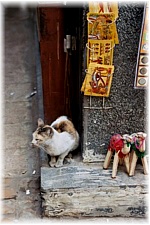
Your typical street cafe is compromised of plastic lawn chairs crammed in close together at the edge of the road proper, around parked cars and various other obstacles, with tiny spindly tables rising up in between to propped-up games of chess or backgammon and glasses of tea. Shishas are ubiquitous, and clouds of smoke waft up to the palm trees above heads bent in conversation, with laughter punctuating the general dull roar of the crowd. The floor is the street, dirty and trash-strewn with bottle caps that have been flattened by cars and feet into a mosiac of American branding in Arabic. The walls are of whatever buildings are nearby are painted with various pictures, including ones depicting the kaaba to honor those going on Hajj to Mecca. Wild dogs run around out in the street, fighting only half-seriously over scraps, and street cats of all colors slink underfoot in search of food. The air smells of fruity tobacco and cigarettes, and that special dirty-sandy-polluted-but-pleasant smell of Cairo that feels like home. It’s not exotic, it just is.

We met up with a friend of Mohamed Ali’s, a Chinese boy named Josh who is staying with an Egyptian family as part of an international study program. He was there with two Egyptian guys, soft-spoken tall and skinny types–one of whom speaks English enthusiastically and is eager to chat with a new foreigner, and the other of whom was a bit more shy and reserved. They were both fluent in English though, yet again, reminding me that my Arabic is still embarassingly underdeveloped. Mohamed greeted everyone like old friends, before laughingly admitting that he had just met the 3 guys in this cafe a few days once before. We chatted quite a bit about Egypt as Josh has only been in town for a few weeks, so he still has lots to talk about and remark on which brings out in me some of the same. street cat
At some point, Mohamed Ali and I headed around the corner to buy some grilled kofta off a small stall restaurant where the man grabbed the skewer straight off the coals, removed the steaming meat into some flatbread, wrapped it in paper and forked the huge sandwich over, dripping and delicious. I indulged in some RuziBilaban (rice pudding) too, my possibly my favorite Egyptian dessert.

When we returned, one of the Egyptian guys revealed that he lived in Indonesia for three years, and is fluent in Indonesian, so then we started in on an extensive 3-way comparison of Egypt, the US, and Indonesia just as my friends Alex and Ibrahim arrived. Alex is Malaysian but lives in America so he immediately started in on a language exploration and the guys began to chit-chat in various combinations of languages. Mohamed Ali and I gave up at that point and began to drill my Arabic vocabulary for class on Thursday, finally getting down to business around 11 p.m. He’s also learning Spanish from a Mexican family living in Cairo so the group began to have a Tower of Babel moment (when the various languages are shooting around). It didn’t help that at some point Sherif and Alex switched to German, in which Alex can only swear in rather than say anything useful.

As the night wore on, people stopped complaining about being tired in a joking way and started talking in earnest about going home, so we all set down the shisha hoses, grabbed our bags and snagged one of the guys running around with trays of tea to pay and get out. Trudging down the back streets downtown at midnight, conversation was no less animated, but revealed the strain of the day. Alex and I joke that we’re always tired in Cairo because once you get out for the evening, you can’t stop until the night is done, or you can’t move–even if you do have class the next day!

Thursday:
Typically a few friends and I go out salsa dancing Thursdays and Mondays, although, since Cairo University and AUC are back in session, we’ve been getting lazier about trying to party all the time. Thursday night we trek it out to Mohandisiin, a hot nightlife spot and a young, fun neighborhood on the West bank of the Nile. There’s a restaurant or dance club there called “Bian Caffe” which has a salsa night on Thursdays, where you pay a 50LE minimum (about US $9, but I would consider that a little bit expensive now!) to shake your butt to salsa, meringue, bachata, and sometimes rumba or cha-cha. I’m learning all of the above basically just to be able to go out and keep up!

Salsa nights, and hip-hop nights are places here where there is the unique sense of not exactly being in Cairo any more.

The group is usually much higher on the foreigner ratio, but that isn’t to say Egyptians aren’t present–I learned to salsa dance from a pair of Egyptian guys actually! There is a sense of this small dance community being an outsider group to the mainstream here, which is an interesting feeling for me, usually being part of the mainstream in America. This is the kind of place and community where you can get away from the regular Cairo standards on dress and behavior, which is refreshing every now and again. In between dragging myself to school with a 45-minute commute each way, and staying out late every night, I’ve started to feel a bit scruffy most of the time, but being able to go out and put on a pretty dress and some heels helps quite a bit. The logistics in getting into this outsider spot though shows you how removed from Cairo mainstream culture it actually is.

Taking taxis instead of the subway or walking, throwing on scarves and coats to be thrown off minutes later, even changing our shoes or skirts in the bathroom at the actual place: these things remind me of the fact that this isn’t “real” Egypt I’m entering, and these aren’t standard Egyptians. It’s still fun though when you just need to get out and enjoy yourself!

My good friends Jimmy and Ahmed have been a lot of help with getting me out and about dancing, and we usually meet up at Bian around 10 p.m. This week Ahmed’s car was in the shop so we treked from Maadi via the Metro and then caught a taxi (me carrying a bag stuffed with a short skirt to change into and sweating in my uncomfortable tights and jeans combination). We spent the evening chatting, eating, and dancing inside the warm-toned walls, often taking time to just sit and observe the couples spinning and undulating in between the pillars perforating the dance floor. Ladies in little red dresses or tight pants with their high heels on, guys in their designer jeans and button-down shirts…it reminded me quite a bit of the tango scene I used to be a part of in Seattle actually. The difference was the mix of Arabic, English, and Spanish bubbling up from the tables surrounding the dance floor, but otherwise you could just shut the rest of Cairo out for a few minutes and move somewhere neither here nor there where people just dance and enjoy. An international zone centered on dance sounds pretty nice to me!
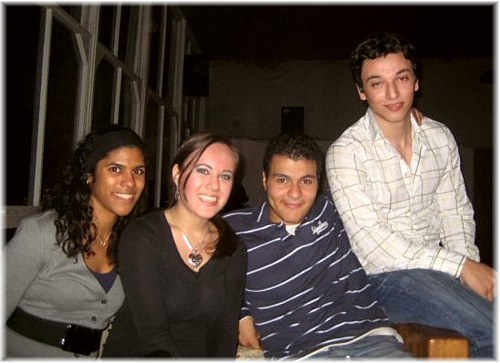
Drift, Nicole, Ahmed and Jimmy
Drift, Nicole, Ahmed, and Jimmy

Friday:
At the beginning of the weekend our Arabic professor told us our homework to do over the next couple days was to go to Khan al Khalili, the major suuq here and take pictures of objects that we have been working on for vocabularly. Then we were supposed to talk to the shopkeepers to figure out prices of things and compile a movie montage of the pictures–with us talking in the background, describing the things and their prices, etc.

We collectively cringed. Our Arabic class is 4 people, and we’ve all lived here upwards of 6 months now, so the idea of going somewhere typically touristy (that we’ve all been to many times before) was….not how we wanted to spend our weekend. If you are in the mind set of living here, you don’t like going to touristy places or doing touristy things, because it’s not a positive thing like it is in the States; it’a not even a jovially made-fun of pastime and you never want to feel like a tourist or be mistaken for one. Tourist areas are stressful on brain and wallet, and I actually find it overwhelming now to be around so many people at one time who are new to Cairo.

We students and expats spend much effort trying to blend in here, working on our Arabic hoping to be taken more locally, dressing more conservatively, etc, so it’s not always fun to be around tourists.

Nevertheless, my temporary room mate, Drift, and I rose at the crack of 2 p.m. on Friday, and our buddy, Jon, passed by about 3 p.m. for the beginning of our huge afternoon at the Khan. Right off the bat we knew we’d made a mistake as the traffic was awful and the day was hotter than we expected for winter! Last week, there was a bit of a hot snap, so there we were, sitting in 85 degree weather in the taxi, grumbling and going over Jon’s Arabic flashcards like we were praying. The taxi driver had fun correcting our pronunciation though, after peering curiously over Jon’s shoulder for about five minutes, trying to figure out what we were doing.

Al Hussein MosqueEventually, we stumbled out of the taxi and blundered through the police and metal-dector that guard the square in front of Al-Hussein Mosque. Squinting through my dusty sunglasses, I saw denim mini-skirts, guys aggressively brandishing menus for whatever cafe or restaurant, children running around, big tour buses–pretty much exactly as I expected. We dove in, strolling down a street next to the mosque and chatted in Arabic with a street vendor who asked us if we wanted to see silver jewelery, to which we shrugged and followed his shibshib clad feet down another narrow alley to a shop where (between the three of us) we photographed probably every item (after asking politely if that was okay, of course). We asked the owner about various things in Arabic, he helped us with our pronunciation and vocabulary and was pretty friendly when we explained we lived here and were studying Egyptian Arabic. The three of us began to relax and loosen up, speaking Arabic a bit more and whipping out the video camera to record a bit of footage for later. We thanked the guy and headed out, going further into the depths of the maze-like alleys back in the Khan. We seized on the chance to practice vocabulary with a guy selling wallets and bags who was highly entertained by our gesturing, and then ended up in some sort of bizzare trinket store with bronze pyramids and alabaster vases of varying sizes plunked down next to Egyptian soccer jerseys (which tempted me admittedly), then being drawn in by a guy who had seen me before apparently, and into the very tiny upstairs of his shop where scarves upon scarves in plastic wrappers were stuffed into bookcases in front of piles of galabeyas. I bought one of each after we got some choice photos–including one of the shop guy attempting to get all up in my business, but nothing naughty happened, rest assured.

We emerged with a few purchases, and we were ready to stumble on out to the main drag when I ran into a guy I know who owns a shop nearby. He was over the moon to see me again, demanding in an only half-teasing way, “Why you no call?” to which I replied that I lost his number, but actually my friend Jon, here, was looking for a shisha, and maybe he could help us. We were immediately dragged into his tiny shop for tea while he ran to fetch items for us to look at and that he would then bargain and buy on our behalf. Jon mentioned he was thinking of buying a backgammon set so he found himself playing a round on the set that he was being coaxed into buying while several young Egyptian boys stood around giggling and swigging glass bottles of Pepsi and Mirinda. I chatted a bit with the kids, all of us guffawing and commenting on the game mercilessly–until Jon eventually lost by a narrow margin to good-humored laughs and comments in Arabic all around.

By that point, we were seriously worn out, and Jon fended off further offers of various items as we prepared to leave. I was awarded a free bag of dried hibiscus for my troubles, which I love and is used here to make a delicious sweetened hibiscus iced tea called Karkaday. Clutching our purchases, we staggered to a nearby cafe hidden within the folds of centuries-old architecture for some much needed shisha and rest.

Jon plays backgammon

Saturday:
The weekend here is Friday and Saturday as Friday is supposed to be a day of rest for Muslims, and there is a Friday service at Mosques that is a bit longer and most people make a point of going to it. That means that Saturday night is typically a frantic scramble to get work done for Sunday morning classes, but it’s still the weekend in our American brains, so we still want to hang out.

Saturay morning, I visited The Citadel with my friend Ramy and his brother Amgad, as well as my temporary room mate, Drift. We spent a few hours trudging around in the sun at The Citadel among the other tourists, although a bit more appropriately dressed, and headed home after a minor parking debacle.

Parking always seems to be a bit of a debacle here though, whether you’re parking in some back alley and bribing a guy to make sure someone (or himself) doesn’t steal your car, or squeezing into a tiny Zamalek garage and making sure not to set the parking brake after putting the car in neutral so that the attendants can shove your car around to squeeze more places out of a tiny lot while you are gone.

The Holy Grail of Chinese foodIn any case, we headed home and promptly fell asleep after eating lunch. We awoke few hours later to a pile of homework and a tangle of friends wanting to hang out without any defined plan, a combination which the best strategy for is to just put them together!

Arabic class lends itself to group homeworking activities with our Egyptian friends included, so we dove into putting together the Khan al Khalili movie assignment as soon as Jon arrived. Our British friend, Dave, (who teaches English here) dropped by after work, and we made the executive decision to hit up an excellent Chinese restaurant around the corner from my house. I love that place to death, because it looks like a tiny, sketchy, hole-in-the-wall place that you would walk right by but, in fact, has some of the best Chinese food I’ve ever had! Plus, with the serious lack of truly good Chinese food in Cairo, it has become a hotspot for my group of friends so one of us is usually there every other night. In fact, shortly after we arrived, my good friend who is German and Egyptian (she speaks English, Arabic, and German fluently–I am so jealous) showed up with a couple people in tow, and we managed to take over the entire four-table restaurant.

I have lots of great memories of fooling around at that place, mostly because a lot of Egyptians have only experienced Chinese food through the lens of Egyptian chefs before. I remember a Chinese-themed buffet I got to experience in Hurghada that was just horrible–the spring roll wrappers were basically made from puff-pastry! Finding a good, inexpensive, Chinese restaurant in Cairo around the corner from my house was like finding the Holy Grail. After a lot of dragging their feet, I have gotten most of my Egyptian friends to go there, and now they all love it. They agree pretty much unanimously on hating the tea, which I admit is far too weak and subtle by Egyptian standards, but adore the food. To the extent that we are having a very hard time teaching them to learn how to use chopsticks because they give up in the face of hunger and delicious Kung Pao Chicken. I can’t blame them though!

Another friend met us at the Chinese place, and we all walked home to begin an evening of chatting over Karkaday and doing Arabic homework with the assistance and sometimes light teasing of our Egyptian friends. Around midnight, people started to wander off, eventually leaving Drift and me to finish up our presentation alone with the assistance of various people over Skype by about 2 a.m. By this point, I’m sure the reader is beginning to get a sense of why Alex and I say constantly that we are tired.

Drift and Nicole eat Chinese food in Cairo

Part 2: Sunday through Tuesday – coming soon!

use the comment box

Have a comment? Use or comment section at the bottom of this page orSend us a letter!
Check the “Letters to the Editor” for other possible viewpoints!

Ready for more?

  • Here Comes the Aroosa! Cairo Weddings
    Frankly, the Egyptian girls can get away with being a bit raunchier, and I do try to be more modest with my movements so as not to look like a saucy little American number straight off the plane.
  • 10-14-09 Ramadan in Cairo by Nicole
    This idea of renewed religious commitment and the character of Ramadan to involve self-deprivation makes many of us westerners think that this is a somber time, but in fact there is another side to the month of Ramadan that is quite lively and exciting.
  • 7-15-08 Egyptian Wedding Stories by Leila of Cairo
    All the guests were staring at us. The father of the bride demanded to know who ordered the bellydancer and it seemed a fight was going to break out between representatives of the brides’ family and the hotel organizer.
  • 3-7-06 Streets of Cairo- Egyptian Rhythm, Language and Dance by Keti Sharif
    Cairo’s streets are much like its dance – streams of freestyle movement guided by intuition rather than rules. There are no ‘principles’ as such in both circumstances – it’s the organic-ness of Egyptian life that creates order in chaos.
  • 4-10-10 Carl’s Photos from Rakkasah East Festival 2009, Page 4: R-Z by Carl Sermon
    Raks Helm, Raks Sheva, Ranya, Raqs Caravan, Rasa, Sahara Shimmer, Salit, Samra, Scheheresade, Sera & Solstice, Shaula, Shayda, Shushanna & Sean, Soverign Reign, Surayyah, Suzanna, Tanya, Tapestry Tribe, Tasha, Tempest, The Nixies, Troupe Little Egypt, Troupe Solice, Troupe Zoryanna, Valerie Rushmere, Wild Gypsy Fired, Yame, Yasmine, Za-Beth
  • 4-6-10 The Pirate, the Psychic and the Mummies in the Basement, Malia’s Story Part 1 by Malia DeFelice
    So, at age 4, my world was good. I had a rich imagination sparked by images of Egyptians in the crawlspace and iron ore waiting to be turned into gold. I had a family that consisted of pirates, genies, fortune tellers, wanderers and minstrels. Most of all I had been captivated by the bejeweled beauty in the dancing tattoo. It was 1957 and I knew, like my Uncle Omar and great Aunt Katie, I would one day grow up to be someone who would follow a special calling. I decided, at age 4, that it was my destiny to become a Belly dancer!
  • 4-4-10 Carl’s Photos from Rakkasah East Festival 2009, Page 3: K-Q by Carl Sermon
    Kaoru, Kinnari, Kismet, Latifa, Lili, Lisa, Luja Mahalat, Marabesh. Maisah, MaShuqa, Melanie, Mia Naja, Naheda, Naimah, Nubian Moon, Pyramidiva, Queens
  • 3-31-10 Can a Non-Arab Dancer Really Belly Dance? by Margaret MacLennan
    Belly dance is seen as an Arab art form, and has gained considerable popularity outside of that circle. But can a non-Arab belly dancer really belly dance? Should a non-Arab represent a cultural art form when she is not a part of that culture? This article is an attempt to arm a non-Arab belly dancer against the inevitable questions leveled about whether her ethnicity or cultural background should prohibit her from dancing.
 

Gilded Serpent presents...

Fesitval Photos, Page 4: R-Z

Rakkasah East Festival 2009

Photographs by Carl Sermon

Event held in October 16,17,& 18, 2009, in Somerset, New Jersey
Posted March 25, 2010

Help with additional names of dancers, musicians and hometowns, are always apreciated!

Page 1: A-C, Page 2: D-J, Page 3 , Page 4-you are here

Raks Helm of New Jersey

Raks Helm of New Jersey

Raks Shiva of New York

Raks Sheva of New York

Ranya Renee of New York

Ranya Renee
of New York

Ranya Renee

Ranya Renee

Raks Caravan West of Washington DC

Raqs Caravan West of Washington DC (enlargement)

Rasa Vitale of CA

Rasa Vitala of California

Richmond Raq Stars of Virginia

Richmond Raqs Stars of Virginia

Sahara Shimmer

Sahara Shimmer of New York

Salit of New York

Salit of New York

Samra of New York

Samra of New York

Saqra of Washington

Saqra of Washington

Scheherezade of Virginina

Scheherezade of Virginia

Sera and Solice of New York
Sera and Solstice of New York

Shaula of New Jersey

Shaula of New Jersey

Shayda of North Carolina

Shayda of North Carolina

Shushanna and Sean

Shushanna and Sean of Pennsylvania

Sovereign Reighn of Rhode Island

Soverign Reign of Rhode Island

Suhaila of California

Suhaila of California

Surayyah

Surayyah of Pennsylvania
Suzanna Del Vecchio of Colorado

Tanya of New Jersey

Tanya of New Jersey

Tapestry Tribal

Tapestry Tribal Belly Dance of Pennsylvania

Tasha of New Jersey

Tasha of New Jersey

Tashira Wadiya of New Jersey

Tashira Wadiya of New Jersey

Tempest of Rhode Island

Tempest of Rhode Island

q

The Nixies of New Jersey

The Nixies of New Jersey

Troupe Little Egypt of Connecticut

Troupe Little Egypt of Connecticut
v

Troupe Solice

Troupe Solice of New York

Troupe Zoryanna

Troupe Zoryanna of New Jersey

Valerie Rushmere

Valerie Rushmere

Wild Gypsy Fire of New Jersey

Wild Gypsy Fire of New Jersey

Yame of New Jersey

Yame of New Jersey

Yasmine of Charlotte

Yasmine of Charlotte
Za-Beth of Massechusettes
Za-Beth of MA, bends over Carmine playing drum


use the comment box

Have a comment? Use or comment section at the bottom of this page or Send us a letter!
Check the "Letters to the Editor" for other possible viewpoints!

Ready for more?

  • Carl’s Photos from Rakkasah East Festival 2009, Page 1: A-C
  • 3-26-10 Carl’s Photos from Rakkasah East Festival 2009, Page 2: D-J by Carl Sermon
  • 4-4-10Carl’s Photos from Rakkasah East Festival 2009, Page 3: K-Q by Carl Sermon
  • 4-6-10 The Pirate, the Psychic and the Mummies in the Basement, Malia’s Story Part 1 by Malia DeFelice
    So, at age 4, my world was good. I had a rich imagination sparked by images of Egyptians in the crawlspace and iron ore waiting to be turned into gold. I had a family that consisted of pirates, genies, fortune tellers, wanderers and minstrels. Most of all I had been captivated by the bejeweled beauty in the dancing tattoo. It was 1957 and I knew, like my Uncle Omar and great Aunt Katie, I would one day grow up to be someone who would follow a special calling. I decided, at age 4, that it was my destiny to become a Belly dancer!
  • Serena Wilson (1933-2007) A Student of Ruth St Denis, Part 3: Serena’s Books
    Serena’s approach saw women as joyful, soft, and feminine. They were responsible for and in control of their sensuality and by extension their sexuality. The dancers were not encouraged to challenge men by their physical presence, but neither was their physical presence and personal desire controlled by men.
  • Creating Camp Negum
    The idea came to us as we laid on the beach at Ras Sidr, a resort town near Suez on the west coast of the Sinai Peninsula. It was one of those rare times when my husband, Safaa Farid, and I could slip away from work for two days. We were watching the wind surfers and listening to Om Kalthoum on the clubhouse speakers when the question just popped out.
  • 1-30-10 Daoud demonstrates a Cura, Saz or Baglama another Musical Instrument Tour
    The Saz family has many sizes.Cura is the name of the smallest size saz or baglama. This is an octave higher in pitch than an full size regular saz.
  • 1-27-10 Shoo Shoo Amin, A Forgotten Treasure of the 80s by Yasmin
    Twenty years ago when I told people I had worked with Shoo Shoo Amin in Cairo, the response was “Wow!” Now, people go “Who?” Today no one seems to know who she is. For belly dance purists, this is a tragedy. Every so often, someone my age or older will wax lyrical about her on-line, but for the most part, she’s an enigma – even to young Egyptians.
  • 1-25-10 Behind the IBCC, a Talk with the Founder, Yasmina Ramzy by Laura
    I wanted it to be more scholarly, no competitions and not a festival. I felt it was important that all viewpoints were shared.
 

Gilded Serpent presents...

The Pirate, the Psychic and the Mummies in the Basement

Malia dreams of Egyptian Temples at age 4

Malia’s Story, Part 1

by Malia DeFelice
posted March 2010

Often, I am asked what inspired me to become a Belly dancer, and while definitely there is a short answer, if you flip that coin, you will find a tale waiting to be told!

As far back as I can remember I have had a fascination with Egypt, North Africa, the Levant and Arabia.  I was very much enchanted with the “mystery” of the enchanting lands of the East. When I was 4, we moved  to  Bethesda, Maryland. There was a cellar there with an opening at one end that went into a crawlspace under part of the structure of our home. When the sun cast just the right light in this crawlspace, you could see large column-like house supports rising up off the dirt floor.  I knew, beyond a doubt, that there were Egyptian mummies laid to rest there and the columns marked their graves!  I was an only child with no siblings; so I spent a lot of time entertaining myself.

I had lots of contact with my family. However, as a child, I had very few opportunities to associate with children my own age. I was generally in the company of adult family members.

Meet the Members of My Family:

My Irish Uncle, Omar Brennan, would come to visit and he taught me to extract ore with a magnet from soil.  I enjoyed collecting iron ore from the dirt in the crawlspace and would tell anyone who cared to listen to the musings of a 4 year old that the Egyptians that used to live there could turn the iron ore into gold and then make nice jewelry out of it, but sadly, no one knew how to do that anymore. My Uncle Omar had a tattoo of a dancing girl on his bicep which he could make undulate by flexing his muscles. She was beautifully detailed with coins and jewels and colorful costuming.  Uncle Omar also had a peg-leg, a bald head and wore a big thick gold earring. He was black Irish and he looked like something between a pirate and a genie. 

When we would go to visit my father’s side of the family in Massachusetts, my parents would talk about my great aunt Katie. Though she died before I was born, I was fascinated by the fact that  the older members of the family  were superstitious about her.  My great aunt Katie Garbarino, who was Italian, was a fortune teller by trade and psychic. She would talk about her visions and strange things would happen around her.  

Aunt KatieHer mother, Mary, came from Northern Italy and family legend had it that great great grandma Mary had been left at an orphanage by a group of wanderers described as traveling minstrels. 

So, at age 4, my world was good.  I had a rich imagination sparked by images of Egyptians in the crawlspace and  iron ore waiting to be turned into gold. I had a family that consisted of pirates, genies, fortune tellers, wanderers and minstrels.  Most of all I had been captivated by the bejeweled beauty in the dancing tattoo.  It was 1957 and I knew, like my Uncle Omar and great Aunt Katie, I would one day grow up to be someone who would follow a special calling.  I decided, at age 4, that it was my destiny to become a Belly dancer!

I started dancing at age 3, even before I decided my calling was to become a Belly dancer.  When I was born, there was some deformity in the muscles of my legs.  The doctor explained to my mother that one course of action would be a series of surgeries and the need to wear braces over a 7 year period, and my mother was horrified.  He then suggested that some children had success correcting this problem with stretching exercises and ballet classes. Thankfully, my mom chose the second option.  I studied ballet until I was 15. While living in and out of my birthplace, Hawaii,  I also studied Polynesian dance on and off for several years while growing up. To complement dancing, I was also enrolled in piano classes, which I studied until my early 20s.

Europe

We traveled and moved a lot during my childhood and teens due to my father’s being in the Navy. The two constants in my life, wherever we moved, were my dance and piano classes. My father retired from the Navy in the early ’60s, and we embarked on a vacation of a lifetime, traveling to Europe by ship, buying a VW bus in Germany and camping in it for months as we worked our way throughout most of the continent.

The VW bus

We sailed Space Available across the atlantic on a navy medical relief ship (my dad was ex-navy).
Thats how we got to Europe.Once there we bought this VW bus right out of the factory in Bremen.
These are some of  my Italian relatives. This picture was taken in a small town outside of Naples

During my time in Europe we came in contact with  many people, including Romany gypsies whom we camped alongside.  In the campgrounds, I befriended other boys and girls and regardless of languages, we would run amok in the wild places where we visited and played together.  I caught glimpses of dance and music in all of our travels, even though I did not go to school during this time but rather learned from museums, historical and archaeological sites, and just from the life-pulse of ancient, modern and stylish Europe.  We would
occasionally stay in an inn or hotel in order to take a proper bath and in one of these inns, somewhere in Italy, I saw Belly dancers perform in a variety show.  (I think it was called the Catalina Valente Show.)  Once again, I was smitten with the idea that as soon as we returned home, I was going to find a teacher and learn to dance.

Malia in Venice

This was my 10th birthday. 1963. We spent the day touring venice.

In the 60’s women were not allowed to wear pants. Or at the very least it was socially frowned upon.

I remember hating having to wear skirts and dresses the whole time we were in Italy.

Eleanor Bron in Help with Lennon

The 60s

In 1964, we returned to our new home, California; I was 11.  One of the first things I did was to look in the want ads to find a Belly dance teacher but to no avail.  All I could see listed under dance instruction were ballet, tap, and Aurthur Murray dance classes.  I was re-enrolled in ballet and piano, but kept checking the newspaper every week in hopes of starting my Belly Dance education.

Meanwhile, every where I turned, the world was turning up Belly dancers.  Lisa Guiraut (Leila) was featured as the Belly dancer in a movie trailer in the 1963 James Bond film "From Russia With Love".  In 1965 "Help!" starring the Beatles, Eleanor Bron plays an Indian Cult priestess and performs a Belly dance. Many songs in the film featured traditional musical instruments from India.  In 1966, I became hooked on the local music group, Kaleidoscope, whose albums like “Beacon From Mars” contained music with heavy Middle Eastern instrumentation.  Of course it did!  Kaleidoscope’s band member, Solomon Feldthouse, later formed Middle Eastern Band Sirocco with Armando, Uncle Mafufo.

Finally in 1968 or so, I found an ad in the newspaper for Belly dance classes!  It was taught by Magana Baptiste in San Francisco at her Yoga Center.  I excitedly showed it to my mother, but she told me I needed to wait until I could drive and until I could pay for classes myself, as she was not paying for nor driving me to San Francisco for Belly dance classes.  Meanwhile, I tried to remember what I had seen of Belly Dance or other Ethnic Dances in our travels and would practice those moves.

Dancing with Shells
This is me in on some beach somehwere. I have little shells in my hands, trying to play them like cymbals

So wait I did.  It wasn’t until 1970 that I was finally able to start taking Belly dance classes.  By then, we had moved to Half Moon Bay, and I had graduated from High School early and started attending a Junior College in San Mateo.  I also got a part-time  job in a local retail store selling beading supplies and piercing people’s ears.  At school, I saw a notice posted for Belly dance classes–and what luck!–they were in Half Moon Bay.

My first teacher’s name was Sherri, but to my disappointment, the classes were nothing like what I hoped they would be.  However, in class, I met a girl named Rossah Golub.  We immediately bonded and became best Belly dance friends and we shared each other’s visions of dance and both knew there had to be something more to Belly dance.  Together, we eventually found the dance lessons for which we were searching.

Malia in Ballet
This is me in Ballet class. Im "snapping my fingers". I used to do that while I danced or heard music.

I think I must have seen a belly dancer or flamenco dancer playing zils or castanets in a movie or something.
It used to drive my ballet teacher crazy. She would always yell…"hands" "hands"!

Part 2:Belly Dance Teacher Found! Coming soon!

use the comment box

Have a comment? Use or comment section at the bottom of this page orSend us a letter!
Check the "Letters to the Editor" for other possible viewpoints!

Ready for more?

  • Gigbag check with Malia!
  • 4-4-10 Carl’s Photos from Rakkasah East Festival 2009, Page 3: K-Q by Carl Sermon
    Kaoru, Kinnari, Kismet, Latifa, Lili, Lisa, Luja Mahalat, Marabesh. Maisah, MaShuqa, Melanie, Mia Naja, Naheda, Naimah, Nubian Moon, Pyramidiva, Queens
    3-31-10 Can a Non-Arab Dancer Really Belly Dance? by Margaret MacLennan
    Belly dance is seen as an Arab art form, and has gained considerable popularity outside of that circle. But can a non-Arab belly dancer really belly dance? Should a non-Arab represent a cultural art form when she is not a part of that culture? This article is an attempt to arm a non-Arab belly dancer against the inevitable questions leveled about whether her ethnicity or cultural background should prohibit her from dancing.
  • 3-30-10 Be Your Own Design Diva, Costume Bra Alteration: How-To Change Halter to Conventional Straps by Davina
    However, the halter styling of the bra had straps that were far too short to fit around her neck limiting her ability to lift her arms over her head.
  • 3-26-10 Carl’s Photos from Rakkasah East Festival 2009, Page 2: D-J by Carl Sermon
    Page 2: Dalia, Daniel, Dorothea, Denise, Egyptian Sun, Elisheva, Fahtiem, Fatima, Femme Fatale, Gabi, Groove Merchant, Habiba Dance Ensemble, Hannah Nour, Helena Zahra, Hipnotiq, Jamilah Bellydance, Jenivina and the Mystical Hips Tribe, June and Chandani Oriental Dance…
  • 3-25-10 Carl’s Photos from Rakkasah East Festival 2009, Page 1: A-C by Carl Sermon
    Page 1: Alana, Alchemy, Alex King, Alia, Alrana, Amalia, Amy, Anasma, Aneena, Angelique, Anku Kusu, Artemis Mourat, Athalia, Attiya, Avivah, Ayshe and the Cult or Isis, Blanca, Bliss, Blooming Rose, Chellcy and Fringe Benefit
  • 3-18-10 Not Last Year’s Saiidi by Brigid Kelly / Zumarrad
    Recently, a belly dance community newsletter here in New Zealand ran an editorial in which the author remarked that the current generation of dancers still perform “traditional styles – Ghwazee, Khaleegy, Saiidi” but innovate with poi, fan veils and Isis wings in a sort of dance evolution that retains respect for the value of the old.
  • 3-16-10 Serena Wilson (1933-2007) A Student of Ruth St Denis, Part 3: Serena’s Books by Barbara Sellers-Young
    Serena’s approach saw women as joyful, soft, and feminine. They were responsible for and in control of their sensuality and by extension their sexuality. The dancers were not encouraged to challenge men by their physical presence, but neither was their physical presence and personal desire controlled by men.
  • 3-12-10 Creating Camp Negum by Leila of Cairo
    The idea came to us as we laid on the beach at Ras Sidr, a resort town near Suez on the west coast of the Sinai Peninsula. It was one of those rare times when my husband, Safaa Farid, and I could slip away from work for two days. We were watching the wind surfers and listening to Om Kalthoum on the clubhouse speakers when the question just popped out.
 

Gilded Serpent presents...

Fesitval Photos, Page 3: K-Q

Rakkasah East Festival 2009

Photographs by Carl Sermon

Event held in October 16,17,& 18, 2009, in Somerset, New Jersey
Posted March 25, 2010

Help with additional names of dancers, musicians and hometowns, are always apreciated!

Page 1: A-C, Page 2: D-J, , Page 3 you are here, Page 4- coming soon!

Kaouri

Kaoru of Maryland

Kinnari

Kinnari of New Jersey

Kismet dance Ensemble

Kismet Dance Ensemble of New York

Vamp

Latifa and Banat El Bleldi

Latifa and Banat El Beled of Maryland

Latifa

Lili

Lili of New Jersey

Lisa

Lisa of New Jersey

Luja

Luja of New Jersey

Mahalat

Mahalat of New Jersey

Mahrabesh

Marabesh MIddle East Mystique of Pennsylvania (enlargement)

Maisah

Maisah

Mahsati of North Carolina

Ma *Shuqa of Los Altos, Ca

Ma* Shuqa of Los Altos, CA

Melanie

Melanie

Mia Naja

Mia Naja Oriental Dance Ensemble of Maryland

Mia Naja

Nadia

Nadia

Naheda

Naheda of Germany

Naimah

Naimah and Troupe Amandari of Maryland

Nubian Moon Daughters

Nubian Moon Daughters Dance Theatre of New York

Nubian Moon Daughters


Pyramidiva of New York

Queens of the Universe

Queens of the Universe of Virginia


use the comment box

Have a comment? Use or comment section at the bottom of this page or Send us a letter!
Check the "Letters to the Editor" for other possible viewpoints!

Ready for more?

  • Carl’s Photos from Rakkasah East Festival 2009, Page 1: A-C
    Page 1: Alana, Alchemy, Alex King, Alia, Alrana, Amalia, Amy, Anasma, Aneena, Angelique, Anku Kusu, Artemis Mourat, Athalia, Attiya, Avivah, Ayshe and the Cult or Isis, Blanca, Bliss, Blooming Rose, Chellcy and Fringe Benefit
  • 3-26-10 Carl’s Photos from Rakkasah East Festival 2009, Page 2: D-J by Carl Sermon
    Page 2: Dalia, Daniel, Dorothea, Denise, Egyptian Sun, Elisheva, Fahtiem, Fatima, Femme Fatale, Gabi, Groove Merchant, Habiba Dance Ensemble, Hannah Nour, Helena Zahra, Hipnotiq, Jamilah Bellydance, Jenivina and the Mystical Hips Tribe, June and Chandani Oriental Dance…
  • Carl’s Camera Captures Dancers from Z to A, Tatseena’s Fantasy Festival 2009,
    This festival was a festive day of good vibrations with dancers sharing their talents on the raised stage, and on the beautiful wood dance floor. The day was replendent with beautiful dancing, beautiful costumes, and wonderful music – with the bands: Al Azifoon and Light Rain. This is a favorite festival for dancers in the East Bay area.
  • Carl’s Camera Captures Jillina’s Bellydance Evolution
    Jillina Carlano’s Bellydance Evolution marked the beginning of an era in which bellydance moves beyond dance Oriental imported from Egypt and performed in clubs.
  • 3-31-10 Can a Non-Arab Dancer Really Belly Dance? by Margaret MacLennan
    Belly dance is seen as an Arab art form, and has gained considerable popularity outside of that circle. But can a non-Arab belly dancer really belly dance? Should a non-Arab represent a cultural art form when she is not a part of that culture? This article is an attempt to arm a non-Arab belly dancer against the inevitable questions leveled about whether her ethnicity or cultural background should prohibit her from dancing.
  • 3-30-10 Be Your Own Design Diva, Costume Bra Alteration: How-To Change Halter to Conventional Straps by Davina
    However, the halter styling of the bra had straps that were far too short to fit around her neck limiting her ability to lift her arms over her head.
 

Gilded Serpent presents...

Can a Non-Arab Dancer Really Belly Dance?

Non arab dancer

by Margaret MacLennan
posted March, 30, 2010

Belly dance is seen as an Arab art form, and has gained considerable popularity outside of that circle. But can a non-Arab belly dancer really belly dance? Should a non-Arab represent a cultural art form when she is not a part of that culture? This article is an attempt to arm a non-Arab belly dancer against the inevitable questions leveled about whether her ethnicity or cultural background should prohibit her from dancing.

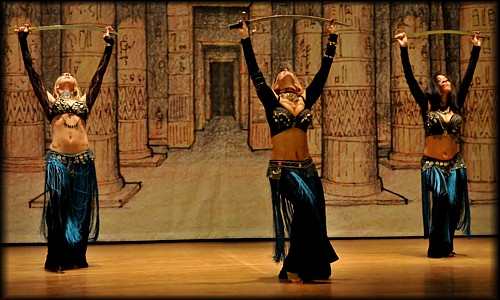
You are a professional belly dancer. You are not an Arab. And you’re derided for the hundredth time for daring to dance without the pedigree.

This article is an attempt to arm the non-Arab dancer with a break-down of the argument against daring to partake in a foreign culture and suggestions for proving to yourself and to others that there is no ethical dictate requiring you to drop the finger cymbals and get back to your own culture.

That non-Arabs watch and enjoy the dance clearly demonstrates that it is accessible to non-Arabs. That many successful non-Arab dancers clearly exist further demonstrates that good dancing has nothing to do with genetic or cultural prerequisites. Indeed, the popularity of belly dancing with non-Arabs proves that the dance has a value beyond its historical and cultural context.

The notion of culture has always been confusing, and I shall attempt to use the term loosely. But, the notion of cultural transfer is the centerpiece of the complaint. You, the defendant dancer, must be able to prove to a questioner that culture is not as fragile or unavailable as they might assume. In this article, I intend to take the question, break down its reliance on cultural rigidity and show that if we accept the truth of the question’s premises, we will have to accept something that is inconsistent with history and reality.

Since it is my goal to arm you, the dancer, with the ability to disprove or sway, I caution that embarrassing or ridiculing your questioner will cause them to become defensive and unresponsive.

Since any disagreement between two sides is essentially a disagreement over terms and a misunderstanding of logic, you should start out by defining between the two of you both what culture is and what a belly dancer is. By defining terms properly at the beginning we avoid big errors at the end.

Since not every person questioning you will be knowledgeable about the dance, you need to keep anecdotes relevant to their situation. Since your questioner may not be hostile, do not immediately skip to your conclusions but rather talk it out, allowing them to draw their own. New students and friends, too, may wonder whether non-Arabs should dance.

pedigree certificateWhile I will stick to common sense responses, I will try to avoid emotional responses. Charges of White guilt commonly crop up, stating that we, the White Man, should not further vandalize and appropriate other cultures. This argument is silly: not all non-Arab dancers are white and none of us personally have committed the oft-cited, sticky-issue Crusading and colonizing. Believing that the White Man should still be paying for past horrors is exactly the same as believing that Germans shouldn’t be forgiven for more recent horrors. No culture or society has clean hands and I reject any notion that we should judge individuals based upon their culture or race. To proclaim that "This is offensive because I feel offended!" ignores that not every person is offended by the same things. Whether something is universally offensive is not a function of your personal immediate response. I might be offended by a screaming child on an airplane, and I will no longer be offended when I find out that the child has an illness causing him or her great pain. Indeed, I will feel ashamed that I was so quick to judge. Feelings and emotions are not necessarily rational. The goal of this article is to end up with a rational answer to the culture question which is applicable to the situation of every dancer.

For the purpose of this article, I shall assume that the question is posited toward a non-Arab belly dancer. The argument is usually as such:

  • Premise 1: Culturally significant or exclusive traditions are only available to those who have grown up in that culture.
  • Premise 2: You can only properly represent and understand the culture if you have grown up in it.
  • Premise 3: Belly dance is a culturally significant or exclusive tradition
  • Conclusion: Therefore, a person is unable to represent or understand belly dance unless they have grown up in the culture to which it is significant.

As you can see, the strength of this argument rests on whether you are willing to accept the first premise. If that premise can be shown to be false, then the conclusion will be false. But I will demonstrate ways to disprove all three premises. You may do well to ask your questioner whether they agree with each basic premise. If they do not, then they should reject the conclusion as well. If they reformat their conclusion then this article should still provide you with enough examples for you to adapt.

Fusion DancerRebuttal to Premise 1: Culturally significant or exclusive traditions are only available to those who have grown up in that culture.
To examine the differences between our respective cultures, there must be respective cultures in the first place. Since I am able to point out and identify cultures, I will agree to this statement. But cultures vary because cultures are of people, and people change. Both America and Canada are splendid examples of the variability of culture. For example, I am a Canadian of Scottish descent. And since the Scots descend from the Irish (both of which are now discrete but similar), it must have been that the significant traditions of the Irish morphed into the significant traditions of the Scottish. While there are traditional Bards significant to the Irish, the idea of a class of educated poets are not necessarily exclusive (many cultures had a Bard class, e.g., West Africa’s Griot class). Culture is what the people do, and people often do the same things like compose poems or dance.

In regards to belly dance, there has been little consensus on its cultural origin. Is it Lebanese? Egyptian? Turkish? If all of these places are indeed separate cultures, then how was the dance passed from one to another, and who will we declare to be the inventor? If the questioner is correct, then belly dancing is for the Arab culture. But "Arab culture" is not singular, but rather a catch-all. If only a person from "the" Arab culture (which encompasses many, many cultures) or an Arab culture may dance, then what if a person is part Egyptian?

Which part of the person may dance? And if a person is part Egyptian and part Lebanese, then must they wear only one high-heel?

If a person is adopted into or out of the culture, then whose pigeonhole are they to be segregated into? Culture is learned. We just happen to learn primarily the culture that we grew up in.

If the culture I learned as a child is the only culture I identify with, then I hit a wall when I realize that I am only ever identical to myself. I am distinct from my family and friends. Nobody is exactly like me, and even if I had a belly dancing identical twin, she would still occupy space over there while I occupy space over here. The culture I am expected to identify with is not simply my personal experience. Growing up with a culture does not allow me to identify fully with others who have grown up similarly. Being born into a culture does not delegitimize a person’s interest in another culture. I am more properly a human. I am Canadian by accident. Should I be more bound by my accidental "Canadian-ness" than my humanity? Should I be unable to participate in what is properly available to all humans, that is, emotion and movement, which are the two properties of dance?

Rebuttal to Premise 2: You can only properly represent and understand the culture if you have grown up in it.
Even if we accept the part about understanding culture, we must ask further whether we can not, or should not identify with other cultures. We have proven in premise #1 that cultures do change (meaning that we can identify with other cultures), so the questioner must mean that we should not. This alone might be enough to quiet your questioner: it sounds very, very odd to assert that we should not identify with other cultures. If they do not base their life around complete xenophobia, then they do not believe in this very thoroughly. Most people wouldn’t think twice about having bagels and coffee for breakfast and ravioli with French wine for supper.

If you had earlier decided that culture is connected to language and music, then it is proper to wonder how humans are able to learn secondary languages. Many of us have lost our native tongues in favour of English. How could this cultural exchange have occurred, unless cultural boundaries are loose? Remember, the people influence the culture. So if the people change with the invasion of another population, then the culture will change. This has happened countless times throughout recorded history. My ancestors were representative of Gaelic speakers, and I am now representative of an English speaker. As well, I am representative of Canada while my ancestors were representative of Scotland.

The cultures that you are able to represent are not genetically determined. Culture is invented and then learned.

For many of us, belly dance is culture that we have learned as adults, not as children. It follows from the above that an Arab may represent Arab culture, and that a non-Arab can represent Arab culture. That a non-Arab should represent an Arab culture appears to be a function of having learned about the culture, as explained below.

Premise 3: Belly dance is a culturally significant or exclusive tradition
Belly dance, like any dance, will be a mix of technique and emotional carriage. There are a set of movements which a human may perform, and belly dance is different from other dances in that it proscribes that the movements be a certain way, and to a certain set of appropriate music. A highly technical dancer may have no emotion, and vice versa. Is it the technique or the emotion that is considered connected to the culture? Belly dance technique is not as finicky as it must be learned as a child, like learning to distinguish the particular sounds of a language. But even a difficult language can still be learned as an adult. Languages in the Chinese and Celtic groups have sounds which are virtually indistinguishable to those who have grown up speaking a Romance language, but hearing a sound is a much different activity with different relevant synaptic connections than is learning hip drops. Proper technique can be learned without having grown up around it (and sometimes you learn the improper technique, instead!).

But, technique aside, I believe most dancers would agree that the crux of this issue is rather in the emotional content. So, the questioner may be asserting that it is impossible to emote like an Arab without being an Arab. As for the emotional content itself, we humans are able to experience the full gamut of emotions, so there can be no realistic problem about whether a non-Arab can experience the same emotions as an Arab. What is left to address?

Grandama DancergrandmaA person who believes the stated conclusion — that belly dance is exclusive to Arabs — is probably just confused about the importance of the learning curve. Yes, witnessing Grandma with the assaya may positively influence a dancer in later life. As well, witnessing Grandma as an abusive alcoholic will influence a child. An abused child is more likely to be an abusive parent in the same way that a child exposed to great dancing is likely to be a great dancer. The two are correlated, but one does not cause the other. The dancing you may see as a child may imprint like other cultural features, like language. A first language will imprint itself, too. It is possible that having seen hour upon hour of good dancing and having heard hour upon hour of well-formed language will import this into later life. By then, it will seem easy and natural, making a dancer seem "authentic", like a native speaker of a language using their slang and grammar. I do not recall learning either slang or much grammar, but have managed to use both properly enough to be understood. Yet learning slang and grammar can be boiled to a matter of pure man-hours: I know English slang and grammar because I speak it daily. My readiness with the language is a symptom of immersion. I can learn the same skills in another language if I choose. So if exposure as a child to Arab music and Arab dance influences the adult, then it was the hours of exposure that gives the adult a very good eye for interpretation. And a dedicated dancer may closely match this.

Conclusion
There are certainly legitimate concerns about representing the dance. Doing a happy-dance to a tear-jerker will make you look silly if you are dancing for those who know the song, and doing Saiidi to karshilama will prove to those "in the know" that you ignored a certain duty of care toward finding out about the culture before advertising yourself as representative. The language difficulties can be overcome quickly by a fluent friend, an internet search or listening very carefully to the emotional carriage of the music and singer. But if I want to call it Saiidi, then I must accurately represent Saiidi. Hiring an Egyptian-style dancer who turned out to be an American-style dancer would irritate me, just like if I was given a hamburger after ordering steak.

You must accurately represent what you say you represent to clients and students. They are, after all, paying you for the service you’re claiming to provide! But, you needn’t be an Arab and you needn’t have grown up in the Middle East.

In the final analysis, a dancer can embrace a culture of her own choice, but she needs to make a real effort to learn about it if she wishes to call herself well-versed in that culture’s dance style.


use the comment box

Have a comment? Use or comment section at the bottom of this page orSend us a letter!
Check the "Letters to the Editor" for other possible viewpoints!

Ready for more?

  • The Ethics of Fusion
    If the culture that you’re borrowing your moves from objects to your fusion, does it matter? Are you being respectful or exploitative if you borrow steps from a culture that doesn’t want their music and dance used that way?
  • Belly Dance, Burlesque and Beyond: Confessions of a Post Modern Showgirl
    “BUT WAIT!!!” I can hear you screaming, “ BURLESQUE IS STRIPPING”
  • Divorcing Belly Dance From Burlesque
    As it is traditionally understood, I do not find Burlesque, (meaning nudity-no matter how hard one pretends it does not) amusing or creative in the slightest when it comes to including Belly dance, an art that has suffered too long with such unfortunate associations. I find it completely irresponsible and detrimental.
  • Ask Yasmina #3, Fusion, International Study, Taqsim
    Personally, I am all for any kind of creative expression (blood, snakes, flowers, even fake chicken heads and urine) as long as it comes from a place of inspiration and with the intention to move members of an audience to think about the world around themselves and their own relationship to the substance or reference of choice with a new and wider point of view (maybe an even more loving point of view).
  • 3-30-10 Be Your Own Design Diva, Costume Bra Alteration: How-To Change Halter to Conventional Straps by Davina
    However, the halter styling of the bra had straps that were far too short to fit around her neck limiting her ability to lift her arms over her head.
  • 3-26-10 Carl’s Photos from Rakkasah East Festival 2009, Page 2: D-J by Carl Sermon
    Page 2: Dalia, Daniel, Dorothea, Denise, Egyptian Sun, Elisheva, Fahtiem, Fatima, Femme Fatale, Gabi, Groove Merchant, Habiba Dance Ensemble, Hannah Nour, Helena Zahra, Hipnotiq, Jamilah Bellydance, Jenivina and the Mystical Hips Tribe, June and Chandani Oriental Dance…
  • 3-25-10 Carl’s Photos from Rakkasah East Festival 2009, Page 1: A-C by Carl Sermon
    Page 1: Alana, Alchemy, Alex King, Alia, Alrana, Amalia, Amy, Anasma, Aneena, Angelique, Anku Kusu, Artemis Mourat, Athalia, Attiya, Avivah, Ayshe and the Cult or Isis, Blanca, Bliss, Blooming Rose, Chellcy and Fringe Benefit
  • 3-18-10 Not Last Year’s Saiidi by Brigid Kelly / Zumarrad
    Recently, a belly dance community newsletter here in New Zealand ran an editorial in which the author remarked that the current generation of dancers still perform “traditional styles – Ghwazee, Khaleegy, Saiidi” but innovate with poi, fan veils and Isis wings in a sort of dance evolution that retains respect for the value of the old.
  • 3-16-10 Serena Wilson (1933-2007) A Student of Ruth St Denis, Part 3: Serena’s Books by Barbara Sellers-Young
    Serena’s approach saw women as joyful, soft, and feminine. They were responsible for and in control of their sensuality and by extension their sexuality. The dancers were not encouraged to challenge men by their physical presence, but neither was their physical presence and personal desire controlled by men.
 

Gilded Serpent presents...

Be Your Own Design Diva!

The original bra with halter style straps

Costume Bra Alteration:
How-To Change Halter to Conventional Straps

by Davina
posted March 30, 2010

One of the staples in many a dancers wardrobe is a gold and silver bedlah. This most chameleon bra and belt set can be paired with virtually any color skirt/veil combination making this a versatile foundation for building hundreds of different looks.

The silver/gold bedlah is so versatile, that troupes around the globe select it as a unifying costume element.

When a dancer friend approached me with her new gold and silver costume I was impressed by her strategic wardrobing choice. This particular bedlah set is gorgeously encrusted with three-dimensional beading and gold hologram sequins. She was lucky that the belt fit like a dream, the cups of this bra fit well and the bra band was perfectly sized.

However, the halter styling of the bra had straps that were far too short to fit around her neck limiting her ability to lift her arms over her head.

Although it’s good rule of thumb for a costume to fit snuggly, this bra was digging painfully into the back of her neck. Our mission – convert this bra from halter to conventional straps. Since this costume was an Egyptian import, we had a few accessory pieces to work with, treating them like raw materials to create a new strap. (Hot Tip – I never use a halter strap configuration for any full C cup or above. The weight of “the girls” can be a pain in the neck – but most importantly – the halter can limit mobility through the neck and shoulders.)

After looking at the accessory pieces that came with this bedlah set, I suggested converting an outdated crown-like headpiece into a new left shoulder strap. (Photo 2 – Head Band) The crown featured a sweeping point, which we experimented with until we found a shoulder position we liked. During our fitting, we decided that turning the point away from the neck would form an attractive mock epaulette. The existing left strap would be removed and added to the right shoulder strap to create much-needed length so it could reach the band in back.

crown
Head Band

To begin the renovation process, I marked the position of my work with safety pins. The crown was marked to indicate where it would attach to both the bra-cup and the band. You can see these pins in photo 2. Once I’m comfortable with all of my marks, I proceed, unpicking the lining in the areas where I will be working. In some ready-made costumes, the beading goes through to the lining, so investigate and be careful!

photo 3- lining pulled backl
Lining Pulled Back

Once the lining was pulled back, I removed the left strap and attached it to the right. I am careful to fold under any raw edges, so that it does not fray through my stitches and pop undone during a performance. I use a combination of whipstitches and slip stitches to really nail the two pieces together. In this photo, if you look carefully, you can see some of the original stitching is in white, my stitching new stitches in yellow.

photo 4: Strap Extension
Strap Extension

It is my philosophy to conserve the original costume as much as possible. Some future dancer may want to restore the costume to its original configuration as a halter with a crown. So instead of simply cutting the end of the crown shorter, I choose to fold the end under and adjust the lining.

Photo 5: Folding under strap
Folding the end under

Because the beads can press into the shoulder painfully, I will add a layer of soft fabric to protect skin against the beads. This crusty 3D nature of the beading on this costume required this additional cushion. Many different materials can be used such as fleece, velvet, or in the case of my project, vellux. I laid the crown onto the vellux and simply traced the shape. This interlining was applied to the beaded surface with a quick whipstitch.

photo 6:
Adding a cushion layer

Next, I folded the end of the former crown under and then tucked excess lining inside as well, forming a multi-layer sandwich. I then use a combination of whipstitch and slip stitch to sew around the opening. Note – Before you sew everything closed, be sure to double check that you’ve left at least an inch of extra length, so you can insert the newly converted strap between the cup and lining of the bra – or your strap will be too short!

Photo 7:New Strap with alteration sealed shut
New Strap with alteration sealed shut

Once the new strap is finished the transformation is nearly complete. I slip the straps into their new positions. The left shoulder gets pinned into both the top of the cup and the back band. The right strap just needs to be positioned on the back band. Once the straps are firmly attached with sturdy stitching, seal up the lining and you’re done!

photo 8: final result!
Final Results

The final result – a more comfortable and better fitting bra.

Dawn Devine ~ Davina is an author, costumer and dance instructor living in Silicon Valley. She has written several books on costume design and construction including the seminal “Costuming from the Hip” and the best selling “Embellished Bras.” Visit her website to read more about her books, classes and costuming. http://www.davina.us
Photos by Digital Wuff – http://www.ibexa.com


use the comment box

Have a comment? Use or comment section at the bottom of this page orSend us a letter!
Check the "Letters to the Editor" for other possible viewpoints!

Ready for more?

  • Nonprofits for Middle Eastern Belly Dancers, Is a 501c3 Right for You?
    By understanding the nature of non-profits, how they are organized and run, you can see their potential for developing successful arts organization, performance space, dance company or troupe.
  • By Dancers, For Dancers DVD reviewed
    As working professionals, these dancers present the style of performance you would see in an intimate restaurant or at a house party.
  • Kohl: Drawing the Line
    Along with henna, kohl has been part of the beauty regimens of women since the dawn of history, and an unbroken line connects the eyes of today with those of the ancients.
  • On The Costumer’s Bookshelf
    Beaded Embellishment Techniques & Designs for Embroidering on Cloth by Amy C. Clarke & Robin Atkins
    Well-written directions for all of the most useful stitches for the application of beads are accompanied by clear illustrations. 
  • Rakkasah Trend Report 2002
    …the hottest and latest new styles from across the US, Turkey, Egypt and beyond
  • 1-25-07 One Banat: An Exploration of Some Belly Dance Costuming Origins by Tasha Banat
    Since the establishment of Israel, the definition of the term “Middle East” seems to have changed and now has come to refer to a conglomeration of a number of unrelated countries
    in the Asian and African parts of the hemisphere.
  • 4-18-07 Antique Textiles: Renewed Life for Dance by Najia Marlyz
    In fact, we often danced for many little luncheon gigs in offices and other places as a surprise birthday gift—to the music of our own solo sagat. Now, that is a skill that I have never seen anyone repeat since the early seventies!
  • 3-26-10 Carl’s Photos from Rakkasah East Festival 2009, Page 2: D-J by Carl Sermon
    Page 2: Dalia, Daniel, Dorothea, Denise, Egyptian Sun, Elisheva, Fahtiem, Fatima, Femme Fatale, Gabi, Groove Merchant, Habiba Dance Ensemble, Hannah Nour, Helena Zahra, Hipnotiq, Jamilah Bellydance, Jenivina and the Mystical Hips Tribe, June and Chandani Oriental Dance…
  • 3-25-10 Carl’s Photos from Rakkasah East Festival 2009, Page 1: A-C by Carl Sermon
    Page 1: Alana, Alchemy, Alex King, Alia, Alrana, Amalia, Amy, Anasma, Aneena, Angelique, Anku Kusu, Artemis Mourat, Athalia, Attiya, Avivah, Ayshe and the Cult or Isis, Blanca, Bliss, Blooming Rose, Chellcy and Fringe Benefit
  • 3-18-10 Not Last Year’s Saiidi by Brigid Kelly / Zumarrad
    Recently, a belly dance community newsletter here in New Zealand ran an editorial in which the author remarked that the current generation of dancers still perform “traditional styles – Ghwazee, Khaleegy, Saiidi” but innovate with poi, fan veils and Isis wings in a sort of dance evolution that retains respect for the value of the old.
  • 3-16-10 Serena Wilson (1933-2007) A Student of Ruth St Denis, Part 3: Serena’s Books by Barbara Sellers-Young
    Serena’s approach saw women as joyful, soft, and feminine. They were responsible for and in control of their sensuality and by extension their sexuality. The dancers were not encouraged to challenge men by their physical presence, but neither was their physical presence and personal desire controlled by men.
  • 3-12-10 Creating Camp Negum by Leila of Cairo
    The idea came to us as we laid on the beach at Ras Sidr, a resort town near Suez on the west coast of the Sinai Peninsula. It was one of those rare times when my husband, Safaa Farid, and I could slip away from work for two days. We were watching the wind surfers and listening to Om Kalthoum on the clubhouse speakers when the question just popped out.
 

Gilded Serpent presents...

Fesitval Photos, Page 2: D-J

Rakkasah East Festival 2009

Photographs by Carl Sermon

Event held in October 16,17,& 18, 2009, in Somerset, New Jersey
Posted March 26, 2010

Help with additional names of dancers, musicians and hometowns, are always apreciated!

Page 1: A-C, Page 2: D-J, you are here, Page 3 on- coming soon!

Dalia Carella Collective

Dalia Carella Collective of New York

Dalia Collective

Dalia Carella Collective

Dancers of the Rising Moon

Dancers of the Rising Moon of New York

Daniel Flowers

Daniel Flowers

Denise  of Shasta

Denise Mannion of Shasta, CA,

Dorothea and Rose Leah

Dorothea and Rose Leah

Egyptian Sun of MD

Egyptian Sun of Maryland

Elisheva of New York

Elisheva of New York

Fahtiem of Los Angeles

Fahtiem of Los Angeles

Fatima of Sacramento, CA

Fatima of Sacramento, CA

Femme Fatales

Femme Fatales of New Jersey

Gabi of New Jersey

Gabi of New Jersey

Groove Merchants of New Jersey

Groove Merchants of New Jersey

Groove Merchants

Habiba Dance Ensemble

Habiba Dance Ensemble of Pennsylvania

Hannah Nour

Hannah Nour of New York

Helena Zahra

Helena Zahra of Pennsylvania

Hipnotiq

Hypnotiq of Massachusetts

Hypnotiq

Jamilah Dance

Jamilah Bellydance

Jamila Dance

Jamilah Dance

Jenivinah
Jenivina and Mystical Hips Tribe of New York

Jevina and Mystical Hips

June with Chandani Oriental Dance Troupe

June with Chandani Oriental Dance Troupe of New York


use the comment box

Have a comment? Use or comment section at the bottom of this page or Send us a letter!
Check the "Letters to the Editor" for other possible viewpoints!

Ready for more?

  • Carl’s Photos from Rakkasah East Festival 2009, Page 1: A-C
    Page 1: Alana, Alchemy, Alex King, Alia, Alrana, Amalia, Amy, Anasma, Aneena, Angelique, Anku Kusu, Artemis Mourat, Athalia, Attiya, Avivah, Ayshe and the Cult or Isis, Blanca, Bliss, Blooming Rose, Chellcy and Fringe Benefit
  • Carl’s Camera Captures Dancers from Z to A, Tatseena’s Fantasy Festival 2009,
    This festival was a festive day of good vibrations with dancers sharing their talents on the raised stage, and on the beautiful wood dance floor. The day was replendent with beautiful dancing, beautiful costumes, and wonderful music – with the bands: Al Azifoon and Light Rain. This is a favorite festival for dancers in the East Bay area.
  • Carl’s Camera Captures Jillina’s Bellydance Evolution
    Jillina Carlano’s Bellydance Evolution marked the beginning of an era in which bellydance moves beyond dance Oriental imported from Egypt and performed in clubs.
  • Bellydancer of the Universe Competition 2008,
    held in Long Beach, California, on February 18 & 19, 2008, produced by Tonya and Atlantis
  • Not Last Year’s Saiidi
    Recently, a belly dance community newsletter here in New Zealand ran an editorial in which the author remarked that the current generation of dancers still perform “traditional styles – Ghwazee, Khaleegy, Saiidi” but innovate with poi, fan veils and Isis wings in a sort of dance evolution that retains respect for the value of the old.
  • Serena Wilson (1933-2007) A Student of Ruth St Denis, Part 3: Serena’s Books
    Serena’s approach saw women as joyful, soft, and feminine. They were responsible for and in control of their sensuality and by extension their sexuality. The dancers were not encouraged to challenge men by their physical presence, but neither was their physical presence and personal desire controlled by men.
  • Creating Camp Negum
    The idea came to us as we laid on the beach at Ras Sidr, a resort town near Suez on the west coast of the Sinai Peninsula. It was one of those rare times when my husband, Safaa Farid, and I could slip away from work for two days. We were watching the wind surfers and listening to Om Kalthoum on the clubhouse speakers when the question just popped out.
  • Ask Yasmina #12: The Importance of Oum Kalthoum, Undercutting, and Kid Bellydancers
    When a client hiring a performer or a student looking for a teacher is at a point where they want quality, they know they have to pay a fair price.

  • What follows here are several humorous anecdotes. Some of them are about being a male in a female dominated field while some are merely about being a Bellydancer in the first place. My first rule concerning being weird ("weird" as evidenced by some reactions to my previous articles) is to have a good sense of humor!
 

Gilded Serpent presents...

Rakkasah East Festival 2009

A Selection of Photos, Page 1: A-C

Photographs by Carl Sermon

Event held in October, 2009, in Somerset, New Jersey
Posted March 25, 2010

Help with additional names of dancers, musicians and hometowns, are always apreciated!


Alanah of New York

Alanah of New York

Alchemy Dance Theatre

Alchemy Dace Theatre and Tribal Collective of New Jersey

Alexandra King of Santa Barbara, CA

Alexandra King of Santa Barbara, CA

Alia

Alia

Alrana of Conneticut

Alrana of Conneticut

Amalia of Pennsylvania with Scott Wilson of New York

Amalia of Pennsylvania with Scott Wilson of New York

Amy of New York

Amy of New York

Anasma of New York

Anasma of New York

Aneena of Novato, CA

Aneena of Novato, CA

Angelique

Angelique and the Belly Dance Collective of New York

Anka Kusu of New Jersey

Anka Kusu of New Jersey

(click for enlargement)

Artemis Mourat of Washington DC

Artemis Mourat of Washington DC

Athalia of New York

Athalia of New York

Attiya

Attiya

Avivah of Pennsylvania

Avivah of Pennsylvania

iAyshe and the Cult of Isis of New York

Ayshe and the Cult of Isis of New York

Aysha and the Cult of Isis of New York

Aysha and the Cult of Isis of New York

Beat Box open Floor

Musicians "beat box" for open floor dancing.
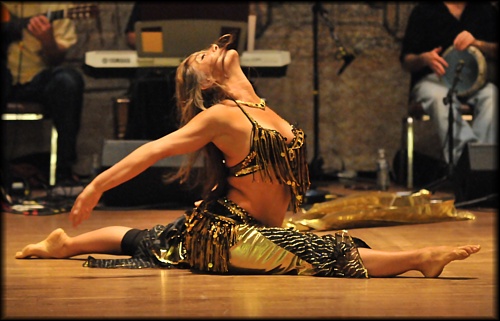
Blanca of New York

Blanca of New York

Blanca with dancers, Anastasia, Brenna, and Giselle

Blanca with Anastasia, Brenna, and Giselle

Bliss

Bliss

Blooming Rose of Japan

Blooming Rose of Japan

Chellcy with Fringe Benefits

Chellcy with Fringe Benefits International Dance Company of Illinois

Fringe Benefits


use the comment box

Have a comment? Use or comment section at the bottom of this page orSend us a letter!
Check the "Letters to the Editor" for other possible viewpoints!

Ready for more?

  • Carl’s Camera Captures Dancers from Z to A, Tatseena’s Fantasy Festival 2009,
    This festival was a festive day of good vibrations with dancers sharing their talents on the raised stage, and on the beautiful wood dance floor. The day was replendent with beautiful dancing, beautiful costumes, and wonderful music – with the bands: Al Azifoon and Light Rain. This is a favorite festival for dancers in the East Bay area.
  • Carl’s Camera Captures Jillina’s Bellydance Evolution
    Jillina Carlano’s Bellydance Evolution marked the beginning of an era in which bellydance moves beyond dance Oriental imported from Egypt and performed in clubs.
  • Bellydancer of the Universe Competition 2008,
    held in Long Beach, California, on February 18 & 19, 2008, produced by Tonya and Atlantis
  • Not Last Year’s Saiidi
    Recently, a belly dance community newsletter here in New Zealand ran an editorial in which the author remarked that the current generation of dancers still perform “traditional styles – Ghwazee, Khaleegy, Saiidi” but innovate with poi, fan veils and Isis wings in a sort of dance evolution that retains respect for the value of the old.
  • Serena Wilson (1933-2007) A Student of Ruth St Denis, Part 3: Serena’s Books
    Serena’s approach saw women as joyful, soft, and feminine. They were responsible for and in control of their sensuality and by extension their sexuality. The dancers were not encouraged to challenge men by their physical presence, but neither was their physical presence and personal desire controlled by men.
  • Creating Camp Negum
    The idea came to us as we laid on the beach at Ras Sidr, a resort town near Suez on the west coast of the Sinai Peninsula. It was one of those rare times when my husband, Safaa Farid, and I could slip away from work for two days. We were watching the wind surfers and listening to Om Kalthoum on the clubhouse speakers when the question just popped out.
  • Ask Yasmina #12: The Importance of Oum Kalthoum, Undercutting, and Kid Bellydancers
    When a client hiring a performer or a student looking for a teacher is at a point where they want quality, they know they have to pay a fair price.

  • What follows here are several humorous anecdotes. Some of them are about being a male in a female dominated field while some are merely about being a Bellydancer in the first place. My first rule concerning being weird ("weird" as evidenced by some reactions to my previous articles) is to have a good sense of humor!

  • This is a fabulous idea, except for the very important and primary fact that the majority of efforts in this direction have attempted to fit this archetype of feminine activity into the current prevailing masculine model of linear strengthening and tightening, complete with fitness speak, crunches, squats and sweat!
 

Gilded Serpent presents...

Not Last Year’s Saiidi

Zumarrad performs Hadia's saidi-styled choreography Talakik about 2004
Zumarrad performs Hadia‘s saidi-styled
choreography Talakik about 2004

by Brigid Kelly / Zumarrad
posted March 17, 2010

Recently, a belly dance community newsletter here in New Zealand ran an editorial in which the author remarked that the current generation of dancers still perform “traditional styles – Ghwazee, Khaleegy, Saiidi” but innovate with poi, fan veils and Isis wings in a sort of dance evolution that retains respect for the value of the old. “Stagnation awaits that which cannot change,” she continued, “The past is fixed, static, unchangeable, but the dance is not.”

New ZealandSomething about these quite valid and respectful statements did not sit right with me–and not just because I perform what the uninitiated might call “a traditional Belly dance". I began picking apart concepts of the old, the traditional, and (particularly) from the past. What is traditional anyway? Why might we assume that “traditional styles” are locked in a static past, pointless unless we enliven them with fan veils? Is the past truly incapable of flexibility?

I don’t think so. Here’s why:
I started belly dancing in New Zealand in 1998. (New Zealand, for those of you who haven’t been here, is a string of islands to the right of Australia and left of Chile.) Belly dance probably arrived here in the mid-70s. For a full 25 years, we had very few resources at our fingertips, but by 2000, when we began to use the Internet widely, things had progressed merely to the point where you saved all your dance dollars to spend at one festival, where you could buy music, zills, beaded fringe and hip scarves. If you wanted them at any other time, you were out of luck for the most part. There might be only one international teacher visiting in any one year. When you outgrew the MEDANZ festival’s dance offerings, you started looking at the one in Sydney, or the Brisbane Winter Warmup, just a three to four hour flight, a time zone shift and a stronger currency away. So, our access to resources and new developments had remained limited.

My teacher, Gendi, felt it was vital for any Oriental dancer to study folkloric dances. I can remember when she introduced Saiidi style to our class. Much of what I learned from her back then, 10 or 11 years ago, remains ingrained in my body memory of what it is one does to saiidi music. Certain Saiidi audio tracks take me back to my very earliest belly dance lessons. I can see the mirror reflections, the glowing wall heaters (it was autumn), and our scarved hips moving in unison.

The thing is, Saiidi has changed since then.

Gendi of New Zealand
Zumarrad’s first teacher Gendi,
who introduced her to saiidi dance.

Since those first lessons, which were very Mo Geddawi-influenced, I’ve studied Saiidi with Dr. Mo myself. I’ve seen and learned Saiidi dances by other Egyptian dancers with a greater or lesser degree of Reda background, and these dances are not the same as what we learned back then. They are more complex, they have more movement combinations, they seem lighter and they’re definitely more physically challenging. However, they are still “Saiidi.”

To many dancers whose first love is fusion belly dance, what I do this year as “Saiidi” is considered traditional because it’s danced to Middle Eastern music with a Saiidi rhythm, and canes are involved. However, to me and to other dancers who’ve studied folklore for years, it’s a new, fresh, vibrant take on the dance from the Saiid. That’s the same whether the dance is a recent choreography or an old Reda one we never had the opportunity to learn before. So, for us, the past is not static and neither are its dances.

When I wrote my thesis on belly dance in New Zealand in 2007-2008, I developed a concept of belly dance as globalised and contextual. As I tried to look past everything I knew to find the local, the things that made belly dance here in New Zealand unique, I realised that I was looking at it from the wrong perspective.

Belly dance here is not the tip of a branch from a distant root. Belly dance here in New Zealand is almost exactly the same as it is in every other country to which it is not native.

Kiwi belly dancers are participants in a portable, synthetic culture with its own myths, tensions, and traditions – a culture held together by lessons, haflas, costume sales, festivals, shows, DVD purchases, etc. What makes us different are the effects on globalised belly dance culture of our own wider social contexts. In New Zealand, that includes geographic isolation (but a culturally sanctioned willingness to travel internationally), a very small Middle Eastern population, and high technological uptake.

In places where belly dance is culturally normative, the elements of globalised belly dance are not integral to the belly dance experience, but that doesn’t mean they are unaffected by, or don’t affect, globalised belly dance. Egyptian dancers (and teachers in particular) have become actively involved, touring internationally, producing their own festivals and adapting their work to the needs of the globalised belly dance market. Most of these people are typical performing artists. They like to create and innovate. They like to dance to new songs. They like to "mix it up a little".

They need to differentiate their product, because what they have is a product being sold, and because they have the kind of visceral musical, cultural, and kinaesthetic understanding that I don’t, they can do it without losing the integrity of the form, in my view.

I know some dancers bemoan the influence of the workshop circuit on Egyptian master teachers (and, doubtless, Turkish master teachers and Tribal-style master teachers too), seeing it as diluting the essence of the original dance forms, but to me, the quest for authenticity will never be fully achieved if we continue to locate it solely in the past. Traditional belly dance and folklore are living, growing things and shouldn’t be condemned to the museum cabinet.

New Zealand dancers learning Cassandra Shore's saidi-styled choreography Nar at Oasis Dance Camp Aotearoa in 2007
New Zealand dancers learning Cassandra Shore’s saiidi-styled
choreography Nar at Oasis Dance Camp Aotearoa in 2007

However, even the museum cabinet is changing. Thanks to the Internet and, especially, YouTube, my vision of how belly dance existed in certain past time periods has changed, because I can now see so much more of it. Instead of that one Suhair Zaki dance in the blue assuit on the little round platforms, there are many Suhair Zaki dances to see. Suhair, the dancer and entertainer, is becoming more rounded and complex for me. She has become more than a series of chonks [moves] and a sweet smile. How can I think I “know” Oriental dance and be bored with it when there is so much more to learn within the Egyptian canon alone? It’s not static. I’m finding more and more new knowledge as I continue to mine the “traditional". I see reflections of older dancers in the very newest ones, and I think it is because they also return, periodically, to images, sounds, steps, shapes they see on TV or hear in music collections.

If young western rock bands today find freshness in the very sounds that seemed new to me and my friends 30 years ago, I can’t see why Egyptian dancers and musicians wouldn’t do the same. The past is always informing the present, or it should be.
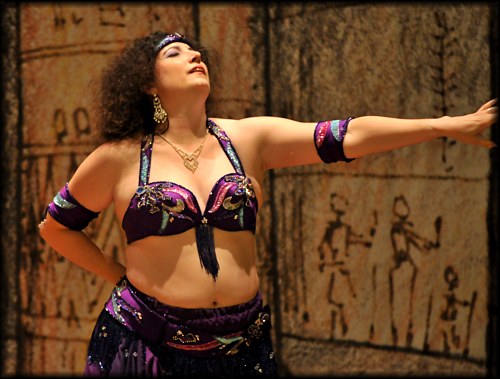
When I hear "Salam Allay" and my mind and body flash back to those autumn evenings in my teacher’s studio, I feel the pleasure of that time and those movements, but simultaneously, I cannot separate the memory from the developments that have come since then. The past does change, and it will change again tomorrow. What we produce from it is not pure artifact but a synthesis of what we saw and did, and what we see and do. It is old and new at the same time.

Fan veils? They are merely whipped cream on the side–not an improved recipe for the cake.

Shaatmat
Left to right: Bernie. Perizada, Zumarrad and Linda dance Yurie’s choreography to Sha’at Mat in 2003.

more resouces:
Author’s bio page on Gilded SerpentBrigid will also be presenting at the International Bellydance Conference of Canada in April 2010
MEDANZ festival
Brisbane Winter Warmup
GS list of articles from around the planet

use the comment box

Have a comment? Use or comment section at the bottom of this page orSend us a letter!
Check the "Letters to the Editor" for other possible viewpoints!

Ready for more?

  • 3-2-10 Latest Craze- Egyptian Oriental Dance, The Fitness Benefits of Our Dance by Hadia
    This is a fabulous idea, except for the very important and primary fact that the majority of efforts in this direction have attempted to fit this archetype of feminine activity into the current prevailing masculine model of linear strengthening and tightening, complete with fitness speak, crunches, squats and sweat!
  • Oasis Dance Camp South A New Twist on an Established Retreat
    Every student received a personalized notebook and music CD, which included class notes and news articles about dance and culture.
  • 2-6-08 The Secret of Saiidi Song and Dance-Straight from the Horse’s Mouth by Keti Sharif
    "Saiidi".Say this word anywhere in Egypt (including El Saiid) and colloquially it implies someone who is funny, backward – a loveable, gullible character with salt-of-the-earth
    village simplicity. To call someone “Saiidi” is a local term or endearment for a likeable buffoon!
  • 1-12-05 Farida Fahmy Workshop review by Perizad
    What you know, leave at the front desk in a little bag.
  • Roots Raqs – An International Belly Dancer Goes Home to Macedonia
    The musical folklore of this region deserves full debut in the World Music scene, and those of us in the MED community worldwide are ripe for the breath of fresh air that Chochek and Gypsy Brass Music can bring us. It is an original, organic and time-honored fusion, brought about by history, geography, and most importantly, tolerance and mutual cultural celebration
  • 7-31-06 From the Land Down-under, Part I: The Festival by Trisnasari of Melbourne, Australia
    In the wings, before we hit the festival stage, Andrea whispered to Mel and I, “Well, this is our first international performance!”
  • 3-14-06 Hosting Australia’s Leonie and Alpen Sukan by Samiya
    What was going to be another dance choreography workshop weekend turned into a weekend of dancing and drumming. It is now over year later, and people are still talking about that weekend.
  • 9-25-04 The Ramzy Tour of 2003, photos provided by Hossam and Serena
    Photos from:Brazil, Brisbane, MaryBorough, Wellington, London, Singapore and Tibet? Readers- please help us with matching names to these faces!
  • 3-16-10 Serena Wilson (1933-2007) A Student of Ruth St Denis, Part 3: Serena’s Books by Barbara Sellers-Young
    Serena’s approach saw women as joyful, soft, and feminine. They were responsible for and in control of their sensuality and by extension their sexuality. The dancers were not encouraged to challenge men by their physical presence, but neither was their physical presence and personal desire controlled by men.
  • 3-12-10 Creating Camp Negum by Leila of Cairo
    The idea came to us as we laid on the beach at Ras Sidr, a resort town near Suez on the west coast of the Sinai Peninsula. It was one of those rare times when my husband, Safaa Farid, and I could slip away from work for two days. We were watching the wind surfers and listening to Om Kalthoum on the clubhouse speakers when the question just popped out.
  • 3-10-10 Ask Yasmina #12: The Importance of Oum Kalthoum, Undercutting, and Kid Bellydancers by Yasmina Ramzy
    When a client hiring a performer or a student looking for a teacher is at a point where they want quality, they know they have to pay a fair price.
 

Gilded Serpent presents...

Magicians of Music

Collage of 3 CDs reviewed by Tracy Benton for the Gilded Serpent

Three Excellent New Music CDs

by Tracy Benton
posted March 17, 2010

Sometimes what makes music reach real heights is a particular superior element… a magic ingredient that irresistibly draws in the listener. Three new music CDs use the magic of excellent musicianship to catch our attention:

Cafe BellydanceCafe Bellydance by Bellydance Superstars
Cafe Bellydance by Cairo Cairo, a Bellydance Superstars production, starts off pleasantly enough with the short "Kalam El Ney," pairing a pretty ney taxim over notes from an electric bass. The listener’s curiosity is jostled by this combination: what else might be coming?  After a few sassy vocal tracks, here comes "Helou Ou Kaddab" with the usual pop-style backing rhythms, but a violin soloist who catches your ear and won’t let go. The violinist sounds involved in the melody, not refined or remote, and while the vocals are there, they back the violin! A few tracks later, and suddenly a saxophone meanders through, explaining: "Ala Hesb Wedad." The saxophone is back in "Hawa Hewaya," singing the classic tune much as Abdel Halim Hafez did, simply and soulfully. All the saxophone solos on this album are breathy and mellow, providing a great basis for dance interpretation.

Not every part of this album is to my taste. For example, a mostly-mizmar version of "Gana El Hawa" doesn’t do much for me, especially when it appears to be a synthesized mizmar; the "chorus" of mizmars in the background is jarring. The standard pop rhythms also seem over-used on the album, too similar from track to track. But where Cairo Cairo’s Ahmed Sarhan trusts his soloists with the melody, the album really satifies. (Unfortunately the musicians are not listed on the album, or I’d name them here.) I suggest you stop by the Cafe Bellydance and order selectively from their menu.
Available for purchase at BDSS store here

Zil Rating: 3
Zil Rating: 3 zils


Play your CymbalsPlay Your Cymbals by Studio Askin
When I began listening to Play Your Cymbals from Studio Askin, I hadn’t looked very closely at the liner notes. As I listened, I slowly became more and more impressed. Crisp percussion… dreamy ney… I was utterly entranced. I seized the CD cover and flipped it open to find Ibrahim Turmen, Askin Serbetci, and Omar Faruk Tekbilek listed as the artists: members of The Sultans! If you aren’t familiar with The Sultans, they became well known in the 1970s and 1980s for their blend of Middle Eastern music. Unfortunately their albums are difficult to find, though "The Best of the Sultans" is still around. Play Your Cymbals is wonderful news if you like classics played by virtuoso musicians, because these artists are indeed experts.

The sound is not as small as their number would imply; use of keyboards and production methods make the trio seem like a larger group, so the result is layered and rich.

The first half of the album is a bellydance routine, six tracks: intro, veil number, fast section, ney taxim, drum solo, and finale adding up to around 15 minutes. The fast section, "Olmaz Olmaz," is swingy and joyful, but although the melody is simple, the dynamic changes keep it from being too repetitious. There are many tracks to like on this album, all ranging from 2 to 6 minutes for easy use by dancers. One of my favorites is the slower "Butun Meyhaneler," which features  delicate qanoun notes. Only the original song "Play Your Cymbals" fell flat for me — I found it startling to suddenly hear English lyrics on an otherwise-instrumental CD. But overall, this is definitely an album to add to your collection: an echo of a great dancer’s band from decades ago as well as an album full of excellent tracks for your classes and performances.
Available for purchase at Studio Askin here

Zil Rating: 4
Zil Rating: 4 zils

Ruby by HossanRuby by Hossam Ramzy and Ossama El-Hendy
In the last example, the standout musicians are… the composer/arrangers! Hossam Ramzy and Ossama El-Hendy‘s Ruby is a retro-styled album that was clearly composed with dancers in mind. (Even if the liner notes hadn’t come right out and said it, I think we could have figured it out.) If you aren’t familiar with Ramzy’s long string of fine bellydance CDs… well, an pleasant shopping trip awaits you. This is an artist who has been producing albums with dancers in mind for years, and whether you are looking for folkloric music, old classics revisited, or drum solos, you will find something to appreciate in his catalog.

Ruby is a collection of original tunes by Ramzy and collaborator Ossama El Hendy created in order to evoke the feeling of 1970s – 1980s Egyptian-style dance, and they succeeded magnificently.

The ten tracks on this album, which average five minutes in length, are each little gems in and of themselves–pun intended.  Each is named after a precious stone, but gems they are. Each contains a shift in mood through changes in tempo, instrumentation, or rhythm — each is a powerhouse of dance possibilities despite its short length. The arrangements are sweetened with lush strings, and vintage synthesizer sounds set the scene, but the mizmar, accordion, and nay ground the compositions and stave off any saccharine feel. It’s hard for me to single out a particular track for notice on this album, they are all of such high quality. If you like unusual rhythms, look into "Tigers’ Eyes," with the curious 7/8 waltz section. For lightness and grace, gaze at "The Pearl in My Heart" and let the kuwala spiral around you. Or visit "The Aquamarine of the South" to enjoy the saidi feel. No matter your choice, if you are mining your CD collection for shorter instrumental classics to add to your sets, you will find a treasure in Ruby.
Available for purchase by Hossam Ramzy here

Zil Rating: 4
Zil Rating: 4 zils

Luckily for dancers, there are many very good albums of danceable music being released these days. Only a few, however, have a real touch of magic — melodies you want to listen to over and over, rhythms that insist you get up and move. Dancers owe a huge debt to the artists who produce music of the very highest quality, music that isn’t merely a background for dancing but a star of the performance in its own right. Consider the albums listed here as potential classics that you may treasure for years.


use the comment box

Have a comment? Use or comment section at the bottom of this page or Send us a letter!
Check the "Letters to the Editor" for other possible viewpoints!

Ready for more?