Gilded Serpent presents...

The Ballet-ification of Belly Dance
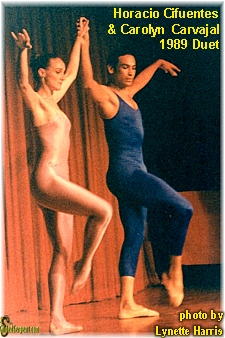
Horacio Cifuentes and Carolyn Carjaval, 1989

by Sausan
posted November 1, 2011

It’s popping up in Belly dance studios across the globe as a relevant class for Belly dancers.  The latest instructional Belly dance DVDs refer to it heavily, and its movement vocabulary is used in the teaching of Belly dance technique.  It is hailed as the best training for strength, grace, and endurance, but is it appropriate and applicable to what is considered the oldest dance in the world?

Billed as a “modified technique”, purportedly tailored to help Belly dancers increase balance, fluidity, strength and grace, Ballet movement and vocabulary is fast becoming the norm in the teaching curriculum of Belly dance.  I’m concerned. 

When did Ballet become a requisite for Belly dance, and why is it stated that it should be an essential part of a Belly dancer’s daily regimen?

If we compare the two dances in all respects, one is as different from the other as night is to day.  Each one contradicts the other in movement, technique, cultural origins, music interpretation, applicable body type, and performance venue.  Neither looks at all like the other in any aspect, and both come from completely separate backgrounds and time lines.

So, why does one supposedly have to take a class in ballet to be a great Belly dancer?

First, let’s consider the historical and geographical differences of these two dances:

  1. Ballet is said to have emerged in the court culture of the late fifteenth-century Italian Renaissance as a dance interpretation of fencing, while in contrast, Belly dance has been around since the birth of civilization, or at least since the time of the pharaohs — before the Christian era, anyway, and is said to have been centered around issues of human fertility. 
  2. Fencing, from which Ballet was patterned, is a family of combat sports using bladed weapons.  This connotes fights, battles, war and even death.  Belly dance is a cultural expression of the of the Middle East and is danced initially without performance or stage properties in a celebration of life.
  3. Ballet was further developed in the French court from the time of Louis XIV in the 17th century.  Belly dance was further made popular in the streets of Cairo and later appeared as performances by women in Egyptian casinos and nightclubs; most notably in those of Chafica Al Cobtiya and Badia El Masabni, during mid 19th through the early 20th centuries. 

SausanOK, I’ll admit it…  I’m not an authority on Ballet, and I’ve never studied it; and there is a clear reason why I never did.  I saw it as rigid, strict, and constrained; a dance that twisted one’s body into unnatural positions, demanded hours of daily disciplinary and arduous stretching, and that commanded a strict diet.  The turnout of feet from the day-to-day leg exercises comprised of the five basic positions and the resulting deformity of them after years of dancing en pointe seemed too torturous and made no sense to me.  My interests leaned more toward the indigenous celebratory cultural forms of ethnic dance, which is why I chose Belly dance as my ultimate form of dance study.

Belly dance is not Ballet.  Belly dance is fluid, pliable, seamless — always moving, and “gushy”.  Moreover, it is an ethnic and cultural form of expression born out of the day-to-day life celebrations of Middle Eastern people. 

It embraces the young and the old, the slender to zaftig, and everything in between.  It does not discriminate, except perhaps, in hire-for-pay public performances.  Except for hire-for-pay public performances, Ballet is quite the opposite.  So, why are we Belly dance instructors applying Ballet terms and labels on Belly dance and introducing a Western concept into this ancient dance form?

I’m going to take this idea a step further.  Call me “politically incorrect” if you wish, but according to history, Ballet was made popular by a male in a royal European court.  On the other hand, Belly dance (considered primarily to be a female dance and made popular as such in Cairo during the Golden Age of Egypt) did not come out of a royal court but rather from village and city homes and streets of its laypeople — another notable difference worthy of consideration.  Why can’t we just leave the dance alone?  The only thing associated with it in the way of royal courts is with the late King Farouq who enjoyed watching these lovely dancers while frequenting the nightclubs during his reign.  Aida Nour 1991 by Lynette

Why must we infuse this already rich and beautiful dance form with yet another Western influence like Ballet?  Haven’t we done enough to it already?  We have American Tribal Style, Gothic Industrial Style, Tribal Fusion Style, American Modern Style, American Restaurant style, Classic American style, Gypsy style, Goddess or Spiritual style, Fitness style, Hawaiian Fusion style, Poi Ball style, Fire-Eating style, and the, seemingly, more “culturally oriented” Lebanese, Turkish, and Bollywood styles. 

Additionally now, Ballet style?  What new fad style will be next?  Hiphop style?  Breakdance style?  Mashed-Potato style?  Funky Chicken style?  Lindy Hop style?  Futuristic Martian style?

Perhaps (and this is an extreme speculative long-shot) in some remote, small way, it might have been that Belly dance was the inspiration and actual impetus for Ballet (food for thought!). Perhaps it was a deliberate step (no pun intended) to evolve in the opposite direction of Belly dance movement and expression, for indeed, Belly dance is widely believed to be the first dance.  If you think about it as it relates to historical context, male is to female as Ballet is to Belly dance.  Or, perhaps, it’s just that we in the West feel the need to take what we’ve discovered from another culture and make it our own, infusing it with our contemporary cultural experience and reinventing it numerous times to suit our needs for subsequent marketability when it really doesn’t belong to our western culture in the first place!

Najia in 1990

We might (with all due respect) put the initial charge for the Ballet-ification of Belly dance on world-renown Egyptian master dance teacher, Mahmoud Reda, who opened his dance school in the mid-twentieth century and taught his version of “ethnic dance” to the populous along with his knowledge and experience of Ballet technique.  After all, his dance idols were Gene Kelly and Fred Astaire of whom it is said he wanted to emulate rather than Chafica Al Coptiya or Badia Al Masabni.  However, before the teaching influences of Mahmoud Reda, great dancers like Chafica Al Coptiya, and Badia Al Masabni, as well as Taheyia Karioka, Badawiya Moustafa, and so many others danced their hearts out to the acclaim of their eclectic fan base and without any real formal Ballet training.  Perhaps it’s because of the lack of this Ballet training that allowed their expression to ring true in their dance, unencumbered by Ballet technique, that carved a place for them in the historical dance annals of Egypt.  Introduce Ballet technique via a world-renown and highly revered Egyptian-born dance master like Mahmoud Reda (again, with all due respect given) and all previous accepted points of view suddenly change.

Ballet has no place in Belly dance, either in vocabulary or dance technique

Ballet may be touted as a bona fide exercise to increase balance, fluidity, strength and grace, but Belly dance does exactly that and more in its own unique way!  Not only does Belly dance strengthen muscles, teach grace and fluidity, and produce stamina and endurance, it also opens the door to another world — to the history, culture, and expression of the country from which the dance evolved centuries before ballet was ever invented.  It teaches us other forms of music with percussion rhythms far more complex than our own.  It introduces us to another way of thinking and of moving.  It opens our minds and allows us to experience another culture with expressions altogether different from our own.  Why would we want to contaminate that with Ballet?

Belly dance does not need to be “improved” or “legitimized” with an infusion of Ballet, it is already a perfect dance by itself. 

Instead, it needs to be studied without the comparison or infusion of other dance types such as Ballet, without Western or European cultural influences, and without the Western or European discrimination or experience.  It has its own exclusive vocabulary, its own exclusive technique, and it’s own particular movements. 

Belly dance is unique.  Pair it with Ballet, and you have another form of Belly dance fusion imposed by the West in its unending quest to making something “better”, lacking the understanding of the underlying nature of it, and the unwillingness to study it completely and apart from any other form of dance, and the apparent inability to experience it as its own unique expressive dance entity.  In the U.S.A., as well as the European and Western countries, there’s just too much of that — a style called “Belly Dance Fusion”.  Why not study the dance form itself and only by itself, along with all that it has to offer in the way of its elements like the music, culture, and artists? 

Keeping the dance true to its form….  Now, that’s something worth considering!

use the comment box

Have a comment? Use or comment section at the bottom of this page or Send us a letter!
Check the "Letters to the Editor" for other possible viewpoints!

Ready for more?

  • The Magic of "The Grapleaf", 1976-1997
    Back in the early ’80s when I was performing at the Bagdad Cabaret on Broadway, a customer strolled into the Northbeach nightclub and told me about a little known restaurant
  • Jodette: Undeniably Authentic
    “ Why do students go against their own teacher,” Jodette continued, “and spread ugly rumors?” I looked at her a shook my head. It’s a lament that I, too, have experienced from time to time as teacher of this dance.
  • The Egyptian Dance Code: Technique to the Perfect Dance
    Twenty-eight years after my first class in Belly dance, I looked at all the dancers once again and realized what they were doing to look Egyptian. I had discovered the Egyptian Dance Code. That was back in 2000.
  • Taheyia Karioka, Queen of Oriental Cabaret Dance
    In the 1980’s, the spread of Islam and its fundamental militancy proved to be a big blow for Egypt’s belly dance industry. As a result, several dancers publicly renounced their pasts and donned the Islamic veil.
  • Nakish-An inteview with "The Lady with the Eyes"
    I worked hardest for the dancers in San Francisco to wipe out the discrimination factor and to make sure that all cultures were included in the performance of this dance.
  • Who Really Gave Us This Dance?
    And, in their quest for self-expression, they, too, would fall prey to the sweet expressive motions of a timeless dance only to find a cure for their soul in the performance of this expression in front of an appreciative audience.
  • Sirat Al-Ghawazi, Ghawazi Research, Part 10: 1977, Nawary Gypsy Background of the Mazin Ghawazi
    "They came to the aforesaid Shah and asked him for dwellings in his country … the greater portion he placed in Mazandaran as a check to the pride of the Uzbak, Turkmans, Umid, and the nomad Tatars, who are always starting raids, and acting as highwaymen."
  • Europe- Helm Musical Adventures, Part 3
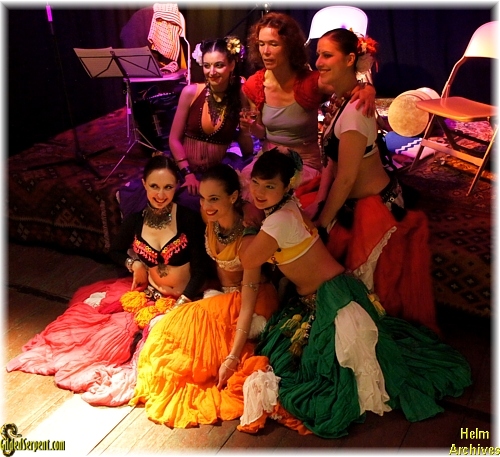
    Last winter my husband, Mark Bell, and I were hosted in Paris and Slovenia to teach Middle Eastern rhythms and present Tribal Belly Dance with live music. The following are photos from our adventures.
  • Why I Went to Camp This Summer, A Report of Bahaia’s 2010 Camparet
    Before much time had elapsed, I found myself dancing while bound mid thigh with a hot pink velvet stretchy band and a drinking straw inserted between my teeth. Crazy? Yeah, like a small red fox.
  • An Opposing View, So uth Africa’s Dance Community Thrives
    Nonetheless, we are still a closely-knit group–with, perhaps, a handful of people who have decided to set themselves aside from the mainstream of our community. Unfortunately, we find that those are the same dancers who are giving their opinions and critiquing the rest of the community and its dancers.
  • Belly Dance Costuming Evolves, Photos and Commentary from a Rising Star of Costume Design
    Video interview with author. "Because our colorful dance form is still living, changing, and evolving day-by-day, the costume designers will inspire us endlessly. This movement is a never-ending energy flow full of elegance and ferocity, sensuality and femininity. I hope that I will be a part of this wonderful Oriental dance life for a long time."
  • A Month in Cairo, Egypt, Report No. 2: Housekeeping, Internet, Costume Shopping, Reconnecting with More Friends
    When I think of my first trip here in 1977, I can see what amazing changes have occurred since then – most of them for the better.
 

Gilded Serpent presents...

Sirat Al-Ghawazi

Ghawazi Research, Part 10: 1977, Nawary Gypsy Background of the Mazin Ghawazi

Placeholder

by Edwina Nearing
posted October 31, 2011

Begun in the mid-1970’s , the early sections of "Sirat Al-Ghawazi" were first published under the title "The Mystery of the Ghawazi" in Habibi Magazine in 1977. The author, orientalist Edwina Nearing (writing under the nom de guerre "Qamar el-Mulouk"), intended the series to be an investigative report on what Lady Duff Gordon in 1865 called "the real dancing girls of Egypt." Now, in the decades since Nearing’s Ghawazi series first appeared, it has itself become a part of history, its people, places and events almost as exotic and remote as those described in the 19th century works the author drew upon for background information. "The Mystery of the Ghawazi" was reprinted in 1984 by popular demand and updated in a 1993 article, "Ghawazi on the Edge of Extinction." Since then, most of Nearing’s Ghawazi material has been out of print. Gilded Serpent is happy to be able to respond to the continued demand for these articles by making them available to our readers worldwide.

[ Ed note: This section was previously published in Habibi as the last section of "Part 9". Because it is has been so long since the previous section was published here in Gilded Serpent, it has been renamed "Part 10".]

The real origin of the Gipsies, I read, was uncertain, but the present consensus of scholarly opinion was that they came from Afghanistan, or northwestern India and western Pakistan. They were thought to have begun their migrations from there westward through Persia around 1000 A.D. "While here in Iran [Persia] ‘the gypsies’ quite possibly split into two bands, giving rise to two dia!ects: the European Romany of those who passed to the north through Armenia, and the fragmentary dialect of those traveling south to Syria."7

More scholarly tomes had nothing at all to say of ‘those traveling south to Syria,’ and it was not until I gained access to copies of The Journal of the Gypsy Lore Society that I was able to pick up the trail of the Syrian Gipsies again, rather spectacularly, in a 1914 monograph entitled "The Nawar or Gypsies of the East." As this work is exceedingly hard to come by, it is quoted here in extenso:

"The Nawar or Nawarah are a race of men scattered over every land … They are a people having a language belonging exclusively to themselves … The Nawar, according to our view, are a mixture of Indians, Persians, Kurds, Turks, and Tatars, to whom there have joined some of the rabble and refuse of the peoples of those countries; and among them are some Arabs and certain of the other dregs of the populations who from time to time accompanied them or stopped in their country and their abodes.

"One of the names of the Nawar is Gagar (Ghajar). This is the name by which the people of Algiers and Tunis and the tribes of Egypt call them. Gagar we think a mistake for the Turkish Cotchar, that is, the ‘travellers’ or the ’emigrants.’ They are called by this Turkish name to-day in the west of Persia, the east of the Ottoman Empire in Asia, and the land of Mesopotamia …

Mazandaran map"In the time of Shah ‘Abbas the Great of the State of Safariyeh in the country of Iran (he died in the year 1621), certain governors ill-treated the Turkmans, and the ‘Band of Fifty Thousand’ fled from their fatherland. They came to the aforesaid Shah and asked him for dwellings in his country … the greater portion he placed in Mazandaran as a check to the pride of the Uzbak, Turkmans, Umid, and the nomad Tatars, who are always starting raids, and acting as highwaymen. Later on they were separated into a special class called Kotchar, Gatchar, or Katchar, all of which are obvious corruptions of the word Kotchar. But this last word became in its original form the term for a class of nomads or wanderers who do not belong to these peoples. After the Gagar became established in the new country in which the dwelt, they branched off into two parts, an eastern and a western. The … Western Kagar became completely mixed with the Persians, adopted their appearance, dress, costumes, and language, and assumed their manners. Some of them travelled far, and came to the east of Turkey, and began to be carried from country to country until the chances of fortune led them to the north of Africa, in the length and breadth of which they settled; and these are they with whom the name Gagar predominated …

"Now as to Nawar, and its singular Nuri, our view is that it is a corruption of Lur. This corruption seems the best explanation in the singular; the word Nuri is not far remote from Luri, except the n; and the interchange of n and l … is one of the most familiar features of Arabic … The diffusion of the word Nawar took place in the eighth century A.D., when the Arabs gained the mastery over the country of the Lur or Luristan (from 652 to 1258). But Arab classical writers do not mention it in their books, for they regarded this expression as a vulgar one, and generally they scorned the use of it except when necessity compelled them. It is known that the Lur are noted for their thievishness, craft, jugglery, sleight-of-hand, witchcraft, etc., these are some of the blemishes of character ascribed to them by the Arabs, who have a verb nawwar derived from  ‘Nuri”  meaning  ‘to practise jugglery, deceit, etc.’ The first among the Arabs to mention it is Al-Izhari (died 981 A.D.), but he held the opinion that the verb is derived from nurah, and that nurah is ‘a witch.’ .. It is a word [nawwar] frequent among the common people in the sense ‘to manage a horse well by one’s action, and to set it off in order to gain fraudulent profit.’ The plural is Nuwarah … or Nawar, both forms being recognised indifferently …

“The people of Aleppo called the Nawar Karbat, singular Karbati. The word is a contraction and corruption for Garbadakan … a district near Hamadan [Persia], in the outskirts of which vile and worthless men are numerous. Nadir Shah in the year 1738 A.D. ordered their expulsion, so they left these parts and went to the territory of the Sublime Porte [Turkish Empire], till their journeys ended in the district of Aleppo As-Sahaba. But some of them returned to their country, and they continue there to this day. According to this the Karbat are of Persian origin …

“In the vilayet of Mosul a Nuri is called Mutribah [entertainer; esp. dancer] …

“In part of Syria and Mesopotamia they are called Gu’aidiyah,singular Gu’aidi. This name signifies that they are of Arab origin or that they were connected with an Arab called Gu’aid … It is said that this Gu’aid was an Egyptian who wandered among the people, dressed in a cap with bells on it, and with a tambourine in his hand, on which he beat, and when asked for them he pronounced extempore panegyrics …

This relationship among the lower classes only means resemblance to the Gu’aidi. In my opinion most of what we see among the Nawar in the neighborhood of Baghdad resemble these Gu’aidiyah, following them in freedom and looseness, and their habits of the dance, music, and the extemporising of songs.

“The Damascenes and some of the people of Basra [Iraq] called the Nawar Zutt, singular Zutti. This name also is not unknown in Baghdad with the meaning Nawar … Al-Azhari has quoted from Al-Laith: ‘They are a people of India, who have given their name to gannents called Zuttiyah,’ and he adds that their name is arabicised from the Indian Jatt.

"The historical references to them [the Zutt] are perfectly familiar. They came from India before Islam, for they were numerous at the time of its appearance. Baladuri says in his Conquests of Countries (p. 162): ‘Mo’awia in the year … 669 or 670 A.D. removed to the coasts a race of Zutt of Basra and Sayabigah and settled some of them at Antioch’. Abu Hafas says: ‘In Antioch is a quarter known as that of the Zutt, and in Buka in the province of Antioch is a race of their descendants known as Zutt.’ Â Walid ibn  Abdu ‘l-Malik transferred to Antioch a number of the Zutt of Sind … and AI-Haggag sent them to Syria.’

Ibn Haldun says: ‘The Zutt are a mixture of peoples …

“Some form the plural word Zutt, which is pronounced Jat, in the Persian fashion, that is, with final -ān,and so say Jittān. From this word is derived the Spanish gitano. meaning Gypsy, and there is no doubt the Spaniards took this word from the Arabs of Andalusia.

“In the west of Persia, in the districts bordering on the Turkish Empire, the name of the Gypsies varies between Zozan, … and Sasan. which are erroneous renderings of Sasaniyah or Beni Sasan. This is the name of the Gypsies among the present day Arabs according to what is published in their books and histories; moreover, it is their real name, which includes all the tribes of the Gypsies in their classes, families, and divisions.

“The conclusion of the whole matter regarding the origin of this race is, that they are a mixture of widely scattered nations and peoples …"8

The above is the first part of what was to be a series, publication of which in The Journal of the Gypsy Lore Society was evidently halted by the First World War. Presumably the article exists in its entirety in the Arabic periodical Al-Masriq, where it first appeared in 1902. The above abstract does not suffer greatly from being exerpted from the original, which is almost as dense and fanged with obscure references; it seems to have been the author’s intention in this part of the series to provide the reader with all of the philological data bearing on his subject. But. despite the author’s almost-inexhaustible supply of names and tribes, the diverting commentary of Major C. S. Jarvis, British Governor of the Sinai in the early years of this century, suggests that he may have overlooked a most important piece of the puzzle. …

-To be concluded

REFERENCES N.B. Notes which appear in brackets are those of Qamar El-Mulouk.
1. Lane, Edward William, The Manners and Customs of the Modem Egyptians, London, Everyman’s Library, 1966.
2. Ebers, Georg, Egypt: Descriptive, Historical, and Picturesque, New York, Cassell & Company, Ltd., 1878-79, Vol. I, pp. 80-82, Vol. II, pp.223, 310, 316
3. Weir, Shelagh, The Bedouin, London, World of lslam Festival Publishing Co., Ltd., 1976, p. 59
4. Abdel-Hadi, Mahmoud, "An Art of the Egyptian Countryside," in HABIBI, Vol. 3, No.3, Mountain View, California, 1976, p. 9
5. Wilkinson, Sir John Gardner, Modem Egypt and Thebes, London, John Murray, 1843, Vol. II, p. 268
6. McDowell, Bart, Gypsies: Wanderers of the World, Washington, D.C., National Geographic Society, 1970, p. 161
7. Ibid., p. 161
8. Father Anastas, "The Nawar or Gypsies of the East," in The Journal of the Gypsy Lore Society, Vol. VII, No.4, Monograph IV, Edinburgh, 1913-14, pp. 298-319

use the comment box

Have a comment? Use or comment section at the bottom of this page or Send us a letter!
Check the "Letters to the Editor" for other possible viewpoints!

Ready for more?

Khairiyya Mazin Struggles to Preserve Authentic Ghawazi Dance Tradition

The Ghawazi: Back From the Brink of Extinction (For now)
The really fabulous news is that Khairiyya’s sister Raja has come out of retirement and is dancing again.

Researching Dance Origins with the Mazin Family, Photo from Pepper’s Archives Part 2
Yusuf, Khairiyya and Raja looked a Pepper’s hopeful face with the tears standing in her eyes and caved in. A private performance was arranged to take place on the flat roof of the Mazin’s home in full costume with live musicians.

Aisha Ali & The Birth of the Ghawazee
" This could not possibly be a dance to take seriously", people whispered

Europe- Helm Musical Adventures, Part 3
Last winter my husband, Mark Bell, and I were hosted in Paris and Slovenia to teach Middle Eastern rhythms and present Tribal Belly Dance with live music. The following are photos from our adventures.

Why I Went to Camp This Summer, A Report of Bahaia’s 2010 Camparet
Before much time had elapsed, I found myself dancing while bound mid thigh with a hot pink velvet stretchy band and a drinking straw inserted between my teeth. Crazy? Yeah, like a small red fox.

An Opposing View, So uth Africa’s Dance Community Thrives
Nonetheless, we are still a closely-knit group–with, perhaps, a handful of people who have decided to set themselves aside from the mainstream of our community. Unfortunately, we find that those are the same dancers who are giving their opinions and critiquing the rest of the community and its dancers.

Belly Dance Costuming Evolves, Photos and Commentary from a Rising Star of Costume Design
Video interview with author. "Because our colorful dance form is still living, changing, and evolving day-by-day, the costume designers will inspire us endlessly. This movement is a never-ending energy flow full of elegance and ferocity, sensuality and femininity. I hope that I will be a part of this wonderful Oriental dance life for a long time."

A Month in Cairo, Egypt,
Report No. 2: Housekeeping, Internet, Costume Shopping, Reconnecting with More Friends

When I think of my first trip here in 1977, I can see what amazing changes have occurred since then – most of them for the better.

Sunday Photos from Rakkasah East- October 2010
Barakat, Basema, Dena Shazadi, Fatima, Fire Blossoms, Ghada Girls, Habiba, Laura, Leila, Rega, Saiedah, Shadia, Tempest, Willow, Yuliya, Zenaiede


Amity, Anka Kusu, Belly Mystic, Bliss, Calixta, Desert Moon, Dorothea, Eddie Kochak, Scott Wilson, Serpent Secrets, Fantasha Dancers, Isis, Jamileh, Kelebek, Latifa, Lily…


Gilded Serpent presents...

Europe

Helm’s Musical Adventures, Part 3

Helm's Musical Adventure in Europe!

by Ling
posted October 28, 2011
Part 1: India, Part 2: Tribal Forum in Rome

Last winter my husband, Mark Bell, and I were hosted in Paris and Slovenia to teach Middle Eastern rhythms and present Tribal Belly Dance with live music. The following are photos from our adventures.

Paris

Anchored at the Bassin de la Villette, the Peniche Anako is a special barge, run by Virginie and Amar Kerovpian, an Armenian couple whose vision is to preserve the endangered ethnic cultures of the world with concerts, photos and art exhibits, storytelling and singing and dance classes.

Barge ramp
Ling accessing the Peniche Anako

We were thrilled to be hosted by the Kerovpians for a concert of traditional Turkish and Egyptian music, also presenting for the first time in Paris traditional classic ATS performed by Urban Shamans, a troupe formed by Julie de Saint Blanquat.


Ling poses with Urban Shamans
Urban Shamans

bottom: Aurélie, Irène, Fifi, top: Angelica, Ling Shien and Julie

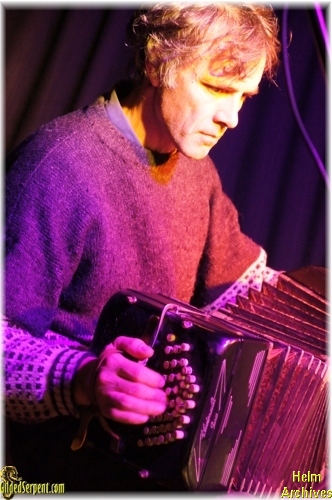
To close the evening, my brother Henri Gohin, who plays in a Tango band, joined us with his bandoneon.

Ling's brother Henri
Henri Gohin playing Armenian tango

He played an Armenian tango like line dance with Mark while Virginie and I led the audience into this fun dance, commonly called Miser Lou. Virginie remembered it from her youth with the East coast Armenian community in the suburbs of Washington DC.

Miser Lou with Ling’s sister, nephews and friends
Virginie ( on left ) remembering her youth, Henri play accordian behind
Virginie (on left ) remembering her youth, Henri play accordian behind>

The line is spreading! Ling and her sister and nephews…
After the show,Mark playing with some Berbers on the banks of the Bassin de la Villette
After the show, Mark playing with some Berbers on the banks of the Bassin de la Villette

Earlier that day, we taught a drum solo composed by Mark and I, where dancers learned sajat patterns to fit traditional drum solo progressions.

Class in Paris, click for enlargement
Mark, Ling and the dancers, feeling good that they got it!
Click photo for larger view


The next day I taught a choreography to Waqt al Aseel, an original composition in the beautiful sama’i rhythm.

Ling teaches in Paris
Ling teaching the Sama’i rhythm

Left:Mark and Ling Shien getting ready to play for Urban Shaman. Right: French queen in a Rachel Brice posture at the Parc Luxembourg


Logo for Sheisha Zahir

Slovenia

Our hosts in Slovenia, Ksenija and her husband Tomas, run a sheisha cafe in Maribor, a charming town in the wine country that was part of the Austro-Hungarian empire. The terrace overlooks the Drava river, where swans gracefully invite you to slow down and enjoy the moment.

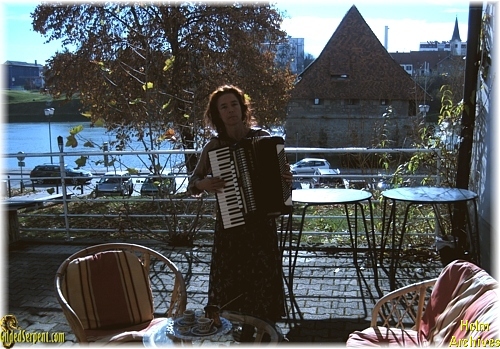
Ling Shien plays on the terrace
Swans on the Drava river
Helping in the kitchen
Ling and Ksenija in the kitchen

The region’s best feature, along with the grapevines and hearty wines, are the beautifully built basements, arched structures with great acoustics.

Hillside vineyard
It is a nice hike to the top of these vineyards in the center of Maribor
Oldest vine
300 year old vine

In the neighboring town of Ptuj ( pronounced Ptuey), the Kulturni Dom Musikafe hosted the Tribal Meeting. We went back in time playing Amel for the Susan Frankovich’s Ting Tribe in the 400 year old basement.

Ling Shien, Mark, and Ksenija
Tomas was the MC at the Ptuj Tribal MeetingKsenija
Left: Tomas was the MC at the Ptuj Tribal Meeting. Right: Ksenija
Ting Tribe dancerTing Tribe dancer
Ting Tribe dancers

Ting Tribe dancerSusan Frankovich
Left: Ting Tribe dancer. Right : Susan Frankovich

The shipment of finger cymbals from the US was stranded in customs, where the mafia was asking some absurd amount to clear it, but according ot Susan Frankovich, they would have asked 3 times that amount in Croatia, which is why she didn’t bother trying. We have since heard from Suzan that the shipment finally cleared under reasonable conditions, thanks to Ksenija’s know how, and the Ting Tribe will be able to live up to it’s name.  

Maribor’s deepest basement  houses the KGB, Kulturni Glasbeni Brlog, or a cave for culture and music. In this fun bar  you can listen to a nice selection of lesser known American rock and roll while tasting local micro brewery beers.

use the comment box

Have a comment? Use or comment section at the bottom of this page or Send us a letter!
Check the "Letters to the Editor" for other possible viewpoints!

Ready for more?

  • Roma Tribal Forum, More of Helm’s Musical Adventures
    The growing interest for both styles of Tribal Dance inspired them to hold a Tribal Meeting in this ancient city.

  • We were delighted when Colleena Shakti invited us to teach classes concerning Musicality for Dancers at the Colleena Shakti School of Dance in Pushkar, Rajastan. Last January, we made the trek over water and mountains to reach this fascinating land. Pushkar holds the only temple dedicated to Brahma, the creator, as well as many other temples.
  • Ling Shien demonstrates the Accordion
    She came to the Gilded Serpent studio to tell us how she has modified a standard western made accordion to be able to play the quarter tones required in many of the Arabic modes.
  • Solstice Festival in Catalunia, Spain
    For the third year in a row, Maria Cresswell produced a dance and music festival honoring the Summer Soltice. This year’s three day event took place high up in the Catalunian Pyrenees, in a rustic hostel fed by fresh springs and bordered by a rushing river.
  • Making New Musical Inroads in Luxembourg 2005
    Helm takes Rhythm Diatribes Workshops to Europe. It was extremely educational for us to watch the learning process in three very diverse regions.
  • Adventure Amid the Tempest: The Biloxi Fest’s Near Brush with Hurricane Katrina,
    Consequently, we did not allow Hurricane Katrina stop us from driving 450 miles to immerse ourselves in and perform with Mark and Ling Shien Bell of Helm! MORE PHOTOS ADDED!
  • North Beach and Mark Bell
    A lot of my getting the jobs was because I was there available when the opportunity arose.
  • Why I Went to Camp This Summer, A Report of Bahaia’s 2010 Camparet
    Before much time had elapsed, I found myself dancing while bound mid thigh with a hot pink velvet stretchy band and a drinking straw inserted between my teeth. Crazy? Yeah, like a small red fox.
  • An Opposing View, So uth Africa’s Dance Community Thrives
    Nonetheless, we are still a closely-knit group–with, perhaps, a handful of people who have decided to set themselves aside from the mainstream of our community. Unfortunately, we find that those are the same dancers who are giving their opinions and critiquing the rest of the community and its dancers.
  • Belly Dance Costuming Evolves, Photos and Commentary from a Rising Star of Costume Design
    Video interview with author. "Because our colorful dance form is still living, changing, and evolving day-by-day, the costume designers will inspire us endlessly. This movement is a never-ending energy flow full of elegance and ferocity, sensuality and femininity. I hope that I will be a part of this wonderful Oriental dance life for a long time."
  • A Month in Cairo, Egypt, Report No. 2: Housekeeping, Internet, Costume Shopping, Reconnecting with More Friends
    When I think of my first trip here in 1977, I can see what amazing changes have occurred since then – most of them for the better.
  • Sunday Photos from Rakkasah East- October 2010
    Barakat, Basema, Dena Shazadi, Fatima, Fire Blossoms, Ghada Girls, Habiba, Laura, Leila, Rega, Saiedah, Shadia, Tempest, Willow, Yuliya, Zenaiede
 

Gilded Serpent presents...

Why I Went to Camp This Summer

A Report on Bahaia’s 2010 Camparet

Ranya and author

by Anala Nahada
Photos by Author
posted October 26, 2011

[Editor’s note: Camperet was held October 8-10, 2010 at Camp Rio Vista – Ingram, TX
I’d like to apologize for the late posting of this article. It’s so much fun that I thought our readers would still enjoy reading it. Thanks!]

My last venture into the belly dance sleep away was to Las Vegas, Nevada. Now, you would  think that I would have known better as I don’t gamble, hate crowds, and need to sleep with my windows open to better feel a breeze slip across my nose and ruffle my hair. So, when Bahaia’s ad for Camparet came across my computer screen, I thought that this might just be a great opportunity to learn in an environment more conducive to my sense of well being.  Turns out that my husbands family lives minutes from there, and he needed to pay them a visit, so, decision made…I signed up. 

I spent the next months in fear and in anticipation. I hadn’t camped since I was exiled from home by my Mom who thought it would be good for me (and her). 

My last camping memory consists of a large bat flying into the 3 sided cabin that I shared with 3 other 10 year olds where it ended up lodging in my wadded up jammys, squeaking and fluttering its wings every time I tried to get into my sleeping bag. So with wary pessimism, I packed enough stuff to fend off hunger, cold and wild animals.

Imagine my surprise when I arrived at the fabulous campground Bahaia had chosen, located on the very banks of the Guadalupe River near Ingram, Texas. Not one stick on the ground, one errant leaf, and the beautiful stone bunkhouses even had indoor plumbing! Ok, the bunks were a bit short for this dancer, but I fold up pretty good. We were 7 to a room that holds 20 kids, so no cramping there. There was even enough room to turn the top bunk into a mini bar. The staff was used to cooking for large herds of kids, so the food was more than plentiful, with the cook constantly urging me to take the leftovers to class. 

The first class was offered the evening of arrival and was given by Roxxanne Shelaby. The subject was Dabke, a dance form this right/left challenged dancer has always feared. Being an Amazon, I am always worried about crushing the delicate toes of the petite dancer next to me. I was delighted when Roxxanne (who is my size) took me by my right hand and we started a 25 person Dabke circle. After a bit, I got it, and we got in that tight shoulder to shoulder harmony of Dabke that is the whole reason for doing it in the first place!   

The next morning it was time to take Ranya Renee’s Oriental Technique class.  Before much time had elapsed, I found myself dancing while bound mid thigh with a hot pink velvet stretchy band and a drinking straw inserted between my teeth. Crazy?  Yeah, like a small red fox.

2010 teachers
Roxxanne, Bahaia, Tamra Henna and Ranya Renee

Turns out that the subject of breath technique for dancers is very important to Ranya and we talked about it a lot in class. Lunch was had and then back to the gym for Ranya’s El Andalus class. I was prepared for a type of Spanish fusion, but it turns out that Arabs have a different take on that name, and all that it implies.  We were treated to working with some of the most beautiful music I have ever heard. We were the dancing to Sayed Darwish’s musical compositions to Muwashahat, a form of court poetry and song popular during the height of Muslim culture in Spain. The steps were Ranya’s own take on Mahmoud Reda’s movement vocabulary. After class, Bahaia made an announcement that a private lesson with Ranya would be possible for those who desired one and if her time allowed.  Can we say – SOLD!

Ranya does MuwashahatThe next day allowed me time to find Ranya at the gym and we started talking.  She was most gracious, and she treated this small time, small town teacher and dancer with the respect one would give a peer. She had indicated earlier that I could really use some breath coaching; however I was a bit resistant, as breath technique sounded a bit esoteric for this “old age” pragmatist. We all breathe, right? 

So, within the first 3 minutes of looking into her open gaze as she asked me why I held my breath as a matter of habit as I danced, I rediscovered some very old, very painful memories of breath holding during my childhood. It was a mechanism for maintaining emotional control during times of stress. I had force marched my emotions up out of my body and into my brain where I could better control them. I prevented their return back into my body by pinching the throat muscles so hard that the pain in my trachea was almost unbearable.  This same breath holding was being used in my dance, as my brain (or as Ranya would say, the office) would try and take over even when transported by joy. I was dumb struck. This, this was my issue?  Not noodle arms, my inability to stand still and dance, my left/ right challenge, my short term memory? Really, really?

Turns out that after doing some visualization exercises while breathing consciously and dancing, I realized that to inhabit your body and not just your head, you have to make room for yourself to live there. Expand the chest, take in the nourishment of the air around you, and trust your emotions to make a successful journey back to your heart. Your dance will thank you for it. I thank Ranya and Bahaia for it!  See you next year, ladies!


Photos from Camp Rio Vista
class with Ranya

Meadow

Beautiful gym!

lake

Resources:
find out about next year’s camp here- http://www.bahaia.com/hot_sem.html

use the comment box

Have a comment? Use or comment section at the bottom of this page or Send us a letter!
Check the "Letters to the Editor" for other possible viewpoints!

Ready for more?


Gilded Serpent presents...

An Opposing View

South Africa’s Dance Community Thrives

International Bellydance day
A huge group dance done on World Bellydance Day

by Alexandra Graham
photos by Paul Gilowey
posted October 24, 2011

This article was inspired as a response to this article publised on Gilded Serpent on September 15, 2011,"Three South African Dance Pioneers"

It is difficult for an individual to speak on behalf of an entire community, but I feel that I should at least attempt to dispel what I believe are some current misleading and misrepresentational thoughts about the Belly dance community in South Africa.

As in any community or industry, you will find strife and troubles in our Belly dance community. The usual issues do arise such as a dancer charging too little (or too much), teachers stealing students, and bad-mouthing other dancers.

In an industry filled with artists, it is no real surprise that people are butting heads, and with such a strong online community, it is becoming increasingly public as well.

Nonetheless, we are still a closely-knit group–with, perhaps, a handful of people who have decided to set themselves aside from the mainstream of our community. Unfortunately, we find that those are the same dancers who are giving their opinions and critiquing the rest of the community and its dancers.

As a country, South Africa is known for its diversity  in environment, religions, cultures and people. The same could be said about our Belly dancing styles. Different areas and major cities boast a variety of styles in their own right, with certain styles being more prevalent in particular areas.

Vendors support the dancers
Taken at the International Oriental Dance Festival.Two
vendors who always got very involved, shouting to the
ladies and dancing along!

While Tribal Fusion is a constantly growing newer style of Belly dance, there are still many in the community who speak out and voice opinions such as: Tribal Fusion is not a “legitimate” form of Belly dance. Many studios teach Tribal Fusion employing an ATS (American Tribal Style) background and movement vocabulary. What many studios are doing now is a westernized cabaret form of Belly dance that borrows from the Classical Egyptian form as well as Turkish and adds in Western elements that would appeal and resonate with Western audiences.

The diversity of South African Belly dance is most evident at several festivals that are held throughout the year. One of the biggest festivals is The Oriental Dance Festival that is held on the last weekend of October. It is a 2 day festival, held at the Waterfront in Cape Town and boasts performances of over 60 national studios as well as a few international artists. A festival and event that is more largely known would be The World Bellydance Day, which is celebrated on the second Saturday in May. These kinds of festivals bring together Bellydancers from all over and inspire and show us that we are growing as a community.

Competition is a new concept for Belly dancers in South Africa, with the first Miss Bellydance South Africa Competition held in 2009. Talking about dance competitions is a fairly dodgy topic  because often, dancers are unsure about whether they agree with the concept of competitions or not. Luckily, for those in doubt, the Miss Bellydance South Africa website lists all the aspects that the judges (national and international) consider such as artistic interpretation, technique, and expression–to name a few. The competition winners have all been of a high quality and this competition is a logical way to show off how high our standards are when it comes to quality in dance.

Unfortunately, since South Africa is a small country; we don’t have as many performance opportunities that one might find in the USA or the UK. Restaurants are wary of hiring dancers and there are few appropriate restaurant venues for such an activity. However, many dancers turn to other sources of performance opportunities such as themed birthday parties, bachelorette parties, corporate functions, and festivals of all kinds.

A community should be more than just a supply of services and agendas. A truly supportive community is one in which everybody can participate with dignity and respect for themselves and one another, one in which the physical and social backgrounds play no part and create no barriers.

From personal experience, I can say that South Africa ticks all these boxes, despite its few diamonds in the rough.


use the comment box

Have a comment? Use or comment section at the bottom of this page or Send us a letter!
Check the "Letters to the Editor" for other possible viewpoints!

Ready for more?


Gilded Serpent presents...

Belly Dance Costuming Evolves

Photos and Commentary from a Rising Star of Costume Design

Costume Sketch by Katalin

by Katalin Schafer of Hungary
video interview by Lynette Harris
posted October 18, 2011

Belly dancing is a beautiful art form that has a rich cultural history, but if I am brutally honest with myself, I must admit that my interest in Belly dancing started because of those beautiful, feminine and exciting costumes rather than the actual dance movements!  Sometimes, when a small girl sees her first Belly dancer, she believes that this amazing vision must be a princess!  Many women still hold that small girl inside her heart who dreams of becoming a princess–at least a dance princess. Naturally, she begins taking Belly dance lessons in order to wear those breath-taking dance costumes!

When I enjoyed my first Belly dance classes, we dancer students thought that the Turkish designs were the most fashionable. They consisted of four parts: the loose skirt, a fully decorated belt and bra, at least one matching arm decoration, and a veil.

The skirts were mostly made of synthetic chiffon fabric that was slightly transparent.
The costume fabrics were covered with cheap palettes, sequins and pearls and were excessively heavy. 

Nowadays, the Turkish designers still produce these secondary lines, but they have also started to use excellent silks and crystal decorations for the bedlah (bra, belt and skirt ensemble) and their designs reveal more of the dancer’s body.

One of the most famous Turkish designers today is Bella. Turkish designers prefer neon colors and other brilliantly hued fabrics.

While the definitive cradle of classic Belly dance is largely unknown, its central location today is, of course, Cairo. This wonderful, teeming capital of Egypt sets many of the current trends in both cabaret and country (Beledi) costumes. 

Egyptian costumes usually have 3 basic parts: the narrow skirt with its attached belt, a matching bra, as well as arm, head, and throat (choker) decorations.

The Egyptians tend to decorate the skirt heavily–not just the hip-line but the entire fabric!

They prefer to hand-apply motifs on fabrics such as sequined leopard-skin appliques, flowers, or any other recognizable pattern. For the most part, Egyptian designers and dancers prefer the classic and primary colors like red, blue, yellow, green, black, or white.

There are many creative and fantastic designers leading the fashion life in Cairo; among them today are: Sahar Okasha, Halah Mustafa, Hisham Osman or Eman Zaki.  These fantastic Arabic designers have renewed existing costume fashions with their modern ideas, and they have begun to use, in addition to the usual fabrics, lace and other textiles that feature special decorations such as pearls, wooden beads, shells, or anything that they can imagine to enhance their designs.  I am often inspired by the creativity of Egyptian designers!

When I created my Belly dance costume brand that I call "SCH-Fashion", I started to design my own costumes and those for my dancers who are in my dance theatre. I would like to find my own unique way of costuming because I work from my heart.  I like the shear, light and elegant 100% pure silk costume that feels as if I have nothing on my body and gives me a free-flowing energy, and I prefer the smokey, autumn colors.

For folkloric dance, there are different styles such as Saidi, Khaligy, Beledi, Fallahi, Melaya Leff, etc.  Of course, these costumes cannot have a very haute-couture appearance because they must adhere to their traditional origin, but nowadays, the creative designers show us also the opulent look in folkloric costuming as well. They are using more excellent fabrics and unusual decorations than they did a few years ago.

Because our colorful dance form is still living, changing, and evolving day-by-day, the costume designers will inspire us endlessly. This movement is a never-ending energy flow full of elegance and ferocity, sensuality and femininity. I hope that I will be  a part of this wonderful Oriental dance life for a long time.


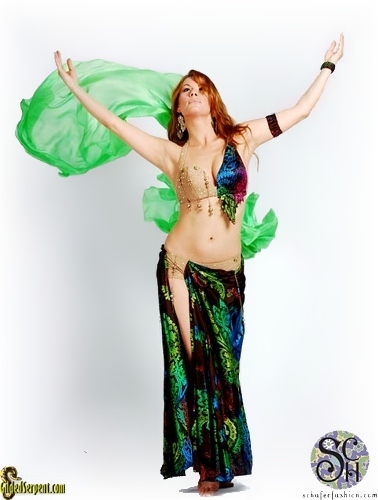
Autumn colors by Katalin SchaferBarbie pink by Katalin Schafer

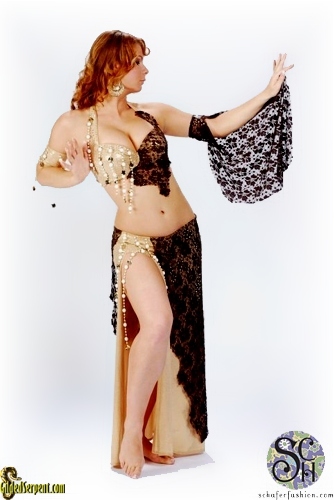
nude and black lace by Katalin Schafer

Calle Lillies by Katalin SchaferMermaid by Katalin Schafer

prism by Katalin Schafer

strawberries by Katalin Schaferwaves by Katalin Schafer


use the comment box

Have a comment? Use or comment section at the bottom of this page or Send us a letter!
Check the "Letters to the Editor" for other possible viewpoints!

Ready for more?

  • Serpent Tour 2011 Journal- London, Madrid and Marrakech! NEW VIDEO UPDATE-7-8-11
    An experimental travel blog. Let see how it goes! The plan is to update this page frequently.
  • Becoming the Object of Your Own Fantasy, "Perfumes of Araby" in the 1970s, Part 1
    The Belly dance scene in 1970s Los Angeles: It is difficult to spotlight succinctly even one portion of a vibrant, vast and quickly growing community of Middle Eastern dancers, their enthusiasts, and the ethnic communities, musicians, festivals and supper clubs that supported the dance arts. The abundance of inspiration in that era was almost beyond understanding; yet once upon a time before the Internet, music, imagery and information was less readily available.
  • Sunday Photos from Rakkasah East- October 2010
    Barakat, Basema, Dena Shazadi, Fatima, Fire Blossoms, Ghada Girls, Habiba, Laura, Leila, Rega, Saiedah, Shadia, Tempest, Willow, Yuliya, Zenaiede

  • Amity, Anka Kusu, Belly Mystic, Bliss, Calixta, Desert Moon, Dorothea, Eddie Kochak, Scott Wilson, Serpent Secrets, Fantasha Dancers, Isis, Jamileh, Kelebek, Latifa, Lily…
  • Friday Night Photos from Rakkasah East- October 2010
    Desert Embers, Dharma, Fahtiem, Leila Haddad, Mystic Wiles, Nadia Layla, Najma, NightShade, Phoenis, Raks Shiva, Troupe Shahibat
  • Bellydancers "Gotta have a Gimmick!", Excessive Use of Props
    I get the impression from watching such performances that a prop wasn’t incorporated in the show because it helped the dancer express an emotion in the song, but the property was intended to be the focus of the performance.
  • Dreaming in Massachusetts, Photos from MassRaqs 2011
    The celebration of those traditions, along with the fervor of Boston’s intellectual culture, the talent of our local community of dancers and musicians, and a desire to connect that beautiful history to the global present and future of our dance drives the work we do in our event.
  • MaShuqa interviews Ali Hamidzadeh of Turquoise International,
    Ali tells us about how he came to produce his first cymbals. He is interviewed by MaShuqa. He also talks about Dahlena, Bobby Farah, his education, inferior copies of his zils, how to know that you have genuine Turquoise cymbals. Testimonials from Jillina, Princess Farhana, and Marta Schill.
  • Assiut / Assuit, Fascinating FAQs
    However, mosquito netting was invented by the Egyptians and dates back thousands of years.
  • Aubre Hill, New Fussion Energy in Taiwan
    As time has passed, the local community has found itself on a changing path. The heavily choreographed (written notation) dance trend remains the staple of the main stream while increasingly, local dancers (and instructors as well) have begun to realize that there is something else in addition to set notations of dance movements to learn.
  • Competition Strategies, A Judge’s Suggestions
    Choosing a costume that fits and flatters your choreography is equally important. If you want to highlight your amazing hip work, be sure to choose a costume with lots of fringe and tassels on the hips so the judges cannot fail to see that hip work.
 

Gilded Serpent presents...

A Month in Cairo, Egypt, Report #2

Housekeeping, Internet, Costume Shopping, Reconnecting with More Friends

Leyla

by Leyla Lanty
From the Field June 14 – July 1 5, 2011
posted October 18, 2011

On June 14, 2011, I left home for a month long stay in Cairo, Egypt, my home away from home.  The purpose of this trip, one of many I’ve made there, was to attend Ahlan Wa Sahlan 2011 as well as visit with old friends, make new ones and most important of all this year, to see and experience some of the changes taking place after Egypt’s revolution in January.  What follows is a six-part recounting of what I saw, did and felt, based on a diary I kept while I was there.

Taking a day to catch up:

During a month’s stay in Cairo it’s necessary to stay home for a day now and then in order to catch up on some tasks, such as doing laundry, catching up on email, writing a new report or “resting up” for the week-long excitement of an event like the week-long Ahlan Wa Sahlan Festival.

Many, if not most, households have clothes washers.  This one doesn’t and there are no self-serve laundries in the neighborhood, so I hand wash everything, using an over-sized cooking pot as a wash basin.  The wash is now hanging on the balcony from the backs of the two folding chairs that “live” there and on my stretch clothesline anchored on the iron railing perched on top of the concrete balcony wall.  Very few apartments have clothes driers.  Most people hang their wash on clotheslines permanently mounted on the balcony, hanging over the sidewalk.  When walking along the streets close to the buildings, you need to watch for telltale puddles on the ground so you can step sideways to avoid getting a free shower of drips from newly washed clothes, blankets, sheets, towels, and sometimes drip-hoses from air conditioners!

In the photo is a typical street scene.  Notice the wash hanging from the balcony over the green grocer’s shop.  To the right is the women’s entrance to the neighborhood mosque.  To the left is a meat store.

In the photo is a typical street scene. Notice the wash hanging from the balcony over the green grocer’s shop. To the right is the women’s entrance to the neighborhood mosque. To the left is a meat store. 

Ahmed’s Internet savvy son, Karim, got an Internet USB stick and set it up for me so now I’m connected wherever I want to be connected in Cairo.  It’s very easy to use.  It runs a bit faster than telephone hookup but not as fast as a high speed connection.  It’s more than adequate for my needs – email, Facebook, web surfing – as long as I don’t try to download any YouTube videos or other huge files that take a seem to take an interminable amount of time to complete.

When I think of my first trip here in 1977, I can see what amazing changes have occurred since then – most of them for the better.

When I came then, I had to carry travelers’ checks for the full amount of money I would need for my whole trip.  I could get money from my checking account but only because I had an American Express card.  I could go to their office, write them a check and they would give me cash in return.  Of course, there was no Internet, no email.  I wrote my trip diary on the pages of a notebook with a pen!  I called home by dialing a local number for AT&T and giving them my home number along with the number I wanted to call and a password!  It was expensive.

One afternoon, I visited Mahmoud Abd al Ghaffar at his costume atelier “Al Wikalah” in Khan el Khalili (old market area).  When I arrived, it was prayer time.  At his assistant’s suggestion, I looked around the ground floor and checked out the cases full of gorgeous scarves and other accessories.  After Mahmoud had finished praying, we sat and talked for a few minutes until some other customers arrived.  I went upstairs and found a gorgeous gown with my name on it!  It fit perfectly!  It is vivid red with black and red beading and sequins in all the right places.  It has detached bell sleeves and a matching draped scarf-like belt.  The skirt has godets (triangular insets from hemline to knees) of black tulle with red and black beading on them – lovely!  The belt and sleeves are trimmed with beaded black tulle, matching the skirt.  I can’t wait to wear it when I dance at the festival!

After costume shopping, I spent two evenings visiting with old friends, first with a woman I’ve known for four years and the other with Houda al Artist, the composer for two songs on my CD, “Golden Days Enchanting Nights” at the studio he owns with his brother, the famous drummer Said al Artist.  Two other musicians were there hanging out and drinking tea, Arabic (Turkish) coffee or yansoon (anise tea) and playing backgammon.

There’s little work for musicians these days other than special parties, engagements, weddings.  Many of the Haram (Pyramid) Street night clubs were looted and torched during the revolutions. (Don’t ask me; I don’t know why.)  Consequently, the musicians often meet for casual conversation, tea, sheesha (water pipe) and a few rounds of backgammon or other board or card games.  Backgammon is extremely popular with many variations on the game.  Another popular game is poker and there’s some interest in chess too.  When going to one of the ‘ahwat (coffee/tea houses) in the evening, you hear the bubbling sound of the sheesha and the clickety-clack of the dice hitting the boards on the tables.  The coffee/tea houses are considered to be “men’s places” and women are usually expected to be accompanied by a male if they want to sit in one and have tea or coffee and, maybe, smoke a sheesha.

Zizi, my woman friend, is a lot of fun and, lucky for me, speaks English fluently.  While we visited, she took some time to help me with the Arabic language.  First we had a great time catching up on our news.  Then we watched some dancers on her computer and discussed many things about Egypt and its culture.  She and her husband have a new “son” – a beautiful two month old long-haired yellow tiger kitten with a sweet personality.  I missed my kitty at home so I got my "kitty fix" by petting and playing with him.  She decided to call him “Tiger”, using the English word.  She told me that pets cannot have human names but must be named by animal names like “Tiger,” “Kitty,” or “Doggie,” or nonsense sounds or something inanimate like “Bouncy Ball.”  In the photo, “Tiger wants you!”

Tiger!

Next Up:  Ahlan Wa Sahlan festival and more…

use the comment box

Have a comment? Use or comment section at the bottom of this page or Send us a letter!
Check the "Letters to the Editor" for other possible viewpoints!

Ready for more?


Gilded Serpent presents...

Metamorphosis of a Latin Belly Dancer

DVD review of Bozenka’s ¨Journey of a Dancer¨

Placeholder

by Martha Duran
posted October 17, 2011

"Journey of a dancer" is a compilation of 8 different performances of Bozenka (from 2000 to 2005)  who, in fact, performs 99.9% improvised work. Great songs and lovely costumes are portrayed by this Latin Bellydancer who demonstrated mastery over the stage. She shows strong technique within a variety of combinations and dance steps, using zills, Isis wings, and double veil. These are some of the dance elements that give life to wonderful choreographed pieces. Egyptian styled Bellydancing, as well as Oriental and Latin Fusion compliment performances by this Miami Oriental dancer and teacher; it’s a pity that the lighting was not very good.

As a result, it seems as if you were sitting right there, as part of the audience, showering the dancer with applause. Intricate drum solos are one of the main highlights of this performance collection in which she layers movement over movement.

Layering makes this dancing interesting to watch– almost every second of it!

One of the performances was very familiar to me: it was the double veil performance that was a choreographed dance she had taught in 2005 for a series of workshops she presented around the US. This caused me wonder: she states she improvises 99.9% of the time she performs, but how does she improvise her work while she performs on stage (if she likes it, she memorizes it?) and teaches it later in her workshops? Or does she improvise while teaching a class or workshop, and if she likes it, then she takes it to the stage?

This DVD is oriented to fans of her lovely intricate style of Bellydancing, and it should be promoted as a DVD that contains some of the choreographed works taught in past workshops. I’ll bet the students would love that; I know I would!

3 zil rating
Rating:  3 zils

Purchase info: Bozenka’s online store

use the comment box

Have a comment? Use or comment section at the bottom of this page or Send us a letter!
Check the "Letters to the Editor" for other possible viewpoints!

Ready for more?


Gilded Serpent presents...

Sunday Photos

Rakkasah East Festival 2010

Photos by Carl Sermon

Commentary by MaShuqa
posted October 17, 2011

Rakkasah East Festival 2010, the 11th year of this annual festival in Somerset, New Jersey celebrates a blossoming friendship community of East and West coast dancers and musicians.  The festival is the East coast version of the 30 year old Rakkasah West Festival tradition in California.  This art form of dance is in constantly flux and now includes many different influences in costuming and performance.

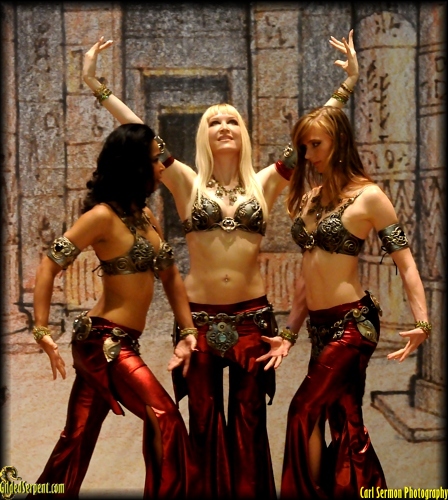
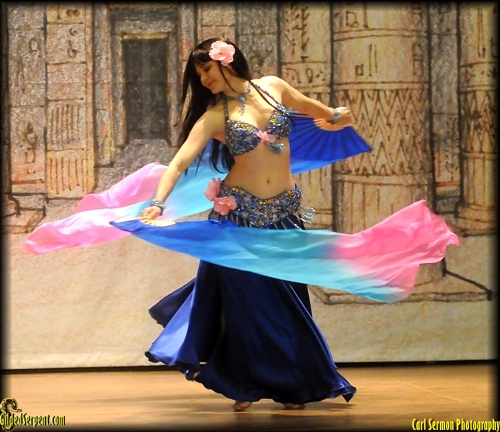
It was fascinating to observe the new trends in performance, costumes, and dance styling at this year’s festival: Rainbow colors, Fan veils, Feather fans, Silk veils, Isis Wings, and contemporary costuming designs.  A predominant costuming style for dance troupes was similar costume designs with each dancer wearing different colors to personalize their costuming providing a rainbow effect when troupes performed. Flowers and feathers adorned costumes and headpieces.  Silk veils dyed to match costumes, or in brilliant contrasting colors were popular and created height and flow in performance. Some troupes performed excellent choreography wearing dancewear usually worn in class – the basic wrap top, dance pants and hip wrap.

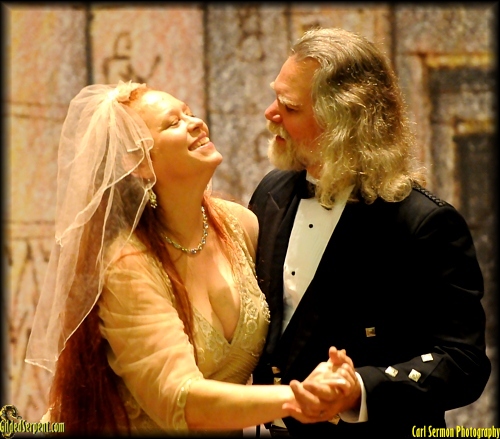
Festivals are always fun because of the community support and sharing. Likely attending a Middle Eastern dance festival first, two who met at Rakkasah East festival were married onstage.  She, a dancer in a golden beaded dress, and he, a musician wearing his family’s traditional Scottish tartan plaid, were both festival volunteers who met after the passing of their spouses.  Their wedding reception started on stage as the audience began celebrating the marriage by throwing money on the stage as they danced their first dance.


Sunday

Barakat

Barakat Middle East Dance Company of Maryland


Basema

Basema of Maryland


Dancers of the Pharoah

Dancers of the Pharaoh and Mahalat Kinnari
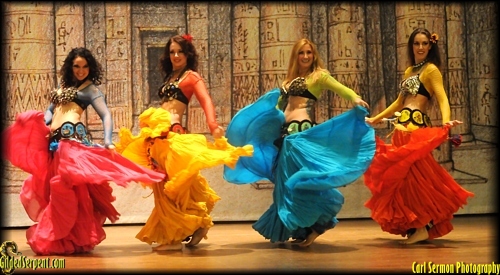
Dancers of the Pharaohs troupe combined dancers from both coasts including Troupes Mahalat and Kinnari to fill the stage with whirling skirts and veils.

Deni Shazadi

Dena Shazadi Dancers of New York


Fatima Al Wahid

Fatima al Wahid of California
Rakkasah teacher, Fatima al Wahid performed a pot dance modern Cairo style


Fire Blossoms and BellyQueen

Fire Blossoms, Rising Sirens, and BellyQueen of New York
Rakkasah teacher Kaeshi Chai with Fire Blossoms Rising Sirens, and Belly Queen troupe performed a variety of arrangements from Sharqi to hip-hop to modern dance inspirations


Kaechi

Kaechi Chai of New York


FliegendeZirkusNJ

Fliegende Zirkus of New Jersey


Ghada Girls

Ghada Girls of New York
Ghada Girls of New York wore a pastel version of “I Dream of Genie” outfits.


Habiba Dance Ensemble

Habiba Dance Ensemble of Pennsylvania
Habiba Dance Ensemble of Pennsylviania performed elegant Raqs Sharqi with Habiba showcased performing a cane dance.


Laura Belly Trance

Laura Belly Trance Company of New York
Laura and the Belly Trance Company of New York costumed in Persian robes and headdress performed stately Persian dance with delicate hand and arm movements; and also traditional Persian folk dance in modern dresses and hats.  

Laura Belly trance


Layla Mary and Scott

Layla Mary and Scott Wilson of New York


Leilah of Pennsylvania

Leilah of Pennsylvania
Leilah of Pennsylviania created a beautiful rainbow image with large rainbow circle veils.


Metal Goddess Bellydancers

Metal Goddess Bellydancers of New York
Metal Goddess Bellydancers of New York made a dramatic entrance with black capes and large lanterns chained together.  Metal Goddess’ dramatic dance styling with capes, Isis Wings, fan veils befits the heavy metal band that they usual open for at concerts.


Nubain Daughters

Nubian Moon Daughters of New York
Nubian Moon Daughters of New York directed by Rakkasah teacher Arianna al Tyre provided a diversity of pieces from modern to interpretative, to folkloric Egyptian – with costumes varying from dancewear to “body paint and shells.”

Nubian Daughters


Queens of the Univcers

Queens of the Universe of Virginia
A troupe from Virgina, Queens of the Universe, were dramatically presented in red black and gold costumes with swirling skirts that showed off the lines in their choreography


Rega

Rega


Saidah

Saiedah of New York


Samrah of New York

Samra of New York


Shadia of California

Shadia of California


Shir-El

Shir-El of New York


open floor
Open Floor dancer
 Always a crowd pleaser and fun to watch “the future generation of bellydance” taking their first performance steps during Open Dance Floor.  I smile and think “What will dancing at festivals be like for them 30 years from now?”


Tempest of Rhode Island

Tempest of Rhode Island


Troupe Tahya of Pennsylvania

Troupe Tahya of Pennsylvania


Wild Gypsy Fire

Wild Gypsy Fire of New Jersey


Willow of New York

Willow of New York


Yuliya

Yuliya of New Jersey


Zenaide of New York

Zenaide of New York


use the comment box

Have a comment? Use or comment section at the bottom of this page or Send us a letter!
Check the "Letters to the Editor" for other possible viewpoints!

Ready for more?

  • Welcome to the Gothla! Dancing Along the Sulk Road Review of 3 DVDs
    The costumes are fabulous. It’s almost like—who needs all that dance technique if you’re wearing an enormous leather headdress that makes you look like an alien refugee from Star Wars? Tempest’s approach in particular is a painterly one, not surprising from a student of the Rhode Island School of Design.
  • "The First Tribal Cafe"
    It was the first all tribal belly dance event sponsored by MECDA IE and took place on August 21st, 2004 in Montclair, California.
  • "Dancing Darkly"
    This may come as a shock to many, but Gothic Belly Dance isn’t really a new phenomenon, and it’s not just centered in California. First of all, it’s simply a merger of two entities that go well together, like peanut butter and chocolate.
  • "The Art of Tempest"
    The first image, "Dance," is inspired by the Minoan priestesses and is a monotype/mixed media
  • RECREATING RITUAL Enhancing our daily lives with drumming and dancing
    The rhythmic patterns and dance movements of this tradition, steeped in antiquity, steeped in women’s ancestry, rekindle a natural and sacred state of well being.
  • The Ghawazi: Back From the Brink of Extinction (For now)
    The really fabulous news is that Khairiyya’s sister Raja has come out of retirement and is dancing again.

  • Amity, Anka Kusu, Belly Mystic, Bliss, Calixta, Desert Moon, Dorothea, Eddie Kochak, Scott Wilson, Serpent Secrets, Fantasha Dancers, Isis, Jamileh, Kelebek, Latifa, Lily…
  • Friday Night Photos from Rakkasah East- October 2010
    Desert Embers, Dharma, Fahtiem, Leila Haddad, Mystic Wiles, Nadia Layla, Najma, NightShade, Phoenis, Raks Shiva, Troupe Shahibat
  • Bellydancers "Gotta have a Gimmick!", Excessive Use of Props
    I get the impression from watching such performances that a prop wasn’t incorporated in the show because it helped the dancer express an emotion in the song, but the property was intended to be the focus of the performance.
  • Dreaming in Massachusetts, Photos from MassRaqs 2011
    The celebration of those traditions, along with the fervor of Boston’s intellectual culture, the talent of our local community of dancers and musicians, and a desire to connect that beautiful history to the global present and future of our dance drives the work we do in our event.
  • MaShuqa interviews Ali Hamidzadeh of Turquoise International,
    Ali tells us about how he came to produce his first cymbals. He is interviewed by MaShuqa. He also talks about Dahlena, Bobby Farah, his education, inferior copies of his zils, how to know that you have genuine Turquoise cymbals. Testimonials from Jillina, Princess Farhana, and Marta Schill.
  • Assiut / Assuit, Fascinating FAQs
    However, mosquito netting was invented by the Egyptians and dates back thousands of years.
  • Aubre Hill, New Fussion Energy in Taiwan
    As time has passed, the local community has found itself on a changing path. The heavily choreographed (written notation) dance trend remains the staple of the main stream while increasingly, local dancers (and instructors as well) have begun to realize that there is something else in addition to set notations of dance movements to learn.
  • Competition Strategies, A Judge’s Suggestions
    Choosing a costume that fits and flatters your choreography is equally important. If you want to highlight your amazing hip work, be sure to choose a costume with lots of fringe and tassels on the hips so the judges cannot fail to see that hip work.
 

Gilded Serpent presents...

Saturday Photos

Rakkasah East Festival 2010

Photos by Carl Sermon
Commentary by MaShuqa
posted October 14, 2011

Rakkasah East Festival 2010, the 11th year of this annual festival in Somerset, New Jersey celebrates a blossoming friendship community of East and West coast dancers and musicians.  The festival is the East coast version of the 30 year old Rakkasah West Festival tradition in California.  This art form of dance is in constantly flux and now includes many different influences in costuming and performance.

It was fascinating to observe the new trends in performance, costumes, and dance styling at this year’s festival: Rainbow colors, Fan veils, Feather fans, Silk veils, Isis Wings, and contemporary costuming designs.  A predominant costuming style for dance troupes was similar costume designs with each dancer wearing different colors to personalize their costuming providing a rainbow effect when troupes performed. Flowers and feathers adorned costumes and headpieces.  Silk veils dyed to match costumes, or in brilliant contrasting colors were popular and created height and flow in performance. Some troupes performed excellent choreography wearing dancewear usually worn in class – the basic wrap top, dance pants and hip wrap.

Highlight of the festival was a musical duet by Eddie “The Sheik” Kochak, of the 70’s 33 1/3 rpm records fame, and Scott Wilson of New York.  You can see from Eddie’s gestures as he sings that dancers have been privileged to perform with a musician who animates his music and adds to the show

Festivals are always fun because of the community support and sharing. Likely attending a Middle Eastern dance festival first, two who met at Rakkasah East festival were married onstage.  She, a dancer in a golden beaded dress, and he, a musician wearing his family’s traditional Scottish tartan plaid, were both festival volunteers who met after the passing of their spouses.  Their wedding reception started on stage as the audience began celebrating the marriage by throwing money on the stage as they danced their first dance.


Saturday

Amity

Amity Alize of New Hampshire


Anka Kusu of New Jersey

Anka Kusu of New Jersey

Anka Kusu troupe of New Jersey wore beautiful costumes combining harem pants and skirts with Turkish Ottoman style long vests and fringed belts with yarn decoration.


Belly Mystics of New York

Belly Mystics of New York


Bliss of New Jersey

 “Bliss” of New Jersey danced with the passion you can see in her image.


Calixta of New York

Calixta of New York


Desert Moon Dancers of Conneticut

Desert Moon Dancers of Connecticut


Dorothea of Massichusetts

Dorothea of Massichusetts

 Dorothea of Massachusetts danced in a costume that incorporated cabaret glitz of long sleeves, beaded chiffon belt, and skirt paired with a folkloric silk blouson top and a large gold necklace of striking design.


Eddie and Scott Sing

Scott Wilson and Eddie Kochak

Highlight of the festival was a musical duet by Eddie “The Sheik” Kochak, of the 70’s 33 1/3 rpm records fame, and Scott Wilson of New York.  You can see from Eddie’s gestures as he sings that dancers have been privileged to perform with a musician who animates his music and adds to the show


Serpent Secrets of New York

Serpent Secrets of New York

The Serpent’s Secret troupe from New York led by Rakkasah teacher Elisheva mixes urban with traditional Orientale dance.  


Fantasha Dancers of New Jersey

Fantasha Dancers of New Jersey


Isis of Texas

Isis of Texas

 Another famous crowd pleaser was a special performance by Isis of Texas who wowed us with her fiery personae and her 4-sword performance.


Jamileh Belly Dance of New York

Jamileh Belly Dance of New York


Kelebek of New Jersey

Kelebek of New Jersey

Kelebek of New Jersey was and danced as a beautiful tribal butterfly complete with butterfly wings costume.

Latifa's Banat Al Beledi of Maryland

Latifa’s Banat Al Beledi of Maryland

Latifa’s Banat Al Beledi of Maryland performed several traditional Egyptian pieces wearing beautiful beaded galabeyah’s, and also flowing ruffled dresses for a spectacular water jug dance.


Lilu of New Jersey

Lilu of New Jersey


Manhattan Trible of New York

Manhattan Tribal of New York


Maia Alexandra of Oregon

Maia Alexandra of Oregon


Mariana of Pennsylvania

Mariana of Pennsylvania


MaShuqa of California

MaShuqa Murjan of California


Mia Naja Oriental Dance Ensemble and Raqs Divas of Maryland

Mia Naja Oriental Dance Ensemble and Raqs Divas of Maryland


Naheda and Guenter of Germany

Naheda and Guenter of Germany

A touching performance by Rakkasah teacher Naheda and her husband Guenter of Germany told the story of a doll-maker whose doll comes to life and, through his love of her dancing, she becomes human – and ends in the great love of the century as she dances to the music from the movie “Titanic”.

Naheda and Guenter of Germany


Neon of New York

Neon of New York

Neon of New York


Noel

Noel


SaharaDance of Washington DC

Sahara Dance of Washington DC


Sera Solstive of New York

Sera Solstive of New York

Sera Solstive of New York

Sera Solstice (dancing at 8 months pregnant) filled the stage with a huge tribal troupe with a sinuous style with an urban street edge.  


Shaula of New Jersey

Shaula of New Jersey

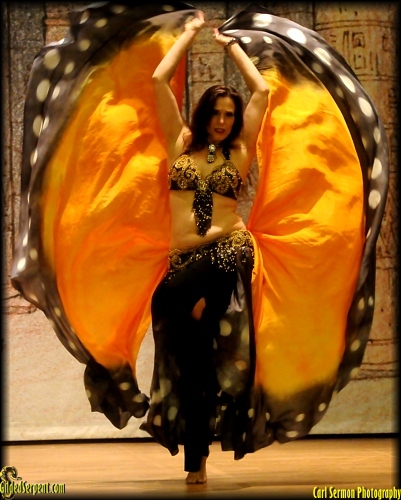
Shaula of New Jersey, in a fantastic performance image, displayed black and white butterfly wings to match the polka-dot edging on her skirt.


Shushanna of Pennsylvania

Shushanna of Pennsylvania

 Shushanna of PA shows you can channel the famous Egyptian Raqs Sharqi stars and treated us to a very authentic show that was musical and followed the maqams (it’s too bad we can only see an image and not view her entire show).


Tammy of Pennsylvania

Tammy of Pennsylvania


Tanna Valentine of New York

Tanna Valentine of New York


Troupe Hayati of Pennsylvania

Troupe Hayati of Pennsylvania


Wedding

Wedding

Festivals are always fun because of the community support and sharing. Likely attending a Middle Eastern dance festival first, two who met at Rakkasah East festival were married onstage.  She, a dancer in a golden beaded dress, and he, a musician wearing his family’s traditional Scottish tartan plaid, were both festival volunteers who met after the passing of their spouses.  Their wedding reception started on stage as the audience began celebrating the marriage by throwing money on the stage as they danced their first dance.


Yame of New Jersey

Yame of New Jersey


Za-Beth of Massechusetts

Za-Beth of Massechusetts


Ziba of Virginia

Ziba of Virginia


Friday Photos

use the comment box

Have a comment? Use or comment section at the bottom of this page or Send us a letter!
Check the "Letters to the Editor" for other possible viewpoints!

Ready for more?