Carmine Guida (New York) Pat Olson (Californina) and I, are all members of the band, Pangia. In August of 2010, we had the pleasure of teaching workshops and performing at Yaa Halla, Y’all! in Grapevine, of the Dallas/Fort Worth area of Texas. It was a distinct delight to have an enthusiastic, involved, and engrossed participants attend our workshops.
Our Saturday show, featuring Mia Sha’uri with her fiery red fans and sensual interpretation of Pat’s vocal “Sevda”, Ma*Shuqa Mira Murjan, lead the audience into singing along with Pat as she danced to an Egyptian pop version of “The Yellow Rose of Texas”. We also played for effervescent Karen Barbee, and the vibrant Princess Farhana. Bozenka and Tamalyn Dallal added elegance and sophistication to complete our show. Bozenka, with her sweet personality, displayed stellar dance technique, allowing her dance to emote true passion, fire, and originality. It was an extraordinary experience to play for dancers who were intensely excited to dance to our music and who provided us with an unforgettable and treasured memory to cherish of playing for dancers who became one with the music! It was a brilliant gathering of dance stars–just as advertised.
After our show, we played for the 10th Anniversary Celebration Party where many of the dance stars joined us on stage to dance while Isis invited the audience to indulge in artistically decorated cup cakes and refreshments.
As an event to participate and attend, I would have to rate this one “top-notch”. (5 Zills!) We were treated as professionals by a warm, helpful, and friendly staff. This alone made our stay enjoyably stress-free. Although it was hotter than a sauna outside, the convention center was cool, spacious and inviting. The host hotel, the Baymont Inn, was within walking distance of the convention center; however, there was always a van to shuttle us back and forth as needed during the entire stay. Isis, Del, and Al made all of this happen!
Yaa Halla, Y’all! is an enormous and well-attended production with four days of workshops, competition, and performances, including a lunch symposium/panel discussion. Nationally-known vendors, in addition to local purveyors of all things Bellydance, offered enticements; there was even a place to book a photo shoot with the well-known dance photographer, Carl Sermon, and his artful and knowledgeable wife, Ma*shuqa, assisting with scheduling as well as ideas and poses for the dancers.
Flavorful, delectable, and reasonably priced food was available from a noteworthy local Lebanese restaurant called Byblos. The event production staff was large and kept things running smoothly; the red-shirted ambassadors were always available to answer questions and help whenever needed. After the events of each day, we decompressed at a local restaurant where we reconnected with many Belly dance friends from across the country, and additionally, we met many new friends from around the world, sharing food, companionship, and laughter. Understanding what it takes to produce a successful one-day workshop and show, we want to thank Isis and Del, the Star Dancers staff, as well as the volunteers and all who made this a memorable experience for Pangia!
2-1-11Attention Dancers: Have You Seen this Man?Text and photos by Denise Mannion
I promised that I would let the world of Belly dance know about this singular character! Watch (out) for him at you next event, for he could be anywhere!
3-2-11 Video Report of Barbara’s recent trip Cairo, VIdeo on the Community Kaleidoscope
We caught Barbara at the Belly Dancer of the Universe Competition in Long Beach in February 2011. She tells us of her trip to Cairo trying to attend the Nile Festival. Included are descriptions of getting to her hotels, rode blocks, checkpoints, neighborhood militias, attending classes, cell phone video, curfew, teachers including Aida Nour, How caring Mohamed was of his group. Barbara is a vendor of belly dance costumes.
2-28-11 The Cairo by Night Festival, November 4-7, 2010, Stockholm Sweden by Nabila
From the first moment that I arrived in Stockholm until I left, I felt warmly welcomed, relaxed, and it felt so fantastic to be with Zeina and Mohamed Abu Shibeka, that I spend my most memorable time there!
2-26-11 Not So Steam punk Belly Dance by Jasmine June
Since Tribal Fusion is also easily accessible, there have been dancers who begin performing and calling themselves professional when really they are just hobbyists. A professional belly dancer would never label her dance genre based on an aesthetic.
2-23-11 Shaking Up Shibuya" The Belly Dance Scene in Japan by Ozma
While belly dance in Japan originally came from American roots, it quickly grew to include Egyptian, Turkish Oriental, Turkish Roma, and various Tribal styles.
2-22-11 Gigbag Check #28 – Stevie of the Bellydance Superstars on the Gigbag Check page
Stevie is a cabaret dancers as well as a Stilt Dancer. She is from Kansas and now lives in Los Angeles.
She tells us of her dancer history including her western and eastern dance teachers.
2-16-11 Magana Baptiste, San Francisco Dance Pioneer by Amina Goodyear and Lynette Harris
This was in the 1920s and 1930s and at that time there was no TV and barely radio. For entertainment, Magana’s family asked her to don her tap shoes and perform for the family and for company.
2-14-11 Gigbag Check #27- Kami of the Bellydance Superstars on the Gigbag Check page
Kami is a tribal style belly dancer. She shows us how she organizes her costumes in net bags. She is also very fond of the robe that Miles had made for each of the dancers. She tells of almost walking onstage with the robe still on.
by Nabila Sabha photos by Zeina, Mohamed, & Arasposted February 28, 2011
Some months ago in 2010, I received an invitation to dance and teach at the Cairo by Night Festival in November in Sweden, Stockholm. From Germany to Stockholm is actually not that far, but I had never gone there. Therefore, I was greatly looking forward to seeing this lovely and historical city about which I had heard so much. Because I was traveling often during this year to teach and dance, I was really looking forward to visit Sweden and wanted to have, in addition to my workshops and my appearance in the show, some free time for sightseeing as well as time to enjoy Stockholm. I was anticipating the opportunity to teach in Sweden because I know that the dancers in countries like Sweden, Finland, and Norway are intense in their search for dance knowledge–a “pure” Oriental dance style; perhaps, some would like to call the style “old style” Egyptian dance, but I call it “Basic Egyptian”. I felt happy when my lovely hostess, Zeina(Suzanne Abu Shebeka), chose from my workshop theme list, the workshop “Secrets of Ballady”–and for some fun–my “Hot Oriental-Samba Drum Solo” that is so much fun for me to teach and dance!
Zeina danced professionally in Cairo in the “good days” of Oriental dance from 1990 Through 1994 where she was under contract with many 5-star hotels, as well as dancing for weddings and many other great events. There, she happened to meet her husband, Mohamed Abu Shebeka; they fell in love immediately and went back to Sweden together! Since 1997, they have owned and run a successful Oriental dance school in Stockholm (the biggest in Sweden). They have produced and presented, for many years now (twice a year), international Oriental dance festivals in Sweden, featuring internationally recognized teacher and dancer–like the one to which I was invited: “Cairo by Night”.
Since 2005, together with Aida Nour and other Egyptian legends of dance, they have organized the well-known Oriental Dance Festival in Cairo the “Nile Group Festival”.
From the first moment that I arrived in Stockholm until I left, I felt warmly welcomed, relaxed, and it felt so fantastic to be with Zeina and Mohamed Abu Shibeka, that I spend my most memorable time there! My hotel was located next to a big shopping center and “The Globe” (an amazing sport and entertainment hall in the shape of a globe). The most exciting thing I discovered in the morning at the breakfast room: it was connected to the eighth floor of The Globe Sport & Entertainment Hall, and we could peer down into this amazing hall! Therefore, the V.I.P. seating for the evening events in the restaurant and breakfast room of our hotel offered an amazing round view!
I was certainly surprised that the Saturday night show was held in the most prestigious theater of Sweden – The Royal Ballet Academy of Sweden!(In Sweden, the Oriental dance seems to be more respected by other dance forms.) It was a great feeling to enter this wonderful school with all this lovely photos on the walls, and in all the training studios at every floor, where you could feel the energy of dance in every corner. The stage was professional with great seating for the audience and excellent lightening. What a blessed and gifted feeling to dance on this stage!
I shared the stage with Zeina’s ensemble “Nefertari Dance Group”, her master students, (and other Swedish professional dancers as well) such as: Lisa Lundgren, Elia Valli (Bollywood), Evelina Nicastro, Ylva Trankell, Anaheta Pour Khavari, Yasmeen Sadeek, Alexandra Ruiz, Lisa Juliak, Anna Forsenberg, Annelie Hultvi, Yasmin Benali and the group “Belly Dance Movements”. Once more, in this show, I could see how strong the Swedish dancers are trained in Egyptian folklore! There was the Shamadan and Saidi choreography by Zeina and Mohamed, and I enjoyed watching as much as possible from my backstage position.
This trip was also exciting for me for another reason: I shared the stage with a lovely colleague who was already familiar to me via Facebook! She was Mercedes Nieto from Hungary. What a lovely dancer and sweet person she is! We spent the most amusing time backstage chatting, laughing, and watching each other’s performance from backstage. Mercedes has her own strong dance style, which is rich and exciting to watch. She is also known for her unique costumes that she designs herself, which I believe sets a new trend in the costume designers’ world.
So, in this relaxed and warm-hearted company backstage, and on stage, we all experienced a one-of-a-kind show! Of course, after the show, we went out together for “after-show” dinner.
Oh,… Have I mentioned yet that Mohamed and Zeinab invited us (everyday) to another restaurant, where we had to eat until we burst? Yes, I was in terrible trouble with my costumes back in Berlin!
From Thursday until Sunday, it was workshop time with a rich program of Bollywood dance by Elia Valli from India, free Oriental dance warm-up classes in the morning (great idea!) and many other workshops as well from Zeina, Mercedes, and me.
Because I have danced and performed Samba for ten years, as well as more than 20 years Oriental Dance, I offered a hot mix of Oriental-Samba Drum Solo. All the participants were quite flexible of mind, and fantastic in their movements (For instance, Samba counts on 3 not like Oriental on 4, which is a bit tricky and very fast). It was a pleasure (as well as fun for me) to teach them! Also, for my Ballady workshop the next day, I became inspired by the participants, who were professional in many regards, and it was a pleasure for me to discover, together with them, the secrets of Ballady! Sometimes it was so quiet in the studio because of intense excitement and concentration; it was, for me, exciting to work with them!
After the workshop, all of them had been the “Queen of Ballady”; they felt the essence of Ballady and could show it with body, soul, and mind!
At Zeina and Mohamed’s huge studio (three studios and a big costume shop all in one place) I had the pleasure of meeting another dancer: Hannah from Japan! She is Zeina’s protege who had come over from Japan for two years to learn all about Oriental dance. What an ambitious dancer Hannah is! She was congenial in the studio and was taking care of all of us–all the time. Thank you Hannah!
Also, the studio has its own Facility Manager: Bobo (Zeinas cute little dog), who takes care of lost veils, homeless Saidi sticks and other items. Bobo is the cutest dog I have ever seen, and he recognizes exactly the part in a choreography that a veil drops or a stick will need to be put away, so he comes immediately and takes it away. Great job, Bobo! I want you as my personal assistant also. (Zeina had to watch me carefully when I left.)
On Monday, I was able to join Zeina’s regular folklore class, and I loved it so much; what a pure Egyptian style! You can see that she was an experienced professional dancer in Cairo; it is the special way of moving and the expressions! I felt that I could have watched Zeina for ages, but we did not have much time left because we went after her class, together with Mohamed, to my promised sightseeing trip to old town of Stockholm.
What a beautiful city!
The old town is so full of history, lovely Swedish people, and little shops, with the palace right in the middle, also, there is the large port (with the big ferry -boats to Finland) next to the palace. It is an exciting atmosphere!
On top of all this, I experienced my first snow for this year in Sweden; the day I left, winter came to Stockholm and prepared me for the “Alaska-feeling” that I had during December in Berlin.
I love my job! I travel around the world, always meeting so many interesting and amiable people. I can enjoy and entertain them with my dance and experience and its great that there are no borders in minds of artists–we are all united through dance and music!
4-15-09 Magnouna in Cairo, aka My Cairo Adventures in April 2008by Catherine Barros
The tally of dance shows for this trip was 3 Nile dinner cruises (Lorna Gow, Basima and Leila), the Tannoura show, Dina (at the Semiramis) and the Opening Gala at the Nile Group Festival (Dalia, Liza Laziza, Leila, Hayem, and Asmahan).
9-14-05Behind The Nile Group Workshops in Cairo by Zeina
How absurd it sounds! How could we, in a small country that a lot of people couldn’t even locate on a world map, compete with her enormous festival in Cairo?
2-2-11"But others do it too!" Pirating Recorded Music by Horacio Cifuentes
I figured we were investing in our future. “One day”, I thought, “we can retire from dance and collect the fruits of our efforts as music producers.” For a while we were able to retrieve our investment and go into profit. Unfortunately, this has changed now.
7-3-08Belly Dancing in Estonia by Ines Karu
As in the rest of the world, the Egyptian style of belly dance is the most popular one in Estonia. Most of the instructors and dancers are specialized in that style. The American Tribal Style Belly Dance is also becoming more known each day. The general impression of belly dance in Estonia is glamorous, feminine, luxurious, modern and elegant. It’s a time where Estonian dancers can truly say that they can be proud to be a Middle Eastern dance artist in Estonia.
2-26-11 Not So Steam punk Belly Dance by Jasmine June
Since Tribal Fusion is also easily accessible, there have been dancers who begin performing and calling themselves professional when really they are just hobbyists. A professional belly dancer would never label her dance genre based on an aesthetic.
2-23-11 Shaking Up Shibuya" The Belly Dance Scene in Japan by Ozma
While belly dance in Japan originally came from American roots, it quickly grew to include Egyptian, Turkish Oriental, Turkish Roma, and various Tribal styles.
2-22-11 Gigbag Check #28 – Stevie of the Bellydance Superstars on the Gigbag Check page
Stevie is a cabaret dancers as well as a Stilt Dancer. She is from Kansas and now lives in Los Angeles.
She tells us of her dancer history including her western and eastern dance teachers.
2-16-11 Magana Baptiste, San Francisco Dance Pioneer by Amina Goodyear and Lynette Harris
This was in the 1920s and 1930s and at that time there was no TV and barely radio. For entertainment, Magana’s family asked her to don her tap shoes and perform for the family and for company.
2-14-11 Gigbag Check #27- Kami of the Bellydance Superstars on the Gigbag Check page
Kami is a tribal style belly dancer. She shows us how she organizes her costumes in net bags. She is also very fond of the robe that Miles had made for each of the dancers. She tells of almost walking onstage with the robe still on.
As Tribal Fusion belly dance has gained momentum, so too has the incorporation of steampunk fashion in Tribal Fusion costuming. Tribal Fusion being the tricky genre that it is, some people have begun coining the term “steampunk belly dance”. While this seems innocent enough, using terms without properly defining what they mean can lead to a slippery slope of “everything” belly dance. We need to remember that belly dance is based on movement and not on aesthetic. It is belly dance, not belly fashion.
Steampunk is an aesthetic that draws from science fiction, fantasy, and eras in which steam power was in popular use- primarily Edwardian and Victorian. Belly dancers who don costuming influenced by steampunk mix lace with stockings and top hats and industrial metal (like coin bras made from washers and metal chains). In San Francisco, Tribal Fusion belly dancers frequent the store Five and Diamond, in which ruffles and Victorian-era lace can be found amongst gears and rivets.
It makes sense that steampunk fashion would be used in Tribal Fusion costuming. Tribal Fusion is already theatrical and fantasy oriented, just like steampunk. That is to say, that the influence of steampunk has been a natural progression. However, it is important to note that the theatrical quality in Tribal Fusion proceeded steampunk; Tribal Fusion set the stage for a variety of costuming styles.
“Steampunk” bands, like Abney Park, dress in the full steampunk regalia and have “steampunk” belly dancers perform live to their music. The steampunk is in quotations here, because how can a band or a dance be defined by an aesthetic? The answer is that something that is music or movement based simply cannot be defined as “steampunk” For example, if one was to listen to Abney Park without having seen what the band looks like, steampunk wouldn’t come to mind because steampunk isn’t a musical genre.
Steampunk isn’t a dance genre either, in belly dance or otherwise.
To label a belly dancer as steampunk is misleading; it’s not the belly dancer who is steampunk, but her costume. The Tribal Fusion dancer, Rose Harden– who has been labeled steampunk by some- shed some light on the subject. She pointed out that photos of belly dancers in costume are so easily accessible because of the Internet. When a person who does not know much about belly dance sees these costumes, it is easy for them to label the dance based on what they see in the photograph. For example, while researching this article, the dancer Fayzah was mentioned in several articles about steampunk. Yet she has stated that her costuming and performances are not influenced by steampunk. In one of her costume pieces, she wears pinstripe cuffs, which could be defined as steampunk fashion, but this does not mean that her entire style is steampunk. It just goes to show you that we should not define a belly dancer by her costume!
Since Tribal Fusion is also easily accessible, there have been dancers who begin performing and calling themselves professional when really they are just hobbyists. A professional belly dancer would never label her dance genre based on an aesthetic.
As for the hobbyists, some fall into the trap of calling themselves steampunk (or some other creative title) because they don’t understand what belly dance truly is. If a dancer wants to be professional, she needs to keep in mind that belly dance is more than just its costuming.
Aziza!‘s photos-
"These pictures are from a Steampunk Convention where I was a costume vendor.
I saw on Facebook that you needed some Steampunk costume pictures. I just now thought that you probably mean Steampunk belly dance costumes. Hmm….oh, well. I am attaching some regular Sp costumes just in case you can use them. "
12-14-10 Tribal Fusion: An Evolving Dance Form by Jasmine June
The biggest contrast between ATS and Tribal Fusion was that improvisation was the basis for ATS while Tribal Fusion, at least in its earliest phase, had a strong emphasis in choreography. This allowed Jill Parker to play around with musicality and to explore musical genres that were appealing to her.
11-3-10 An Intro to Tribal Fusion by Jasmine June
Since Tribal Fusion Belly Dance is a relatively new dance form, it is especially important to treat the genre with a level of professionalism, or else one runs the risk of discrediting the work of dancers who have dedicated their lives to creating and elevating Tribal Fusion Belly Dance.
9-16-10 To Berlin and Back, Bridging Cultures Through Belly Dance by Jasmine June
In this way, he demonstrated that belly dance isn’t something that is defined by culture. Rather, it is an art form that can be perfected by anyone who puts their mind to it, and it’s an art form that can be used to bridge cultures rather than divide them.
5-30-08 Welcome to the Gothla! Dancing Along the Sulk Road Review of 3 DVDs by Rebecca Firestone The costumes are fabulous. It’s almost like—who needs all that dance technique if you’re wearing an enormous leather headdress that makes you look like an alien refugee from Star Wars? Tempest’s approach in
particular is a painterly one, not surprising from a student of the Rhode Island School of Design.
5-26-06 Sashi- Kabob by Lynette, Warning, possibly disturbing graphics! The punctures appear to go under the skin into the subcutaneous fat layer and not through muscle tissue.
5-18-07 An Evening with The American Bellydance Superstars, Reviewed by Sierra Marin Civic Auditorium, March 3, 2007. "Even though the dancing from Egyptian cabaret to tribal and venues in between is incredibly truly is an American tableau of how we represent this art."
“Farasha, featuring a belt that I made! My biggest pet peeve about Bellydance Japan Magazine is that they have yet to have a Japanese cover girl and we have such lovely dancers.”
The Belly Dance Scene in Japan
by Ozma posted February 23, 2011
A previous version was published in Spring of 2008, by Nada Magazine in the UK under the title "Belly Dance in a Cold Climate" Author’s updates will be coming soon
I started learning belly dance in Japan. This surprises people. English-language press about the Japanese scene is rare. Moreover, there are internationally-held notions of Japan as an insulated country that isn’t physically expressive and values group consensus over individual expression. These ideas don’t seem to mentally mesh with a dynamic solo-improvisational dance form with foreign origins. I’m here to say that the individuals of Japan are more diverse than any one idea about them and that belly dance, like the desert sand, finds its way into everything.
Popularity
Belly dance is well-established in larger cities like Osaka and Nagoya and is spreading to smaller cities, but Tokyo is still the place to be. It’s increasing in popularity and shows no signs of slowing down. For the last few years, belly dance has been rated in the top three hobbies for Tokyo women in their 20’s and 30’s, jostling for position against with hula, flamenco, and yoga.
Signs of its growth are everywhere. It’s popping up on TV, in gyms, and in print magazines. Last year NHK, the national public broadcasting channel of Japan (which has a reputation for being conservative) hired Maki, a local instructor and performer, to do a series of brief instructional clips for TV aimed towards older viewers and released a companion magazine to go along with it. Maki has since released a DVD for the dance community addressing fundamental issues of movement, posture, and practice for the beginning and intermediate dancer. In major bookstores and on-line you can now buy Belly Dance Japan, a quarterly glossy magazine offering articles on the dance scene here and abroad, explanations on the various histories of the dance and dance styles, and tips on combinations, costumes, and make-up. One can find imported and domestic instructional and performance DVDs and CDs at Tower Records, Amazon.co.jp, or specialty shops. Costumes? Go on-line to Japanese vendors selling everything from the painful budget costumes to high-end Bellas.
If you have an unlimited budget, you can see a few events every weekend, and that’s outside of the restaurants shows. We’ve lost count of the number of studios in the area.
For local dancers, instruction from dancers from "over there" is accessible. Studios such as Karima’s Arabian Dance Company and Mishaal’s Devidasi Studio are bringing over 10-15 major names from America, Egypt, Turkey and other countries each year. Other instructors are increasingly getting involved in sponsoring teachers. Karima can boast of bringing over names such as Yousry Sharif, Mona Mustafa, Madam Raqia, Jehan, and Aida Nour over the years. Mishaal‘s studio has hosted the likes of Bellydance Superstars:Ansuya Rathor, Rachel Brice, Mardi Love, Sharon Kihara, Tamalyn Dallal, and Kaeshi Chai, as well asDelilah and Sirocco, Artemis Mourat, Meera, Hadia, Eli Segal, Ahmet Luleci, Lulu Sabongi, Lily of Tribalkenesis, Hannan Sultan and Sema Yildiz to name a few. But all the influences from abroad wouldn’t amount to anything if Japan didn’t have the dedicated core of performers and instructors that it does.
Lineage
The lineage of dance in the Tokyo area is usually traced back to two women, Miyoko Ebihara and Kaoru Komatsu (better known by her stage name Karima). Miyoko Ebihara studied the dance in Los Angeles between 1979 to 1985 and Kaoru Komatsu encountered the dance when she moved to New York to study modern dance in 1988. Both women set up studios when they returned to Japan and went on to study in Egypt while maintaining their studios.
While belly dance in Japan originally came from American roots, it quickly grew to include Egyptian, Turkish Oriental, Turkish Roma, and various Tribal styles.
Ms. Ebihara and Karima continue to teach and from their first students came a second wave of instructors: locally well known names like Ainy Studio, Noel, Maha, Miho, Barbee and Luna, who then begat a third wave of students and instructors. Musical inspiration for the dance is as diverse as the current range of dancers: from traditional Egyptian and Turkish music to pop music, to folk, modern world, techno, Baltic fusion, Japanese folk music and ambient music.
My own teacher, Mishaal, moved to Japan in the early 90’s when the scene was still relatively young. She already had experience dancing in America, Turkey and a wide range of countries. She started off in Japan literally dancing in the streets of Tokyo with a few musicians and her drummer and husband Goro, which led to her meeting other dancers, Japanese and foreign, and getting gigs in night clubs, art events, and music events. Because of a lack of distinctly Arab or Turkish music groups here when she first arrived, her personal style became more fusion-oriented because the musicians she had the chance to work with were a mix of world music styles. She didn’t initially connect with the dance scene here.
Dance studios existed, but they didn’t interact with each other. Choreographies were (and still are) the primary method of teaching in Japan.
She started teaching in 1997, brought together and directed SAMANYOLU Oriental Dance Ensemble in 2000, and has been the owner and director of Devadasi Studio, since 2004.
When she started she was one of the first teachers to focus exclusively on teaching improvisational skills and since has produced her own wave of improvisation-oriented teachers.
The Next 20 Years
A lot can happen over 20 years. Dancers and instructors made yearly pilgrimages to Rakkasah in America and brought back what they learned, including ATS (American Tribal Style) videos. Ahlan Wa Sahlan started up in Egypt and usurped Rakkasah as the place to go, but both events have a loyal following from Japan. Dancers interested in specific styles of belly dance went to Egypt, Turkey and America to study. Japanese students studying in colleges, universities, and dance troupes abroad encountered the dance and came back wanting more.
Politics and the economy also created change. In the 90’s, Japan launched large travel promotions for Turkey, and later Egypt.
Japan also experienced a tremendous influx of Turkish workers on visas (and later as residents), resulting in the number of Turkish restaurants quadrupling in a few years.
Later, the economic bubble grew and burst, and this brought an increased number of foreigners to Japan (many of whom studied and performed the dance) to teach English and work in Japan. Foreign DJs took root and night clubs began featuring belly dance and alternative belly dance as a cool thing to do.
In a move that brought together all the changes and influences over these years and galvanized the local scene, in 2000 Masumi Matsumoto founded Maharajan, Japan’s first belly dance festival. Maharajan started with nine dancers and grew to be the event of the year that many studios and dancers prepare for. Maharajan brought together studios and dancers in a way that increased a sense of community, and spurred the spread of information, inspiration and troupe and solo cross-pollination. Last year Majarajan took a well deserved break, but we’re anxiously awaiting news of its return.
Trends
Japan’s scene mirrors many trends in America. It has an American Cabaret base but tends to hold Egyptian style in higher esteem as a more "pure" form of the dance. Turkish style has experienced a recent surge in popularity including a strong interest in Turkish Rom styles, but there’s still a lot of misinformation and fantasy surrounding what "gypsy style" is. Tribal style is growing every year. A variety of dance styles are fused and what constitutes good and bad fusion is always up for debate.
Dancers perform in Turkish and Middle-Eastern restaurants. Nightclub shows and weekend evening events are a major part of the scene, as are art and world-music events. Increasingly, dancers are taking financial and directorial control of their shows. A handful of dancers support themselves solely on dance, with teaching being necessary for financial survival. A larger amount of professional-level dancers supplement their incomes with a second job. The vast majority of dancers are amateurs and hobbyists.
Like everywhere else, Japan also has the problems of dancers who teach too soon, but the demand for teachers is so great that it supports them. The same can be said for performers who debut too early and don’t have a firm grasp of posture, movement, and musicality. Issues of underpayment and dancers who undercut others can also be encountered, but such problems are found in any belly dance community that reaches a certain size.
There are differences from the western scenes. The general public is becoming increasingly aware of what belly dance is.
There are some general ideas of it being "a sexy dance" but dancers rarely encounter people who think it is interchangeable with stripping or burlesque.
The general age range is between 18-50, with the majority of the scene falling between the 25 and 35. In keeping with the idea that Japan is a culture that values group consensus, group and solo choreographies and drills are the way by which most students first access the dance. Choreographies are the primary way of learning and performing here and it’s easy for outsiders with limited exposure to the scene to think that the dance ends there. However, there is an increasingly diverse range of professionals, soloists and groups who approach the dance through improvisation or a combination of improvisation and choreography.
When guest instructors come to Japan, it isn’t as part of a festival because the overhead of bringing multiple dancers to Japan and hosting them is too high.
Instead, they usually come by themselves (or with a troupe member/family member) for a weekend of workshops and the weekend concludes with a performance with opening dancers of a similar style provided by the host studio. You can find performances of all levels (including studio showcases) in restaurants, cafes, art shows, and clubs, but all-inclusive haflas aren’t part of the scene here. Maharajan, our major festival, functions more like a well-regulated hafla with the addition of vendors and the sort of mad, scrambling call-in day to reserve your solo or troupe performance spot that you’ll find in major UK or US festivals.
Musicians
Over the last 20 years, the number of musicians who play Arabic and Turkish music hasn’t grown as quickly as the number of dancers who need them, but it has grown some. In the Tokyo area, the group to know, and hopefully work with, is Tabla Kawaeisa. Tabla Kawaeisa came into existence in 2001 when its two founding members, Tomohisa Ueda and Daisuke Jinushi met each other while traveling and studying music in Egypt. They returned to Japan determined to introduce more Japanese to the music and culture of Egypt through live concerts, lectures, and music lessons. Currently they have a twelve active members in Tokyo, six more spread out over the rest of Japan, and have given lessons to hundreds of students and dancers in Japan. They are primarily percussion players, but most members dabble in other instruments, as well. Their debut CD, Blowfa, is available in major music stores in Tokyo and over the last year they have started planning large events with dancers and full orchestras inspired by shows they saw in Egypt.
Along side Tabla Kawaiesa is Alladeen, a group specializing in Turkish Rom music, and a handful of talented drummers, oud players, accordion players, and folks who dabble in many forms of world music. Unfortunately, the supply of live music is still nowhere near the number of dancers. Because the number of venues with live music is limited, DJs who create club events featuring belly dance wield more power over dancers than they otherwise might have. CDs are, unfortunately, the normal form of accompaniment.
Conclusion
Author Ozma at Rakuya with Alladeen
Japanese culture and tradition has definitely influenced some belly dance in Japan. All those that I interviewed mentioned dancers they knew who integrate some Japanese music, dance, and traditional aesthetics into their vision of the dance or use Japanese textiles and designs to create original costumes. Milla and E-chan, a duo with their own performance DVD who fuse Oriental dance with hip-hop styles, Okinawan beats, and more, are inevitably cited when the topic arises. Nevertheless, the range of fusion is wider than just those two and spans tribal, oriental and folk styles.
Tribal style in Japan is a complicated issue. It’s increasing in popularity each year, but there is constant debate as to the "purity" of tribal in Japan, as there is elsewhere. Mishaal spoke of dancers who brought ATS back from Rakkasah in the mid 90’s but stated that the form was initially met by resistance by many who found it to be "too scary" or physically demanding in a way they were not yet ready for. The improvisational aspect of it also caused difficulty for the overwhelming number of dancers more comfortable with choreography. Tribal style remained an interest and a source of inspiration among a few dancers in Japan. As ATS and related styles grew in America, Japanese interested was eventually re-awakened. A new wave of students turned to re-examine tribal style, including Misato of Sharashukra Tokyo.
Misato became interested in ATS tribal style five or six years ago, but felt that she couldn’t find a proper instructor for it in Japan. She looked into it and came to the conclusion that she needed to be in San Francisco. She moved to America and studied with FatChance BellyDance from November 2004 to December 2005. She has since gone back for follow up weeks of lessons in between teaching here in Japan, forming a troupe, and exploring her own unique answer to American Gothic Bellydance by fusing tribal styles with costuming and aesthetics lifted from Japan’s gothic-lolita scene.
When I corresponded with her, Misato admitted that she has mixed feelings about the current scene. She is happy about its popularity and about the fact that tribal performers coming to Japan get a large turn-out, but she feels that most of the dancers here are copying the surface appearance of the dance, costuming and posture, while continuing to perform oriental-style belly dance. Mishaal suggests a slightly different view of the situation. She feels that Japan creates more solo-oriented tribal style because it fills a different need here than it does abroad. In America, she postulates, there is greater cultural emphasis on the individual, so coming together as a troupe and surrendering the individual to the collective was and is a revolutionary and powerful idea to America’s more solo-oriented dancers. Yet because group work is such a fundamental part of Japanese society, it simply isn’t the same sort of challenge to most dancers. Instead, some Japanese dancers find power in the costumes, posture, movement, and attitude of tribal style and use that power to come out as solo performers. There are, of course, exceptions to this. There are groups within Japan that work hard at ATS/ troupe improvisational dance: Misato’s Sharashukra and other groups like Harissa. And for some dancers who may feel like they hold a position outside of general Japanese society, or just feel different from the Oriental style dance scene, coming together as a group/community is powerful.
Japan is no different from any other country that embraces belly dance – people find their own reasons and ways to relate to the dance. Belly dance as a dance form is accessible to a wide range of body types and fitness levels. It isn’t easy, but there are many levels of proficiency at which one can enjoy it. Japan, Tokyo especially, places a great importance on women’s outward appearance: being stylish, well-dressed, well-accessorized and desirable. The desire to be in better shape, to be more desirable or sexy or to relieve stress from society’s pressures is what gets many women in the door, but the reason that many women stay is because the dance gives them so much more than that. Women find their own reasons to love the dance, be it connecting to the music and history, the resonance of goddess mythology taught by some teachers, or just the joy of movement. It’s human nature to create and express oneself. When people express surprise that belly dance thrives here in Japan, I always wonder, “Why wouldn’t it?”
9-17-08Belly Dance in Japan Reaches New Heights of Popularity by Ranya Renee Fleysher Japanese audiences are extremely receptive, supportive and interested in this form of entertainment.” Conservative elder Japanese may still disapprove of the sensual aspect of belly dance, but among the younger generation it is seen as cool and trendy.
7-17-09 Little Istanbul in Japan by Artemis Mourat
For several years, belly dance has been rated as one of the top three favorite hobbies for women who are in their 20s and 30s in Tokyo.
7-30-09Surreyya interviews Zoi of Tokyo for the Gilded Serpent video clip on the Community Kaleidoscope
In October 2008 Surreyya and Nyla traveled to Japan for a cultural dance exchange and performances with Zoi of Japan. Surreyya interviewed Zoi while there for the benefit of Gilded Serpent readers.
1-13-11 Lost in Translation, Fusion Confusion by Marion Nowak
Moria says, “Masking sloppy technique with cheap costuming and putting it all to break-beat music does not make you a fusion dancer. Fusion is like a good marriage; both components have to be very strong before the two work as a combination. ”
12-5-06 The Ethics of Fusion by Naajidah If the culture that you’re borrowing your moves from objects to your fusion, does it matter? Are you being respectful or exploitative if you borrow steps from a culture that doesn’t want their music
and dance used that way?
4-8-08 Divorcing Belly Dance From Burlesque by Miles Copeland As it is traditionally understood, I do not find Burlesque, (meaning nudity-no matter how hard one pretends it does not) amusing or creative in the slightest when it comes to including Belly dance, an art that has suffered too long with such unfortunate associations. I find it completely irresponsible and detrimental.
8-23-09 Improvisation: Method Behind the Madness by Najia Marlyz
One of the biggest mistakes we western Bellydancers have made is presuming that the dancing to which Arabs refer as the “Eastern Dance” is a theatrical dance that ought to be choreographed as if it were a ballet, or that its steps and movements are traditional like those of the Greek Hasapiko, an Arabic Depke, or a Hawaiian Hula.
2-14-11 Gigbag Check #27- Kami of the Bellydance Superstars on the Gigbag Check page
Kami is a tribal style belly dancer. She shows us how she organizes her costumes in net bags. She is also very fond of the robe that Miles had made for each of the dancers. She tells of almost walking onstage with the robe still on.
2-8-11 Mama Raqia: Approachable Dance Deity Visits Mexico by Martha Duran
Raqia Hassan gave away 3 prizes in the event. One in recognition to Niral for her outstanding effort on organizing the event and welcoming her to Mexico. Raqia took about 20 minutes on the stage saying that she was so sad and angry that other teachers didn’t come to greet her at the event.
2-7-11 Gigbag Check #26- Jayna of Bellydance Superstars on the Gigbag Check page
Jayna is the daughter of Marta Schill a well known dancer in the community, especially in the Los Angeles area. Jayna takes a moment back stage at the Marin Civic Auditorium in San Rafael, California to show us what she carries with her to get ready for performance. Kami Liddle, who is a tribal style bellydancer had her station next to Jayna. This was filmed in February 2009.
2-3-11 Getting Home, Report from Cairo by Leila Farid
As a new Egyptian national, I am proud that people are demanding their basic human rights, and at the same time, sorry for the economic hard times that have already begun here.
2-2-11- "But others do it too!" Pirating Recorded Music by Horacio Cifuentes
I figured we were investing in our future. “One day”, I thought, “we can retire from dance and collect the fruits of our efforts as music producers.” For a while we were able to retrieve our investment and go into profit. Unfortunately, this has changed now.
Magana welcomed us into her home studio in San Francisco–a home that seems quite large and spacious for San Francisco. It is a not a stereotypical San Francisco house, which might be a colorful painted lady, a peak-roofed, attached Victorian row house. This San Francisco home is somewhat newer and is quite a nice house in a rather quiet, up-scale neighborhood where all the houses are mostly painted white and are surrounded on all four sides by greenery. However, upon entering her house, it feels as if we are no longer in San Francisco as we are greeted by figures of Buddhas and other Asian figures with candles and incense both lighting and warming the air. Although it is daytime, the rooms are dark and the windows are veiled keeping the sun from the antiques, rugs and fabrics adorning the floors and walls.
With her dark, almost shoulder-length hair gently dancing as she walked, Magana, a quite attractive, youthful woman of 88, invited us to have something to drink and gestured to a table filled with a large assortment of nuts, sweets and fruit. (–and to think: we were worried that she might have forgotten our appointment!)
After filling our glasses and our stomachs, we went into another room, Magana’s studio, and sat across the room from her. She sat casually in a richly textured altar-type space surrounded by candles, crystals, Buddhas, musical instruments, and photos of Walt, her dearly departed husband. Magana continued to add details from a previous interview concerning Walt, her life, her dance career and friends, her successes, her dreams and her future plans.
Magana – Dance Pioneer and Visionary Oriental Dancer
Magana was born in El Salvador but actually grew up in the Haight Ashbury district of San Francisco. Of course times were different then. The houses were large and grand and there were no hippies. Hippies didn’t come into existence until the early sixties, about the time of the Vietnam War.
At the age of six, Magana started to study dance with Miss Daisy Upham and was soon performing for society recitals.
This was in the 1920s and 1930s and at that time there was no TV and barely radio. For entertainment, Magana’s family asked her to don her tap shoes and perform for the family and for company.
She remembers family friends – aristocrats and diplomats – visiting from Spain; cousins who had consorted with past presidents, and she would be the sole entertainment with her tap shoes, playing the piano, and even performing the Tango.
Being a respectable young lady of the times, Magana went to drama school to fulfill her desires and to business college to fulfill her family’s honor. Upon her graduation from business college, Magana’s family found her a job in a bank as a bilingual English and Spanish secretary. She hated the office work, earning $15 a week, so she would spend her lunch hours looking for other work. Eventually she quit and an employment agency found her a job with an oil company earning a grand $200 a month as a receptionist.
In the early 1940s she interviewed with the Arthur Murray Dance Studio and soon she trained to become a ballroom dance teacher. One of her colleagues invited her to a party in North Beach, and at that party, she met Walt Baptiste. Little did she realize that just a short three months later (1944) she would marry this man who was into physical fitness, yoga, nutrition and good diets. At the time, all of this was considered either odd or a fad.
Walt taught Magana about nutrition, bodybuilding, and yoga. He also taught the stars in Hollywood who were eager to embrace inner peace and outer beauty. This so-called "fad" was a big deal then, and it continued until it was no longer a fad–but a lifestyle–for many. For Walt and Magana, it was not just a lifestyle; it was their life.
Magana recalled the various studios that Walt and she owned.
1944-1946 – 567 Sutter St.: In the late 40s (1946-1949) she started teaching in her downtown studio the Golden Gate Studio by the Golden Gate Theater. It was here that Indian Yogi President of Yoga Society of America, Sri Deva Ram Sukul, came. He brought yoga to Walt and Magana.The big stars (such as Robert Mitchum) frequented their studio when they would come to the Golden Gate Theater for openings, premieres, and sneak previews. They would drop in to have their photos taken with Walt.
Walt was a big name back then; he was Mr. America. He was known for his body building, and his health and fitness studio was not just the first in San Francisco; it was one of the first in America! He was here at the same time with Jack LaLanne. Jack, Magana, and Walt, produced and starred in shows together, and Magana was the Oriental Dancer.
Walt was also very well known for his "muscle control dance” because he could do total isolations. It was sensationally phenomenal: he could flex and isolate every muscle in his body! Also, Walt Baptiste sometimes worked with snakes. In fact, one of his gyms was like a zoo because of his snakes, parrots, and monkeys. (255 Powell St.)
In the 1940s their’s was the only dance and fitness studio. Since they were friends with Jack Lalanne, they would – all three – participate in educational shows, concerts at universities and at Army bases. Jack and Walt would do the body stuff and Magana would do the dance. She performed Oriental Dance with union musicians who used sheet music such as "In a Persian Market" and “Miserlou". Frequently, she was asked to perform with the Shriners in their parties in California and Nevada and appeared in plays such as "Desert Song" and "Kismet".
Later–while in Hollywood during the 1950s, Magana lived in a house with people of similar interests. It was a studio belonging to Devi Dja who was the most famous dancer to come out of Bali. A lot of stars stayed at her studio. It was an international house, full of international artists, dancers and actors. Magana was staying in the house while doing some movie work. Jamila Salimpour came and stayed there too. At the time, Jamila was married to a body builder, and they all were good friends.
Devi Dja appeared in many famous movies, including "The Picture of Dorian Gray” (1945) in which she performed a temple dance. She and Ruth St. Denis were friends and performed together at an ethnic dance festival in the Dorothy Chandler Pavilion in Los Angeles. Magana appeared there also with her troupe, demonstrating the dances of Egypt. Ruth St. Denis was the mother of the Middle Eastern dance in America. She introduced Magana to a Middle Eastern dancer named Camilla who also lived in this artists’ home in Southern California. Magana took some classes with Camilla and got into the feeling of it. This was before there were any nightclubs, any CDs, –anything.
Besides studying Hindu and Balinese dance with Ruth and Devi Dja, Magana traveled all over the US and Canada with Devi Dja. Later, when Magana moved back to San Francisco, Ruth St. Denis stayed with her because she was teaching in North Beach. Although Miss Ruth worked with a veil, most of her teaching was in the mode of lectures rather than physical demonstrations. She had a very spiritual and Sufi-like approach. Martha Graham also worked with Ruth St. Denis and was influenced by her. Later, Martha went to New York and established her form of Modern Dance.
During the 1950s there were no Indian stores or Middle Eastern shops in San Francisco, but there was an Oriental dancer. Magana, the first Oriental dancer in the area, danced what was termed "casuals". These are what we now call “gigs”. Sometimes her Oriental dances were referenced as “exotic dances” (exotic as in foreign country) and Magana would get paid $75-$100 per show, a great deal of money in those days! Her "casuals" were usually with variety shows that included a singer, an acrobatic act, a comedian, and an "exotic "dancer. Sometimes her dances would be fused with Indonesian and Balinese dance movement (because she had studied with Devi Dja) and also sometimes fused with Afro-Cuban and Afro-Haitian (as she had also studied with Katherine Dunham).
It was also in the 1950s (1955) that she toured with "Incan Princess"Yma Sumac in the U.S and throughout Canada.
In the 1950s, Magana had a studio at Turk and Van Ness streets called “The Academy of the Arts”: Dance, Art, Drama. It was an enormous place! Magana has a picture of Amina in her dance class. It was in the late 1950s and Amina was in high school. Magana presented a play about Nefertiti and Magana played the role of Nefertiti. It was a very ambitious play. She chose Amina to be the court dancer in this play. They needed a dancer to dance before the king. Amina studied with her during that time. Magana notes that Amina did a lovely job.
San Francisco in the 1960s:
Jamila started teaching Belly dance. Magana went a few times to her class to support her friend and later heard that Jamila had told everyone that Magana was her student. This was not accurate as she had already been performing for quite a few years prior.
Magana and Walt liked to perform with snakes. In 1964, a year after her son, Baron, was born, Walt and Magana were performing at Gigi’s Port Said on Broadway in North Beach where the musicians were Vince Delgadoon drums and brothers Fadil and Walid Shahin, on oud. They performed there between 1963-65. Walt would come out, be a magician, work with fire, do his muscle control and then charm the snake with his flute. Next, two large baskets would be brought out. King Tut, a large boa constrictor, would dance out of one, and Walt would hand King Tut to Magana so she could dance with the snake. Then Walt would charm another smaller one out of another basket and hold this one. Magana always danced with King Tut. They had many offers to go on the road with their act, but, with three young children they just couldn’t do it. They also did not want to sacrifice their teaching schedule of dance, yoga, and physical fitness at their studio.
Magana and Walt’s other studios:
Sea Cliff on Clement, Above Walgreen’s Drug Store on Clement, across from 450 Sutter Street, Arguello, and Clement (after returning from India). It had a studio upstairs, a shop, boutique, and restaurant downstairs.
Magana ends her interview by remembering other famous Belly Dance people with whom she worked:
When Magana presented Ibraham Farrah at her “International SF Belly Dance Festival” in 1988, Bobby (Ibrahim) said he had only been to San Francisco once before. His previous performance took place at the Bagdad Cabaret in North Beach in the 1960s, and Bobby had caught Walt and Magana’s act there. He remembered that they were the first performers he ever saw who danced with a snake. At this time, there was also a very famous exotic dancer at Big Al’s. (In this club, “exotic” meant “stripper”.) This exotic dancer asked Magana to teach her to dance with a snake. Magana helped her and helped her get a snake, too. In fact, she helped others find snakes for performing also – including Bert Balladine.
There was a dancer named Leyla who popularized Belly dance in North Beach. She was the first to dance on Broadway (San Francisco). It was at a club before Gigi’s. She was a sensation and she became very famous; all the newspapers wrote about her. Leyla started with Magana before she became an international star. She was the Belly dancer in the James Bond movie "From Russia with Love" starring Sean Connery. When Magana met her many years later, Leyla told her that if it hadn’t been for Magana, she couldn’t have done all this! She went on to perform for the crown heads of Europe and to have a very successful career. She danced in the many of the largest cabarets of the Middle East and in Europe. The last time Leyla came to San Francisco, Magana presented her in a workshop in her studio on Arguello Street and two of Magana’s star students, Horacio Cifuentes and Sapphira, attended that workshop.
Magana appeared on the Naji Baba Show many times as did Dahlenaand many other dancers and musicians of the San Francisco Bay Area.
Magana was part of the writing staff of Belly Dancer Magazine owned by Sula Frick of Walnut Creek, California, and she also wrote articles published in other Belly dance and yoga journals.
Magana is presently working on three different books and will continue her story for us at a future date.
12-3-10 Magana Baptiste, Dancing for a Queen by Amina Goodyear
I became a "Princess" from Siam. None of my classmates knew anything about Siam except that it was exotic; so I was accepted because I was "exotic".
3-16-05 About my teacher Magana Baptiste by Horacio Cifuentes At the time when her husband placed second in the Mr. America body building contest, and mind you, these were the days when body builders took no steroids and were true examples of healthy humans, Magana placed first runner up in the Miss USA beauty competition held in Los Angeles in 1951.
8-17-10 And I thought I Knew Him, Horacio Cifuentes: Confessions of a MaleBelly Dancer Book Review by Amina Goodyear
Yes, I thought I knew Horacio Cifuentes, a San Francisco dancer who moved to Berlin to be with and wed Beata Zadou. After reading his book, I realized I really did not know him. The book, “Confessions of a Male Belly Dancer”, is exactly that. It is a self-produced autobiography written in a very sincere, almost shockingly honest way. It is personal and personable.
3-24-04 Chapter 2: "I’d Rather Stay Home with my Kids" by Amina Goodyear I asked her how to take it off, and she told me to figure it out when I was on stage. Then I heard – "Our "guest" dancer, Amina, all the way from upstairs!"
4-17-07 Chapter 3: A Marriage Made in North Beach by Amina Goodyear The stage was alight with the flames of the candelabrum’s candles and the eerie glow of her costume. Fatma’s costumes were always comprised of material that glowed in the dark as her show began with no light—except for “black light”.
6-6-07 Chapter 4: Smokin’ by Amina Goodyear Now that I was legitimately part of the Bagdad family and on the payroll, Yousef told me that all the dancers had to split their tips 50/50 with the band. This meant that I was making less money than when I wasn’t getting paid at all.
6-30-07 Chapter 5: Listen to the Music by Amina Goodyear Yousef wanted us to look exotic, like we were from the Middle East, so he made us stay downstairs, look available and wear sexy, skimpy pantaloon outfits or diaphanous caftans when we were not dancing.
8-15-07 Chapter 6: Bert, by Amina Goodyear On my first Monday at the Casa Madrid, Bert came to support the place and me. Well, what he saw was equivalent to a San Francisco earthquake.
12-12-99 AT LONG LAST-HERE IT IS!North Beach Memories!
Please join us as we travel back in time to the North Beach district of San Francisco between the years 1957 through 1985. We’ll read about a vibrant period of Middle Eastern Dance and Music Performance as presented in our interviews with musicians, dancers, and club owners who created this exciting history. Amina, Saida Asmar, Aziza, Dahlena, Fadil, Najia, Shamira, Taka, Vince
As Americans, we like our media concise, clear, easy to use, and applicable to any DVD. Upon recently viewing DVDs of two Turkish dancers, “Danceuse by Asena”, and “Sema Yildiz: Turkish Belly and Gypsy Dance”, I found technology to be an issue and felt the need to fast forward much of these dances rather than being engaged in the sugary movements of a Turkish delight.
Asena is a star Belly Dancer of the last few decades in Turkey. Asena, whose real name is Onur Çakmak, has lived both in Turkey and Germany, and although she hasn’t had any formal training in Belly Dance, she quickly has proved her talents in dance and has risen to celebrity status in Turkey. Her modern look, Western Belly Dance moves, as well as her scandal-ridden and highly publicized love affair(s) have made her a target for media and the dance community at large. There is no doubt, when you visit Istanbul, that she has given the dance a prominent place in the agenda of the Turkish public; every shop that sells Belly Dance paraphernalia has an Asena DVD or music CD for sale on its shelves, including Danceuse by Asena.
This two-disk compilation is a CD of music including Ucan Kus, Esmer Sevdam, Donusu Yok, Ucan Kus, and Donusu Yok, and a DVD of trailer dances titled “Cleopatra”, “Darbuka Harem”, “Asena Ritm”, “Dance of the Lotus”, “Darbuka Harem 2”, “Gencebay Oryantal”, and “An Orient Tale”. The dances on the DVD range from old to new and the quality of the production varies in each dance.
I found the DVD more of a black-market type of production, containing varying themes.
One dance in particular, “Dance of Lotus”, makes no sense to me and there is no explanation on what supposedly is happening. (Asena is on a platform above an audience, dancing in a blue jean mini skirt with “Lotus” written on the hem of the skirt.) From my experience, this is the same type of dance I have seen on the streets of New Orleans when a prostitute is trying to involve a male audience into that venue. Maybe this is the scene she was emulating, but without any dialogue, I could only assume. At this point, I had no sense of the logic of why Asena is dancing around like a stripper, and I found it more interesting to fast forward the DVD and watch her movement in speed-drive.
Many of the other dance clips are recordings from television shows that are commercialized to the extreme with glitter, lights, and hair flips.
It’s all fun to watch–if you only want another mediocre DVD to add to your collection! However, if you want more substance, Sema Yildiz offers you culture along with entertainment.
Sema Yildiz, a stage name which means “star”, was born in Istanbul where she grew up in a Roma (Gypsy) community rich in dance and music. Sema was inspired by and enthralled with dance at a very young age living in the Fatih district, which houses the Sulukule, famous for its entertainment and considered the oldest Roma settlement in the world. In those days, "Sulukule" gypsies were performing public Belly dance shows in their houses to earn a living and attract visitors; even today, these shows can still be seen.
Her Roma roots are very apparent in her dance, and she is captivating as a master of “gypsy” and Turkish Oriental dance within her own country and abroad.
Sema’s Roma style embodies the passion, dexterity, skill and emotion of the Roma culture. She dances like a whirlwind: beautifully and with incredible energy. Fixing upon her audience with her queenly gaze, she draws you into her performance. Sema is a dancer that offers her audiences rippling veil work, ringing zils, floor undulations, sweeping turns, dramatic hair flicks, and vibrating stomach accents. This 60 minute DVD features 6 dances that vary in length from 8 to 15 minutes with either Roma or Oriental style.
I enjoyed her Roma dancing the most and felt that it would be amazing to watch Sema in person to experience all the facial and tiny pelvic movements.
The problem with this production is that it’s all old footage of Sema’s dancing and the quality of the recording is poor, making it difficult to see the movements. In addition, I couldn’t play the format on any of my DVD players, and I had to revert to using my computer, which is not ideal to me. As a viewer, clarity is important to me, and viewing many of the dances is like watching a static television that you simply want to turn off and go to sleep.
Overall, both productions were technically poor quality recordings, but the dancers are beautiful and fun to watch.
1-17-11 Get Down to the Root of it! Yasmina Ramzy’s Asala I & II, DVD Review by Joette
Ramsey’s ability to show movements of grace and femininity comes across strongly by presenting the dance as respectable and as a valid form of dance expression.
11-14-08Unveiled Musical Gems, 3 CD Reviews by Joette Sawall Raqs El Qamar by Chris Marashlian, Rhythms of Turkey by Tayyar Akdeniz, Angelika Unveiled, by Angelika Nemeth and Raul Ferrando
9-6-10 Saturday Gala Performance at the IBCC 2010, Photos and Video Collage, Photos by Samira, Video by GS Staff.
The Saturday Night Gala Performance of the International Bellydance Conference of Canada was held April 24, 2010 at the Ryerson Theatre in Toronto, Ontario, Canada.
Video report consists of a collage of random clips caught of performances. Including: including:Arabesque Dance Company including Yasmina Ramzy, Delilah, Amel Tafsout, Zikrayat, Sera Solstice, Hadia, Ranya Renee & Co, Jillina, Sema Yildiz, Habeeba Hobeika Egyptian Dance Ensemble, and the Righteous Rogues.
7-15-10 Sema Yildiz, A Star of Turkish Dance by Zumarrad/ Brigid Kelly
She was fortunate, she says, to grow up in a Roma (Gypsy) community rich in dance and music – the Fatih district, which houses the Sulukule, famous for its entertainment and considered the oldest Roma settlement in the world.
11-7-10 Ergun Tamer on Saz, Musical Instrument Tour Video
Ergun is one of the organizers of the Middle Eastern Music and Dance Camp held in Mendocino, California, each year in August. Ergun plays many instruments. In this video he tells us about the Turkish saz. The saz has many names depending on the country, such as bazouk or bazouki. This instrument also comes in many sizes.
10-15-01Turkish Bellydance: Nasrah By the Ensemble Huseyin Turkmenler CD reviewed by Najia
What an absolutely delightful surprise it was…
2-11-11 Egyptian Classical Music: Entertainment or Education? 2 CD Reviews by Amina Goodyear
The Art of the Early Egyptian Qanun Vol. 1 & 2, performed byThe Traditional Arabic Music Ensemble & Egyptian Taqasim: Produced and distributed by Nesma
12-15-10 Where There is Music, There is Dance. Ahla Andalusi, 40 Days & 1001 Nights Review by Amina Goodyear
They are islands of beauty and as the two albums dance in my head, I am lost in a dream of visions – colors, light and dark, pure and hazy, and smells of incense and flowers wafting in the breeze of temperate temperature which encircle me and the choreographies of my mind.
The Art of the Early Egyptian Qanun Vol. 1 & 2, performed byThe Traditional Arabic Music Ensemble
Volume 1 is 51:26 minutes in length and is performed by George Sawa, qanun; Suzanne Meyers Sawa, darabukka, doholla, mazhar, duff; Raymond Sarweh, riqq.
Volume 2 is 55:53 minutes long and is performed by George Sawa, qanun, Suzanne Sawa, darabukka, mazhar, duff; Michel Merhaj Baklouk, riqq, and darabukka.
Although the two CDs were produced at different times and are sold separately, I would highly recommend that they be bought and used as a pair; therefore, I am reviewing them as a single unit. I believe that these two CDs are meant to be educational rather than solely for listening or dancing. The qanun used in the CDs is an antique bought by George Sawa in a trip to Egypt in 1974. He restored it to its original construction and fashioned it to sound as close to the original as possible. In both CDs, Dr. Sawa attempts to recreate the music as it was originally played. This music is historic and covers a time span from the early 17th century to the mid 20th century.
These CDs could be invaluable and important additions to your music and dance library providing an audible history of the times of early music from the beginning of the 17th century to the mid 20th century and from the Ottoman Empire and Syria to Egypt.
When studied, these CDs show a progression of how the rhythms and the music grew and changed. Some especially valuable examples of the music and songs of the period are represented.
I wonder about the title of the 2 CDs. Because some of the pieces seem to be music from Andalusia, Syria, Roumania, Turkey, and the Ottoman Empire, perhaps a better title would have been "A Musicial History Leading to the Art of the Early Egypian Qanun."
Perhaps Dr. Sawa may be too close to all this music to realize that we, as the novice and often uninitiated listeners, dancers or budding musicians, are not aware of all the influences other countries may have had on Egypt either as part of the Ottoman Empire as it was colonized or becoming colonizers, or simply as neighboring tribes and countries.
As this seems to be more an educational rather than an entertainment CD, it would have been nice to have the liner notes give a short history of Egypt (as well as her colonizers) to put the musical history in perspective.
One disappointment for me is that the music is literal and seems to be played as a demonstration of what was rather than how it actually might have been played in a taht (small music ensemble) or at a concert of that particular time.
In the first volume the drum sounds a bit heavy and, at times, a little too dominant. I wonder, (because of all I hear of the music of those times) was the drum was played at all? I always felt or thought that during these historical times that the drum was almost non-existent in this type of music, being saved more for folklore and country music, and that the riq was the percussion of choice in most instances. I found the drumming to be a little irritating personally–continuously playing what I label “Belly dancers’ Beledy”. It didn’t seem to change in mood and sounded a bit busy to me. In Volume 2, the drumming seems to be electronically mixed down a little more and, therefore, less dominant.
I hate to be picky, but I also thought that the goblet shaped hand drum in Egypt is known as a tabla and that the darabukka is its Turkish name. If the reason it is named a darabukka in the credits is because the music is from the Ottoman Empire period, I would prefer that fact be mentioned somewhere in the liner notes.
I am not a music historian or music scholar but am surprised that some of the songs in Khamsa Saidi (volume one) are actually early 19th century. Although I do like the piece, it just seems to be a bit modern in sound. The Saidi medley sounds like a 20th to 21st century cocktail to me. Really? Is this music from the early 19th century? Did they play the qanun in the Said? I thought it would more likely be a rababa or a wind instrument, but then, I’m not a scholar, so don’t know.
These two CDs would be appropriate classroom additions or would be helpful to those who like to do independent study.
Rating: zils – 3 1/2
Egyptian Taqasim: Produced and distributed by Nesma
The Players: Mohamed Fouda, nay; Mamdouh el Gebaly, oud; Emad Ashour, cello; Abdallah Helmy, kawala; Maged Naeem, kanoun, Mohamed Aly, violin
Percussion:Hesham el Araby, riq; Ahmed Bedir, riq; Khamis Henkesh, tabla; Negm Hanafi, tabla, Mohamed Sobhi, riq
The list of players is impressive; however, there are no accompanying liner notes.
Usually, a J-card or liner notes may have at least a one or two paragraph "mission statement" or description. This had neither; it had nothing, only an insert advertising other CD and DVD products for sale. This was disappointing to me.
Below are my notes on the 2 CDs’ individual tracks:
Nay 1 – Begins with an nearly 2 minute no-rhythm introduction that is used as a mood setter for the album. I don’t know why, but it reminds me a bit like something from one of Nesma’s other CDs. This is good.
Nay 2 – This piece with riq percussion sounds like a continuation of track 1 (only it is called “Track 2”).
Oud 1 – is Flamenco and Andalusian in feeling. (This piece also includes a riq.)
Cello 1 – evokes nights in the Orient, but, huh? It just stops abruptly! (I would have preferred it to fade instead.)
Cello 2 – After the abrupt stop in the previous track, the piece picks up again. It’s the same river, just a different tributary. Nonetheless, once again, it stops abruptly. (I begin to wonder: are these are merely out-takes from Nesma’s other CDs?)
Kawala 1 – The kawala is like the nay–there is no percussion but there is “noodling”– a slightly jazz-modulating or noodling sound. It has a good ending.
Kawala 2 – This is played with riq accompaniment. It is reminiscent of tracks one and two. This, being the second track and is a continuation or a good transition from track 6. This piece makes sense and is a fun, playful piece.
Kanoun – This is a good transition from the kawala. Its 2 minute liquid-like introduction introduces the riq. I like this taqsim but it seems to be out of context as it should be within a larger body of music such as a composed instrumental piece. It sounds to me like a lot of meandering. Perhaps it is great listening or instructive to serious music students, but it all sounds like a bunch of “noodling around” to me.
Violin 1– This track ends too abruptly for my taste.
Violin 2 – …but then, it almost makes sense when this track (#10 Volin 2) picks it up and the riq enters. It has only an acceptable ending.
*Nay 3 – The transition from track #10 is okay, but I like this piece; it makes sense to my ear as it goes into that old formulaic sawal gawab of the formula baladi taqsim. To my ear, this piece becomes a danceable piece! I also like it because it has the promise of being an exciting, as well as danceable, piece.
* The transition is good with this oud taqsim. It is comfortable and familiar, and I love the drone background. It is a beautiful taqsim that seems to morph into a bambi type percussive iqa (rhythm) and because of the drum, this taqsim becomes magical with a slight jazzy feel. The oud plays with some repetitious lines and probably lays a repeating loop track over itself to create a hypnotic dance. When the riq enters, it becomes the clincher (the deal breaker) and the CD becomes a hit in an "Is this a hit–or a miss?" album.
Would I use this album? Probably not; it is just not for me. Maybe it would be good for teaching or cool-down music. Would it make good background music in a restaurant? Yes. It is pretty music and soothing.
The titles remind me of going to a museum and seeing a photo exhibit with all the pieces labeled "untitled". However, it is a beautiful CD: beautifully recorded with a good sound engineer. The editing between the tracks is not always smooth enough. (Maybe some of the tracks could have had fade-ins or fade-outs to give the pieces smoother transitions.)
*Tracks 11 and 12 are what makes this album happen for me.
Rating: zils – 3 1/2
Conclusion:
I’m not a classically trained musician, but I do know what I like. I do not play musical instruments (outside of percussion instruments) but for over 20 years, have played in many bands that perform everything from pop to traditional to classical, including Andalusian and Muwashahat. At this time, I am active in two performing bands–one a dance band and one a classical ensemble–so I am familiar with all different genres of music.
In conclusion, my assessments of the two productions I have reviewed here are as follows: The Art of the Early Egyptian Qanun Volumes 1 and 2does not contain what I would call good listening music; it is not liquid enough for my ears, but the two disks are a “must-own” for all serious music and dance students and teachers.
On the other hand, Egyptian Taqasim, is liquid and beautiful and has masterful musicianship–but that is all…
12-15-10 Where There is Music, There is Dance. Ahla Andalusi, 40 Days & 1001 Nights Review by Amina Goodyear
They are islands of beauty and as the two albums dance in my head, I am lost in a dream of visions – colors, light and dark, pure and hazy, and smells of incense and flowers wafting in the breeze of temperate temperature which encircle me and the choreographies of my mind.
8-17-10 And I thought I Knew Him, Horacio Cifuentes: Confessions of a MaleBelly Dancer Book Review by Amina Goodyear
Yes, I thought I knew Horacio Cifuentes, a San Francisco dancer who moved to Berlin to be with and wed Beata Zadou. After reading his book, I realized I really did not know him. The book, “Confessions of a Male Belly Dancer”, is exactly that. It is a self-produced autobiography written in a very sincere, almost shockingly honest way. It is personal and personable.
7-16-10 Fusing Jazz with Middle Eastern, Souren’s "Taksim, It’s About Time" and Vince’s "Beginnings", Two CDs Reviewed by Amina Goodyear
However, in all reality, now in this world when we fuse a Belly dance with everything as well as the kitchen sink (pots, spoons, mop handles, bowls, vases, trays) why not consider seriously performing to one or both of these Jazz fusion CDs played by some of the most respected Middle Eastern musicians in the field? If dancers perform already with fusion music, why not use music that is specifically fusion?
5-31-10 Creating and Listening to Musical Ecstacy, CD Review-Yasmin’s "Cry to the Moon, Taqsim lil Qamar" reviewed by Amina Goodyear
Taqsim traditionally follows a certain melodic progression… Following the introduction, the improviser is free to move anywhere in the maqam and even modulate to other "maqams" as long as he returns to the original. Taqsim is considered by many to be a connection to the spritual world.
5-18-10 The Art of Listening, Faisal’s CD, "Madar" reviewed by Amina Goodyear
This CD is best for dancing in the mind, not in the class. (There are, however, several tracks that are dance pieces.)
2-15-10 Drumming for Bellydancers and Bellydance Drumming Wannabes: 3 Drumming DVDs reviewed by Amina Goodyear However, the three "how to play the drum" DVDs I am reviewing really do introduce the beginning drummer to the drum and, if used as a three unit package, these three DVDs can take the drummer or dancer/drummer from absolute beginning level to the stage.
1-17-11 Get Down to the Root of it! Yasmina Ramzy’s Asala I & II, DVD Review by Joette
Ramsey’s ability to show movements of grace and femininity comes across strongly by presenting the dance as respectable and as a valid form of dance expression.
The Belly Dancer of the Universe Competion is produced by Tonya and Atlantis in mid February each year. This is the 20th year and was held in the Long Beach Convention Center.
Kids!
Champion on the Junior Division
Groups!
A selection of participants in the Specialty Props category
Belly Dancer of the Universe #21 coming soon!
February 18-21, 2011 in Long Beach California
12-25-10 20th Annual BDUC 2010 Photos: Category Winners! Photos by Carl Sermon
Here are the champions of each category from the various contests held throughout the weekend. Gina, Dilek, Rachel, Katya, Jane, Melanie, Mireya, Roxanne, Viridiana, Wiiz
12-7-10 Photos from the 20th Annual BDUC 2010 Saturday Night’s Judges Celebrity Show, Photos by Carl Sermon
This is the 20th year and was held in the Long Beach Convention Center. Saturday night’s show featured all the workshop teachers and the judges for the many competions. More of Carl’s lovely photos from the competitions are yet to come!
2-8-11 Mama Raqia: Approachable Dance Deity Visits Mexico by Martha Duran
Raqia Hassan gave away 3 prizes in the event. One in recognition to Niral for her outstanding effort on organizing the event and welcoming her to Mexico. Raqia took about 20 minutes on the stage saying that she was so sad and angry that other teachers didn’t come to greet her at the event.
2-7-11 Gigbag Check #26- Jayna of Bellydance Superstars on the Gigbag Check page
Jayna is the daughter of Marta Schill a well known dancer in the community, especially in the Los Angeles area.
Jayna takes a moment back stage at the Marin Civic Auditorium in San Rafael, California to show us what she carries with her to get ready for performance. Kami Liddle, who is a tribal style bellydancer had her station next to Jayna. This was filmed in February 2009.
2-3-11 Getting Home, Report from Cairo by Leila Farid
As a new Egyptian national, I am proud that people are demanding their basic human rights, and at the same time, sorry for the economic hard times that have already begun here.
2-2-11- "But others do it too!" Pirating Recorded Music by Horacio Cifuentes
I figured we were investing in our future. “One day”, I thought, “we can retire from dance and collect the fruits of our efforts as music producers.” For a while we were able to retrieve our investment and go into profit. Unfortunately, this has changed now.
2-1-11 Attention Dancers: Have You Seen this Man? Text and photos by Denise Mannion
I promised that I would let the world of Belly dance know about this singular character! Watch (out) for him at you next event, for he could be anywhere!
1-28-11 The Unpleasant Truths, Part 3 of Being a Professional by Naajidah and Ashiya
If you really want to be a professional, first and foremost you must understand you are not so much a professional dancer as you are an entertainer.
Report and Photos by Martha Duran posted February 8, 2011
Bellydance mogul and Master Choreographer Raqia Hassan came to Mexico sponsored by Niral Basave director of IMCADH this past October 23rd and 24th, 2010. Many Mexican Bellydancers have had the opportunity to study with Madame Raqia when they attended the Ahlan Wa Sahlan Festival in Cairo, and many of them returned to Mexico with a great satisfaction of the wonderful and kind words of greeting Raqia Hassan gave them when they performed for her at the festival or at any other event where Raqia had either judged or taught. Now it was our turn to receive her in our own home in our own country, Mexico.
With all the publicity going around for Raqia Hassan’s gala and workshops, many teachers knew about the event and so many wanted to perform in the gala honoring Mama Raqia. ( That’s how Raqia asked Niral to address her, since a special bond developed from the time when Raqia was Niral’s teacher.)
Raqia mobbed
This event was the talk of the Bellydance crowd in Mexico, especially in Tijuana. The Gala in honor of Raqia Hassan was to be recorded for a DVD that Raqia herself was going to promote around the globe. Raqia Hassan finally arrived at the San Diego, CA, airport late Friday evening–sans luggage. (Her bags were lost back in Chicago.) Nevertheless, she maintained her poise and would not let this setback deter her from enjoying the workshop and her time in Mexico!
Raqia Hassan is a living legend and while she is amongst the greatest teachers, she is also an approachable deity. A very nice lady, a concerned and dedicated teacher and the best dancer/choreographer that has come to Mexico to date. All workshop participants were quite pleased with the classes and all were very happy to have had the opportunity to study with Madame Hassan.
On Saturday morning, she taught a wonderful full-on technique workshop, focusing a lot in setting up the correct technique for Oriental dance like drilling the fundamentals, achieving the correct posture , demonstrating the correct arm and hand positions for the perfect figure eight. Saturday evening began with Raqia judging the Miss Raqia competition and once the competition was completed, the Raqia Hassan Gala Show began. The performers included dancers such as Ana Goebel, Maryam, Shalaa Faraah, Niral, Hakima, Las Mujeres de la Luna, just to name a few, all bringing different styles and fusions to make for an exciting evening.
Sunday morning found us taking the second part of the workshop series from Raqia. It was a very intense day where another new choreography was taught and drilled quite a bit. The repetition helped us to both learn the steps and, by the end of the day, to display our knowledge by happily dancing alongside Raqia.
class photo-back to front, left to right: Patty Ramirez, Maricela Gonzalez, Natali Gallardo (Yaiza), Paola Najera Conde, Nalleli Gallardo, Nabeelah, Selene, Maryam, Alma Portillo, Raquia Hassan, Kate, Laura Fernandes, Blanca (from Veracruz), Adara (from Xalapa Veracruz), Bryanna Sophia, Angela, Flor (from La Paz), Humberto Lozano from Mexicali, Shaahla Farah, de Monterrey, Raqia, Hakima from Morocco (special guest teacher), Gaby from San Diego, Jayanti, Mayra Orozco , Karely, Lara Berenice, Isabel, Julieta Adriana, Nadia Gallardo
Humbertho Lozano , Mayra Orozco and Karely Lara all Danceme Academy students (my students) pose with Raqia Hassan after 2nd day of workshops
This is Raqia Hassan with Bellydancer Isabel Contreras winner of the Miss Raqia 2010 competition
after Sundays hot and heavy workshop with Raqia.
Raqia Hassan gave away 3 prizes in the event. One in recognition to Niral for her outstanding effort on organizing the event and welcoming her to Mexico. Raqia took about 20 minutes on the stage saying that she was so sad and angry that other teachers didn’t come to greet her at the event.
We had lots of fun on this hectic weekend, from dancing with Raqia to Moroccan Dance with Hakima, the competition, the Gala show, the second day of workshops, and, of course, the trip back home. While the weekend was intense, all participants are looking forward to 2011 when Madame Raqia Hassan will visit us once again.
6-8-10 Interview with Yamil Annun, An Argentinian Belly Dancer by Martha Duran
Yamil Annum has created his own dance style and has evolved his specific style of Oriental dance by using the well established foundations of classical Ballet, Ukrainian dance, Ballroom dancing, Celtic dances, Jewish folk-dance, Bhangra, Armenian and Argentinian Tango. His elegance on the stage has revolutionized stages all over Argentina and Latin America.
2-16-10 Hot Bellydance Event in Tijuana by Martha Duran
Leila Farid from Cairo Egypt is a sweetheart! She is what many Mexican dancers aspire to look and dance like. Wow! She is gorgeous and mesmerizing – as well as extremely nice, polite and down to earth! My star struck students were amazed to catch her snacking on Mexican Rancheritos (chips) and eating breakfast like a Mexican, with tortillas! She’s so fit that we couldn’t imagine she snacked on chips tortillas like the rest of us. Her master class was magnificent.
5-26-09 Bellydancing Fashionably by Martha Duran
Always remember that you’re representing a country’s culture! Sometimes, less is more; sometimes, more is less.”
3-10-09 Its All in the Flavor! Bellydance in Mexico by Martha Duran Those were tough times for us teachers. Students were very shy in the classroom but eager to learn; some of them even thought that Shakira had created Bellydance! They didn’t have much information about Oriental Dance, its origins, or different styles. Some aspiring dancers even sat through several classes just to check out what Bellydance was or if we teachers danced it as well as Shakira.
11-4-09 Ahlan Wa Sahlan Festival, Page 2: Teachers from Around the World photos by Denise Marino, text by Leyla Lanty On Teachers’ Night, held on the night after the Opening Gala, teachers have the opportunity to show festival attendees what their special talents are. The next day after this, many go to the registration desk and register for additional classes with teachers they saw in this show.
11-2-09 Ahlan Wa Sahlan Festival, Page 1: Opening Gala Photos by Denise Marino, text by Leyla Lanty and Denise
It’s June 27, 2009, in Cairo, Egypt, which can mean only one thing – the Opening Gala of Raqia Hassan’s Ahlan Wa Sahlan Festival!
3-15-08 Love Stories…The Choreographies of Raqia Hassan, by Astryd Farah deMichele A new feeling emerged about how the music truly is the dance, it creates the dance… the feelings behind Egyptian music, the soul of the music, are that which we experience as artists and dance to; for performers, so that it can be visually displayed.
5-30-07 Photos of Gala Show for Raqia, photos by Carl Sermon, prep and layout by Michelle Joyce On Saturday night there was a show at the Veteran’s Hall. The Show was: Big on technique; sometimes a little too studied. The soloists were selected mostly for being Raqia’s students.
5-11-06 Rocking with Raqia by Taaj
Each explanation brought the class closer to understanding the essence of Egyptian style.
10-4-05 Raqia’s Response by Dee Dee Asad
I visited her in the Masr el Dawly Hospital, near where Raqia lives in el Dokki, the next week. Raqia was unable to travel to Sweden while sick!
9-22-01 Raqia Hassan’s Dance Festival (Ahlan Wa Sahlan 2000) By Latifa
Then my dance idol, Suhair Zaki, walked in, creating eddies of excitement that ran through the crowd.
6-30-05 Ahlan wa Sahlan 2005 Begins by Shira Shira is back at Raqia’s Cairo festival again this year. Many improvements noted!
2-7-11 Gigbag Check #26- Jayna of Bellydance Superstars on the Gigbag Check page
Jayna is the daughter of Marta Schill a well known dancer in the community, especially in the Los Angeles area. Jayna takes a moment back stage at the Marin Civic Auditorium in San Rafael, California to show us what she carries with her to get ready for performance. Kami Liddle, who is a tribal style bellydancer had her station next to Jayna. This was filmed in February 2009.
2-3-11 Getting Home, Report from Cairo by Leila Farid
As a new Egyptian national, I am proud that people are demanding their basic human rights, and at the same time, sorry for the economic hard times that have already begun here.
2-2-11- "But others do it too!" Pirating Recorded Music by Horacio Cifuentes
I figured we were investing in our future. “One day”, I thought, “we can retire from dance and collect the fruits of our efforts as music producers.” For a while we were able to retrieve our investment and go into profit. Unfortunately, this has changed now.
2-1-11 Attention Dancers: Have You Seen this Man? Text and photos by Denise Mannion
I promised that I would let the world of Belly dance know about this singular character! Watch (out) for him at you next event, for he could be anywhere!
We had just finished our dance and music cruise in Aswan when news of the protests in Cairo reached us. As everyone was leaving (the majority of the dancers went on a shuttle to Hurghada) we sat on the boat and watched the news as we waited for that evening to go back to Cairo. Thankfully, Madam Raqiahad left a few days earlier for a festival in Spain. It took us a while to realize the phones were not working. Everyone tried calling Cairo without success so we sat glued to the television as the demonstrations unfolded. We heard from the boat staff of demonstrations going on in Aswan and spent a few hours trying to round up the girls who had gone downtown as tourists.
They had met the protestors and either turned back to the boat or had waited them out in a closed shop with cautious business owners.
Our scheduled flight was late that night and the orchestra was to leave on the overnight train at 9pm. We had just eaten lunch when we heard there would be a curfew in Aswan (all foreigners confined to their boat or hotel and all Egyptians to their homes) so we rushed the orchestra to the train, and we got a bus to take us to the airport so we wouldn’t miss our flight. Our 3 year old was in Cairo with the nanny with no way to contact him. Being in Aswan, we could still receive calls, just not from Cairo, so we talked with worried friends and relatives outside of Egypt. From what we were watching on the news and hearing from friends outside the country, we were determined to get back to Cairo that night! The orchestra had to wait in the train station for about 4 hours for the train. The protestors had stopped in front of the train station and the police tear gassed them to break them up. The gas floated into the station (no one was allowed to leave) so the orchestra spent a rough time suffering from the gas. Their train left on time, and they were pelted with rocks and bricks by the protestors as they pulled out of the station.
We got to the airport in the early evening and were issued tickets, then we waited for hours. By 4:30 am we were back in Cairo. The airport was a mess with people sleeping everywhere! The curfew was in effect until 7am, but we didn’t want to wait. We had left our car in the parking so against the advice of the police in the airport, we left. Safaa, Azza Sherif, Tanya Eshta (our Russian language coordinator for the festival) and I piled into the car under mounds of luggage. No one stopped us from leaving the airport, but once we got out into the city, we realized that every major route into Cairo had been blocked off by the military. We wound our way though side streets for an hour just to get to the 26th July Bridge. We were the only car on the bridge, just us and a convoy of tanks. We saw burned-out police vans, cars overturned, smoldering government buildings, but all was still. We drove to Mohandaseen to drop off Azza Sherif at her flat. She lives on the corner of S. Gamet el Dowel el Arabeya and S. Shehab. This is the biggest shopping street in central Cairo.
The only way we got through is that someone had overturned the barriers and pulled them away enough for a car’s width to get in. A lone tank sat in front of Mustafa Mahmoud mosque and the bands of men and boys roamed the streets carrying sticks. This was the first time I felt scared. Most of the shops on the main street had been looted. Some were still burning. Bon fires still smoldered in the middle of the street and the gangs of men looked into the car window and then waved us on. We stopped in front of madam Azza’s house and the men in the lobby came out with caution. When they recognized Azza they helped her inside. We said good-bye and drove on to Dokki. All the businesses in the first of S. Mohi Adeen were gone. Radio shack looked like a hurricane had hit it. We were waved through more civilian guard posts and finally arrived at our house. Interestingly, our villa falls inside the security compound of the Egyptian CIA. We are used to the armed guards downstairs and the fact that anyone who wants to come to our house must be questioned first before a gate is opened to them. The security guards looked haggard, and it took them ages to find someone inside who could vouch for us and open the gate.
As the sun came up, we were finally home. Joe was fine, and he and his nanny had been holed-up inside for two days, eating what was left in the cupboard.
We woke up late in the day to find soldiers in riot gear downstairs. The mobile phones had been turned on again (but no Internet or texting) and we sat in front of the TV watching Al Jazeera. They were reporting that most of the important business men on the country had fled, including Gamel Mobarak. We passed the day in front of the TV. The next day we woke up to find our compound virtually abandoned. Friends called to tell us to get out of there that the CIA complexes were targets; we felt like sitting ducks. The idea of abandoning our home just didn’t feel like an option. As we didn’t have any food in the house, Safaa took the car and went to the local super market. He called from there and said that the place was pretty picked over. Nothing fresh was left and all the staples were almost gone. People had stolen the carts, so he carried one bag out at a time and then went in to buy more. He left the super market and went to the beledi market inside Dokki and found fresh vegetables, but the line for bread was long and unruly, so he decided against it. He came back with strange foreign foods, but it was food.
We were watching the news again and Al Jazeera had been taken off the air. The local stations were talking with the business men who supposedly fled and were in fact, still in Egypt, many very interested in the protests and protecting their families. We went to bed listening to gun fire in the distance (we live 5 minutes from Midan Tahrir). The next morning we woke up to commotions downstairs. Out on our street, the CIA had returned in force. At least 150 plain-clothes men with radios and police clubs were standing in front of our villa. They had blocked off the complex in a one block radius in all directions and brought in an armored car. It was tense with all this security and the war planes doing fly-bys! The noise was deafening, neighborhood kids were crying. The day passed uneasily.
Since then, we have been staying in our house. Things go on about as normal before the curfew. We watch the news and visit neighbors within our three block radius. I have been in contact with all my friends and relatives throughout the city, and all are fine. Some are protesting against Mobarak, and some are demonstrating in Mohandaseen, defending him.
As a new Egyptian national, I am proud that people are demanding their basic human rights, and at the same time, sorry for the economic hard times that have already begun here.
People, without access to their money from the bank closures, cannot by food. I heard this morning that the Egyptian pound fell from 5.7 to 10 pounds to the dollar. Tourism is all but destroyed for the coming months. Egypt will survive and, hopefully, come out a stronger nation, but it will be a hard transition. So now we wait.
I am glad that all the participants from our festival are now safely in their own countries. It may be a while before we can have another event, so I’m thankful that the cruise went so well and people were able to get home. Thank you to everyone who called, sent emails and messages on Facebook. Pray for Egypt. Ni aish leMasr, Wa Moot leMasr, Masr Masr Tahaya Masr!
6-17-10 Leila Delivers Live Music Under the Stars, Camp Negum 2010 photo and video report by Yasmin Henkesh
Camp Negum did indeed happen May 4-8, 2010. It was everything Leila promised and more – 5 days and nights of music and dance classes, almost all to live music.
12-16-10 Dance for Dancers by Leila Farid
Art created for other artists will evolve differently from art created for the masses.
12-30-06 I Dance; You Follow by Leila
As Westerners interested in an Eastern dance form, we might want to ask ourselves if we are missing certain critical aspects of Raqs Sharki because we are not open to Eastern teaching methods.
11-17-06 Interview with Safaa Farid by Leila These days there are times I feel I’ve seen everything an Egyptian dancer can do in the first five minutes of her show. She doesn’t change. But foreigners study the dance very hard and they put much time into their show so that is it interesting for a whole hour.
2-2-11- "But others do it too!" Pirating Recorded Music by Horacio Cifuentes
I figured we were investing in our future. “One day”, I thought, “we can retire from dance and collect the fruits of our efforts as music producers.” For a while we were able to retrieve our investment and go into profit. Unfortunately, this has changed now.
2-1-11 Attention Dancers: Have You Seen this Man? Text and photos by Denise Mannion
I promised that I would let the world of Belly dance know about this singular character! Watch (out) for him at you next event, for he could be anywhere!
1-28-11 The Unpleasant Truths, Part 3 of Being a Professional by Naajidah and Ashiya
If you really want to be a professional, first and foremost you must understand you are not so much a professional dancer as you are an entertainer.



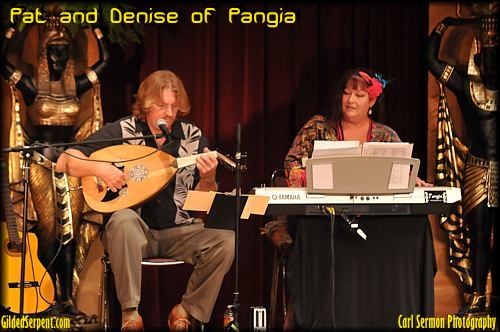

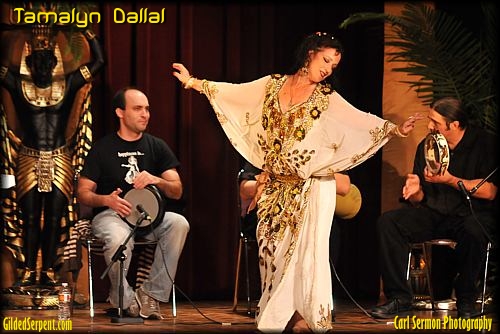


 Sweden because I know that the dancers in countries like Sweden, Finland, and Norway are intense in their search for dance knowledge–a “pure” Oriental dance style; perhaps, some would like to call the style “old style” Egyptian dance, but I call it “Basic Egyptian”. I felt happy when my lovely hostess,
  From the first moment that I arrived in Stockholm until I left, I felt warmly welcomed, relaxed, and it felt so fantastic to be with Zeina and Mohamed Abu Shibeka, that I spend my most memorable time there! My hotel was located next to a big shopping center and “The Globe” (an amazing sport and entertainment hall in the shape of a globe). The most exciting thing I discovered in the morning at the breakfast room: it was connected to the eighth floor of The Globe Sport & Entertainment Hall, and we could peer down into this amazing hall! Therefore, the V.I.P. seating for the evening events in the restaurant and breakfast room of our hotel offered an amazing round view!
 I was certainly surprised that the Saturday night show was held in the most prestigious theater of Sweden – The Royal Ballet Academy of Sweden!(In Sweden, the Oriental dance seems to be more respected by other dance forms.) It was a great feeling to enter this wonderful school with all this lovely photos on the walls, and in all the training studios at every floor, where you could feel the energy of dance in every corner. The stage was professional with great seating for the audience and excellent lightening. What a blessed and gifted feeling to dance on this stage!
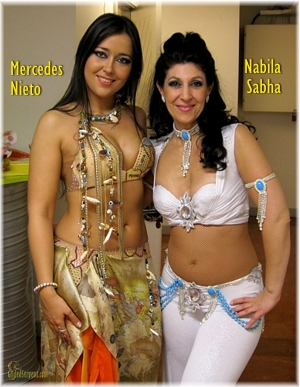 This trip was also exciting for me for another reason: I shared the stage with a lovely colleague who was already familiar to me via Facebook! She was Mercedes Nieto from Hungary. What a lovely dancer and sweet person she is! We spent the most amusing time backstage chatting, laughing, and watching each other’s performance from backstage. Mercedes has her own strong dance style, which is rich and exciting to watch. She is also known for her unique costumes that she designs herself, which I believe sets a new trend in the costume designers’ world.
  From Thursday until Sunday, it was workshop time with a rich program of Bollywood dance by Elia Valli from India, free Oriental dance warm-up classes in the morning (great idea!) and many other workshops as well from Zeina, Mercedes, and me.
  On Monday, I was able to join Zeina’s regular folklore class, and I loved it so much; what a pure Egyptian style! You can see that she was an experienced professional dancer in Cairo; it is the special way of moving and the expressions! I felt that I could have watched Zeina for ages, but we did not have much time left because we went after her class, together with Mohamed, to my promised sightseeing trip to old town of Stockholm.


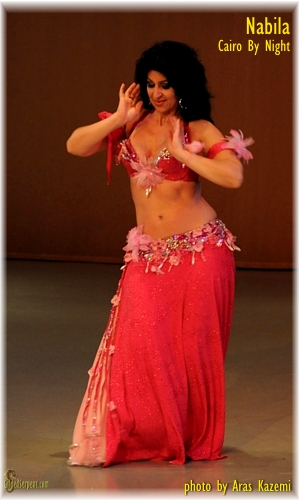



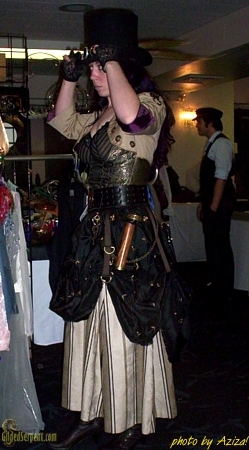
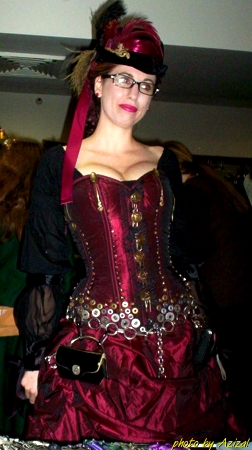
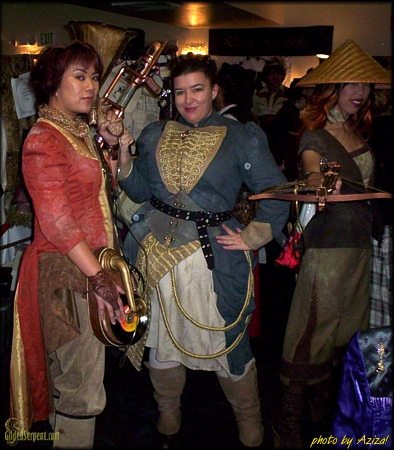
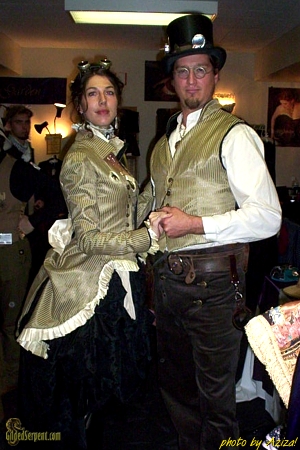
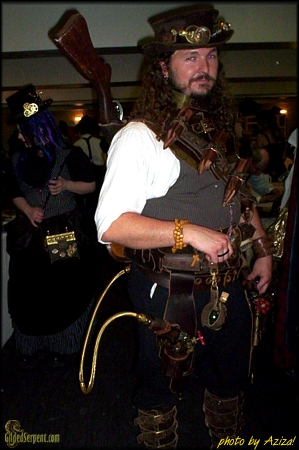
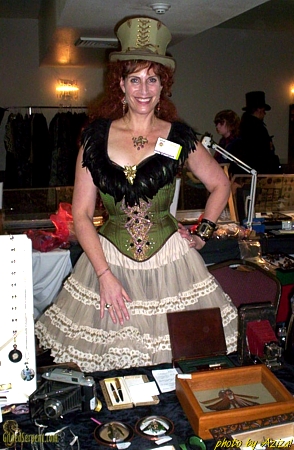
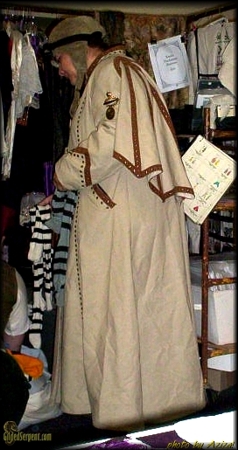
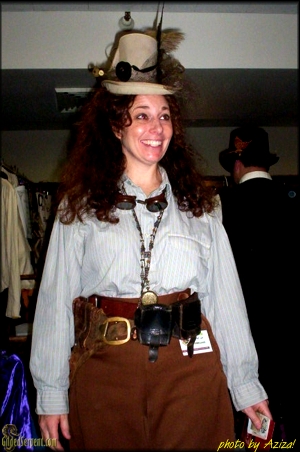

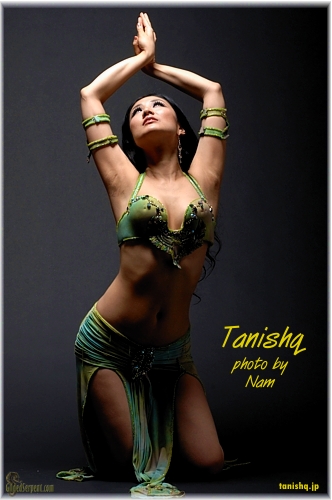 Lineage
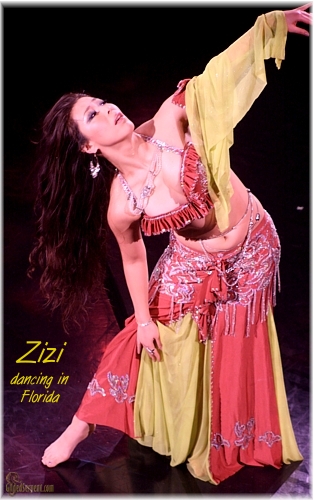 In a move that brought together all the changes and influences over these years and galvanized the local scene, in 2000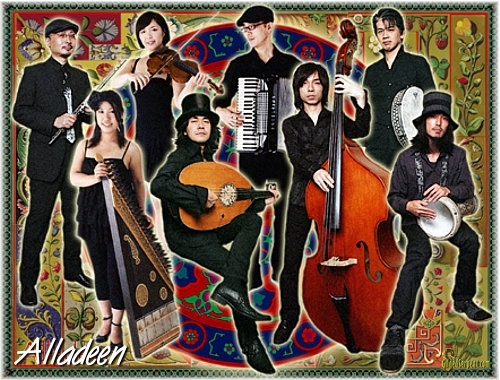




 Walt was also very well known for his "muscle control dance” because he could do total isolations. It was sensationally phenomenal: he could flex and isolate every muscle in his body! Also, Walt Baptiste sometimes worked with snakes. In fact, one of his gyms was like a zoo because of his snakes, parrots, and monkeys. (255 Powell St.)
 Devi Dja appeared in many famous movies, including "The Picture of Dorian Gray” (1945) in which she performed a temple dance. She and Ruth St. Denis were friends and performed together at an ethnic dance festival in the Dorothy Chandler Pavilion in Los Angeles. Magana appeared there also with her troupe, demonstrating the dances of Egypt. Ruth St. Denis was the mother of the Middle Eastern dance in America. She introduced Magana to a Middle Eastern dancer named Camilla who also lived in this artists’ home in Southern California. Magana took some classes with Camilla and got into the feeling of it. This was before there were any nightclubs, any CDs, –anything.
 Sea Cliff on Clement, Above Walgreen’s Drug Store on Clement, across from 450 Sutter Street, Arguello, and Clement (after returning from India). It had a studio upstairs, a shop, boutique, and restaurant downstairs.

 Asena
Asena Sema Yildiz, a stage name which means “star”, was born in Istanbul where she grew up in a Roma (Gypsy) community rich in dance and music. Sema was inspired by and enthralled with dance at a very young age living in the Fatih district, which houses the Sulukule, famous for its entertainment and considered the oldest Roma settlement in the world. In those days, "Sulukule" gypsies were performing public Belly dance shows in their houses to earn a living and attract visitors; even today, these shows can still be seen.




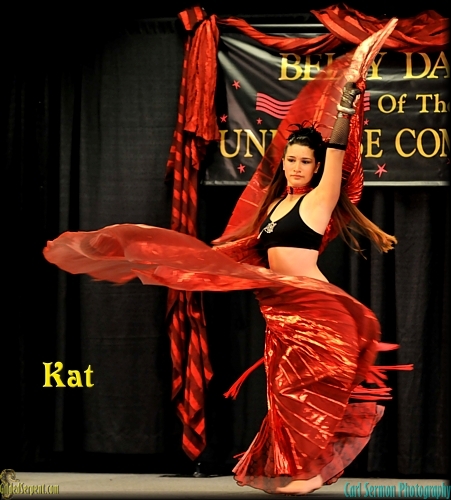


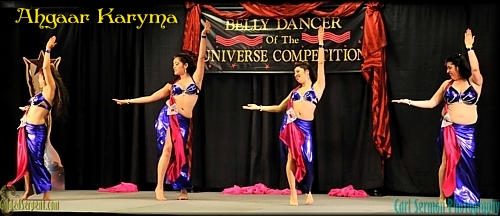
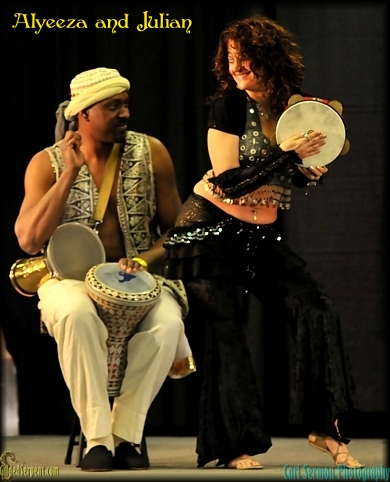
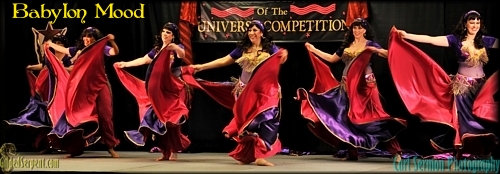

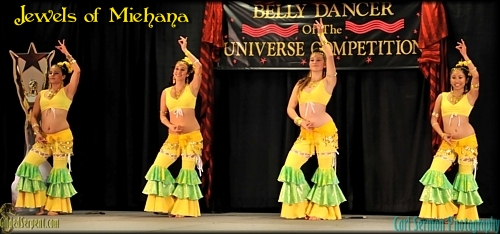

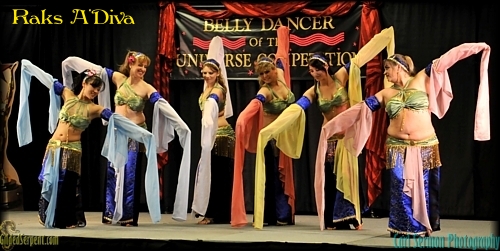
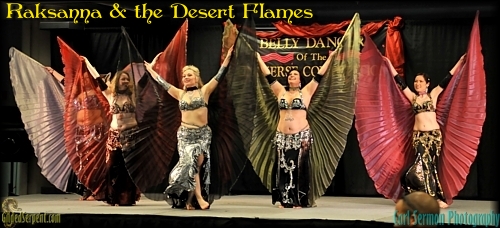
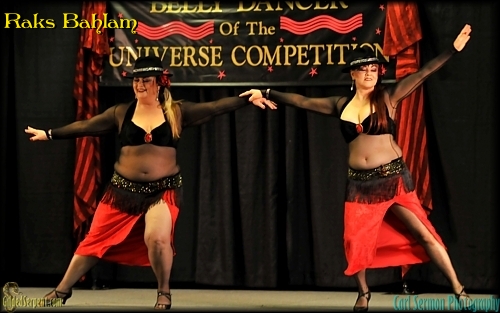
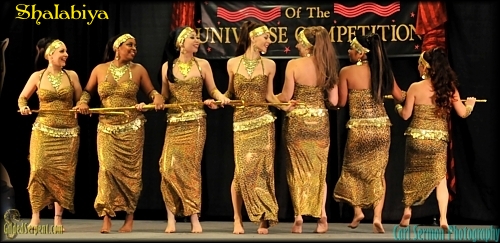


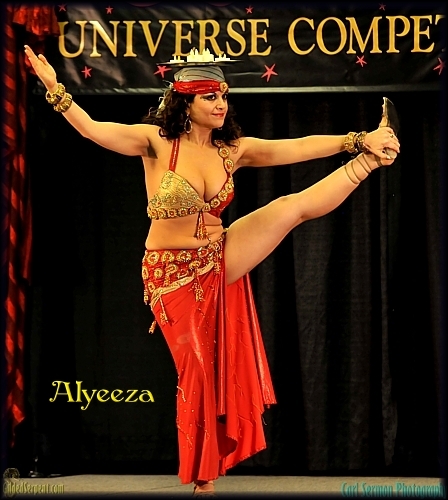
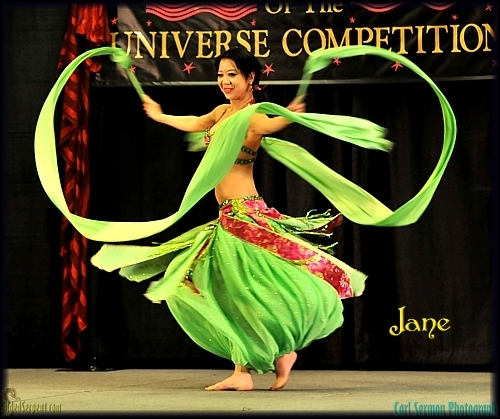




 Hakima of Morocco poses with Raqia


 The only way we got through is that someone had overturned the barriers and pulled them away enough for a car’s width to get in. A lone tank sat in front of Mustafa Mahmoud mosque and the bands of men and boys roamed the streets carrying sticks. This was the first time I felt scared. Most of the shops on the main street had been looted. Some were still burning. Bon fires still smoldered in the middle of the street and the gangs of men looked into the car window and then waved us on. We stopped in front of madam Azza’s house and the men in the lobby came out with caution. When they recognized Azza they helped her inside. We said good-bye and drove on to Dokki. All the businesses in the first of S. Mohi Adeen were gone. Radio shack looked like a hurricane had hit it. We were waved through more civilian guard posts and finally arrived at our house. Interestingly, our villa falls inside the security compound of the Egyptian CIA. We are used to the armed guards downstairs and the fact that anyone who wants to come to our house must be questioned first before a gate is opened to them. The security guards looked haggard, and it took them ages to find someone inside who could vouch for us and open the gate.