Gilded Serpent presents...

Get Over It!

Nature Torso

Sound-Byte Bellydance, Part Two

by Najia Marlyz
posted May 12, 2011
Part 1: here

In a previous article, I said I had come to the sad realization that “Sound-byte Bellydancing”, produced by the requirements of competitions and Bellydance festivals with their seemingly endless lists of dancers over a weekend (or just a long, long evening), have commanded a trend for change in the look of our entire Bellydance format. At least, here in America it has, but I am confident it is not irreversable. 

The apparent need for frenetic, foreshortened dancing has helped accomplish this odd phenomenon of change because of, and in response to, the demands of each event’s rules.

More insidiously, many of the winners of these proliferate contests have gone on to become dance teachers and, naturally, the winners share with their students the secrets of their success, namely, how to dance from the starting-gate at full speed and impress audiences within an abnormally (sometimes ridiculously) short time-span. Mini-sets are not the only cause of frantic dance being jammed into musical arrangements that have, themselves, been cruelly hacked to death, but I suspect them of eating away at the foundation of performance and stage technique for Bellydance that I believe must include communication of the sensual and emotional translation of the contents of musical arrangements.

Originally, we professional Bellydancers had longer sets in productions in which the use and intent of Bellydancing was different than it is now. 

We used to say, “There is no such thing as a ‘star’ in Bellydance” and we said it with resolve and conviction because, if you were dancing with a live Arabic orchestra or band, you were not a star but an integral part of the whole presentation; the music was the “star”.

You, as a Bellydancer, were an entertainer, part of a team, and were expected to portray the mood and intent of the music as well as its lyrics; you considered yourself a skilled accompanying artist who knew what was coming next (even if you had never heard it before) because you could feel or intuit where the music led.  You had stamina, and you had an innate love of the music that made your hearing exceptionally specific; you trained your body to respond to the sounds, themes, and rhythms in ways that expressed the dramatic message within the musical arrangements, each painstakingly created by the musicians/composers.

In another article of 2003 entitled Dancing Inside Out, I explained what I mean by the term “dancing from your inner core”: Beginning movement inside your spine, moving it seamlessly to your exterior and beyond.  Although many dancers responded that it resonated with them and that they understood and agreed with what I had written, it appears to me that some did not.  It would be much easier to show you what I mean if we were face-to-face, but since that is not possible in the written format, I will attempt to explain it in more detail, in hopes that you will try dancing its essence in your studio and begin to use directives of dancing from the core in your next performances.

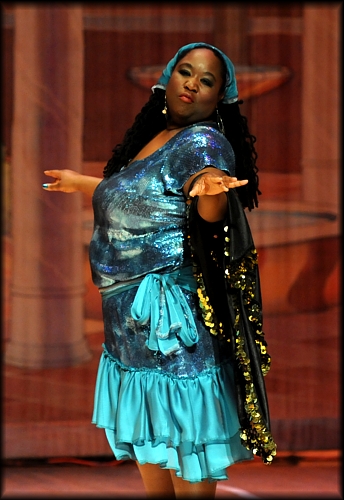
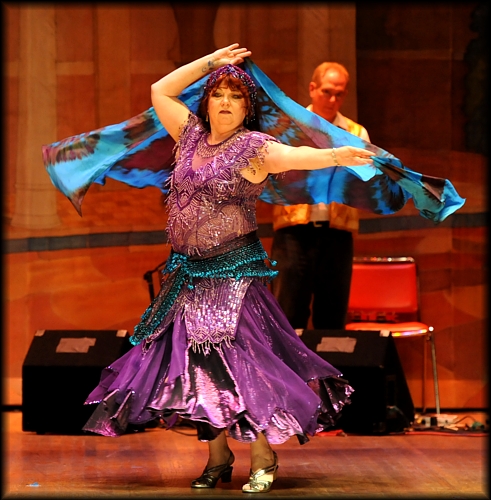
Martha Graham in 1948 mod by GSYour Dance Core

The core of your dance, also called the “seat of the dance” by the pioneer modern creative dancer, Martha Graham, is the place where all dance movements ought to begin and end.  The location of this core is in the solar plexus, beneath your heart, en-caged by your ribs. Understanding this one point can lead to a vast difference in your dance eventually, if you remember to use it. Back in the day of the American hippies, instructors often claimed that the dance was more “laid-back and earthy” than other existing dance forms and that may have been true comparatively. However, instructors told us that the Bellydance was a dance of the hips and that the rhythm of the hips was paramount; in fact, many teachers said that the dance was rightly dedicated predominantly to the hips .  It wasn’t until I saw a live Egyptian Bellydancer perform in San Francisco at the Fairmont Hotel that I realized that the hips were only a small part of the dancer’s expressive tools of artistry.

Locating and Using Your Dance Core

Turn on your favorite slow taxim music, something that evokes emotion. Sit on a chair or on the floor cross-legged and close your eyes. Imagine you have no arms and no legs, but feel compelled to move and dance inside yourself in spite of your missing extremities.  In the section of your body above the waist, framed by your ribs, move with the music to the full extent of your spine’s reach. Pay attention to the prolonged sounds of some notes and the quickness of others. In response to the taxim, you can slide, hit, and shimmy your dance core to match the musical changes in rhythm and melody. You can rise and fall as the music rises and falls. You may find this harder to accomplish than you might imagine because the music will seem to force you to pick and choose between the percussive elements of the rhythms or its melodic content.

We’ve all heard dance teachers say that you have to become the music.  It is a poetic and mostly inspiration admonition, but in reality, you are not now, nor will you ever “be the music”! You can neither “do” nor “be” all of an abstract idea! As a dance artist (fannana), you have to make many decisions about what to interpret and how to accomplish your interpretation. You are a translator or conveyor of the meaning of the music.  Your intent will be to make your audience hear and feel what you can hear in the music, choosing what is most important to your mind and heart in order to give the people in the audience visual clues to new things happening in the music (that they might otherwise miss).  Among these often over-looked musical incidentals are rapid scale runs or cascades at the ends of the musical phrases and sentences, accents, grace notes, dialog-like commentary between instruments, etc. These details are the stuff of dancing, making it greater than simply applying combinations of steps, or following the relentless beat of the rhythms.

Learning to Release Your Movements

“All dance movements should begin and end in your spinal column.”
Bert Balladine, c.1970

Next in your studio practice, you can re-apply your hands and arms, but take care not to dance only with your extremities just because you now have freed them to move once again! (Do not forget that your fingers are hanging out there, decorating your hands; however, a pretty hand confirmation is not enough, while making relentless, even though graceful, hand motions result in distracting, detracting impact.)  Make each movement originate in your core, and let it find an exit in a path along your spine to your shoulder, down your arm to your wrist. Move your wrist, and let the movement slip on out the ends of your fingertips like small tingles, or sometimes, unforgettable bolts of lightening into your audience, letting go of the energy at the last moment possible before the music resumes.  “Letting go” is a release of the energy, much like flicking drops of water off your fingertips. It is subtle and is a completion of the movement; however, don’t forget that you have to return your attention back to your core.  The effect is like a gentle, “Oh!” or sigh. (It is apparent to me that few dancers have a clear sense of when a movement is complete or when, instead, it just seems to trail off into a waffling mess of extraneous movements.) Without being mindful of your core, movements look “empty” or fake.

Layering Smooth & Percussive Movements

There you are with your arm fully extended and you have “reached back inside yourself” both mentally and somewhat physically. Now you can continue to make either a percussive or smooth movements, originating, once again, from your spinal column.

Some dancers are skilled enough to layer a percussive movement over the top of a non-percussive movement (or vice-versa), and it can be quite impressive, providing they don’t make a habit of it, thereby infusing their dance with a strange affectation. It is important not to get carried away with the concept and make your movements overly complex because the invariable result is confusing to watch–like a three ring circus.

releasing the ballLearning to Project and Collect Energy

Create antennae with your extremities; regard your extremities as antennae that transmit and gather energy from you to your audience and vice-versa. Using them with variable strengths and uneven strokes, you can begin to push and pull your energy core out to your audience or even, in some instances, into the past or the future if you have a lot of imagination! This is all part of your energy projection and it operates somewhat like the ocean waves on the shore; it is not all one size, nor all one speed.  Now, if you decide to move forward or backward (any direction) you need to push or pull that movement traveling from your spinal column in your dance core, not from your arms or feet!

At this point, when teaching in my dance studio, I usually ask my dance client to get up from the floor exercise and perform with a taxim for me, being acutely aware of her dance core.  Each taxim should begin with a tension-rich posture or pose; then, the hands and arms begin the dance, setting (or creating) the mood of the sensual movements.  However, it should be clear to you by now that these movements actually begin in the core even though you are making your fingers and hands, the palms and wrists, elbows and shoulders carry the music to the audience. Likewise, you must give and take in life and also in dance.  As much as you perfect your ability to project energy outward to your audiences, dancers must learn to gather energy from their audiences as well.  Simply projecting energy outward is often perceived as the dancer being overly aggressive and at the same time, feels closed and impersonal.

You can expect to feel thwarted in your ability to dance while you are seated, but did you know that in the tradition of the Bellydance there were dancers who actually performed at least part of their dance while seated in a chair?  My dance partner, Bert Balladine, told me about this tradition of chair dancing and showed me some dancers who were dancing while seated on fancy gilt chairs in some old Egyptian black and white films.  I thought I would probably never see such a performance outside of the movies, but in fact, I did see a seated-in-a-chair dance by a dancer named “Boosie” one year in the eighties when I was in Cairo. It was impressive!

A Word about Isolations

Rigid isolations, as they were taught back in the ’60s, would be counter-productive when one is performing to an astounding taxim. Sometimes, teachers take things out of the equation when trying to limit or simplify their instructions to dancers; it is a method for breaking down the movements to ease learning. Back in the sixties and seventies, there was a mistaken impression that all our Bellydance movements always had to be “isolated” from all other parts of the body to be correct technique, when in fact, isolation of the body parts was a teaching mechanism through which dance instructors (usually working with student dancers unfamiliar to classical dance concepts) attempted to show the student how to move specific sets of muscles to obtain an effect or improved quality of movement.

Isolation was not necessarily meant to be the end product; it was a means to clarify movements that were meaningful or useful.

Create “Breath” Within Your Movements

Since you are not a machine, when you take a deep breath, air is sucked into your lungs with force and then slows; it does not have just one speed.  As you dance, your must allow your movements to breathe, too, in order to give it a quality of life.  This means that small parts of the movements may be more forceful and quick (often at the inception of the movement) and slower, prolonged and gentle at the end.  For example, if something in the music says, “Oh!” then you will want to punctuate your movements accordingly to convey that interjection, whether it is an expansion or a contraction.

Observe Movements in Nature

Think about the push or pull of a wave; it is not one speed, and it has an almost visible resistance, as well as an irresistible urge to gather force and move again. Many dancers forget to use resistance in their movements to give a sense of tension and drama; without these important moments of tension, once again, dance movements seem to be devoid of meaning and the dancer appears to be making a poor copy of something that once impressed her in another dancer’s performance. I can’t tell you how many times I have seen dancers wagging their derrières in the air, a la Dina, after Dina recorded that movement on a video! Please excuse me for noticing that what was cute on Dina doesn’t necessarily rest well in the costumed derrière of Salome from Iowa…

An Exercise for Continuity-Imagining A Ball of Energy

Make me (or yourself) “see” an imaginary ball in your two hands; dance with it, and roll it along one arm, across your shoulders to the other arm and back up again.  Next, imagine it lodged inside your torso, sitting in your dance core.  As if you were a brightly lit, finely balanced, and noisy pin-ball machine, give the ball a little shove and let it reverberate off of your heart, lungs, bones, and pelvis, finding its way to your toes. Balance and bounce it lightly there, then gently, kick it away. 

Your imaginary ball will be rolling and hitting, creating movements that are alternately smooth and percussive. When you dance, you need to move as if you had this ball of dance energy working inside your body constantly; each part of you activates in turn, and your dance will look smoother in transitions and sharper in accents, making sense in a way that making random movements (and choosing random locations for them) cannot.  Using randomness in Bellydance causes the performance to become annoying to witness because it is hard to read. When no pattern emerges from repeated movements, the dance seems to work against the patterning (or themes) inherent in the music, and apparently, the dancer can bore even herself! 

Resistance and Believability

Imagine yourself dancing inside of a huge plastic jug full of gel or detergent.  Pull and push your movements through the viscosity with conviction! It is like pretending to be Marcel Marceau, the famous mime, in his imaginary glass box, but in this case, you must have strong imagery and make your audience believe that the air around you is actually thick and resistant with sensuality emanating from your core.  When you push your hand forward, place your strength through the heel of your palm rather than poking the air with your fingertips. When you get to the end of your reach, you can give the ball of energy that rolled up your arm a final shove with the joints of your middle finger. These details in quality of movements are noticeable from a distance and give your movements believability and life.

Najia collects her ball of energyPatterning & Repetition

To give your dance the flavor of its Middle Eastern origins, you can use this simple image: if you were designing your dance in the same way that a carpet artisan might design a beautiful and intricate Middle Eastern carpet, you would chose a limited color pallet. Likewise, while dancing, you need to limit your movements to those that fit, enhance, and communicate the colorful content of the music and dramatic content you have chosen.  When designing a carpet, the artisan would use the chosen colors repeatedly in order to reveal the pattern, and as an artisan of the colorful Bellydance, you must repeat your steps and movements enough times so that your patterning emerges in the same way that a musician uses musical themes to present his ideas using the language of music. Pattern counts, and you cannot create a pattern without using repetition consistently.

A Few Words of Caution

  1. It is sometimes better to fore-go the Western style of two-on-the-right and two-on-the-left mentality or making one-of-these and one-of-those movements; this attempt to balance sides with symmetry does not result necessarily in balance for your dance composition. Bellydance allows for, and thrives on, asymmetry.
  2. Additionally, a Bellydancer who is in charge of her own composition needs to be cautious about displaying the entire contents of her dance repertoire in every single dance. The dance takes time to develop; like a Bach Fugue; it repeats and changes bit-by-bit as it builds to another theme, repeats themes, and finally comes to a point at which its tensions resolve.  If you can hear this happening in the music, it makes sense that your dance movements would follow the musical content, letting content take precedence over your pride in your fascinating prowess as a skilled dancer and the owner of a great, big, heavy bag of fancy dance shtick.
  3. Extemporaneous composition in dance does not mean that it is random in nature. If you are dancing extemporaneously, then you must have an intense focus on your music and a good memory for the movement combinations you have used when the similar musical themes first emerged in the score.
  4. Drama and emotion in dance is not dependent upon miming the lyrics although it helps to know what the (foreign) lyrics are actually saying so that you do not embarrass yourself.  You do not have to stick doggedly to a coherent plot; you need only to create a mood and limit the gestures to those that make sense to you and your audiences. Do not rely on the cloning of coy Egyptian (or other) gestures that may have little or no meaning to your mostly non-Arabic audiences. 
  5. As long as you rely on your own observations and your own interpretations of dramatic musical content, nobody will groan with embarrassment over your cute, little cheer-leader-like kicks and leaps or your too-large-for-the-room incomprehensible gestures, nor will they think that you have momentarily come down with a pain in the head or stomach or that your pet has died because your face has turned to sadness for no apparent reason.

Observe Rests Written into the Music

“Being still and doing nothing are two very different things.”
–Jackie Chan, The Karate Kid, 2010

I was astonished to hear this bit of wisdom in the latest Karate Kid movie! Yet, there it was: written into a film script! It is a law of movement in dance that few dancers appear to value or recognize anymore.  In order to observe it, you must force yourself to come to a complete halt and finish your gesture or line of movement when the music rests (without dropping your dance posture or intent). You cannot allow even your hand to waver! In fact, you need to hold a small amount of tension in your musculature in order to make your dance remain alive when it is at rest, and you are remaining still. Therefore, wax on, wax off, Grasshopper! Practice stopping, without allowing death of movement to overcome your energy. When dancers stop moving, the energy should remain alive.

Recognize The End

“One of the most difficult things to determine is when a piece of art is finished.”
–Felix Ruvolo, UC Berkeley Art Professor, c.1959

Just because Oum Kalthoum sang for two or three hours and her Arabic audiences loved her for it, does not mean that a dancer should plan the neverending set that allows her to remain on stage, dancing until her repertoire bag is empty of all her favorite moves.  Be a benevolent queen or goddess of dance and leave while you are still welcome! Even the most fabulous dance has to end; so, if you continue dancing for ten or fifteen minutes more, doing “just one more song”, a second drum solo, or just another cruise around of the stage, muddies the water rather than enhancing your dance. There is such a thing as saturation in a dance presentation.

“Once you get enough of somethin’, kain’t nobody put no more on you, no matter how good it is!”

–Prince, Berkeley, 1956

It is possible to overstay your welcome and ruin your presentation. Force yourself to finish and leave the stage before your audience overdoses on the drug of your charisma! Consider yourself warned that ending is hard to do when applause and audible gasps that the audience gives you are so addictive.

Najia Marlyz

use the comment box

Have a comment? Use or comment section at the bottom of this page or Send us a letter!
Check the "Letters to the Editor" for other possible viewpoints!

Ready for more?

  • Improvisation: Method Behind the Madness
    One of the biggest mistakes we western Bellydancers have made is presuming that the dancing to which Arabs refer as the “Eastern Dance” is a theatrical dance that ought to be choreographed as if it were a ballet, or that its steps and movements are traditional like those of the Greek Hasapiko, an Arabic Depke, or a Hawaiian Hula.
  • The Taxim from a Dancer’s Perspective:Tarab or Tyranny?
    Sometimes, these improvisations can be quite elaborate. The effect is somewhat like modern jazz and stays within the framework of the traditional maqam or maqamat.
  • Back to Basics
    Belly Dance is most meaningful when we define it as a communication of mutually held emotional response and truths between people
  • Dancing Inside Out
  • Raks Assaya Instruction at Najia’s Studio
    Demonstrated by Rawan El-Mouzayen (Arab-American, age 3)
  • The “It Factor”
    Between the two men, my dance teacher and my artistic lover, how could I not learn to bring the movements from the core heart) to the outside?
  • Painting Dance -Fabulous!
    I’d like dancers to understand how the ideas of color, texture, tone, shading, etc. can also apply to the art of speaking through movement.
  • Music to My Ears, How I Learned to Hear Like a Dancer
    Musical interpretation is the single, most important skill that can elevate the Oriental dancer from the chorus line to the spotlight.
  • Dance for Dancers
    Art created for other artists will evolve differently from art created for the masses.
  • 4-7-11 Our Changing Dance World, a Response to Leila’s "Dance for Dancers" by Terry Del Giorno
    Of course, we learn musicality and so forth, but where dance classes in some places are an hour long, teaching long choreography is not sustainable to an instructor.
  • 4-6-11 Video Interview with Shadi of Diamond Pyramid on the Community Kaleidoscope
    Gilded Serpent interviews Shadi of Diamond Pyramid regarding the business scene since the Egyptian Revolution less than a month before this interview. This interview was conducted at the Belly Dancer of the Universe Competition in Long Beach, California on February 20, 2011
  • 4-5-11 Rakkasah West Fest 2011, Friday Evening, Main Stage Only, photos by Carl Sermon
    Aisha, Arabian Jewels, Azura, Dancers of Denile, Ariellah and Deshreet, Tatseena and Dreams of Cleopatra, Elnora, Ghanima, Goddess Force, Halima, Diana, Inami, Khalilah, Latifa, Kiyoko, Leila Haddad, Shaida, Shadya, Tanya, Zia!
  • 3-31-11 On the Road, Queen of Denial, Chapter 4, by Rebaba
    That night, I would find out that my arrival and subsequent feelings of having “made it to the top” couldn’t have been farther from the truth!
  • 3-30-11 Joweh’s “Call to Dance” in Guatemala, Part 2 of Dream Trip to Guatemala by Chloe
    Waiting in the wings of the nearly completely darkened stage, holding fire-colored fan-veils aloft, listening to the first strains of Egyptian orchestral music, I couldn’t help thinking that this experience was both familiar and foreign, in the literal and figurative sense.
  • 3-29-11 The Magic of "The Grapleaf", 1976-1997 by Sausan
    Back in the early ‘80s when I was performing at the Bagdad Cabaret on Broadway, a customer strolled into the Northbeach nightclub and told me about a little known restaurant
  • 3-25-11 Is "Cabaret" a Dirty Word? Using the Terms Cabaret vs. Night Club by Leyla Lanty
    So, is “cabaret” a dirty word? It depends on whose definition you want to use! In Arabic, the name “cabaret” is interpreted differently from what it is in English, leading to the confusion about nightclubs and cabarets. Here in the U.S., we think of a cabaret as a synonym for nightclub.
 

Gilded Serpent presents...

Moroccan Dreams

Snake Charmer in Morocco

My New Festival in Marrakesh

by Simona Guzman
posted May 11, 2011

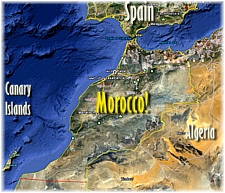
Map of MoroccoLet’s close our eyes and imagine together that we are entering a fairy tale that covers the foothills of the snowy Atlas Mountains and of the red city Marrakesh, with a celebration of colors in which merchants, storytellers, wizards, jugglers, dancers, drummers, snake trainers, and actors join. It is surrounded by thick smoke from the dozens of food and grill stands in a square that is lit with hundreds of small lights. It is here that we come in with dance steps, and we experience, along with Simona, the Moroccan experience…
This is an event in which fantasy and reality meet, a celebration of the “Arabian Nights”; we, the festival participants, will be the main actors and join this colorful fantasy.

Why Morocco? There is something about Morocco that excites the imagination and activates the senses. It is Maroc (Arabic word meaning Morocco), and more. Morocco is a country of contrasts where everything, both fantasy and reality, blends together in a spectacular way. Bordered by the Mediterranean Sea in the north, the Atlantic Ocean in the west, Algeria in the east, and the Western Sahara in the south, it is a wild landscape of the snow-capped Atlas Mountains that blends in with the desert.

Ancient Berber tribes and Jews began to populate the area 2,500 years ago! Later, Phoenicians, Romans, and Byzantines populated the area.  In the 7th century the Arabs conquerors arrived to Morocco, bringing with them the religion of Islam along with the Spanish and French.

There is a mixture of faces in one region. There are so many different cultures that live in harmony –in the same place– that it is difficult to remain indifferent.

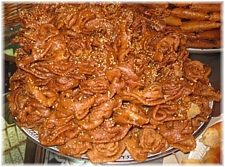
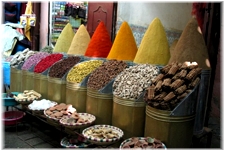
FoodMoroccan cuisine ranges from spicy to sweet, cold to hot, and dry to juicy.  There are artistic motifs representing the East and the West.
Marrakesh is the beating heart of Morocco!

Marrakesh, the historical and cultural capital of Morocco, is a city bustling with life from six in the morning until four in the morning of the next day!

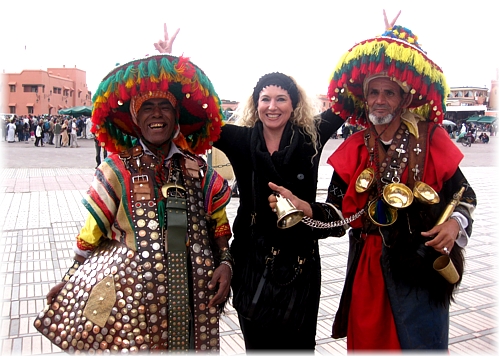
Marrakesh (also known as the “red city") is named for the characteristic red-earth color of its buildings; it has been defined by UNESCO as a World Heritage Site since 1985. The city attracts many tourists every year, and it has been nick-named the "Paris of Morocco", thanks to its many architectural gems. The Old City is known for its alleyways and colorful markets. (For example: Djemaa El Fna Square where life is a carnival that opens early in the morning with the arrival of the fruit dealers and sellers of water, vegetables, and amulets; then the square turns to a market.) Slowly, the carnival develops: women paint on the body with henna, and snake trainers do their magic–all to the sounds of the drummers in the bands. sign

During the evening, a dramatic change takes place again, but after midnight? The residents of Marrakesh arrive to watch exorcism ceremonies!

SpiceIn Marrakesh, time seems to stand still. Yes, Morocco (in general) and Marrakesh (in particular) do stimulate the senses. In the “Mediterranean Delight Festival”, we will celebrate and capture time standing still, as well as the senses and the vivid colors, odors, flavors, sights, and music.
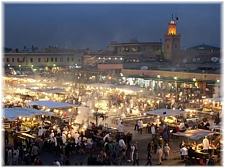
 
http://www.youtube.com/watch?v=uMtxpHILgms

What is the connection between Morocco and me?  I grew up on my father’s exotic stories about Morocco (his homeland), and I absorbed the heady scents of the Moroccan dishes. My imagination saw the country as it was told to me, and I experienced through my senses.

Maroc is a place that is a stage on which:

  1. reality is one big decor,
  2. dancing and folklore become one of music, playing day and night,
  3. the palate smiles to the appearance of foods and the nose expands from the spice odors of endless energy,
  4. the scenery constantly changes,
  5. people surround one with great love,
  6. the word “sleep” is redundant, because of the entertainment from morning to morning,  in its own way, morning charges the batteries.

squareAll of you, my friends, and you, the readers, are invited to join my fantasy that is turning to reality–a Bellydance festival–a Mediterranean delights festival! So, I hope you will come and taste all of it.
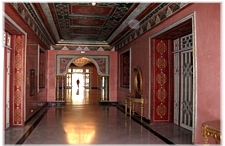
resortAbout the festival I produce and my passion behind it:
It will be a once-in-a-lifetime experience! This unique festival combines the colors and scents of Marrakesh, Morocco, with its Bellydance aromas: new with old, aromatic blend of colors, sounds, odors, and tastes. The festival lasts six days at the “Ryad Mogador Agdal”, a Moroccan style hotel that represents the place I dreamed about: where we may experience its ethnic culture and the place in which the décor is Moroccan in all its glory. 

Festival attendees can be introduced to the diverse local folklore as well as participate in Bellydance workshops (held by the best teachers from around the world). A contest with amazing prizes will be held. One can dance to the sound of the live bands at parties until dawn, warm up with the heat and love of the local people, taste the local cuisine at ethnic restaurants, and take a tour of this dazzling city. You can open your mind to people from different places and enjoy an international experience. All can enter this fairytale world through the portal of “The Arabian Nights Festival”, an experience that will shake the body and mind.


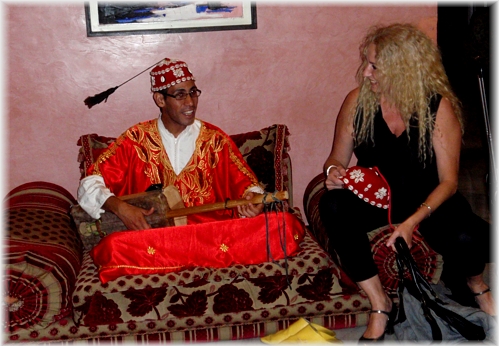
Ganwa musician in the hotel


use the comment box

Have a comment? Use or comment section at the bottom of this page or Send us a letter!
Check the "Letters to the Editor" for other possible viewpoints!

Ready for more?

  • Images of Morocco
    pictures from a trip in January ’02…
  • Curly Black Hair, Eyes Like Black Pearls
    At a certain point a fake horse was brought out…
  • Sheikka Rimitti, Queen of the Rai
    Unlike most of the music that we are familiar with from the Middle East that are usually unrequited love songs or patriotic love of country songs, the rai songs are about drinking, suicide, suffering, colonialism, poverty, exile, homesickness, corruption and the passion and pain of actual love making.
  • Traveling to Tizi Ouzou
    When I was in high school, I was fascinated by some of the names I read about when studying world geography.
  • Traveling with the Touareg
    This was my 5th trip to Algeria since 2000 and I have been amazed at the rapid economic development. The government is working very hard to make Algeria a very popular tourist destination once again.
  • Nesma, Dancer of Passion
    To manage the orchestra is quite complicated. They are all men and the dancer must always keep her distance from them. You have to use the service of a manager who is the intermediary between you and the other persons involved in the business. It is very important to have a good manager, a good professional and good person as well. And it is not so easy to find, I can tell you.
  • Munique Neith’s Studio: What You are Missing if You aren’t in Barcelona!
    What inspired me to write this article was not only the unbelievable setup that is presented in Barcelona, but the fact that I have never truly felt the warmth and compassion from any situation in the dance world that I have from Munique, her husband Albert and their studio. They were warm, receptive, and incredibly  gracious
  • Solstice Festival in Catalunia, Spain
    For the third year in a row, Maria Cresswell produced a dance and music festival honoring the Summer Soltice. This year’s three day event took place high up in the Catalunian Pyrenees, in a rustic hosted fed by fresh springs and bordered by a rushing river.
  • Morgana’s Animal Magnetism, Interview with Morgana of Madrid
    After seeing Morgana’s Serpent Dance, where she embodies the personality of the serpent, I was hooked. Any snake lovers or snake dancers will have a special appreciation for this piece.
  • The Dancers of the Infidel Emperor
    Did you know that Belly Dancers played a significant role in the life and destiny of a great European monarch?
  • Ana Ra’asa Showcase: Egyptian Bellydance Past & Present
    My purpose for doing this show was to bring Bellydance to the stage. We have such amazing talent in the Bay Area, and I feel that those dancers deserved a stage to showcase such amazing talent.
  • Raqs Royalty Lights Up Atlanta! Black Orchid Danse, 2010
    She turned this modern Maghreb raqs raissa into a belly dance fusion fanatic.
  • Rakkasah West Festival 2011, Saturday, Page 2" J-Z
    This group of photos is from Saturday, March 12, 2011. Bands in the background include: Vince Delgado and Coralee, The Mediterranean Raqs Band, Pangia, and Al’Azifoon
  • Paula, 2011 Champion of Champions, Belly Dancer of the Universe Competition
    I do not know exactly what will happen, but I know it’s a beautiful start to present a Dominican dancer to the dance world. One very important thing also is that this award means to me that dreams do come true. I always wanted to be a dancer, and I could never really make it work because my country does not considered it a true profession.
  • You Say Zills, I say Sagat, So What’s the Difference?
    Nevertheless, many dancers outside the Middle East still think the only difference between zills and sagat is semantics – “two words for the same instrument.” If you’ve played both – correctly – I doubt you would agree.
  • Sahra gives us a reports on her friends in Cairo since the Jan 25 revolution.
    Sahra Kent with the help of Roxanne Shelby reports on what she has heard from her friends in Cairo since the protests began less than a month before this interview on February 20, 2011. It was conducted at the Belly Dancer of the Universe Competition in Long Beach, California
 

Gilded Serpent presents...

Ana Ra’asa Showcase

Ahava does Fifi

Egyptian Bellydance Past & Present

by Ahava

photos by Carl and MaShuqa
posted May 10, 2011

In the Fall of 2009, I came up with the idea to produce and direct my very first show. After having lunch with my friend, Samar, I walked away from our meeting, feeling as if a seed had been planted.

Throughout the years, I’ve been extremely fortunate and honored to have been featured in various stage productions and DVD projects. After doing shows for a while, I started to pick up a few things, noticing all of the hard work that goes into putting a professional show together. I have always known that I wanted to produce a show myself but felt that I didn’t have enough experience to do so, and I also felt that perhaps I was too young and would not be taken seriously. Nevertheless, after reassurance from close friends and family, I took the first steps towards my dream.

Inspiration

I’ve always admired Saida of Argentina because she continuously produces great shows every year.  Her shows feature the students and instructors from her dance academy, and they are always in a theatre with professional lighting and sound. Every year, there’s a different theme. I wanted to bring something similar to the Bay Area.

My purpose for doing this show was to bring Bellydance to the stage.

We have such amazing talent in the Bay Area, and I feel that those dancers deserved a stage to showcase such amazing talent.

Dancers

There was an amazing cast for the Ana Ra’asa Showcase. This year’s theme was “A Tribute to Egyptian Dancers of the Past and Present.” I had given the cast a list of dancers ranging from Naima Akef and Zizi Moustapha to Dandesh and Randa Kamel. Each cast member was to choose one dancer to emulate. They were required to study costuming, hair, make up, mannerisms and of course, dancing.

After everyone chose her dancer, I created the time-line:

Challenges

My main challenge was finding the venue. I wanted something that was suitable, but affordable at the same time. What I realized along the way was: if you are hoping to book in a theater, you either have to book more than one show (for example, a show on Saturday and Sunday). If you’re planning to book your show on a Saturday evening, good luck! Those slots are taken very quickly! If none of the above, then you will find that the venue charges a ridiculously inordinate sum of money. Because all of this money was coming out of my humble pocket, I had to choose wisely.

Finally, I found La Pena Cultural Center in Berkeley, CA. It had a stage, a dressing room, professional lighting and sound; they handled the ticket sales, and advertised the show on their website and calendar, which gets dispersed throughout the Bay Area. On top of all of that, they were affordable.

Promotion

Initially my show was supposed to be in January, but because of scheduling differences, it had to be pushed forward to the first Sunday of February.  Considering the fact that I am not a sports fan, I was totally oblivious to the fact that that particular date, February 6th, in fact, was Super bowl Sunday! However, now it was too late to change the date.

Contracts had already been signed. So we crossed out fingers and hoped that people could break away from their television sets that evening to see our show.

In the Summer of 2010, I had the entire cast pose in a photo shoot for the advertisement for the show. We found a great photographer, Topher Adam, who had never photographed Bellydancers, but was excited about the theme of our show. It was important to me that we all worked with the same photographer for the promotion of the show. Additionally, thanks to Tabitha’s husband, we got a great design for our postcards.

Outcome

The day of the show, I found myself calm and collected. Finally, after a year of preparation, the day had finally come! In the end, our showcase was a complete success. The audience attendance far exceeded my expectations, and the show received great reviews from those who attended.

Strangely enough, a few days before the show, the uprising protests in Cairo took place. It was a coincidence that the same time Egyptian people were fighting for democracy and freedom; half-way across the world, six American women were praising six Egyptian women who had made a lasting impression in their lives.  Since the show was about Egyptian dance, it was only appropriate that we acknowledged the situation that was happening in the Middle East.

I was completely elated, even six days after the show was over. We had successfully put on a quality show, bringing the dance to the stage, where it belongs!

Brazilian Sharki
Zahara does Brazilian Sharqi

Drum Solo Ahava Style

Author Ahava does a drum solo

Jhermanie
Jhermanie does Lubna

Lebanese Style
Samar does Lebanese style

Midnightin Cairo
Jhermainie performs "Midnight in Cairo"

Modern Love
Tabitha performs "Modern Love"

Oriental
Salena performs Oriental

Salena does Nagwa Fouad

Samar does Samia Gamal

Tabitha does Soheir Zaki

Zahara does Taheia Cariocca
Zahara does Taheia Carioca


use the comment box

Have a comment? Use or comment section at the bottom of this page or Send us a letter!
Check the "Letters to the Editor" for other possible viewpoints!

Ready for more?

  • My Moment with Nagwa
    While dancing I kept eye contact with the judges and guests of honor. I still remember their mannerisms and what I perceived to be their glares. Randa and Dr. Mo were conversing and smiling contently, Faten and Zahra were clapping. Also, there sat Nagwa Fouad, “Queen of Cairo!”
  • Raqs Royalty Lights Up Atlanta! Black Orchid Danse, 2010
    She turned this modern Maghreb raqs raissa into a belly dance fusion fanatic.
  • Rakkasah West Festival 2011, Saturday, Page 2" J-Z
    This group of photos is from Saturday, March 12, 2011. Bands in the background include: Vince Delgado and Coralee, The Mediterranean Raqs Band, Pangia, and Al’Azifoon
  • Paula, 2011 Champion of Champions, Belly Dancer of the Universe Competition
    I do not know exactly what will happen, but I know it’s a beautiful start to present a Dominican dancer to the dance world. One very important thing also is that this award means to me that dreams do come true. I always wanted to be a dancer, and I could never really make it work because my country does not considered it a true profession.
  • You Say Zills, I say Sagat, So What’s the Difference?
    Nevertheless, many dancers outside the Middle East still think the only difference between zills and sagat is semantics – “two words for the same instrument.” If you’ve played both – correctly – I doubt you would agree.
  • Sahra gives us a reports on her friends in Cairo since the Jan 25 revolution.
    Sahra Kent with the help of Roxanne Shelby reports on what she has heard from her friends in Cairo since the protests began less than a month before this interview on February 20, 2011. It was conducted at the Belly Dancer of the Universe Competition in Long Beach, California
  • Hip Hip Hooray for Bellydance Day
    Bellydance Day was created by Shabnam to inspire, educate and celebrate the beauty of this often misunderstood dance form. The dances presented on August 21, 2010 included Saiidi, Modern Oriental, Egyptian to Fusion.
  • Fashion Trend Report 2011 What’s New This Year at Rakkasah?
    What I noticed, first and foremost, was not the costuming, but rather, a change in the sellers themselves. The seller demographic has radically altered, creating a new vendor landscape. Without a doubt, this is a response to the on-going sluggish economy and the need for companies to reduce expenses. The reduction in costumes and products coming out of Egypt also affected the merchandise. Many small factories had a gap in production, and shipping has become even more problematic.
 

Gilded Serpent presents...

Raqs Royalty Lights Up Atlanta!

Tito and Karim

Black Orchid Danse, May 2010

by Andye
Photography by Jaki Hawthorn
posted May 4, 2011

Black Orchid Danse (BOD) hit the ground running back in May of 2009 with a stellar line up that won the hearts of dancers nationwide. Rave reviews and fan chatter followed for four months and is still popping up on various social media outlets such as Facebook and Yahoo groups. BOD 2010 brought in twice the number of raqs stars and raqs royalty including world renowned Kaeshi Chai of BellyQueen, David of Scandinavia and Egyptians Karim Nagi and Tito Seif to name a few. Global participants flooded into this extraordinary raqs world which has always been housed in some of Atlanta’s finest hot spots such as Ibiza (an Andalucian bistro and club) and the Sheraton Gateway Hotel.

Black Orchid Danse workshops are structured to provide diversity in topics and to challenge dancers of all levels “something for everyone”! You really have a smorgasbord of material to pick from and it’s strategically scheduled so that you’re able to take from everyone within the 4-5 glorious days. The workshops were held in large ballrooms that, despite their size, provide an intimate setting. One feels a part of a larger community as opposed to being a random guest. I think that’s what brings people back year after year – this sense of family and kindness. Strangers become your first cousins, brothers and sisters. You may not have known a soul when you first walked in the door but before day one is over you’ve already snacked, befriended each other on Facebook, coffee-breaked and danced side by side with someone based miles away from your home.

In 2010 we began our night at Ibiza. Tito Seif, Frank Farinaro and Amalia Maya were hailed with zaghreets as they walked in the door while stars that had arrived previously were already getting their taste of the very warm embrace of Atlanta’s Raqs community. Dinner was barely finished before the Moroccan rai and Maghreb dances began featuring members of Atlanta’s African Asian Exchange, local bellydance community and international community.


Click photo for enlargement

Back Row: 1-Azraa,2-Alima,3-Andye, 4-Amanda, 5-Tamar, 6-Dahne,7-Kalinka,8-Naima Sultan,9-Galina, 10-Tito,11-Lauren, 12-Diana,
13-Alyssa, 14-Cheryll, 15-Alexia, 16-Patrice, 17-Lauren, 18-Kim, 19-Samira, 20-Gail, 21-Belly Bolly, 22-Andrus, 23-Laura, 24-Naomi
Front Row: 1-Ardyce, 2-Amalia Maya, 3-Mary, 4-Ahava, 5-David, 6-Amira, 7-Lacey, 8-Karim, 9-Maite,

The next 4 days were filled with authentic raqs that you usually have to travel abroad to see. This was mixed with traditional, pop, modern material and well thought out fusion. Tito Seif taught several classes including a Saidi session (complete with tahtib). David did what felt like sha’abi and nearly shook us all into a fantastic frenzy. Watching him execute moves is beyond exciting. He’s a real crowd pleaser! Amalia Maya’s courses were some of the best fusion I’ve ever seen. She broke down moves extremely complicated moves that I’d only seen executed well by pioneers such a Rachel Brice and Zoe Jakes. Amalia made it look and feel flawless.

She turned this modern Maghreb raqs raissa into a belly dance fusion fanatic.

BOD keeps them coming one right after another for the entire event. One of my most memorable was with Kaeshi Chai. I caught up with her in the hallway with my one question that led her to sit down with me. She pulled out her laptop and showed a great deal of the projects she’s been working on. Soon a crowd gathered and she welcomed them all explaining a myriad of things from her PURE project. Of course my new friends and I began sniffing and snotting into tissues as we watched segments from her shows. It was such a warm raqs moment. This is something I feel BOD encourages and expects.

My main reason for attending conferences are the lectures and talks. David’s class on expression and presentation had a lot of cultural tips and advice, music history and how to respond to Qawali vs Bhangra.

I won’t give away all that we learned in the workshops and classes because I think those moments supercede into the spiritual; words won’t do the moments justice. I can say that the amount of material given is huge yet manageable. Many brought their notebooks or had others take notes for them while they danced. We worked cooperatively to make sure each person soaked up as much as they could.  All the instructors gave out very complete and concise material that has proved more than useful and has been used and shared in local shows and cultural projects on the academic level and beyond.

Black Orchid’s gala shows feel more like the best of Broadway. It’s a spectacular array of top talent from around the world. The lineup is clearly carefully picked because each show has a variety of dance styles from Khaleegi, classic Orientale, bollywood, raqs fusion, Indian classical along with South Asian modern pop and, of course, the “Tito Show”! Which is a show within show, and oh what a show it is! Tito Seif is a true entertainer! I’ve seen him in Toronto and have tons of footage from his global travels but never have I seen do what he did that night. He spoiled that crowd and his adoring fans with one up close and personal experience after the other. The whole show was surreal. One lady at my table shook her head in amazement the whole time.

To this day that performance has been hailed as the best raqs sharqi show many have ever seen. I concur, as much as I adored him in Toronto he was absolutely astonishing in Atlanta.

No other conference compares. I’ve been to hundreds of shows in the last 10 years and a ton of other international ceremonies and events before that …just like most who grow up in global communities. So, I cherish BOD as much as I do my cousins’ weddings, Toronto’s bellydance conference and eid. BOD has left me smitten and forever changed! And everyone I speak with says the same! Mabrook wa Shukran jazillan to Cheryll Bolden who is the mastermind behind it all! Here’s to another stellar year!

A mixed sampling of photos from the shows each night.

Andrus

Asha of Georgia

Aziza Nawal

Belly Bolly of Florida

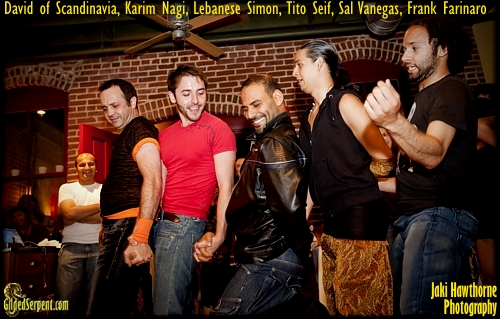
Daivd, Karim, Simon, Tito, Sal, Frank

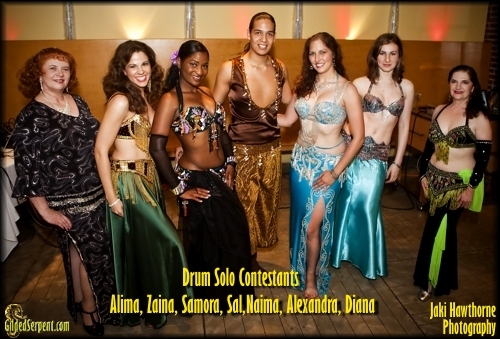
Drum Solo Contestants

Daughters of the Nile of Florida

Karim Kaeshi

Maite

Simon Karim Kaeshi

A debke line broke out featuring none other than Tito, Karim, Lebanese Simon, drum solo competition winner Sal Vargas along with a ton of wailing zaghareets from the rest of our international family.
 

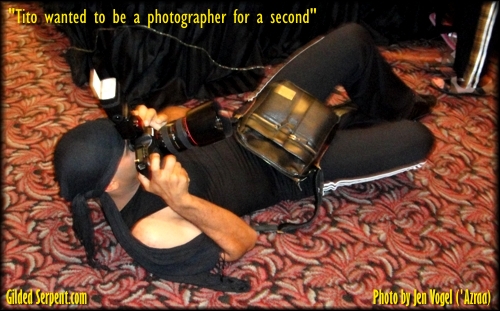
Tito performs


Tito

Join us for the 2011 events: Tito, Hayat El Helwa, Sharon Kihara, Nath Keo, and much more,

May 26-30, 2011, Peachtree City, GA

use the comment box

Have a comment? Use or comment section at the bottom of this page or Send us a letter!
Check the "Letters to the Editor" for other possible viewpoints!

Ready for more?

  • 7-17-08 Saturday Gala Peformance Part 2 of the International Bellydance Conference of Canada video and photo report by GS staff
    Performers in Act 2 : Aisha Ali of Southern California, Bozenka of Florida, Amy Sigil & Kari Vanderzwaag of Unmata from Sacramento, California, Tito Seif of Egypt, Aida Nour of Egypt
  • 6-17-08 Tito Seif: The Moment of Eternal Shimmy by Stavros Stavrou Karayanni photos by Samira and Masouma, videos by Lynette
    Tito is now an international phenomenon. And how wonderful that a man from Egypt has taken to the West’s belly dance stages establishing himself as one of the greatest belly dancers and showmen today. Such development flies in the face
    of those American belly dance instructors, students, and performers who have long considered this art defunct in Egypt and dependent upon their kind support and cultivation.
  • 4-23-08 to ? From Toronto, Ontario,Canada The International Bellydance Conference of Canada
    Video reports by Gilded Serpent Staff Reports are presented in video format inbedded all on the same page.
    4-23-08 Day 1 Wednesday Evening Show-remix from last year’s stars
    -Sofia, Serena, Rhythm Of The Nile, Anita of Dance Poi, pregnant Mayada, Shades Of Araby- Valizan and Sofia, Rayna, Rahma, troupe in shinny black straight skirts? Masouma Rose getting Mayyadah and Amir’s reaction to the show. Clip intro reporting by Shira.
    4-25-08 Day 2 Introduced by Ferda Bayazit and
    4-26-08 Day 2 Thursday Evening Show
    -Roula Said’s Roulettes M2, Jaida of New York, Ozgen of Turkey and the UK, Ivanka of Panama, The amazing Asha of Atlanta and the troupe, Goddess Bellydance of Korea.
    4-29-08 Day 3 Friday Daytime Activities
    -Reporting today are Roula Said, Mark Balahadia, and Ranya Renee. Video glimpses included: Tito, Bozenka, Ferda, Lynette Harper, Ranya Renee, Mark Balahadia, Roula Said, Stavros, The "Man Panel," plus more
    4-29-08 Day 3 Friday Evening Show
    This video clip is a collage from the Main Stage show on Friday night. Performers included: Banat el Sharq, Ishra (we missed her- sorry!), Suha, Mark Balahadia, Nouvel Expose’, Mariyah, Dominique, edVenture Arts, Dr Sawa, Danielle, Maqamaikaze, Jim Boz, Leah & Lynette Harper, Sefirah, and Arabian Allspice
    4-30-08 Day 4 Saturday Daytime Activities
    -Reporting today are Andrea Deagon and Rahma Haddad Glimpses include: Bozenka’s class, Aida Nour’s class, Amy Sigil’s Class, Panel on Teaching Standards, and Aisha Ali’s lecture
  • 10-18-10 Karim Naji, Interview with an Egyptian Dance Master by Nicole Beckerman
    I think that Egyptian and Arabic culture as a whole entity should never be extracted from this dance. I do not believe in de-ethnicizing it, and I do not believe the culture is optional! Nobody ever allowed Latino culture to become an optional part of Salsa or Samba. Additionally, Indian culture is inextricable from Bharatnatyam and Bhangra. I believe that Raqs Sharqi, a.k.a. “Belly dance” is available to anyone from any culture. I am not xenophobic, nor an exclusivist. I am thrilled to see people all over the world enjoy and promote this art form. However, I will argue for the importance of the Arab connection until the day I die.
  • 1-16-10 The Muwashahat with Mohamed Shahin and Karim Nagi Workshop review by Thalia
    The Muwashahat genre is inspired by tenth century court poetry of Arab-Andalusia, developed when Arab intellectual and artistic culture flourished in Spain. The rhythms are complex.
  • 1-6-09 2008 Drum, Dance, & Music Festival Raqs Taiwan with Karim Nagi! by
    Lisa Chen

    She wishes to find the bridge between dancers and musicians, performers and audiences while still keeping its cultural roots alive. DDM is the platform for dancers and musicians working together and exchanging their professional experiences.
  • Training Aids or Trainer’s Ads? 3 Books Reviewed
    The E.D.A. Handbook for Middle Eastern Dance by David of Scandinavia, Tribal Vision by Paulette Rees-Denis, Belly Dance for the Versatile Dancer V. 1: Foundations by Zanbaka
  • Rakkasah West Festival 2011, Saturday, Page 2" J-Z
    This group of photos is from Saturday, March 12, 2011. Bands in the background include: Vince Delgado and Coralee, The Mediterranean Raqs Band, Pangia, and Al’Azifoon
  • Paula, 2011 Champion of Champions, Belly Dancer of the Universe Competition
    I do not know exactly what will happen, but I know it’s a beautiful start to present a Dominican dancer to the dance world. One very important thing also is that this award means to me that dreams do come true. I always wanted to be a dancer, and I could never really make it work because my country does not considered it a true profession.
  • You Say Zills, I say Sagat, So What’s the Difference?
    Nevertheless, many dancers outside the Middle East still think the only difference between zills and sagat is semantics – “two words for the same instrument.” If you’ve played both – correctly – I doubt you would agree.
  • Sahra gives us a reports on her friends in Cairo since the Jan 25 revolution.
    Sahra Kent with the help of Roxanne Shelby reports on what she has heard from her friends in Cairo since the protests began less than a month before this interview on February 20, 2011. It was conducted at the Belly Dancer of the Universe Competition in Long Beach, California
 

Gilded Serpent presents...

Rakkasah West Fest 2011

Saturday, Main Stage only
Page 2: J-Z

by Carl Sermon
posted May 3, 2011

Rakkasah West Festival is held every year at various venues in the East Bay of San Francisco, California over Friday Eve, Saturday and Sunday. This year the event was held at the Richmond Auditorium. This group of photos is from Saturday, March 12, 2011. Bands in the background include: Vince Delgado and Coralee, The Mediterranean Raqs Band, Pangia, and Al’Azifoon.

Previously posted: Friday evening photos, Saturday Page 1:A-J


Justina

Justina of Portland, Oregon


Kashmir

Kashmir of Los Angeles, CA


Leila and Maryellen

Mary Ellen Donald and Leila Haddad
of Oakland, CA and Paris, France


Mahalat of New Jersey

Mahalat of New Jersey


MaShuqa

MaShuqa of Los Gatos, CA


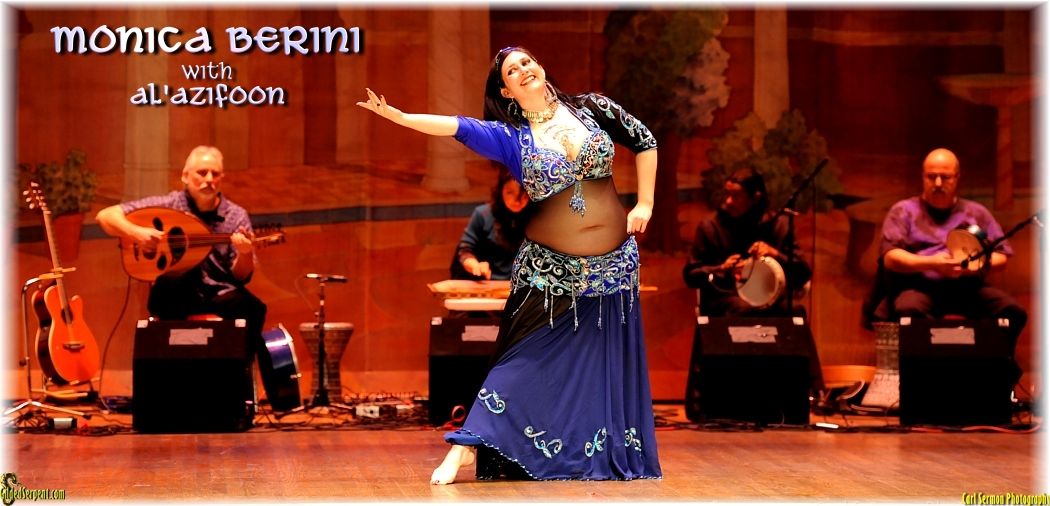
Monica Berini

Monica Berini of San Francisco


Mountain Gyspsies

Mountain Gypsies of Mt Shasta, CA


Nabeela

Nabela el Shalimar of Modesto, CA


Naheda and Guentner

Naheda and Guenter of Germany


Namira

Namira of Lake Tahoe, CA


Natica's Poetic Dance Theater

Natica‘s Poetic Dance Theater of Richmond , CA


Neena Nour

Neena Nour


Open Floor

Open Floor


Open Floor

Open Floor


Queen of Persia

Queen of Persia of Mountain View, CA


Raks AfricaRaks Africa

Raks Africa of Oakland, CA


Raks Rosa

Raks Rosa of Santa Rosa, CA


Sassy Sirens

Sassy Sirens of Fairfield, CA


Selayma

Selayma Anan of Sacramento, CA


Sese Presents

Sese Presents of Santa Cruz, CA


Sharifa and Troupe Tangiers

Sharifa and Troupe Tangiers of Walnut Creek, CA


SHazara

Shazara of Boulder Creek, CA


Sidona

Sidona Om Dunia of Boise, Idaho


Sirens in Sanity

Sirens in Sanity of Benicia, CA

Sirens

Sirens in Sanity

Suhaila Dance Co

Suhaila Dance Company of Albany, CA


Suzanna Del Vecchio

Suzanna Del Vecchio of Denver, Colorado


Tamzine

Tamzine of Renton, Washington


Tanya

Tanya Tanya of Greece


Tiger Lillies

Tiger Lillies of Vancouver


Troupe Dhyanis

Troupe Dhyanis of San Rafael, CA


Turkish Delighs

Turkish Delights of Sunnyvale, CA


Una

Una of Cupertino, CA


Zilly Girls

Zilly Girls of Santa Rosa, CA


use the comment box

Have a comment? Use or comment section at the bottom of this page or Send us a letter!
Check the "Letters to the Editor" for other possible viewpoints!

Ready for more?

  • Paula, 2011 Champion of Champions, Belly Dancer of the Universe Competition
    I do not know exactly what will happen, but I know it’s a beautiful start to present a Dominican dancer to the dance world. One very important thing also is that this award means to me that dreams do come true. I always wanted to be a dancer, and I could never really make it work because my country does not considered it a true profession.
  • You Say Zills, I say Sagat, So What’s the Difference?
    Nevertheless, many dancers outside the Middle East still think the only difference between zills and sagat is semantics – “two words for the same instrument.” If you’ve played both – correctly – I doubt you would agree.
  • Sahra gives us a reports on her friends in Cairo since the Jan 25 revolution.
    Sahra Kent with the help of Roxanne Shelby reports on what she has heard from her friends in Cairo since the protests began less than a month before this interview on February 20, 2011. It was conducted at the Belly Dancer of the Universe Competition in Long Beach, California
  • Hip Hip Hooray for Bellydance Day
    Bellydance Day was created by Shabnam to inspire, educate and celebrate the beauty of this often misunderstood dance form. The dances presented on August 21, 2010 included Saiidi, Modern Oriental, Egyptian to Fusion.
  • Fashion Trend Report 2011 What’s New This Year at Rakkasah?
    What I noticed, first and foremost, was not the costuming, but rather, a change in the sellers themselves. The seller demographic has radically altered, creating a new vendor landscape. Without a doubt, this is a response to the on-going sluggish economy and the need for companies to reduce expenses. The reduction in costumes and products coming out of Egypt also affected the merchandise. Many small factories had a gap in production, and shipping has become even more problematic.
  • Rakkasah West Fest 2011, Saturday, Page 1: A-J
    Afrita, Ahava, Ava Fleming, Bala Anat, Al Azifoon, Alea, Alnisa, Aruba, Banat El Hoggar, Black Diamond, Black Opal, Dancer of the Crescent Moon, Dancers of the Pharoah, Desert Heat Dancers, Elnora and Rhonda, Fringe Benefits, Hamsa, Hanna Lissa, Jasmine Jennifer, Jewels of the North

  • Gothic Bellydance has taken years to develop fully and define itself more exactly, but it has developed. Steampunk has different origins, but there are very specific things that are unique to it as well.
  • The Controversy, Learning to Love Eternal Debate
    The path of artistic innovation is not a forward pointing line; it is a pendulum. Art doesn’t move foreword cleanly; it bashes against ideas and is repelled by them! Movements emerge from conflict, not despite it.
  • As the Music Fades, Egypt’s January 25 Revolution’s Impact on the Muscians and Dancers
    We can’t attain what they had in the past because we are not free. Our minds are full of work and what we should and shouldn’t do. There’s no time for good art. Politics mixed with religion does not make for an atmosphere where the arts can flourish.
 

Gilded Serpent presents...

Paula, 2011 Champion of Champions

Paula by Carl Sermon

Belly Dancer of the Universe Competition

Interview by Martha Duran
Video by GS staff
posted April 30, 2011

Bellydancer of the Universe has been one of the most popular Belly Dance Competition events of last few decades and in 2011 its popularity went on to an all-time-high intensity level as performers from all over the world reunited on our competition stage.

Out of many beautiful and skillful dancers presenting their talents the weekend of February 18th, 19th & 20th, only one took home the grand title of "Champion of Champions". Paula from Dominican Republic held the judges complete attention with her professionalism, outstanding skills and personality; which filled the stage of the Long Beach Convention Center. She also won the champion title of ¨Drum Solo” category.

On February 21, I got my chance to interview Paula and tap onto her experiences and plans for the future.

M-Where were you born?
P- In the City of Santo Domingo in the Dominican Republic

M- How did you begin your dance life?
P- Early in my childhood I wanted to be a ballet dancer but never could take classes. When I was 15 years old I auditioned to be part of a television program for children in my country; it was a type of show like "The Mickey Mouse Club".  It was all about the dancing and the energy in the children that participated; they got to dance a lot of jazz dance. I got the part and  participated in musicals, TV appearances, plays, among other things. In the Bellydance, I started at 17 and that was due to some classes taught in the gym I was attending. There were girls of all ages and shapes there, and a beautiful energy flowed during the class! It was love at first sight!

M-What role do you play in your dance community?  Are you a dance teacher or concentrating on your role as a dancer?
A- Since I started dancing, I’ve seen myself as a dancer first. …Although, I have taught in my country for a while, but after studying in New York and Los Angeles, I have had a great desire to take what I’ve learned to my country and open my own dance studio very soon Then, I will be both teacher and dancer; right now I’m solely a dancer and performer.

M-To which dance style are you most related? With which dancer do you most identify?
A- There are so many dancers out there that inspire me! I love the delicacy, control, and strength in the hips of Zahra Zuhair and Aziza of Cairo, the sweetness of Sohair Zaki and  Sahra Saeeda, the agressiveness of Jillina, the elegance of Yamil Annum and Yousry Sharif, the mischief of Tito, the control of Rachel Brice and many more.

I identify more with the Egyptian style because it is so smooth and strong at the same time, and above all, it is essential to connect the dancer to the music. I love it!

M- When you prepare for a performance, how do you choose your music? Do you prefer a drum solo, classical Egyptian music, bolero? What music resonates with you more?
P- I choose the one that makes me feel butterflies in my stomach. This usually happens with classical music, which I see as a challenge to represent. Also, I love the Depke, which is in my veins from my Caribbean roots.

M- When did you start competing in dance?
P- My first competition was the audition for "Bellydance Evolution" with Jillina in 2009, in Los Angeles, where I was one of the dancers selected to participate in the show and also received the title: "People’s Choice Winner".

M- Was this your first time in BDUC?
P-Yes, and it was a beautiful experience! I felt so welcomed and supported by all the people I met there. To see the level of the judges and competitors was intimidating and exciting all at once!

M- How did you prepare for the competition?
P- Well…  My preparation for the competition was during a time of transition in my life. I moved back to my city after 6 years while preparing to open my dance studio. I did not have much time to practice, but I heard a lot of songs to "feel " the dance. I could only practice two or three times a week, but I kept doing exercises in the morning and practicing the shimmies whenever I  had a chance.

M- How did you feel when you arrived in Long Beach for the  BDUC?
P- Like a dream and happy to be able to attend! I felt anxious to see what was waiting for me. I kept telling myself,  “Dance with the heart.”

Domimican RepublicM- How were you treated there?
P-As if everyone knew me. I was very well received and respected. I was supported strongly. Also, I wondered if I had come alone, and did I arrive there alone!  It seemed that they wanted to make me feel at home.

M- When you were on stage competing, what could you see?
P- Oh, my Goodness! During  the first piece, I remember seeing the faces of the judges, specifically Jillina, and Sahra Saeeda and that made me feel nervous! Then I said to myself, "Forget that you are competing and look at the audience." Then, I could see the faces of old dance friends who smiled and  I really felt their support!  In addition to the lady in the sound console and shop vendors, I tried to look at the whole audience to get them to feel that I was dancing to them sincerely.

M- How was the atmosphere in BDUC?
P- Wonderful! Everyone who was there loves Arabic music and respects Oriental dance. You can sense  a sister and brotherhood and great joy between all attendees. Competitors were excellent! The judges and teachers of workshops were professional and friendly. Tonya and Atlantis make you feel very special, too.

M- What did you acknowledge while coming off the stage of BDUC?
P-That the most important thing is to be yourself, and be true.  No matter what the circumstances, dance with your heart, and train your body enough to not have to think about it and just understand the music.

M- From your point of view, what did you see when it was time to announce the winners?
P-Oh! I could not believe it! I felt like a girl who gets a candy! Such a joy because (There is no explanation.) it is wonderful to receive an award for doing what you love most in life and something you’ve worked so hard to do so.

M- What’s in the future for the Champion of Champions of BDUC? What does this award mean to you?
P- I do not know exactly what will happen, but I know it’s a beautiful start to present a Dominican dancer to the dance world. One very important thing also is that this award means to me that dreams do come true. I always wanted to be a dancer, and I could never really make it work because my country does not considered it a true profession. I started at 17, but I had to stop and then restart the dance. It has been 3 years that I have been dancing full time. This award is a reminder to continue trying to achieve my dreams. I must work hard and never stop believing in them.

M- What sacrifices did you have to make to achieve such an award?
P- It was a huge monetary investment because California and the Dominican Republic are not in proximity. I had to sell some items from my studio in order to afford the trip. Also, I started training and everyday, I got up at 5 a.m. to walk several miles to keep fit and more active to have more energy during the day and had almost no time to practice. However, in the end, everything has enriched me as a dancer and person.

M- How do you describe Paula the Bellydancer?
P- I would describe myself as a person with many dreams to accomplish and someone who believes that anything is possible in this world if you put your heart into it and work hard.

M- What advice do you give out to other future competitors?
P-Prepare! Practice as much as possible without losing your nature, choose a dress that makes you feel beautiful and that fits the style or styles in which you will participate, and bring to Long Beach a huge smile to enjoy this beautiful experience.  When I competed, the same advice was given to me by my teacher Zahra Zuhair: enjoy, relax and be yourself!

M- What Plans do you have for 2011?
P- I plan to open my new dance studio; I will name it “Tabla Dance Studio”.  I wish to continue traveling to other countries and learn what happens in other communities in Bellydance. I will give what I can and take back to my country a little something of what happens outside.

M- What feedback did you get after your performance in BDUC?
P-Oh yes, it was so inspiring! 
People came to me saying that they had loved and that I touched the audience with my presentation. Really, it’s best part of dancing, and it’s great that people whom you have admired for so many years share some support and many congratulations, like Helena Vlahos who congratulated me on my control while I was performing and complimented my elegance on stage. Also, I remember that at the end of the competition Sahra Saeeda and Amir Sofi told me that my dancing was beautiful; Louchia, and Jillina also congratulated me as did Sandra from San Francisco, Maryam of Mexico, Dilek  and others who only knew me by performances, not personally.  In addition, competitors I met gave me nice words of support at all times, and I got a lot of loving from all . It’s a surreal experience. I am grateful and inspired with what happened to me.

Hugs and shimmies to all!


use the comment box

Have a comment? Use or comment section at the bottom of this page or Send us a letter!
Check the "Letters to the Editor" for other possible viewpoints!

Ready for more?

  • Shimmying on the Shores of Paradise, The Dancers of the Dominican Republic
    White sands and turquoise waters come to mind when most picture the Dominican Republic, but the Caribbean paradise offers visitors far more than its natural beauty. It may come as a surprise that the small tropical country most known for its pristine beaches and Caribbean hospitality also has a vibrant and thriving belly dancing scene.
  • Interview with Yamil Annun, An Argentinian Belly Dancer
    Yamil Annum has created his own dance style and has evolved his specific style of Oriental dance by using the well established foundations of classical Ballet, Ukrainian dance, Ballroom dancing, Celtic dances, Jewish folk-dance, Bhangra, Armenian and Argentinian Tango. His elegance on the stage has revolutionized stages all over Argentina and Latin America.
  • 2-16-10 Hot Bellydance Event in Tijuana by Martha Duran
    Leila Farid from Cairo Egypt is a sweetheart! She is what many Mexican dancers aspire to look and dance like. Wow! She is gorgeous and mesmerizing – as well as extremely nice, polite and down to earth! My star struck students were amazed to catch her snacking on Mexican Rancheritos (chips) and eating breakfast like a Mexican, with tortillas! She’s so fit that we couldn’t imagine she snacked on chips tortillas like the rest of us. Her master class was magnificent.
  • 5-26-09 Bellydancing
    Fashionably
    by Martha Duran

    Always remember that you’re representing a country’s culture!  Sometimes, less is more; sometimes, more is less.”
  • 3-10-09 Its All in the Flavor! Bellydance in Mexico by Martha Duran
    Those were tough times for us teachers. Students were very shy in the classroom but eager to learn; some of them even thought that Shakira had created Bellydance! They didn’t have much information about Oriental Dance, its origins, or different styles. Some aspiring dancers even sat through several classes just to check out what Bellydance was or if we teachers danced it as well as Shakira.
  • Recognizing Accomplishment: Atlantis!
    I get so excited over the events they are producing, that I have no thoughts about them as dancers. All I think about is the person who is performing or teaching
    and the merchandise that the venders are selling. I only think of the sponsors as being effective with the business side of Bellydancing.
  • My Dream: Dancing in Cairo!
    To be asked to teach at Ahlan Wa Sahlan is an amazing honor, but to be performing, in the biggest show of the year? It was unbelievable! This was the most significant phone call I have ever received in my entire career.
  • Carl’s Camera Captures Jillina’s Bellydance Evolution
    Jillina Carlano’s Bellydance Evolution marked the beginning of an era in which bellydance moves beyond dance Oriental imported from Egypt and performed in clubs.
  • The Grand International Bellydance Tour or How We Fled India at Midnight, Eluding Our Captors and Evading our Go-Go-Dance Responsibilities. or What Would Fifi Do?
    It may not have been such a problem for us had the prostitutes not been posing as bellydancers!
  • The Joy (and Pain) of Collecting Tips
    I’ve been collecting tips for almost 10 years now, and it’s only in the last 2 or 3 years that I’ve really felt confident about it.
  • You Say Zills, I say Sagat, So What’s the Difference?
    Nevertheless, many dancers outside the Middle East still think the only difference between zills and sagat is semantics – “two words for the same instrument.” If you’ve played both – correctly – I doubt you would agree.
  • Sahra gives us a reports on her friends in Cairo since the Jan 25 revolution.
    Sahra Kent with the help of Roxanne Shelby reports on what she has heard from her friends in Cairo since the protests began less than a month before this interview on February 20, 2011. It was conducted at the Belly Dancer of the Universe Competition in Long Beach, California
  • Hip Hip Hooray for Bellydance Day
    Bellydance Day was created by Shabnam to inspire, educate and celebrate the beauty of this often misunderstood dance form. The dances presented on August 21, 2010 included Saiidi, Modern Oriental, Egyptian to Fusion.
  • Fashion Trend Report 2011 What’s New This Year at Rakkasah?
    What I noticed, first and foremost, was not the costuming, but rather, a change in the sellers themselves. The seller demographic has radically altered, creating a new vendor landscape. Without a doubt, this is a response to the on-going sluggish economy and the need for companies to reduce expenses. The reduction in costumes and products coming out of Egypt also affected the merchandise. Many small factories had a gap in production, and shipping has become even more problematic.
 

Gilded Serpent presents...

A True Arabic Experience

Karim

November 2010 Arab Dance Seminar in New York City

Workshop Review by Aubre
Photos by Ameera David
posted April 29, 2011

I came into Bellydance without any knowledge of Arabic culture. I was unfamiliar with the music and, in fact, the sound of the mizmars blaring through the speakers in our little dance studio made me not only want to cover my ears but reminded me of dying cats, howling in misery! Maybe it was my youth in the teen years that didn’t allow me to see the beauty in that agony, or maybe my ears were just not open enough to understand the complexity of Arabic music. Either way, I had no idea what a journey I had begun and how vast the experience would be.

Thirteen years later, I found myself in a dance studio in the middle of Manhattan. I had heard about the Arab Dance Seminar a few years prior when I met Karim Nagi. I was impressed with his ability to articulate about culture, music, and dance, and the deep understanding of both American and Arabic culture that allows him to communicate in such a profound way. After hearing him give a lecture on Arabic music, structure and composition, I knew I had to attend the seminar at some point. There was so much information I couldn’t get anywhere else in simply an hour of lecture with this man.

I couldn’t imagine a whole weekend with a faculty of similar artists and academics and what epiphanies would result.

The Arab Dance Seminar was created by Karim Nagi in 2005 and has become an annual event. It fits with his mission to help educate people about the depth and beauty of Arabic culture beyond its exposure in the news. His seminar emphasizes the cultural roots and context of this dance form; it is a form that is experiencing a disconnect as more dancers are entering the community through fusion and often not developing an understanding of its historical origins. Each seminar is themed to focus on a variety of elements within the culture, dance, and music of the Arab world. I was fortunate that this year’s seminar was focused on lyrics and poetry of Arab music and how they relate to and influence dance: The Language of Movement, the Movement of Language. Having recently started learning Arabic, this theme included a variety of elements upon which I was already focusing.

The first day of the seminar laid the foundational ideas for the weekend, including some background and personal viewpoints from our teachers. Nourhan represented Egypt, specifically Raqs Sharqi and Raqs Assaya/Saidi. Amel Tafsout was our North African teacher, focusing mainly on Algeria. Kay Hardy Campbell became our resource for the Gulf, including Khaligi & Bedouin dance. Dr. Taouriq Ben Amor was an Arabic language specialist as well as poet and musician. Karim Nagi represented the Eastern Arab world with Debke while also maintaining the overall flow and organization of the weekend.

Extremely knowledgeable and dedicated to their topics, each teacher brought a level of enthusiasm and passion that was contagious. As dancers from all over the world came together, we sat quietly during this first evening taking all this information in and the level of excitement only grew as the lecture turned to the poetics of Arabic and the aural tradition in which songs and stories have been passed on for centuries, “…populating an empty desert with words,” as Dr. Taouriq Ben Amor so eloquently put it. Having this background was essential for the theme of our seminar and stressed the importance of language within Arab culture.


If someone wasn’t moved by the beauty of Arabic before, they were definitely taking a second look after this lecture. Kaeshi Chai, a friend and fellow dancer sitting next to me, stated several times how she never realized how beautiful Arabic was. Having fallen in love with it years prior, it tickled me to hear this as I thought:

“Ah, yes. Some consider French the most romantic language, but they obviously haven’t heard the poetics of Arabic yet.”

We moved onto the topic of music, breaking down each rhythm and song we would dance to over the weekend. Thankfully, we were given a thorough packet with all the lyrics in transliterated Arabic as well as their English translations. The last hour, as torturous as it may have been for some, was an invaluable lesson of internalizing the music with which we would work . We sang every song in Arabic with pronunciation help from Taouriq and tonal and rhythm help from Karim as he played his bizuq and sang along with us. Anyone who has asked a group of dancers to sing will know how uncomfortable most are with doing so, and more so when attempting this in a foreign language! We all did it, and I have to say that I  have developed a deeper appreciation and understanding of these songs that I wouldn’t have had otherwise. After five hours of lecture, we were all ready for a full night of sleep although there was a buzz in the room, hinting that our excitement might not allow it.

Saturday was the biggest and longest day of the seminar: 8 hours of dance classes, a teacher panel lecture, and the live music and dance performance. It proved to be an epic day. We started promptly at 10 am, warming up with Karim since Nourhan was running late. This was a great foreshadow, as Karim painstakingly kept us on schedule throughout the weekend–a job that was not always easy, but one I appreciated. Because of his diligence, we got through all the material  planned. Thankfully, he included time each day to check in with the teachers and students, filling in information missed during classes, and for asking questions. This recap time was essential for the rigorous schedule and large amount of material covered.

Nourhan is a force to be reckoned with, and when she arrived it was in her full diva style. However, she backs all of her personal opinions with reasons and her attitude with solid dance technique and finesse. She commands respect, and I love her for it.

She caused the classmates to sweat in no time with stretches, shimmies, and drills across the floor, then  guided us through a significant amount of choreography to “Qari’ at al-finjan” (The Fortune Teller) by Abdel Halim Hafez. In accordance with the theme, she used a variety of gestures to go along with the lyrics as well as some of her signature combinations and styling; as the weekend unfolded, I found this was a common interpretation. Mostly we worked with literal usage (gesture, etc.) as it is the easiest way to articulate these ideas. It’s almost unfortunate that the seminar’s theme changes each time because I think a revisit to this topic would prove quite interesting. There is more to be investigated with this idea, but starting the dialog is inspiring and immensely valuable.

CaneNext was our debke class with Karim, who taught us an entire choreography including some pretty intricate footwork to “’Al-‘ah Al-Dar”. It was aerobic, to say the least, as we stomped and jumped our way through the song.

The way Karim used the lyrics reminded me of the similar manner in which lyrics are used in hip-hop. They’re not just gestural or emotive, but they are the dance.

We learned each combination to the lyrics in a way that flowed with ease. Let’s dance from “Wa al-Faris Qabil Faris”, and each of us lifted his or her left leg, moving in unison. I’m not sure if it’s just my love of debke or Karim’s charismatic nature, but this class flew by and before I knew it, lunchtime had arrived. Sitting and eating started me wondering how we would all get through the rest of the day at this lively a pace. Thankfully, the afternoon classes were calmer and less rigorous.        

Amel is a native Algerian and dancer trained by doing, and this is how she teaches. Her class on North African dance was organic and fun. She put some music on (which to our delight turned into Karim drumming live for us as well) and started to move, explaining the low-weighted stance, the wider feet, the sense of ease, and just getting us into the groove of the music. She isn’t one to break things down, although, (for the careful observer) she doesn’t need to break things down as she speaks volumes in her dancing. Half the time, you find yourself just in awe of Amel and her teaching, watching as she moves with ease and tremendous joy.

This seminar was my first time studying with her, and truly, I cannot wait to take another one of her workshops. First of all, there are so few resources for North African dance. Years ago, I became obsessed with Shikhat, and in my research, I came across numerous moments of frustration with the lack of reliable sources.

The North African region has a wealth of dance and music of which few have true knowledge; Amel is one of these rare ar

tists-anthropologists.

After we perfected a few moves, Amel turned our attention to “Ya al-Rayah” –one of the two songs on which she had chosen to work. Most of us have heard this song because it was popularized by pop star Rachid Taha, but Amel explained how the song evolved from the immigrant story to the light pop song. This gave a colorful history rich in cultural nuance and set us up for a group improvisation where, in groups of 4-5, we created a small combination to assigned lines of the song. Yet , mainly, our ideas became literal within translation, but I have a much deeper understanding of this song now than I ever had before; I also gained the emotional context for this immigrant story. Later this same day, Amel demonstrated her interpretation as she performed to this  song for the evening concert.

The constant revisiting of topics throughout the weekend was extremely helpful and fostered deeper connections to the cultural ideas. (Listening to this song will never be quite the same for me.)

 Since our last class for the day was with Kay, covering Gulf, Khaligi, and Bedouin dances, we switched gears. Kay is what is known as a “teacher’s teacher”; she’s extremely organized and articulate (even providing choreography notes). She is also a quintessential anthropologist: she is observant, non-judgmental, and astutely aware of context.

I valued her reminders throughout the weekend that culture is constantly evolving; so the quest to find “authenticity” becomes about when, where and within what specific context.

Talking to a group of non-Arabs (mostly), I think this is invaluable as our quest for learning and cultural sensitivity often creates hard lines and definitions that distort the meaning of the dance. We learned two songs with Kay, one a Khaligi piece with full group staging and thobe costuming to “Ya Rakib al-Cadillac” and the other–a bridal celebration song, “Hannu al-`’Arusa Hannuha” –to demonstrate how the dance differs in a social context. She also covered a typical Bedouin setting where women might dance. This worked perfectly for a group improvisation, reviewing the moves we had learned. It was a lot of material, but Kay kept things clear and concise. With our minds and bodies fried from such a full day, she had just the kind of personality to keep us going as well as make sure we finished on time to get to the evening concert in a timely fashion.  

The concert was magical! It was  a treat to have a full Arab band (Sami Shumays, Rachid Halihal, Taourfiq Ben Amor, and Karim Nagi) play an array of Arabic classics, folk songs, and dance favorites. Selected artists performed with the band, including myself, and performing “Salamat Ya Om Hassan” with such an incredibly talented band and for such a warm and appreciative audience was an absolute delight. Amel graced us with a beautiful suite of songs.

Nourhan danced a fabulous Shaabi piece as well as a beautiful Raqs Sharqi set. Kay invited all of the dancers up to join her and the band in the bride-song we had learned earlier that day. I think the highlight of the evening was listening to live Saidi music while Karim tossed and spun his assaya. It’s such a rarity to hear live Saidi music, and the earthiness of this style was alive that night. The band continued to play after the show as everyone danced, chairs pushed aside to make more room. Taking the train home, I was exhausted but felt so inspired by the beauty of the evening.

Sunday was a great review of the material covered the prior day as well as working into further details. Reiteration is a valuable learning tool–especially with such complex concepts. We also got a chance to learn some Raqs Assaya with Nourhan, who taught an adorable choreography. During lunchtime, Taourfiq and Karim played an intimate concert for us. This weekend of live music was endlessly inspiring. Our final class together was on the trance-dances of the Arab world (zar, zikr and hadara). This was incredibly profound!

I had participated in trance-dances before but not with the expert lead of someone such as Amel. She became our mother-figure and created a safe environment to release truly into the experience.

Taourfiq and Karim provided the music, ebbing and flowing with the group as we moved further into our trance experience. For those who have not experienced this before, it can be a difficult thing to explain, but as I lay crumpled into a weeping ball upon the floor, I felt truly grateful to have been a part of this whole weekend as an artist, student, teacher, and woman. Ending with such an emotional exercise was profound and difficult. We hugged each other with our watery eyes and felt a sense of community built over just a weekend.

As I sat on the airplane on my way back to Los Angeles, I found myself exhausted but more inspired than I have been in years. I sat, reviewing my notes, listening to music with new ears, and marked my calendar for the next seminar. Rich with information and experience, I can recommend nothing more for those interested in dance from the Arab world.

Class photo
Class photo linked to enlargement

back row: 1, 2, 3, 4-Aubre (author), 5, 6, 7, 8, 9, 10, 11, 12, 13, 14, 15, 16, 17, 18, 19, 20, 21, 22, 23, 24, 25, 26, 27
front: 1, 2, 3, 4- Kaeshi, 5-Karim, 6-Kay, 7-Amel, 8-Nourhan, 9- Tempest, 10, 11
please contact editor if you can help with names- Thanks!

use the comment box

Have a comment? Use or comment section at the bottom of this page or Send us a letter!
Check the "Letters to the Editor" for other possible viewpoints!

Ready for more?


Gilded Serpent presents...

You Say Zills, I say Sagat

Placeholder

So What’s the Difference?

by Yasmin Henkesh
posted April, 2011

Have you ever picked up a set of Egyptian finger cymbals? They don’t look or sound like the zills we play in the West, do they? They’re bigger and heavier and don’t ring as loud or for as long. And they only have one hole for elastic (instead of two slots) so you have to hold them differently – otherwise they wobble. But Egyptian finger cymbals, or sagat, are made that way for a reason – Middle Eastern audiences prefer the sound they make. They would much rather hear “chink-chink” and “clack-clack” than ringing in their ears.

Nevertheless, many dancers outside the Middle East still think the only difference between zills and sagat is semantics – “two words for the same instrument.” If you’ve played both – correctly – I doubt you would agree.

So what exactly makes them different? The most obvious distinctions are tonal clarity and ring-times. Sagat only ring for a second or two (or clack like wooden castanets) while zills reverberate for four to eight seconds after they are struck. This is partly due to how thick their walls are and the way they are manufactured. Sagat are thicker because they are cast. Zills are hammered or stamped which makes them thinner. Zills are also tempered, a heating process that permits metal to vibrate longer.

In a nutshell, zills weigh less and ring more than sagat.

Sagat are also shaped differently than zills. They have relatively small domes and wide rims that clack when struck together. Zills have thin rims and high domes, along with two holes for threading elastic. This helps anchor them onto the fingers without touching them directly. Otherwise, they won’t ring. This is not the case for sagat. Sagat make noise even when you hold them. This is important because their single-holed design is so unsteady that a special “clam-shell” grip was developed to control them. It entails keeping the thumb sagat stationary (by pushing them into the palms), while the finger sagat do the striking.

So how far back do these differences go? Archeological evidence indicates that hand-held metal discs were played in the Middle East from 1500 BC onward, even though paired hand-held percussive instruments appeared much earlier. Wood and ivory clappers were found that date to Egypt’s pre-dynastic era, circa 3300 BC. Compared to them, cymbals are a recent invention. And what was the shape of these early cymbals? They all had wide rims, one hole and relatively thick walls.

During the Greek era (starting about 500 BC), bronze cymbals spread around the Mediterranean with the worship of Cybele and later Dionysus. By the Roman Empire cymbals had become commonplace; bronze was easier to obtain. The Empire shipped large quantities of northern tin south for smelting with copper from Turkey, Sinai and Cyprus. Cymbals uncovered from this period also resemble sagat. Only during the Middle Ages, with the increased use of brass (copper and zinc) over bronze, did cymbal design began to differentiate according to regional preferences – bell-like tones for the Greeks and Turks, while the Egyptians remained faithful to their ancient clacking sounds.

There are advantages and disadvantages to each type. Certainly, zills are easier to control and are definitely louder. Sagat, on the other hand, change pitch.

They can even produce a restricted scale, similar to a tabla, and melodies. True, it takes more practice to play sagat; but proficiency in any instrument doesn’t come overnight. The clamshell grip (the secret to their wonderful tonal varieties) enables the fingers to choose which part of the rim to strike. Even hand positions matter. Palms-up versus palms-down can change their sound, along with varying the arm positions. Hands held high above the head, for example, strike cymbals differently than hands stretched out in front, to the side, or down by the hips.

Finger cymbals were introduced to the West in the late 1800s by the Ghawazees, during their performances at the Worlds Fair Expositions. They played sagat continuously – to the point where, to the Europeans and Americans who saw them, the metal discs were simply blurred extensions of their fingers. Even before this mass-market appearance, visitors to Egypt were enthralled (or annoyed) with the sound of their constant chatter by the area’s “dancing girls.” Fortunately for cymbal fanatics like me, Napoleon’s music specialist for the Description De l’Egypte, Guillaume-Andre Villoteau, documented what the Ghawazees were doing in 1798. (I have translated his entire section on cymbals for the Sagat Speak booklet.)

Many of these patterns are still played today. Others have fallen by the wayside. A lucky few were recorded for posterity over a century later. In 2006 the British Museum released a CD, Women of Egypt 1924-1931: Pioneers of Stardom and Fame, with Badia Masabni playing sagat on one of the tracks (Raqs Badi’ah). According to the accompanying booklet the piece was recorded in Egypt in the 1920s at the peak of her dancing career. (Individual tracks are available for download, but anyone interested in Egyptian music history will find the liner notes well worth the extra price for the CD). Her use of syncopation is particularly delightful.

There is also footage of Badia singing and playing sagat with her troupe, thanks to Jalilah and Gilded Serpent. Notice in the clip how she holds the cymbals and uses her fingers to change the sounds they produce; loud or soft, ringing or mute, single strike or doubles.


There is a plethora of sagat players in Egypt’s black and white “Golden Era” films. Tahiya Carioka was the most famous, but there were many other gifted dancers as well – Naima Akef, Beba Aiz-ed-Din and Nabawiya Moustafa, to name a few. Sadly, the soundtracks of these films rarely included the dancers’ actual performances. The music was usually dubbed-in later, during post-production, from a sound studio recording of a musician playing sagat. Nevertheless, you can still make out what the dancers were doing, if you slow down the clips to half-speed. (You can also see if they were right or left handed. Look closely – Tahia Carioka was left-handed.)

There were many gifted sagat players during the 1970s and ‘80s as well. YouTube is full of examples. I have footage in my private collection of Fifi Abdou, Aizza Sharif, Sohair Zaki, Shoo Shoo Amin, Zizi Moustapha, Nelly Fouad, Nadia Hamdi and Ida Nour all playing sagat. They wore them during folkloric tableaux, to imitate Ghawazees (complete with wide stance and big hip movements). They also used sagat to keep people’s attention when they went for tips during their “audience participation” sections.

Sadly, playing finger cymbals is a dying art for Egypt’s dancers. Dandesh is the only one I have seen recently who uses them (See Farida of England’s wonderful DVD of Dandesh with Sayed Lackey, Leilas sagat player. He began his career playing for Sahar Hamdi, who didn’t play them). Let’s face it: it’s far easier to hire a musician nowadays than to learn how to play them yourself. They’re work! Nevertheless, a musician can’t play them the way a dancer will, to the step or to the melodic phrasing. Instead, he or (rarely) she will stick to the rhythm or the time signature.
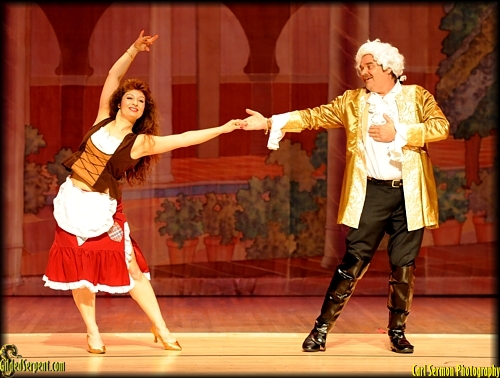
Furthermore, a sagat player is only one among many percussionists, and usually low on the orchestral totem pole. A dancer, however, becomes an aural focal point when she plays. Her sagat become stars of the show, not just one of many jingling instruments in the background.

This is why dancers should honor these ancient instruments and perform with them front and center. Finger cymbals offer so much to a performance, such as the ever-important back-beat for a dancer’s flight of fancy, or a personalized live touch to an otherwise sterile recording. When cymbals are played well, audiences usually love them. They generate energy and amplify a dancer’s stage presence. They also imply the dancer has dedicated years of training to her art.

Even though Middle Eastern dance is continually evolving, finger cymbals have been a constant part of its evolution. Consequently, it can be argued that the technique for playing them, along with their accompanying rhythms, have filtered down to us from the dawn of civilization. It would be tragic then to see them follow the path of the dinosaurs. But if we play them forward, we will continue to preserve and transmit this ancient legacy literally in our hands.

use the comment box

Have a comment? Use or comment section at the bottom of this page or Send us a letter!
Check the "Letters to the Editor" for other possible viewpoints!

Ready for more?

  • Leila Delivers Live Music Under the Stars, Camp Negum 2010
    Camp Negum did indeed happen May 4-8, 2010. It was everything Leila promised and more – 5 days and nights of music and dance classes, almost all to live music.
  • A Bust to Be Proud of…
    When she introduces me to her dance friends, it’s the first story out of her mouth – eighteen years after the fact. We still laugh about it.
  • Shoo Shoo Amin, A Forgotten Treasure of the 80s
    Twenty years ago when I told people I had worked with Shoo Shoo Amin in Cairo, the response was “Wow!” Now, people go “Who?” Today no one seems to know who she is. For belly dance purists, this is a tragedy. Every so often, someone my age or older will wax lyrical about her on-line, but for the most part, she’s an enigma – even to young Egyptians.
  • Sex, Belly Dance and the Afterlife
    To these people, sex was not dirty, shameful, frightening or forbidden. It was a natural part of daily life and the essential prerequisite for birth – on earth or in the Afterlife.
  • Ahlan Wa Sahlan 2008, Not So Welcoming this Year
    Prices have gone up everywhere, and Egypt is no exception. The reality hit me as soon as I walked into the Mena House. Bottled water was $4.00, where out in the street the same bottle was $.50. A bottle of beer was $10.00. Internet connection was $30.00 / hour. At those prices, life’s little pleasures didn’t seem important anymore.
  • Finger Cymbals
    Above all this cross-cultural cacophony soared my mom’s perfectly paced zills, right left right, right left right, right left right left right left right. If you put me in a room blindfolded, I could distinguish her playing from any other dancer on earth.
  • About Cymbals & a Workshop Checklist, Rhythm and Reason Series, Article 13
    Believe it or not, playing cymbals can be a real pleasure. Playing them well can greatly enhance your dance performance. Playing apologetic or offbeat cymbals can ruin your dance performance.
  • Zil Thrills in the ’70s, Memories from another Viewpoint
    My experience with Bert was the opposite, however; the cymbals were hardly a secret.
  • Rhythm and Reason Series, Article 5, Cymbals & the Music
    But that’s not the rhythm. As I say at the beginning of each workshop, “Rhythm is the patterned arrangement of sound and silent.”
  • The Rhythm and Reason Series Article 1- Cymbals, Beyond Basics
    Each rhythm has a distinct arrangement of accents.  If you are sure of where these accents come, you can bring a unique flavor to each section of your routine.
  • Peter Fels, Master Cymbal Maker
    Peter made the most exquisite finger cymbals. Each one was a work of art.
  • Naked Belly Dance in Ancient Egypt, Part 1: Are They Really Belly Dancing?
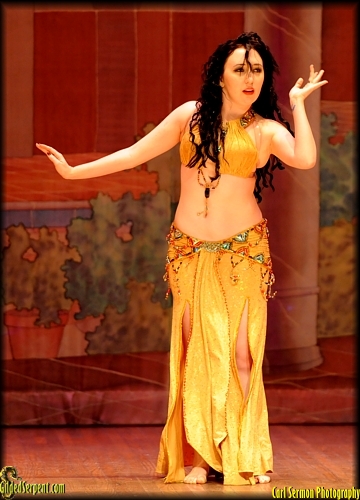
    The real first question is, "What is belly dance?" Many elements of the modern practice of belly dance emerged in the 20th century. Our emphasis on the female soloist, the structure of the typical show in both the East and the West, the style of music we dance to, our costuming, our specific styles of relationship with the audience, and so on, are modern developments.
  • Naked Belly Dance in Ancient Egypt, Part 2: Are They Really Naked?
    What does nudity mean in a dance scene like this? And does this nudity reflect an actual practice of naked dancing as banquet entertainment?
  • Sahra gives us a reports on her friends in Cairo since the Jan 25 revolution.
    Sahra Kent with the help of Roxanne Shelby reports on what she has heard from her friends in Cairo since the protests began less than a month before this interview on February 20, 2011. It was conducted at the Belly Dancer of the Universe Competition in Long Beach, California
  • Hip Hip Hooray for Bellydance Day
    Bellydance Day was created by Shabnam to inspire, educate and celebrate the beauty of this often misunderstood dance form. The dances presented on August 21, 2010 included Saiidi, Modern Oriental, Egyptian to Fusion.
  • Fashion Trend Report 2011 What’s New This Year at Rakkasah?
    What I noticed, first and foremost, was not the costuming, but rather, a change in the sellers themselves. The seller demographic has radically altered, creating a new vendor landscape. Without a doubt, this is a response to the on-going sluggish economy and the need for companies to reduce expenses. The reduction in costumes and products coming out of Egypt also affected the merchandise. Many small factories had a gap in production, and shipping has become even more problematic.
 

Gilded Serpent presents...

Hip Hip Hooray

Bellydance Day 2010

Submitted by Shabnam

Photos by Bei
posted April 20, 2011

Bellydance Day was created by Shabnam to inspire, educate and celebrate the beauty of this often misunderstood dance form. The dances presented on August 21, 2010  included Saiidi, Modern Oriental, Egyptian to Fusion.

The workshops were held at Shabnam Studio that included stretch and flexibility training for Bellydancers, Egyptian rhythms for finger cymbals, Drum Solo and choreography.
The evening show was held at Rhythmix Theatre in Alameda featuring performances by: Aazura, Clint, Emi, Gita, Heaven, Mandanah,Ooh La La, Petite Jolie, Shabnam, Troupe Shalabiya

Group

Group photo.
Dancers in picture are left to right Emi, Clint, Enisa, Heaven, Karimah, Shabnam (center), Julie, Jules, Paula (aka mahogany), Gita, Paula

cane
Shalabiya  performed a Saiidi inspired cane dance with a modern twist. The dance featured unique formations, ample shimmies, twists  and spiraling cane work.
Cazura

Aazura Nour performed a lovely veil dance. The dance combined lyrical movement, floorwork and many unique veil wraps.
Jules posing with photographer and dancer Bei

Jules posing with photographer and dancer Bei

Cemi

Emi Reem is from Japan and a member of Shabnam Dance Company. She danced to a delightful Arabic pop song. Her dance was highlighted with graceful movement, flexibility and an endearing stage presence.

Gita

Gita is a member of Shalabiya and performed an alluring classical Egyptian inspired dance to Princess of Cairo. Her dance was accented by silk veil entrance, liquid shimmies and joyful stage presence.

Heaven
Lebanese American dancer Heaven is a member of troupe Ooh La La and Shabnam Dance Company. She performed her Award Winning three part dance that featured veil, floorwork, finger cymbals and Drum Solo in a costume she sewed and designed herself.
Jules


Troupe Ooh La La La, directed by Shabnam, performed a daring goblet dance highlighted with undulating movements, torso pops and poses. It was followed by a dynamic drum solo complete with harmonious movement and the customary pinwheel.

Mandy

Mandanah is well known for her finger cymbal playing. Her performance did not disappoint and featured an acapella finger cymbal routine in addition to dynamic drum solo.

Paula

Dance student Paula pre show

Pinwheel

Ooh La La La, performed a goblet dance highlighted with undulating movements, torso pops and poses. It was followed by a dynamic drum solo complete with customary pinwheel.

Shabnam

Shabnam performed to Pink’s ‘Glitter in the Air’. The dance featured balletic movement, flexibility and silk veil work.

Shalabiya

Thank you everyone for your continued support and see you in August 2011!
http://www.bellydanceday.com


use the comment box

Have a comment? Use or comment section at the bottom of this page or Send us a letter!
check the "Letters to the Editor" for other possible viewpoints!

Ready for more?

  • 3-16-07 In Tribute: Rhonda/Baseema of Troupe Ooh La La by Shabnam
    There were times she could barely walk due to a flare up of Lupus, but she always came to rehearsal and gave a 110%–despite the pain or trouble, she was going through that day. Rhonda soon became the troupe mascot because of her courage and commitment. "If Rhonda can do it, you can do it!" became our motto. She was a great source of inspiration and motivation for all members of Ooh La La.
  • 3-2-08 The North Valley Belly Dance Competition- 2007, Photos by Michael Baxter
    Held on November 10, 2007, in Oroville, California, event produced by Carolee and David Tamori. It was an exciting contest, covering five categories: Novices, Intermediates, Troupe dancers, Solos and Live Solos. Live music was provided by Doug Adam’s amazing Light Rain.
  • 7-30-07 Belly Dancer of the Year Pageant 2007 Sunday Photos, Photos by Michael Baxter, Photo Prep by Michelle Joyce, May 27, 2007 Danville, California,
    Event produced by Leea. The competition for the Finalists.
  • Photos from " Hate the Game Not the Player" in Oakland, California
    A day of dance by Bay Area’s Award Winning Bellydancers Presented by Shabnam and Mo on Saturday December 9th 2006
  • Fashion Trend Report 2011 What’s New This Year at Rakkasah?
    What I noticed, first and foremost, was not the costuming, but rather, a change in the sellers themselves. The seller demographic has radically altered, creating a new vendor landscape. Without a doubt, this is a response to the on-going sluggish economy and the need for companies to reduce expenses. The reduction in costumes and products coming out of Egypt also affected the merchandise. Many small factories had a gap in production, and shipping has become even more problematic.
  • Rakkasah West Fest 2011, Saturday, Page 1: A-J
    Afrita, Ahava, Ava Fleming, Bala Anat, Al Azifoon, Alea, Alnisa, Aruba, Banat El Hoggar, Black Diamond, Black Opal, Dancer of the Crescent Moon, Dancers of the Pharoah, Desert Heat Dancers, Elnora and Rhonda, Fringe Benefits, Hamsa, Hanna Lissa, Jasmine Jennifer, Jewels of the North

  • Gothic Bellydance has taken years to develop fully and define itself more exactly, but it has developed. Steampunk has different origins, but there are very specific things that are unique to it as well.
  • The Controversy, Learning to Love Eternal Debate
    The path of artistic innovation is not a forward pointing line; it is a pendulum. Art doesn’t move foreword cleanly; it bashes against ideas and is repelled by them! Movements emerge from conflict, not despite it.
  • As the Music Fades, Egypt’s January 25 Revolution’s Impact on the Muscians and Dancers
    We can’t attain what they had in the past because we are not free. Our minds are full of work and what we should and shouldn’t do. There’s no time for good art. Politics mixed with religion does not make for an atmosphere where the arts can flourish.
 

Gilded Serpent presents...

Fashion Trend Report 2011

Feathered costume from Turquoise International
Feathered Costume from Turquoise International

What’s New This Year at Rakkasah?

by Dawn Davina Devine
photos by Alisha “Zemira” Westerfeld
posted April 18, 2011

For the first time in more than a decade, I didn’t have a booth of my own at Rakkasah West 2011. Instead, I was able to wander freely, enjoying the event fully, socializing, watching performers and leisurely exploring the costumes and accessories on the dealer’s tables. What I noticed, first and foremost, was not the costuming, but rather, a change in the sellers themselves. The seller demographic has radically altered, creating a new vendor landscape. Without a doubt, this is a response to the on-going sluggish economy and the need for companies to reduce expenses. The reduction in costumes and products coming out of Egypt also affected the merchandise. Many small factories had a gap in production, and shipping has become even more problematic. So dealers who had placed large orders of Egyptian items have not been receiving shipments. Consequently, there were few fewer bra and belt sets available than expected.

Smaller Booths Equal Less Product

Since 2005, there has been a move to downsize the booths. In the not-so-distant past, there were dozens of "double wide" booths filled to capacity. Now, vendors seem to be economizing, shrinking not only their space, but their stock offerings as well. The abundance of mega-booths, popular at beginning of the last decade, has given way to a proliferation of more hand-made offerings by small-scale designers. The rising cost of transportation has made vendors from further afield think twice about attending. While there were still a few large vendors, such as Turquoise International, Fatima’s Bazaar, and Gaylene’s Boutique, I found myself missing some of my favorite dealers of past years like Scheherazade Imports, Audrena’s, and Simply Stylish.  

New Generation of West Coast Designers

The latest trend in vendors is the rise of the independent designer. There have always been professional costume designers and dressmakers at Rakkasah, such as Gaylene’s Boutique, L. Rose Designs and SJE Creations. The mission of these craftswomen is to create garments, costume pieces and full ensembles primarily geared for stage wear. However, the new breed of designer has a different agenda. They strive to create signature head-to-toe looks that are designed to be part of a daily alternative urban lifestyle, but can be used as components for stage ensembles. This look varies from designer to designer, but they all seem to be rooted in the fusion aesthetic with hints of Burning Man, Hip-hop, Steampunk and Gothic styles. Some of the most intriguing of these designers at Rakkasah this year included Dreaming Amelia, Geisha Moth, and Flippin Tribal.

What was hot? Trend Spotting 2011

Spandex

It doesn’t matter what style of costume you prefer, high glam or tribal fusion, the fiber of the year is spandex. For high glam dancers, spandex, nylon and polyester swimsuit style fabrics were the order of the day featured in fancy upscale beledi dresses and tight form-fitting two-piece ensembles. Spandex two-piece outfits feature skirts that are narrower and less embellished at the top than in past years. To conserve costs, designers are using less applique and surface beading, fringes, and rhinestones. It seems that designs are becoming more sparse, with fewer extra features such as cut-outs and attached waist or hip straps. This style of costume isn’t as versatile as the more traditional bedlah, with bra, belt and interchangeable skirt. For glamorous dancers who like to have easy on-and-off costumes, these spandex two-piece ensembles are a great option. The big caveat is that these styles simply don’t hold up to rigorous wear and tear. So, though they cost the same or slightly less, performers may find they get fewer wearings before they experience bead loss.

Nancy

In the tribal fusion styles, spandex is paired with cotton fibers for comfortable yoga-inspired pants, cropped tops and accessories. Many of these multi-purpose garments are perfect for all sorts of fitness activities such as dance practice, and can even be layered into complex performance ensembles. These clothes appear in dark rich colors, autumn hues, and especially black from a variety of independent designers.

Bathing Suit Colors

The colors of the moment in the glam vendors at Rakkasah include a few striking pallets. In the world of spandex, the colors are all derived from what’s hot in swimwear. All the shades of delicious fruit salad were available from watermelon pink to kiwi green, lemon yellow and tangerine, strawberry pink and cherry red. Other popular color schemes included what I call “ocean and sky,” with various shades of blues, purples, greens, aqua and turquoise with accents of black and white. Another big trend includes retro ‘80s neon colors: electric blue, shocking pink, and eye-searing yellow. Pale sepia-toned colors (reminiscent of vintage advertising from the ‘20s and ‘30s) appeared on retro-themed neo-burlesque fusion costumes. Autumn colors were all over the tribal-fusion racks, with rich rusts, burnt oranges and warm browns being most popular.

Clear Straps

This style of strap has been popular for several years in general fashion. Now appropriated by designers for dance costumes, invisible straps are being used at the shoulders, around the neck or even to hold the bra cups together. These clear straps create the illusion of a strapless Bellydance bra. When used instead of the bra band or center front, they create the illusion that the bra is miraculously supportive or about to completely burst loose and fall from the body of the dancer in the next big shimmy sequence.

Rhinestones for Everyone

When tribal was a fresh style composed of ethnographic elements from India to Morocco, the use of rhinestones was shunned. Now that tribal has evolved into numerous fusions, the use of rhinestones, especially in complicated hair ornamentation and jewelry, is reappearing. Various styles of fusion are once again embracing a more sparkly mode, a retro and faded shimmer.

Wicked Smiley feathered hairclip
Feathers and Flowers

Featured on tribal fusion headdresses, on all sorts of jewelry from tribal to glam and even stitched to cabaret style costumes, feathers are hot for 2011! Feather and flower headdresses ran the gamut and ranged from tiny little versatile clips that could be used as individual accents or in large abundant clusters, to giant over-the-top artistic edifices that reached for the sky. The strong influence of Burning Man lent a raw and rugged look to many of these art pieces by using natural materials such as bones, horns, shells and dangling bits of leather. Feathers aren’t just for the tribal girls either: many glamorous goddesses were wearing coordinating feathers and flowers on their costumes or in their hair. This is a growing trend that I expect will be around for quite some time.

Tribal Fusion

The new tribal is stylistically stretching to encompass a variety of different vibes. The three most dominate looks both in the booths, and on the stage, include variations on vintage styles viewed through a dark glass. Steampunk, early burlesque/circus and even retro ‘50s pin-up were all themes being explored by designers and the dancers who wear them. Many of the booths also offered a lot of stylistic trends pulled from the world of Burning Man, including the use of faux fur, spats, spandex sleeves and hoodies.

Imports from India

While walking around Rakkasah, it seemed to me that the market has been flooded with cheap goods from India.  Inexpensive hip wraps, fluffy tiered and broomstick skirts and cropped tops. There was an abundance of this genre, however, and it all looked so similar, like variations on the same theme. Big, fluffy cotton skirts were on racks everywhere! However, it appeared that few dancers were choosing to buy these old classic ATS styles so many of these Indian import vendors still had jammed-packed booths when the show ended. With so many vendors selling the same style, I wonder if any vendor in that genre sold well?

What was out?

What I didn’t see anywhere were animal prints! There was little variation in the crochet and coin hip wraps, but I think that this might be a reflection of the state of exports from Egypt rather than a loss of interest. I spoke to many dancers looking for really unique hip sashes, and we were all in the same boat, wondering what happened to variety.

Ethnic costumes seemed to be harder to come by as well. With the economy still placing a squeeze on dancers and vendors alike, people were buying more versatile pieces, rather than costumes for specialty dances. People were not splurging, but shopping from lists, buying essentials, and continuing to scale back their dance lifestyles.

Author’s biopage

-Photos of white feathered hair clip is by Wicked Smileys
Photo of black and white outfit is by Geisha Moth

More photos

 
Main Hall of Richmond Auditorium
Click pic above for enlargement. Main room of Richmon Auditorium.
Lobby
Front Lobby
 
 
Dahlal’s Booth
Dreaming Amelia’s booth
 
Ruffles show at Firebird Designs
India Arts Imports
L Rose Designs
 
Sparkly Things
Belly Dance Shoppe
Turquoise International
 

use the comment box

Have a comment? Use or comment section at the bottom of this page or Send us a letter!
Check the "Letters to the Editor" for other possible viewpoints!

Ready for more?

  • Rakkasah Trend Report 2002
    …the hottest and latest new styles from across the US, Turkey, Egypt and beyond
  • Nonprofits for Middle Eastern Belly Dancers, Is a 501c3 Right for You?
    By understanding the nature of non-profits, how they are organized and run, you can see their potential for developing successful arts organization, performance space, dance company or troupe.
  • 6-2-07 By Dancers, For Dancers DVD reviewed by both Davina and Eleyda
    As working professionals, these dancers present the style of performance you would see in an intimate restaurant or at a house party.
  • 9-22-06 Kohl: Drawing the Line by Dawn Devine
    Along with henna, kohl has been part of the beauty regimens of women since the dawn of history, and an unbroken line connects the eyes of today with those of the ancients.
  • 4-5-11 Rakkasah West Fest 2011, Friday Evening, Main Stage Only, photos by Carl Sermon
    Aisha, Arabian Jewels, Azura, Dancers of Denile, Ariellah and Deshreet, Tatseena and Dreams of Cleopatra, Elnora, Ghanima, Goddess Force, Halima, Diana, Inami, Khalilah, Latifa, Kiyoko, Leila Haddad, Shaida, Shadya, Tanya, Zia!
  • Rakkasah West Fest 2011, Saturday, Page 1: A-J
    Afrita, Ahava, Ava Fleming, Bala Anat, Al Azifoon, Alea, Alnisa, Aruba, Banat El Hoggar, Black Diamond, Black Opal, Dancer of the Crescent Moon, Dancers of the Pharoah, Desert Heat Dancers, Elnora and Rhonda, Fringe Benefits, Hamsa, Hanna Lissa, Jasmine Jennifer, Jewels of the North

  • Gothic Bellydance has taken years to develop fully and define itself more exactly, but it has developed. Steampunk has different origins, but there are very specific things that are unique to it as well.
  • The Controversy, Learning to Love Eternal Debate
    The path of artistic innovation is not a forward pointing line; it is a pendulum. Art doesn’t move foreword cleanly; it bashes against ideas and is repelled by them! Movements emerge from conflict, not despite it.
  • As the Music Fades, Egypt’s January 25 Revolution’s Impact on the Muscians and Dancers
    We can’t attain what they had in the past because we are not free. Our minds are full of work and what we should and shouldn’t do. There’s no time for good art. Politics mixed with religion does not make for an atmosphere where the arts can flourish.
  • Sound-Byte Bellydance, Part One: Evolution of Bellydance
    Through her clear description of what she wanted to learn, I was able to look inside our recent dance evolution and see what we dance teachers in the west have done to change Bellydance here in the U.S., how we have changed and modified it into something it never was in the lands of its origins.
  • Our Changing Dance World, a Response to Leila’s "Dance for Dancers"
    Of course, we learn musicality and so forth, but where dance classes in some places are an hour long, teaching long choreography is not sustainable to an instructor.
  • Video Interview with Shadi of Diamond Pyramid on the Community Kaleidoscope
    Gilded Serpent interviews Shadi of Diamond Pyramid regarding the business scene since the Egyptian Revolution less than a month before this interview. This interview was conducted at the Belly Dancer of the Universe Competition in Long Beach, California on February 20, 2011
  • Rakkasah West Fest 2011, Friday Evening, Main Stage Only,
    Aisha, Arabian Jewels, Azura, Dancers of Denile, Ariellah and Deshreet, Tatseena and Dreams of Cleopatra, Elnora, Ghanima, Goddess Force, Halima, Diana, Inami, Khalilah, Latifa, Kiyoko, Leila Haddad, Shaida, Shadya, Tanya, Zia!