Gilded Serpent presents...

Rakkasah West Fest 2011

Saturday, Page 1: A- J

by Carl Sermon
posted April 18, 2011

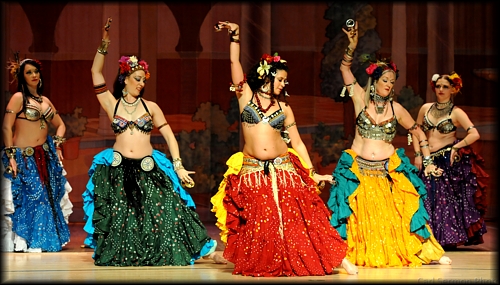
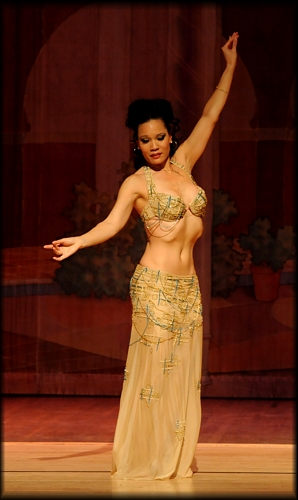
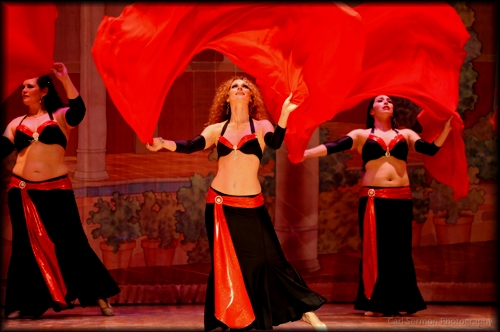
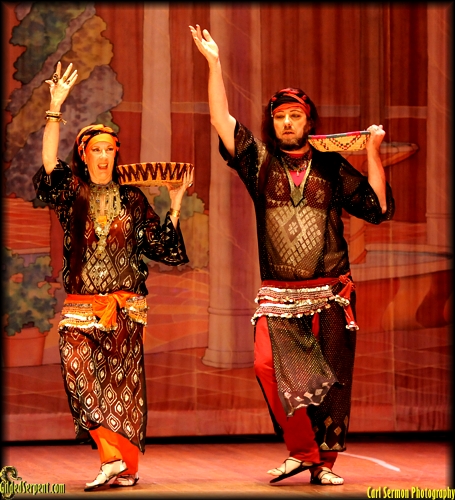
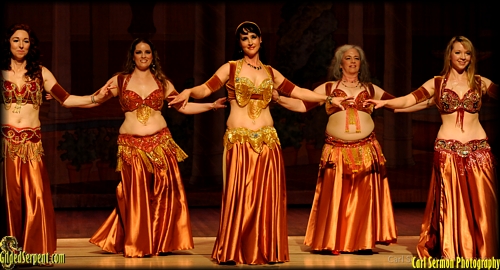
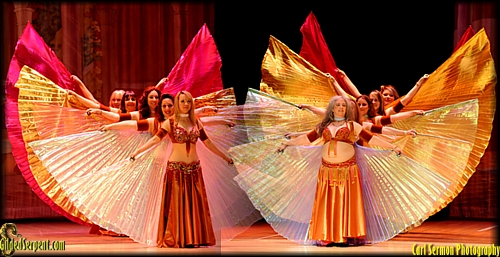
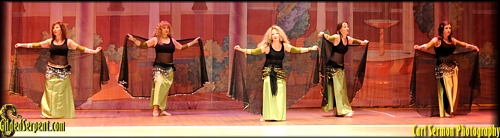
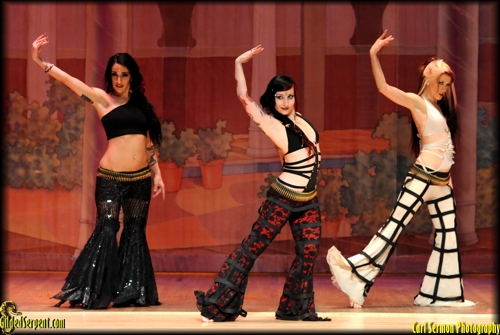
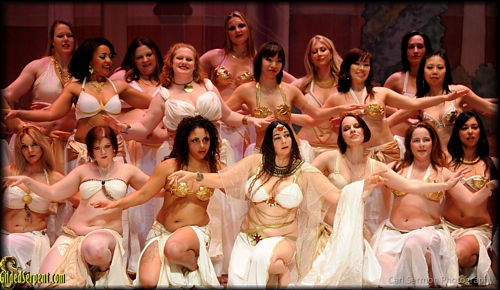
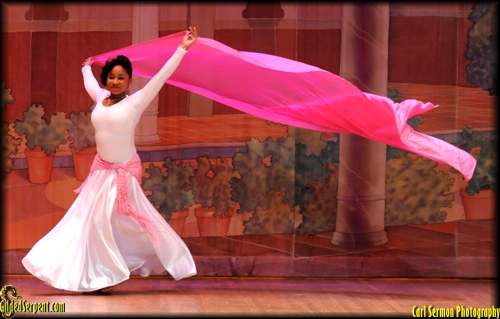
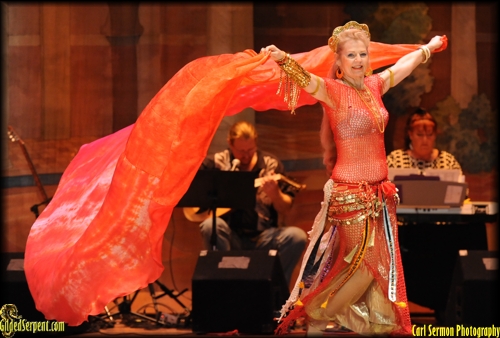
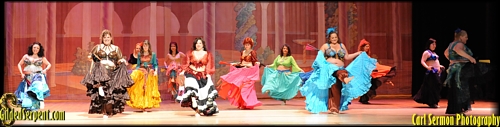
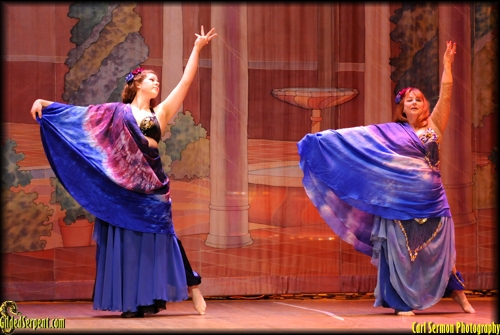
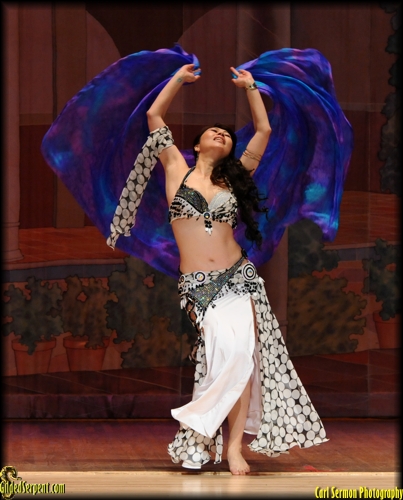
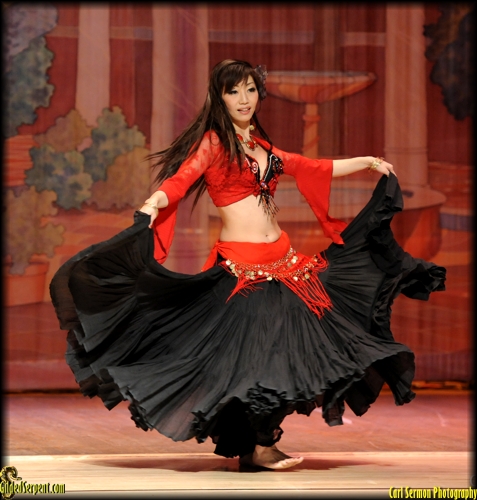
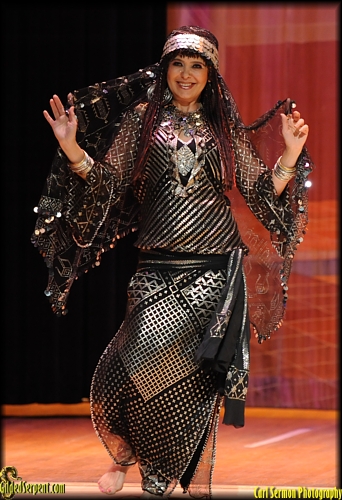
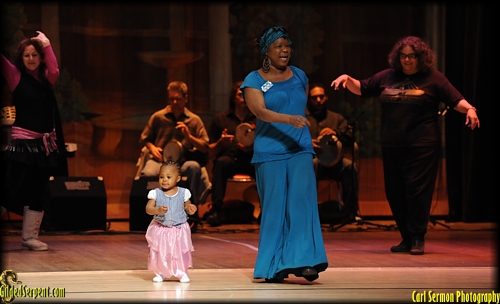
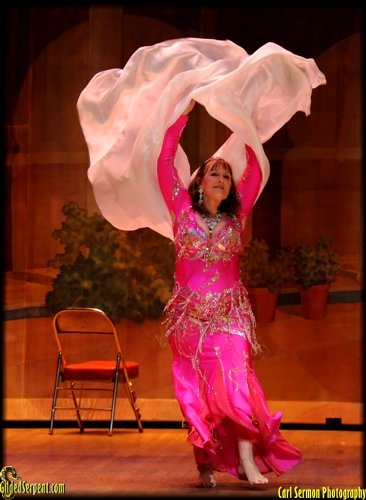
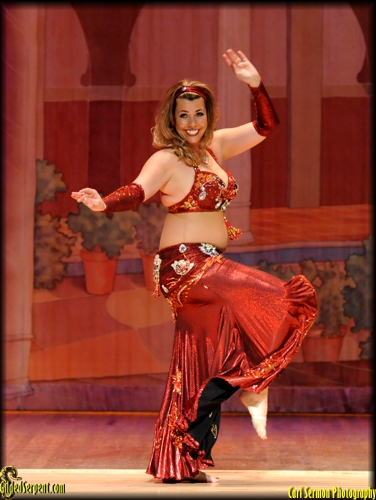
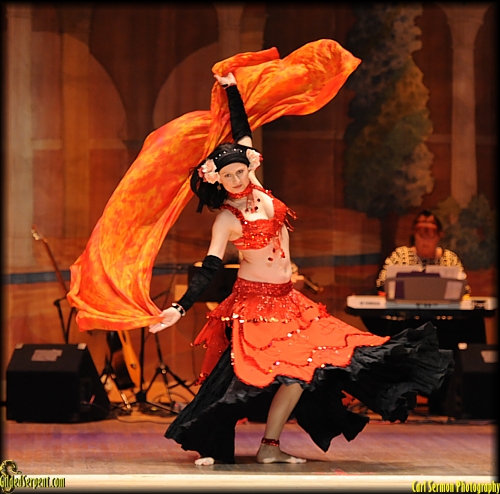
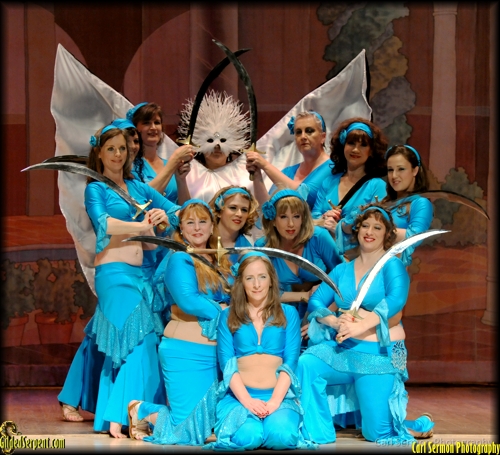
Rakkasah West Festival is held every year at various venues in the East Bay of San Francisco, California over Friday Eve, Saturday and Sunday. This year the event was held at the Richmond Auditorium.

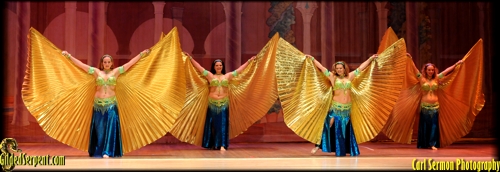
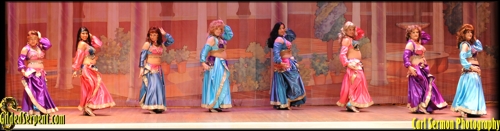
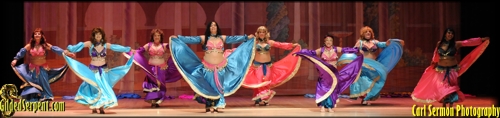
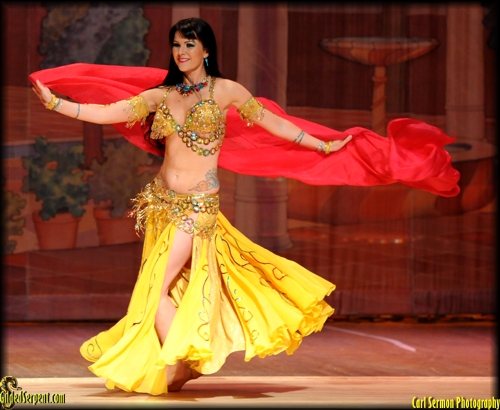
This is page 1 (A-J) of photos from Saturday, March 12, 2011.


Afrita of Germany

Afrita

Germany


Ahava

Ahava

Martinez, CA

Ahava


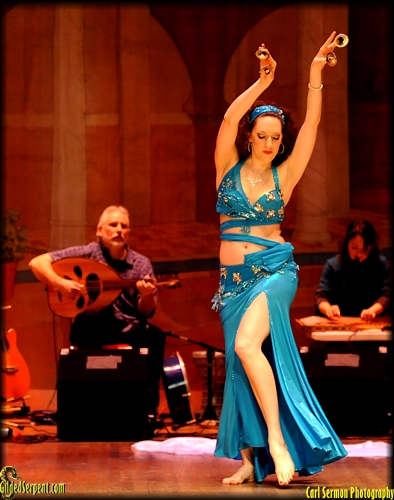
Al Azifoon

Al Azifoon

Yosifah and Nathan, Martinez, CA


Alea

Alea


Alnisa

Alnisa

Napa, CA

Alnisa


Aruba

Aruba


Ava Fleming

Ava Fleming

Phoenix, AZ


Bal Anat

Bal Anat

Albany, CA


Bal Anat


Bal Anat


Banat el Hoggar

Banat El Haggar

Richmond, CA


Black Diamond

Black Diamond

Rohnert Park


Black Opal

Ava Flemming with Black Opal


Black Opal- Nava

Black Opal- Nava


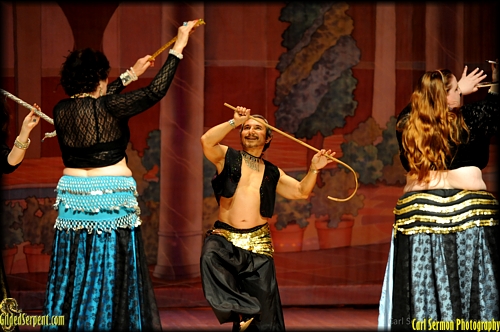
Dancers of the Cresent Moon

Dancers of the Cresent Moon

Siwa and Zorba, Santa Cruz, CA


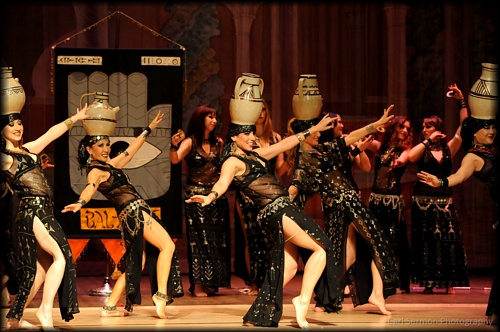
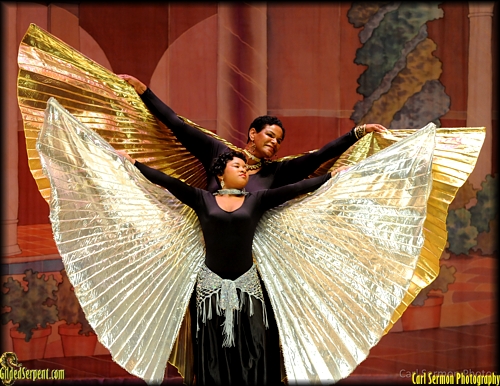
Dancers of the Pharoah

Dancers of the Pharoah, click above photo for enlargement

Pinole, CA

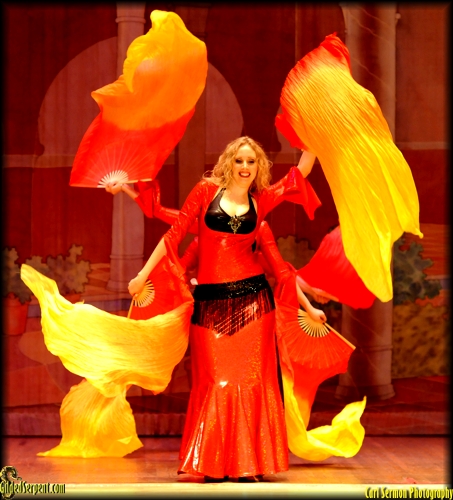
Shukriya


Dancers Heat

Dancers Heat Dancers, click above for enlargement

El Cerrito, CA

Dancers Heat


Elnora and Rhonda

Elnora and Rhonda


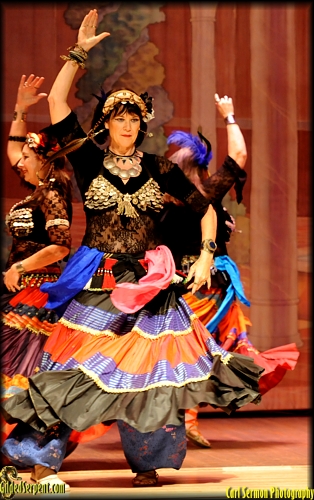
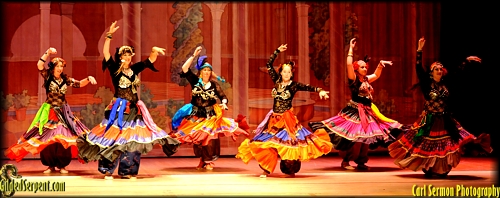
Fringe Benefits

Fringe Benefits

Chicago, IL


Fringe Benefits


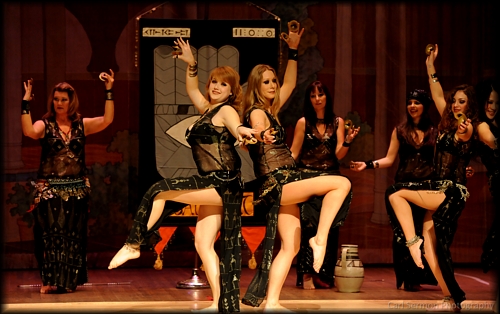
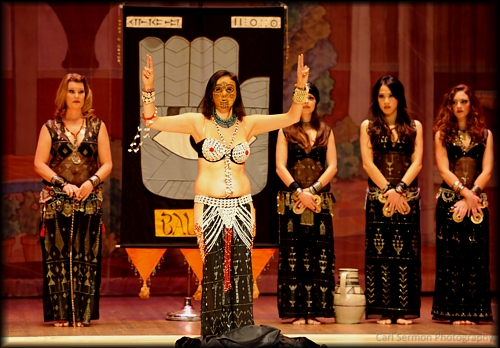
Hamsa

Hamsa

Lotus, CA

Hamsa


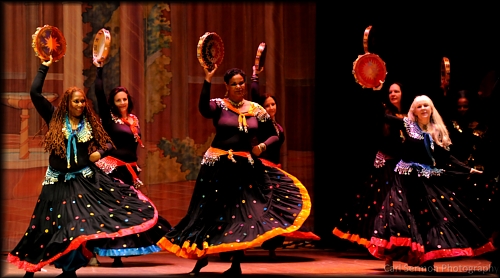
Hanna Lissa

Hanna Lissa


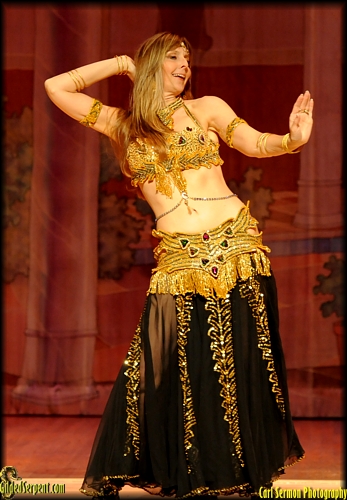
Jennifer

Jennifer/Jasmine

Walnut Creek, CA


Jewels of the North

Jewels of the North

El Dorado, CA

Jewels of the North


use the comment box

Have a comment? Use or comment section at the bottom of this page or Send us a letter!
Check the "Letters to the Editor" for other possible viewpoints!

Ready for more?

  • Rakkasah West Fest 2011, Friday Evening, Main Stage Only,
    Aisha, Arabian Jewels, Azura, Dancers of Denile, Ariellah and Deshreet, Tatseena and Dreams of Cleopatra, Elnora, Ghanima, Goddess Force, Halima, Diana, Inami, Khalilah, Latifa, Kiyoko, Leila Haddad, Shaida, Shadya, Tanya, Zia!
  • 9-26-10 A Dancer’s Perspecitive: 2010 Yaa Halla Y’all Belly Dance Competition by Iman, Photos by Carl Sermon and MsShuqa
    Yaa Halla Y’all is an action-packed, four-day event for all styles of Belly dance: Tribal, Alternative, and Cabaret.
  • 8-12-10 Abdominal Freakish Delights: Aboard The Queen Mary! Photo Report from MECDA’s Cairo Caravan 2010, June 4-6, 2010 PAGE 1 AND PAGE 2 by Ma*Shuqa Mira Murjan and Carl Sermon
    Staying onboard the ship Queen Mary makes the event special and a unique and amazing experience As you walk the long curved and richly carpeted halls, you realize that you really are aboard a stately ship–named after a queen–a ship that once sailed the Atlantic Ocean.

  • Gothic Bellydance has taken years to develop fully and define itself more exactly, but it has developed. Steampunk has different origins, but there are very specific things that are unique to it as well.
  • The Controversy, Learning to Love Eternal Debate
    The path of artistic innovation is not a forward pointing line; it is a pendulum. Art doesn’t move foreword cleanly; it bashes against ideas and is repelled by them! Movements emerge from conflict, not despite it.
  • As the Music Fades, Egypt’s January 25 Revolution’s Impact on the Muscians and Dancers
    Read more: Gilded Serpent, Belly Dance News & Events , As the Music Fades: Copyright 1998-to current date by Gilded Serpent, LLC
    We can’t attain what they had in the past because we are not free. Our minds are full of work and what we should and shouldn’t do. There’s no time for good art. Politics mixed with religion does not make for an atmosphere where the arts can flourish.
  • Sound-Byte Bellydance, Part One: Evolution of Bellydance
    Through her clear description of what she wanted to learn, I was able to look inside our recent dance evolution and see what we dance teachers in the west have done to change Bellydance here in the U.S., how we have changed and modified it into something it never was in the lands of its origins.
  • Our Changing Dance World, a Response to Leila’s "Dance for Dancers"
    Of course, we learn musicality and so forth, but where dance classes in some places are an hour long, teaching long choreography is not sustainable to an instructor.
  • Video Interview with Shadi of Diamond Pyramid on the Community Kaleidoscope
    Gilded Serpent interviews Shadi of Diamond Pyramid regarding the business scene since the Egyptian Revolution less than a month before this interview. This interview was conducted at the Belly Dancer of the Universe Competition in Long Beach, California on February 20, 2011
 

Gilded Serpent presents...

Fundamentals of Fusion

Tempest

by Laura Tempest Schmidt
posted April 17, 2011

Introduction:

There has been a great deal of discussion in the Bellydance community concerning the topic of fusion.  Usually on the table are the questions are what makes it fusion, how far is too far, why do fusion in the first place, what makes it good vs. what makes it bad. 

I am certainly no stranger to fusion – dance or otherwise.  I am physically the result of the fusion of multiple disparate cultures and religions, cultivated over several centuries on both sides of my family.  In my artwork, I have always mixed together not only different concepts but also the media that I use.  My spirituality is also the result of much blending over gathered experiences over my life.  You could say I’m wired to fuse. 

I’ve also been in the Bellydance community for over a dozen years now, and have been at the forefront and in the trenches, studying, tracking, and creating when a lot of the current fusions were conceived.  I’ve spent a lot of time discussing history and issues with individuals who have been the movers and shakers of this dance over the last 40+ years, making for a lot of different perspectives on the dance, opinions, and personalities, as well as making a lot of food for thought as I approached my own dance.  So I’ve done a lot of thinking (and then doing) about fusion, and I would like to share with you some things I’ve discovered.

Considering How Fusion Works:

When considering the concept of fusion dance, I believe there are two main kinds of fusion: layered and integrated.   A layered fusion is when two different concepts are brought together, and essentially are layered on top of each other, but aren’t blended together.

Layered fusion happens when you bring two very different dances together (for example, Classical Indian Dance and Bellydance).  While one can overlay Classical Indian Dance hand movements and arm positions (mudras) with Bellydance moves, the moves, per se, do not lend themselves to being combined together–the way the weight is applied when moving is totally different between the two systems.  So most likely when someone presents a fusion of these two dances, the movements will alternate between Bellydance and Bharatanatyam, the make-up and costuming will most likely be more Indian-influenced than Arabic, and the music may be a mix of both. (Solace’s “Satya” album comes to mind.)

Integrated fusion is produced when you bring together two different concepts that allow for them to be blended together to a certain degree, either creating moves that are a hybrid of sorts, or adding an element that changes the inherent quality of the original move.  Gothic Bellydance is one kind of integrated fusion, and Steampunk Bellydance is another.  Gothic culture brings its own aesthetic, music, attitude, and club moves to the dance, all of which add a distinct quality to Bellydance that is not limited solely to the look of the costuming, but how the movements are expressed and altered. 

Gothic Bellydance has taken years to develop fully and define itself more exactly, but it has developed.  Steampunk has different origins, but there are very specific things that are unique to it as well. 

Is the result of fusion a new thing? What is style anyway? Is a fusion a new creature?

Two common arguments against certain kinds of fusion used to discredit them are either: “Well, it’s not a new thing unto itself.” or “It’s too dissimilar to the original; it’s become something else.”  Honestly, I  don’t think that most fusionistas are looking to create a whole new creature, but rather a hybrid of sorts of their favorite elements.  Perhaps what’s really tripping folks up (besides their own perceptions and opinions) is semantics.  When I think of something as “X style of Bellydance”, to me it means that it’s a variation of Bellydance.  It is still clearly under the umbrella of Bellydance, but it is no longer just regular Bellydance.  The incorporation of elements, either through layering or integration, has modified the structure of the dance.  However, it can still be bred back to either parent. 

The pertinent fact is: style doesn’t inherently refer to the creation of an entirely different beast.

Webster defines style as a “distinction or title” or  “a distinctive manner of expression”.  Inherently, style is a modifier, an adjective or adverb.  In other words, it describes a “type” of something.  In fashion, a person’s style isn’t defined just by how they wear their clothes, accessories, make-up, hair, body type, personality, or behavior, but all of these things together.

If we were to simplify things, (we could break this down into subsections in each) Turkish Style involves movements that originate from the pelvis, fast and flashy accents, an external flow of energy outward, a preference to a certain look of costuming, and Arabic music plus Turkish rhythms and instrumentation. On the other hand, Egyptian Style has movements that originate more from the hip and abdomen, more “earthy” moves, an internal flow of energy, another preference for costuming, and orchestrated Arabic music featuring more Egyptian rhythms and instrumentation.  Still both are Bellydance, and they have overlapping moves and music.  Nevertheless, they are seen as different styles.  Obviously, they can be integrated together. Otherwise, we wouldn’t have yet another style: American Cabaret Style, which brings elements of not only Turkish and Egyptian styles, but also Lebanese, Greek, and whatever else was lying around in the melting pot of the ‘60s, ‘70s, and ‘80s club/restaurant scene. 

American Tribal Style and Its offspring, Tribal Fusion:

ATS is often described as a system of improvised group movement based on the fusion of Bellydance, Flamenco, and Indian Dance.  Essentially if you break it down, there’s the background of American Cabaret Style (movement and some North African/Tribal-inspired costuming and jewelry), there’s the upper body and arm carriage, hand-floreos of Flamenco (and the big skirts), and cholis, bindis, and jewelry of Indian dance/culture.  So a large portion of what identified the style as ATS is, in actuality, the merger of costuming elements with some accents from other dances layered and integrated into Bellydance–then, taking those movements and making a system out of them to use for “group improvisation”.   It took several years to arrive at its development, and was codified primarily by the original Fat Chance Belly Dance instructional videos.  This system was then modified by others to create similar systems. (Gypsy Caravan and Black Sheep Belly Dance to cite two major offshoots.) They tweaked the original moves, adding different cues and variations to the group improvisational part.  Are they entirely new systems of ATS?  No, they are different styles, and they can still take original ATS moves and use them. 

Tribal Fusion:

If we go back 8 to10 years ago, we’re looking at a whole different animal than we are now when we hear the term “Tribal Fusion”.  Back then, Tribal Fusion described either ATS pieces that were choreographed and incorporated other non-Bellydance elements, and/or were performed solo.  Additionally, it was used mainly in reference to a few specific groups located on the West Coast. Ultra Gypsy, Romani Urban Tribal/ Bellygroove, and Urban Tribal of San Diego come to mind first, but there were many others as well.  These groups, as they grew, sought to differentiate themselves from each other, incorporating different elements, and are best identified by the women at their helms: Jill Parker, Frederique, and Heather Stants.  Enter also, Rachel Brice, whom I first remember seeing performing solo in 2002 at Summer Caravan. Her dance distinguished itself by her extreme isolations/upper body work, yoga-inspired movements, and stationary stage positioning.  Frederique’s solo dance incorporated more hip-hop movements, while Heather’s brought in more modern dance flow and grace.  Costuming diverged, from even more embellished to extremely simplified. 

So, what brings them under the heading of “Tribal Fusion” is their personal styling.

Essentially, what Tribal Fusion has become, in its best-defined areas, is an expression of personal styling.  It’s not just one particular group of defined movements, but rather a collection of personalized movements, defined by the fusion elements dancers have chosen to incorporate, plus their choices of music, costuming, and staging.  Where it gets more tricky (in terms of Bellydance) is how far down the lane it has traveled from its origins, and ultimately, that can only be determined on a case-by-case basis.  Some groups have moved so far out of the Bellydance realm that they would best defined as “World Fusion Dance” or “Urban Fusion Dance” (such as Unmata), but even that becomes a loose umbrella-term, because it depends on what each group incorporates; therefore defined by their personal style.

People also seem to forget that fusion was happening well before the advent of Tribal Fusion, and it was happening with Cabaret/Oriental Style.  Dalia Carella has long had several styles of Bellydance that she performs, “Dunyavi” being one of her most well-known styles.  Amara (then SoCal, now Texas) started Evening of Experimental Middle Eastern Dance (EEMED) in 2001.  Dhyanis ran the Living Goddess Dance Theater for 13 years (ending in 2005, I think), which offered a place for fusion and experimental presentations of, mainly, Cabaret Style dance.   

Gothic Bellydance is a fusion that can be combined with either Cabaret or Tribal Styles because of the way in which it enhances the movement vocabulary and presentation. Because of this, it automatically becomes an umbrella-term as well with Gothic Tribal and Gothic Oriental dancers congregating underneath it, and then further broken-down to specific accents within the Gothic culture (such as Industrial, Cyber, Romantic, etc).  I currently view Steampunk Bellydance as also partially under this umbrella, or at least, a very close cousin.  Also, I am sure that, in a few more years, clearly, it will have its own very distinct parasol and related subcategories, because I can see them clearly, now developing around the world.  Essentially, both Gothic and Steampunk pass a very specific test.

  1. Are the moves clearly originating in Bellydance? Yes.
  2. Are there several key factors influencing how those moves become differentiated from the original moves? Yes. 
  3. Would I take those fused movements and perform them in a traditional Bellydance set? No.
  4. Can I incorporate traditional movements in the same performance in a way that makes sense? Yes.

So, it comes from Bellydance.  Clearly, it incorporates specific elements to change the character of those moves, and those changed moves would not make sense performed outside of that style, in a classic Bellydance setting. However, I could still bring those traditional movements back into the same performance.

I know the answers to this test to be true of most of the movements I teach for both Gothic and Steampunk Bellydance.  I can’t speak for other teachers, but I can vouch confidently for myself. 

Others ask, “If you remove the costuming and the music, will it still read as its own style?”  Well, I believe firmly that in any style, a performance is only complete if the music, costuming, movements, and presentation all correlate.  However, if you wanted to demonstrate the specific moves, sans the other integral pieces, obviously, I do it in workshops all the time when presenting and explaining the moves, and without the music.  In my movement-based workshops, costuming is only discussed in terms of how it can accentuate a move physically, or detract from it.

What doesn’t work?

Since we have discussed what makes an integrated or layered fusion, let’s look at what doesn’t make for a successful fusion.

Personally, looking back at the history of Gothic Bellydance over the last 10 years, and the more recent emergence of Steampunk Bellydance, there are some key things to point out, relating to what works, what doesn’t, and why.  I have spent the better part of the last 5-6 years considering what makes something Gothic, and forcefully driving those points home in the classroom and on the stage.  When Gothic Bellydance was first emerging, circa 2002-3, (The Gothic Bellydance Resource was created in early 2003.) it wasn’t so easy to pinpoint what makes it what it is and what doesn’t.  A lot of people have tried their hand at it (some successfully, some not), and the evidence abounds on DVDs and Youtube, for better or for worse.  One thing is clear, just because someone calls their performance a certain label, doesn’t make it so.

Why?  It is because real fusion takes a lot of work and careful consideration to be successful.  Not every attempt, even by an established artist, is going to be successful either, especially as a style is emerging.  However, the main issue is that some people think that just by switching out the music or the costuming, they are creating an instant fusion, but it doesn’t work that way. 

Before we even consider fusion, let’s take a look at “regular” Bellydance.  We often tend to glaze over the whole of it, but there are a lot of subtle differences, even within the larger titles.  We have classic and modern Egyptian, Turkish Oriental and Turkish Romani. We have the folkloric and folkoric-inspired dances – Khaleegy, Saidi, Melaya Leff – all of these dances have movements in common, as well as some of the music and instrumentation, and some of the costuming, but what definitively drives the point home for all of them is the combination of their specific music, costuming, movements, and presentation, thereby displaying knowledge of that art. 

It’s frustrating to see someone totally oblivious to 9/8 or Saidi rhythms or doing a Melaya Leff, looking like she is bored out of her mind, or claiming that she is presenting a traditional Khaleegy dance, while wearing a Turkish Oriental costume.  Wearing a big flowered skirt and tossing in a tambourine doesn’t make it authentic Romani.  When the elements and characteristics aren’t applied properly, it doesn’t work.  It requires a great deal of research, studying, and thoughtful application to know what to apply and when. 

In a similar vein, while not specific countries of origin, for many, Goth and Steampunk represent their own cultural identity–the modern village.  If you think that all there is to Goth is excessive squiggly eyeliner, vampire fangs, and Halloween music, you’re going to be entirely missing the point.  Goth is a culture, with several subcultures, with their aesthetics, literature, music, beliefs, gatherings, etc.  Likewise, if you think Steampunk is all about wearing bustles, goggles, and gears, you’re also missing the point and showing ignorance.  Steampunk is not as developed as the Gothic culture – yet, but even in just the last several years during which I’ve been personally involved, it has come a long way. 

It’s not just about playing dress-up (Although, let’s face it, we all love to.) there’s a rapidly expanding musical genre, a multitude of gatherings across the world where folks share their creations, debate what is/isn’t Steampunk and how it relates to our lives.  Its literary roots especially impact how designs and looks are created, expressed, and grown.  When we incorporate these characters into stage performance, we’re taking them out of the cosplay arena [dressing up as a character in a book, play, movie, etc.] and to the next level, and it has to be physically expressed through the quality of dance movements and the costuming, because we can’t take our airships on stage with us; can we?  I can rehearse a play in my yoga pants, and make an excellent job of depicting a queen through my words and actions, but to hammer the point home for a performance, I need to dress the part to make the transformation complete. When properly assembled, the costuming does, however, make for the best impact, for the overall performance when applied with the right music, movements, and presentation.

Just costume trappings don’t make for an authentic presentation or fusion dance, but unfortunately, a lot of folks assume that it does, and then, they go out, labeling their performances as such, causing the greatest amount of confusion in any style.  Fusion has to come from the inside out – intrinsically knowing and understanding what you’re doing, why you’re doing it, and how you’re doing it.

How Much is Too Much and What Makes It Different?

Pearl necklaceLet’s take this out of dance and look at it another way.  Let’s say that Bellydance is a pearl necklace – all real cultured pearls.  I’ll let you debate whether they’re more authentically from Egypt, Turkey, or somewhere in-between, but if you wanted to get specific, let’s say that the ones from Turkey are knotted on silk cord, and the ones from Egypt are strung, unknotted, on silk cord.  They’re both using the same pearls and the same kind of cord, they’re just applied in slightly different methods. 

Ok, so we have our pearls of Bellydance.  Now, let’s say we want to put something else in our necklace to accent the pearls, and we think Classical Indian Dance is the thing to do it.  Classical Indian Dance will be represented as beads made out of coral.  (Both coral and pearls come out of the ocean, but from different creatures.) We cannot put the pearls in the coral or vice versa, but we can string them next to each other, and we can make a gold pendant that has both pearls and coral in it.  These combinations would make the necklace a layered fusion.  Neither element is inherently changed, but it can be put together so that they compliment each other, and make a pretty necklace.  The gold pendant also speaks of another element being brought into the equation, and this could be the music and/or the costuming.  Nonetheless, our necklace is no longer just a pearl necklace, it’s a coral and pearl necklace with touches of gold.  It does not cease being a necklace just because there are new elements.  As long as we keep the portions of gold and coral less than the amount of pearls, it will read more as a pearl necklace.

You can continue to expand on this analogy by adding more jewelry components for each new element you wish to add.  Let’s say you want to bring in Modern Dance, and that could be represented by silver beads; if you mix the pearls with silver beads, the necklace reads alternating pearls and silver beads.  Or Hip Hop – let’s make that be represented by chain: so, instead of stringing the pearls on silk cord, they’re put on wires and interspersed with chain segments.  Once again, as long as the pearls are the main components, it will read as a pearl necklace – not the same as our original, but still pearls mixed with something.

However, if you start mixing pearls, coral, gold, silver beads, and chain, and the pearls are just a small feature in the necklace dotted here and there, it ceases to be a mainly-pearl necklace.  You can’t call it a pearl necklace anymore.  It is still a necklace, but it’s got too much going on to be clearly any one element. 

Now, how would an integrated fusion work with our necklace metaphor?  So we have our traditional pearls right?  Let’s bring Goth into the equation.  The Gothic culture brings its music, its aesthetic, its attitude, and some movement vocabulary.  If we equated the differences between Turkish and Egyptian as how the pearls were put on the string cord, we can view the music and attitude of Goth in a very similar light, so instead of a white silk cord, the cord may be black, or it may be made of leather instead.  The movement vocabulary and aesthetic could be looked at as different beads, but instead of being very different components, they much more easily can blend with our pearls, so essentially while we could dye our pearls black and accent them with small metal beads –  what happens with the actual dance, they become a different kind of pearl – like freshwater pearls.  It’s not just a layer of color on the top that can wear off, it chemically changes the composition of the pearl from the inside out.  They’re still identifiable as pearls, but they have a different sort of look, texture, and color.  Maybe toss in a few spikey beads as accents. Still primarily a pearl necklace, but it looks and feels different from the original pearl necklace.  So it’s still a pearl necklace, but it’s a different kind of style of pearl necklace. 

A Word About Steampunk:

Okay, so how about Steampunk?  Steampunk evolved differently from Goth, though Steampunk dancers have a lot of overlapping elements.  Where Goth pretty much evolved first from the music and its related aesthetic, spawning art, literature, more music, attire, and lifestyles, Steampunk started from literature, and that has inspired music, aesthetic, attire, art, community, lifestyles, and is evolving and expanding right now–before our eyes.  The music, especially, has grown exponentially in the last several years, and with it, various theories on how to dance to it.  Some bring the Gothic Club-dancing to it, some bring in Edwardian and Victorian dances, others bring 1920s to ‘30s dance, and so forth.  It depends on the music and the person dancing it. 

However, getting back to its roots in literature, when we take these concepts to the stage, we need to consider seriously the story being told, so that the chosen persona flavors how the character will move with the music, how she will dress, and how she will interact with the audience.  All of this equates to more than just dying our pearls brown and adding clock-gears to it.  If the character is aggressive (like an Airship Pirate), perhaps the pearls become very irregular freshwater pearls.  Or if she’s a Lady Adventurer, the pearls are encased in a delicate filigree cage of wrought metal.  Once again, it’s still a pearl necklace, as long as the pearls are the primary components, but their overall look and treatment has been altered.  

Why fuse anyway?

One last common question: Why do people fuse in the first place?  Some want to bring together their loves in one place.  Some dancers use fusion as an excuse to avoid things they don’t like.  As for me: clearly, I have boundary issues.  Like I said, I’m just wired to bring what inspires me together.  I can also understand that, for others, it’s a repulsive idea.  Some people cannot stand their potatoes and peas touching each other on the plate. I’ll scoop them all up on the same fork; thank you very much!  There’s nothing wrong with keeping it straight, and there’s nothing wrong with fusing if it’s done right, and brought to the right venue.  I believe firmly that tradition and innovation must coexist in order for any art to survive.

In conclusion:

I have always found myself in a bit of an odd spot in the community.  I am a big supporter of traditional dance (particularly learning it).  North African dance especially sends me into pure bliss!  Nevertheless, even while I have studied a lot of traditional dances from North Africa, the Mediterranean, and Near, Middle, and Far East, what I perform the most is fusion.  Even though I’m a huge supporter of creativity, I’m also heavily focused on doing it right.  I don’t like to go around declaring myself “the Gothic/Steampunk police”, but I will emphasize (in my classes, workshops, and writings) what to do and what not to do to make a successful performance.  I think (due in part to the heavy “under construction” phase the Steampunk culture is undergoing) I’m also not seeing a lot of performances that satisfy what I believe is Steampunk Bellydance either.  Gothic Bellydance followed this path as well, and that dance culture was much further along when it became fused, so I expect things to continue to grow more and more interesting as time goes on.

Lastly, I believe it is an excellent idea to challenge whether a performance is fusion or not (as long as it’s brought to the table as constructive critique vs. negative blanket statements, existing only as criticism).  When we constructively critique by considering what works, what doesn’t, and asking why, we foster growth and new development.  We make the dance better, stronger, and more beautiful by our exploration of both tradition and innovation.


use the comment box

Have a comment? Use or comment section at the bottom of this page or Send us a letter!
Check the "Letters to the Editor" for other possible viewpoints!

Ready for more?

  • Welcome to the Gothla! Dancing Along the Sulk Road Review of 3 DVDs
    The costumes are fabulous. It’s almost like—who needs all that dance technique if you’re wearing an enormous leather headdress that makes you look like an alien refugee from Star Wars? Tempest’s approach in particular is a painterly one, not surprising from a student of the Rhode Island School of Design.
  • "The First Tribal Cafe"
    It was the first all tribal belly dance event sponsored by MECDA IE and took place on August 21st, 2004 in Montclair, California.
  • "Dancing Darkly"
    This may come as a shock to many, but Gothic Belly Dance isn’t really a new phenomenon, and it’s not just centered in California. First of all, it’s simply a merger of two entities that go well together, like peanut butter and chocolate.
  • "The Art of Tempest"
    The first image, "Dance," is inspired by the Minoan priestesses and is a monotype/mixed media
  • 2-26-11 Not So Steam punk Belly Dance by Jasmine June
    Since Tribal Fusion is also easily accessible, there have been dancers who begin performing and calling themselves professional when really they are just hobbyists. A professional belly dancer would never label her dance genre based on an aesthetic.
  • 12-14-10 Tribal Fusion: An Evolving Dance Form by Jasmine June
    The biggest contrast between ATS and Tribal Fusion was that improvisation was the basis for ATS while Tribal Fusion, at least in its earliest phase, had a strong emphasis in choreography. This allowed Jill Parker to play around with musicality and to explore musical genres that were appealing to her.
  • 11-3-10 An Intro to Tribal Fusion by Jasmine June
    Since Tribal Fusion Belly Dance is a relatively new dance form, it is especially important to treat the genre with a level of professionalism, or else one runs the risk of discrediting the work of dancers who have dedicated their lives to creating and elevating Tribal Fusion Belly Dance.
  • The Controversy, Learning to Love Eternal Debate
    The path of artistic innovation is not a forward pointing line; it is a pendulum. Art doesn’t move foreword cleanly; it bashes against ideas and is repelled by them! Movements emerge from conflict, not despite it.
  • As the Music Fades, Egypt’s January 25 Revolution’s Impact on the Muscians and Dancers
    Read more: Gilded Serpent, Belly Dance News & Events , As the Music Fades: Copyright 1998-to current date by Gilded Serpent, LLC
    We can’t attain what they had in the past because we are not free. Our minds are full of work and what we should and shouldn’t do. There’s no time for good art. Politics mixed with religion does not make for an atmosphere where the arts can flourish.
  • Sound-Byte Bellydance, Part One: Evolution of Bellydance
    Through her clear description of what she wanted to learn, I was able to look inside our recent dance evolution and see what we dance teachers in the west have done to change Bellydance here in the U.S., how we have changed and modified it into something it never was in the lands of its origins.
  • Our Changing Dance World, a Response to Leila’s "Dance for Dancers"
    Of course, we learn musicality and so forth, but where dance classes in some places are an hour long, teaching long choreography is not sustainable to an instructor.
  • Video Interview with Shadi of Diamond Pyramid on the Community Kaleidoscope
    Gilded Serpent interviews Shadi of Diamond Pyramid regarding the business scene since the Egyptian Revolution less than a month before this interview. This interview was conducted at the Belly Dancer of the Universe Competition in Long Beach, California on February 20, 2011
  • Rakkasah West Fest 2011, Friday Evening, Main Stage Only,
    Aisha, Arabian Jewels, Azura, Dancers of Denile, Ariellah and Deshreet, Tatseena and Dreams of Cleopatra, Elnora, Ghanima, Goddess Force, Halima, Diana, Inami, Khalilah, Latifa, Kiyoko, Leila Haddad, Shaida, Shadya, Tanya, Zia!
 

Gilded Serpent presents...

Global Glances

@ documentaries

Homage to Mahmoud Reda: A Life for Dancing ­
Full-Tilt Boogie presents: Belly – Sensual, Scarred, Sacred

DVD Review by Zumarrad
posted April 17, 2011

For some, the pleasure of dance is about community bonding. For others, it’s about reverence for roots. In this review I look at two quite different DVDs that demonstrate how belly dance has travelled to places outside its first homes in the Middle East, and some of the ways participants there have expressed what it means to them.

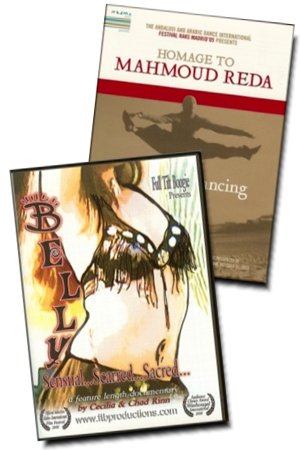
DVD coverThe Andalusi and Arabic Dance International Festival Raks Madrid 05 presents
Homage to Mahmoud Reda: A Life for Dancing

This DVD records a 2005 theatre show directed by Nesma of Madrid, in honour of the pioneer Egyptian folkloric choreographer Mahmoud Redas 75th birthday, featuring dance companies from Spain, Finland, France, Italy and Switzerland. Nesma is an ex-Reda Troupe dancer and according to the DVD’s cover, all the choreographies are by Reda, who is present for the show (as is Farida Fahmy, whom you see briefly onstage at the end).

I have not had the opportunity to watch many of Reda’s movies, so none of these choreographies (with the exception of the Ranet al Kholkhal duet), or their contexts, are familiar to me. However I believe any lover of Reda-style Egyptian folkloric dance would be hard-pressed to find fault with this DVD. The production quality is high, the sound is excellent, the camera work is just right and the performances are clean and of a solid quality throughout.

The show includes a montage of dance and gymnastics photographs of Reda throughout his life, as well as short clips from one movie that segues into a pretty tribute to Farida Fahmy. Other than that, it is a straightforward theatrical show with no fancy tricks or backdrops – and it’s all the better for it.

While this is emphatically not a teaching DVD it does offer keen-eyed viewers a chance to form a strong feel for the kinds of combinations, turns and footwork that we identify as Reda-inspired.

The dances, nearly all group pieces, also demonstrate how effective a tightly-performed choreography can be and provide lots of ideas for staging and costuming folkloric groups in a theatre show like this one. The costumes are varied and remarkably beautiful.

One drawback is that the show features just one male performer, so Reda’s famed take on masculinity in Egyptian dance isn’t really on display. Some viewers might also find the introductions and award-giving a little dull, but it’s great fun at the end to see all the dancers gather on stage and be joined by Reda for a few seconds of saidi.

It’s refreshing to be able to buy a guality performance DVD that reflects another part of our global belly dance community. Most of the well-produced material we can purchase easily tends to feature North American and occasionally British performers, and not much of it is folklore. This DVD demonstrates one form of Egyptian dance as it has been picked up and represented outside the English-speaking world. It is certainly a good advertisement for Raks Madrid and an inspirational starting point for any dancer keen to learn more about  Egyptian folklore.

Rating: 4 zils
Zil Rating- 4

DVD coverFull-Tilt Boogie presents:
Belly – Sensual, Scarred, Sacred

This feature-length documentary by dancer/filmmaker Cecilia Rinn is not going to be to everybody’s taste. Some people might even hate it, but I will unabashedly say that I loved it. It is flawed and messy and real.

The documentary looks at a slice of US belly dance culture and presents it largely unvarnished. Footage and photos of dancers in all kinds of situations, of all ages, sizes and abilities, are interspersed with excerpts from in-depth interviews with an equally eclectic range of dancers – some well-known internationally, some not. It’s globalized belly dance in action.

As Unmata’s Amy Sigil observes, the dance is taking place in a kind of self-supportive bubble to which the general public is really irrelevant.

The production values are not particularly high, but I love the way Rinn embraces the unglamorous and incongruous aspects of belly dance. If there’s a rubbish bin in the background or a light switch on the wall, she doesn’t shift her camera to try and disguise it. I loved seeing dancers performing in chilly-looking breezeblock halls, outside public buildings, at fairs, in cafes, on stages and at a slightly creepy-looking party. Rinn visits competitions and workshops. There’s a cute series of repeated scenes in which dancers – camera pointing out the car window into the night – giggle and get exasperated as they search in vain for the location of their gig. It’s all terribly familiar.

An agenda is pretty obvious in the title. The documentary presents belly dance as a sort of connecting point around which women circulate, finding healing, strength and solidarity. The participants talk at length about their experiences with belly dance, how others have responded to their involvement and what it has done for them. Because the interviewees are so varied, their stories and opinions are equally so. For me there is no “danger” of this documentary conveying untruths or being misleading because it’s so clear that each woman involved is speaking from her own perspective.

Belly is possibly a little too long, and there are a couple of sections I really question the point of (notably Amy Sigil’s story about a toileting mishap), but overall I appreciate the lovely jumble of seriousness and silliness that really does reflect how belly dance community life tends to be.

The greatest flaw in Belly is also its greatest strength.

The Middle Eastern aspect of the dance is conspicuous by its near absence – Delilah, never the poster girl for ethnic correctness, is one of the few people to even mention it. If I were teaching an in-depth class on belly dance culture I’d love to show Belly alongside Natasha Senkovich’s The Bellydancers of Cairo, then sit back and wait for the comparative discussion that emerged.

Rating: 3 1/2 zils
Zil Rating- 3


use the comment box

Have a comment? Use or comment section at the bottom of this page or Send us a letter!
Check the "Letters to the Editor" for other possible viewpoints!

Ready for more?


Gilded Serpent presents...

The Controversy

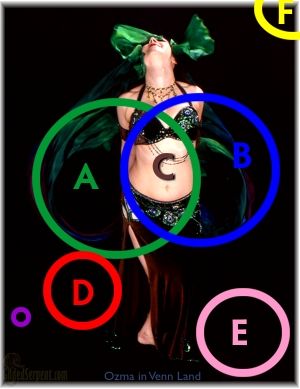
Ozma in Venn Land

Learning to Love Eternal Debate

by Ozma
posted April 13, 2011

  • When is it no longer Belly dance?
  • What does “natural evolution of the art” mean?
  • When does the past constrict the growth of the present and future?
  • What do we owe to the lands of the dance?
  • Is our awareness of the cultures of the origin of our dance manifesting itself as respectful, Orientalist, improper, or absurd?
  • Do our cultural accents prevent us from being authentic?
  • Do our cultural accents indicate that we shouldn’t even try?
  • Who gets to label things as authentic?

The pertinent questions go on and on… I wanted to reduce the above questions to only one that could summarize the core issues of the constant debate that exists in our dance. I have failed! I shall call them “The Controversy”.
Anyone who spends time in the dance community via workshops, classes, Belly dance publications, and message boards, is aware of what I am trying to embrace. These are the issues that spur unending comments, raised tempers, page after page of debate, and thesis papers, too. All of this effort is exhausting, but it is essential.

My background influences how I feel about The Controversy: I studied fine arts at the Milwaukee Institute of Art and Design. In order to earn a degree of Bachelor of Fine Arts, I was required to take liberal arts classes and art history classes alongside the studio classes in which I learned techniques, and where I created and discussed my art.

My introductory art history classes started with the following idea:

The path of artistic innovation is not a forward pointing line; it is a pendulum.

Art doesn’t move foreword cleanly; it bashes against ideas and is repelled by them! Movements emerge from conflict, not despite it.

You can be an artist without studying the history of your art form.

Some artists feel that the study of art history gives them a deeper understanding of their craft, while others find it a hindrance. It is also possible to be an artist without going to an art school; school simply provides a readily available community to learn techniques, to critique, and to enter into the debates between artists.

You can be an artist without an artistic community, but it is rough.

Unchallenged growth is often soft and pathetic. A secluded artist can become unfocused, uninspired, and weak. Unchecked progress can be unwieldy and tangled as artists spend undue time in fruitless pursuits. In isolation, there is nothing to which one can react (either for or against).Being active in a community where other people react to ideas and innovations helps focus, inspire, and strengthen artists. I don’t want blind encouragement to do whatever I want, whenever I want because that doesn’t help me as an artist or as a person. I want informed guidance. I need an artistic community to provide that guidance. For me, getting intelligent feedback requires openness to the full range of what being a member of an artistic community involves, including debate and dissent.bumpercars

The Controversy can be exhausting! It has no definitive answer; it has too many answers.

It cannot be solved for once and for all. It makes us sometimes sigh and say, “I can’t have this discussion again…” Sometimes, it keeps us up past 2am, screaming, “Someone is wrong on the Internet!” at our computers, cats, and loved ones.

The Controversy creates factions within our communities.

We draw lines, point fingers, and define ourselves in opposition as much as in allegiance. We brand each other as Belly dance police, feckless Fusionistas, or crazy, goddess woo-woo types. I object to such titles! They tend to chain intricately complex ways of being involved in the dance to their most zealot representatives.

Branding dismisses nuances.

Even the zealots have their place in the discussion, although I’d rather not have them at my dinner table. They are the unalloyed areas of the Venn diagram while most of us fall into the overlapping circles. The voices of the inflexible ideologues can help us pinpoint who and where we are. We need them… but in moderation. They can infuse debates; however, they can also be the reason we walk away from the discussion. We are better served by admitting our overlapping natures than adhering to only one belief.

The Controversy forces us to examine the dance, bringing forth ideas to investigate, inform, and define our artistic path.

The Controversy is the whetting stone against which new ideas are honed and old ideas retain importance. Innovations must prove themselves against traditional opposition just as traditionalists must prove cultural and historical relevancy in times of change.

It is possible to enjoy dance without engaging The Controversy.

You can enjoy art for its own sake without constant awareness of the history, culture, and conflicts. You don’t need to engage the debate constantly to explore the dance. Relentlessly being part of the debate will consume you. There are reasons it ebbs and wanes; there needs to be time to absorb and reflect after conflict. This is why the Controversy is sometimes in full-swing in a community and at other times it remains relatively dormant.

There are points on your artistic path where you need to make your own choices, define yourself, and disengage from the discussion for a while. We need safe places in which to explore ideas. Sometimes, we need shelter from the debate when it is flaring up, lest it overwhelm us when we are too vulnerable, but when it is our time to take a break from the debate, we shouldn’t unilaterally declare it toxic to all or irrelevant to the dance. It needs to be there for others…and for us to return to it when it is “that time” again.

The Controversy also exists for a reason beyond our personal artistic growth.

Controversy exists to protect and strengthen the cultural complexity of the dance.

Belly dance is, for most of us, a cultural import. It has a history and a culture different from our own. Those we brand as “Belly dance police” are often accused of trying to tie us inexorably to the past. Yet, if many of the traditionalists and scholars are examined more closely, you’ll find that there is a complex aspect of the dance they try to bring into the table frequently:

The cultures the dance comes from don’t exist only in the past, they co-exist and cross-pollinate with the new lands of dance.


Check out our archives listed by country! 40+ different countries!
Geo Gold

The dance was exported–but not in the way goods are exported: an object did not move from one place to another. This cultural export continues to exist and grow in the countries of origin as well as in its new adopted lands! Each land in which the dance exists contains unique accents and influences, just as every dancer engaged in the dance brings a personal narrative to it. The dance doesn’t live parallel lives in these separate lands and bodies: those lifelines meet, cross, and entwine.

I don’t know how to fully explain why I feel that changing the art without a willingness to grapple with the conundrum of those parallel cultures shows disrespect for many cultures and weakens the dance… The dance is ours, and it is also not ours. I suspect, like The Controversy, the issue cannot be reduced to a simple reason or two.

The trans-global nature of the dance has cancelled any one viewpoint holding reign over all, but that doesn’t mean we shouldn’t try to view it from as many vantage points as possible in order to do it the justice it deserves.

I do know that the Controversy often exposes me to a myriad of viewpoints. The Belly dance community is now international, multi-racial, multi-ethnic, and of many places on the socio-economic ladder. When other community members take time to explain how their background shapes their perspectives, it helps me grapple with my own narrative as a Caucasian American Ex-pat in Japan who primarily performs and studies Turkish-Romani influenced Turkish Oriental and American Cabaret styles. Being able to start understanding my own viewpoint helps me to better understand , although imperfectly, the cultural viewpoints of others. It guides me as I map out the trans-global complexity of the dance and how I should respond to it, engage it, respect it, and question it.

I don’t always like The Controversy, nor do I always behave my best within it. I often hate it. Sometimes, I feel that I hate other people within it unfairly. Still, it has opened me to ideas to which I would not have otherwise been exposed and critiques I needed to hear. It has spurned me to journal and blog until I have had my personal moments of clarity. It has strengthened my mind and made me question my techniques. It has helped me find like-minded and contrary friends internationally who are there for me when I need them and who disagree with me when I need it.

Controversy, thank you for being there (when I don’t want you to be) and existing when I need you. As much as you upset me, you balance me!

use the comment box

Have a comment? Use or comment section at the bottom of this page or Send us a letter!
Check the "Letters to the Editor" for other possible viewpoints!

Ready for more?


Gilded Serpent presents...

As the Music Fades:

Camp Negum
Band at Camp Negum Cruise 2010
L to R: Reda Saad, Kamel Gaffer, Gamel Fouad, Samir Grinch, Gaber el Nassa, Yousry Hefney.

Egypt’s January 25 Revolution’s Impact on the Muscians and Dancers

by Leila Farid
posted April 11, 11

It is easy to take my musicians for granted. Sometimes if I am performing in a large ballroom and my orchestra is situated in a polar opposite direction, I don’t even really see them. What I do notice however, is if one of my core musicians is missing. From the first few bars of the opening music I can tell if someone is absent.

I can become almost panicked if I know one of them will not be there for an important show. I have come to rely on them as musicians and realize that they are also my friends.

With the exception of my tabla player in 2005 and my violin player in 2006, most of my musicians have been with me for 8 years. We have shared more birthdays and holidays together than we have with our families.
We have lived through some things that we now look back on and laugh about – like the time our bus caught on fire, or the wedding where we had to calm the guests down.

On the way back from a wedding in Alexandria our bus caught on fire. Kamel, the violin player, who is almost blind, smelled the smoke before anyone else and was beating the other musicians with a his cane to try and get off the bus while the others, who had no idea about the fire, were trying to stop him.

Then there was the wedding in Assuite where a fight broke out between the guests during the first few bars of music (before I had come on stage). The groom begged the band to keep playing to calm the guests. The musicians were dodging flying chairs while playing, and in the chaos lost two mobile phones and a wireless microphone.

There were also times that were not so funny. After the last Camp Negum Cruise in the early days of the revolution, the musicians were tear gassed in the train station and their train cars were pelted with bricks and rocks as they returned to Cairo.

Also there was the recent loss of my long time accordion player, Samir Askar, who passed away suddenly in February.

But the most recent event we have experienced together is also the one of the most devastating to our industry- the loss of work because of the January 25 revolution in Egypt.

Directly after the revolution we had eleven weddings cancel with no new bookings. The Nile Maxim also stopped sailing for the first month. And when it resumed they asked all the artists to take a 50% pay cut with less than half the number of cruises. In order to work, I had to let some of my musicians go. I was one of the lucky ones. I still danced 6 weddings and have a trickle of new bookings. Even with a pay cut, I’m still working. Others have not been so lucky.

The cabarets of Harem Street were almost completely destroyed. Looted and burned, it will take months, if not years, to rebuild. Dancers whose shows were in hotels were cancelled altogether, no guests. The musicians who work with these dancers have lost all their income. All musicians pay into a union and fees are collected by this union at all events where musicians work. As of today, no money has been paid out by the union to any musician.

Musicians, as a group, are not considered for donations by traditional charity groups because what they do is thought of as “haram.” If someone is going to help them, it has to come from the inside. Amr Diab and Tamer Hossni have both donated money. But since there are around 2 million registered musicians in Egypt only a handful of people received 150LE (approx $26) each and stood for days in front of union headquarters to get it.

I wanted to do something more personal, to help the musicians I know. I contacted Lynette Harris of GildedSerpent.com with the idea of a charity concert. She put me in touch with Amina Goodyear of San Francisco who ran with the idea. She has organized a weekend of workshops and a benefit concert (www.aswandancers.org/Leila.htm). Most of the proceeds will go to a group of between 10 and 20 (depending on the amount raised) musicians from Cairo who are in serious need of support. The response has been overwhelming and the workshops are sold out!

Following are the stories of some of the musicians who work with me, to give an idea of what life is like for them pre and post revolution. We will watch as the real affect of the January 25th Egyptian revolution unfold in the coming months. Hopefully the benefits of self government and freedom will outweigh the current economic crisis, but as dancers we must help the people who give us the backbone of our dance….the music.

“Without music, life would be a mistake…I would only believe in a God who knew how to dance.” Fredrich Nietzsche

Gamel Fouad – Nay

How did you start with music?
My sister played the nay. I started to play her nay when I was 12 years old. When I was older I went to music school and learned how to read music and play all types of nays.

When you started did you think this was a good life?
Yes, this is what I wanted to do and I had talent. I also studied to be an accountant but left it for music. Inside everyone is something you must listen to. When that something is music, it is from God.

Was work better in the past?
Much better. There weren’t as many musicians and there was more work. But we didn’t make as much money then. We worked a lot and the money was little but our lives were good.

How do you feel about other musicians? Is there competition between musicians?
We started together, so we understand each other and are like a family. This orchestra I am with now I have played with many members for 17 years. The nayeties in Cairo are friends. We know each other and help each other out.

If someone needs an instrument or if we can recommend someone for a job, we do it.

Did you work with only dancers or also singers?
I have worked with both and sometimes at the same time. I have also played with a Takht. (A takht is a ensemble typically comprised of between two and five musicians.). I like working with dancers the best. I feel the most comfortable with them, more than Tarab, because this is what I feel inside. It is the work I have gravitated toward.

What do you think of foreign dancers?
I like to work with foreigners best because they are on time and they respect their musicians.

How do you feel about the money you make?
Before the revolution I felt I made enough to support my family. Now there is no money and no work.

Do you feel it will improve?
I don’t know, everyone is afraid. There are many things still undecided in the country. We are living in times of indecision.

You have not been well for a few years now. Is it difficult to play?
In the beginning, I had an operation that the musicians’ union paid for. When I needed a second one, they said they would pay but didn’t. I had to ask my friends for the money. Sometimes I am sad on stage now because even though I am sick I still must play to earn money for medicine. I also have a wife and three kids to look after. There is no government help anyone. And the money we paid into the union has disappeared.

My medicine is very expensive. Since I am no longer earning money I stopped taking it. I don’t know what will happen to me.

Do you feel there is respect for musicians in Egypt?
The people of Egypt love music but they don’t respect beautiful music or want it. They want only the marketable stuff. In the past, becoming a musician was hard. Families were against it. But now we are free to do what we want and most people believe that music is not a bad life.

Band recording in studio
Recording the new CD, Tarab, at the Maryland Sound in Heliopolos. photo by Miriam Abdel Aziz
Safaa Farid, Youssry, Reda, Magdy, Kamel on violin, Gamel on ney, Mohamed duff, Gaber on dumbek, Akmed kanoun player

Youssry Hefney-Tabla

How did you start with music?
I was young. By the age of 5 I loved the tabla. My father encouraged me and arranged for me to go to music school. But then I left to play for a children’s TV program. After the show I went to Mohamed Ali and Harem streets. I was the youngest tabla player there. I didn’t finish my schooling because I was working so much.

How did you choose to work with dancers?
I started playing for dancers on Mohamed Ali Street. I worked with a dancer who was also performing in Harem and with singers, but only for a short time. I liked working with dancers more. Dancers wake you up and it’s harder – I have to be on all the time, watching her.

A tabla player is like a tiger, smart and constantly watching.

Are the dancers of Mohamed Ali different from the dancers of Harem?
Of course. Mohamed Ali dancers work at neighborhood street parties and weddings. They only do it for the money. Harem dancers work because they also want to be artists. People come to nightclubs to see the dancers’ art.

You worked many years with Lucy, what was the best thing about her?
25 years with Lucy. She made me think all the time. She was constantly changing and never did the same show twice. I had to anticipate what she would do. She had more than one mergence’ and many tableaux.

She would give me cues from her waist for everything.

Was it better in the past then now?
Yes, we made money because we had more work and the cost of living was not high. The dancers knew which musicians were famous and paid good money for them to work for her. Now things are expensive and there are not many good dancers. In the past there were many.

Why do you think this is?
The dancers of the past danced for art and now it is for money. They just want to make a quick buck.

What caused this?
The government was not the problem. The economy is the problem. Anyone will undercut another to get work. The people used to care about art but now they only bring a dancer if she is not expensive. Also people are afraid of the Islamists.

We live in fear they will take over our country. Then they would stop the dancers and we would all stay home.

What do you think of foreign dancers?
They respect time and themselves. Sometimes Egyptians don’t respect their work. They say they are tired and don’t feel like dancing – and then don’t show up for the job.

What about foreigners’ dancing?
The one who wants to be good will be good, but it must come from the inside. Egyptians feel a good dancer and will say that she is good. The good ones succeed here and are requested. The rest just dance and then go back to their countries after a while.

What is next for you?
I want our work to come back. I love my work. Without work I am not happy. I play at home now to practice. Before, when I worked a lot, I would never play at home. Now I miss it.

Om Mohamed-Libisa (dresser)

How did you start working with dancers?
My son and my brother worked with Fifi Abdo. My son was her bookkeeper who paid the musicians and my brother was a bodyguard. I wanted to work so they told me to come make zagareet for her band. That’s how I met Mona Badr. I was her dresser for 4 years, then Safwa, followed by the singers Eman and Gawaher (Morocco). I also worked for Soroya (Brazilian/Egyptian) since Soroya worked in the same place as Gawaher. Then I worked with Nagla (Tunis), Amr (Syria), Busi Samir, two other Busi’s, Liza (English/Iranian) and now Leila (American/Egyptian).

There’s always something I liked about the dancers I worked for. One could be ugly but funny, another could be a bad dancer with a big heart. I liked them all.

Did any of these dancers do something strange before their shows?
Some were nervous before they danced, wondering what the guests would think. So to relax they would take their nerves out on me. I left two dancers because they smelled so bad I couldn’t be in the same room with them (names are not on the above list). No one I worked with drank or smoked drugs. Can you believe it? I’ve heard many stories from other dressers about dancers who were drunk all the time, but mine never were.

Some were constantly sick or worked so much they were tired all the time. But I would try to encourage them to give them strength, since one way or the other they still had to dance, even if they were exhausted.

Were there any problems working with dancers?
When I worked with cabaret dancers, we would finish early in the morning and I would go sit at the musicians’ cafe until the sun came up. That was to avoid my neighbors asking me where I was or what I was doing. People talk, even when they don’t know the truth.

What do you like about working with dancers?
It is clean and not difficult like factory work. I get to see many beautiful places, tourist places that I would never visit otherwise.

Your daughter and nieces work in the same field; did you encourage them?
Yes, because they are near me. Sometimes it is complicated to find the best way home for them when they are out late at night. But when we work together I know who they are working for and can make sure they are respected.

Do you feel that people respect belly dancers?
Not all of them. Some people don’t understand dancers. But the ones who understand it is art, they respect them. The dancers who dance without art or class destroy the reputations of those who do. The religious people lump all dancers together and say they are all bad, but I have worked with many dancers and know this is not true. Some are good people and respect themselves. Others do not. Our history includes dancers like Naima Akef and Fifi Abdo. They were real artists.

I like the foreigners because they respect the dance and are classy like them. They give work to so many people from their sweat. Many are generous and give to poor people. We must respect them.

Did you ever think to leave the dance industry?
Yes, but it was not my idea. My neighbors pressured me because they didn’t understand what I do. They made me feel bad about working with dancers. But I see what goes on behind the scenes, I know what I do is respectable – but people talk. Finally, I decided not to listen to them.

What do you think of the Egyptian revolution of 25 January?
There are good and bad things that came of it. The worst part is that money has disappeared for day workers. For us, artists are not working so we sit at home. No one wants to spend money on artists now. On the other hand, the revolution changed the system so maybe it will get better.

Dresser
Leila and Om Mohamed-2004 in Alexandria

Reda Saad-Accordion/Organ

When did you start to play music?
The first year I worked on stage as a musician was 1970 as an accordion player. My father was a musician and played the piano. My brother played the keyboard. I started with the singers Emad Abdel Halim, Kerry Mahmoud, Shafi Galel and Sabah. The first dancer I worked with was Zizi Mustafa. I have worked with dancers for 25 years.

You like to work with dancers more than singers?
Yes, because dancers work every day. Big singers only work once a month. I make more money and have a steady income.

You have played with many foreign dancers, was this a choice?
Of course. Let me tell you, if an Egyptian comes along now and wants me to play for her, I can’t. For every 20 Egyptian dancers there will be only one who knows how to dance and who does it for art. I can’t play for a dancer who isn’t any good. It makes me tired. Foreigners are the opposite. There are 19 good ones and 1 bad. In Egypt, the religious people make it difficult for Egyptian women to dance. People talk badly about them, so those who are smart and classy decide not to dance. Being foreign makes it easier. People don’t think badly of her, so she is freer.

How did you start to write music for dancers?
I wrote a song for Bussi Samir. Then I wrote a mergence’ for Leila. I like to write.

Even if someone hasn’t commissioned a piece from me, I still compose on the organ at home. I don’t like to sit in coffee shops or go out after work. So to relax, I play.

Do the people of Egypt respect musicians?
Many people respect musicians, although those who don’t understand our culture think it is haram. But there aren’t many. Often people get their ideas from their families and don’t think for themselves. They never ask what is right or wrong, they just follow. If someone tells them music is haram they believe it. But most Egyptians love music and listen to us. The irony is an Egyptian will say belly dancers are not acceptable, but will hire one for his daughter’s wedding.

We must think for ourselves and make our peace with God, not with others.

What do you think about making money from music?
I have always earned my living from music. It has been good to me.

What do you think of the Jan 25 revolution?
This had to happen, but real change will take many years. We need time to change people’s mentality. We have taken our ideas from Mobarak’s government. Unfortunately, it is still here, even after the revolution. We gave our new government to students of Mobarak. Since they learned from him, they don’t know how to think outside of his regime. Ahmed or the father of Ahmed, it is still the same person.

What about the state of Egypt after the revolution?
People are afraid to spend money. There is no work. Egypt is full of money but only a few people know how to earn it. We have tourism and the Suez Canal and electricity. We need to work together to return this money to the people.

I love Egypt and Egyptians are kind, but they are not thinking.

Do you think the Mobarak regime was good for artists?
Art has not been respected since the reign of King Farouk. Back then, people were free to think and experiment and made good art. Sadat, Abdel Nassar, and Mobarak were carbon copies of each other and didn’t appreciate art. They were always at war and interested in other things – especially amassing money. They kept the people poor. Poor people think about food, not art. Mobarak took over the government when I was 21. I have worked in music since Sadat.

We can’t attain what they had in the past because we are not free. Our minds are full of work and what we should and shouldn’t do. There’s no time for good art. Politics mixed with religion does not make for an atmosphere where the arts can flourish.

Kamel Gaffer-Violin

How did you start playing music?
I started to play when I was 9 years old. My first instrument was the violin. My father and his father were both musicians and they noticed I had talent. They hired a teacher and I studied for three years. From 12 years old I was playing on stage. I thought I was special then. People would cheer and request me. They liked to see the child prodigy.

You have poor eyesight. Was this one of the reasons you decided to be a musician?
My eyes were fine when I was a kid. But later, when I waited for work in the street after dark, my eyes couldn’t adjust to the bright stage lights. The older I got, the worse my eyes became. When I played for films, the movie lights also hurt my eyes. Now I can’t see very well.

You have many kids, are any of them musical?
I have 9 children, the youngest is in high school now. Balal is a great organist, Ali is an oud player and my two twin girls are singers. All of them attended the music academy.

How is your life as a musician, do you feel people respect musicians?
Musicians who start to play young can do nothing else. I know nothing but music. If you compare nations, for example Europe and Japan where I have traveled, there is tremendous respect for musicians. Here in Egypt, it is not the same. People think musicians are machines and can play on stage for hours. In other countries people know musicians are artists and that playing is physical labor and that we get tired.

Here we must enter the hotels where we work by the staff door. This says a lot about how we are not respected.

What do you think about the 25th revolution?
I was always worried the country was not being run properly under Mobarak. Now life is very hard. There is no work and no money in the bank. We have used up all our savings. We are starting to borrow money to live because there is no work. If musicians were respected, the government would have helped us. Our union would have helped us. But no one is helping us.

What do you think about the future?
If the Islamists win a majority in parliament of course they will make our lives difficult.

If they see someone with a violin case in the street, they might grab it and beat him.

What do you feel when you are on stage?
I am very happy on stage – I feel alive and that I am part of an orchestra, a member of a team. I feel the dancer’s every step and I want to play this on my violin. I am most happy when I am playing.

Leila’s Benefit Workshop Schedule

  • April 16-17, Washington DC- Yasmin Henkish www.serpentine.org
  • April 20, Manhattan, Alia Thabit of Vermont and Nicole Macotsis of New York. earth-goddess.com
  • April 23, Lebanon, NH http://www.raq-on.net/events.html
  • May 7 & 8, San Francisco, Amina Goodyear, SOLD OUT!
  • May 11, Long Beach, Tonya and Atlantis and Beach City Mecda,
    http://tonya-and-atlantis.com/ ?

If anyone is interested in making additional donations please contact the author for more information.

Leila has also produced a new CD, Leila Presents “Tarab, Safaa Farid Singing Classic Egyptian Songs for Dance”. This was produced in February 2011 just after the revolution to provide employment for musicians and part of the proceeds of the sale of this CD at all events will go to benefit musicians.

Band Relaxing
Band Relaxing-Circa 1990
L to R: Unknown, Gamel Fouad, Safaa Farid, Reda Saad


use the comment box

Have a comment? Use or comment section at the bottom of this page or Send us a letter!
Check the "Letters to the Editor" for other possible viewpoints!

Ready for more?

  • 2-3-11 Getting Home, Report from Cairo by Leila Farid
    As a new Egyptian national, I am proud that people are demanding their basic human rights, and at the same time, sorry for the economic hard times that have already begun here.
  • 6-17-10 Leila Delivers Live Music Under the Stars, Camp Negum 2010 photo and video report by Yasmin Henkesh
    Camp Negum did indeed happen May 4-8, 2010. It was everything Leila promised and more – 5 days and nights of music and dance classes, almost all to live music.
  • 12-16-10 Dance for Dancers by Leila Farid
    Art created for other artists will evolve differently from art created for the masses.
  • 2-16-10 Hot Bellydance Event in Tijuana by Martha Duran
    Leila Farid from Cairo Egypt is a sweetheart! She is what many Mexican dancers aspire to look and dance like. Wow! She is gorgeous and mesmerizing – as well as extremely nice, polite and down to earth! My star struck students were amazed to catch her snacking on Mexican Rancheritos (chips) and eating breakfast like a Mexican, with tortillas! She’s so fit that we couldn’t imagine she snacked on chips tortillas like the rest of us. Her master class was magnificent.
  • 10-14-08 Inside Peek at Making Music Videos: Hakim, Khalid Selim, Walid Toufic, Ali el Hagar, Elam, & Samira Said by Leila
    I was either crying or yelling at Hakim for most of the shoot and went home each day with a headache from it.
  • 7-15-08 Egyptian Wedding Stories by Leila of Cairo
    All the guests were staring at us. The father of the bride demanded to know who ordered the bellydancer and it seemed a fight was going to break out between representatives
    of the brides’ family and the hotel organizer.
  • 5-17-07 Interview with Kay Taylor by Leila of Cairo
    As Kay seemed a bit older and wiser to the ways of Cairo, many people assumed she was my manager. They would address their questions about my fee or my experience to Kay.
  • 12-30-06 I Dance; You Follow by Leila
    As Westerners interested in an Eastern dance form, we might want to ask ourselves if we are missing certain critical aspects of Raqs Sharki because we are not open to Eastern teaching methods.
  • 11-17-06 Interview with Safaa Farid by Leila
    These days there are times I feel I’ve seen everything an Egyptian dancer can do in the first five minutes of her show. She doesn’t change. But foreigners study the dance very hard and they put much time into their show so that is it interesting for a whole hour.
  • 8-16-07 What Middle Eastern Audiences Expect from a Belly Dancer by Leila
    Audiences in the Middle East, especially Egyptians, see bellydancing as something tobe participated in, critiqued, and loved (or hated) with gusto.
  • 4-10-11 Sound-Byte Bellydance, Part One: Evolution of Bellydance by Najia Marlyz
    Through her clear description of what she wanted to learn, I was able to look inside our recent dance evolution and see what we dance teachers in the west have done to change Bellydance here in the U.S., how e have changed and modified it into something it never was in the lands of its origins.
  • 4-7-11 Our Changing Dance World, a Response to Leila’s "Dance for Dancers" by Terry Del Giorno
    Of course, we learn musicality and so forth, but where dance classes in some places are an hour long, teaching long choreography is not sustainable to an instructor.
  • 4-6-11 Video Interview with Shadi of Diamond Pyramid on the Community Kaleidoscope
    Gilded Serpent interviews Shadi of Diamond Pyramid regarding the business scene since the Egyptian Revolution less than a month before this interview. This interview was conducted at the Belly Dancer of the Universe Competition in Long Beach, California on February 20, 2011
  • 4-5-11 Rakkasah West Fest 2011, Friday Evening, Main Stage Only, photos by Carl Sermon
    Aisha, Arabian Jewels, Azura, Dancers of Denile, Ariellah and Deshreet, Tatseena and Dreams of Cleopatra, Elnora, Ghanima, Goddess Force, Halima, Diana, Inami, Khalilah, Latifa, Kiyoko, Leila Haddad, Shaida, Shadya, Tanya, Zia!
  • 3-31-11 On the Road, Queen of Denial, Chapter 4, by Rebaba
    That night, I would find out that my arrival and subsequent feelings of having “made it to the top” couldn’t have been farther from the truth!
  • 3-30-11 Joweh’s “Call to Dance” in Guatemala, Part 2 of Dream Trip to Guatemala by Chloe
    Waiting in the wings of the nearly completely darkened stage, holding fire-colored fan-veils aloft, listening to the first strains of Egyptian orchestral music, I couldn’t help thinking that this experience was both familiar and foreign, in the literal and figurative sense.
 

Gilded Serpent presents...

Sound-Byte Bellydance

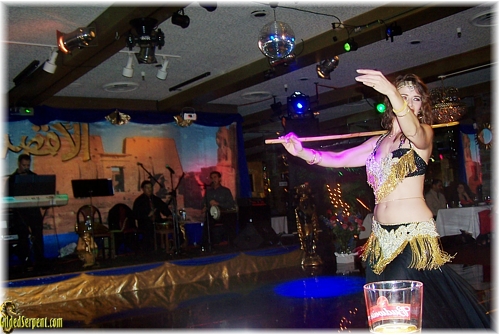
Najia entertaining at a club

Part One: Evolution of Bellydance

by Najia Marlyz
posted April 8, 2011

Epiphanies can be so rare! Yet, rarefied insights in teaching and coaching still happen. They prompt the most artistic and thrilling of all the learning that can take place in a dance studio. When it comes to any of the arts, it is in these small moments that the nature of dance (or other art) reforms, stretches, and changes to meet needs. 

Last week, while I was working with a dancer new to my coaching clientèle, I enjoyed another little epiphany as she gave me an explanation of what it was that she wanted to accomplish in her dance for her next spurt of growth. It felt as if a heavy, dark door had opened for me with a sickeningly loud squeak of protest.

Through her clear description of what she wanted to learn, I was able to look inside our recent dance evolution and see what we dance teachers in the west have done to change Bellydance here in the U.S., how we have changed and modified it into something it never was in the lands of its origins.

Perhaps what my new student wanted to know would never have been a question in a dancer’s mind even thirty years ago. She said she couldn’t figure out how to dance with out repeating moves “over and over again.” “I bore even myself,” she added.

To explain what I learned in that moment, I will have to start back at my entry into the world of Bellydance in Berkeley and Sausalito, California, at the start of the ‘70s. 

Back then, all of the lessons available concentrated on what we called “TBDM” (typical Bellydance movement) and most people assumed that those who studied Bellydance were looking for something exotic to fill our newly-awakened feminist yearnings for adventure. 

Probably, they were. Most of the dancers of the time were also dabbling in macramé lessons, Hatha Yoga, musical forays into foreign music classes and other artistic oddities, and it was rare that much information would be available to study—anywhere. I had poked through the stacks of the large libraries in Berkeley at the University of California where I had been studying Library Science (librarianship) and found some fascinating old descriptions of early dancers in the works of writers such as Flaubert, but not much was written about Middle Eastern dancing or dancers. With the exceptions of Serena Wilson‘s book of Bellydance instruction and a paperback I found written by Princess Nayeela, a Turkish Bellydancer in Las Vegas, written accounts simply did not exist back in the late ‘60s. By 1970, still, I had never seen a Bellydancer except in paintings and tapestries.


During the ’80s, Orientalist paintings (and there were many) became an object of ridicule by those dancers who were then fortunate enough to be able to fly to the Middle East and learn about the subject first-hand. While I admit that much of the Middle Eastern life depicted by early Victorian artists (circa the 1800s) was romanticized beyond common sense, still, a great deal of it does explain, in one painting after another, a way of life that had passed by in time—sometimes for the better and sometimes not. We aspiring dancers could not study home video tapes because there were none. Sometimes, we saw on TV those jerky old black-and-white films of Isadora Duncan flitting about the garden of her Temple of the Wings in Berkeley or Loie Fuller performing upon her light-box with gigantic, organic veils.  We sat through long Egyptian movies (without subtitles) in San Francisco theaters just to catch sight of the obligatory five minutes of Bellydance worked into the script. There were paintings of dancers in books and museums showing an array of costumes that seemed to imply motions that one could surmise was an intricate turn or a kick or a posturing of an exotic nature, and I was ready to love and emulate them all.

Then, I met Bert Balladine, who became my dance teacher and mentor. He had traveled and studied dance in the Middle East—though he was not of Middle Eastern origin. True, he had been part of a circus tour at the time he began to learn Bellydancing, but he had studied ballet and other dance of the time and also traveled extensively, attending semi-formal lessons in Bellydance along with other members of his circus company who were also dancers in ballet and other forms as well. When finally he returned to San Francisco, he saw that the time was ripe in California for teaching women’s lessons in Bellydance. Opportunity blossomed among the hip crowd, and he began teaching “newly-freed” housewives what he had learned while on tour with the circus.  He was not the first Bellydancer in the nation by a long shot, but he was definitely a pioneer of the dance here on the West Coast and was someone who had been dancing all of his life in show-business of one sort or another. 

At the time, Bert taught Bellydance technique with (predominantly) Turkish roots. He used, for the most part, music that had been recorded in America, for American tastes, by musicians such as George Abdo, Eddie “the Sheik” Kochak, and Richard Hagopian, as well as other Armenian and Greek bands who performed in small ethnic restaurants. At the time, it never entered my mind that it might be considered strange to study what was touted as a “female art” with a male instructor, but I learned quickly that there were only a very few males who danced the form, and they all had female dance partners. “Fine,” I thought, “I will study with him.” As for the music, the more foreign sounding and dissonant to my Western ears, the better I liked it.

When Bert and I began to partner-up, both dancing and teaching in the Greater Bay Area and beyond, there were no existing festivals for Bellydance and no pageants or contests between dancers. It seemed enough of a challenge to secure gigs or a spot dancing in a Broadway Cabaret. Another of Bert’s students, Sula Frick, ran a dance studio in Walnut Creek, California, and she had the innovative idea of starting a “pageant of Bellydancing” that would feature a small workshop for dance study and be followed-up by a contest to find the best Bellydancer—The Bellydancer of the Year Pageant! Bert and I performed together in Sula’s workshop and show, and we helped judge her contest—and we found it a grueling task!  Numerous dancers entered the contest, and all of them were required to dance to a vinyl-recorded routine by George Abdo called  “Raks Mustafa.” The routine was approximately 15 minutes long, and with so many contestants, the process of judging was daunting. I swore I would never judge another contest again (although, I relented a couple of times because of Sula’s persuasive arguments).

Nonetheless, what I did not realize was that the contest itself would begin to change, perhaps forever, the face of Bellydancing in the Western countries.

Over the years, the horrific task of watching many performers who had been trained for stamina in the trenches of professional Bellydance performances became too much to bear for the tender sensibilities of so many impatient audience’s derrières on hard metal chairs. The result was that the time allowed for each performer shortened—and shortened yet again. Contests with fewer contestants proved unworkable because it was the families and friends of those dancers who were competing who paid for tickets, making the production possible financially, if not profitable, for the sponsor.

Soon, more contests sprouted up with new sponsors who thought that they could improve upon Sula’s formula—until today. Now we have perfected the skill that I regard as the “Sound-byte Bellydance”: a brutally foreshortened Bellydance routine.

Najia and veilTo accomplish what I consider this New-Age style of Bellydance, one has to perfect one’s ability to present the obligatory entrance, middle, drum solo, and finale in seven, or even fewer, minutes! In many instances, this has become an entrance, drum solo, and finale.  Some Sound-Byte Bellydance consists only of an entrance and an elaborately choreographed drum solo while others pack in sword play, veils and other props! Because this is contest dancing, the contestant often feels compelled to “throw in the kitchen sink” (as Bert used to say). “Throwing in the kitchen sink” meant that the dancer must execute, in rapid-fire order, every step, movement, and gesture that the she had ever learned, often with an over-lay of shimmy and burst of Gatling gun-like finger cymbal playing. To assure that the contests are sufficiently influenced by inbreeding, the winners of the contests have often become the newest members of the panel of judges; therefore, each future winner would beget dancers who could excel at frenetic speed-dance. Rather like current day speed-dating procedures, contestants can be culled quickly and efficiently and next to no reality has to develop between the performer and her music as long as she stays on rhythm.

The entire performance of Bellydance used to be more satisfying and artistic, precisely because of elongated presentations allowing for development in the routine, usually exceeding fifty or sixty minutes on-stage without a costume change or a break, two or three times per night.

American dancers expected, in order to be professional, to dance non-stop for the lengthy time, much like the long Thursday night radio concerts of singer Um Khalthum were, and a dance set was comprised of an entrance, several tunes or songs, veil-play in the style of Turkish dance (on second thought, more like the veils of our classic forerunner, Loie Fuller), handling of a specialty stage prop such as the sword, cane, snake, candelabra, etc. as well as dancing the obligatory drum solo (while playing finger cymbals throughout), encouraging audience participation, and collecting tips to be shared by the dancer and her musicians, and at last, the finale. Phew! That was arduous work! It was skillful, athletic in physical flexibility and stamina, and it required quite a lot of play-acting and Orientalist fantasy as well as stagecraft. 

We dancers learned what we could about the dance and some of the Middle Eastern culture—in spite of the fact that few of us could even dream of going to the Middle East. We learned the differences between Western music and Middle Eastern music. We quickly learned all we could about show business so that we could hold our audience’s attention for such an extended length of time, and we learned how to work with live music and how to search for recorded music that could produce in us the inspiration to keep dancing. As I mentioned before, very few of us had gone to the Middle East, and not many of us had ever seen a real, live Middle-Eastern dancer, or even a real beaded Bellydance costume made in the Middle East. We learned to bead and sew our own—a process that took an average of two to three hundred hours for each costume. Most of us haunted flea markets and antique stores for items we thought we could incorporate into a convincing costume that nowadays would be considered Orientalist—or possibly some sort of fantasy tribal effect. Many of our early costumes were imaginative and made of objects that were saved from the Victorian times and the early travel souvenirs of our ancestors who steam-shipped abroad.

So, when my student asked to learn to dance in a more interesting way, it dawned on me that the effect of sound-byte dancing for the myriad of shows and contests has caused a metamorphosis of Bellydance and has produced Bellydancers who are fixated upon and overly-skilled in nearly meaningless movements and steps.

Few of them know how to present a dance that has “tarab” (feeling), drama, or musical content, because they are so skilled at frenetic movement to the point of absurdity. Most know how to dance on the beat, some actually dance on the rhythms but few know how to listen to the music with both ears. They are predictable and boring as well as lacking meaning in spite of the fact that they attempt to “throw in the kitchen sink.”

In a follow-up article, I will attempt to unravel further for you the personal art of dancing a full length set without your having to bite the head off of a snake or dance in ragged fishnet tights, wearing combat boots for attention. Perhaps I may convince you to study and/or teach your entire dance as an expression more fulfilling than those on YouTube snippets.

use the comment box

Have a comment? Use or comment section at the bottom of this page or Send us a letter!
Check the "Letters to the Editor" for other possible viewpoints!

Ready for more?

  • Improvisation: Method Behind the Madness
    One of the biggest mistakes we western Bellydancers have made is presuming that the dancing to which Arabs refer as the “Eastern Dance” is a theatrical dance that ought to be choreographed as if it were a ballet, or that its steps and movements are traditional like those of the Greek Hasapiko, an Arabic Depke, or a Hawaiian Hula.
  • The Taxim from a Dancer’s Perspective:Tarab or Tyranny?
    Sometimes, these improvisations can be quite elaborate. The effect is somewhat like modern jazz and stays within the framework of the traditional maqam or maqamat.
  • Back to Basics
    Belly Dance is most meaningful when we define it as a communication of mutually held emotional response and truths between people
  • Dancing Inside Out
  • Raks Assaya Instruction at Najia’s Studio
    Demonstrated by Rawan El-Mouzayen (Arab-American, age 3)
  • The “It Factor”
    Between the two men, my dance teacher and my artistic lover, how could I not learn to bring the movements from the core heart) to the outside?
  • Painting Dance -Fabulous!
    I’d like dancers to understand how the ideas of color, texture, tone, shading, etc. can also apply to the art of speaking through movement.
  • Music to My Ears, How I Learned to Hear Like a Dancer
    Musical interpretation is the single, most important skill that can elevate the Oriental dancer from the chorus line to the spotlight.
  • Dance for Dancers
    Art created for other artists will evolve differently from art created for the masses.
  • 4-7-11 Our Changing Dance World, a Response to Leila’s "Dance for Dancers" by Terry Del Giorno
    Of course, we learn musicality and so forth, but where dance classes in some places are an hour long, teaching long choreography is not sustainable to an instructor.
  • 4-6-11 Video Interview with Shadi of Diamond Pyramid on the Community Kaleidoscope
    Gilded Serpent interviews Shadi of Diamond Pyramid regarding the business scene since the Egyptian Revolution less than a month before this interview. This interview was conducted at the Belly Dancer of the Universe Competition in Long Beach, California on February 20, 2011
  • 4-5-11 Rakkasah West Fest 2011, Friday Evening, Main Stage Only, photos by Carl Sermon
    Aisha, Arabian Jewels, Azura, Dancers of Denile, Ariellah and Deshreet, Tatseena and Dreams of Cleopatra, Elnora, Ghanima, Goddess Force, Halima, Diana, Inami, Khalilah, Latifa, Kiyoko, Leila Haddad, Shaida, Shadya, Tanya, Zia!
  • 3-31-11 On the Road, Queen of Denial, Chapter 4, by Rebaba
    That night, I would find out that my arrival and subsequent feelings of having “made it to the top” couldn’t have been farther from the truth!
  • 3-30-11 Joweh’s “Call to Dance” in Guatemala, Part 2 of Dream Trip to Guatemala by Chloe
    Waiting in the wings of the nearly completely darkened stage, holding fire-colored fan-veils aloft, listening to the first strains of Egyptian orchestral music, I couldn’t help thinking that this experience was both familiar and foreign, in the literal and figurative sense.
  • 3-29-11 The Magic of "The Grapleaf", 1976-1997 by Sausan
    Back in the early ‘80s when I was performing at the Bagdad Cabaret on Broadway, a customer strolled into the Northbeach nightclub and told me about a little known restaurant
  • 3-25-11 Is "Cabaret" a Dirty Word? Using the Terms Cabaret vs. Night Club by Leyla Lanty
    So, is “cabaret” a dirty word? It depends on whose definition you want to use! In Arabic, the name “cabaret” is interpreted differently from what it is in English, leading to the confusion about nightclubs and cabarets. Here in the U.S., we think of a cabaret as a synonym for nightclub.
 

Gilded Serpent presents...

Our Changing Dance World

Author dancing at Scheharezade Restaurant in South San Francisco

Response to Leila’s “Dance for Dancers

by Terry Del Giorno
posted April 7, 2011

I enjoyed this article and all the comments very much. It was eloquently put to this ongoing dilemma that many performers and instructors face, particularly those who were professional dancers before they started teaching or, as Leila put perfectly, “ Acquired their fundamentals outside of the dance community”.

 By professional, I don’t mean a regular competitor in the many available contests, a "regular Hafla" producer of events, or a restaurant dancer who regularly scours or solicits new  restaurants and hookah bars as a venue for her talents (all lofty accomplishments). I am speaking of dancers who perform for Arabs in Arab venues, for their celebrations and family events like weddings and engagements as opening acts for their singers, and who are a part of their community.

When I first started teaching I had spent years in night clubs that catered to Arab clientele and their events, working with Arab musicians (not Americans playing Arab music) that were well known for hosting top Arab singers and  where the belly dance show was an intrinsic part of the entertainment.

I had lofty aspirations to train dancers to perform in this kind of format: 30-40 minute shows, to learn the music, to learn the culture, etcetra.

However, what was happening in the "belly dance world"  around me was a different story from how it is now.  A big source of pleasure for me was to dig my teeth into a nice long choreography (7-9 minutes) and present that for class study. Now I know better, I better keep it short! I had to keep in mind where the dancers of today are going to use the choreography. Of course, we learn musicality and so forth,  but where dance classes in some places are an hour long, teaching long choreography is not sustainable to an instructor.

It better be short, upbeat and adaptable to the festival or hafla environment. If you are a working dancer, performing it at a cafe or nargeely bar works, too…NOT a majenci, taxim, cocktail, balady, drum solo, finale.

The shorter, action packed dances appeal to the masses of dancers coming to class, many of them with no interest at all in performing, but who have come to love the benefits of our  dance and the community it brings. This style also appeals to the general Western public.

Petra Restaurant
Author dancing at Petra, top and bottom photo are at the Scheherazde

So, we have a large amount of talented dancers who have no experience in  performing in this format or seeing this, except in travel. In the San Francisco Bay area, there are no more (real) places like this to work or be a patron of.

We (Westerners) have created this incredible commerce that could never support a “traditional dance show"(meaning solo show), live music, enough time to organically transport yourself, and to take the audience to a different place (taraab).

A commerce that wants to “elevate” the dance by bringing it to the proscenium stage distances the dancer from an integral part of the experience: the audience. I know, I know…I’ll take heat on this one! But I agree, it does take the “Arabness” out of it. I believe some of my best dance teachers were my audiences! Placing the dance in a theater makes it more palatable to a Westerner. Personally, give me a smoky nightclub any night of the week!

Our current community economic enviroment has created events and festivals as an opportunity for women to perform ALL kinds of belly dance and ALL of its hybrids with time slots that are minimal, 5-10 minutes. Compare this to how some Egyptian dancers wouldn’t have even entered the dance floor until 2-4 minutes into their music!

We have an industry that prides itself on other standards. For example, I just watched the first session of Project Belly Dance and found it to be a beautifully produced video! We (Westerners) have created a industry that even Arabs are mimicking (Ahlan wa Sahlan Festival, Nile Group, etc.).

They may not be presenting what they perform, but they are catering to us and I hope reaping some financial success for their hard work with these opportunities- just as our version of their dance has afforded many Western women & men lucrative rewards. 

MusiciansI think we are and have been in a “new era of dance” for awhile. 15-20 years ago, tribal and urban dance was a twinkle in someone’s eyes. 15-20 years ago, Dina made us Westerners raise an eyebrow with her Dala3. Certifications were unheard of. For that matter, so was getting a Masters in Dance Ethnology.


What do Arabs think of our dance? I wish you all could have been a fly on my shoulder at a Rakkasah Festival many years ago when a very famous Egyptian lady saw “our” dance for the first time! Let’s say “majnoon” was mentioned several times throughout the day. An Arab band leader of mine stated after witnessing an American belly dance show, “Only in America”!

Whether we dance for Arabs or for the general public, we are all a part of the same family tree. Some are first cousins, some are very distant cousins who have married outside of their tribe (and moved to a different country!). Others married into it. Some of those family members will be disowned, some gossiped about, some will die, some will flourish, and the core members (Arab Dance) will be the glue that holds the family together and keep the blood lines going.

I like that I am on good terms with all of my relatives!

Scheherezade
Musicians in photo above left: Mohamed Ameen, def & tambourine, Nabeel Safi oud and
Singer, moi, Elias Khoury and Nizar Khwaja keyboard
Muiscians in above photo are Mohanned Elwir, Mohammed Ameen and Elias Khoury
… Plus the lilac colored costumes was one of Mish Mish‘s creations!

use the comment box

Have a comment? Use or comment section at the bottom of this page or Send us a letter!
Check the "Letters to the Editor" for other possible viewpoints!

Ready for more?

  • 10-7-07 Glimpses Into the Past:On DVD at Last! by Terry Del Giorno
    Some current dancers may find that the sentiment of the 70’s feels alien and therefore unable to relate to it. However, I believe many dancers will be thrilled to see faces attached to the names of some of our dance legends like Bert Balladine in Gameel Gamal.
  • 12-16-10 Dance for Dancers by Leila Farid
    Art created for other artists will evolve differently from art created for the masses.
  • 6-17-10 Leila Delivers Live Music Under the Stars, Camp Negum 2010 photo and video report by Yasmin Henkesh
    Camp Negum did indeed happen May 4-8, 2010. It was everything Leila promised and more – 5 days and nights of music and dance classes, almost all to live music.
  • 8-16-07 What Middle Eastern Audiences Expect from a Belly Dancer by Leila
    Audiences in the Middle East, especially Egyptians, see bellydancing as something to be participated in, critiqued, and loved (or hated) with gusto.
  • 12-30-06 I Dance; You Follow by Leila
    As Westerners interested in an Eastern dance form, we might want to ask ourselves if we are missing certain critical aspects of Raqs Sharki because we are not open to Eastern teaching methods.
  • 4-6-11 Video Interview with Shadi of Diamond Pyramid on the Community Kaleidoscope
    Gilded Serpent interviews Shadi of Diamond Pyramid regarding the business scene since the Egyptian Revolution less than a month before this interview. This interview was conducted at the Belly Dancer of the Universe Competition in Long Beach, California on February 20, 2011
  • 4-5-11 Rakkasah West Fest 2011, Friday Evening, Main Stage Only, photos by Carl Sermon
    Aisha, Arabian Jewels, Azura, Dancers of Denile, Ariellah and Deshreet, Tatseena and Dreams of Cleopatra, Elnora, Ghanima, Goddess Force, Halima, Diana, Inami, Khalilah, Latifa, Kiyoko, Leila Haddad, Shaida, Shadya, Tanya, Zia!
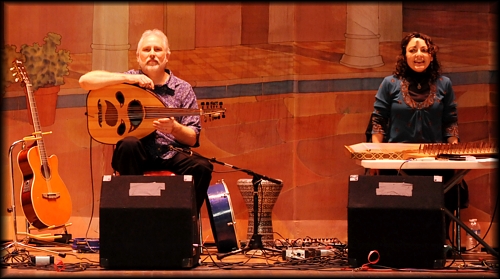
  • 3-31-11 On the Road, Queen of Denial, Chapter 4, by Rebaba
    That night, I would find out that my arrival and subsequent feelings of having “made it to the top” couldn’t have been farther from the truth!
  • 3-30-11 Joweh’s “Call to Dance” in Guatemala, Part 2 of Dream Trip to Guatemala by Chloe
    Waiting in the wings of the nearly completely darkened stage, holding fire-colored fan-veils aloft, listening to the first strains of Egyptian orchestral music, I couldn’t help thinking that this experience was both familiar and foreign, in the literal and figurative sense.
  • 3-29-11 The Magic of "The Grapleaf", 1976-1997 by Sausan
    Back in the early ‘80s when I was performing at the Bagdad Cabaret on Broadway, a customer strolled into the Northbeach nightclub and told me about a little known restaurant
  • 3-25-11 Is "Cabaret" a Dirty Word? Using the Terms Cabaret vs. Night Club by Leyla Lanty
    So, is “cabaret” a dirty word? It depends on whose definition you want to use! In Arabic, the name “cabaret” is interpreted differently from what it is in English, leading to the confusion about nightclubs and cabarets. Here in the U.S., we think of a cabaret as a synonym for nightclub.
 

Gilded Serpent presents...

Rakkasah West Fest 2011

Friday Evening, Main Stage only

Photos by Carl Sermon
posted April 5, 2011

Rakkasah West Festival is held every year at various venues in the East Bay of San Francisco, California. Sponsored by Shukirya and Michelle Devine, this year the event was held at the Richmond Auditorium. This group of photos is from Friday, March 11, 2011. The band feature this day was Pangia of Mt Shasta, headed by Pat Olsen and Denise. More photos will be coming soon of the performances on Saturday and Sunday.


Aisha of Ixtapa, Mexico
Aisha Isir Layan of Izxtapa, Mexico


Arabian Jewels
Arabian Jewels of Lodi, California

Azura of Seattle, Washington

Dancers of Denile
Dancers of Denila and Latifa from Sausalito, CA


Ariellah and Deshreet Dance Company of San Francisco

Ariellah and Deshreet Dance Company of San Francisco


Dreams of Cleopatra

Tatseena and Dreams of Cleopatra of Dublin, CA


Elnora of Richmond, CA

Elnora of Richmond, CA


Ghanima Gaditana ofSanta Clara, CA

Ghanima Gaditana of Santa Clara, CA


Goddess Force

Goddess Force and Zadiyah of Castro Valley, CA


Halima and Diana

Halima and Diana


Inami

Inami of Tokyo, Japan


Jaouahir Tahoe of South Lake Tahoe, California

Jaouahir Tahoe of South Lake Tahoe, California


Jewels of the Nile

Jewels of the Nile

Jewels of the Nile and Alana of Simi Valley, California


Khalilah Samah of Walnut Creek, California

Khalilah Samah of Walnut Creek, California


Kiyoko

Kiyoko of Tokyo, Japan


Leila Haddad

Leila Haddad of Paris, France


Open floor with Pangia

Open Floor with Pangia


Shadia

Shadia of Sacramento


Shadya of Charlotte, NC

Shadya of Charlotte, North Carolina


Tanya Saahira

Tanya Saahira of Oroville, California


Zia! and Sherry Briar of Corte Madera, Ca

Zia! and Sherry Briar of Corte Madera, California


use the comment box

Have a comment? Use or comment section at the bottom of this page or Send us a letter!
Check the "Letters to the Editor" for other possible viewpoints!

Ready for more?


Gilded Serpent presents...

Beginnings Made Easy:

Lara reviews 3 Beginner Belly Dance DVDs

Basics, Improv, First Shows!

DVD Reviews by Lara Adrienne
posted April 4, 2011

The three videos discussed in this review are:

  • “The American Dancer Series, Volume 1” by Cassandra,
  • “Belly Dance Show Basics for Beginners” by Tanna Valentine, and
  • “The Improvisational Toolkit, Part 1” by Nadira Jamal.

Cassandra’s video focuses on basic technique, Tanna Valentine’s on a dancer’s first show, and Nadira’s DVD is geared to the dancer who wishes to begin or improve improvisational performing. They all contain valuable information for their targeted audiences.

Cassandra intro“The American Dancer Series Volume I” by Cassandra

There is great instruction on this DVD, but it lacks oomph!
This beginner level DVD, produced in 1997, starts with a full-length on-stage solo by Cassandra. Cassandra’s performance showcases her rich dance vocabulary, understanding of the music, and impressive flexibility.

She is very comfortable on stage, a pleasant dancer to watch and has particularly fluid, graceful arms and hands. However, the production quality of the solo portion is not high; it is grainy, detracting from the viewer’s enjoyment.

Following her performance, Cassandra appears in a no-frills setting and plain workout clothes, introduces herself, and emphasizes the importance of proper posture. She takes the viewer through a short series of warm-up exercises, encouraging students to do more repetitions than are done in the video. She describes both the warm-up exercises and the dance movements clearly and completely, minimizing the risk of injury to the practitioner.

Cassandra explains concisely several basic arm, ribcage, and hip exercises, using body imagery to help the viewer understand the source of the movement and how to create it. Following the introduction of moves, Cassandra does a few basic traveling combinations as well as a short lead-and-follow dance section. Again, her explanation throughout the video is very clear, a bit serious, and easy to understand and visualize. I would recommend this video to anyone who is fairly new to Belly dance, the absolute beginners, and to the beginner level Belly dance student who needs more explanation to “get it”.

3 zil rating
Rating:  3 zils

Show Basics by Tanna“Belly Dance Show Basics for Beginners” byTanna Valentine

First learn to dance, then watch this video!
Tanna Valentine’s three-hour DVD is beautiful, professionally produced, and has an interesting concept: how to create a full Belly dance show from start to finish. It includes a lot of information, from the history of the American Cabaret stage show, to basic posture, introduction of moves, staging a show, costuming ideas, and a make-up tutorial.

The video is geared toward dancers who have been taking Belly dance lessons for awhile and want to perform for family, friends, or a “special someone”, but perhaps, are not yet familiar with the components of a full-length show.

A considerable portion of the DVD is a choreography section. The choreography demonstrated in the video is less of a choreography and more of a sequence of basic moves that can be applied to different songs, but doesn’t necessarily belong with any specific songs; it is a loose choreography. This segment of the DVD provides several good examples of what types of moves to use in your entrance, veil, audience participation, chiftetelli/floorwork, drum solo sections, and explains the emotional quality of each section. (As a dancer who does mostly Egyptian style veil–I swish it around a few times and get rid of it–I learned a few tricks in the veil section.)

During this choreography, or “moves” section, Tanna briefly covers the mechanics of a hip shimmy, snake arms, hip drop, figure 8s, simple traveling steps, and other beginner moves. There were a few explanations of movements (for instance, using feet and ankles to drive a vertical hip figure 8, and the “busy-knee” shimmy), that would be considered by some instructors to be an improper explanation of technique. Tanna does not claim that this video is a substitute for Belly dance training and encourages the viewer to find a local teacher in addition to this DVD.

There is also a significant amount of time spent on costuming. Throughout the video, Tanna appears in several gorgeous professional costumes, but there is also a section dedicated to describing the most basic of costumes to the most elaborate professional costumes, and how to create your own for an amateur show for an intimate audience, a really creative and fun part of the video. She followed this with a basic, but valuable tutorial on how to do performance make-up.

I would recommend this video, not only to the dancer who would like to do a performance at home or for friends, but also as a good tool for the pre-professional (the dancer who knows how to dance but doesn’t yet know how to give a show).

3 zil rating
Rating:  3.25 zils


Nadira's Toolkit“Improvisational Toolkit” by Nadira Jamal
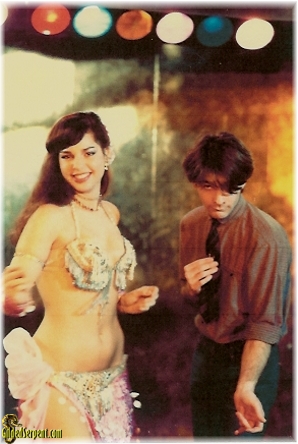
I loved this video! My first impressions were critical. My inner glamor-queen wanted to know why Nadira didn’t wear heavier makeup with her bedlah in the performance section and cover photo. While fast-forwarding through the chapters,

I noticed the “noodling” exercise and felt skeptical, thinking that it looked rather silly. However, Nadira quickly grew on me!

The video starts with a basic warm-up. I quite liked the “conductor stretch” for deeper relaxation in the neck followed by “noodling” exercises to help the dancer discover movements that she enjoys. Between explaining, then demonstrating the exercises, Nadira replaces herself with an image of picturesque of Istanbul, allowing the dancer time to practice what has been introduced without visual cues from the instructor. The exercise is accompanied by a “journaling exercise”, something that is often helpful but usually neglected in dance practice.

Nadira gives several cues to awaken the moves that are already in a dancer’s movement vocabulary, and different ways to use moves she already knows. The drills of “safety moves” call upon the dancer to identify, vary, and transition between movements with which she is most comfortable, and Nadira’s verbal cues during both the safety moves drills and the “plug and play” choreography stimulate creativity. A dancer using video may be impressed by her own inventiveness.

This video could be helpful for someone who is new to performing, a dancer who relies heavily on choreography, or a more seasoned dancer who may be comfortable improvising, but wants to explore new ways to use her skills.

Zil Rating- 4
Rating: 4 zils

Conclusion:

There is something valuable to be gained by watching each of these videos.

Cassandra’s video contains excellent descriptions of technique for the beginner student who has had very little to no experience Belly dancing, or the beginner student who is struggling in a “follow the bouncing butt” class and craves more detailed breaking down of moves. Tanna Valentine’s video is both entertaining and has valuable tips, tricks about nearly every aspect of structuring and executing one’s very first Belly dance show. Nadira Jamal’s DVD teaches a creative and useful approach to improvisation for performance, and may give the dancer an opportunity to realize just how much she already knows as well as the confidence to use it.

While all three are classified as “basic” level videos, one is geared to the absolute beginner, another to the newer dancer ready to perform, and the third to the performer who is ready to graduate from choreography to improvisation; a dancer should take care to choose the correct one for her current developmental stage.


Cassandra’s
is available through

Turquoise Intl
$for 34.95


use the comment box

Have a comment? Use or comment section at the bottom of this page or Send us a letter!
Check the "Letters to the Editor" for other possible viewpoints!

Ready for more?


Gilded Serpent presents...

On the Road

Stage shoot with boyThis photo was taken during a photo shoot on the stage of Le Beyrouth, by our "in­house" photographer, who also became my good friend, Freddie. I had Freddie take this series of photos after I had accepted my first contract with my new agent. She needed current photos to send to my prospective employers. The owner of the Beyrouth allowed us to use their stage one afternoon to take these photos. The young man was Freddie’s assistant who jumped up and joined me for an impromptu dance!
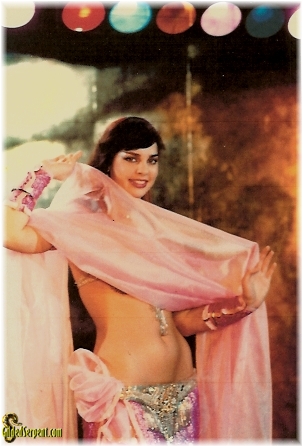
Queen of Denial, Part IV

by Rebaba
posted March 31, 2011

The owner of the newest supper club/cabaret in Athens’ Constitution Square looked like “the Godfather” or Marlon Brando in the Godfather film!  Very grim-faced as if he were cut of stone and his face would crack if he dared change his expression! I was rushed through customs at the Athens airport and driven into town in a huge Mercedes sedan making me feel like a star arriving for an engagement at some swanky supper club!

That night, I would find out that my arrival and subsequent feelings of having “made it to the top” couldn’t have been farther from the truth!

One night, after work at Le Beyrouth, a genuine “swanky” supper club in Paris, France, (where I had been performing for the last four months), a woman approached me as I was leaving and gave me her business card. We met the next day and she thrilled me with tales of traveling around the world, dancing on the crème de la crème of stages while performing on the African and Middle Eastern Cabaret circuits.  She was a retired entertainer who along with her husband owned a small theatrical agency in Paris, devoted to cabaret entertainers. She and her husband became my first theatrical agents. 

The year was 1980, and I was then performing at one of the top supper clubs in Paris for Middle Eastern entertainment, “Le Beyrouth”.  However, I was far from the only Belly dancer in Paris, and after being the featured dancer at Le Beyrouth there were a limited number of venues to move to in Paris (as dancing at Le Beyrouth was, in fact, “making it to the top” in Europe at this time). Therefore, the idea of traveling was sounding like the very thing I needed to keep myself a commodity in this very competitive business.

I decided to accept my agent’s first contract to dance seven nights a week in Athens, Greece: one show a night, all accommodations paid, a food stipend, and round-trip airfare to and from Paris along with a nightly salary that was more than I had earned to date.

  The venue was a brand-new nightclub in the so-called “upscale nightclub district” of Athens (as compared to the “touristic” Plaka district), Constitution Square. I was going to be performing for the upper crust of Athens society, or so I was told.  There would be no backpacking tourists for me, only well-heeled Athenians who could afford to go to the restaurants and nightclubs in Constitution Square!  It would be nothing but the best for a veteran dancer like myself who had been the featured Belly Dancer at Le Beyrouth in Paris!  While my agent did her job of successfully filling my (slightly bloated) head with all these silly notions of stardom, little did I know that my worst performance nightmare was about to come true…

I was escorted to my very own furnished apartment, which was walking distance to the restaurant/nightclub.  The owner said he would swing by and pick me up my first night since I didn’t know the area, and I was the “Star” of his new show!  Boy! I was feeling as if  I were in a dream, with this darkly suited-up man, looking every inch like a mafia boss, telling me I was his “Star” dancer!  He said all the other dancers were so excited that a “real artist” from Paris was joining the show. 

Now I should have gotten a clue when he said “all” and “real”. (Like, what were they?) Nevertheless, my head kept swelling with pictures of me, dancing in front of the huge Bouzouki Band that he had hired to play just for my show.

Evening couldn’t come soon enough, and I was ready, dressed to the nines with my costume for the evening carefully packed and ready to go.  When we pulled up to the front door of what looked more like an upscale Chinese Restaurant than an exciting new evening venue, I still held my hopes high, looking at the large picture of myself lit-up in the window at the entrance.  I was escorted in through the front doors; hmm, no stage door! Oh, well! I had worked plenty of places without stage doors or back doors for that matter. We continued on to my private dressing room through the kitchen, and into a converted liquor closet!  Oh, my God! Was I back at Khayam’s or Ali Baba’s in Hollywood?  This was the first of many details leading up to the show that I would remember for many years as the worst performance I had ever done, and it wasn’t because of my dancing I can assure you!

I started getting nervous when my new boss came in and asked me to join a party of his “best” customers for champagne to celebrate my opening night.

  Now, I should interject that there was a “No, fraternizing, no B-Girl” clause in my contract, meaning no sitting with customers, and especially no sitting with customers to sell them drinks; however, to this Greek gentleman, I was his employee and expected to do him this one time “favor” because he hoped the party of wealthy “business men” would become regular customers.  When I refused, telling him as politely as I could that I didn’t sit with customers, and that he knew there was a clause to this affect in my contract, and that if I was the “star” that he kept telling me I was, it certainly wouldn’t look right for me to join the audience, especially before opening show!  Needless to say, he looked me dead in the eyes and told me that I should do him this “very small favor” as he had just spent more money bringing me from Paris than he paid all the other dancers put together!  Warning signs lit up in front of my eyes, but to tell the truth, he rather scared me, and at this point in my 26 years, I hadn’t had a similar encounter to call upon for aid.  So, I relented and said, “Only this once, as a special favor to you”!  He made a big deal about bringing me to the table of more mafia-looking guys, making big hand flourishes and talking a million miles an hour in Greek. I was scooted forcibly into the middle of the booth where they were all sitting.  As I remember it, they were all very polite and didn’t speak a word of English between them–apart from “hello”, the usual “pretty lady”, and “American”.  At this point, I noticed there wasn’t an actual raised stage, but instead, there was a space left at the end of the bar where I saw a couple of instrument stands and no musicians.  Oh no, another bad sign! Oh well, I had worked in restaurants back home without stages where you had to dance around tables and/or there was an open area left for the dancer to perform in in front of the musicians.  Once again I sighed at the thought of the nightclubs I had been working in since coming back to Paris to dance. They were all first-class, and they all had stages!  I kept making excuses to myself,  such as: “Think of how much money you are making”, and “you are in Greece, for goodness sake”, and “who cares about a little thing like a stage?” While I was having this internal conversation with myself, a waiter came with the champagne buckets and flamboyantly opened the champagne which didn’t pop.  Hmm, another warning sign went off in my head…It couldn’t be flat; “the waiter must be so adept at opening champagne, and held the napkin just so that I couldn’t hear it pop, right”?  Wrong! It didn’t pop because it wasn’t champagne!  What came out of that bottle was some kind of mixture of 7-up and coca cola, and even crystal champagne classes couldn’t disguise the fact that there wasn’t one drop of even the cheapest wine in the yellowish colored liquid that was poured into crystal champagne glasses, and served with all the dignity of the real thing!  “Okay; it’s just as well,” I told myself. I didn’t want to drink before my show anyway, but bad went to worse very quickly…

stage shoot
The two photos (including the one at top of the page) were taken during a photo shoot on the stage of Le Beyrouth, by our "in­house" photographer, who also became my good friend, Freddie. I had Freddie take this series of photos after I had accepted my first contract with my new agent. She needed current photos to send to my prospective employers. The owner of the Beyrouth allowed us to use their stage one afternoon to take these photos.

At the same time, I was coming to terms with the fact that the champagne wasn’t champagne although hundreds of Drachmas had passed hands for the bottle of soda pop, I started taking a better look around the nicely appointed room.  There seemed to be an awful lot of Asian women for a Greek Nightclub, or any nightclub that would feature a Belly Dancer.  Now, I should say at this point that while working in Paris and other European venues, I had become used to the amount of “ladies of evening” in all the fanciest of nightclubs, discos and restaurants where I had performed as well as others I had frequented as a guest. This was true all over Europe, but it was most evident in Paris where prostitution is legal and there are multitudes of beautiful women plying their trade amongst the rich Middle Eastern tourists and locals.  Keeping this in mind, to see a salon full of beautiful Asian women was still very unusual, and I quickly started to realize that I wasn’t in your normal European supper club or, at least, nothing like those I had been to up until this point in time. My agent had told me that the show was a “variety show” with international acts, and I would be representing the “local color”.  Even though I am not Greek, I was still going to be the “house Belly Dancer” in this up-scale Athenian nightclub. 

Once the show started (I was to be the finale), I just about had a heart attack at 26 years of age!  International acts, my eye! Strippers, Strippers and more Strippers, that’s all I really remember: strip-pers

There were strippers dressed as cowgirls, strippers dressed as French maids, strippers dressed as Hawaiian dancers, strippers with feathers, strippers without feathers; all were dancing and lip-sinking their way through a crazy mélange of musicals from every end of the planet.  At some point in my mounting hysteria, I came to terms with the fact that I was the finale of the show and I was going on-stage after 9 strippers!”  (Me, Rebaba, Rita Schwartz, a born and bred San Franciscan, and liberated woman of the “Love Generation”!)  It wasn’t bad enough that I had grown up having to defend my career choice to family and friends, and almost every male I had ever encountered, and constantly explain that Belly dancing was a legitimate art form, etc. (You know the drill if you are over 40 and have been Belly dancing for 20 years or more), and “not the hootchie-cootchy dance” that most Americans believed Belly dance was in the ‘60s and ‘70s.  Here I was: the last dancer in a never-ending show of tits and ass.  Seriously folks, I thought I was going to faint!

Once the show started, I went into some kind of shock. I managed to get up and find the Mafia boss owner and asked him if I could have a word.  He took me into his office and as I tried my best to make sentences that he could understand, I broke down sobbing, body wrenching tears, hysterical, and unable to continue talking.

He summoned one of the waitresses who spoke English and Greek as he was horrified and thought I was sick or something.  When he finally understood that I was telling him I couldn’t possibly go on after nine strippers, what followed was nothing less than an explosion of Greek yelling, and even though I didn’t speak a word of Greek, I knew he was furious to the point of violence!  He backed me (as well as the poor waitress) into a corner and finally spit out–in broken English– “You dancing or you fired and in street”!  I was shaking and started crying all over again as he stormed out of the office.  The waitress was really nice to me, even though I could tell that she thought I was being a big baby, but my tears and anguish had been real enough for her to recognize the fact that I was a fish totally out of water! 

I was too scared of him at that point to do anything else and terrified that he would literally throw me out on the street. So, I pulled myself back together and somehow managed to change into my costume and actually do the show.  While dancing in a kind of dream state, I kept having to remind myself to look at the audience and smile, keep smiling, or I would start crying again.  I was totally convinced that the audience (made up of well dressed men and beautifully dressed women. Women that I had believed were the other dancers, and now knew were professional “B-Girls” and prostitutes) would at any minute now start shouting for me to “Take it off!”.  To my real surprise, the audience was very appreciative and seemed to really enjoy my show. (I guessed they must have had their fill of tits and ass by the time I went on and were happy to watch something else.) 

I remember vaguely the owner driving me home that night and asking something like “Okay?” He  thought obviously that because I did my show that I was going to be okay!  That couldn’t have been further from the way I was feeling, more like I had been sent into white slavery!  As soon as I got back to the apartment I called my agent, and fortunately she answered almost immediately.  I started screaming when she answered, and honestly, I don’t remember what I said exactly, but, at the end of our conversation, she promised me she would be on the first plane to Athens the following day.  I told her point-blank that I wasn’t going on again and that I would pay the owner back the airfare and vacate his apartment and check myself into a hotel first thing the next morning.  I was determined never to have to repeat such a shameful performance ever again! Since I wasn’t going on again, I wanted to hide from my soon-to-be “former” employer. The biggest shock to me was that she had booked me, a dancer and artist whom she had “discovered” working in the best nightclub in Paris, into a Strip Club (albeit a fancy Strip Club) that was paying me a good deal of money but a Strip Club nonetheless!

Suffice it to say that she kept her word and arrived the following afternoon and came directly to my hotel room.  I really was a baby lost in the woods, and once again, hysterically crying when I met her at the door. Upon seeing me, she finally understood how devastated and humiliated I was.

  According to her, the owner had deceived her in that he never once mentioned the fact that all the other acts were strippers. However, she had sent me there without having ever stepped foot in the place because of the high sum the man was willing to pay me, and in turn, pay her a very good commission. She had to negotiate with an extremely pissed off club owner, and in the end, she was able to talk him into not “Black-Balling” me from performing in Greece ever again or suing me for lost revenue, which he had the legal right to do, as I was breaking a signed legally binding 2-month contract.

She won my trust back by fixing the situation so that I didn’t lose too much money, and I was able to walk away without losing my right to perform in Greece again.  However, the fact that I had given up my coveted position in Paris to go on the road, and the idea that I didn’t have that job or any other job to which I could return in Paris was the biggest loss for me.  Considering all that could have happened to me, I really was lucky and fortune showed up in the form of a two-week engagement that my agent was able to book in one of the Bouzouki Clubs (no strippers–just Greeks, Greek music and dance) that surround Constitution Square while she worked out the details of my next contract dancing in Zimbabwe, Africa.

In retrospect, it was a wonderful life lesson for me because I experienced the worst first, or at least, the worst scenario I could not have imagined at that point in my short life, and showed me that I could survive it…  I performed after nine strippers and still managed to hold my head up and dance with dignity (a dignity that I wasn’t feeling at all believe you me!).  I learned that I could stand up for my rights and make certain professional demands that, prior to this experience, I would have never even considered.  All in all, for me, this experience was a kind of “coming of age” as a dancer and laid the path for the many wonderful, scary, and incredible experiences I was going to have over the next few years while on the road, dancing!

To be continued…

Unfortunately, due to the circumstances of my trip to Athens, Greece, I don’t have any dance photos. However, these photos represent my preparation to go there and what I walked away from when I committed to my first contract.
After Greece, things turned to my benefit and the stories that follow in my next chapters will chronicle some of the best years of my dance career and my life. Arabscopinside
The front page of the "Arabscop" which is a tourist guide published each month (or was, though I’m sure there is still something like this guide still being printed for tourists). This guide was published the third month I was in Paris in the beginning of 1981, January to be exact. At this time I was performing nightly at Le Beyrouth, located just off the Champs E’Lysee, in Paris, France. The opening two pages of the Arabscop, with the advertisement for Le Beyrouth, featuring the famous singer and composer Wadia Safi, along with the acts pictured including me.
Nov 1980
November 1980, at Le Palmyr, a smaller restaurant also located off the Champs E’Lysee on the same street as Le Beyrouth, and owned by the same man. I started working in Le Palmyr in November 1980, and then switched to Le Beyrouth in January of 1981. I actually followed Yasmin, who left to go study in Cairo.
Tea Dance
Taken at a weekly afternoon "Tea Dance" that I performed at fairly regularly during my stay in Paris. I benefited from and played up my Jewish heritage when I met and started working with the Meimoun family orchestra. Maurice Me.imoun & his family were Tunisian Jews who performed with his orchestra all over France, Tunisia, and Israel. Sephardic Jews most always have music and dancing at their parties, communions, wedding receptions, etc., just as commonly as people of Middle Eastern and North African heritage of the Islamic faith. The Meimoun family became my own family away from home and I’ve cherished their friendship for many years.
calling card
The final picture is the photo that my agent selected to use as my "calling card" photo to send out along with my signed contracts to use for advertising my arrival and performance schedule.


use the comment box

Have a comment? Use or comment section at the bottom of this page or Send us a letter!
Check the "Letters to the Editor" for other possible viewpoints!

Ready for more?

  • North Beach Memories- Casbah Cabaret, Part I Circa 1973
    We performed what I have dubbed “conveyer belt dancing”, that is three dancers doing three shows each, starting promptly at 8:30 p.m. without stopping until 2:00 a.m., whether we had an audience or not.
  • 5-6-10 Queen of Denial, A Tale about Life and Belly Dancing, Part 1: The Safety of the Stage by Rebaba or Rita Alderucci
    For many years, the most secure and safe place for me was on stage–dancing and acting. Performing gave me the security and love for which I yearned (both with and without drugs).
  • 7-15-10 Queen of Denial, Chapter 2: Dancing in the “City of Lights” by Rebaba
    I’m breathing very hard, and can tell I’m very, very shiny and red, even under the stage lights, but I think he likes me. And he is completely dumbfounded that an “American” girl is auditioning for a job as a “Danseuse Oriental!” I know I’m way too fat, but thank God I’m a belly dancer, and apparently a novelty, because I couldn’t get away with this in any other dance form! Fortunately, I’m only 19 years old and my excess flesh is young, tan and firm!”
  • 10-26-10 Queen of Denial, Chapter 3: Hooray for Hollywood! by Rebaba
    As for Khayam’s, it was the extremely popular nightclub and restaurant that was known for having the best live music show in town, with good dancers, good food; a constant supply of good drugs, and in particular the more and more fashionable cocaine.
  • Are Strippers Our Enemies?
    Many belly dancers are openly hostile toward strippers
  • Belly Dance, Burlesque and Beyond: Confessions of a Post Modern Showgirl
    “BUT WAIT!!!” I can hear you screaming, “ BURLESQUE IS STRIPPING”
  • 3-25-11 Is "Cabaret" a Dirty Word? Using the Terms Cabaret vs. Night Club by Leyla Lanty
    So, is “cabaret” a dirty word? It depends on whose definition you want to use! In Arabic, the name “cabaret” is interpreted differently from what it is in English, leading to the confusion about nightclubs and cabarets. Here in the U.S., we think of a cabaret as a synonym for nightclub.
  • Cabaret: Is it a dirty word?
    American Cabaret, the original fusion belly dance, is accessible and fun for everyone, regardless of one’s dance education.
  • 3-30-11 Joweh’s “Call to Dance” in Guatemala, Part 2 of Dream Trip to Guatemala by Chloe
    Waiting in the wings of the nearly completely darkened stage, holding fire-colored fan-veils aloft, listening to the first strains of Egyptian orchestral music, I couldn’t help thinking that this experience was both familiar and foreign, in the literal and figurative sense.
  • 3-29-11 The Magic of "The Grapleaf", 1976-1997 by Sausan
    Back in the early ‘80s when I was performing at the Bagdad Cabaret on Broadway, a customer strolled into the Northbeach nightclub and told me about a little known restaurant
  • 3-24-11 A Transformational Week, A Fan’s View of Jillina’s Weeklong Intensive Report by Sa’diyya of Texas
    I think that’s another benefit of having scholarships in the world of Bellydance because it gives dancers another goal to work towards: “What do I have to do to rise to the occasion, to receive this other kind of award?”
  • 3-17-11 Empowering Women in India through Belly Dance by Jasmine June and Samar
    The company works with less fortunate and troubled families and women, and pays the women a decent sum for their crafts as a way of helping them out.