A swift-running river backed by high mountains, a leafy green park with ancient trees, a wading pool where all the local children play to escape the heat, and in front, a stage for musicians from some of the most remote and exotic places of the world. Welcome to the Roof of the World Music Festival!
After all my many travels to Tajikistan, filled with the frantic bustle of dance lessons, rehearsals, teaching, doing trip logistics, hunting for traditional bits and bobs for costuming, and getting fitted for stage costumes, I finally decided to try being a more-or-less normal tourist in one of my favorite places on Earth, the Pamir mountains of Badakhshan, eastern Tajikistan. This time I also brought my dear husband, Neil, whose previous trip to the Pamirs mostly consisted of watching me engaged in the above activities.
My friend, Samandar Pulodov – singer, musician, and all-round great guy – had for the two previous years put on a festival in Khorog, regional capital of Badakhshan, to celebrate traditional and contemporary music among peoples in mountainous Central Asia.
Neil and I decided that this would be our year to go to this festival, visit friends, and just hang out at our “home-away-from-home” by the rushing waters of the Gund River. We also wanted to tour around the southern part of Badakhshan, along the Oxus River (1) and towards its source high in the Pamirs, and see some sites we had not been able to get to in previous years.
The Roof of the World Festival
It seemed that all roads led to Khorog that day, as we met one friend after another while walking into the park.
The festival opened with a procession led by local women in traditional Pamiri clothes playing kakhoy daf, interlocking rhythmic patterns played on various-sized frame drums. The participants in the festival included groups from Kyrghyzstan, Afghanistan, Pakistan, and China, as well as performers from several areas in Badakhshan and other parts of Tajikistan.
Kyrghyzstan
The first to perform was “Ustatshakirt” (2), a group of musicians from Kyrghyzstan, with traditional songs of the Kyrghyz pastoral nomads, including a performance of one portion of the Manas epic, the national historic epic cycle of the Kyrghyz nomads. Performed traditionally without any musical accompaniment, the manas-chi(3) emitted a kind of inhaled gasp that punctuated each phrase.
Northern Tajikistan
In looking at the political map of Central Asia, one must always keep in mind that the national borders were drawn by Josef Stalin(4) to keep the various ethnic groups – Uzbek, Tajik, Kyrgyz, Kazakh, Shugni, etc. – from being too decidedly a majority within any one Soviet Republic. For example, the fabled Tajik cities of Samarqand and Bukhara were placed inside the border of Uzbekistan, rather than inside Tajikistan. And the western part of the Ferghana Valley, peopled largely by Uzbeks, was placed within the border of Tajikistan. Thus, the most northern part of Tajikistan is actually predominately populated by speakers of Uzbek.
It is from this northern, Uzbek, portion of Tajikistan that the ensemble Dilnavoz comes. This group of young boys played songs from the classical Shashmaqam repertoire, as well as beloved folk songs.
Pakistan
A group from Chitral, Pakistan, led by dancer Israr Uddin, performed music, song, and dance. Israr’s dancing was subtle, elegant, and delightful. In the introduction for this group, we were told that the community from which these performers came is made up of Tajiks that had long ago emigrated south from what is now Tajikistan, and that until a few years ago, they had spoken, read, and written in Tajiki.
China
The big buzz on the first day of the Festival was that a group from China was delayed at the border with visa issues, that they would arrive late on Friday, and that they would perform on Saturday. I am not sure what I expected a group from China to be, but they turned out to be ethnic Tajiks from Toshqurghan in Sinkiang province of western China. It was fascinating to find dance and music both familiar, but also different. The ensemble included six musicians, three singers singing to lushly orchestrated modern recordings, and a group of six dancers, men and women, dressed in lavishly lovely costumes.
One of the dances was an eagle dance. I was fascinated because I had seen a Mongolian eagle dance performed some years ago by Het Internationaal Tanstheater in Amsterdam. The basic idea was similar, but the execution was quite different. In the Mongolian version, the male dancer, with bare chest, moved in agonizingly slow motion, with almost unbelievable control. The dancer from Toshqurghan, dressed in a costume with strips of fabric along the sleeves to depict wings, performed very similar movements, but at a much quicker tempo.
At one point in the Toshqurghan performance one of the singers, a man with a huge mustache, long hair, and shiny red suit, invited the audience to dance to his songs. One man got up and danced, followed by lots and lots of little kids. One of them, a one-year-old toddler, danced with great precision, energy, and taste. She continued to dance, not only with the singers, but with the dancers as well! I was amazed to see so many small children dancing so well. Later on in our trip, I learned how they do it …..
Badakhshan
As you might expect, there were several performing groups from various river valleys in Badakhshan.
The Children’s Ethnographic, Music, & Dance Ensemble. One of my Pamiri dance teachers, People’s Artist of Tajikistan Zaragol Iskandarova, led a group of young girls and a boy doing traditional Pamiri dances. The children were so cute and such good dancers! Clearly, there is a future for Pamiri dance. Zaragol, who performed with them, dances with joy, and is always a delight to behold.
The Rushan Folk Group from the Bartang Valley performed traditional Pamiri songs and dances. In particular, they performed songs from the maddoh repertoire, the music and singing performed at Pamiri Ismaili spiritual gatherings and ritual occasions that features songs based on classical mystical Persian poetry. Two of the musicians also performed a dance to the rhythm I know as “Kish Kish”, facing one another as they move around a circle, whirling and posing.
From the time I first began to research the music and dance culture of the Ismailis of Badakhshan I had heard about maddoh. The song texts are all from the classical Persian mystical poets; as such, they are sung in Persian, rather than in the local Shughni language. The musicians take turns leading the songs, which can be quite lengthy and are sung with a deeply passionate expression, each verse and each song beginning on an ever-rising pitch, and with ever increasing verve. I had heard different ideas of how dance fits into maddoh. I wanted to see for myself.
And at last I got the chance; the Festival included a maddoh arranged as part of a live stage play. Men entered one by one into a space made to look like the interior of a typical Pamiri cheed(5) house. They acted the sharing of a meal (6), then the pir(7) began to lead songs, as various of the men rose to their feet and began to dance. The music and the dance continued rising toward a crescendo for quite a long time, reached a fever pitch, and abruptly stopped.
I later asked my other Pamiri dance teacher and friend, Makhingol Nazarshoeva, about the play. She said that it was a fairly accurate depiction of maddoh, though she herself had choreographed the dancing. The words to the songs were all from the Divan-e Shams-e Tabrizi, by Mowlana Jallal al-Din Rumi(8).
At the end of the festival I was struck by how alike the various Tajiki-Persianate peoples were, whether from Tajikistan, Pakistan, Afghanistan, or China: their music and dance were similar, and their languages were close enough to understand one another. The music and dance presented from these groups was clearly a “dialect” of the same “language”. In contrast, the groups representing Turkic cultures – those from Kyrghyzstan and northern Tajikistan – were clearly different. For example, all the Tajiki groups played songs in 7/8 rhythm, to loud applause and impromptu dancing from the local audience. On the other hand, Ensemble “Dilnavoz” played only one song in this rhythm, and “Ustatshagirt” played no music in this rhythm at all.
It was also delightful to see and hear these artists speaking with the local Shughnis of Khorog, not only in Tajiki, but also in their own Shughni dialect. At one point during a singer’s performance, one of the singers from Toshqurghan began dancing in the background with Zaragol Iskandarova. The performers’ passports may have said “Tajikistan”, “Pakistan”, “China”, or “Afghanistan”, but these were all clearly Pamiris.
All in all, the Festival was a great success. Beautiful music, fascinating dance, lovely handicrafts, a green setting, pleasant weather, and delicious food. What more could you want!
Kyrghyz felted wool rug
Footnotes
1- Known in Central Asia by its Tajiki name, Amu Darya, and also as the Pamir River.
2- Ostad (Arabic, “master”) and shagird (Arabic, “student”)
3- The title of a master at recitation of the Manas epic.
4- At the time, Minister of Minorities under Lenin.
6- The Alevis of Anatolian Turkey, another a Shiite sect, also begin their regular spiritual gatherings with the sharing of food, and end with ecstatic dancing.
7- Spiritual leader.
8- A famous 13th-century poet, best known in the west as the founder of the Whirling Dervishes. The work of Rumi’s that is used most often for maddoh is from his Divan-e Shams-e Tabrizi. For this reason, Rumi (as he is known in the west; in Iran, he is simply called Mowlana, “our teacher”) in Tajikistan is usually referred to as “Shams-e Tabrizi”.
10-17-08Tajikistan: The Land of Dance, Part One by Robyn C. Friend, Ph.D.
Video features: #1-Introduction by author, #2- A Map Tour on an ancient and modern map.
" Communication with the outside world is difficult and expensive, and nearly impossible during the winter."
9-30-09 Tajikistan Part II: Land of Dance by Robyn Friend, Ph.D
After a performance of daf soz (songs with frame drum accompaniment), the musicians played maddoh, followed by raqs-i aspak (“horse dance”), in which a man dances wearing a costume which makes it look like he is riding a horse.
5-30-11Photos from Rakkasah West 2011, Sunday A- Lphotos by Carl Sermon
Adira, Anisa, Ashley Lopez, Orchids, Damascus, Danielle, Desert Dream, Diana, Dondi, Dancers of the Desert, El Asaab, Evangaline, Fahtiem, Fatima, Ghawazee, Alexandria, Jamilla, Joweh, Karavansary, Lisa
5-25-11The Transformation of Beauty, Inverting the Gaza, Part 3 by Shema
As women and performers, why cannot we see beyond physical representation, when we, too, are trying our hardest to achieve such beauty in our own lives? Such hypocrisy ensures that we can never escape the limitations that society and, thus, we place these same limitations upon our own bodies.
5-19-11 Walk Like an Egyptianby Amina Goodyear
Before I learned to "walk like an Egyptian", I wanted to drum like an African! Since my early teens, I had been collecting African drum LPs (as well as conga and bongo drums) and was either dancing like a possessed child or trying to make rhythms happen on drum skins.
5-17-11A Moulid in an Egyptian Villageby Nada El Masriya and David Krysco
After the feast, the traditional Sai’eet (story teller), who could be a man or a woman, started telling stories accompanied by a full traditional orchestra. The entire village enjoyed stories about life, love, religion, and wisdom. Throughout history, the Sai’eet has been the educator, entertainer, and critic of life.
If you are new to this page, please start with the first entry at the bottom of the page. LATEST UPDATES: added 7-23-11, “Shopping with Asmahan and Anna”- scroll down to June 7
June 18-19, 2011, London
Yes, its actually the 20th, and I am home, but let’s talk about yesterday and the night before. Anne White had a successful gig at the construction company’s party. She taught the guys a stick dance, and a good time was had by all. I left the house early just to make sure I got to Jo Wise’s “Hoochie Coochie Girls” show on time and had a great meal in another pub. I was allowed backstage and was able to talk with the performers on camera and get to know all of them a bit. Yes, that video is coming soon.
I loved this show! It was in a well equipped theater with professional lighting and comfy seats! The women were a bit shy at first because I was shoving my camera in their faces, but both they and I warmed up after a while. It was satisfying to see a show this tight and professional AND to have the women be such a variety of sizes, colors, shapes, and ages. There is hope! With enough rehearsals and good direction, our belly dance community can have quality presentations that we can be proud to show the general public. The shows don’t have to have young pretty women or be so compressed with fast moving changes and too many props to be entertaining for the world at large.
Sunday the 19th- going home!Anne gave me a ride to the tube and insisted on carrying my horribly heavy luggage down the flights of stairs to the ticket counter. I still was having a hard time figuring out what all the diffferent coins were worth. You can’t sort them by size and have to read each coin to figure it out. They have way too many different ones! I am very grateful for Anne’s help. She is a star, and we know that we will now be friends forever.
When I made it to the airport, the flight was delayed by a couple of hours. This was an extremely long day. After being awake for over 24 hours, I finally made it to bed.
I woke up at 6 am today and had to get up because I was wide awake. I tied up my tomato plants and grapevines, thinned the fruit on the apple tree, and watered my garden. Then I took care of all the chickens and ducks, held my cats and dog and then went back to bed beacuse I was tired already from jetlag. Now I have just spent an hour deleting spam emails and will now try to focus enough to return calls and get back to work on the magazine. Thanks to all of you who have followed my journey. I have many more videos to add to this page and perhaps a few more observations as my brain processes all the wonderful experiences. I’ll try to be a little more profound after I’ve had another anti-jet lag nap!
June 17, 2011, London
7:30 am– I awakened, thinking about a few issues: First, there are similarities between how Soroya Hilal and Carolena Nericcio have separated themselves and their styles from the mainstream community of belly dance. Both seemed to be reacting against the dalah or playful nature of Middle Eastern dance. Probably, others have already thought this through.
Second, "Maestro" Yassir Jamal from the Meditterean Delight fest in Marrakech contacted me on Facebook last night wanting to know when his interview would be posted and what I thought of his performance. He has also expressed interest in advertising on Gilded Serpent. Oh! the sneaky influence of money… Those of you who know me well enough know that I have a peeve about not allowing the integrityof the magazine content to be compromised by commercial influences. ARGH! It makes me over-react in rebellious ways. I am proud to say that I have also found in our community that we are all independent thinkers and don’t just take on someone else’s opinions. An advertiser recently requested to have someone review their products that I know won’t like it. They say that a negative review stimulates more sales than a positive one!
(Back to the "Maestro")- Jamal, the sounds you produced from the drum seemed adequate enough. I am not a drummer, but your behavior and your ego need some work! After witnessing your attitude with the contestants and hearing your interview, I enjoyed very much watching Asmahan give you and each of your band members a lesson on stage. You are young (25?). Keep your pride in check, and let’s see how much of a "Maestro" you are in 10 years! Oh yes, information regarding advertising on Gilded Serpent is linked on almost every page under "Advertising Opportunities" or "Ad Guide" or just call me. More later after I’ve given it more thought. (Gees, I just need some big sponsors so I don’t have to think about the bills!)
Third, the movie-set feeling of London has worn off now that I have had some sleep and have been around town a bit- I still love it, nonetheless!
Later this same day: It was wonderful to meet the famous Anne White at last. She is bubbly and mystic and just fun to be around. We chatted, drank PG Tips tea, ate McVities dark chocolate bickies (cookies) and then went out to a local hafla to get a taste of the local dance scene. I will post a video from last night below. Yes, this is out of order, but this video and the one I just posted below of Ilhaam’s class in Madrid were easy to finish and post. I fly home tomorrow, and then I will be able to go back more easily and organize all the other videos in between. Anne has left for a complicated gig that she had scheduled before she knew I was coming. I have my directions on how to find the bus, take the train, and meet her at Jo Wise’s show back towards the middle of London.
June 16, 2011, London, Rain
Ah! Privacy! As much as I have loved everyone that I have met, it is wonderful to have a few hours to myself. Even at home this is rare. I have tried to have minimal impact on the local floura and fauna of wherever I have been staying on this trip. Now, I can catch up on various grooming tasks that feel luxurious after having been delayed for so long. The expense of a real hotel makes me feel a bit guilty, but I know this is silly. Staying in the homes of each of these generous hosts has given me a valuable view into each of their lives, and I am truly grateful. I hope I will have time when I get home to process, reflect, and record all that I have seen. I know that I will probably have to dive in and try to catch up with the stack of work waiting for me when I get home.
Just yesterday morning, in Madrid, Ilhaam was making me a traditional Spanish breakfast of chopped fresh tomatoes, ham (They pronounce it- "jam"!) and raw garlic. This is eaten on toast made by crisping in a frying pan- all eaten together- cut up bite by bite with a knife and fork instead of picking it up with your hands.
Ilhaam (and also Ahmed, the jolly tour guide of Marrakech -not the sexist one I wrote about earlier) have tried to teach me about their philosophy of how to relax and live in the moment. Don’t worry about yesterday or tomorrow but "be here now". How will I get all this video processed and posted all on my own? I still have a mountain of video from the Long Beach contest from February to do! No one else knows where everything is in my files and the plan I have for each project. One thing that has been reassuring to see is that those individuals with a more of an overview on our community such as Nesma and Asmahan can readily see the value of Gilded Serpent. I know there are many others that do too, but how do I keep the projects rolling and also seek the financial support I need to keep going? Okay, this is not living in the present; back to today.
My perfect hotel room and my privacy has been invaded with falling bits of sheetrock and the noise of construction overhead. Maybe I should venture forth to a museum. No, I want to cocoon this morning! So much for being in the moment!
Later today– I just completed a taxi tour of 11 clubs sites from the glory days of the late ’70s and early ’80s in London with Asmahan narrating history and telling anecdotes from her days performing in each of these clubs. She included the names of many famous musicians and dancers including Mona Said and Mona’s rise from dancer #6 on the rosters on up to number one! These clips will be another series that hopefully will inspire a whole new section of history on the site. With clubs and their live Arabic music dying around the globe, it will be increasingly important to document what it was like to be in the middle of such stimulating times.
Tomorrow I transiton to the home of Anne White. I will be recharged and ready for another burst of love and inspiration.
June 15, 2011, Transition from Madrid to London
I am sitting in the airport, waiting for my flight. Should I write when I am cranky? Probably not. Let’s see if I can write myself out of it. Yes, I’m grungy and wrinkled and have a halo of frizzy hair around my head. However, soon I will be out of the humidity and hopefully, into cooler London. This flight will take me south of London to Gatwick. I will take a train from Gatwick Airport to Victoria Station into the center of London. Then, I’ll need a taxi to go to a questionable hotel which is all I could find on the Internet, and afford, at the last minute. Then I will then meet Asmahan of London (and North Beach, not of Cairo and Argentina).
I’d like to mention the amazing Flamenco jazz concert last night, Spanish ice cream (chocolate and pistachio) and Ilhaam’s lovely class. That’s it for now. I’ve got to get horizontal even if it’s on this dirty airport floor.
Later this same day– I almost slept through my boarding call! AND I was at the wrong gate! There are so many airports in London that I picked the wrong line on the flight board. The weather did change; it’s still humid but cooler and overcast. Something about England makes me feel like I’m in a movie. I caught the express train to Victoria Station. The green landscape whizzing by, overcast skies and quaint houses remind me of Harry Potter or any number of cute-attack movies. Once you start getting into town, the brick factories and warehouses start looking like darker movies. Catching one of these retro taxis now feels like I am in a spy movie or maybe the Beatles’ "Hard Days Night".
I was worried for nothing about this hotel. I am on the forth floor; the windows actually do open. There are no suicide prevention gates though there is a grate, preventing you from shimmying over on the window ledge to your neighbor’s room, or maybe, more importantly, preventing anyone from coming into mine. But, then if I’m a spy I have to sneak in somewhere. There is a closet that I can hide in and those windows across the street could have enemy spies in them. ….but then Mary Poppins and Dick Van Dyke would get them for me on those rooftops with the cool chimneys. Okay, maybe I need to take a nap. It feels like I’m on an adventure just being in this room. I can see an inviting restaurant across the street next door to an Internet cafe. I can’t get Asmahan to pick up her phone, but I am happy here and could meet her tomorrow. This could be the place to make me take an actual break and chill out.
June 14, 2011 Madrid
What a trip this has been! You wouldn’t believe where I am sitting right now! I am in Nesma‘s studio, listening to Ali Khattab and his band rehearsing for their coming concert this weekend here and in Cordoba and for Raks Madrid next month. Let me back up…
Ilhaam, who I connected with through Ling and Mark Bell, met me at the airport gate holding a big sign with my name on it. It made me feel very important. We dragged my now heavy luggage through the subway, changing lines 3 times and finally making it to her beautiful apartment. She lives in an attic studio with a lovely terrace over looking the city. I took a much needed shower, and then we were off to meet Crystal Silmi and Ilhaam’s friend, Mariana Briones D’Almeida, for dinner in a vegan restaurant in the center of Madrid. Mariana was dragging her bag as she had just returned from a gig Switzerland singing African and Brazilian. Crystal has been in Madrid for only a couple of months and is doing her best to network and get established here in Spain.
Ilhaam has been a wonderful host and has helped me through the language barrier. We connected with Nesma and will meet with her in the Plaza Majora. Crystal had to leave very soon after dinner so she could catch a bus back to her house. I should have offered to get her a taxi home so we could visit more. After dinner we walked around the neighborhood trying to find WiFi for me so that I could update this page and find a flight from here back to London. We ran into many of Ilhaam’s friends, hanging out at the outdoor cafes. I see now why it may be hard to connect with the average dancer and artist in Spain. The lifestyle of this artistic community does not yet include the Internet. Plus, they do a lot of hanging out in cafes. They do Facebook and use the Internet cafes. If you are paying in 15 minute blocks to sit in well used booths on unfamiliar computers, Gilded Serpent is probably not in your bookmarks or on your list to read. I do have a plan to make this easier! More on that in the future!
OK, back the present. After meeting with Nesma in the plaza, she invited us back to the rehearsal. Finally meeting Nesma’s husband Eric, was wonderful after communicating with him for years only by email. After this rehearsal, I am hoping to get brief interviews with each musician. Ali Khattab’s band will be touring soon in the US and Canada so they may be willing to give me their time to help promote the tour.
June 13, 2011, Marrakech Airport
Did you know that Asmahan has been living in Florida for the last year? She flies to Cairo for her contracts but lives with her new husband of one year and her six little dogs in Tampa, Florida. She is eager to be connected to the dance community, so expect to see her a lot on Gilded Serpent!
I tried hard to get as many video interviews with as many people from the different countries as possible, but, alas, I could only do so much… I have promises from many to participate so we should have an even more international community represented on GS very soon.
The excursion yesterday (Sunday) included a visit to a palace, tombs of unknown people from a dynasty of rulers that I should remember. The guide who took us was trying to be funny but seemed to be constantly using women as the butt of his jokes. For instance, he talked about the mosque top with the 3 copper balls and then there is a wooden hoist visible that he said was for hanging disobedient wives. Some of us were getting really irritated at him and we were hanging further and further back from the group because he was just making us angry. Asmahan did not like that they were using the graves as a tourist attraction. People were walking on the tiled tops of tombs to pose for pictures. Turtles and cats lived in the enclosed area, basking in the shade. Back in the bus, I spoke with the guide about his offensive jokes. He insisted that he was trying to tell us how fair Islam is to women. I pointed out to him that his jokes were a different matter and that perhaps he should just switch the genders in his jokes to see how funny they are to him. He stopped the joking but took us to another LONG pharmacy demonstration with the heavy sell. Things such as kohl for your eyes or the Berber version of viagra. This was very frustrating as most of the women just sat there, trying to be polite. It was nice and cool in there. Once they get you to put stuff in your shopping basket, they have you trapped to listen to much more of their propoganda. This was our last official day in Marrakech and I still had not been to the main square! My stupid temper is harder to control when I am tired. I tried to get the guide to stop this show and move on! We finally did so. The guide had now switched from entertainer to thinly veiled arrogance. At the square, I had to split off from our usual smaller groups and go exchange money. I ended up spending the afternoon shopping by myself, which was more efficient for me anyway. I missed the meeting time and the ride back to the hotel because my iphone time was wrong, and I think the vendors I asked misunderstood the questions I was asking. No matter, I was able to get a ride back to the hotel for 20 durhams, which is roughly 2 dollars. When I got back the hotel I found out that they were all worried about me. Oops, sorry guys!
There should be an algorithm for bargaining. They ask for one number, you ask for one forth of that (I was told this, but it didn’t seem to work that way for me, it was more like half), if they say this, you say that, etc… There are definitely certain rules that the vendors expect you to use. It was so hot, and I was tired and cranky. Some of the vendors could see that and went eaiser on me, but there were many times when I just got mad and left a place that had something I really wanted. Reflecting later, I realized that the offer they gave me was much cheaper than what I could get in the US. Most of the shops just had the same t-shirts, knick knacks and caftans presented in different ways. I must say the Moroccan men are mostly polite and don’t automatically assume that you are like a woman on Desperate Housewives or some other TV show. Even among the more pushy salemen with the bad teeth there always seemed to be one young man that was repsectful and spoke fluent English and seemed pleased to be able to talk to you like a friend about various subjects that had nothing to do with their wares.
I bought beautiful dyes from one Berber man who didn’t want to be recorded at all. He said it was because. he said it was because he was Berber. He didn’t even want his voice recorded. I was trying to use my video camera to take notes, pointing it low. He caught that it was on and brought me a pen and paper without saying another word while the camera was on. He also wouldn’t tell me the real name that is used by his own people. I could only remember that it started with a “T”. (We have a musical instrument tour video here on the site that gives that info. I just couldn’t remember it, and he wouldn’t talk about it.)
For a while, I talked to one young man among the snake charmers. I had already paid him half of what he was asking and he had taken video of me holding one of his snakes. I was disturbed at first to see that the snake I was holding had fluid dripping from his mouth and tail, but then, I found that they dip the snakes in water to keep them cool. So the snake wasn’t sick or peeing on me. He said that they do breed them now and don’t catch them from the wild. There were many kinds of vipers and cobras. I am told they don’t abuse them and milk the venom glands for medicine etc. It was hard to see the men carrying the snakes around like a coil of rope without any regard as to whether they were scaring the snake or being too rough.
The monkeys look resigned to their jobs and lack dignity in their little outfits. You have to stand far away and use the zoom on your camera if you don’t want to be harrassed to pay for the shot. I saw the stereotype photo ops repeatedly of the white man in cargo shorts and hat with the monkey on his shoulder. I hope the monkeys are treated well at home.
The cobra waterfall at Fantasia in Marrakech
Last night we attended "Fantasia" a disneyesque presentation of some of the cultures in Morocco. I think I missed the first part because I was talking with Asmahan so much. First, you walk through a movie set like environment of Moroccan architectual elements exaggerated and condenced into the relatively small campus. They had a cobra waterfall! Obviously, I didn’t see anything close to that anywhere else. The dancers spend a lot of time on each excursion, posing, posturing, and taking pictures of each other in the many opportune Arabic environments. Asmahan seems to enjoy taking the photos as much as posing. I was flattered to be in many of her photos, as she coached me to do this and that.
We started our visit there by wandering through display windows with manikins in the native dress from various areas. Next we sat in a huge fancy tent as local folk musicians played for us. The food was excellent, and then the show in the nearby horse arena began. Several horsemen would charge toward the audience and at the last second they would fire the rifles, making loud noises and big flashes of whatever. I don’t think real bullets would be quite so flashy. We also saw a parade of people in various folk garb, camels, horses, and probably more that I’ll try to show on video.
On the way home I talked with the pleasant bus driver Osama (not the killer one he said) about how I had a hard time finding a full face veil in the market. I wanted to try seeing what it was like to have to wear one of those around in public. How do people interact with you? Anyway, he told me that the full face veil is not part of Moroccan culture, but imported from the east. Of course! Oh well, I have to risk appearing ignorant to learn enough to dispell sterotypes.
Will I come back to this festival? I don’t know or if I would even be invited again. I have enough material to talk about it for a year. I would like to bring my family next time, but I would have to figure out how to turn off my workoholic nature or I would not be able to handle the additional responsibility of caring for them.
Now I am sitting in the Moroccan airport waiting for my flight to be announced. I will walk through the Moroccan air one more time to climb the stairs into the plane.
June 11, 2011, Marrakech, Ourika Valley
Today, we took an excursion to the Berber villages. (I need to find the real PC term for Berber- Tamazight? This term may just refer to a specific tribe.) The terrain reminded me of the San Gabriel mountains around Los Angeles with square mud houses making villages stacked up the hillsides. The men are quite obnoxious, trying to push you to buy their necklaces. I did buy one. This pushy sales tactic reminds me of the beaches in Baja, Mexico. Ahmed, our guide, took us to a village house where we could sit and relax. Then he showed us the Berber tea making ritual. The women brought us freshly baked bread that we dipped in their homemade olive oil from the trees above our heads. I asked them to show me the grinder for making the olive oil. It’s quite heavy and not easy to keep turning. Katalin, my new friend from Hungary, was busy taking pictures with one of my cameras. She took a took a picture of me holding a Berber chicken! The hen spoke the same language as mine at home! We had a great conversation. (It dawned on me that this WordPress blogware lets me post photos without having to do all the prepping in a graphics program like I usually like to do.) I could live in this family’s house! This house, like many, has gardens fed by the river below, grapes on trellises above our heads, vegetable gardens and fruit groves on terraces along the river. My knees are too bad to use their porcelain squat toilet, though. I forgot to bring my Lego toys for the children! They would have been so much fun for me to give to them!
Asmahan of Argentina & Cairo with Berber Sellers
The shy children of this household.
The grinder used for making olive oil
June 10, 2011, Marrakech
Today I am focusing on collecting video interviews with the various performers. Both Madrid videos are now posted on this page. Please check them out and let me know if you have any problems. I understand that many participants are going home today. There is a “closing” show tonight with the participants. If I understand correctly, there are tours this weekend and then Sunday night is a special night showing different styles of Morroccan dance in another venue besides this festival.
Notice the snake ring!
Asmahan stands on a chair to pose next to the very tall Noor
Katalin Schafer
Anna, Natali Becker and her daughter
June 9, 2011, Essawira
Well, we had a very long drive today! Essaouira (Essawira)– I remember now why I don’t like traveling in tour groups; it takes forever to make transitions and decisions. We stopped to see the women’s collective make oil from the nuts of the local trees. This, of course, turned into a sales demonstration. This was a very cute bunch of women. More on video coming! To get everyone back on the bus after a stop takes a long time. I did get a picture with a baby goat and camels!
By the time we arrived in Essawira, had lunch, and walked through the Portugese fort, we only had 45 minutes to see the souk before we had to get back on the bus to head back to Marrakech for dinner.
On the bus
The show last night was interesting. There were several stops in the music from some sort of sound system problem. I will have a video soon, I hope.The contest continued with the 9 women each doing drum solos to Maestro Jamal. He did a different drum solo for each. I’m not sure they were consistent enough to really be fair. I’m so glad I declined being a judge! My ears were in pain from the loud music, but then I remembered my earplugs I had brought for the plane. They definitely helped!
June 8, 2011
Beautiful show tonight! It is interesting to see such a new group of people compete. Russians, Japanese, Aurora from Edmonton, and an interesting dancer from Kazakstan. Asmahan came out in 3 different costumes. Lovely show! She smears an incredible amount of glitter all over her body. I also saw her teaching today. She is very caring and demands that the students listen to her, the music, and project as she has requested. She is a good teacher! I came back to the class at the end and most of the students had wet hair and were sprawled out on their backs. The range of levels of the students in class is very wide. Too bad there aren’t more people here to appreciate this lovely place. Tito isn’t coming, something about the visa again. He just taught in Stockholm and will teach in Spain next week. I interviewed Sharon (the producer’s daughter and an organizer) about it today on video. She said something about Morocco wanting the passport 5 days before the event. A lovely lady from Mozambique also had difficulties with getting here due to visa issues. Natalie Becker of Russia also danced. She is an older dancer. I liked her a lot. She danced to music that reminded me of the Pink Panther. Her daughter was in the competition. Simona asked me to judge, but I declined. I wouldn’t be able to take video clips or cover the event from a more objective opinion. I also wouldn’t be able to sit still that long. Tomorrow I plan to take the day trip to the coast.
I must rush off now and witness the meeting of the contestants. More soon!
June 7, 2011
I am having a very Moroccan day! I just had breakfast with Simona, Sharon, and her administration staff. They kindly interpreted much of their talk that was in Hebrew for me and then they needed to rush off to prepare for the arrival of the participants this evening. Before they left, Asmahan of Argentina joined our table, and I was able to begin getting to know this fascinating and genuine woman. More soon. I will just make another rough list and will try to fill out the details later.
After initially declining, I joined Asmahan and my roommate, Anna Borisova of Russia, for a traditional hammam here at the hotel. I was salted and scrubbed and then was able to bond with both these women in the pool.
I went shopping in town with Asmahan and Anna. Of course, Ali our taxi driver, took us to a big shop where I’m sure he would have received a kickback if we had bought anything. The prices were okay, but I know they could have been better. I think I’ll get a few items later in the week for my family. Then, we had a lovely lunch on the street cooked by handsome young men in soccer shirts. I had bruchettas of lamb and liver- yum! Asmahan insisted on paying; such a gracious woman! The taxi driver stopped and made us go to a “Berber pharmacy demonstration”. HA! Okay, now here is a Moroccan cliche I can believe in now. I have a hard time not resenting this sales manipulation. Asmahan insisted this was traditional and began to spend a bit of money in this place! More later.
Tonight Simona has arranged a special event. Last Sunday, she went to a traditional zikr(?) There is a different term for it here. She arranged for the group to come and perform the ritual here as part of the welcoming event for the participants. This should start soon; so I am out of here!
June 6, 2011
I made it to Ryad Mogador Agdal in Marrakech, the resort where the festival is being held. After all the stories I had heard about arriving in Morocco, I thought I would be mobbed by opportunists wanting to be my guide. Not so! Maybe I’m just foolish for believing. I was fishing around in my luggage, trying to find the head scarf I thought I had stashed in there for this moment. I gave up and went outside to find the atmosphere perfectly calm with breezes and flowers that reminded me of Hawaii. A polite man, holding a poster promoting the fest with Simona in bedla, guided me to a clean van. Many women are wearing head scarves, but they don’t cover their hairline. You can also see their hair in the back. Cool! I can relax about that at least! I made it to my room, took an unintentional cold shower (They will fix that.), found they have wired Internet access in the room and Wifi in the reception area. Simona came by to say hello with her beautiful daughter and a couple of friends. I am now feasting from the buffet and updating this page from my iPad. I’ll go back to the room and maybe I can finally get the three waiting videos posted! Thanks so much to those readers who are hanging in there with me! Maybe I should try and to get the big names interviewed early in the week! I still need to fill in about my day in Madrid and Morgana’s show. WOW!
Well in desperation, I uploaded a very smaller file version of this next video. Its very grainy but I couldn’t upload a larger version from here. I’ll try a larger version now too.
June 5, belated
Ok, just a bit about Madrid for now, I’m still processing. I will just put a couple of hints here for now so I don’t forget. Then hopefully I can add the details soon.
–Cute old con man at the airport: A cute and kind looking old man walked up to me and told me that he saw me asking for help at information and that I was now looking lost. In his broken English he offered to help me and suggested that I take the metro instead of the bus. Somewhere in his speech he said something about 8 euros. I didn’t realize that he was looking for payment until he started leading me back inside the airport towards the metro. I stopped and kindly refused. I finally just took a taxi to Morgana’s theater. I’m glad I did. With all my luggage, it would have been difficult to do all the walking and changes I would have needed to do to get there by bus or metro.
–FANCY “student show” with major lighting, smoke machines, video clips from various vampire movies behind dancers. The multimedia was too distracting from the dancers at times, but VERY entertaining. Morgana’s boyfriend is a voice actor on tv, announcing the movies. He has a sexy deep Latin macho rumbly voice. Both her parents are there, actively supporting and helping set up the show. Her mom, Maria, is obviously a dancer also. Over a hundred students were in the show from the school– hers and the other teachers at her school. Around 900 people were in the audience.
–Generous, polite, and interesting “couch” hosts this night- Paolo and Carlos- are part of Morgana’s Excalibar Troupe which includes martial artists. These guys are close friends. They went to China last year to study with the monks that represent their particular brand of martial arts– “Wooshoo”? The monks beat them when they made mistakes. They own a comic book store together called El Mondo-Arana! (spider monkey!). www.elmono-arana.com – Yes go ahead and go to their site and help me run their traffic stats up! Thanks!
–Remember that stupid pitcher and basin set I bought in Brighton, dragging it around and begging Easy Jet not to charge me for it as extra baggage? Paolo and Carlos are going to ship it home for me- Yay! Thanks guys!
June 4, late
Made it to Brighton after a couple of video interviews with Hossam Ramzy in his fancy mixing studio. I didn’t get a chance to get his wife Serena on video! Maybe I can catch her on the rebound before I fly home. Hossam tried to be very nice to me this morning after being such a bully over dinner last night. He is very opinionated, but he has a good heart. Like Miles Copeland, I just have to hold my own with him. So much video to catch up on! Does anyone want to review Hossam’s Scientology video?
Galit had to wait a long time for me and missed the tribal dancers who were performing at the street carnival here in Brighton. I would have loved to record it too! Oh well, I did grab lots of colorful video to collage and will post as soon as I have a moment to breathe. Brighton reminds me of Santa Cruz, although it has pebble beaches instead of sand. I enjoyed visiting with Galit. She showed me videos of her entertaining comedy performances. I think she would be worthwhile for someone(s) to sponsor in a tour. It’s interesting how comedians can be very deep in their analysis of daily life. I will post interviews with her also. Her serene, thoughtful expression changed immediately as soon as I turned the camera on! I will probably have time to edit and post once I get to Madrid tomorrow. I will have to waste time somewhere lugging my bags until Morgana’s show in the evening. I bought an old enameled French pitcher and basin today. I need to figure out how to mail it home. Its lovely! Hopefully, I can get this done at the airport tomorrow.
June 4, 12:39 am, East Grinstead
I am staying at the Ramzy’s house, Serena, Hossam, and Amir tonight. I spent dinner arguing with Hossam about heated issues, neither of us budging an inch. Great food from Bangladesh not Indian. They seem to have a tropical twist! Earlier in the day, Hossam made an amazing lunch! I thought I was going to just get meat and potatoes in England! He really is a very good cook!
The dancer's names need to go here.
Amir enjoyed the Legos I brought him. I love being able to be a kid with kids. I had no idea I was talking baby talk to him but the video really threw that back in my face. Sorry Amir! I witnessed part of a rehearsal for the Ramzys’ coming show,”Dance Queens of the Nile”. The dancers were precise and technical. I thought I had such a great clip of the Ramzy dancers introducing themselves and telling me about what they do. It has been lost and I can’t hide the operator error. Oh well, the moment is over. Wonderful sweet dancers are everywhere! I am figuring out iMovie on this new machine, my apple laptop. I am supposed to meet Galit tomorrow in Brighton. She has instructional DVDs reviewed on Gilded Serpent; look it up. She should be a hoot! I didn’t get a chance to call and confirm our visit tomorrow so she may now be busy. Brighton is on the beach along the south coast pretty island. If not, I could go back to London and haul my luggage all over trying to see stuff or find an inn near Gatwick airport and chill out and make videos. I fly out on Sunday morning to Madrid. It is about 12 minutes long and is of dear Charlotte telling me about the history of the current dance community in the London area.
Okay- I collected a short list of “Cockney Rhyming Slang” -Hossam Ramzy helped me with this. This is for ANTHONY, my bookkeeper, who first introduced this to me. Look it up on Wikipedia! Anthony, yes you already taught me a few of these. I think they are fun.
Cream crackered = nackers = tired, such as “I am just cream crackered!”
Chinese dentist = tooth hurty = 2:30, such as “Meet me at Chinese dentist.”
Whistle and Flute = suit, such as “I’ll wear a whistle and flute.”
Trouble ‘n strife = wife, such as “Gotta meet my trouble and strife”
Dog and bone = telephone
Frog and toad = road
Apple and pears = stairs
June 3, 2011 (I think!)
Made it to Hossam’s house. Hossam Ramzy’s has a rockin’ new CD that the community will love! I am going to the troupes rehearsal in a few minutes. So many stories to tell!
June, 2, 2011, Kent, UK
I am currently in Charlotte’s 6 pm class in Tunbridge Wells, south of London. She has a class full of enthusiastic beginners. The intermediate class starts soon. I boarded my flight yesterday at 12:30 pm, lost 10 hours along the way, and landed at 7am. I have enjoyed visiting with Charlotte and her husband, Paul, today. Charlotte has a beautiful house and flowering garden in Kent. We left early for class so she could show me a few ancient quaint villages. She says that each village has a pub, church, and cricket green. We also saw a couple of castles or palaces along the way.
11:30pm local time. Great pub food! I ate some sort of stingray like fish, Skate(?) with seaweed, potatoes, local beer, coffee, and truffles, all in a 1600s Tudor house with beams, stone, and plaster. We talked of politics, including the English parlimentary system, Obama, war, and Palin.
Onward to Serena, Hossam, and Amir Ramzy’s house tomorrow!
May 31, 2011 22:13- still in Sleepy Hollow, California
Must get to bed! Tomorrow, I’ll be missing a night of sleep with the flight and change of time zones. At 9am I will be catching the bus to the airport and will begin my journey! After landing in the Heathrow Airport and catching the shuttle to Gatwick Airport, I will meet Charlotte and we will head to her favorite pub to have dinner with her husband! I think I have more techno toys packed than clothes!
Have a comment? Use or comment section at the bottom of this page or Send us a letter!
Check the “Letters to the Editor” for other possible viewpoints! Ready for more?
9-25-04 The Ramzy Tour of 2003, photos provided by Hossam and Serena
Photos from:Brazil, Brisbane, MaryBorough, Wellington, London, Singapore and Tibet?
8-18-10Nesma, Dancer of Passion Interview by Nina Poethen, Originally version published in “TANZ Oriental“, December 2006 in German
To manage the orchestra is quite complicated. They are all men and the dancer must always keep her distance from them. You have to use the service of a manager who is the intermediary between you and the other persons involved in the business. It is very important to have a good manager, a good professional and good person as well. And it is not so easy to find, I can tell you.
3-14-07Morgana’s Animal Magnetism, Interview with Morgana of Madrid by Surreyya
After seeing Morgana’s Serpent Dance, where she embodies the personality of the serpent, I was hooked. Any snake lovers or snake dancers will have a special appreciation for this piece.
10-12-06The Soltice Festival, Belly Dance in Spain- Part 2, Photos by Lynetteheld June 23-26, 2006. Part Two- The Evening Show, Event organized by Maria Cresswell of Tribal Girona at Sanctuari Els Arcs, Girona, Spain. A medieval hostelry with a chapel, set in the beautiful volcanic natural park of La Garrotxa near the picturesque village of Santa Pau.
10-11-06The Soltice Festival, Belly Dance in Spain- Part 1, Photos by Lynette
held June 23-26, 2006. Part One- Workshops and Setting, Event organized by Maria Cresswell of Tribal Girona at Sanctuari Els Arcs, Girona, Spain. A medieval hostelry with a chapel, set in the beautiful volcanic natural park of La Garrotxa near the picturesque village of Santa Pau.
11-8-05 My Adventure Begins!by Asmahan
At last, another North Beach Memory! “I was creating my life as an adventure, I was making my own destiny; this was Kismet!”
4-3-05The London Belly Beat! by Alexandria
They have nothing against tribal or fusion styles and seem to enjoy all belly dance.
9-10-10 Our London Scene: A Guide, Clubs, Events, and Resources by Anne White
Hi to all our state-side friends over “The Pond” and elsewhere! For those intending to visit London, I thought you would like a “What’s on in London?” guide to spice up any intended visit–whether now or future.
5-3-10A Very British Kind of Bellydance by Charlotte Desorgher
This incongruity is something that characterizes the English bellydance scene. Many of our festivals are held in historic sites, such as castles or ancient towns, and we are used to the surprising sound of Arabic music floating across an English lawn.
9-10-08 Festival Fantasia: A New Direction by Josephine Wise
I had a vision of the whole dance scene becoming one and being aware of one another.
5-11-11Moroccan Dreams: My New Festival in Marrakechby Simona Guzman
There is a mixture of faces in one region. There are so many different cultures that live in harmony –in the same place– that it is difficult to remain indifferent.
Rakkasah West Festival is held every year at various venues in the East Bay of San Francisco, California over Friday Eve, Saturday (Pg 1, Pg 2)and Sunday. This year the event was held at the Richmond Auditorium. This group of photos is from Sunday, March 13, 2011. Bands in the background include: Light Rain and Mary Ellen Donald.
5-25-11The Transformation of Beauty, Inverting the Gaza, Part 3 by Shema
As women and performers, why cannot we see beyond physical representation, when we, too, are trying our hardest to achieve such beauty in our own lives? Such hypocrisy ensures that we can never escape the limitations that society and, thus, we place these same limitations upon our own bodies.
5-19-11 Walk Like an Egyptianby Amina Goodyear
Before I learned to "walk like an Egyptian", I wanted to drum like an African! Since my early teens, I had been collecting African drum LPs (as well as conga and bongo drums) and was either dancing like a possessed child or trying to make rhythms happen on drum skins.
5-17-11A Moulid in an Egyptian Villageby Nada El Masriya and David Krysco
After the feast, the traditional Sai’eet (story teller), who could be a man or a woman, started telling stories accompanied by a full traditional orchestra. The entire village enjoyed stories about life, love, religion, and wisdom. Throughout history, the Sai’eet has been the educator, entertainer, and critic of life.
5-16-11Back from Bahrain, Tiny Kingdom’s Riots are Puzzling by Tasha Banat
Approximately at the same time as the invasions of the French, British, etc. upon the Ottoman Empire the art of Belly dancing was introduced in cabarets of Egypt and Lebanon, as well as Turkey (Istanbul). 5-12-11Get Over It! Soundbyte Bellydance Part Twoby Najia Marlyz
Imagine yourself dancing inside of a huge plastic jug full of gel or detergent. Pull and push your movements through the viscosity with conviction!
5-11-11Moroccan Dreams: My New Festival in Marrakechby Simona Guzman
There is a mixture of faces in one region. There are so many different cultures that live in harmony –in the same place– that it is difficult to remain indifferent.
5-10-11Ana Ra’asa Showcase: Egyptian Bellydance Past & Presentby Ahava, photos by Carl and MaShuqa
My purpose for doing this show was to bring Bellydance to the stage. We have such amazing talent in the Bay Area, and I feel that those dancers deserved a stage to showcase such amazing talent.
5-3-11 Rakkasah West Festival 2011, Saturday, Page 2" J-Zphotos by Carl Sermon
This group of photos is from Saturday, March 12, 2011. Bands in the background include: Vince Delgado and Coralee, The Mediterranean Raqs Band, Pangia, and Al’Azifoon
My first Middle Eastern dance teacher, Sandra, routinely encouraged us saying: “If you want to learn how to move like them, dance with them!”
It was in trying to understand the Arabic culture that I came to attend the Aswat concerts. Aswat’s concerts present a unique opportunity to listen to live Arabic music with a multi-piece orchestra. Furthermore, it is an opportunity to learn about the people and music beyond the focused lens of Oriental dance. Arabs are complex with a multiplicity of identities, in touch with expressing pain and hope. This was the tone of the most recent Aswat concert, which occurred on February 27, 2011, celebrating the demonstrations in Egypt and Tunisia and the possibilities for the future of the Arab people.
What is Aswat?
Aswat is an Arabic orchestra that is part of Zawaya, an Arab American cultural organization whose goal is to promote and retain the Arab heritage via musical and cultural arts. It was founded in 2000 by two women, Nabila Mango, a pillar of the San Francisco Palestinian-American community, and Haya Shawwa Ben Halim. Musically, the orchestra is anchored by professional musicians who provide the foundation to support the development amateur Arabic vocalists. Aswat seeks especially to encourage involvement by youth and teach the participants Arabic culture, the music and the language.They learn classical music, folk songs, and cultural pieces spanning the Arab world.
Aswat hires a different professional conductor every couple of years to add his own flavor and to unify the sound. Oftentimes the director is brought over from the Middle East especially to conduct the group.
The “Salute to the Youth of the Arab World” was a special program that was conceptualized and produced within a two-week period in response to the complex emotions that surfaced while watching the demonstrations happening across the world. The program uniquely emphasized several national anthems and nostalgic folk pieces. It was the debut concert of the newest guest musical director, Omar Abbad, a gifted and professionally trained Palestinian-Jordanian musician. He had just arrived from Jordan the previous week. They had also invited a special guest vocalist, Mohannad Mchallah, a gifted singer and rising star of the Arab world.
The mood in the beautiful theatre space at College of San Mateo Theatre was palpable with excitement and enthusiasm. While waiting for the concert to start, an inspirational Egyptian revolutionary song played in the background while a jubilant scene of protesters in Tahrir square projected on a screen above the stage. Once the program started, the audience comprised mostly of well dressed Arabs and their young families, sang familiar songs robustly along with the performers. Aswat, conscious of its non-Arab audience and in line with its educational mission, projected translations of the lyrics so that the rest of us could follow along. Sometimes the mood would become emotional as voices choked up with nostalgia. The program closed with hauntingly beautiful singing by Mr. Mchallah of “Il-ard Btitkallim ‘Arabi” (the earth speaks Arabic) and “Baklub Ismak ya Bladi” (I write your name, my country).
The concert consolidated a much needed expression of hope, excitement, and pride. I felt lucky to be in the audience, to share solidarity, and to be exposed to songs novel to me.
Are you interested in singing with Aswat? Zawaya is warm and welcoming to those interested in learning Arab vocals and more information can be found on their website, zawaya.org. For those of us who are not able to attend Aswat concerts, they do a lovely job of providing professional recordings, and you can also find those at zawaya.org.
3-27-09ASWAT: Arabic Music Concertby Rebecca Firestone, held Saturday, January 25, 2009 Skyline College, San Francisco, California They’d hired a different director this time, all the way from Cairo, Dr. Sari Dowidar. Dr. Dowidar got professional results even out of amateur performers – probably by pushing them hard. That kind of pressure isn’t always fun, but it really pays off. Maqams (maqamaat) are hard enough for the uneducated ear to distinguish without muddying the waters further with inaccurate pitch and tone.
4-23-11Sahra gives us a reports on her friends in Cairo since the Jan 25 revolution.Cairo News Video on the Community Kaleidoscope
Sahra Kent with the help of Roxanne Shelby reports on what she has heard from her friends in Cairo since the protests began less than a month before this interview on February 20, 2011. It was conducted at the Belly Dancer of the Universe Competition in Long Beach, California
4-11-11As the Music Fades, Egypt’s January 25 Revolution’s Impact on the Muscians and Dancersby Leila Farid
We can’t attain what they had in the past because we are not free. Our minds are full of work and what we should and shouldn’t do. There’s no time for good art. Politics mixed with religion does not make for an atmosphere where the arts can flourish.
4-6-11Video Interview with Shadi of Diamond Pyramid on the Community Kaleidoscope
Gilded Serpent interviews Shadi of Diamond Pyramid regarding the business scene since the Egyptian Revolution less than a month before this interview. This interview was conducted at the Belly Dancer of the Universe Competition in Long Beach, California on February 20, 2011
3-2-11Video Report of Barbara’s recent trip Cairo, VIdeo on the Community Kaleidoscope
We caught Barbara at the Belly Dancer of the Universe Competition in Long Beach in February 2011. She tells us of her trip to Cairo trying to attend the Nile Festival. Included are descriptions of getting to her hotels, rode blocks, checkpoints, neighborhood militias, attending classes, cell phone video, curfew, teachers including Aida Nour, How caring Mohamed was of his group. Barbara is a vendor of belly dance costumes.
2-23-11Shaking Up Shibuya" The Belly Dance Scene in Japanby Ozma
While belly dance in Japan originally came from American roots, it quickly grew to include Egyptian, Turkish Oriental, Turkish Roma, and various Tribal styles.
5-25-11The Transformation of Beauty, Inverting the Gaza, Part 3 by Shema
As women and performers, why cannot we see beyond physical representation, when we, too, are trying our hardest to achieve such beauty in our own lives? Such hypocrisy ensures that we can never escape the limitations that society and, thus, we place these same limitations upon our own bodies.
5-19-11 Walk Like an Egyptianby Amina Goodyear
Before I learned to "walk like an Egyptian", I wanted to drum like an African! Since my early teens, I had been collecting African drum LPs (as well as conga and bongo drums) and was either dancing like a possessed child or trying to make rhythms happen on drum skins.
“We cannot expect any advantage from the beautiful since it serves no purpose.”–Gadamer
Within the world of belly dance, we are constantly faced with representations of feminine beauty, which are increasingly taking over from the dance itself, to form the basis of any dancer’s daily routine. This feeds into all areas of our careers: from the pressure to own designer costumes; have studio-based photo shoots; create perfect make-up; and even into the techniques themselves as we become more aware of the ‘poses’ we use as we dance. This all apparently exists in order to satisfy our audience, who seem now to expect even amateur dancers to possess perfect, flawless photographs and the latest designs from Egypt.
Is this really the case though? Are our audiences simply responding to what they are given and is our perception of beauty now being taken over by our need to play the cliched ‘dancer’ role?
In the 1950s, Gadamer discussed the role of beauty extensively, claiming that beauty itself derives pleasure from being represented and that the presence of beauty distracts us from our everyday existence. Conversely, having been told that they have to be beautiful in order to be accepted, women have had to accept that the only pleasure they will derive from this role is that of appreciation from others, since the very reality of being beautiful would seem to disallow any other ability or worth to society. Many among us have judged a woman as a “bimbo” based solely on the fact that she happened to be exceptionally attractive! Further writings of Gadamer explain:
“Even for us, the beautiful is convincingly defined as something that enjoys universal recognition and assent. Thus, it belongs to our natural sense of the beautiful that we cannot ask why it pleases us.”
As women and performers, why cannot we see beyond physical representation, when we, too, are trying our hardest to achieve such beauty in our own lives? Such hypocrisy ensures that we can never escape the limitations that society and, thus, we place these same limitations upon our own bodies. Within the symbolic world of performance art, it often seems that we have little choice but to play the roles for which the audience has paid and expects to see.
The two following quotations directly challenge the notion of man and woman as polar opposites (heteropolar) in society, condemning women as one-dimensional beings:
“Once a label has been applied, it is virtually impossible to remove it, or to change the opinion, regardless of how accurate it may or may not be.”
—Holly Hughes in “Angry Women.”
And Karen Finley agrees:
“People still use stereotypes of women–if a woman doesn’t fit one pattern, they’ll fit her into another. And in the process they’ll use some really ugly names…”
Helene Cixous also writes profusely and with complexity on this subject:
“If there is a self [that is] proper to woman, paradoxically, it is her capacity to depropriate herself [make herself seem inappropriate] without self-interest: endless body, without ‘end’, without principal ‘parts’; if she is a whole, it is a whole made up of parts that are wholes, not simple, partial objects but varied entirety, [with] moving and boundless change, a cosmos where Eros never stops travelling, vast astral space. …That doesn’t mean that she is undifferentiated magma; it means that she doesn’t create a monarchy of her body or her desire.”
Georges Bataille theorised that desire and sexuality are essentially damaging to the progression of society, since they must (by their very nature) distract man from his work. At the time of Bataille’s writing in the 1950s, man was expected to curb his lusts in order to focus more on achieving the perfect life. The result was a life based on the increase of wealth and commodities; since television and Hollywood were becoming more accessible to the general public, men felt pressure to conform and increase material wealth. Predominantly, men found that wealth could be achieved through work; if a man applied himself with diligence, he might be able to buy his way to happiness!
Unfortunately, women were not allowed the same opportunities and were seen as commodities that, once bought, would complete the man’s ideal home existence.
Women’s sexuality was the ultimate commodity–dangerous if set loose, but while under control, it guaranteed a fulfilment for the hard-working husband.
Nevertheless, women who existed outside these controls were considered a threat to social order; they encouraged men to have lustful thoughts that would distract the men from the driving force of industry and commerce–the earning of wealth.
Desire was packaged and sold to the masses, and it was decidedly feminine. Society became accustomed to seeing female sexuality as a possession, and women began to believe that they needed to aspire to the gendered standards set out for them by the male consumers and male society leaders. Over time, and despite the best efforts of feminists in the 1970s, the representation of the female body has continued to be emblematic of both desire and commodity.
Since the release of the Star Wars films in 1978, for example, the cup size of Princess Leia’s breasts has tripled!
If I were to suggest that the reaction to Bellydancers has changed over the years, then I must associate that change with the alteration of visual imagery in the media and advertising. Most people are familiar with the scenario clichés of the James Bond films in which (even in their home environment) Bellydancers are invariably portrayed as accessible (and easy) prey for Mr. Bond. Therefore, it is not surprising that when we are performing now, we face these same associations after at least thirty years of this depiction having been imprinted upon the common mind.
“The positions of the female performer and the female spectator are collapsed into one; they become prostitutes who buy and sell their own image in a male-generated visual economy. They are goods in the representational marketplace, commodities in an exchange by means of which they are both objectified.” –Walter Benjamin
Thus, women become prostitutes in whom we can read dialectical or opposing images that present themselves as both the product and the seller in one. However, Benjamin could not account for performers who not only sell and are sold, but entirely remove the viewer from the process. Many performers are using such techniques to express this removal from the perceived need for a male gaze to make them feel worthy as artists. However, the concept carries far beyond the stage into general society.
“It is out of the question for [women] to go to ‘market’ on their own, enjoy their own worth among themselves, speak to each other, desire each other, free from the control of seller-buyer-consumer subjects. And the interests of businessmen require that commodities relate to each other as rivals. But what if these ‘commodities’ refused to go to ‘market’? What if they maintained ‘another’ kind of commerce, among themselves?” –-Walter Benjamin
And what if this was applied to the whole of female society? If we were able to remove ourselves from the “market” and were no longer viewed as commodities, would we have achieved the long sought after equality? If belly dancers were able to work within their ranks to cancel out the use of our image as a sexually compliant one and existed only as respected artists, would we even be content? How would this affect our earnings, our work ethics and the community as a whole? Would you, as a dancer, be happier in the knowledge that you were respected as an artist, or is there a part in all of us which secretly longs for, and consequently, perpetuates, the oriental fantasy?
Resources:
Gademar, Hans-Georg (1986) The Relevance of the Beautiful and Other Essays ed. Robert Bernasconi. Cambridge University Press
Juno, A and Vale, V. (1999) Angry Women Research Publications, Juno Books LLC
Sellers, Susan (1994) The Helene Cixous Reader Routledge
Hart, Linda and Phelan Peggy (1993) Acting Out-Feminist Performances University of Michegan Press
Schneider, Rebecca (1997) The Explicit Body in Performance Routledge
4-16-10 Belly Dance and Feminism: Different Issues, Different Perspectives Introduction to IBCC Panel on Bellydance and Feminism
Feminism embraces more than one point of view, and feminist perspectives lead to many different decisions and courses of action. Feminism is a tool for thinking – for understanding and putting a name to issues you may be wrestling with in your own dance life, and for seeing belly dance in the light of broader economic, social and political realities.
7-17-07 Belly Dance, Through the Eye of the Camera by Ishtar Males dominate photography and film industries in both the west and the east. As well as ideas concerning the status of the dancer and gender, films involving belly dancers can give us information on the class dynamic and stratification that exists.
5-19-11 Walk Like an Egyptianby Amina Goodyear
Before I learned to "walk like an Egyptian", I wanted to drum like an African! Since my early teens, I had been collecting African drum LPs (as well as conga and bongo drums) and was either dancing like a possessed child or trying to make rhythms happen on drum skins.
5-17-11A Moulid in an Egyptian Villageby Nada El Masriya and David Krysco
After the feast, the traditional Sai’eet (story teller), who could be a man or a woman, started telling stories accompanied by a full traditional orchestra. The entire village enjoyed stories about life, love, religion, and wisdom. Throughout history, the Sai’eet has been the educator, entertainer, and critic of life.
5-16-11Back from Bahrain, Tiny Kingdom’s Riots are Puzzling by Tasha Banat
Approximately at the same time as the invasions of the French, British, etc. upon the Ottoman Empire the art of Belly dancing was introduced in cabarets of Egypt and Lebanon, as well as Turkey (Istanbul).
5-12-11Get Over It! Soundbyte Bellydance Part Twoby Najia Marlyz
Imagine yourself dancing inside of a huge plastic jug full of gel or detergent. Pull and push your movements through the viscosity with conviction!
5-11-11Moroccan Dreams: My New Festival in Marrakechby Simona Guzman
There is a mixture of faces in one region. There are so many different cultures that live in harmony –in the same place– that it is difficult to remain indifferent.
5-10-11Ana Ra’asa Showcase: Egyptian Bellydance Past & Presentby Ahava, photos by Carl and MaShuqa
My purpose for doing this show was to bring Bellydance to the stage. We have such amazing talent in the Bay Area, and I feel that those dancers deserved a stage to showcase such amazing talent.
Dancers please send in your photo credits for us to list under your photo. Individual troupe member names would be appreciated also.Thanks!
The 38th Annual Belly Dancer of the Year Pageant will be held Memorial Day Weekend, May 28-30, 2011, at the El Cerrito High School Performing Arts Theater, 540 Ashbury Avenue, El Cerrito, California
Saturday May 28, 1pm
Troupe, Duo/Trio, and Grand Dancer
no photo:
Najwa & Khalilah
Taroob
Yeni Dunya
Devi Safir
Imajin
Theresa Jade
Jaouahir Tahoe
Perizada
Saturday May 28, 7pm
Belly Dancer of the Year
no photo:
Evangeline
Alana
Idena Suzanne
Namira
Malika
Sunday May 29
Tribal Soloist and Tribal Ensemble
no photo:
Tahoe Tribal
Verbatim & Street Team of Hot Pot Studios
Lu Lu
Jizan
12-7-10Photos from the 20th Annual BDUC 2010 Saturday Night’s Judges Celebrity Show, Photos by Carl Sermon
This is the 20th year and was held in the Long Beach Convention Center. Saturday night’s show featured all the workshop teachers and the judges for the many competions. More of Carl’s lovely photos from the competitions are yet to come!
9-27-09Wiggles of the West: One Dancer’s Foray into Competitionby Sonja
In the world of belly dancing lately, dance competitions seem to be the big thing. Love them or hate them, they are popping up all over the country, leaving one to wonder what benefit they add to our art form. In an art form as varied as Middle Eastern Dance, incorporating cultures crossing multiple borders and continents, to what standards do these competitions adhere?
5-19-11 Walk Like an Egyptianby Amina Goodyear
Before I learned to "walk like an Egyptian", I wanted to drum like an African! Since my early teens, I had been collecting African drum LPs (as well as conga and bongo drums) and was either dancing like a possessed child or trying to make rhythms happen on drum skins.
5-17-11A Moulid in an Egyptian Villageby Nada El Masriya and David Krysco
After the feast, the traditional Sai’eet (story teller), who could be a man or a woman, started telling stories accompanied by a full traditional orchestra. The entire village enjoyed stories about life, love, religion, and wisdom. Throughout history, the Sai’eet has been the educator, entertainer, and critic of life.
5-16-11Back from Bahrain, Tiny Kingdom’s Riots are Puzzling by Tasha Banat
Approximately at the same time as the invasions of the French, British, etc. upon the Ottoman Empire the art of Belly dancing was introduced in cabarets of Egypt and Lebanon, as well as Turkey (Istanbul).
5-12-11Get Over It! Soundbyte Bellydance Part Twoby Najia Marlyz
Imagine yourself dancing inside of a huge plastic jug full of gel or detergent. Pull and push your movements through the viscosity with conviction!
5-11-11Moroccan Dreams: My New Festival in Marrakechby Simona Guzman
There is a mixture of faces in one region. There are so many different cultures that live in harmony –in the same place– that it is difficult to remain indifferent.
I was born in the mysterious and exotic city of Baghdad, Iraq. Baghdad is divided by two rivers, the Tigris and the Euphrates, and San Francisco, is often called “Baghdad by the Bay”, reminding me of home. I do miss our culture, but now America is my country, and I love it.
Ra’qisa Arabia: (Arabian dancer)
I’m the only Ra’qisa Arabia from Baghdad; I love the dance passionately. I get so emotionally involved with the music that sometimes, I cry on the stage. One day a fan said to me, “You must drink a bottle of liquor to dance so intensely.” I laughed and answered, “I don’t like drinking!”
I danced in many prestigious clubs in America as well as other ethnic clubs through out the United States and Canada. I still have my charts (sheet music) for non-Arab musicians. I enjoyed traveling and dancing for American and Canadian audiences as well. They were very much intrigued by the dance. The only reason I performed the floor act (in which I do the drum solo on my knees and the Sultan act–also known as audience participation) was for American audiences. I bring someone from the audience and sit him on a pillow, and I dance for him; after that, we both dance together. It is funny and the audience gets a big kick out of it. Please note: It is not a part of Arabian culture to dance the “floor act”.
I danced in the most famous Hotels in New York. I was the first Ra’qisa Arabia to dance in the famous 500 Club in Atlantic City, and The Paddock Club in Yonkers, New York. (They used to book quite a few famous American singers.) I also danced at The Cave, in New Jersey (a well-known club). I enjoyed dancing in all of them, including the prestigious universities.
Riqsel A’saya: (The Cane Dance)
I enjoy Riqsel A’saya –especially Sa’eede style (Saidi). I like Ahmed Adawia, the Egyptian singing star as well as a few others. I become emotional when I hear Baladi music. I perform Baladi to “Sa’la’met’ha Om Hassan” and other few Baladi tunes. When I do Riqsel A’saya I wear a tarboush (fez) and use the A’say (cane). I was the first dancer to perform Riqsel A’saya in America! (That dance is supposed to be performed bare-footed.) I danced bare-footed for a while, but the broken beads from my costumes would find their way into my poor feet and cut me. I’d bleed, and that was no fun for next show, so, I started to wear shoes.
Costumes Made of Outdated Coins:
I used to see dancers wearing costumes made of outdated money/coins. I had never seen that before, and I wondered, “Why not use real coins or beads?” They used to think that beaded costumes were not authentic. I used to say that it was untrue, and encouraged them to wear beaded customs (and wear shoes also).
I’ve designed some beautiful, authentic bead-and-coin dancing costumes for a few friends. I’m proud of my designs and work!
Also, I have introduced Arabic dancing costumes with sleeves. Here you’ll see my friend, Anzelle, in one of my beaded costumes. She absolutely loved it and has received many compliments. She looked quite pretty in it and gave a good performance.
Hollywood:
I had had enough of New York cold weather, so, I headed to Hollywood, California, where I danced in the Egyptian Gardens on Sunset Boulevard. I was pleased that we had a big crowd for my opening night, as you can see from the write-up. In the dressing room, while I was trying to change into a dress, a lovely lady came in and introduced herself as “Jamila”. I greeted her, and she paid me a nice compliment:
“When I was watching you dance, I thought I was watching an Egyptian movie!”
I thanked her for her compliment. At that time, I did not know that she, too, was a dancer and a teacher because that was my first time meeting her. When I danced at GiGi’s Port Said, in San Francisco, on my opening night while I was dancing, I noticed Jamila was in the audience again, and I was happy to see her.
When a good musician, Yousiffrom Baghdad, Iraq asked me to dance at his club, The Bagdad Cabaret, I saw Jamila often, and she was always nice to me. At that time, Mr. Salimpour (we always called him Salim) was the drummer; he was a nice gentleman and a good drummer. I liked them both, and I was happy when they got married! (Indirectly, I had something to do with that, I might add.) When I heard we lost Salim, I felt very sad. Salim was a new-comer to the United States, and unfortunately, he didn’t have a chance to start his new life in America. Sincerely, I felt awful for Jamila, going through all that sadness at early stage of her marriage to Salim. I danced again in the Baghdad Cabaret when George Eliasowned it; I’m sorry we lost him too. I truly enjoyed his voice and oud playing.
I Sued the Baghdad Cabaret:
When I first danced at the Baghdad, Yousif never publicized the show; I thought, “How would our Arab community know that I was there?” So, I sued Yousif. I hired two lawyers, and they had him in their office with me present. They let him know why I was suing him, and he agreed to have my name on the billboard in front of the club. After that, I received a call from Yousif and he asked me if I was coming because he had a big billboard featuring my name on the front of the door. I told him “No! I’m not coming!” He was disappointed and said that he was sorry that I felt that way. (I know it was wrong of me for not cooling-off.)
“A San Francisco Man’s Search for Bellyancers” (the Press Heading):
That was Yousif Kouyoumjian. One day, he called and said that he had bought a camper. I asked why? “Oh,” he said, “After a cross-country drive, I’ll head to Spain, Casablanca, Algiers, Tunisia, Libya, Egypt, Sudan and finally, to Addis Adaba, Ethiopia!” (where he said a cousin would have rounded up musicians and a complete dance troupe – Bellydancers and all – for a musical feast. I asked if he had gone crazy. “Of course not,” he replied, “and I want you to join me.” I laughed and said, “Thank you, Yousif, but no thanks!” Then he asked if I’d do him the favor of putting on my dancing costume and come over, because he was having a newspaper reporter with a press photographer over to interview him and take some pictures. I really didn’t feel like it, so I refused, but he kept insisting, so I gave in and went.
When I arrived at the scene, I saw another victim named Shiraz wearing her dancing costume. She was funny and nice as you can see from the picture taken inside of his custom-built camper; where Yousif is sitting between us two, wearing chafiya wa egal (Iraqi dialect for describing the kerchief and the head-band) and Yousif holding a nargela (water pipe or shisha). Yousif is a lot of fun! Right after all that, he left for Spain “alone” he said. Before I left San Francisco; Yousif visited me one day after returning from Spain. We had a good talk while he played my acoustic guitar. I was happy to see him again.
Glass-Eating Entertainer:
One night, George hired an American lady entertainer for whom a part of her act was to break glasses on the stage and eat some of them. I couldn’t believe what I was seeing! At the same time, I got worried about all that glass on the stage. I told George that this condition was dangerous for us dancers in case there were some pieces of glass left behind. With his body language, he made me believe that he might not keep her. However, I didn’t want to take any chances, so I walked out on him that night. Much later, one night I went to the Baghdad to hear some Arabic music; George saw me and came and sat next to me with a smile on his face. He said that he was happy to see me and that the audience had been asking for me. So he asked me if I’d consider returning. I said, “Okay, George, but no more glass eaters.” He laughed!
George’s First Album:
I’m glad I encouraged George to record his first album. Aboud Abdel Aal (a fantastic musician) and the rest of the musicians were in San Francisco in concert. I asked Aboud if he and the rest of the group would like to play for George’s album (They had played for Fadil Shahin’s first album), so they agreed. I mentioned to George that while Aboud and the group were still in town, he should make his first album with them. He was reluctant at first, but I kept after him until he agreed. I co-engineered George’s first album, for which he never gave me credit. However, it was all right; I didn’t feel his slight was intentional. Besides, I did it because I liked his voice. I could see how happy George was about the idea when he looked through the glass window at the sound engineer and me and smiled. We all had fun with George’s singing and the beautiful sound of music playing! When Fadil heard what I had done, he felt very hurt and believed that I betrayed him. I told him, “On the contrary, I’d never do that to you; you two have different styles!” After some time passed, he cooled off, and we continued our friendship.
Pregnant Dancers:
Once, I saw on the Internet, a pregnant woman with a huge, huge stomach like she had eight babies inside, and she was performing. Wow! I couldn’t believe my eyes! I don’t
mean pregnant women look bad (because pregnancy is natural), but on-stage as a dancer, you should have some mystery!
Dancing Skirts:
Arabic dancing skirts should not be pushed all the way back. The reason, is that the extra exposure of thigh takes the audience’s attention away from the hips movements, where the authentic image lies, for authentic and traditional Reqsil Arabi.
The Term “Bellydance”:
I admit, some of my write-ups mention me as a Bellydancer –without my knowledge. I hate the term! New York theatrical agents gave the dance that name to make it sound exotic. I know you’ll say: “Americans are familiar with that name!” So what? We should re-condition their minds. Don’t forget; I’m not an enemy!
Reqsil Arabi:
I’m happy to see Reqsil Arabi has fascinated a lot of people, but unfortunately, somehow, it has lost its value, mystery, and its ethnic image. Also, I feel there is confusion between those performing it, and out of that confusion, they have created many new names and presentations for the dance. I wonder if this has something to do with trying very hard to achieve fame and money or just impressing each other.
Use of Reqsil Arabi:
This dance is not an exercise activity; it’s a beautiful dance to watch and perform.
If you love the dance, don’t change its image (or kill it). Respect it as much as you respect Ballet. The dance has been good to all of us. No, I’m not angry –just sad about what has happened to my native dance.
Arms and Head:
What’s with the arms stretched out and swinging all over the stage? It does not look as if arms are expressing the accents and emotions of the music. It’s like singing out of tune. The head should not be tilted all the way back; your head and arms have positions to follow, and if you don’t, it creates confusion. Furthermore, the “full-circle and figure 8 movement” should be executed with ease and not to look strenuous. Don’t let arms push the body; one’s body should be able to perform naturally. I used to get compliments on my “full-circle and figure 8”. Dancers would say, “We have never seen those movements before, and you do them so gracefully!” Later on teachers started to add them to their teachings.
Head Bands:
Head bands do not make a dancer look exotic; wearing one only makes her look like she’s ready to go jogging. If a dancer desires to wear something, then it should be on top of her head. That would be authentic-looking and would relate to Reqsil Arabi. Bear in mind that images and the dance have a language of their own!
Sagat:
Sagat (finger cymbals) are not required when dancing in beaded customs to non-Baladi tunes; because they are considered folkloric. Yes, they do sound fascinating; but they restrict the hands and arm movements. This does not mean one cannot play them to non-Baladi music. Dancers play them to give audiences an added sound attraction and excitement.
Teaching:
One day I met an African American lady, and she introduced herself and said,
“I caught your show at the Fez Club; I was so embarrassed that I hid under the table. I smiled and asked, “Was I that bad?” Oh, no, no! You were that good! I was embarrassed about myself for what I’ve learned. I asked around if you taught, but the answer was no. I wish you did! I’d be interested in taking classes with you. I felt that she wanted badly to learn. I was touched by that, and said, “OK I’ll teach you.”
We set an appointment for her to come to my place and she came on time. She was very nervous, but I managed to put her at ease. Then, I said she must forget whatever she had learned; and that was the only way I could teach her the Arabic rhythms. She agreed eagerly; she even took her cassette player to work so she could practice; and when she had awful migraine headaches, she still practiced. I felt bad when I told her that I was moving to Las Vegas, she felt sad and was willing to fly to Las Vegas just to take my classes. Of course, I discouraged that; and told her she had learned a lot, and she could be performing professionally as an Arabic dancer on her own. She was very happy with that, she said: but still –I knew what she was going to say next.
I’m very proud of her because she was an excellent student and worked very hard. I enjoyed watching her and seeing how well she learned the Arabic rhythms. I invited her to come and dance in my show at Royal Inn Hotel/Casino where I was performing. She was thrilled and happy about the idea, and I was proud and fascinated by her Arabic performance style. Also, I had her perform in another event where I was appearing in Las Vegas; she just couldn’t believe it. You made it Jinan! (I gave her that name.) She said with a smile, “I love it.”
Dancing abroad:
I didn’t dance abroad because of personal reasons, and later on, I shied away from flying. I could have danced in London, Paris, Beirut, and Egypt. I do speak the Egyptian dialect as well. Of course, Iraqi dialect is my own. In part of my show, I speak to my audiences and that would have been of great appeal to Saudis, Kuwaitis, and other Arabs because an Iraqi dialect is similar to theirs.
11-8-05 My Adventure Begins!by Asmahan
At last, another North Beach Memory! "I was creating my life as an adventure, I was making my own destiny; this was Kismet!"
1-2-10 The Original Mish Mish, The Golden Age of Tinseltown, Interview by Kamala
I was working one evening at Khyams and still doing my old style of dance. I came out for my entrance covered with a veil and right at the beginning of my show, she came up on stage and started peeling my veil off me and threw it on the floor. She shook her finger at me and said in broken English "Lah, this isn’t Egyptian!" I was so embarrassed and humiliated I could barely finish. Talk about being intimidated!
10-20-01 Dancers I Have Known by Aziza!#5
Over the course of my approximately thirty-year professional career, I have known and worked with some of the most interesting dancers in the business
11-6-1999 The North Beach Memories of Saida Asmar interview by Lynette
I, Saida Asmar, (my stage name) arrived in San Francisco in 1969. I grew up in Berlin, Germany and then Montreal, Canada. My mother was involved in ballet internationally, so I grew up taking ballet also.
8-15-07 Chapter 6: Bert,by Amina Goodyear
On my first Monday at the Casa Madrid, Bert came to support the place and me. Well, what he saw was equivalent to a San Francisco earthquake.
Yasmeen and the North Beach of Yore An interview with Gayleby Meredith McGuire
It was 1967. I had a roommate named Pat and we took ourselves down to Broadway one night for a wee bit of fun and adventure. We were walking along Broadway and we saw one particular barker, dressed in a sheik’s costume, standing in front of the Bagdad. He enticed us inside.
5-19-11 Walk Like an Egyptianby Amina Goodyear
Before I learned to "walk like an Egyptian", I wanted to drum like an African! Since my early teens, I had been collecting African drum LPs (as well as conga and bongo drums) and was either dancing like a possessed child or trying to make rhythms happen on drum skins.
5-17-11A Moulid in an Egyptian Villageby Nada El Masriya and David Krysco
After the feast, the traditional Sai’eet (story teller), who could be a man or a woman, started telling stories accompanied by a full traditional orchestra. The entire village enjoyed stories about life, love, religion, and wisdom. Throughout history, the Sai’eet has been the educator, entertainer, and critic of life.
5-16-11Back from Bahrain, Tiny Kingdom’s Riots are Puzzling by Tasha Banat
Approximately at the same time as the invasions of the French, British, etc. upon the Ottoman Empire the art of Belly dancing was introduced in cabarets of Egypt and Lebanon, as well as Turkey (Istanbul).
5-12-11Get Over It! Soundbyte Bellydance Part Twoby Najia Marlyz
Imagine yourself dancing inside of a huge plastic jug full of gel or detergent. Pull and push your movements through the viscosity with conviction!
5-11-11Moroccan Dreams: My New Festival in Marrakechby Simona Guzman
There is a mixture of faces in one region. There are so many different cultures that live in harmony –in the same place– that it is difficult to remain indifferent.
5-10-11 Ana Ra’asa Showcase: Egyptian Bellydance Past & Presentby Ahava, photos by Carl and MaShuqa
My purpose for doing this show was to bring Bellydance to the stage. We have such amazing talent in the Bay Area, and I feel that those dancers deserved a stage to showcase such amazing talent.
"Step right up, folks, And see Little Egypt do her Famous dance of the Pyramids.
She walks, she talks, She crawls on her belly Like a reptile!
Just one thin dime, One tenth of a dollar, Step right up, folks." *
Ever since the turn of the 20th century we, in the US, have been fascinated by all things Egyptian. There was the Chicago World’s Fair, featuring Little Egypt in 1893 and Tut-mania in the 1920s. More recently in my lifetime, songs like "Little Egypt" and "Walk like an Egyptian" became popular.
Before I learned to "walk like an Egyptian", I wanted to drum like an African! Since my early teens, I had been collecting African drum LPs (as well as conga and bongo drums) and was either dancing like a possessed child or trying to make rhythms happen on drum skins.
Much later in life, after having bought a record by Mohamed el Bakkar called "The African Arab", I discovered a new passion: Arabic music, Arabic drums, and Arabic dance. My new passion did not happen in that order, as the music, the drums, and the dance to me existed as one entity. From this passion, I focused ultimately my energy to one facet of the music, drum rhythms, and dance, and specifically, that was the music, drums and dance of Egypt!
While working at the Bagdad Cabaret as a Belly dancer in San Francisco in the 1970s, a tourist hired the entire Bagdad crew to tour various Mexican cities. He was a Lebanese Mexican and wanted to recreate the Bagdad’s show in Mexico for the various chapters of their Club Libanes. (Did you know that the world’s richest man is a Lebanese Mexican who lives in Mexico) For me, this was to be a fun vacation as well as an opportunity to bond with the musicians with whom I worked in San Francisco.
One of the musicians was a well-known Latin and jazz drummer, Vince Delgado. Well, he wasn’t Arabic, but he was an Arabic drummer who spoke a little Spanish. He was Mexican-American and had been born and raised in San Francisco. Between my high school Spanish and his Mexican accent, we got to know each other better and managed to become the group’s translators for the Bagdad tour. I discovered that, besides Arabic drumming, Vince also played congas and bongos. This clinched it for me! We decided that when we returned to San Francisco, he would teach drumming in my studio, and I would begin studying drum with him.
I loved it! I was finally learning how to play the drum. Vince was my very first music teacher. He was my enabler, and I was the music enthusiast who wanted to share and pass my addiction on to others. I must confess, although I loved the drum and learning to play it, I really liked dancing to music with drumming in it better than sitting alone, practicing. It was lonely and worse than that, I really wanted to dance to it, rather than play it by myself. I felt bad that I wasn’t progressing in class as quickly as I should and decided that I needed drum-practice buddies. I realized that I had three potential drum buddies living with me.
They were my three pre-teen children, Cathy, Susu, and Vinny. "OK," I told them, "You need to start taking music lessons, and I will be your teacher." So, I lined them up and taught them Beledi and Ayoub rhythms.
Two of my children weren’t much interested, but Susu (my obedient middle child) took to it like only an addict could. She became hooked on the rhythms and couldn’t seem to get enough. Although I had been studying for a year or more, I realized after a couple of lessons that she needed a competent music teacher. Consequently, she started accompanying me to Vince’s class. Now, I had my drumming partner.
However, after only a couple of lessons with Vince, I had a little epiphany that there was a drummer in our house, and it wasn’t me. That was okay with me! I could take drum lessons and learn about rhythms and music, and then I would have a drummer who would beat out the rhythms, and I could do what I liked doing most: I could dance to the drums.
Although I had been dancing and performing Middle Eastern dance since the mid ’60s, having Vince teach in my studio opened doors that only continue to open wider for me, and they never close! In San Francisco at that time, Belly dance was a mixture of everything from the Middle East because that is what we could access. We knew songs from Turkey that had travelled all the way to Morocco, with a few stops on the way, to pick up the sounds of Greece, Armenia, Iran, Iraq, Lebanon, Palestine, and Egypt. What we had accomplished might be termed “Americanized Middle Eastern” music and dance, since America has been a melting pot of all nations and cultures.
Even in the early 1970s, Middle Eastern music had extremely limited availablility in the remarkably few record stores that carried ethnic music, and it was usually limited to Greek, Armenian, and Anatolian music. Arabic music did not seem to exist in our part of the world at all, except music that was imported by a very few Arabic men who seemed to have personally hand-carried Arabic vinyl LPs and 45s from the Arab world. I think I owned every single album available and can quite honestly say that they could all have been carried in a single shopping bag with space available for more. Because I worked with musicians rather than their recordings, I wasn’t concerned with using records for performing, but I did memorize and use every track on the records while teaching my dance classes.
It was quite an exciting moment to hear that our Arabic music source had received a shipment from Egypt! When I would place my orders, I would just order everything without knowing what I was going to receive. I only knew that it would be Arabic (and not Turkish or Greek). Already, I had begun to discriminate and be discerning about music.
What the term “Arabic” meant to me at that time was either Bedouin folk music, Debke dance music, or songs of Feiruz, Abdel Halim, and the legendary Om Kalsoum. It was an exciting time in my personal relationship to Arabic music. I was learning first hand that I preferred Abdel Halim and Om Kalsoum, and it was exciting to know that while they were still cranking out new songs,I would be the "first kid on the block" to hear and own them! It was truly an experience to know that Om K. had just recorded a new song or that we could hear the pain and anguish in Abdel Halim’s latest song, knowing that he was suffering from the debilitating parasitic disease called Bilharzia.
I memorized every passage in all the songs on my recordings, and Susu had to memorize them too. We learned them together. At that time, I think I taught 8 classes a week, and she drummed for all of them. (I want to believe that she wanted to drum in order to practice and to please herself and not just to please me. However, I may never know.) I do know that she and I spent many hours together working on breaking down the rhythms and music Vince had taught us as well as those rhythms taught us by our next drum teacher, George Dabai.
George Dabai, the drummer at the Bagdad, decided that all the dancers needed to learn more about the music to which they danced. He opened a class specifically to teach this subject and Susu and I became his devoted students. I can say, honestly, that his classes introduced me to fully understanding how the dancer should connect with the music. Besides teaching us how to drum and play the cymbals musically, he made us listen to and analyze various pieces of music. In particular, he broke down many Abdel Wehab pieces and taught us how to play along with them and other Egyptian songs. This, for me, transferred into my learning how and what to do with various pieces of music. My heightened awareness exceeded any dance class I had attended, and eventually, I was able to know how to translate the music emotionally and with my body through the instrumentation, rhythm, maqam and musical phrasing. Susu, his star student, would become the substitute drummer at the Bagdad. (The Bagdad had a cabaret license that allowed minors to enter.)
By the mid 1970s, San Francisco and the rest of the country had discovered and become saturated with “Belly dance fever”. Belly dance workshops and vendors selling costumes (You mean, we don’t have to make them anymore?), magazines, festivals, haflas, and competitions began appearing all over the US.
Finally, the music had become readily available. The music from the Middle East was primarily Arabic and Egyptian, not only Turkish, and some was produced in the USA. Arabic musicians living in this country and western musicians who had discovered recently Arabic music, were recording either long-playing vinyl recordings (LPs) or had joined the new audio tape cassette culture.
By the 1980s, video had also become accessible by way of VHS video cassettes and for the first time, we were able to see the dancers and musicians from the Arab world in the comfort of our own living rooms. Imagine that! We didn’t have to wait for the monthly Arabic movie to be shown in a rented theater with hopes that there might be an obligatory 3-5 minute dance or singing scene.
Also, in the late 1970s, the Egyptians came to town and we were amazed to see them and work with them in clubs such as the Bagdad Cabaret in San Francisco’s Broadway.
However, when I was leaving work one evening at the Bagdad and saying goodnight to my boss, Jad Elias, as usual, I remember thinking we had hit a low point. We had been down-sized to only two musicians; Jad, who managed the Bagdad for his brother, George Elias, would casually sing and play the oud and a drummer who always seemed to have a cigarette between his fingers while playing the drum. It was just another night at work. Of course, it was still enjoyable because we danced to live music and singing, but then again, enjoyable and comfortable did not always mean that it was memorable.
The next evening, though, was memorable! It was an evening I will never forget. I walked into the Bagdad, expecting another evening with Jad singing a song written for Om Kalsoum in epic form from beginning to end (40 + minutes) as the middle section of a show.
Instead, I walked into a club with 4 men on the stage who were wearing tuxedoes! The first man, Abdel Khalik, the drummer, was standing and supporting his tabla (drum) on his knee while that foot rested on top of a chair-seat. (He looked rather stork-like to me.) The other musicians playing accordion, sax, and riq looked rather squished on the musicians’ bench that usually just held one other musician among full and empty glasses of drinks.
What happened next was also quite memorable. I was the first dancer that evening, and I started my show with my finger cymbals clanging and my veil wrapped over my costume. Instead of the usual entrance song, (I usually entered with “Sawah”, “Ala Hesbi”, “Gamil Gamal”, or “Ya Gameel”.) I was introduced to something less old-fashioned like “Mashaal”. This was unusual; Jad never played pieces like that! We had used those pieces in class but never at the Bagdad for performance.
Okay, so although I knew the piece and didn’t much like it, but at least I knew all the changes in it. Next, they played a taqsim. In the usual Bagdad format, the second piece would be a slow bolero-type song so the dancer could unveil slowly . Even before I was completely unveiled, the taqsim was over and they were on to the next part. What it was, I don’t remember, but this was usually the heart of our set! This was the part when Jad would sing his almost hour-long Om or Abdel Halim song. Nonetheless, these musicians played a short little piece and indicated that I was to refrain from playing my cymbals. In fact, I was to remove them from my fingers forever. (Granted, I didn’t much like playing cymbals anyway.) Next came another taqsim. In the Bagdad language of the night before, that meant time to dance the “floor-work” section. So, down to my knees I went. Well, the musicians were aghast and motioned for me to get up off the floor. Okay, there would be no floor-work either.
No veil, no cymbals, no floor, and hardly any singing. Fine! What next? Another taqsim and then, finally, something really nice. A beledy taqsim with drum. After this section, it was time to go off-stage and "collect" tips. I am sure they wanted to object to this also, but since they must have been told that they would get their share, they allowed this part to happen.
It would have been nice, Jad, if someone had told me, the first dancer of that evening, that our regular 5-part dance format was to become history rather than find out the hard and embarrassing way! Perhaps that would have been too easy?
These musicians lasted a while before breaking up and moving on to various other parts of the US. They were only a preview of other Egyptian musicians who passed through San Francisco and some who eventually ended up making San Francisco their home. (Yousef Mustafa, Fouad Marzouk, and Reda Darwish are some who came and stayed.) With the coming of "the Egyptians", the music and the dance in the clubs changed. Although the other musicians were of various Arab and Middle Eastern nationalities, the general format of the shows became increasingly Egyptian influenced. With the Egyptian show formula and music, it was only natural for the dancer to also become more Egyptian in styling until we all learned how to "walk like an Egyptian."
Besides the many dance teachers I have had, I especially thank Vince and George, as well as other drum and Egyptian language and singing teachers, for all the doors they have opened for me and others in this area. The music of Egypt beckons through those doors and I must follow.
I am forever addicted to this music that makes me dance and want to drum and am ceaselessly searching for more music to collect and learn. Along the way through this music, I have met and become friends with many people who dance and play music. We have collaborated, worked together and even started up bands together.
It was while one of the bands was sponsoring a dancers’ nights that I became aware that not all dance instructors, dancers, and dance students are as keenly interested in pursuing the music, its history, and its culture as I am. Some dancers perform without first doing their homework –without learning first how to analyze a song, know its cultural roots, or even learn the titles. To these dancers I say: Consider that you may owe it to yourself and your audiences to reach for a little more education, so that you, too, can "walk like an Egyptian."
3-24-04Chapter 2: "I’d Rather Stay Home with my Kids"by Amina Goodyear
I asked her how to take it off, and she told me to figure it out when I was on stage. Then I heard – "Our "guest" dancer, Amina, all the way from upstairs!"
4-17-07Chapter 3: A Marriage Made in North Beachby Amina Goodyear
The stage was alight with the flames of the candelabrum’s candles and the eerie glow of her costume. Fatma’s costumes were always comprised of material that glowed in the dark as her show began with no light—except for “black light”.
6-6-07Chapter 4: Smokin’by Amina Goodyear
Now that I was legitimately part of the Bagdad family and on the payroll, Yousef told me that all the dancers had to split their tips 50/50 with the band. This meant that I was making less money than when I wasn’t getting paid at all.
6-30-07 Chapter 5: Listen to the Musicby Amina Goodyear
Yousef wanted us to look exotic, like we were from the Middle East, so he made us stay downstairs, look available and wear sexy, skimpy pantaloon outfits or diaphanous caftans when we were not dancing.
8-15-07 Chapter 6: Bert,by Amina Goodyear
On my first Monday at the Casa Madrid, Bert came to support the place and me. Well, what he saw was equivalent to a San Francisco earthquake.
12-3-10 Magana Baptiste, Dancing for a Queenby Amina Goodyear
I became a "Princess" from Siam. None of my classmates knew anything about Siam except that it was exotic; so I was accepted because I was "exotic".
5-17-11A Moulid in an Egyptian Villageby Nada El Masriya and David Krysco
After the feast, the traditional Sai’eet (story teller), who could be a man or a woman, started telling stories accompanied by a full traditional orchestra. The entire village enjoyed stories about life, love, religion, and wisdom. Throughout history, the Sai’eet has been the educator, entertainer, and critic of life.
5-16-11Back from Bahrain, Tiny Kingdom’s Riots are Puzzling by Tasha Banat
Approximately at the same time as the invasions of the French, British, etc. upon the Ottoman Empire the art of Belly dancing was introduced in cabarets of Egypt and Lebanon, as well as Turkey (Istanbul).
5-12-11Get Over It! Soundbyte Bellydance Part Twoby Najia Marlyz
Imagine yourself dancing inside of a huge plastic jug full of gel or detergent. Pull and push your movements through the viscosity with conviction!
5-11-11Moroccan Dreams: My New Festival in Marrakechby Simona Guzman
There is a mixture of faces in one region. There are so many different cultures that live in harmony –in the same place– that it is difficult to remain indifferent.
5-10-11Ana Ra’asa Showcase: Egyptian Bellydance Past & Presentby Ahava, photos by Carl and MaShuqa
My purpose for doing this show was to bring Bellydance to the stage. We have such amazing talent in the Bay Area, and I feel that those dancers deserved a stage to showcase such amazing talent.
5-3-11 Rakkasah West Festival 2011, Saturday, Page 2" J-Zphotos by Carl Sermon
This group of photos is from Saturday, March 12, 2011. Bands in the background include: Vince Delgado and Coralee, The Mediterranean Raqs Band, Pangia, and Al’Azifoon
by Nada El Masriya and David Krysko photos by David Krysko
posted May 17, 2011
The Moulid is one of the many Egyptian ceremonies I enjoyed last June in the small village of Nemraa El Bassal, in the Mahala El Kobra region of the Egyptian delta. Although it is a religious ceremony, for Egyptians, it is another excuse to dance!
A Moulid is a traditional street festival that is rich in rituals and customs. The direct translation of El Moulid is “the birth”; however, the term is used to refer to the birth of a much loved and respected holy man, a sheikh, who died sometime ago. A Moulid is held near the ornate stone mausoleum in which he is buried.
When I arrived, all of the main streets in the village were already full of people, and there were people selling candies and sweets as well as toys. There were mechanical fair-rides, and most importantly, there was free food, dancing, and singing. Kids come to the Moulid dressed in nice new clothes. Everywhere, they are playing and eating their favourite foods–like hummus (roasted chick peas) and halawa (sweets).
Every family of the village and surrounding area have brought a big fancy meal, served in beautiful china for the people of the village. Around 3 in the afternoon, all the women met in a big circle in the centre of the village, each with a circular aluminium tray full of food. Looking around, I was amazed (but not surprised) that every single tray has the exact same type of fancy china, since I am Egyptian, I know that this china is to be used only for the Moulid. Inside of the circle of food-bearing women, I could hear the men praying El Assr’ (the afternoon prayer). The women waited for the men to finish, then all the men and the women, the old and the young, the rich and the poor, sat together (without differences) and ate the great meal.
After the feast, the traditional Sai’eet (story teller), who could be a man or a woman, started telling stories accompanied by a full traditional orchestra. The entire village enjoyed stories about life, love, religion, and wisdom. Throughout history, the Sai’eet has been the educator, entertainer, and critic of life.
In times past, the most exciting thing at the Moulid were the Ghawazie. They were professional dancers who travelled from Moulid to Moulid for a living, like the Gypsies did in Europe. People would come from miles away (and wait all night) just to see their gold coin-covered costumes and sensational dancing. They danced to live music with th eir wide hips swinging from side to side as if they were proud of every part of their bodies.
It was still early, yet the men were getting exited by the music, beginning to whirl around in a large circle. Supposedly, due to the mystical effect of the power of the Moulid, they enter into a holy trance, whirling and swinging their bodies in different movements. One can hear them chanting the words “Allah haaiy!” This special dance is called a Zikir. The direct translation of the word Zikir is “mentioning”, which refers to mentioning God. Allah haaiy! means “God is alive!”
Around 3 in the morning, the Moulid was still going strong. On the other hand, I have been living in Canada for too long, and it was time for bed! Although my soul wanted me to stay and play, I got into my sister’s car and started out on the first part of our trip back to Cairo.
2-11-09 Excerpts From Aesthetic Explorations of the Egyptian Oriental Dance Among Egyptian Canadians by Kathleen Fraser
One respondent attempted a description of Egyptianness in the dance. "Egyptians are plumper, more attractive. What makes the Egyptian style is the costume, soft movements, gentleness (no jumping or jerking), subtlety, dala, the drum, soft music." Charm and liveliness of face contributed to perceived quality of "Egyptianness."
5-26-08 A Trade Like Any Other: Female Singers and Dancers in Egypt, Book Review by Kathleen Wittick Fraser Van Nieuwkerk had as her main objective an examination of the professions of musician and belly dancer in contemporary Egypt and an identification of the influence of these professions on the status of their practitioners, the underlying question being "Are dancers and singers considered disreputable, and if so, for what reasons?"
2-11-04 Sirat Al-Ghawazi, Part 1 by Edwina Nearing Begun in the mid-1970’s , the early sections of "Sirat Al-Ghawazi" were first published under the title "The Mystery of the Ghawazi." We are happy to be able to respond to the continued demand for these articles by making them available to our readers worldwide.
5-16-11Back from Bahrain, Tiny Kingdom’s Riots are Puzzling by Tasha Banat
Approximately at the same time as the invasions of the French, British, etc. upon the Ottoman Empire the art of Belly dancing was introduced in cabarets of Egypt and Lebanon, as well as Turkey (Istanbul).
5-12-11Get Over It! Soundbyte Bellydance Part Twoby Najia Marlyz
Imagine yourself dancing inside of a huge plastic jug full of gel or detergent. Pull and push your movements through the viscosity with conviction!
5-11-11Moroccan Dreams: My New Festival in Marrakechby Simona Guzman
There is a mixture of faces in one region. There are so many different cultures that live in harmony –in the same place– that it is difficult to remain indifferent.
5-10-11Ana Ra’asa Showcase: Egyptian Bellydance Past & Presentby Ahava, photos by Carl and MaShuqa
My purpose for doing this show was to bring Bellydance to the stage. We have such amazing talent in the Bay Area, and I feel that those dancers deserved a stage to showcase such amazing talent.
5-3-11 Rakkasah West Festival 2011, Saturday, Page 2" J-Zphotos by Carl Sermon
This group of photos is from Saturday, March 12, 2011. Bands in the background include: Vince Delgado and Coralee, The Mediterranean Raqs Band, Pangia, and Al’Azifoon
5-2-11Paula, 2011 Champion of Champions, Belly Dancer of the Universe Competition Interview by Martha Duran
I do not know exactly what will happen, but I know it’s a beautiful start to present a Dominican dancer to the dance world. One very important thing also is that this award means to me that dreams do come true. I always wanted to be a dancer, and I could never really make it work because my country does not considered it a true profession.
4-25-11 You Say Zills, I say Sagat, So What’s the Difference? by Yasmin Henkesh
Nevertheless, many dancers outside the Middle East still think the only difference between zills and sagat is semantics – “two words for the same instrument.” If you’ve played both – correctly – I doubt you would agree.
“We interrupt this broadcast to bring you breaking news from Manama, Bahrain. Riots are occurring at Pearl Square!”
Why Bahrain?
Their economy is good.
Their king is quite liberal.
They practice parliamentary democracy, and even if it is a Sunni minority over a Shiite majority, the economy is good. For example: if you are paid 1000.00 Bahraini dinars per month, the amount is equal to $3000.00 (American dollars).
They have great medical health benefits, actually including eyes and teeth, along with all other parts of the body.
They have virtually no taxes.
They even have the BSPCA (Bahraini Society for the Protection of Cruelty to Animals)! My friend’s Arabic-speaking dog, Dewey, was rescued by the BSPCA because people bring their pets to Bahrain and leave them there, and Dewey had been left behind.
They have a Harley-Davidson shop. (I once ordered Amaya’s husband a tee shirt from there.)
I know how beautiful it is there; I tried to work in Bahrain as a travel agent, but at 63 years of age, I am really too old for that type of occupation. It is one of the few times in my life that I would love to be able to turn the clock backward!
Of all the beautiful places in the world to visit or live, the Asian-Arab lands are the most personally exciting to me. If I may, let me dissect what is currently happening there (in my opinion, of course!). I am now going to give you the Belly dancer’s version, which I believe is more accurate, if less dramatic, than the news. (This is under the hip-band.)
Fundamentally, there are two types of democracy in the Arab world (not including a few dictatorships). They are either a monarchy or a republic, depending on whether or not they were conquered by the British or the French. Most of North Africa was known to have the French Foreign Legion. (Remember them?) The British, of course, had Lawrence of Arabia, and if you saw the movie, it pretty much explains that movement.
The only place that was considered different was Palestine by virtue of the 1917 Balfour Declaration in which Great Britain promised to create a state named Israel on that land. I think that is pretty simple and straight forward as well. (However, for the sake of this article, I do not care which side you believe is right in that struggle.) Nevertheless, why should any Belly dancer care about Arabic culture? Regardless of whether you are studying the dance for fun or profit, you represent the face of a culture that is constantly in the news, usually not portrayed in a positive light. Whatever facts you have about the culture can only help us Arabs (as a people) and help you (as dancers) with some understanding of where the art originated.
Approximately at the same time as the invasions of the French, British, etc. upon the Ottoman Empire the art of Belly dancing was introduced in cabarets of Egypt and Lebanon, as well as Turkey (Istanbul).
Once ruled by the French, Lebanon is still the only Christian-ruled country in the current Arab world. By constitutional law, the president must be a Maronite Christian. The vice-president must be a Sunni Muslim and the prime minister must be a Shiite Muslim. The rest of the cabinet is made up of people from the minority religions.
Bahrain Costume demo from wax museum
Jordan has a monarchy, meaning that it has a king, a vice-president, and a prime minister, as well as a cabinet. Even Israel has a president, a prime minister, and many minorities, making up a kinesset (cabinet). Generally, all countries in the Arab world have two or more parties, representing the people in some form of cabinet. All of the Arab countries practice capitalism and none are communist.
As a result of trades made in the United Nations on their behalf, many countries became republics or monarchies after World War II for many reasons, mostly involving wealth and power rather than indigenous interests. Nevertheless, each country has its own reasons for recent Middle Eastern upheavals, and most of them are fairly straight forward to understand. Poverty breeds violence and dictatorships are not acceptable, even if capitalism is practiced in each one of these places such as Tunisia, Egypt, or Libya.
Apartment buildings in Jafar, Bahrain
Having said this, I want to comment on the subject of Bahrain because that is a different situation completely. Bahrain is a country that is not poor, and its king is liberal in almost every sense of the word. Again, there is wealth and reasonable freedom for all the people living there, and their Sharia law is relatively lax in comparison to other places around the world. Bahrain is not opulent or bigoted; women are free to dress for their occupations as they see fit (within reason).
For once, I am truly perplexed! It can’t just be the Sunni minority over the Shiite majority; there has to be something else going on…
Perhaps only time will tell, but if the Shiite Muslim population were to come here from Bahrain, I doubt that they would want our problems because, even here in the US, poverty breeds violence. We pay dearly for good health, and as far as education goes, as students at the university level, we are generally broke before we even start our first career-affiliated job, thanks to owing for student loans, car insurance, health insurance, as well as books and tuition (just to name some of our individual debts).
Perhaps I should not complain, except to comment that, as a Belly dancer, I have experienced some of the best and worst of both worlds, yet I am not a know-it-all, nor do I pretend to be one. I just want all of us, as Americans, Europeans, Japanese, or whatever, to continue to do our thing, but while we are having fun, to recognize that arts, visual or otherwise, have no borders, not even in Bahrain, a tiny island kingdom of the Middle East.
8-1-10 The French Connection by Tasha Banat
Remember that the cabaret style of Belly Dance itself was considered a western cultural event and the night clubs of those days were only there to entertain invaders and their families, not the local people.
6-10-10 Debke, A Brief History by Tasha Banat
How does one combine Debke with Bellydance? What does that mean? In order to combine two beautiful dances, we have to first separate them and understand the ifferent types of Arabic music
1-25-07 One Banat: An Exploration of Some Belly Dance Costuming Origins by Tasha Banat Since the establishment of Israel, the definition of the term “Middle East” seems to have changed and now has come to refer to a conglomeration of a number of unrelated countries in the Asian and African parts of the hemisphere.
5-12-11Get Over It! Soundbyte Bellydance Part Twoby Najia Marlyz
Imagine yourself dancing inside of a huge plastic jug full of gel or detergent. Pull and push your movements through the viscosity with conviction!
5-11-11Moroccan Dreams: My New Festival in Marrakechby Simona Guzman
There is a mixture of faces in one region. There are so many different cultures that live in harmony –in the same place– that it is difficult to remain indifferent.
5-10-11Ana Ra’asa Showcase: Egyptian Bellydance Past & Presentby Ahava, photos by Carl and MaShuqa
My purpose for doing this show was to bring Bellydance to the stage. We have such amazing talent in the Bay Area, and I feel that those dancers deserved a stage to showcase such amazing talent.
5-3-11 Rakkasah West Festival 2011, Saturday, Page 2" J-Zphotos by Carl Sermon
This group of photos is from Saturday, March 12, 2011. Bands in the background include: Vince Delgado and Coralee, The Mediterranean Raqs Band, Pangia, and Al’Azifoon
5-2-11Paula, 2011 Champion of Champions, Belly Dancer of the Universe Competition Interview by Martha Duran
I do not know exactly what will happen, but I know it’s a beautiful start to present a Dominican dancer to the dance world. One very important thing also is that this award means to me that dreams do come true. I always wanted to be a dancer, and I could never really make it work because my country does not considered it a true profession.
4-25-11 You Say Zills, I say Sagat, So What’s the Difference? by Yasmin Henkesh
Nevertheless, many dancers outside the Middle East still think the only difference between zills and sagat is semantics – “two words for the same instrument.” If you’ve played both – correctly – I doubt you would agree.
4-23-11Sahra gives us a reports on her friends in Cairo since the Jan 25 revolution.Cairo News Video on the Community Kaleidoscope
Sahra Kent with the help of Roxanne Shelby reports on what she has heard from her friends in Cairo since the protests began less than a month before this interview on February 20, 2011. It was conducted at the Belly Dancer of the Universe Competition in Long Beach, California

 My friend, Samandar Pulodov – singer, musician, and all-round great guy – had for the two previous years put on a festival in Khorog, regional capital of Badakhshan, to celebrate traditional and contemporary music among peoples in mountainous Central Asia.

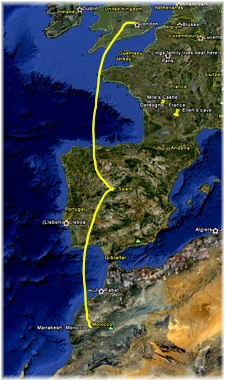





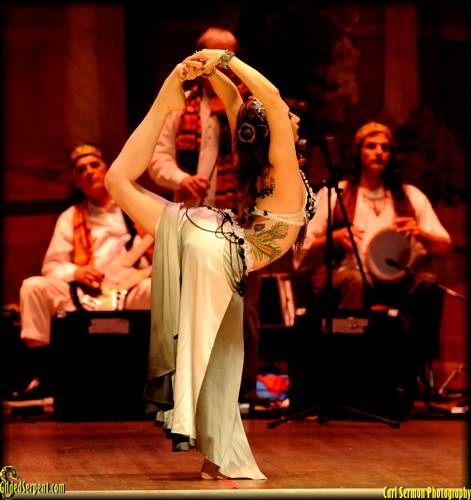


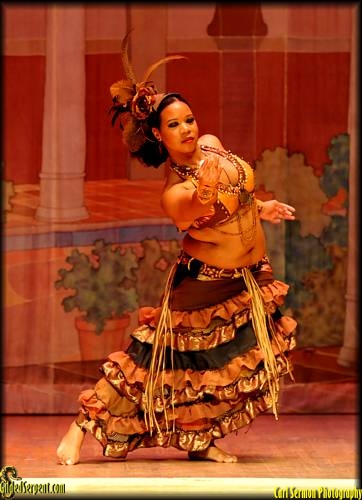
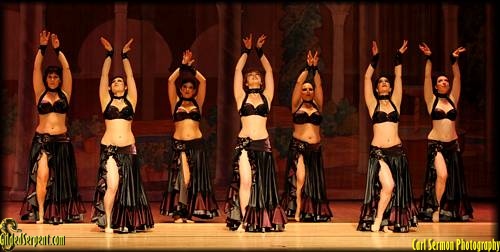
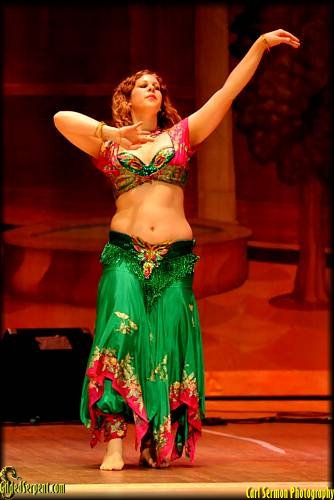
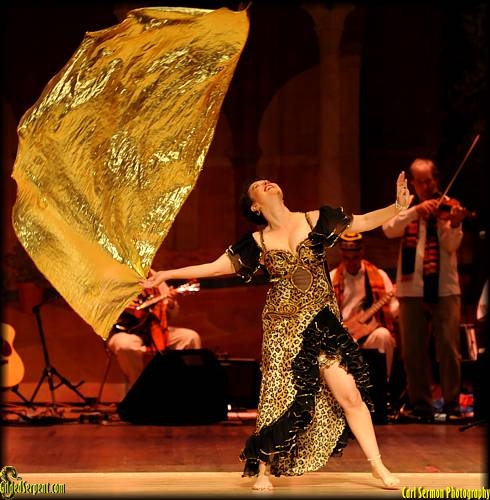

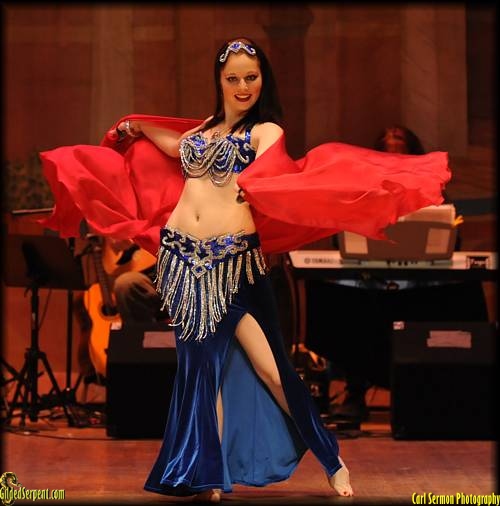


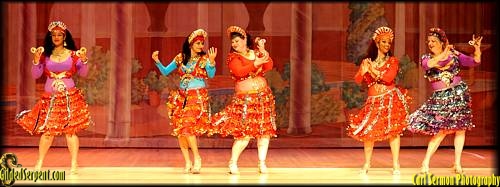

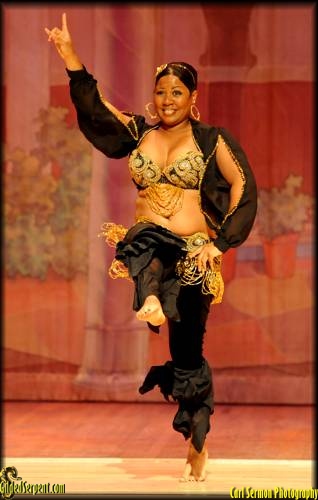


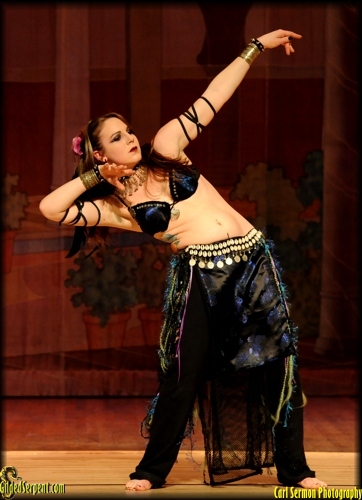


 As women and performers, why cannot we see beyond physical representation, when we, too, are trying our hardest to achieve such beauty in our own lives? Such hypocrisy ensures that we can never escape the limitations that society and, thus, we place these same limitations upon our own bodies. Within the symbolic world of performance art, it often seems that we have little choice but to play the roles for which the audience has paid and expects to see.
 Nevertheless, women who existed outside these controls were considered a threat to social order; they encouraged men to have lustful thoughts that would distract the men from the driving force of industry and commerce–the earning of wealth.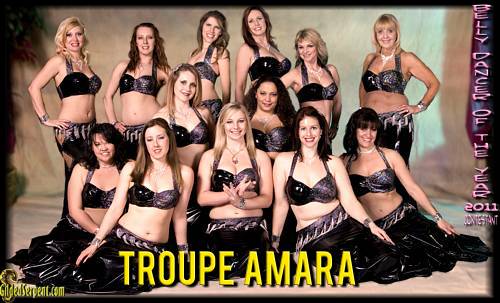
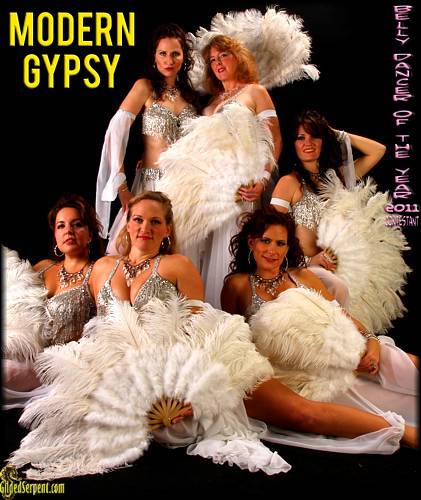


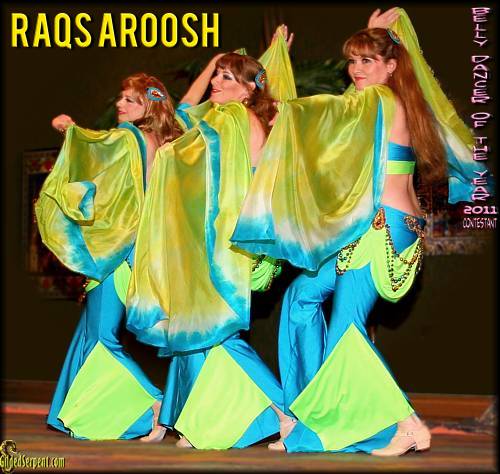

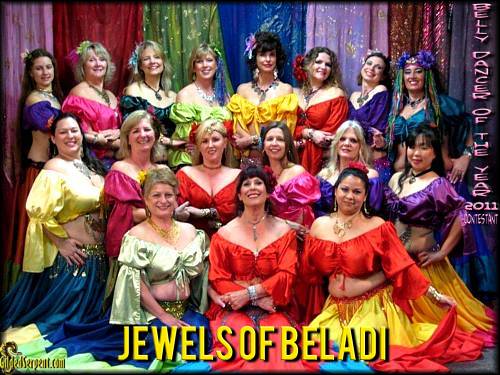




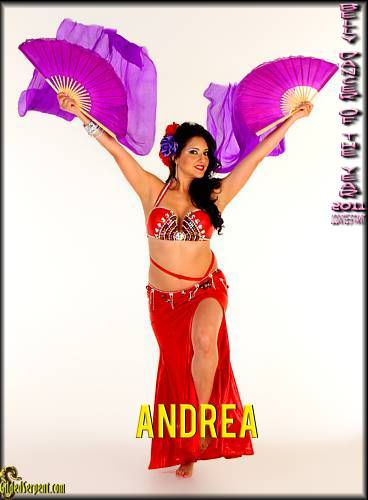
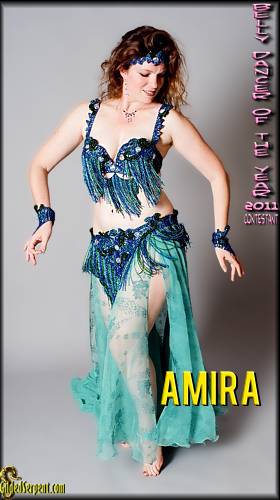
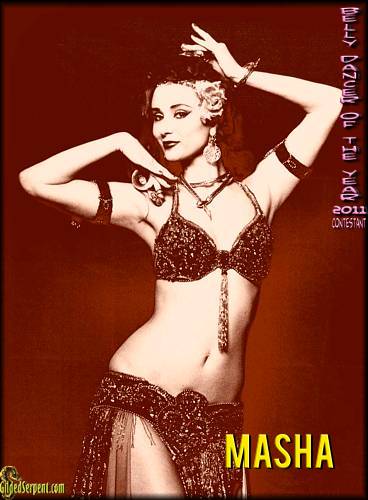




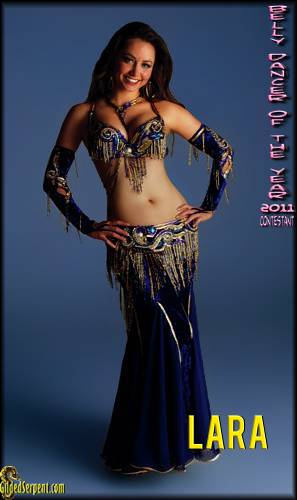
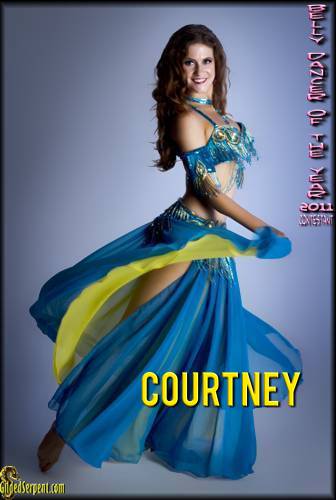





 I danced in many prestigious clubs in America as well as other ethnic clubs through out the United States and Canada. I still have my charts (sheet music) for non-Arab musicians. I enjoyed traveling and dancing for American and Canadian audiences as well. They were very much intrigued by the dance. The only reason I performed the floor act (in which I do the drum solo on my knees and the Sultan act–also known as audience participation) was for American audiences. I bring someone from the audience and sit him on a pillow, and I dance for him; after that, we both dance together. It is funny and the audience gets a big kick out of it. Please note: It is not a part of Arabian culture to dance the “floor act”.
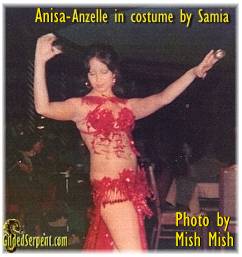 Costumes Made of Outdated Coins: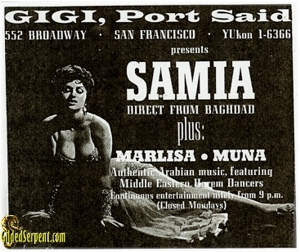

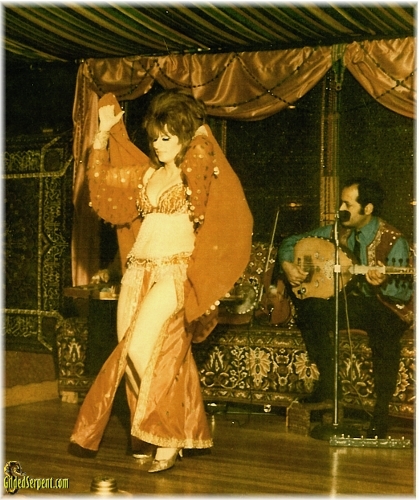
 Pregnant Dancers:
 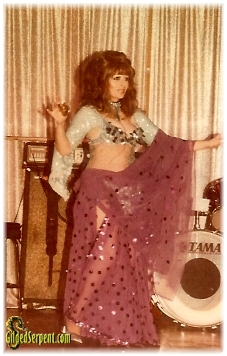 Dancing Skirts:
 Sagat:

 Much later in life, after having bought a record by
  They were my three pre-teen children,
  Two of my children weren’t much interested, but Susu (my obedient middle child) took to it like only an addict could. She became hooked on the rhythms and couldn’t seem to get enough. Although I had been studying for a year or more, I realized after a couple of lessons that she needed a competent music teacher. Consequently, she started accompanying me to Vince’s class. Now, I had my drumming partner.
 I memorized every passage in all the songs on my recordings, and Susu had to memorize them too. We learned them together. At that time, I think I taught 8 classes a week, and she drummed for all of them. (I want to believe that she wanted to drum in order to practice and to please herself and not just to please me. However, I may never know.) I do know that she and I spent many hours together working on breaking down the rhythms and music Vince had taught us as well as those rhythms taught us by our next drum teacher, George Dabai.
 However, when I was leaving work one evening at the Bagdad and saying goodnight to my boss, Jad Elias, as usual, I remember thinking we had hit a low point. We had been down-sized to only two musicians; Jad, who managed the Bagdad for his brother, George Elias, would casually sing and play the oud and a drummer who always seemed to have a cigarette between his fingers while playing the drum. It was just another night at work. Of course, it was still enjoyable because we danced to live music and singing, but then again, enjoyable and comfortable did not always mean that it was memorable.
 It would have been nice, Jad, if someone had told me, the first dancer of that evening, that our regular 5-part dance format was to become history rather than find out the hard and embarrassing way! Perhaps that would have been too easy?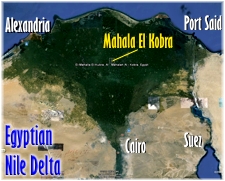
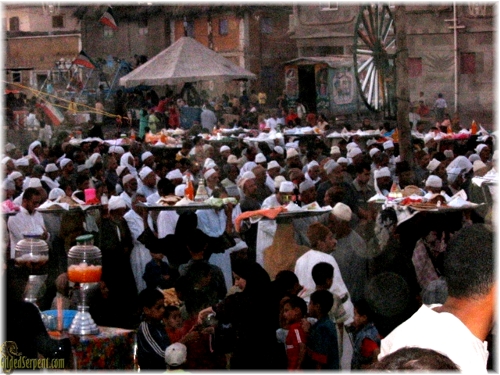
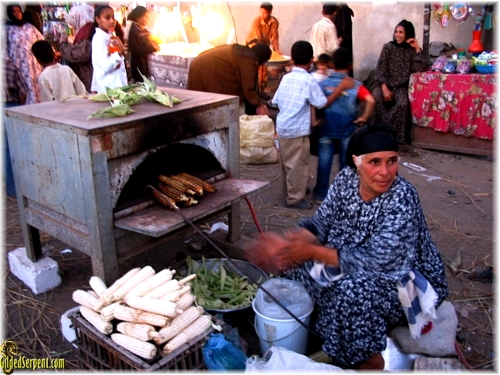

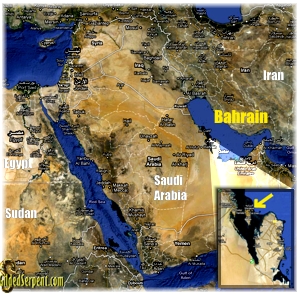 Of all the beautiful places in the world to visit or live, the Asian-Arab lands are the most personally exciting to me. If I may, let me dissect what is currently happening there (in my opinion, of course!). I am now going to give you the Belly dancer’s version, which I believe is more accurate, if less dramatic, than the news. (This is under the hip-band.)


