Gilded Serpent presents...

Hot Bellydance Event in Tijuana
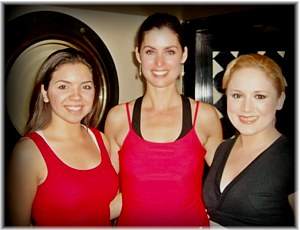
Raks Divine 2009
August 27 to September 1st, 09

by Martha Duran
posted February 16, 2010

Sponsors Niral and DesireeThis past year I attended Niral and Desiree’s "Racks Divine ’09" event in Tijuana’s Hotel Corona Plaza. Niral, director of IMCADH (Mexican Institute of Culture Arts and Human Development) has held this event for the past ten years.  Bellydance instructors and students from Venezuela, Mexico, Egypt, USA, and Canada unite to take workshops and seminars by well know instructors and dancers. They also share a stage for the closing event, the Star Gala. Niral’s goal is to promote unity between bellydancers and support new artists. 2009 was the first year she partnered with Desiree, who for the past 2 years has produced the BellyRacks International Competition.

I enrolled in all the workshops, chatted with the teachers and mingled with the dancers. I also saw every performance. Needless to say, I was exhausted by the end of it! Here is an overview of what I saw.

Thursday evening

Leila

Leila Farid from Cairo Egypt is a sweetheart! She is what many Mexican dancers aspire to look and dance like. Wow! She is gorgeous and mesmerizing – as well as extremely nice, polite and down to earth! My star struck students were amazed to catch her snacking on Mexican Rancheritos (chips) and eating breakfast like a Mexican, with tortillas! She’s so fit that we couldn’t imagine she snacked on chips tortillas like the rest of us. Her master class was magnificent. She taught choreography to classical Egyptian music like Oum Kathoum and Abdel Halim Hafez. She also taught a seminar on Egyptian dance technique.  What I liked the most was how she broke through the language barrier. Half the students didn’t speak English and relied on dancers like me, who were bilingual, to translate. But with Leila they didn’t have to ask many questions.

Friday
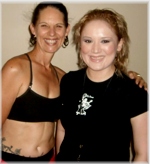
Sharon Kerr with AuthorSharon Kerr

Early the next morning Sharon Kerr taught Fat Chance Belly Dance (American Tribal Style) format. She focused on improvisation. She is a tribal dancer born in the USA who has lived in Cuenavaca, Mexico, for the last 12 years. First we did 15 minutes of yoga though, to wake up, because many of us were tired from the quot;galabeya party" from the night before.  We knew the format, so only the improvisation was tough. She asked us to make small groups with people we didn’t know.

Atlantis

Midday, we had class with exotic Atlantis, producer of the Bellydancer of the Universe contest. We expected her to be temperamental and strong, but she was extremely nice, with a unique teaching style that had us smiling throughout the class. She taught a Persian dance, complete with musical notation and stylization. Her unique choreography was a joy to dance to, and each of us received personalized attention. She corrected each student, from hand positions to facial expressions. She too, overcame the language barrier, as did Leila Farid. My students all loved the class and her.

Maria Shazadi

Immediately after Atlantis’ class was a finger cymbal workshop with Maria Shazadi, a teacher from Mexico City. May I say … she kicked my derriere hard – in a nice way. Oh, my! It was difficult to follow her choreography. Then we had to add cymbals!  First, we played the cymbal pattern, then we added the steps – to a drum solo! Contrary to Atlantis and Leila, she didn’t smile much in class. She was too busy correcting each student one by one. She’s a hard worker, and made us work hard too, for two hours. We definitely broke a sweat with that drum solo!

The Competition

2 hours later, on Friday night, came the competition, "Bellyracks." The event was held in the hotel’s disco bar and I served as a judge. This is the second time I have judged here. Leila Farid, Claudia Sajara, Angy Najla and Sharon Kerr were also judges. Everyone agreed afterwards that it was hard to decide. Many dancers had strong technique and there were 11 categories!

Vilma Canas from Los Angeles won the professional category. Everyone loved her performance. She gave us goose bumps she was that mesmerizing.

Perhaps the cutest contestant was in the preschool category, a little girl named Anette. She was about 5 years old and danced with a tiny pair of Isis wings. The judges all gave her a ten, she was such a cutie pie. Obviously, she won 1st place in her category. The whole show lasted around 6 hours. At the end, the previous year’s winner, Grinnely, Ensenada Baja California, performed before the winners were announced. She wore a beautiful pink costume.

Saturday:

Angy Najla

On Saturday, Angy Najla from Venezuela taught Ghawazi, Nubian and Saidi choreographies. She also drilled combinations and technique. Angy has a large school of 450 students in Venezuela. She’s an entertaining, energetic performer with an outstanding teaching style. She explained technique for an Egyptian folkloric dance, along with cultural background and costuming.

Leila Farid

After Angy Najla’s workshop, it was Leila Farid’s turn. Her class was full of great combinations and tips for flawless Egyptian technique. Several students were new to the style and Leila helped each one individually.  For instance, several students were ballet dancers trying to learn Egyptian raqs sharqi. She corrected their posture and helped them relax into an Egyptian styling.

Claudia Sajara

After Leila’s class, Claudia Sajara from Venezuela taught how to choreograph a drum solo. She focused on accenting the dums or teks. Then she made us drill the final choreography.
My school gets and award!Miscelaneous Details

The hotel was mid-range, and inexpensive; 550 pesos per night per room for 4 people. The heat in Tijuana was horrible! Tijuana normally has a cool climate, but this weekend (since hurricane Jimena was near) it was humid and hot! The hotel staff was friendly, as was the staff of Raqs Divine. Well, most of them. Some didn’t smile much. They looked very tired. The food was, um-m-m, not to my taste. The hotel was in a nice zone of Tijuana and we felt safe. Many FBI agents and other police authorities were staying there. In fact, we saw a few agents walking around – armed.

Saturday night Divine Dance took place in the Hotel’s ballroom. Hundreds of dancers from all over the country gathered to share the stage; to perform raqs sharqui and drum dancing, isis wings and tribal improv. Divine Dance is an important event, held in Tijuana for 10 years.  Every year a school receives an award for its outstanding collaboration in the Mexican Oriental dance community.  The school and teacher are honored with a plaque recognizing them as THE BEST SCHOOL IN MEXICO. This year the award went to my school Danceme Academy from Mexicali Baja California!

Then came the Star Gala, where seminar teachers and guest stars presented excellent performances. This included Mujeres de la Luna, Maria Shazadis, Angy Najlas who did Saidi, Atlantis who performed 2 fusion pieces to Latin America radio hits, and finally the outstanding Leila Farid. Everyone was very excited, continuously interrupting the dancers with zaghareets and applause. They ended the gala with a standing ovation, when Claudia Sajara from Venezuela was awarded the Best International dance school.

It was a great weeklong event. We said goodbye near the beach at an intimate dinner with the event staff. They had made us all feel so welcome and at home.  With tears in our eyes, we said good-bye till next year.

Angy Najla posed with the DanceMe dancers:
Left to right: Paloma Beltran, Martha Duran, Madelein Banda, Angy Najla, Viridiana Escobar and Yaneth Iñiguez
Claudia and
Claudia Sajara and Desiree

Madelein Banda, Carmen Cardenas, Atlantis, Viridiana Escobar and Yaneth Iñiguez

Madelein Banda,Carmen Cardenas, Kendra and Viridiana Escobar

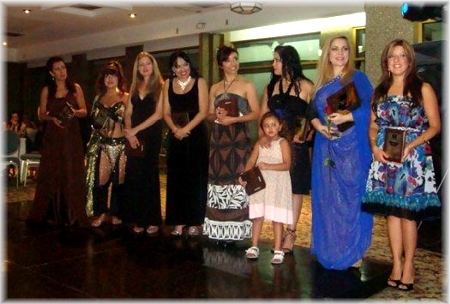
Divine dance night recognition to the professional dancers:
Amira Balkis, Atlantis, Maria Shazadi, Angy Najla, Dilek, Samirah Rambel, Little Anette, Claudia Sajara and Alheena at Divine Dance Night Recognition Ceremony
(Leila was backstage getting ready to come out and receive her recognition)


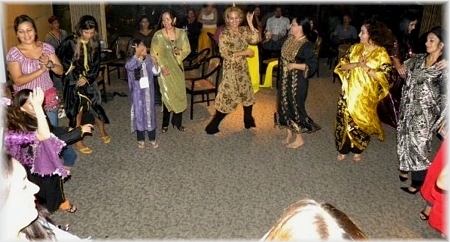
Galabeya Night
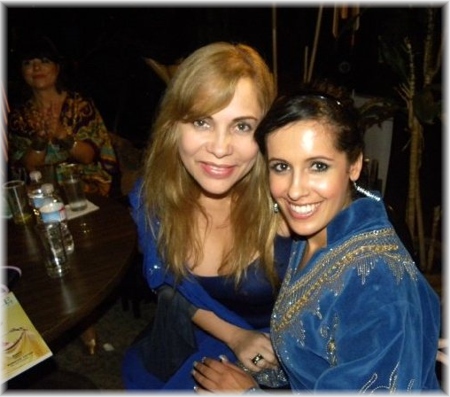
Leila Farid, Amapola,  a very close friend of Lilianna, Lilianna, and Atlantis
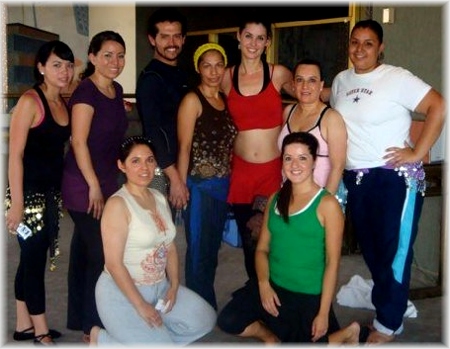
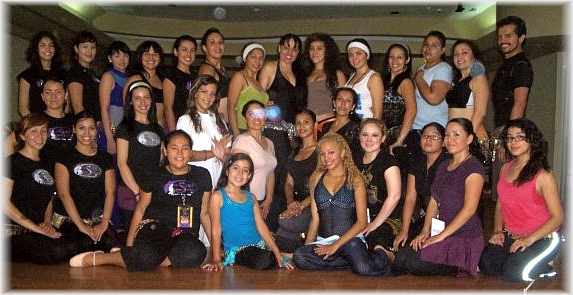
Class photo
Xochitl Santillan from Nayarit,Marta, Jorge Yidan Contempoprary dancer, Nefertiti, Leila Farid, Adriana, Paola and Ahleena
Galabeya Party
Galabeya night
Class photo
Back row: 1?, 2?, Xochitl Santillan from Nayarit,Vilma T Canas, 5? , Mitzy Sabrina, Nefertiti, Angy Najla, Madelein Banda, Viridiana Escobar, 11?, 12?, 13?, Jorge Yidan,

front row: 1?, 2?, 3?, 4?, 5?, 6? , Yaneth Iñiguez, Amira Balkis, 9?, 10?, 11? , Martha Duran, 13?, Marta, Paloma Beltran

Organizers
Laura Gutierrez, Niral Basave and Samirah Rambel
This picture is the main staff, event organizers that work all year long to make the event.
Martha dances at Gala
Author dances at Divine Dance Night 2009


Have a comment? Use or comment section at the bottom of this page orSend us a letter!
Check the "Letters to the Editor" for other possible viewpoints!

Ready for more?


Gilded Serpent presents...

Drumming for Bellydancers and Bellydance Drumming Wannabes

Baby Beginner Doumbek Workshop with Carmine T. Guida
Rhythms of the Arab World Vol. 1, Essential Technique and Rhythms by Karim Nagi 
Doumbek Technique & Rhythms for Arabic Percussion – Bellydance – Drum Circles with Amir Naoum

by Amina Goodyear
posted February 13, 2010

These days if you want to learn how to belly dance you have countless instructional DVDs to choose from but most are not inclusive enough to cover all that is needed to be the dance video for beginners. Many are made specifically for the beginning student, but in my opinion, most do not really have sufficient material needed to train the beginning dancer to performance level. While there are many specialty instructional DVDs (arms, veils, combinations, props, choreography…) that can be used to accompany the primary instructional dance DVD, they are quite numerous and can take quite a toll on one’s bank account.  It can take years to reach real performance level as there is so much material to cover.  And when one learns it all, it is only to learn that there is yet even more to learn. It all depends on the degree of expertise the dancer wants to achieve.

I might say the same for instructional Middle Eastern drum DVDs.

However, the three "how to play the drum" DVDs I am reviewing really do introduce the beginning drummer to the drum and, if used as a three unit package, these three DVDs can take the drummer or dancer/drummer from absolute beginning level to the stage.

All three drummers are from back East – New York City and New England.

In the DVDs, all three use on screen dum tek notation, not musical notes notation. All three DVDs have great tables of contents, indexing and tracking. They are all quite easy to maneuver and readily jump from chapter to chapter. The chapter selection menus give easy access to the rhythms and exercises, and other features. All three drummers are non-threatening, using the gentle "drumming for dummies" technique. Middle Eastern drumming is a folk art – and the three drummers teach traditional drumming, but from three different perspectives.

American drummer Carmine Guida teaches the drum for drum circles and drumming for American style bellydancing; Egyptian Karim Nagi teaches workshops for dancers and drummers implementing Arabic drum technique and Syrian/Lebanese Amir Naoum is a concert and club drummer who teaches Arabic drumming in the "less is more" style.

All three drummers teach the basic drum rhythms needed for bellydance performances.  In my opinion, if you bought all three of these DVDs, started with Carmine’s humorous, gentle method, continued and mastered Karim’s technique drills and then continued on and absorbed Amir’s method of getting that Arabic  feeling and sound – (the spaces are just as important as the hits), you would have all you needed to know about basic drumming for dancers, be they American style, Tribal style or Arabic style. For this I would give all three DVDs 4 + zils.

One important disclaimer: Except for drum circles, before performing, you first need to find, listen to, learn to identify and play along with recorded Arabic and bellydance music.


Baby Beginner Doumbek Workshop with Carmine T. Guida 

4 zil rating
Zil Rating: 4

 Carmine Guida’s DVD is filmed during two workshop classes. He is a very likable person and has a comfortable and entertaining manner. He makes drumming fun and easy. It truly is baby beginner level, as it is not complicated at all. Anyone can learn to play the drum using his method.  In his chapter calle d "Extras" he includes "I play" then "You copy" drum riffs. This is extremely fun and informative. It makes you think you’re as good as a professional drummer and with practice you too can become one.

Below are excerpts from Carmine’s liner notes:

This instructional video breaks down the basic hits "Doum", Tek" and "Ka" and introduces you to your first rhythms: Maqsum, Baladi, Saidi, Ayub and Chiftelli. Filmed live in three different locations, this DVD captures Carmine’s enthusiasm for teaching and his ability to make drumming accessible to everyone. Carmine is an accomplished instructor, teaching doumbek both nationally and internationally. Located in New York City, Carmine is a member of several music ensembles including the Middle Eastern fusion group "Djinn" and the traditional music group "The Turkish Band Camp All Stars". Carmine has been featured as a musician on several other CDs and DVDs. 

Artist’s website with purchase info: www.Carmine.com


Karim NagiRhythms of the Arab World Vol. 1
Essential Technique and Rhythms by Karim Nagi 

4 zil rating
Zil Rating: 4

 Karim Nagi is a serious scholar of Arabic music and rhythm. He devotes his life full-time to teaching and performing Arabic music and is quite versatile as he teaches dance, culture, rhythm and music from the latest pop, to traditional to the most classic. I have had the honor and pleasure to learn privately with him as well as play alongside him. He is a dedicated teacher and as I personally experienced, he truly enjoys teaching. When performing with him I would enjoy the extra tips he would offer. Besides relating to me how he, himself, would obsessively practice, as encouragement for me to practice, he told me to throw myself into the rhythm – meaning "if you can move with it, you can feel it and therefore, you can play it." He is, indeed, fun to watch  – an inspiration – as you see him completely immersed in the rhythm -rocking and swaying and becoming part of the rhythms he is playing. This is evident in the DVD and is a fun way to learn to drum.

Below are excerpts from Karim’s liner notes:
With Rhythms of the Arab World Volume 1, world renowned percussionist Karim Nagi will teach you the essential technique and rhythms so you can play with live bands, drum circles and dancers. Karim Nagi is a native Egyptian teacher and performer of Arab music and dance. He is an internationally known percussionist who specialized in the Egyptian Tabla (aka Doumbek, Darabuka) the Riq (tambourine), as well as frame drums and finger cymbals. His projects include the internationally sold Turbo Tabla CDS, the ultra traditional Sharq Ensemble and his Arab Dance Seminar. his appearances include New England Conservatory, Yale University, The Kennedy Center, and the Egyptian Cultural Bureau. DVD produced by Mher Panossian and Lauren Boldt

Artist’s website – www.karimnagi.com,
dvd available at FilmBaby or Hollywood Music


AmirDoumbek Technique & Rhythms
for Arabic Percussion – Bellydance – Drum Circles
with Amir Naoum  

4 zil rating1 extra zil
Zil Rating: 5 (!)

 Many years ago (like about way over 30) I worked at the Bagdad Cabaret with a drummer named George Dabai who decided that all the dancers in the club needed to learn and understand the music and drum rhythms. We all agreed and once a week for a few years we eagerly studied drum from him.

It was the best thing I ever did to improve my Middle Eastern dance education. It was better than taking more dance lessons.

He taught us more than how to play the drum, he taught us music – how to hear and to identify rhythms. He taught us how to play the drum the way the Arabic musicians played the drum – the way we heard them played in the records. Cassettes, CDs, MP3s and so on were really not around yet. This is the same approach to teaching that Amir Naoum teaches. It is natural. It is simple. It is invaluable. It is real. It is essential.

Below are excerpts from Amir’s liner notes:
If you are a dancer, Amir Naoum’s clear introduction to the most popular bellydance rhythms and their subtle variations will help you learn to recognize the rhythms, even in their most sophisticated forms. If you are a beginning drummer, this DVD will serve as a very accessible, friendly and solid introduction to the art of Middle Eastern percussion. This program is a beginner level doumbek instructional course with a lot of beyond the basics information and spectacular demonstrations of Middle Eastern drumming and dance rhythms. Born in Syria and raised in Lebanon. Amir Naoum attended The Studio al Fann (The Art Studio) the most famous and renowned conservatory of music in Beriut. Since coming to the United States in 1977, Amir has performed in NYC Middle Eastern nightclubs, for family celebrations and bellydance shows and has contributed generously to the success of most NY star bellydancers and Middle Eastern percussionists.

Artist’s website with purchase info: www.doubektechnique.com

use the comment box

Have a comment? Use or comment section at the bottom of this page orSend us a letter!
Check the "Letters to the Editor" for other possible viewpoints!

Ready for more?


Gilded Serpent presents...

Carl’s Camera Captures Dancers from Z-A

Zahara

Tatseena’s Fantasy Festival 2009

Introduction by Ma*Shuqa Mira Murjan,
Photographs by Carl Sermon

November 8, 2009, San Ramon, CA.

Tatseena‘s 8th Annual Fantasy Festival was held at the beautiful Canyon View Dining Room.  A room with a gorgeous view of the Stone Valley Canyon – full of oaks and rolling green hills.  This festival was a festive day of good vibrations with dancers sharing their talents on the raised stage, and on the beautiful wood dance floor.  The day was replendent with beautiful dancing, beautiful costumes, and wonderful music – with the bands: Al Azifoon and Light Rain.  This is a favorite festival for dancers in the East Bay area.

This year’s workshop instructors were Amy Sigil and Crystal Silmi.  They danced with their troupes and the audience enjoyed spirited shows.  There were many different styles of dance and costuming, each with its own flavor and flair and all dancers "danced from the heart".  However, many dancers missed seeing some great shows because they arrived, danced, then left immediately without enjoying the show and the wonderful shared community of joy at Tatseena’s festival.


Help with additional names is always appreciated!
Wild Card
Wild Card Belly Dance Troupe of Santa Rosa? Zahara is at the top of page

Verbatim of Sacramento

Verbatim of Sacramento
Unmata of Sacramento
Unmata of Sacramento, Amy, Terry and Shelly

Troupe Dhyanis
Troupe Dhyanis of San Anselmo, Ca

Troupe Celene
Troupe Celene of ?
+
 
Trio Tears of Erzuli
Troupe Tears of Erzuli of ?
Surreyya Hada
Surreyya Hada of Pinole, Ca

Suhaila Dance Company
Suhaila Dance Company of El Cerrito

Siren in Sanity
Amber and Zyphire of Sirens In Sanity of Benicia & Magalia

Sharifa of Walnut Creek

Rasa and Doug
Rasa of San Rafael is enveloped by Doug Adamz of Light Rain in Novato, CA

Raelena and Angela
Raelena and Angela of ?f ?

Raelena and Angela

Qamar
Qamar of ?

Nanna

Nanna and Troupe Maya of Berkeley, CA

Naiya and Numair

Nu’mair and Naiya of Concord, CA

Mielle

MIelle of ?

Ma*Shuqa of Los Gatos

Ma*Shuqa of Los Gatos, Ca

Marta of Spain

Marta of Spain

Malia's troupe dude

Malia New Moon Troupe

Malia’s New Moon Troupe
Kalia
Kalia of ?

Jeanne
Jeanne of San Francisco
Jasmine of Coco County

Hala Dance Company
Hala Dance Company

Good Vibrations
The ARMY of Good Vibrations

Snakey Vibrations

Fan Veil Vibrations

Goddess Force
Goddess Force of ?

Duet of Melody and Michelle
Crystal's Raks Arabi
Crystal’s Raks Arabi
Anaar
Anaar of ?

Amira

Amira Ariana of ?
Amazar
Amazar of ?

Aizubra
Aizubra of ?

Ahava
Ahava of Coco County


use the comment box

Have a comment? Use or comment section at the bottom of this page orSend us a letter!
Check the "Letters to the Editor" for other possible viewpoints!

Ready for more?

  • Carl’s Camera Captures Jillina’s Bellydance Evolution
    Jillina Carlano’s Bellydance Evolution marked the beginning of an era in which bellydance moves beyond dance Oriental imported from Egypt and performed in clubs.
  • Bellydancer of the Universe Competition 2008,
    held in Long Beach, California, on February 18 & 19, 2008, produced by Tonya and Atlantis
  • Carl’s Raqs LA Photos, Best from the Stage on the Lower Level
    held May 17-18, 2008 Glendale Civic Auditorium, California, produced by Miles Copeland and organized by Marta Schill
  • Carl Sermon’s Photos from the Hoover Hafla
    Event produced by The San Francisco Bay Area Chapter of MECDA on February 10, 2008, at Hoover Theatre in San Jose, CA
  • Bully Belly
    For example: a promoter is thinking about planning an event and is talking to a friend and says, “I can’t help it if some other teacher has planned a show on the same day or night; they are different styles anyway.”
  • Tatseena’s Bellydance Fantasy Festival 2006
    July 28 & 29, 2006 Marina Community Center, San Leandro, California. "This festival was created for family, friends, and fun!" says Tatseena.
  • Tatseena’s Fantasy Festival October 16-17, 2004
    The Festival lived up to it’s name, with two days of creative and innovative dance that broke the mold and showed the versatility of American Bellydance.
  • 2nd Annual San Leandro Festival
    it seems that this event is destined to grow each year
  • Bellydancer in 21 Days: My Internship with Aunt Delilah
    I am incredibly fortunate to be a junior at a very nice independent school in Toledo, Ohio. One of the programs they offer is called "Winterim". No one goes to their normal classes for a month; instead, all the students embark on some kind of intensive independent study program.
  • Serena Wilson (1933-2007) A Student of Ruth St Denis, Part 2: Salome and Her Impac
    When suited to the context, she also had no hesitation in using the term belly dance as she considered the dance as evolving as an Americanized version based on primarily Middle Eastern as opposed to North African influences.
  • Shoo Shoo Amin, A Forgotten Treasure of the 80s
    Twenty years ago when I told people I had worked with Shoo Shoo Amin in Cairo, the response was “Wow!” Now, people go “Who?” Today no one seems to know who she is. For belly dance purists, this is a tragedy. Every so often, someone my age or older will wax lyrical about her on-line, but for the most part, she’s an enigma – even to young Egyptians.
  • Behind the IBCC, a Talk with the Founder, Yasmina Ramzy
    I wanted it to be more scholarly, no competitions and not a festival. I felt it was important that all viewpoints were shared.
  • A Fan Speaks with Nagwa Fu’ad
    Nagwa seems to have excelled in innovation and creativity with the new compositions. She dances with the old favorites, but shines with the new orchestras playing current pieces.
 

Gilded Serpent presents...

Three New Music CDs: New York, Lebanon, and Worldwide

Sayyah, BDSS 6, BD New York

Tracy Benton reviews 3 Cds

Reviewed by Tracy Benton
posted February 4, 2010

Three good albums came to me for review:

  • one a fine choice for a student,
  • one a good choice for lovers of original music,
  • and another for the dancer who wants everything!

"BellyDance New York with Amir Naoum" is the companion CD for the World Dance (New York) instructional DVD: "Bellydance Show Basics for Beginners". Companion CDs for instructional videos are excellent tools for students, and this particular collection of music would be particularly valuable for a dancer starting her own CD library. The 14 tracks on this album include many Bellydance classics, from the decades-old "Mustafa ya Mustafa" to the centuries-old "Lama Bada", as well as several original compositions. A small ensemble, led by drummer Amir Naoum Chehade, performs on oud, violin, bazouki, qanoun, bass, a range of Middle Eastern percussion, and some synthesized instruments. The synthesizer is not prominent, but well-balanced with the live instruments.

This album is notable for its structure. The first track, "Bellydance Mini-Show", is a good example of how a short multi-part show might be put together: entering to "Mustafa ya Mustafa", segueing to the rumba "Bir Demet Yasemin", then the more upbeat, traditional "Ya Ain Mulayatain", followed by a dreamy chiftitelli, an upbeat drum solo, and ending with a fast finale to the Armenian song "Soode Soode". There you have it in 6:34 minutes! However, full length versions of each of these tracks is also available on the CD. This makes for an excellent lesson to a newer dancer on how a multi-part routine comes from sections of longer songs, and it also demonstrates how a live band can easily transition from rhythm to rhythm and tempo to tempo.

The CD is otherwise full of very useful musical tracks, with the standouts being the "Hagallah Drum Solo", featuring several tempo changes, and the vocal and instrumental versions of "Lama Bada" in languorous 10/8. "Ciftitelli Takasim 2" includes winding oud and violin solos that would make it a natural for floor work. This is an exceptional building-block CD.

Rating: three zils

Modern Bellydance from Lebanon: Jalilah represents a recent entry in Emad Sayyah’s long series of Bellydance CDs.  If you like them, since these come out almost annually, you have the pleasure of snapping them up on a regular basis! One thing most of these albums have in common is extensive liner notes, including translated song lyrics — something many dancers appreciate greatly. Sayyah wrote and produced all the music on "Jalilah", and the tracks have a very modern sound despite full use of traditional instruments like hand percussion, oud, qanoun, and violin. Some tracks include synthesized keyboard sounds and modern drum set. (I was a little surprised to hear a bit of cowbell in one song.)

The sixteen tracks here range from two to six and a half minutes, so lengthwise, they provide several choices to work with when creating a performance. Of the drum solos, my favorite was the very short "Mona Mona", which starts off slowly and gives a dancer several different tempo changes to play with and many rolls to interpret as desired. Of the longer instrumental songs, I found "Akhtar Min Sihir" danceable and energetic with many tempo changes and thematic repeats–not to mention one very catchy musical theme I caught myself humming later. While most of the tracks on the album have an insistent-pounding-drums feel, "Salina" begins with a lyrical cello solo and slides into a dramatic ciftitelli-type Wahda Tawila rhythm. The finale features call and response between the percussion and the band is fun, but the band seemed a bit shortchanged at only one bar of response between drum fills.

The songs featuring vocals on this album were not very much to my taste. The backing vocals on this album are mixed as if a large chorus is singing harmonies standing quite far from the microphone in an echoing room, and I don’t personally care for the effect. However, only five of the songs on "Jalilah" have vocals at all, so it’s scarcely an album-wide situation.

If you have enjoyed Emad Sayyah’s other CDs, you are in luck; you will probably like this one too. If you are seeking crisply-produced modern-sounding original music, "Jalilah" may very well have the music you are looking for.

Rating: three zils

Bellydance Superstars Volume VI is a recent entry in Miles Copeland’s series. As usual, it is a compilation of songs from various artists. Compilation CDs are by their nature a mixed bag, but represent a great chance to hear from an unfamiliar artist and perhaps meet a new favorite. My clear number one on this album is the second track, "Aiwa Ah" by Manar. The song crosses heavy folk feeling with a pop sensibility for an irresistible mix. All I know about Manar is that she’s Lebanese, and that’s one place I would take the Bellydance Superstars albums to task: scanty liner notes. It would be great to know more about these highly varied artists.

Tracks on this album are clear and feature a full dynamic range, but are well-balanced; while some compilation albums make you adjust the volume constantly between tracks, no such problem exists here! This is fairly remarkable when considering the transition between the raucous "Netgawez" of Ameina and the sweeping orchestral "Tribute to Um Kalthoum" of Ahmed Bergaoui. At just under four minutes, the "Tribute" might be a good choice for a dancer wishing to add just a taste of the classic to a routine, though it might not satisfy a purist.

This CD also brings back some favorite artists from the previous volumes of the series. Issam Houshan is back with "Baladi Accordion", which begins with a traditional accordion taxim, adds a conversation with the drum and finally some backing instruments; this manages to sound traditional and modern at the same time. Modern fusion from DJ Elie Attieh returns with "Deja Vu" and driving beats from Saad with "Salam Alaikoum"guaranteed to start the crowd dancing. Wrapping things up is Beats Antique, showing off tribal fusion concepts with "Escape".

"Volume VI" is a mixed bag of music indeed, with only a few obvious holes: no real candidates for an Orientale, few slow tempos. However, the wide range of styles means there’s something for nearly everyone on the album.

Rating: three zils


Good dance music comes from all around the world. Travel to destination of your choice next time you’re seeking great songs, and keep these ports of call in mind!


Have a comment? Use or comment section at the bottom of this page orSend us a letter!
Check the "Letters to the Editor" for other possible viewpoints!

Ready for more?use the comment box


Gilded Serpent presents...

Bellydancer in 21 Days:

My Internship with Aunt Delilah

by Averill
posted February 3, 2010

Three weeks ago, in no way was I a Bellydancer; yet, I found myself sitting in an airport terminal, waiting for the plane that was to take me to Seattle where I would be eating, breathing, and sleeping everything Bellydance for 21 days.

I am incredibly fortunate to be a junior at a very nice independent school in Toledo, Ohio. One of the programs they offer is called "Winterim". No one goes to their normal classes for a month; instead, all the students embark on some kind of intensive independent study program.

There are no bounds to the kind of places you can go or the different things you can try, as long as you can prove that it is, in some way, educational. I didn’t want to stay in Ohio for my project and my Grandma, whom I hadn’t seen in years, had recently moved to Seattle, so it would be a win-win situation for me to find something to do in Seattle–but what project could I do?

I contacted my uncle, in whose house I would be staying for my time in the rainy state, and we looked for a few different people with whom I could work. However, every opportunity seemed ­­like it would turn into my getting people coffee and watching others do interesting things while I twiddled my thumbs, and I didn’t want that! I wanted to do something new, exciting, and fun—something that would be remembered as a fascinating endeavor. Eventually, one of my mom’s friends suggested something I hadn’t even considered: working with my Aunt Delilah, internationally-known Bellydancer,  to learn the art of the Bellydance.

The idea was foreign to me. I had had lessons in ballet and tap dancing when I was six, but I gave them up quickly when my somewhat frank teacher told me that I had to practice more if I ever wanted to get out of the second row in recitals. This led me to believe that I had two left feet always, incapable of dancing more than the unimaginative swaying back and forth you can find at high school dances. However, I wasn’t about to sit in a cubicle for three weeks, so I decided to go for it!

Thankfully, being the wonderful and kind person she is, Delilah agreed immediately to let me follow her around and learn from someone world-renown in her field.

We agreed on making the project more than just dancing; I would be learning about costume making, business practices, culture, history, and more. I agreed to these terms, but I had no idea what I was getting myself into.

 Aunt Delilah and I live on opposite ends of the country from one another, so she never had much influence over me as I grew up. I came west to Seattle around the time I was ten and was fascinated by her business, the studio, the costumes, the glitter, the glamour, and everything else that would capture the attention of a ten year-old. I was gifted with a hip scarf in my favorite color, a set of her how-to Bellydance series, and a great Halloween costume, which I proudly wore–once I returned home. However, as many of my obsessions from back then, Bellydancing was soon replaced by the next exciting thing, and the hip scarf, costume, and VHS tapes were put to the back of the closet.

Make up!Six years later, I tromped into my garage to go through our "to be given away" pile in search of that same hip scarf. Not all of its coins showed the same shimmering gold, and there were stains from years of neglect, but I put it on, and it sounded just the same, which meant I was one step closer to being ready for my internship. Again, I was a Bellydancer for Halloween, only this time, in preparation for the weeks that were to come.

I arrived in Seattle with a certain mind set: I had tank tops, shorts and sports bras in which to practice, I was going to learn some choreography that Delilah or some other teacher designed for me, I was going to use some famous song that I didn’t understand, and I would get through my three weeks of studying "Middle Eastern Dance." Most of you reading this probably already know how incredibly mistaken I was. By my first night, everything I thought about my project had changed. My cousin, Laura Rose, and Delilah took me out to dinner, and they talked about everything I would be doing and defined Bellydance. They spoke of concepts foreign to me such as "understanding your own body" and "being able to just let music move you".

I was also informed I would not be spoon fed choreography; in the end everything I danced would involve my making it up on the spot. As someone who had only taken ballet lessons and didn’t think she could dance, I was horrified! I was already self-conscious enough about getting up in front of my school and performing in a costume with my midriff exposed, but now I didn’t even have the crutch of pre-planned moves. I didn’t think I would make it through the experience…

With this new found discovery, I headed to my first-ever Bellydance class, and it was even less encouraging than dinner. My shorts and sports bra were out of place in a room full of swirling skirts, leggings, and flattering tops. I felt like a seven year-old trying to copy what the grownups were doing as the rest of the dancers shimmied, swayed, and rolled parts of the body over which I had no control. I never expected be able to do intense tummy-rolls on my first day, but even my shoulders wouldn’t cooperate as I tried making a circle-and-a-half. I was completely disheartened by the time class was over, and felt like throwing in the towel right then.

Making my skirtAs time went along, I continued to struggle with isolations, layering shimmies, keeping time, and all the other technical aspects of the dance, but there were small victories. Usually when we get better at something it’s so spread out that we don’t even notice we are improving. Well, I was taking up to three classes every day, so I could see as my shimmy developed and when I understood the differences between forward, backward, up, and down figure-eights. With each class, I became less lost in what was happening around me, and I felt more and more like I belonged. My accomplishments weren’t just in the dance either. With Laura Rose’s suggestion and Delilah’s costume expertise, I designed and produced a five piece, sunflower inspired outfit, in just as many days. It was perfect for me—someone who is more attracted to subtle earthy tones than the bright rhinestones and sequins found on most costumes (although there was a place for them in my outfit, too.)

With each passing day, I was becoming more and more confident in my dance, and there was even a turning point at which I stopped dreading my final performance and started getting excited to show my classmates what I could do.

The final week arrived. I had my costume, my music, my hours of classes, and an entire day alone in the studio to decide how I was going to pull everything together. I danced again and again to the three different songs I had selected (two traditional pieces by House of Tarab, the house band of Delilah’s studio, and a pop song by RLP) until I was completely sick of them. I needed a break so I popped in Laura Rose’s "Techno Belly Mix CD" and decided to just have fun with it. As I just moved to the music I had never heard before, everything seemed to tie together in my mind. I could see all the influences on my dance, from my teachers here in Seattle, to my background in ballet, and even to the three years of karate I took in my preteen years. It was intensely personal, and my dance—not something that had been choreographed for me—needed no previous planning: it was all in the moment and spontaneous. Everything I had learned in my weeks at the studio made sense. I couldn’t believe that I ever wanted to come here to learn some strict dance with rules and specific guidelines, when this time alone in a room with dimmed lights, moving the way I felt like moving, awaited me!

Still, I wasn’t done. I had to perform and demonstrate that I could do more than just play with fun music on my own. I had yet to prove that I could become a Bellydancer in just three weeks!

It was the night before a big performance at the studio. Chairs had been moved, lights had been set, and a stage was marked out with white Christmas lights marking the dancers’ terrain. Delilah would be one of the dancers and it would be the first time I would see my mentor perform, but first it was my turn. Hours before the first professional dancer would take the stage, I stepped onto the floor to perform the piece I had been working on for three weeks for the first time before an audience of three. I wanted to show Delilah what I could do and prove to her that I had learned something in my time here. I took a deep breath and went for it. I could feel my heart beating as the music picked up, but every time I looked down I saw Delilah smiling and beaming with pride. Everyone cheered and I laughed as I pranced around the room. I felt so good once I had finished, like I had really accomplished something. As people started filing in for the real show, Delilah ran off to prepare and act hostess, while I kept having various people with whom I had worked come up to me, saying that Delilah had told them I had been a hit. When complimented, I usually shake off what the speaker has said and deny my success, but I felt like I deserved this one. I could accept it with a smile because I had come such a long way from not being able to do a shoulder circle my first day.

I am now preparing to go back to Ohio and perform for my school, and I am ready for it. I know that I am a Bellydancer even if I’m not yet capable of the amazing feats I witnessed later that night as dancers with years and years of experience took the stage. Now I have the confidence to just dance with the music, and I know what I am capable of dancing. It doesn’t matter what happens at my show in Ohio because my first performance was here, on the stage made of Christmas lights, with Delilah cheering the entire time.  One more thing I learned here is that one of the most inspiring parts of the dance is the community and the connection between dancers and the support that that community can give to someone—even if they’ve only been a Bellydancer for twenty-one days.


Averill and family
back row, l-r: Uncle Steve Flynn, Shakti, Christine Hamby, Lori Green, Delilah, Erik Brown
front row, l-r: Averill, Grandma Rosemary Flynn, Laura Rose


use the comment box

Have a comment? Use or comment section at the bottom of this page or Send us a letter!
Check the "Letters to the Editor" for other possible viewpoints!

Ready for more?

  • Honoring Our Connection Between Navel and Nasal
    People looked at us strangely, wrinkled their brows and said "Aromatherapy and what?"
  • Dancing In The Streets; A History of Collective Joy” Authored by Barbara Ehrenreich
    In her book, Barbara Ehrenreich takes one back to the original motivations of dance along a historic journey of how human impetus to dance, has been repressed by societal hierarchy, and religious zealots.
  • Throught the Eye of the Camera
    This photo exhibit captures moments and scenery of Delilah’s most recent Visionary Belly Dance Retreat, which took place in Hawaii, Janurary, 2009.
  • 11-10-06 How I started a Bellydance Club in High School by Shazzadi
    I expected hardly anyone to show up at the first meeting. I was shocked when over 40 girls showed up and were very excited about the whole idea. So I was able to prove interest.
  • 2-2-10 Serena Wilson (1933-2007) A Student of Ruth St Denis, Part 2: Salome and Her Impact by Barbara Sellers-Young
    When suited to the context, she also had no hesitation in using the term belly dance as she considered the dance as evolving as an Americanized version based on primarily Middle Eastern as opposed to North African influences.
  • 1-27-10 Shoo Shoo Amin, A Forgotten Treasure of the 80s by Yasmin
    Twenty years ago when I told people I had worked with Shoo Shoo Amin in Cairo, the response was “Wow!” Now, people go “Who?” Today no one seems to know who she is. For belly dance purists, this is a tragedy. Every so often, someone my age or older will wax lyrical about her on-line, but for the most part, she’s an enigma – even to young Egyptians.
  • 1-25-10 Behind the IBCC, a Talk with the Founder, Yasmina Ramzy by Laura
    I wanted it to be more scholarly, no competitions and not a festival. I felt it was important that all viewpoints were shared.
  • 1-24-10 A Fan Speaks with Nagwa Fu’ad by Najia Marlyz
    Nagwa seems to have excelled in innovation and creativity with the new compositions. She dances with the old favorites, but shines with the new orchestras playing current pieces.
  • 1-21-10 Is Belly Dancing Provocative? by Maria Strova
    This stereotype of Belly dancing has caused me a lot of displeasure; it has made me angry to see how imprisoned in negative models Belly dancing still is,and how much it had lost since it was formerly an ancient art that honors the female body.
 

Gilded Serpent presents...

Serena Wilson (1933-2007)
A Student of Ruth St. Denis

Part 2: Salome and Her Impact

Serena

by Barbara Sellers-Young PhD
posted February 2, 2010
Part 1 can be read here

Serena Wilson, a member of the first generation of New York’s belly dance teachers, died on June 17, 2007. Current and former students immediately eulogized her on youtube.com with images of her dancing in a Greek temple and on the Egyptian pyramids. This essay looks at her life in relationship to the evolution of oriental dancing in the early part of the century from the stages of Vaudeville and the Salome Craze to the impact of the dance metaphysics of Ruth St. Denis. As such, it provides a glimpse into how one of the pioneers of bellydance in the United States combined the various influences in her life to evolve her version of the feminine through the vocabulary of bellydance.

Unlike many dancers, Serena never evolved a performance name that would imply an association between her and the Middle East. Although performing within the environments owned and operated by the entrepreneurs with ties to North Africa and the Middle East, her performance history was not linked to this community but instead to the vaudeville family in which she had grown up and to her dance study with Ruth St. Denis and images of Salome projected by Mary Garden and other performers. The movement vocabulary she learned performing in the Eighth Avenue clubs provided a gestural vocabulary that would allow her to follow a choreographic impulse to integrate these influences.

Mary GardenSerena’s was asked in 1974 to be a guest instructor at the Aegina Arts Center outside Athens, Greece. The location of the center provided an opportunity to travel in Greece and Turkey and to study dance with Ted Petrides, a professor of the esoteric dances of Ancient Greece. On her return, she began to define a movement vocabulary and choreographic style that would allow her to integrate her early training in ballet and St. Denis’ version of the Orient with her Middle Eastern vocabulary to create what she most often referred to as ‘Oriental dance.’

When suited to the context, she also had no hesitation in using the term belly dance as she considered the dance as evolving as an Americanized version based on primarily Middle Eastern as opposed to North African influences.

In her approach to the dance of the Middle East, she was at odds with her New York contemporaries, Ibrahim Farrah and Morocco, both of whom were interested in authentic dances of this social and cultural area. Serena admitted that the dance was not her ethnic heritage and described her stance in an interview:
"Despite the many approaches to the dance [belly dance], I believe that there are four basic groups: 1) strict ethnic and folk, 2) cabaret, 3) exercise and therapeutic, 4) interpretative concert. I consider myself  to be in the fourth group."(5)

Serena's Snake Dancer StatueIn placing herself within the community of interpretative concert dance, Serena emulated St. Denis in the determination to create within the Oriental dance a personal approach to the movement vocabulary and a similar determination to choreograph pieces that were based on images that held potency for her. One potent image for Serena was Salome and the various dancers who performed her on New York stages. On shelves and end tables throughout her apartment were various art deco statues based on portrayals of Salome by Mary Garden and other dancers and actors of the early twentieth century. 

The Salome Craze

The Salome craze, what Susan Glenn refers to as Salomania (96-125), is based on the story of Salome and her relationship with her step-father Herod and mother Herodius, The story was the subject of a play by British playwright Oscar Wilde. The play premiered in Paris in 1896, under the French title Salomé. In Wilde’s play, Salome becomes enamored with John the Baptist. When he refuses her affections she beguiles her step-father into agreeing to kill John the Baptist as a trade for dancing for him. In the finale, Salome takes up John’s severed head and kisses it.

Oscar WildeWilde’s play premiered in 1905, in New York. It was produced by the Progressive State Society and performed at the Berkeley Lyceum Theatre. The public barely noticed its presence. Two years later the Metropolitan Opera with sponsors such as J. P. Morgan and W. E. Vanderbilt attempted to produce Richard Strauss’s one-act version of the Wilde play. The play closed after one performance following a complaint from J.P. Morgan’s daughter about the salacious dance of the seven veils, a dance that, as one reviewer described, “spared the audience nothing in active and suggestive detail” (Bentley 2002, 18).  However, Bianca Froelich, Metropolitan Opera’s prima ballerina, who executed the Dance of the Seven Veils, subsequently contracted with the management of the  Lincoln Square Variety Theatre. Riding the wave of fascination with all things Oriental, Salome and her dance became a favorite of vaudeville houses and Florenz Ziegfield added a Salome number to his Follies. Other American entertainers such as Gertrude Hoffman and Eva Tanguay created their own version as well, as did Europeans Maud Allan and Ida Rubenstein, who brought their performances to New York.

Follies performer Mlle. Daze, actually Daisy Peterkin from Detroit, opened a school for Salomes. It quickly became popular and by 1908, Mlle. Daze was graduating 150 Salomes every month. Dancing the same routine, they entered the coast to coast vaudeville circuits.


As Bentley points out in Sisters of Salome, “By 1909 there was not a variety or vaudeville show in America that did not offer a Salome act as part of its entertainment” (2002, 40). And, in 1909, the Strauss Opera opened at the Manhattan Opera House with Mary Garden in the role of Salome. Although there were protests by some women with a more Victorian orientation, there were also many women who enthusiastically participated in Salomania. Andrea Deagon writes that “the lure of the dance went beyond professional performers. A 1908 New York Times article describes a women-only Salome party in which society women went dressed as Salome and some even demonstrated that they had not only succeeded in matching Miss Allan’s costume, but had learned some captivating steps and movements” (2005, 251)

Serena brought these images of the Salome’s of the past and the impact of Ruth St. Denis to the performances of the Serena Dance Theater and to her classes at Serena Studios, which at her death was located at 939 Eighth Avenue at 55th Street. The company gave its first performance in 1971 at New York City’s Town Hall at 123 West 43rd Street. A venue founded in 1921, it is noted for providing a combination of performances that span the spectrum of film, dance, Broadway and classical music. Ruth St. Denis and the Ted Denishawan and the Densishawn dancers performed in the hall on February 27, 1923. Titled “Mid East Diary,” Serena’s evening length narrative depicted a Victorian-era widow’s visit to the Middle East with her daughters. She repeated the piece for the Riverside Dance Festival in 1977. (6)

Rather than avoid the Orientalism implicit in dance crazes such as Salomania or the hootchi kootchie dancers of Coney Island, Serena revised the image with a choreographic whimsey in dances such as Kooch. Initially a solo for Serena, the dance features the image of a kooch dancer coming to life from a carnival pedestal.

Serena performs at RakkasahThe dance’s multi-part narrative begins as a statue who slowly comes to life as the carnival music plays in the background. The dancer begins discovering movement through the rhythm of the dancer’s finger cymbals and follows this discovery with an exploratory movement of arms, torso and hips. Suddenly, she takes note of the carnival pedestal and realizes her position as a carnival dancer. This realization causes her to drop to her knees and bend backward as if to avoid the reality of the situation. Eventually, she accepts the situation and returns quietly to the carnival pedestal.

The dance is emblematic of the history of Oriental dance in the United States–from its beginnings as salacious entertainment associated with carnivals to the attempts by dancers such as Serena Wilson to adapt the movement vocabulary to narrative.

In 1983, Serena won the Ruth St. Denis award which acknowledges the adaptation of ethnic-based forms for the stage. The choreography for which she won the award was titled “Sisters.” The focus of the piece is the rhythmic instrument used by dancers to accompany their performance, most commonly referred to as finger cymbals. The piece begins with two dancers dressed in leotards, sashes and circular skirts in different shades of blue facing each other center stage. Throughout the five minute piece, the dancers use various rhythms and counter-rhythms in a movement sound dialogue in which they move in and around each other incorporating Serena’s Oriental vocabulary in emotional expressions of aggression and accommodation, anger and love. At one point, the dancers undulate towards each other and lower themselves to the floor. With backs to each other, they slowly lean backward until their heads are resting on the shoulder of the other, establishing a level of intimacy and reliance on the body of the other. Standing, they move from this moment of dependence to independence, as they move away from each other in a series of imitative gestures, ending the dance in a kneeling contraction with hands swept back away from the body.

New York critics tended to ignore ethnic dance concerts unless they were part of city wide festivals such as the Riverside Dance Festival. Serena Wilson’s choreography was particularly problematic for reviewers as her choreography did not fit into the ethnic slot, nor was it a readable extension of Ruth St. Denis’ metaphysical images.

Finally, it was difficult for a reviewer to take this Oriental-based movement vocabulary of the torso and the pelvis and appreciate its potential for being as abstract as the gestural languages of modern dance and ballet. Belly dance’s historical position as popular culture had over identified the vocabulary with the carnie, the burlesque and the cabaret stage. Jennifer Dunning, in a 1978 New York Times review, stated that Serena’s separate pieces were “in fact a series of Belly-dancing numbers that were often hilarious, though perhaps unintentionally so”.(7)  Dunning was more generous in a 1986 New York Times review in which she observed: "…an infectiously cheerful humor, filled the stage when the Serena Dance Theater performed on Thursday at the Theater of the Riverside Church. Serena, the star and chief choreographer of the program, is a generous performer with a nice sense of humor and an uncanny, fleeting facial resemblance to Ruth St. Denis. Her dancers share her human and warmth. And there were several standout numbers in “Visions of Salome,” a program of 14 Eastern dances."(8)

Despite her desire to create an interpretative choreographic identity, Serena’s professional career was not considered by the critics to be a part of the modern dance community as was the career of her idol Ruth St. Denis. Serena was consistently identified as a member of the belly dance community. This designation was due in part to the position of belly dance within the New York community as popular restaurant and night club entertainment for the general public, and as an ethnic form for the North African and Middle Eastern community. In order to keep financially solvent, Serena performed as a dancer in the night club fantasy of the exotic Orient and she also trained dancers in her classes who performed this fantasy, including the lavish Egyptian productions she created for Club Isis in the 1990s. The choreographic ideas explored in pieces such as “Kooch” and “Sisters” were periodically incorporated into formal concerts that took place in venues such as the Town Hall, as well as performing at the opening of the Temple of Dendur at the Metropolitan Museum of Art, and playing the role of the an Oriental dancer in the 1982 New York Opera’s production of Aida.

Through ongoing performances at these venues–the improvisational cabaret stage and formal stages such as the Riverside Theater–Serena was engaged in two separate New York performance communities. As Anne Rasmussen has noted (1990), the nightclub community had it roots in the negotiation of identity politics for the ethnic communities of North Africa and the Middle East. Rasmussen also points out that the primary focus of this negotiation was the tropes of Orientalism.

Following the lead of the New York dance critics, the big ‘D’ dance community found it difficult to find a relationship between belly dance as popular entertainment and belly dance as aesthetic product.

Regardless, Serena ultimately evolved a technique that transformed the improvisational, orally transmitted dance into a codified form that could be consistently taught in her studio and disseminated through books describing the movement vocabulary.   

End Notes:

5. Serena Wilson, “Serena,” Habib, 3/11, (1977) 3.
6.Riverside Dance Festival was sponsored by which Riverside Church a 150 church located in Manhattan’s upper west side near Columbia University. The festival was important to New York’s dance community as it was the only festival that brought together popular, ethnic, modern and classic dance forms. The festival closed in 1987 when the Church could no longer financially support it.
7. Jennifer Dunning, “Eastern Dance: Serena Wilson and Company,” New York Times (June 25, 1978).
8. Jennifer Dunning, “Eastern Offerings by Serena Theater,” New York Times (March 2, 1986).

Coming Soon:
Serena, Part 3: Serena’s Books

use the comment box

Have a comment? Use or comment section at the bottom of this page orSend us a letter!
Check the "Letters to the Editor" for other possible viewpoints!

Ready for more?

  • 1-17-10 Serena Wilson (1933-2007) A Student of Ruth St. Denis, Part 1: Childhood by Barbara Sellers-Young PhD
    Serene Blake was born in the Bronx on Aug. 8, 1933 into a Vaudeville family of performers called Blake & Blake. Her mother sang and her father played the banjo. Her childhood and adolescent years intersected with the Vaudeville stage, on which she often appeared with her parents in the 1930s.
  • Maud Allen: La Femme Fatale
    For, as the trial progressed, in effect, it became a trial of female sexuality. No respectable woman, it was claimed, could possibly take on the sadistic role of Salome unless she was a sadist in real life, and sadism was regarded at the time as a practice verging on the criminal.
  • 8-14-07 Tamalyn Dallal’s DVD- 40 Days and 1001 Nights, reviewed by Barbara Sellers-Young
    Thus, the film did expand my visual awareness. Now, did it deepen or extend my understanding of what that diversity implied? My response would have to be no.
  • 7-10-03 God Belly Danced, Part 3: Biblical Accounts of Belly Dance in the Ancient Near East by DeAnna Putman
    No character in the Bible has been so misunderstood as Salome. Critics condemn her as a wanton slut. Supporters embrace her as a symbol of oppressed female sensuality. Neither is true.
  • 12-26-04 Scott Wilson’s CD "Efendi" review by Ma*Shuqa Mira Murjan
    Scott’s quest is to make Mid-East music more accessible to American audiences…
  • 8-11-04 Scott Wilson’s CD “An American in Istanbul” review by Dhyanis
    The entire CD is laced with instrumental solos featuring each artist, many of whom are from the Mid-East, most notably George Strathos on clarinet, plus Rip Wilson, Scott’s darabuka-playing Dad.
  • 6-10-09 Carl Capture Character: Rakkasah Festival East, Saturday Dancers L-Z, photos by Carl Sermon
    Latifa, Banat Al Beled, Leena, Lotus Niraja, Mahira Tribe, Mahrabesh, Majestic Hip, Malweh, MaShuqa, Mayumi, Nabila, Naheda, Natica, Nixies…
  • Who Died and Made You Queen of Dance?
    This lack of background basic performing experience would be unheard of and un-tolerated in any other dance form
  • 5-20-03 Loving Remembrance & Requiem: the Best “School” That Ever Was, Part 1 by Morocco/ Carolina Varga Dinicu
    I looked at her & said, “If I can’t do better than that, I’ll hand in my feet!” A case of having more guts than brains.
  • Shoo Shoo Amin, A Forgotten Treasure of the 80s
    Twenty years ago when I told people I had worked with Shoo Shoo Amin in Cairo, the response was “Wow!” Now, people go “Who?” Today no one seems to know who she is. For belly dance purists, this is a tragedy. Every so often, someone my age or older will wax lyrical about her on-line, but for the most part, she’s an enigma – even to young Egyptians.
  • Behind the IBCC, a Talk with the Founder, Yasmina Ramzy
    I wanted it to be more scholarly, no competitions and not a festival. I felt it was important that all viewpoints were shared.
  • A Fan Speaks with Nagwa Fu’ad
    Nagwa seems to have excelled in innovation and creativity with the new compositions. She dances with the old favorites, but shines with the new orchestras playing current pieces.
  • Is Belly Dancing Provocative?
    This stereotype of Belly dancing has caused me a lot of displeasure; it has made me angry to see how imprisoned in negative models Belly dancing still is,and how much it had lost since it was formerly an ancient art that honors the female body.
 

Gilded Serpent presents...

Shoo Shoo Amin

Placeholder

A Forgotten Treasure of the 80s

by Yasmin Henkesh
posted January 26, 2010

Twenty years ago when I told people I had worked with Shoo Shoo Amin in Cairo, the response was  “Wow!” Now, people go “Who?” Today no one seems to know who she is. For belly dance purists, this is a tragedy. Every so often, someone my age or older will wax lyrical about her on-line, but for the most part, she’s an enigma – even to young Egyptians. But ask older Egyptians if they’ve heard of Shoo Shoo Amin and they sing her praises. “One of the best dancers of the 80’s!” “Very good dancer!” “So sweet, not like [ Fifi Abdou, Sahar Hamdi, or any C rated dancer working in smoky dives for poor vacationing Saudis]. I could take my wife to see her.”

That’s exactly where I met Shoo Shoo Amin, in a place where Egyptians took their wives. It was a famous supper club on the Sharia al-Haram called the Auberge. Nagwa Fouad got her start there in the 1960s. It seated 700 people. At the time, I worked downstairs in the nightclub, while Shoo Shoo worked upstairs in the main “salla.” When she went back to London, I took her place. I used to come early every night to watch her. She made everything look so easy. But looks can be deceiving. To this day when I teach her signature moves, students take a year or two (if they’re lucky) to master them.

I first saw Shoo Shoo in London while I was working at Mona Said’s Omar Khayyam. She worked at a luxurious place called The Empress. Khamis Henkesh was her drummer. In my mind, the two of them created the perfect drum solo – along with Mona’s, of course.

Shoo Shoo had a spectacular shimmy that she maintained all the way down to the floor and back up again. She also had an amazing down-hip three-quarter shimmy that she did double time around the stage.

Her timing was perfect, her stage presence engaging and she played finger cymbals like a pro. I was mesmerized. So when I found myself able to watch her for free every night in Cairo, I knew I was in heaven. (Dealing with the owner was not heaven but that is another story.)

Shoo Shoo convinced her family to let her become a dancer in the early 1970s. She went “pro” at the age of 19 and soon landed a contract to work with Hassan Abou Saoud (Shik Shak Shok composer) in Japan. She stayed there for a year. But London was where she was happiest. She worked on and off in England until she retired in 1994. She was an innovative dancer, but stayed close to her roots. She is the only one I know of who incorporated live zar musicians into a folkloric tableau. The tableau can be seen in the video clip below. This group, Awlad Abou al-Gheit, plays on Zar – Trance Music for Women and one of the songs she used is Benat al-Handasa, track 7.

Shoo Shoo had many signature moves. The ones I remember most are:

  • a contract/release shimmy mentioned above (shimmy #4 to those of you who have read Pulse of the Sphinx),
  • a down-hip three-quarter shimmy (done on the balls of the feet),
  • wide, twisting full torso snakes,
  • a four-step with an accent on three,
  • abdominal pops,
  • Egyptian stomach rolls,
  • fast, compact hip circles,
  • no-spot
    character spins that stop on a dime
  • and
    of course the continuous shimmy as she sank to the floor and back up again.

She would often layer two or three of these movements together. And layered or not, I was always amazed at how quick and sharp her three-quarter shimmies were. Many dancers of her era excelled at these fast hip movements. Nelly Fouad is perhaps the best example. It was my experience that the more westernized the dancer, however, the slower their hip work. Following my recent research into dance belts (see A History of Sagat) I recognize this ‘hip jiggling’ as the ideal movement to sound strung rattles. I believe this rapid three-quarter shimmy tempo is an ancient carry over from Hathorian dances. But that’s just my opinion. 

An example of Shoo Shoo’s dancing can be seen in second video clip at left, on a clip I put together in preparation for her workshop in Dahab with Leila. She does many of her signature moves in it. Sadly, there is not much footage of Shoo Shoo. She did not become a movie or video star like many of her contemporaries – hence the paucity of material if you want to analyze her style. I found this out recently when I tried to give my professional students a sneak preview before “Shoo Shoo camp” in May. The hard economic times have made it difficult for many to go and I wanted all of them to discover her wonderful dancing, not just the lucky few who could afford a ticket. Besides, a trip down memory lane is always fun.

To make things more amusing, the class decided to combine Shoo Shoo with Sahar Hamdi for a “Naughty or Nice” semester – a Santa Clause hang-over after Christmas. We haven’t gotten to Sahar yet, but when we do I will make sure they leave their inhibitions at the door. But for now, I’m more worried about their pelvic technique than a wide stance in a pair of cowboy boots (just kidding). I love both these dancers.

I was lucky Shoo Shoo agreed to come out of retirement and teach. Wouldn’t it be great if Sahar did the same?

Until then, studying the movements of dancers like Shoo Shoo, Nelly Fouad, Hayatim or more recently Dandesh can give newer performers a window into belly dance before tribal fusion, the Bellydance Superstars, "AmCab", Vintage Orientale or Reda Troup Folklore. It is natural that every art evolves with its time, but it is important for students of any discipline to study the works of previous masters. We are fortunate that some of them are still around to teach.

Resources
Shoo Shoo wil be teaching at Leila’s camp in Dahab Egypt, 4-8 th of May- http://campnegum.net/

Yasmin’s article on "A History of Sagat" and "Pulse of the Sphinx" can be found inside the covers of her recent CDs. They may be posted as articles on GS sometime in the near future.


use the comment box

Have a comment? Use or comment section at the bottom of this page orSend us a letter!
Check the "Letters to the Editor" for other possible viewpoints!

Ready for more?

  • Sex, Belly Dance and the Afterlife
    To these people, sex was not dirty, shameful, frightening or forbidden. It was a natural part of daily life and the essential prerequisite for birth – on earth or in the Afterlife.
  • 7-30-08 Ahlan Wa Sahlan 2008, Not So Welcoming this Year by Yasmin
    Prices have gone up everywhere, and Egypt is no exception. The reality hit me as soon as I walked into the Mena House. Bottled water was $4.00, where out in the street the same bottle was $.50. A bottle of beer was $10.00. Internet connection was $30.00 / hour. At those prices, life’s little pleasures didn’t seem important anymore.
  • 3-27-08 To Buy or Not to Buy – A Guide to Mass Market Belly Dance Instructional DVDs by Yasmin
    Most producers ask or hire others to write glowing reviews. You will often see the same people reviewing a producer’s entire line of product. Those are suspect. Look for the one-off comments. They will give a better overview, along with anything less than 5 stars.
  • 7-16-07 Music Copyright Law for Belly Dancers (or for any Performing Artist) by Yasmin
    From Hollywood blockbuster movies down to clips on YouTube the law is the same and it applies to anyone who uses someone else’s music for their own purposes.
  • The Devil’s Details, Show Ethics for Professionals by Yasmin
  • 5-4-07 Part 1- Booking a Party
    When a dancer looks good, she, or another, will get called back to perform again. When she looks bad, customers might be turned off to our lovely art form forever. Therefore, a bad dancer not only ruins things for herself, but for all of us
  • 8-29-07 Part 2- The Cross Cultural Factor
    Warning. There is a great deal of passive aggressive face-saving behavior in this profession. It is not always woman friendly either. Respect is not a given…
  • 10-15-07 Part 3- Separating the Girls from the Women
    If a performer conducts herself as a professional she is much more likely to obtain repeat engagements and referrals. No one wants to be seen knowingly hiring an amateur. It is bad for business and a customer’s image.
  • 12-5-07 Part 4 – What NOT To Do
    Show up drunk or stoned. No more needs to be said
  • 1-28-08 Part 5 – Beauty by Yasmin
    For new dancers, mastering the art of glamour can be daunting. But take heart, while internal sensuality requires character work, external beauty is easier to fix
  • 6-27-06 Om Kalthoum, The Voice of Egypt by Yasmin
    She was without contest the most well-known singer of the Arab world. She was also the most influential woman of her time in the Middle East.
  • 12-13-05 The Zar by Yasmin
    We do know that today thousands of women in Africa and the Middle East use this music to cure all kinds of illnesses. They literally dance until they drop.
 

Gilded Serpent presents...

Behind the IBCC

Placeholder

A Talk with the Founder, Yasmina Ramzy

by Laura
posted January 2010
Interview conducted in June 2008

The 3rd International Bellydance Conference of Canada is coming up again this April 21-25, 2010. The interest in the conference has gone from modest to enormous as dancers from all over the world submit auditions and requests to teach. This dance is so personal to all of us and we all see it through our own filters. I find there are rumors and speculation about how the conference is run.   There are also questions from the local Canadian belly dance scene. Who should be teaching, who do we want to see perform, who is worthy to be orchestrating all of this?  As an Arabesque Dance Company member I wanted to help answer these questions and clear the air. I interviewed Yasmina Ramzy at Arabesque Academy after the second conference in 2008 to get her side of the story.

Laura Selenzi: What inspired you to create the IBCC?
Yasmina Ramzy:  I attended the 2nd International Conference on Middle Eastern Dance in Orange County, California in 2001 and I loved the experience. I loved the heated debates, the issues finally being brought out into the open. I felt Canada needed something like this. Also Ali Hamidzedah (of Turquiose International) had been pushing me to do it for years, but every year there was no time. One year I decided that yes, I’ll do it not really thinking I would actually follow through. But the ball started rolling and before I knew it, it was happening!

I wanted it to be more scholarly, no competitions and not a festival. I felt it was important that all viewpoints were shared. I received so much negativity before the event happened particularly from Canadians, I almost wanted to back out.

As the scholars and artists started to arrive on Wednesday, an incredible rumble of excitement began to infect me. By Thursday morning when I peaked my head into one of the lectures on body image and eating disorders, I saw a room full of people with tears streaming down their faces. It was then I knew – this is how important this conference was. I realized the impact this would have on Canadian bellydance, and in fact Bellydance in general. All these amazing people coming together, and it was happening in CANADA!

L: What have your favorite moments been so far?
Y: Oh, there’s so many! Sahra Saeeda. She had a big influence on my career. And I hadn’t really met her until the conference. Just the fact that she existed meant a lot to me at a time when I was going to give up Bellydancing. I was taught primarly by Egyptians and Syrians in the Middle East and was feeling like I never really fit in in North America until I saw a video clip of Sahra. She was the first North American I had ever seen who danced like an Egyptian. After that, I did not feel so alone. Of course, I have discovered many others since then but she was the first.

Those moments upstairs in the seminar room were a major highlight. Every time I checked in, there was either boisterous laughter, a fired up impassioned debate with people talking over each other, powerful tear filled emotional release and silent moments when you knew everyone was having an epiphany.

I thought, wow, stuff is really happening here: the debates, meeting Barbara Sellers-Young and Lynette Harris, the incredible line-up of of virtuoso talent in the Gala performances…actually, even more, I loved the inspiring mix of creativity on the Main Stage, acts like Nath Keo and Ferda Bayazit. There were some amazing surprises! It was so wonderful that the two great highlights everyone requested back the following year were both Canadian. That cemented it for me, we have so much talent in Canada and it just needs to be recognized. Oh and the mix of people eating together in the lunchroom was beautiful. People of all styles from all over the world coming together in small discussion groups. And of course Randa Kamel and Amir Thaleb dancing together at the closing party, and Tito and Aida the next year…I loved it all!

L: How did you decide who to invite, as far as presenters and performers?
Y: Well the Main Stage performers were chosen by a panel of jurors who went over all the applications. I choose the teachers, with input and requests from students, Arabesque Dance Company members and many other people. I listened for names I heard repeatedly. Valizan is our tribal connection, and I try to have a nice balance of styles. Finding great combinations is a factor, like Tito and Aida. I want to have people who inspire me, who have really done something exceptional for the art form or are pioneers in some way.  I look for exceptional performers, researchers, innovators, and teachers.

ADC with TitoL: What disappointed you about the conference, if anything?
Y: Everything during the conference was so beautiful. The disappointment was the time period leading up to the conference the first year, where people would call and say nasty things and write mean letters, which is why I was so discouraged.  Mostly people were upset about whom they thought I hadn’t invited, but everyone they asked for, I had! I can’t help it if the artist didn’t accept what I could offer. They didn’t understand what I was trying to do. Often much of the Bellydance community has little knowledge of common proceeding in a regular conference and what happens in the main stream dance world. There were a lot of assumptions and complaints.

L: Was there any diva behavior?
Y: Really none. Although I will say that Randa did pull a couple of tantrums, she really didn’t like me at first. Then she saw Arabesque Dance Company perform Inte Omri and she came to me with tears in her eyes, really crying and not believing this little blonde had created such a thing. She said she had to take the DVD back to Egypt because it proves Bellydance is art. Since that moment, we were best buddies. The fact that it was art that gained her respect and not that I was her employer made me love her more and let me know she was the right choice to headline the first conference.

There were maybe one or two people who were quite pushy with self promotion, trying to squeeze every drop out of us and taking advantage of the situation.

Some just don’t realize that the conference is for everybody, it can’t just be about one person. But mostly, no diva behavior.

L: So how did the business side work out? Money seems to be a big issue here, how did you deal with that?
Y: In the first year, we offered very little. We didn’t know how it would work out. Many of the teachers basically volunteered, they were very sweet.

But once we broke even I ended up paying them double. Any extra money I had, I gave to them.

So in the second year, we offered much closer to what they were worth. Jennifer and I are both artists, and we can’t stand to undercut another artist. I’m not a businessperson; I’m an artist first. However each artist we invited is a different story. 

L: What about people who say there should be more Canadian content?
Y: I would ideally like it to be all Canadian content, we have so many great artists in Canada but very few with the pull that we need -myself included- to attract this many people from all over the world, and make it an international conference. So the big international stars bring the people in, and the Canadian stars get great exposure.

I approached every major name in Canada, six teachers. For the most part the reaction seemed defensive.

Some wanted more money, some had stipulations if there were other teachers teaching. They didn’t seem to get the idea of the conference in the first place. I tried! Since the conference has taken place twice now, many teachers around the world have asked me to bring them, and in exchange they will bring me to teach in their city. I’m flattered that they’d ask me, but I would never do that. I invite artists based on their talent and knowledge, not because they invited me to their event. This apparently made some people angry as well.

L: How did you decide on your and Arabesque’s appropriate level of involvement?
Y: Well I didn’t have any intention of teaching the first year. I taught because so many people came because they knew me. It was expected. Plus the live music and folklore workshop wasn’t being offered by anyone else. All the teachers perform in that Gala so I did too. Arabesque did a longer show because we consider the musicians a separate act unto themselves. Plus we’re putting on the whole thing, giving up everything and so many of our students, friends and visiting dancers came because they want to see us!

L: Why did you decide not to do a conference in 2009?
Y; Well the first conference was sort of a fluke, we fell into it. Such a buzz was happening though, we thought we should ride the wave and do a second year. We’re still recouping from that! We realized that we need more time to do it well. Also I would love for it to be in a different city every year, that would be great for Canada. Financially we’re not ready yet, but that is the goal. Plus I needed to get back to Arabesque Dance Company, we hadn’t put on a show in two years. Maybe we need to alternate years between ADCO productions and the conference.

L: What do you hope to improve upon, or change?
Y: I was thrilled about everything, I love the combination of huge big names, and not so big names, the very eclectic mix of styles and points of view and how they feed off each other. The food could be better. The location could be better, we’re looking into other locations but maybe part of the magic was the warm, close atmosphere of the Hungarian Center.  It would be nice if it was closer to some hotels. We kept trying for Harbourfront, but they’ve been booked up. Every year we’ve been just breaking even so we can’t take any big chances.

L: But aren’t you paying yourself fairly well, like the other artists?
Y: No. Everyone at Arabesque does it out of love, I can’t even pay Jennifer what she is worth. But I’m working on that, the business aspect. (laughs)

L: What about people who say they hate to choose between all that’s going on? Can that be resolved somehow?
Y: Then we have a choice: half the activities, or it goes on for 10 days and no one can afford it. And then you have all this down time. In any mainstream conference you always have to choose between a variety of activities. Anyone who has been to other conferences wouldn’t say that. But I know, I wish I could do it all too. Not everybody is like that, some people ONLY want the tribal workshops, or the discussions, or Egyptian teachers, etc. We tried to only overlap things that were in very different themes.

L: Who would you like to invite in the future?
Y: So many people, Mahmoud Reda, Nagwa Fouad, Fifi Abdou, Souhair Zaki, Dina, Yousry Sharif, Jillina, Farida Fahmy, Ferda again, Hadia, Sahra again, Morocco, Miles Copeland on a panel discussion, I’d love to have Denise Enan but she’s always so busy. In the end, I listen to what the conference attendees ask for. We always give them a questionnaire. I love this group called Desert Sin…I would love to have a theatre style show, 3 big companies: Desert Sin, Bellydance Superstars, and Arabesque. A full scale production where people could see three very different approaches to bellydance and the potential on so many different levels. Also, we choose people because they’re sweet, positive and generous.

We don’t want negativity or competition at the conference. It is a place to share and explore.

L: Any advice you can offer after the experience?
Y: Business advice, I can’t offer! I would say this though…and this goes for the company, for choreography, for teaching, for being a soloist, for everything. Listen to your heart and don’t copy anyone. I did what I felt the Canadian community needed and it was a wonderful experience. People attacked me, tried to tell me how to do things, and made a million suggestions, but I just went with my gut and it was spectacular. That’s what I learned.

Every time I follow my heart, it’s successful. Every time I try to please other people, it’s a disaster.


Amir teaches at IBCC


use the comment box

Have a comment? Use or comment section at the bottom of this page orSend us a letter!
Check the "Letters to the Editor" for other possible viewpoints!

Ready for more?

  • 1-8-09 Apprenticing at ADC by Laura
    At first rehearsals were terrifying. The girls were learning new choreographies and positioning and I would follow along in the back, feeling like a bit of a dolt and getting in everyone’s way
  • Saturday Gala Peformance Part 2 of the International Bellydance Conference of Canada
    Performers in Act 2 : Aisha Ali of Southern California, Bozenka of Florida, Amy Sigil & Kari Vanderzwaag of Unmata from Sacramento, California, Tito Seif of Egypt, Aida Nour of Egypt
  • Saturday Gala Peformance Part 1 of the International Bellydance Conference of Canada
    Performers include: Lopa Sarkar, Sacred Dance Company of Victoria, Nath Keo, Roshana Nofret & Maria Zapetis of Bozenka’s BD Academy, Ensemble El Saharat of Germany-
    Mayyadah & Amir of Germany, Ferda Bayazit of Turkey, Arabesque Dance Company & Orchestra of Toronto
  • to ? From Toronto, Ontario, Canada The International Bellydance Conference of Canada
    Reports are presented in video format inbedded all on the same page.
    • Day 1 Wednesday Evening Show- remix from last year’s stars-Sofia, Serena, Rhythm Of The Nile, Anita of Dance Poi, pregnant Mayada, Shades Of Araby- Valizan and Sofia, Rayna, Rahma, troupe in shinny black straight skirts? Masouma Rose getting Mayyadah and Amir’s reaction to the show. Clip intro reporting by Shira.
    • Day 2 Introduced by Ferda Bayazit and
    • Day 2 Thursday Evening Show-Roula Said’s Roulettes M2,
      Jaida of New York, Ozgen of Turkey and the UK, Ivanka of Panama, The amazing Asha of Atlanta and the troupe, Goddess Bellydance of Korea.
    • Day 3 Friday Daytime Activities -Reporting today are Roula Said, Mark Balahadia, and Ranya Renee.
      Video glimpses included: Tito, Bozenka, Ferda, Lynette Harper, Ranya Renee, Mark Balahadia, Roula Said, Stavros, The "Man Panel," plus more
    • Day 3 Friday Evening Show -This video clip is a collage from the Main Stage show on Friday night.
      Performers included: Banat el Sharq, Ishra (we missed her- sorry!), Suha, Mark Balahadia, Nouvel Expose’, Mariyah, Dominique, edVenture Arts, Dr Sawa, Danielle, Maqamaikaze, Jim Boz, Leah & Lynette Harper, Sefirah, and Arabian Allspice
    • Day 4 Saturday Daytime Activities-Reporting today are Andrea Deagon and Rahma Haddad
      Glimpses include: Bozenka’s class, Aida Nour’s class, Amy Sigil’s Class, Panel on Teaching Standards, and Aisha Ali’s lecture.
  • A Report on the First International Bellydance Conference of Canada Part 2 – Sunday Club Party
    Live orchestra, Randa, Amir, a packed house and very festive mood. How could it be any better?
  • A Report on the First International Bellydance Conference of Canada Part 2 – Saturday Gala Performance Held at the Ryerson Theatre in Toronto Canada on April 21, 2007. Featuring International stars including Amir Thaleb and Randa Kamal
  • A Report on the First International Bellydance Conference of Canada Part 2 – Page 2 – Friday Main Stage
    April 20, 2007 Toronto California. Hungarian Canadian Cultural Center. Photos of Les Tri’belles, Leyla Zaharr, Amani Jabril, Ariana Vega, 12 yo Sofia…
  • A Report on the First International Bellydance Conference of Canada Part 2 – Page 1 – Thursday Main Stage
    April 19, 2007 Toronto California. Hungarian Canadian Cultural Center. Photos of Bellyqueen, Hunnan Sultan, Ranya, Rachel, Hiba, Elise Olmi, Nath Keo, and more…
  • A Report on the First International Bellydance Conference of Canada Part One- Lectures, Workshops, Panel Discussions
    April 18-22, 2007 Toronto, Ontario. Hosted by Yasmina Ramzy of Arabesque Academy in Toronto, Ontario, Canada, this International Bellydance Conference of Canada, the first ever on the Canadian dance scene, proved to be one of the top dance experiences in this reviewer’s 30-year career.
  • A Report on the First International Bellydance Conference of Canada Part 2 – Page 1 – Thursday Main Stage
    April 19, 2007 Toronto California. Hungarian Canadian Cultural Center. Photos of Bellyqueen, Hunnan Sultan, Ranya, Rachel, Hiba, Elise Olmi, Nath Keo, and more…
  • 1-24-10 A Fan Speaks with Nagwa Fu’ad by Najia Marlyz
    Nagwa seems to have excelled in innovation and creativity with the new compositions. She dances with the old favorites, but shines with the new orchestras playing current pieces.
  • 1-21-10 Is Belly Dancing Provocative? by Maria Strova
    This stereotype of Belly dancing has caused me a lot of displeasure; it has made me angry to see how imprisoned in negative models Belly dancing still is,and how much it had lost since it was formerly an ancient art that honors the female body.
  • 1-17-10 Serena Wilson (1933-2007) A Student of Ruth St. Denis, Part 1: Childhood by Barbara Sellers-Young PhD
    Serene Blake was born in the Bronx on Aug. 8, 1933 into a Vaudeville family of performers called Blake & Blake. Her mother sang and her father played the banjo. Her childhood and adolescent years intersected with the Vaudeville stage, on which she often appeared with her parents in the 1930s.
  •  


Gilded Serpent presents...

A Fan Speaks with Nagwa Fu’ad

Najia Marlyz  with Nagwa Fouad in 1993

Cairo, Egypt, 1984

by Najia Marlyz
posted January 24, 2010

She stands about five feet two in her stocking feet, hand extended in greeting, a lovely smile on her finely chiseled and very famous face.  Nagwa Fu’ad greets me in her dressing room at La Belle Epoche Nightclub, high on top of the French Meredien Hotel situated on a small island on the edge of the eternal Nile River.  Can this be the same woman who got her start with the silly epithet "Ambassadoress of Love" and who posed for gentle cheesecake photos a decade ago?

She is indeed — now transformed into a Middle Eastern dance star of unequaled heights whom the people in Egypt readily admit will never be replaced by any of the new people now jockeying for her spot at the top.  There are two dancers at the top in 1984 — each pursuing a different image for herself as the best. 

Nagwa seems to have excelled in innovation and creativity with the new compositions.  She dances with the old favorites, but shines with the new orchestras playing current pieces. (When I say "current" I do not mean "pop" music.  These are the modern classics, which have emerged in the 1960s, ‘70s and ‘80s.)

The other dancer, Sohayr Zaki, has preferred to stick with the old classics, and songs written for Oum Kalthoum and has remained a conservative dancer throughout her career, which is now rumored to be finished due to fulfillment of her lifelong dream of motherhood.  The gossip around Cairo says that it is unlikely she will return to the dance world, because she has been married for 15 years and has waited for a child all that time.  She is reputed to be conservative in her private life with a good reputation to preserve. It is speculated around Cairo now, that a return to dance could possibly jeopardize her good name!   Time changes many things, and for now, Sohayr Zaki is rumored to have retired. [Author’s update: Sohayr continued to dance throughout the eighties and retired gradually in the mid-nineties.]

Nagwa Fu’ad has a grown daughter who is not a dancer, and Nagwa also has a tempestuous private life.  Perhaps the emotion expressed in the dance and her involvement with her music and productions has been a product of her passionate creative nature and her life — one can only speculate!  It is true, however, that many Arabs place their preference for Sohayr partially on the comparison of the personal lives of these two performers, rather than on artistic merit alone.

Watching a performance by Nagwa Fu’ad is not a cheap endeavor.  She appears in a first rate nightclub that features the finest of French cuisine, her audiences are composed of both locals and tourists and they are always dressed to the nines. Nagwa’s personal orchestra numbers about 35 musicians, and she has a chorus line of dancers, who perform while she makes speedy costume changes. 

The first night I saw her dance in 1983, I gave her a boquet of little red roses.  She accepted them with an Arabic style kiss on each cheek while still playing her finger cymbals.  (Cymbals are used infrequently in Egypt, but have not been totally abandoned.)

I was very impressed by the accessibility of this famous dancer.  Here I was after the performance at about 3:30 a.m., being welcomed into the dressing room of the most famous Belly dance star in Egypt (or anywhere).  I was thrilled to see that Nagwa Fu’ad is an ageless beauty, whose boundless energy, during her performance is truly admirable.  The costume changes, during one performance generally number of about 10.  They are ornate and unique.  Nagwa sings with a clear, resonant voice and has been studying music at the University in Cairo, in order to expand her performing abilities. Fortunately, she greeted me in English, and we exchanged a few pleasantries.  She feels more comfortable speaking Arabic, so an interpreter was needed to translate the Arabic parts of our conversation — after thoroughly embarrassing me by announcing "Najia speaks Arabic!  Say hello to your teacher, Nagwa."  (After words like hello, broom, screw driver, food, and such, my Arabic gets pretty funny.)  Nagwa’s speaking style, is flowery, and her voice well modulated and musical.

Nagwa (in English): Thank you for the flowers you gave me.  I really feel shy about all your compliments, but I will accept whatever you say for me.

Najia: I do mean what I said before; of all the dancers, you are queen!  Please, will you sign this picture of us together?

Nagwa (English): Please excuse me; can I do it in Arabic?  My written English is no good at all.

Najia: It was really my dream to speak with you and to see you dance in person.  My students and I have studied your dance movements on videotapes.

Nagwa (English): Also, it is a dream to me to hear from an American that they like me there.  I plan to come to America soon.  Please give me your phone number so I can call you when I touch America’s land.

Arabic interpreter: Najia teaches dancing in California, and she shows her students all of your videotapes. They are very popular with the students in America.

Najia:  Nagwa, I feel that we are your students–in that way, watching the videos.

Nagwa(Arabic): I am very proud of that, because when I retire, there will still be somebody beautiful to take over and keep Nagwa alive. I would like to see you and talk to you further about it.  Where are you staying?

Arabic interpreter:  We are both staying at the Sheraton tonight and plan to move to the Meridian in the morning.

Nagwa (English): Najia, who was your teacher?

Najia: Bert Balladine in San Francisco was my first teacher and my main teacher, but now we are dance partners.

Nagwa: I think I know him… Yes, I do!

Arabic interpreter:  Miss Fu’ad, you must know that you have made a dance revolution in American Belly dancing; Najia holds a meeting in her home every month to show videotapes of the dancers of Cairo, and you are always the one her dance students request most often!

Najia:  I write for some American dance magazines, which are all about Belly dancing in America and everywhere, that is part of the reason I wanted to speak with you in person.

Nagwa: Oh yes!  I do read the dance magazines…sometimes.

Najia: Thank you for talking with us. It is very late, and we should leave you now, but we will return to see your show on Christmas Eve.  We hope to bring several friends along with us then to see you dance.  There are many lovely dancers in Egypt, but you are the only one that a person must not miss when visiting Egypt!

Nagwa: Thank you.  I cannot believe I hear that from America!  Please come visit me after the show Christmas Eve.

The next day, Nagwa’s photograph sat prominently in our hotel room, inscribed in Arabic, "You have from me the most beautiful things that I have in my heart — with my greetings, Nagwa Fu’ad."  Later that day, I watched her helpers struggle through the lobby of our hotel with a gigantic white suitcase full of her fabulous costumes, and Nagwa was on her way to a week in Abu Dhabi, Saudi Arabia.

Have a comment? Use or comment section at the bottom of this page orSend us a letter!
Check the "Letters to the Editor" for other possible viewpoints!

use the comment box

Ready for more?

  • 12-14-09 The Wine Glass or The Wine? Dance Conversation with My Mentor by Najia Marlyz
    Sometimes, the mere beauty of glassware can be so impressive that it can far surpass the content.
  • 8-23-09 Improvisation: Method Behind the Madness by Najia Marlyz
    One of the biggest mistakes we western Bellydancers have made is presuming that the dancing to which Arabs refer as the “Eastern Dance” is a theatrical dance that ought to be choreographed as if it were a ballet, or that its steps and movements are traditional like those of the Greek Hasapiko, an Arabic Depke, or a Hawaiian Hula.
  • 6-19-09 The Dance Teacher: By Divine Design or Default? by Najia Marlyz
    …nearly everywhere, dancers in this particular form seem to have Found it necessary to “do it all” in order to earn a living by dance career alone
  • 5-3-09 The Quintessential Performer: Attitudes for the Stage by Najia Marlyz
    What can you rightfully expect of an audience of persons who are not, themselves, involved in performing (or related to you)?
  • 12-18-06 My Moment with Nagwa by Ahava
    While dancing I kept eye contact with the judges and guests of honor. I still remember their mannerisms and what I perceived to be their glares. Randa and Dr. Mo were conversing and smiling contently, Faten and Zahra were clapping. Also, there sat Nagwa Fouad, “Queen of Cairo!”
  • 9-16-05 How to Analyze Dance Styles by Meissoun
    For a long time, the term “style” was something that I didn’t really understand.
  • 6-3-08 The Egyptian Dance Code: Technique to the Perfect Dance by Sausan
    Twenty-eight years after my first class in Belly dance, I looked at all the dancers once again and realized what they were doing to look Egyptian. I had discovered the Egyptian Dance Code. That was back in 2000.
  • 4-14-08 Taheyia Karioka, Queen of Oriental Cabaret Dance by Sausan
    In the 1980’s, the spread of Islam and its fundamental militancy proved to be a big blow for Egypt’s belly dance industry. As a result, several dancers publicly renounced their pasts and donned the Islamic veil.
 

Gilded Serpent presents...

Is Belly Dance Provocative?

Tulay Karaca

by Maria Strova
An edited excerpt from her published book,
"The Secret Language of Belly Dancing"
posted January 21, 2010

Usually, the first idea that one has of Belly dancing is that it has to do with sexuality in some way, but not so much the sexuality of a woman. The fantasy about Belly dance seems to emphasize an arousing effect that provokes the desire of the man watching her dance. Sometimes, in clubs or in TV, we can still hear a dancer presented in this way: “…and now, specially for the gentlemen’s pleasure, here is Jasmine!” 

This type of introduction might suggest that the dancer is an object that inspires the longing and attention of men, but it doesn’t seem to promote her intent.

This stereotype of Belly dancing  has caused me a lot of displeasure; it has made me angry to see how imprisoned in negative models Belly dancing still is, and how much it had lost since it was formerly an ancient art that honors the female body.

I think it’s necessary to clarify the difference between Belly dancing (an art form that is sensual by nature and erotic at times) and other performances that are associated with erotic dancing (such as stripping or lap dance). Some of the proponents of those dances would like their dances to be recognized as an art and may be used as equivalents of Belly dancing itself. 

It would be demeaning to speak of Belly dancing as only an erotic, “provocative” dance, because the Belly dancer doesn’t look for a sexual effect with her dance, and she doesn’t aim at turning on her spectators, or encouraging them to act on their desires, turning a fantasy into a physical act. This is not the intention of art but pornography, and I think it should be left that way; we should recognize the intent or objective of the performer when we see a Belly dancing  performance.

As a true artist, a Belly dancer conveys her inner life through movement, breath, use of lights and choreography, pauses and with this discovers all the aspects that make up the human being and sexuality as a creative energy of life. This is the energy that makes the world go round and has allowed us all to come into existence. This energy that is so important to life is expressed through its dance, Belly dancing . I don’t like to deny the sexual aspect of Belly dancing. To deny sexuality is to deny Life, but Life itself could never be expressed merely through a provocative dance!  It is not related only to the sexual act or sexual desire because the audience is raised above that desire.

It’s doesn’t exclude sexual energy; art just goes above and beyond. It’s symbolic.

The archaic, cultural aspect of Belly dancing recalls a life philosophy that is different from our western roots in regards to sexuality. During the time preceding the monotheist religions, the activities concerning the body, such as sexuality and fertility, were considered holy. There was an infinite series of relationships that weren’t limited to the physical outlet, but were interlocked in a complex figuration of life. Gender, sex, and eroticism have the potential to completely transcend the biological sphere. For the ancient religions, sexuality was something infinitely more complex than the one instinctive outlet. 

Dancing was an authentic workshop with which people handcrafted the psychic life. Dancers, sought unity with nature through movement, the melting of tensions and complete relaxation of the being. I’m convinced that Belly dancing still can draw from the component that is erotic, but at the same time, it has a sacred aspect to it. This forgotten aspect of the dance, is the key to reinvent dance, to experience the dance in all its aspects and to feel the eroticism is about womanly desire and women’s spirituality and not only a way to please the male gaze.

The dancer might discover that sexuality is not limited to the sexual act or to reproduction, because, for as much as it is an act of procreation, our sexuality doesn’t exist only within the relationship we have with another person. On the contrary, it is manifested, through the body itself, in the harmonious relationships with life, with other people, with pleasure and pain, with what happens around us. It’s an experience that begins by having a good relationship with our bodies and the feeling of physical pleasure.

This dance is about discovering our sexuality in our own terms—a place in the language of our dance that expresses itself in movements, especially those involving the “forbidden” areas: breasts, hips, pelvis, belly.

It’s the passion that we discover inside ourselves, and, freeing ourselves from restrictions of taboo; we are free to express it. It’s the spiritual power that, like fire, we can give without consuming ourselves. 

The Masculine Aspects of Belly Dance

In my book “The Secret Language of Belly Dance”, I talk about the meaning of the element of fire in Belly dancing. I realized that it could seem arbitrary to insert the symbol of fire into a feminine context such as  Belly dancing because usually it is considered to be a more masculine symbol, belonging to the authority of the Father, the supremacy that was brought to life by Apollo in Greek mythology. 

NeyHowever, precisely because fire and water are opposite elements figuring into the solar and lunar symbolism, between them there exists a single, harmonious dance. In reality, feeling the presence of this element in Belly dancing  confirms for us that it’s a feminine art, one that preserves the dialogue of opposites and truly aims at completeness. It wouldn’t be possible to arrive at the definition of a feminine dance, which we usually consider belly dancing to be, without recognizing the masculine aspect. It would be like defining night without day!

In this dance, which I feel is a “dance of transformation,” (life-death-life movement) there is an implicit idea of the rhythm of opposites, and for this, the symbols of both genders live together in the dance. They alternate, converse, and play. Just as the sun and moon alternate in a day, as we dance, we alternate the elements that feed from the solar symbolism with the elements of the nocturnal symbolism. Dumbek

To illustrate this game of opposites more clearly, I’ll cite the example of the music that we usually use, the type made with the oldest and most essential instruments—the drums and the flute. The music of the drum, which excites us with its striking rhythms, and which we interpret with fast, beating movements, is seen as the masculine aspect, since it marks the rhythm. Like the sun, it can have variations, but it remains constant. In contrast, the melody of the flute, which we interpret with fluid, continuous movements, transforms. It changes like the moon. It unwinds; it comes and goes. It is the feminine aspect of the music.

Another beautiful male-female correspondence between these two instruments can be found in the shape and sound that each has. The flute has a phallic, masculine shape, but produces a feminine melody with its high-pitched, fluctuating tones. On the other hand, the drum has a dish-like, feminine shape, but produces a strong masculine sound. The musical fusion of these two instruments generates a harmonious union of opposites: in shape, in both masculine and feminine energy, and in the rhythm and melody of the music. 

A good part of the dancer’s interpretive skill is in her ability to bring out both aspects, at different times during the same varied dance, but also at the same time in two different areas of the body. For example, we might see the rhythm of the drums in her hips and the melody of the flute in her arms. Like all creative arts, the idea behind the dance is in the game, the exploration of the different possibilities the music has to offer the imagination. Just as in the artistic, harmonious creation, we try to discover both aspects of the male and female psyche. 

use the comment box

Have a comment? Use or comment section at the bottom of this page or Send us a letter!
Check the "Letters to the Editor" for other possible viewpoints!

Ready for more?