Gilded Serpent presents...

Halloween Treat

Silvia Salamanca & Haflaween

Placeholder

by Jezibell Anat
Photos by Cesar Palacio
posted January 2, 2013

There has been more interaction recently between the dancers in my current home of Augusta, Georgia, and in Columbia, the state capitol and largest city in South Carolina, which is approximately an hour and a half away. Some of the Columbia dancers have come down to dance with us at haflas and at our First Friday celebrations. A few Augusta dancers make the drive to study American Tribal Style with Maria Palacio.

Maria owns Columbia’s only FatChance BellyDance sister studio, and she teaches both traditional and tribal dance. She directs “Serpentine Bellydance”, a fusion belly dance troupe and also performs with “Alternacirque”. One of her goals is to present quality instructors to the local area, so in October 2012 she brought in Silvia Salamanca.

Columbia to AgustaNow based in Houston, Silvia is from Mallorca, Spain, and she came to belly dance with a background in ballet and modern. She feels that belly dance can empower women in body and spirit, increasing strength and self-awareness. The study of her own ethnic roots led her to the field of Zambra Mora (the fusion of Spanish gypsy flamenco and Moorish dance) and is the director of “Shunyata Belly Dance”.

Because I first studied belly dance with the superb teachers of Manhattan, I am often extremely critical of the instructors I’ve seen since I’ve moved to the South. Luckily, the advantage of modern technology is that we can view clips on Youtube to see if we like a particular dancer’s style and if she’s someone from whom we want to learn. Definitely, I enjoyed Silvia’s performance – there was an agile exuberance in her dance that I did not usually see in Spanish fusion.

So, on Saturday, October 20, several of us from Augusta, Georgia, went up to Columbia to attend Silvia’s workshop on “Hands, Hips and Spins,” which focused on combining the flair and fire of the Spanish gypsies with Oriental dance. Silvia is a lively, engaging instructor, and she encouraged participants to ask questions. Though she jovially mocked her own Spanish accent, we could understand her quite well, except for the occasional mercurial burst into her native tongue.

Silvia began by focusing on posture, emphasizing the position of the shoulder blades to achieve the proud flamenco torso. Next came florio, the circular “hand flower,” but she drilled us on the finger articulation for Spanish style, not merely the wrist movements of tribal. She suggested we lead our florios with whichever finger felt comfortable rather than the index-in and pinky-out finger lead that is often taught.

We continued with braceo, the position of the arms, in which the elbows are more lifted than in belly dance, then we practiced the flowing movement of the arms as they passed from one position to another, finally adding the florios. Following all the hand and arm work were the palmas, the hand claps, focusing on palmas sordas, the soft sound as the fingers of the right hand move between the thumb and forefinger of the left hand.Workshop
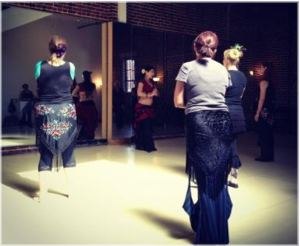
Silvia taught a few steps with palmas and added some basic hip and skirt work, then proceeded to teach a Spanish gypsy choreography which had some vivacious combinations. She also discussed the attitude and emotion behind the steps, telling us that the song was about bidding goodbye to a no-good lover by flipping the skirt to the rear to “show your butt”, telling him it’s over with a sassy finger snap. We were able to work through the entire choreography, which included flamenco turns and spins. She taught it as a solo but explained that it could also be done as a duet.

I was happily surprised by Silvia’s relaxed attitude to Spanish dance. I have taken a few flamenco classes with some wonderfully intense instructors but their rigidity and insistence on perfection could be intimidating.

Silvia was extremely precise in explaining the steps, breaking down the footwork, body angles and transitions, yet her approach to the choreography was warm and enjoyable. When we were able to start doing the entire piece, Silvia gave us permission to make mistakes, encouraging us to just dance and relish the movement rather than stress about the exactitude of the choreography..

One of Silvia’s goals is the reconstruction of Andalusian dance prior to flamenco, and to conclude the workshop she spent a few minutes discussing the journey of the gypsies from northern India into Moorish Spain. Her own ancestry includes gitana and Sephardic Jew, so this work is close to her heart and heritage. Her passion and enthusiasm for this dance are invigorating, and we felt inspired by her teaching.

AmandaAlong with the workshop was Maria Palacio’s annual “Haflaween”, and I adore Halloween-themed belly dance! This show was particularly special because we were opening with a tribute to John Compton, who had passed away only a few days before. My friend Mari and some of the Augusta dancers had attended his workshop and learned his choreography to Omar Tekbilek‘s Shashkin,which John often taught as a zil drill.

Mari asked if Shashkin could be included in Haflaween as a tribute to John, and graciously, Maria provided an extra slot. Mari invited whomever remembered it or could pick it up to participate. She found a clear video of the dance on Youtube, and it was the first time I have ever learned a choreography online. We met at Mari’s house on Friday night to polish it, and then six dancers who had never danced together had a great time performing it on Saturday.
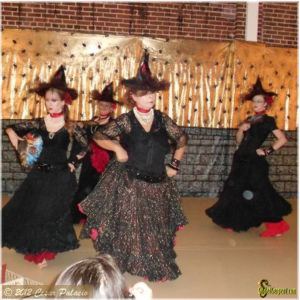
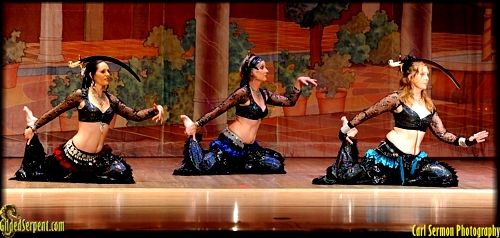
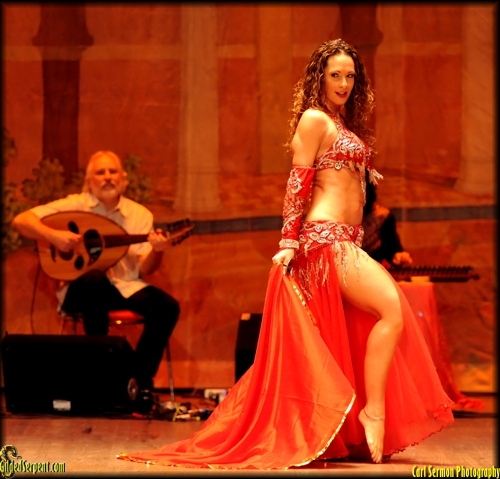
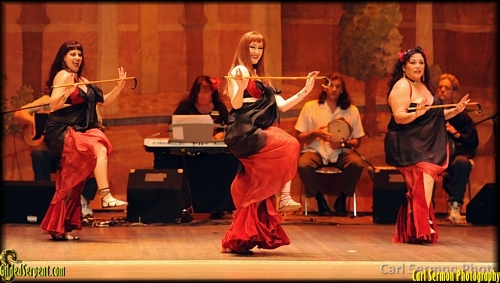
DTTSHaflaween featured groups and soloists from Columbia and Augusta in all their Gothic elegance, including the Spanish witches of “Dancing Through the Skirt”, infected zombie Amanda, and terrible twins Mari and Alison. Maria danced with a lovely, long mantilla. Of course, the highlight of the evening was Silvia – her tribal and Spanish fusion pieces were dynamic and beautiful and her sword dance was utterly amazing.

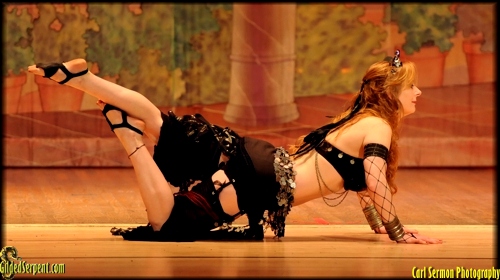
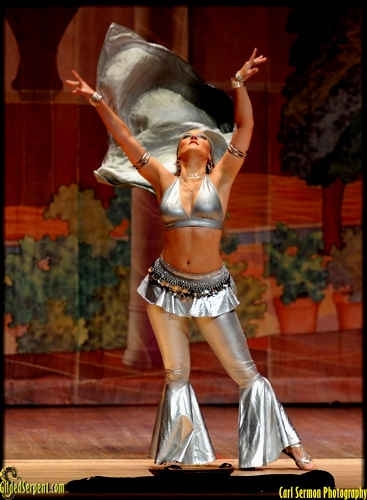
She performed with two swords, beginning with one on her head, and then she held the second one between her toes, maintaining beautiful lines during floor-work that included full rolls, and then standing and extending her leg and torso. Her movements were so graceful and fluid that it was still a dance, not a circus act. She was teaching a sword workshop on Sunday, but I wasn’t able to make the trip two days in a row. However, I was very glad I had studied with her on Saturday and to have seen her perform. I also bought her DVD to reinforce her teaching.

With some instructors, I’ve enjoyed the workshop, but feel afterwards that it hasn’t really improved my dancing. After this workshop and show, I felt full of new dance ideas that flowed into sequences of movement.

I choreographed two new dances for myself in two days, and I’ve never developed choreography so quickly and easily before. I loved Silvia’s teaching and performance, but, most importantly, the work with her inspired my own creativity. For me, that’s the hallmark of a truly accomplished instructor.


Above photos-
Silvia and 2 swords in standing pose
Map of Georgia and South Carolina
Workshop
Amanda, the infected zombie
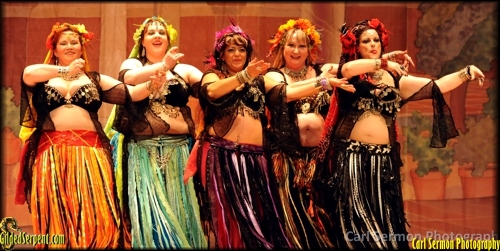
Dancing Through the Skirt – Spanish witches Vany, Joyce, Michelle, Kelly

Author-Jezibell

Ghoulish Jezibell

Group
link to enlargement

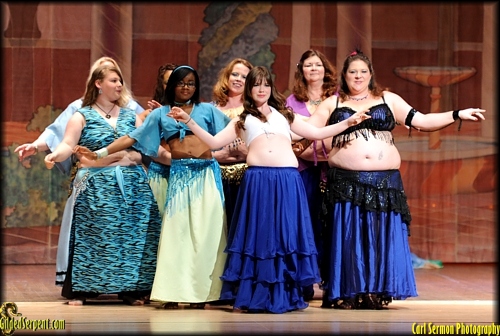
Silvia, Maria and Haflaween performers.
[Please send names of individuals! Thanks]
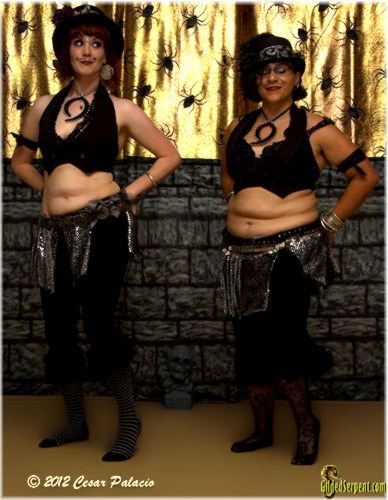
 

Duet

Terrible Twins Alison and Mari

Maria
Maria Mantilla

Shashkin

Shashkin Tribute
Dancers: Mari and Jezibell in front, Andrea, Vany, Brandie, Alison in back
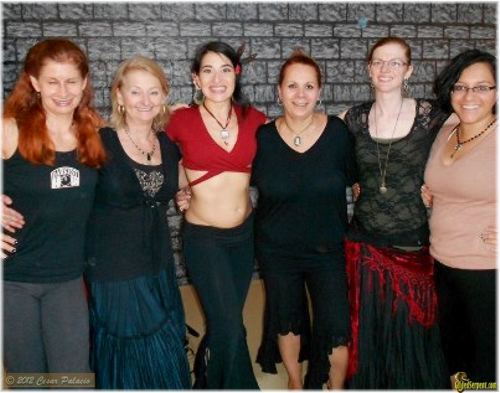
Group
Silvia and Augusta group – Jezibell, Joyce, Silvia, Vany, Michelle, Mari
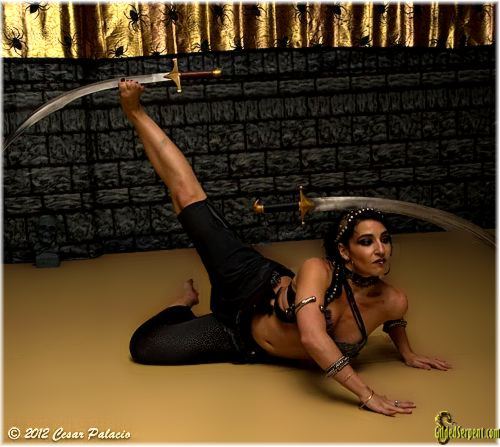
Silvia

Silvia and swords performing floorwork

Resources

use the comment box

Have a comment? Use or comment section at the bottom of this page or Send us a letter!
Check the "Letters to the Editor" for other possible viewpoints!

Ready for more?

  • Özel Türkbas Turkish Bellydance Trailblazer
    She also discovered the pleasure in dancing for other women. As she would later write in her book, “When women liked me and applauded my performance, I knew it was going to be all right. …that I would have a career that would do more than bring attention to myself.”
  • From the Big Apple to the Peach State
    In Augusta, options are much more limited, and dancers are more influenced by the Bellydance Superstars. My teaching experience at Serena Studios opened doors for me in Manhattan, but people in this area had never heard of Serena. I was trained to present a five-part cabaret show with live music, but here tribal improv prevailed.
  • Memorial to Armando Mafufo, Drummer, Teacher, Friend
    Armando Mafufo, known to most of us in the music and dance community as "Uncle Mafufo" was, as someone posted today, "a man everyone loved." He was a person who could light up the room with his smile and radiated love.
  • Making Superstars out of Top Dancers, BDSS Tour 2012
    From the beginning, the Bellydance Superstars troupe has had the great fortune to attract the top dancers in the field even though, at first, we were criticized within the bellydance community for “having no stars”; so how dare we call the troupe the Bellydance Superstars?
  • In Sharp Contrast, Dancing in Lebanon and the US
    Lebanon has something called “super night clubs" which are, basically, strip bars or cabarets. The term “nightclub” can be misunderstood easily–so it is best to tell them that you work at a 5-star place and not a cabaret.
  • Kajira and Chuck Interview, Cultural Appropriation or Artistic Freedom? Part 6: Separate Community? Burlesque?
    Kajira believes that the Tribal community is bigger and more successful than the rest of the belly dance community. "We wish we could be accepted as a sister dancer form… As Artemis said, if you don’t like it, you don’t have to look." Burlesque is a separate art form.
  • Memorial to John Compton
    Please add your comments and send in your photos for posting on this page. Thanks!
  • Rakkasah West 2012 Photos, Page 2:M-Z
    Malika, Maria, MaShuqa, Masha, Masouma, Michelle, Moon Dance, Mountian Gypsies, Nabeela, Nadika, Nadira, Naheda, Namira, Narantuya, Onyx, Oreet, Pangia, Park Ave, Rachel, RaksAl Khlil, Raks the Casbah, Rasa, Reda, Renya, Rockin the Cradle, Ruby, Saqra….
  • Rakkasah West 2012 Photos, Page 1:A-L
    Adira, Adriana, Aizubra, Aki, Alexandria, Alfredo, Alnisa, Amel, Ariel, Ava, Ayesha, Badia, Bal Anat, Blue Diamond, Chelly, Dancers of the Desert, Devi, El Asaab, Eve, Fahtiem, Goddess Force, Good Vibs, Habibi, Hannah, Kashmir, Isabella, Jewels, Joweh, Justina, Khalilah, Leila
  • Photos from Ahlan Wa Sahlan 2012 – Cairo, Egypt, Page 2: July 1- 3, 2012, Cairo, Egypt
    Once more, Raqia Hassan, the sponsor of the Ahlan Wa Sahlan Festival welcomes her guests from all over the world at the Mena House Hotel, the antique mystical palace beside the pyramids of Giza for the 12th annual of this worldwide party.
  • Ahlan Wa Sahlan 2012 – Cairo, Egypt, Page 1: June 27-29
    Once more, Raqia Hassan, the sponsor of the Ahlan Wa Sahlan Festival welcomes her guests from all over the world at the Mena House Hotel, the antique mystical palace beside the pyramids of Giza for the 12th annual of this worldwide party.
  • Sharpening Your Dancer’s Edge: Performing Without Choreography
    The idea of dance governed by choreography is more a western notion that was not inherent originally a part of the Middle Eastern dance solo

 

Gilded Serpent presents...

Heads-up for a Daughter-Mom Fun Op

i-Dressup.com: Interactive Digital Paper-doll Experience

Placeholder

Game review by Davina ~ Dawn Devine
posted December 17, 2012

Wanna fun belly dance diversion for you and the favorite little girl in your life? Check out i-Dressup.com! In a nutshell, this site offers an interactive digital paper-doll experience. The interface is easy to use. Simply click on the wardrobe component your are interested in using and it appears on the accompanying doll. This website is vast, with lots of collections for women, teens and girls. From high fashion designers to Disney fantasies, there is a wide variety of clothing and costumes to explore. Each collection is called a "game" on the site and registered users can create their own collections for a fee. Visitors to the site can explore and play with hundreds of games.

Tucked into the "girls" side of the i-dressup site is a collection of belly dance costumes. It’s a fun little collection that features some of the most classic belly dance styles. There are a handful of head to toe ensembles including bra, belt and skirt with matching accessories. However, a creative user can mix and match these individual pieces to create a variety of different looks. There are no traditional or tribal costumes, but if you are feeling creative you can sign-up to this site and create your own collection to suit your costuming taste. If you do, let us know so we can share it with the world.

i-Dressup is a creative and fun digital fantasy world where you can play at being a designer, stylist or shopper. If you enjoy playing with paper dolls, this is an entertaining diversion. This is especially fun if you’re playing with a young girl and don’t mind spending some cash. You’re required to pay i-coins to build and save a game for others to view, but playing already built games is free. Beware! If you love paper dolls, you might wind up spending quite a bit of time here!

http://www.i-dressup.com/girls/Belly_Dancer.php
Be ready to turn off your speakers, because the music sucks!


Full screen has many ads

Resources:

use the comment box

Have a comment? Use or comment section at the bottom of this page or Send us a letter!
Check the "Letters to the Editor" for other possible viewpoints!

Ready for more?


Gilded Serpent presents...

Who’s the Fairest of Them All?

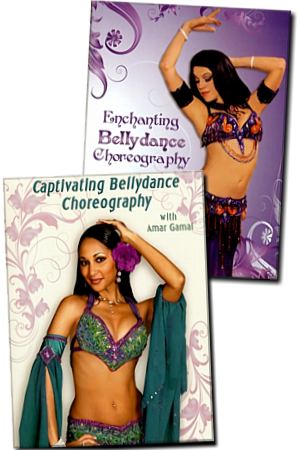
Enchanting Bellydance Choreography by Sandra

Captivating Bellydance Choreography With Amar Gamal

Placeholder

DVD reviews by Martha Duran
posted December 15, 2012

Fairies are enchanting magical beings that many mortals would like to have the gift of seeing, and while I haven’t seen any fairies personally, I felt that I was one of the luckiest of mortals recently when I had the opportunity to become enchanted by two new DVDs from skilled, talented, and perhaps enchanting, dancers. These two dancers seem to have captured the attention of all who need help with choreographic and performance skills.

Sandra DVD cover

Enchanting Bellydance Choreography by Sandra

The term “enchanting” is defined as capturing interest as if by a spell; on this DVD, produced by Hollywood Music, Sandra presents choreography to the musical arrangement “Yasmina” played by the famed Al-Ahram Orchestra. The production will capture audience’s eyes, and yes, it will enchant them. It is an Egyptian-style choreography that Sandra teaches, step-by-step, in 8 combinations.

The choreography is fitting for beginner-intermediate dancers who have knowledge of the fundamentals of Oriental dance. In my opinion, it is a useful choreography to learn and to keep in one’s repertoire as a backup for last-minute performance engagements.

First, Sandra gives a verbal introduction to her DVD; then, she goes over some veil technique without previous warm-ups or stretching. She also shares some useful tips regarding how to keep the veil off the floor and away from one’s face. Some of the veil moves included are: the “over toss”, “full over-toss” (both clockwise then counterclockwise) and the “waterfall”. Sandra proceeds directly into combination number one of the choreography and then repeats it. Next, she reviews it from the top and repeats it a second time – after adding in the music. This is a convenient format because it lets the viewer learn the choreography after dancing along with this DVD several times.

“Bedouin Princess” is the name of the next veil movement that she teaches; again, she runs over combination number 2, and after teaching it, she goes over it with music, then puts together combinations 1 and 2.

Sandra gives some interesting tricks and tips for maintaining balance in steps like the “Pivot Turn”. She teaches the “¾ Shimmy-to-the-Side” (including some muscle contractions) for combination number 3. After dancing along with her, performing combination one through three, she teaches you how to do a “Hair Toss” that you will use in this combination (and later on, other combinations as well). She emphasizes making well-balanced turns and also shares some techniques she learned from her jazz dancing teacher to maintain balance, stay centered while turning, and land with better control. She adds these steps to combination number 4, reviewing all of the choreographed steps from the top.

“Chest Circles” are taught, being done on the downbeats. Learning motions of the hip with basic foot work is also part of the technique that is needed for combination number 5; she also used some intricate footwork that she had not taught in the technique section for this combination. It was the Grapevine Step, done in medium tempo, which can be difficult for absolute beginners to follow. After practicing combinations 1 through 5 all together, I noticed that Sandra does some changes in choreography, altering it a bit by adding some flair and flourishes that are fitting to a higher level of expertise that comes quite naturally to a more experienced Bellydancer.

Combinations 6, 7, and 8 are described directly without technique being taught specifically for these sections. Some “Hair Tosses” (done while on floor-level) are used in combination 6. However, it is not easy to get up or down to floor level, using the specific steps that Sandra teaches for combination 6.

Combination number 7 repeats many of the movements already learned, with quick direction changes added. In combination 8 (the last combination you’ll learn) some big movements and lots of footwork gives you the option of several different poses for the end of the choreography.

I thought that the lighting and production of this DVD and the selection of music was more than satisfactory. You learn the steps along with song with which you’re going to dance; so, it makes it easy to understand and assimilate the musical content of the song with the repeated run-throughs of the choreography.

Sandra performs the whole choreography in a striking blue costume and later gives a bonus performance to “Batwanes Beek” by Setrak Sarkissian.

Rating: 4 zils
Zil Rating- 4
produced by Hollywood Music
and available here


Amar DVD cover

Captivating Bellydance Choreography With Amar Gamal

If we look up the definition of the word “captivating”, the dictionary would state: “to attract and hold by charm, beauty, or excellence”. This is definitely an attractive DVD by the sought-after performer and worldwide instructor Amar Gamal. Its graceful and elegant classical Egyptian styled choreography is taught by the beautiful Amar, displaying her well-known charm and excellence while she teaches 13 brief combinations.

Amar starts off this DVD by giving a brief verbal introduction and by demonstrating her choreography.

She begins with a relaxing yet invigorating stretch, warming up your body during the first section. Then, she repeats it, reviewing posture and alignment. This is a brief section in which she discusses proper placement of feet and legs, demonstrating 6 basic arm positions in classical Egyptian dance. By the time this section is over, I have cooled down; so, I need to warm up and stretch just a little more.

I disagree with the order of the segments; I would have preferred to address first “Placement and Alignment”, and second, the “Warm-up Stretch” section, followed by “Technique and Combinations”.

However, for some reason, you warm-up first, then stand still for some minutes, posing and aligning yourself before going over some classical Egyptian style dance steps, learning the 13 different combinations to give form to a complete choreography. By the third time I viewed this DVD, I skipped the placement and body alignment part to prevent my cooling down.

Amar Gamal emphasizes arm placement and footwork on the technique segment, teaching steps like: “Front and Back Grapevines”, “Circles and Walks”, “Hip Twist with Piston Hips” and Arabesques. She is clear in how the step should be executed, movement-by-movement. For example, in the “Hip Twist with Piston Hips”, she teaches you first how to “Hip Twist”, then how to do “Piston Hips”, gradually putting them both together.

Combinations 1 through 5 are simple and easy to follow, and you can learn them from the first time you dance along with this DVD. The format is simple: first you learn step-by-step the combinations; then, after each combination is complete, you have the opportunity to run over it with music. After that, you connect it with the rest of the combinations of this classical Egyptian piece and go over it with music.

“Traveling”, “Backing-up Saidi Step”, “Back-Grapevine” with the “Hip Twist”, Front-Grapevine with “Shoulder-Shimmies” are steps used in the first 5 sections. I noticed that on combinations 6, 7, and 12, the combinations are named by the most prominent “Stepping Shimmies” with layers of “Scissor Steps” and “Hip Slides”. Dr. Samy Farag’s song, “Wa Marret El Ayam”, is used for the performance.

This DVD is well-produced and edited; it features a variety of background songs that are played while the you are learning the combination segments. Lighting and camera angles are perfect, capturing each of Amar’s movements, and Amar Gamal is always mesmerizing–both on and off stage.

Rating: 4 zils
Zil Rating- 4
Produced by Hollywood music
and available here

I feel I must conclude by noting that both DVDs are made to improve your performance and dancing skills in some way, although it is still your job to give your performance a smile and gesture to enchant and captivate your audience with your unique stage personality.

Resources:

use the comment box

Have a comment? Use or comment section at the bottom of this page or Send us a letter!
Check the "Letters to the Editor" for other possible viewpoints!

Ready for more?


Gilded Serpent presents...

Dahiyya in the Desert

Chapter 3 of Veiling in the Desert

Placeholder

by Shema ~ Emma Lucy
posted December 14, 2012

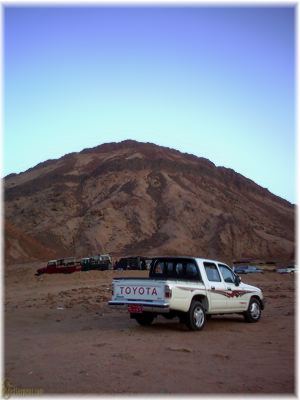
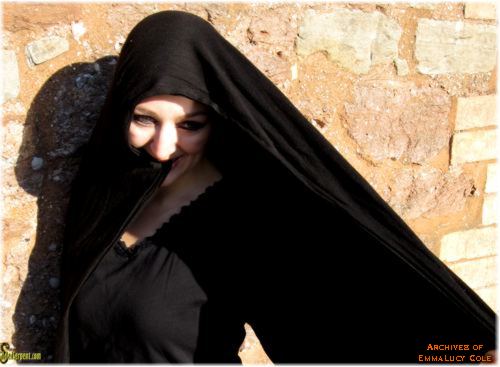
Shema portraitWe had already driven away from the wedding when the phone call came: “Bring her back, quick, there is Dahiyya!” We jumped back in the car, along with a young Swedish man who jumped at the rare chance to see the traditional dance performed at the wedding in Tarrabin. As we drove down onto the beach, there was the sound of gunshots in the air as local men fired into the air over the Red Sea in celebration and exultation; the white Toyota trucks favoured by the Bedouin were squeezing past each other in the constant flow of traffic between the immense tents erected on the sand, glowing with the light from a thousand and one multi-coloured light bulbs strung up across the bamboo, wood and canvas structures. I had been at the wedding all evening, sat in the women’s tent; a modern, white marquee-type affair, brightly lit and stifling in the heat of a Sinai summer. Most of us had migrated outside to lean on each other under the stars, drink sweet sharbout from white plastic cups, and listen to the chattering of a hundred voices. There was a plethora of diamante, interspersed with young girls wearing jeans and t-shirts, hair loose in the all-women enclosure.

The men were installed in the larger tent, after having driven their wives and sisters through the specially constructed one-way system, designed to ensure that no men from outside the family would see the women exiting the vehicles, and there was a stream of black-clad silhouettes filling the entrance.

It was now past midnight, and although many people had left, the area outside the women’s tent was now unlit, aside from the blue glow from the full moon over the sea. There were now men of all ages congregating outside the women’s tent, and as my eyes adjusted to the low light, at their feet, I saw a pool of black shapes on the ground. The Swedish tourist was overwhelmed; not knowing whether to stay with me, as a fellow-European, or hang out with the men who, in contrast to the static pool of women, were moving amongst the groups, greeting friends, cousins and elders, talking and laughing loudly with excitement, all wearing white gellabiyahs, and as they shifted and rotated around the space, I lost track of the people I knew as they merged into one another in the half-light.

Seemingly without intention, the group began to split and eight or nine older men formed two lines on the left, facing each other, whilst the younger men drew an arc on the opposite side of the area. I heard a murmuring from them all as the two Dahiyya forms began.

Chanting, and clapping a solid beat, they stood shoulder-to-shoulder, and with a lilting, bowing motion, they shuffled back and forwards. On the left, other men watched the lines, clapping and encouraging them as they sang lyrics to bless the marriage, pray for fertility, and bring luck to the community through this new union. On the right, the semi-circle was growing as more and more men joined the song, bumping shoulders, nudging each other, giggling and chatting as if they had not seen each other for months; had not spent recent days sat drinking shai and phoning each other from the camps. This is family–a close-knit one which never tires of each other’s company and always has something to chat about, even through the hard times.

Author

There were shrill zaghreets now emanating from the cluster of women on the ground, clapping from under the abayas; all of them unrecognisable in black, in the darkness. A sudden movement and harsh cries of jubilation from the group, as one woman stood up, her shoulders pulsing to the rhythm of the clapping and she floated into the arc, rising up and down on the balls of her feet, heedless of the sharp stones in the sand, the corners of her guna’ lifted at the sides like wings. A woman once told me that if Egyptian Baladi dancing represents ‘earth’, then Dahiyya is the ‘air’ element. She was right. The dancer flowed around the space, close to the men, who picked up the pace, became louder and more energised, jostling each other in their game of pretending not to know who was under the guna’. For every person there, knew who was dancing, but out of respect and tact, this intermingling of men and women is tolerated; a rare time when the two genders can be together regardless of family connection and can make music, and dance together, without any recrimination or disapproval.

It is a precious tradition in a society where segregation is particularly extreme. As the first dancer merged back into the puddle of black on the sand, another woman rose to take her place, and then another, as one-by-one each woman took her turn, sometimes overlapping with each other so there were two figures in the arena, like black moths, flitting and spinning against the white gellabiyahs.

We stood transfixed between the groups, not part of either world, but in a privileged position to witness an extraordinary dance; an extraordinary moment, in the lives of the Tarrabin Bedouin. The dance is unlike any other across the Middle East, a vestige of their Saudi Arabian heritage, preserved by the seclusion of a nomadic life, and only now being influenced by modern Iraqi and Saudi music videos, blasted out in the evenings from small televisions in the concrete and breeze-block houses which coat the once palm-tree covered sands of Tarrabin. This tribe, perhaps more than any other, is determined to safeguard its traditions, maintain its independence and avoid being engulfed by outside influences. Yet there were more rhinestones than at an international Bellydance event, mobile phones ringing constantly, Rolex watches and bright nail colours, expensive cars and English phrases drifting out of the night. Change is inevitable, necessary, and hopefully, progressive. For a community in a stage of transition, clinging to tradition through the expression of their arts is an important and vital means of discovering their future path. For one, I consider myself fortunate beyond words to have been allowed to observe this art, even from a distance, and to be able to share its essence through my writing. I am told that next time, I will be amongst the women, and invited to dance too but only if I wear a long skirt to cover my ankles…

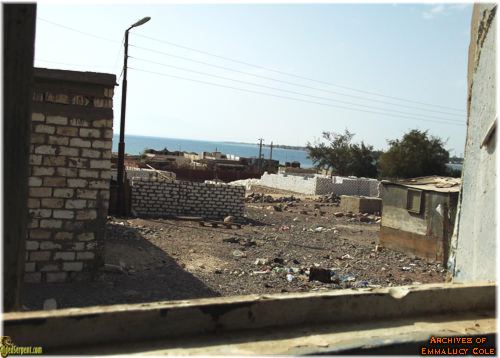
View of Saudi Arabia from my bedroom window!
View of Saudi Arabia through author’s window.

Resources:

use the comment box

Have a comment? Use or comment section at the bottom of this page or Send us a letter!
Check the "Letters to the Editor" for other possible viewpoints!

Ready for more?


Gilded Serpent presents...

Memorial to Armando Mafufo

Drummer, Teacher, Friend

Placeholder

by Crystal Silmi
posted December 7, 2012

I woke up early this morning and found an update on "Caring Bridge" concerning the health of Armando Mafufo. When the notifications first came several months ago that Armando was not in good health I was very concerned, but as time went on, his daughter Nina was posting very positive updates about his condition and so my heart has been somewhat at ease knowing he has been cheerful and seeming strong. I have spent time with him on a few occasions on my return home visits to California and all seemed well. Today’s notification literally knocked the wind out of me; it was an update informing us that my beloved friend of more than a decade had passed away.

Armando Mafufo, known to most of us in the music and dance community as "Uncle Mafufo" was, as someone posted today, "a man everyone loved." He was a person who could light up the room with his smile and radiated love.

I do not intend to write a biography about Uncle Mafufo, but I know his enchantment with Middle Eastern music happened over 30 years ago and he has been hot on the Middle Eastern music scene ever since. He has recorded several albums with songs commonly used by belly dancers worldwide and has been featured in several DVD’s. In addition he has been a sought out instructor internationally for his knowledge and expertise with the doumbek and frame drums.

My experience with Uncle Mafufo goes beyond his statistics and success. Armando was more than just a musician. He was an incredibly humble man who loved music and genuinely loved dancers. He would always tell me in detail what he appreciated about my dancing or my students dancing, or any dancing really. He used to come weekly to drum at my classes in Santa Cruz, California just for the pure enjoyment of playing music and being with dancers. He was there as I "took my first steps" onto the stage being the first drummer I ever did a live music show with and through the years that followed we became more than just drummer and dancer, we became friends. Armando taught me how to drum and had the patience of a saint for those students who couldn’t for the life of them differentiate a "dum" from a "tek".

Uncle Mafufo and his beautiful wife Hanya would invite me to their home and there you could see where his art extended beyond music. Between Hanya’s paintings and glorious gardening – Uncle Mafufo’s home seeps creativity. There are his drawings and metal work – they created beautiful jewelry and head pieces from silver and gold. In Armando and Hanya’s home you can see that this is a couple that lived and breathed life from an artistic perspective, absorbing the beauty in life and reproducing it with their own hands.

The departure of this great soul who inspired so many in his lifetime leaves a gap in the hearts of all who knew him. Armando was a person who illuminated his surroundings. To have known such a person is indeed a blessing. Remembering Uncle Mafufo should enable us some self reflection. What will our legacy as humans be? We should all aspire to such greatness that came natural to Armando – to love, support, encourage and inspire one another to reach our greatest potential as artists and as human beings.

Uncle Mafufo will rest forever in my heart and those of all who knew him. May he rest forever in love and in peace.

Crystal and Armando

Hanya and Armando

Armando plays for Taka in 1977

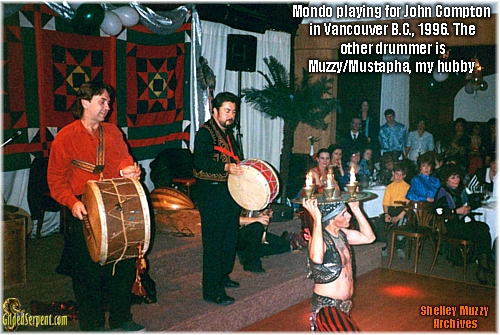
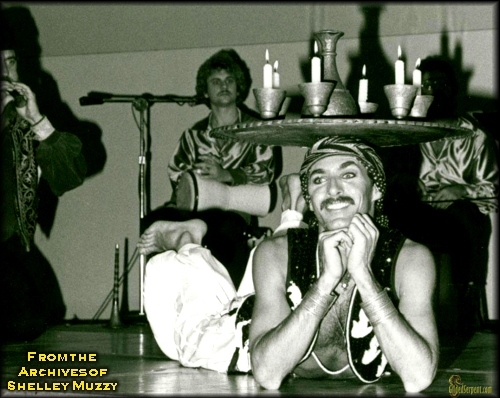
Shelley Muzzy Photo of Uncle Mafufo playing for John Compton


Resources:

use the comment box

Have a comment? Use or comment section at the bottom of this page or Send us a letter!
Check the "Letters to the Editor" for other possible viewpoints!

Ready for more?

  • Tribal Tales
    The moods and flavors of the varied songs on this CD are sure to be useful for dancers and listeners who like something out of the ordinary to challenge and delight.
  • Armando’s Drumming Dazzles the Dancer
    Video review of "Uncle Mafufo’s Riqs & Defs: a practical approach to Middle Eastern Frame Drums"
  • Review and Rating of 2002’S MIDDLE EASTERN DRUM CD/TAPES
    This is a review of eight of the most popular Middle Eastern Drum recordings produced this year. Incuding works by Reda, Susu, H Ramsy, Zaid, Mafufo, and more…
  • "Zig n Zag", a Music Review
    All of the instruments used for this recording are acoustic, providing a warm and genuine sound; nothing is looped, sampled or synthesized.
  • A Gilded Serpent Time Capsule Presentation, Rakkasah 1984 and 1986 (25 years ago) Photos by Lynette Harris
    While taking a nostalgic look through my photo albums recently, I realized that if I was ever going to share these photos, I had better go ahead and scan them into the computer now before they deteriorate even more than they already have. Yes, they are discolored and blurred, but I think they will be of some value to those who pay attentions to costume styles or those who were there and simply enjoy re-visiting the memories
  • Memorial to John Compton
    Please add your comments and send in your photos for posting on this page. Thanks!
  • Making Superstars out of Top Dancers, BDSS Tour 2012
    From the beginning, the Bellydance Superstars troupe has had the great fortune to attract the top dancers in the field even though, at first, we were criticized within the bellydance community for “having no stars”; so how dare we call the troupe the Bellydance Superstars?
  • In Sharp Contrast, Dancing in Lebanon and the US
    Lebanon has something called “super night clubs" which are, basically, strip bars or cabarets. The term “nightclub” can be misunderstood easily–so it is best to tell them that you work at a 5-star place and not a cabaret.
  • Kajira and Chuck Interview, Cultural Appropriation or Artistic Freedom? Part 6: Separate Community? Burlesque?
    Kajira believes that the Tribal community is bigger and more successful than the rest of the belly dance community. "We wish we could be accepted as a sister dancer form… As Artemis said, if you don’t like it, you don’t have to look." Burlesque is a separate art form.
  • Kajira and Chuck Interview, Cultural Appropriation or Artistic Freedom? Part 5: Term Tribal
    Using the Term “Tribal”, The Modern Primitive Movement. Artists will fuse anything which is ok. What if we said “American Style Flamenco”? Morocco made this name up. Middle Eastern people get a feeling of “home” when they see tribal style. This is because we use authentic textiles and don’t use Hollywood fantasy. Doesn’t American Tribal sound like Native American? Modern Primitive Movement included tattoos, piercings, colored hair, alternative lifestyles. The hippy movement started the look of anything exotic being cool. Salimpour…
  • Kajira and Chuck Interview, Cultural Appropriation or Artistic Freedom? Part 4: Rise of Tribal Fusion ,
    The Rise of Tribal Fusion. New terms- Spontaneous Group Improvisation, International or Improvisation Tribal Style. "Tribal Fest chronicles the rise of Tribal Fusion." Tribaret. No codification in our dances. Big difference betweem Tribal Fusion and Cabaret– Isolations, torso, arm movements. Kajira became certified in Rachel Brice’s format. ATS is a subset of Spontanteous Group Improv.
  • Kajira and Chuck Interview, Cultural Appropriation or Artistic Freedom? Part 3: Not MED
    Not MED, Misappropriation of the Rom culture, Ostracizing of Tribal. Find reference in Tribal Bible for time stamp 2:30. We found it- Page 215 at the top, "The parallels between the struggle of the Roma and that of bellydancers is undeniable. Both groups are fighting to gain respect and move away from social prejudice." This point is addressed in the review of the book.
 

Gilded Serpent presents...

Making Superstars Out of Top Dancers

BDSS Tour 2012

Placeholder

by Miles Copeland
Photos by Sophia Harris
posted October 31, 2012

From the beginning, the Bellydance Superstars troupe has had the great fortune to attract the top dancers in the field even though, at first, we were criticized within the bellydance community for “having no stars”; so how dare we call the troupe the Bellydance Superstars?  Rachel Brice, Sonia, Jillina, Amar Gamal, and Ansuya, all from our first cast, were apparently “not stars”, as they were relatively unknown outside their local bellydance communities.

My point (perhaps with a combination of arrogance and naivety) was that even the most known within the bellydance community, who might be stars in their community, had never been heard of by the general public and indeed for the most part are still unknown to the general public.  To be honest, even with all the TV and other media exposure the BDSS has received the general public may to some small degree have heard of the Bellydance Superstars but I seriously doubt if any of those people could actually name one of the dancers.  We have a long way to go before that happens.

Therefore, my calling a dancer a superstar purely based on talent and skill rather than “name value” was just as valid as any other means of determining a “star”.

Of course, it was not long before the talent of these dancers (followed by Sharon Kihara, Kami, Zoe, Bozenka, Petite Jamilla, Sabah, etc. etc) was recognized within the bellydance community itself and as the profile of the BDSS became bigger and bigger in over 800 shows in 22 countries, I no longer had to justify the title “Bellydance Superstars”.

In the course of developing the BDSS troupe, I have come to learn what many other troupe producers from other dance genres have had to learn: Working with dancers, especially female dancers, means one has to take a long view and realize that there will be turnover. Since dancers will marry, have children, get too old for the rigors of the road, (or a husband or boyfriend might put pressure) means long tours are out.  

Additionally, within the BDSS, we have seen the general skill level of bellydance itself increase all over the world – perhaps partly, or greatly, inspired by our work. This means that as one dancer retires, finding new dancers who can not only live up to the past work, but push the envelope further so that we always exceed expectations, is harder and harder.

I have to admit when Petite Jamilla told me she was going to have a baby and could not do the Winter Tour, I began to worry about the cast for the tour, as well as the choreography.  As a company, we had already decided that our “back line” was now so strong that the idea of front stars and back up dancers no longer made any sense; therefore, we were not using all our talent. 

We had also decided to involve more of the troupe members in producing choreography to give us new ideas, and a diversity we did not have when Jillina did most of the choreography. 

Still, there was a risk and we would not really know where we were until after a few days of rehearsal.  As a producer, that is uncomfortable; with a reputation to keep up the thought of finding out we were not ready to tour and had no time to fix the show, squarely puts the burden of blame on the producer and worst of all, could well damage the years of work we had all put into this venture.


Inka , Samira- top of page

On the positive side, we knew that the Club Bellydance Tour had shown not only exceptional dancing from our newest members Victoria (on the East Coast USA tour) and Inka (on the European tour), but also challenging group choreography ideas developed on that tour by Sabah, Moria, Sabrina and Stefanya.   The Spanish tour proved just how far Nathalie had emerged as a top rate dancer, as well as Rebecca – each now totally capable of moving forward.   We also knew April Rose, fresh from her college graduation, was now able to join us full time.  Also, Samira Sitara as our Tajik and Uzbek dance aficionado with a unique and always exciting approach to dance was bound to once again push the envelope of bellydance fusion.

Rebecca
Rebecca dances to Issam

So the dance talent was obviously there, but having it all fall into place, and in time, was going to be the make or break of the show.

Meanwhile, the title of the show, in this case "The Magic of Dance", became more and more about not only appealing to the core bellydance community and its fan base, but also, to attract a wider dance audience.  No troupe this size with these expenses can live purely on the size of the bellydance community.  I wish we could, but so far, the community is just not big enough to support expensive productions.  The fact from which we can’t escape is that Bellydance Superstars have to appeal to more than just the bellydance interest. At the same time, we cannot stray too far from bellydance because that would make us “just another dance show” with no core identity. What has always made the Bellydance Superstars unique within the broader dance community is that we remain the only professional show touring within the general performing arts circuit that uses the art of bellydance as the core dance focus.  That has made our challenge complicated as you don’t want to lose on one hand what you gain on another.  More than anything, it has meant that we need dancers who really are outstanding bellydancers, but at the same time can deal with more complex choreography and fusing other dance forms into bellydance (convincingly) for dancers from any dance discipline to appreciate.

I have now seen bellydance shows in many countries, and auditioned over 3,000 dancers, and whereas I am glad to say the general standard has improved from the time when we first started, I find it increasingly hard now to find dancers for our show as our requirements have also become more demanding.

For this tour, we hired a new dancer, who was a strong bellydancer, but during rehearsals, it soon became apparent that without a deeper dance training than bellydance only, she just could not handle the choreography and the skills needed to do what we do.  At the audition where we found her, I was disappointed that most of the applicants could not even chaine across the room in a straight line.  That would appear basic to any dance show!  If you can’t do that, you can’t hope to perform in a professional troupe, unless it is purely as a soloist, and our show is not just about solos. 

For the “Magic of Dance” show, I left more than usual to chance and kept my fingers crossed.  It was not a smart thing to do, but I would have to say that I got lucky. 

Perhaps, giving the dancers more rope to hang themselves meant that they made sure they did not do so.

In any case, this show stands up to our best and exceeds the past shows in many ways.  As no other bellydance show out there has this many great dancers in one troupe the “Magic of Dance” demonstrates just how powerful a dance form bellydance can be.  Hopefully, it will inspire more dancers to adopt bellydance as their prime dance interest, and additionally, inspire bellydancers to push themselves to greater heights.

More photos from the opening night of the "Magic" tour at Cowell Theater in Fort Mason in San Francisco, CA

Sabah flies!
Sabah flys!

iCompeting camps!
Women compete!

Samira contorts
Samira contorts

Inka works with Issam

Victoria
Victoria takes a solo

Nathalie
Nathalie does bollywood

Sabrina
Sabrina gets low

Tribal glam
Tribal glam

The Group
The team

The set

Ft Mason at Sunset

Fort Mason at sunset

Resources:

use the comment box

Have a comment? Use or comment section at the bottom of this page or Send us a letter!
Check the "Letters to the Editor" for other possible viewpoints!

Ready for more?

  • Are
    You Breaking the Law? Dance Workshops with Foreign Nationals

    It is the sponsor’s obligation to deduct this; if it is not deducted and the full fee paid to the foreign teacher and discovered several years later in an audit or investigation, the sponsor will be forced to pay the taxes then and may even be fined.
  • Certifications & Contests: Are They Meaningful?
    Its as if the contest win were a diploma, her ticket to teach!
  • BDSS Update: New Choreographers contribute to 2009 Show
    I will admit that I have never been a big fan of the more ‘folkloric’ approach to Bellydance, but then again I have to be open to try something new with each show.
  • Carl’s Raqs LA Photos, Best from the Stage on the Lower Level
    Photos by Carl Sermon text by Carl Sermon, Ma*Shuqa and Marta Schill
  • Divorcing Belly Dance From Burlesque
    As it is traditionally understood, I do not find Burlesque, (meaning nudity-no matter how hard one pretends it does not) amusing or creative in the slightest when it comes to including Belly dance, an art that has suffered too long with such unfortunate associations. I find it completely irresponsible and detrimental.
  • Western Dancer’s Guilt, a Response to Naajidah,
    People have occasionally suggested Arabs would be “horrified” by the inclusion of the Tribal style in our show but I can tell you that this style is extremely popular with Middle Easterners who come to our show.
  • The Bellydance Superstars Show In Perspective
    There are many factors to balance, and ANY show can be improved. The point is to also know the limitations that one faces in doing all the things one would like to do.
  • The BDSS Experience and Miles Copeland; Doing What He Does Best
    Even though Miles Copeland’s vision is similar to that of mine and the majority of belly dancers I have canvassed in my lifetime, he and I differ in our mission approach to elevating the dance, and this is where the discussion became a heated debate.
  • Taking Good Care of our Stars
    Most of all, as we now need them consistently; we have to free them from financial worries by giving them job security including such things as health insurance.
  • Intruder, BEWARE!
    "How dare they pollute our pond!"
  • In Sharp Contrast, Dancing in Lebanon and the US
    Lebanon has something called “super night clubs" which are, basically, strip bars or cabarets. The term “nightclub” can be misunderstood easily–so it is best to tell them that you work at a 5-star place and not a cabaret.
  • Kajira and Chuck Interview, Cultural Appropriation or Artistic Freedom? Part 6: Separate Community? Burlesque?
    Kajira believes that the Tribal community is bigger and more successful than the rest of the belly dance community. "We wish we could be accepted as a sister dancer form… As Artemis said, if you don’t like it, you don’t have to look." Burlesque is a separate art form.
  • Memorial to John Compton
    Please add your comments and send in your photos for posting on this page. Thanks!
  • Rakkasah West 2012 Photos, Page 2:M-Z
    Malika, Maria, MaShuqa, Masha, Masouma, Michelle, Moon Dance, Mountian Gypsies, Nabeela, Nadika, Nadira, Naheda, Namira, Narantuya, Onyx, Oreet, Pangia, Park Ave, Rachel, RaksAl Khlil, Raks the Casbah, Rasa, Reda, Renya, Rockin the Cradle, Ruby, Saqra….
 

Gilded Serpent presents...

In Sharp Comparison

Dancing in Lebanon and the US

Author Neena Nour

by Neena Nour
posted October 25, 2012

When Farida Mazar Spyropoulos, who was born in Syria in about 1871, first appeared at the Midway “Street of Cairo” of the World’s Columbian Exposition back in 1893 as Little Egypt and Fatima, she stole the show and became a sensation. Even though the dance was dubbed the “shimmy and shake” or the “hoochie-coochie” for lack of better wording and vocabulary, the United States was introduced to the art of belly dancing.  Today, there are thousands of belly dancers in the United States–from American Tribal to Egyptian to Turkish and to Lebanese styles! Mostly, dance students learn and enroll in classes and workshops and then begin working in their local towns and cities. However, a good few invest and travel to belly dance festival overseas–especially to the Middle East where the dance form originated. Some of them even make their move permanent–in order to gain expertise, after finding work and renting an apartment. 

Sometimes, it is shocking what these dancers encounter; so I am writing this article to give belly dancers a little insight about the current state of belly dancing in the Middle East and, specifically, in Lebanon compared to the dance as it exists currently in the United States.

In the United States, we dancers all know the big Arabic restaurants from the Armenian and Turkish ones. Probably, we know also most of the small cafes and hookah bars in our city. A lot of us dancers perform at parties, weddings, and corporate events at a higher price than our restaurant shows. The price of both fluctuates from coast to coast depending on the city where you perform.

There are some general or common courtesy rules that apply that we call “good dancer ethics”:

  1. Keep your reputation high, do not go drinking or go home with the customers.
  2. Go to your show dressed like a star.
  3. Also, respect other sister dancers; if a dancer has a gig you want, you respect her and try to negotiate  through her for the gig.
  4. You even have to make sure that your pictures are not too sexy or provocative to keep the dance an art. 

The “sisterhood”  of other dancers does not apply in the Middle East. In fact it can be quite cut throat. You are pretty much on your own.

In Beirut, there are some similarities. I understand that in the big restaurants, not all the places have a dancer in their program. It features also the same sized bands as in the US. Some places have a one man show, a keyboard player that sings–or a DJ, while other places have a set of around 5 musicians; sometimes, even famous musicians that live close to the restaurant. Dancers’ shows last about 30 to 45 minutes, and sometimes, a live band who will play. In smaller restaurants, they may have the musicians take a break, like in the states, and dancers perform to an arranged CD of their favorite music. Concerning how many nights dancers do their shows: it is around 3 nights per week in about 90% of the places. The pay is in between $100.00 to $150.00 a night in a restaurant, depending on the place.

When looking at the quality of restaurant, there is not a big range of levels. There are restaurants in 5-star hotels with a dance show, and there are medium level restaurants outside of the hotels. Of course, the plum venues for dance are the restaurants in the 5-star hotels. Next desirable are the restaurants outside the hotels; then, the cafe restaurants that have a program. What we refer to as “hookah bars” are no different than a small coffee shop. They do not offer entertainment other than a flat-screen television, and they do not have either a singer or a dancer. 

Lebanon has something called “super night clubs" which are, basically, strip bars or cabarets. The term “nightclub” can be misunderstood easily–so it is best to tell them that you work at a 5-star place and not a cabaret.

For the party scene, people still hold house parties with a live band or they will rent and reserve a restaurant. Because of the way in which  the world is changing, in today’s market, the price is around $300 to $500. Ten years ago, dancers wouldn’t go for less than $500 per show in the main cities. (However, nowadays, there are dancers from Syria who will come here and dance for $100.) Weddings have changed also. A lot of people hire belly dancers for the entertainment. It is not quite as often that they hire a belly dancer in a Beirut wedding; they prefer to have a group show of folklore and or a Lebanese Dabkeh group. However, once in awhile there is a bride that loves Oriental dance and requests it. (Personally, I perform at quite a few.) There are large dance companies that book weddings and they take a big percent of the show and normally offer a base-pay around $200 to $250 to the belly dancer. Sometimes, there are  event-planners that will call dancers directly, but most of the time, the planner will work with a company for a better package price. There are almost no corporate events or parties that hire belly dancers here in Beirut. It is very rare; while in the United States, often we believe in “work hard and play hard” in the workplace. Some of the best paying parties in the US are the corporate ones.  Here in Lebanon, dancers sometimes receive a request for a show at a Christian’s First Communion or a Baptism.  

I met another dancer in Beirut who said the following about her experience: “The dance in Lebanon is not like [it was] before. It is very rarely on TV programs. In the ‘90s it was much more popular. Belly dance is not only for fun, in fact, [it] is real art like any other dance form, and it needs care and practice and [for you to] apply yourself. The foreign dancers take it more seriously.” ~ Jeanine Khoury

Depending upon to whom you are talking, the Lebanese think of belly dance as an art. It looks best if you have a manager, and when you go anywhere to negotiate, you bring your manager to meetings as well as to your shows. Managers normally take a cut anywhere from 10% to 25% maximum. While an agent is not necessary, having one will tell the owners right away that you are professional in your work.

Once a dancer told me: “Well, if you want to work in Beirut, you will need hair extensions and a nose job.”  This is not true!

Lebanese culture may be seen by some as superficial in general, because they pay heavy attention to small details. For example, I have never seen a Lebanese woman walk around Ashrafiya (the affluent section of Beirut) with chipped nail polish. It is very common for agents to ask you about your surgeries, your age, and even check your passport for verification. This kind of scrutiny about age and beauty, I have never encountered in the United States. There is a lot of plastic surgery here but not much more than when I was living in Hollywood. There is also a great deal of pressure to own and use the best of the best, sometimes even down to one’s blue jeans. So, yes, nice clothes or designer clothes do help and having an in-shape body helps too. Nevertheless, beauty is also how you hold yourself, how you represent yourself, and acting the part of a professional dancer by all means.

Overall, definitely, there are more work options in the United States. Depending upon where you live and how you are marketing yourself, there is more money to be made in America. Dancers end up paying the same amount of money for living expenses that one would in California–and you get to deal with the electrical power being disconnected between 3-6 hours every single day as a bonus! Besides that and the unstable political situation, the thrill of working in Lebanon and the Middle East is worthwhile. The experience you will receive as a Beirut dancer is priceless.

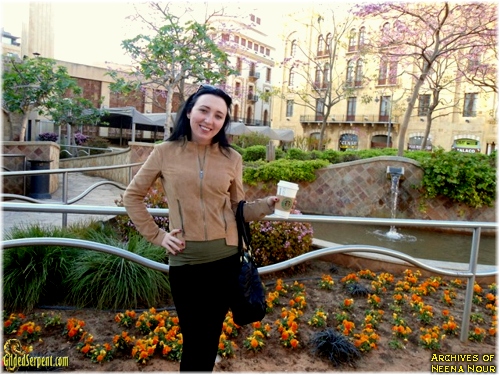
Neena Downtown Beirut with a Starbucks

Neena Downtown Beirut with a Starbucks

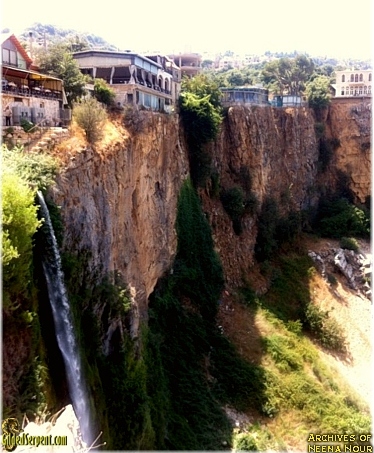
Waterfall in Jezzine in the south of Lebanon

Waterfall in Jezzine in the south of Lebanon

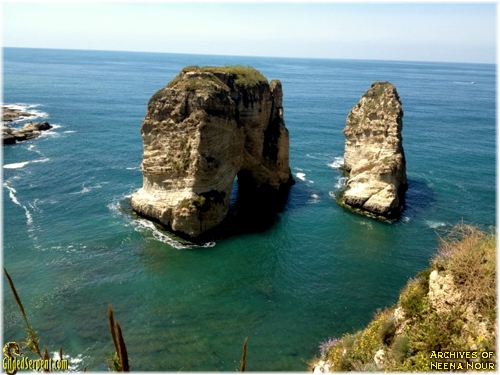
Rouche Sea Rock

Rouche Sea Rock

One of Lebanon's beautiful little mountian towns, Falougha

One of Lebanon’s beautiful little mountian towns, Falougha

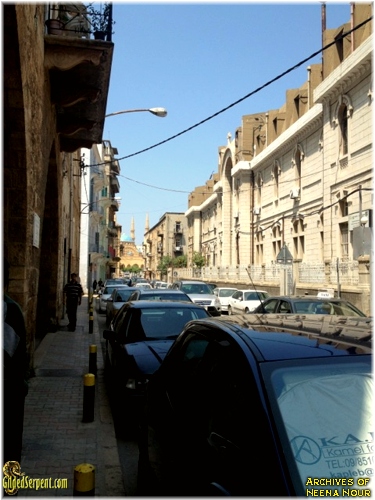
iGemmayzeh, a street in East Beirut

Gemmayzeh, a street in East Beirut

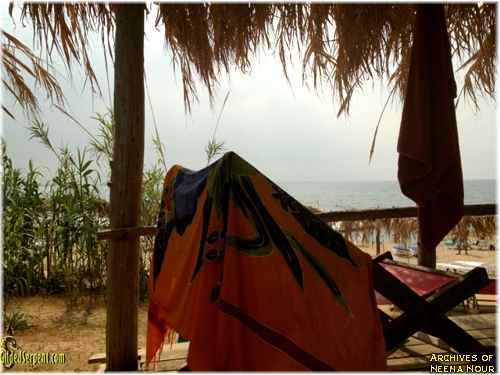
Relaxing at one of Lebanon's Beaches

Relaxing at one of Lebanon’s Beaches

Resources:

use the comment box

Have a comment? Use or comment section at the bottom of this page or Send us a letter!
Check the "Letters to the Editor" for other possible viewpoints!

Ready for more?


Gilded Serpent presents...

Memorial to John Compton

Photos from the Community, GS Archives, and Your Comments

February 29, 1948 – October 14, 2012

posted October 15, 2012

Sent this morning to GS from Rebaba: I have some very sad news to share with you and your readers…John Compton passed away last night after a long and painful struggle with a multitude of AIDS related infections.  While typing this it still seems surreal that I will no longer here his voice and see his shining face and beautiful smile.  But, I take solace in the fact that he’s peaceful and free of his ravaged and weakened body that was no longer cooperating with his will…I miss him more than words can say and I know this will also be a tremendous loss to the BD community as well.  He’s survived by his sister and two brothers and their families.  Both his sister Liz and longtime friend, real estate partner and caregiver Margo were at his bedside when he passed at about 10:00 p.m. last night.

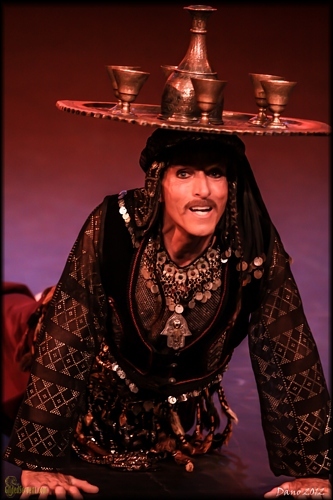
John Compton on Broadway

Readers, please send your photos for posting here to editor@gildedserpent.com, with "John" in the subject line. Thank you!

John Compton

Video Clip of John interviewed for Hoochy Mammas

Rashid and John in 88

Shelley's photo

I am very sad with this news, john was infected after those people who rest their joy, incredibly talented and most beautiful of his talent was as enjoyed the dancing and the energy delivered to the public, always remember. -Paula

Zarifah with John

I have the treasured memory of studying with John Compton in Spring of 2009 = drove 3 hours one-way 2 states away to get the chance to bask in his "John-ness" LOL:) & I AM SO GLAD I DID!!! …Even just to speak with him (He’s such a CHARACTER–had me in stitches!:)) was a wonderful experience! …I drank in all his stories of Hahbi’Ru & Jamila Salimpour, delighting in surprisedly seeing his costume displayed on the wall of a bar in SanFrancisco, etc…

***REST IN PEACE, JOHN COMPTON!!!***

Hugs-&-Shimmies, Zafirah (Lesly Tejero-Baker)

I have a few photos from a weekend workshop I took with John Compton in Syracuse, NY in April 2006.

Raymond Van Tassel
Paula, ?, John

Hahbi'Ru PR photo

?, Rebaba, Sage, Paula and John

John and Cathryn
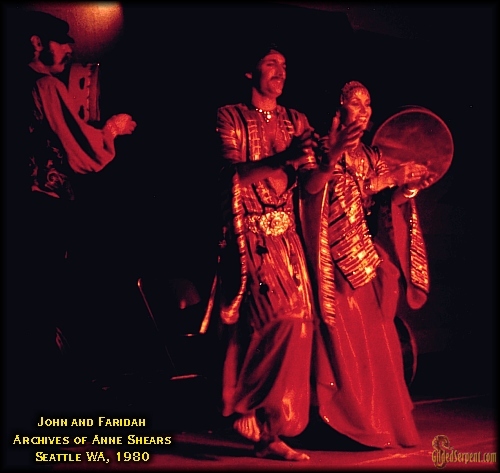
John and Farideh

Photo by Sid
From Sid:
I’m Sid Jones, and Oud player who played for John during the time he was expanding his activity from Santa Cruz into the San Jose area.  We performed at a place in Sunnyvale called Alladin’s Pizza Parlor.  In John’s own words:

"In the late 1970s I was dancing in Sunnyvale, California, at Aladdin’s Pizza Parlor.  I gained notoriety at the Friday lunch shows which would get booked three or four months in advance. I did some Saturday night shows there also and it was almost like the Chippendales shows. There would be about three hundred frenzied women and maybe fifty men. The main part was the tipping." . . . "I also worked in many places around San Jose, California. I worked at the Balkan Village in Los Altos. The San Jose places paid better."

Source:  http://www.gildedserpent.com/articles6/northbeach2/johncompton.htm

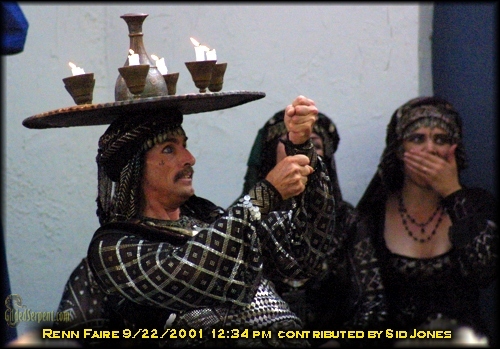
I was employed in Sunnyvale as an Engineer.  I escaped for a couple of hours each Friday to do the noon "John Show".  Also playing with me were Dave Adams (also an Oud player) on Guitar, and Tom Malley on Dumbek and Def.  I’m sorry to say that I have no photos from those gigs, even though thousands were taken by all those over-excited women, but I can submit a previously unpublished shot which I captured at a Renn Fair about twelve years ago.

Sent in by Rebaba
Photo sent in by Rebaba:
"I got permission from Rosemary to publish this on GS.  Taken in Vacaville in the early 2000s when we first introduced all of our students into the company. "

Souzana and John
Attached is a picture that was taken with John Compton after attending his workshop at 2010 LVBDI.  I am so saddened by the news of his passing but feel so fortunate to have had the chance to meet and to learn from him. Best, Souzana

Photo by Dano

Attached is one of my photos from Las Vegas BellyDance Intensive and Festival (2010). -Dano Blanchard

Hahbiru-palacefinearts

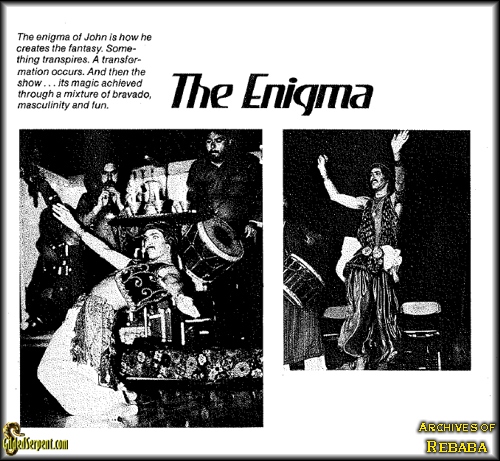
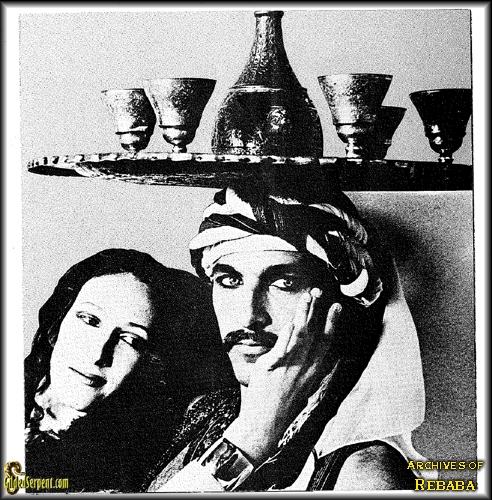
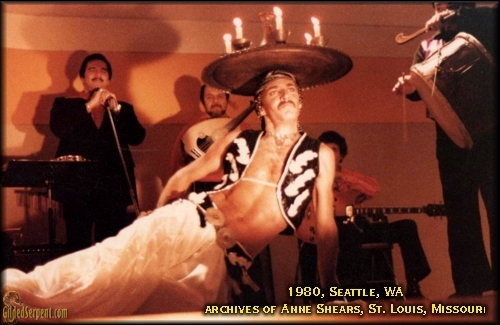
10-15-12 , Rebaba: "The first one I’ll re-scan and send separately as you can see the scanner cut it off for some unknown reason.  The first six (counting the cover shot I will send in the next email) are panels from a promo kit created by a Hollywood agent who was determined to make John a STAR (except according to John he just wanted to dance and didn’t care about the modeling or acting at that time [early 80s]).  The most famous picture with the tray on his head is with the beautiful dancer/choreographer Sharlyn.  The last two photos with me were taken in 2000, one is from Rakkasah and the other is us goofing around after a photo shot.  I love this picture as it shows his real constantly playful nature! Love, Rita"

year 2000

"In a word, John had Charisma.  His quick wit and  sense of humor made him popular; his kindness made him loved.  Above all, he had courage.  We have lost a wonderfully unique individual…and there will never  be another like him." Anne Shears, St. Louis, Missouri

Rita and John on the beach, 1 month before his death
Here is the last "best day" photo we took of each other at Pacific Beach in San Diego on September 14, 2012.  The following day he collapsed on me and we went to emergency and it was sort downhill from then on until he passed exactly one month later (ooooh, I just realized that he passed exactly 30 days from this when this photo was taken, October 14th was his last earthly day!!)

John and Colorado Troupe Sahirrnee, on the Arabian Nights at Sea Cruise, 2006

Holly and John

Shelly's photo

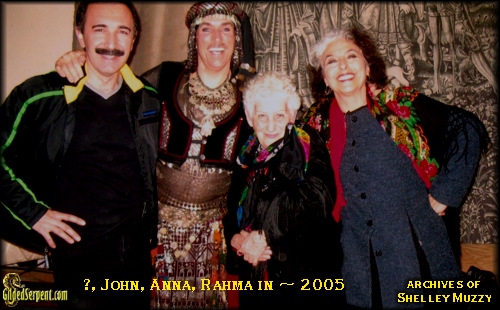
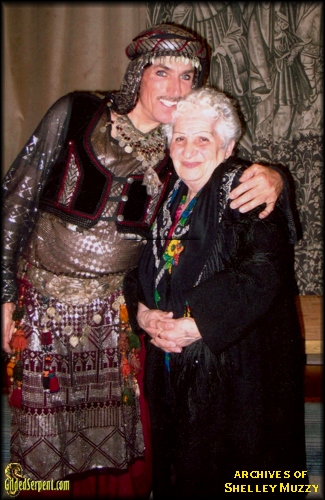
The older woman with the white hair is Anna.  She came to every dance show in Vancouver B.C. and had been in a concentration camp in WWII.  She could party.  She was such a fixture and a great audience and she loved John.  She would get up and dance after she had a few and she was just such a happy spirit.  She came down for this show with Rahma Haddad and Selma Ferchichi and this guy, who knew John but I don’t remember his name. -Shelley

John and Anna

John lighting his tray candles

Marisa and John

This is a photo of John and me taken a few years ago at a workshop in Salina, Kansas. 

My mother, Shadia Dahlal, made fun of how starstruck I was the first time I met John. I remember her telling him about it, and he just laughed. Some of my best memories are of sitting with my mother and John listening to them exchanging dance stories from the old days. From the first time I met John, he was a friend. He shared jokes and funny stories with me like we had known one another for years. As a dancer, he inspired me like few other dancers have, and as a teacher, his patience and fun attitude made me feel like I could accomplish anything. Occasionally, he would surprise me with a message letting me know he was sitting in an airport and just thought of me, or when I got married and moved to Colorado, "Waaahhh! You left me for someone else!" 🙂 It meant everything in the world to know that someone I looked up to so much was thinking of me. I will miss him very much. – Marisa Elena Dahlal


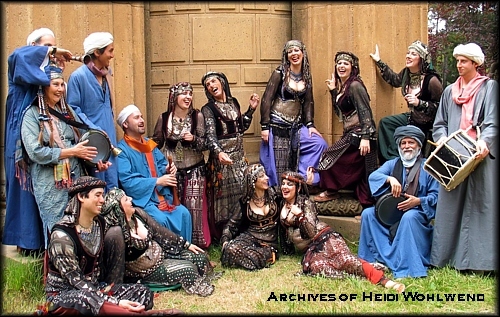
Hahbi Ru

Hahbi Ru

John does Snake Arms

crossed fingers!

John

Hi……..
It is sad…. And more and more are following him to the clouds…..He will keep us the good places warm for our joy of the art of dance. Attached some photos from Rakkassah 1996 ….. J. with 1001 Oriental Greetings
André Elbing


Asia and John dance together in Hollywood in 1984
John & Asia in Hollywood, 1984

Dancing together at Rakkasah

I am sending along these pictures, John and I were partners for ten years.
We danced and taught all over California, Portland and Seattle. He was so much fun to work with.
He was an inspiration to all. Personally, he is the person who convinced me to move to SF and throw my hat in the ring as a professional belly dancer.
John was one of a kind and will  be sadly missed.-
Asia

Silly John

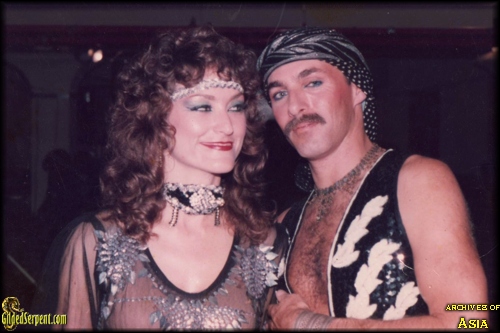
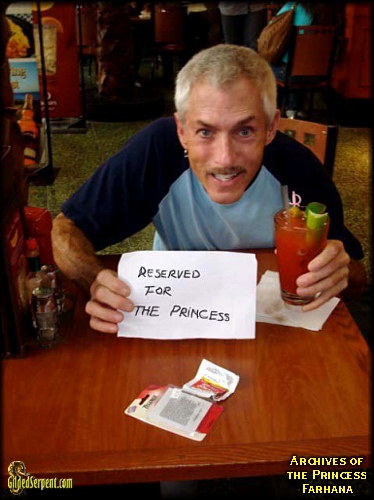
John Compton was  a close friend and and such an influence on me, I’d known him since I was a baby dancer. His  talent, his stage presence, and generosity made him a huge figure in our community, and I felt blessed  to know him.   Off-stage, we got a long like gangbusters- anyone that was around him for a while knew that he was totally  fun, spontaneous  and crazy…in a GREAT way.  After my career took off, we wound up working together (and often rooming together) at many festivals.  We  always seemed to meet up at airports in far-flung cities, on our way to dance events…so we’d have a cocktail together while waiting for our plane, it kind of became a "tradition".    I’m not sure what airport  this  picture was taken at, and I’m thinking he probably  just had a random  stranger snap it,  a few weeks before we were scheduled to work together in 2009…but this wound up being his Facebook profile picture for a while. I thought it was cute at the time  and it still is, but now it’s also indicative of what a warm and funny person  he was. –Princess Farhana

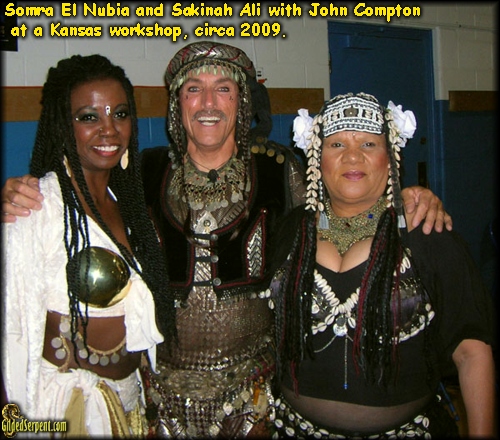
John with Somra El Nubia and Sakinah Ali


use the comment box

Have a comment? Use or comment section at the bottom of this page or Send us a letter!
Check the "Letters to the Editor" for other possible viewpoints!

Ready for more?

Whose Dance is This, Anyway? Where Do Men Fit into the Belly Dance World?
As soon as he was born, dancers of all stripes immediately started in with "Oh, a new little drummer for the troupe!". Excuse me? Why is there an instant assumption from birth that all little boys will be drummers and all little girls will be dancers just like mommy.
—Added Feature! See our Gallery of Men in Middle Eastern Dance

The
Birth of Bal Anat and Other Adventures

belly dance will continue to evolve into things new and strange, limited only by dancers’ imaginations.

Territorialism Undermines Event Sponsor’s Efforts, Interview with Dee Dee Asad
Open discussions of such issues will help dancers, musicians and those people who surround and support them, to recognize similar patterns in their own local environments.

Academics and Belly Dance, Two Books Review
Belly Dance: Orientalism, Transnationalism & Harem Fantasy edited by Anthony Shay and Barbara Sellers-Young & Choreographic Politics: State Folk Dance Companies, Representation, and Power by Anthony Shay

Rakkasah From a Vendor’s
Viewpoint

Ah, Rakkasah! For many years the highlight of my vending year! A wonderful idea that has gradually faded over time….

The Ethnic Dance Festival 2006 – Weekend One "Time" June 10, 2006
Palace of Fine Arts, San Fransico, CA

Tribute to Bert: Photos from the GS files
Bert’s memorial page, please add your comments, thank you.

DeAnn Adams of Light Rain dies after long illness.

Sabah- Jamie Miller’s recent illness


Gilded Serpent presents...

Kajira & Chuck Interviews

Cultural Appropriation & Artistic Freedom

Videos Interviews by Lynette Harris
posted October 14, 2012
Scroll down for newest video

Kajira and her husband, Chuck, are well-known individuals in our community. Kajira started the first festival for tribal style belly dance called "Tribal Fest". She also wrote a book called "Tribal Bible". We have a review of this book by Shelley "Yasmela" Muzzy here. One of the common issues that the community has had with Kajira’s philosophy and with tribal dance in general is with the issue of cultural appropriation. In this series of videos we discuss different issues and how Kajira feels about them. This is the passage from her book that I asked her to read on camera, and then we discussed different points.

"Remember that this is a dance of OURS. Our very own American Style Bellydance! Even though this style is not the first American style of bellydance, this is perhaps the first one that is unapologetic about that fact. We celebrate this fact. We love this aspect of our dance! This makes it a form that we can relate to in every way as American people. We don’t have to adopt or support another culture’s moral or religious standards if they are not comfortable for us personally. We don’t have to buy into any political agenda. We don’t have to feel bad because we’re not of Mediterranean descent, olive skinned, or don’t speak another language. We don’t need to feel as if we should hide our tattoos or body art for fear of offending someone else. We can choose our reasons for dancing and our venues and occasions. In short, we get to make up the rules as we go."

The first video here is an introduction to what Kajira and Chuck are doing now and their recent move back from Maui. The next videos will begin the discussion. Please add your thoughts and questions below in the comments section. It maybe helpful to reference which video or even the time stampof the video you are discussing in your comment.

Part 2: We begin our discussion by reading the above quote and discussing using the term belly dance and American Tribal Style. Kajira describes being ostracized because of her tattoos and the artistic freedom of not having to be tied to Middle Eastern traditions.

Part 3: Not MED, Misappropriation of the Rom culture, Ostracizing of Tribal. Find reference in Tribal Bible for time stamp 2:30. We found it- Page 215 at the top, "The parallels between the struggle of the Roma and that of bellydancers is undeniable.  Both groups are fighting to gain respect and move away from social prejudice." This point is addressed in the review of the book here.

Part 4: The Rise of Tribal Fusion. New terms- Spontaneous Group Improvisation, International or Improvisation Tribal Style. "Tribal Fest chronicles the rise of Tribal Fusion." Tribaret. No codification in our dances. Big difference betweem Tribal Fusion and Cabaret– Isolations, torso, arm movements. Kajira became certified in Rachel Brice’s format. ATS is a subset of Spontanteous Group Improv.

Part 5: Using the Term “Tribal”, The Modern Primitive Movement. Artists will fuse anything which is ok. What if we said “American Style Flamenco”? Morocco made this name up. Middle Eastern people get a feeling of “home” when they see tribal style. This is because we use authentic textiles and don’t use Hollywood fantasy. Doesn’t American Tribal sound like Native American? Modern Primitive Movement included tattoos, piercings, colored hair, alternative lifestyles. The hippy movement started the look of anything exotic being cool. Salimpour…

Part 6: Creating a Separate Community, Burlesque?
Kajira believes that the Tribal community is bigger and more successful than the rest of the belly dance community. “We wish we could be accepted as a sister dancer form… As Artemis said, if you don’t like it, you don’t have to look.” Burlesque is a separate art form.

Part 7: Belly Dance and Islam

Coming soon!


Resources:
  • Author’s bio page

use the comment box

Have a comment? Use or comment section at the bottom of this page or Send us a letter!
Check the "Letters to the Editor" for other possible viewpoints!

Ready for more?


Tags: ,

Gilded Serpent presents...

Rakkasah West 2012 Photos

Page 2: M-Z

photos by Carl Sermon
posted October 13, 2012

Rakkasah West is a Festival held yearly in the San Francisco Bay Area. It is produced by Shukriya and her family.


Malika
Malika


Maria

Maria


Masha
Masha


MaShuqa
MaShuqa


MaShuqa in OPen Floor
MaShuqa during "Open Floor"


Masouma Rose
Masouma Rose


MIchelle DeVine
Michelle DeVine


Moon Dance Troupe
Moon Dance Troupe


Moutain Gypsies
Mountain Gypsies


Nabila El Shalimar
Nabeela El Shalimar


Nadika of CA
Nadika


Nadira of WA
Nadira


Naheda and Gunthier
Naheda and Gunthier


Naheda and her Turkish Class


Namira
Namira


Naratuya
Narantuya


Onyx Moon
Onyx Moon


Oreet of CA
Oreet


Pangia plays for Ranya
Pangia plays for Ranya: Pat, Denise, ?, ?


Park Ave Dancers
Park Avenue Dancers


Rachel George
Rachel George plays to Nathan‘s oud


Raks Al K
Raks al Khalil Khajula


Raks the Casbah
Raks the Casbah


Rasa Vitale
Rasa Vitalia


Reda Darwish
Reda Darwish


Renya
Renya Alcala of NY


CIRockin the Cradle
Rockin the Cradle


Ruby
Ruby Beh


Saqra and Shamal dancers
Saqra and Shamal Dance Company


Serpent Sirens
Serpent Sirens


Sese Presents
Sese Presents


SHabnam
Shabnam


Sharifa
Sharifa dances to Al Azifoon: Nathan, Yosifah, MaryEllen, Paul


Shazara
Shazara


Shimmy Amour
Shimmy Amour


Sister Sirens
Sister Sirens


Suhaila Dance Co
Suhaila Dance Company


Suhaila Dance CO
Suhaila Dance Company


Suzanna Del Vecchio


The Lady Fred and her Black Heart Ballads


The Tiger Lilliers
The Tiger Lilies


Tina
Tina


Titanium Tulips
Titanium Tulips


Troupe Zambalita
Troupe Zambalita


Una
Una


Wendy
Wendy


Wild Card
Wild Card Belly Dance


Ya Habibi
Ya Habibi Dance Company


Zaina Hart
Zaina Hart

Back to PAGE 1 of Carl’s Rakkasah West 2012 Photos


use the comment box

Have a comment? Use or comment section at the bottom of this page or Send us a letter!
Check the "Letters to the Editor" for other possible viewpoints!

Ready for more?

  • A Gilded Serpent Time Capsule Presentation, Rakkasah 1984 and 1986 (25 years ago) Photos by Lynette Harris
    While taking a nostalgic look through my photo albums recently, I realized that if I was ever going to share these photos, I had better go ahead and scan them into the computer now before they deteriorate even more than they already have. Yes, they are discolored and blurred, but I think they will be of some value to those who pay attentions to costume styles or those who were there and simply enjoy re-visiting the memories
  • Sunday Photos from Rakkasah East- October 2010
    Barakat, Basema, Dena Shazadi, Fatima, Fire Blossoms, Ghada Girls, Habiba, Laura, Leila, Rega, Saiedah, Shadia, Tempest, Willow, Yuliya, Zenaiede

  • Amity, Anka Kusu, Belly Mystic, Bliss, Calixta, Desert Moon, Dorothea, Eddie Kochak, Scott Wilson, Serpent Secrets, Fantasha Dancers, Isis, Jamileh, Kelebek, Latifa, Lily…
  • Friday Night Photos from Rakkasah East- October 2010
    Desert Embers, Dharma, Fahtiem, Leila Haddad, Mystic Wiles, Nadia Layla, Najma, NightShade, Phoenis, Raks Shiva, Troupe Shahibat

  • Maria, Nadika, Naiya-Hayal, Onyx Moon, Oreet, Raks Al Khalil, Raks Terayz, Raks the Casbah, Reda Darwish, Ruby, Sabiba, Sassafras, Shimmy Amour, Tatseena’s Troupe, Terry, Titanya, Troupe Aneena, Yolanda, Zahara
  • Photos from Rakkasah West 2011, Sunday A- L
    Adira, Anisa, Ashley Lopez, Orchids, Damascus, Danielle, Desert Dream, Diana, Dondi, Dancers of the Desert, El Asaab, Evangaline, Fahtiem, Fatima, Ghawazee, Alexandria, Jamilla, Joweh, Karavansary, Lisa
  • Fashion Trend Report 2011 What’s New This Year at Rakkasah?
    What I noticed, first and foremost, was not the costuming, but rather, a change in the sellers themselves. The seller demographic has radically altered, creating a new vendor landscape. Without a doubt, this is a response to the on-going sluggish economy and the need for companies to reduce expenses. The reduction in costumes and products coming out of Egypt also affected the merchandise. Many small factories had a gap in production, and shipping has become even more problematic.
  • Photos from Ahlan Wa Sahlan 2012 – Cairo, Egypt, Page 2: July 1- 3, 2012, Cairo, Egypt
    Once more, Raqia Hassan, the sponsor of the Ahlan Wa Sahlan Festival welcomes her guests from all over the world at the Mena House Hotel, the antique mystical palace beside the pyramids of Giza for the 12th annual of this worldwide party.
  • Ahlan Wa Sahlan 2012 – Cairo, Egypt, Page 1: June 27-29
    Once more, Raqia Hassan, the sponsor of the Ahlan Wa Sahlan Festival welcomes her guests from all over the world at the Mena House Hotel, the antique mystical palace beside the pyramids of Giza for the 12th annual of this worldwide party.
  • Sharpening Your Dancer’s Edge: Performing Without Choreography
    The idea of dance governed by choreography is more a western notion that was not inherent originally a part of the Middle Eastern dance solo
  • Planting Flowers and Dodging Riots, Dancing in Cairo After the Revolution
    I left Cairo on September 9th, 2012, after a three-week visit to research the zar. I wrote the following article on my flight home – two days before the Libyan tragedy* and the violence outside Cairo’s US Embassy. As my plane circled the pyramids I had no idea Egypt would once again become the center of world attention.
  • The Glamorous Early Years of London Bellydancing:How Elaine Okba Became Fatin Shaukat in the 1960s!
    Adel’s father was the person who modified the accordion by putting in quarter tones so that the instrument could play Oriental music, and he played in Nahit Sabri’s orchestra. When she came to London on a shopping spree she called us to have a meal with her.
  • Video sample #3 of Carolena! on the Community Kaleidoscope,
    Carolena talks about coming up with the name of her troupe by talking with a clown. Her troupe members hated the name but the phone company loved it!
  • Gigbag Check #46 with Angelika on the CK
    Angelika Nemeth lives and teaches in Southern California. She teaches at 3 colleges and also takes tours to Cairo, Turkey, and other countries. She mentions 2 costumes designers in Egypt who she buys her costumes from. This video was taken in February 2011 around the time of the revolution in Egypt and many of the tours sponsors were not sure if they were going to be able to go on their tours this year because of the unrest.