Gilded Serpent presents...

2013 Interview with Virginia of Miami

A Five Part Video Talk with a Star of Florida

Virginia of Miami

by Lynette
post starting September 19, 2013

Filmed during the Miami Belly Dance Conference at the Alexander Hotel on August 31, 2013.

On August 31, 2013 we interview Virginia at the Alexander Hotel on Miami Beach. In this section of the interview she tells us about her RakStar festival and about 2 of the the teachers they will have this year- Mercedes Nieto  and  Wael Mansour. In the following sections of this interview we will cover the other teachers and get Virginia’s opinion on various community issues.

Part 1: Creating RakStar and talking about teachers Wael, Mercedes

Part 2: In this section of the interview she tells us about her RakStar festival and more of the the teachers they will have this year- Amir Thaleb, Mohamed Shahin, Issam, Aziza, Virginia.

Part 3: Community Ethics

Virginia talks about the recent belly dance boom and the increase in teachers and festivals, in Miami and around the world. " I was raised with Ethics" she says. Currently she says the emphasis is on business.

Part 4: How to make yourself known!

Virginia has suggestions for making yourself known in the community in an ethical and respectful manner.

Part 5: What happened to the Arab Clubs?

Why are there no Arab clubs to dance in anymore? Virginia talks about what happened to the clubs in Miami and what is happening currently in Cairo.

Resources:

use the comment box

Have a comment? Use or comment section at the bottom of this page or Send us a letter!
Check the "Letters to the Editor" for other possible viewpoints!

Ready for more?

  • Attention Dancers: Have You Seen this Man?
    I promised that I would let the world of Belly dance know about this singular character! Watch (out) for him at you next event, for he could be anywhere!
  • Welcome to the 2nd Miami Bellydance Convention, A Selection of Photos
    Intercontinental Hotel in Miami, Florida, on September 4- 6, 2009, Winners,Teachers, Performers
  • The Dina Show!
    Event sponsored by Little Egypt on May 28-30, 2005 at the Crowne Plaze in Miami, Florida
  • My Belly Dance Dream, Studying with Saida in Argentina
    I looked at different options to satisfy this need to improve my dance. I decided to travel to Argentina and train with someone whom I considered the best modern belly dancer, Saida Helou.
  • Interview with Yamil Annun, An Argentinian Belly Dancer
    Yamil Annum has created his own dance style and has evolved his specific style of Oriental dance by using the well established foundations of classical Ballet, Ukrainian dance, Ballroom dancing, Celtic dances, Jewish folk-dance, Bhangra, Armenian and Argentinian Tango. His elegance on the stage has revolutionized stages all over Argentina and Latin America.
  • The Critic; Real Critics Don’t Mince Words
    Either we are a sisterhood of ego therapists and our instructors are politically correct in all they say and do—or we are tough artists in search of ways to improve our art form by ruthlessly weeding out the lame from our herd.
  • The Emperor’s New Clothes
    Until we see ourselves in the context of a larger society, no one outside of our community will accord us the respect we desire.
  • Critiquing, the “Agony & The Ecstasy”
    It’s an unnerving experience to be “critiqued”by your peers, but my personal opinion then and now is that when you perform in public, critiquing just goes with the territory of performing.
  • Bellydance Journalism, Rhythm and Reason Series, Article 14
    One powerful tool used to mislead is bellydance journalism.
  • Argentine-Arab Dance and Music Charm Taiwan, Gina Chen promotes Live Music for Local Dancers
    I have to say it is quite different from any other American or Egyptian style choreography I learned before; you almost always keep your feet into ballet position and body weight is relatively higher. The physical dynamic is much exaggerated. I guess this is the Argentine style bellydance and I could see why local dancers are fond of it, owing to the quality of fluidness and lightness, very outward gestures and wonderful live music.
  • A Report on the First International Bellydance Conference of Canada Part 2 – Sunday Club Party
    Live orchestra, Randa, Amir, a packed house and very festive mood. How could it be any better?
  • Gigbag Check #48 with Mesmera on the CK
    We catch Mesmera and a student backstage at the Cairo Carnival 2013 on the Queen Mary in Long Beach, California. She is getting ready to perform at the "World of Tomorrow" gala show. She hams it up showing us her Isis wings and her lipstick.
  • Dancing for Tourists in Istanbul, A Personal Impression
    Additionally, their friendly and respectful relationship was highlighted when she finished her show, dancing to each instrument separately, and in this way she introduced each of the musicians. Such a relationship between dancer and musicians is not widely seen in today’s restaurant atmosphere… unfortunately.
  • Gigbag Check #47 with Rosa Noreen on the CK
    Rosa Noreen is a belly dancer from Portland Maine. We caught her backstage at the gala show at Cairo Caravan 2013 held on the Queen Mary in Long Beach, CA. She is the newly elected secretary for MECDA- the Middle Eastern Culture and Dance Association. She tells us about her costume-"FrankinHoda" and her MAC lipstick.
  • My Favorite Oriental Festival in Turkey, Rakkas Istanbul 2013
    I immediately made new friends and was surprised to find the multi-national composure of our 200+ people crowd – I befriended a dancer from Holland and another from Columbia, although the majority of the dancers were from Japan and other far-east countries.
  • Because I’m Worth It! The Perils of Pricing
    There is a difference between "daring" and "working for free, undercutting other dancers, and misunderstanding the economics of pricing whilst mindlessly genuflecting to celebrity culture."
 

Gilded Serpent presents...

A Saturday in Sebastopol

A Few Photos from Tribal Fest 2013 on May 18, 2013

by Alisha Westerfeld and Lynette
posted September 18, 2013

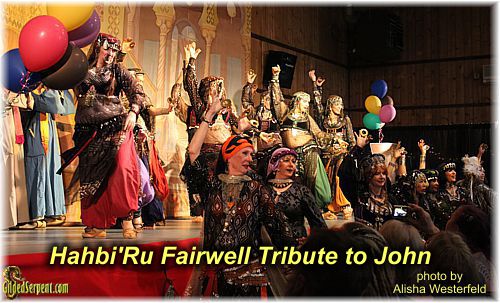
Hahbi'Ru Fairwell Tribute to John


Sasha


Dudes

larger image


Debi Varvi of Henna Crone

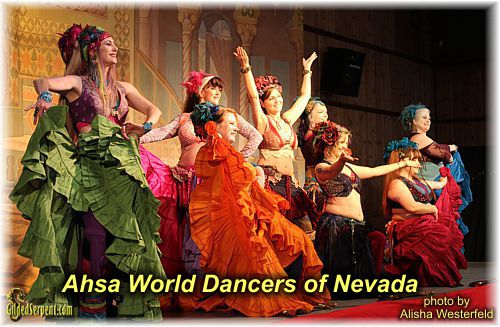
Ahsa World Dancers of Nevada


BonBons


Imajaghan - Illan Rivirer


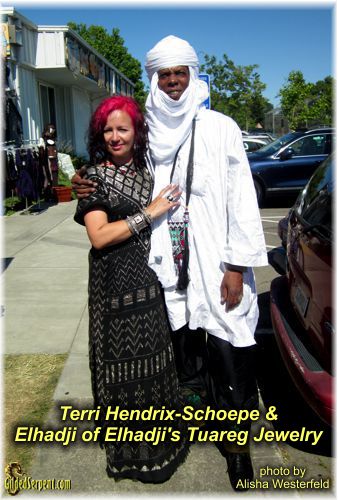
Taureg


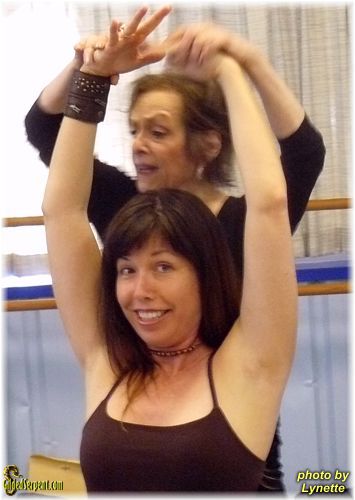
Anahid class

Anahid Sofian‘s class on floorwork, she is assisted by Kamille.

Anahid class

Anahid ClassAnahid class

Another class

Another class

Class

Another class – Asharah?


April Rose

April Rose

Aubre Troup

Aubre‘s Qabila Folklore Company

Troupe

Portico Dance Co and Samantha Riggs?

Goth Duo

Team Gothla UK?

Hahbiru
Hahbi’Ru

Habiru

Hahbi’Ru

kacki trio

Belly Funk of Oregon?

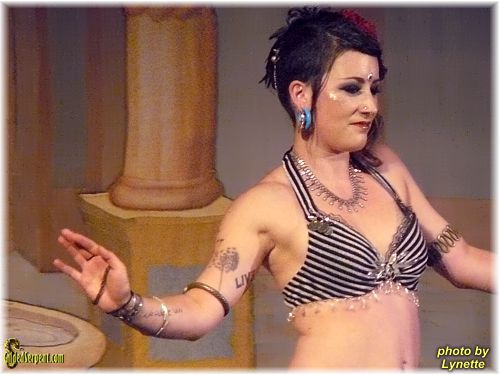
Stripe bra

Lady in a striped bra

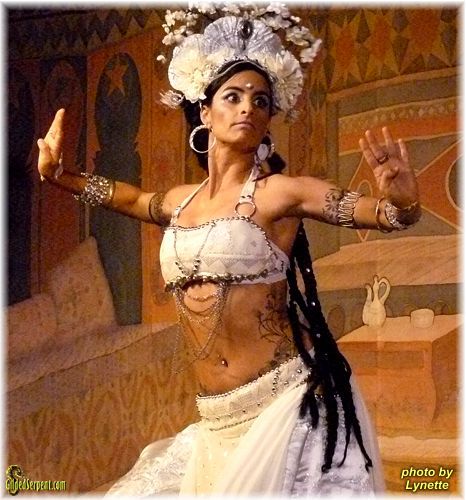
White flowers

Luna Moon?

Saraah in Assuit
Sarah of Wicked Smiley

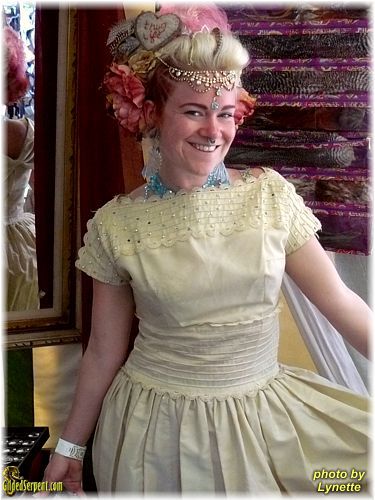
Fashioable vendor

A fashionable vendor

Dawn and friends

Davina and friends- Ahsa World Dancers?

Resources:

use the comment box

Have a comment? Use or comment section at the bottom of this page or Send us a letter!
Check the "Letters to the Editor" for other possible viewpoints!

Ready for more?


Gilded Serpent presents...

Interviews with Saida and Yamil

A Five Part Video Talk with Two Stars of Argentina

Saida and Yamil listen to NathalieInterviews with Saida and Yamil

by Lynette, Translation by Kalinka
post starting September 12, 2013

Filmed at the Miami Belly Dance Conference at the Eden Roc Hotel on September 1, 2013. .  If you find there are any subtle details missed in translation please kindly add these as well as your comments to the comments section below. Thank you!

Part 1: Response to recent article regarding studying with Saida by Rosalba

Saida states she would never single out a student in class as described in this article but does say the rest of the articles is accurate. She is strict.

Part 2: The Internet and Students.

In this clip is part 2 of our interview, we talk about the Internet and how much Yamil and Saida use it in their daily lives and with their students.

Part 3: Passion, Technique, Student, Teacher, Art, Entertianment

In this clip is part 3 of our interview, we discuss the relationship of the teacher and student, passion vs technique and a little about entertainment vs art. If you find there are any subtle details missed in translation please kindly add these as well as your comments to the comments section below

Part 4 ; Receiving Critique

Receiving Critique from your dance community.

Part 5: The Dance Community in Argentina

In this section they discuss how well the dance community gets along in Argentina. Hopefully this will help stimulate more talk in our larger worldwide community.

use the comment box

Have a comment? Use or comment section at the bottom of this page or Send us a letter!
Check the "Letters to the Editor" for other possible viewpoints!

Ready for more?

  • My Belly Dance Dream, Studying with Saida in Argentina
    I looked at different options to satisfy this need to improve my dance. I decided to travel to Argentina and train with someone whom I considered the best modern belly dancer, Saida Helou.
  • Interview with Yamil Annun, An Argentinian Belly Dancer
    Yamil Annum has created his own dance style and has evolved his specific style of Oriental dance by using the well established foundations of classical Ballet, Ukrainian dance, Ballroom dancing, Celtic dances, Jewish folk-dance, Bhangra, Armenian and Argentinian Tango. His elegance on the stage has revolutionized stages all over Argentina and Latin America.
  • The Critic; Real Critics Don’t Mince Words
    Either we are a sisterhood of ego therapists and our instructors are politically correct in all they say and do—or we are tough artists in search of ways to improve our art form by ruthlessly weeding out the lame from our herd.
  • The Emperor’s New Clothes
    Until we see ourselves in the context of a larger society, no one outside of our community will accord us the respect we desire.
  • Critiquing, the “Agony & The Ecstasy”
    It’s an unnerving experience to be “critiqued”by your peers, but my personal opinion then and now is that when you perform in public, critiquing just goes with the territory of performing.
  • Bellydance Journalism, Rhythm and Reason Series, Article 14
    One powerful tool used to mislead is bellydance journalism.
  • Argentine-Arab Dance and Music Charm Taiwan, Gina Chen promotes Live Music for Local Dancers
    I have to say it is quite different from any other American or Egyptian style choreography I learned before; you almost always keep your feet into ballet position and body weight is relatively higher. The physical dynamic is much exaggerated. I guess this is the Argentine style bellydance and I could see why local dancers are fond of it, owing to the quality of fluidness and lightness, very outward gestures and wonderful live music.
  • A Report on the First International Bellydance Conference of Canada Part 2 – Sunday Club Party
    Live orchestra, Randa, Amir, a packed house and very festive mood. How could it be any better?
  • Gigbag Check #48 with Mesmera on the CK
    We catch Mesmera and a student backstage at the Cairo Carnival 2013 on the Queen Mary in Long Beach, California. She is getting ready to perform at the "World of Tomorrow" gala show. She hams it up showing us her Isis wings and her lipstick.
  • Dancing for Tourists in Istanbul, A Personal Impression
    Additionally, their friendly and respectful relationship was highlighted when she finished her show, dancing to each instrument separately, and in this way she introduced each of the musicians. Such a relationship between dancer and musicians is not widely seen in today’s restaurant atmosphere… unfortunately.
  • Gigbag Check #47 with Rosa Noreen on the CK
    Rosa Noreen is a belly dancer from Portland Maine. We caught her backstage at the gala show at Cairo Caravan 2013 held on the Queen Mary in Long Beach, CA. She is the newly elected secretary for MECDA- the Middle Eastern Culture and Dance Association. She tells us about her costume-"FrankinHoda" and her MAC lipstick.
  • My Favorite Oriental Festival in Turkey, Rakkas Istanbul 2013
    I immediately made new friends and was surprised to find the multi-national composure of our 200+ people crowd – I befriended a dancer from Holland and another from Columbia, although the majority of the dancers were from Japan and other far-east countries.
  • Because I’m Worth It! The Perils of Pricing
    There is a difference between "daring" and "working for free, undercutting other dancers, and misunderstanding the economics of pricing whilst mindlessly genuflecting to celebrity culture."
 

Gilded Serpent presents...

Dancing for Tourists in Istanbul


A Personal Impression

Placeholder

by Iana
posted September 8, 2013

After a two year break, this summer brought me an exciting opportunity to return to Istanbul. This trip was cardinally different from my previous ones since there were no dance festivals for me to visit during my stay there; so I was able to set my own schedule with teachers, and I found time for exploring Istanbul’s sightseeing places (finally!), shopping, and visiting Turkish belly dance venues. Since belly dance in Turkey is mostly an entertainment for tourists, the majority of restaurants and clubs were working even during the time of Ramadan. Additionally, because of recent political protests, many tourists resisted traveling to big cities in Turkey, so it was easy for me to book a table in restaurant–even at the last minute. In this overview, I intend to share my experience, seeing two dance programs in: Sultana’s Restaurant and Orient House Restaurant.

Sultana’s Restaurant

Located in the heart of Istanbul, just near Taksim Square (Kahan 40-D, 
Cumhuriyet Caddesi 16/1,
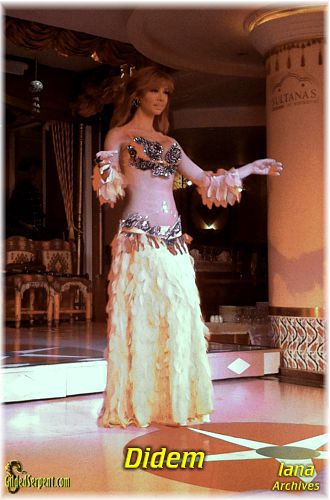
Elmadağ), Sultana’s Restaurant, as most of the other tourist places, offers a traditional Turkish cuisine with belly dance and folklore show, including transportation to and from the hotel. Visitors from all over the world are attracted to choose this venue because of two main features: a world-recognized belly dancer named Didem, and a TV series entitled “Ezel” that has a few episodes that were filmed at Sultana’s Restaurant.

After the majority of guests arrived to the venue, a local band of musicians, consisting of two drummers, a tambourine player, violinist, and clarinet player, opened a Wednesday program in Sultana’s. Alternating Turkish and Arab melodies, they gave an opportunity to rest after the meal and to enjoy the flavor of the entire atmosphere. Next, a little curtain descended, and the dance show began with a folklore group performance.

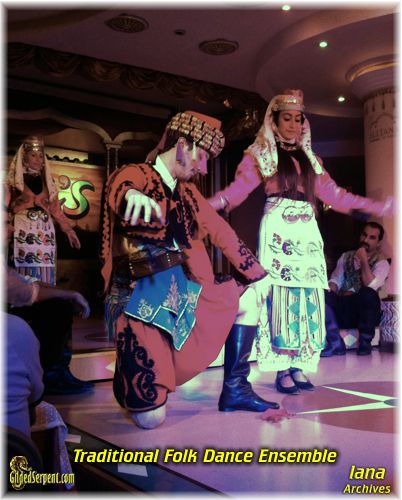
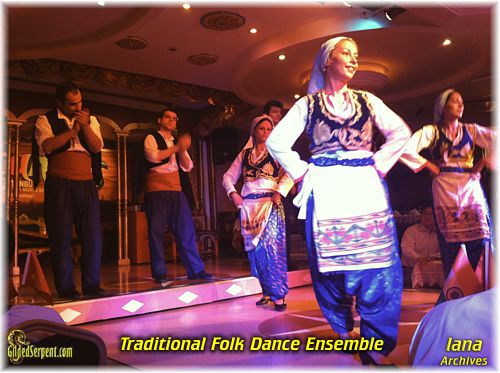
Between the belly dance shows, three male and female dancers performed different Turkish folklore dances including Bar, Karşılama, and Aşuk Maşuk. (The last one is a funny love story from the southern Turkey folklore, which is danced by two, usually male, dancers in puppets costumes.) Idem at Sultanas
Despite the fact that a few of the group members were dancing without any emotions on their faces, and were not sure of the sequence of the movements, in general, the folklore group left a good impression, moreover, the Asuk Masuk dance still makes me smile!

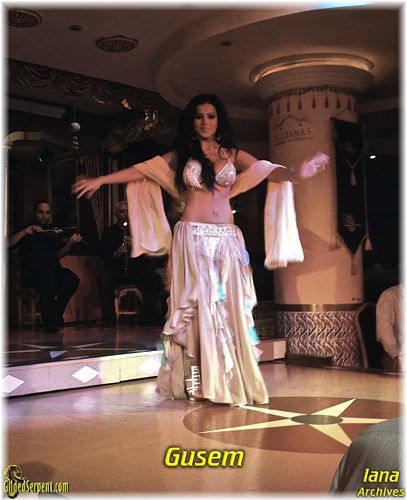
The performance I really enjoyed that night was performed by belly dancer Güzem. She was the first among three belly dancers that night. Here I should mention that none of the belly dancers (except Didem) were announced at Sultana’s (at least that night). Therefore, only after additional Internet research, I found her name. (The restaurant owner still hasn’t reply to my e-mail concerning the belly dancers’ names, in spite of previously having answered all my correspondence.)

Behaving freely on the stage (in the best sense of these words), Güzem combined the embodiment of live music through her dance technique with an unaggressive flirting with the audience creating an almost entirely perfect show.
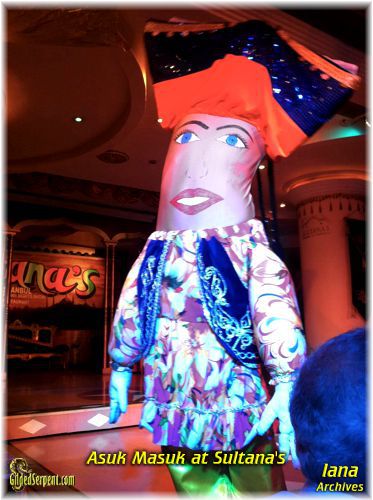
Asuk MasukI call it “almost entirely perfect” because her costume, definitely, was a few sizes smaller than she needed! Even though she tried not to disturb the flow of the show, the audience members who were sitting slightly to the side, witnessed that she constantly checked her bra while turning to the musicians, plus the way she looked in general was a little confusing. However, except for these minutiae, I think she did a great job, and one should give her credit. As a performer: she was alive on stage! Each time our eyes met, I felt the warmth of her magnificently sincere smile.

As I have mentioned above, Didem was the only performer who was announced on that evening. Her half-hour performance followed after a whole demonstration clip about “Belly Dancer Number One In The World” (as was stated a number of times during a five-minute video projected on a large screen). She is definitely the main attraction of Sultana’s dance show; however, the contrast in the artists’ presentations was shocking!

Elegant, slim, and a little bit distant from the audience, Didem’s energy contrasted differently from live and warm Güzem. Didem did not interact with her audience at all, almost always looking over their heads, rarely smiling. The exception was only the occasion when one elderly gentleman, located near the stage, started clapping and shouting bravo in a such a curious moment that everybody in the room smiled. It probably was the only one time during the whole show when the audience saw the sincere, beautiful Didem’s smile… However, the musicians were luckier in this sense. When they joined Didem in the middle of her performance (she had started with recorded music), she often turned to them smiling and telling them something.

Additionally, their friendly and respectful relationship was highlighted when she finished her show, dancing to each instrument separately, and in this way she introduced each of the musicians. Such a relationship between dancer and musicians is not widely seen in today’s restaurant atmosphere… unfortunately.

The main program of the evening was closed by the “Harem Show” during which the stage was transformed into a harem furnished room. Güzem, portraying a Sultana in a traditional Turkish kaftan, was choosing a new girl for the Sultan’s harem, and later chose the Sultan himself among the males in the audience. After an audience’s “competition”, the Sultan was chosen and dressed in Turkish attire. However, concerning the girls to be added to the Harem, Sultana preferred to present to the Sultan a girl who was covered in the huge blue veil during the entire competition. Obviously, she was not the one among the audience. The only thing I want to say about this third unknown belly dancer, is that during the whole show, I was looking at her damaged and frightening high-heeled shoes, rather than at her. However, those parts of her dance that I noticed in spite of myself, sadly reminded me of the typical restaurant tipping of belly dancing with money (that the Sultan tucked inside her costume, according to the show’s scenario) as I often witnessed in Western countries.
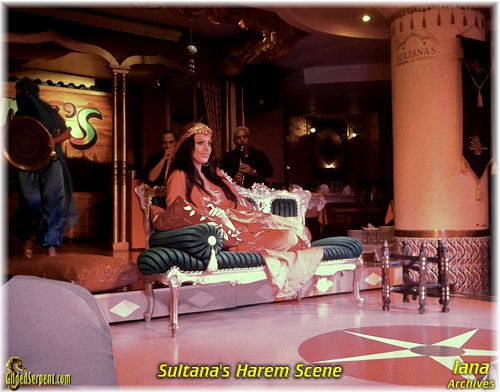
Sultana's Harem Show

Folk Dance at Sultana's

Folk Dance at Sultana's

Folk Dance at Sultana's

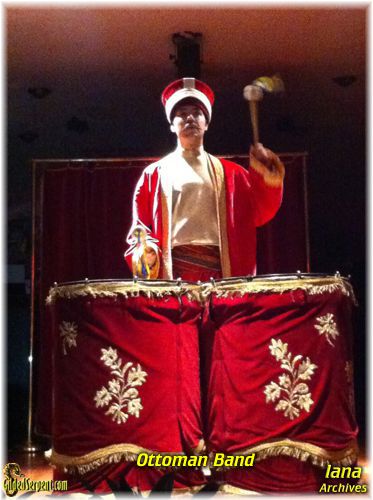
Ottoman Band at the Orient HouseOrient House

Orient House is located in a historic part of Istanbul, close to the Grand Bazaar (Tiyatro Caddesi No:27, 34126). Just when we arrived there, two lovely girls in traditional costumes welcomed us outside the venue. Everything there highlights an authenticity of Turkish style as a main focus and strategy of the restaurant. The venue still saved the flavor of former theatre, which functioned there in the earlier twentieth century. The fashionable interior provides lots of spots to take memorable pictures, as well as being harmoniously fitted with a gorgeous stage-space in the main room.

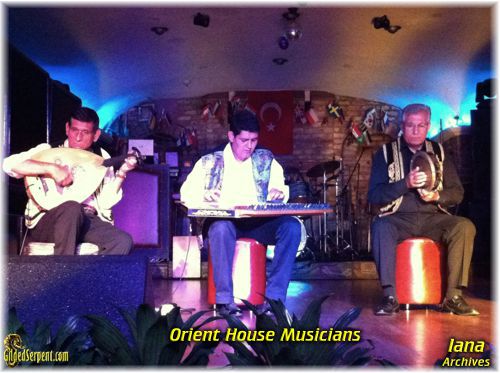
The evening started with the performance of a local music band. Five musicians played different musical instruments, including qanun and oud, singing without microphones, not particularly for the audience, but just because of their own satisfaction and enjoyment of playing familiar songs.

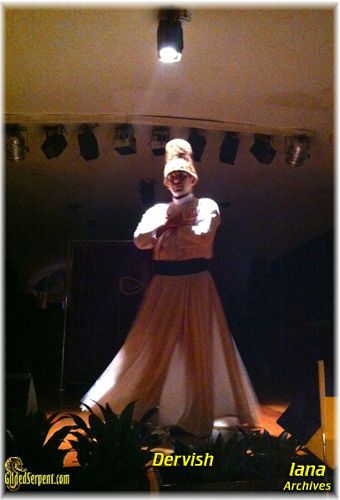
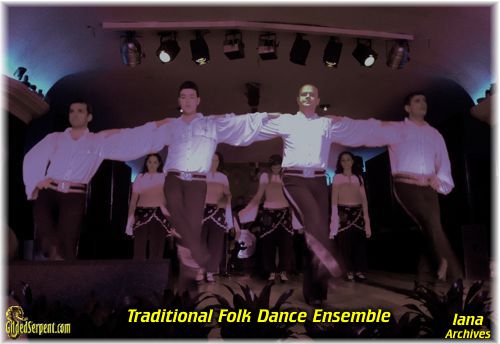
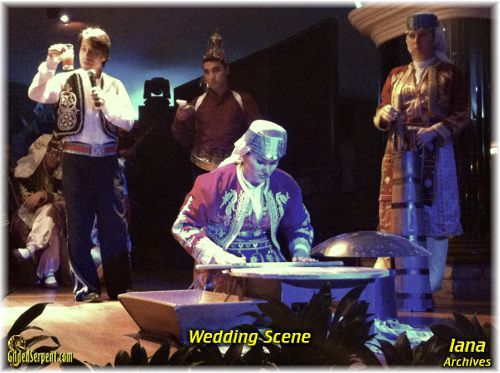
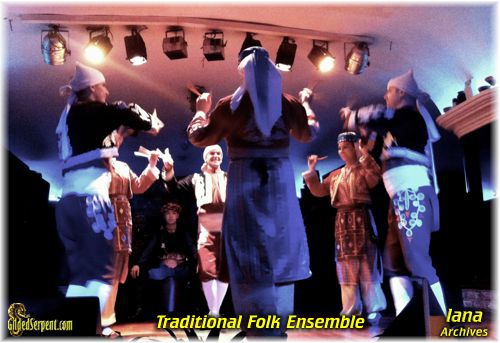
The show program in the Orient House was impressive by its variety: The Ottoman Janissary Band paraded across the room to the stage, singing and playing on huge drums, horns, and bells; the shortened Sema ceremony by a whirling dervish, and staging the traditional Turkish wedding preparation scenes were only the additional to three belly dance performances and amazing folklore group dancing: Karşılama, Kaşık (dance with spoons), Zeybek, Horon, and other folklore dances!

I feel I should give a special credit to the folklore group Mirage (four male, four female dancers) whose professionalism made me fall in love with them. Each detail of the performance was polished and prepared: even all male shoes were identical.

With the gorgeous costumes, beautiful expressions and absolutely ideal performing, they surprised and gladdened me greatly that there are places in Istanbul where tourists could be introduced to Turkish dance heritage by such a group!

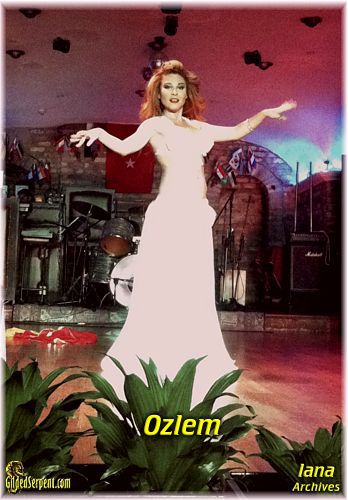
Also, I would like to mention here that all artists in the Orient House were announced by a Master of Ceremonies. However, the belly dancers’ names Folk dance at the Orient Houseconfused me a bit since what I heard in the venue and what I read afterwards in the restaurant e-mail was different. In the Orient House’s reply to my request, it was written that “Our belly dancers’ names [are] Oya Man and Ozlem and Birgul Beray.” However, I didn’t recognize Birgul Beray in any of three belly dancers that evening. Unfortunately, further Internet research was not successful to clarify this situation.
The belly dance shows were almost as surprising as the folklore performances, but this time, they were a little disappointing to me: the first dancer, Oya Man (Olga Roussina), unexpectedly performed an Egyptian Saidi dance with a cane as a part of her Turkish belly dance show, and then continued her performance with the fan-veils. For a typical restaurant show (when one of the goals is to impress the public) she did a great job, but as for presenting a “Turkish dance culture show” it was too innovative, in my view. The second belly dancer, Karolina (Karima), was dancing without any expression on her face at all, so that the audience might have been guessing that she was bored or nervous at that moment. This lack of expression distracted me from enjoying her calm and pleasant manner of dancing that reminded me a bit of Nesrin Topkapi’s style. By this statement, I mean only her use of dance technique, not the energy. Fortunately, the third belly dance performance was a pleasant surprise of typical Turkish belly dance flavor! Knowing exactly what she was doing, Ozlem moved freely on the stage, smiling and enjoying the taste of a live performance. Her excellent performance was lacking only in live music support, (which, by the way, was not engaged in any belly dance performances in Orient House that evening).

The program finished with a performance of (as it was announced) an international singer who sang songs of each country whose representatives were present in the restaurant! Pleasantly, our table was surprised with the Ukrainian song “Smereko”! After that, the singer invited ladies from the audience on stage, and organized a funny belly dance workshop, which finished with an improvised dance “competition”.

The folklore part of the show is definitely the strong suit of Orient House program. However, I wish the restaurant time management allowed us to fully enjoy it: unfortunately, the meal was served only few minutes before the main part of the show started, and eating while artists were performing was, at least, inconvenient. Therefore, we left Orient House inspired and happy, but hungry!

Karim at the Orient House

Oya Man at the Orient HouseOyaMan

Oya Man

Ozlem at the Orient HouseDervish at the Orient House

Folk Dance at the Orient House

Musicians at the Orient House

Wedding Scene at the Orient House

Small notes

One of the Turkish belly dance features nowadays is high-heeled shoes! Absolutely all belly dancers I saw this time in Istanbul were wearing — not just high-heeled shoes — but extremely high-heeled shoes! At the same time, visually, they dance freely and comfortably in these shoes.

In both restaurants, visitors had an opportunity to take a picture with a belly dancer who circulated among the guests (with a money banknote under her bra shoulder strap).

The influence of the popular TV series “The Magnificent Century” was obvious in both restaurants. For instance, in “Harem Show” of Sultana’s Restaurant, the new girl for the harem was choosing by the Sultana, (not Sultan as usual in such scenarios), and the Orient House photographer also offered to photograph tourists wearing Turkish kaftans and to pose them seated on a decorated sofa with (or as) Hürem Sultan (a main heroine of the TV series).

The price range was 55-80 euro per person in Sultana’s Restaurant, and 70-90 euro per person in Orient House Restaurant.

Resources:

use the comment box

Have a comment? Use or comment section at the bottom of this page or Send us a letter!
Check the "Letters to the Editor" for other possible viewpoints!

Ready for more?

  • Dreaming of the East, Orientalism in Early Modern Dance
    As a belly dancer and a modern dance student at York University, my attention was captured by the fact that a number of early modern dancers performed variations on Oriental themes. I became interested in how they interpreted the Orient through their modern dance technique, and how they represented the Orient in their choreographies, since their performances could have been loosely associated with actual Middle-Eastern dances.
  • My Favorite Oriental Festival in Turkey, Rakkas Istanbul 2013
    I immediately made new friends and was surprised to find the multi-national composure of our 200+ people crowd – I befriended a dancer from Holland and another from Columbia, although the majority of the dancers were from Japan and other far-east countries.
  • Because I’m Worth It! The Perils of Pricing
    There is a difference between "daring" and "working for free, undercutting other dancers, and misunderstanding the economics of pricing whilst mindlessly genuflecting to celebrity culture."
  • My Belly Dance Dream, Studying with Saida in Argentina
    I looked at different options to satisfy this need to improve my dance. I decided to travel to Argentina and train with someone whom I considered the best modern belly dancer, Saida Helou.
  • In Search Of The Iraqi Kawleeya, One Dancer’s Journey into Movement and Meaning
    Have we have learned from our experiences incorporating the Raqs Sharqi into our lives and practice or is the Kawleeya fated to be yet another souvenir from a visit into our collective imaging of the exotic “Orient”?
  • Dancing Through Financial Crisis and Revolution An Interview with Luna of Cairo
    As fearless as the Cairenes in her adopted home, she takes on the state of the art form and daily trials and tribulations with candidness and humor.
  • Alive and Well in Corvallis! Retired Drummer, Robaire
    Robaire Bozeman, a.k.a. Robaire Nakashian, is a well-known and greatly loved dumbek and tabla musician who is known primarily on the west coast of the US.  Robaire’s love for music and dance started when he was a young boy at the age of three. He began attending his family’s Armenian Summer Kef Time Festivities in Fresno, California, annually.
  • The Fez All-star Fundraising Show, Supporting Roxxanne’s Documentary
    Located on Sunset Boulevard in legendary Hollywood, The Fez was the first Arabic night club in Los Angeles. During its heyday, The Fez was a popular haunt of celebrities. Jayne Mansfield, Richard Boone, Danny Thomas were just a few who enjoyed the exotic ambience, and most of all, the beautiful belly dancers accompanied by Arabic music.
  • What Happened in Egypt, Egyptian Revolution Part 2: June & July 2013
    That new minister decided to try to ban ballet because it was “too naked for public viewing”. This sparked a round-the-clock sit-in by many artists who took turns performing their art each evening to show their defiance.
  • Photos from Zulu Lounge, May 3rd 2013 at the famous El Rey Theater in Los Angeles, California
    Below are a few highlight photos by Rawtography.com from the Zulu Lounge show held May 3, 2013 in Los Angles, California. The show was produced by dancer Khani Zulu and her husband, tattoo artist Zulu, at the swanky El Rey theater. The show’s theme was "La Nuit d’Absinthe" which inspired artists to be creative with their pieces.

 

Gilded Serpent presents...

My Favorite Oriental Festival in Turkey

Rakkas Istanbul 2013

Nilay  dancing at Show/Fusion category on competition night of Rakkas Istanbul 2013. Photo by Galia Cohen - Peres

by Nilay
posted September 5, 2013
Last five photos linked to enlargements

I am a festival enthusiast. In the beginning of my journey in bellydance I started longing for festivals that I heard happening here and there because where I lived, pretty much nothing went on. That was New Mexico seven years ago and I was a student on a budget who couldn’t travel all that far.

Upon arriving to California, I found the luxury of connecting to many other dancers through several dance festivals. Without these events I would still be a clueless and lonely dancer.

Although I now live in California, I still live in a smaller town of this state, Bakersfield, at least it is nothing like Los Angeles, San Diego, San Francisco, not even Sacramento. I am quite stoked to find that there is now an abundance of festivals close to my home within driving distance.

This changed this year and in a larger scale. I am from Turkey. I visit my country every year. Luckily this year I made my plans entirely around a festival: Rakkas Istanbul.
I was surprised first to hear about this festival from Princess Farhana. I was surprised because I haven’t heard about it before from any of the networks I am in touch with. Then I realized it’s the first year this festival was being held and it is internationally marketed and advertised, not only concentrated in US. co-organizer, Serkan Tutar, who is a Turkish male belly dancer residing in Belguim, is the main force behind it.  He powered up with a Turkish organization team for this fabulous festival to happen between April 29 – May 3, 2013.

I reviewed the schedule for 3 days of workshops, 2 Gala Shows – Opening and Closing (Turkish Night), a competition and an open floor dance night. For 4 days with multi-national teachers and action packed nights, could this be too good to be true? At this point, the package variety for pricing was plenty – choosing to participate a single day or everyday and with or without the hotel were some of the options. Because I am from another city in Turkey and the festival location was far from the sites I know in Istanbul, I chose the complete package.  (Please let me remind you that Istanbul is a big city and is very crowded and old. This should tell you that there is traffic congestion at any time of the day.)  I wanted to be close to everything happening, not to worry about traveling and more importantly, not to miss a thing!

I arrived in Ankara, Turkey (where I am from) and visited family for one week. Then I traveled to Istanbul for Rakkas Istanbul Festival. I was the first person to arrive and register because my bus left me at the station early. Fortunately, you can find taxi cabs all over Istanbul at any time of the day. I was very lucky that Burcu from the organization team was there early starting her set-up and she immediately helped me out to get situated. The hotel also allowed me to check in early and I was ready in a matter of minutes of my arrival. At this point you can use any of this 5-star hotel’s amenities and services such as lunch, pool, Turkish hammam, etc. For me it was the time to go out to Istanbul. I had an appointment to visit world-renowned Bella!

Istiklal Caddesi

When I arrived back at the hotel after my extra-curricular activities of costume shopping, meeting an old friend over tea at a Turkish café and visiting Istiklal Caddesi (which is my most favorite place in the whole ancient city), I got ready to join the Opening Gala Show. This was a four-course dinner and stage dancing production. It took place in a large room with a big stage and floor area. I was able to watch many international dancers most of whom I have never had the chance to see before, among them there were Orit Maftsir, Maria Aya, Tamar Bar Gil, Ahmed Refaat, Sharon Kihara, Sunny Singh and Serkan Tutar.

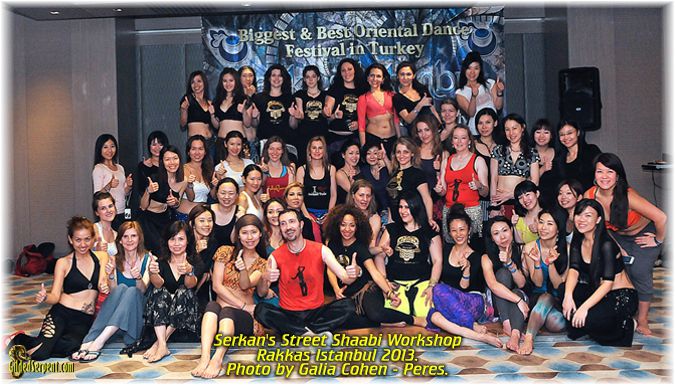
I immediately made new friends and was surprised to find the multi-national composure of our 200+ people crowd – I befriended a dancer from Holland and another from Columbia, although the majority of the dancers were from Japan and other far-east countries.

The next day, I found out that there was only one other Turkish participant who is a dancer other than me. Surprising? Maybe. Then there was Serkan who as mentioned earlier is the co-organizer of the show and workshop instructor. He was super sweet, approachable, friendly and fun. It turns out he is a great instructor too. I got to learn about Shaabi style for the first time from him.

At this point the only upper hand I had for being Turkish at a Turkish dance festival was to be able to understand Turkish instructors better. There were volunteer translators (I ended up as one) who could translate from Turkish to Japanese and English. But if you heard from other dancers who took privates from Turkish and Egyptian dancers that they had to communicate by body and dance language, this is quite true. Most Turkish dancers don’t know much English if at all. They don’t need to, so you’ll have to be prepared for this if you don’t have a translator who is fluent in both languages and dance vocabulary, too.

The loaded workshop schedule went uninterrupted, according to the published listing. The organization of the workshops was perfect. Usually there were 3 overlapping workshops and you had to choose the one that chimed best for you. The conference rooms for the workshops were adjacent to each other and easy to access from the hotel rooms. The workshop schedules were printed out and there were plenty to attend at any time. Also the drinking water was not forgotten – it was available to fill your water bottle. Right in front of the workshop rooms, there were bazaar set-up by various vendors with all its convenience to tickle shopping desires in between workshops.

Reyhan

For lunch, the hotel had options or you could go to a small restaurant outside the hotel.  We choose to go out and sat outside in a restaurant and had delicious, made to order Turkish lunches for a good price. I even packed pastries to take to my room because they were so good!

The second night of the festival was the competition. The participation was enormous for four categories of Folkloric, Raks Sharqi, Turkish and Show/Fusion. This was a chance to watch multi-national, multi-category skilled dancers. The jury panel included big names from the list of instructors. There also were guest dancers during intermissions such as Princess Farhana who charmed us by bringing Hollywood style vintage inspired belly dancing.

Eventually I ended up taking 24 hours of workshops, meeting Turkish instructors that I would only dream to meet in 3 days and making world-wide connections with various dancers. Many instructors allowed us to videotape the whole sequence or choreography that they just taught. If you are planning to do this, please make sure that you receive the instructor’s consent first because not all instructors will allow it and being respectful should be the first approach to keeping a healthy network.

For me, the most unforgettable portion of all of this marvelous festival was its closing note – The Closing Gala Show: Turkish Night. For this dinner show I sat down this time with a table of friends I now knew. I loved this show – it was amazing, fantastic, spectacular, terrific, wonderful, exhilarating, and astonishing; I don’t have enough adjectives to describe it.  I know everyone was genuinely dazzled. Among the dancers there were many Turkish instructors that I was craving to watch: Gul Nihal, Tuba Saka, Serap Su, Reyhan Tuzsuz, Suzan Ayvaz, Asena along with other international stars of belly dancing such as Artemis Mourat, Tommy King, Mercedes Nieto, Osama Mimi. Can you imagine a show like this? I couldn’t and I feel lucky and grateful for experiencing it. It was a feast for eyes, ears, soul with every breath.

On Friday morning, I wasn’t ready to leave this intensive bellydance immersion but I had to. Many participated in a very well planned Istanbul tour in the morning as part of the bonus day of Rakkas Istanbul. I, on the other hand, jumped into a taxi and transferred to another hotel in Taksim to spend two more days in the historical city.

I left with fond memories of the festival, instructors, new and old friends and the whole organization altogether as well as with a heap of new dance education. In the beginning of my article I said I had thought it was too good to be true; it really will be an unforgettable memory. Bottomline, with all the skepticisim you might hold for the first year of a festival, there seemed to be no major organizational or technical hiccups. Everyone was happy and wanted to be a part of it again including me. Rakkas Istanbul 2014 already has dates scheduled for April 9-13th. I am already entertaining the idea of a revisit of this astounding event.

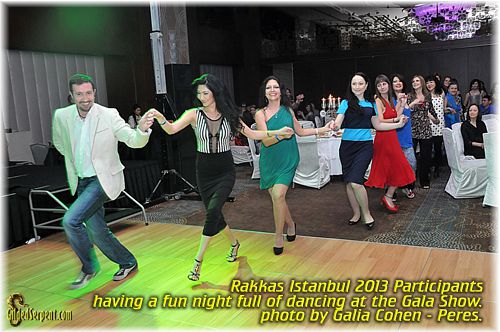
Participants

Serhan's Workshop

Click for larger imageClick for larger imageClick for larger imageClick for larger image

Resources:

use the comment box

Have a comment? Use or comment section at the bottom of this page or Send us a letter!
Check the "Letters to the Editor" for other possible viewpoints!

Ready for more?

  • Les Art Turcs: A Rich Resource for Dancers, Bridging Cultures through Traditional Arts in Istanbul,
    When we arrived, we found that the residents weren’t really sure about all things Bellydance, save for the touristy performance posters seen in highly traveled areas. Many vendors have offices with tours; so Bellydance, Sufi/Dervish performances, and boat tours are all lumped together as commodity-like offerings. Still, we had some leads
  • Helm Istanbul’da Making Music in Turkey
    We discovered Turkish classical music through our friend Sinan Erdemsel. To the dellight of many music lovers, he has been coming to teach at Lark Camp in Mendocino, California, for the past 10 years.
  • Turkish “Roman Gypsy Dans”, Melting Any Heart!
    This dance of the Gypsies is about becoming a life-like character. It contains a wide range of moods and feelings for the dancer to express: The gray quality of everyday tasks turns into colorful dance that does not distinguish between the relative value of one color over another.
  • Intervew with Ahmet Ogren, Bringing Gypsy Dance to the People
    Ahmet is a sexy and masculine dancer who combines a sense of playful humor and has the dedication and drive of a consummate professional. He pushed us hard, laughed, and encouraged us.
  • How I Met the Tuzsuz Family in Istanbul
    As for taking lessons with her – her teaching has improved over the years and her repertoire has expanded (although her large movement base was what attracted me to her as a teacher in the first place, so it has always been extensive).
  • Sema Yildiz, A Star of Turkish Dance
    She was fortunate, she says, to grow up in a Roma (Gypsy) community rich in dance and music – the Fatih district, which houses the Sulukule, famous for its entertainment and considered the oldest Roma settlement in the world.
  • Adventures in Turkey 2006
    I am not exaggerating when I say that Sandra actually threw herself into Bella’s arms and wept when she first laid eyes on her.
  • Bargaining for Injeers
    Bargaining is not just about the money, although that is a qualifier. Bargaining is a medium in which two strangers can have a conversation. Turks love to bargain, and it may be how they get to know you…
  • A Rug Story
    Rug stores are interesting, the salesman know an amazing information about rugs. Rug men tend to be well educated and full of interesting conversation.
  • Because I’m Worth It! The Perils of Pricing
    There is a difference between "daring" and "working for free, undercutting other dancers, and misunderstanding the economics of pricing whilst mindlessly genuflecting to celebrity culture."
  • My Belly Dance Dream, Studying with Saida in Argentina
    I looked at different options to satisfy this need to improve my dance. I decided to travel to Argentina and train with someone whom I considered the best modern belly dancer, Saida Helou.
  • In Search Of The Iraqi Kawleeya, One Dancer’s Journey into Movement and Meaning
    Have we have learned from our experiences incorporating the Raqs Sharqi into our lives and practice or is the Kawleeya fated to be yet another souvenir from a visit into our collective imaging of the exotic “Orient”?
  • Dancing Through Financial Crisis and Revolution An Interview with Luna of Cairo
    As fearless as the Cairenes in her adopted home, she takes on the state of the art form and daily trials and tribulations with candidness and humor.
  • Alive and Well in Corvallis! Retired Drummer, Robaire
    Robaire Bozeman, a.k.a. Robaire Nakashian, is a well-known and greatly loved dumbek and tabla musician who is known primarily on the west coast of the US.  Robaire’s love for music and dance started when he was a young boy at the age of three. He began attending his family’s Armenian Summer Kef Time Festivities in Fresno, California, annually.
  • The Fez All-star Fundraising Show, Supporting Roxxanne’s Documentary
    Located on Sunset Boulevard in legendary Hollywood, The Fez was the first Arabic night club in Los Angeles. During its heyday, The Fez was a popular haunt of celebrities. Jayne Mansfield, Richard Boone, Danny Thomas were just a few who enjoyed the exotic ambience, and most of all, the beautiful belly dancers accompanied by Arabic music.
  • What Happened in Egypt, Egyptian Revolution Part 2: June & July 2013
    That new minister decided to try to ban ballet because it was “too naked for public viewing”. This sparked a round-the-clock sit-in by many artists who took turns performing their art each evening to show their defiance.
 

Gilded Serpent presents...

Because I’m Worth It!

The Perils of Pricing

Author Calitlyn

by Caitlyn
posted August 24, 2013

Some time ago, a fellow bellydancer posted on a social media site that she needed professional dancers for several unpaid shows and one was from a client organizing a “celebrity party”. It seemed strange that a party for celebrities would not have an entertainment budget. Another dancer explained,

"…is not that they have no money, but is promotion for u, thats how they see it. I used to dance for syrian embassadors and the first times we werent payed but then we were hired for other private parties, so it worked out very well…sometimes if u dont dare u dont get anything back."

This argument is missing something more than punctuation and capital letters: There is a difference between "daring" and "working for free, undercutting other dancers, and misunderstanding the economics of pricing whilst mindlessly genuflecting to celebrity culture."

Value Brand Bellydance

The most obvious problem with price-dropping and freebies is undercutting, even if you don’t mean to hurt someone else’s business. Offering a show for little or nothing means a client will almost certainly choose you over someone who’s requesting the market rate. But why are they choosing you? Not because they like you. Not because they think you’re the best dancer. They’re choosing you because you’re cheap. You’re presenting yourself as the generic Value Brand of bellydancers. Don’t be that guy.

Ooh, celebrities!

I am frequently asked to perform at “celebrity” or “VIP” events. Being in the presence of an alleged VIP is assumed to have monetary value, as is my ability to reference my performance for said VIP after the fact. VIP events are also expected tolead to future paid work, a fallacy I’ll address later.VIP shows do have monetary value, as people are more likely to book an artist who "performs for the stars", but that value is often exaggerated.  As for the fame factor? I’m sure I’m not alone in being indifferent unless it is a very specific celebrity I want to meet. When I ask “Which celebrity?” the person on the line often gets confused, as though I should be excited to be near any famous person. But I’m only asking in case the answer is something like “We’re calling you because Salman Rushdie is throwing a house party with Nobel-Prize-winning economist Daniel Kahneman”, which is sadly never the case (but would get a discount).

Furthermore, these requests seem unfair. Having fame doesn’t make one deserve a free performance when teachers, delivery men, bank tellers and the guys running the local kebab van are expected to pay for the same service. Celebrities who are generous patrons of the arts set a much finer example than those who exploit their social position to get freebies.

Free publicity?

I was stuffing my face with rather hard Jordan almonds the other day and as I result I now need a filling repaired. Would it be reasonable for me to call my dentist and ask him to do a repair in exchange for the free publicity? After all, I’m a performer and I am constantly being looked at and photographed. I meet a steady stream of new people and many of them compliment me on my teeth or my smile. Could I promise my dentist that I would repay his work by responding to all these compliments by giving out his business card? Many of the complimenters would no doubt have their own dentists or would have no need for such services in the near future. But my dentist might gain a client or two – maybe even a celebrity or a Saudi prince! – and would be able to brag that he does Caitlyn the Bellydancer’s teeth. Do you think he’ll go for it?

Just as I would never ask my dentist to give me free fillings or a teacher to give me free classes or a salesman to give me a free car, I would not expect a professional dancer to do her job for nothing. In addition to the practical consequences (if I made a habit of free shows, I could not afford to eat or pay my student loans or keep a large stock of glitter in thirty colours), free high-quality performances devalue professional shows as a whole by implying that such a service is, in fact, worth nothing.

Caitlyn

The Anchoring Effect

Free shows produce a shift in budget expectations. a client or guest who sees a show and knows it cost nothing will be influenced by that knowledge in future negotiations with performers. In economics, this is called the “anchoring effect”. Anchoring is an irrational cognitive bias in which a person uses an initial piece of information, which may not be logical or even relevant, to make subsequent decisions. Even if a person knows a bellydancer normally costs more than £0, if she sees a bellydancer perform at a party and the host says the show was free, her expected expenditure when she wants to book a dancer will be strongly biased toward £0. This may result in lost work for performers (and frustration on both sides!) as the person trying to hire them will have an unreasonable idea of what she should pay. It also helps explain why those free or discounted jobs that promise to pay the full fee on future bookings always find a reason to keep paying little or nothing. Once your client’s payment expectation is biased toward £0 or even £75, it’s very hard to drag it up to £150.

Dancing at a Premium

Free shows at private events lead to a lowered appreciation for Middle Eastern  dance. By reducing or removing its monetary value, one removes the status of the dance as a decadent luxury and an art worth paying for. A dancer who says "This dance costs 250 pounds" communicates, "I have invested a great deal of time and money to bring you this luxury: a performance of high aesthetic and artistic value" whereas a dancer who says "I am professional—but don’t pay me" communicates "This dance is worth nothing, even when performed by a master".

Several dancers I know practice “premium pricing”, also called “prestige pricing”: keeping the cost high to encourage value and respect for themselves and the dance. While this can have its own drawbacks (eg. excluding people below a certain income level from one’s clientele), it is much more helpful to the dance than performing for free.

But for you, special price!

That doesn’t mean discounts don’t exist. I have performed gratis at events for organisations such as the Oxford Middle Eastern Dance Society, for which I am a teacher. I also perform for a reduced rate at restaurants because such businesses struggle to make a profit in this economy and my full rate would be financially unfeasible without the kind of advance advertising beyond the ken of the average restaurant proprietor. And very occasionally I will agree to drop my rate because a job is very convenient: a ball I’m planning to attend anyway or a nightclub show perfectly en route home from a highly paid wedding gig. In the final case I will always make it clear to the client that s/he is lucky and getting a discounted show. What I will never do is dance for free just because it might lead to future work or allow me to bask in the radiance of a celebrity. If one is to give performances for a reduced or nonexistent fee, I think it is important to consider the impact the price has on ones’s future work, the work of other bellydancers, and the public’s perception of the dance.

Resources:

use the comment box

Have a comment? Use or comment section at the bottom of this page or Send us a letter!
Check the "Letters to the Editor" for other possible viewpoints!

Ready for more?

  • Gypsy” Dance in America,
    Roma dance usually brings to mind tambourines and skirt-swirling, but these images are mainly a fantasy.
  • Market Yourself with Michelle Joyce, RaqsTV.com Exclusive Content Streams to Your Screen-"Insider Secrets"
    Unlike so many dance DVDs produced these days, the audience for Insider Secrets is not just any dancer. The information is aimed directly at the professional (and almost-professional) performer. Here Michelle Joyce acts as your personal mentor and guide to marketing topics, and she clearly knows a lot about the subject.
  • How to Charge What You Are Worth
    The first step to becoming an effective negotiator is to emotionally detach yourself from the outcome. If you can’t walk away from the deal, you have already lost.
  • How I Accidentally Became a Successful Belly Dance Teacher (and you can too!)
    Now mine is the most popular class, which led to a snowballing of other gyms adding belly dance aerobics classes.
  • Calling all professional dancers! How much do you charge?
    Over the years, we dancers have unwittingly kept the general rate ridiculously low in restaurants and nightclubs.
  • What Happened in Egypt, Egyptian Revolution Part 2: June & July 2013
    That new minister decided to try to ban ballet because it was “too naked for public viewing”. This sparked a round-the-clock sit-in by many artists who took turns performing their art each evening to show their defiance.
  • Photos from Zulu Lounge, May 3rd 2013 at the famous El Rey Theater in Los Angeles, California
    Below are a few highlight photos by Rawtography.com from the Zulu Lounge show held May 3, 2013 in Los Angles, California. The show was produced by dancer Khani Zulu and her husband, tattoo artist Zulu, at the swanky El Rey theater. The show’s theme was "La Nuit d’Absinthe" which inspired artists to be creative with their pieces.
  • "Der Schnerkle" Its Proper Uses and Functions
    Therefore, I reasoned, the use of ones extremities for dancing (beyond transporting one across the stage or making a movement appear finished) was to gather and distribute performance energy from the stage rather than simply wave arms about in the air with artistry and grace.
  • Venue Woes, Adventures in Event Production
    My philosophy is that dance teachers should make a living wage, be well fed and rested, and then, they will give you a great product as a result. Attendees should have a place to stay that is near (or in) the venue of the event. Events should be reasonably priced, and affordable food should be available nearby. Simple, right?
  • A Carousel of Challenges, Bellydancing at the County Fair
    Using correct terminology is important; belly dancers are community performers who are requesting to perform on a community stage.
  • Beauty Has Its Price, The Quest for Beauty, Part 4
    Being involved with an art form that is all about beauty, I too feel the need to present myself as best and as beautiful as possible. Beauty costs in time, pain, and money; and as philosophers have pointed out for millennia: its only fleeting.

  • A week long immersion into Middle Eastern music and dance while camping in the Mendocino redwood forest. Expect live music every night and classes with many music and dance teachers each day. Many of the names are linked to video interviews we have conducted with individuals or to their bio pages here on Gilded Serpent.
  • Munique brings Egypt to Spain Again, 7th International Festival of Egypt in Barcelona 2013
    Barcelona welcomed teachers and lucky participants for a festival that brought Egypt to Spain with well attended lectures, workshops, and galas during four days of fun and learning, January 31st until February 3rd, 2013. This event provided a unique opportunity to learn the art of Oriental dance from the best names in Egypt. span class=”artist”>Randa Kamel (Egypt), Mo Geddawi (Egypt), Gamal Seif (Egypt), Bozenka (Cuba/USA), Amar Gamal (Cuba/USA), Amaru Sabat (Spain), who together with Munique Neith ran workshops throughout an intensive weekend.
 

Gilded Serpent presents...

My Belly Dance Dream

Studying with Saida in Argentina

Placeholder

by Rosalba Jasso
posted August 21, 2013

There have been a couple of times in my life when I felt stagnated and bored with my dancing.  I felt frustrated with a lack of substance, technical complexity, and artistic vision. I had been a successful dancer and company director for 5 years, I had managed to make a living through performing and teaching in Los Angeles.  By the end of 2012, I reached  a point where the gigs were no longer feeding me, the excitement and drive to continue pursuing such a life style was fading. I had always agreed with the idea that if you want to become better, you must surround yourself with people and mentors that are more highly talented than you.

I looked at different options to satisfy this need to improve my dance. I decided to travel to Argentina and train with someone whom I considered the best modern belly dancer, Saida Helou.

I began to research about traveling expenses, housing, and classes.  I looked into blogs from dancers who had previously trained in Argentina, hoping they could provide any useful information for my journey. I found some old leads, sent emails, even put an ad online, both in English and Spanish, asking any Argentinian, American, and European dancers please to contact me with any information they might have.  A couple of weeks went by, but I did not hear from anyone.  I lost hope somewhat and felt that my dream of studying with Saida was just not going to happen.  About a week after I had given up hope,  I received an email from a student of Saida’s telling me how interested and genuine I had sounded about this project; so she would do whatever she could to help me.  She said she was enrolled in Saida’s school and would spread the word and ask around concerning the process of studying there as a foreign dancer. I was thankful and asked the Universe to please help me. When another couple of weeks went by and I had not heard from her, I began to feel pessimistic again. To my surprise, I heard from one of Saida’s students telling me she would be willing to rent me her living-room couch on a weekly basis.  I planned my trip to last for 1 month from mid February to mid March of 2013.

I arrived in Buenos Aires on a Wednesday and was ready to start taking classes the next day.  My roommate explained that there are 5 class levels and that foreign students are allowed to take any class from levels 1-4 but not 5.  (Level 5 is only open to former graduates of her school and Saida’s company members.)  She also mentioned that as good as a dancer I might  be, I wouldn’t be able to keep up anyway, since I was not trained in Saida’s style and technique. I was so excited about starting classes that the next day I arrived 2 hours early to Saida’s academy.  I was able to buy a package of unlimited classes and my first day at the studio, I took 3 classes, level 1-3. I also took a tour of the studio which included a large main studio, a large locker/changing room, a cafeteria and lounge room, and a boutique with costumes, CDs and DVDs.

Saida's Studio

My first impressions of Saida were strong. She is confident and carries a lot of presence when she walks into the room. She was punctual, and I could tell that she was ready to teach; by that statement, I mean she had planned and prepared. She had what she wanted to talk about exactly in mind as well as the technique she intended to cover in class.  Her music was edited for each class. She teaches most classes on a daily basis, that means anywhere from 3-4 classes per day. My first class was a level 3 class, and I was full of nervous anticipation.

Once she started the technique section, she particularly paid attention to me and yelled across the room, "Hey! You, in the black pants! You are not from here; are you?"

I shook my head with a "No".

"I can tell by your bad posture, lazy arms, and crooked feet.” 

I wanted to die!

"Just make sure you pay attention to those around you, and modify as much as possible so that you look like them.” she said. 

I nodded yes, hoping all eyes would turn away from me. 

I had been warned by my roommate that Saida was strict, demanding, and had a great ability to pay attention to details. She suggested that if I got feedback, I should try to fix it as soon as possible. She would teach a combination, drill it, have students repeat it in alternating groups on the dance floor.  If she did not feel satisfied with what she saw, she would continue drilling until students were ready for the next combination.

She would stand on top of the studio’s stage and watch carefully smaller groups of dancers, then come down and tell each individual student what they needed to correct.  She could make as many as 3-12 corrections, walking to each individual student, showing what they did wrong and how to correct it. She would confront lazy and careless students,  asking them, “Why do you bother coming to class when the effort and focus is not there?”  I could tell that she was intimidating her students but had enough respect and interest in the dance to demand that they meet her expectations. 

Earlier that day, I had read an article in which she explained that she barely gave compliments to students because it was counter-beneficial. Her experience had been that once you praise students, their egos are fed and their sense of humility drops.

She said that she believed that the humble student is the best with whom to work. They always strive to get better and are always open to feedback. If a student is being told constantly that he or she is a great dancer, they become arrogant, lazy, and even defiant.

Saida’s school was structured with a specific goal and artistic vision. That’s why I would consider it the most comprehensive Middle Eastern Dance Academy in the world.  Once students graduate from her school, they are well-rounded dancers and artists, in every sense of the word, in my opinion.  The school trains dancers on exceptional technique, musicality, history and culture, dancing with props, complex choreography, and stage production skills.

Grade Levels in Saida’s School

From what I gathered, this is how Saida has structured each grade level in her school in order to prepare her students:

Grade 1:  Emphasizes posture, alignment and the history of the dance. Basic combinations, turns, chasses, and the teacher might spend the entire hour breaking down 5-6 belly dance movements, drilling small groups on them. One third of the classes incorporate lectures on history, geography, music, historical context of the dance, important figures in the dance form and basic zill (sagat) patterns. 

Grade 2:  Building on technique. Dancers must have a firm posture, alignment, and build body awareness and confidence. Students continue to work on turns as well as technique that derives from ballet. A lot of their turns are on the flat of the foot, and they build their skill toward working on their toes during 3rd grade. Study of 12-15 most common rhythms in Arabic music as well as a strong emphasis in the history of the dance from ancient history to modern times. Their emphasis is upon studying Egyptian and Middle Eastern dancers and musicians. They must learn to play zills to about 15 rhythms, and at the end of the year, part of their final test is to play at least 13 of them within 3 minutes. They are also tested in technique and dance history. My roommate explained that grade 2 is the most demanding and students must be on top of everything if they want to pass. Some of them are asked to go back and take level 1 classes in order to reinforce their understanding of technique. I met several girls who had already passed level 2 but were taking level 1 classes also (at Saida’s request). At this level, dancers being to work in combinations, so combinations and retention of choreography are emphasized.

Grade 3:  Building on history, rhythms, and playing zills for each rhythm. Class is technically more advanced. Dancers must be able to identify all the rhythms in a song and dance properly to each one. For example: Don’t do drum solo moves during a Saidi or waltz section. The instructor begins to incorporate zills into the choreography that she teaches in class. Dancers begin to turn on their toes, not always flat, but a lot of her turns remain on a flat foot, depending on the effect or level changes she wants to see in the choreography. Choreography here is more complex and there is not so much repetition when it is taught. Dancers must learn and recall combinations quickly. Proper posture and alignment is a given.

Grade 4:  More advanced and complex choreography. Saida does a lot of entrance music here (at least at the beginning of the year) so there are constant turns, chasses, weight shifts, and the music is fast. Dancers must know all the rhythms and components of the music. They must be proficient in zills and other props.

Grade 5: I didn’t take any level 5 classes, but I was able to observe. Dancers who are allowed to attend these classes are level 5 students, professionals, teachers, her company members and students who have graduated but want to keep up with technique and training. Intricately advanced choreography, supple athletic dancers who learn choreography  rapidly.  She might do a full 2-3 minute choreography in a 1 hour class. Students are expected to show the entire piece with only minor technical and expressive flaws.

Performing

There are also final exams in which students are tested on everything that was covered that particular year, and if the student fails, he or she must repeat the year in order to maintain her school enrollment. There are certain instances in which she might allow a student  to pass the exam, but if the student is deficient in some aspects of the material, then he or she will be expected to enroll in classes of both the previous level and current level. I also met several students that would take classes from the lower levels they had covered, just to reinforce or master the material.

At the end of each year, Saida holds a gala in which students may perform and showcase the material they learned.  The preparation for the show starts 6 months in advance with required weekend rehearsals.  The process of making costumes and set design starts that early as well. 

The gala is usually held at a big theater where parents, friends, and dance aficionados pack the entire place and the shows are often sold out.

The standards for public performers and professional dancers are high, which is different from what I have observed here in the U.S. Most dancers must have at least 5-7 years of extensive training in order to perform. It is considered shameful for a dancer who is not trained enough to try to perform if her technique and presentation is poor. Dancers and teachers feel that students should really pay their dues and train enough before they perform in public for an audience. I noticed that some dancers would take anywhere from 2-5 classes per day at her studio and most of them would attend classes 2-3 times per week, some girls would take 3-4 classes every day. 

Saida only accepts dancers from ages 12 and up, but many girls start training at an earlier age at other schools and once they turn 12 they enroll at Saida’s school.  She also offers fully paid scholarships to students who have low economic resources but who show a lot of potential and commitment to the dance.

Another important factor about what makes such a model so successful is that belly dance is promoted and perceived as an art form in Argentina, and typically, not as a hobby or fitness class. There is a strong collaboration between dancers and musicians during workshops, public performances, showcases and stage productions, it all comes together beautifully.

Going to Argentina and studying with Saida was a great inspiration and a break-through in my life. I loved observing the passion and dedication that dancers put into their art form. I admired that they danced for the sake of expressing their art–not always for money since there is not such thing as gigging around at weddings and restaurants there.  I was influenced by Saida’s teaching methods, talent and honesty for her dance and work. Since I came back from Argentina I have been dealing with the question of what are the best settings for me to dance and how to transition into a more visionary and artistic one.

Tierra Santa
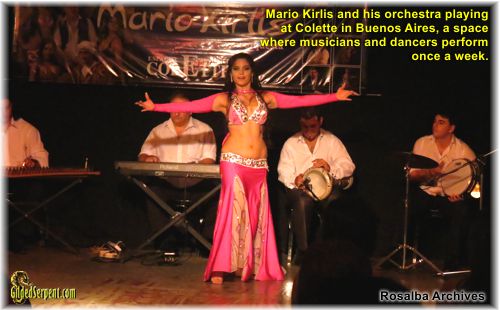
Mario Kirlis, his orchestra and local dance company performing at Tierra Santa,
a Jewish/Muslim cultural center, shows are open to the public every Sunday afternoon
Resources:

use the comment box

Have a comment? Use or comment section at the bottom of this page or Send us a letter!
Check the "Letters to the Editor" for other possible viewpoints!

Ready for more?

  • Argentine-Arab Dance and Music Charm Taiwan, Gina Chen promotes Live Music for Local Dancers
    I have to say it is quite different from any other American or Egyptian style choreography I learned before; you almost always keep your feet into ballet position and body weight is relatively higher. The physical dynamic is much exaggerated. I guess this is the Argentine style bellydance and I could see why local dancers are fond of it, owing to the quality of fluidness and lightness, very outward gestures and wonderful live music.
  • Interview with Yamil Annun, An Argentinian Belly Dancer
    Yamil Annum has created his own dance style and has evolved his specific style of Oriental dance by using the well established foundations of classical Ballet, Ukrainian dance, Ballroom dancing, Celtic dances, Jewish folk-dance, Bhangra, Armenian and Argentinian Tango. His elegance on the stage has revolutionized stages all over Argentina and Latin America.
  • Welcome to the 2nd Miami Bellydance Convention, A Selection of Photos
    Intercontinental Hotel in Miami, Florida, on September 4- 6, 2009, Winners,Teachers, Performers
  • Spirit of the Tribes 2008
    April, 24-27 2008, War Memorial Auditorium in Fort Lauderdale, Florida Produced by Maja
  • The Dina Show!
    Event sponsored by Little Egypt on May 28-30, 2005 at the Crowne Plaze in Miami, Florida
  • Territorialism Undermines Event Sponsor’s Efforts, Interview with Dee Dee Asad
    Open discussions of such issues will help dancers, musicians and those people who surround and support them, to recognize similar patterns in their own local environments.
  • Yousry Sharif Makes a Stop in Tennessee
    Yousry sat on the front row during the performance, and is rumored to have remarked “that is me dancing up there!” when Virginia made her appearance.
  • In Search Of The Iraqi Kawleeya, One Dancer’s Journey into Movement and Meaning
    Have we have learned from our experiences incorporating the Raqs Sharqi into our lives and practice or is the Kawleeya fated to be yet another souvenir from a visit into our collective imaging of the exotic “Orient”?
  • Dancing Through Financial Crisis and Revolution An Interview with Luna of Cairo
    As fearless as the Cairenes in her adopted home, she takes on the state of the art form and daily trials and tribulations with candidness and humor.
  • Alive and Well in Corvallis! Retired Drummer, Robaire
    Robaire Bozeman, a.k.a. Robaire Nakashian, is a well-known and greatly loved dumbek and tabla musician who is known primarily on the west coast of the US.  Robaire’s love for music and dance started when he was a young boy at the age of three. He began attending his family’s Armenian Summer Kef Time Festivities in Fresno, California, annually.
  • The Fez All-star Fundraising Show, Supporting Roxxanne’s Documentary
    Located on Sunset Boulevard in legendary Hollywood, The Fez was the first Arabic night club in Los Angeles. During its heyday, The Fez was a popular haunt of celebrities. Jayne Mansfield, Richard Boone, Danny Thomas were just a few who enjoyed the exotic ambience, and most of all, the beautiful belly dancers accompanied by Arabic music.
  • What Happened in Egypt, Egyptian Revolution Part 2: June & July 2013
    That new minister decided to try to ban ballet because it was “too naked for public viewing”. This sparked a round-the-clock sit-in by many artists who took turns performing their art each evening to show their defiance.
  • Photos from Zulu Lounge, May 3rd 2013 at the famous El Rey Theater in Los Angeles, California
    Below are a few highlight photos by Rawtography.com from the Zulu Lounge show held May 3, 2013 in Los Angles, California. The show was produced by dancer Khani Zulu and her husband, tattoo artist Zulu, at the swanky El Rey theater. The show’s theme was "La Nuit d’Absinthe" which inspired artists to be creative with their pieces.
  • "Der Schnerkle" Its Proper Uses and Functions
    Therefore, I reasoned, the use of ones extremities for dancing (beyond transporting one across the stage or making a movement appear finished) was to gather and distribute performance energy from the stage rather than simply wave arms about in the air with artistry and grace.
  • Venue Woes, Adventures in Event Production
    My philosophy is that dance teachers should make a living wage, be well fed and rested, and then, they will give you a great product as a result. Attendees should have a place to stay that is near (or in) the venue of the event. Events should be reasonably priced, and affordable food should be available nearby. Simple, right?
 

Gilded Serpent presents...

In Search Of The Iraqi Kawleeya

One Dancer’s Journey into Movement and Meaning

Amani by Jaki Hawthome

by Amani Jabril
posted August 18, 2013

It is a little bit funny, sitting here in the Abu Dhabi airport, organizing my thoughts for this article. Today, I am only passing through the bustling, modern airport, with my new husband, on our way to Iraq. Looking back almost seven years ago, it was in this city that I encountered the Kawleeya1 for the first time. Then, I had no idea what I was witnessing, and it is funny how that seemingly independent thread has now looped around to connect with my present.

In recent years, Kawleeya has come into greater popularity with Western dancers. Watching it form itself in our imaginations and on our bodies, I am surprised by how quickly Oriental dancers in the U.S. and Europe have adopted it into their repertoires.

I have watched our greater dance community consume new music, new dances, and new styles with great zeal. I perceive our community to be open to engaging new material, and while this openness is a beneficial trait for us as artists, I am left wondering, “Why this dance and why now?” That is to say, I feel strongly that before we can effectively begin to study, appreciate and perform the Kawleeya, I believe that it is critical for us, as conscientious dance artists, to take a step back and first consider how we engage this dance, and why we choose to do so.

Have we have learned from our experiences incorporating the Raqs Sharqi into our lives and practice or is the Kawleeya fated to be yet another souvenir from a visit into our collective imaging of the exotic “Orient”?

Context, and its use in the research and practice of dance, is not one-directional. We don’t engage in a discussion about the who, what, when, and where simply to achieve a state of authenticity nor do we do it, as a gift given back to the culture from which it came. The reality is, the topics we choose and the methods by which we incorporate them into our reality are reflective of our own motivations and imaging of the “Other” 2. Of course, none of us can come to the table free of our biases, or what I have come to think of as cultural baggage. Yet, our baggage does not automatically discount our efforts. How do we begin to locate the Kawleeya and from that point, how to we begin to understand it within its own context? Furthermore, what are the ways in which we, as dancers, choose to use the Kawleeya for our own pleasure and performance? What sense does it make in our own context?

Uza of New York – Raqs Kawleeya – Iraqi Gypsy Dance ردح – رقص عراقي from Uza Mitra.

Returning To Abu Dhabi

The last time I was in Abu Dhabi, I had come to the U.A.E. to study Khaliji 3 dance. With the help of Dondi Dahlin, to whom I am still grateful, I was able to connect with Lydia Tzigane a veteran dancer based in Dubai, with an amazing career spanning twenty-five years and forty-two countries.Map of Dubai

That evening, at the Intercontinental Abu Dhabi Hotel, I watched the dancer’s performance intently. Later in her show, after her Oriental set, the band picked up with a Khaliji rhythm. If we had been in Egypt, she would have run to change into a dress and would have returned, swinging an assaya to a saucy Saidi rhythm. If it had been Beirut, she might also have had a cane twirling, but it would have been twirling to a debke. Since we were in the Arabian Gulf, her show called for a Khaliji dance.

Particularly, I was  excited to see this part of her show since I had been working with Lydia on the Emirati style of dance and hoped to pick out some of the new vocabulary I had learned. She began to dance, and much to my dismay, her movements barely resembled the Khaliji style dance I had been learning. In fact, as far as I could tell, the poor girl was butchering the stately rhythm! It was only later that I learned she was from Iraq, and what she was performing was Kawleeya. At the time, the limitations of my knowledge of the dance as well as my own sense of aesthetic could not take in what I was seeing, and I discounted the evening’s performance. It wasn’t until about a year later that the Kalweeya and I crossed paths once again. This time, I recognized the movements instantly from my experience in the Abu Dhabi nightclub, but now, a small group of young women performed it casually in another nightspot in Dallas, Texas. My host explained that these ladies were Iraqi, and this was simply one of their dances. Of course, my interest was piqued!

Why have I spent time relating this story to you? It is simple really. In this article, and in those to follow as well, I want to explore this process of engaging, researching, and performing the Kawleeya and in doing so, work through some of the questions surrounding the origins and influences of the dance. At the same time, I hope to model a level of transparency in method and in research, that I feel is important to demonstrate in those who claim to be practitioners of this dance. I am not an expert on the Kawleeya, but I do hope, one day soon, to grow into an adept  practitioner, and I would like to share that journey with you.

Let  us begin by addressing some key questions:

Where is the Kawleeya rooted? With which people and in what geographic location?

For example, though most all of the narratives surrounding this dance claim that the dance is rooted regionally in the south of Iraq (and ethnically with a gypsy 4 group there) to be satisfied with this myth ignores the transient lives of the dancers and the transnational nature of the dance in its current form.

What is the aesthetic that we are working within, and what kinesthetic and musical structures am I supposed to understand and apply?

Though the Kawleeya has some of the characteristics of regional dances of the Arabian Gulf, there are clear departures from that movement’s general vocabulary. From where are these influences coming? How did they become incorporated into the dance, and why? Also, as it is often seen performed as an improvised solo dance, what conventions on style and deportment apply to the dancer?

When is Kawleeya danced, why?  for whom? and where?

When asked, most will tell you that Kawleeya is a dance of the Iraqi gypsies. Often, these stories focus on a romanticized version of the gypsy dancer’s life performing in a cabaret or at weddings and festivals. Necessarily, this discounts the complexity of the dancer’s reality and the context from which the performance develops. To complicate matters, the Kawleeya is now performed in the Middle East and outside of the region by dancers with no ethnic roots or geographic ties to the region.

These are just a few of the broad questions that I intend to explore, and I look forward to sharing my journey with you. In the next article, I will share how and why I got started trying to learn to dance the Kawleeya as well as some of the pitfalls I have encountered. Hopefully, dear reader, you will recognize some of these same success and challenges in your own experiences, and together, we can help each other develop our collective understanding of the Kawleeya.

Until then, greetings from Abu Dhabi!

Footnotes

  1. Kawleeya – The dance itself is shown in the video link attached to this article. Here,  Uza of New York,  demonstrates the style beautifully. In future articles, we will look at more video from within the Gulf area as well as abroad. Further, I use the term “Kawleeya” as the name of this dance because currently, I do not have a more specific term from which to reference. In doing so, by neccessity, we must  generalize  the style of dance. Also, it is worth noting that the Kawleeya is also used to describe the gypsy people of Iraq as well as a specific type of nightclub, apart from the cabaret, where Kawleeya dancers perform.
  2. Other – The Other refers a person or group other than one’s self; hence, the Other is identified as "different". A person’s definition of the ‘Other’ is part of what defines the self and cultural units. It has been used in social science to understand the processes by which societies and groups exclude ‘Others’ whom they want to subordinate or who do not fit into their society. The concept of ‘otherness’ is also integral to the comprehending of a person, as people construct roles for themselves in relation to an ‘other’ as part of a process of reaction that is not necessarily related to stigmatization or condemnation. The idea of the other was formalized by Emmanuel Levinas, and later made popular by Edward Said in his well-known book Orientalism.
  3. Khaliji – Again, I use a rather generalized term to describe a specific dance. Within my experience in the UAE, the dance that most Western dancers know as “Khaliji”, where there is an emphasis on the beauty of the costume and dancers’ hair, also including sharp quick shoulder shimmies, poly-rhythmic clapping, and some footwork; is locally referred to as “Mahaleya”.
  4. Gypsy – Within Iraq, this group of people are is referred to as Kawleeya. As a widely dispersed and culturally varied people, “Gypsy” herein refers to only one branch of this ethnic family tree.
Amani hair tossing by Studio Jaki


Resources:

use the comment box

Have a comment? Use or comment section at the bottom of this page or Send us a letter!
Check the "Letters to the Editor" for other possible viewpoints!

Ready for more?


Gilded Serpent presents...

Dancing Through Financial Crisis and Revolution

An Interview with Luna of Cairo

Photo by Corina Zaragiou or Ki Zara

by Elisabeth Wilhelm
posted August 17, 2013
Editor’s Note: As usual on GS, opinions expressed here are not
necessarily those of GS. Feel free to express yours in the
comments section at the bottom of the page.

No one could ever say that Luna, a belly dancer with flawless Egyptian technique honed by the masters of Egyptian belly dance, with a masters degree in Middle Eastern studies from Harvard University and widely read blogger, is a wallflower.

As fearless as the Cairenes in her adopted home, she takes on the state of the art form and daily trials and tribulations with candidness and humor.

Luna currently teaches workshops across the US and Canada and dances on the Nile Memphis ship when she is in Cairo.

What are three things you wish you had known before you started dancing in Cairo?

I wish I knew that the dance would hijack my life. Had I known that, I probably would have thought twice about coming here in the first place. Though I came here to do research—not to work—that’s exactly what wound up happening, and my life has taken a totally different trajectory than I intended it to.

I wish I knew that speaking Arabic fluently could actually be a disadvantage, in the sense that it makes people forget you’re a foreigner, and gets you wrapped up in drama and gossip you never wanted to be.

I wish I knew how darned dirty the dance business is here. I wish I knew how much it’s about who you do rather than what you do, as well as how much hate is directed towards successful dancers from other dancers. Dancing in Cairo is definitely not for the weak (minded), and I went through some pretty tough times. I’ve emerged stronger and more determined though, so I guess there’s a light even at the end of the darkest of tunnels.

One more thing, if I may… I wish I knew a revolution was on the verge of breaking out. That may have kept me away altogether.

What was your favorite "only in Cairo" belly dance moment?

My favorite “only in Cairo” belly dance moment happened last year at a shaabi wedding in Alexandria. The guests were 99% male and there was a lot of testosterone in the air. I even had two bodyguards making sure none of them jumped on stage and did anything inappropriate. Everything was going great and everyone was enjoying the show—so much so that they started shooting their guns in the air. I freaked and panicked at first, but then calmed down when I realized it was only celebratory gunfire.

You blog about your (mis)adventures is a widely read blog. What made you decide to start a blog?

I decided to start blogging a little more than two years ago when I realized that I kept having all these crazy experiences. It was almost as though I were a drama magnet. Being that a lot of my experiences are typical of dancing in Cairo, and most of the time, are illustrative of particular social ills here, I decided I’d write about them and share them with the world. Feedback has been overwhelmingly positive. People appreciate me sharing my life in an honest, non-politically correct way that everyone can relate to. They also love knowing what it’s really like to dance in Cairo, being that so few of us get to do it.

You are one of a handful of top American dancers in Egypt right now. How much has American belly dance influenced the belly dance scene in Cairo? Or did you completely de-Americanize your dancing when you started performing regularly?

There are currently only two licensed American dancers in Cairo, and I am one of them. Leila Farid is the other. American belly dance hasn’t influenced belly dance in Cairo at all (other than giving them the idea of the two-piece costume). American belly dancing is all about props, which nobody uses or appreciates watching here. The movements in American belly dance also tend to be bigger, more exaggerated, and less subtle than the movements in Egyptian style, and that’s something you just don’t see here. My dance was pretty Americanized, being that I learned in the US. However that changed completely in Egypt. Between taking classes and observing Egyptian dancers, I learned to tweak my style so that it’s now 100% Egyptian.

Where do you see yourself in your dance career five years from now?

Where I’ll be five years from now depends on what happens in Egypt politically. If the country continues to fall down the slope of Islamization (which I think it will unfortunately), then I’m probably going to have to leave Egypt. Islamization means that either the dance will be outlawed, or that tourists will be so disgusted and afraid to come to Egypt that the economy will implode, thereby taking a further toll on the arts. If by some miracle none of that happens, I could very well still be here performing. Either way, however, I hope to be doing more traveling and teaching and sharing everything I’ve learned with others.

Luna performing by Sarah SelwoodYou have been dancing for four years now in Egypt. What proverbial mountain will you climb next?

I have indeed had a rare opportunity to do what so many other dancers would love (and tried) to do. I hope to further establish myself as a teacher. But I’m also thinking about branching into film, or, testing out a totally different career. Dancing (especially in Egypt) is a short-lived career. I’ve got quite a few years ahead of me, but I may decide I want a career in journalism or government or something else totally unrelated. As much as I love what I do, I tend to get bored easily, so we’ll see.

What kind of impact has the uncertain economic and political climate had on dancers in Cairo?

The impact the economic difficulties Egypt is going through cannot be underestimated. Most importantly, we are all suffering from a loss of work. Because of the decline in tourism, Nile cruises sail less frequently than they used to, which means fewer shows for us. Nightclubs in five star hotels are struggling, and a couple have cancelled their belly dance shows altogether. Some big cabarets on Pyramid Street have closed down. This results in more dancers than gigs, and an even more competitive work environment.

Psychologically speaking, some dancers are struggling with depression. I’ve been a little luckier than most because I have an entire boat all to myself and also perform at weddings. As many as four dancers have to share other venues, which results in each one performing much less than she’d like. Some dancers, finding themselves out of work, or not thinking it was worth staying in Egypt after the revolution, have gone home.

You mentioned on your Facebook page that you may have reached your "last straw" with dealing with the day-to-day challenges of living and working in a city that is increasingly polarized and dangerous. How has that affected your plans for the immediate future?

It’s getting more dangerous in Egypt by the day, and that’s something that people like me who live there (rather than tourists), recognize and suffer from. Now it’s gotten a whole lot worse, with people killing each other every day, and fanatics terrorizing not only the army, but fellow citizens. How has this affected my plans for the immediate future? Well, I realize that I may have to pack up and leave Egypt, if not permanently, then at least until the army is able to arrest and kill off most of the terrorists. That might take a while. The issue isn’t only my safety, though of course that’s of paramount importance, but the lack of work. None of the boats have had any work for the past month, and it’s not because of Ramadan. During previous Ramadans, my boat and all the others had nightly sails. There are zero tourists in Egypt right now, and that will continue to be the case so long as there are terrorists roaming around the streets of Egypt. So I may have to take an "extended vacation" and keep myself busy with workshops and traveling.

How have political tensions and Morsi losing his grip on the presidency affected the Cairo belly dance community?

Political tensions after the fall of Morsi have resulted in a complete political, social, economic and security meltdown that has understandably scared off tourists and Egyptians, which means that we have absolutely no work! (Though I’m in the United States right now touring).

What are you worried about? Hopeful about?

I’m hopeful that the army will act with resolve and commitment in both arresting and "doing away with" as many terrorists as possible. I’m worried that this might be a very difficult task, that it might take a very long time, that innocent Egyptians will suffer in the process, and that the country could potentially wind up like Syria*. I’m worried that the Egyptian army might pander to US and international pressure to treat the Muslim Slaughterhood nicely and reinstate Morsi as president. Honestly I don’t see that happening, but the army could cave under international pressure to respect their "human rights." That would be a disaster. Islamists
are a menace to human civilization in the same way that the Nazis* were. As such, we should be more concerned about the human rights of innocent peace-loving people than those of the terrorists. The Egyptian army and people realize this, but I’m afraid much of the Western world still has its head up its metaphorical butt about this.

The new Minister of Culture nominee, a woman named Inas Abdel Dayem, was to take office and some American dancers believe that this is a good thing for Egyptian belly dance. What’s your take?

Inas Abdel Dayem declined the position of minister of culture because she received a multitude of death threats from Islamist Nazis*.

You have been traveling teaching workshops across the US. What has that experience been like for you?

Traveling across North America teaching workshops has been an amazing experience for me. I just love passing this art on to passionate, dedicated dancers, and I love making new friends all over the place. I really hope to do more of this, and this is ultimately what I’ll be focusing on if I can’t stay in Egypt. Though nothing beats the thrill I get from performing on a daily basis for the best audience in the world.

*Footnotes:

Luna’s clarifications regarding "Nazis and Syria": Nazis, I really do mean that, and I never hurl that epithet at politicians or groups I don’t agree with. I don’t use the word lightly. In all actually, Brotherhood ideology draws from the Quran and Mein Keimpf. And by the way, there’s much more to Nazism than calling for genocide, which initially, it didn’t. It sort of "evolved" into that as the war got underway. What Islamist ideology has in common with Nazism is supremacy. And it’s that supremacy that eventually leads to genocide. Just like the Nazis, Islamists rank the world’s populations in a hierarchy according to degree of affiliation with and commitment to their view of Islam. Islamists are at the pinnacle. All other Sunni Muslims who don’t agree with them are infidels, as are secular Sunnis, religious and secular Shias, Chrisitians, Jews, pagans, and all others. Their policy for dealing with the world’s undesirables is to kill them off if they can’t be brought into the fold of Islam. They also have meglomaniacal ambitions, just like the Nazis did. They want to pick up where the Muslims conquerors left off, taking back Spain, making their way into Europe, and eventually ruling the world (they get that idea from classical Islam, which does call for the eventual Islamification of the whole world, if only at the "end of days"). These are sick and scary people. So I stand by my calling them Nazis.

Re Syria. Syria has deteriorated into a full-fledged civil war, and is awash with Islamist militias that are fighting the regimes and engaging in a brutal campaign of terror against the civilian population. I really am concerned that if the Egyptian army can’t nip their Islamist problem in the bud within the next month, the situation there could become just like Syria. I’m afraid that not only will Egypt’s terrorists continue to blow things up and kill people, but that Egypt will become a meeting point for other Islamists around the world who would love nothing more than a chance to fight the "godless secular military."

Resources:
by Susan Leibenberg
. The keyboardist is Magid Yusef. The drummer, the last guy sitting down on the left with the black hair is Tamer Douglass.
The guy sitting in the middle with greyish hair is Hafez (don’t know his last name), and the baldin dark-skinned dude sitting on the right is Sherif Douglas.

use the comment box

Have a comment? Use or comment section at the bottom of this page or Send us a letter!
Check the "Letters to the Editor" for other possible viewpoints!

Ready for more?

  • Planting Flowers and Dodging Riots, Dancing in Cairo After the Revolution
    I left Cairo on September 9th, 2012, after a three-week visit to research the zar. I wrote the following article on my flight home – two days before the Libyan tragedy* and the violence outside Cairo’s US Embassy. As my plane circled the pyramids I had no idea Egypt would once again become the center of world attention.
  • Facing the Truth, Working as a Dancer in Egypt
    Sometimes the dirty facts of dancing in Cairo can be more interesting than the pristine Oriental fantasy… at least, it is when you tell the story later! PHOTOS!
  • As the Music Fades, Egypt’s January 25 Revolution’s Impact on the Muscians and Dancers
    We can’t attain what they had in the past because we are not free. Our minds are full of work and what we should and shouldn’t do. There’s no time for good art. Politics mixed with religion does not make for an atmosphere where the arts can flourish.
  • Getting Home, Report from Cairo
    As a new Egyptian national, I am proud that people are demanding their basic human rights, and at the same time, sorry for the economic hard times that have already begun here.
  • What Happened in Egypt, Egyptian Revolution Part 2: June & July 2013
    That new minister decided to try to ban ballet because it was “too naked for public viewing”. This sparked a round-the-clock sit-in by many artists who took turns performing their art each evening to show their defiance.
  • Is the Bedlah from Hollywood?, The Origin of Our Costume
    As long as I can remember, the origins of the bedlah (the two piece costume of Middle Eastern dancers) has been widely controversial and debated among the artists of Raqs Sharqi (belly dance). The dance itself, along with the costume, has gone through many centuries of changes and name identifications in accord with period fashion as well as contact with outside influences.
  • From Café Chantant to Casino Opera, Evolution of Theatrical Performance Space for Belly Dance,
    Most students of Egyptian belly dance are aware of Badia Masabni and her famous nightclubs, and many believe Badia’s clubs to be the birthplace of theatrical belly dance, or raqs sharqi. However, fewer are aware that Badia’s clubs were neither the first nor the only venues of their kind.
  • The Search for El Dorado…in Cairo
    The name “El Dorado” conjures up images of a fruitless quest for an unattainable, even mythical, goal. The El Dorado in this discussion, however, is neither myth nor fantasy. El Dorado was a sala or café chantant, an entertainment hall, located in the heart of Cairo’s Ezbekiyah entertainment district.
  • At the Crossroads, Discovering Professional Belly Dance at the Dawn of the Twentieth Century,
    The transition from awalem and ghawazee dance styles to theatrical raqs sharqi began during the last decades of the nineteenth century and the first decades of the twentieth in Egypt. Unfortunately, scant film footage exists of dancers from that period to reveal exactly what professional belly dance looked like during that critical moment in Egyptian dance history. However, still photos and travelers’ descriptions from the time do allow a few conclusions to be drawn about the nature of belly dance in Egypt at this important transition.
  • Alive and Well in Corvallis! Retired Drummer, Robaire
    Robaire Bozeman, a.k.a. Robaire Nakashian, is a well-known and greatly loved dumbek and tabla musician who is known primarily on the west coast of the US.  Robaire’s love for music and dance started when he was a young boy at the age of three. He began attending his family’s Armenian Summer Kef Time Festivities in Fresno, California, annually.
  • The Fez All-star Fundraising Show, Supporting Roxxanne’s Documentary
    Located on Sunset Boulevard in legendary Hollywood, The Fez was the first Arabic night club in Los Angeles. During its heyday, The Fez was a popular haunt of celebrities. Jayne Mansfield, Richard Boone, Danny Thomas were just a few who enjoyed the exotic ambience, and most of all, the beautiful belly dancers accompanied by Arabic music.
 

Gilded Serpent presents...

Alive & Well in Corvallis!

Retired Drummer, Robaire

Placeholder

by Sierra (a.k.a. Sadira)
posted August 11, 2013

Robaire Bozeman, a.k.a. Robaire Nakashian, is a well-known and greatly loved dumbek and tabla musician who is known primarily on the west coast of the US.  Robaire’s love for music and dance started when he was a young boy at the age of three. He began attending his family’s Armenian Summer Kef Time Festivities in Fresno, California, annually.  Among the musicians attending those events were the famed Richard Hagopian and his band. One could say truthfully that his connection to the love of the music and dance flowed in his blood since birth.

In 1972, Robaire began studying the Middle Eastern dumbek with his mentor, jazz and Middle Eastern percussionist, Vince Delgado. Around this time, belly dance and music were rapidly growing in popularity in California, and soon, Robaire was playing for many teachers and their classes throughout Berkeley, Oakland, San Francisco and the Greater San Francisco Bay Area.  He began playing for troupe performances and developed his own unique troupe and musicians called “Troupe Zaghareet”.
Robaire moved on quickly, playing at the nationally-known Casbah Cabaret  and The Bagdad Nightclub in the North Beach area of San Francisco as a frequent guest drummer alongside musicians Fadil Shahin, Jalaleddin (“Jalal”) Takesh, Salah Takesh, and George and Chad Elias.  He became versatile at playing percussion Arabic, Persian, and Armenian rhythms.  He also played at El Morocco Restaurant, Hadi’s, Pasha of San Francisco, and other well-known local nightclubs, restaurants, as well as innumerable private parties and festivals.

Most importantly, Robaire was recognized during those early years as the “dancer’s friend and musician” because he enjoyed playing for each dancer and following her particular style. 

He has played with the famed musicians John Bilezikjian, Ishmael, (the late) Armando of Sirocco, Dr. Jihad Racy, (the late) Mimi Delgado-Spencer and her stepdaughter, (the late) violinist Devi-Ja Delgado, and many others. His drumming has been featured on numerous recordings on audio cassette and CDs such as “The Blue Nile”, “Sands of Night with Joseph Pusey” and “Sands of Night; Bedouin Spice with Joseph Pusey”.

Robaire Bozeman and oud player and percussionist, Paul Ohanesian, soon became a solid musical partnership, playing together for many years, weaving a special magic of a variety of styles of music from Armenian to Afghani.  He was also the musical director and co-founder of the yearly Rakkasah Festival, for 18 years. 

In 1996, Robaire relocated in the state of Oregon where he partnered with (the late) Joseph Pusey, original member of the “Brothers of the Beledi”. They produced two CD recordings together, featuring their music.

Robaire and Sadira, the dancer, were married for 23 years and currently maintain their close friendship from their locations in different states.  Robaire has retired recently from the dance and music scene to enjoy working in his community garden, doing volunteer work and living in beautiful and green Corvallis, Oregon. 

Judges
1979 BDOY Judges
Back row from left: Malika, Tamra, Aziza!, Nirvana, Rick Malaspina
(a newspaper columnist), Robaire Nakashian, Soudabeh, Nakish.
Front row from left: Kattoura, Shukriya, Nina, Kadiya, Asfura,
Emira, Jack Frick

Troupe
Pot dancer-Sadira, Janina seated in chair, Nasahera with drum, Robaire, Alia with her arm up
Adah with sword, David with tray on head, Zuleika w drum, Selene in veil

troupe 2

Selene, Robaire, Alia with sword, Sadira kneeling, Adah, Nashera w large tamborine, Zuleika
front row-Janina w sword and red hat, David lying behind his tray.

Robaire Sadira and Paul
Robaire, Sadira Sierra, and Paul at Squaw Valley Festival where we performed for 6 years

Robaire drumming

Robaire drumming at Kyber Pass Restaurant in Oakland.

Resources:

use the comment box

Have a comment? Use or comment section at the bottom of this page or Send us a letter!
Check the "Letters to the Editor" for other possible viewpoints!

Ready for more?


  • Samiramis Imports and the Arabic Movie Nights
    Samiramis was an incredible store, not only did Sam have the largest selection of records, and cassette tapes of Arabic and Middle Eastern music, but he and his wife Mona embraced the dance community and their desire to find music, videos, and help with anything under the sun.
  • Personal Perspective
    So much is happening right now in the Middle East, and we write about our dance shows and events, travels and remembrances but no one dare takes a step to mention political strife.
  • Charismatic Sultana changes North Beach
    She was the only dancer I have ever seen walk off in the beginning, or middle of her set , not to return, because the music or audience did not please her
  • Aisha Ali & The Birth of the Ghawazee
    " This could not possibly be a dance to take seriously", people whispered
  • A Gilded Serpent Time Capsule Presentation, Rakkasah 1984 and 1986 (25 years ago) Photos by Lynette Harris
    While taking a nostalgic look through my photo albums recently, I realized that if I was ever going to share these photos, I had better go ahead and scan them into the computer now before they deteriorate even more than they already have. Yes, they are discolored and blurred, but I think they will be of some value to those who pay attentions to costume styles or those who were there and simply enjoy re-visiting the memories
  • Belly Dancer of the Year Pageant
    The contestants were limited to ten, and all danced to the same music, though they were permitted any props they wanted.
  • Bert & Me: Vignettes From Our Partnership
    Though Bert might like to think of himself as a simple man, in fact, he is a very complex and private person whose lifetime is filled with famous and colorful characters and experiences.
  • Memorial to Armando Mafufo, Drummer, Teacher, Friend
    Armando Mafufo, known to most of us in the music and dance community as "Uncle Mafufo" was, as someone posted today, "a man everyone loved." He was a person who could light up the room with his smile and radiated love.
  • The Fez All-star Fundaraising Show, Supporting Roxxanne’s Documentary
    Located on Sunset Boulevard in legendary Hollywood, The Fez was the first Arabic night club in Los Angeles. During its heyday, The Fez was a popular haunt of celebrities. Jayne Mansfield, Richard Boone, Danny Thomas were just a few who enjoyed the exotic ambience, and most of all, the beautiful belly dancers accompanied by Arabic music.
  • What Happened in Egypt, Egyptian Revolution Part 2: June & July 2013
    That new minister decided to try to ban ballet because it was “too naked for public viewing”. This sparked a round-the-clock sit-in by many artists who took turns performing their art each evening to show their defiance.
  • Photos from Zulu Lounge, May 3rd 2013 at the famous El Rey Theater in Los Angeles, California
    Below are a few highlight photos by Rawtography.com from the Zulu Lounge show held May 3, 2013 in Los Angles, California. The show was produced by dancer Khani Zulu and her husband, tattoo artist Zulu, at the swanky El Rey theater. The show’s theme was "La Nuit d’Absinthe" which inspired artists to be creative with their pieces.
  • "Der Schnerkle" Its Proper Uses and Functions
    Therefore, I reasoned, the use of ones extremities for dancing (beyond transporting one across the stage or making a movement appear finished) was to gather and distribute performance energy from the stage rather than simply wave arms about in the air with artistry and grace.
  • Venue Woes, Adventures in Event Production
    My philosophy is that dance teachers should make a living wage, be well fed and rested, and then, they will give you a great product as a result. Attendees should have a place to stay that is near (or in) the venue of the event. Events should be reasonably priced, and affordable food should be available nearby. Simple, right?
  • A Carousel of Challenges, Bellydancing at the County Fair
    Using correct terminology is important; belly dancers are community performers who are requesting to perform on a community stage.