Gilded Serpent presents...

Sold Out Mosaic of Dance in North Carolina!

Raqs Layali 2013, Asheville, North Carolina

Text by Event Producer Mahsati Janan,
photos by Bill Frazer, Sharon Taylor and Ra’eesa
posted April 17, 2013

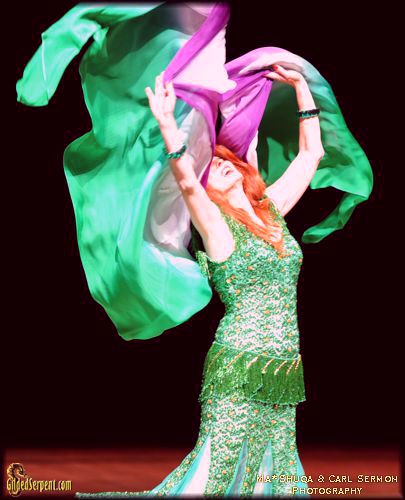
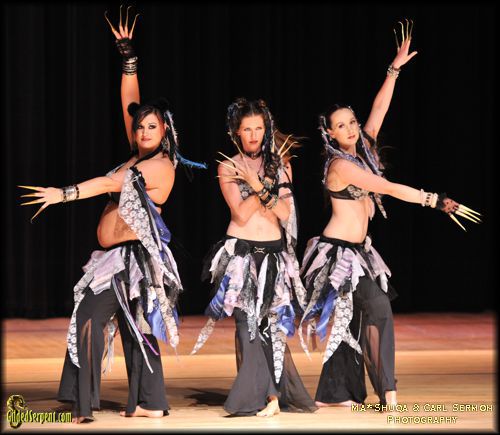
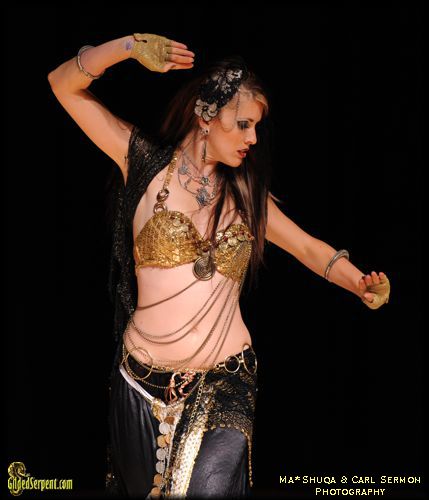
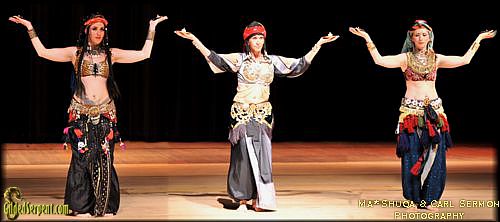
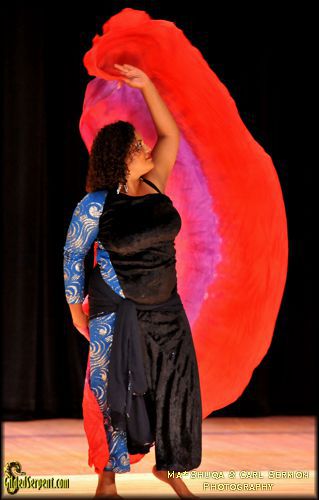
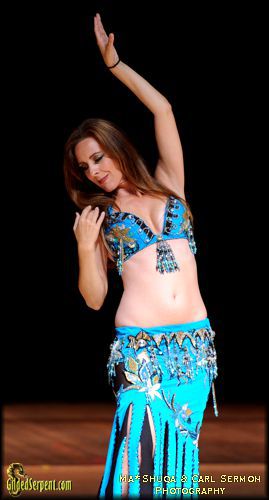
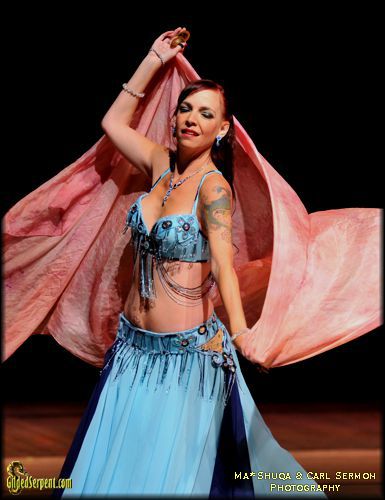
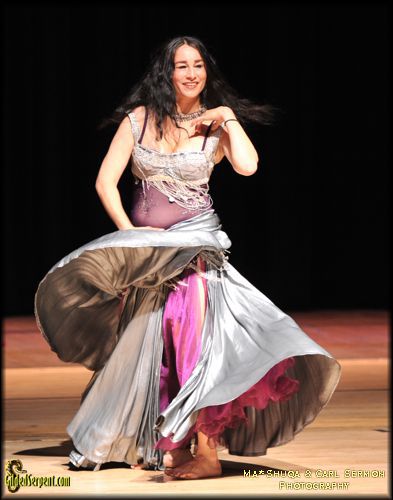
A few pics from the Raqs Layali show held March 22-24, 2013 in Asheville, North Carolina. The show was a joint effort between artistic director and principal dancer Mahsati Janan, principal dancers Lisa Zahiya and Teejei Brigham, and the BeBe Theater. We sold out every night! The goal of the show was to introduce people to many of the different styles that are a part of belly dance, from the folkloric roots to modern fusions.

The Southeast is home to some absolutely amazing dancers. In Asheville, Mahsati Janan wanted to share the huge diversity of dance styles with the local arts audience, so she partnered with local dancers Lisa Zahiya and Teejei Brigham to develop a show displaying a spectrum of fabulous dances. With the assistance and support of the BeBe Theater, this show was a huge hit. A call for dancers went out in late 2012 and then rehearsals began in earnest in early 2013. Due to the incredible reception by the audience and arts community, Mahsati plans to make this a recurring event to shine a spotlight on the amazing variety of styles.

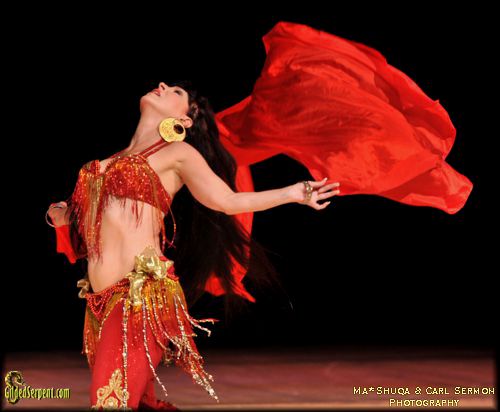
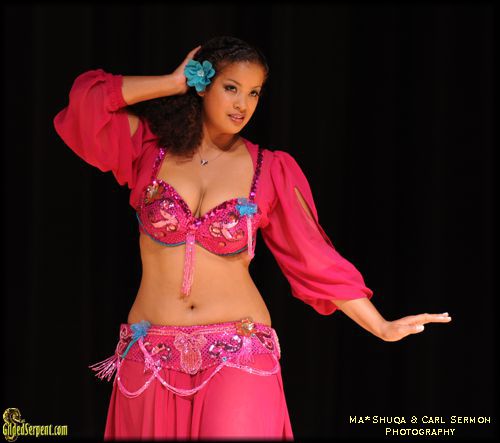
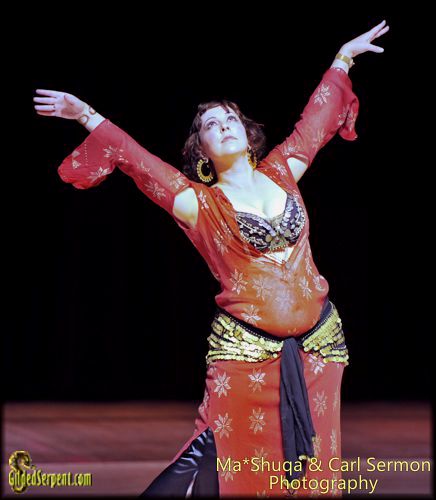
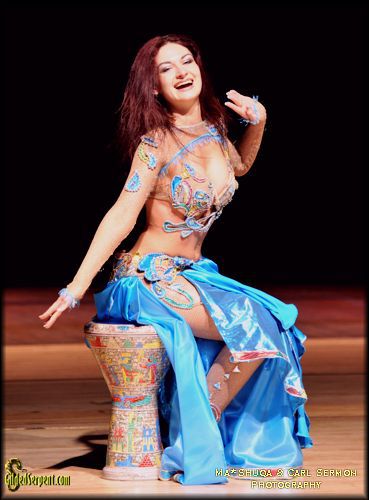
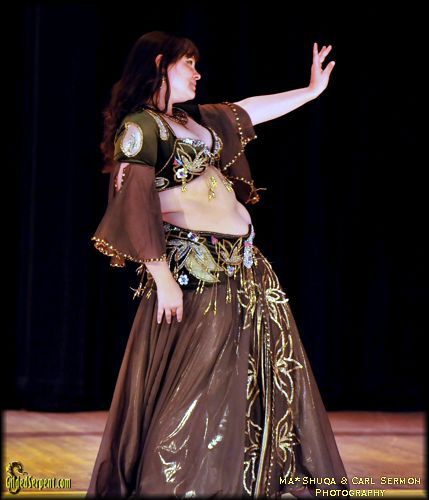
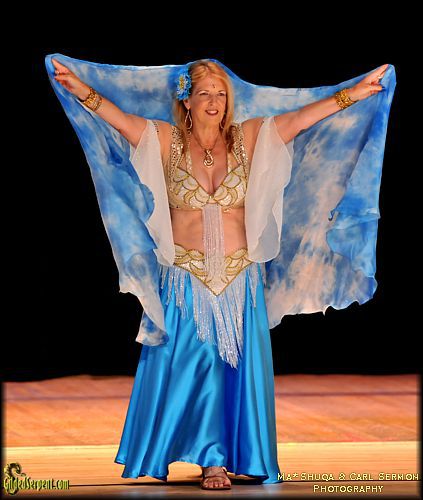
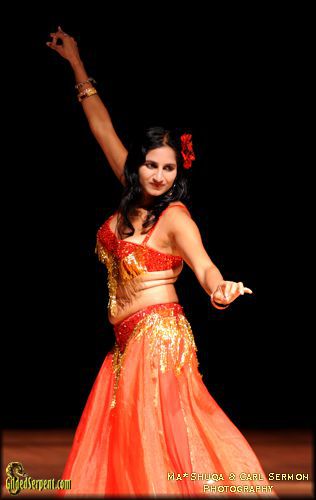
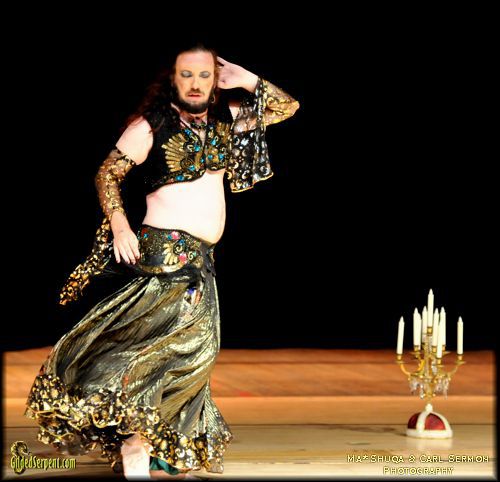
Zeffa

Zeffa – Photo by Bill Frazer,
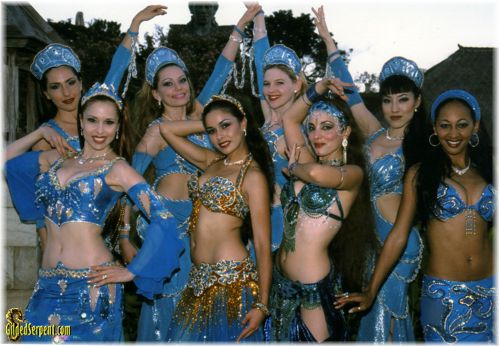
Dancer with Shamadan – Mahsati Janan
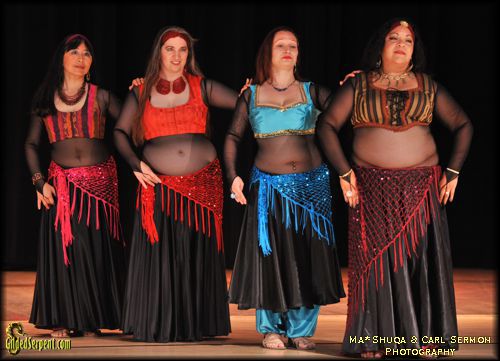
Other Performers L to R – Najida, Teejei, Johanna, Tsura, Kelly, Kartane

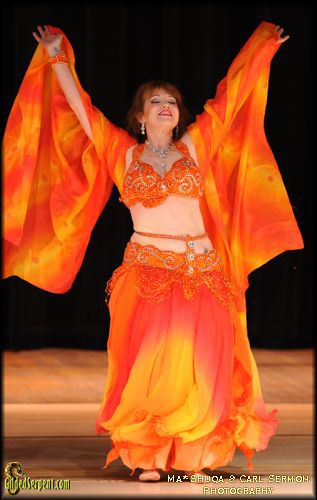
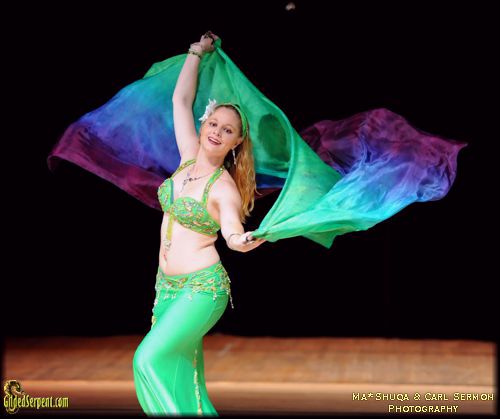
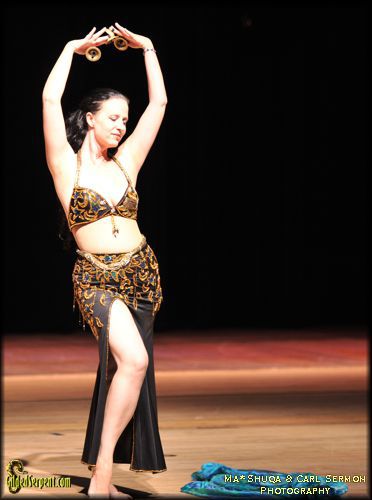
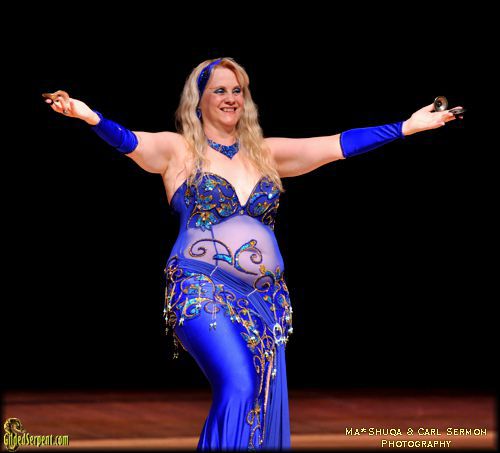
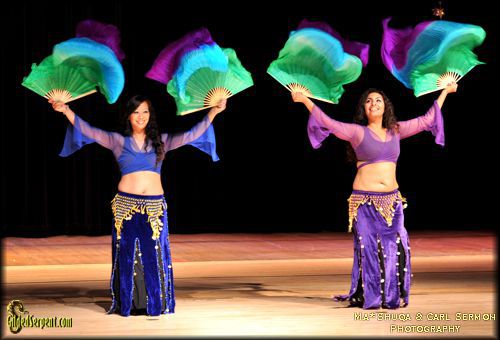
Turkish by Joy

Turkish – Photo by Bill Frazer,
Dancer – Joy

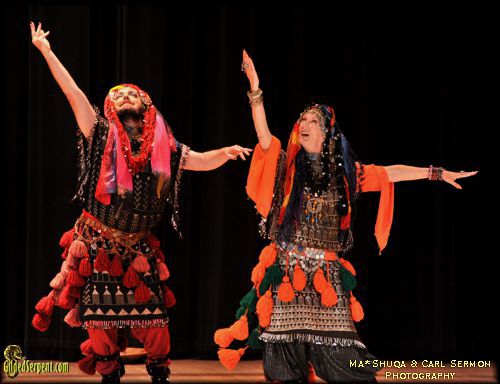
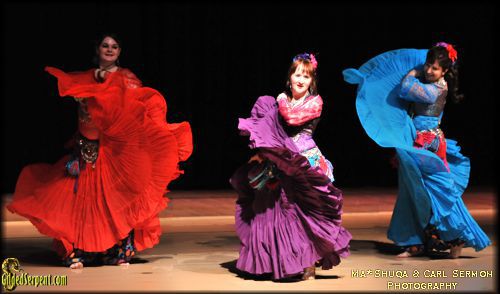
Saiidi

Saiidi – Photo by Bill Frazer
            Dancers L to R – Meaghann Lynne, Kartane, Nicole, Joy


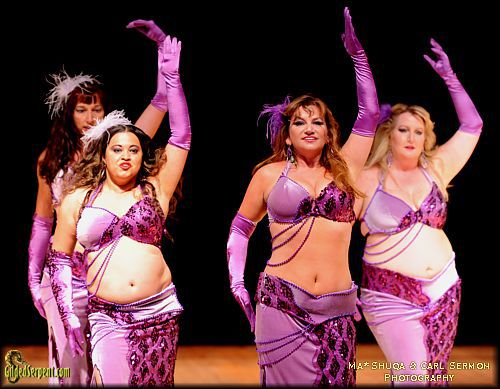
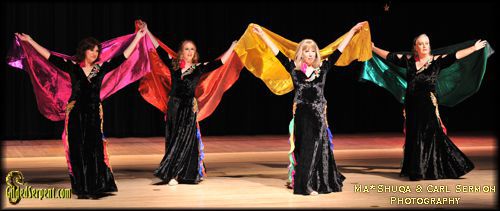
Khaleegy

Khaleegy Final Bow – Photo by Bill Frazer
Dancers L to R – Kelly, Nicole, Phaedra Abdou, Mahsati, Meaghann Lynne, Ra’eesah, Sameerah, Annie, Johanna, Teejei, Najida, Kartane

Khaleegy

Khaleegy – Photo by Bill Frazer
            Dancers Front Row L to R – Nicole, Meaghann Lynne, Johanna
Dancers Back Row L to R – Kelly, Sameerah, Annie

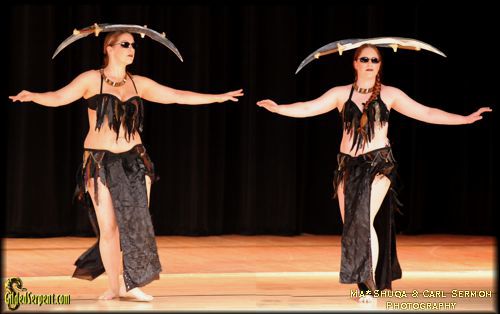
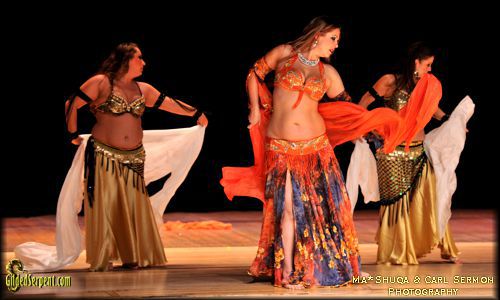
GHawazi

Ghawazee – Photo by Bill Frazer
            Dancers L to R – Najida, Nicole, Annie, Meaghann Lynne

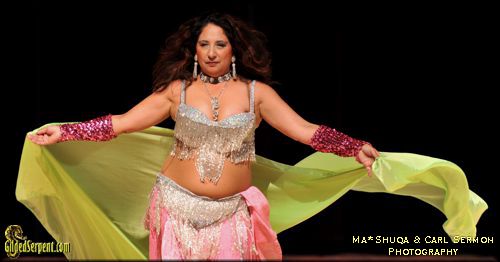
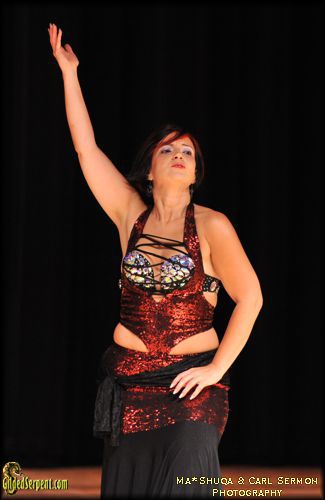
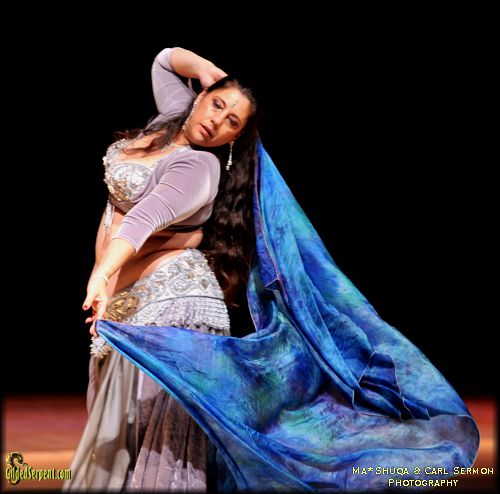
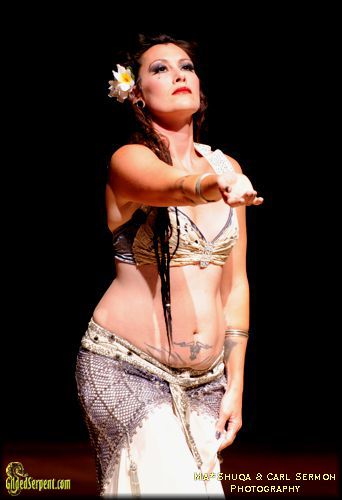
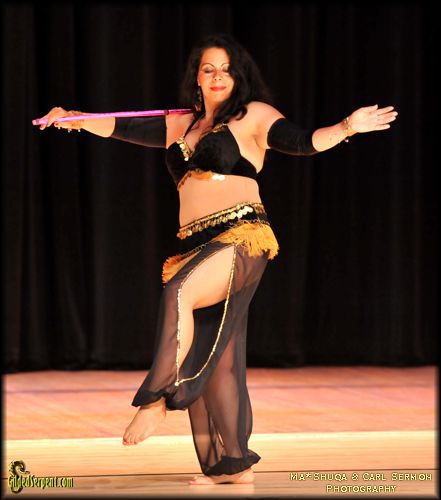
Mahsati raqs!

Egyptian Raqs Sharqi – Photo by Bill Frazer
            Dancer – Mahsati Janan

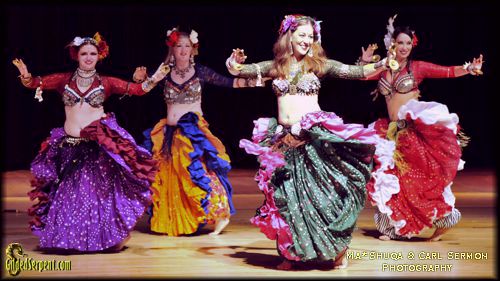
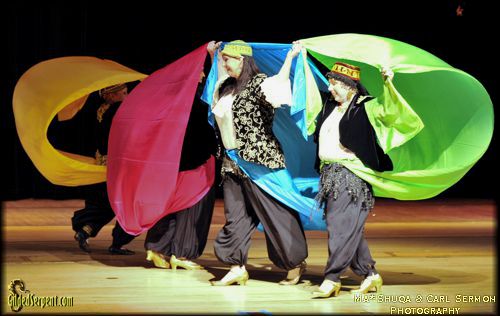
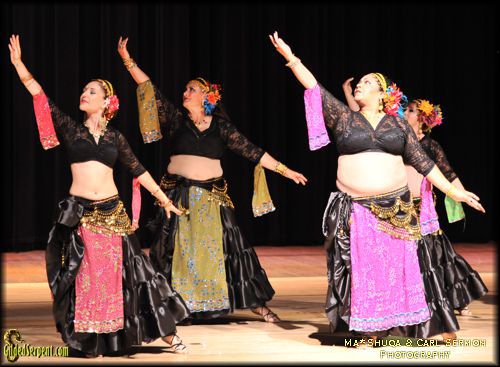
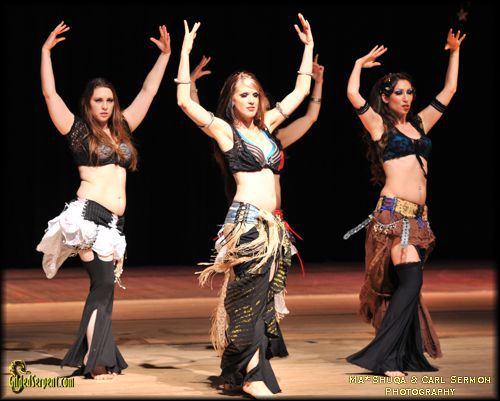
ATS

ATS – Photo by Bill Frazer
            Dancers L to R – Tsura, Ani, Teejei, Annie

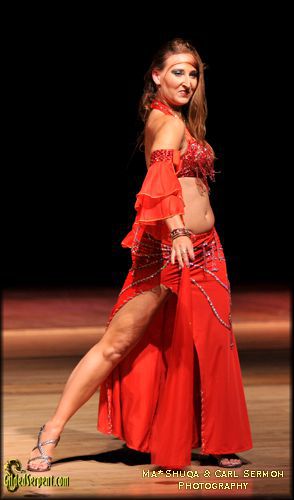
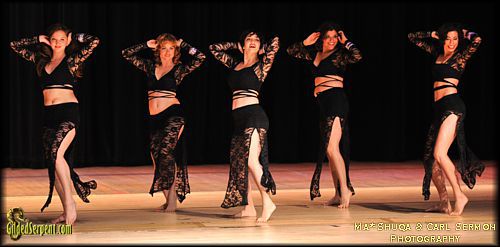
Oriental

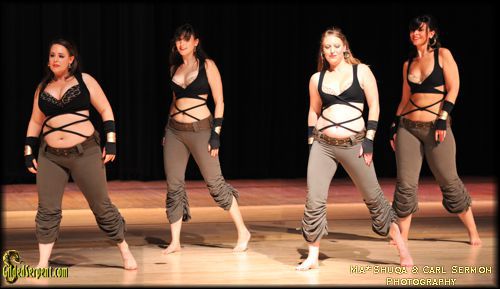
American Orientale – Photo by Bill Frazer
            Dancers L to R – Najida, Ra’eesah, Phaedra Abdou, Sameerah

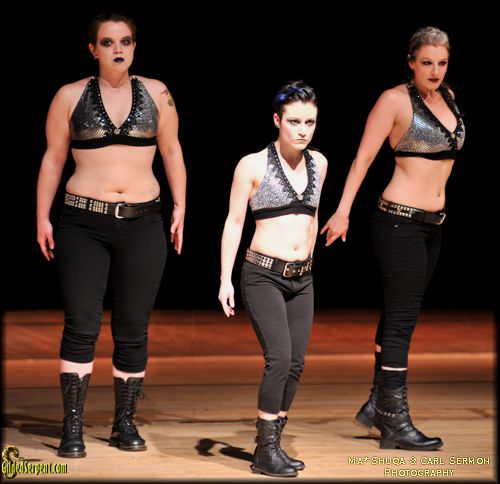
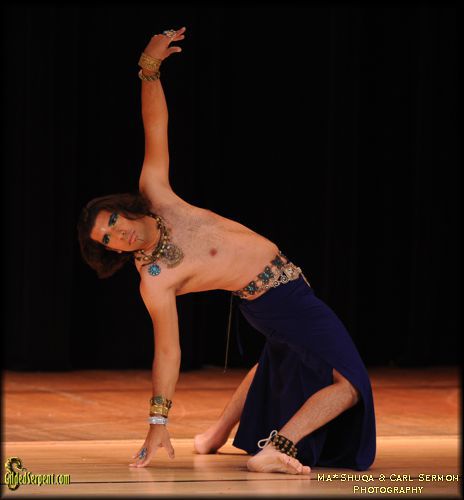
Hip hop

Hip Hop Fusion – Photo by Sharon Taylor
            Dancer – Lisa Zahiya


Backstage

Backstage

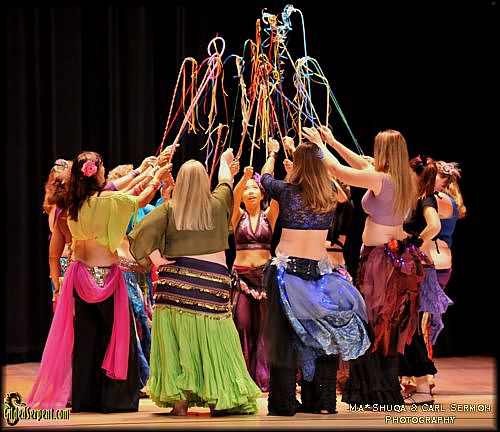
Khaleegy

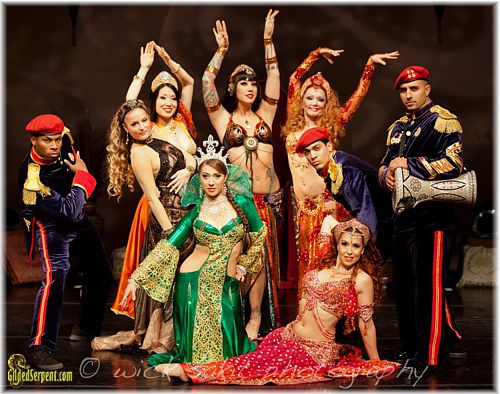
Khaleegy Group Pose – Photo by Bill Frazer
            Dancer Front – Teejei
            Dancers Middle Line Seated L to R – Kelly, Annie, Najida, Kartane, Mahsati
Dancers Back Line Standing L to R – Nicole, Johanna, Joy, Phaedra Abdou, Najida, Tsura, Ra’eesah, Sameerah, Meaghann Lynne


use the comment box

Have a comment? Use or comment section at the bottom of this page or Send us a letter!
Check the "Letters to the Editor" for other possible viewpoints!

Ready for more?

  • Fabulous Fan Veilzz w/ Mahsati Janan
    Like I said before, this video is for those who are familiar with belly dance already. The fan veil is a new concept and performance skill , as well as a new prop in Middle Eastern dance.
  • Photos from Carnival of Stars 2012, Page 1: L-Z
    56 goergeous photos! …Latifa, Linah, Lulu, LUna, Mahsati, Malia, MaShuqa, Melina, Migracia, Monica, Mystique, Maiya, Namira, Nancy, Nanna, Natika, Nisima, Nyla, Parri, Princess Farhana….
  • More Fans, More Veils…
    She includes a lot more ground information by using combinations, aptly named tables and turns, and the introduction to a lengthier fan veil that is 3 meters long instead of the standard 1.5 meters.
  • Going Bi-Coastal, "A Night in the Oasis"
    Our event evolved from a tiny community happening into a popular quarterly event, growing each year. When I migrated to Atlanta, Georgia, the one thing I knew I wanted to do was continue the tradition of producing “A Night in the Oasis.”
  • Bellydance Grows in West Virginia
    It has allowed us to build upon the ties we already have and extend them to other dancers, making a community of sharing and support.
  • Yousry Sharif Makes a Stop in Tennessee
    Yousry sat on the front row during the performance, and is rumored to have remarked “that is me dancing up there!” when Virginia made her appearance.
  • Building A Dance Community
    A community does not operate in a vacuum and there is no room for cattiness or drama if the community is to be effective and truly benefit the area as a whole
  • Tale of the Rat, Beginning to Teach, Part One
    He warned me! My German speaking mentor and dance partner, Bert Balladine, told me one day that teaching would change my dance—not necessarily for the better.
  • The Third Annual San Jose Showcase for Gothic Dance, The Third Annual Lumen Obscura, April 5-6, 2013, Hoover Theater, San Jose, California
    Here are some of my favorites from both the Mayhem Matinee (afternoon show) and the Shiver N Shake Showcase (evening show). "Lumen Obscura is a NorCal annual Dark Fusion & Theatrical belly dance event that showcases some of the best in the genre". Produced by Deidre Anaid.
  • Old Scholl Stardom Shines in a New Land, Tito’s First Visit to Taiwan
    No matter how much splendor and glamor is presented on stage, bellydance should always preserve the fundamental spirit and vision of the culture. So he prefers to create a homey atmosphere to remind the audience that dancing and singing at a family gathering is also an essential feature of Middle East performance arts.
  • Is the Bedlah from Hollywood?, The Origin of Our Costume
    As long as I can remember, the origins of the bedlah (the two piece costume of Middle Eastern dancers) has been widely controversial and debated among the artists of Raqs Sharqi (belly dance). The dance itself, along with the costume, has gone through many centuries of changes and name identifications in accord with period fashion as well as contact with outside influences.
 

Gilded Serpent presents...

Tale of the Rat

Beginning to Teach, Part One

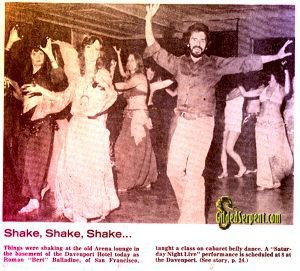
News clip of Bert teaching in Davenport

by Najia Marlyz
posted April 16, 2013

He warned me! My German speaking mentor and dance partner, Bert Balladine, told me one day that teaching would change my dance—not necessarily for the better.

“I am warning you: Teaching will ruin your dance!” he said, shaking his head.

Still, when one comes to a crossroads where a decision must be made or an opportunity will be lost, sometimes it is better to chose courageously rather than second-guess yourself. “Reality will sink in soon enough; you will see that all the possible options that would have been the result of choosing another path will be lost to you,” he warned. However, I knew also that many paths intersect, and it is possible that sometimes a wrong choice may turn out to be instructive at the least and not so final as it may seem at the moment. In the long run, it may prove to have been the correct choice, even though it may not have been the easier road of the two.

Before our afternoon “kaffeeklatsch” conversation ended about my opportunity to begin teaching belly dance, I asked Bert to explain what he meant when he said that teaching would ruin my dance. Why would it be ruined and how?  He explained that when you teach an art that you have infused with your personal passion and emotions from the core of your being, you will be tempted or even forced to intellectualize what you do and how you have achieved it. More often than not, that continual amount of intellectualizing actually can transform the finished dance into something unintended, destroying its essence. Your performance can become stilted by following your own procedures and following your own advice that you dish out day by day, lesson by lesson.

Additionally, Bert cautioned me that both words and methods used in teaching are constantly open to misinterpretation and to criticism by others who may have some personal agenda at stake.

How right he was! All teachers build upon the instructive methods of the teachers and performers from whom they have learned and been impressed. The gift of teaching doesn’t come through thin air from the grace of God—at least not usually.  Information has to be learned and processed by widely different individuals, each with their own strengths and weaknesses. The mixture can become a hodge-podge of gargantuan proportions! Only a few teachers are talented with the ability to image subjects with simplicity, but simplicity is necessary to reach those students who learn through inner imagery, while at the same time, a teacher must demonstrate the movement for those who learn visually. Sometimes, a teacher may feel a need to resort to “breaking a movement down” into segments for those few who are not natural dancers and must do everything by drilling relentlessly and intellectual pursuit.

NajiaIn the few years I spent working in the public schools as a beginning elementary teacher, I had already experienced the vast differences that exist from student to student on their separate and individual paths of learning; so I asked Bert, “Well, then, what do you advise me to do now? Should I accept the contract to teach belly dance in the recreation department or not?”
“If you don’t, you may lose your opportunity and your momentum, so go for it, but remember to continue developing your performance level or your career will be a short one. A dancer’s career is limited enough already because your body will continue to change as you age. It will eventually get to the point where your body will fail if you continue to dance in the same way that makes you successful today.

What you can perform at age 25 will look ridiculous on your body at 35 and even worse at 45!

A dancer is always a work in progress; if you freeze your dance in time by laying down rules for teaching your dance at its present level, your students and perhaps, even you will not have its future essence to use as a way to express yourself. Also, you may find your own words, badly garbled, coming back to haunt you after passing down through several generations of dancers.”

Bert proved correct about that point! For lack of a proper name for a dance movement, back in the ’70s I named a certain hip action “The Piston Shimmy”, likening it to the movements of the pistons of a combustion engine moving sharply up and down on each side without any twist or front-back torque. Several years later, a workshop teacher manifested who was teaching the same movement, calling it a “Pistol Shimmy” and after only a few questions, we discovered that it had been taught to her by a teacher who had taken my workshop and misheard what I had named it. It had morphed, like the gossip in the old children’s game called “Rumor”.

How fortunate I was to have Bert’s encouragement as well as his cautionary words! He ended my original giddy fears of accepting the offer from the recreation department by telling me not to worry; he would help me compose my lessons. However, the truth of the matter is, when a person promises you help, he promises it within his own comfort zone rather than addressing the specific problems you might have in mind. It was evident that Bert was there for me as an advisor and a confidant, but he had no intention of teaching me how to teach others dance. Why should he? That is how he made his living and his life! It was enough that he encourage me to seize the moment and take my opportunity. Relaxing became difficult as my recreation department’s target starting date approached; so I began to do what was necessary when I was a teacher in the grade schools of Seattle, Washington: I created a series of lesson plans for the next twelve weeks and decided to figure it out for myself as time and the class progressed rather than taking it all on at once at the outset.

Bert came through on his promise of help through reviewing my proposed lesson plans. However, it was comforting to focus more attention to how he taught his lessons. I audited as many of them as possible and tried to see how he reached out to his students—what was successful and what kept students returning for another class. When I opened my Albany dance studio in 1973, Bert came across the bay and taught two weekly classes in my studio and invited me to audit them both. He advised me to sit, watch, and take notes, but said not to dance as a student in his classes, explaining that he was trying to help me build my career rather than continuing on with physical repetitions of the same old principles of dance he presented repeatedly. He said that if anyone wanted to be recognized as an instructor, one should stick to private coaching to improve rather than sweating it out with students who had not seen his information before, and of course, a beginning teacher should perform as often as possible. He was right, of course, if I had been dancing in his class, I would not have the opportunity to see the responses his students made to various things he said and the apparently bizarre things he challenged them to do to loosen their personalities in front of onlookers.

Bert was masterful in his use of imagery and humor. He told stories in metaphors and anecdotes. He had his students laughing and imagining almost silly scenarios, in order to reach the level of relaxation that belly dance requires in order to be both artistic and entertaining at the same time.

He demanded that his dancers never become so “artsy-fartsy” (as he put it colorfully) that they forgot that they were, first and foremost, entertainers.

BertWhen asked about his use of stories, some of them personal, some fantasy, some of them totally ridiculous, he explained that he used them to make the dance principle and stagecraft he was teaching that particular day memorable. Memorable they were, especially when it came to the ethics of show business backstage or to the business of creating one’s “niche” in the world of dance instruction! Some of those little stories were priceless and funny, and carried a message that could prove useful to performers. Everyone giggled or chuckled about the stories and said how fun Bert’s classes were, but not everyone was prepared to understand that Bert’s wild stories were a major part of his instruction for professionals.

One story he told still tickles me to this day, and I will share it with you now, even though it will not be in context and may not express the chemistry of the moment that it had back then when he told it. He told his personal story with charm and a lilting German accent. This was the story of the black eyebrow pencil that he kept on the top of his performance make-up case backstage where he was dancing a duet nightly with his wife of the time—a German movie starlet.

It was important in stage makeup in those days to outline ones lips with a thin black line made by the sharp point of an eyebrow pencil in order for the expression of the mouth to be seen at all from a large distance on stage and under harsh stage lighting. He said that his wife (and dance partner of the time) was continually wearing down the tip of his black pencil after he had used it. He complained that she was always breaking it off carelessly so that he had to keep buying new ones after sharpening the old one every day until it was down to a nub. The two of them argued repeatedly about the pencils, but it was never very important to either of them; it was simply irritating.

One evening as they left the theater, Bert remembered that he had left his jacket hanging on the chair in the dressing room, and he quickly ran back for it. As he switched on the light, he surprised a huge brown rat, (It was this big, he gestured, holding his hands about a foot apart.) sitting up on its haunches, holding his black eyebrow pencil between its front paws, nibbling on it with little yellow teeth—the point already chewed down nearly to the wood. All of us winced, chiming together, “Eu-w-w!”

After once hearing Bert’s "Tale of the Rat", I could never teach my new performers their stagecraft without retelling his rat story. The lessons in Bert’s tale of the rat were:

  1. Always clean up, close up, and lock up your belongings backstage and never accuse your fellow performers of misdeeds when you have to work in harmony with them night after night.
  2. Wear much darker lipstick when you are performing than you would normally wear in your off-stage life, because harsh lighting and distance does strange things to a dancer’s face.
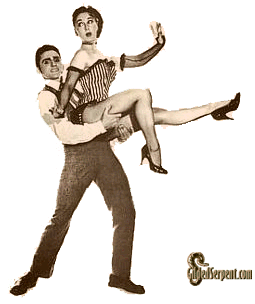
I've told her a million times not to use my lip pencil! ...after sharpening it again, fritz uses lip pencil
...I'll have just enough time to go back.... rat is eating pencil tip!

Resources:

use the comment box

Have a comment? Use or comment section at the bottom of this page or Send us a letter!
Check the "Letters to the Editor" for other possible viewpoints!

Ready for more?


Gilded Serpent presents...

La Evolución de Jillina

Una entrevista acerca del Cambio, Versatilidad y Lecciones Aprendidas

Placeholder

por Lauren
Traducción de Daniela Gomez
posteada el 31 de Enero, 2013
English version

Haciendo la transición de intérprete a productora: Conocimientos adquiridos, lecciones aprendidas,comprometida para llevar la expresión artística a otro nivel.

Cualquiera que conoce a Jillina sabe que no es sólo una piscina infinita de creatividad e ideas, tiene una energía ilimitada, frecuentemente referida como “un destello de luz rojo que atraviesa la habitación”. Con cada actuación, oportunidad, y experiencia; Jillina se empuja a sí misma para proporcionar una más larga, grande y espectacular experiencia para su público. Esto, paralelo a un arduo trabajo y ética profesional, demuestra que Jillina impulsará el bellydance tan lejos como pueda, para las grandes audiencias, en los escenarios más grandes. Su carrera dancística comenzó como la de muchas otras bailarinas; admiradora, estudiante, coreógrafa, directora, y ahora productora. La transición entre estudiante y productora no ocurrió de la noche a la mañana. Muchas experiencias moldearon a Jillina en la persona que es hoy.

Trabajando con Jillina por los últimos seis años o más he sido una mosca en la pared en la mayor parte de la transición. He estado ahí para semanas maratónicas de ensayo, sesiones de lluvia de ideas, el estrés de tener un show en camino, los fracasos y las ovaciones de pie. Recientemente Jillina y yo nos sentamos a charlar sobre algunas de las lecciones que ha aprendido a lo largo de los años. Esperamos que encuentren estas anécdotas como esclarecedoras, entretenidas y como un recurso para el desarrollo de sus propias actuaciones y carreras.

Lauren: A mediados de los 90, tienes el pan y la mantequilla de bailar en los clubes y restaurantes. ¿Cuáles son las lecciones esenciales que aprendió de bailar en el circuito de clubes nocturnos?
Jillina: “Al realizar la danza del vientre en una ciudad como Los Ángeles, es muy importante hacer una investigación acerca de tu audiencia. Presentarse al show con sólo tus “grandes éxitos” en CD mix es como jugar a la ruleta rusa, con más que perder que sólo propinas. Tu público puede ser armenio, egipcio, turco, libanés, árabe, griego o marciano. Es muy importante que tu elección musical no sólo emocione al público, también refleja y celebra su cultura. Esto parece obvio, pero ¿cuántas veces ha perdido una bailarina un trabajo por tocar música turca para un público armenio? Además de la compatibilidad geográfica, el tema y la letra de la música deben ser adecuados para su desempeño en el show. Si te sientes insegura acerca de bailar con tu himno favorito, entonces recomiendo investigar las letras de las canciones de tu bloque para asegurarse de que no son letras religiosas. Sacudiendo tu cuerpo a este tipo de canciones es probable que no consigas el efecto deseado”.

Lauren: ¿Qué hay acerca de las actuaciones con músicos en vivo? ¿Qué puedes decir sobre lo que se obtiene con las opciones musicales y cómo recomiendas comunicarse con los músicos?
Jillina: "He tenido la suerte de tocar con los mejores músicos de Los Ángeles y estas experiencias me ayudaron tremendamente hace unos años en El Cairo. Tratar con los músicos en los Estados Unidos es diferente, porque trabajan para el lugar no para el bailarín vs El Cairo, donde son contratados por el bailarín. De cualquier manera, cuando consigues la maravillosa oportunidad de tocar con músicos en vivo, es importante ser respetuoso, pero firme y con conocimientos sobre la materia. Aprender palabras en árabe y su significado, los nombres y los objetivos de los diferentes ritmos y cómo usar gestos con las manos para indicar a la banda que debe tocar más rápido, más lento y parar".

Sahlala Dance Co
Sahlala Dancers:
1-Stacey, 2-Peri, 3-Louchia,4-Jillina, 5-Shannon, 6-Larisa
Top of page: Parte de arriba: Jillina baila al canto de Fidel Fayed.

Lauren: Una vez que tuviste tu propio estilo, tu reputación y tu carrera en clubes nocturnos establecida, ¿cómo mantuviste las cosas frescas para asegurar un flujo constante de trabajo?
Jillina: "En los años 90, quizás en lo más alto de mi carrera en el club nocturno, me encontraba cada vez más ocupada, a pesar de un creciente nivel de competencia. Para mantenerme por delante del juego, tenía que llegar a nuevos conceptos, espectáculos, coreografías y vestuarios, como todo lo corto de la cirugía plástica, para mantener mi show fresco y, para mantener la atención del público. Mi primer paso importante fue crear la Compañía de Danza Sahlala. Nada te hace destacar entre la multitud como respaldarte con 4 bailarinas increíbles. Entonces pude incorporar más variedad y cambios de vestuario en el mismo espectáculo de 30 minutos. Convencer a los dueños del club de pagarle a una bailarina para pagarle a cinco bailarinas no fue fácil. Tuve que probar que la inversión en el espectáculo valía la pena, y lo hice. La Compañía de Danza Sahlala ha estado presentándose en el Restaurante Carousel cada fin de semana desde 1999. No sólo hice que las bailarinas Sahlala tuvieran un amplio repertorio para elegir de una semana a otra, cambiaban el cierre y la apertura de los números y los trajes por lo menos dos veces al año.

Esto es tan importante ya que nuestras audiencias regresan siempre y quieren ver variedad. Además, me animó a contratar coreógrafos especializados en diferentes estilos para añadir variedad y legitimidad al show. Esto es muy importante, ya que hay distintos estilos dentro de la categoría de la “danza del Medio Oriente”. Queremos celebrar todas las culturas y asegurarnos de que nuestro público sea representado".

Lauren: ¿Cómo tu experiencia con Sahlala te preparó para la logística del escenario en la gira con las Bellydance Superstars?
Jillina: "Cambiando lugares noche tras noche con Sahlala, estando en un gran salón de banquetes o en una discoteca pequeña, gané mucha experiencia rápidamente re-montando las coreografías para adaptarse al tamaño del escenario, el público y los requisitos de tiempo. Esto ayudó, sobre todo en los primeros años de Bellydance Superstars, cuando la compañía estaba de gira en clubes nocturnos de rock&roll y pequeños espacios de arte antes de hacerlo en el circuito de los grandes teatros. Los escenarios tenían formas extrañas a menudo, cubiertos de alfombra con techos bajos o irregulares y no había piernas o eran pequeñas para ocultar las entradas y salidas. Coordinar el ensayo era a menudo pasar rascándose la cabeza y la reorganizando la logística básica para la puesta en escena del espectáculo. Un consejo esencial era conseguir las especificaciones del escenario con un día de antelación para llegar al lugar con al menos una idea general de los retos que nos esperaban. Aunque nada podía prepararnos para nuestra actuación en "Trees" (Árboles), -un club pequeño de rock en Dallas-, que contaba con un árbol real en el centro del escenario".

First BDSS
Primer show de Bellydance Superstars

Colleen, Louchia, Georgiane, Kaeshi,
Jillina, Sonia, Ansuya, Amar Gamal
(con/ Sahlala dancers Collen, Louchia & Georgianne)

Lauren: ¿Qué hay acerca de los aspectos técnicos de actuar en el escenario: ¿Cómo difiere esto con una actuación típica en discoteca?
Jillina: "Presentarse en un escenario profesional en una producción profesional por lo general significa que tienes que agregar todo un elemento totalmente distinto al desempeño de tu presentación; iluminación. La iluminación puede agregar misticismo, crear drama, suspenso, y añade energía a tu interpretación. Al trabajar con un director de iluminación es importante estar familiarizado con la terminología básica para estar seguros de obtener el máximo rendimiento en tu actuación. Por ejemplo, solicitar siempre un seguidor, esto hará que sea más fácil para el público seguir y centrarse en tí cuando estás en un gran escenario. El reflector también hará que tu traje se vea especialmente brillante. Solicitar "luces especiales" o una iluminación enfocada de arriba. Esto es maravilloso para lo dramático o las partes de suspenso en la actuación. Dependiendo del idioma del lugar, los directores de iluminación tendrán terminología diferente para los mismos elementos. Por ejemplo, no te ofendas si te encuentras en Bélgica y el director de iluminación te ofrece una ducha (Le Douche) durante los ensayos. Esta es la palabra que utilizan para un enfoque desde arriba".

Cool lighting during Bellydance Evolution by Carl Sermon
Iluminación dramatic durante Bellydance Evolution.
Fotografía de Carl Sermon

Lauren: Además de aprender los aspectos técnicos y logísticos de presentase en escenarios y teatros con Bellydance Superstars, ¿cómo creciste como directora y promotora de este nuevo y más grande proyecto?
Jillina: "Dirigir a las Bellydance Superstars presentó nuevas oportunidades, así como los nuevos retos. Era mi misión obtener el máximo rendimiento de mi equipo mientras trataba de satisfacer las necesidades de un productor convencional sin sacrificar mi integridad artística. Esto no fue tarea fácil. Creo que uno de los aspectos más destacados de la experiencia BDSS fue trabajar con bailarines de Fusión Tribal. La creación de piezas que incorporan la poderosa mística de la Fusión Tribal con la energía explosiva del estilo Cabaret de la danza del vientre era un territorio desconocido. Por suerte, colaborando con bailarinas talentosas como Rachel Brice, Sharon Kihara y Kami Liddle, hemos sido capaces de crear piezas con contrapunto hermoso. Era la emoción y el ánimo de estas y otras colaboraciones lo que realmente me empujó a pensar en grande, pensar fuera de la caja y, finalmente, por todo lo alto con mi propia producción independiente, Bellydance Evolution".

Lauren: En este punto las Bellydance Superstars están actuando en grandes festivales y haciendo giras en lugares como grandes salas de conciertos, casas históricas de ópera, teatros de 2.000 asientos. Tú ya estás fuera del circuito de club de rock&roll y dentro de teatros profesionales. ¿Por qué decidiste dejar BDSS para iniciar Bellydance Evolution?
Jillina: "A pesar de que Bellydance Superstars hizo mucho para impulsar mi carrera y elevar la danza del vientre a un nuevo y más grande nivel, tenía hambre de crear algo más allá de la" Revista Vegas" fórmula del show de Superstars. Tenía que romper el molde con el que mi arte se había limitado, y presentar el bellydance en forma de un gran ballet con personajes y una historia. Quería estar a cargo de la dirección creativa del espectáculo y eso significaba sacarlo por mi cuenta, creando mi propia compañía teatral móvil".

Lauren: ¿Cómo el nuevo papel como productora te ha cambiado las cosas? ¿Qué nuevos retos enfrentas, ¿qué más se requiere de tí?
Jillina: "Dirigir y producir Bellydance Evolution es emocionante. Por fin estoy libre de traer mi imaginación a la realidad y de trabajar con algunos de mis bailarines y artistas favoritos los cuales he conocido a lo largo de mis viajes. Pero con toda esta emoción viene una gran responsabilidad, y una larga lista de tareas, algunas fáciles y otras muy difíciles, que deben llevarse a cabo para lograr poner el show en el mapa.

Hay tantas facetas en la producción de un espectáculo a este nivel, tales como encontrar y trabajar con los patrocinadores del espectáculo, la coreografía, el desarrollo de la historia, encontrar a los artistas que mejor se ajusten al espectáculo, la logística y planificación, finanzas, y finalmente sumar todos estos elementos juntos para crear algo espectacular.

REhearsingin Mexico
Ensayando en México
Backrow: 1-Louchia ?, 2 Sakura(Japan), 3 Rin (USA), Alissa (Italy), 5 Brad, 6 Margarita (Spain), 7 Heather, 8 Kaeshi,
Bottom Row: 1. 2 Ingel. 3 Corel (Argentina) . 4 Ashmina (Mexico) . Corel Argentina  (Mexico)., 6-Lauren. -Jillina7. 8. 9. 10 Daniella (Mexico). 11 Natalya ( Mexico) . 12.Daniela ( Mexico)  13 Danielo 

Lauren: ¿Cuáles son algunos de los mayores desafíos de producir Bellydance Evolution?
Jillina: "Los contratos y convenios internacionales son siempre arriesgados. No sólo tienen el idioma y la cultura en medio del entendimiento y las negociaciones, también no se tiene la seguridad del sistema legal de los EE.UU. para hacer copias de seguridad y respaldar a las partes responsables de los contratos y acuerdos. Se requiere una gran dosis de confianza y respeto mutuo para organizar un festival de danza del vientre. En general, he tenido mucha suerte y tengo una historia larga y buena relación con muchos de mis patrocinadores. Sin embargo, nuestro libro de viaje no está libre de una parte equitativa del drama.

Una de las banderas rojas para mí es cuando alguien no responde a los correos electrónicos dentro de 24 a 48 horas. Los patrocinadores organizados normalmente responden rápidamente a los correos electrónicos importantes.

Olí algo raro cuando nuestro patrocinador en Venezuela no estaba respondiendo tan rápido a mis emails mientras nuestra gira se acercaba. Mis sospechas se confirmaron pronto cuando la mitad de mi elenco se presentó en el aeropuerto y nos enteramos de sus boletos fueron cancelados.

Mi patrocinador completamente dejó caer la pelota y sin decirme nada. La semana avanzaba y cada día era una nueva catástrofe. Terminamos siendo excluidos de las habitaciones del hotel después del desayuno ya que el patrocinador no terminó de pagar por nuestra reserva, talleres fueron cancelados debido a que el patrocinador no pagó por el resto del espacio para los seminarios. El golpe final fue cuando descubrimos que el lugar para el espectáculo no había sido pagado y nos estaban bloqueando.

Yo no lo podía creer: todas estas mujeres que habían viajado y estado allí por una semana en ensayos estaban más que decepcionadas, todos estábamos furiosos. De hecho una de mis bailarinas locales hizo una petición al gobierno venezolano para abrir el lugar de nuestro show. Y lo hicieron, con sólo 3 horas antes de que la cortina se abriera se nos permitió entrar al lugar. Fue una de las actuaciones más emocionales que he hecho; sin duda una dura lección, y muy costosa, para aprender. "

Travelling with BD Evolution
Viajanndo con Bellydance Evolution
1-Sharon, 2 Aya ( Japan) , 3 Angella (Korea) , 4 Samira ( China) , 5 Nutnicha  ( Thailand) -Jillina, 6 Sherlyn ( Malaysia) , 7 Lenka ( Czech Republic), 8,- Kaeshi, 9 Jacqueline  ( Taiwan) , 10.Gift ( Thailand) 11. Danielo

Lauren: ¿Qué nuevas lecciones has aprendido acerca de colaborar con los bailarines y coreógrafos al nivel de Bellydance Evolution?
Jillina: "¡Paciencia! He aprendido a ser más paciente. Cuando las cosas no suceden tan rápido que me gustaría o no de acuerdo con el plan, he aprendido a ir con la corriente. Y francamente trabajar con los horarios de otras personas me ha abierto a más posibilidades creativas. Por ejemplo, me gusta hacer las cosas muy rápido (1,2,7,8 no hay tiempo para 3,4,5,6). Cuando trabajo con Kaeshi, disfruto como a ella realmente le gusta pasar tiempo en el desarrollo de los personajes y creo que esto me ha ayudado artísticamente, sobre todo cuando se trata de contar historias a través de la danza. Esto requiere paciencia, consideración y tiempo para estar seguros de que nuestra historia se lee con el público.

Tengo la suerte de tener un buen equipo que ha sido leal a mí desde el principio y están motivados por su pasión. Trabajar como artista en solitario es mucho más gratificante económicamente así que me siento especialmente honrada de tener grandes artistas siendo parte de este grupo. No hay lugar para divas en Bellydance Evolution. El programa es un esfuerzo de equipo y cada miembro del reparto es responsable de traer sus mejores ideas y energía positiva a la mesa. El tiempo de ensayo es muy limitado y requiere que todos, desde los bailarines principales del elenco hasta el grupo de bailarinas que nos acompañan, para traerlas al juego, y compartir el escenario, el espacio y el tiempo con sus compañeros bailarines. Para mí, lanzar un gran nombre no es tan importante como lanzar un jugador de equipo. Para la primera puesta en escena "Immortal Desires" había contratado originalmente a un gran nombre que quería monopolizar los ensayos, y limitar la cantidad de papeles secundarios de baile en las que ella participaba. Esto no funcionó. Mis bailarines tienen que entender el flujo, el ritmo y el tiempo limitado que tenemos para tener listo el espectáculo para el escenario. Los ensayos son para el grupo, no para solistas. Con muy pocas excepciones, mi equipo, desde mis bailarines principales, a los bailarines locales que son elegidos para los papeles de ensamble, han sido increíbles, abiertos a nuevas ideas, y son los más trabajadores en la industria. Me siento muy honrada y bendecida de formar parte de esta experiencia increíble y no puedo creer lo increíble que mi carrera ha sido hasta ahora".

BDE Dream Team
El equipo soñando de Bellydance Evolution
1 JD Twixx , 2 Eglal, 3-Kaeshi, 4, -Sharon, 5-Louchia, 6 Danielo, Heather, 8-Jillina, 9-Ozzy

Resources:

use the comment box

Have a comment? Use or comment section at the bottom of this page or Send us a letter!
Check the "Letters to the Editor" for other possible viewpoints!

Ready for more?

  • Jillina Drum Solo Video from International Bellydance Conference of Canada
    Jillina dances for drummer, Suleiman Warwar. This performance was held at the Acrobat Lounge in Toronto, Ontario, Canada.
  • MaShuqa interviews Ali Hamidzadeh of Turquoise International,
    Ali tells us about how he came to produce his first cymbals. He is interviewed by MaShuqa. He also talks about Dahlena, Bobby Farah, his education, inferior copies of his zils, how to know that you have genuine Turquoise cymbals. Testimonials from Jillina, Princess Farhana, and Marta Schill.
  • Competition Strategies, A Judge’s Suggestions
    Choosing a costume that fits and flatters your choreography is equally important. If you want to highlight your amazing hip work, be sure to choose a costume with lots of fringe and tassels on the hips so the judges cannot fail to see that hip work.
  • A Transformational Week, A Fan’s View of Jillina’s Weeklong Intensive Report
    I think that’s another benefit of having scholarships in the world of Bellydance because it gives dancers another goal to work towards: "What do I have to do to rise to the occasion, to receive this other kind of award?"
  • Taiwan Bellydance: 2 Events Are Perfect Ending for 2010, Nefertiti Bellydance Carnival & Bellydance Evolution
    I admire those dancers participating in the production for their talents, skills, and artistic qualities, however, I feel the framework of story-telling compromises dancers from better expressing their love for this dance (or through it). They are acting through dance rather than dancing to the music.
  • My Dream: Dancing in Cairo!
    To be asked to teach at Ahlan Wa Sahlan is an amazing honor, but to be performing, in the biggest show of the year? It was unbelievable! This was the most significant phone call I have ever received in my entire career.
  • Have I Left Yet? Queen of Denial, Chapter 12
    Baghdad was the first place I had worked in where a complete communication blackout was ordered (no post, no newspapers, no telegrams, and no telephone access to the general public), and a mere two weeks after my arrival. For the very first time since I started traveling and dancing abroad, I was unable to call my parents (and vice versa) to assure them that I was fine regardless of what they were reading in the local newspapers.
  • Behind the Scenes, 3rd Coast Tribal Festival
    I had never been to a tribal dance convention before, even though I have been a professional (Egyptian style) belly dancer for 40 years. From my “glitz and tits” perspective, this belly dance offshoot wasn’t something I recognized as mine.
  • Cairo Revisited: Dancing into the ‘90s
    Originally written for Caravan Magazine 1992- The one thing on which you depend about dance in Egypt from year to year is that everything slowly changes. I’ve returned to Cairo each year now for nine consecutive years, and last year my visit was just before the short war we had with Iraq in which Egypt was our US ally. Cairenes seemed sad last year, because Cairo had lost most of its income from tourism, and many Egyptian nationals were returning from Iraq and Kuwait, where they no longer had employment. I did not know what to expect this year, except the inevitable fact of surprising, yet subtle, change.
  • Fabulous Hip Drops in 30 Seconds or Less!
    A principle is a single unifying and guiding idea that when we apply it to our alignment or movement, helps us move more effectively. An advantage of using a principles-based approach to dance or martial arts mastery is that it lets us use a single visualization or body sense to achieve a desired result, instead of having to remember lots of little details.
  • Creating a Healthy Belly Dance Community
    A vibrant dance community affords benefits to all of its members. In a healthy dance community, each and every person is relevant. For learning purposes or gathering a certain show cast, there is a large pool of talent from which to choose. Those with specialties and unique areas of expertise can share their knowledge, enriching the individual skill sets of everyone.
  • Diamonds in the Rough & Polished Perfection, 2012 Berlin SomerFestival-Thursday Competition,
    Produced by Beata and Horacio Cifuentes, Held in September, 2012. The costumes were innovative and personalized with many of the competitors from the Ukraine, Russia, and Asia. Many of whom are also ballroom competitors. As a result, the costumes were visually striking and elegant. The trend in costuming is floral with tribal going towards more colorful stylized burlesque (ala Chicago musical).
 

Gilded Serpent presents...

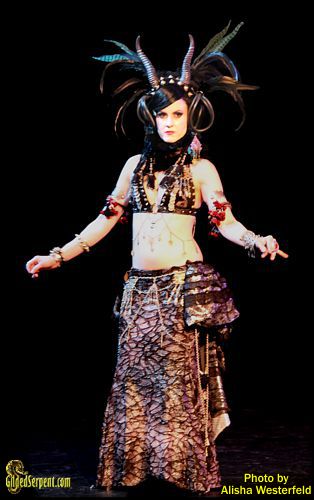
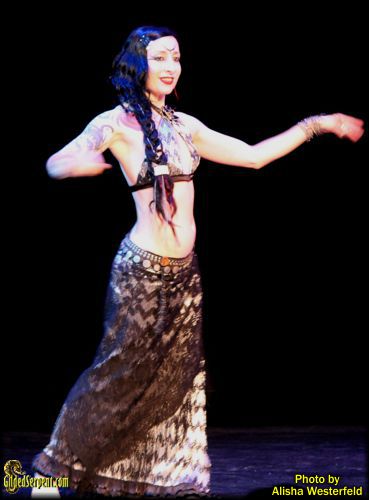
The Third Annual San Jose Showcase for Gothic Dance

Lumen Obscura, April 5-6, 2013, Hoover Theater, San Jose, California

photos by Alisha Westerfeld

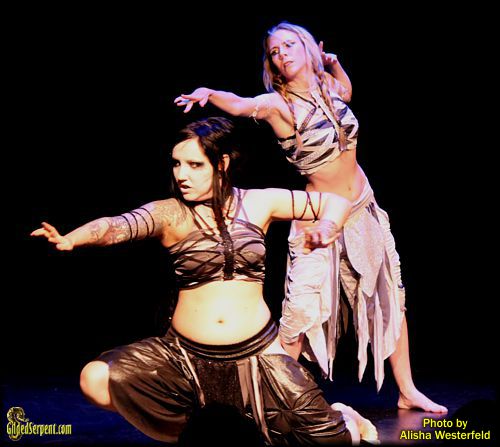
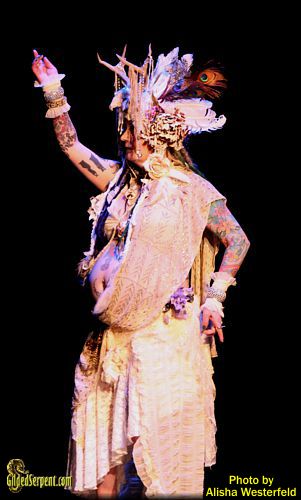
Here are some of my favorites from both the Mayhem Matinee (afternoon show) and the Shiver N Shake Showcase (evening show).
"Lumen Obscura is a NorCal annual Dark Fusion & Theatrical belly dance event that showcases some of the best in the genre". Produced by Deidre Anaid.


NahaashRaqs

Nahaash Raqs

EgoUmbra

Ego Umbra

Kajira

Kajira

Kajira and Bex
Kajira and Bex
Kajira & Bex BSBD’s Darkest Duo

Mcs
MCs
Mistress of Mayhem Marjhani and Mister Mephisto.

Dusty
Dusty

Maureen
Maureen

Bex
Bex

Ariellah

Ariellah


use the comment box

Have a comment? Use or comment section at the bottom of this page or Send us a letter!
Check the "Letters to the Editor" for other possible viewpoints!

Ready for more?

  • High Concept – High Style “Dangerous Beauties”, February 18, 2012, A Show Review
    The entire production was moody, dark and intense; just the way a Dangerous Beauty would like it.
  • Fashion Trend Report 2011 What’s New This Year at Rakkasah?
    What I noticed, first and foremost, was not the costuming, but rather, a change in the sellers themselves. The seller demographic has radically altered, creating a new vendor landscape. Without a doubt, this is a response to the on-going sluggish economy and the need for companies to reduce expenses. The reduction in costumes and products coming out of Egypt also affected the merchandise. Many small factories had a gap in production, and shipping has become even more problematic.
  • Welcome to the Gothla! Dancing Along the Sulk Road Review of 3 DVDs
    The costumes are fabulous. It’s almost like—who needs all that dance technique if you’re wearing an enormous leather headdress that makes you look like an alien refugee from Star Wars? Tempest’s approach in particular is a painterly one, not surprising from a student of the Rhode Island School of Design.
  • "The First Tribal Cafe"
    It was the first all tribal belly dance event sponsored by MECDA IE and took place on August 21st, 2004 in Montclair, California.
  • "Dancing Darkly"
    This may come as a shock to many, but Gothic Belly Dance isn’t really a new phenomenon, and it’s not just centered in California. First of all, it’s simply a merger of two entities that go well together, like peanut butter and chocolate.
  • Goth Fantastique, Fantasy Bellydance: Magic DVD" by World Dance New York
    This DVD is a good choice for dancers who are more into ritual, sacred, experimental, and related fusion forms of belly dance.
  • Shades of Goth Fall Upon Belly Dance Gothic Bellydance: The Darker Side of Fusion DVD
    Produced by WorldDance New York. "There have been heated discussions on several Belly dance forums about this DVD…"
  • Morgana’s Animal Magnetism, Interview with Morgana of Madrid
    After seeing Morgana’s Serpent Dance, where she embodies the personality of the serpent, I was hooked. Any snake lovers or snake dancers will have a special appreciation for this piece.
  • Not So Steam punk Belly Dance
    Since Tribal Fusion is also easily accessible, there have been dancers who begin performing and calling themselves professional when really they are just hobbyists. A professional belly dancer would never label her dance genre based on an aesthetic.
  • Tribal Fusion: An Evolving Dance Form
    The biggest contrast between ATS and Tribal Fusion was that improvisation was the basis for ATS while Tribal Fusion, at least in its earliest phase, had a strong emphasis in choreography. This allowed Jill Parker to play around with musicality and to explore musical genres that were appealing to her.
  • An Intro to Tribal Fusion
    Since Tribal Fusion Belly Dance is a relatively new dance form, it is especially important to treat the genre with a level of professionalism, or else one runs the risk of discrediting the work of dancers who have dedicated their lives to creating and elevating Tribal Fusion Belly Dance.
  • Old Scholl Stardom Shines in a New Land, Tito’s First Visit to Taiwan
    No matter how much splendor and glamor is presented on stage, bellydance should always preserve the fundamental spirit and vision of the culture. So he prefers to create a homey atmosphere to remind the audience that dancing and singing at a family gathering is also an essential feature of Middle East performance arts.
  • Is the Bedlah from Hollywood?, The Origin of Our Costume
    As long as I can remember, the origins of the bedlah (the two piece costume of Middle Eastern dancers) has been widely controversial and debated among the artists of Raqs Sharqi (belly dance). The dance itself, along with the costume, has gone through many centuries of changes and name identifications in accord with period fashion as well as contact with outside influences.
  • Southern Cal’s “Shira” Reminisces Dancing in Los Angeles Nightclubs in the ‘70s and ‘80s
    In the late 1970s and early 1980s, along with the multiple Arabic clubs in Hollywood, there was also a thriving Greek, Armenian and Persian nightclub presence in the Los Angeles area. Shira (Jane Padgett) was a popular dancer in those clubs and is still a popular working dancer in Southern California. In this business, there are the dancers with a presence in the dance community due to participation in showcases, competitions, teaching and self-promotion,and additionally, there are the "workhorses", those who slogged away at the clubs, entertaining the masses for years and years, flying under the radar.
  • Photos from Carnival of Stars 2012, Page 2: A-K
    Ahava, Alanna, AMany, Amina, Andrea, Annette, Aswan Dancers, Atlantis, Black Diamond, Badia, Basinah, Birute, Cathy Guthrie, Ciranoush, Cory Zamora, Crystal Silmi Dance Co…
  • The Search for El Dorado…in Cairo
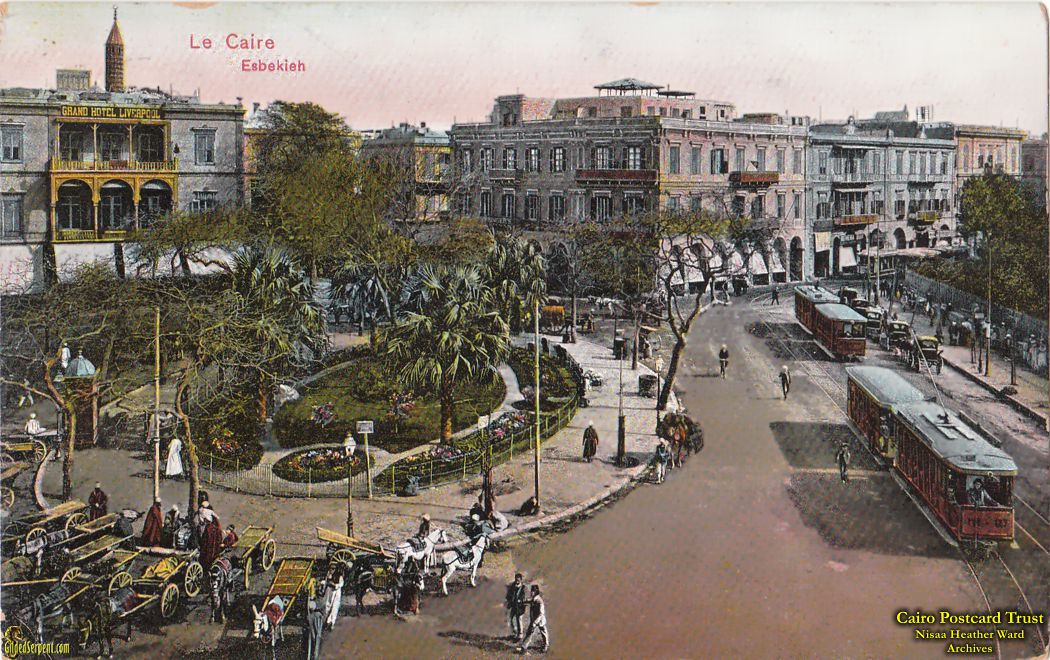
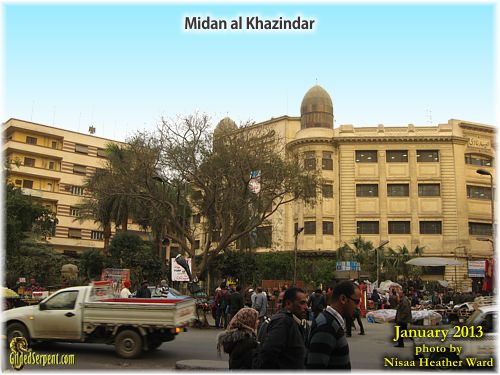
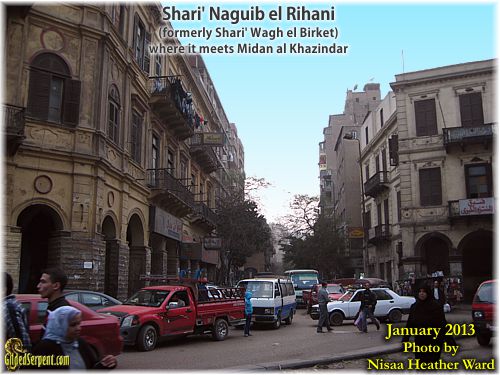
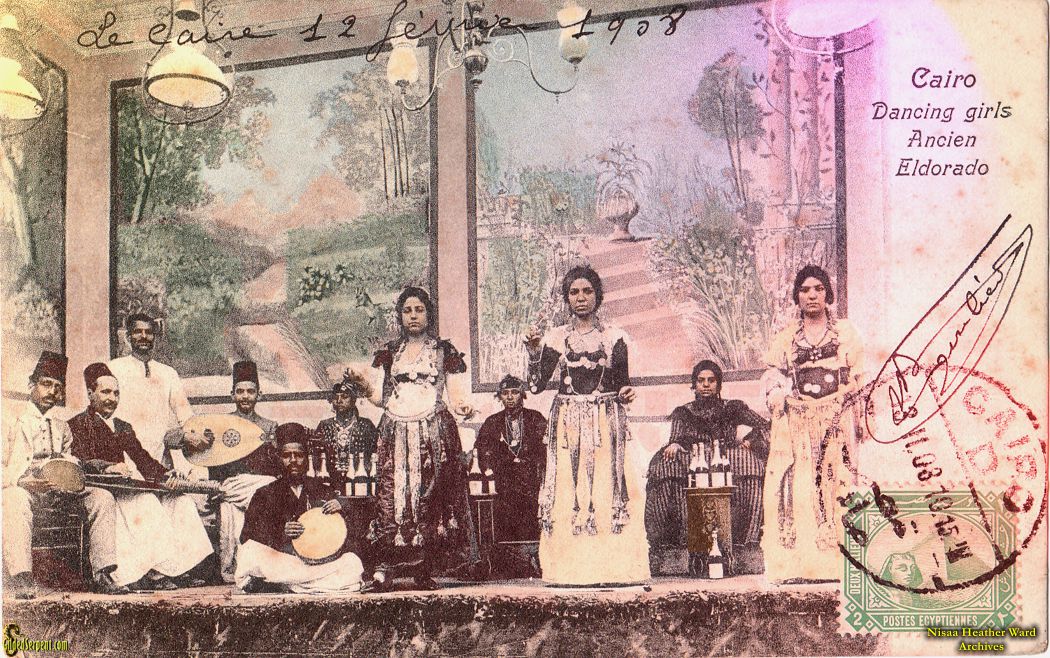
    The name “El Dorado” conjures up images of a fruitless quest for an unattainable, even mythical, goal. The El Dorado in this discussion, however, is neither myth nor fantasy. El Dorado was a sala or café chantant, an entertainment hall, located in the heart of Cairo’s Ezbekiyah entertainment district.
  • Photos from Carnival of Stars 2012, Page 1: L-Z
    56 goergeous photos! …Latifa, Linah, Lulu, LUna, Mahsati, Malia, MaShuqa, Melina, Migracia, Monica, Mystique, Maiya, Namira, Nancy, Nanna, Natika, Nisima, Nyla, Parri, Princess Farhana….
 

Gilded Serpent presents...

Is the Bedlah from Hollywood?

The Origin of Our Costume

Placeholder

by Leyla Amir
posted March 28, 2013

As long as I can remember, the origins of the bedlah (the two piece costume of Middle Eastern dancers) has been widely controversial and debated among the artists of Raqs Sharqi (belly dance).  The dance itself, along with the costume, has gone through many centuries of changes and name identifications in accord with period fashion as well as contact with outside influences.

The traditional name for the dance from the people of Egypt has been “Raqs Sharqi” (literally, Dance of the East).  Often, naming or labels occur due to outside influences such as the French coining the term “Danse Orientale” and “Dance Du Ventre” or as the slang term that was coined in the USA, which was “Belly Dance”.  Apparently that last appellation began to be applied after the public had witnessed the dancer known as Little Egypt at the 1893 World’s Fair who had been seen as “shaking her belly” in her two piece outfit. Even though some history buffs have suggested that Little Egypt was an Algerian, from the pictures and film of her that I have seen, I would surmise that her costume was comparable to something she might wear in her everyday life in her country. Other names include “Middle Eastern Dance”–a broader term that could include both Oriental and folk styles of the dance.  These terms have been used throughout the centuries to define a specific style or fashion along with its dance that was born of undocumented foundations in various countries that, when grouped together, are now referred to as “The Middle East.” 

Pictures documented by A.W. Stencell (*1)  illustrate how, once the genie was out of the bottle in the USA after the 1893 Chicago World’s Fair, the inclination of the general public  was to label the dancing as lewd. The pictures were used to developed into “girlie-shows” of carnivals and midway side-shows, becoming “hoochie-koochie” dancers in Oriental costumes of the era, as a draw toward adult entertainment.   By the inherent nature of their costumed movements, these dancers and their dance were branded as scandalous and they were said to be dancing without using the head nor the feet.

”During this time in the USA, it was not customary to see a dancer stand in place and just use their middle section to dance.  Dancing was more a whole-body endeavor. …By this time, the public had already been exposed to seeing ballet performances and general public dancing, which had full body movement, moving on the floor and not stationary with only isolated middle-of-the-body movements.”(*1)   

In the USA, after years of using the Oriental dancer as a draw for street carnivals,  belly dancing moved into theater houses of the burlesque, embedding indelibly the image of the Oriental dancer’s costume with burlesque. No doubt that that image challenged the fashion of the costumes to be even more revealing in order to accommodate burlesque’s intent, thus changing the style of the costume once again. There was no attempt to portray the movements as a cultural dance form in the burlesque presentations–other than being exotic.

Throughout history, Egypt has had one of the strongest influences in the development of the dance known there as Raqs Sharqi. Egypt is recognized through its antiquities as a highly developed culture, including its art forms of music and dance.   The Egyptian dance style, while continuing to evolve even until this day, still has a foundation of recognized movements and traditions to which we dancers refer as “Raqs Sharqi.”  When using this term, most are thinking about the Egyptian style.  For the purpose of this article, and because of my background, I will be referring mostly to the Egyptian beginnings of the costume and its cross-pollination from outside sources over the centuries.

The costume or bedlah (referring to the bra, belt and skirt), of Egyptian Oriental dancers has also had the distinction as being the most popular style. However,  fashions have changed over the years with the help of some outside influences.   In 1981, when I first began performing in Egypt, the dance fashion at the time incorporated long beaded fringe, but previously, shorter or non-existent fringe was the norm.  With time, costume fringes have shortened again and have nearly disappeared. Dance costume styles make an ebb and flow of  adapting and applying fashion throughout history that reflects cultural changes  and outside influences much in the same way the dance and music have been affected.

I would like to theorize a possible trail of how Egypt influenced, and may have started, the trend of the now well-known bedlah that typifies present day Raqs Sharqi costumes.

There are many theories regarding the bedlah, including one that claims the style originated in Hollywood, and another that claims it came from images made famous by Orientalist painters  when European fantasy paintings were published in books and magazines.  Since my point of reference is the Egyptian dance, I want to re-state my view that ancient Egypt had a major influence in the development of the bedlah.

Chronological  History of Egypt with the Foreign Influences

Pre-dynastic Egyptian history has been dated back to 7000 years ago (before 3100 BC).  The 1st Dynasty (3100-2686 BC) has been dated to 5000 years ago when the Pharaoh Mena whom Egyptologists recognized generally as the first Pharaoh who united the North and South Kingdoms under one ruler.   Egypt was known as “Egepta” or “Kimet Land” (referring to dark earth), the rich and fertile land provided by the yearly flooding of the Nile.  Egypt’s ability to feed itself abundantly made it a powerful evolving civilization that stayed isolated with natural physical barriers, allowing it to flourish and help protect it from what most considered lessor civilizations and invaders during that earlier era.

A succession of invaders eventually changed the civilization of ancient Pharaonic times towards what it is today.  Starting with the 15th Dynasty (1650 BC), Egypt was ruled by the Hyksos (Syrians),  Persians, Greeks, and Romans.  The Roman invasions culminated in the end of the Pharaonic dynasties with the demise of the last Pharaoh, Cleopatra. Later invasions included people from central Arabia and Saudi Arabia, the Ottoman Empire, and the colonial invasions of the French and the British. In addition to these cultural and political influences, Egypt became connected to other Middle Eastern countries of the area also and was the end point of the “Silk Road” camel caravans, bringing food, spices, textiles, and  fashions.  While it is true that many of the invaders, visitors, and trade merchants assimilated and absorbed much of Egypt, it is also true that, in turn, Egypt absorbed some of their customs.

Presentation of Evidence

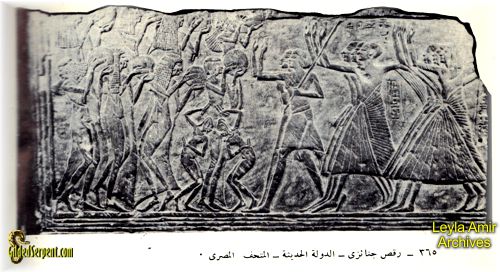
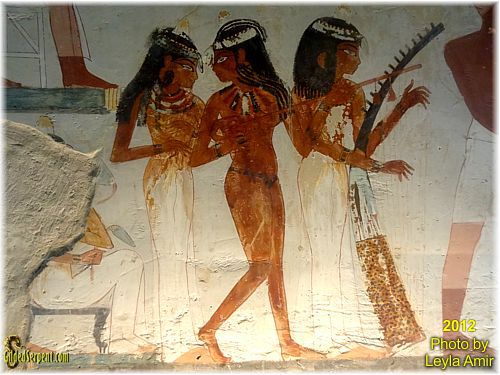
As a foundation for the dancer’s fundamental costume style,  I present some pictures from “Al-Mawsu’ah Al-Misriyal”.(*2)  The drawings and pictures were taken from the discovered tombs that were decorated elaborately with scenes of life that existed at the time they were painted. These comes from my husband’s books. He has a masters in Egyptology from Chicago University, Oriental Institute. He grew up as a child studying and seeing first hand the antiquities, accompanying his father as he traveled
Egypt in the service of the Royal Family.

scan A

Tombs of the nobles all depict activities of daily living, while the tombs of a king had murals depicting a religious nature.
This is a daily activities scene of musicians from a nobles tomb. Party goers at top and musicians at the bottom


Bare assed servants

2 servants dressed quite bare and shear.

styles of dress from neighboring countires

Different dress styles from Lybia and other parts of Africa


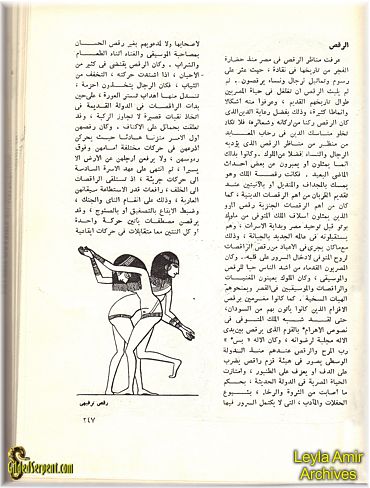
Funeral dance

A funeral dance

Party dancers

A party with musicians and dancers


Teaching dance in ancient Egypt

These are a teachers and students, of dance and acrobatics.

A religious scene with Musicians usng a def

A religious scene with musicians using a deft

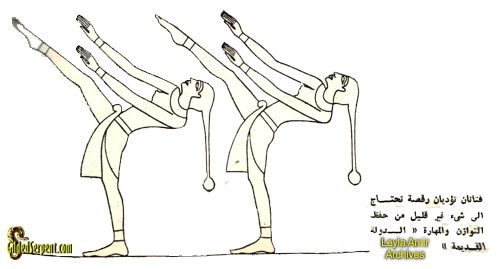
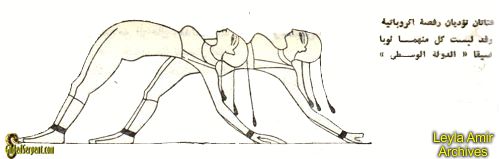
dancers in hip wraps

Female dancers doing acrobatics bare chested with a cloth or skirt around their hips.


Acrobats
Acrobats with breasts exposed with a one sholder strap and shear lower body covering ending at the line at mid calf.

African Dancing

Dancers from Africa.

Funeral Dancing
This is a funeral dance or el "mau" dance.


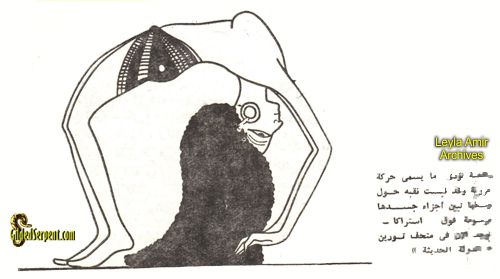
beaded Hip Wrap

Is this a beaded hip wrap? She is bare breasted and wears earrings while doing a backbend.

scan F

Dancers wear adornment around the hips with a possibly beaded belt!

Musicians on harp, flute, and thodar- a precurser to the guitar.

Leyla's photo
With special permission, Leyla was allowed to take the above photo in the tomb described in the photo below

Tomb name

Many drawings and carvings show that it was common for dancers, both women and men, to be nude in the chest area, with only a decorative belt or cloth wrap around the waist.  It was permissible to show the posterior nude for  dancing and entertainment but not commonly the front genital area, although some drawings show acrobats, wrestlers, slaves and children as fully nude. 

At that time, Egyptian cloth was made from linen. It might have been worn, either sheer or opaque, in an empire style dress that sometimes exposed the breasts.  Accompanying text in the diagrams states that male and female dance attire was form-fitting and revealing.  Decorations included gold jewelry and clay beads colored yellow, red, blue, black, orange and turquoise from bright dyes made from plants and precious stones. 

People, including women, often shaved their heads, because it was cooler and helped avoid lice. Instead, wigs were commonly worn that were decorated with jewelry or plaited into braids.  Another common practice for entertainers was to place a cone of perfumed wax upon their heads, which melted, emitting a perfumed fragrance.

Fashionable styles, including the entertainer’s costumes, changed over time as new, out-of-country influences and religious ideas were assimilated into Egyptian culture, frequently resulting in more body coverage.  This, too, would influence the dance style and costuming. Each of the traditional Egyptian dance styles, such as Oriental, Saidi, and Fellaheen, has a distinct set of movements and music along with its costume.  Most are reminiscent of the everyday dress of the area.
At one point in the past, the dancers known as the “Ghawazee” had a distinct costume style that did not allude to Egypt.  It has been suggested by some that they were Gypsy travelers from India who eventually settled in Luxor.   The Egyptian Bedouin, who live in the Sahara Desert, also have their own unique costuming that is reminiscent of their daily dress and a distinct sound to their music, also.  To my ears, it has the underlying Egyptian flair but with heavy beats almost sounding like the traditional Arab music.

Today’s performers of Raqs Sharqi still have their hip and chest areas adorned with jewels, appliques, glass beads and sequins to accent the body and movements as they had in the past.  The styles have changed from the time of the Pharaohs, but they still use essentially the same idea to accentuate the female body and movement.

Each Middle Eastern country with Oriental dancers has its own fashion that reflects cross-pollination of design. The dancers’ breasts are not fully exposed any more, but usually more than most women would show during their everyday life but less than their beachwear.  Sheer dresses with cleverly placed cutouts expose the body to give the illusion of semi-nudity while covering certain body areas for modesty.  This fashion has been adapted into the more traditional styles such as the Saidi or Beledi (country) dress that may be sheer or feature a cutout at the chest area to reveal a decorated bra.  Performances in venues that highlight authenticity of costume style or who perform in a family audience would be more likely to have a less showy or flashy costume and would be more modest.

In Conclusion:

Personally, I believe that the bedlah of today’s Oriental dancers was inspired by ancient Egyptian daily dress, while the more traditional and folk dancers have their costumes derived and inspired by the dress of daily life in the country of origin.  This would lead me to conclude that real life inspired the costumes of Hollywood movies and what was available knowledge at the time rather than vice-versa.

What I have observed throughout the years is that the distinction between the costume styles for the Oriental dancer has had the gap closed of late between the different Middle Eastern countries and many dancers tend to lean toward emulating the newer style of the Egyptian dancers. I would assert that this is due to the fact of the popularity of the Egyptian style and its music.  The newer costumes now are more giving of movement with the advent of the new stretchy fabrics and the simplicity of design and adornment.  The ease of making such a costume for a world mass-market also plays into the economy of producing a less time-consuming product than in the past. From my observation, it is only the folk style that has remained a constant in each country.

Reference & Resources:
  • * A.W. Stencell, Girl Show: Into the Canvas World of Bump and Grind. Toronto Canada: ECW Press 1999.
  • * Dr. Mohammed Gamel El Din Mokhtar “Facts of Egypt” Cairo: Egypt Press, 1973
  • Author’s Bio page

use the comment box

Have a comment? Use or comment section at the bottom of this page or Send us a letter!
Check the "Letters to the Editor" for other possible viewpoints!

Ready for more?

  • Naked Belly Dance in Ancient Egypt, Part 1: Are They Really Belly Dancing?
    The real first question is, "What is belly dance?" Many elements of the modern practice of belly dance emerged in the 20th century. Our emphasis on the female soloist, the structure of the typical show in both the East and the West, the style of music we dance to, our costuming, our specific styles of relationship with the audience, and so on, are modern developments.
  • Naked Belly Dance in Ancient Egypt, Part 2: Are They Really Naked?
    What does nudity mean in a dance scene like this? And does this nudity reflect an actual practice of naked dancing as banquet entertainment?
  • Sex, Belly Dance and the Afterlife
    To these people, sex was not dirty, shameful, frightening or forbidden. It was a natural part of daily life and the essential prerequisite for birth – on earth or in the Afterlife.
  • Southern Cal’s “Shira” Reminisces Dancing in Los Angeles Nightclubs in the ‘70s and ‘80s
    In the late 1970s and early 1980s, along with the multiple Arabic clubs in Hollywood, there was also a thriving Greek, Armenian and Persian nightclub presence in the Los Angeles area. Shira (Jane Padgett) was a popular dancer in those clubs and is still a popular working dancer in Southern California. In this business, there are the dancers with a presence in the dance community due to participation in showcases, competitions, teaching and self-promotion,and additionally, there are the "workhorses", those who slogged away at the clubs, entertaining the masses for years and years, flying under the radar.
  • Photos from Carnival of Stars 2012, Page 2: A-K
    Ahava, Alanna, AMany, Amina, Andrea, Annette, Aswan Dancers, Atlantis, Black Diamond, Badia, Basinah, Birute, Cathy Guthrie, Ciranoush, Cory Zamora, Crystal Silmi Dance Co…
  • The Search for El Dorado…in Cairo
    The name “El Dorado” conjures up images of a fruitless quest for an unattainable, even mythical, goal. The El Dorado in this discussion, however, is neither myth nor fantasy. El Dorado was a sala or café chantant, an entertainment hall, located in the heart of Cairo’s Ezbekiyah entertainment district.
  • Photos from Carnival of Stars 2012, Page 1: L-Z
    56 goergeous photos! …Latifa, Linah, Lulu, LUna, Mahsati, Malia, MaShuqa, Melina, Migracia, Monica, Mystique, Maiya, Namira, Nancy, Nanna, Natika, Nisima, Nyla, Parri, Princess Farhana….
  • The One-of-a-kind Costume Still Fascinates:Re-envision, Recycle, Renew, and Remember
    Sometimes, perhaps more often than not, those people whom we love, and those things that we enjoy doing, introduce new facets into our lives that change our perspective of what becomes important to us in the long run.
  • A Special Meeting in Barcelona, Munique Brings Wael Mansour for a Workshop and Show
    At Academia de Danza del Vientre Munique Neith  on 29th  and 30th of September 2012, two workshops took place with Munique Neith (the sponsor), Wael Mansour and young talents of Oriental dance from Spain, Italy, Portugal and France.  Tradition and modernity merged together on this warm weekend.
  • What Lies Beneath Part 2, The Morocco Tourists Don’t See, Suspicion, Lifestyle, Wedding, & Rescue
    What’s depressing about Laayoune is the idea of it: what it represents, not the city itself. Buildings, painted in salmon color like Marrakech, palm trees planted in pretty town squares, clean streets, restaurants and cafes, busy market places and a gorgeous plaza where people stroll at night. If you didn’t know any better, you would love this place! In reality, you are inside an enormous military base, while the city is a mere facade.
 

Gilded Serpent presents...

Southern Cal’s “Shira” Reminisces

Dancing in LA Nightclubs in the ‘70s and ‘80s
Placeholder

Interview by Kamala
Many of these photos may be by Kathy Sanders, all are from Shira’s archives.
posted March 26, 2013

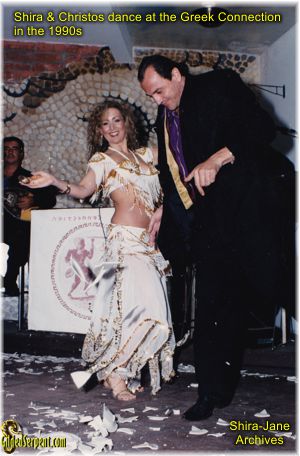
In the late 1970s and early 1980s, along with the multiple Arabic clubs in Hollywood, there was also a thriving Greek, Armenian and Persian nightclub presence in the Los Angeles area. Shira (Jane Padgett) was a popular dancer in those clubs and is still a popular working dancer in Southern California. In this business, there are the dancers with a presence in the dance community due to participation in showcases, competitions, teaching  and self-promotion,and additionally, there are the "workhorses", those who slogged away at the clubs, entertaining the masses for years and years, flying under the radar.

With a dance career that expands over decades, Shira has a wealth of information to share about the history of belly dance entertainment in the Los Angeles area, and indeed, I learned so much about the dance universe that is parallel to my Arabic nightclub experience – the Armenian, Greek, and Persian clubs of LA.

I met Shira at Hajji Baba’s Supper Club in Inglewood, California, in the late 1970s. Literally, “Hajjiʼs” seemed like a three-ring circus; three dancers rotated through three crowded rooms while a five-piece Armenian orchestra pounded away in the main dining room. The shenanigans that went on in that place were priceless: finger cymbals flying and sometimes, hitting patrons, false eyelashes falling into customer’s butter dishes, and bra pads falling out of costumes onto the stage! The majority of dancers were recruited from Diane Webber‘s classes at Every Woman’s Village, and Shira was one of her stars.

Shira tells her stories with a keen memory:

“Oh my Goodness!”, she laughed, “I loved working at Hajjiʼs with you! That was so much fun, working with two other dancers every night, gossiping during the intermissions in
our crowded dressing room. I lost parts of costumes there as well, but was nevercaught [short] because Diane taught me well [how] to handle problems on stage! We were frantically busy most nights at Hajji Baba’s in Inglewood. Wasn’t it 3 showseach night with 3 dancers? And then we had to switch rooms during the show, and takeour cue from whichever dancer was in the main room with the musicians. That was myfirst restaurant job as a soloist; so definitely, I learned to dance and think atthe same time on my feet.

Shira at 14 years oldI started taking lessons from Diane Webber when I was about 10 or 11 years old because my mom actually took me along to her belly dance classes at Every Womanʼs
Village. I loved the music and the dancers. Boy! did I look up to Diane and all the other adult dancers, and I wanted to be just like them when I grew up. Of course, I was never the dancer Diane was, but I did my best to emulate her. Diane had a huge influence on my life, besides practice, practice, practice, she taught me from day one always to show up on time, be sober,  how to make my own costumes, and also how to take care of them. Darn it… I still iron them before performing! Diane was a close friend of my momʼs; so I would see her often at my home as well. Because I was a kid, I was a bit intimidated by her. (She scared me to death sometimes!) I loved Diane, but if she was over at my house, I always had to start practicing — out of guilt! My first time on stage was with the Perfumes of Araby as a slave girl and in the Guedra. When I was a little older, once I had my braces off and could pass as an adult, she put me in the regularchoreographed dances.

In the 1970s, the Perfumes had at least 5 musicians playing our music on stage, and it was a great show. Diane was arguably the first woman to start her own belly dance company there. I remember seeing her and the Perfumes of Araby at the Renaissance Faire in the ‘60s, and it made me want to be a dancer as well. Funny, …a few years later, Iwould end up taking lessons from Diane through my mom.

Hajjiʼs was one of the first places I worked. I wasn’t driving yet, but I could work there and hitch a ride from another dancer. It was wonderful to be able to do that! As soon as I was driving, Diane started sending me out as a soloist to all sorts of different clubs. The Golden Village on Hollywood Blvd… it was also called The Greek Village at one time. (I can’t remember which came first.) At The Seventh Veil, I nearly fell off the stage the first time I worked there because the club was so dark inside! In the ʻ70s, everybody did floorwork; hence, Dianeʼs rule about not wearing g-strings! The old style was: opening dance, taxim with veil work, 4/4 bridge, slow floorwork maybe to a bolero, drum solo, and fast lastsong and finale.

Kavkaz on Sunset Blvd… I was there for years and years until it closed in the early ʻ80s, when Wolfgang Puck bought the building and put in his Spagoʼs Restaurant. Spagoʼs is closed now, but the building is still there, and I get sad every time I drive by, because thinking of Kavkaz brings back so many memories. It was one of the best Russian Armenian nightclubs anywhere, and it had a great spot right above the Sunset Strip in Hollywood. There were long, huge windows overlooking the Strip, and the lights below were so beautiful! The dressing room was upstairs, and I used to love doing my homework, looking out the window at all the huge artistic music industry billboards displayed in the 1970s. I think that the ʻ70s and ʻ80s were the best time for billboard art, at least regarding the music industry. That has nothing to do with belly dancing, but it was fun to work there in those days. Lots of stars came in. I remember that Yul Brynner would always drop by when he was in town because he was friends of the owner, Yervand,  a wonderful, sweet Russian-Armenian man who had actually been in the French Foreign Legion during WWII. His son owned another popular Russian-Armenian nightclub called Mishaʼs, and I started working there as well, right after Kavkaz closed.They usually had 3 to 5 musicians, nearly all Armenian, and they would playpassionately and really fast! Boy did I get a workout!

The other clubs around in those days, besides the Arabic, were the Greek clubs. The Persian nightclubs started showing up in the late ʻ70s after the [Persian] revolution. I worked at a bunch of them and would do a couple of shows every night to very fast music. It was a lot of fun, and I always shared the show with lots of different singers, sometimeseven magicians.

It was like that back then. I was working 2 nights here, 2 nights there, 3 nights somewhere else, sometimes, 2 to 3 clubs a night. I would be driving or even running across the street to the next gig. There was really a ton of work and all [with] live music. I wish that I could remember all the names… [There were] dozens, actually hundreds of clubs… I worked at The Fez as well but only a few times… and a million Greek places.  Sadly, many places opened up for about a year and then were gone. Only a few stuck around foryears like Kavkaz and Hajjiʼs.”

I asked Shira what a typical night was like for a working dancer, and when I mentioned that most dancers these days only dance for other dancers, I had to laugh when she said, "Some dancers like to dance for other dancers; I like to dance for drunks!" – a joke but with a bit of truthfulness about our occupation!

Shira continued, “Hey, I love to dance for drunks, they are always happy and are good tippers. No, seriously, I just love to dance and perform for anybody, and I have been lucky because nearly always I have had wonderful audiences. I’m a lousy teacher, and I have done my best contribution to support the art of belly dancing by not teaching! But seriously, so much of the work simply is learning how to handle an audience and how to gracefully get away from grabby hands (another thing that Diane taught me well), and I never got grabbed and never had to slap anyone! (I remember once hearing a story about one poor dancer who defended herself and ended up getting knocked downa flight of stairs in a restaurant.)

In the ʻ70s, ʻ80s and ʻ90s even, a typical night could be driving from club to club to club in the same darned costume because I didn’t have time to change! That is one thing that I personally never liked to do: dance in the same costume twice in the same night, butoften, it was necessary because of the time factor.

Dancing for Stephen Hawkings in 1994I have danced for many famous people over the decades, including Frank Sinatra and Tom Cruise, but I was thrilled and speechless when, in 1993, Stephen Hawking came into Burger Continental, and I ended up performing the first time for him. In fact, I was almost too scared to come up to his table, but then I noticed his nurse, Pam, put a 20 dollar bill in his mouth to tip me. So, being greedy, I got a little friendlier and started chatting him up, I even put my lavender veil around him for photos, but then I joked to him that I knew it really wasn’t his color, and I joked, saying something like ʻYour best color is black; isn’t it?ʼ and of course, being a genius, he understood even my dumb joke and replied through thecomputer, " Yes, black hole! " I guess I became his favorite belly dancer after that!  …well, one of his assistants told me so, but maybe he was just being kind, and it kind of startled me —  the time he started to follow me around with his wheelchair…all over the restaurant, and rather quickly at that! That isn’t an easy thing to do with all the tables and uneven brick floor. In fact, I almost got run over a few times, but fortunately, that didn’t happen!

I’ve done choreography, but my thing has always been improvisation to live music. You learn all the steps and how to move so you can just let yourself go with the improvisation. Sometimes, people would comment on what I did, but I couldn’t remember because I was so caught up in the spirit of dance.

I learned that from Diane: how to improvise and how to handle a crowd. I’ve worked with some great dancers besides Diane such as: Kamala, Anaheed, Laura Crawford, Stasha, Princess Farhana, Veena and Neena, Jacqueline, Roxanne Shelby, Renee Arnold. Over the decades, [there were] so many that I can’t even remember, and now I am forgetting some of their stage names, and I am so sorry about that! …and the musicians! I have worked with some wonderful and gifted musicians, of course, such as Lou Shelby, John Bilezikjian, Guy Chookoorian, Yerevan, Coco and Andy at Burger Continental; unfortunately, I can’t remember all their names now, but my inspiration always came from the wonderfulmusic!”

I asked Shira to what she thinks she owes her longevity in the belly dance industry, and how a dancer maintains a dance job in one place for so long. Her answer was simple and true:

“Dianeʼs Nazi Belly Dancer Rules: Show up on time, be sober, practice every day, do daily costume repair, no g-strings, and wear full bikini underwear that matches the costumes, be clean and wear good deodorant, and (for Godʼs sake) don’t date the customers, and more than that, don’t date the club owner! (Although I have to admit I have known some amazing dancers who broke the last rule.) I should have had more funwhen I was young, oh well!

However, those were all of Dianeʼs rules, and they were deeply embedded into my subconscious at a very young age. I guess she was right because I always stayedat my jobs forever, or until the place closed down.

You know, at this point, I have been performing regularly for over 40 years in LA clubs and restaurants. Oh my, how scary! During the past few years, I have been going through cancer treatments; so needless to say, I have only performed intermittently. The love of dancing has kept me going nearly my whole life, and I plan on performing again this weekend. I’m keeping fingers (with zills) crossed about that! The times I have been able to dance recently have taken me away from the cancer world and into the audience andmusic. I am so thankful to have dance in my life!”

I asked Shira about the differences between the types of audiences for whom sheʼs danced. For example: How would she change her performance for Persians, as opposed to Armenians?

Denise Russo and ShiraShira answered, “The big difference to me was the music, because with Persians, I always ended up doing 6/8 [rhythms], with Armenian, sometimes a 9/8 or a sword dance. Arabs seemed to love the candelabra (shamadan). The Greek and Armenian music was usually really fast and friendly. Whatever the music told me to do, I tried to do my best to express. By the way, another reason I am an improvisational dancer is because I’ve got a lousy memory! It has saved me over the years. I always listen to the audience, and give them back what they want. They are there to be inspired and entertained but really just to be happy and have fun! I feel how they are responding to my show and dance accordingly. Now that I think more about it, the Greek and Armenian places always wanted to have a good time, the Arab audiences were usually more subdued, and the Persian very demanding and sometimes [wanted] super long shows but [they are] lots of fun to be around. Also, working with live musicians always allows me to tailor the show as necessary. For example, if I were doing a strong drum solo, and it was obvious that I had everyone mesmerized. I would extend it, keep going, maybe go off stage into the
audience or move around the stage and take advantage of the space in which I had to dance. [I’d] shorten or lengthen sections as I felt like doing, hopefully without driving the musicians
crazy!

Hey! Another thing Diane taught, was always to leave your audience happy but wanting more. She was an incredible performer, and I tried to learn as much as I could from her about simply performing. I sure miss her because she was like a second
mother to me. I can still hear her voice in my head, going on about stuff, and I will neverforget her wonderful sense of humor!

I asked Shira about the changes in the belly dance business, her observations about how dance itself has changed, how the politics of dance have changed, and how the nightclub scene has changed.

Shira agreed it is a different world now. “Huge changes… hey, how much space do I have? I could write a book about that! When I started seeing dancers and taking lessons it was the ancient 1960s! There were only a few restaurants that had belly
dancers in Hollywood, The Fez and The Seventh Veil. The dance was still rather rare and exotic and I used to go with my parents to these clubs. I saw incredible dancers, Diane danced there as well as the amazing and beautiful dancer Fairuz. Could Fairuz handle an audience! The masters Diane and Fairuz, and everybody played zills. By the 1970s, when I started performing solo, there were a lot of clubs all over the place. I remember that Hollywood Blvd once had 5 nightclubs with Middle Eastern entertainment within one block! There was a lot of work in those days, and my pay at Kavkaz was $50 a night plus all of my tips, I think that was about standard in those days.

The dancers used to always keep all of their own tips. I noticed in the ʻ80s or ʻ90s that tip sharing started showing up in some clubs. Before that the guys would never want to accept money from a dancer, but of course there are stillmusicians like that now.

That is the sad thing, we aren’t being paid that much more than we were in those days. I used to get $100 for a party in the 70s. and when the Moroccan restaurant Dar Maghreb hired belly dancers regularly in the 1970s they paid us $100 or was it $150?it was a lot for those days. That place never had live music by the way. However, the pay continued to go down because some dancers started accepting low salaries. By the time Dar closed a few months ago, I heard that the dancers were only paid about $25 a night and that makes me very sad.

I remember when the belly dancer union started up back in the ʻ70s, they were trying to increase the pay and improve working conditions. I was a kid but I remember that we almost got the teamsters behind us. Sadly that fell through so the union never reallyhad any clout with the nightclubs and restaurants.
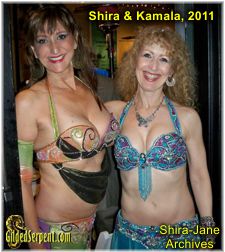
Kamala & Shira in 1977Even in the 1980s there was a ton of work and most places had live music. Everybody played zills. That is what makes me especially sad and nostalgic. I miss the live music! To me all dance is the physical embodiment of music. We are there to show the music to the audience so they can ‘see’ the music besides hearing it. My favorite compliments that I’ve gotten from musicians is when they told me that I was just part of the band. I loved hearing that and I love playing zills with the band. I wish young dancers that are starting out had the chance to work with live music more often. Just feel the music and listen to the musicians! After working together awhile you learn to queue each other so easily and the show can get very exciting when that happens. I know musician friends now that have told me that they sometimes work with new girls that only want to perform a choreographed show to pre-recorded music. Hey ladies! If you are reading this, next time you get a chance to work with live music, talk over your show with the band a little in advance, then, just jump in there, and go for it!”

Considering her long dance career, I asked Shira what advice would she have for new dancers interested in a career as a working dancer?

She answered, “Besides passing on Dianeʼs pearls of wisdom, of course, [you should] practice daily, look up and out at your audience, smile, work on your zills and your musicianship. There used to be an unwritten code between dancers for club and restaurant jobs and I guess that this isn’t a bad place to repeat those old ideas that I also learned from Diane.

Never go into somebody elseʼs gig and try to get their job.

Audition only when the restaurant is closed or a very off hour — in other words — don’t ever do a free show. Honestly, if you aren’t good enough yet to be paid, you probably shouldn’t be performing yet. (Dianeʼs words) Another never is: never go into a place and work for less thanthe current dancer is making; no undercutting someone elseʼs pay!

However, what is so sad is that there just aren’t enough places to perform anymore. My last advice is to go out and watch other dancers, support your local belly dancer, and please be a good audience. Applaud, tip, (but don’t play your zills, wear a costume or get up and dance at someone elseʼs show). Because that isn’t the time to do it. Just watch and learn, because there is always something to absorb from watching another dancer. Every artist is an individual and has a beautiful and unique expressionand style.”

Resources:

use the comment box

Have a comment? Use or comment section at the bottom of this page or Send us a letter!
Check the "Letters to the Editor" for other possible viewpoints!

Ready for more?

  • A Dancer's Dancer in 1980s Hollywood, Interview with Yasmin
    L.A. was heaven for fabrics though. You could find anything you wanted, and if they didn't have it, you could have it made, like the beautiful gold lame' sunburst skirt and veil I had pressed for a costume.
  • The Original Mish Mish, The Golden Age of Tinseltown
    I was working one evening at Khyams and still doing my old style of dance. I came out for my entrance covered with a veil and right at the beginning of my show, she came up on stage and started peeling my veil off me and threw it on the floor. She shook her finger at me and said in broken English "Lah, this isn't Egyptian!" I was so embarrassed and humiliated I could barely finish. Talk about being intimidated!
  • Interview with Jacqueline Lombard, Queen of the Dancers in the Golden Era of Tinseltown
    They refused to play dance music or anything you asked for…got to admit, that really taught how to pull off a show & think quick on my feet. You never knew where they were going with the music, & they tried to make you look bad.
  • Queen of Denial, Chapter 3: Hooray for Hollywood!
    As for Khayam’s, it was the extremely popular nightclub and restaurant that was known for having the best live music show in town, with good dancers, good food; a constant supply of good drugs, and in particular the more and more fashionable cocaine.
  • Becoming the Object of Your Own Fantasy, "Perfumes of Araby" in the 1970s, Part 1
    The Belly dance scene in 1970s Los Angeles: It is difficult to spotlight succinctly even one portion of a vibrant, vast and quickly growing community of Middle Eastern dancers, their enthusiasts, and the ethnic communities, musicians, festivals and supper clubs that supported the dance arts. The abundance of inspiration in that era was almost beyond understanding; yet once upon a time before the Internet, music, imagery and information was less readily available.
  • Becoming the Object of Your Own Fantasy, "Perfumes of Araby" in the 1970s, Part 2
    We are packed tightly shoulder to shoulder, impulsing to the dramatic beat with great solidarity: traditional hand gestures, chest drops, all very serious and trance like. This mood was broken however by a guy at the back of the 200 plus audience, who stood on his chair, raised his beer glass and shouted "The one in the yellooooow…." then actually fell completely backwards like a tree that had just been cut! I hope he was OK!
  • Becoming the Object of Your Own Fantasy, Diane Webber and the Perfumes of Araby in the 1970s, Part 3:
    In an almost archetypal will to power, Diane encouraged us to utilize our costuming – and our dance – as a way to search out and expand our own unique spirit, fantasy and physique, something I try to continue with my students today: become the object of your own fantasy.
  • Performing: Taking It to the Next Level
    Some people think that performing is a way for egotistical show-offs to get attention. Nothing could be farther from the truth. A true performer entertains her audience, doing her best to make sure everyone is having a good time. What could be more generous than that?
  • On the Road
    She was the fiery “Bedouin” who argued with the band in apparent Arabic and seemed so real and dramatic.
  • MECDA’s First 30 Years , The Middle Eastern Culture and Dance Association’s Changing Role in our Community
    Diversity, however, often leads to dissention, and controversy flew regarding the perception of the rather strict parameters of the Egyptian style.
  • Unionizing Belly Dance:MECDA’s Beginnings, Part 3:Tying Up Loose Ends,
    The problem was that after the first strike, where the issues were so clear cut – no one had been paid since the owner gambled away our money, tip-sharing had just been instituted — people were unwilling to continue with strikes for getting contracts all over town.
  • How MECDA Began Part II, To Whom It May Concern
    I was very curious to hear what Fairuz had to say about how M.E.C.D.A. began, as I was one of the original dancers to organize it.
  • How MECDA Began
    M.E.C.D.A., (Middle Eastern Culture and Dance Association) is a nationwide organization which began in 1977 for the purpose of organizing working dancers, sharing information between teachers…
  • Photos from Carnival of Stars 2012, Page 2: A-K
    Ahava, Alanna, AMany, Amina, Andrea, Annette, Aswan Dancers, Atlantis, Black Diamond, Badia, Basinah, Birute, Cathy Guthrie, Ciranoush, Cory Zamora, Crystal Silmi Dance Co…
  • The Search for El Dorado…in Cairo
    The name “El Dorado” conjures up images of a fruitless quest for an unattainable, even mythical, goal. The El Dorado in this discussion, however, is neither myth nor fantasy. El Dorado was a sala or café chantant, an entertainment hall, located in the heart of Cairo’s Ezbekiyah entertainment district.
  • Photos from Carnival of Stars 2012, Page 1: L-Z
    56 goergeous photos! …Latifa, Linah, Lulu, LUna, Mahsati, Malia, MaShuqa, Melina, Migracia, Monica, Mystique, Maiya, Namira, Nancy, Nanna, Natika, Nisima, Nyla, Parri, Princess Farhana….
  • The One-of-a-kind Costume Still Fascinates:Re-envision, Recycle, Renew, and Remember
    Sometimes, perhaps more often than not, those people whom we love, and those things that we enjoy doing, introduce new facets into our lives that change our perspective of what becomes important to us in the long run.
  • A Special Meeting in Barcelona, Munique Brings Wael Mansour for a Workshop and Show
    At Academia de Danza del Vientre Munique Neith  on 29th  and 30th of September 2012, two workshops took place with Munique Neith (the sponsor), Wael Mansour and young talents of Oriental dance from Spain, Italy, Portugal and France.  Tradition and modernity merged together on this warm weekend.
  • What Lies Beneath Part 2, The Morocco Tourists Don’t See, Suspicion, Lifestyle, Wedding, & Rescue
    What’s depressing about Laayoune is the idea of it: what it represents, not the city itself. Buildings, painted in salmon color like Marrakech, palm trees planted in pretty town squares, clean streets, restaurants and cafes, busy market places and a gorgeous plaza where people stroll at night. If you didn’t know any better, you would love this place! In reality, you are inside an enormous military base, while the city is a mere facade.
 

Gilded Serpent presents...

Photos from Carnival of Stars

Page 2: A-K. August 2012, Richmond Auditorium, CA

photos by MaShuqa and Carl Sermon
posted March 19, 2013


Ahava

Ahava

Alanna

Alanna

Amany
Amany

Amina
Amina

Andrea
Andrea

Annette
Annette

Aswan Dancers
Aswan Dancers

Atlantis
Atlantis

Black Diamond
Black Diamond

Badia
Badia

Basinah
Basinah

Birute
Birute

Cathy Guthrie
Cathy Guthrie

Ciranouch
Ciranoush

Cory Zamora
Cory Zamora

Crystal Silmi Dance CO
Crystal Silmi Dance Company

Crystal and Surreyya

Dancers of the Crescent Moon
Dancers of the Crescent Moon – Zorba and Siwa

Danse du Ventre
Danse du Ventre

Danse Magreb
Danse Magreb

Danse Masgreb
Danse Magreb

Desert Heat
Desert Heat

Dhyanis Dance Company

Dusty Paik
Dusty Paik

Edemia
Edemia

Ena
Ena

Evangiline
Evangeline

Fayruz
Fayruz

Forlasi
Forlasi

Gibson Pearl
Gibson Pearl

Ginnina
Ginnina

Good Vibrations
Good Vibrations

Habibi
Habibi

Hana
Hana

Hassan Housef Deeb
Hassan Yousef Deeb

Heather
Heather Jordon in costume contest

Heather Jordon
Heather Jordon

Helena Vlahos
Helena Vlahos

Helwa
Helwa

Hip Shock
Hip Shock

Jodi Waseca
Jodi Waseca

Judeen Dance CO
Judeen Dance Company

Karavansary Dance Company

Kathy Trewin
Kathy Trewin

Kim
Kim


Page 1: L-K here


use the comment box

Have a comment? Use or comment section at the bottom of this page or Send us a letter!
Check the "Letters to the Editor" for other possible viewpoints!

Ready for more?

  • Photos from Carnival of Stars 2012, Page 1: L-Z
    56 goergeous photos! …Latifa, Linah, Lulu, LUna, Mahsati, Malia, MaShuqa, Melina, Migracia, Monica, Mystique, Maiya, Namira, Nancy, Nanna, Natika, Nisima, Nyla, Parri, Princess Farhana…
  • The Search for El Dorado…in Cairo
    The name “El Dorado” conjures up images of a fruitless quest for an unattainable, even mythical, goal. The El Dorado in this discussion, however, is neither myth nor fantasy. El Dorado was a sala or café chantant, an entertainment hall, located in the heart of Cairo’s Ezbekiyah entertainment district.
  • The One-of-a-kind Costume Still Fascinates:Re-envision, Recycle, Renew, and Remember
    Sometimes, perhaps more often than not, those people whom we love, and those things that we enjoy doing, introduce new facets into our lives that change our perspective of what becomes important to us in the long run.
  • A Special Meeting in Barcelona, Munique Brings Wael Mansour for a Workshop and Show
    At Academia de Danza del Vientre Munique Neith  on 29th  and 30th of September 2012, two workshops took place with Munique Neith (the sponsor), Wael Mansour and young talents of Oriental dance from Spain, Italy, Portugal and France.  Tradition and modernity merged together on this warm weekend.
  • What Lies Beneath Part 2, The Morocco Tourists Don’t See, Suspicion, Lifestyle, Wedding, & Rescue
    What’s depressing about Laayoune is the idea of it: what it represents, not the city itself. Buildings, painted in salmon color like Marrakech, palm trees planted in pretty town squares, clean streets, restaurants and cafes, busy market places and a gorgeous plaza where people stroll at night. If you didn’t know any better, you would love this place! In reality, you are inside an enormous military base, while the city is a mere facade.
  • Does Your Teacher Have Your Best Interest at Heart?
    Remember that you are your own person and you can use your talents any way you want. Nobody owns anybody else. And nobody owns Belly Dance. Belly Dance is an exciting world that gives women and men many artistic and entrepreneurial opportunities.
  • Emotion Inspired by Song, Interpreting Arabic Orchestral Music
    What’s most important is the feeling. Listen to lots of music, and let yourself be moved. Even if you don’t know the words, you can still access the feelings. When you get on stage, express these feelings honestly to the audience. They will love you for it.
  • Everyone’s Uncle, In Celebration of the Life of Drummer Armando Mafufo
    In fact, so many artists wanted to perform in his honor that many had to be turned down or else we might have had to stay all night.
  • Make New Friends & Keep the Old, Response: A Dance Perspective for Today
    After living in the Middle East for 25 years and continuing to work in the region for music and dance, I have a pretty good idea of what talent and creative ideas exist in the region.
  • The Evolution of Jillina, An Interview Regarding Change, Flexibility and Lessons Learned
    Working with Jillina for the last six years or so, I’ve been a fly on the wall for a lot of this transition. I’ve been there for marathon rehearsal weeks, brainstorming sessions, the stress of taking a show on the road, the flops, and the standing ovations.
 

Gilded Serpent presents...

The Search for El Dorado…in Cairo

Placeholder

by Heather D. Ward (“Nisaa of St. Louis”)
posted March 13, 2013

The name “El Dorado” conjures up images of a fruitless quest for an unattainable, even mythical, goal.  The El Dorado in this discussion, however, is neither myth nor fantasy.  El Dorado was a sala or café chantant, an entertainment hall, located in the heart of Cairo’s Ezbekiyah entertainment district.  Among the performers to grace its stage was the legendary Shafiqah el Qibtiyyah, a pioneer (and some say originator) of raqs shamadan.  Careful examination of primary sources, combined with explorations in Cairo, has shed new light on El Dorado, its precise location in Cairo, and its significance in the evolution of what we know today as raqs sharqi

Establishments like El Dorado were the forerunners of the salat and casinos of the early twentieth century; they established a performance format that was elaborated upon by Badia Masabni and her contemporaries.

El Dorado turns up several times in contemporary travelers’ accounts and guidebooks as a place to witness Egyptian music and dance.  The sala was in existence as early as 1870 (Académie Royale des Sciences, des Lettres et des Beaux-Arts de Belgique 1870) and remained in operation until at least the 1910s (Molony 1917: 39, Sladen 1911: 114-115).  Where was El Dorado?  The first edition of Karl Baedeker’s Egypt, Handbook for Travellers (sic) reveals substantive details regarding the exact location:

“The following are Cafés Chantants, where Bohemian musicians and singers perform in the evening: …Café Egyptien, opposite Shepheard’s Hotel; Eldorado, in the narrow street at the back of the Hotel d’Orient (but about to be removed to the Ezbekîyeh).” (Baedeker 1878: 229)

The Hotel d’Orient, which would later become the Bristol Hotel, was located in Midan al Khazindar (Khazindar Square) at the northeast corner of Ezbekiyah Gardens.  This square or plaza is positioned at the convergence of several main streets: Shari’ Wagh el Birket (today known as Shari’ Naguib el Rihani), Shari’ Clot Bey, Shari’ el Geneina (today known as Shari’ Ali el Kassar), and Shari’ el Bosta.  Shari’ Wagh el Birket was also sometimes referred to as Shari’ Ezbekiyah or Rue de Ezbekiyah.

Midan al Khazindar
click graphic for enlargement
Postcard showing Midan al Khazindar around the beginning of the 20th century.  The Sednaoui Department Store building now stands on the site
formerly occupied by the Liverpool Hotel (formerly the palace of Nubar Pasha, later the Hotel Khedivial). 
This card is from my personal collection.

By 1885, the date of publication of Baedeker’s second edition, El Dorado had moved to “the Ezbekiyah” (Shari’ Wagh el Birket):

“The following are Cafés Chantants, where Bohemian musicians and singers perform in the evening: Café Egyptien, opposite Shepheard’s Hotel; Eldorado, in the Ezbekîyeh.” (Baedeker 1885)

According to Sadgrove, the Società Filarmonica-Drammatica l’Aurora, an Italian amateur theater company, rented the El Dorado’s old location at the end of the 1870s, but that building was destroyed by fire in 1880.  Based on Baedeker’s 1878 mention of plans to relocate El Dorado, it seems likely that the move was undertaken before the fire took place.  Subsequent editions of Baedeker’s guide book offer a detailed description of El Dorado’s new location:

“Eldorado, in the E. part of the Shâri‘a Wagh el-Birket, under the colonnades” (Baedeker 1898: 24, 1908: 32, 1914: 37)

Many of the existing nineteenth century buildings on Shari’ Naguib el Rihani have first-floor arcades (i.e. covered walkways fronted by colonnades), but it remains unclear which of these vestiges of Cairo’s belle époque housed the relocated El Dorado.

Midan al Khazindar (taken by me in January 2013)
Photo of Midan al Khazindar (taken by me in January 2013).  The large building on the right is the Sednaoui Department Store building. 
The governmental building to the left of Sednaoui replaced the building that housed the Bristol Hotel (formerly Hotel d’Orient). 
The original location of El Dorado would have been near this spot.
Shari' Naguib el Rihani
Photo of Shari’ Naguib el Rihani (formerly Shari’ Wagh el Birket) where it meets Midan al Khazindar
(taken by me in January 2013). 
El Dorado was relocated to this street sometime around 1880.

As I have discussed elsewhere (Ward 2013), entertainment halls (salat) were widespread in Ezbekiyah by the end of the nineteenth century.   These establishments offered a broad range of entertainment, including music, dance, theatrical productions, gambling, and more.  Like other salat of the time, the El Dorado offered variety entertainment.  However, the program appears to have changed over the course of the venue’s existence.  In 1870, when El Dorado was still located behind the Hotel d’Orient, the venue featured performances of European music – such as the waltzes of Strauss and the works of Offenbach (Académie Royale des Sciences, des Lettres et des Beaux-Arts de Belgique 1870: 51).  After the move to Shari’ Wagh el Birket, dancers, singers, and acrobats were on the bill, and gambling was also available to patrons (The Queenslander 27 February 1886, 336).  Were those singers and dancers European or Egyptian?  This is not clear from the Queenslander article, though it is evident that Egyptian singers and dancers were performing there by the 1890s (Baedeker 1898: 24, Reynolds-Ball 1898: 12).  Theatrical performances, probably European operettas, were also on the bill in 1888 (Al Ahram 1 December 1888, 2).  By 1910, the primary entertainment at El Dorado was Egyptian singing and dancing, though Loewenbach’s account of a visit to the sala in 1907 indicates that motion pictures were shown on a cinematograph there (Loewenbach 1908: 220).

A common contention regarding raqs sharqi is that it was created or invented by Badia Masabni in her Cairo night clubs.  However, as I have argued elsewhere (Ward 2013), the elements of what would become raqs sharqi were in place at venues like El Dorado well before Badia opened her first club in 1926. 

The late nineteenth century sala provided a new performance context for native Egyptian music and dance.  As a space devoted to performance for the sake of performance – as opposed to performance in the context of a traditional social occasion such as a wedding or moulid (saint’s day festival). The sala became the incubator for the transformation of Egyptian belly dance into a formal theatrical dance form (Ward 2013).  At salat like El Dorado, customers paid an entry fee to see Egyptian musicians and dancers perform; this was a profound shift from the past, when dance was not the “main event” but rather was rooted in a social occasion.  These venues established a precedent that would enable Badia’s success with her own salat beginning in the late 1920s.

This is not to diminish Badia’s contribution to the stylistic development of raqs sharqi, since it is likely that the dancing performed at El Dorado and other salat before Badia’s time bore little resemblance to the raqs sharqi of today.  Although it is difficult to discern precisely what belly dance looked like at the end of the nineteenth century, firsthand descriptions of dance performances at the time, including a description of a show at El Dorado (Loewenbach 1908: 218-220), suggest that the performers danced in a style akin to the ghawazee of today: with a focus on hip articulation, minimal traveling, and sagat playing de rigeur.  Clearly, Badia’s innovations in movement, staging, and costuming and their subsequent influence on the evolution of raqs sharqi are undeniable.

Another oft-repeated assertion about raqs sharqi goes as follows: raqs sharqi, the theatrical form of belly dance that we know today, came about because night club owners (especially Badia Masabni) deliberately Westernized the traditional dances of the awalem and ghawazee in order to make Egyptian dancing more palatable to European and American visitors.  However, Loewenbach specifically states that during his visit to El Dorado in 1907, the audience was almost entirely Egyptian (Loewenbach 1908: 218).  He also suggests that foreigners were charged a higher entry fee (ibid.)

Although salat such as El Dorado were cast in the mold of European music halls, it would be a mistake to assume that these establishments were geared toward a European clientele.

This point was reinforced in an interview with Sayed Henkesh, in which he indicated that the audiences at later salat and casinos, such as Badia Masabni’s and Safiya Helmi’s, were primarily Arab, and that the only non-Arabs in the audience were expatriates residing in Cairo, not tourists (Sayed Henkesh, personal communication, 2013).

In fact, some of the greatest entertainers in Egypt, including some who would eventually make their mark in the Egyptian recording and cinema industries, worked at El Dorado.  These individuals were popular among Egyptian audiences, but virtually unknown to Westerners, a clear indication that the venue catered to Egyptian tastes.  Shafiqah el Qibtiyyah (Shafiqah the Copt), a widely popular turn-of-the-century almeh, and according to popular lore, originator of raqs shamadan, performed on El Dorado’s stage.  A 1955 article from El Kawakeb magazine mentions that multiple establishments were competing for Shafiqah, but it was El Dorado that was lucky enough to secure a contract with her.  The singer and actress Munirah al Mahdiyyah also appeared at El Dorado.  Munirah al Mahdiyyah was one of the most renowned female singers in Egypt until the rise of Um Kulthum in the late 1920s.  Munirah began her singing career in Cairo at the small café of Mohammed Farag; she eventually made the move to El Dorado, where her fame and popularity increased substantially (Al Hifni 2001: 86-87).  Musician and composer Dawud Hosni established his popularity with the taqtuqah (light songs) he composed for performers at El Dorado (Fahmy 2007: 211).

El Dorado offers a tantalizing glimpse into the world of Egyptian entertainment at the turn of the nineteenth and twentieth centuries.  Salat like El Dorado, with their varied programs incorporating music, dance, theater, and more, set the precedent for future Egyptian entertainment venues.  The “variety show” format established in the salat of the late nineteenth century would be perfected and surpassed in success by the better-known salat of the late 1920s through the 1950s, such as Badia Masabni’s Casino Opera.  Within this context, belly dance as professional entertainment transformed from its traditional origins in weddings and saint’s day celebrations to its new role as a theatrical performance art – one performance art among many in the diverse line-ups of the salat of Cairo and Alexandria.  As research continues and a more complete picture of venues like El Dorado materializes, our knowledge regarding the origins and development of raqs sharqi can move from the realm of hearsay and speculation to the world of verifiable fact.

Lichtenstern and Harari postcard showing dancers, singers, and musicians on the stage of El Dorado.  The card is postmarked 1908.  This card is from my personal collection
click graphic for enlargement
Lichtenstern and Harari postcard showing dancers, singers, and musicians on the stage of El Dorado. 
The card is postmarked 1908.  This card is from my personal collection.
References & Resources
  • Author’s GS Biopage
  • Académie Royale des Sciences, des Lettres et des Beaux-Arts de Belgique
    Bulletins de l’Académie Royale des Sciences, des Lettres et des Beaux-Arts de Belgique.  Ser. 2 T. 29.  Bruxelles: F. Hayez, 1870.  From Internet Archive.  <http://archive.org/details/bulletinsdelac2291870acad>.
  • Al Ahram,
    1 December 1888.  <http://digital.ahram.org.eg>.
  • Al Hafni, Ratibah,Al Sultana Munirah al Mahdiyyah.Cairo: Dar al Shorouk, 2001.
  • Baedeker, Karl,Egypt, Handbook for Travellers. Part First: Lower Egypt, with the Fayûm and the Peninsula of Sinai.  Leipsic: K. Baedeker; London: Dulau and Co., 1878.
    From Hathi Trust Digital Library.  <http://catalog.hathitrust.org/Record/008883164>.
  • Baedeker, Karl, Egypt, Handbook for Travellers. Part First: Lower Egypt, with the Fayûm and the Peninsula of Sinai. (2nd edition, revised and augmented).  Leipsic, London: K. Baedeker, 1885.  From Travelers in the Middle East Archive (TIMEA).  <http://hdl.handle.net/1911/9163>.
  • Baedeker, Karl, Egypt: Handbook for Travellers. (4th remodelled edition).  Leipsic: K. Baedeker, 1898.  From Travelers in the Middle East Archive (TIMEA).  <http://hdl.handle.net/1911/13069>.
  • Baedeker, Karl, Egypt and the Sudan: Handbook for Travellers. (6th remodelled edition).  London: Karl Baedeker, 1908.  From Travelers in the Middle East Archive (TIMEA).  <http://hdl.handle.net/1911/13070>.
  • El Kawakeb, “Shafiqah el Qibtiyyah: The Dancer Whose Horses Drank Champagne.”  El Kawakeb 2 December 1955: 28.
  • Fahmy, Ziad, “Popularizing Egyptian Nationalism: Colloquial Culture and Media Capitalism, 1870-1919.”  PhD Dissertation, University of Arizona, 2007.
  • Loewenbach, Lothaire,Promenade Autour de l’Afrique, 1907.  Paris: Ernest Flammarion, 1908.  From Hathi Trust Digital Library.  <http://catalog.hathitrust.org/Record/010109791>.
  • Molony, Frank H.,Frank H. Molony Diary, 1 January – 2 April 1916; 13 May – 1 July 1917.From Mitchell Library, State Library of New South Wales. < http://acms.sl.nsw.gov.au/_transcript/2012/D16756/a4973.htm>.
  • Reynolds-Ball, Eustace A.Cairo of To-Day: A Practical Guide to Cairo and Its Environs.  London: Adam and Charles Black, 1898.  From Hathi Trust Digital Library.  <http://catalog.hathitrust.org/Record/009261008>.
  • Sadgrove, P.C.The Egyptian Theatre in the Nineteenth Century (1799-1882).  Berkshire: Ithaca Press, 1996.
  • Sladen, Douglas,Oriental Cairo: The City of the "Arabian Nights."  Philadelphia: J. B. Lippincott Company, 1911.  From Travelers in the Middle East Archive (TIMEA).  <http://hdl.handle.net/1911/9189>.
  • The Queenslander "Our Cairo Lettter."  The Queenslander [Brisbane, Queensland, Australia] 27 February 1886 : 336.  <http://trove.nla.gov.au/ndp/del/article/19803700>.
  • Ward, Heather D. “From Café Chantant to Casino Opera: Evolution of Theatrical Performance Space for Belly Dance.”   The Gilded Serpent.  10 January 2013.  <http://www.gildedserpent.com/cms/2013/01/10/from-cafe-chantant-to-casino-opera/>.
  • Salat also emerged in Cairo’s Rod al Farag district, as well as in Alexandria and Port Said.

use the comment box

Have a comment? Use or comment section at the bottom of this page or Send us a letter!
Check the "Letters to the Editor" for other possible viewpoints!

Ready for more?

  • From Café Chantant to Casino Opera, Evolution of Theatrical Performance Space for Belly Dance,
    Most students of Egyptian belly dance are aware of Badia Masabni and her famous nightclubs, and many believe Badia’s clubs to be the birthplace of theatrical belly dance, or raqs sharqi. However, fewer are aware that Badia’s clubs were neither the first nor the only venues of their kind.
  • When Victoria was Queen — And the Ghawazi Ruled, Amusing, Illuminating, and Disturbing Tales of 19th-Century Encounters with the Ghawazi
    The first dancing of all ghawazi is simply moving about to the music and undulating the body. Then waves of motion are made to run from head to foot, and over these waves pass with incredible rapidity the ripples and thrills, as you have seen a great billow in a breeze look like a smaller sea ribbed with a thousand wavelets. All is done in perfect time with the music.
  • The End of the Banat Mazin? Struggles with Religious Fanatics, Real Estate Management , and Other Ghawazi
    Yusuf Mazin, a Nawari Gypsy, had wandered the land dealing in livestock, entertaining the villagers with stories, delivering messages and generally making himself useful until his non-Gypsy wife blessed him with five beautiful daughters. Beautiful, talented daughters who could master singing and dancing — the arts of the ghawazi, as such women were traditionally called in the countryside — were the best hope for the prosperity of a Nawari family in Egypt.
  • Badia Masabny, Star Maker of Cairo
    Due to the performance of a Hitler parody, however, Masabny was placed on Hitler’s list of people to be executed once he took over Egypt. Fortunately, the Germans never made it to Cairo!
  • The Dance Zones of Egypt: Sahra Kent's Journey Through Egypt Basic 1 Workshop
    Although not strictly speaking a dance workshop, for each zone we got up to learn some characteristic steps and posture, and gestures associated with each dance zone/style, a good way to blend the theoretical with the experiential.
  • From the Street to the Virtual Cafe, The History of Shaabi
    There were several movements throughout the world that seemed to simultaneously create music in the genre called "cassette culture". Most notably this type of music was evident in England and the U.S. with punk music, in Jamaica with Reggae, in Algeria with Rai and in Egypt with Shaabi music.
  • Dancing for Dowries, Part 2: The Nailiyat
    It respected the intelligence, style and wisdom gained by women who had lived in the public eye and in the world beyond their native home - a world many men of the Ouled Nail never saw
  • Dancing for Dowries: Earning Power, Ethnology, and Happily Ever After
    When a mythic history is told and retold in a context like the belly dance community, you have to assume that there are strong underlying reasons for its popularity.
  • Assiut / Assuit, Fascinating FAQs
    However, netting was invented by the Egyptians and dates back thousands of years.
  • Shamadan or Candelabra: Dances Along the Nile Part 4
    The style is very earthy and includes great “tricks” like the splits, stomach work while on the floor, rolling over full length on the floor and posturing — complete with quivering buttocks, and various other individual talents.
  • Photos from Carnival of Stars 2012, Page 1: L-Z
    56 goergeous photos! …Latifa, Linah, Lulu, LUna, Mahsati, Malia, MaShuqa, Melina, Migracia, Monica, Mystique, Maiya, Namira, Nancy, Nanna, Natika, Nisima, Nyla, Parri, Princess Farhana….
  • The One-of-a-kind Costume Still Fascinates:Re-envision, Recycle, Renew, and Remember
    Sometimes, perhaps more often than not, those people whom we love, and those things that we enjoy doing, introduce new facets into our lives that change our perspective of what becomes important to us in the long run.
  • A Special Meeting in Barcelona, Munique Brings Wael Mansour for a Workshop and Show
    At Academia de Danza del Vientre Munique Neith  on 29th  and 30th of September 2012, two workshops took place with Munique Neith (the sponsor), Wael Mansour and young talents of Oriental dance from Spain, Italy, Portugal and France.  Tradition and modernity merged together on this warm weekend.
  • What Lies Beneath Part 2, The Morocco Tourists Don’t See, Suspicion, Lifestyle, Wedding, & Rescue
    What’s depressing about Laayoune is the idea of it: what it represents, not the city itself. Buildings, painted in salmon color like Marrakech, palm trees planted in pretty town squares, clean streets, restaurants and cafes, busy market places and a gorgeous plaza where people stroll at night. If you didn’t know any better, you would love this place! In reality, you are inside an enormous military base, while the city is a mere facade.
  • Does Your Teacher Have Your Best Interest at Heart?
    Remember that you are your own person and you can use your talents any way you want. Nobody owns anybody else. And nobody owns Belly Dance. Belly Dance is an exciting world that gives women and men many artistic and entrepreneurial opportunities.
  • Emotion Inspired by Song, Interpreting Arabic Orchestral Music
    What’s most important is the feeling. Listen to lots of music, and let yourself be moved. Even if you don’t know the words, you can still access the feelings. When you get on stage, express these feelings honestly to the audience. They will love you for it.
 

Gilded Serpent presents...

Photos from Carnival of Stars

Page 1: L-Z. August 2012, Richmond Auditorium, CA

photos by MaShuqa and Carl Sermon
posted March 12, 2013

Latifa
Event Producer

placeholder

Linah

placeholder

Lulu

placeholder

Luna

placeholder

Mahsati

placeholder

Malia

placeholder

Marta Ingles

placeholder

Ma Shuqa

placeholder

Melinda

placeholder

Migarcia andFriends

placeholder

Monica

placeholder

Mystique

placeholder

Naiya

placeholder

Namira

placeholder

Nancy Asiya Muetz

placeholder

Nanna

placeholder

Natika

placeholder

Nisima

placeholder

Nyla Crystal

placeholder

Paige Lawerance

placeholder

Paloma

placeholder

Parri

placeholder

Princess Farhana

placeholder

Queen of Persia

placeholder

Raks Al Khalil

placeholder

Rare Elements

placeholder

Rasa Vitalia

placeholder

Red Door Dancers

placeholder

Rom Deussen

placeholder

Rose Harden

placeholder

Ruth Amy

placeholder

Sabiba

placeholder

Safiyah

placeholder

Sausan

placeholder

Seba

placeholder

Sese Presents

placeholder

Shabnam Dance Company

placeholder

Shabnam Dance Company

placeholder

Shira

placeholder

Shupa Da

placeholder

Sisters of Pearls

placeholder

Snake Dancer and Belly Dancer

placeholder

Sonya

placeholder

Suhaila Dancers

placeholder

Tahira

placeholder

Temple of Apis

placeholder

Terrianne’s Troupe

placeholder

Terry Del Giorno

placeholder

Titianium Tulips

placeholder

Troupe Jaouahir

placeholder

Troupe Lafayette (including Surreyya)

placeholder

Una

placeholder

Valentina

placeholder

Wasseema

placeholder

Wild Card

placeholder

Yolanda

placeholder

Zanuba

placeholder

Zia

placeholder

Zorba


Page 2: A-L coming soon!


use the comment box

Have a comment? Use or comment section at the bottom of this page or Send us a letter!
Check the "Letters to the Editor" for other possible viewpoints!

Ready for more?

  • Diamonds in the Rough & Polished Perfection, 2012 Berlin SomerFestival-Thursday Competition,
    Produced by Beata and Horacio Cifuentes, Held in September, 2012. The costumes were innovative and personalized with many of the competitors from the Ukraine, Russia, and Asia. Many of whom are also ballroom competitors. As a result, the costumes were visually striking and elegant. The trend in costuming is floral with tribal going towards more colorful stylized burlesque (ala Chicago musical).
  • Rakkasah West 2012 Photos, Page 2:M-Z
    Malika, Maria, MaShuqa, Masha, Masouma, Michelle, Moon Dance, Mountian Gypsies, Nabeela, Nadika, Nadira, Naheda, Namira, Narantuya, Onyx, Oreet, Pangia, Park Ave, Rachel, RaksAl Khlil, Raks the Casbah, Rasa, Reda, Renya, Rockin the Cradle, Ruby, Saqra….
  • Rakkasah West 2012 Photos, Page 1:A-L
    Adira, Adriana, Aizubra, Aki, Alexandria, Alfredo, Alnisa, Amel, Ariel, Ava, Ayesha, Badia, Bal Anat, Blue Diamond, Chelly, Dancers of the Desert, Devi, El Asaab, Eve, Fahtiem, Goddess Force, Good Vibs, Habibi, Hannah, Kashmir, Isabella, Jewels, Joweh, Justina, Khalilah, Leila

  • Rebecca Firestone shines! We need help with names for the other dancers in these lovely photos!
  • Mendocino Camp Photos Page 2:Monday, Joshkun and Company are Back Playing in the Woods! Middle Eastern Music and Dance Camp 2011
    The air is rich with music everywhere you go, and even in the lines for lunch or dinner there will be spontaneous drumming jams and improv dance sessions.
  • Joshkun and Company Create Community and Art in the Redwoods, Mendocino Middle Eastern Music and Dance Camp 2011 Photos, Page 1 The Mendocino Middle Eastern Music and Dance Camp has been a community tradition since 1991. Joshkun says that several of the teachers first came as students.
  • Raqs LA Photos, Page 2: H-Z
    Glendale Civic Auditorium, California, April 16 & 17, 2011, produced by Bellydance Superstars and Miles Copeland
  • Raqs LA Photos Page 1: A-H
    Glendale Civic Auditorium, California, April 16 & 17, 2011, produced by Bellydance Superstars and Miles Copeland
  • Group or Troupe Division of the Belly Dancer of the Universe Competition Photos and Video,
    The Belly Dancer of the Universe Competition is produced by Tonya and Atlantis in mid February each year in the Long Beach Convention Center. Most photos are linked to enlargements.
  • SFBA MECDA Gala Show & Festival 2010
    Produced by the San Francisco Bay Area chapter of the Middle Eastern Culture and Dance Association, held on November 15, 2010, in the Hillview Community Center in Los Altos, CA
  • Sunday Photos from Rakkasah East- October 2010
    Barakat, Basema, Dena Shazadi, Fatima, Fire Blossoms, Ghada Girls, Habiba, Laura, Leila, Rega, Saiedah, Shadia, Tempest, Willow, Yuliya, Zenaiede
  • Friday Night Photos from Rakkasah East- October 2010
    Desert Embers, Dharma, Fahtiem, Leila Haddad, Mystic Wiles, Nadia Layla, Najma, NightShade, Phoenis, Raks Shiva, Troupe Shahibat
  • Carnival of Stars, Page 4: O-Z Photos
    The Carnival of Stars Festival is produced by Pepper Alexandria and Latifa at the Richmond Auditorium each year at the beginning of August. The stage at this facility is hard to beat. The wonderful lighting and the large stage make every dancer feel like a diva! Once again, Carl has done an amazing job catching the character of each dancer
  • Carnival of Stars, Page 3: I-O Photos
    The Carnival of Stars Festival is produced by Pepper Alexandria and Latifa at the Richmond Auditorium each year at the beginning of August. The stage at this facility is hard to beat. The wonderful lighting and the large stage make every dancer feel like a diva! Once again, Carl has done an amazing job catching the character of each dancer.
  • Carnival of Stars, Page 2: D-H Photos
    The Carnival of Stars Festival is produced by Pepper Alexandria and Latifa at the Richmond Auditorium each year at the beginning of August. The stage at this facility is hard to beat. The wonderful lighting and the large stage make every dancer feel like a diva! Once again, Carl has done an amazing job catching the character of each dancer.
  • Carnival of Stars, Page 1: A-C Photos
    The Carnival of Stars Festival is produced by Pepper Alexandria and Latifa at the Richmond Auditorium each year at the beginning of August. The stage at this facility is hard to beat. The wonderful lighting and the large stage make every dancer feel like a diva! Once again, Carl has done an amazing job catching the character of each dancer
  • The One-of-a-kind Costume Still Fascinates:Re-envision, Recycle, Renew, and Remember
    Sometimes, perhaps more often than not, those people whom we love, and those things that we enjoy doing, introduce new facets into our lives that change our perspective of what becomes important to us in the long run.
  • A Special Meeting in Barcelona, Munique Brings Wael Mansour for a Workshop and Show
    At Academia de Danza del Vientre Munique Neith  on 29th  and 30th of September 2012, two workshops took place with Munique Neith (the sponsor), Wael Mansour and young talents of Oriental dance from Spain, Italy, Portugal and France.  Tradition and modernity merged together on this warm weekend.
  • What Lies Beneath Part 2, The Morocco Tourists Don’t See, Suspicion, Lifestyle, Wedding, & Rescue
    What’s depressing about Laayoune is the idea of it: what it represents, not the city itself. Buildings, painted in salmon color like Marrakech, palm trees planted in pretty town squares, clean streets, restaurants and cafes, busy market places and a gorgeous plaza where people stroll at night. If you didn’t know any better, you would love this place! In reality, you are inside an enormous military base, while the city is a mere facade.
  • Does Your Teacher Have Your Best Interest at Heart?
    Remember that you are your own person and you can use your talents any way you want. Nobody owns anybody else. And nobody owns Belly Dance. Belly Dance is an exciting world that gives women and men many artistic and entrepreneurial opportunities.
  • Emotion Inspired by Song, Interpreting Arabic Orchestral Music
    What’s most important is the feeling. Listen to lots of music, and let yourself be moved. Even if you don’t know the words, you can still access the feelings. When you get on stage, express these feelings honestly to the audience. They will love you for it.
  • Everyone’s Uncle, In Celebration of the Life of Drummer Armando Mafufo
    In fact, so many artists wanted to perform in his honor that many had to be turned down or else we might have had to stay all night.
  • Make New Friends & Keep the Old, Response: A Dance Perspective for Today
    After living in the Middle East for 25 years and continuing to work in the region for music and dance, I have a pretty good idea of what talent and creative ideas exist in the region.
  • The Evolution of Jillina, An Interview Regarding Change, Flexibility and Lessons Learned
    Working with Jillina for the last six years or so, I’ve been a fly on the wall for a lot of this transition. I’ve been there for marathon rehearsal weeks, brainstorming sessions, the stress of taking a show on the road, the flops, and the standing ovations.
  • Have I Left Yet? Queen of Denial, Chapter 12
    Baghdad was the first place I had worked in where a complete communication blackout was ordered (no post, no newspapers, no telegrams, and no telephone access to the general public), and a mere two weeks after my arrival. For the very first time since I started traveling and dancing abroad, I was unable to call my parents (and vice versa) to assure them that I was fine regardless of what they were reading in the local newspapers.
 

Gilded Serpent presents...

The One-of-a-kind Costume Still Fascinates:

Re-envision, Recycle, Renew, and Remember

Placeholder

by Najia Marlyz
posted March 11, 2013

Sometimes, perhaps more often than not, those people whom we love, and those things that we enjoy doing, introduce new facets into our lives that change our perspective of what becomes important to us in the long run. I may have mentioned in former articles, because the question is often asked, about the way in which I became interested in learning to Belly dance; the process seems now to have been almost in backwards order.

Over the years, I had been writing poetry, painting with watercolors, playing the harpsichord, and dabbling in various forms of design arts and movement, exercise and dance—but never Belly dance. My interest in all the arts caused me to meet people who were also interested in all the arts—especially, the realm of vintage clothing. It was in the ’60s and it was a thrilling and inspirational time for me. The clothing items that caught my attention the most were party dresses, hats, belts, and shoes, from the turn of the 20th century into the era of the decadent “flapper”. Their beaded chiffon dresses and the later bias-cut evening gowns of the ’30s caught my fancy, and I felt like I had been born into the wrong era. I longed to wear some of these items after repairing them, and sometimes, I did—after all, it was the ’60s and at that time in Berkeley, CA, it was a time in which “anything goes”. Somehow though, it seemed like there were never enough parties or concerts to accommodate my need to “dress in costume”.

Then, along came Belly dance into my consciousness.  Ah-ha! Here was a subject that encompassed my desire to costume myself, showcasing my flexible and agile dancer’s body. Belly dance was old. It was new. It was—happening! Since few dancers had ever traveled to the Middle East at that time, there was no stopping my ample imagination and desire to create artworks. I had had plenty of inspirational imagery enter my awareness because of the “Orientalist” fine artists I had studied in college such as Jean Leone Gerome and Fredrick Bridgeman—even though Orientalism was considered a somewhat disrespected facet of the fine arts world at the time. Even now, it is not always held in the most high regard in the world of fine artists.

Erte's snake dancerNot only these Orientalists played in my dreams, but the artists of Art Deco and Art Nouveau times, as well as Neo-classical artists such as John Godward and J.W. Waterhouse, had influenced another theater artist, Erté, who made fantastic renditions fusing graphic arts with the costuming for the theatrical stage. I owned, and adored wearing, several show-stopping evening capes from the early 1900s, one of which had been owned originally by a member of the famous Hearst family. The cape was made of heavy-weight black velvet, lined with strips of fur, alternating with strips of satin. (Yes, sorry; it was, and is, real fur, but animal fur was not considered incorrect to wear when this coat was made back in the ‘20s.) The vintage pieces were not easy to find, but when I did find them, I repaired, cleaned, and wore them as often as I could—mostly, when going to Belly dance gigs and parties.

So, when Belly dance gave me that opportunity, I also realized that many of the items that were badly torn or stained beyond help could be re-cut—into items of Belly dance costuming that were both ethnic-looking, antique, and fascinating. These pieces produced costumes that were one-of-a-kind, extravagant, and would have been expensive to have a costumer design and make for me; therefore, I made them for myself.

I worked diligently at learning to Belly dance because I thought it somewhat archaic as well as ethnic; I was motivated by the chance to create theatrical items for my dance from recycled antique clothing and other antiquated “old stuff”: fabrics, edgings, tassels, appliqué, metallic laces and other tarnished oddities. Erté became my inspiration, along with such artists who rendered images of women wearing classical tasseled capes, togas, and dresses of chiffon held together with fancy fibulae, the forerunner of the safely pin. Not all of my creations were stunning, but they certainly kept me amused. 

Once I became a teacher of Belly dance, I felt compelled to give information that included how to make one’s own costume, but I found that most new dancers were hoping to look just like the dancers in Turkey or Lebanon or Cairo and few of them wanted to spend much time on the costume itself, preferring instead to buy a costume that was ready-made or someone else’s cast-off. It almost seemed to me that if it had the sweat of a “real” Belly dancer on it, it became imbued with a sort of magic that a new costume could not equal.Najia's tassels

Nevertheless, I tried to introduce to my students the re-envisioning and recycling of vintage items that one could still find in Berkeley vintage clothing bazaars and antique stores. It came to my attention early on that the strangely moving shawls in grandmas’ attics made of Assiut cloth were highly prized by dancers in Berkeley, even though they mistreated them terribly. Later, I saw in the black-and-white Egyptian movies that famous Egyptian dancers sometimes wore dresses made of the cloth when they danced in private parties and wedding celebrations. However, Assiut cloth (pronounced ah-see-yoot) was just one facet of the antique fabrics that were available and intriguing. There were also raw silks that had been cross-stitched, crocheted pieces, and laces that were not only meant or destined for wedding dresses. There were silk chiffons, and other finely woven fabrics such as tulle. Metallic tassels and lace-like designs made of cords wrapped with metal threads gave added elegance to the mix.

Lately, I have been heartened to see renditions of my crocheted lace dance belt and other uses of antique pieces in the costuming of some of our Fusion style dancers. Perhaps its day has come! In one of my almost futile attempts to interest dancers in creating unique costumes, I wrote an article about speaking with the past through the use of lace and other intricately worked textiles. A example of that writing follows below.

Belt made from vintage materials


String Between Two Cans: The Past Speaks When You Listen

Long ago, the fascination of lace and other handwork seemed self-evident. They seemed unreal, unattainable, and unbelievably magical. Laces were intended to add beauty, denote wealth, and designate personal economic and birth status. Lace was something special and it was in great demand in religious and wealthy sectors. Nonetheless, the secondary gift of the handwork is quite a different matter.  When we were children we strung two cans together, pulled tight and heard our friend speak from a distance we thought was far away. Surviving the dust and wear of time, threads of the past can speak in voices that need only a listening heart rather than two cans and a string. In daydreams, we can listen and reach back to the lives of long-departed anonymous artists and artisans who made laces and embroideries. They scrambled in slow motion to raise it to an art form, increase its difficulty to produce, and caused its value to rise above the reach of the plebeian and the common uses of their time.

Rare Survival
Admittedly, secondary gifts are sometimes overlooked: meanings, uses, and lessons from the past have been coaxed through time in a chancy and haphazard fashion. Perhaps it was the only way possible.  As we might ask today, “Who knew?” Delicate antique handwork is only rarely received intact—having been transferred via many caretakers through generations and treated with a variety of care. Understandably, the lives of those lace artisans of yesteryear are entirely unknown to us in the present. Nevertheless, even today, when intricate handwork is more unusual than commonplace, preservationists, with each foot firmly planted in both the past and present, do exist to bring it forward for our admiration and invite us to touch fingertips with the past.

Like a Poem
I like to believe that there is another, still more compelling, purpose in the tidings of threads twisted and woven for us by the skillful fingers of former centuries than admiration for their skill—not to mention their admirable patience and forbearance! The surviving pieces are poignant missives and reminders of lives spent in endless repetitive toil, and they are not easily accepted by those of us who have been steeped in today’s expected freedoms, careless manners, usually accompanied by the mentality of almost everything being easily disposable. Nevertheless, once we wrap our minds around the depth of sacrifice that was necessary to develop the early lace-making trade to its unbelievable level, it becomes apparent intellectually that all the little speeches and random thoughts wound into old lace begin to unravel and speak to the present. They are not unlike the poems in a book; not unlike an epiphany gained from an  allusion to an allegory. One has to stretch the string very tightly from both cans to make it carry the sound from past to present.

Lives and Sacrifice
Artisans of old whisper to us through their dancing fingers, quickly moving their bobbins, forming their intricate patterns of flowers and birds, ribbons, historical and mythological symbols. While sitting before their lacing pillows, forming picots around pins, did they sing? Did they feel the rhythm of their deftly clicking ivory bobbins? Were their lives fulfilled by the issue of the tasks that sometimes outlived them, unfinished? Someone cared; someone loved their lace; someone treasured it above gold; but (unlike gold) silk and fibers are ephemeral. Falling tears, body oils, soil, sunshine, and unseen dust mites all tore fine laces apart and eventually, careless hands laid waste to most of it.
Machine Made
Yet today, as we increase our appreciation of handworks’ unfathomable purposes of another time, we can also begin to divine that the value of intricate handwork lies more in being able to envision and touch our early longing to become more than animals using tools. Today we become aware of the fact that we can hold, not the same, but similar, laces in our hands, hang it at our windows, and wear it on our wedding day or just to Starbuck’s, without sacrificing an entire decade, or several, to its creation. Machines are today’s slaves, replacing human hands. As long as we resist becoming enslaved to machinery through our dependency, never expecting them to produce innovative art, they recreate the illusion of past grandeur at a pittance of the former cost in sacrifice. Revisiting and learning original methods of lace production serves to keep us in command rather than dependent upon technology that was intended to eliminate unnecessary toil.
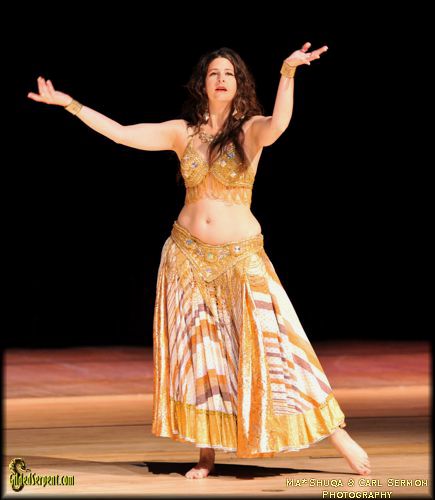
Pitiful Social Structure Revealed
Caretakers of fine handwork, sometimes feeling inadequate and a bit desperate to conserve, before there is nothing left to save, reach far back in years, searching for some hint of life’s meaning in the patterns and methods of lace production. Meaning is not easily read in the patterns of lace. What reveals itself easily is a pitiful human social history. What may seem to some as a simpler time in human history was a path fraught with deep potholes and unimaginable difficulties in making one’s living (by today’s standards). Is it simpler to buy a can of peaches or to grow them and can them yourself?

Fame and Fortune
Lace-makers were (in one sense) authors who wrote without ink; therefore, today, there are no generally recognized or famous names in our art books. Most lace was named by the place in which it was made rather than a particular person. They are not Tiffany. They are not Shakespeare, nor are they Copernicus or Carole Lombard. They did not weave their names into a corner of their masterpieces like artists Gauguin or Monet; instead, some of them secretly and purposefully wove a fine thread of their own hair into each piece, undetected, nearly undetectable. We are able to communicate with these unknown ancestor-artisans through time, sometimes only by using a magnifying glass or microscope. The old laces we touch and hold today can be understood better through the recounting of the excessive wants of nobility and the sacrifices made by early lacemakers. Such a task is only the publicly seen portion of a museum curator’s befuddling and inspired journey.

The Last Laugh
The grandeur of lace’s originally intended uses pales to the loss of personal liberty that was necessary to produce fine old examples. Even while lace-making gave pleasure in its artistry, beauty, and competitive spirit, it belied its more covert truth: in many instances, making it stole decades of family life from its artisan even as it earned her bread and a roof over her head. Fine handwork in dim light and long hours stole away her eyesight from more worldly visions and repaid her in coin—or perhaps less. Nevertheless, she fooled them all; she speaks to us today while her patron’s foppery and his lace-bedecked underwear has long passed into obscurity.

The Do-over?
True: we can learn to do what the artisan did and copy it, but we can never create it again. We can preserve it and learn from it, but we are charged with preserving only her directions and texts, her threads, tools and examples. If we daydream of becoming her colleague, we would have to innovate, building upon what she has shown us it is possible to do with her tough, tiny thread wonders—even if it is at a sacrificial expenditure of time and mind-numbing effort. First though, we would have to recognize and remove the limitations we place on ourselves, as well as those that others would place upon us—with or without our complicity. The world is not waiting for us to recreate or reproduce exact values of the past—but only to listen to their lessons. You can only attend the lessons if you preserve the handwork before it is gone forever.

Perhaps these twisted webbings we call lace serve to give us perspective upon the way we humans once were, allowing us to extrapolate more expansive inventions and intricate artistry in our future. Hold your soup can tightly to your ear and pull the twisted and crossed strings taut —perhaps you will hear the past speak to you.

Najia in one of her costumes

Resources:

use the comment box

Have a comment? Use or comment section at the bottom of this page or Send us a letter!
Check the "Letters to the Editor" for other possible viewpoints!

Ready for more?