This 7th annual event is sponsored by Munique Neith, a dancer and teacher in Barcelona. Barcelona welcomed teachers and lucky participants for a festival that brought Egypt to Spain with well attended lectures, workshops, and galas during four days of fun and learning, January 31st until February 3rd, 2013. This event provided a unique opportunity to learn the art of Oriental dance from the best names in Egypt. Randa Kamel (Egypt), Mo Geddawi (Egypt), Gamal Seif (Egypt),Bozenka (Cuba/USA), Amar Gamal (Cuba/USA), Amaru Sabat (Spain), who together with Munique Neith ran workshops throughout an intensive weekend.
A crowed room in Munique Neith Academy for the Opening Gala event.
The Opening Gala on Thursday 31st of January starts the Festival with a lecture and guest dancers from several countries.
Munique Neith (the sponsor) and the guest teacher Gamal Seif.
The lecture given by Dr. Gamal Seif with clarifying images to understand each movement made by the dancers.
Séverine of Switzerland
A very light and magical style, dancing like a fairy
The teacher and dancer Jelila of Barcelona, Spain
Raks al Shamadan to light up the Opening Gala
Amaru Sabat of Spain, – Bozenka of USA, Mo Geddawi of Germany and Egypt, Munique Neith from Brazil, Randa Kamel of Egypt, Gamal Seif of Egypt, Amar Gamal from the US.
The guest teachers to this edition of Egypt in Barcelona International Festival 2013 present on the Opening Gala at Munique Neith Academy
Competition and Performances
Catalina Malvide
1st prize in the amateur category competition at the Axxa Auditorium
Luciana Acosta of Argentina
1st prize on the professional category of the competition
Oriental Ensemble Bellyrina of Russia
1st prize in the group cathgory of the competition
Barbara Medina of Barcelona
1st prize in the advanced category of the competition
Grupo Razyia of Pama de Mallorca, Spain
Raks al Assaya, Folklore participant in the group category of the competition
Marina Pristupa
A young talent with a diva style. A contestant in the competition
Carolina Sandra
Elegance in all the movements. Participant in the National Gala on Friday the 1st of February at Axxa Auditourium
Ballet Munique Neith of Barcelona
A unexpected “fountain” or “flower” with veils. Always surprising performances
Nashyra
Light colors for a light dance in Oriental style.
Vanesa Moreno of Asturias, Spain
The essence of Baladi. Dancing like this is done in Egyptian homes.
Gisela of Vitória, Spain
The power and elegance of a Tribal Fusion style
Amal
Iraqi Khallegi
Grupo Yalla Mayurqa of Palma de Mallorca, Spain
A surprising Raks al Assaya performance with alive sticks sound. The audience participated by clapping their hands on the Saidi rhythm
Folklore Group of Munique Neith
One of the most feminine dances on Oriental World in a colorful performance
Pablo Acosta of Argentina
The creative and elegant style of a male dancer who brings the beauty of an Oriental show
Warda el Malayka Group of France
A colorful performance with a big young group with big talent in this Raks al Assaya with double cane dance performance.
Malayka Lea of France
The leader of Warda el Malayka Group. Young and very talented Oriental dancer
Donne di Ararat
A joyful and energetic Hagallah dance
Anastasia of Russia The Russian style of Oriental dance with a very elegant and remarkable print
Helwa of Brazil
The pioneer of Oriental dance in Palma de Mallorca opens the International Gala on Saturday the 2nd of February at Axxa Auditorium with her characteristic warm smile
Alimah d’Alessandria of Russia
Much energy and elegance and her dance and costume design. Talent!
Malayka of France
Lively dance showing the French style of Oriental dance
Jelila of Barcelona, Spain
The young talented teacher and dancer on a amazing performance of the classical "Beetweeneks Beek".
Roberta Kelly of Brazil
The talent and creativity with fan veil dance
Amaru Sabat of Barcelona, Spain
The balance the sword is only one of great moments of this Raks al Saif
Amal Gamal of USA
The golden godess showing her talent and joy and making the audience dream.
Bozenka of the US
The emotional performance of Canción de Aranjuez, the mytical Spanish song of Oriental style had the audience in Barcelona Spain enchanted and touched.
Dr. Gamal Seif of Egypt
The ability of this dancer on the cane dance
Gamal Seif
The authentic feeling of living art in Egyptian Sufi Dance
Randa Kamel (Egipt)
A big and happy hug to the enchanted audience
Randa Kamel, Luciana Acosta with Munique Neith
Luciana Acosta of Argentina is receiving the 1st prize in the profesional category from the hands of Randa Kamel and Munique Neith
Group picture at the end of National Gala on Friday 1st of February.
All participants, winners of the all competition cathegories and the guest teachers.
Winners of the competition categories
Workshops
Bozenka
A lively workshop of salsa fusion with Oriental dance
Gamal Seif
The power of Gawazee Dance on his workshop
Munique Neith
Thefestival sponsor sharing the energy of her style in a workshop of Oriental dance.
Workshops
A shot of one of the crowded worshops rooms
Mo Geddawi‘s class group photo
Amal Gamal
All the technique of a drum Solo with her unique style
Randa Kamel
Her unique style is a invitation to dance Shaabi
2-20-13A Special Meeting in Barcelona, Munique Brings Wael Mansour for a Workshop and Show by Helwa and Gabriel Monserrat Lopez
At Academia de Danza del Vientre Munique Neith on 29th and 30th of September 2012, two workshops took place with Munique Neith (the sponsor), Wael Mansour and young talents of Oriental dance from Spain, Italy, Portugal and France. Tradition and modernity merged together on this warm weekend.
10-1-12 Photos from Ahlan Wa Sahlan 2012 – Cairo, Egypt, Page 2: July 1- 3, 2012, Cairo, Egypt, Photos and text by Gabriel and Helwa
Once more, Raqia Hassan, the sponsor of the Ahlan Wa Sahlan Festival welcomes her guests from all over the world at the Mena House Hotel, the antique mystical palace beside the pyramids of Giza for the 12th annual of this worldwide party.
9-27-12 Ahlan Wa Sahlan 2012 – Cairo, Egypt, Page 1: June 27-29, Photos and text by Gabriel and Helwa
Once more, Raqia Hassan, the sponsor of the Ahlan Wa Sahlan Festival welcomes her guests from all over the world at the Mena House Hotel, the antique mystical palace beside the pyramids of Giza for the 12th annual of this worldwide party.
7-19-12 Dancing One’s Fortune: Told in Tarot Cards, Photos from Mariona’s "Book of Thoth" Productionphotos by Gabriel Monerrat Lopez, intro text by Helwa
Each dance of Mariona’s 2012 show was an interpretation from one of the Tarot cards with their specific stories, characterizations and magical spells. The show begins by presenting a circus titled "Habibirot" that was formed by artists from many parts of the world.
7-13-12Dance in Palma De Mallorca, Helwa’s Studio, photos by Gabriel Monserrat Lopez
Helwa, Belly dance teacher and director of Academia Helwa de Danza del Vientre pioneer of teaching this art for more than 12 years in Palma de Mallorca, Balears Island, Spain
3-16-12 The Stars Converge in Barcelona, El Festival Internacional de Danza Oriental 2012, Photos and Text by Gabriel Monserrat
Munique Neith is Brazilian of Arabic descent. She is the prestigious and well traveled organizer of the International Oriental Dance Festival in Barcelona. More than 1500 people take part every year in the 2 gala shows, the competitions, and in different workshops with the best international master teachers.
2-11-12Amani Oriental Festival Photos, October 25-29, 2011, Beirut, LebanonPhotos by Gabreil Monserrat Lopez, Introduction by Lucia
As a professional performer, I was impressed with the high caliber of dance instructors. The majority of instructors were Lebanese and offered a diverse repertoire of Lebanese Oriental and folkloric technique with emphasis in dramatic moves, staging and communication through movement with modern dance components.
6-11-13Changes in the Island Kingdom, The Bahrain Bellydance Sceneby Zaina Brown
Returning to Bahrain to work after four years felt like going back to my roots. This little island kingdom is where I did my first Middle East contract, busted my bra on New Year’s Eve, and returned several times in the following year. Those were the days. Now it had been a while. Had Bahrain changed? You betcha.
6-10-13At the Crossroads, Discovering Professional Belly Dance at the Dawn of the Twentieth Century, by Heather D. Ward “Nisaa of St. Louis”
The transition from awalem and ghawazee dance styles to theatrical raqs sharqi began during the last decades of the nineteenth century and the first decades of the twentieth in Egypt. Unfortunately, scant film footage exists of dancers from that period to reveal exactly what professional belly dance looked like during that critical moment in Egyptian dance history. However, still photos and travelers’ descriptions from the time do allow a few conclusions to be drawn about the nature of belly dance in Egypt at this important transition.
5-20-13 Soloists, Belly Dancer of the Year 2013 Photosby Sophia Harris
The goal of BDOY is to give qualified dancers a fair and equal opportunity to exhibit their skills, as well as promote and elevate the art of belly dance and support its amazing community. Khalilah wins!
5-20-13 Hafla Schmafla, Buidling Communithy in Our Dance World.by Shelley Muzzy
Per my understanding, a hafla, in its most basic sense, is a party. It can be a party centered around family events, a circumcision, birthday, engagement, promotion, whatever, and it is a term that comes from the Arabic speaking world.
5-13-13 Costuming Trends of 1987, At the Rakkasah Festival by Najia Marlyz
Although the trend at Rakkasah ‘87 was definitely toward better dancing than we have seen in the past; the costuming I saw would be high on anyone’s list of worn-out ideas. Nowadays, we have more and more of almost everything; it is immediately apparent that there is more material in the skirts—such as double skirts, ruffles, tatters, tiers, beads, and even elaborate sequined patterns, and embroidery.
5-6-13I’m Back in the U-S-S-A! Queen of Denial, Chapter 13by Rebaba
My first quarter at Cal-Poly wasn’t nearly as easy for me as finding work belly dancing. I had no idea what I was getting myself into academically when I registered as a business major.
5-1-13Dreaming of the East, Orientalism in Early Modern Danceby Iana Komarnytska
As a belly dancer and a modern dance student at York University, my attention was captured by the fact that a number of early modern dancers performed variations on Oriental themes. I became interested in how they interpreted the Orient through their modern dance technique, and how they represented the Orient in their choreographies, since their performances could have been loosely associated with actual Middle-Eastern dances.
4-19-13 Thoughts on Teaching Belly Dance, Responsibility, Flexibility, Experience, Knowledge, Leadership and More, by Princess Farhana
Teaching belly dance can be extremely fulfilling and enjoyable. It’s lots of fun, and rewarding for the instructor and students alike. Unfortunately, in the belly dance community, perhaps more than in any other dance form, there will always be instructors who have absolutely no business teaching…at all.
Returning to Bahrain to work after four years felt like going back to my roots. This little island kingdom is where I did my first Middle East contract, busted my bra on New Year’s Eve, and returned several times in the following year. Those were the days. Now it had been a while. Had Bahrain changed? You betcha.
The nightlife in this country took a big hit when the uprising began back in 2011. The situation now is a stalemate – people remain defiant and protests are ongoing, but it hasn’t brought on political change. The government is backed by its giant neighbor Saudi Arabia as well as the United Arab Emirates.
Together, they’re not running out of tear gas and birdshots anytime soon. The presence of Saudi forces is a hot-button issue. It’s greatly resented by Bahrain’s Shiite majority. If a car with Saudi plates ventures into the wrong neighborhood, it may not make it out. The tensions have slashed the number of visitors.
Saudi Arabian money is what drives the Bahraini nightlife and less Saudis means less business. Several restaurants that used to have a bellydancer have closed or stopped entertainment in the recent years. The Diplomat, Regency Intercontinental, Novotel and Marina Club are all off the bellydance list, at least for now. The remaining places have suffered significantly.
This time I was working in Gulf Hotel, for approximately three months. It’s a Bahrain landmark, the first five star hotel on the island, located in the heart of Manama. The Lebanese restaurant Zahle is therefore well established. It’s an upscale place where couples and familie s sit on one side and single men on another. Some of the guests have been coming for decades. I did two thirty minute shows (which is the Bahrain standard), accompanied by a one man show, taking turns with a Lebanese male and a female singer. All in all, Zahle was a good place to work, if not the most exciting.
Pashawat restaurant inside Sofitel offers similar entertainment. A one man show, a female singer and a bellydancer perform in beautiful surroundings. The setting is more lounge than restaurant, which is kind of cosy. It’s not a big place, and you can opt to sit on a comfy couch. The drawback of the gorgeous Sofitel is that it’s located in Zallaq, far from Manama. If you have your own wheels it’s not a problem, but taking a taxi from the city would be pricey. Which could be why it’s such a clean place, suitable for families.
Brazilian dancer at the Awtar
Only one newcomer, Awtar, in a trendy new hotel Elite Crystal is busy all week long. The two piece band is energetic, but the bellydancer is surely the main attraction. Located in Juffair, a bustling area near the US Navy Base, Awtar is hot and happening. It’s not a seedy place (by local standards), but there are plenty of hookers, and the vibe is more nightclub than restaurant.
Then there’s Tarbouche, another Lebanese restaurant inside City Center hotel (in the Gold City building). Say you work in Tarbouche and people’s response will be less than impressed. Squeezed between a group of other similar establishments, the Bab al Bahrain area shows its true colors at night when the clubs open and Saudis and hookers come out in numbers. The funny thing is that the same dancer can at one point work in a well respected place like the Gulf, and another time in a two star hotel like the City Center. All the above mentioned restaurants hire their entertainers through Lebanese agents. Most bellydancers working with them are Brazilian, or other South American nationalities. They’re strong dancers with a high level of professionalism, plus they look great. A handful are Lebanese or Syrian, or American or European nationals like me. (In a traditional society like Bahrain, dancers need to be imported, it’s not a career option for local girls.)
Lebanese dancer performing in the Tarbouche
I’d been to Tarbouche many times in the past, and seen quite a range of dancers. (The most memorable of them all was a Lebanese girl, who appeared on the stage looking and acting completely pissed. I was afraid she would walk off any moment. Then she slowly warmed up, and in the end of the show she grabbed the microphone and sang a song.) The two piece Egyptian band gets the job done. The keyboard guy brings in some of that Haram street flavor, reaching for his cigarette every thirty seconds, without missing a beat. The staff is friendly. The customers are surprisingly tame. Actually, if customers were urgently looking to get laid, they would probably go to one of the discos on the same floor. I haven’t heard dancers complain about the work. Tarbouche is better than its reputation! I went by on my night off to see the Mexican dancer. Three guys got on the stage for some really awesome dabke, they were fun to watch. A few customers took turns to sing – they were professional singers who were just hanging out. The whole night was like a talent show.
The most fun contract I ever had in Bahrain was in a Lebanese restaurant called Sawani. I was sad to hear they had closed soon after the uprising began. Sawani was a nice, classy family place, but the contract came with a twist: a second show in a three star hotel disco in Hoora, an area full of similar seedy nightspots. Hoora is the closest thing to a red light district on this island. Dancing there for a month was like a freak accident, I had come on a day’s notice to replace another dancer. I enjoyed the stark contrast between the two places, and showed up for my second gig sweaty and super relaxed (much like the audience).
I wanted to see what’s happening in Hoora these days. Most places that have "dancers" simply put a group of girls on the stage to do a sort of semi-performance. They usually wear long dresses or gowns, and just shuffle in place with a bored look on their faces. I’m going to make an educated guess and say that most of them are Moroccan. One such dancer arrived in Bahrain on the same flight as me. I already detected her at the airport in Qatar. Extensions down to her butt and traveling to Bahrain alone, she was no civilian. I wasn’t surprised when we were both handed our artist visas upon arrival. An actual bellydance show, if it even exists, is Hoora’s best kept secret. I asked around in a few hotels, but no one had a clue. Maybe I should have gotten into one of the cars that pulled over? "Hey guys! You know any bellydancers? Take me with you!" (Around here they think any girl walking on the street is a hooker, even in broad daylight, wearing sweatpants, doesn’t matter.)
Then, just as I’d given up hope, I heard that a friend of a friend was dancing in one of the hotels in Hoora. I got in touch with her, and she asked me to come and see the show. Oh my. Even as I knew to expect "go-go dancing" with the occasional bellydance number (if there were enough customers), I was still shocked. The place was very small. A few Eastern European girls in skimpy outfits were dancing to Western music on a podium. The customers were sitting close enough to see up their skirts. The staff was pushing leis made of fake flowers, that the customers could buy for the dancers. (The girls received a commission of this.) I’d been instructed to ask to see the bellydancer, and she changed into her costume and danced to one song. We had a few words afterwards. She was disappointed with the work. She had expected there to be more bellydancing. As I was leaving the hotel I took a peak into two Arabic clubs, with Moroccan and Tunisian girls dancing on the stage in long dresses.
One of the longest standing entertainment spots in Bahrain is the Golden Club in Crowne Plaza. What I remember seeing years ago was a Russian show alternating with an Eastern European bellydancer. She was not what I would call a professional dancer. Her costume looked self made, in a painfully obvious way. I went to see if anything had changed. I googled Golden Club to see what time they opened and bumped into an online review saying that "with all the new venues that have sprung up, it’s nice that a place like Golden Club still exists, for comedy value". I call it a Bahrain must see.
Look, if you never saw a "Russian show" (also known as "show ballet"), I urge you to go if given the chance, at least once in your life. I’ve seen these shows in a few Arab countries, and they never fail to blow my mind. It’s hard to believe that in this time and age there’s still a demand for this sort of entertainment. Basically it’s a group of girls doing dance numbers with themes from different countries and styles – yet the choreography is mostly the same awkward jazz steps from the last century, usually performed in a half hearted manner. The current group consisted of three young and pretty Ukrainian girls, and the numbers ranged from Russian, Moroccan and strained looking Khaleeji dance to a Katy Perry track and "I Will Survive". The outfits were outlandish, featuring lots of sparkly bras and panties with all sorts of accessories and headgear. The point must be to show cute girls in skimpy costumes – but the outcome is hardly "sexy". Watching a Russian show puts me in such a state of confusion. I literally don’t know what’s unraveling front of my eyes.
A Russian bellydancer followed and she didn’t disappoint. She had stage experience and a nice technique, and pretty costumes. She was dancing barefoot and using mostly Egyptian music, with some surprising song choices. I appreciated the artistry and her charisma, but I’m sure that in another venue the customers would be quick to point out that she’s not young and slim. A Khaleeji singer followed with a quick show, then the Ukrainian girls and the bellydancer returned once more. I left in a happy state of sensory overload. Golden Club never fails.
All in all, the Bahrain bellydance scene is not big and wondrous like in Dubai, but it still has good stuff to offer. So if you’re in town, go out, and enjoy your night!
3-1-12Touching the Clouds: Impossible Bridge in Yemenby Zaina
I needed a place where I felt safe, had some friends, and knew my way around: a place like Yemen! Besides, there was a bridge there that I wanted to check out.
8-9-12What Lies Beneath, Part 1, The Morocco & Western Sahara Tourists Don’t Seeby Zaina Brown When you say you are going to travel around in Morocco, usually, the response you get can be summarized with one word: "Marrakech". Sure, Marrakech might be the "best of Morocco", but it also wasn’t going anywhere.Some other places, however, may not always remain as accessible, and I had a few questions on my mind.
2-19-13What Lies Beneath Part 2, The Morocco Tourists Don’t See, Suspicion, Lifestyle, Wedding, & Rescueby Zaina Brown What’s depressing about Laayoune is the idea of it: what it represents, not the city itself. Buildings, painted in salmon color like Marrakech, palm trees planted in pretty town squares, clean streets, restaurants and cafes, busy market places and a gorgeous plaza where people stroll at night. If you didn’t know any better, you would love this place! In reality, you are inside an enormous military base, while the city is a mere facade.
4-5-12El Balie Arabie, Dancing in Chileby Athena
I discovered finding a teacher was going to be a lot harder than I originally intended.
1-19-12Facing the Truth, Working as a Dancer in Egyptby Leila Farid
Sometimes the dirty facts of dancing in Cairo can be more interesting than the pristine Oriental fantasy… at least, it is when you tell the story later! PHOTOS!
5-30-12The Kalbelia, The Charming Gypsies of Rajasthanby Divya Venkat
The snake dance was derived from the practice of men bringing snakes to the doors of people and entertaining them by making the snake dance to music and the money collected from people is a source of income. This dance incorporates subtle dance moves that are meant to represent the movements of a cobra as it slithers on the ground
10-27-12 In Sharp Contrast, Dancing in Lebanon and the US by Neena Nour
Lebanon has something called “super night clubs" which are, basically, strip bars or cabarets. The term “nightclub” can be misunderstood easily–so it is best to tell them that you work at a 5-star place and not a cabaret.
6-10-13At the Crossroads, Discovering Professional Belly Dance at the Dawn of the Twentieth Century, by Heather D. Ward “Nisaa of St. Louis” The transition from awalem and ghawazee dance styles to theatrical raqs sharqi began during the last decades of the nineteenth century and the first decades of the twentieth in Egypt. Unfortunately, scant film footage exists of dancers from that period to reveal exactly what professional belly dance looked like during that critical moment in Egyptian dance history. However, still photos and travelers’ descriptions from the time do allow a few conclusions to be drawn about the nature of belly dance in Egypt at this important transition.
5-20-13 Soloists, Belly Dancer of the Year 2013 Photosby Sophia Harris
The goal of BDOY is to give qualified dancers a fair and equal opportunity to exhibit their skills, as well as promote and elevate the art of belly dance and support its amazing community. Khalilah wins!
5-20-13 Hafla Schmafla, Buidling Communithy in Our Dance World.by Shelley Muzzy
Per my understanding, a hafla, in its most basic sense, is a party. It can be a party centered around family events, a circumcision, birthday, engagement, promotion, whatever, and it is a term that comes from the Arabic speaking world.
5-13-13 Costuming Trends of 1987, At the Rakkasah Festival by Najia Marlyz
Although the trend at Rakkasah ‘87 was definitely toward better dancing than we have seen in the past; the costuming I saw would be high on anyone’s list of worn-out ideas. Nowadays, we have more and more of almost everything; it is immediately apparent that there is more material in the skirts—such as double skirts, ruffles, tatters, tiers, beads, and even elaborate sequined patterns, and embroidery.
5-6-13I’m Back in the U-S-S-A! Queen of Denial, Chapter 13by Rebaba
My first quarter at Cal-Poly wasn’t nearly as easy for me as finding work belly dancing. I had no idea what I was getting myself into academically when I registered as a business major.
5-1-13Dreaming of the East, Orientalism in Early Modern Danceby Iana Komarnytska
As a belly dancer and a modern dance student at York University, my attention was captured by the fact that a number of early modern dancers performed variations on Oriental themes. I became interested in how they interpreted the Orient through their modern dance technique, and how they represented the Orient in their choreographies, since their performances could have been loosely associated with actual Middle-Eastern dances.
4-19-13 Thoughts on Teaching Belly Dance, Responsibility, Flexibility, Experience, Knowledge, Leadership and More, by Princess Farhana
Teaching belly dance can be extremely fulfilling and enjoyable. It’s lots of fun, and rewarding for the instructor and students alike. Unfortunately, in the belly dance community, perhaps more than in any other dance form, there will always be instructors who have absolutely no business teaching…at all.
The transition from awalem and ghawazee dance styles to theatrical raqs sharqi began during the last decades of the nineteenth century and the first decades of the twentieth in Egypt. Unfortunately, scant film footage exists of dancers from that period to reveal exactly what professional belly dance looked like during that critical moment in Egyptian dance history. However, still photos and travelers’ descriptions from the time do allow a few conclusions to be drawn about the nature of belly dance in Egypt at this important transition. These primary sources provide invaluable insight into the technique, aesthetic, costuming, and performance format of the dance as it existed at that time.
The period of interest in this discussion extends from the 1870s through the 1920s. As I have discussed elsewhere, entertainment halls, or salat, began to spring up around Cairo’s Ezbekiyah district in the latter half of the nineteenth century, particularly after the completion of the Ezbekiyah Gardens in the 1870s (Ward, “From Café Chantant to Casino Opera,” 2013). The establishment of these venues provided a new place of employment for Egypt’s professional belly dancers, the awalem and ghawazee, who were restricted in where they could perform in the Egyptian capital. By the 1890s, Western travelers’ accounts and guidebooks clearly allude to belly dance being performed in the entertainment halls of Ezbekiyah (for example: Baedeker 1898: 24; Reynolds-Ball, Cairo To-Day, 1898: 12). Throughout the 1910s and 1920s, the salat were a mainstay of Cairo’s popular entertainment scene around Ezbekiyah and Shari’ Emad al Din, and Egyptian dance was one of many forms of entertainment offered on their stages.
In the 1930s, the popular dancers who got their start in the entertainment halls of central Cairo made their way onto the silver screen, providing a clear visual record of what the dance had become, but revealing little about what it had been during those earlier years.
Close-up from a postcard postmarked 1905 showing dancers at the sala El Dorado in Cairo (the postcard is from my personal collection) Click image for enlargement
The extant film footage of dancers performing Middle Eastern or Middle Eastern-inspired dances at the nineteenth to twentieth century transition consists of a mere handful of films, many of them recorded by Thomas Edison. It is peculiar that these dance forms that were such a fixation for European and American observers of the Middle East, would turn up so infrequently in the new medium of motion pictures. Among the Edison films are “Princess Ali”, 1895, “Fatima’s Coochee-Coochee Dance”, 1896, and “Turkish Dance, Ella Lola”, 1898. (See Nugent n.d. for an excellent discussion of “Fatima’s Coochee-Coochee Dance”.) In addition to these films, there is footage by the Lumière Brothers that provides a brief glimpse of dancers at the Exposition Universelle of Paris in 1900 (Institut National de l’Audiovisuel, 1983). Also, there is the American Mutoscope and Biograph Company’s footage of a performer who was known as Princess Rajah, 1904.
Unfortunately, none of these films portray dancing that is unequivocally Egyptian. Princess Ali’s costuming, movements, and manipulation of scarves suggest that her dance may be Algerian, not Egyptian. Similarly, the dancers in the Lumière film, although wearing costuming similar to that of contemporary Egyptian dancers, showing one of the dancers playing finger cymbals, seem to be performing Algerian dance. The dances of Fatima, Ella Lola, and Princess Rajah all share some basic features of the dancing performed by Egyptian ghawazee in the present day (e.g. the Banat Mazin ghawazee) such as stationary and traveling hip shimmies and shoulder shimmies. Further, Fatima and Princess Rajah play finger cymbals during their performances, something that seems to have been a significant feature of Egyptian dance at the time and remains so in the present. (See below.) Yet, both Ella Lola and Princess Rajah were American-born vaudeville performers, and Fatima, whose ethnic origins are unclear, worked as a “cooch dancer” at Coney Island (Carlton, 1994: 62). Thus, although it is probable that these three dancers learned some of their movements from native Egyptian dancers (whether directly or indirectly), it is impossible to know to what degree their dancing is American vaudevillian rather than Egyptian.
Thus, it is necessary to resort to textual and photographic sources that detail Egyptian dance at its source in Cairo. In spite of the paradoxical dearth of film footage, textual descriptions of Egyptian dancers from this period are abundant and often quite detailed. Further, photographs and picture postcards from the time provide an invaluable record of costuming, stage layouts, etc.
The following is a vivid description of a visit to the sala El Dorado in 1907. This popular Cairo entertainment hall was originally situated off Midan al Khazindar to the northeast of Ezbekiyah Gardens, but sometime around 1880, it moved to a new location on Shari’ Wagh el Birket (today known as Shari’ Naguib el Rihani). (Ward, “The Search for El Dorado…in Cairo”, 2013) I have chosen to quote the entire account here, as it provides a useful framework for the remainder of this discussion.
“In the company of a South African, Mr. Wertheim, and an Englishman, Mr. Bacon, who knows Cairo thoroughly and also the seedy parts, and who wants to be our guide, I’m going tonight to the Eldorado, a local café concert.
In a large room the audience is almost entirely composed of natives, who do not seem to have paid an entry fee exceeding half a piaster; maybe they are let in for free.
They do not buy drinks; but the institution recovers its expenses nonetheless, thanks to a few women, who go from one table to another and get paid to drink. A Sudanese, not pretty, but with an agreeable figure, sits down at our table. She judges Mr. Wertheim as the most generous of us and gets him to offer her two half-bottles of beer at 10 piastres, and thus we have completed our entry price. This woman is covered with fake coins imitating the Austrian currency, as I bought at Wadi Halfa.
At the end of the hall is a large stage, occupied by six men and as many women, seated in semi-circle facing the audience. They sing a sad melody, accompanied by a guitar and a tambourine, and intervals of clapping. A woman who resembles La Goulue[1] rises, she is very young, but quite stout. She is dressed in pink, covered with gaudy trinkets, her belly is bare; she produces a variety of movements and tremors, it’s called, as everyone knows, the belly dance. She accompanies herself with two pairs of small cymbals attached to fingers like castanets, and these contortions last a long time; however she pauses to empty a beer that is sent to her by an enthusiastic spectator.
When she is finished, she comes into the room to “pass the hat” with a small saucer which she places successively on each table and which she leaves there for a few minutes, during which she stands aside discreetly. Most of the natives give a small coin. During this operation, she is tracked and monitored by a fine Egyptian with a great black mustache and a fierce expression, who does not lose sight of her for a moment, nor the money she collects, he is probably her impresario.
Three tables are now occupied by Europeans; at the table next to ours there is an Englishman, accompanied by a donkey driver and a guide from Shepheard’s Hotel, that I hear say: "You have already spent three pounds tonight, and it is only eleven."
The same show is repeated every half hour. It is followed by a cinematograph, and starting at one o’clock in the morning, the audience dances. We do not wait for more. The tickets are different prices, depending on how the client is dressed; the cashier judges us to be worth tickets at five piastres per person, but is content to give us a ticket for a single seat for the three of us.” (Loewenbach 1908: 219-220, translated by the author, with assistance from Christine Ferhat.)
From this account, supplemented by others from roughly the same period, it is possible to draw several conclusions regarding the nature of belly dance on the sala stages of the late nineteenth and early twentieth centuries.
Technique and Aesthetic
Loewenbach’s account describes a solo performer who rises after a musical interlude, performs the “movements and tremors” of the so-called “belly dance,” and accompanies herself with finger cymbals. Although Loewenbach does not go into much detail regarding the movements themselves, other accounts offer a bit more:
“It was not what I would call dancing at all. She simply walked up and down the stage swaying her body about, the dancing being all from the hips up.” (South Australian Chronicle, 17 June 1893, 16.)
“…a girl laden with jewels and ropes of pearls on her neck, and in every plait of her hair, twists and twirls about the stage with solemn slow iteration. She has on her hands rough castanets with which she beats the maddening time to a tune so hideous that the European nerves tremble at it. Her feet scarcely seem to move. But the expression comes from the centre of the body, which shakes like jelly. On and on she goes, round and round, perpetually twisting, wagging her body just as some people can wag their noses and their ears, until at last she sinks exhausted on a sofa.” (Scott, 1894.)
“The dance du ventre is not a dance in our acceptance of the term at all; it consists of tremblings, wrigglings and jerkings of the lower abdominal muscles, including those of the hips, loins, and back; the dancer in short steps, moves round and round the stage, sometimes back to the audience, in order that she may show, in detail, her movements in as great variety as possible.” (Star, Issue 7512, 20 September 1902, 2.)
Taken together, these accounts permit several conclusions regarding the typical belly dance presented in Cairo’s entertainment halls at the turn of the 20th century:
The dance was performed solo (more on this point later).
The primary movements of the dance were localized in the torso, with minimal footwork.
The dance was performed to the accompaniment of a takht, a traditional ensemble of singers and musicians.
The dancers sometimes played finger cymbals during their performances.
The dance being performed in Cairo’s turn-of-the-century entertainment halls does not seem to have differed substantially from that performed by Egypt’s ghawazee much earlier in history. Yet, by the 1930s, when belly dance became a common sight in Egyptian films, the dance had incorporated additional footwork and arm positions, seemingly more elaborate than what is described in these earlier accounts, and a “chorus line” of dancers backing up the featured soloist had become commonplace. From at least the 1930s onward, dancers were accompanied by larger and more varied musical ensembles than the small traditional takht of their predecessors; the ensembles generally included a mix of traditional and Western instrumentation. Common consensus in today’s belly dance community – perhaps based on statements byBadia Masabni herself in interviews – is that Badia Masabni created these innovations in the dance. Film footage from the 1910s and 1920s would be invaluable in settling once and for all to what degree Badia influenced the stylistic development of raqs sharqi, since Badia opened her first club in 1926, and dancers were definitely a featured part of entertainment line-ups well before that. Unfortunately, I have not been able to locate footage from this period as of the time of this writing.
Costuming
For example, an Underwood and Underwood stereograph clearly illustrates a dancer from Upper Egypt with her midriff bare. Though undated, this stereograph must have been produced sometime between 1880 and 1920, when Underwood and Underwood were actively producing stereographs.
Regarding costuming, both Loewenbach and other observers offer useful insights:
“…a girl laden with jewels and ropes of pearls on her neck, and in every plait of her hair…” (Scott, 1894.)
“The dress consists mainly of a rather full silk skirt, with tabs of colored silk; this is held from falling off by a thick band of stuff passing round the hips. A silk or linen skirt [Author’s note: this appears to be a typographical error in the original text; I believe the author was referring to the shirt, rather than the skirt.] of very open, lace-like meshes, and an amteree [sic], or short, sleeveless vest, complete the costume. Modern clocked open-work stockings and high-heeled French shoes are worn. A mass of necklaces of real gold coin pendants, each suspended from a tiny braid of hair; lots of bracelets, anklets, armlets, etc., are used by those who are better off.” (Star, issue 7512, September 20, 1902, 2.)
Contemporary postcards clearly corroborate these descriptions.
The basic costume described and illustrated here – skirt, skirt “topper” with long ribbons, sheer chemise, vest, heeled shoes – seems to have evolved from the earlier costuming of the ghawazee, which was itself essentially an elaboration on the everyday garments worn by ordinary women in the privacy of the hareem, or women’s quarters, of the home. (See Lane 1836.) Egyptian ghawazee in Upper Egypt continued to wear a version of this costuming into the second half of the twentieth century. (See Aisha Ali andEdwina Nearing’s work on the Banat Mazin ghawazee.)
Taheya Carioca in Ghafir Al Darak in 1936
One point of particular interest in Loewenbach’s account is the statement that the dancer’s midriff was bare. Does this mean that the dancer’s belly was entirely uncovered, or was she perhaps wearing a sheer mesh chemise that, for a turn-of-the-century European observer, made her belly effectively “bare”? Notably, photographs of dancers wearing the vest without a shirt or midriff cover do exist from this period. For example, an Underwood and Underwood stereograph clearly illustrates a dancer from Upper Egypt with her midriff bare. (See http://content.cdlib.org/ark:/13030/kt0r29q906/?order=2.) Though undated, this stereograph must have been produced sometime between 1880 and 1920, when Underwood and Underwood were actively producing stereographs. (University of Chicago Library, 2010.)
Also interesting, are illustrations of Egyptian dancers from the 1889 Exposition Universelle in Paris. (See http://gallica.bnf.fr/ark:/12148/btv1b7702324n. or top of page.) The coin decorations on these dancers’ vests give the impression of a “proto-bedleh.” Compare these vests to the top worn by Taheya Carioca in the filmGhafir Al Darak in 1936. The resemblance is unmistakable.
The above embedded video clip is hosted on Priscilla Adum’s (“Lebdancer”) YouTube channel
Taken as a whole, the textual and photographic evidence leads to some interesting conclusions regarding the relationship between the costuming from this period and the bedleh, the bra/belt/skirt combination that would become the Egyptian belly dance “uniform” by the mid-1930s. First, the bare-navel look of the bedleh had precedents in earlier costuming. Second, it is not impossible to imagine that the bedleh bra could have evolved from the vests worn by earlier dancers.
In short, elements of the bedleh were already in place at a much earlier period than previously realized, and the bedleh may have emerged largely as an elaboration upon an existing costuming aesthetic, rather than as a wholesale adoption of Western fantasy costuming.
Performance Format
Loewenbach and other writers provide invaluable observations regarding the spatial layout of a typical sala, the organization of the show, and interactions between audience and performers:
“Seated on divans on a stage at the end of the room are the performers, some ten in number – the orchestra and male singers on the right, the female singers in the center and the exponents of the eternal and monotonous dance on the left. The faces of the lady vocalists are hidden by the yashmak, but it is apparent that the fair ones are endowed with an abundance of adipose tissue, for in the east, as in the west, a prima donna is generally a person of weight. No veil, however, hides the faces of the dancers, who, when not actually engaged in distorting their bodies, puff away with enjoyment at the ubiquitous cigarette.
A dancer with an indescribable swagger leaves the divan and commences to posture on the platform. A hum of admiration rises from her many admirers, for she is a prime favorite with the habitués of the hall. For a solid quarter of an hour does this brown-faced nymph continue her hideous contortions – hideous, at all events, to persons of uncultivated tastes”.(Hopkinsville Kentuckian, May 30, 1899, 7.)
“The whole show consists of a few wailing musicians sitting on a raised platform at one end of the café, accompanying the endless gyrations of a stout young woman of unprepossessing features, who postures in particularly ungraceful and unedifying attitudes. Then her place is taken by another, equally ill-favoured and obese, who goes through the same interminable gyrations, to be relieved in her turn; and this goes on hour after hour. This strange “unvariety show” is, nevertheless, one of the established sights of Cairo, and is frequented in great numbers by tourists.” (Reynolds-Ball, The City of the Caliphs, 1898: 191-192.)
These accounts describe venues that existed strictly for the purpose of providing entertainment to paying customers. In traditional contexts for belly dance performance, such as weddings and mawalid (saint’s day celebrations), the dance occurred as an integral part of a significant social occasion. In the new, non-traditional setting of the sala, the dance came to exist for its own sake: no special event was necessary to justify a dance performance. Audience members sought out the establishment and paid the entry fee with the express purpose of seeing something entertaining – perhaps dance, music, or even a film, for, as Loewenbach’s description indicates, the dance show was only one of the entertainments available at a typical sala.
Postcard from 1902 showing dancers, singers, and musicians onstage at another typical sala (the postcard is from my personal collection) click on image for enlargement
These accounts also describe a theatrical setting in which the performance space was clearly demarcated: a raised stage at one end of a hall. In some venues, the stage was bounded by a low railing. (See illustration above.) This clear delineation of performance space from audience space was a definite break from traditional belly dance performance contexts, where casual interaction between the performers and the audience was commonplace. Moreover, as Loewenbach describes, although the dancer moved about the audience soliciting tips after her performance, her direct interaction with audience members was minimal. This would suggest that, at least at El Dorado, the dancers themselves were not engaged in the practice of fath (sitting and drinking with customers) – the sala had other female employees specifically tasked with this duty. This is a marked difference from the dancers of the salat of the 1920s and 1930s, who regularly engaged in fath.
The dance show itself consisted of multiple performances by a single dancer, or else successive performances by a variety of soloists throughout the course of the evening. Though postcards and photographs sometimes depict multiple dancers performing at the same time, travelers’ accounts generally only allude to soloists. Based on the photographic evidence, it seems that even when two or three women were dancing together, there was little coordination among them. Between performances, the dancers would sit and rest on a divan on the stage, or else circulate through the audience to collect tips.
Who were the audiences at these performances? Although it is clear that European and American tourists did frequent the dance shows, most travelers’ descriptions suggest that the performances were geared toward Egyptian audiences. A consistent feature of Western travelers’ accounts is the general distaste with which the authors viewed not only the native dance, but also the accompanying music. (See also, for example, Warner 1900: 101-102.) The writers often seem baffled by Egyptians’ fondness for arts and music that Western eyes and ears found so repugnant. Yet, one author asserts that most of the entertainment halls were owned by “enterprising Greeks and Levantines for European visitors”. (Reynolds-Ball, The City of the Caliphs, 1898: 191-192, emphasis in the quotation-mine.) That non-Egyptians may have owned many of these venues is not altogether surprising, given that many, later, better-known sala owners – such as Badia Masabni – were not native Egyptians. However, Reynolds-Ball’s suggestion that the salat and their dance shows were intended for Europeans is not borne out by her contemporaries, such as Loewenbach, who clearly indicate that:
…the majority of patrons at these establishments were Egyptian and that the style of entertainment offered was of little appeal to non-Egyptians.
Conclusions
The descriptions of Loewenbach and other contemporary observers of belly dance performances in the entertainment halls of late nineteenth/early twentieth century Cairo reveal a great deal about a dance form in transition. In terms of technique, aesthetic, and costuming, the dance did not undergo immediate and substantial changes when it moved from the traditional settings of weddings and mawalid to the theatrical context of the salat. In fact, comparison of costuming from the period with the bedleh worn by dancers in films of the 1930s suggests some degree of continuity between the costuming of the awalem and ghawazee and that of the dancers in Egypt’s cinematic “Golden Era.” However, the movement of the dance to the sala stage did have a profound impact on the fundamental nature of belly dance performance. Belly dance was no longer embedded in traditional social occasions; it now existed, alongside other forms of entertainment, as entertainment for entertainment’s sake, and it was presented in venues specifically designed to provide amusements to paying customers. That change enabled others that were to follow – such as changes in technique, musical accompaniment, etc. – because it brought dancers together with other artists such as: singers, composers, actors and actresses, etc. – in venues which essentially became melting pots for invention and innovation in Egyptian arts and entertainment.
References and Resources
American Mutoscope and Biograph Company “Princess Rajah Dance”The American Variety Stage: Vaudeville and Popular Entertainment, 1870-1920 (Library of Congress American Memory Collection), 1904. <http://memory.loc.gov/cgi-bin/query/r?ammem/varstg:@field(NUMBER(1821))>
Baedeker, Karl Egypt: Handbook for Travellers. (4th remodelled edition). Leipsic: K. Baedeker, 1898. From Travelers in the Middle East Archive (TIMEA).
<http://hdl.handle.net/1911/13069>.
Carlton, Donna Looking for Little Egypt. Bloomington: IDD Books, 1994.
Edison, Thomas A., Inc. “Princess Ali”Early Motion Pictures, 1897-1920 (Library of Congress American Memory Collection), 1895.
<http://memory.loc.gov/cgi-bin/query/h?ammem/papr:@field(NUMBER+@band(edmp+4035))>
Edison, Thomas A., Inc. “Turkish Dance, Ella Lola”The American Variety Stage: Vaudeville and Popular Entertainment, 1870-1920 (Library of Congress American Memory Collection), 1898.
<http://memory.loc.gov/cgi-bin/query/r?ammem/varstg:@field(NUMBER(1347))>
Institut National de l’Audiovisuel (INA) “L’Expo Universelle de 1900”INA, 1983.
<http://www.ina.fr/video/CAB8301052601/l-expo-universelle-de-1900-video.html> —- see 8:49
Lane, Edward Manners and Customs of the Modern Egyptians, 1836. New York: Cosimo Classics, 2005.
Loewenbach, Lothaire Promenade Autour de l’Afrique, 1907. Paris: Ernest Flammarion, 1908. From Hathitrust Digital Library.
<http://catalog.hathitrust.org/Record/010109791>.
Nugent, Marilee "Fatima’s Coochee-Coochee Dance (1896): A Film by Thomas Edison"All About Belly Dancing, by Shira, n.d.
<http://www.shira.net/about/fatima-coochee-coochee.htm>. Accessed May 10, 2013.
Reynolds-Ball, Eustace A. Cairo of To-Day: A Practical Guide to Cairo and Its Environs London: Adam and Charles Black, 1898. From Hathitrust Digital Library.
<http://catalog.hathitrust.org/Record/009261008>.
Reynolds-Ball, Eustace A. The City of the Caliphs; a Popular Study of Cairo and its Environs and the Nile and its Antiquities Boston, London: Estes and Lauriat, T. Fisher Unwin, 1898. From Travelers in the Middle East Archive (TIMEA).
<http://hdl.handle.net/1911/9297>.
Scott, Clement “Egyptian Dancing”Evelyn Observer, and South and East Bourke Record. [Australia]. 2 February 1894: 2.
<http://trove.nla.gov.au/ndp/del/article/60670841>.
South Australian Chronicle “Letters to Boys – No. LI. In Egypt”South Australian Chronicle. 17 June 1893: 16.
< http://trove.nla.gov.au/ndp/del/article/92310356>.
Star “The Ghawazee of Cairo: The Picturesque Dancing Women of Egypt”Star [Canterbury, New Zealand]. Issue 7512. 20 September 1902: 2.
<http://paperspast.natlib.govt.nz>.
University of Chicago Library Underwood & Underwood. Collection 1899-1908. Chicago: University of Chicago Library, 2010.
Warner, Charles Dudley My Winter on the Nile. Boston: Houghton, Mifflin and Company, 1900. From Internet Archive. <http://archive.org/details/mywinteronnile00warniala >.
1-10-13From Café Chantant to Casino Opera, Evolution of Theatrical Performance Space for Belly Dance, by Heather D. Ward (“Nisaa of St. Louis”)
Most students of Egyptian belly dance are aware of Badia Masabni and her famous nightclubs, and many believe Badia’s clubs to be the birthplace of theatrical belly dance, or raqs sharqi. However, fewer are aware that Badia’s clubs were neither the first nor the only venues of their kind.
3-13-13The Search for El Dorado…in Cairoby Heather D Ward/ Nisaa
The name “El Dorado” conjures up images of a fruitless quest for an unattainable, even mythical, goal. The El Dorado in this discussion, however, is neither myth nor fantasy. El Dorado was a sala or café chantant, an entertainment hall, located in the heart of Cairo’s Ezbekiyah entertainment district.
3-28-13Is the Bedlah from Hollywood?, The Origin of Our Costumeby Leyla Amir
As long as I can remember, the origins of the bedlah (the two piece costume of Middle Eastern dancers) has been widely controversial and debated among the artists of Raqs Sharqi (belly dance). The dance itself, along with the costume, has gone through many centuries of changes and name identifications in accord with period fashion as well as contact with outside influences.
5-20-13 Soloists, Belly Dancer of the Year 2013 Photosby Sophia Harris
The goal of BDOY is to give qualified dancers a fair and equal opportunity to exhibit their skills, as well as promote and elevate the art of belly dance and support its amazing community. Khalilah wins!
5-20-13 Hafla Schmafla, Buidling Communithy in Our Dance World.by Shelley Muzzy
Per my understanding, a hafla, in its most basic sense, is a party. It can be a party centered around family events, a circumcision, birthday, engagement, promotion, whatever, and it is a term that comes from the Arabic speaking world.
5-13-13 Costuming Trends of 1987, At the Rakkasah Festival by Najia Marlyz
Although the trend at Rakkasah ‘87 was definitely toward better dancing than we have seen in the past; the costuming I saw would be high on anyone’s list of worn-out ideas. Nowadays, we have more and more of almost everything; it is immediately apparent that there is more material in the skirts—such as double skirts, ruffles, tatters, tiers, beads, and even elaborate sequined patterns, and embroidery.
5-6-13I’m Back in the U-S-S-A! Queen of Denial, Chapter 13by Rebaba
My first quarter at Cal-Poly wasn’t nearly as easy for me as finding work belly dancing. I had no idea what I was getting myself into academically when I registered as a business major.
5-1-13Dreaming of the East, Orientalism in Early Modern Danceby Iana Komarnytska
As a belly dancer and a modern dance student at York University, my attention was captured by the fact that a number of early modern dancers performed variations on Oriental themes. I became interested in how they interpreted the Orient through their modern dance technique, and how they represented the Orient in their choreographies, since their performances could have been loosely associated with actual Middle-Eastern dances.
4-19-13 Thoughts on Teaching Belly Dance, Responsibility, Flexibility, Experience, Knowledge, Leadership and More, by Princess Farhana
Teaching belly dance can be extremely fulfilling and enjoyable. It’s lots of fun, and rewarding for the instructor and students alike. Unfortunately, in the belly dance community, perhaps more than in any other dance form, there will always be instructors who have absolutely no business teaching…at all.
4-17-13Sold Out Mosaic of Dance in North Carolina!Raqs Layali 2013, Asheville, North Carolina, Text by Event Producer Mahsati Janan, photos by Bill Frazer, Sharon Taylor and Ra’eesa
A few pics from the Raqs Layali show held March 22-24, 2013 in Asheville, North Carolina. The show was a joint effort between artistic director and principal dancer Mahsati Janan, principal dancers Lisa Zahiya and Teejei Brigham, and the BeBe Theater. We sold out every night! The goal of the show was to introduce people to many of the different styles that are a part of belly dance, from the folkloric roots to modern fusions.
4-16-13Tale of the Rat, Beginning to Teach, Part Oneby Najia Marlyz
He warned me! My German speaking mentor and dance partner, Bert Balladine, told me one day that teaching would change my dance—not necessarily for the better.
4-4-2013Old School Stardom Shines in a New Land, Tito’s First Visit to Taiwanby Lisa Chen
No matter how much splendor and glamor is presented on stage, bellydance should always preserve the fundamental spirit and vision of the culture. So he prefers to create a homey atmosphere to remind the audience that dancing and singing at a family gathering is also an essential feature of Middle East performance arts.
The goal of BDOY is to give qualified dancers a fair and equal opportunity to exhibit their skills, as well as promote and elevate the art of belly dance and support its amazing community.
Jenna Shear – 2013 Tribal Soloist of the Year
1st Runner Up – Jizan
2nd Runner Up – Shadha
Congeniality – Jizan
Khalilah Samah – 2013 Belly Dancer of the Year
1st Runner Up – Nuriya
2nd Runner Up – Mariah
3rd Runner Up – Lana
4th Runner Up – Zahara
Congeniality – Jenna Shear
10-31-12 Making Superstars out of Top Dancers, BDSS Tour 2012by Miles Copeland, with photos by Sophia Harris
From the beginning, the Bellydance Superstars troupe has had the great fortune to attract the top dancers in the field even though, at first, we were criticized within the bellydance community for “having no stars”; so how dare we call the troupe the Bellydance Superstars?
8-19-08The Mendocino Middle Eastern Music & Dance Camp 2008, Part 1report by Sophia & Lynette
This morning the classes begin. Dinner and breakfast was quite good! The students on scholarship working the kitchen were cheerful and surprisingly bright eyed after being up so late last night!
6-11-01Bellydancer of the Year Pageant May 19th, 2001 Editorial by GS staff Photos by Susie Poulelis
A well produced event with talented performers, the Pageant afforded us the luxury to sit back, enjoy the dancing and philosphize the genre.
7-9-0229th Annual Belly Dancer of the Year Pageantby GS Staff
Sponsored by Belly Dance! of Walnut Creek, CA, Saturday, May 26 Benicia High School, Benicia, CA. Wow, is she easy on the eyes! Not only that, she rocked the house!
8-3-0229th Annual Belly Dancer of the Year Pageantby GS Staff
Sponsored by Belly Dance! of Walnut Creek, CA. Sunday, May 27 Benicia High School, Benicia, CA . Troupes, Duets, and Grand Dancers’ photos at last!
9-7-0431st
Annual Belly Dancer of the Year Competition,
photos by Susie and Lynette
Finalists, May 29, 2004 at Auctions by the Bay, Alameda, CA . Where were the spectators? Plan on coming next year!
7-30-07Belly Dancer of the Year Pageant 2007 Sunday Photos, Photos by Michael Baxter, Photo Prep by Michelle Joyce,
May 27, 2007 Danville, California, Event produced by Leea. The competition for the Finalists.
6-13-07Belly Dancer of the Year Pageant 2007 Saturday Photos, Photos by Michael Baxter, Photo Prep by Michelle Joyce,
May 26, 2007 Danville, California, Produced by Leea, Saturday’s contest includes Troupes, Duo/Trios, Grand Dancer, and Preliminaries for Solo’s, Finals will be on the Sunday Photo spread
11-20-08Winning Bellydancer of the Universe by Mia
Puerto Rico is kind of a small island, not that we’re cut off from the world or anything, but we don’t have huge hafflas or competitions here. In fact, after about two years of classes and training we have to travel outside our country to keep up with the whirlwind of innovation that is bellydance.
Per my understanding, a hafla, in its most basic sense, is a party. It can be a party centered around family events, a circumcision, birthday, engagement, promotion, whatever, and it is a term that comes from the Arabic speaking world. My first experience of a hafla was at the folk dance center where I took belly dance classes withNakish. Held in a large, low ceiling hall with a great wooden floor and mirrors along one end, the monthly haflas provided a place for community, and we were included. People of all ages came together to dance and sing and play music. My first tentative performances were at that very hall under the watchful eye of Nakish and my sister dancers. I just loved watching these people come together with this amazing live music. It was the first time I had seen families get up and dance together. The Balkan and Turkish rhythms were familiar to me and watching the gaita, violin and dumbek players stand in the center while lines of dancers moved around them was just fascinating. Parents held babies in their arms, small children clung to their fathers and mothers hands and were encouraged to feel the music and stumble along. Even I joined in and took my first attempts at folk dance, loving the way it fit in with the Middle Eastern dance I had learned from Jamila and now Nakish. There was ample opportunity for beginners to learn as they danced alongside their teachers and more experienced dancers, mixing with the ethnic communities that abounded in the Bay Area.
Somewhere through the years, the hafla became a standard event in the belly dance community. It was a chance for dancers to experience an audience for the first time, a chance for troupes to work on new choreographies, and for professional dancers to work out new routines, experience a friendly, supportive audience and let their hair down and have fun. For small towns or cities with no ethnic restaurant scene, it was an important venue to dance. Haflas were organized by local dance teachers or teachers got together and pooled resources to produce an event.
Haflas weren’t a formal show nor were they designed as venues for professional dancers. They were, in my understanding, intended as informal, supportive places for dancers to have fun and try their wings.
Hafla Northwest, as it came to be called, was really the brainchild of my friend Annette. It was based on the successful, long-running Hasani’s Hafla that took place south of Bellingham, Washington in Gig Harbor. Hasani’s regular haflas featured (and still do!) a class with a well known or up and coming dancer, a call in procedure for dance slots, vending, and a good time for all. Hafla Northwest was lucky to have access to a huge performing space that was part of my daughters’ dance studio. We gave a portion of the profits to her for space rental, and were able to bring in some well-known dancers for an afternoon workshop and evening performance. Since everything was an hour or an hour and a half plus a border away from us, it was a chance for local dancers to experience a semi-professional show. They were a venue for student dancers, student classes, and semi-professional dancers. The public was invited and for a small donation, they had a chance to see different styles, with the understanding that the low entrance fee was to cover costs and not imply a professional show.
With few clubs around to offer regular student nights like the clubs in the Bay Area used to do, the hafla brought dancers from out of town and across the border, strengthening ties and building community.
It ran pretty smoothly. We rented chairs and lights, set up vending tables, offered water, tea, coffee and juice as well as cookies and small snacks. Muzzy, who was the MC as well as oud, saz, and davul player for the Bou-Saada Dance Troupe, announced the show. Volunteers were enlisted to help with setup and dancer herding. There was a dressing room with a large roll of butcher paper taped to the wall with the dancer line-up in large print so everyone knew who was on next. Extra mirrors and lights were provided for makeup, screened spaces for dressing, and we even had a green room where the dancer who was up next could wait and center herself before being announced. The dancers wrote out their own intros on a card, right down to the pronunciation of their names and these were given to the MC right before their performance. After a few years, our reputation was established, and we had dancers from all over the state, Canada and even as far as Montana, come to dance and take the workshops. It was a good scene.
All of that came to an end when we had to sell the studio in 2005. Since that time, our local dance scene has grown and changed and blossomed. There are several teachers teaching a variety of styles. I quit teaching after devoting most of my adult life to the dance. I missed it once in awhile, but I was also relieved.
Paul Ohanesian and Robaire have always been very supportive of our community. Here they play at a Mid East Oakland event in the late 1990s. Is this dancer Anastasia?
Fast forward to 2012:
Lots of dancers, active community, no place to dance. Sound familiar? Yup, not unlike the rest of the country. Oh, there are the big festivals: Tribal Fest, Cues and Tattoos, Belly Dancer of the Year, Rakkasah, Cairo Carnivale, etc, etc. Few-to-none restaurants and competition for jobs so acute that many, many, many dancers dance for free or for a meal, but that’s another story for another article. A large part of the belly dance community is dancing for each other now. It’s not always the friendliest or most forgiving audience; although, I have been in audiences where everyone decides in some sort of collective unconscious to rise and rally to support. I know it can go either way.
The petty politics of protecting a venue, a space or a job sometimes gets in the way of that supportive, friendly audience for which so many of us pine.
So my friend Annette and I were not dancing, not taking classes anymore. Occasionally I taught or coached, but because I’m not a competitor, not on the scene flying from show to show and waving my website all over the net, I have been marginalized, forgotten, and dismissed.
…Well, maybe it isn’t that bad, but unless a dancer keeps her ass in gear and stuffs her sagging body into a well constructed bedlah and hauls her aching knees and feet out onto the stage, there often is no place for her in the community to which she has devoted most of her adult life.
After attending a local halfa, and believe me, getting me to a belly dance event is like taking the cat to the vet, I was appalled. It was a decent venue, but I was one of five people who attended. Really? Five of us? I didn’t want to insult anyone, but when I inquired about organization, advertising, etc., the sweet young woman, who is a very good dancer and all around nice person, said she wasn’t really into all that. She just wanted to promote community and have everyone get together and dance. On a Saturday night, with an entrance fee, with no dancer line up, no advertising, she lost her financial butt. Admittedly, she didn’t have a lot into it, but it was a sad and hollow image of what had been with no clue at all of how much fun it could be.
So we stepped in. Annette and I, the Crones, the Aunties, the Old Bags. We hosted a meeting of the local teachers and placed our offer in front of them. We’ll host a hafla and your job is to encourage your students to come. We are not favoring one style over another, or one teacher over another. There will be 10-15 dance slots, an hour and a half demo class before the doors open to the public, and we’ll rotate the opportunity to teach that class among the local teachers so everyone has a chance to get exposure.
We’ll take care of it all, the publicity, the space, the treats, running the music, all of it. They went for it. I think they were relieved.
We wanted to provide an event where everyone was welcome with the emphasis on student and beginner performers. The host teacher in the role of honor, danced last, spots were limited in time to give everyone equal opportunity. Yup, we had some rules, easy rules, but guidelines that made the event run smoothly.
For our first hafla, we were delighted to have Samantha Riggs as the featured teacher. We lucked out when Ruby Beh was in town and asked if she could do a short spot. We rented a small venue for a good price, asked everyone to bring pillows or chairs, provided some cookies and bottled water, did a bit of advertising, and low and behold, it was a success! I guess I was more surprised than anyone. What joy for the local community to have a place to dance, see dancing, and to gather without having to worry about teacher or class politics. Nothing is ever completely apolitical, but I think the community appreciated not having to do anything but show up, and it wasn’t hard to do.
Of course, Hafla Northwest has only taken a tiny, tentative step at revival, but the old girl seems to have some life in her yet. I think it helps that Annette and I aren’t more involved in the community. We are trying not to be too ambitious, to limit the haflas to twice a year to see if the support continues, but with the number of students, and the eagerness of dancers to strut their stuff, I think this sort of thing is just what the belly dance community needs. I like to keep it simple, just like a good dance. We don’t need a lot of bells and whistles, not at first. We just need a good dance floor, a good sound system, a good MC, some cookies and water, some place to sit and some dancers who want to dance. Next time, I hope to have a couple vendors and real chairs, and to persuade some drummers and local musicians to come and join us. I think it’s important to build slowly. The teacher of the night should get a nice stipend, first time dancers have somewhere to practice what they have learned, and everyone has a good time. We had lots of people who weren’t necessarily involved in the dance community who came to the haflas at Pacific Dance Company, and we hope to woo that group back so that dancers are dancing for a broader audience. I am trying to keep the goals simple.
Some of you are probably saying to yourselves, “No big deal. We do that all the time.” Great! I’m glad! but there can be a lot of politics in local dance scenes that prevent students from one teacher from supporting the students of another–politics that make dancers stay away from good, quality workshops and well produced shows. I am hoping that by being one of the older dancers in the community, who is not trawling for students or vying for jobs, I have gained some neutrality. Wouldn’t it be lovely to have a place where we set our differences aside and just dance? I love this dance, in all its forms, and providing an opportunity for younger, newbie dancers to experience the spark of performing, might just be the place where I belong. Yes, I know, lofty ideals! especially at my age, but I’m still a dancer at heart, and that makes me an optimist!
9-7-12Video sample of Nakish! on the Community Kaleidoscope, submitted by Yasmela
Don’t miss this video! Nakish talks about joining Bal Anat and the race issues. This is a sample of the film that is being made by Black Dog Productions.
6-18-12 Drawing Together: Discussion, Discoveries, Diversity, IBCC 2012: International Bellydance Conference of Canadaby Yasmela (Shelley Muzzy)
I made some unexpected discoveries about our dance and my place in it. I was aware of how far the dance has come since I started out in 1972, how much it has changed and how much it is changing still. I finally put the whole tribal/fusion dilemma into a place in which I feel comfortable. So much of what holds me back from accepting change is fear, fear that what I know will change and will no longer be acceptable.
2-12-12 The Mystery of Tulle bi Telli, Assuit Shawls, a Research Paper from 1979by Yasmela-Shelley Muzzy
The romance that surrounds these shawls harkens back to a different era, when handicrafts were valued for their own sake, and intricate decoration of everyday objects was part of everyone’s life.
10-11-07The Jamila Experienceby Yasmela
All of these feelings fled as soon as Jamila walked through the door. A big impressive woman clad entirely in black…
5-13-13 Costuming Trends of 1987, At the Rakkasah Festival by Najia Marlyz
Although the trend at Rakkasah ‘87 was definitely toward better dancing than we have seen in the past; the costuming I saw would be high on anyone’s list of worn-out ideas. Nowadays, we have more and more of almost everything; it is immediately apparent that there is more material in the skirts—such as double skirts, ruffles, tatters, tiers, beads, and even elaborate sequined patterns, and embroidery.
5-6-13I’m Back in the U-S-S-A! Queen of Denial, Chapter 13by Rebaba
My first quarter at Cal-Poly wasn’t nearly as easy for me as finding work belly dancing. I had no idea what I was getting myself into academically when I registered as a business major.
5-1-13Dreaming of the East, Orientalism in Early Modern Danceby Iana Komarnytska
As a belly dancer and a modern dance student at York University, my attention was captured by the fact that a number of early modern dancers performed variations on Oriental themes. I became interested in how they interpreted the Orient through their modern dance technique, and how they represented the Orient in their choreographies, since their performances could have been loosely associated with actual Middle-Eastern dances.
4-19-13 Thoughts on Teaching Belly Dance, Responsibility, Flexibility, Experience, Knowledge, Leadership and More, by Princess Farhana
Teaching belly dance can be extremely fulfilling and enjoyable. It’s lots of fun, and rewarding for the instructor and students alike. Unfortunately, in the belly dance community, perhaps more than in any other dance form, there will always be instructors who have absolutely no business teaching…at all.
4-17-13Sold Out Mosaic of Dance in North Carolina!Raqs Layali 2013, Asheville, North Carolina, Text by Event Producer Mahsati Janan, photos by Bill Frazer, Sharon Taylor and Ra’eesa
A few pics from the Raqs Layali show held March 22-24, 2013 in Asheville, North Carolina. The show was a joint effort between artistic director and principal dancer Mahsati Janan, principal dancers Lisa Zahiya and Teejei Brigham, and the BeBe Theater. We sold out every night! The goal of the show was to introduce people to many of the different styles that are a part of belly dance, from the folkloric roots to modern fusions.
4-16-13Tale of the Rat, Beginning to Teach, Part Oneby Najia Marlyz
He warned me! My German speaking mentor and dance partner, Bert Balladine, told me one day that teaching would change my dance—not necessarily for the better.
Hossam Ramzy’s “Best of Volume 1” was compiled in 1997, and is still a standard in modern Egyptian Belly dance music. Classics like Sehr Oyounik (The Magic in Your Eyes), have been used time and time again, and the liner notes say this CD contains “the best and most danceable belly dance pieces in Hossam Ramzy’s huge repertoire, selected by the master himself.” I couldn’t agree more! Many of pieces in this cd are go-to for Egyptian and Cabaret Dancers. They are chock-full of traditional instrumentation, and have beats and rhythms that inspire all Oriental Dancers or fans of traditional Raqs Orientale. Any serious Dancer, whether Cabaret, Fusion, Tribal, or anything in-between would benefit for understanding Mr. Ramzy’s work and musicality.
Rating: 4 zils
“The Best of Hossam Ramzy Volume 2” was produced 8 years later. It contains all new pieces, original to his reperatoire, taken from classics and resampled, or different versions of his earlier work or traditional pieces. This CD also offers a wealth of fantastic beats, both Middle-Eastern in nature, and also taking from more Western, American standard drumming. This disk also offers traditional rhythms for the Oriental dancer, though I found it to be a touch more synthesized than the earlier compilation. The liner notes on this one were very educational, however, and offered translations to the songs, as well as time signatures and rhythm information.
Rating: 3 1/2 zils
“Rock the Tabla”, Hossam Ramzy’s newest venture, released in 2011, is a departure from his greatest hit Compilations 1 and 2. It is still a well-done compilation. In “Rock the Tabla”, Hossam Ramzy combines his masterful tabla skills with the world music stylings of other musical virtuosos such as Omar Faruk Tekbilek, Manu Katche,A.R. Rahman, Billy Cobham, and others. The compilation is modern, slick, and well done, but fans of Ramzy’s older work, looking for new pieces for dance may be a bit disappointed. Although there is definitely a strong Middle-Eastern feel to the music, and many traditional time signatures, the music is more of a modern jam-session between talented musicians. I think this album would be fantastic to enjoy as listening music, and musicians will appreciate it, as the skill level of these artists is high. However, it is a bit more western and less pure Egyptian Bellydance, with guitar, bass, Indian, Jazz, African, and World influences. I think that was Hossam Ramzy’s goal, because he says in liner notes that he wished to find common ground between Jazz, Rock, and World music. (He also speaks fondly of his experiences playing with Sting, Peter Gabriel, Robert Plant, and other famous musicians.)
Rating: 3 1/2 zils
In conclusion, and personally being a purist with a lot of my Bellydance music, I like Hossam Ramzy’s “Best of the Best”; in my opinion, it’s hard to improve on that collection. However, I would recommend giving all of these albums a try, as they are all high-quality music. If you are a World-music fan, and love music that jams with a bit of rock thrown in, you’ll like “Rock the Tabla”!
12-29-11Hossam Ramzy Plays Fast and Loose, Two CDs for Classical Egyptian DanceCD Reviews by Alia Thabit
Honestly, I hadn’t expected to like this album (noodling has not been to my taste in the past), but I found it refreshing and rather healing, as the relaxation and delight shifted my state of mind every time I danced to it.
3-10-13Beyond DVDs – Try Live Streaming! Online Dance Instruction: Ansuya, Sadie, and Cera Byerreviewed by Nivasi
Oh, Technology! You’ve brought us so many new ways of advancing our dancing skills: instructional DVDs, belly skypes, Raqs TV rentals, recorded classes online–and now–live, interactive classes online. Just how helpful are these cyberlearning tools? Let’s talk about the “Powhow” classes.
2-18-13Luscious: The Bellydance Workout, a DVD Reviewby Martha Duran
If you are looking for something that is a mix of dance practice and a workout, then I think you will enjoy this DVD. It is a perfect selection of moves that are combined to work on your stamina, polishing your technique for choreography.
12-17-12 Heads-up for a Daughter-Mom Fun Op i-Dressup.com: Interactive Digital Paper-doll ExperienceGame Review by Davina ~ Dawn Devine
Wanna fun belly dance diversion for you and the favorite little girl in your life? Check out i-Dressup.com! In a nutshell, this site offers an interactive digital paper-doll experience. The interface is easy to use. Simply click on the wardrobe component your are interested in using and it appears on the accompanying doll.
by Najia Marlyz Published Habibi, vol. 10, number two July 20, 1987
Re-written for GS March 19, 2013
posted May 12, 2013
Big Skirts
Although the trend at Rakkasah ‘87 was definitely toward better dancing than we have seen in the past; the costuming I saw would be high on anyone’s list of worn-out ideas. Nowadays, we have more and more of almost everything; it is immediately apparent that there is more material in the skirts—such as double skirts, ruffles, tatters, tiers, beads, and even elaborate sequined patterns, and embroidery. All in all, a more covered look exists on the stages of today, 1987. Yet, in spite of more flesh coverage, we are seeing less and less of those hideously baggy, heavy opaque harem pants with elastic ankles that once were so popular among young women of the ‘60s who claimed that they "hated their legs". I rarely hear that statement anymore, and good riddance to it.
Shoes
Many of our dancers are demonstrating greater versatility in their dancing costumes and in performing various styles of dance lately. Sometimes they are dancing in shoes, completing a complex, sophisticated costume, and next they might be appearing barefoot in beledi (country style) costumes, dancing to music of the fellahin (peasants). What appears to have become passé seems to be wearing those little gold or silver shell style flat shoes. Also, there are so many better alternatives to having to resort to wearing a ballet shoe or the barefoot look for use in performance of ethnic-styled bellydancing. More often now, dancers follow the custom of Lebanese show dancers and perform in costume-matching high heeled shoes, some with platforms.
Ankle Bracelets and Such
Moving a little higher up on the anatomy, but not far, we have noted newly introduced little attentions to the ankles that are reminiscent of the Egyptian countryside “khol-khal” (ankle bracelet). Unfortunately, not all of these ankle treatments turn out to be a satisfactory asset. They ranged this year from sequined stretch bands or tattoos to ankle chains with coins and bells. (At least, tattoos cannot fall off or get stuck in your skirt’s hem!) While wearing these extra costume accessories, one must take care to wear the costume in a long enough length below the ankle, because ankle adornments draw attention and can give the dancer, a "big footed" look that is even worse when emphasized by a sparkly bangle. Considering the lack of pleasing foot technique often seen in belly dancers, this is a flaw in costuming that we cannot afford! The whole effect foreshortens the dancer, giving her a shorter appearance, and ends up featuring her bunions while she blithely dances pigeon toed–without realizing the harm she is doing to both her appearance and the future health of her feet.
Longer Beaded Fringe
This year, beads on the bedlah are even longer than they were last year. The use of long beaded fringe is a definite trend today, with its roots in Cairo. These long hand-beaded fringes can hang nearly to the dancer’s knees and are quite heavy; and although they are definitely gorgeous, they seem to have a life of their own. They are difficult to dance in because, exactly like a ship in water, they have inertia and must be dealt with constantly. They always seem to be syncopating to the actual beat of the music, causing a struggle. Oh, well! Perhaps we should suffer a little for our art and our fantasies!
This year, fewer people seem to have indulged in last year’s ill-conceived distraction theory. The thought was that if one wears the dance belt placed about 2 inches below the navel, paunches of fat (sometimes known as muffin tops) are thought to be hidden. However, the ploy seldom works! Today, we are seeing belts follow the bikini line, and those who feel they have paunches are, instead, taking a cue from the Cairenes and corralling those muffin tops into variations of the body stocking. Good; the less pasty, white flesh, we see flopping languidly over sequins, the better for everyone. Actually, the trend of wearing belts lower on the torso seems to be aided by using some of the fancy leotards being marketed this year for aerobics enthusiasts who are into fashion wear for the gym. Updated leotards are a fantastic accessory help to the costume world, but I think their use is becoming overdone when used as the basis of an ethnic costume en troupe.
Bracelets and Arm Pieces
I was pleased to note that many more arm adornments were used this year, other than the occasional heavy Afghani slave-bracelets and cuffs of the past. Now we have gloves, (short and long, fingers cut off or not) gauntlets (one and two), armbands (wide and narrow, fringed and not), sleeves (puffed, hanging, and Dolman), as well as cascades of beads, sequins, coins, mirrors, bells, etc. All this effort seems to have resulted in an unexpected bonus: namely, more sensible, related arm carriage and movement. My theory is that armed treatments have caused the dancer to be more aware of her arms so that she tends to flail less and not dance with arms grotesquely, and quite unnecessarily, held high overhead, endlessly waving to and fro, often slapping her in the face. I am convinced that awareness is half or more of our arm distress in performance.
Headdresses and Hats
Finally, we dancers have welcomed a variety of toppings, which like ice cream sundaes, sometimes have grown to over-kill proportions. I urge a "back to moderation" movement with the over-blown belly dance headdresses! Great gobs of plumes have their place, wafting in the Las Vegas air, worn by pretty, bare-breasted women, parading in formations with their buns on glorious display. However, their enlarged headpieces, attempting to make up for a lack of costuming elsewhere, hamper dance movement and cause an unpleasant limitation in range of speed. Better solutions were seen at this year’s Rakkasah Festival on Dahlena (a beaded Juliet cap) Horacio Cifuentes (inventive little horned owl-like headband) Alexandria (a small pill box hat with Orientalist frou-frou), and many others that showed innovation were as welcome on stage as a summer breeze.
My main point of this 1987 Rakkasah report was recently voiced by Hayat, a dancer from Richmond, California, who said, "A few years ago, we had a uniform: bra, belt, skirt, and/or harem pants with veil, rectangular or circular. Now, dancers feel more freedom to create something new, because they acknowledge that the dancers in Egypt are also searching for new styles."
4-18-11 Fashion Trend Report 2011 What’s New This Year at Rakkasah? by Dawn Davina Devine, photos by Alisha "Zemira" Westerfeld
What I noticed, first and foremost, was not the costuming, but rather, a change in the sellers themselves. The seller demographic has radically altered, creating a new vendor landscape. Without a doubt, this is a response to the on-going sluggish economy and the need for companies to reduce expenses. The reduction in costumes and products coming out of Egypt also affected the merchandise. Many small factories had a gap in production, and shipping has become even more problematic. ented by the Egyptians and dates back thousands of years.
7-8-02 Rakkasah Trend Report 2002 by Dawn “Davina” Devine Brown
…the hottest and latest new styles from across the US, Turkey, Egypt and beyond
5-6-13I’m Back in the U-S-S-A! Queen of Denial, Chapter 13by Rebaba
My first quarter at Cal-Poly wasn’t nearly as easy for me as finding work belly dancing. I had no idea what I was getting myself into academically when I registered as a business major.
5-1-13Dreaming of the East, Orientalism in Early Modern Danceby Iana Komarnytska
As a belly dancer and a modern dance student at York University, my attention was captured by the fact that a number of early modern dancers performed variations on Oriental themes. I became interested in how they interpreted the Orient through their modern dance technique, and how they represented the Orient in their choreographies, since their performances could have been loosely associated with actual Middle-Eastern dances.
4-19-13 Thoughts on Teaching Belly Dance, Responsibility, Flexibility, Experience, Knowledge, Leadership and More, by Princess Farhana
Teaching belly dance can be extremely fulfilling and enjoyable. It’s lots of fun, and rewarding for the instructor and students alike. Unfortunately, in the belly dance community, perhaps more than in any other dance form, there will always be instructors who have absolutely no business teaching…at all.
4-17-13Sold Out Mosaic of Dance in North Carolina!Raqs Layali 2013, Asheville, North Carolina, Text by Event Producer Mahsati Janan, photos by Bill Frazer, Sharon Taylor and Ra’eesa
A few pics from the Raqs Layali show held March 22-24, 2013 in Asheville, North Carolina. The show was a joint effort between artistic director and principal dancer Mahsati Janan, principal dancers Lisa Zahiya and Teejei Brigham, and the BeBe Theater. We sold out every night! The goal of the show was to introduce people to many of the different styles that are a part of belly dance, from the folkloric roots to modern fusions.
4-16-13Tale of the Rat, Beginning to Teach, Part Oneby Najia Marlyz
He warned me! My German speaking mentor and dance partner, Bert Balladine, told me one day that teaching would change my dance—not necessarily for the better.
I hadn’t been to school since the early 1970s when I was a drama major at San Francisco State University fresh from high school. The high intensity of competition within the drama department scared me to death, and my always-present fear of failure convinced me that I would never succeed as an actor. So, as soon as an opportunity presented itself, I dropped out of drama school, returning to belly dance. Once again, I discovered that the world of belly dancing was where I fit in and always felt safe and in control.
Caption for this and top photo: First stop on my way back to the states was Paris, France. While I waited to see if I would be accepted to business school, I took a job dancing back at Le Palmyr where I work briefly in 1979, before starting work at Le Beyrouth (see chapter 4).
Once I received word from my mom that I was in fact accepted to Cal-Poly Pomona for the next winter quarter, I flew directly home to San Francisco. There I celebrated my first Halloween in quite a few years. Pictured with my "Naughty Nuns" with me in the foreground as the good fairly (no angel was I).
Celebrating my return home, a group of my dear and longtime girlfriends with a couple of their boyfriends in there for good measure!
After performing for several months, it didn’t look like I was going to return to school anytime soon and that prompted my mom to suggest I travel to Europe and visit my relatives. Early in my travels, I had decided that I wanted to live in Europe and learn to speak my family’s native language–Swiss French. I talked my mother and my great aunt into helping me realize my dream of living and studying in Geneva, Switzerland, where my grandfather was born. I planned to attend an intensive language school that would prepare me to pass the difficult French test required to study at the University of Geneva. I ended up belly dancing in Paris instead. I stayed on, dancing another year and then returned home and went back to school at San Francisco State once again. This time, I enrolled as a French major, believing it would be a quick and easy way to graduate and get my dad off my back. I endured about a year before leaving to belly dance in Canada, Hawaii, Hollywood, and in 1979, finally back to Europe and onward. (See chapters 2 through 12.) I never thought about my university education (or lack of it) again until 1983. I was living my dream of dancing professionally, traveling the globe, speaking French almost every day, and proving to my mom (and more importantly to myself) that my schooling in Switzerland hadn’t been for nothing!
It was dancing for three months in an active war zone in Baghdad, Iraq, (See chapters 9 through 12.) that convinced me it might be time to move back home and try my hand at university life one more time. When I started considering my options, what I wanted to do, and where I wanted to do it, that Los Angeles (circa 1983) offered up many belly dance venues and a university that offered the degree I was interested in pursuing.
After visiting my hometown of San Francisco, I packed my belongings and moved down to the southland; anxious to start my brand new life as a student. I had been accepted to Cal-Poly Pomona’s School of Business and registered to begin classes in a few weeks time. Through the recommendation of good friends, I found a place to live in a cute little house owned by a belly dancer! After settling into my new digs, I was quickly hired to dance at Ali Baba’s on Sunset Boulevard, Ko Ko’s International at Hollywood and Vine, and The Cascades in Irvine, California. I was lucky to be the new face in town, as well as recently returned from performing in the Middle East.
My first quarter at Cal-Poly wasn’t nearly as easy for me as finding work belly dancing. I had no idea what I was getting myself into academically when I registered as a business major.
Dancing at the Cascades in Anaheim, California.
Dancing at Ali Babas in Hollywood, California. (next photo also at Ali Babas)
I had required courses like: statistics, economics, accounting and finance. I thought I was going to learn how to run hotels–not work at a bank! Honestly, I thought that running a hotel was mainly public relations, and I knew I was good at that–like most of us in the entertainment business. In spite of my shock at the curriculum, I discovered (much to my own surprise) that I was pretty good at mathematics. I also realized that my nightclub jobs could be perfectly suited for studying between shows as long as I didn’t socialize instead and stayed in the dressing room with my books. I was driving close to a 100 miles a day to school, work, and then home, so I needed all the extra time I could find to study. Truly, I wanted to succeed, and for the first year, I maintained a work and study schedule that kept me out of trouble. I only had time for my homework, getting to and taking my classes in Pomona, and finally, going to work each night. My serious perseverance led to academic success; too bad that eventually my school books took a backseat to love!
All too frequently, my volatile self-image propelled me towards self-destructive men just like myself with whom I fell madly in love. As soon as I developed feelings for a man, I would put my personal aspirations on the back burner in the hopes of finding love.
My boyfriends tended to be handsome and seemingly savvy, charming, very astute liars and many of them also had terrible tempers. Eventually all my long term relationships were based upon a mutual penchant for “partying” (better known as substance-abuse in the real world). In short: my recipe for love was big trouble. The combination of my desperate need for affection coupled with too much alcohol and drugs insured that my relationships were doomed to fail. Although performing gave me brief respites from my fear of being unloved, and the stage provided a constant source of admirers, I never could find the love about which I was constantly looking and dreaming.
Today, I know that it’s impossible to find love, the good kind, if you don’t love yourself first. My deep seeded feelings of inadequacy constantly resulted in my attracting men with similar problems which in time always lead to disaster. I was incapable of distinguishing between love and sex, so time and time again, I would fall in love as soon as I became intimate with a man. My neurosis also frequently left me vulnerable to men who needed to control me because of their own fears. In short, I loved what was typically known as the “bad boy”, because deep down, I knew that I was bad too. Many years and therapists later, I learned that this need for love (which is an accepted type of addiction nowadays) allows me easily to project my emotions to my audiences. However, off stage, it doesn’t necessarily work in my favor.
I remember my father’s favorite admonishments during my childhood years as a dance student was the familiar: “A dancer’s career is very short-lived.” He frequently reminded me that I was capable of much more and should focus on academic pursuits instead of physical ones. Dad never let me forget how much he hated the fact that I became a professional belly dancer and how much I let him down, choosing dance over higher education and a “real” career. When my dad finally came to see my show, over a decade after I began dancing professionally, it was just after I started school at Cal-Poly Pomona. I’ve always assumed that he relented and came to my show because he believed I was on my way to a respectable career. With this in mind, he could finally relax his vigilant opposition to my chosen belly dance profession, and see for himself what it was I actually did on stage. After watching my show, he hugged me and told me how proud of me he was. The sound of that compliment had me glowing with pride! Unfortunately, he wasn’t finished and followed-up the rarely given compliment by a much more typical statement.
My father told me he was so relieved that I hadn’t embarrassed him while on stage! I had grown up, trying to inspire love and affection from a father who was incapable of loving me back in a way I could understand. So now, many years later, I know in my heart he was proud of me and just afraid to say so.
In 1983, my first year back from touring, dancing in Hollywood was a joyful experience, and I managed to stay very happy on and off stage. As a result, my drug use was almost nil which in turn, kept my drinking in check because without using cocaine, alcohol held no attraction for me. In fact, I didn’t drink much at all except to counteract the effects of using too much cocaine. I had a healthy obsession that was succeeding in school and, for a while, that kept me on a sober path and emotionally fulfilled. I was also experiencing great success in the L.A. cabarets and supper clubs where I was performing, definitely contributing to my ability to stay focused on my academic pursuits.
The public was still going out to find entertainment in the early 1980s, and the restaurants were busy 6 to 7 nights a week. I was working with smaller bands (compared to the large orchestras I had performed with overseas); however, the musicians I worked with in Hollywood were talented old friends from my time at Khayam’s in the 1970s.
The mutual respect and affection we held for each other was dramatically reflected in our shows together. Our audiences went wild whenever we performed as the combination of beautiful music and dance transported them to their beloved homelands.
The feeling of love I received from these happy audiences was incredible and gave me the momentum to give back as much of myself as possible. My obsessive personality worked in my favor allowing me to freely bare my soul to my enthusiastic audiences. In turn, I received their unconditional love and adoration for that brief moment in time–making both our worlds perfect.
Posing in front of the impressive entrance to the restaurant I worked in over the summer of 1983, in Cannes, France.
That first year in L.A. included a trip back to France during my summer break to perform in Cannes on the Cote d’Azur. It wasn’t as great as it sounds, believe-you-me… The manager of the restaurant located in a beautiful Rococo style mansion one block from the beach was a small and highly nervous man. Evidently, he was trying to save money, competing with a much larger and more established Middle Eastern supperclub a few blocks away. The ground floor supperclub was beautifully appointed but very small and employed only a four-piece band on the weekends. There was no way my employer could compete with live Middle Eastern entertainment, seven nights a week–available within blocks of our location.
During the two months I danced there, things went from okay to much worse. Business was terrible from the start; as a result, our weekend band was almost immediately let go, and we had to perform to taped music.
I was working with another American dancer, and we both lived upstairs in the “villa” that was unfurnished except for single beds, mattresses, and a variety of broken dressers. Closets (armoires) in which to hang our clothes and costumes were promised when we first arrived, but were quickly forgotten along with many other creature comforts that were supposed to appear during our time in the villa. We ended up putting all the mattresses on the floor and laying our costumes, clothes, shoes, and makeup on every surface apart from our beds. It felt like we were camping in an abandoned building with an incredible view of the Mediterranean! We laughed at our circumstances and enjoyed our daytime hours at the beach and strolling around the picturesque town of Cannes. Our shows were easy, although predictable and uninspiring, now that we had to dance to taped music every night. However, in spite of the lousy work environment created by a lack of business and an unhappy manager, (and dancing for the staff more often than not) we really couldn’t complain. The two month engagement was a paid vacation on the Cote d’Azur, one block from the beach…
At the end of my contract, I happily returned to Los Angeles, school, and my dancing jobs. I had had the good fortune to, not only sublet my room while in France, but was also able to sublet my dancing jobs to my BFF/belly dancer who was visiting L.A. for the summer from San Francisco. It all worked out perfectly with my Hollywood employers happy for a new, gorgeous dancer for the summer, and my rent paid while I was in Cannes! My life seemed to be right on track with my dance jobs resecured, my room in the lovely little house in Glendale, school starting soon, and I hadn’t thought about “partying” (using drugs) in months.
Unfortunately, my personal demons nevered stayed at bay for long, and soon after my return to L.A., I would be lead astray in the arms of a gorgeous green-eyed man.
Chapter 14 Teaser: Love is the drug.
Looking out at the beautiful Mediterranean on the Esplanade in Cannes, France.
1-29-13Have I Left Yet? Queen of Denial, Chapter 12by Rebaba
Baghdad was the first place I had worked in where a complete communication blackout was ordered (no post, no newspapers, no telegrams, and no telephone access to the general public), and a mere two weeks after my arrival. For the very first time since I started traveling and dancing abroad, I was unable to call my parents (and vice versa) to assure them that I was fine regardless of what they were reading in the local newspapers.
5-1-13Dreaming of the East, Orientalism in Early Modern Danceby Iana Komarnytska
As a belly dancer and a modern dance student at York University, my attention was captured by the fact that a number of early modern dancers performed variations on Oriental themes. I became interested in how they interpreted the Orient through their modern dance technique, and how they represented the Orient in their choreographies, since their performances could have been loosely associated with actual Middle-Eastern dances.
4-19-13 Thoughts on Teaching Belly Dance, Responsibility, Flexibility, Experience, Knowledge, Leadership and More, by Princess Farhana
Teaching belly dance can be extremely fulfilling and enjoyable. It’s lots of fun, and rewarding for the instructor and students alike. Unfortunately, in the belly dance community, perhaps more than in any other dance form, there will always be instructors who have absolutely no business teaching…at all.
4-17-13Sold Out Mosaic of Dance in North Carolina!Raqs Layali 2013, Asheville, North Carolina, Text by Event Producer Mahsati Janan, photos by Bill Frazer, Sharon Taylor and Ra’eesa
A few pics from the Raqs Layali show held March 22-24, 2013 in Asheville, North Carolina. The show was a joint effort between artistic director and principal dancer Mahsati Janan, principal dancers Lisa Zahiya and Teejei Brigham, and the BeBe Theater. We sold out every night! The goal of the show was to introduce people to many of the different styles that are a part of belly dance, from the folkloric roots to modern fusions.
4-16-13Tale of the Rat, Beginning to Teach, Part Oneby Najia Marlyz
He warned me! My German speaking mentor and dance partner, Bert Balladine, told me one day that teaching would change my dance—not necessarily for the better.
4-4-2013Old School Stardom Shines in a New Land, Tito’s First Visit to Taiwanby Lisa Chen
No matter how much splendor and glamor is presented on stage, bellydance should always preserve the fundamental spirit and vision of the culture. So he prefers to create a homey atmosphere to remind the audience that dancing and singing at a family gathering is also an essential feature of Middle East performance arts.
3-28-13Is the Bedlah from Hollywood?, The Origin of Our Costumeby Leyla Amir
As long as I can remember, the origins of the bedlah (the two piece costume of Middle Eastern dancers) has been widely controversial and debated among the artists of Raqs Sharqi (belly dance). The dance itself, along with the costume, has gone through many centuries of changes and name identifications in accord with period fashion as well as contact with outside influences.
3-26-13Southern Cal’s “Shira” Reminisces Dancing in Los Angeles Nightclubs in the ‘70s and ‘80sInterview by Kamala
In the late 1970s and early 1980s, along with the multiple Arabic clubs in Hollywood, there was also a thriving Greek, Armenian and Persian nightclub presence in the Los Angeles area. Shira (Jane Padgett) was a popular dancer in those clubs and is still a popular working dancer in Southern California. In this business, there are the dancers with a presence in the dance community due to participation in showcases, competitions, teaching and self-promotion,and additionally, there are the "workhorses", those who slogged away at the clubs, entertaining the masses for years and years, flying under the radar.
3-19-13Photos from Carnival of Stars 2012, Page 2: A-K by MaShuqa and Carl Sermon
Ahava, Alanna, AMany, Amina, Andrea, Annette, Aswan Dancers, Atlantis, Black Diamond, Badia, Basinah, Birute, Cathy Guthrie, Ciranoush, Cory Zamora, Crystal Silmi Dance Co…
3-13-13The Search for El Dorado…in Cairoby Heather D Ward/ Nisaa
The name “El Dorado” conjures up images of a fruitless quest for an unattainable, even mythical, goal. The El Dorado in this discussion, however, is neither myth nor fantasy. El Dorado was a sala or café chantant, an entertainment hall, located in the heart of Cairo’s Ezbekiyah entertainment district.
As a belly dancer and a modern dance student at York University, my attention was captured by the fact that a number of early modern dancers performed variations on Oriental themes. I became interested in how they interpreted the Orient through their modern dance technique, and how they represented the Orient in their choreographies, since their performances could have been loosely associated with actual Middle-Eastern dances.
Before starting this discussion, it is important to understand the conditions and social environment of the early twentieth century that might have influenced a dancers decision to use Oriental themes. At the turn of the century, dance was generally regarded as vaudeville or circus entertainment, not as a serious art. It was a conservative era. Dance as a career was not a respectable profession in general, especially for women, because it was considered improper for women to exhibit themselves in public, especially in dance costumes. However, the beginning of feminist emancipation brought some freedom to women in the society. This trend was fused with a femme fatale image, popular from the nineteenth century, and refreshed by the premiere of Oscar Wilde‘s play "Salome" in 1896 (and the following Salomania).
After Napoleon’s invasion of Egypt in 1798, the Middle-East became a popular place to visit for travelers from Europe. As a result, their writings inspired the imagination of Western readers.
Unfortunately it rarely reflected the true reality of the Orient, but presented what the authors wished to see as the Orient.
Such a constructed Orient can be understood through the European colonial domination over the Orient during that period, and later through Edward Said’s concept of Orientalism and Otherness.
Edward Said defines Orientalism as "the corporate institution for dealing with the Orient – dealing with it by making statements about it, authorizing views of it, describing it, by teaching it, settling it; ruling over it: in short, Orientalism as a Western style for dominating, restricting, and having authority over the Orient". Additionally, Said describes the Orient by introducing the term "European imaginative geography", the so called theatrical stage on which Westerners could explore their own hidden fantasies or compressed desires by projecting them onto the others, or Orientals. From a dance perspective, projecting a fantasy from their own alternative reality onto the Orient, allowed dance to be presented to a Western audience of the early twentieth century, while the status of traditional Western cultural and social norms remained intact.
Loie Fuller (1862-1928)
Loie Fuller was one of the first dancers who referred to Oriental themes. In 1895, she performed her first version of "Salome", a year before the premiere of Oscar Wilde’s play, and more than ten years before Maud Allan‘s "The Vision of Salome". In 1907 she presented her second sketch on Salome. Compared to the first one, it was received by most critics as Wilde’s Salome dance variation.
As Tony Bentlay acknowledges in her book: "Loie Fuller has a special place in the Salome canon for having presented one of the first versions of the story". Fuller’s 1895 "Salome" production is remarkable because of several features. Loie Fuller ignored the popular Salome image of the femme fatale. In one of her interviews translated and quoted in Rhonda K Garelick‘s book, Fuller describes her Salome as "an innocent child who dances before Herod at the instigation of her mother. Salome does not ask for the head of John the Baptist and when it is delivered to her she falls to the ground in fright". Garelick argues that Fuller "insisted not only on Salome’s sexual purity, but also on her proximity to Christianity and, implicitly, on her distance from the Orient.” To support this idea Garelick analyzed the Gustave Moreau’s paintings which inspired Fuller’s costume designs. In contrast to the lotuses in Moreau’s painting, which, according to Garelick, were believed to be Oriental flowers with erotic overtones, Fuller decorated her costume with white roses. White roses belong to the iconography of the Christian tradition. They are considered to be the chosen flowers of the Virgin Mary. In this way, Loie Fuller transformed "the most famous femme fatale in history" into a Christian martyr. (see more on this subject Garelick 95-101).
Before Wilde’s play in 1896, the Salome story was associated with the Biblical character.
In both the 1895 and 1907 sketches, the theme of Salome serves Fuller merely as a frame for a variety of pantomime dances, but not as a central focus. In both productions, she danced representations of a storm and a dance of the Dead Sea. These dances from the first Salome," La Dance du feu" and "Le Lys", were later performed as independent pieces. For the 1907 version, Fuller used a completely different Salome image, not a biblical image, but a femme fatale, and focused more on the technical and electrical aspects of the dance spectacle.
Maud Allan (1873-1956)
Maud Allan, another North American dancer, is considered the most famous Salome dancer in a dance history. She started her dance career at the age of twenty seven with no previous dance training. She conquered Europe with "The Vision of Salome" from 1906 to 1908.
Comparing Maud Allan’s piece to Loie Fuller’s first version of Salome, Felix Cherniavsky argues that Maud Allan’s twenty-one minute version followed the original story line closely. He does not take into consideration that the original story lines of Maud Allan’s and Loie Fuller’s sketches were completely different. While Fuller based her dancing on the biblical story, Maud Allan was inspired by Wilde’s play from the very beginning.
Even though it was based on Wilde’s play, Maud Allan’s Salome had her personal interpretation. The main part of the dance starts after the seductive "Dance of Seven Veils" is finished. "The Vision of Salome" is not a reproduction of a dance given before Herod, but is the vision of Salome after it is finished, a retrospective.
The dancer represents Salome as a child accustomed to Oriental luxury who is transformed through the dance into a woman who realizes her superior female powers and wishes to be conquered by sexual desire. Having never traveled to the East, it is likely that Maud Allan, consciously or unconsciously, represented the Western women’s desires in a suppressed conservative Victorian society, rather than the dance of an Oriental princess.
The fact that she explores the theme of female sexuality through the Oriental one, is an example of Edward Said’s concept of Orientalism. It confirms that the Orient was a fabricated theatrical stage for Europeans on which they could project their desires without the fear of being judged unacceptable. Even the statement that Western women could understand and represent the essence of the East itself reaffirmed the West’s superiority based on the political and cultural colonialism of the period. It is interesting to compare how that audience perceived Maud Allan’s performances in comparison to traditional Middle-Eastern dance shows. In The Academy (21 March 1908) we find a review titled "Miss Maud Allan’s Salome Dance" in which the author states: "While authentic Eastern dancing calls attention to the sexualized body of the dancer, making it ugly, Allan’s version is Eastern but beautiful ". That supports the popular idea of that time, that authentic Eastern art, including dance, should be transformed and adopted according to Western aesthetic principles in order to be perceived as a high art.
Maud Allan’s dancing could not be described as authentically Eastern as it does not have any specific location. Amy Koritz argues in her article that: "Her [Maud’s] Salome was not Egyptian, Algerian or Syrian, but Eastern in a vague, homogenizing sense of the word. While Westerners might have national identities, the East, like Women, is characterized by eternal qualities shared by all its inhabitants". In this context "The Vision of Salome" is a classic dance example of Said’s idea of "European imaginary geography.”
Ruth St. Denis (1879-1968)
Ruth St. Denis, an American dancer, is the most notable modern dance pioneer who introduced Eastern art to Western modern dance. She began her career as an actress performing small dancing roles from time to time in different vaudeville shows. In 1904, St. Denis launched her solo dance career. Later, with her husband Ted Shawn, she established a dance school, Denishawn, and they became famous for their numerous Oriental productions. A number of their students became well-known dance artists of the twentieth century, including Martha Graham, Doris Humphrey, Lillian Powell, Evan-Burrows Fontaine, and Charles Weidman.
The starting point of Ruth St. Denis’s dancing career was an occasion during a tour in 1904. The following is a description from her autobiography. "We have reached Buffalo on our way west with the Dubarry company. … [Pat and I] went to a drugstore to get a soda. We were laughing as usual over some joke, and sipping our sodas, when my eyes lifted above the fountain and I saw a cigarette poster of Egyptian Deities”. From then on she was intrigued by everything Oriental, with almost a scholarly approach. However, she never tried to reproduce or imitate authentic Eastern dances in her productions.
The central idea for her was the mood. She suggests that the dance artist, including the musician, should never "steep themselves in the environment they wish to represent".
Being a highly spiritual person, and yet influenced by the vaudeville environment, Ruth St. Denis’ productions successfully combined these contrasting concepts. The hypersexualized image of Orientals was represented by Ruth St. Denis as a highly spiritual symbol in all her Oriental productions and dances. As Philip Hale wrote in Herald Magazine: "Miss St. Denis has never been in the East. Perhaps for this reason her art is the more Oriental, for the imaginative one, dreaming at home, is the most observing and receptive traveler. There is a spirit in this creative girl that saves her individuality from being tampered with by lesser minds".
Ruth St. Denis’ interpretations of Indian and Egyptian dances often borrowed common images and used similar movement vocabulary. For instance, Suzanne Shelton in her analysis of Egypta’s scenes concludes:
Her lively dance in the Egyptian banquet hall recalled the "Rektah" dance of Radha and The Nautch, and the opening moments of "The Mystery of Isis" duplicated the priestly processional from Radha. For "The Invocation to the Nile" St. Denis used the arm ripples of Incense, and she borrowed the flower chains from Radha’s "Dance of Smell." The source of her sun-worship ritual which opened the "Dance of Day" may have been a Genevieve Stebbins drill which instructed the Delsarte practitioner to [perform a certain sequence of movements]. The drill was part of Stebbins’ Eastern Temple Drill, adapted from various forms of oriental worship.
Conclusion
Loie Fuller, Maud Allan and Ruth St. Denis never presented their dances as authentically Eastern. They established themselves as Oriental interpretive dancers, and that might have been one of the key factors to their successful careers in early twentieth century. It is interesting to note that all three of them were originally from North America, but they received their most enthusiastic recognition in Europe.
While there may be several explanations for such a phenomenon, I think it has its roots in Edward Said’s term "European imaginative geography". The Oriental interpretive dances at the turn of the twentieth century might have been less accepted in North America due to the vigorous social campaign against Little Egypt and other hootchy-kootchy performers of that period. Europe seemed more open to Oriental themes, and this might be because several Eastern countries were under its direct imperial influence. In its turn, because it was under colonial rule, the Orient was speechless and subject to representation and interpretation in European imagination in any way they wished to see it.
Bibliography:
Allan, Maud. My life and dancing. London : Everett, 1908.
Bentley, Toni. Sisters of Salome. New Haven : Yale University Press, 2002.
Buonaventura, Wendy. Serpent of the Nile: women and dance in the Arab world. Northampton, Mass.: Interlink Books, 2010.
Caddy, Davinia. "Variations on the Dance of the Seven Veils" in Cambridge Opera Journal by Cambridge University Press, Vol. 17, No. 1 (Mar., 2005), pp. 37-58.
Cherniavsky, Felix. Maud Allan and Her Art. Toronto, ON: Dance Collection Danse Press, 1998.
Cherniavsky, Felix. The Salome dancer: the life and times of Maud Allan. Toronto, ON: McClelland & Stewart Inc., 1991.
Desmond, Jane. "Dancing out the Difference: Cultural Imperialism and Ruth St. Denis’s "Radha" of 1906" in Signs by The University of Chicago Press. Vol. 17, No. 1, Autumn, 1991, pp. 28-49.
Fuller, Loie. Fifteen years of a dancer’s life: with some account of her distinguished friends. New York: Dance Horizons, 1976.
Garelick, Rhonda K.. Electric Salome: Loie Fuller’s performance of modernism. Princeton: Princeton University Press, 2007.
Koritz, Amy. "Dancing the Orient for England: Maud Allan’s "The Vision of Salome" in Theatre Journal. The Johns Hopkins University Press, Vol. 46, No 1 (Mar., 1994), pp. 63-78.
Leoni, Stefano A.E. "Western Middle-East Music Imagery in the Face of Napoleon’s Enterprise in Egypt: From Mere Eurocentric Exoticism, to Very Organized Orientalistic Ears" in Croatian Musicological Society: International Review of the Aesthetics and Sociology of Music. Vol. 38, No 2 (December 2007), pp. 171-196.
Lewis, Reina. Gendering orientalism: race, femininity and representation. New York, NY: Routledge, 1996.
Lewis, Reina. Rethinking orientalism: women, travel, and the Ottoman harem. New Brunswick, N.J.: Rutgers University Press, 2004.
MacKenzie, John M. Orientalism: history, theory, and the arts. New York: Manchester University Press ; 1995.
Said, Edward W. Orientalism. New York : Vintage Books, 1979.
Schlundt, Christina L.. "Into the Mystic with Miss Ruth" in Dance Perspectives, no. 46 (Summer 1971).
Shelton, Suzanne. Divine Dancer. A Biography of Ruth St. Denis. Doubleday & Company, Inc. Garden City, New York, 1981.
St. Denis, Ruth. Ruth St. Denis, an unfinished life: an autobiography. Brooklyn: [Dance Horizons], 1969.
11-21-02 The Great American Belly Dance Veil Routine by Najia Marlyz
After having said all that, I must add that American style Oriental/Belly dance is a distinctive style composed of creative elements that are simply outstanding.
1-17-10 Serena Wilson (1933-2007) A Student of Ruth St. Denis, Part 1: Childhoodby Barbara Sellers-Young
Serene Blake was born in the Bronx on Aug. 8, 1933 into a Vaudeville family of performers called Blake & Blake. Her mother sang and her father played the banjo. Her childhood and adolescent years intersected with the Vaudeville stage, on which she often appeared with her parents in the 1930s.
2-2-10 Serena Wilson (1933-2007) A Student of Ruth St Denis, Part 2: Salome and Her Impactby Barbara Sellers-Young
When suited to the context, she also had no hesitation in using the term belly dance as she considered the dance as evolving as an Americanized version based on primarily Middle Eastern as opposed to North African influences.
3-16-10 Serena Wilson (1933-2007) A Student of Ruth St Denis, Part 3: Serena’s Booksby Barbara Sellers-Young
Serena’s approach saw women as joyful, soft, and feminine. They were responsible for and in control of their sensuality and by extension their sexuality. The dancers were not encouraged to challenge men by their physical presence, but neither was their physical presence and personal desire controlled by men.
4-9-04 Who Died and Made You Queen of Dance? by Najia Marlyz
This lack of background basic performing experience would be unheard of and un-tolerated in any other dance form.
5-12-11Get Over It! Soundbyte Bellydance Part Twoby Najia Marlyz
Imagine yourself dancing inside of a huge plastic jug full of gel or detergent. Pull and push your movements through the viscosity with conviction!
4-10-11Sound-Byte Bellydance, Part One: Evolution of Bellydanceby Najia Marlyz
Through her clear description of what she wanted to learn, I was able to look inside our recent dance evolution and see what we dance teachers in the west have done to change Bellydance here in the U.S., how we have changed and modified it into something it never was in the lands of its origins.
8-1-08Fantasy Bellydance, A New & Ancient Realityby Jehan
This trend has been growing steadily since I can remember, but caught fire recently, due to the instantaneous broadcasting of ideas and styles on the worldwide web and the proliferation and availability of video for this generation of dancers.
3-2-03 Painting Dance -Fabulous!by Najia Marlyz
I’d like dancers to understand how the ideas of color, texture, tone, shading, etc. can also apply to the art of speaking through movement.
9-1-09Maud Allen: La Femme Fataleby Wendy Buonaventura
For, as the trial progressed, in effect, it became a trial of female sexuality. No respectable woman, it was claimed, could possibly take on the sadistic role of Salome unless she was a sadist in real life, and sadism was regarded at the time as a practice verging on the criminal.
4-19-13 Thoughts on Teaching Belly Dance, Responsibility, Flexibility, Experience, Knowledge, Leadership and More, by Princess Farhana
Teaching belly dance can be extremely fulfilling and enjoyable. It’s lots of fun, and rewarding for the instructor and students alike. Unfortunately, in the belly dance community, perhaps more than in any other dance form, there will always be instructors who have absolutely no business teaching…at all.
4-17-13Sold Out Mosaic of Dance in North Carolina!Raqs Layali 2013, Asheville, North Carolina, Text by Event Producer Mahsati Janan, photos by Bill Frazer, Sharon Taylor and Ra’eesa
A few pics from the Raqs Layali show held March 22-24, 2013 in Asheville, North Carolina. The show was a joint effort between artistic director and principal dancer Mahsati Janan, principal dancers Lisa Zahiya and Teejei Brigham, and the BeBe Theater. We sold out every night! The goal of the show was to introduce people to many of the different styles that are a part of belly dance, from the folkloric roots to modern fusions.
4-16-13Tale of the Rat, Beginning to Teach, Part Oneby Najia Marlyz
He warned me! My German speaking mentor and dance partner, Bert Balladine, told me one day that teaching would change my dance—not necessarily for the better.
4-4-2013Old School Stardom Shines in a New Land, Tito’s First Visit to Taiwanby Lisa Chen
No matter how much splendor and glamor is presented on stage, bellydance should always preserve the fundamental spirit and vision of the culture. So he prefers to create a homey atmosphere to remind the audience that dancing and singing at a family gathering is also an essential feature of Middle East performance arts.
3-28-13Is the Bedlah from Hollywood?, The Origin of Our Costumeby Leyla Amir
As long as I can remember, the origins of the bedlah (the two piece costume of Middle Eastern dancers) has been widely controversial and debated among the artists of Raqs Sharqi (belly dance). The dance itself, along with the costume, has gone through many centuries of changes and name identifications in accord with period fashion as well as contact with outside influences.
Teaching belly dance can be extremely fulfilling and enjoyable. It’s lots of fun, and rewarding for the instructor and students alike. There’s nothing quite like the joy that comes from helping women to discover themselves through a creative art that encourages self-expression. Watching your students starting out as awkward newbies and blossoming into beautiful, self-assured dancers is incredible. By the very act of teaching, you’ll be enhancing the artistic development of your students, and will become a better dancer yourself, because you’ll have to consider movement and technique breakdowns such as isolations and shimmy mechanics. You’ll be forced to drill along with your students, keep track of posture and body alignment, and invent combinations- all of which can only lead to cleaner technique for you. Teaching will also supplement your income…or as the case may be, feed your belly dance addiction!
Unfortunately, in the belly dance community, perhaps more than in any other dance form, there will always be instructors who have absolutely no business teaching…at all. The “six week wonders”- women who’ve taken an introductory course and then set up shop as a qualified instructor – have been a problem for decades. The saddest part of this phenomenon is that beginning students will not know the difference and may be taking classes from someone who knows nothing about safe posture and basic technique, let alone the cultural aspects of the dance.
Teaching is a huge responsibility.
In order to be a competent instructor, it’s imperative that you have experience, the ability to break down movements verbally as well as physically, and to have at least a basic working knowledge of what muscle groups are being used and how to describe where each specific movement is originating from. You need to have more than just a passing familiarity with whatever style of belly dance you are teaching; you’ve got to know the signature moves of the style, where it came from, and so on. In laymans terms, you need to know your stuff.
There are many ways to start a teaching career and each one is as valid as any of the rest. Every so often, it just sort of happens, the way it did to me. Many years ago, I hadn’t even considered teaching, but I kept getting requests from friends and other dancers. I started holding informal Saturday morning classes – in my sister’s living room! My classes were getting crowded, and, with other interferences such as my four-year-old niece running in and out of the room and wrapping herself up in everyone’s veils; it quickly became apparent that I needed to move to a real studio!
Often a local teacher will move or retire, and designate a star student to take her place as the instructor; some dancers start off substitute teachers at their dance studio, or apprenticing themselves to an instructor there before beginning their own classes. Many prospective teachers decide to get certified by master teacher or a dance school in a unique format or style of belly dance, while others come to teaching in a more organic way, developing on their own. Any way is fine, it just depends on what you’re teaching and where. Whether you choose to be certified or not, it goes without question you’ll need a broad understanding of the dance in it’s myriad forms and knowledge of your local scene as well as the world-wide belly dance community. You should have been learning from a variety of teachers and workshop instructors, and broadened your horizons by attending several festivals and events.
An experienced performer might be a superlative dancer, but it doesn’t necessarily mean that she’ll be a good teacher.
Performing skills and a flourishing career can be a definite plus for a dance instructor but they don’t guarantee that she will have what it takes to be a good coach. Teaching is an art form and some people are blessed with a natural gift for teaching. Several dancers teach but prefer performing, some do both equally well and enjoy it all, and there are also those who don’t care for it and don’t have the patience or personality needed to become a great instructor.
As a teacher, you’ll be facing a myriad of students, all with different needs, a wide range of physical abilities and talent, and a bunch of reasons for even considering the study of belly dancing. Some women decide to take classes for amusement; others are seriously trained dancers who want to develop their skills. You need to be able to discern the needs of your students and treat them as individuals.
After I was teaching for a while, I noticed that it seemed like I had an awful lot of students who were coming to me from some sort of traumatic situation such as a divorce, a mastectomy, an eating disorder, miscarriage, or just a plain old midlife crisis. I wondered what was up with that but when I discussed this phenomenon with other teachers, I found that it wasn’t uncommon. My friend Suhaila Salimpour told me something to the effect of “When I see women coming into my classes, I know it means they are ready for a major change or transition.” This is not to say that you’ll be holding classes in The Land Of The Broken Toys, but you’ll probably find that many of your students do have a back-story that isn’t necessarily all about fun or experiencing a new adventure. That means that in addition to technical skills, as a teacher you’ll need to hone your emotional intelligence, and be able to zero in with the skill of trained psychologist to ascertain what makes your students “tick”.
There is no one type of student.
Some work diligently, progress quickly and start performing, while others are just taking the class to lose weight or have fun. Certain students desire corrections, critique and brutally honest assessment, but to others, this may seem humiliating. Then there are students who will chatter incessantly, question every word you say, and act out in other ways disturbing to the class as a whole. You’ll need to be able to command a class without seeming like a tyrant, keeping the atmosphere light and fun, but educational. This takes a lot of finesse and sensitivity.
Whether you’re teaching already or just thinking about it, here are some points to consider:
Student Safety Comes First–
It’s crucial that you practice and teach safe posture and thorough warm-ups and cool downs. You can never be too careful about this anyway, but once you throw students into the mix, you are now responsible for the well being of others. Ask your students point blank if they are currently dealing with any injuries or infirmities that you should be aware of. Let them know that it’s all right to speak up if they have health issues or if a movement feels strange or is hurting them, and that it’s fine for them to take a breather if they feel the need to. Remind them to stay well hydrated.
If you think you may be lacking in the area of health and safety, general anatomy and biomechanics, then by all means, before you start teaching you must familiarize yourself (at the very least in a broader sense) through taking fitness classes and adjunct course, and also by reading as much as you can on these subjects. While you are teaching, pay strict attention to the body alignment and posture of your pupils, focusing on areas that are prone to injury, especially the spine, hip joints and knees. Correct your students and remind them often.
Begin your warm up with large, soft movements that articulate every area of the body, before continuing into some lightly aerobic dancing, lifting the arms above chest level before beginning to stretch. Stretching cold muscles can cause injury. It was once believed that stretching was the way to warm up, but that theory is outdated…and dangerous. Once your students are warmed up, they can begin to stretch. Have them hold a comfortable stretch without straining, and do not allow them to bounce. A class cool down is important for injury prevention as well. Always allow a few minutes for a thorough cool-down at the end of class.
Be sure that the studio where you are teaching has insurance and a first aid kit. You may also want to look into taking first aid or CPR classes and obtain teaching insurance as well. There are many companies that offer insurance specifically for dance and fitness instructors.
The Responsibility Of Knowledge-
As a teacher, it’s your job to shape your students into well-rounded dancers. This is a responsibility that should never be taken lightly. Not only will your students reflect upon you, but also you’re assuring the future of our beautiful art form! It doesn’t matter what style you’re teaching – you have to know fundamental belly dance history. Students are curious and will have many questions; they’ll wonder about rhythms, costuming, cultural traditions and the countries they came from, when to play finger cymbals, song titles, famous dancers of the past and present- and you need to know the answers. If a question stumps you, admit you don’t know the answer, but do have research materials on hand or refer the student to someone who does know.
Focused Teaching Means Better Learning-
Write out your lesson plans well in advance so you can have your students work towards goals. Plot out exactly what topics you’ll be going over in each class, so your sessions will have a good flow. Make notes on any combinations or choreographies you’ll be using and refer to them in class if you need to. Create class CDs or an iPod play list so you don’t have to waste time fumbling through your music to find the appropriate track.
Know that even if you’re teaching a beginning class, your students will have a wide array of abilities. In any class, there are those with natural talent or prior training, and those who will need to work harder to get up to speed. It’s absolutely vital that you be prepared for this.
It’s important to know that there are three basic types of dance students. Auditory learners need to hear the movements, rhythms and counts described verbally. Visual learners must have sight references and like to see the technique before absorbing it. Kinesthetic learners absorb the movements physically, benefiting from a literal hand-on approach. Be sure to ask a student if it’s OK to touch them before you do.
Many students are a combination of all three types, so it’s wise to integrate your teaching with visual, auditory and kinetic techniques.
Don’t be afraid of boring the class with drilling; repetition helps students retain what they’re learning by engaging muscle memory. Make sure to demonstrate any movements or combinations by facing towards the class, away from the class and offering a side view. Keep an eye on your pupils, checking frequently for posture, body alignment, weight placement, and incorrect or unsafe technique. Don’t single anyone out but offer corrections in a generalized way. Have the class perform technique and combinations facing towards and away from the mirrors. Experiment with spatial orientation and add variety to your classes by forming lines, making a circle, dividing the class into groups and having them perform for each other.
Foster A Structured Learning Environment-
Having a set pattern for your classes will aid your students in efficient learning. Creating a learning environment that is fun, challenging and informative will keep your students interested and encourage them to strive for their personal best. It will also help them retain what they’re learning, because they’ll grow familiar with your methodology and know what to expect from you-and what is expected from them. How you create this framework is your decision. I like to structure my classes this way: A few minutes of gentle, full-body activity followed by stretching; technique drills, then either new movements, short combinations, a specialty or choreography, and finishing up with a cool down.
Teacher-Student Relationships–
Keep your interactions with students relaxed and pleasant; building a learning environment that is fun, challenging and informative. Create an atmosphere of respect, for the dance itself, from student-to-student, and for you as their leader. Sometimes students get excited and like to chat with each other, ask questions and make comments; allowing for a little of this is fine, just don’t let the class run away with itself! Through compliments and positive reinforcement, encourage your pupils to focus on the curriculum instead of socializing. Provide positive feedback and keep your critique constructive and gentle. Notice the personal qualities students have to offer, help them feel good about their unique development and progress. Have them strive for excellence without creating an atmosphere of competition. Try not to play favorites; there will always be a few star students, but those who don’t shine as brightly or who are more reticent need your love, too. While some of your students may be your personal friends outside of the studio, during class, maintain a slightly removed but open and friendly professional distance…you are, after all, the educator. Cultivate your leadership by being a role model.
Every so often, you might be faced with a problem student. This can take many faces, including (but not limited to) know-it-alls who’ll always have a “better” explanation than you do and take it upon themselves to offer correction to other class members; the ultra-needy types who constantly hog your attention, extremely competitive or aggressive pupils, or those who use precious class time for gossiping, joking and fooling around. Don’t let anyone usurp your authority; nip these behaviors in the bud as soon as they starts, or it will be a continuing problem. In some cases, a light admonishment in class will do the trick; otherwise a private talk before or after class is in order. If the problem child continues to turn your classroom dysfunctional, sadly, sometimes the only option will be to ban the student and offer her a refund.
Establish Goals and Create Opportunities–
There are many ways to get students enthused about learning to dance and becoming a member of the local dance community. Establishing goals early on will give your students something to strive for. Students always respond well to this and delight in measuring their personal successes and accomplishments. Compile a class mailing list and send out newsletters letting your students know about belly dance performances and events happening in your area. Have a video night where students can watch clips of famous dancers or dance-related movies; hold a halfla or dance party in your studio where everyone can dance and mingle. If your students are ready, you might want to form a student troupe that also holds rehearsals outside of class, with the goal being to perform.
Don’t be jealous or a separatist – know that your students will only benefit from learning from a variety of teachers. A great teacher is a generous teacher. Invite guest instructors or lecturers to teach workshops or talk about specialized styles. Network with other studios, dance schools or instructors within your community or recommend that your students explore taking classes from others, whether belly dance or some other form of dancing.
The Teacher Needs Homework, Too–
The most important thing you can offer your students is knowledge. It’s your duty to keep abreast of what’s going on in the Middle Eastern dance community, whether locally, nationally or globally. Continued study and research on your end will only make you a better teacher so don’t be afraid to attend workshops side-by-side with your students. Subscribe to belly dance trade publications, join Internet forums, seek out other instructors with specialties and learn from them, do research on line or at the library.
Set an example for your students by showing them that learning is a never-ending process!
This is an excerpt from Princess Farhana’s forthcoming book, “The Belly Dance Handbook”. Look for it in Summer of 2013
Majma Festival in Glastonbury , UK March 2013
Event producer- Raheesha Help with names is always appreciated!
back row: 1, 2, 3, 4, 5, 6, 7, 8, 9, 10, 11, 12, 13, 14
front row sitting: 1, 2, 3-Princess Farhana, 4, 5
1-16-13 Creating a Healthy Belly Dance Communityby Princess Farhana
A vibrant dance community affords benefits to all of its members. In a healthy dance community, each and every person is relevant. For learning purposes or gathering a certain show cast, there is a large pool of talent from which to choose. Those with specialties and unique areas of expertise can share their knowledge, enriching the individual skill sets of everyone.
12-17-09Ozgen in LA, Turkish Dance Star in Los Angelesby Princess Farhana
He charmed everybody with his cute non-traditional names for intricate footwork patterns as well as his verbal expressions – at one point he referred to the flirtatious shoulder movements of Turkish Oryantal as “cuddly”
5-27-09Throught the Eye of the Camera, photos by Vibeke, text by Laura Rose
This photo exhibit captures moments and scenery of Delilah’s most recent Visionary Belly Dance Retreat, which took place in Hawaii, Janurary, 2009.
4-7-08When the Hip Hits the Fanby Princess Farhana
Though fan dancing is not considered traditional in raqs sharqi, due to the increasing popularity of fusion, many Oriental dancers are exploring fusing the many styles of fan dancing and Belly dance with stunning results. When used onstage, fans are FAN-ciful, conveying various emotions to an audience, as well as being a spectacular visual treat. They can be dramatic and stately, or coy and flirtatious and are always a crowd pleaser!
4-17-13Sold Out Mosaic of Dance in North Carolina!Raqs Layali 2013, Asheville, North Carolina, Text by Event Producer Mahsati Janan, photos by Bill Frazer, Sharon Taylor and Ra’eesa
A few pics from the Raqs Layali show held March 22-24, 2013 in Asheville, North Carolina. The show was a joint effort between artistic director and principal dancer Mahsati Janan, principal dancers Lisa Zahiya and Teejei Brigham, and the BeBe Theater. We sold out every night! The goal of the show was to introduce people to many of the different styles that are a part of belly dance, from the folkloric roots to modern fusions.
4-16-13Tale of the Rat, Beginning to Teach, Part Oneby Najia Marlyz
He warned me! My German speaking mentor and dance partner, Bert Balladine, told me one day that teaching would change my dance—not necessarily for the better.
4-4-2013Old Scholl Stardom Shines in a New Land, Tito’s First Visit to Taiwanby Lisa Chen
No matter how much splendor and glamor is presented on stage, bellydance should always preserve the fundamental spirit and vision of the culture. So he prefers to create a homey atmosphere to remind the audience that dancing and singing at a family gathering is also an essential feature of Middle East performance arts.
3-28-13Is the Bedlah from Hollywood?, The Origin of Our Costumeby Leyla Amir
As long as I can remember, the origins of the bedlah (the two piece costume of Middle Eastern dancers) has been widely controversial and debated among the artists of Raqs Sharqi (belly dance). The dance itself, along with the costume, has gone through many centuries of changes and name identifications in accord with period fashion as well as contact with outside influences.
3-26-13Southern Cal’s “Shira” Reminisces Dancing in Los Angeles Nightclubs in the ‘70s and ‘80sInterview by Kamala
In the late 1970s and early 1980s, along with the multiple Arabic clubs in Hollywood, there was also a thriving Greek, Armenian and Persian nightclub presence in the Los Angeles area. Shira (Jane Padgett) was a popular dancer in those clubs and is still a popular working dancer in Southern California. In this business, there are the dancers with a presence in the dance community due to participation in showcases, competitions, teaching and self-promotion,and additionally, there are the "workhorses", those who slogged away at the clubs, entertaining the masses for years and years, flying under the radar.
3-19-13Photos from Carnival of Stars 2012, Page 2: A-K by MaShuqa and Carl Sermon
Ahava, Alanna, AMany, Amina, Andrea, Annette, Aswan Dancers, Atlantis, Black Diamond, Badia, Basinah, Birute, Cathy Guthrie, Ciranoush, Cory Zamora, Crystal Silmi Dance Co…


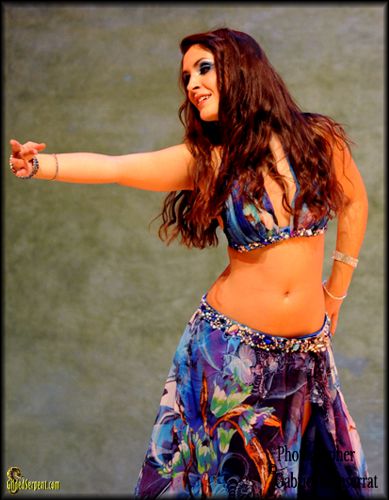

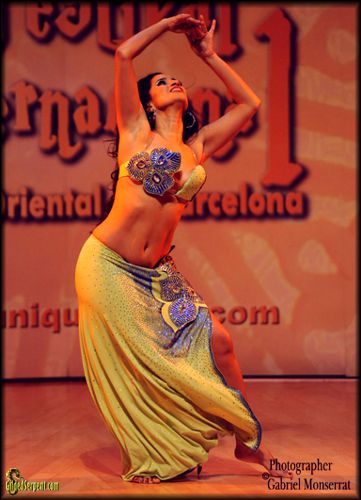


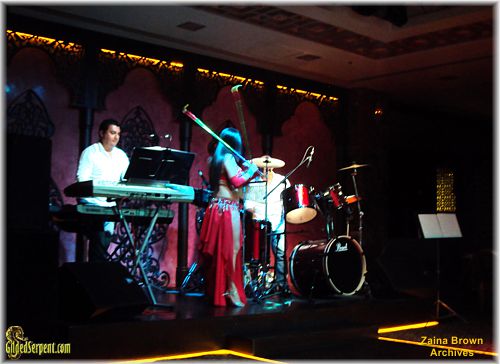

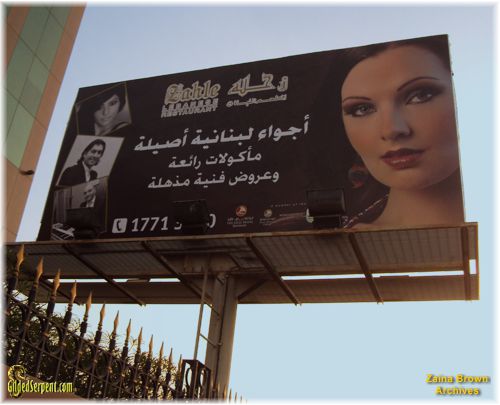


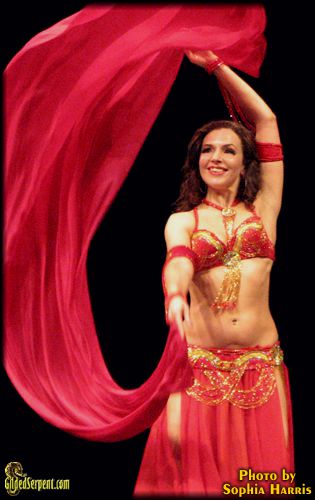
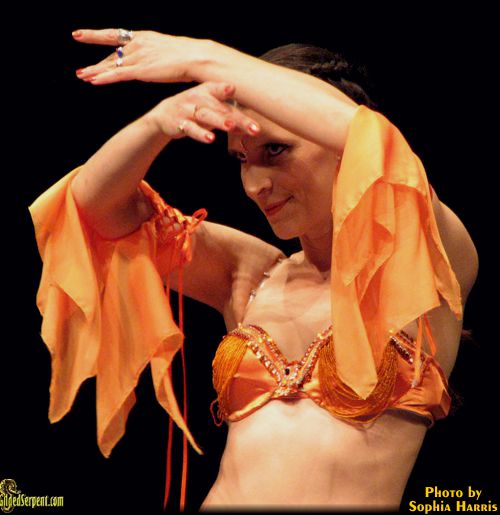
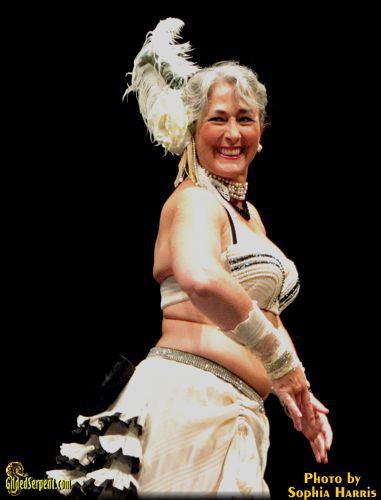
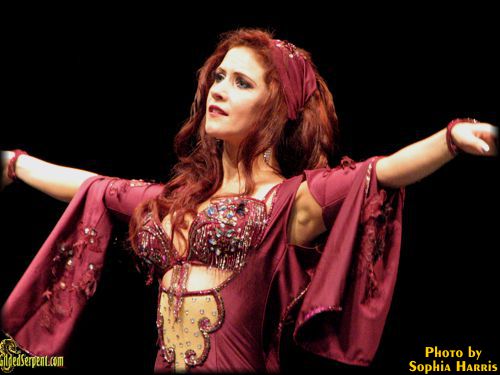
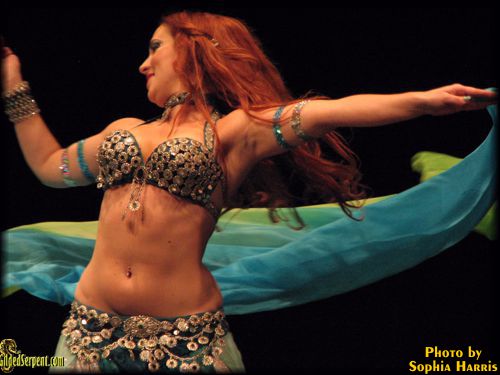
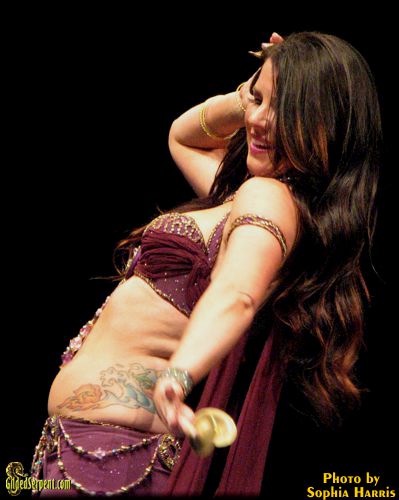
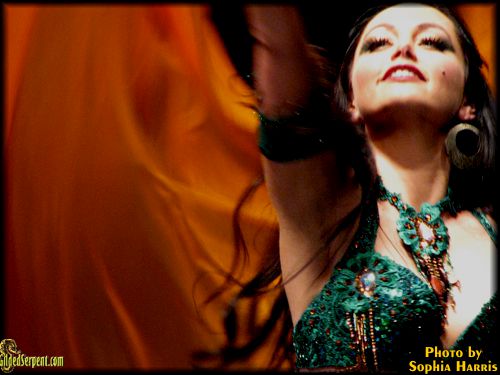
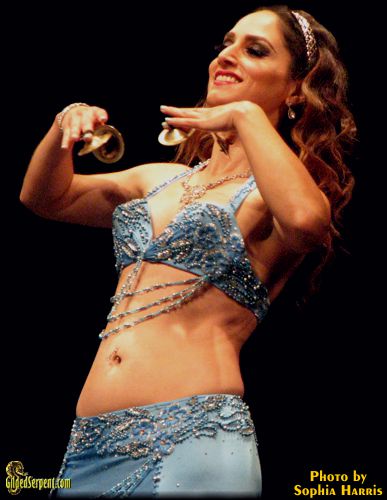
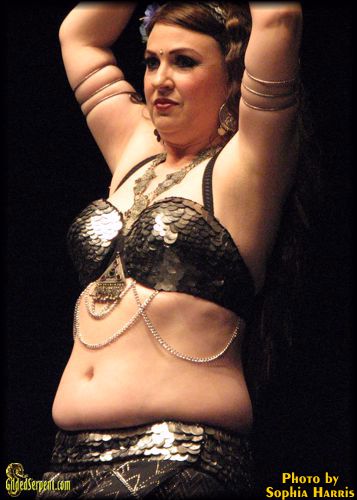
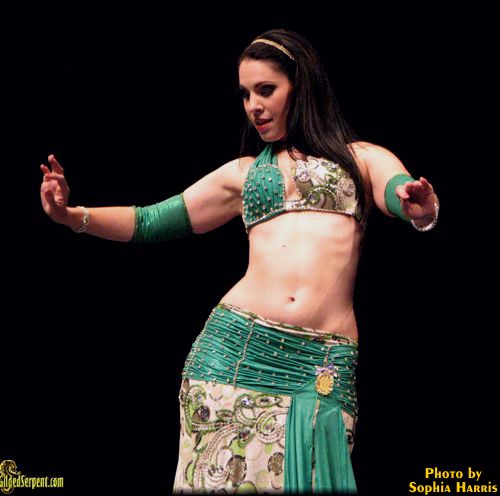
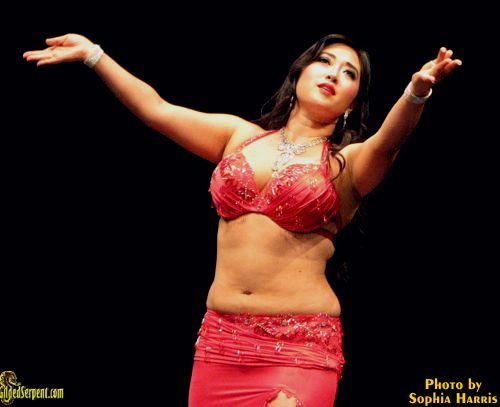
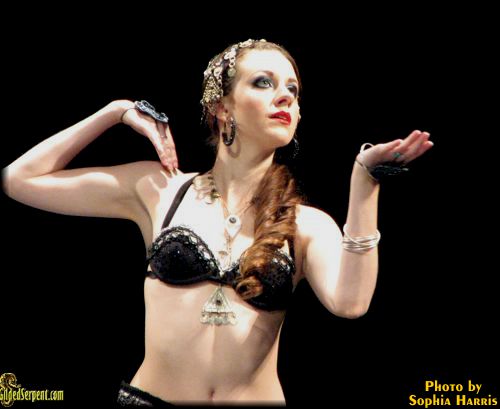
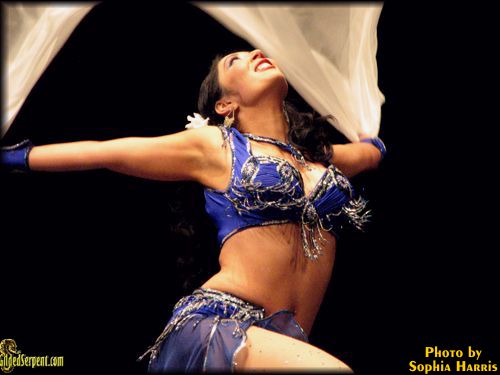
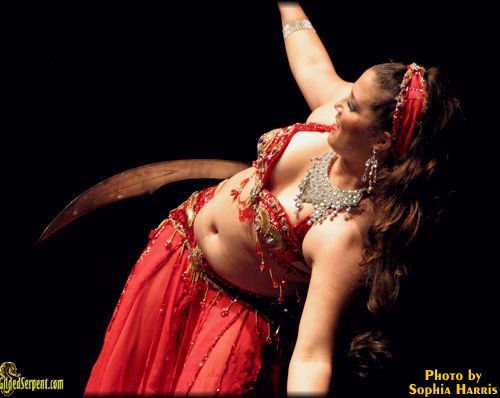
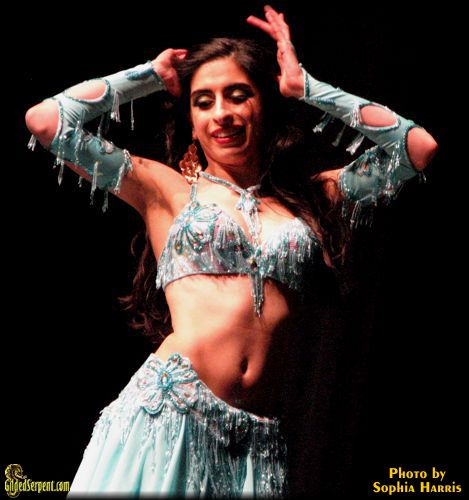
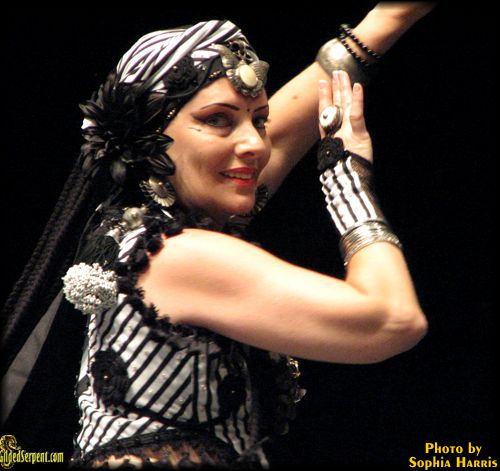
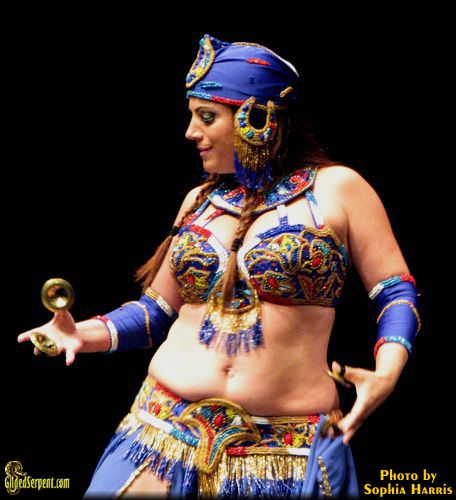
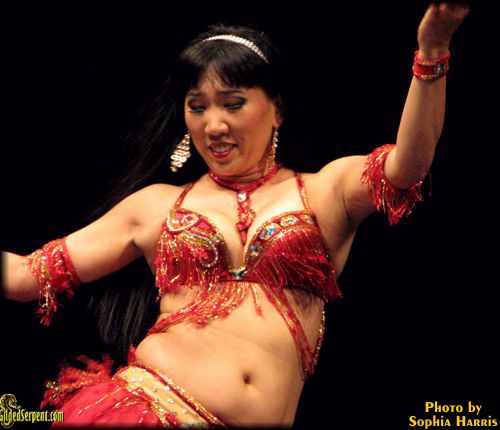
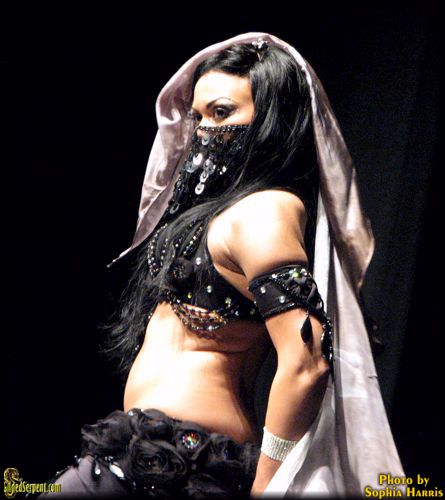
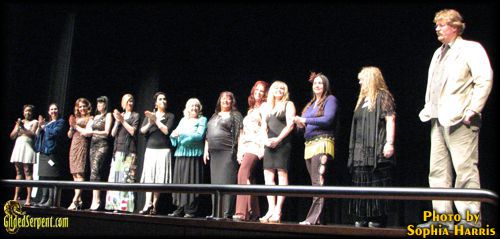
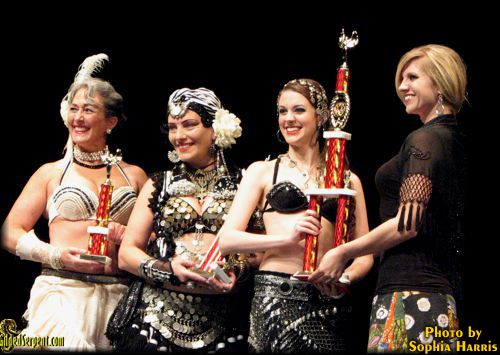
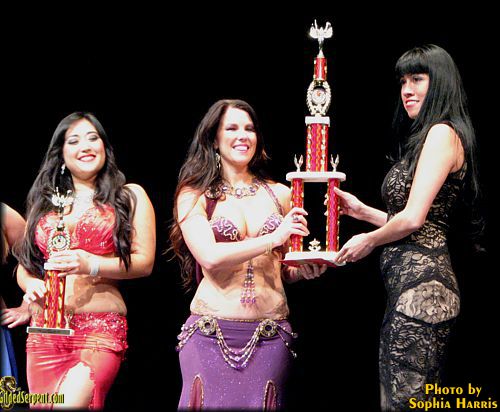
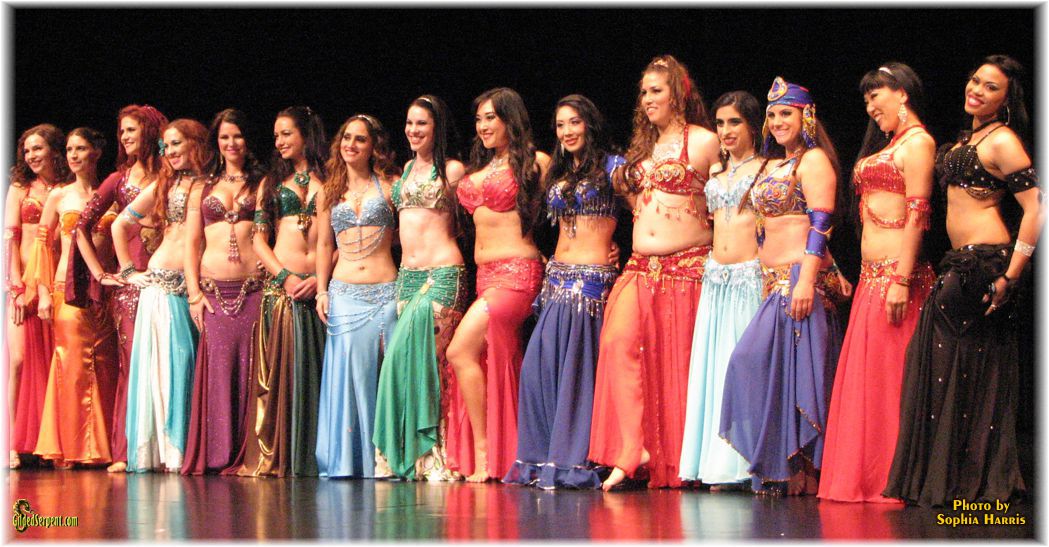
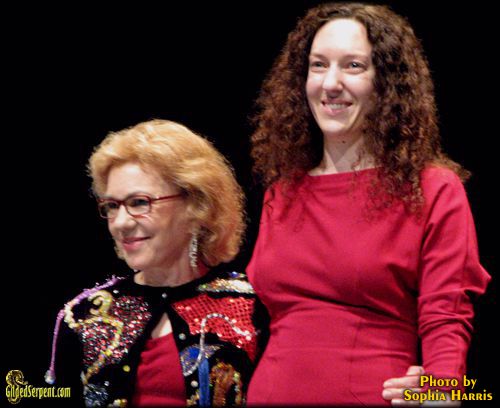
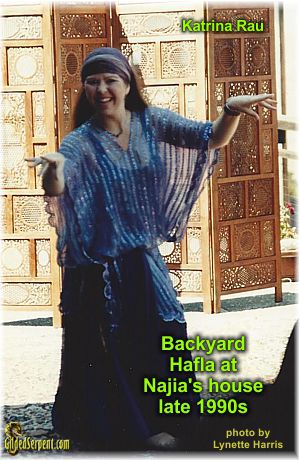
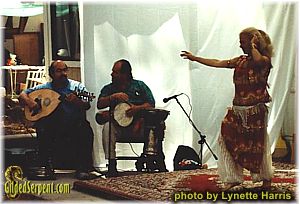
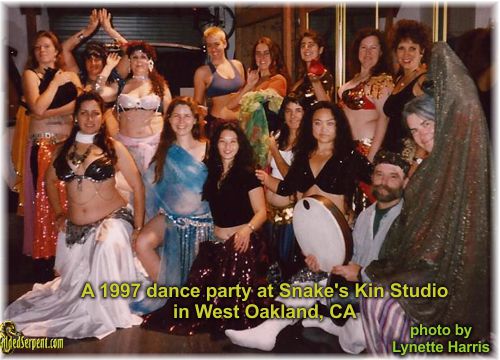
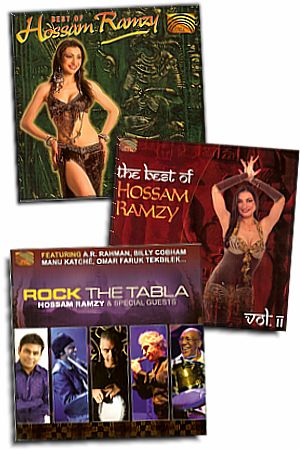
 Hossam Ramzy’s “Best of Volume 1” was compiled in 1997, and is still a standard in modern Egyptian Belly dance music. Classics like Sehr Oyounik (The Magic in Your Eyes), have been used time and time again, and the liner notes say this CD contains “the best and most danceable belly dance pieces in Hossam Ramzy’s huge repertoire, selected by the master himself.” I couldn’t agree more! Many of pieces in this cd are go-to for Egyptian and Cabaret Dancers. They are chock-full of traditional instrumentation, and have beats and rhythms that inspire all Oriental Dancers or fans of traditional Raqs Orientale. Any serious Dancer, whether Cabaret, Fusion, Tribal, or anything in-between would benefit for understanding Mr. Ramzy’s work and musicality.
 “The Best of Hossam Ramzy Volume 2” was produced 8 years later. It contains all new pieces, original to his reperatoire, taken from classics and resampled, or different versions of his earlier work or traditional pieces. This CD also offers a wealth of fantastic beats, both Middle-Eastern in nature, and also taking from more Western, American standard drumming. This disk also offers traditional rhythms for the Oriental dancer, though I found it to be a touch more synthesized than the earlier compilation. The liner notes on this one were very educational, however, and offered translations to the songs, as well as time signatures and rhythm information.
 “Rock the Tabla”, Hossam Ramzy’s newest venture, released in 2011, is a departure from his greatest hit Compilations 1 and 2. It is still a well-done compilation. In “Rock the Tabla”, Hossam Ramzy combines his masterful tabla skills with the world music stylings of other musical virtuosos such as


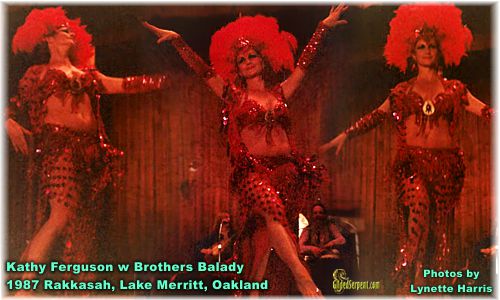
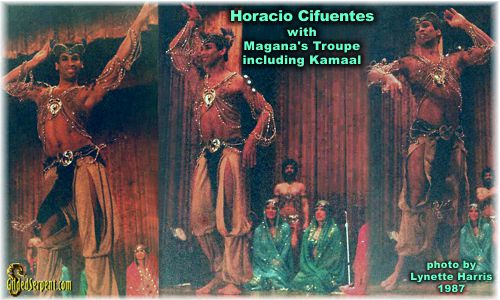


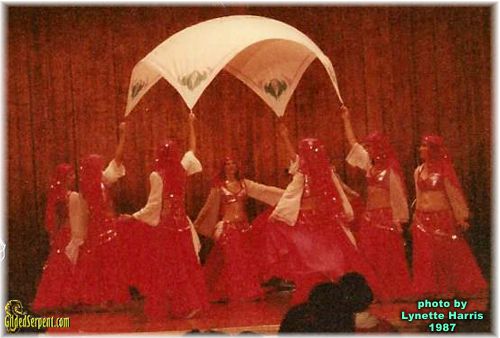


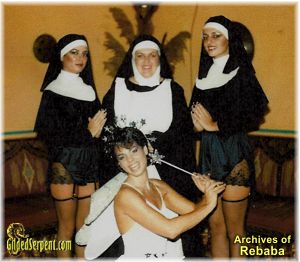


 of Oscar Wilde’s play, and more than ten years before
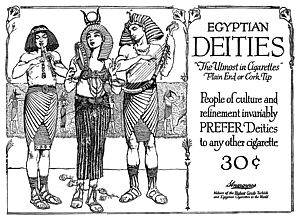 The starting point of Ruth St. Denis’s dancing career was an occasion during a tour in 1904. The following is a description from her autobiography. "We have reached Buffalo on our way west with the Dubarry company. … [Pat and I] went to a drugstore to get a soda. We were laughing as usual over some joke, and sipping our sodas, when my eyes lifted above the fountain and I saw a cigarette poster of Egyptian Deities”. From then on she was intrigued by everything Oriental, with almost a scholarly approach. However, she never tried to reproduce or imitate authentic Eastern dances in her productions.