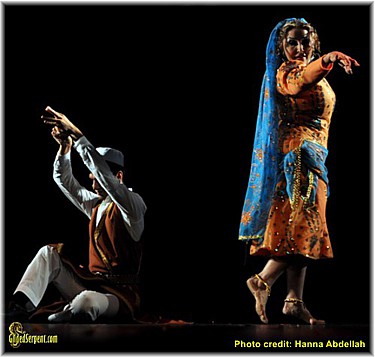
"Aura – An Evening of Dance Theater Featuring Heroines, Femme Fatales, Witches, and Rebel Queens SATURDAY, MARCH 21, 2015 San Francisco’s BRAVA THEATER.
The Dangerous Beauties are a collaborative collective of award-winning dancers and choreographers from the San Francisco Bay Area and beyond. Their extensive repertoire encompasses ballet, jazz, modern, Middle Eastern and North African styles, both traditional and fused with a boundary-pushing contemporary flavor. Many members of the group are internationally known, performing and teaching around the world. Some are multi-disciplinary artists whose work includes backgrounds in theater and film, costuming and the visual arts. Directed bySurreyya Hada and co-directed byPrincess Farhana, Rose Harden andNyla Crystal, Dangerous Beauties features Principals/Choreographers Sabrina, Terry DelGiorno, Talia Soleil, Dusty Paik, Maharet Hughes, Calamity Sam and many more."
Patricia Miller plays Hecate and serves as the narator
Gaia – Kirsten Williams and Strong Pulse Dance Company
Princess Farhana as Mata Hari
Dusty Paik in La Santismia Muerte
Joyce Lien-Kushner and Gino Kibby-Thomas performs Delilah and Samson
Goddesses of Mt. Olympus is danced by
Paula Plessas, Nick Gray, Chelsea Mullholland, Surreyya Hada, Rose Harden, Tina Lui, Joyce Lien-Kushner
Nyla Crystal as Nyx
Gold Star Dance Company (including Kami LIddle performs Hemera
12-31-08 8th Annual Blood Moon Regale: Disease 101Photos and text by Brad Dosland
the interpretations ranging from comic to poignant, dancers portrayed a gamut of disorders from Scarlet Fever to Head Lice, Elephantiasis to Anorexia. Many of the performances were touchingly powerful, while others such as Origin’s depiction of Crabs had the capacity audience at the grand old Colonial Theatre laughing out loud (and scratching themselves subconsciously).
4-3-06 Rachel Brice Goes Balkan: Pogonometric Revue Reviewed by Rebecca Firestone Photos by Brad Dosland
Sunday, March 12, 2006, CELLspace, 2050 Bryant St., San Francisco, Cost: $15 and worth every penny
8-17-10 Personal Truths in Truth or Consequences New Mexico’s Floralia Festival 2010by Surreyya
Many times a turn of events will bring us to another place to make a new beginning–a deep and sudden loss inspired my original journey to California, and two recent losses inspired my return back to the desert, opening wounds I nearly forgot existed. It was fortunate to have Floralia to attend; it served as a focus on something I enjoy with all my heart–dance.
10-1-09 Gig Bag Check with Surreyya and Sultanavideo on the CK
What does a dancer need to carry in her gig bag? Surreyya has a very special friend she carries in hers! Sultana, a leopard spotted boa constrictor enjoys being displayed for us and having a dance with her partner. Footage was filmed at Carnival of Stars in November 2008.
1-10-07 Ansuya’s San Francisco Performance Reviewed by Surreyya
Superstar Ansuya and Belly dancer enthusiast and event producer Gina Grandi provide warm environment to feature up and coming local talent.
4-19-13 Thoughts on Teaching Belly Dance, Responsibility, Flexibility, Experience, Knowledge, Leadership and More, by Princess Farhana
Teaching belly dance can be extremely fulfilling and enjoyable. It’s lots of fun, and rewarding for the instructor and students alike. Unfortunately, in the belly dance community, perhaps more than in any other dance form, there will always be instructors who have absolutely no business teaching…at all.
1-16-13 Creating a Healthy Belly Dance Communityby Princess Farhana
A vibrant dance community affords benefits to all of its members. In a healthy dance community, each and every person is relevant. For learning purposes or gathering a certain show cast, there is a large pool of talent from which to choose. Those with specialties and unique areas of expertise can share their knowledge, enriching the individual skill sets of everyone.
7-12-15 A Bellydance Production of Dante’s La Divina Commedia,
Interview with Francesca Pedretti,Words by Rachael Lundy (The Ruby Lady)
Over a cold winter weekend in New York City, The Ruby Lady encountered a dancer and her project unlike anything she had seen before. Completely collaborative, experimental, theatrical and soaking in a uniquely Italian emotional authenticity, Milan’s Francesca Pedretti and her traveling production of Dante’s La Divina Commedia has the potential to transform belly dance communities around the world
5-31-15Helene’s Seminar in Berlin, Traditional Dance Theater Project ANAR DANA 2013/14by Isabella
Together we studied seven traditional dances in a total of 10 weekends with the worldwide renowned dance ethnologist and choreographer Helene Eriksen and organized two final recitals of our program which included solo dances from Helene. It began with a very tight training schedule but later it actually turned out to be much more – together we embarked on an imagined voyage to the Orient, which finally was a travel to find ourselves. But we understood that only much later.
4-26-15Attending My First Belly Dance Convention (But Not My Last)
Austin Belly Dance Convention 2015 by Jennifer Garner
Austin, in addition to being the “Live Music Capital of the World,” also has quite an impressive number of talented and committed belly dancers. Every week performances, showcases, and meet-ups can be found around town, and accomplished instructors are available nearly every night of the week for classes.
3-28-15Embrace the Spotlight! Overcoming Stage Fright by Lida
The only way the audience knows there was a deviation from the plan is if I hesitate or break character. They are none the wiser if I continue dancing purposefully.
Words by Rachael Lundy (The Ruby Lady) Translated by Sarah FaraSaier
posted July 12 2015
Over a cold winter weekend in New York City, The Ruby Lady encountered a dancer and her project unlike anything she had seen before. Completely collaborative, experimental, theatrical and soaking in a uniquely Italian emotional authenticity, Milan’s Francesca Pedretti and her traveling production of Dante’s La Divina Commedia has the potential to transform belly dance communities around the world.
Tell me a little about how you started belly dance?
Back in 1996, a friend of mine suggested I try belly dance as a way to overcome my social fears and gain self-confidence; I was painfully shy back then! I had never danced before, so that was my very first time.
What was your first belly dance teacher like, and how has she continued to influence your work?
Well, you can never forget your first love! Every time I see my first teacher, Ada, I still feel quite shy; she is still a big role model for me. Ada is extremely creative and innovative, always drawing inspiration from the great divas of the past. One time I caught her studying old Samia Gamal films (in those days, YouTube didn’t exist yet!) and that was her big secret!
Another of my great inspirations in my dance is, without a doubt, Anasma Wuong, who introduced me to the world of theatre. After meeting her, nothing was the same for me again. From that moment I immersed myself in theatrical dance and theatre classes in Milan, which I still attend to this day.
What is the most important thing a teacher should pass onto her students?
That’s a hard question to answer…I often wonder about that myself and can never find the one and only answer…I guess teachers should always push their students to find their own dimension, their own voice, to keep studying and learning different things in order to have the tools to build their own vision of dance.
Do you feel that Italian belly dance differs from belly dance across the globe? How does Italian culture and context influence your work?
Italy is actually very much influenced by artists of the United States – we are fascinated by the American myth! But in saying that, my work is filled to the brim with this country’s culture. I love its history and its people. I love its artistic legacy that has made Italian culture so world renowned. LaDivina Commedia is the perfect example. I love reaching into our local past and artistic traditions for inspiration, as this project does.
Tell me a little about what inspired La Divina Commedia?
For a long time I have dreamed of producing a stage show utilising improvisation and collaboration, drawing on those theatrical techniques that so inspire me and fusing it with dance. I proposed the idea [of La Divina Commedia] to the dancers of the 4th Edition Tribal and Belly Dance Academy (a tribal and fusion event produced by myself in Milan). I chose a very canonical Italian theme, and collaborated with Ilan Riviere and Alice Giampier who enthusiastically offered their wealth of experience and knowledge to produce the ‘Paradise’ and ‘Hell’ scenes. They were also assisted by Silva Colombara and Francesca Gigarte. I chose to concentrate on ‘Purgatory’, working alongside Patrizia Pin.
Your New York show was cast largely from local guest dancers, and even certain scenes were directed by local companies; how did this process work?
We select the dancers through an online casting similar to Belly Dance Evolution. They have to be open to experimentation and willing to perform a mere hours after learning the choreography in workshops! That’s how La Divina Commedia was really born…a unique and original show, always different and a thousand times more exciting due to this collaborative element.
La DivinaCommedia has already shown in New York and is about to tour extensively through Italy- what are your ultimate goals for the project?
For now I would like to be able to bring my show and workshops to as many other places as possible, particularly around the USA and Europe where I think it would be well appreciated. We are currently looking for sponsors around the globe who are interested in our work, so that we can share this show and its opportunities and philosophy with as many global belly dance communities as possible. This project is not just about the show itself, but about forging lasting connections through collaboratively creating beautiful art.
Wikipedia listing for Divine Comedy – “The Divine Comedy (Italian: Divina Commedia) is an epic poem by Dante Alighieri, begun c. 1308 and completed 1320, a year before his death in 1321. It is widely considered the preeminent work of Italian literature and is seen as one of the greatest works of world literature. The poem’s imaginative vision of the afterlife is representative of the medieval world-view as it had developed in the Western Church by the 14th century…”
Have a comment? Use or comment section at the bottom of this page or Send us a letter!
Check the “Letters to the Editor” for other possible viewpoints!
Ready for more?
7-18-13Photos from Zulu Lounge, May 3rd 2013 at the famous El Rey Theater in Los Angeles, Californiaby Rawtography, text by Jillina
Below are a few highlight photos by Rawtography.com from the Zulu Lounge show held May 3, 2013 in Los Angles, California. The show was produced by dancer Khani Zulu and her husband, tattoo artist Zulu, at the swanky El Rey theater. The show’s theme was “La Nuit d’Absinthe” which inspired artists to be creative with their pieces.
1-31-13The Evolution of Jillina, An Interview Regarding Change, Flexibility and Lessons Learned Interview by Lauren Boldt
Working with Jillina for the last six years or so, I’ve been a fly on the wall for a lot of this transition. I’ve been there for marathon rehearsal weeks, brainstorming sessions, the stress of taking a show on the road, the flops, and the standing ovations. Español!
11-12-11Simona Minisini of Italy Video Interviewon the Community Kaleidoscope
In June, 2011, Gilded Serpent was present at the Mediterranean Delight Festival in Marrakech, Morocco (produced by Simona Guzman). There we were able to get some time with Simona Minisini of Palmanova, Italy. She told us about her school, the coming World Dance Tropy Competition and her own history in Oriental dance. She and her husband Igor have a studio called Club Sunshine with mutiple dance rooms, 2 pools and a “Bed and Breakfast”. This video also included a sample of her performance at the festival in Morocco.
9-30-99I was driving home early Monday morning.By Tanja Waadi, Italy
I had had an arrangement to meet my man, my beloved whom, for a number of reasons, I cannot see often.
5-31-15Helene’s Seminar in Berlin, Traditional Dance Theater Project ANAR DANA 2013/14by Isabella
Together we studied seven traditional dances in a total of 10 weekends with the worldwide renowned dance ethnologist and choreographer Helene Eriksen and organized two final recitals of our program which included solo dances from Helene. It began with a very tight training schedule but later it actually turned out to be much more – together we embarked on an imagined voyage to the Orient, which finally was a travel to find ourselves. But we understood that only much later.
4-26-15Attending My First Belly Dance Convention (But Not My Last)
Austin Belly Dance Convention 2015 by Jennifer Garner
Austin, in addition to being the “Live Music Capital of the World,” also has quite an impressive number of talented and committed belly dancers. Every week performances, showcases, and meet-ups can be found around town, and accomplished instructors are available nearly every night of the week for classes.
3-28-15Embrace the Spotlight! Overcoming Stage Fright by Lida
The only way the audience knows there was a deviation from the plan is if I hesitate or break character. They are none the wiser if I continue dancing purposefully.
3-15-15Encore, My Return to Danceby Baraka
Encore: Verb – To add to or repeat a performance, an extra or repeated performance. I was privileged to have the opportunity of an encore, a reprise that provided a look back at how very much I loved to dance – I still do! – and to teach and share my knowledge after nearly 15 years away from the art I spent most of my adult life practicing.
Traditional Dance Theater Project ANAR DANA 2013/14
by Isabella Photos by Gerd Eiltzer
posted May 31, 2015
A group of 8 women had met in Berlin for Helene Eriksen‘s Traditional Dance Theater Project ANAR DANA 2013/14. Together we studied seven traditional dances in a total of 10 weekends with the worldwide renowned dance ethnologist and choreographer Helene Eriksen and organized two final recitals of our program which included solo dances from Helene. It began with a very tight training schedule but later it actually turned out to be much more – together we embarked on an imagined voyage to the Orient, which finally was a travel to find ourselves. But we understood that only much later.
7 Dances of the Silk Road
We narrowed our studies down to 7 dances; they are presented below
Moroccan Sheikhat is a very exciting dance for strong women. The Sheikhats are professional female singers and dancers and they entertain the guests at weddings, circumcisions and other festive occasions. Sheikhat means literally “wise, learned woman”. However, in this case it is not academic knowledge that makes them wise, but rather the knowledge about the relationship between men and women and especially the duties of the wedding night which is inferred.
The second dance was from Egypt – the “Classical Arab Music” originated from Cairo. Helene created an elegant choreography that interprets the sophisticated 10/8 rhythm of the Sama’i composition, depicting the atmosphere of dance entertainment at the Khedive court at the beginning of the 20th century. From the opposite shore of the Mediterranean Sea we studied Čoček, a lively Macedonian Roma Dance in a line with solo improvisation parts, and from Turkey a dance suite related to the famous henna ceremony from the city of Elazığ.
Further eastwards, in Daghestan in the North Caucasus we made the next stop, my personal favorite: a very romantic and delicate dance performed with finger thimbles “played” on saucers. Like in the other dances from the Caucasian region, the dancers move on tiptoes with their long skirts and seem to “float” over the scene, and this, together with the elegant hand movements imparts an ethereal, dreamy feeling to the whole image. Continuing on the Silk Road we encountered the Turkmen, formerly nomadic tribes, famous for horse breeding. A part of this rampant fierceness is visible also in the dance with dazzling turns and lively stomps.
Baluchi completed our selection of traditional dances, probably the most mysterious culture for all of us. Baluchistan is a very arid and sparsely populated area between Afghanistan, Pakistan and Iran. The group dances in a circle, the steps are seemingly simple, but the whole impact of the dance lies in the harmony of the movements inside the circle and in the graceful details of clapping and eye contact between the women of the group.
The whole program was thus very interesting, and every participant could find pieces she immediately liked – this was the easy part – but also some challenges, for the very beginners and the professional dancers alike, and each one of us had something to chew on until the very end of the project. But in the end we all made it!
Top photo:
Macedonian Cocek: Marina Maass, Maria Hansson Österlund
Baluchi: Isabella Schwaderer, Katrin Rudloff, Carissa Göbel, Marina Maass, Andrea Schmid
Participants and Training
Diverse like the dances were also the women participating in the ANAR DANA project, and this was well intended from the beginning. Diversity is a part of the program, because in the Indo-Iranian languages “Anar” means “pomegranate”, an age-old symbol in Asia and the Mediterranean region for fertility and female beauty. The countless seeds (“Dana”) of the pomegranate are enclosed in juicy red pulp and form the whole of the fruit. But if you look closer, every single one of them is different and perfectly beautiful in its crimson sheath; nevertheless it fits seamlessly into the round fruit. Similarly also we grew together during the project; from a completely heterogeneous group from all over Europe (members came from Poland, Sweden and, believe it or not, French Guyana!) we became not only a dance troupe but real friends for a lifetime. The experience of a women’ community, where every single one felt accepted and loved and thus was able to grow – this was very touching.
Every training weekend started with intense yoga practice in order to gain strength and flexibility of the body, but also to leave behind the stress of the week and to immerse into a new world. Helene started with analyzing the music pieces to the selected dances to make rhythmical patterns and development of the melody clear. “She [Helena] manages to break down complicated rhythms and movements so that they can be easily understood,” states Maria, dancer and choreographer from Stockholm, Sweden.
For Katrin, teacher for Oriental and folk dances from Leipzig, Germany, one thing was a real eye opener: “I knew the Sama’i before, from other workshops, but now I finally understood the structure, 10/8 means 1-2-3, 1-2, 1-2, 1-2-3, way simpler than I used to think."
Ethnographic material from Helene’s own collection and other sources were used to demonstrate the movements of a particular dance as well as the specific body language that emerges from the whole awareness of life in a determinate culture. “This project turned out for me to be like a voyage to the Orient with my own body. I could experience so many aspects of womanhood which had seemed weird to me in the beginning, but now have become a part of myself”, states Andrea from Bavaria who introduces movement and body awareness into her pedagogical work. One experience was particularly moving: “One of my students is from Kazakhstan and lives in Germany for three years, I showed her our Daghestani dance, which is not exactly from her own region, but is much more familiar to her than her new German homeland. She was very impressed that her teacher is interested in her culture, and since then we have a totally different relationship."
We spent a lot of time to learn the basic dance techniques. Carissa, like Helene, an American expat that lives in Germany, liked this particularly: “Since I did not grow up in any of these cultures, I cannot feel the rhythms in my bones, I don’t have them in my blood. Here my brain has to do the work. Analyzing and writing down the musical patterns and after many, many repetitions I can learn them. For me it’s an experience of great freedom when I notice that I managed to master the technique and I am able to move my body somehow according to the principles of the rhythm and the dance.”
Together with steps and figures we also learned to use different props, such as thimbles and saucers, zills or çalpare (special wooden clackers for Ottoman dance), and only when everyone was somehow familiar with the new movements Helene selected the groups that should finally perform the dances at the final show and worked on the choreography with them.
From weekend to weekend the program seemed to be more dense, but in the end it was feasible for everyone of us – although many had to struggle with self-doubts and frustration somehow in between. This is for sure the result of Helene’s very long teaching experience that she could estimate how much a group could manage to do in order to improve and how to lift the spirits in the difficult moments. This impressed me personally most of all, because I myself am still struggling with this kind of group dynamics, even if my professional circumstances are completely different.
Macedonian Cocek: Maria Hansson Österlund, Verena Bourvé, Carissa Göbel, Isabella Schwaderer, Katrin Rudloff, Andrea Schmid, Anja Pätkau, Marina Maass.
Performance
Finally we get our costumes that have to be altered individually – and now our attempts in dancing look so much better! Each single costume is a replica of authentic material which Helene has meticulously researched and which goes perfectly together with the dance. Some movements are restricted by the costume, some are enhanced. For example the coat for the Daghestani dance has very long, sumptuously lined sleeves with a long split in order to emphasize the graceful hand movements with or without the thimbles. "Helene’s perfectionism is really special. I also have been dancing for a very long time, but I am impressed how she controls every single headscarf or braid. I tended to be rather negligent when I thought the public wouldn’t actually notice it", explains Marina, teacher of Armenian dances for more than twenty years.
Yes, and somehow we managed, way faster than we thought, to reach the end of our trip, two recitals in the Neues Schauspiel Leipzig, organized by Katrin – Kassia. Finally every headscarf, every braid and every earring is secured and it feels so good to show what we have been working on for so much time, and also the public notices the joy of the troupe.
And now it is over, yet it is not over because this project has changed us. It has not only taught us new techniques, but it has inscribed itself into our bodies, has changed our muscles and tendons, and the way we perceive the world and ourselves. Last but not least we have become real friends and new ideas and new projects are coming to life. The pomegranate seeds are growing and are developing their own leaves and branches.
Daghestani: Andrea Schmid, Carissa Göbel, Isabella Schwaderer
Elazig: Anja Pätkau, Marina Maass, Verena Bourvé, Maria Hansson Österlund, Katrin Rudloff.
Dancers:Helene Eriksen, Verena Bourvé, Carissa Göbel, Maria Hansson Österlund, Marina Maass, Anja Pätkau, Katrin Rudloff, Andrea Schmid, Isabella Schwaderer.
You too can become a member of the ANAR DANA community! Helene organizes regularly projects around the world, for the next dates please visit www.helene-eriksen.de.
You can also buy several professionally edited DVDs from previous shows in the US..
4-26-15Attending My First Belly Dance Convention (But Not My Last)Austin Belly Dance Convention 2015 by Jennifer Garner
Austin, in addition to being the “Live Music Capital of the World,” also has quite an impressive number of talented and committed belly dancers. Every week performances, showcases, and meet-ups can be found around town, and accomplished instructors are available nearly every night of the week for classes.
3-28-15Embrace the Spotlight! Overcoming Stage Fright by Lida
The only way the audience knows there was a deviation from the plan is if I hesitate or break character. They are none the wiser if I continue dancing purposefully.
3-15-15Encore, My Return to Danceby Baraka
Encore: Verb – To add to or repeat a performance, an extra or repeated performance. I was privileged to have the opportunity of an encore, a reprise that provided a look back at how very much I loved to dance – I still do! – and to teach and share my knowledge after nearly 15 years away from the art I spent most of my adult life practicing.
3-7-2015Facts and Misconceptions about Kawliya, Interview with Assala Ibrahim on the topic of Iraqi dance especially Kawliyaby Chica Hilma
My first encounter with her was in her Kawliya and Iraqi Zar workshops at Amani’s Oriental Festival in July 2014. I was excited by this rare opportunity to learn the dance from a native Iraqi dancer because dance for me is not a fantasy but a way to understand the culture behind it and to make a spiritual connection with the people of the dance.
2-7-15Leading the Dance, On Stage and Off, Professional Development Through the Lens of Belly Dancing, by Wendy Meluch
Hindsight may or may not always be 20-20, but time to reflect always brings a broader perspective and deeper understanding. I know this both as a professional belly dancer and as a museum consultant. Recently my dance and museum worlds intertwined when I took time to reflect on my personal and professional evolution in dance and in business
2-1-2015Shining a Spotlight on Egyptian Dance, NYCairo Raks Festival in NYC Brings Together International Artistsby Lara
For its first year, the NYCairo Raks Festival produced by Bellydance America and Mohamed Shahin created a notable event with star-studded performances, authoritative workshop instructors and opportunities to meet dancers from around the world. I was fortunate to have the chance to perform in the open stage, watch all the gala shows and partake in several of the workshops.
11-25-14 I Believe in Gypsies! (But Not as a Style of Belly Dance) by Sara Shrapnell
I have read many times that “Gypsy” is a bad word because they prefer to be called “Rom.” Therefore, it is disrespectful to use the word in any form. I beg to differ.
After taking a prior workshop withAmel Tafsout, a dance professional originally from Algeria, I realized that I knew very little about dance styles of the Maghreb. Eager to learn more about these dance styles, I signed up for the five-day Maghreb Dance Intensive at the Amador Athletic Club, in Sutter Creek, California, which this year was held during the last week in February, 2015.
The early-bird price of $750 was much friendlier to my wallet than international airfare to the Maghreb would have been! This is because the Maghreb is in the region of North Africa comprised of Morocco, Algeria, Tunisia, Libya, Mauritania and the disputed territory of Western Sahara which is quite a long distance from my desert southwest. There is no comparison to studying with a dance professional with authentic cultural insight, technical skill and accurate interpretation of dance styles from another part of the world. After growing up in Algeria, Amel has since lived in Europe and now the U.S. As a result of her time outside of Algeria, she is familiar with how Western students have a need to count out steps and break down movements. She accommodates that style of learning. She can also teach in the “follow me” format too. Amel is proud to share her knowledge of Maghreb dance, and she does indeed act as a cultural ambassador in that regard.
The event participants consisted of six ladies. Two of us were Maghreb dance neophytes, but we did the best we could to be quick to learn. Another lady studies West African dance and she caught on quickly. The remaining other three ladies were more familiar with North African dance. Two of the ladies learned the drumming rhythms quickly and the rest of us focused intently to manage the simultaneous frame drum playing, singing and dancing. We had a lot of fun regardless of our skill level.
Each day included 4 hours of dance instruction plus an additional hour or more of lecture, quizzes, review, videos, drum instruction, and discussion. During each dance segment, Amel taught us how to properly wear appropriate costumes, which meant that we all got to try on Amel’s costumes, and dance in them which was a treat! The first day of the five-day intensive included a brief introduction of the course, and an informative handout regarding the Maghreb, with country specific details, important vocabulary and dance explanations such as the importance of fertility and protection in the dance, as well as explanations of the various musical influences from the Middle East, Turkey, Medieval Spain and of course, Africa. The handout was background information that Amel had prepared. In terms of simple geography, for instance, I learned that Algeria is the largest country in Africa. Amel also brought books on the Maghreb with her and allowed us to borrow them after class, for additional background on regional dress, travel and other historical topics.
The North African music was infectious and fortunately, Amel had reasonably priced CDs and DVDs available for purchase. Amel explained which CDs had which kind of music on them so that we could decide for ourselves which ones to buy. Since frame drumming was an integral part of some dance style we were going have frame drum instructional segment. The frame drums were provided by Amel, as most of us traveled to this event.
Day 1 – Introduction and Amazigh-Berber Dance and Culture
Our first day of class was an overview of Amazigh-Berber dance. With her roots in Constantine, Algeria, Amel has Amazigh-Berber dance and music in her blood. What a treat it was to learn the Amazigh-Berber shimmy and partner dances from Amel, with her feedback regarding our progress and hands-on corrections. I will not forget her demonstration of the Maghreb hand and wrist movements, full of energy and grace!
Amazigh Dance
Nisreen, Valerie, Melody
Day Two – Tunisian
The second day of class included Tunisian dance with its strong hip movement. This was a day for much constructive feedback from Amel as Tunisian dance was completely new to me. I will not forget her instruction to me to keep my knees closer together, as she had to remind me about that detail. We also began learning to play the frame drum. This was something I had never done before. We started with the basics – how to hold the frame drum and progressed to playing slowly and then faster, playing while singing, playing while dancing, and then playing while singing and dancing. I am accustomed to playing my finger cymbals while dancing, but I was really challenged by this exercise. As the days went on and Amel patiently lead us through this new experience, we all improved to the point where we could actually play the frame drum while singing in Arabic and dancing. Although it is something that will take much more time to truly master, I am glad that Amel included this frame drum exercise in the event. I plan on buying a frame drum so that I do not lose this ability!
Tunisian Dance
Melody, Amel, Nisreen
Day Three – Algerian Including Andalusia
The third day was dedicated to Algerian dance, which was another completely new experience to me. Amel’s expertise guided us as we learned how to coordinate a group dance and how to dance with a partner. We learned that Andalusia music is the classical music of North Africa. Andalusia music is based on the Nuba, which is like a symphony, hence the classical identification. Andalusia refers to the fact that various outside musical influences (particularly Spain, but also Arab and Turkish) are represented. You can see for yourself how the costuming for Andalusian dance is very colorful! We learned an Andalusia scarf dance which we performed with Amel at the hafla later on the fourth day of the event in the weekend.
On the fourth day we commenced a Moroccan dance, music and costuming segment. We were able to learn about the status of Western Sahara as land that Morocco claims as its Southern Provinces and that Morocco has had a history of independence that others in the Maghreb have not enjoyed to the same degree.
Also on the fourth day Amel asked us in advance if we were interested in performing the Andalusia scarf dance or if we wanted chance to share our dance expression at a hafla. Not everybody was expected to perform. Once I heard that there was the possibility to dance to live music, I was on board! We were cheered on by a very receptive and appreciative audience at Sophia’s Well of Wisdom, which is a cozy wellness center full of positive energy. I was on cloud nine as Amel’s husband, Ishmael, a master Kanoun player, played the Kanoun and Amel sang and played the frame drum while I was dancing. The Kanoun is my favorite instrument, and I prefer to dance to live music, so I am grateful to Amel for making that very special dance experience possible.
The Hafla
1, Allison, 3, Janine
Day Five – Sufi Spirituality
The last day of class was a spiritual journey. We were already a cohesive group, so we entered the world of Sufi spirituality in a safe environment. Sadly I was unable to stay until the very end, as I had to catch a plane, but I can attest to the fact that the connection among the workshop participants was strengthened through that experience of music, movement, breathing and spiritual and emotional release. We all received a certificate of attendance as a final touch of Amel’s thoughtfulness and to commemorate our participation in the event.
Conclusion
In the end, I left the Maghrebi Dance Intensive with the same impression of Amel that I had when I arrived. What a joy to learn from a woman who dances like a rainstorm in the desert! Amel Tafsout offers a rare chance to nourish your mind, dance and spirit with a few sprinkles here and there in the form of an overview of the Maghreb or in a deluge of dance information; with a soft flourish of the hand or a veritable flurry of Berber shimmies; or with an introduction to Sufi spinning or an emotional/spiritual release. Do not miss the chance to learn Maghreb Dance with Amel Tafsout!
Dancers in Moroccan dress with Amel
Nisreen, Allilson, Valerie, Helena, Melody, Janine
7-10-12“Relax! Listen to the Music” Ahmet Ogren, Istanbul May 2012: Study at the Source,by Nisreen
Aside from Ahmet’s satisfying performance and the professional live music, the local Romany festival-goers were quite proud and eager to show off their own dancing skills. Their enthusiasm was contagious so the locals invited one of our dancers to dance with them in front of the stage, a highlight for any dancer.
10-20-13Entering the Sufi Spiritual World of North Africa, Sufi Brotherhoods and Trance Ceremonies in the Maghrebby Amel Tafsout
…the Maghreb consists of many Sufi-brotherhoods, often recognized and set through their Zawiyas and initiations. Sufis have always worked toward reform through advice and education of the individual and internal purification through providing a model and example of tolerance, solidarity, brotherhood and selflessness removed from anything that would give a bad image of Islam.
9-20-07 The Passage of Timeby Amel Tafsout Her performance brought tears to my eyes; not only was she technically outstanding, but she had a whole persona, stage presence and her aura… no younger dancer could be compared to her. Many times I went to see the show to watch her again and again!
8-9-12What Lies Beneath, Part 1, The Morocco & Western Sahara Tourists Don’t Seeby Zaina Brown
When you say you are going to travel around in Morocco, usually, the response you get can be summarized with one word: "Marrakech". Sure, Marrakech might be the "best of Morocco", but it also wasn’t going anywhere.Some other places, however, may not always remain as accessible, and I had a few questions on my mind.
2-19-13What Lies Beneath Part 2, The Morocco Tourists Don’t See, Suspicion, Lifestyle, Wedding, & Rescueby Zaina Brown
What’s depressing about Laayoune is the idea of it: what it represents, not the city itself. Buildings, painted in salmon color like Marrakech, palm trees planted in pretty town squares, clean streets, restaurants and cafes, busy market places and a gorgeous plaza where people stroll at night. If you didn’t know any better, you would love this place! In reality, you are inside an enormous military base, while the city is a mere facade.
7-31-01Salah TakeshInterviewed by Janine Ryle
For years, he was involved in the San Francisco North Beach scene during the eighties as a drummer while his brother, Jalaleddin Takesh was a kanoonist and restaurant owner. We asked him to recall some of his experiences for our North Beach Memories series.
4-26-15Attending My First Belly Dance Convention (But Not My Last)
Austin Belly Dance Convention 2015 by Jennifer Garner
Austin, in addition to being the “Live Music Capital of the World,” also has quite an impressive number of talented and committed belly dancers. Every week performances, showcases, and meet-ups can be found around town, and accomplished instructors are available nearly every night of the week for classes.
3-28-15Embrace the Spotlight! Overcoming Stage Fright by Lida
The only way the audience knows there was a deviation from the plan is if I hesitate or break character. They are none the wiser if I continue dancing purposefully.
3-15-15Encore, My Return to Danceby Baraka
Encore: Verb – To add to or repeat a performance, an extra or repeated performance. I was privileged to have the opportunity of an encore, a reprise that provided a look back at how very much I loved to dance – I still do! – and to teach and share my knowledge after nearly 15 years away from the art I spent most of my adult life practicing.
3-7-2015Facts and Misconceptions about Kawliya, Interview with Assala Ibrahim on the topic of Iraqi dance especially Kawliyaby Chica Hilma
My first encounter with her was in her Kawliya and Iraqi Zar workshops at Amani’s Oriental Festival in July 2014. I was excited by this rare opportunity to learn the dance from a native Iraqi dancer because dance for me is not a fantasy but a way to understand the culture behind it and to make a spiritual connection with the people of the dance.
Austin, in addition to being the “Live Music Capital of the World,” also has quite an impressive number of talented and committed belly dancers. Every week performances, showcases, and meet-ups can be found around town, and accomplished instructors are available nearly every night of the week for classes.
For years, I had heard my teachers and fellow students talk of the Austin Belly Dance Convention (ABDC), but I had never attended it. I had mistakenly thought it might be too advanced or too expensive for me.
Aziza
Fortunately, with a little research, I discovered that each dancer can easily tailor her experience to her style, skill-level, and budget.
I knew I needed to be selective about what I signed up for. So, I first reviewed the workshops and performances online, noting the ones that sounded interesting to me. It was also fun to daydream a bit about how each session might help me take my dancing to the next level.
I then consulted my teacher Amara, the producer of the event, to ask her about the workshops that would challenge me as a dancer. We discussed my goals and which sessions would be the best fit. It was exciting to think I would have the opportunity to learn from a master dancer like Aziza, a woman who taught and performed at an international level!
Of course, I also wanted to see one of the evening shows. Not only had I heard that the Friday and Saturday performances were of a very high caliber, I suspected that seeing such amazing dancers would inspire me and give me new ideas for my own practice. Though it was hard to pick just one, I finally decided on Saturday because it would mean that I would see Amara and Aziza dance.
I arrived very early to the Saturday show so I would be assured of a good seat. While awaiting the show, I saw many fellow dance students from past classes. It was a great chance to catch up with them, some of whom I had not seen in almost a year.
Badrawn, a Dallas-based acoustic band who plays Middle Eastern music, performed for every dancer in Act One and kicked off the evening shows. It was such a treat to hear live music for these dancers. Jamie Lynn was a stand out in this portion of the show. She began with a lyrical veil piece and seamlessly and confidently transitioned to playing zils along with the band.
Jamie Lynn
The Gala performance began with the hypnotic tribal fusion group Pomegranate Vibrato dancing to Solace’s “Blood, Oil, Gold.” Magical and unique, these four dancers created beautiful lines and shapes as a group and used the space in a dynamic way. At times, all dancers would move in sync; other times, two and two would dance together, emphasizing different formations that kept it engaging. I was also very impressed at how they incorporated the zils into this performance, initially playing with the song and later using them percussively without accompaniment.
Pomegranate
I had not had any American Tribal Style belly dance instruction (ATS) in the past, but I was simply so inspired that I just had to know more about it. A friend encouraged me to take classes from Lily, a dancer who favors tribal fusion style in her own work. Since then, I have loved every moment of it. Draconis, one of the performers in Pomegranate Vibrato, will be an instructor at the ABDC 2015 convention, so I have added one of his workshops to my list for 2015!
Vanessa and Sa’diyya
The next performance that grabbed me was remarkably different from Pomegranate Vibrato, Vanessa and Sa’diyya. Their high-energy performance, which drew from many cultures, was glamorous and humorous. All of their numbers were fun to watch, including a flirty tambourine duet, but my favorite was the Bollywood-inspired one to “Sheila Ki Jawani.” Wearing eye-catching, matching bright pink costumes, they dazzled me with sharp, bold arm and hips movements punctuating the beats of the song. So fun!
Aziza
It was a pleasure to see one of my instructors, Amara, dance too. Dancing to a song by the Lebanese singer Yasmine Hamdan, Amara’s performance ranged from gooey movements with dramatic pause to an energetic drum solo with zils, shimmies, and slinky undulations.
Aziza, the headliner of the show, was amazing to experience in person. Not only is she an accomplished, talented dancer, Aziza seemed to reach out to every person in the audience with her smile and expressive eyes.
In an elegant, all black costume and a contrasting lavender veil, Aziza’s second performance was the complete package, beginning with an entrancing veil entrance piece. I noticed that Aziza completely used the space and incorporated playful touches of little kicks and hops and arm movements that interpreted the music exceptionally well. It was an exciting preview of the workshop I would take with her on Sunday.
The Hands, Arms, and Poses with Aziza workshop was truly the highlight of the weekend. I have had the pleasure of taking classes with a number of accomplished dancers, but I had never taken an intensive workshop like this. As a fledgling intermediate student, I rarely have had the brain space let alone the physical ability to do much with my arms and hands. I had always wanted to but just was not sure where to start. Aziza taught us the importance of using all the muscles in our arms to give life to this expressive part of our bodies.
By the end of the workshop I felt elated and challenged by learning so much. I also was moved by the feeling of community, of being with so many people passionate about belly dance. Dancers of many different levels and styles had come together to learn from one of the most-noted dancers in the belly dance world.
Since then, I have continued to see some of those dancers from the Austin Belly Dance Convention at performances, in classes, and gatherings. The ABDC provided a great opportunity to connect with others and to make new friends who share my love of dance.
7-2-12Leaving Space for Others Opnions, Thoughts while Attending IBCC 2012 by Amara (Dr Laura Osweiler)
In these moments, I find it challenging to remember that my responses are a reflection of my own belief systems, which may overlap, counter, or side-step someone else’s.
2-18-13Does Your Teacher Have Your Best Interest at Heart? by Sa’diyya
Remember that you are your own person and you can use your talents any way you want. Nobody owns anybody else. And nobody owns Belly Dance. Belly Dance is an exciting world that gives women and men many artistic and entrepreneurial opportunities
1-23-12 Gigbag Check #33 with Sa’diyya of Texas!Video on the Gigbag Check Page
Gilded Serpent catches Sa’diyya backstage at the Belly Dancer of the Universe Competition in February 2011. She shows us her tools of the trade, including:safety pins (of course), mirror, curling iron, carpet tape, and all of her jewelry organized in a binder full of zip lock bags. She also tell us about using a fedora in a modern folk dance from Iran or Persia. Her mother helps her with her costumes.
3-24-11 A Transformational Week, A Fan’s View of Jillina’s Weeklong Intensive Reportby Sa’diyya of Texas
I think that’s another benefit of having scholarships in the world of Bellydance because it gives dancers another goal to work towards: “What do I have to do to rise to the occasion, to receive this other kind of award?”
4-6-07My Experience in a Suhaila Salimpour Weekend Workshopby Erin
It’s a good kind of tired, one that makes you want to sleep, dream and then wake up and do it all over again. That’s the way I felt after a weekend in Austin, Texas, with Suhaila Salimpour, one of northern California’s most renowned dancers.
9-16-03 Delightful Dina in Dallas by Amaya
By far the most controversial costume was the last one. It was barely there.
3-28-15Embrace the Spotlight! Overcoming Stage Fright by Lida
The only way the audience knows there was a deviation from the plan is if I hesitate or break character. They are none the wiser if I continue dancing purposefully.
3-15-15Encore, My Return to Danceby Baraka
Encore: Verb – To add to or repeat a performance, an extra or repeated performance. I was privileged to have the opportunity of an encore, a reprise that provided a look back at how very much I loved to dance – I still do! – and to teach and share my knowledge after nearly 15 years away from the art I spent most of my adult life practicing.
3-7-2015Facts and Misconceptions about Kawliya, Interview with Assala Ibrahim on the topic of Iraqi dance especially Kawliyaby Chica Hilma
My first encounter with her was in her Kawliya and Iraqi Zar workshops at Amani’s Oriental Festival in July 2014. I was excited by this rare opportunity to learn the dance from a native Iraqi dancer because dance for me is not a fantasy but a way to understand the culture behind it and to make a spiritual connection with the people of the dance.
2-7-15Leading the Dance, On Stage and Off, Professional Development Through the Lens of Belly Dancing, by Wendy Meluch
Hindsight may or may not always be 20-20, but time to reflect always brings a broader perspective and deeper understanding. I know this both as a professional belly dancer and as a museum consultant. Recently my dance and museum worlds intertwined when I took time to reflect on my personal and professional evolution in dance and in business
2-1-2015Shining a Spotlight on Egyptian Dance, NYCairo Raks Festival in NYC Brings Together International Artistsby Lara
For its first year, the NYCairo Raks Festival produced by Bellydance America and Mohamed Shahin created a notable event with star-studded performances, authoritative workshop instructors and opportunities to meet dancers from around the world. I was fortunate to have the chance to perform in the open stage, watch all the gala shows and partake in several of the workshops.
11-25-14 I Believe in Gypsies! (But Not as a Style of Belly Dance) by Sara Shrapnell
I have read many times that “Gypsy” is a bad word because they prefer to be called “Rom.” Therefore, it is disrespectful to use the word in any form. I beg to differ.
Once upon a time, I was a painfully shy child who could barely speak to anyone. It was as though an unseen hand gripped my throat, restraining my voice so that those who attempted conversation received only a silent stare in reply. Public displays of any kind were out of the question, as I suffered from relentlessly crippling, stomach turning, lip quivering stage fright. Although my daily anxiety decreased over time, my fear of performing remained. If you told me ten years ago that I’d soon be belly dancing in public and loving it, I’d have hurt myself laughing.
While this destructive state of mind kept me confined, it also bred a deep desire to prove that I was stronger than my weakness. Miraculously, I decided to perform. In my initial attempts to defeat stage fright, I tried to stubbornly muscle through the fear to the best of my ability. But it just wasn’t enough to overcome my barriers.. Finally with professional help, experimentation, and lots of dedication, I whipped the Performance Panics.
Now that I perform regularly, I meet many blossoming dancers who are in the midst of that same struggle, wondering how to break free. If you are one of these dancers, I offer you guidance drawn from my extensive personal experience in this arena. I hope to invite self-directed exploration of your performance barriers and methods of combatting them, as well as spark new ideas and encourage you to take charge of your emotional well-being. Overcoming performance anxiety changed my dancing and myself for the better — it can do the same for you.
Challenge your negative thoughts.
Talking to myself as a friend instead of as a mean-girl made a world of difference. Where there is performance anxiety, there is usually negative self-talk: a pesky voice automatically dispensing damaging sound bites such as, "I’ll look stupid", "No one will like me", or "I’m not good enough". Once I learned to listen for these automatic thoughts, I noticed them more often and was able to keep a written log. Seeing my thoughts on paper helped me break them down by asking questions such as:
How do I know ahead of time that the audience won’t appreciate my dancing?
What is the likelihood that I’m not good enough to perform at a casual hafla after working diligently on technique for years?
What specific reasons can I give as to why I’m sure to fail?
In trying to come up with answers, I realized that my fears were not supported by evidence, but by the false belief that I could predict the future. The real truth was that I had no way of knowing what would happen. Recognizing these fears as empty made it easier to resist their persuasive power and to replace them with positive phrases.
Let go of perfection.
Over time, drilling technique and choreography can lead to the belief that it is possible to flawlessly execute the technical and emotional aspects of dance. Falling short of that lofty standard can feel frustrating and hopeless, causing negative self-talk to creep back. After experiencing this perceived downfall many times, I came to understand that perfection in performance is inherently impossible. I am not a robot. No matter how much I drill, I might still do a hip circle instead of a turn or move my arms along a different path.
The only way the audience knows there was a deviation from the plan is if I hesitate or break character. They are none the wiser if I continue dancing purposefully.
Besides, deviating from the plan isn’t always undesirable. Sometimes new and wonderful movements happen that improve upon the original. I find that instead of expecting perfection, which makes me more nervous, it’s more effective to have faith that my years of dance training will rise to the challenge. This internal trust exercise, completed publicly, creates a relaxed vulnerability that contributes more to stage presence than perfection ever could.
Getting comfortable improvising to live music with Flowers of the Nile
Be prepared.
Taking control of as many aspects of the performance as possible is vital to decreasing one core cause of anxiety: the unknown. These aspects include music, costuming, choreography, expression, and dance space. Even if circumstances change at the last minute, you’ll have peace of mind knowing that most details are accounted for.
Know every note and nuance of the music. This will help you remember your choreography, improve your musicality, and let you improvise if you blank on stage.
Practice in costume. Each costume moves in a unique way, and all costumes move much differently than practice wear. Make sure you know how your costume feels and whether it limits your movements in any way.
Incorporate facial expressions and consider the direction of your gaze as you dance. Having a plan for your face helps avoid that “deer in headlights” feeling on stage.
Block out the stage dimensions and practice in that space. This will help solidify the traveling sections of your choreography and provide assurance that you are in the right place at the right time during your performance.
Pack your dance bag in advance and allow plenty of time to get to the venue to keep anxiety levels low.
Celebrate all of your accomplishments.
As a perfectionist, I often took it for granted when I reached my goals and was incredibly hard on myself when I fell short of them. I also constantly compared my achievements to those of others. Being my own impossible-to-please parent made me start to resent dance.
It was only after I gave myself permission to be proud of my work that I enjoyed dancing again. I also realized that achievement comparisons are useless. Our goals and the rate at which we reach them are impacted by so many variables (e.g., personality, upbringing, opportunities, motivation), that its only ever accurate to measure myself against myself. Remembering this helped me keep a positive and fulfilled mindset.
Whether you set up a reward system or keep a written record of each goal you accomplish, focusing on what you’ve achieved — no matter how seemingly insignificant — can build confidence and keep negative thoughts at bay.
Know when to slow down and when to push.
When anxiety is involved, it’s hard to know when it’s time to take the next step. All performance goals can seem equally daunting, but it helps if you sort out which challenges you can handle now and which ones require more time. This is a personal process that requires a thorough understanding of yourself. My process included writing my thoughts about each challenge to gauge anxiety levels and pinpoint barriers. Once I had this information, I could more easily decide which barriers I was ready to push past.
My first public performance was a simple choreography with a beginner class at an informal hafla — a terrifying experience, even after obsessive rehearsing and five years of committed bellydance study. In contrast, I pushed myself to improvise to a live band at a competition when I had never improvised in public or danced to a live band before. This was a far cry from taking a well-prepared plunge at a pressure-free event. Since then, each subsequent barrier has become easier to conquer as my frame of mind slowly shifted.
Take care of yourself.
I used to tell myself to "suck it up" and ride out the full force of my anxiety because that’s what I thought a tough person (like me!) should do. However, I soon realized that this approach was impeding my progress. My performance skills were suffering from the stress and I was associating unpleasant feelings with dance. I embraced the touchy-feelies and made a plan to calm down.
Finally composed and confident (Jewel of the Sierra 2014 Improv 1st place)
Your plan can be as basic or elaborate as you like, and might include guided meditation, relaxing music, journaling, or breathing exercises — whatever tells your brain and body that it’s going to be ok, but still keeps your senses sharp enough to perform. Also, make sure to take care of physical needs. For example, if anxiety leaves you nauseated and unable to eat, remember to drink fluids with electrolytes and bring a snack and drink for after your performance.
Perform for all kinds of people in all kinds of places.
It was hardest for me to dance for people I knew well. The thought of friends and family watching me increased my anxiety ten-fold, while dancing for strangers felt easier. Other dancers gained confidence from the cheers of their posse, but felt anxious in front of strangers. In all cases, the fastest way to learn and grow is to get out of your comfort zone and gain experience with whatever scares you. Invite friends, family, and colleagues (if appropriate) to watch you perform at an event. Dance in neighboring cities for new audiences, for the elderly, and for children. After a while, it will start to feel normal and you’ll accept yourself as a performer. You’ll also learn how to connect with and entertain a variety of audiences.
Another component that drastically changes the way we feel when performing is location. A brightly lit rec center, a moody nightclub, a professional stage — it’s all completely different. Once you’ve experienced many types of venues, you’ll feel more confident in handling a variety of situations (e.g., a tiny dance floor, children in your space, a really close audience). You’ll also have a chance to practice bringing your performance personality to circumstances that feel less than magical.
Go back to the beginning.
Anxiety can twist the blessing of bellydance into a dismal chore. Revisiting the reasons you were drawn to this dance and recognizing the joy it has brought you can provide perspective when things don’t seem so fun anymore. When I felt discouraged, I rewatched the video clips I used to watch for hours as a new dancer. I played my favorite songs, remembering how it felt hearing them for the first time. I recalled heartfelt experiences in sharing music and dance with others. Questions that can help steer you back to enjoying dance include:
What is at the core of your relationship with bellydance?
How has it enriched your life?
What can it still give you?
Systematically dismantling my stage fright was a lengthy process that began with a commitment to make that process a top priority. In fact, this was a commitment to myself. If you also experience excessive self doubt and criticism, I encourage you to put yourself first and use my advice as kindling for further exploration. I’d also like to emphasize how important it is to change your inner dialogue. The intricacies of self talk and its modification are expertly explained by Pamela E. Butler in the book Talking to Yourself. This book, along with sessions with a licensed therapist and plenty of experimentation, helped me discover my path to dealing with stage fright. However, I still have work to do as there will always be another fear left to conquer. It helps to know that the real measure of a successful performer isn’t living free from fear (a nearly impossible dream), but rather how smoothly we’re able to manage fear to reach our goals in an effective and healthy way. Mastering the ability to cope well can lead to a profoundly fulfilling dance experience and bring sweeping positivity to life as a whole.
11-16-14 Color, Graphic Design for Dancers, Part 2by Lida
Now we’ll delve into applying colors in marketing materials, returning to the ever-present concepts of hierarchy and legibility introduced previously.
4-10-14 Typography, Graphic Design for Dancers, Part 1 by Lida
As artists of an often misunderstood dance, we dancers understand that everything we present publicly reflects back upon us as individuals, upon bellydance as an art form, and by extension, the Middle Eastern culture. When presenting these facets in the most favorable light to other dancers or the general public, good design becomes paramount because it is the most unmistakable way to demonstrate our worth.
10-15-07 Part 3- Separating the Girls from the Women by Yasmin
If a performer conducts herself as a professional she is much more likely to obtain repeat engagements and referrals. No one wants to be seen knowingly hiring an amateur. It is bad for business and a customer’s image.
2-7-15Leading the Dance, On Stage and Off, Professional Development Through the Lens of Belly Dancing, by Wendy Meluch
Hindsight may or may not always be 20-20, but time to reflect always brings a broader perspective and deeper understanding. I know this both as a professional belly dancer and as a museum consultant. Recently my dance and museum worlds intertwined when I took time to reflect on my personal and professional evolution in dance and in business
2-1-2015Shining a Spotlight on Egyptian Dance, NYCairo Raks Festival in NYC Brings Together International Artistsby Lara
For its first year, the NYCairo Raks Festival produced by Bellydance America and Mohamed Shahin created a notable event with star-studded performances, authoritative workshop instructors and opportunities to meet dancers from around the world. I was fortunate to have the chance to perform in the open stage, watch all the gala shows and partake in several of the workshops.
11-25-14 I Believe in Gypsies! (But Not as a Style of Belly Dance) by Sara Shrapnell
I have read many times that “Gypsy” is a bad word because they prefer to be called “Rom.” Therefore, it is disrespectful to use the word in any form. I beg to differ.
3-15-15Encore, My Return to Danceby Baraka
Encore: Verb – To add to or repeat a performance, an extra or repeated performance. I was privileged to have the opportunity of an encore, a reprise that provided a look back at how very much I loved to dance – I still do! – and to teach and share my knowledge after nearly 15 years away from the art I spent most of my adult life practicing.
3-7-2015Facts and Misconceptions about Kawliya, Interview with Assala Ibrahim on the topic of Iraqi dance especially Kawliyaby Chica Hilma
My first encounter with her was in her Kawliya and Iraqi Zar workshops at Amani’s Oriental Festival in July 2014. I was excited by this rare opportunity to learn the dance from a native Iraqi dancer because dance for me is not a fantasy but a way to understand the culture behind it and to make a spiritual connection with the people of the dance.
10-24-14Alive – Inside and Out! Tai Chi Can Enhance Your Danceby Melina of Daughters of Rhea
Exploring and blending these disciplines has long been my “secret sauce.” Centering and breathing, conscious transitions, body and soul awareness–from footfall to fingertip and beyond–nourish and replenish my dance.
10-17-14 Retirement, Is There Life After Dance? by Najia Marlyz
Perhaps this was my mistake; I had a plan for my dance career, and I was not shy to tell it to everyone who would listen.
9-30-14An Evening of Egyptian Music and Dance, a Report from El Leil by Terry Del Giorno
Amina and the Aswan Dancers did it again! The sold out show at the Mission Cultural Center for Latino Arts was another stellar example of the kinds of show their fans have grown to expect and they have not yet been disappointed.
Encore: Verb – To add to or repeat a performance, an extra or repeated performance. I was privileged to have the opportunity of an encore, a reprise that provided a look back at how very much I loved to dance – I still do! – and to teach and share my knowledge after nearly 15 years away from the art I spent most of my adult life practicing.
As many long-time readers of Gilded Serpent know, I had a 30-year career in Middle Eastern dance as a performer, teacher and writer. In the summer of 2000, while on tour with the Stanford Jazz Ensemble in Europe, I was walking with a group of students and was hit by an Italian tour bus, leaving me with TBI (traumatic brain injury) in addition to physical injuries. (See Bàraka and the Bus for details if you like.)
For more than 13 years I didn’t dance, though I missed it fiercely. I felt like I had unequivocally lost a part of myself.
My equilibrium was unsteady, I had been left with memory gaps and physical problems, and I felt that I could never again meet the standard I had always held myself to – to give the very best I could. But following the death ofJohn Compton in October 2012, my dear friend Rita (Rebaba) Alderucci reconstituted Hahbi’Ru for memorial performances to honor John’s memory, slated for Rakassah and Tribal Fest in 2013. I so wanted to be part of this, even if I was limited to standing on stage and playing zils or tambourine, just to acknowledge John’s place in my life – and it was a big place he occupied, believe me!
There was a Ru potluck in San Francisco in early December of ’13, and I drove down from my home in the Sacramento Delta. I was nervous and frankly scared – one of the lasting problems I deal with is being highly sensitive to too much stimulation – and I was walking into a crowd of people, some of whom I’d never even met, though they too were part of the Ru family and loved John just as I did.
I was welcomed so warmly and was thrilled that several of my students had followed in my footsteps and become Ru’s. I agreed that I wanted to participate in whatever way I could, though I feared it would be minimal. A first rehearsal was set for January, and I decided I would go in cold. I didn’t watch any old videos or review any of the dances; I just wanted to see what, if anything, I remembered and whether I could dance up to the level that was required (at least in my mind.).
At that first rehearsal, there were many hugs and tears, and then the music started – Jamilo!
I was handed a basket, found my place in the line-up, and we began… the magic happened and I remembered!
It was still in my body, I could keep up, and instead of bumbling through, I realized that it was just the small things I needed to pick up – things like remembering the head turn when a foot came up, or which arm was on top on a linked turn!
At the end of that evening, I’m sure I wasn’t even touching the ground when I walked out of the studio, I was so elated, so excited, so dumbfounded by the joy of being able to move again, to be part of the family I loved so dearly! I bounced in my seat all the way through the 2-hour drive back home, laughing and telling myself over and over, “I can still dance! I can still dance!”
Over the next few months, we rehearsed weekly and things got better, though I struggled to learn the cymbal dance, which had been added to the Ru repertoire after I left the group. I borrowed costume pieces and remade my headdress and worked hard to learn what was needed to fully be a part of the memorial and reach the standard that John had always expected of us.
Top photo: At Desert Dance Festival 1990, in a much-loved Madame Abla costume.
This photo – Tahiya and me “gossiping” about John’s favored wife for the partner dance, with Mark Bell on doumbek. (1993)
When Rakassah came around, I felt almost ready – still a little shaky when there were sequential turns, a little nervous about remembering the cymbal choreography, but thrilled to be there. Seeing the heartfelt welcome from the audience, feeling the excitement of being back on stage and doing the dances I had come to love, and that were inextricably linked in my mind to the wonderful years we had at the Northern California Renaissance Faire at Black Point, made those 15 minutes beautiful to me. Jamilo and Tamzara were always two of my favorite dances, and performing them once more with my Ru family was sheer joy. Our tears flowed as the curtain closed, and we all gathered for a hearty dinner and endless remembrances afterward, shared between John’s “real” family and his Ru family.
Then it was on to Tribal Fest – and an even greater welcome. From the moment we started the procession to the stage, flinging flowers, singing and dancing, the audience was on their feet. Despite Rita injuring her knee in the first dance, she carried on throughout the show, and again we were lifted up by the love everyone held for John and Hahbi’Ru. We had added the Tunisian dance for this show, and added the pots in the entrance segment – it had been a long, long time since I’d balanced something, but it stayed on my head! One of the best parts of this show was that we prepped out in the park rather than in the dressing room, and it almost felt like we were back at Black Point, with perfect weather, good food and friends. Once more, John’s legacy was honored in great style and with great love shared and surrounding us all.
My first photo shoot, circa 1973 – a pretty hokey homemade
costume\ with CostPlus jewelry,
Finally, we were invited to be part of the Remembrance tribute to Jamila in Berkeley in October, where we did Beledi. To be able to honor my teacher and to dance once more for her filled my heart with gratitude for all she had done – she gave all of us a foundation of dance and terminology that made it possible to clearly communicate between dancers, and in many people’s eyes, gave a legitimacy to a form that had been undervalued for decades. She has always been a figure of great strength and power to me, and to give thanks to her in dance was a culmination long awaited. Though it had been a long evening for her, to exchange a hug and a few words after the show was a perfect end to an amazing encore to my career as a dancer that I had never expected to experience.
Now I look back at what I was blessed to have received from dance, so many memories arise: My first ballet class at 3 years old and dancing and singing my way through school; having teachers who inspired me, expected the best I could give, and encouraged me to grow; finding this form that combined so much of what I loved – dancing, of course, but music and ethnology and beautiful fabric to sew into exotic costumes, to play dress-up; being fortunate enough to be in the right time and place to find an incredible teacher in Jamila; making the journey from baby dancer (and how terrified I was the first time Jamila approved me to do a student performance at a Moon Celebration at theCasbah!) to (mostly) respected teacher and author doing something that brought me so much joy; spending those years with John and Rita, Hahbi’Ru and all my sister-wives and family at Black Point and at so many unique events; progressing from dancing in pizza parlors to a keyboard and clarinet duo who could only manage a single set of Middle Eastern-sounding music to working with many superb musicians in beautiful clubs and venues; being honored for my work with awards from my peers and mentors.
The Toolkit itself is truly a timeless resource, since it approaches Middle Eastern dance from a broader perspective than most instructional videos. It begins with material on body awareness, how to see dance, the dancer’s consciousness, and my dance philosophy. A complete warm-up, with explanations of why these particular movements are essential for Middle Eastern dance, is followed by a 24-step compendium that breaks down each movement from the bottom up, skeletally and muscularly, and then explains how to add variation and emotional quality to it. Following this is a multi-leveled choreography to the opening section of Leylat Hob, both in rehearsal and in modified costumes.
I wanted to make a video that would work for everyone regardless of their level of accomplishment, and that wouldn’t be tied to a single style of dance – American cabaret, Egyptian, Tribal, Turkish, or anything else. This is truly a tool that every dancer can benefit from. One of the important differences in the Toolkit is that there is always someone whose body type you can relate to demonstrating. Three of my students, Tahiya, Heather and Tara (who sadly passed away 8 years ago from brain cancer) are on camera constantly – so if you are long- or short-torsoed, slender or curvy, tall or short, you can see how each movement should appear on your body.
The Toolkit won Best Instructional Video awards from both GAMAL and IAMED the year it was released, and has been praised and purchased across the US and around the world. To have finally updated it – and its 20-page PDF workbook as well – and have it again available to dancers of all styles and genres and ages, is the best legacy I can leave to the form I loved and supported and labored in for decades.
It is bittersweet to recognize that an encore is also a finale, that the show is over. While these last performances were encouraging, I realized when viewing them that I didn’t have the confidence in myself that I had always had before the accident, and I knew that performing would never again be something I could do with ease – at least not as a soloist! But maybe I could still teach?
Rebaba was to teach the Hahbi’Ru Pot Dance forJill Parker’s Gold Rush in February. Since she was still awaiting knee surgery, she asked Paula and me to demonstrate while she taught. I was happy to be part of this, and enjoyed the chance to be in the studio again, albeit in a secondary capacity. But it got me wondering if I might be able to teach on my own.
I had been participating in the 1970s Belly Dance Facebook group, and had been encouraged by many of the members to re-release my 1997 instructional video, The Dancer’s Toolkit. It took months to get the video converted, and I hoped for a June 2014 release. Terry DelGiorno wanted me to teach a workshop for her, tied to the Toolkit material, and after some convincing on her part – OK, honestly, she had to twist my arm and convince me to do this despite my fears – I agreed to a small event with student participation. My concept was to target specifics that students were looking to improve, so I provided a pre-workshop questionnaire to get ideas about what to address. This may not have been the most workable of ideas, since fewer than half the students signed up in time to submit their ideas. The day of the workshop I was very nervous, afraid I wouldn’t be capable of rising to the occasion.
While the feedback from those who attended was positive, I felt I hadn’t been able to be effective as a teacher. One of the issues I deal with post-injury is that I have become a uni-tasker – only able to do one thing at a time – and to teach well, I need to be able to keep a lesson plan moving, provide feedback, answer questions, and keep abreast of the energy and momentum in the room. On this score, I will frankly have to admit that I couldn’t do it, and there were moments when Terry had to take over and help me to refocus. I was disappointed in my abilities and my concentration wavered too much to work up to the standard I would expect from an instructor. I am still considering offering individual coaching, but I’m afraid that the workshop circuit is not a productive venue for me to pursue.
However, after considerable delays (over 6 months more than I’d expected) I have finally re-released The Dancer’s Toolkit as a 2-DVD set, including my 1996 performance video, The Best of Baraka, plus a final improvisation that is my last recorded performance. This final performance was at Choreography Consciousness in San Francisco in 1999 and I was to perform a piece I’d choreographed, but fate, being the fickle mistress she is, was having none of it. I’d performed earlier that day at a benefit in Marin for a dancer who’d suffered a severe spinal injury, and discovered on my arrival in SF that I’d left both copies of my music at the prior event. The organizer took me to her CD collection and I recognized a piece I’d coached a student on but never performed myself. The resulting performance still amazes me every time I view it – it was one of those rare performances where everything is in the moment, every beat is caught, every nuance of the music is expressed, and I love it! I think it is a performance of which I can be very proud, as well as humbled by the experience of it.
I have wished I had the last 15 years back as a dancer, but I realize that there comes a time when we must release things that no longer are possible. I am pursuing a new career as a healer, having completed my training as a Reiki Master and am now looking forward to becoming a certified massage practitioner. I have discovered that teaching and dancing and healing are all aspects of the same desire to bring harmony into the world and into our hearts, and so while I still love to dance and the movements will never leave me, my path forward lies elsewhere.
The years I spent as a dancer were at the core of my being. I will never forget the joy of live improvisational performance, when the music and the dance and the moment became one. I will never regret the many travels, the students who pushed me to be the best I could be, the friends I made – and the mistakes as well! And if on occasion I spoke unwisely or unkindly, I ask the forgiveness of anyone on the receiving end of my sometimes-unconsidered speech.
It was an incredible ride and I am grateful for so much, from the Casbah to Black Point, from teaching in church parlors and recreation centers to flying across the country to teach in ballrooms and auditoriums, for the safety pins shared and the costume malfunctions, for the many wonderful musicians who shared their talent. The late night breakfasts after the clubs shut down, San Francisco’s Broadway at 3 AM. Going to sleep under the stars at Black Point and seeing my favorite pirate in the tree above Caravansary Stage. So many memories, so much joy and laughter, so full a life, and finally, the encore that brought all this into perspective.
If you’ve ever taken a workshop or class with me, if you hired me to work in your club or entertain at your party, if you were an audience member in clubs or shows or contests or at a Renaissance Faire, if you bought a costume or shared a dressing room, and if I learned from you as a teacher or performer or especially a human being, you are a part of this encore as well. It would not have been the same without you, and you have my sincere thanks for making my dance life something I will never regret and never forget.
click photo for enlargement.
Miss America of the Belly Dance 1993
1-?, 2-Sese, 3-Pam Duka Stewart, 4-Nanna Candelaria (1st Runner Up), 5-Dhyanis, 6-Magana Baptiste, 7-Baraka, 8-Magenta, 9-?. 10-Meesheya?, 11-?, behind- 12-?, 13-?
Early Troupe: 1-Judith, 2-Rashid, 3-Cynthia, 4-?, 5-Baraka, 6-Don, 7-?, 8-?, 9-Carolyn
photo taken about 1975 – 76.
Desert Dance Festival- 1994 or 5. Susu on drum, who on violin?
7-7-03 Baraka & the Bus or What happened to Baraka?by Baraka/Beth
By now, having lost my home, my studio, my library, my recordings, and my database, you would think I would start to get the hint that it might be time to move away from dance. Having been a dancer literally all of my life, I simply couldn’t give it up!
2-6-03 The Tale of Two Faires by many
It seemed that the ren faire we all knew in Black Point, Novato, kept changing producers and locations. Now their were two ren faires!
9-20-12 Planting Flowers and Dodging Riots, Dancing in Cairo After the Revolutionby Yasmin
I left Cairo on September 9th, 2012, after a three-week visit to research the zar. I wrote the following article on my flight home – two days before the Libyan tragedy* and the violence outside Cairo’s US Embassy. As my plane circled the pyramids I had no idea Egypt would once again become the center of world attention.
9-18-12The Glamorous Early Years of London Bellydancing:How Elaine Okba Became Fatin Shaukat in the 1960s! Photos and Text submitted by Elaine Okba
Adel’s father was the person who modified the accordion by putting in quarter tones so that the instrument could play Oriental music, and he played in Nahit Sabri’s orchestra. When she came to London on a shopping spree she called us to have a meal with her.
1-4-00 Latifa-The Rest of the San Francisco Dance Scene-(Powell St Station)
2-25-00 Bert Balladine– at long last Bert begins his story
2-25-00 George Elias– a tribute written by his daughter, Nadia Elias.
3-22-00 John Compton– Finnochios, Bal Anat, to Hahbi’ru
3-22-00 Abdullah Kdouh– well known musician interviewed by mail, [ed- not much detail but we tried!]
3-7-2015Facts and Misconceptions about Kawliya, Interview with Assala Ibrahim on the topic of Iraqi dance especially Kawliyaby Chica Hilma
My first encounter with her was in her Kawliya and Iraqi Zar workshops at Amani’s Oriental Festival in July 2014. I was excited by this rare opportunity to learn the dance from a native Iraqi dancer because dance for me is not a fantasy but a way to understand the culture behind it and to make a spiritual connection with the people of the dance.
2-7-15Leading the Dance, On Stage and Off, Professional Development Through the Lens of Belly Dancing, by Wendy Meluch
Hindsight may or may not always be 20-20, but time to reflect always brings a broader perspective and deeper understanding. I know this both as a professional belly dancer and as a museum consultant. Recently my dance and museum worlds intertwined when I took time to reflect on my personal and professional evolution in dance and in business
2-1-2015Shining a Spotlight on Egyptian Dance, NYCairo Raks Festival in NYC Brings Together International Artistsby Lara
For its first year, the NYCairo Raks Festival produced by Bellydance America and Mohamed Shahin created a notable event with star-studded performances, authoritative workshop instructors and opportunities to meet dancers from around the world. I was fortunate to have the chance to perform in the open stage, watch all the gala shows and partake in several of the workshops.
11-25-14 I Believe in Gypsies! (But Not as a Style of Belly Dance) by Sara Shrapnell
I have read many times that “Gypsy” is a bad word because they prefer to be called “Rom.” Therefore, it is disrespectful to use the word in any form. I beg to differ.
11-16-14 Color, Graphic Design for Dancers, Part 2by Lida
Now we’ll delve into applying colors in marketing materials, returning to the ever-present concepts of hierarchy and legibility introduced previously.
10-24-14Alive – Inside and Out! Tai Chi Can Enhance Your Danceby Melina of Daughters of Rhea
Exploring and blending these disciplines has long been my “secret sauce.” Centering and breathing, conscious transitions, body and soul awareness–from footfall to fingertip and beyond–nourish and replenish my dance.
10-17-14 Retirement, Is There Life After Dance? by Najia Marlyz
Perhaps this was my mistake; I had a plan for my dance career, and I was not shy to tell it to everyone who would listen.
9-30-14An Evening of Egyptian Music and Dance, a Report from El Leil by Terry Del Giorno
Amina and the Aswan Dancers did it again! The sold out show at the Mission Cultural Center for Latino Arts was another stellar example of the kinds of show their fans have grown to expect and they have not yet been disappointed.
9-12-14The Best of the British! The South of England Belly Dance Scene.by Sara Shrapnell
Like every area, the UK has seen an ebb and flow in the popularity of belly dance, the economic impact and the rise in popularity of fusions styles has changed the dance from when I first started twenty years ago. Yet I see a strong, healthy and supporting scene posed to expand when disposable income in the general population increases.
When I was contacted by Bellydance Japan magazine near the end of 2014, they were looking for dancers to interview for its Spring issue which would feature dances of Iraq, the Gulf region and Iran. I was confident to say there was no better person than Assala to talk about Iraqi dance.
My first encounter with her was in her Kawliya and Iraqi Zar workshops at Amani’s Oriental Festival in July 2014. I was excited by this rare opportunity to learn the dance from a native Iraqi dancer because dance for me is not a fantasy but a way to understand the culture behind it and to make a spiritual connection with the people of the dance.
Her workshops exceeded my expectations. She taught us not only the movements and techniques but also put more importance on explanations of the history, the culture and the spirit of the dance. The way she introduced us to the various theories on those topics made me believe she was truly an intelligent person. She did not deny any of the theories while clearly explaining her opinions on them.
We continued chatting and exchanging mails after the interview for the magazine, and the information I collected from her expanded to the point that we both felt it should be shared with a broader community. That was how I came to contact Gilded Serpent.
Unfortunately, now Iraq is one of the most difficult places to visit. Unless one has a friend in or from Iraq, it is not easy for us outsiders to have a correct understanding of the culture. There are myths and misconceptions around and we see Iraqi dance has been transformed into something different from its origin. As Assala says, while understanding and accepting such natural change, we should have knowledge to understand the differences. I am pleased to share the precious information from Assala on Iraqi dance particularly on Kawliya with all the readers.
Could you first tell us your background as well as your original encounter with dance?
I was born and raised up in Basrah City in South of Iraq. Basrah is the Persian-Gulf-side gate of Iraq, a port city with a special heritage of Iraq and Khalij mixed culture.
As I used to tag around my mother who had a wedding business, I was always surrounded by festive dance when I was little. Just like you start speaking without recognizing from what point, in the same way I naturally started dancing.
A wedding business?
Since weddings are very important occasions in the lives of Iraqi women, my mother had a special status among the women who needed her skills of making wedding dresses and applying makeup. Our house used to be full of women, mainly young ladies with their female relatives and friends who came for their wedding dresses or Henna night dresses. Henna night is the night before the wedding night. After a bride got her dress, my mother used to go to her house on the wedding night to apply makeup to her, which was the final process of my mother’s work.
My mother was engaged in this small business using a big room in our house. There were some Christian women working with her who had great embroidery skills, and a daughter of one of them was my childhood best friend. My mother sometimes went to church with them when there were special occasions. From these experiences, I remembered great harmony among religions in my childhood in Iraq. I feel very sad about today’s situation in Iraq that so many Christians and other minorities have to leave their home due to the violence and the wars.
In fact, my mother’s work influenced me a lot during my childhood. I grew up among beautiful colours, beautiful fabrics and women dancing during henna nights and weddings. I was always keen to help my mother carrying her things when she went to apply makeup. I was a very dreamy little girl who was very fascinated with the world surrounding me. So I was always the one who stood up and danced in my relatives’ weddings, but of course only among women and not in the presence of men.
Was your decision to become a dancer accepted by your family?
Well, dancing on stages as a performer is totally different from dancing among female relatives and friends. Even though my family were not very conservative, it was still hard for them to accept my decision to be a dancer. It is still something they cannot be proud of.
Is dancing popular in Basrah like it is in Egypt?
Yes. Traditional dances and music are very important in Basrah too. As it is a port city where the cultures of various countries flow in, a rich culture of many types of dance flourished. We have Samri dance which originated in Khalij, as well as Hajaa and Chobi dances, and of course Khashaba dance and music. Movements of Zaar dance from Africa are now very well integrated in the Sufi and Ritual dance in Basrah. As well, Hewa/Lewa dance is a unique mixture of Afro and Samri dances, which can be considered a local specialty dance.
Could you tell us about Kawliya which is typically considered by belly dancers to represent Iraqi dance?
The term, “Iraqi dance,” covers the whole dance of the country and not only the Iraqi gypsy dance.
To belly dancers, Kawliya is generally known as a name of a dance but actually it is a name of a people. General information we find in research and the media support a theory that the Kawliya are gypsies of Indian origin. However there are other theories that claim they are the indigenous people of old Iraq (Mesopotamia). There are no proven theories of their origin and we Iraqis call them the “Puzzle of Iraq”.
I’m planning to soon publish the results of my own research on these theories. Please refer to it to find out more about the origin of the Kawliya people and the meaning of the name. It will also contain findings about an interesting relationship between Kawliya dance moves and the ancient ritual dance of Ishtar and Innana worshipping which is aimed to affect and influence the universe and life on earth through its dance moves.
What is the situation of the Kawliya people in Iraqi society?
Most of them now live in the city of el Diwanya, to the south of Baghdad, in an area totally isolated from the rest of Iraq that has no electricity or drinkable water. After the collapse of Saddam Hussein’s regime, many fanatic Muslim groups attacked the Kawliya [offsite link]. Many Kawliya were killed or forced to flee the country. Most of those who fled are now working in Syria, in Jordan and in the Gulf States.
Although most other Iraqi minorities have their own representatives to claim their rights in the Iraqi Parliament, unfortunately there is no party or person to represent the Kawliya. Therefore the persecution of the Kawliya throughout Iraq is ignored by government and society.
Women are highly appreciated in Kawliya families because they are the breadwinners for the whole families. They work as dancers, singers and sometimes even as prostitutes for survival of their families. So the Iraqis look down upon these women and generally consider the Kawliya as the underclass of the Iraqi society. Therefore most of the Kawliya deny or hide their origin.
Can Kawliya dancing still be seen in Iraq?
They were seen in all parts of festivities in Iraq until ten years ago. However, the political situation I mentioned before affected and influenced the dance a lot. It has almost disappeared from the villages of the Kawliya people. Those who couldn’t leave Iraq live in horrible conditions now working mostly as beggars with their children.
Due to this situation and the change of music and dance trends towards modern ones, now the Kawliya are hired for dancing mainly at countryside festivities, especially for weddings. As city people prefer modern live music for their weddings and entertainment, the only places you will find the Kawliya in big cities are in lower class hotels and nightclubs where they play Kawliya music.
What is Kawliya music like?
It is important to note that while a Kawliya style exists, there is no such thing as a Kawliya song.
They don’t have their own written language either. Some Iraqi researchers mentioned that in the old times the Kawliya people had had a kind of mixed language from Indian, Turkish and Arabic roots. However, it still raises many questions. Where is this language now? Any ethnic group that has adopted another language still keeps some songs of its own language. Bedtime lullabies are usually good examples. They are passed down by word of mouth from generation to generation. In the case of the Kawliya people however, it seems as if somebody had deleted their language from their memory. It is very important to remember that they marry only within the group, so there is no mixed or cross culture in a family. As a result, it should be natural for children to use their mother language in such environment.
The Kawliya people sing with the Iraqi dialect, use the Iraqi Rhythms and the Iraqi Maqamat in their Iraqi music but in their own style, full of joy combined with sadness.
They sing the best Mawal and are very famous for countryside style songs. That is why TV and media call female gypsy singers and dancers “Banat el Rief”, which means “daughters of the countryside”, in order to avoid the term el Kawliya at the same time. Incidentally, the Kawliya people are Muslim and do not have other religions in Iraq.
I personally love the songs of the “Iraqi Gypsy Queen” by Sajda Obaid. Her songs are full of burning rhythms and passion. I also like songs by Hossam el Rassam. He is not a gypsy but some of his songs are sung in the style.
SajdaObaid – Hussam Al Rassam
What are traditional costumes of Kawliya dance?
If the theory that relates their origin to India is true, then it seems they have adopted themselves to Iraq to the point of losing their roots. We have never seen them wearing their own traditional dance costumes; instead they wear traditional Iraqi ones.
You may see them in modern evening dresses at nightclubs, at hotels or in commercial video clips, which are now their main opportunities for performing. Wearing such modern dresses is actually unusual though. Unfortunately, foreign dancers usually only see such video clips, therefore they copy such costumes and other dancers then copy the copied costumes.
So the whole world now has this misconception that Iraqi dance should be danced in evening dresses.
I’ve noticed you always wear unique costumes that are different from evening dresses and also from the so-called belly dance costumes. Are they traditional Iraqi ones?
In Iraq, we never wear the badlah, the Egyptian-Hollywood style costume. My costumes are traditional ones inspired by the styles seen in various parts of Iraq. As I used to see traditional costumes through my mother’s work in my childhood, it still influences my costume design. I feel I can dance more freely in such costumes with more fabric and colors. In the old days when people used to make their own costumes, their main focus in design was to express their identity and heritage. Therefore those traditional costumes are a great source of inspiration to me.
Designing costumes is another opportunity to apply creativity to my dance. I think every dancer should have freedom to dance in costumes that enhance their art expression.
Assala’s Video -"Intro to Iraqi costumes"
Are there any other misconceptions regarding Kawliya dance besides the costumes?
It was mainly Russian dancers who popularized the use of evening dresses. They have also created and promoted to the world a new style of Kawliya dance with a balletic concept.
However, ballet steps and movements are against its philosophy. This is because connection with the earth is an essential element of Kawliya dance, having its roots in Ishtar and Innana worshipping rituals.
Rather, the Iraqi gypsy dance is strongly connected to the ancient Mesopotamia. So it looks natural, powerful, raw, sacred and trancelike. The feet are connected to the ground and the head connects to heaven but both are also connected to and supporting each other. There is no isolation or tension when doing the moves, the energy is fluid and not blocked in any part of the body. Rather, each part in the body is connecting with each other and working towards the ground. To dance the Iraqi music is about dancing people stories, feelings, experiences and culture, so this adds to the dance’s more exotic expressions and gestures.
So it is not about right or wrong. It is natural for anyone to create their own fusion if they don’t have a chance to have direct contact with the culture of a certain dance. Dance is affected by globalization like everything else in life.
Photo credit: Assala Ibrahim
People leave their countries to work abroad, the world has gotten so close through the new technology and various ways of connections and communication. All these changes lead to produce something new or a mix of traditional and modernity in all aspects of life including dance.
So it is good that we understand and accept these changes and we should be able to explain this to our students.
I personally respect their hard work. The audience loves and appreciates their shows. However, I just worry about the fact that the dance is gaining a completely new look and going far away from its roots. I believe these dancers have great passion for the Kawliya dance and that’s why I hope they delve further into its original tradition and spirit.
I really advise dancers not to make the dance as a head-and-hair-spinning-sensation. The Kawliya dance is much more than that.
We often see dancing with daggers. Are they traditional props of Kawliya dance?
Daggers belong to traditional Iraqi dance from the ancient time in which they were used to symbolize the pride and the strength of the tribe. The Kawliya have also integrated it in their repertoire. As well, it is true that daggers were very familiar items in their daily life as many of them worked as blacksmiths in the old days.
Dagger dance of today was inspired by the same traditional dance. Though it was the Kawliya who spread dagger dance in various parts of Iraq, the first Iraqi dancer who danced it on stage was Hanna Abdallah, a pioneer dancer from the Iraqi national dance troop. She is still a living legend and is devoting her whole life to conserve Iraqi folkloric dance and pass it on as well to the new generation in and outside of Iraq. I really appreciate her cooperation with the young Iraqi dancer Mohanned Hawaz in Sweden and his company consisting of non-Iraqi dancers.
El Hisscha is an Iraqi rhythm from the south of Iraq. It was because Mrs. Hanna Abdellah danced with daggers to the rhythm of el Hisscha that people started calling it el Hisscha dance.
Dagger dance is mostly danced to the Hajaa rhythm. The second dancer who presented dagger dance but with a Hajaa song was a famous Iraqi dancer, Melayeen. She is known in Iraq as a gypsy dancer but I was not surprised when she denied it or avoided talking about it in all her interviews, because nobody wants to be discriminated against as being a Kawliya. I started including the dagger dance in all my performances around the world inspired by this old tradition and these two wonderful dancers. I used to decorate my daggers with flowers to show that the theme is not about being aggressive on the stage.
I’ve heard the frequently seen gesture of dancers stabbing themselves means “Love me or I will kill myself.” Is it a correct interpretation?
I think it is a personal interpretation of some viewers and is never the meaning of the dance. The Kawliya suffer a lot from rejection and isolation, and being treated as low class so the dancers use the daggers to express their anger and sadness.
We see similar steps that are in both Kawliya dance and Khaliji dance. What is the relation of the two?
As one of the most notable characteristics of gypsies is to incorporate various local cultures while travelling, they have integrated some Khaliji steps into their dance. That is why Kawliya dance has some Khaliji steps, especially from Samri dance of Basrah.
Is there a similarity between Kawliya dance and belly dance?
Yes, there are some similar movements in both dances. But the energy and the bodywork of those movements are completely different.
You have been teaching around the world. What would you like to achieve through this?
I would like to share my knowledge and present the dance in its authentic form to other dancers all over the world and to draw bigger attention to the issue of the Kawliya people in Iraq.
I have learned a lot from different parts of the world I visited. I enjoyed listening to other dancers’ stories and how dance changed their life or enriched their life, I am always touched by the deep connection between the dancers and I when we dance together. It is not only that they admire me, I admire them as well very much. I appreciate their passion, love and devotion for the dance and I met many amazing and heroic women around the world.
Thank you very much!
A native of Iraq who was surrounded by festive dance in her childhood, Assala gives us valuable information about traditional dance in Iraq, in particular Kawliya dance. Her research found that Kawliya dance is related to the ancient Ishtar and Inanna worshipping rituals. While recently it is less seen in Iraq due to the persecution of Kawliya people, it continues to gain popularity outside of the country, although in a new style. While appreciating this new style, Assala stresses the importance of knowledge over authentic style and its background. She continues to share her knowledge through workshops in various countries and also runs her own school in Switzerland.
8-18-13In Search Of The Iraqi Kawleeya, One Dancer’s Journey into Movement and Meaningby Amani Jabril
Have we have learned from our experiences incorporating the Raqs Sharqi into our lives and practice or is the Kawleeya fated to be yet another souvenir from a visit into our collective imaging of the exotic “Orient”?
12-26-04Undercover Belly Dancer in Iraq- “THAAWUMPFF”by Meena
The women who work in the Ministry are brave women. At first they looked at me with suspicion, not sure of my ethnicity. I sometimes get thanked when they realize that I share the Arab blood.
10-14-04Undercover Belly Dancer in Iraqby Meena
My name is Meena. Until a month ago, I was a professional belly dancer in Phoenix, Arizona.
11-1-11Ballet-ification of Belly Danceby Sausan
When did Ballet become a requisite for Belly dance, and why is it stated that it should be an essential part of a Belly dancer’s daily regimen?
7-21-11Japan, Post-Tsunami BDSS Tourby Miles Copeland
The dates were nearly sold out already; the dangers had been grossly exaggerated.
2-23-11Shaking Up Shibuya" The Belly Dance Scene in Japanby Ozma
While belly dance in Japan originally came from American roots, it quickly grew to include Egyptian, Turkish Oriental, Turkish Roma, and various Tribal styles.
9-17-08Belly Dance in Japan Reaches New Heights of Popularityby Ranya Renee Fleysher Japanese audiences are extremely receptive, supportive and interested in this form of entertainment.” Conservative
elder Japanese may still disapprove of the sensual aspect of belly dance, but among the younger generation it is seen as cool and trendy.
7-17-09 Little Istanbul in Japanby Artemis Mourat
For several years, belly dance has been rated as one of the top three favorite hobbies for women who are in their 20s and 30s in Tokyo.
7-30-09 Surreyya interviews Zoi of Tokyo for the Gilded Serpentvideo clip on the Community Kaleidoscope
In October 2008 Surreyya and Nyla traveled to Japan for a cultural dance exchange and performances with Zoi of Japan.
Surreyya interviewed Zoi while there for the benefit of Gilded Serpent readers.
6-11-13Changes in the Island Kingdom, The Bahrain Bellydance Sceneby Zaina Brown
Returning to Bahrain to work after four years felt like going back to my roots. This little island kingdom is where I did my first Middle East contract, busted my bra on New Year’s Eve, and returned several times in the following year. Those were the days. Now it had been a while. Had Bahrain changed? You betcha.
9-1-14A Journey to the West Bank, A Lone Dancer Visits Palestineby Zaina Brown
The refugee children were dressed in sweatpants and T-shirts, like school kids anywhere in the world. The coach was in a tracksuit, and his stern voice echoed over the young crowd. It could easily have been a basketball game, or perhaps a rehearsal for a play, that was about to begin in this gymnastics hall. But this was a dance rehearsal
3-1-12Touching the Clouds: Impossible Bridge in Yemenby Zaina
I needed a place where I felt safe, had some friends, and knew my way around: a place like Yemen! Besides, there was a bridge there that I wanted to check out.
Professional Development Through the Lens of Belly Dancing
by Wendy Meluch Photo Credits: Robert Davis and James Pepper Henry
posted February 7, 2015
Hindsight may or may not always be 20-20, but time to reflect always brings a broader perspective and deeper understanding. I know this both as a professional belly dancer and as a museum consultant. Recently my dance and museum worlds intertwined when I took time to reflect on my personal and professional evolution in dance and in business.
It began, appropriately enough, on the dance floor at the opening event of the Western Museums Association’s (WMA) 2012 Annual Meeting in Palm Springs.
In a playful exchange with a conference colleague, I got out my finger cymbals as we danced. Over dinner I found myself describing to my new dance floor friend my discovery of belly dance almost 30 years before, and my 20+ year career performing, teaching and directing. That conversation helped crystallize in my mind what had been somewhat foggy ideas about my development as a dancer.
Over the next few weeks, the veil lifted further and I saw that my developmental path in dance maps perfectly to my development as a consultant, and in fact could serve as a useful framework for understanding personal or professional growth in any number of arenas, not just my field of museum evaluation.
Phase 1: Activist (Emerging Professional)
As I considered my motivations to study and share the dance, and how those motives shifted over time, I saw that they fell into three phases. The first phase I call activist: Having grown up with poor body esteem, my initial reactions to both finding belly dance and realizing that I was good at it, turned me into what I now describe as an activist. I was out to prove that I could do this, that I could be lithe and beautiful.
When I first started consulting in museums, the emerging professional phase was much the same as being an activist for my dancing self – I put a lot of energy into making contacts with colleagues and working hard to prove my abilities to them, as well as to myself. New to the stage, and new to consulting, I reached high and pulled hard for dance gigs and museum contracts that pushed me to the limits of my ability. There were a lot of nervous moments while preparing for a performance or a client meeting when I’d ask myself angrily, “Why do you do this to yourself?!” But each success made me feel validated and capable. That invigorated and inspired me to get out there and do it again!
Phase 2: Hostess (Mid-career Professional
As I got more confident and comfortable in each world, I was able to relax and enjoy them more, moving into phase two. As a dancer, I think of this phase as hostess because I had reached the point where I was less nervous and more able to focus on the audience. My motivation became less about proving myself, and more about connecting with the audience and having fun with them. Similarly, many years of success as a consultant built my confidence as an expert mid-career professional, such that I could relax at conferences and have more fun with colleagues while being clear and solid about the project work that needs to be done.
Dancing skill is critical, of course, but performance is more than the execution of dance steps. To engage and be memorable to the audience, a performer must be emotionally present and responsive. In the same way, consulting with museums is more than knowing about my area of specialty: visitor studies. I need to listen well and be friendly and reliable as we develop our working relationship.
Phase 3: Priestess (Leader)
Many years of performing in a wide range of venues gave me a vast vocabulary of music, dance and audience dynamics. My ability to focus on the audience grew to include consciously receiving energy from them and sharing it back through the dance performance. Still the friendly, smiling hostess, but now with the ability to hold a higher vision of connection and sharing, I had moved into phase three: priestess.
Eighteen years of successfully running a huge variety of research projects makes me a most effective consultant, but it also gives me the experience and perspective to be a leader in the field. As my knowledge and network grow, opportunities to give back to the field, or help move it forward present themselves. I am frequently in the position to bring professional colleagues together for various types of collaborations. Universities, museums and professional associations often invite me to speak or weigh in on issues related to my specialty.
Priestess dancer and leader are rooted in deep and broad experience. They operate at a level which enables them to guide, share and give back to their respective “audiences.”
An Opportunity to Perform Ideas
Just about the time I was pondering these ways of describing personal and professional growth, a wonderful opportunity presented itself in the form of WMA’s WestMusings program, a series of short, engaging presentations by forward-thinking museum leaders. I was excited to be one of the four speakers in WestMusings 2014. And I was especially excited to weave dancing into my presentation, not to mention a terrific costume!
Being invited to be a WestMusings presenter was thrilling, but several things about it were pretty nerve-wracking. While I love public speaking and dancing for a live audience, combining the two was a new and challenging prospect. Most of my museum colleagues were not aware of my belly dance background, and I wasn’t sure how they would respond. My biggest fear was that I would stop getting hired for museum projects. I knew I needed to own this talk, own my status as leader and priestess, and perform well for it to work, so I got professional help.
Working with a TED-style speaker coach helped me hone my message and understand how to use the stage. I counted on her to be honest with me about all aspects of the performance. We worked remotely by Skype, first on the talk itself, then my spoken presentation, and then the whole performance, dancing and all. It was the first time she had seen me dance and she was relieved, “If you weren’t a good dancer this would never work, but you’re amazing!” The whole process and her responses to me built my confidence and made me eager to get on stage.
In my ten-minute talk, Leading the Dance, I was able to introduce the three developmental stages and describe them briefly. I also performed short phrases of dance with moves that I felt embodied the attitude of each phase. As a performer, stepping in and out of dancer and speaker modes was exhilarating; a compelling opportunity to experience these very different ways of relating to an audience woven together seamlessly.
October 8. 2014, Big Springs Theater located at Springs Preserve in Las Vegas, Nevada
This Dance Continues
I am continuing to think and speak about these three phases of professional development, the belly dance analogy, and other life lessons found in a belly dance career. The ten-minute WestMusings 2014 talk does not broach the subject of body esteem, for example, and can only touch on tips and tools for professional growth. I look forward to exploring these and many related issues more deeply on stage and off in the coming months and years.
Other Westmusing 2014 Speakers: Micheal Wall, Vice President of Research and Public Programs, San Diego Natural History Museum.
His talk was called Naiveté, Origin Stories and the Venn Diagrams of our Lives (It was much funnier than it sounds!) Paul Gabriel, Educational Consultant and therapist, San Francisco. His talk was called SexMusings. Sven Haakanson– Curator of North American Anthropology, Burke Museum of Natural History and Culture, Associate Professor of Anthropology, University of Washington. His talk was called Repatriating Knowledge and Inspiring Change
9-17-02Raven and Zephirah Dance In Light RainReviewed by Wendy Meluch
"…dared to go public with a depiction the sensual, sexual nature of belly dance and have managed to do so in an artistic way."
2-1-2015Shining a Spotlight on Egyptian Dance, NYCairo Raks Festival in NYC Brings Together International Artistsby Lara
For its first year, the NYCairo Raks Festival produced by Bellydance America and Mohamed Shahin created a notable event with star-studded performances, authoritative workshop instructors and opportunities to meet dancers from around the world. I was fortunate to have the chance to perform in the open stage, watch all the gala shows and partake in several of the workshops.
11-25-14 I Believe in Gypsies! (But Not as a Style of Belly Dance) by Sara Shrapnell
I have read many times that “Gypsy” is a bad word because they prefer to be called “Rom.” Therefore, it is disrespectful to use the word in any form. I beg to differ.
11-16-14 Color, Graphic Design for Dancers, Part 2by Lida
Now we’ll delve into applying colors in marketing materials, returning to the ever-present concepts of hierarchy and legibility introduced previously.
10-24-14Alive – Inside and Out! Tai Chi Can Enhance Your Danceby Melina of Daughters of Rhea
Exploring and blending these disciplines has long been my “secret sauce.” Centering and breathing, conscious transitions, body and soul awareness–from footfall to fingertip and beyond–nourish and replenish my dance.
10-17-14 Retirement, Is There Life After Dance? by Najia Marlyz
Perhaps this was my mistake; I had a plan for my dance career, and I was not shy to tell it to everyone who would listen.
9-30-14An Evening of Egyptian Music and Dance, a Report from El Leil by Terry Del Giorno
Amina and the Aswan Dancers did it again! The sold out show at the Mission Cultural Center for Latino Arts was another stellar example of the kinds of show their fans have grown to expect and they have not yet been disappointed.
9-12-14The Best of the British! The South of England Belly Dance Scene.by Sara Shrapnell
Like every area, the UK has seen an ebb and flow in the popularity of belly dance, the economic impact and the rise in popularity of fusions styles has changed the dance from when I first started twenty years ago. Yet I see a strong, healthy and supporting scene posed to expand when disposable income in the general population increases.
9-1-14A Journey to the West Bank, A Lone Dancer Visits Palestineby Zaina Brown
The refugee children were dressed in sweatpants and T-shirts, like school kids anywhere in the world. The coach was in a tracksuit, and his stern voice echoed over the young crowd. It could easily have been a basketball game, or perhaps a rehearsal for a play, that was about to begin in this gymnastics hall. But this was a dance rehearsal
For its first year, the NYCairo Raks Festival produced by Bellydance America and Mohamed Shahin created a notable event with star-studded performances, authoritative workshop instructors and opportunities to meet dancers from around the world. I was fortunate to have the chance to perform in the open stage, watch all the gala shows and partake in several of the workshops.
NYCairo brought in international dance artists Tito from Egypt, Mercedes Nieto from Hungary, Mohamed Shahin from Egypt/USA and balanced it with locals such as Jehan Kamal, one of the co-owners of Bellydance America. The workshops were varied although they all focused on some aspect of Egyptian dance. Topics included tarab, shaabi, fusing modern with Egyptian technique, Khaliji, Saidi with cane, and both classic and modern Egyptian.
Attendance was approximately 40-50 people per workshop on average, but the the instructors were on a raised stage and did a good job of rotating the lines so visibility was not an issue.
The skill levels of the workshops were also varied. Although most of them were quite high such as Mercedes’ or Tito’s workshops, some were more intermediate/beginner level such as Jehan’s Egyptian fusion fan veil class where fan veil was a new prop for many of the participants. I hope that next year the organizers specify the level on workshops for those dancers interested in cherry picking workshops at their level.
Many of the workshops also had a live drummer accompaniment.
In addition to the extra energy having live music always brings, this meant that many of the workshops could move at a faster pace without having to take the time to replay the music over and over since the drummer just picked up where needed.
One aspect of the workshop set up which could be improved is leaving more time between workshops. With only 15 minutes between 2 or 2.5 hour lessons, there was little time to process the amazing information we were being fed, especially if the workshops went over as many did. Likewise for lunch — with only an hour before the next workshop, if the previous workshop went over it was hard to make it back on time for the afternoon set.
Tito teaches a workshop with a live drummer accompaniment.
In addition to a comprehensive workshop lineup, NYCairo presented a splendid array of shows. On the Thursday evening, the organizers provided an open stage where workshop attendees could present pieces in any genre, not just Egyptian. Friday night was the competition. Finally, on Saturday night was the gala of the stars.
Thursday night was a showcase for workshop attendees who wished to perform. The organizers limited the number of participants, although dancers were allowed to perform any style and not limited to Egyptian styles as opposed to the competition. The dancers, such as myself, represented a wide variety of countries and states but also included several local New York dancers. As an out of towner, it was great to get a bit of local flavor and I found New York dancers to be beautiful but more subtle and controlled than what I’m typically exposed to on the west coast.
As a performer this was a wonderful experience. Unlike many events where performers at stuck backstage waiting for their turn, I actually got to watch most of the performances except the one right before me. Additionally, the organizers arranged for professionally produced, affordable video of performances.
The competition was so close that they had to bring some finalists back for a third round of dancing to
help the judges make a final decision on placement. Ladies on right: Sherine in red,
Margarita Kamjaka in leopard, Yowalka in yellow. Ladies behind: Natalie Nazario Ayala in baby blue,
Lidia Leiada in ruffles [?]. Dudes on left- Hanna and Mo Shahin. Who is the violinist?
The NYCairo Egyptian competition was on Friday night. The competition was limited to Oriental, Shaabi or Beladi and we saw examples of each. I can only imagine the difficulty the judges had. The skill level was consistently high among all competitors, particularly those in the professional category and comparing different styles surely made it that much harder.
Performers names and origins were announced both on Thursday and Friday and I appreciate that the organizers kept the show moving. However, there were so many amazing dancers that I wanted to go find online or in person afterwards and there was no way I could remember all their names.
I hope next year they print a program with bios in it so audience members can keep track and perhaps list the performers on the website in advance, helping to stir excitement before the event.
The Saturday night gala showcased the festival organizers and instructors as well as several local big names. The room was set up with tables and waiters moved around, taking drink and food orders. It was an interesting choice in setup since it limited the number of “good” seats. For the first half, the dancers performed to their own music. Audience members were treated to a traditional beledi by Ranya Renee. We saw Samara with a folkloric piece and Vanessa of Cairo sparkled. Mercedes performed one of the pieces she had taught in her workshop and seeing it performed fully was breathtaking. And, of course, Tito was fantastic.
Tito shines during his drum solo performance with the live band during the Saturday night gala show.
However, the evening truly picked up in the second half when they brought in a live band. All the performers shined when accompanied by live music. Jehan did a beautiful rendition of Betwannes Beek and Mohamed’s whirling LED Tanoura was mesmerizing.
The evening culminated in an impressive display of talent. During his performance, Tito wowed the audience with his usual blend of excitement: dancing on tables and drums and performing with that special flair.
However, he raised the bar when he brought Mohamed Shahin up to dance with him.
Mohamed, who was still in his post-dancing dress clothes, removed his jacket and joined Tito for an exhilarating duet. They moved from the stage to the tables, playing off one another from tables on opposite sides of the room only to come together on one table at the center and finally to return to the stage to a live drum solo dance-off. Difficult to say who won — both men were amazing and the audience went crazy!
Other small details such as the selection of vendors — Eman Zaki herself was vending couture costumes and had a fashion show during the weekend in addition to presenting on classic Golden Era style — were all held at a convenient location rounded out the event. The attendees were warm and everyone was quite friendly.
Overall, NYCairo was fantastic. With inspiring workshops during the day and passionate and exciting performances in the evening, there wasn’t a dull moment! Topics covered a wide range of Egyptian dance styles presented by top talent and I was happy that they kept the instruction level high. NYCairo may be a young festival, but has the potential to become one of the biggest in the USA.
7-23-12Gigbag Check #42 with Lara video interview by Lynette
Lara is from Redwood City, California. Lara’s teacher is Sandra. Although Lara typically performs solo, she also dances in several groups- The Duet Sassafras, Troupe Khamsin, and a trio called Seshata. Lara has a doctorate in Computer Science from Stanford and also works as a software engineer. This video was filmed at the Belly Dancer of the Universe Competition in Long Beach in 2011.
4-4-2013Old School Stardom Shines in a New Land, Tito’s First Visit to Taiwanby Lisa Chen
No matter how much splendor and glamor is presented on stage, bellydance should always preserve the fundamental spirit and vision of the culture. So he prefers to create a homey atmosphere to remind the audience that dancing and singing at a family gathering is also an essential feature of Middle East performance arts.
8-2-12Gigbag Check #44 with Courtney video interview by Lynette
Courtney is an award-winning bellydancer based in the San Francisco Bay Area. She dances solo, in a duet and a troupe. She participates in many of the bellydance competitions in the community. She is also a musician! Don’t miss the bonus footage at the end with Courtney and her teacher Sandra!.
5-20-13 Soloists, Belly Dancer of the Year 2013 Photosby Sophia Harris
The goal of BDOY is to give qualified dancers a fair and equal opportunity to exhibit their skills, as well as promote and elevate the art of belly dance and support its amazing community. Khalilah wins!
3-9-03The Joy (and Pain) of Collecting Tipsby Sandra
I’ve been collecting tips for almost 10 years now, and it’s only in the last 2 or 3 years that I’ve really felt confident about it.
11-25-14 I Believe in Gypsies! (But Not as a Style of Belly Dance) by Sara Shrapnell
I have read many times that “Gypsy” is a bad word because they prefer to be called “Rom.” Therefore, it is disrespectful to use the word in any form. I beg to differ.
11-16-14 Color, Graphic Design for Dancers, Part 2by Lida
Now we’ll delve into applying colors in marketing materials, returning to the ever-present concepts of hierarchy and legibility introduced previously.
10-24-14Alive – Inside and Out! Tai Chi Can Enhance Your Danceby Melina of Daughters of Rhea
Exploring and blending these disciplines has long been my “secret sauce.” Centering and breathing, conscious transitions, body and soul awareness–from footfall to fingertip and beyond–nourish and replenish my dance.
10-17-14 Retirement, Is There Life After Dance? by Najia Marlyz
Perhaps this was my mistake; I had a plan for my dance career, and I was not shy to tell it to everyone who would listen.
9-30-14An Evening of Egyptian Music and Dance, a Report from El Leil by Terry Del Giorno
Amina and the Aswan Dancers did it again! The sold out show at the Mission Cultural Center for Latino Arts was another stellar example of the kinds of show their fans have grown to expect and they have not yet been disappointed.
9-12-14The Best of the British! The South of England Belly Dance Scene.by Sara Shrapnell
Like every area, the UK has seen an ebb and flow in the popularity of belly dance, the economic impact and the rise in popularity of fusions styles has changed the dance from when I first started twenty years ago. Yet I see a strong, healthy and supporting scene posed to expand when disposable income in the general population increases.
9-1-14A Journey to the West Bank, A Lone Dancer Visits Palestineby Zaina Brown
The refugee children were dressed in sweatpants and T-shirts, like school kids anywhere in the world. The coach was in a tracksuit, and his stern voice echoed over the young crowd. It could easily have been a basketball game, or perhaps a rehearsal for a play, that was about to begin in this gymnastics hall. But this was a dance rehearsal
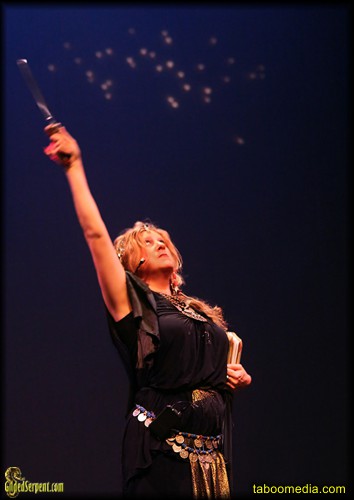
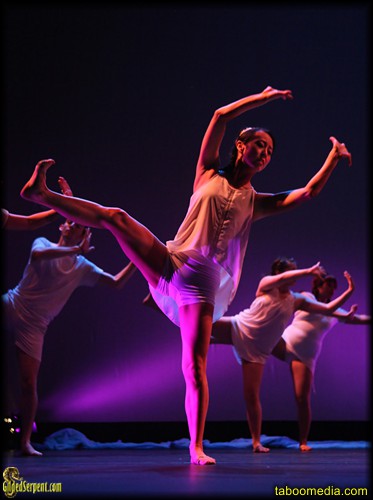



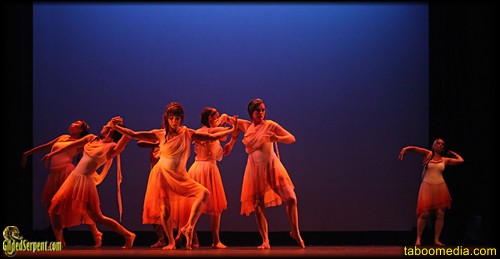
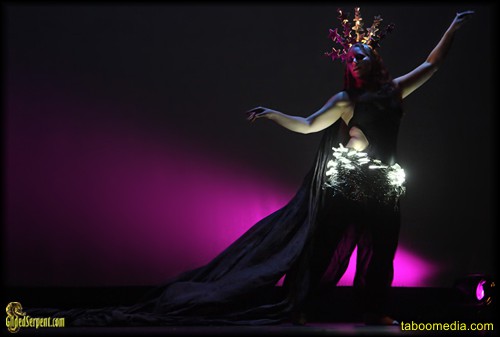
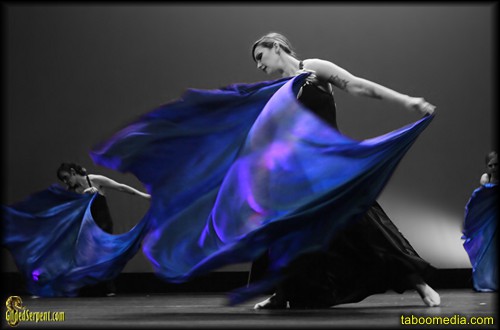


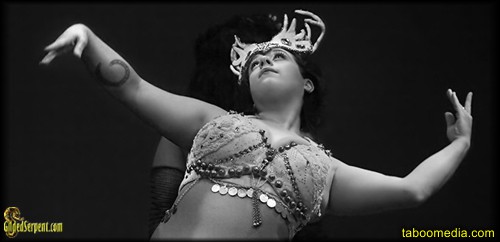
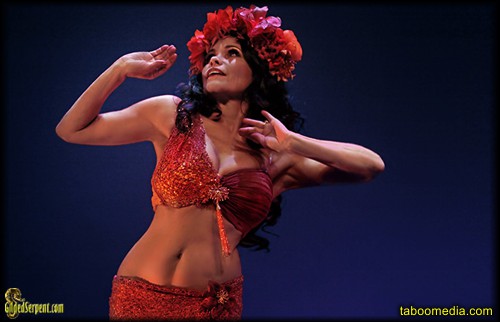


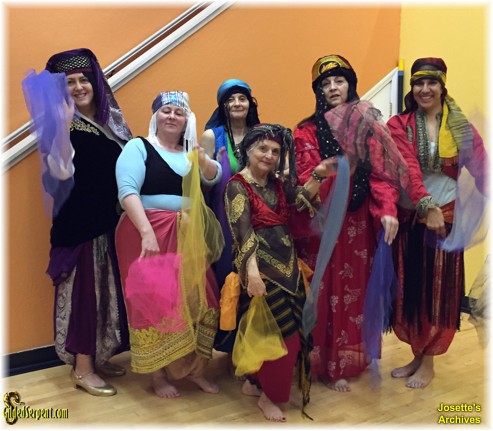


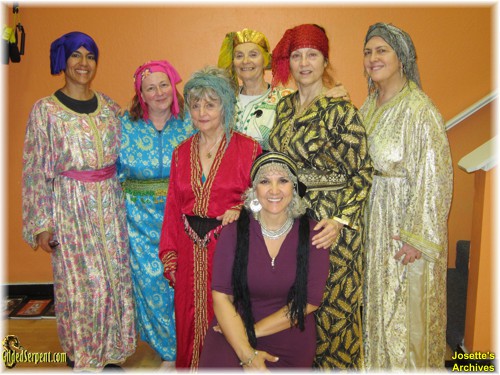

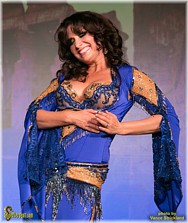
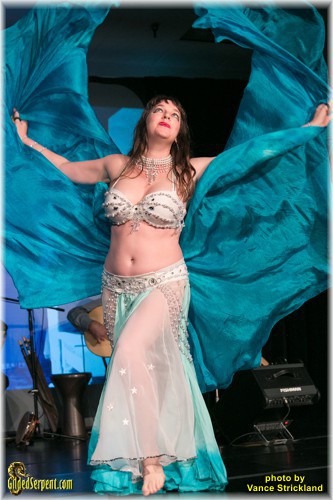


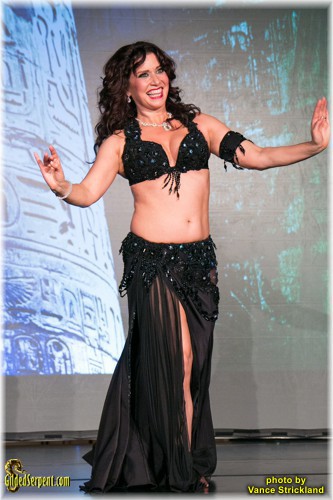


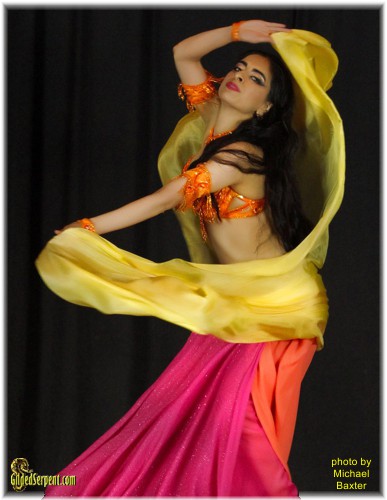
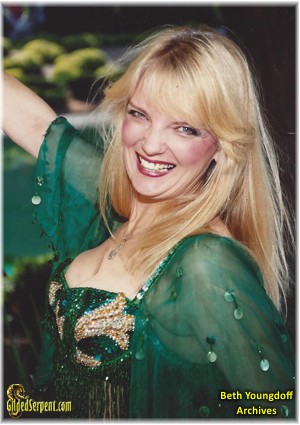
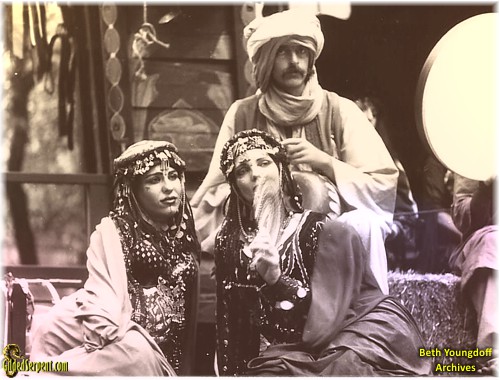
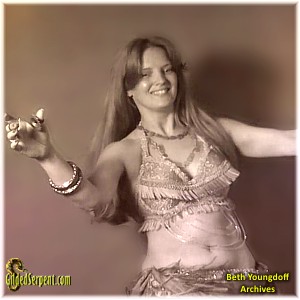
 The Toolkit itself is truly a timeless resource, since it approaches Middle Eastern dance from a broader perspective than most instructional videos. It begins with material on body awareness, how to see dance, the dancer’s consciousness, and my dance philosophy. A complete warm-up, with explanations of why these particular movements are essential for Middle Eastern dance, is followed by a 24-step compendium that breaks down each movement from the bottom up, skeletally and muscularly, and then explains how to add variation and emotional quality to it. Following this is a multi-leveled choreography to the opening section of Leylat Hob, both in rehearsal and in modified costumes.